
Nancy I. Sanders's Blog, page 71
September 26, 2013
Highlights: Check-off List Part 2
Here are some more notes I made to myself on the Check-off List I printed out from the Contributors Guidelines for Highlights.
• Biographies of individuals who have made significant artistic, scientific or humanitarian contributions are strengthened by the inclusion of formative childhood experiences.
o I’m making a note to include one or more short anecdotes from this person’s childhood in my article.
• We prefer biographies that are rich in quotes and anecdotes and that place the subject in a historical and cultural context.
o I’m making a note to use lots of quotes from this person’s autobiographies and speeches. If you’re not sure whether you can quote something or not, check out what my buddies have to say about copyright issues at Writing According to Humphrey and Friends.
• Complete bibliographies as well as photocopies of key pages in references must be included.
o I’ll make a bibliography and keep track of references in footnotes as I write this. Plus I’ll photograph key pages as I go.
If you don’t know how to create a bibliography, just look in the back of any book that has a bibliography and copy the format they use.
There are various formats recommended by various style manuals such as the Chicago Manual of Style. But Highlights isn’t as concerned about which format you use as long as it’s one of them. This is because they don’t publish the bibliographies but simply use it to make sure your sources are reliable. Here is the format some of my publishers use, in case you want a point of reference here at your fingertips:
Books:
Nash, Gary B. Forging Freedom. Cambridge, Masschusetts: Harvard University PRess, 1988, page 24.
Internet Sites:
“Writing According to Humphrey and Friends.” http://writingaccordingtohumphrey.wordpress.com
(12 August 2013.)


September 25, 2013
Highlights: Research Center
After I printed out my check-off list for Highlights’ Contributor Guidelines, I prepared my research center.
For every project I start, I create its own research center. Sometimes this all fits into a totebag. For humorous tips on creating your own research center, visit the website of my writing buddies, Writing According to Humphrey and Friends.
For this particular project, I decided to set up my research center on a card table in my sewing room.
I divided up my books into three piles:
Autobiographies written by my subject (He wrote 3.)
Biographies about my subject
A book of many of the speeches my subject made
Since I decided to write on a topic I’ve already researched before, I have all the books I need.
If you don’t yet have your research books, take time to gather the books and resources you’ll be using for your article. For tips on finding research books, my writing buddies once again have some tips at Writing According to Humphrey and Friends.
Check it out and have a chuckle!


September 24, 2013
Highlights: Check-off List
I’ve been busy this week working on my nonfiction article to submit to Highlights and I hope you are too! I’m getting ready to put pen to paper soon.
First I sat down and read over the Contributor’s Guidelines again to have them fresh in my head as I’m getting ready to write.
Then I copied and pasted the guidelines for Non Fiction into my Word document so I could have a check-off list to work with.
Then I added notes to my check-off list to remind myself what to do. Then I printed this all out and clipped it to my clipboard so it stays front and center.
Here are some of the notes I wrote to myself:
Highlights Check-off List
Non Fiction includes science, arts, biography, autobiography, sports, world cultures, economics, service/self-help, careers, adventure and history.
Note: I’m choosing to write a biography.
• All articles should have 800 words or fewer.
o I’m typing this at the top of my manuscript to help me remember the word count. My goal is to hit this at 790-799 words precisely.
• Nonfiction articles geared to our younger readers (ages 3 to 7) are especially welcome. These should not exceed 500 words.
o My topic is for older kids, so I won’t do this, but I’m keeping this in mind for a future article.
• Articles with a tight focus are most successful.
o I already narrowed this down to one main focus in my subject’s life. If you haven’t yet done this, narrow your topic ASAP so you can move forward with your own article.
• We prefer research based on first-hand experience, consultation with experts or primary sources.
o I’ve already visited several museums and historic sites about this person (my first-hand experience). If you haven’t yet done this for your topic, explore online historic sites or museums on your topic. Or if you live close enough, go there and visit!
o I own 4 books of autobiographies and also actual speeches from this person (primary sources) If you don’t yet have any primary sources on your topic, dig around and look for them. If you don’t know how to do this, let me know and I’ll give some tips.
• Articles about cultural traditions and ways of life should reflect a deep understanding of the subject.
o I will be ultra careful here to be sensitive to the life and times of my subject.


September 20, 2013
Highlights: Guest Post

It’s so exciting for us to hear the success stories of other writers. In today’s post, author and writing teacher Chris Eboch is here to share about how she got a fiction manuscript accepted at Highlights, even after it had previously been rejected!
Let’s welcome Chris Eboch on Conflict in Short Stories!
I’ve taught article and short story writing through the Institute of Children’s Literature for about seven years, and I also work with private critique clients on both short and long works. The number one problem I see in fiction manuscripts is not enough conflict. In fact, I’d say half of my beginning students turn in initial short story lessons that:
• Don’t have any conflict (slice of life stories), or
• Introduce the conflict too late, in the second half of the story
Another quarter of the students have a conflict solved by somebody other than the main character (usually a parent, grandparent, or teacher, but sometimes a fairy godmother or other magical being). In children’s stories – all stories, really – the main character should solve her or his own problem. It’s not as satisfying if somebody else rushes to the rescue.
Problems of conflict don’t only happen to beginning writers, though. I see the same problems in manuscripts I critique for more experienced writers – weak conflict or conflict that is introduced too late. And, I must admit, I sometimes see it even in my own work.
I worked on one story for years. It was sweet and funny, with an interesting nature lesson, so why wouldn’t anyone publish it?
After I’d been teaching through the ICL for a couple of years, telling student after student that they needed conflict in their stories, I finally got it. My story lacked conflict.
I rewrote the story with a small but important internal conflict for the main character, and sold it to Highlights – a magazine that had previously rejected the story. “One Froggy Night“ was published in April 2010. (In the original version, the child went happily outside; in the revision, the main character didn’t want to leave the cozy house but was later glad for the adventure. Conflict can be that simple.)
For more advice on adding conflict and making sure it’s connected to your main character, read my essay on “Characters in Conflict“ on my blog. The essay is also in Advanced Plotting, along with many more tips on strong plotting.
Chris Eboch writes fiction and nonfiction for all ages, with 20 traditionally published books for children. Her novels for ages nine and up include The Eyes of Pharaoh, a mystery in ancient Egypt; The Well of Sacrifice, a Mayan adventure; and the Haunted series, which starts with The Ghost on the Stairs. Her book Advanced Plotting helps writers fine-tune their plots. Learn more at www.chriseboch.com or her Amazon page. Chris also writes novels of suspense and romance for adults under the name Kris Bock.


September 18, 2013
Welcome to My World!

Many of you are following along with the journey I’m taking to submit a nonfiction article for Highlights.
I’m going very slowly, as you may have realized by now. There are 2 reasons for this.
#1: I want to be sure to give each of you the time to think and the time to do the same steps I’m doing.
#2: I’m working on this project for the goal of Personal Fulfillment. If any of you have my how-to book for children’s writers, you’ll understand that this goal is one of three goals I work toward each week in my writing schedule. It’s called the Triple Crown of Success.
And for the goal of Personal Fulfillment, I spend the smallest blocks of time in my writing week targeting this goal. (I explain this in detail in my strategy called the Writer’s Pyramid, also in that book.)
So I wanted to share with you just a little bit about what’s happening in my corner of the writing world so you can understand one of the reasons I’m progressing slowly in this journey for submitting a nonfiction article to Highlights.
(Just a note…I’m thinking of doing something fun here on my blog after all these steps are completed…writing a SECOND nonfiction article to submit and trying to do it as fast as I can to show you how to go through all the steps again in a more focused, tight schedule…what do you think?)
Here’s what’s happened in my real world this past week:
Last Friday I got an e-mail from an editor who is taking one of my children’s manuscripts through the acquisitions process. She asked me for some more material before she draws up a contract to offer to me, and I promised her that hopefully this week.
On Monday this week, I got another e-mail from a different publisher that includes a children’s manuscript that I already wrote and submitted to her under a signed contract. This manuscript has undergone its first round of editorial edits and also feedback from a fact checker. I need to go through the entire book manuscript and go through all the edits and then return it for the next round of edits…ASAP.
On Tuesday this week (yesterday) I got an e-mail from a publisher with another children’s manuscript I already wrote and submitted per contract. It just finished its first round of editing, too, so I need to go through this entire book manuscript and go through all the edits and return it for the next round of edits, ASAP.
On Friday (in 2 days) I’m teaching a teleclass on the Common Core State Standards and how it affects you as a children’s writer. So I’ve really been digging around and researching and preparing for teaching that class and will wrap this all up in the next two days to be ready to share with you.
These projects all fall under my goal of Writing to Earn Income. Plus, for my goal of Writing to Get Published, next week I’m planning to write and submit an article for a children’s column I contribute for each month. I don’t get paid for this column, but the exposure is fantastic, it builds up my published credits, and it keeps my writing muscles strong.
I wanted to let you take a peek into my world as you’re following along on my journey to write a nonfiction article for Highlights so you can see how I fit it into my week. The next step I’ll be taking on this project will be to really dig in and start dissecting a published nonfiction article and then developing the outline for mine.
But before we get started on that, I want to share a guest post in my next blog from author Chris Eboch. She’s had a fiction story accepted by Highlights and is gracious to share with us the story behind her success. So stay tuned! Hopefully you’ll pick up some tips so you can successfully submit fiction to Highlights, too!


September 13, 2013
Upcoming Writer’s Workshop
Common Core State Standards is a topic that’s talked about daily in my house.
This may sound funny to hear, but with an elementary teacher (my husband Jeff) and a children’s writer (me) both living in the same home, the Common Core State Standards has been a lively topic for a couple of years.
It’s not just the two of us who do the talking, however. I’ve got publishers calling and e-mailing me who want to talk about the Common Core State Standards for a variety of different reasons. I’ve got schools and bookstores contacting me to discuss author’s visits or booksignings that tie in at some level with the Common Core State Standards. I’ve got writers connecting with me to discuss both the positive and negative sides of this current educational initiative.
Jeff’s currently getting trained in them to implement them into his classroom this year and I’ve been offered a number of book contracts because of them.
What’s going on?!
Come find out all about the Common Core State Standards and the impact they’re having on your world as a children’s writer. I’m teaching a tele-class next Friday, September 20, 2013 at 1:00 pm PST at the Working Writer’s Club. Click here for more information about the class and how to join up.
And if you want to get a $10 discount on the workshop, sign up to join the Working Writer’s Club! It’s free and it’s a great community to belong to as a writer. Lots of info, great tips, and free advice for everyone who writes. Plus, writing coach Suzanne Lieurance is the best!


September 12, 2013
Author Interview: Melissa Abramovitz

Meet Author Melissa Abramovitz
Website: Melissa Abramovitz
Bio:
Melissa Abramovitz has been a freelance writer for over 25 years and specializes in writing nonfiction magazine articles and books for all age groups. She is the author of hundreds of magazine articles, more than 30 educational books for children and teenagers, numerous poems and short stories, and several children’s picture books. Her book for writers, A Treasure Trove of Opportunity: How to Write and Sell Articles for Children’s Magazines, has been widely acclaimed since its publication in 2012. She has a degree in psychology from the University of California, San Diego, is a graduate of The Institute of Children’s Literature, and is a member of SCBWI and The Working Writer’s Club.

Featured Book:
A Treasure Trove of Opportunity:
How to Write and Sell Articles for Children’s Magazines
by Melissa Abramovitz
The need for children’s magazine nonfiction is one of the best kept secrets in the trade. At the risk of divulging well-kept secrets and tips for succeeding in this market, I’ve written this book to provide a comprehensive guide to planning, researching, writing, and marketing magazine nonfiction for children and teens. There are books out there on writing nonfiction in general and on magazine nonfiction in general, but they offer limited insight into the specifics of writing and selling articles for children and teens. This book will give you the specifics you need to get started in a richly fulfilling and financially rewarding full- or part-time career. Welcome to the exciting world of children’s nonfiction articles, and enjoy the journey towards success as you explore this Treasure Trove of Opportunity.
Interview:
Q: Share a highlight for you personally while you were writing this book.
A: One of the biggest highlights for me was discovering how much I enjoy teaching and mentoring other writers. Before I wrote Treasure Trove, my only teaching/mentoring experience was writing a couple of articles for the Children’s Writer newsletter and conducting a couple of writer’s workshops at a local writer’s conference. I spent the vast majority of my time working on my own writing projects. But when I was approached about writing the Treasure Trove book, it opened a new, significant opportunity for me to share the “tricks of the trade” I’ve picked up over many years. Lacking a teaching background, I had to experiment with and develop methods of motivating my readers to follow my suggestions so they could succeed in a market that I love writing for. Throughout the process of research, writing, and rewriting the book, I realized that I truly enjoyed developing these teaching strategies. I also find that hearing about how my book helps others achieve their goals brings me great satisfaction.
Since the book was published, I have gotten involved in other teaching/ critiquing adventures. I have taught several teleclasses for The Working Writers Club and write a regular column for them on topics of interest to children’s writers. I’ve also written articles with writing tips for Evelyn Christensen’s Writing for Children’s Magazines ezine, and I regularly do manuscript critiques as well.
Q: What is your favorite genre to write in at this point in your career?
A: Writing rhyming fiction and nonfiction picture books is my absolute favorite. I have so much fun, challenging as they are. That said, I also enjoy writing in other genres – magazine articles, nonfiction books, poetry, and so on.
Q: Describe the journey you’ve taken as a writer.
A: I started writing professionally back in 1986 after completing the Institute of Children’s Literature’s writing for children course. I’ve always loved to write, and although I did not obtain my college degree in anything related to writing, I decided that doing freelance writing would be a nice part-time career for me when my kids were growing up. I was a stay-at-home mom and homemaker, and much as I always enjoyed this, I also wanted to do something just for me.
I sold the first magazine article I submitted and thought okay, this will be fun. After that I started getting more rejections than acceptances, but still forged ahead even though rejections are never fun. I branched out into writing for all age groups and into doing a bit of fiction along with mostly nonfiction. I started getting assignments from several magazines, a novella I wrote for adults won an award, and I also started writing work-for-hire educational books for educational publishers. Doing this type of work turned out to be perfect for me, because I could accept assignments and do my writing work around my family’s schedule. To this day, most of the work I do is work-for-hire.
Now that my kids are grown, I have time to take on many more assignments than I once did! I started writing rhyming children’s picture books a few years back too, and one was published in 2012 (The ABCs of Health and Safety; Guardian Angel Publishing). A second is under contract. I’ve also written a novel (for adults) and have haphazardly tried looking for an agent to market it. I really need to devote some time to that or it won’t happen, but I much prefer actually writing! And as I mentioned before, I’ve also been doing some manuscript critiques and online teaching. One thing I can say about my writing journey is that I feel blessed to work in a career that I truly love.
Q: What is one word of advice you received as a writer that you would like to share with others?
A: Professionalism. If you want to succeed as a working writer, being professional in every aspect of your work is key. Don’t view rejections as personal assaults. They are business decisions by editors, so accept them as such and learn from them. Present your work in a professional manner (error-free, typed etc). Be respectful of editors and others with whom you work. Dress like a professional when you interview people or promote your work. Okay, you asked for one word, and I’m going on and on.


September 9, 2013
Highlights: Decisions! Decisions!
Okay everyone! It’s time to make some decisions.
If you’re following along with the Highlights journey I’m taking to show you in real time what I’m REALLY doing to write and submit an article to Highlights, the next step I took this past weekend was to make some decisions.
I narrowed my topic down to the specific anecdote I wanted to tell about my main topic.
Plus, I picked ONE published nonfiction article I found in a recent issue of Highlights magazine to use in my next step when I dissect a published article. I photocopied this article and created a new file folder for it, “Sample Article to Target.”
So if you haven’t done so already, narrow your main topic to one specific focus. This will be the main idea in your article. For example, if you’re going to write a nonfiction biography about President Obama, narrow that topic down to tell how he taught classes on Constitutional Law at the University of Chicago Law School.
Sure, you’ll tell about other aspects of President Obama’s life, but this will be the one main anecdote you’ll focus on as your one main idea.
Then, armed with your main idea, now go back through the issues of Highlights that you read and choose ONE nonfiction article that you’re going to study with your writer’s magnifying glass and then with your writer’s microscope to really get a grasp on one format that works for the editors at Highlights.
This will be the format you follow to write your own article, but I’ll explain these steps more in detail when I get to them in a week or so.
For now, just pick ONE published NF article in Highlights where you say, “Hey! I think my own article could be like this one.” Photocopy it and put it in its own file folder in your pocket folder (if this is the system you’re using) ’cause you want it to be handy for the writing exercises we’re going to do with it next week or so.
And be sure to stay tuned for the next post here on my blog! I’ll be interviewing Melissa Abramovitz, a writer who is joining us here in our journey to write and submit a nonfiction article to Highlights. She’s submitted other things to Highlights and they’re looking seriously at them, but she also has a love for all things nonfiction, so she’ll be sharing about the fabulous resource book she’s written for anyone who wants to write nonfiction for children’s magazines.


September 5, 2013
Highlights: Submissions Guidelines

I finally finished reading through all the Highlights magazine issues I have (plus a few others I read while waiting at the dentist office). I was ready for the next step.
STEP NINE
Find 1-5 key nonfiction articles I want my article to be like.
As I wrapped up this initial reading session, I got out my stickie notepad and went back and marked several of the nonfiction articles that I want to use as potential examples to study when I’m ready to figure out the format I plan to use to write my own article. I’m going to Xerox these and keep them in my “Sample NF Articles” file folder for handy reference.
Then I went to the next step.
STEP TEN
I googled “Highlights Submission Guidelines” and found their guidelines for writers to submit manuscripts to them. I printed these out and made a new file folder labeled “Submission Guidelines” to keep this in. I added this file folder to my pocket folder. I’m going to study these soon to see if there’s any new info I need to know. I plan to follow these guidelines to a T.


September 2, 2013
Special Announcement: Re-release of Yes! You Can!
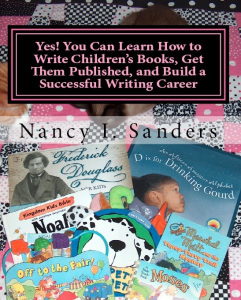
I’m so excited to announce that my first how-to-book for children’s writers is once again for sale, Yes! You Can Learn Learn How to Write Children’s Books, Get Them Published, and Build a Successful Writing Career. Yay!
It’s got a whole new look. It’s got a picture of a pink and black and white baby quilt I made, along with pictures of some of my books (and also my cats!) on the cover.
It’s got a whole new section on Common Core State Standards. These standards are impacting the world of children’s publishing like nothing I’ve ever seen personally. That’s one of the reasons I wanted to re-release my book. I provide a brief overview of these standards in my book now as a launching point for you to take off and be in the know.
Other than that, this book is the same as the first edition. So if you already bought the first one, don’t go out and purchase this one. There’s no need to because you can download that extra section I added on Common Core State Standards by clicking this link below.
And if you haven’t yet purchased this book, please feel free to download this file so you can learn more about Common Core State Standards. This will also give you a preview of what’s inside my book and how it can help you build a successful writing career as a children’s writer.
11.3 Common Core State Standards


Nancy I. Sanders's Blog

- Nancy I. Sanders's profile
- 76 followers

