Sean Gabb's Blog, page 4
August 10, 2014
In Praise of Byzantium

In Praise of Byzantium – Why should we remember Byzantium?
by Richard Blake
(The Baltic Review, 9th August 2014)
Based in Constantinople (modern Istanbul), it lasted until 1453. At times, it was the richest and most powerful state in the known world. Today, it is almost forgotten. Its main presence in the English language is as a word meaning complex bureaucracy. What is it so forgotten? Why should it be remembered?
Let’s take the first question. Looking at our own family history, we tend to pay more attention to our grandparents than our cousins. Whatever they did, we have a duty to think well of our grandparents. We often forget our cousins. So far as they are rivals, we may come to despise or hate them. So it has been with Western Europe and the Byzantine Empire. The Barbarians who crossed the Rhine and North Sea in the fifth century are our parents. They founded a new civilisation from which ours is, in terms of blood and culture, the development. Their history is our history. The Greeks and Romans are our grandparents. In the strict sense, our parents were interlopers who dispossessed them. But the classical and Christian influence has been so pervasive that we even look at our early history through their eyes. The Jews also we shoehorn into the family tree. For all they still may find it embarrassing, they gave us the Christian Faith. We have no choice but to know about them down to the burning of the Temple in 70AD. The Egyptians have little to do with us. But we study them because their arts impose on our senses, and because they have been safely irrelevant for a very long time.
Byzantium is different. Though part of the family tree, it is outside the direct line of succession. In our civilisation, the average educated person studies the Greeks till they were conquered by the Romans, and the Romans till the last Western Emperor was deposed in 476AD. After that, we switch to the Germanic kingdoms, with increasing emphasis on the particular kingdom that evolved into our own nation. The continuing Empire, ruled from Constantinople, has no place in this scheme. Educated people know it existed. It must be taken into account in histories of the Crusades. But the record of so many dynasties is passed over in a blur. Its cultural and theological concerns have no place in our thought. We may thank it for preserving and handing on virtually the whole body of Classical Greek literature that survives. But its history is not our history. It seems, in itself, to tell us nothing about ourselves.
Indeed, where not overlooked, the Byzantines have been actively disliked. Our ancestors feared the Eastern Empire. They resented its contempt for their barbarism and poverty, and its ruthless meddling in their affairs. They hated it for its heretical and semi-heretical views about the Liturgy or the Nature of Christ. They were pleased enough to rip the Empire apart in 1204, and lifted barely a finger to save it from the Turks in 1453. After a spasm of interest in the seventeenth century, the balance of scholarly opinion in the eighteenth and nineteenth centuries was to despise it for its conservatism and superstition, and for its alleged falling away from the Classical ideals – and for its ultimate failure to survive. If scholarly opinion since then has become less negative, this has not had any wider cultural effect.
Now to the second question: Why should we remember Byzantium? Well, everyone admires the Greeks and the Roman Empires. But, once your eyes adjust, and you look below the glittering surface, you see that it wasn’t a time any reasonable person would choose to be alive. The Greeks were a collection of ethnocentric tribes who fought and killed each other till they nearly died out. The Roman Empire was held together by a vampire bureaucracy directed more often than in any European state since then by idiots or lunatics. Life was jolly enough for the privileged two or three per cent. But everything they had was got from the enslavement or fiscal exploitation of everyone else.
Yet, while the Roman State grew steadily worse until the collapse of its Western half, the Eastern half that remained went into reverse. The more Byzantine the Eastern Roman Empire became, the less awful it was for ordinary people. This is why it lasted another thousand years. The consensus of educated opinion used to be that it survived by accident. Even without looking at the evidence, this doesn’t seem likely. In fact, during the seventh century, the Empire faced three challenges. First, there was the combined assault of the Persians from the east and the Avars and Slavs from the north. Though the Balkans and much of the East were temporarily lost, the Persians were annihilated. Then a few years after the victory celebrations in Jerusalem, Islam burst into the world. Syria and Egypt were overrun at once. North Africa followed. But the Home Provinces – these being roughly the territory of modern Turkey – held firm. The Arabs could sometimes invade, and occasionally devastate. They couldn’t conquer.
One of the few certain lessons that History teaches is that, when it goes on the warpath, you don’t face down Islam by accident. More often than not, you don’t face it down at all. In the 630s, the Arabs took what remained of the Persian Empire in a single campaign. Despite immensely long chains of supply and command, they took Spain within a dozen years. Yet, repeatedly and with their entire force, they beat against the Home Provinces of the Byzantine Empire. Each time, they were thrown back with catastrophic losses. The Byzantines never lost overall control of the sea. Eventually, they hit back, retaking large parts of Syria. More than once, the Caliphs were forced to pay tribute. You don’t manage this by accident.
The Byzantine historians themselves are disappointingly vague about the seventh and eight centuries. Our only evidence for what happened comes from the description of established facts in the tenth century. As early as the seventh century, though, the Byzantine State pulled off the miracle of reforming itself internally while fighting a war of survival on every frontier. Large parts of the bureaucracy were scrapped. Taxes were cut. The silver coinage was stabilised. Above all, the great senatorial estates of the Later Roman Empire were broken up. Land was given to the peasants in return for military service. In the West, the Goths and Franks and Lombards had moved among populations of disarmed tax-slaves. Not surprisingly, no one raised a hand against them. Time and again, the Arabs smashed against a wall of armed freeholders. A few generations after losing Syria and Egypt, the Byzantine Empire was the richest and most powerful state in the known world.
This is an inspiring story – as inspiring as the resistance put up by the Greek city states a thousand years before to Darius and Xerxes. If the Turks, who destroyed it in 1453, can admire the Byzantine Empire, and even feel proud of it, why shouldn’t the rest of humanity admire it?
Filed under: history








August 8, 2014
Smash the State, Eat the Rich
by Cory Massimino
http://c4ss.org/content/30085
Smash the State, Eat the Rich
In Why the Rich Tolerate Being Looted Jeffrey Tucker argues the rich today act differently than they used to. They wear common clothing, avoid luxurious houses and cars, and even call for higher taxes on themselves. Tucker explains this new phenomenon by drawing upon an essay by Peter Leeson and says, “Property rights are weak today… The more property is vulnerable to looting by any source, the more people have the incentive to hide their wealth.” The logic works, however I disagree with the premise. Property rights today are weak when looking at the US economy generally. But property rights specifically for the rich are anything but.
I believe Tucker has fallen victim to a trap that many libertarians fall into when trying to defend freed markets. Tucker is espousing “vulgar libertarianism.” The term, coined by anarchist author, Kevin Carson, refers to times when a libertarian condemns the existing state power (which, of course, Tucker always adamantly does), but at the same time, defends those who benefit most from the state power. And who are the biggest beneficiaries of state violence and theft? The rich. This is not an uncontroversial opinion.
The large sums of wealth that rich people currently enjoy are not the products of entrepreneurship, or productive genius, or voluntary market exchanges. In fact, those things are great and I wish we lived in a world with more of them. Rather, these gigantic personal estates and corporations are a result of state intervention. In Let the Free Market Eat the Rich, Jeremy Weiland points out some of the ways in which the government socializes the costs of being rich leading to a system where the average Joe is subsidizing Bill Gates. He writes,
The biggest subsidy enjoyed by the wealthy lies in government regulation of finance… [Average Joes
like you and I] don’t pay for this “service” in proportion to our deposits. Instead, we help subsidize the regulation and maintenance of the financial system from which the elite depositors benefit disproportionately.
This subsidization extends to the realm of property protection as well. Weiland continues, “Police patrols of moneyed neighborhoods provide an example of socialized security, where defense and sentry costs are not paid directly by the beneficiaries.” Since the rich tend to own more property and are more likely targets of theft, they disproportionately benefit from state protective services.
Kevin Carson points out,
The dominant feature of the American polity is welfare for big business and the rich. This welfare consists of a wide array of government interventions into the market to enforce artificial scarcities and artificial property rights.
In fact, corporate welfare is rampant in the US economy. According to a study done by Good Jobs First, for state and local government, “at least 75 percent of cumulative disclosed subsidy dollars have gone to just 965 large corporations.” According to a Cato study, on the federal level, “corporate welfare in the federal budget costs taxpayers almost $100 billion a year.” That’s a $100 billion wealth transfer from the Average Joe to giant corporations.
Plus when we take the US Empire into account, Kevin Carson argues,
Adding up the so-called “defense” budget, two unfunded wars, “national security” spending on DHS, CIA, DOE and NASA, and interest on debt from past wars, the bulk of the federal government’s budget goes to welfare for the Military-Industrial Complex.
In other words, more giveaways to the rich.
These are only direct transfers to large corporations. There are also a myriad of ways in which government regulation games the system, tilting the market in favor of already established, large, hierarchical businesses headed by the rich.
State policies such as urban renewal projects, price and wage controls, licensing and safety requirements, limited liability, costly regulation, capitalization requirements, quantitative easing, financial regulation, zoning requirements, protectionist trade policy, intellectual property laws, and various other barriers to entry all promote centralization and cartelization at the expense of the voluntary transactions and private ingenuity that Tucker, as well as myself, loves so much.
These policies not only created the large disparities in income we see today, they embolden them. When large corporations face little to no competition because they have a stranglehold on the market, the middle rungs of the economic ladder are cut off. We are left at the mercy of the corporations and their special ability to channel state violence for exploitative and anti-competitive purposes.
With the advent of more and more corporatist policies, the distinction between state (“public”) and corporate (“private”) is blurred. As Rothbard argued in Confiscation and the Homestead Principle,
Government, he pointed out, is after all not a mystical entity but a group of individuals, “private” individuals if you will, acting in the manner of an organized criminal gang. But this means that there may also be “private” criminals as well as people directly affiliated with the government. What we libertarians object to, then, is not government per se but crime, what we object to is unjust or criminal property titles; what we are for is not “private” property per se but just, innocent, non-criminal private property. It is justice vs. injustice, innocence vs. criminality that must be our major libertarian focus.
A government by the rich and for the rich is nothing new, though. The status of the rich in the Gilded Age, which Tucker seems to refer to with reverence, was no more honest or virtuous than it is today, which, is to mean not honest or virtuous at all. In State Socialism and Anarchism, Benjamin Tucker identified the four (state created) monopolies of his day: the money monopoly, the land monopoly, the tariff monopoly, and the patent monopoly.” Far from being an era of laissez-faire, the late 19th century was dominated by a class of rich parasites, just like the modern economy.
The freed market, without all these distortions and giveaways, is truly an equalizing force. Weiland went on to conclude,
A truly free market without subsidized security, regulation, and arbitration imposes costs on large scale aggregations of assets that quickly deplete them… It may be that libertarianism, taken to its logical conclusion, is far more egalitarian and redistributionist than we ever dreamed – not as a function of any central State, but rather due to its lack.
Jeffrey Tucker writes,
None of us will be truly safe until the rich again walk the streets with pride, live in huge houses in full view of the hoi polloi, and dress proper to their station in life.
On the contrary, we will only know safety (from the iron fist of state capitalism) when today’s rich walk the street with woe because their friend, the state, is gone. When the rich live in shacks in full view of ghettos because their friend, the state, is gone. When the rich dress in dirty, torn clothes, because their friend, the state, is gone.
Tucker continues,
After all, a world that is not safe for the rich is not safe for the rest of us either.
I believe a firm understanding of the relationship between the rich, their fortunes, and state power leads us to conclude the exact opposite conclusion. A world that is safe for today’s rich will never be safe for the rest of us. Not until the rich’s massive fortunes, and the state power propagating them, is destroyed will we be safe. Smashing the state and eating the rich are two sides of the same coin.

Filed under: Liberty, poor people







Privacy 2014: Google as an Arm of the Surveillance State
by Thomas Knapp
http://c4ss.org/content/30136
Convicted in 1994 of sexually assaulting a young boy, John Henry Skillern of Texas once again finds himself incarcerated and awaiting trial, this time for possession and production of child pornography. Skillern’s arrest comes courtesy of Google. Few, I expect, will shed tears for Skillern with respect to his alleged sexual predations. Nonetheless his case once more brings Google into the privacy spotlight, this time as an arm of “law enforcement.”
Google makes no secret of the fact that it “analyzes content” in emails sent and received by users of its Gmail service, mostly for purposes of targeting advertising to users most likely to click thru and buy things. That’s how Google makes money — tracking users of its “free” services, watching what they do, selling those users’ eyeballs to paying customers.
It’s also understood by most that Google will, as its privacy policy states, “share personal information … [to] meet any applicable law, regulation, legal process or enforceable governmental request.” If the cops come a-knocking with a warrant or some asserted equivalent, Google cooperates with search and seizure of your stored information and records of your actions.
But Google goes farther than that. Their Gmail program policies unequivocally state that, among other things, “Google has a zero-tolerance policy against child sexual abuse imagery. If we become aware of such content, we will report it to the appropriate authorities and may take disciplinary action, including termination, against the Google Accounts of those involved.”
As a market anarchist, my visceral response to the Skillern case is “fair cop – it’s in the terms of service he agreed to when he signed up for a Gmail account.”
But there’s a pretty large gap between “we’ll let the government look at your stuff if they insist” and “we’ll keep an eye out for stuff that the government might want to see.” The latter, with respect to privacy, represents the top of a very slippery slope.
How slippery? Well, consider Google’s interests in “geolocation” (knowing where you are) and in “the Internet of Things” (connecting everything from your toaster to your thermostat to your car to the Internet, with Google as middleman).
It’s not out of the question that someday as you drive down the road, Google will track you and automatically message the local police department if it notices you’re driving 38 miles per hour in a 35-mph speed zone.
Think that can’t happen? Think again. In many locales, tickets (demanding payment of fines) are already automatically mailed to alleged red-light scofflaws caught by cameras. No need to even send out an actual cop with pad and pen. It’s a profit center for government — and for companies that set up and operate the camera systems. In case you haven’t noticed, Google really likes information-based profit centers.
And keep in mind that you are a criminal. Yes, really. At least if you live in the United States. Per Harvey Silverglate’s book Three Felonies a Day, the average American breaks at least three federal laws in every 24-hour period. Want to bet against the probability that evidence of those “crimes” can be detected in your email archive?
To a large degree the Internet has killed our old conceptions of what privacy means and to what extent we can expect it. Personally I’m down with that — I’m more than willing to let Google pry into my personal stuff to better target the ads it shows me, in exchange for its “free” services. On the other hand I’d like some limits. And I think that markets are capable of setting those limits.
Three market limiting mechanisms that come to mind are “end to end” encryption, services for obfuscating geographic location and locating servers in countries with more respect for privacy and less fear of “big dog” governments like the United States. If Google can’t or won’t provide those, someone else will (actually a number of someones already are).
The standard political mechanism for reining in bad actors like Google would be legislation forbidding Internet service companies to “look for and report” anything to government absent a warrant issued on probable cause to believe a crime has been committed. But such political mechanisms don’t work. As Edward Snowden’s exposure of the US National Security Agency’s illegal spying operations demonstrates, government ignores laws it doesn’t like.
Instead of seeking political solutions, I suggest a fourth market solution: Abolition of the state. The problem is not so much what Google tracks or what it might want to act on. Those are all a matter of agreement between Google and its users. The bigger problem is who Google might report you TO.
Filed under: Crime, Liberty, pornography







Libertarian Sociology: Family Structures
Curt Doolittle has spent a lot of time writing about family structures and their significance to politics, but, and I take full responsibility for this, I never could grasp his meaning. Perhaps part of the blame lies with him for not writing up enough of his thoughts in the form of articles or essays; Curt usually posts his ideas in summary form on Facebook, which is useful for those who already ‘get it’, but not for ‘outsiders’. Yet, he never fails to present all those who don’t understand him with a comprehensive reading list of articles and books. And it is a very intriguing list of titles.
But, just this morning I was thinking – God forbid! – for myself on this matter and I seem to have come to similar conclusions to Curt, but in my own time and in my own way. Curt’s methodology, I often hear, is different from many of his fellow PFS attendees and so I expect it will be different from mine too. Thus, while Curt may applaud me for having come to some of these conclusions, he may criticise my reasoning. But, here goes.
The Nuclear family, we are often told, is unique to Anglo-Saxon life. Indeed, David Willetts, Universities Minister and the brain of the Conservative Party, seems to think so too. In his book ‘The Pinch’, he writes:
think of England as being like this for at least 750 years. We live in small families. We buy and sell houses. … Our parents expect us to leave home for paid work …You try to save up some money from your wages so that you can afford to get married. … You can choose your spouse … It takes a long time to build up some savings from your work and find the right person with whom to settle down, so marriage comes quite lately, possibly in your late twenties.“
(Quoted from a blog post by Steve Sailer)
Only parents and children live in one house. There is no pressure for the children, or, more often, singular child, to enter into the same line of work as their parents. In fact, many children of Nuclear families are told to pursue their dreams; they remain in education for a while or they get an apprenticeship with someone to whom they are probably not related and they get a job which they enjoy. They then build up some capital and find a wife or husband and together they get a mortgage and move away from their parents. This new couple have a child and raise the child in exactly the same way: they feed and clothe them; they love them; they teach them right from wrong; they prepare them for adulthood; and then enjoy their mid-life and their retirement while their children make their own way in life. Ad infinitum. That is the story of the typical old fashioned English ‘family’.
Now, there are exceptions; not all England is like this. I am from Lancashire, for example, which is an area neither Norman nor Anglo-Saxon, but predominantly Celtic. The family structure where I am from is more close to the Authoritarian family model. For instance, some of my friends’ grandparents live with them, or they with their grandparents. On my mother’s side, multiple generations have lived on the same farm at a time and that seems to be the way it will remain for the foreseeable future. Even those families which are ‘Nuclear’ families are firmly within the shadow of an over-arching Authoritarian family; there may be smaller Nuclear units, but each of these are awfully close to the previous generation. Grandparents in Lancashire, as an authoritarian family county, seem to have much more influence than they do in southern and eastern counties of England. Indeed, in these Authoritarian families, it is rare for there to be very much deviation from a narrow list of occupations among the male members of the family; there are bricklaying and joinery families; there are farming families; there are grocery and butcher’s families.
There is one last kind of family worth discussing, which is that of the Communitarian family. In this model, even larger numbers of people live in the same house than in the Authoritarian structure. While it is a fact that the English live in among the smallest houses in Europe, it must be remembered that usually only three or four live under the same roof in this country. In Spain, Italy, perhaps even Scotland or Ireland, this is not the case. The Communitarian family is, I believe, most common in Italy, Spain, and Greece. Less productive countries? Arguably so. Perhaps because of the intense heat in southern Europe and the corresponding lower levels of production, families have to stick together to remain comfortable financially. In a Communitarian family, everyone probably works in the same business. All the money goes into and comes out of the same communal “pot”. All marriages are arranged to keep the money “in the family” or at least in the neighbourhood. This is the family type about which I know the least and so I cannot say very much more with any degree of sincerity or confidence.
Now, then, I shall turn to the incentive structures resulting from the three family structures outlined above: the Nuclear family; the Authoritarian family; and the Communitarian family. However, the order in which I come to them will be different.
In an Authoritarian family, the children are in the care of the parent for much longer. The authority of the parent remains throughout most of the child’s adult life, for, indeed, the eldest of the children will never leave home. At one point, there may be three generations living under the same roof. What, then, are the incentives of the parent? In this system, the parent has invested in a very practical retirement plan: he will raise his children to the best of his ability and in return, once he is retired and his eldest child is working, he will have a comfortable retirement at the expense of his children. How, then, is he to best achieve this? In the Authoritarian family, the parents dictate to the child what he will do for a living – for, leaving the choice to him risks him making the wrong decision – and to whom he will get married – for, the parent will one day have to share the house with her.
Authoritarian families are not only characterised – to my knowledge – by this sharing of the house with the eldest child and the passing on of the estate to him. It is also the case that the other children, and there almost always are other children, will be assisted by the eldest child and the parents to the best of their ability. Nepotism and house sharing are the two main characteristics of the Authoritarian family.
What, then, will be the political implications of the Authoritarian family structure? This family structure, as Steve Sailer says, serves as a “miniature welfare state” and thus the most obvious political implication will be the redundancy of State Socialism and the Welfare State. This system stamps out individuality among its members and it never truly allows the children “freedom” even when they become adults, but it serves as a safety net for those who might need it without actually expropriating or conscripting or enslaving a single soul. It is a powerful intermediary institution, like the Church, and the community, against the central State. For, what can a state do for you, or what do you need the state for, if you have a house, a trade, a priest, and a good circle of friends?
The Communitarian family, next, then. In many ways, this family structure is an exaggerated version of the Authoritarian family; every family member in the same house; eating the same food; doing the same work; working towards the same common goal. In this system, to paraphrase Sailer again, there’s: “tribalism, ethnic loyalty, nepotism, extended clans, privilege, mafias of relatives, arranged marriages.” The precise reverse of the Nuclear family. In this system, nobody needs to think for themselves. In this system, nobody needs to get on with strangers. There is no need for civil society. To quote Willetts again, via Sailer, “It means that voting is by clans: it is hard to have neutral contracts enforced by an independent judiciary when family obligations are so wide-ranging and so strong…Big clan-style families are better than nuclear ones at spreading advantage and pooling risk …”
So, yes, this Communitarian family, I think, can be considered as an Authoritarian family, but extended and amplified, taken to dangerous extremes. And just what might be the political consequences of such an ethnocentric and communistic family structure being prevalent among a people? My first assumption is that where co-operation with outsiders isn’t strictly necessary, it will not happen, or will only happen in rather nasty ways such as blackmail and bribes. Comparatively little innovation will take place in a society where the unproductive are living in the same house as the productive and where the volume of people under one roof is so great that nobody will ever be counted as an individual. And the capital value of the communal house is unlikely to be greatly improved due to the inevitable ambiguity over just who is the real owner of it. If I don’t own it, but if I will always live in it – for who will even dare to kick me out when I am trying to support my wife and children in it?! – then I am unlikely to spend any time or effort repairing the kitchen door, for instance. Me? Why me? Someone else can do it. And since the money all goes into some metaphorical ‘pot’, there will be a tendency, a la democratic socialism, for each member to progressively less inclined to work and more inclined to spend.
So, yes, the political implications of the Communitarian family are unlikely to be very good from a libertarian point of view. There will be uncommonly high levels of corruption among political officials. And certain families will always vote for one particular political party while other, rival tribes will drift towards other factions. Unlike under the Authoritarian family, where the mini-Welfare state rests upon the passing down of an estate to the eldest child, and the assistance of the others through occasional acts of nepotism by employers-parents, in the Communitarian model, there is less of a reciprocal “I’ll scratch your back for ten years so you can do the same to mine in twenty or thirty years’ time” nature and more of a “You’re family – here’s lots of free goods!” nature to the model. And so, under the Authoritarian model there will be a natural inclination of the patriarchs of the country against high property and income taxes whereas to each individual member of a Communitarian family how high taxes are makes very little difference.
What, then, of the Nuclear family? This is the most individualistic of all of the family structures. It lets the child make his own way in life, with no obligations to the parents, and no assistance from the parents in adult life except for the lump sum given to the child in the Will upon the death of the parents. The incentive structure of a parent in a Nuclear family is this: I must spend my entire life saving and investing so that my child can have a comfortable life, but I must not interfere with his life and career choices.
Thus, when in adulthood, the child will not have a large and generous extended Authoritarian or Communitarian family to fall back on if he gets into arrears. What, then, is he to do? Smaller families, as Willetts reminds us, must buy services such as insurance schemes. In this way, the Nuclear family was the spark which ignited the engine of capitalism. Whether or not Protestantism eased this along is another matter. Thus, the Nuclear family not only had no mini-Welfare State, but also gave rise to capital accumulation, to the preservation and increase in property values, and to the co-operation of different families in a way not heretofore seen. The incentive, therefore, of the child is this: I must become independent of my parents to the very best of my ability and must always be able to support myself. A corollary of this must be increased productivity.
What, then, are the political implications of this? Well, I am going to venture to say that the Nuclear family is not the best option at present from a libertarian perspective. That it is the most individualistic family structure is not up for debate. That it is arguably the most economically sound family structure is not up for debate either. But, what I am going to say is that in the present political and economic climate, the Nuclear family only further strengthens the State and that this has been the case for a long time.
Firstly, while the Nuclear family reduces the frequency of incidences of corruption and nepotism, it also means that families are now to be ruled by impersonal rulers. And the consequences of this can only be bad politically. If I am ruled by my second cousin, if he is the Mayor, or the local feudal lord, then I’m going to be alright. Even if this ruler to whom I am related would like to tax the town much higher, he will encounter resistance which he will not be able to counter. Better the enemy you know. This is probably why tax in Liechtenstein is virtually non-existent; if Hans-Adam or Alois levy a 30% tax on income, everyone in the country will refuse to pay it. And, what is more, they will probably know something personal about Hans-Adam which he may not want to be common knowledge, or they may be able to rob him or punish him in some other way. With an impersonal and distant ruler you do not have this option. The Nuclear family consists of four people on average – how likely is it that one of these four will be the local Councillor or Mayor? And so this is one serious political flaw with the Nuclear family: that while it allows for intra-family freedom, it doesn’t protect the family unit itself from political power as exercised by increasingly distant folk.
Not only this, but in addition to the increasingly impersonal nature of political power and thus the removal of certain barriers against its misuse, the Nuclear family creates more wealth than both the Authoritarian and the Communitarian family. Is this bad? In terms of the family itself and in terms of material comfort, no. But, the wealthier a society becomes the wealthier the State becomes also which means that the State can now afford to supply the one thing the Nuclear family can’t: a Welfare State. And the State provides a more generous one than ever, funded by years of capital accumulation; funded by small expropriations from all families and handed out to those below a certain income: concentrated benefits and dispersed costs. This Welfare State will last for quite a while and it will take a generation for the economic, moral, and cultural rot to set in. Only the generations which grow up on the idea that the State will provide for them will become comparatively short-sighted and lazy. But mine is not the first of those generations. With a Welfare State provided for them, the populace, the network of small families ruled by impersonal demagogues, will be fooled into thinking that the State is their new family. Accordingly, ever higher levels of statism are tolerated.
The disadvantages of the Nuclear family are recognised by Sailer: “This relative lack of nepotism and ethnocentrism makes Anglos simultaneously both successful and at risk of being out-maneuvered by less idealistic groups…. One increasing problem with civil Anglo personalities is that they tend to value fair play and neutrality so much that they can blind themselves to the interests of their own descendants.” The English have a more short-term outlook than we would like to think.
Indeed, I might add that the Nuclear family is a great structure under the right circumstances. Those circumstances are a free market and an hereditary monarchy (preferably a just system of neo-feudalism, where the monarch is simply the landlord of the nation). For in a free market, there is no Welfare State, and under a feudal system with a monarch at the head, the rulers are intimately known and are accessible by the ruled – much more so than elected and temporary rulers.
But, we have neither a free market nor is justice administered by a natural aristocracy. What, then, can we as a people do to restore our freedom? I suggest that we do away with the absolute Nuclear family and recognise the need for patriarchal authority right the way through our lives by, as far as is possible, remaining close to our parents. The poor would have a safety-net and the rich would this way create even more wealth together as a dynasty, perhaps, than as a number of smaller units. I suggest that we adopt a compromise family structure, somewhere between the Authoritarian and the Nuclear family. Those parts of the Nuclear family which foster individual freedom and prosperity without the drawbacks of creating instability and short-sightedness ought to be kept. Those parts of the Authoritarian family which foster stability and far-sightedness without hindering individual freedom ought to be adopted. Beyond this, I can say very little, except that the modal English family structure as it stands must be adapted so that the Welfare State and democracy can be made obsolete once and for all. And I think that this can be done.
Filed under: Liberty







August 7, 2014







August 4, 2014
A Poem for the 4th August

They shall grow not old, as we that are left grow old:
Age shall not weary them, nor the years condemn.
At the going down of the sun and in the morning,
We will remember them.
They died for the aggrandisement of an Empire that our worthless ruling class eventually lost in hock to the Americans, and for the profits of armaments makers that have long since gone bust or been sold to foreigners.
Southey wrote a better poem on war:
It was a summer evening,
Old Kaspar’s work was done,
And he before his cottage door
Was sitting in the sun,
And by him sported on the green
His little grandchild Wilhelmine.
She saw her brother Peterkin
Roll something large and round,
Which he beside the rivulet
In playing there had found;
He came to ask what he had found,
That was so large, and smooth, and round.
Old Kaspar took it from the boy,
Who stood expectant by;
And then the old man shook his head,
And, with a natural sigh,
“‘Tis some poor fellow’s skull,” said he,
“Who fell in the great victory.
“I find them in the garden,
For there’s many here about;
And often when I go to plough,
The ploughshare turns them out!
For many thousand men,” said he,
“Were slain in that great victory.”
“Now tell us what ’twas all about,”
Young Peterkin, he cries;
And little Wilhelmine looks up
With wonder-waiting eyes;
“Now tell us all about the war,
And what they fought each other for.”
“It was the English,” Kaspar cried,
“Who put the French to rout;
But what they fought each other for,
I could not well make out;
But everybody said,” quoth he,
“That ’twas a famous victory.
“My father lived at Blenheim then,
Yon little stream hard by;
They burnt his dwelling to the ground,
And he was forced to fly;
So with his wife and child he fled,
Nor had he where to rest his head.
“With fire and sword the country round
Was wasted far and wide,
And many a childing mother then,
And new-born baby died;
But things like that, you know, must be
At every famous victory.
“They say it was a shocking sight
After the field was won;
For many thousand bodies here
Lay rotting in the sun;
But things like that, you know, must be
After a famous victory.
“Great praise the Duke of Marlbro’ won,
And our good Prince Eugene.”
“Why, ’twas a very wicked thing!”
Said little Wilhelmine.
“Nay… nay… my little girl,” quoth he,
“It was a famous victory.
“And everybody praised the Duke
Who this great fight did win.”
“But what good came of it at last?”
Quoth little Peterkin.
“Why that I cannot tell,” said he,
“But ’twas a famous victory.”
Filed under: Scumbags, War







August 3, 2014
Aldous Huxley on Government
I’m never fully sure whether the man is advocating his ‘Utopia’ or not; by the sounds of it he would have been the first to admit that he changed his views more often than he changed his socks. However, I have stumbled on a short passage where I agree, more or less, with his every syllable. The quote below is from Huxley’s 1946 Foreword to Brave New World:
But meanwhile we are in the first phase of what is perhaps the penultimate revolution. Its next phase may be atomic warfare, in which case we do not have to bother with prophecies about the future. But it is conceivable that we may have enough sense, if not to stop fighting altogether, at least to behave as rationally as did our eighteenth-century ancestors. The unimaginable horrors of the Thirty Years War actually taught men a lesson, and for more than a hundred years the politicians and generals of Europe consciously resisted the temptation to use their military resources to the limits of destructiveness or (in the majority of conflicts) to go on fighting until the enemy was totally annihilated. They were aggressors, of course, greedy for profit and glory; but they were also conservatives, determined at all costs to keep their world intact, as a going concern. For the last thirty years there have been no conservatives; there have only been nationalistic radicals of the right and nationalistic radicals of the left. The last conservatives statesman was the fifth Marquess of Lansdowne; and when he wrote a letter to The Times, suggesting that the First World War should be concluded with a compromise, as most of the wars of the eighteenth century had been, the editor of that once conservative journal refused to print it. The nationalistic radicals had their way, with the consequences that we all know – Bolshevism, Fascism, inflation, depression, Hitler, The Second World War, the ruin of Europe and all but universal famine.
Assuming, then, that we are capable of learning as much from Hiroshima as our forefathers learned from Magdeburg, we may look forward to a period, not indeed of peace, but of limited and only partially ruinous warfare. During that period it may be assumed that nuclear energy will be harnessed to industrial uses. The result, pretty obviously, will be a series of economic and social changes unprecedented in rapidity and completeness. All the existing patterns of human life will be disrupted and new patterns will have to be improvised to conform with the nonhuman fact of atomic power. Procrustes in modern dress, the nuclear scientist will prepare the bed on which mankind must lie; and if mankind doesn’t fit – well, that will be just too bad for mankind. There will have to be some stretchings and a bit of amputation – the same sort of stretchings and amputations as have been going on ever since applied science really got into its stride, only this time they will be a good deal more drastic than in the past. These far from painless operations will be directed by highly centralised totalitarian governments. Inevitably so; for the immediate future is likely to resemble the immediate past, and in the immediate past rapid technological changes, taking place in a mass-producing economy and among a population predominantly propertyless, have always tended to produce economic and social confusion. To deal with confusion, power has been centralised and government control increased. It is probable that all the world’s governments will be more or less completely totalitarian even before the harnessing of atomic energy; that they will be totalitarian during and after the harnessing seems almost certain. Only a large-scale popular movement towards decentralisation and selfhelp can arrest the present tendency towards statism. At present there is no sign that such a movement will take place.
There is, of course, no reason why the new totalitarianisms should resemble the old. Government by clubs and firing squads, by artificial famine, mass imprisonment and mass deportation, is not merely inhumane (nobody cares much about that nowadays): it is demonstrably inefficient – and in an age of advanced technology, inefficiency is the sin against the Holy Ghost. A really efficient totalitarian state would be one in which the all-powerful executive of political bosses and their army of managers control a population of slaves who do not have to be coerced, because they love their servitude. To make them love it is the task assigned, in present-day totalitarian states, to ministries of propaganda, newspaper editors and school-teachers.
Then he starts on about recreational drugs and sex…
Filed under: de-civilisation, Liberty 






August 1, 2014
Roman Mocpajchel Reviews Richard Blake
Historická detektívka zo 7. storočia (knižná recenzia)
 Hneď na začiatku sa priznám, že pre historické detektívky mám slabosť. Hlavne preto, že v sebe spájajú dramatické napätie z vyšetrovania zločinu − vo väčšine prípadov nejakej vraždy – s viac-menej reálnym historickým pozadím, nezriedka aj so skutočnými historickými postavami. Popri vzrušení z odhaľovania zločinov a zločincov tak historické detektívky ponúkajú svojmu čitateľovi aj atraktívny exkurz do rôznych historických epoch, ktorý môže byť poučnejší a približuje konkrétne dejinné obdobie viac než matné spomienky zo školských hodín dejepisu.
K takýmto historickým detektívkam patrí aj séria od anglického spisovateľa Richarda Blakea (literárny pseudonym Dr. Seana Gabba), z ktorých tri – Sprisahanie v Ríme, Teror v Konštantínopole a Krv Alexandrie – vyšli vďaka vydavateľstvu Slovart nedávno aj v slovenčine. Malou zaujímavosťou z autorovho životopisu je informácia, že v rokoch 1990 – 1992 žil a pracoval v Československu ako ekonomický a  politický poradca slovenského predsedu vlády (v tom čase ním bol Ján Čarnogurský). V súčasnosti žije so svojou rodinou v Kente a okrem predmetnej historickej série je autorom viacerých faktografických publikácií, publikoval aj niekoľko zbierok poézie a naposledy (pod vlastným menom) mu vyšiel román The Churchill Memorandum − thriller o alternatívnych dejinách, ktorý vychádza z premisy, že Hitler zahynul pri automobilovej nehode ešte v marci 1939 a žiadna druhá svetová vojna sa neodohrala…
Ako píše Blake na svojej stránke, myšlienka napísať román o pohnutých časoch po páde rímskeho impéria mu prišla na um, keď sa niekedy v roku 2004 prechádzal po ruinách Richboroughu, ktoré bolo hlavným prístavom rímskej Británie. Viac než podoba prístavu v časoch najväčšej  slávy impéria ho však zaujímalo, ako vyzeral Richborough po páde rímskej moci, aké to bolo žiť na fyzických a duchovných ruinách Rímskej ríše. Tento záujem sa ešte prehĺbil po návšteve Ríma a po prehliadke známych pozostatkov dávnej slávy. V roku 2006 začal pracovať na prvom románe Conspiracies of Rome ktorý vyšiel v roku 2008 (Sprisahanie v Ríme, slovenské vydanie 2010). Nasledoval Terror of Constantinople (Teror v Konštantínopole, 2009, slovenské vydanie 2011) a prvú trilógiu uzatvára Blood of Alexandria (Krv Alexandrie, 2010, resp. 2011). Druhá trilógia sa začína románom Sword of Damascus (Meč z Damasku, 2011) a pokračovať by mala titulom Ghosts of Athens (Duchovia Atén).
Sprisahanie v Ríme
Hlavným hrdinom románov je mladý Angličan Aelric, ktorý pochádza zo vznešeného rodu, ale vplyvom okolností jeho rodina upadla a on sám musí pre svoju mladícku nerozvážnosť opustiť Britániu. So svojím spoločníkom, kňazom Maximinom, sa tak vydáva do Ríma, aby získali knihy pre novú misiu do Anglicka. Krátko pred koncom svojej cesty sa však náhodne zapletú do udalostí, ktoré stoja Maximina život. Aelric, ktorý však zároveň vďaka týmto náhodným a smrtiacim udalostiam príde k značnému majetku, začína s pomocou ďalšieho mladého rímskeho aristokrata Lucia pátrať po vrahoch svojho priateľa. Píše sa rok 609 a spolu s Aelricom sa môžeme vydať do rozpadávajúcich sa ulíc starobylého Ríma, ktoré sú plné špiny a trosiek, a kde sa nocou túlajú nájomní zabijaci. Cisár sedí vo vzdialenom Konštantínopole a jeho moc nad Rímom je menej ako symbolická. Jedinou inštitúciou, ktorá má ako-tak pevné základy a istú moc, je cirkev. Obaja – cisár i cirkev – však majú, ako ukáže postupujúce vyšetrovanie, do činenia s vraždou Aelricovho priateľa, v hre sú ale ešte aj iné záujmy…
Teror v Konštantínopole
 V druhom príbehu, odohrávajúcom sa o rok neskôr, sa Aelric, vo vznešenej úlohe cirkevného vyslanca, vydáva do hlavného mesta ríše, Konštantínopola, aby tam kopíroval staré texty pre potreby rímskej cirkvi. Jeho skutočná úloha je však, ako sa čoskoro ukáže, a čo Aelric zo začiatku len tuší, úplne iná. Vo vrcholiacej občianskej vojne a blížiacom sa konci brutálnej vlády krvilačného cisára Fokasa (Fokanta) sa tak Aelric, chtiac-nechtiac, zapletá to tajného sprisahania a v konečnom dôsledku musí vynaložiť všetky svoje sily a celý svoj dôvtip i šarm, aby si zachránil holý život.
Romány na seba nadväzujú len veľmi voľne a sú prepojené najmä hlavnými postavami a tiež historickou chronológiou. Orámované sú spomienkami „starého“ Aelrica, ktorý sa na konci 7. storočia, utiahnutý za múrmi slávneho kláštora v Jarrowe, rozpomína na svoje pohnuté  osudy za uplynulých osemdesiat rokov. Toto orámovanie je celkom zjavne odkazom na inú slávnu historickú prózu – Egypťana Sinuheta od Mika Waltariho, ktorá je rámcovaná podobne, a ku ktorej má Blake podľa všetkého zvláštny vzťah (bol to prvý historický román, ktorý ako 11-ročný čítal). Na Sinuheta odkazuje ako hrdinovo putovanie po rôznych miestach vtedajšieho sveta (čo naznačujú už samotné názvy jednotlivých románov), tak aj jeho participácia na politických udalostiach svojej doby.
Štýl kníh
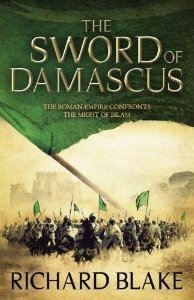 Autorov jazyk je jednoduchý a nevyhýba sa, ako to je dnes moderné, ani používaniu vulgarizmov. Svoj text ozvláštňuje aj takými zaujímavosťami, ako je technológia vykonávania potreby, resp. očisty po nej (otrok so špongiou pripevnenou na palici). Okrem klasického vzdelania Blake v románoch zúročuje tiež svoje politické a ekonomické portfólio: Aelric, len čo sa v Ríme trochu rozhliadne, púšťa sa so svojím novonadobudnutým bohatstvom do finančných špekulácií; pozadia oboch románov i spáchané zločiny, ktoré vyšetruje Aelric, majú jednoznačne politický kontext. Pokiaľ ide o samotné zápletky prvých dvoch románov, ktoré som mal zatiaľ možnosť prečítať, zdajú sa mi príliš komplikované a tiež trochu nasilu konštruované. V ich zauzleniach som sa miestami (najmä v druhom románe) strácal a takisto som mal pocit, že autor niekedy svojho hrdinu priveľmi postrkuje a rieši viac jeho blahobyt ako dôveryhodnosť svojich zápletiek.
 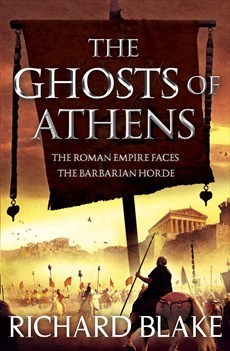 Na druhej strane treba Blakea pochváliť za dobre zvládnuté reálie a za organické začlenenie takých historických skutočností, ako je Fokasov (Fokantov) stĺp v Ríme v prvej knihe či „fanúšikovské“ strany zelených a modrých, ktoré mali naozaj reálny politický vplyv v Konštantínopole v knihe druhej. Posledné Fokasove (Fokantove) slová pred smrťou, adresované jeho nástupcovi, tak ako ich podáva Blake, sa napr. tiež tradujú, hoci v skutočnosti ide zrejme iba o legendu. V knihách vystupuje viacero reálnych historických postáv a Blake ich dokáže podať s dostatočnou mierou sugescie; niektoré (Fokas či jeho zať Priscus) sú dokonca zaujímavejšie ako samotný hlavný hrdina.
Blakeove historické detektívky, odohrávajúce sa na prvý pohľad v málo atraktívnom 7. storočí, možno neoslnia svojimi komplikovane kombinovanými zápletkami, mohli by však zaujať priblížením práve tohto historického obdobia, keď antická civilizácia predstavovala už iba tieň svojej zašlej slávy a žezlo civilizačného vývoja (ako je to naznačené aj v motíve Aelricovej „knihozberateľskej“ činnosti) začali preberať barbari zo severu.
Roman Mocpajchel


Filed under: Book Review, Libertarian Fiction







Civitas on Mass-Immigration
Large-scale Immigration: Its economic and demographic consequences for the UK
Download the report here
Immigration is frequently described as providing a counter-balance to the UK’s ageing population. As an ever-larger proportion of British residents is retired, large numbers of immigrants help keep the average age down and contribute taxes to the Treasury coffers. But how much does Britain benefit – and how does this compare with the costs of a growing population?
In this new analysis of the economic and demographic consequences of current levels of immigration, the distinguished Cambridge economist Robert Rowthorn finds that the potential economic gains from immigration are modest while the strains placed on infrastructure, such as housing, land, schools, hospitals, water supply and transport systems, are great
While GDP as a whole will grow with increased immigration, Rowthorn notes, GDP per capita – a much better indicator of the nation’s wealth – will be only marginally affected by the enormous population growth forecast for the coming century.
He cites the Office for National Statistics’ high migration scenario, which sees growth in the UK population of 20 million over the next 50 years and 29 million over the next 75 years – entirely from migration. This is equivalent to adding a city almost the size of Birmingham to the UK population every two-and-a-half years for the next three-quarters of a century.
“Unrestrained population growth would eventually have a negative impact on the standard of living through its environmental effects such as overcrowding, congestion and loss of amenity,” Rowthorn writes.
Civitas: Institute for the Study of Civil Society is an independent, cross-party think tank which seeks to facilitate informed public debate. We search for solutions to social and economic problems unconstrained by the short-term priorities of political parties or conventional wisdom.
Filed under: Culture War, Liberty







Jobs For The Boys
by Dick Puddlecote
http://feedproxy.google.com/~r/DickPuddlecote/~3/DXX0n7EMQuo/jobs-for-boys.html
Jobs For The Boys Much like we’ve seen with the plain packaging campaign in the past couple of years, it would appear that wherever we see corruption, the Department of Health is often close at hand.
I’ve been reading with astonishment the obfuscation, dubious process and utter disregard for truth which has accompanied Forest’s complaint to the ASA about the government’s mendacious “mutations” anti-smoking adverts. The full story is at Simon Clark’s blog (here and here) and Liberal Vision so do go have a read of the background. Be prepared to pick your jaw up off the floor, mind.
As Brian Monteith astutely notes, “Why do governments lie? Because they can!”. And they wonder why we all despise politicians and the civil service which does their dirty work, eh?
We’re well beyond the looking glass here and into fantasy democracy and pretend accountability. Debate about whether it is even the government’s business to produce scaremongery to bully the public into quitting smoking has been sidelined while we all battle to challenge the state’s right to lie, for Chrissakes! Unsuccessfully in this case, it would appear. You see, the ASA Council has sent a brazen message that lying with the taxpayer’s cash is, indeed, perfectly acceptable in the 21st century.
As an illustration of how state institutions hold the public in utter contempt, there couldn’t be a more stark example. Consider this from the timeline produced by Forest:
3 February 2014 – Letter from ASA to Forest
To update you on the progress of our investigation, we met with the Department of Health on 24 January. The minutes from that meeting will not be made available …
Err, why not? And why was the Department of Health afforded a meeting in camera when I’m pretty sure anyone not paid by the state would have been kept at arms length for the purposes of impartiality? It couldn’t be that they wanted to get their public sector stories straight, could it?
And it all took over 18 months, by which time how many people will have seen this junk science – based on a cherry-picked uncontrolled study of one, yes one, person – and believed it?
Consider too, the members of the ASA Council unearthed by Angela Harbutt:
Ray Gallagher: Government adviser.
Martin Narey: Government adviser.
John Mayhead: Government adviser.
Hamish Pringle: Advertising rep with government clients.
Anthony Earle Wilkes: Training provider for government advisers!
Each and every one seemingly happy to over-rule the ASA executive’s three categorical condemnations of the Department of Health’s mendacious advertising – based on expert advice – and therefore happy for the public to be blatantly misled in order to protect their personal interests.
Likewise Lord Smith, the Chairman of the ASA, who is fresh from being a total cock-up at the Environment Agency and so perhaps thinks it politically advantageous for his future career not to queer his pitch with the Department of Health Mafiosi.
Jobs for the boys, I think it’s called.
In an ideal world they would all be fired immediately for abuse of their positions and charged with crony self-interest. But then, why would the establishment charge some of their own, eh?
Another day; another state abuse of our trust; and another reason why politicians and the system they operate in are overwhelmingly despised. May God rot them, every one.
Filed under: anti-smoking nazis, Liberty