
Alan Baxter's Blog, page 94
December 24, 2010
ThrillerCast with Trent Jamieson
The latest episode of the ThrillerCast podcast is now available. In this episode I review Trent Jamieson's awsome debut novel Death Most Definite, then Dave and I interview Trent himself. We talk about the book, about urban fantasy thrillers, about writing in various person/tense and lots of other stuff.
.


December 23, 2010
New Age of Publishing – Guest Post 1 – Angela Slatter
Over the next few weeks I'm going to host a handful of guest posts from writers, publishers and booksellers talking about the new face of publishing. The world is changing and all aspects of writing and publishing are being affected by the increased digitisation of all aspects of the craft and business. I thought it would be interesting to hear from people about their thoughts and experiences along the way. First up, I'm pleased to present this guest post from author Angela Slatter. You'll probably remember me gushing about her book Sourdough & Other Stories not so long ago. Here she talks about her experiences using Smashwords to put her published work out in ebook form. There's a full bio at the end of the article. Take it away, Angela…
The Smashwords Experiment
The Start
When I first decided to upload a couple of my books to Smashwords I promised I would document the experiment. Time got away on me, so luckily Al Baxter asked me to do this guest blog specifically about my Smashwords experience. And so, here it goes.
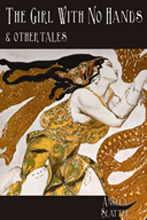
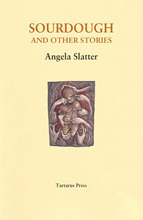 I have two short story collections out this year, Sourdough and Other Stories (Tartarus Press, UK) and The Girl with No Hands and Other Tales (Ticonderoga Publications, Australia). I also have the collection of short stories I wrote for my MA a couple of years ago, Black-Winged Angels, most of which have been published in a variety of magazines, journals and anthologies, but the whole collection hasn't been published all together.
My boss, Kate, is the Queen of All Things on the Bleeding Edge of Digital and she said, "Why don't you put Sourdough up on Smashwords? Then, why don't you put each individual story up, too? And you should have a big enough backlist of short stories by now that you can upload them all."
And I thought, "Why not indeed?" Keep in mind that I am lazy and dislike change, so for me to take this step was quite big. Kate also made the point that, in general, hard copy books make their biggest sales mostly post-launch (any later award-generated sales can change the equation). With ebooks, things tend to be reversed: small sales at the beginning and then increasing as word gets out. Realistically, this is not a money-making venture for me, but it is a really useful experiment.
Reading Time is Essential
So the first thing you need to know about Smashwords is that you have to do a lot of reading before you start uploading anything. Read the Style Guide, the Marketing Guide and the extensive FAQs. It's not annoying, nor is it a waste of time – you just need to be aware that in order to do things properly and save yourself time later, you need to make a time investment at the beginning of your Smashwords journey. If you don't make the time to read all of the documentation, trust me, you will have a bad experience because preparing a document to become an ebook is very different to preparing one for traditional publishing methods – for instance, leaving more than 4 spaces between paragraphs will equal a blank page in an ebook. Your Smashwords doc is pretty plain compared to how you set up a doc for a printer. It's not difficult to do, but if you're taking a file that you've previously used as a print file, then it's a labour of love to get it all correctly converted.
One thing that would be useful would be a checklist in the Style Guide for when you're going to upload a second or third book – you're likely to be familiar with the ins and outs, but a checklist would act as a handy tool rather than having to work your way through all the many steps of the Style Guide.
Assorted Stuffery
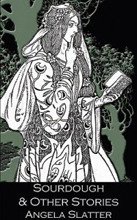
 You need to follow the guidelines for the copyright page. If you've got more than one book on Smashwords then make sure you put links in to that book – cross-promotion wins! You need to make sure you bookmark and hyperlink your chapters – it's not hard but you need to pay attention while you're doing it. Trust me, I've had to fix up the ToC links on Sourdough twice. You don't need page numbers – they're not really relevant if your book's been bought for, say, an iPhone.
You'll also need a cover – make sure your cover is (a) indistinguishable from a traditional cover (author name and title, nice image), and (b) the text is big enough to still be read when it's thumbnail size. Hopefully you've got a friend or partner or someone you can pay or barter with for a cover design. I'm fortunate in that my best friend, Lisa L Hannett (who also did the cover for The Girl with No Hands and Other Tales), did the ebook cover for Sourdough and Other Stories, and my partner, David, did the ebook cover for Black-Winged Angels.
Depending on when you upload your file – and how many other people are uploading their files at the same time – you may find your book moves super-duper quickly through the meatgrinder ("You are # 70 in the queue") or you may find it takes quite a while ("You are # 340 in the queue"). This can make your teeth grind. I'm currently still waiting after 3 hours for the newest version of Sourdough to upload (after fixing – I hope – that ToC issue).
Keep in mind that you need to ensure your book is as well-edited and proofread as a book produced by a major trade publisher. People are still buying a product and they want it to be worth the money they are spending on it. Invest in getting your work at least proofread before you upload it.
Marketing
 Just because you've uploaded your book/s to Smashwords doesn't mean you're going to sell any. Traditional publishers have whole marketing departments to get the word out about your book. You need to utilise handy things like social media to get your own marketing done. Smashwords has its own Marketing Guide, which is filled with common sense suggestions for mobilising things like Facebook, LiveJournal, Twitter, MySpace, etc. to get the word out. Ask professional contacts if they're willing to review, mention, promote, etc., your ebook (if they say "No", be gracious). If you're handy (or know someone who's handy) make a book trailer to upload to the Tubes-of-You or your own website – did I mention you should have a website? To use to help promote your own work? We call it 'author platform' and you should create it and use it.
Publishers
Tartarus Press, who produced the Sourdough collection, only bought rights to publish 350 hard cover limited edition copies – I retain the electronic rights. Before I uploaded Sourdough, I contacted Ray at Tartarus and asked if they were okay with me doing an ebook version. He and Rosalie continued to be lovely and said, "Sure, why not?" They've been thinking about doing ebooks of some of their collections and were happy for me to report back on my experiences. Thus the learning circle continues.
Why don't I have The Girl with No Hands and Other Tales up at Smashwords? Well, out of deference to my publisher. I have the electronic rights, I could upload it at any time and I know from the sheer number of queries I'm getting from readers in the US that I would have a ready-made audience for an ebook version of that collection. However, I know my publisher is wanting to sell the hard copies he's gone to the trouble of printing. The print run for this book was larger than that of Sourdough and Other Stories, so I know there is more product to shift. As I said earlier, the ebook experiment realistically isn't a money-making venture, so there's no point insisting on an ebook version at this point and damaging my relationship with a very nice publisher. My strategy is to maybe in August next year release an ebook version of The Girl with No Hands and Other Tales.
Sales?
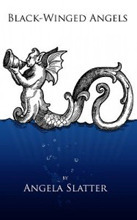 To date, I've made about eight sales – three of Black-Winged Angels and five of Sourdough and Other Stories. I kept the price on each book low in acknowledgement that (a) it's been a hard financial year for a lot of folks who want to continue to buy books, and (b) most of the other books on Smashwords seem to be at the same costing. So, at $4.99 per book, I'm not gonna get rich quick.
The hard cover copies are artefacts, lovely books to read and keep and have on a shelf. The ebooks are – sure, ephemeral – but available in a variety of formats and portable. Basically, you're covering two kinds of readers: those who like to read on screen and those who like to read and own an artefact that has a good heft in the hand and sits nicely on a shelf. More formats and a price range to those formats means you're increasing the number of potential readers you can attract.
Sourdough and Other Stories can be purchased from Tartarus Press, or from Smashwords here. Black-Winged Angels can be purchased from Smashwords here. The Girl with No Hands and Other Tales can be purchased from Ticonderoga Publications.
Bio:
Angela Slatter is a Brisbane-based writer of speculative fiction. For some reason, she has a Masters (Research) in Creative Writing, which produced
Black-Winged Angels, a short story collection of reloaded fairytales, and she is now studying (very slowly) for a PhD in Creative Writing. During her daylight hours, she works at a writers' centre, and she has been known to occasionally teach creative writing.
Her short stories have appeared in anthologies such as Jack Dann's Dreaming Again, Tartarus Press' Strange Tales II, Twelfth Planet Press' 2012, Dirk Flinthart's Canterbury 2100, and in journals such as Lady Churchill's Rosebud Wristlet, Shimmer, ONSPEC and Doorways Magazine. Her work has had several Honourable Mentions in the Datlow, Link, Grant Year's Best Fantasy and Horror anthologies #20 and #21; and three of her stories have been shortlisted for the Aurealis Awards in the Best Fantasy Short Story category.
She is working on various short stories and three novels at the moment. Novel the First: an historical fantasy set in the Crusader Kingdom of Jerusalem. Novel the Second: Finbar's Mother, a mix of Irish and Norse mythology. Novel the Third is an urban fantasy following the further adventures of Verity Fassbinder, the heroine of Slatter's story in Sprawl (Twelfth Planet Press), Brisneyland by Night. She is also working on ways to find more time to write and is trying to stop referring to herself in the third person because it's just weird. She is a graduate of Clarion South 2009 and the Tin House Summer Writers Workshop 2006. 2010 saw the publication of two short story collections, Sourdough & Other Stories with Tartarus Press (UK) and The Girl with No Hands & Other Tales (Ticonderoga Publications). In 2012, she will have another collection of short stories, a collaboration with friend and writing-partner-in-crime, Lisa L Hannett: Midnight and Moonshine will be published by Ticonderoga Publications.
Visit Angela on the web at http://www.angelaslatter.com/
.
December 22, 2010
Unimagined by Imran Ahmad – review
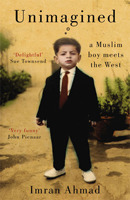 I mentioned recently that I was planning to read one non-genre novel for every SF novel I read. With that in mind I've just read Unimagined by Imran Ahmad. My wife recommend it to me – "It's nothing life changing, but I enjoyed it." It's billed as "a Muslim boy meets the West" and it received heavy literary credit in several countries. Frankly, I can't really understand why.
On the whole, I did enjoy it, as a fluffy read of no real consequence. It's an entertaining account of the life of Ahmad, from his arrival in England from Pakistan at the age of 4, though to his mid-20s. He's not a bad writer and often has some good turns of phrase. He talks about his school life, endemic British racism, going to a Grammar school and eventually getting into university in Scotland, all the time studying the things he really doesn't like while spending all his spare time considering things that do actually interest him. Because of this, Ahamd comes across as a pretty sad individual.
More troublesome, however, is that the whole narrative becomes ever more contrived. The book is written in bite sized chunks of Ahmad's life and it's easy to read because of that, but the man himself seems to never grow up. The naive four year old at the start of the book still inhabits the twenty five year old body at the end of the book. It's hard to accept that anyone can remain so unchanged and undeveloped.
The book is also a veiled attack on all religions bar the man's own chosen Islam, and a subtle push for the veracity of being a Muslim. It's all very light-hearted, with Ahmad struggling with his belief, trying to apply logic to his choice and seeking out the things that scare him – those people that have such conviction in their own beliefs that he questions his own. He ends up coming down to a choice between evangelical Christianity and Islam, eventually deciding clearly that Christianity is a complete mess and Islam is the one true faith. Regular readers here will know that I hold all organised religion in equal contempt, but I'm not averse to reading about other people's journeys and perspectives. The trouble with the religious content of this book is that Ahmad uses his own journey to hightlight all the ridiculous flaws of other religions, while studiously ignoring all the flaws in his own, and falling back on "cultural contamination" when the flaws get a little too close to the surface.
By the end of the book I was rather annoyed with the clean-cut, upstanding, morally superior yet still naive Muslim poster boy that Ahmad set himself up as and was pleased I'd reached the end. There's no real story here, no solid narrative arc and no real reason for this book's existence other than Ahmad's own need to document his life. A life which seems to be largely coloured in with things that suit his desired appearance over the probable truths.
I'm being fairly harsh on the poor man, but I always arc up when I feel like I'm being preached to, especially when said preaching is delivered with an innocent smile as if nothing untoward is going on. Regardless, for the most part I enjoyed reading the book and there were several parts that had me smiling and enjoying myself. It's just a shame that Ahmad didn't grow at all during the journey, which made the last third or so of the book quite a chore. Interesting and often entertaining, but hardly "The pick of the literary crop" as the cover declares, courtesy of the Sydney Morning Herald.
.
ThrillerCast episodes up
 I've been a bit remiss in reminding people about the new episodes of ThrillerCast, the podcast I do with fellow author David Wood. While the podcast is essentially about reading, writing and publishing in the thriller genre, there's a lot of cross-genre talk and all kinds of other interesting stuff. Since I last mentioned it, four new episodes have gone up.
ThrillerCast Episode 5 – Writing a novel
ThrillerCast episode 6 – Writing a thriller, part 2
ThrillerCast episode 7 – The Kent Holloway interview
ThrillerCast Episode 8 – Escapism
You can find all those episodes here: http://www.thrillerpodcast.com/
Next up is a review of Trent Jamieson's debut novel Death Most Definite, followed by an interview with the man himself. Be sure to subscribe via iTunes, then you won't need me to remind you. Which I'm clearly not very good at.
.
December 21, 2010
A Game Of Thrones – George R R Martin
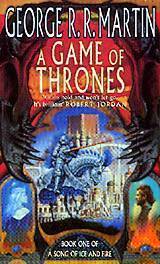 I mentioned before that I was finally reading this massive epic fantasy series by George R R Martin. Basically, I've had the books for ages, buying them because it was something I wanted to read, but putting off the actual reading until the series was finished. I don't like to be left hanging. But now there's going to be an HBO series based on the whole A Song Of Ice And Fire series, so I decided I should start reading. I've just finished the first book, A Game Of Thrones, and Merlin's Cock, is it a fantastic book.
So many people have told me I should read this series and no one I know that has read it thought it was anything less than awesome. I can understand why. The scope of this story redefines the word "epic". It's massive in its ideas, in its cast of characters, in its imagination. You travel through the lives of the key players in a volatile time for this particular kingdom and it's never boring. The political intrigue is fascinating, the races and places are vivid. Seriously, as a writer, this book bemuses me. How Martin is able to create and maintain this world in such detail is mind-blowing. It truly is a masterful achievement.
I had an idea about what this first volume was leading up to, what the basic shape of things at the end would be. I was pretty close to accurate in my prediction, yet Martin still managed to deliver that with a breathtaking clarity and lots of surprises. I can't wait to read on with this series now, even though I know it's not yet concluded. I can understand the masses clamouring for a final volume.
 However, in my new determined effort to read more outside my genre, I've promised myself that I'll read one non-genre novel for every genre novel I read. So I've now moved on to Unimagined, by Imran Ahmad. It's the story of a young man from Pakistan and his life growing up as an immigrant in Britain. So far it's excellent. Fundamentally a memoir, it's written with a kind of succinct brevity that makes it hard to put down. I'll report more on that when I'm finished.
.
December 20, 2010
A great review for Xmas
Those lovely people over at Book Lover's Club, a group on Facebook, have reviewed RealmShift. Here's an excerpt:
RealmShift builds pace as the story progresses, rocketing us towards the ultimate showdown, never releasing us from its grip until the climax.
Not only is it thought-provoking in its exploration of religious beliefs, but contains magic, dark humour, action and fight-scenes so intense and so realistic that it would be difficult to find their rival.
For lovers of dark fantasies, thrillers or just a bloody good read, this book comes highly recommended.
Now I'm looking forward to reading its sequel, Mage Sign.
Wow. How cool is that? I'm very happy. The full review is here. If you're a Facebooker, you should click Like on the Book Lover's Club page as they do good stuff over there. There's also going to be a competition coming up, so if you Like the page you'll get notification of that and any future reviews and comps. It's a win-win for everyone.
.
December 17, 2010
Culturomics – 500 billion words start a trend
My brother-in-law sent me this one from the New York Times (thanks Ade!) and it blew me away. I'm guessing that people already know about the controversial project by Google to digitise every book in the world. If you don't, it's easy to find out a bit about it. Just Google it. *sigh*
Now, from that effort, a huge, and I mean monstrously, giganto-huge, database has been made from nearly 5.2 million digitised books. That database is now available to the public for free downloads and online searches. Before you panic that every book ever written is now available for free (which is what a lot of people fear) take a moment to understand the nature of the database. It consists of the 500 billion words contained in books published between 1500 and 2008 in English, French, Spanish, German, Chinese and Russian. That word-mine comprises words and short phrases as well as a year-by-year count of how often they appear. The potential use for this in cultural studies and humanities is mind-boggling.
"The goal is to give an 8-year-old the ability to browse cultural trends throughout history, as recorded in books," said Erez Lieberman Aiden, a junior fellow at the Society of Fellows at Harvard. He calls this method of mass, high speed analysis "culturomics": the application of high-throughput data collection and analysis to the study of human culture.
There are those that have reservations about the efficacy of the project and those that question the team involved, suugesting that not all the right kind of experts are represented. But you always get that among academics. They can be a bitchy bunch.
The New York Times article closes with this gem:
The warehouse of words makes it possible to analyze cultural influences statistically in a way previously not possible. Cultural references tend to appear in print much less frequently than everyday words, said Mr. Michel, whose expertise is in applied math and systems biology. An accurate picture needs a huge sample. Checking if "sasquatch" has infiltrated the culture requires a supply of at least a billion words a year, he said.
Read the whole article for a much clearer idea of what's happening. There are links in the article to the full Science journal paper (available free to everyone, although you have to register) and an online tool to search the Google database for the use of any particular word or phrase over time. I can see myself wasting a lot of time with this.
.
December 15, 2010
Advertising in ebooks – an inevitable outcome
I made a passing comment on Twitter yesterday that led to some heated discussion. My comment was this:
Ebooks will soon carry links, photos, video, etc. They will also, in order to really monetize the medium, contain ads.
Which I followed with this tweet:
Your ebook will start in 60 seconds, after these messages from our sponsors. #wontbelong
Man, that triggered some visceral reactions from a lot of people. Particualy the advertising part. I think multimedia ebooks are inevitable too, but they're already showing up in some guises. It's a matter of ereaders catching up that stands between the standard ebook as it is now and the future ebook full of other media.
But when it comes to advertising in ebooks, I think it's something that people need to accept. There are many reasons, not least the desire to monetize the ebook and keep "cover" prices down. I'm a big fan of ebooks, but I believe they need to be a lot cheaper than print books. I know all about the general production, formatting and so on, but the same applies to print books. The simple fact is that a person doesn't get a physical object and the price needs to reflect that. Also, with ebook retailers, the margins are much wider. I make a bigger royalty on a Kindle version of RealmShift, for example, than I do on a print version, even though the Kindle edition is $2.99 and the print edition $9.99. But it's obviously in everyones interests for publishers to make a healthy profit as well as authors. The more money a publisher has, the more authors they can take on and the more books they can produce. The more authors and books a publisher has on board, the more choice and variety the reading public have. It's a win for everyone. But how to make it happen?
 It's a simple fact that we live in a capitalist society. If anything is going to work, someone needs to be making money. Ideally, everyone is making money except the people buying the product, and those people are happy with what they get for their outlay. In that environment, other than producing a quality product, a lot of profit comes from advertising. And is it really so bad to have ads in ebooks?
A lot of people on Twitter yesterday complained about ads interrupting the reading experience. I agree that if ads suddenly popped up when you turned a page, that would piss me off no end. But that's not how it has to work. When you buy a DVD, you put it in and you get some ads and trailers before the film starts and maybe some afterwards as well. The movie experience itself is solid and uninterrupted. I see this as the way forward with ebooks. Hopefully consumer demand will force that to happen. If publishers start putting ads in the middle of books, customers should rightly voice their rage and refuse to buy from the publisher any more. But if you have to flick through a few pages of ads before the start of chapter one, it's a slightly annoying but overall not very debilitating chore. Especially if the presence of those few pages of ads means the ebook is a reasonable price and the author and publisher are making money. Obviously, with the presence of ads, it's the publisher that stands to make the most, but don't forget my point above about publishers with good profit margins taking on more authors and giving readers more books.
I even see a time when an ebook might open with visual or video ads that you have to endure before the book itself starts that aren't just the publisher promoting their other books, but third party advertisers buying space. Imagine an ebook of something by John Grisham, Dan Brown or J K Rowling. These are people that sell a lot of books. If their publisher sold advertising space in the opening pages of their books, that space could be sold at a premium. The publisher could stand to make a lot of money. Hopefully we'd see some of that money given back to authors in higher advances and royalties as well as being invested in future projects. I realise this is something of a utopian view and perhaps rather naive, but we can all dream. If the money is there, we can all lobby to see at least some of it spent right.
With most ereaders now utilising wifi and 3G technology, we could even see a situation where a different set of ads pop up every time you open a book. Ideally you'd only ever see ads at the start of the book, but if the advertising code used the wireless networks you might decide to reread a book a year later and see entirely new ads at the start. We're already seeing video games where the billboards are updated with current advertising in-game. It's no great stretch to see that happen with ebooks, thereby making that advertising space more profitable. Someone on Twitter (@NomentionofKev) even mentioned that the ereaders themselves might carry the ads, not the books. That risks a situation where every time you turn on the reader, you see an ad. For me, that's going too far and I'd avoid that kind of reader. But it's quite possible that we'll see that situation before long.
Someone else (@Cacotopos) said that they have a demand list for ebooks – 1) no DRM 2) .ePub 3) no intertextual ads. And they noted that price wasn't even on their list yet. I tend to agree with their list, but I would definitely add 4) Never more than $5 RRP.
Advertising annoys all of us, but it's a necessary evil in a capitalist society. Sure, it would be great to have an ebook with no advertising, but isn't it better to suffer a bit of advertising and have more choice of books, more new authors given a chance to get their work out to wide audiences and cheaper ebook purchase prices? I'm convinced that ads in ebooks are inevitable. It's down to us to think about that and start voicing our opinions now so that we can hopefully help to shape the way that advertising is approached from the outset.
What are you thoughts on the matter?
.
December 14, 2010
52 Stitches in memoriam for Jamie Eyberg
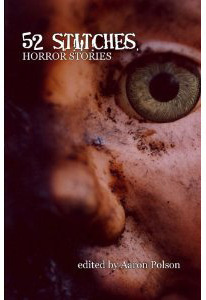 This is a bittersweet moment for me. On the one hand, it's excellent that this new anthology is now available. On the other, it's a sad reminder of the death of Jamie Eyberg and his wife, Ann. All proceeds from the sales of this book will go into a fund for Jamie and Ann's children, Kennedy and Brendan.
Jamie Eyberg wasn't someone I knew personally, but we'd crossed paths many times online. He was a decent bloke and a good writer. In August this year Jamie and Ann were killed in an accident near their acreage home in Coon Rapids, USA. Jamie was 36, Ann was 34. So buying this book is not only going to score you an anthology of great horror fiction, but it will go towards directly improving the lives of Kennedy and Brendan, who both have a hell of a lot to deal with.
But onto the book. It's the brainchild of Aaron Polson, another top bloke and great writer. He runs the 52 Stitches website where a new piece of horror flash fiction is published every week. Each year, those 52 short stories are collected into an anthology, this being the second volume in the series. My story, Jeff Newman's Headaches, is included in this one.
You can get the book from Amazon. Also, check out the other books available from Strange Publications. Think about who might like this book for Xmas and buy a copy or two to share around. Great stories and in support of a great cause.
.
December 10, 2010
Nerdy index
Driving up to Sydney today I found myself behind this car. I had a moment of nerd envy.


