
Jane Brocket's Blog, page 19
June 25, 2013
organic sheds
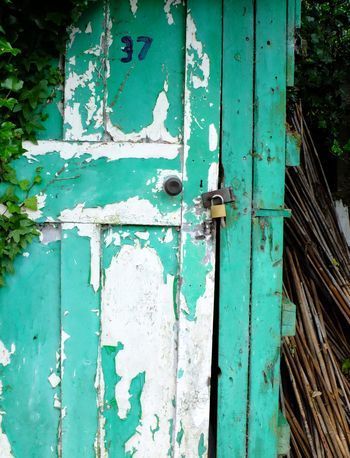
Many allotment associations don't allow sheds or permanent structures, but the place we visited on Sunday had a row of small, thin sheds all round the perimeter like seaside huts but without the juanty names and colours and stripes. Some were ramshackle, some were smart, some were seemingly held together by weeds and baler twine.
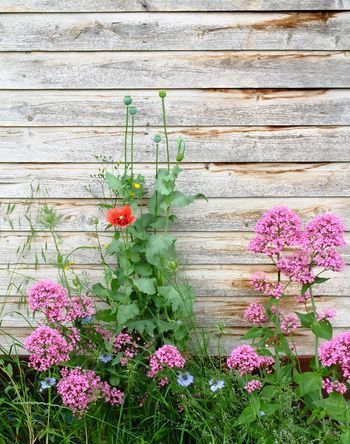
Some were listing to an alarming degree, some were the epitome of make-do-and-mend, and some clearly had not been opened for many years. But all had taken on some character of the place and people, and were an integral, organic part of it.
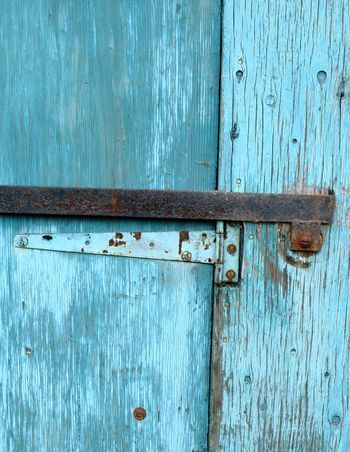
Much to the amusement of the old hands there, an MA student from Surrey University had recently visited to take take photos of the sheds for her dissertation. I could see her point.


June 23, 2013
these foolish things
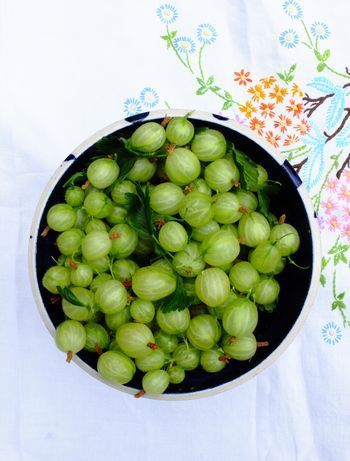
Gooseberries bought from the grower while visiting allotments open for the NGS. The plots contain a lovely mix of classic allotment produce, some more aspirational items (this is Surrey, after all) and flowers wild, perennial, annual and self-seeded. So we saw a joyful mélange of rhubarb, artichokes, foxgloves, peonies, redcurrants, Californian poppies, potatoes, asparagus, sweet williams and strawberries. And gooseberries - for a fool - to be topped and tailed as I listen to Nat King Cole.
(There's been a little spate of books on allotments recently, but the one I like best from an inspirational/beauty point of view is My Cool Allotment by Lia Leendertz.)
June 22, 2013
right angles
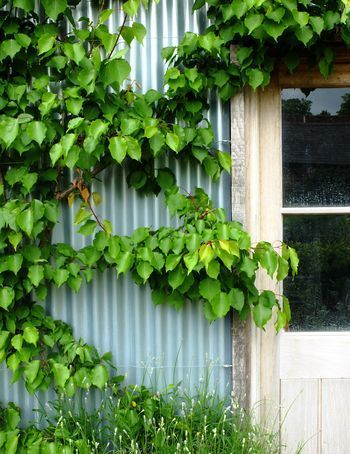
A visit to Tom Stuart-Smith's garden is becoming something of an annual pilgrimage for us. Even after a late night on Saturday celebrating our 25th wedding anniversary, we were determined not to miss the only three hours of the year that it is open to the general public via the NGS.

Although it's rather too popular for its own good and gets very crowded, there's so much to see and admire and swoon over: immaculate lines, tasteful, naturalistic planting (no screamingly bright colours here), spectacularly healthy specimens everywhere, and an intelligence and expansiveness of spirit that make it artistic yet homely, traditional yet modern, wayward yet controlled.
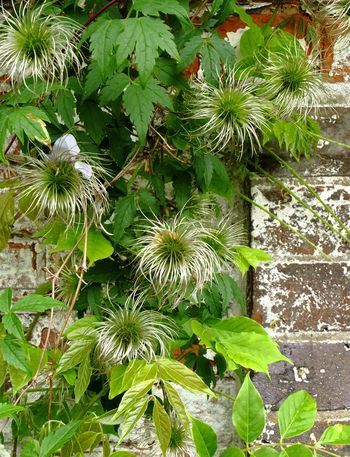
Such a garden poses problems when it comes to taking photos. How to get the right angle? What is the best angle? Do I go wide and attempt to include a full views or do I go close and capture plant portraits and details? The problem with the wider view is that you can't avoid the people and I'm afraid I prefer my gardens without the visitors, and anyway the professional photographers with tripods who can have a place to themselves at the best times of day are always going to do the landscape approach so much better than someone with a small camera and a small amount of space.
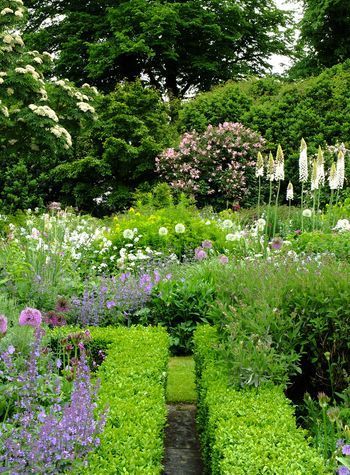
[as wide as I could go]
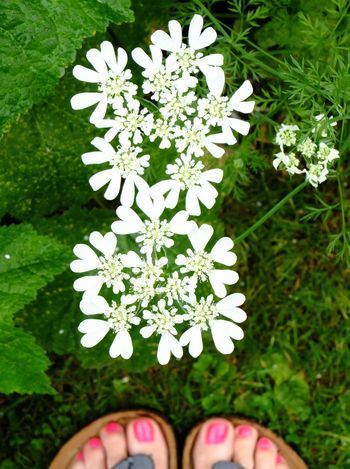
So I look for the intriguing details, favourite plants, interesting juxtapositions, unusual textures and patterns. I also now realise that I nearly always prefer a right angle. It occurred to me that we all stand at right angles to the earth and the horizon, and that I carry this stance into my photos.
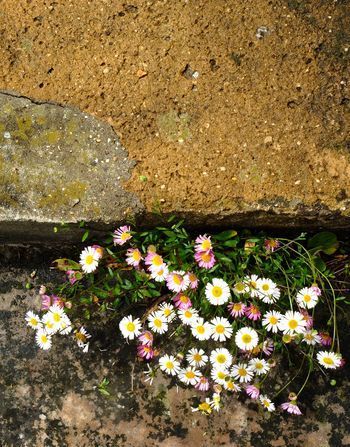
I rarely use oblique angles and will often reposition myself to avoid one; I am happiest standing face-on to my subject and looking for straight lines and right angles. Goodness knows what this says about me and my interpretation of the world, but I find that right angles are the right angle for me.
June 18, 2013
going for a walk

[The Cholmondeley Ladies (c1600-10), British School C17]
I went for a walk today. The first part was along the the Embankment which is inextricably linked in my mind to the lovely song and the lovely image of 'the lights on the Embankment like jewels on chains' as sung by Fairground Attraction which has romanticised the Embankment for me for ever. Even in broad daylight. The second part was a walk through British Art; I have to feel both reassured and unsettled that the Tate says 'until January 2023' and wonder if will I be bored/still looking by the time it changes.
The Tate has completely rehung their permanent displays chronologically with smaller thematic groups beautifully grouped in the various rooms. So you begin the walk at 1545 and stroll through images of British life and people and scenes and imagery and costumes and ideas. It's the first time I've ever wanted to linger near the earlier paintings; the 16th to 18th centuries come out of the rehang particularly well and are all about people and contemporary life (as opposed to the religious/grand set-pieces I usually associate with the periods). After this directness and relevance and freshness, many19th century painters begin to look rather pompous and overwrought despite some wonderful paintings of ordinary life, while the paintings and sculptures from the first six decades of the 20th century, once free of the Victorian baggage, are full of energy and radical stylistic departures. Unhappily, though, some of the recent works from the last fifty years simply make the artist look utterly alienated from society and from viewers - or perhaps it's the other way round.
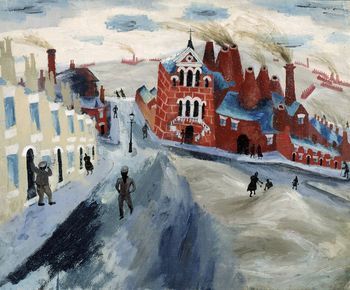
[The Potteries (c1938), Julian Trevelyan]
The Tate has put out lots of paintings that haven't been seen before/for a long time which makes it feel as though you are going round a completely new gallery. It's ambitious, it's fascinating, it's brilliant, it's the best indoor walk in London, and it's free.
June 17, 2013
natural air freshener

So far it's not been a good year for the roses, but on Saturday I found one each on five bushes and brought them into the house where they manage to act as a sweet-smelling air freshener (unlike the aerosol sort, the smell of which made me feel so ill when I was pregnant that I still feel nauseous whenever it's sprayed).
Last week I read Heat Lightning and enjoyed it immensely for many reasons, but was particularly struck by the careful descriptions of smells and fragrances it contains. There's the regular refrain of pickling with 'heavy clove, allspice...and heated vinegar', the scents of flowers such as 'spicy pinks', and the aromas of the 'outer air'. The book has a stillness, an atmosphere of its own which is beautifully evoked in passages such as this: "The room, with the door closed, grew warm... One by one, like timid mice, queer odors crept out and in the stillness of the air, gained boldness. Camphor balls, a hint of lavender, the dry, stuffy smell of matting, dust and oil from the sewing machine, even the rotting leaethr of its treadle strap, lavender again. Amy thought: it's like a spell. They live here, and if I move too quickly, I'll frighten them into hiding."
With a few exceptions such as Proust, Dickens, and Charlotte's Web by EB White which contains an abundance, there's a dearth of smells, good and bad, in literature. I don't know why when there are so many colours, textures, sounds and tastes, but it's amazing how much smells, pongs, stinks, fragrances and aromas can add to and enhance the fictional world you are creating in your head as you read.
June 15, 2013
June 14, 2013
telling it like it is

It could be said that I am pretty plain speaking on a day-to-day, face-to-face basis, perhaps more so than in my writing, but I'm not good at platitudes and euphemisms in either form of communication. Most recently I've realised again that I talk about 'dying', 'death', 'dead' rather than 'passing away', 'passing', 'passed'. My father and grandmother died within four months of each other when I was seven and I was told they had died - not passed away or gone to heaven or anything like that. So I've lived in the shadow of death (as we all do, really) nearly all my life.
I was thinking about my non-use of euphemisms when Alice told me about the Art students' degree show at her university and summed it up as mostly 'conceptual bollocks'. This made me laugh as I know exactly what she means, plus she is well-placed to say this as where she is studying Psychology is one of the best-known nurseries of conceptual art. But I guess some people would prefer a more polite, less unequivocal phrase.

[Scotland Street Schhol, Glasgow, Charles Rennie Mackintosh]
I, on the other hand, went to the Glasgow School of Art on Sunday for a tour of the building, found it was the first day of the degree show, expected it all to be a pile of conceptual bollocks but discovered some truly excellent art. There was a painter and a photographer who stood out and will, I'm sure, make a name for themselves. But there were also two brilliant installations (one is here, the other is by Alexandra Roch and Justyna Ataman in Studio 25) which I found fascinating and meaningful despite the fact that I generally can't stand installations. It's good to be proved wrong; and when I say this is a great show, I'm telling it like it is.

[Scotland Street School]
[The tour is worth doing but if you go when the degree show is on, you can wander all over the building for free. Photography is not allowed inside, and GSA is notoriously difficult to photograph. The best thing you can do is see it like it is. It's one of the best buildings ever. I'd also recommend a visit to the Scotland Street School (free entry) to see another amazing Mackintosh building.]
June 12, 2013
épuisée

[field of gold in Pollok Country Park*]
But, while output diminishes, input increases dramatically. I've discovered that serious illness teaches you an enormous amount. I can't begin to enumerate the things I have learned about life and death, living and dying, myself and others, in the last few months. It's been an intense time, and nothing increases awareness and observation like intensity.
I was exhausted anyway, or épuisée as the French say - a word I have always liked for its several levels of meaning. It means worn out, spent, depleted and, appropriately, 'out of print' which describes just how I was feeling after seven years of writing a lot of books. The well had run dry (I would assume the verb épuiser has a link to un puits which means 'a well'?). Strangely, almost presciently, I had been reducing my publishing commitments over the previous twelve months so that I would be free by November last year. (Despite my best efforts to create space, though, I'm still not quite liberated, although I can just about see the time when I'll be able to move onto new projects.) So I knew I was more than ready for some filling-up, an intake of ideas, books, films, art, travel, conversations, time with friends, in order to refuel my brain. I hadn't quite expected all the life lessons as well, but it seems they elucidate and clarify everything else. They help you to understand what's important and what's not, what to care about and what not to give a damn about, what to fight for and what to discard and ignore. In other words, they make you see your priorities clearly and although this time may be tough and upsetting, it's worth paying attention and learning.

[Glasgow University tower with a thought bubble cloud]
So, I've been working away at material which doesn't require hours, days, months, years of making. I've travelled a great deal; whereas before I'd have had to have lots of warning before setting off, the breaking-up of normal routine with unplanned journeys has made it much easier to slot in last-minute arrangements. In other words (again), I've been seizing the day because, well, you should while you can.
*Travelling up the west side of England by train from London to Glasgow at the end of last week, I have never seen so many buttercups in my life. In fact, I didn't even know that there were whole fields and landscapes that turn, gloriously, to gold at this time of year.
June 10, 2013
dropping stitches
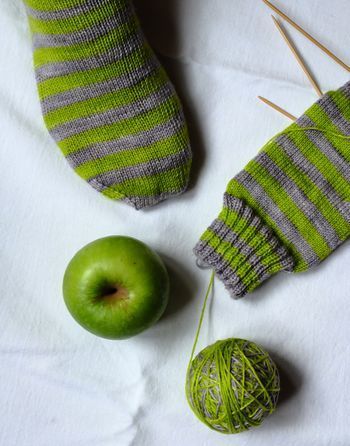
[dropped: the second silver-grey and Granny Smith-green sock]
It's a pretty poor show, really, isn't it? A blog that started out as a craft blog not showing any evidence of making for weeks, sometimes months, on end. Disraeli said, 'never apologise, never explain'; I imagine he was talking to politicians (who have been taking him at his word ever since), but as I have some sort of explanation, I might as well go ahead.
When Tom was five he was hospitalised with pneumonia. We'd just moved back to England from Belgium where doctors and paediatricians were accessible and brilliant, but it was very different here where no-one was able diagnose what was wrong with Tom and I was clearly being a fussy mother taking him to the doctor three times in a week. Finally we got to A&E where he was whisked into the emergency room and things began to happen. He was admitted but after a few days it was clear he wasn't getting better and was by then upsettingly thin. At last it was discovered he had a rare pleural empyema and he and I were rushed to Oxford in an ambulance for specialist care.
Simon or I stayed every night in the hospital with Tom, and I was there most of the days, as well. We moved Phoebe's third birthday without her realising so that it could be when Tom came out, which he eventually did with Twiglet legs and a shockingly prominent rib-cage. We were told not to worry about his chest and that he'd make a full recovery. It took years for me to be calm about the children's illnesses, and I learned then always to rely on my instincts with their health and not be fobbed off by doctors. To look at Tom now you wouldn't think he could have been so ill and so emaciated. He's over 6' 2" and is the only person in the family who is happy to put on weight.
I'd always thought that long hours spent in hospitals and being present but quiet around poorly children would be ideal opportunities for knitting. So once Tom was better, I looked back at the days I spent just sitting with him by his bed or settee and wondered why I hadn't produced lots of knitting, lovely cables and colourful Fair Isle, little bobble hats and long scarves - yet at the time it didn't even occur to me to knit.
This has all come back to me as I consider why I haven't been knitting or making for a while now. For a start, I've always done things in phases which often last for years. I have had long reading phases, knitting phases, studying phases, gardening phases, quilting phases which sometimes overlap and have always run parallel to working and, later, looking after children. So it's not unusual for me to move away completely from something I love doing to return to it at another time in my life. But this particular dropping of knitting has been due to the same sort of discombobulation I experienced with Tom's illness.
It seems I'm not someone who can knit (or quilt or stitch) when things are topsy-turvy. It turns out I am at my most productive when life is running as normal, when my days and weeks have a familiar rhythm, when my mind is free to roam rather than being caught up in anxieties and concerns. In these circumstances, I don't find knitting comforting and I can't maintain the repetitive actions long enough to finish a project. I was quilting until recently, but even that was set aside as we dealt with Simon's brother's final illness, his move to a hospice in January, his untimely death at the age of 53 from Parkinson's with dementia, and continues to be on hold as I drive up and down to Stockport to see Mum, stay in contact with my brother and sister who live near her, do what I can to help from a distance.
Mum was diagnosed with lung cancer in January, and shortly after with bowel cancer. Since then she has had two long spells in hospital, a hemicolectomy, a heart attack, and renal failure. She is now at home with - to her disgust - a Zimmer frame and wheelchair (though the grandchildren, including Alice, love both) and we all take one day at a time.
This explains why I haven't been making much recently. As for an apology, I don't think one is needed from me, although a lot of politicians owe us plenty.
June 8, 2013
new york top 7:7
7/7 graffiti
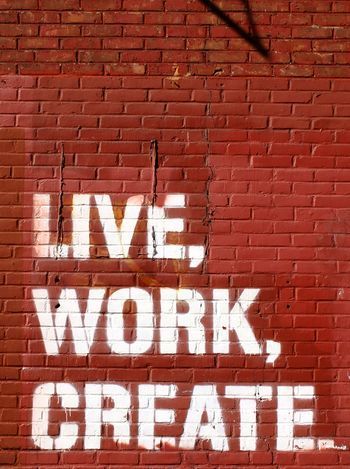
I've always tended to side with talented graffiti artists. I'm impressed by their ability to think large, design brilliantly, work quickly under cover of darkness and often in tricky, scary conditions (how do they ever access the sides of motorway bridges such as the one on the M25 which says 'Give Peas a Chance'?). The best graffiti I ever saw was on the venerable exterior walls of several Cambridge colleges and it was so funny and so clever that I couldn't see how anyone couldn't laugh. I was 17 and too busy marvelling at the wit to consider the idea of desecration.

New York has some good, obviously approved and sponsored graffiti - it's too tasteful and organised to be angry and anti-social - which brightens streets and covers up eyesore spots. I guess this is when graffiti becomes street art, but I imagine the non-establishment graffiti will simply takes its energy and flourish elsewhere.
Jane Brocket's Blog

- Jane Brocket's profile
- 27 followers

