
Jane Brocket's Blog, page 18
July 31, 2013
emma
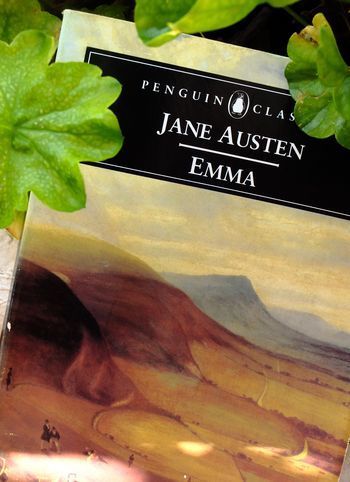
Northanger Abbey was the first Jane Austen novel I ever read and it set the tone for my appreciation of her work for many years. It was an English Literature text when I was 12 or 13 and at an all-girls' school where I argued the toss about feminism on a daily basis. I was incredibly independent, without a father (or any older male in my life) but with a very strong mother who'd been widowed, left with four children, and was working her way up to being a headteacher.
I simply couldn't bear the novel; it made me want to run screaming and howling from Bath, a rigid social hierarchy, female entrapment in a male society, the pressure on young girls to conform, keep quiet, and sell themselves to the highest bidder. I failed to understand how the niceties and fusspottery of social intercourse between a group of moneyed and apparently unemployed people could matter to anyone. It made me wonder how I would have coped in Regency England. I suspect I might have dressed as a sailor and gone to sea.
This is the spirit in which I approached Emma when I was 15. And surprise, surprise, I couldn't bear Emma with her caprices, selfishness, and queen bee approach. But most breathtaking of all was her snobbery, something which I couldn't even regard as amusing, and I certainly didn't think she would ever be cured of it or reformed by marriage and Mr Knightley.
So I hadn't read Emma since then. Until last week, when I enjoyed it enormously. I still have a problem with Emma's appalling snobbery (but then I also have a problem with JA's own snobbery) and her meddling makes me feel horribly uncomfortable. But what a beautifully written and managed book. There are no longueurs, no tedious verbal sparring, no sententiousness. Instead, there is some wonderful comedy, a huge amount of accurate insight into human nature, and some unforgettable characters: Miss Bates is a triumph, Mrs Elton a shocker, Mr Elton a creep.
Nevertheless, much as I was engrossed in the comings and goings of Highbury (it reminded me of Cranford in so many ways), I was still railing against the treatment of women in this society, the expected behaviour, their circumscribed lives, the necessary concealments, and the forms of control imposed on them. I am still disappointed that it takes an older man to educate and improve Emma, and even more disappointed that he gives up his home to move in with Emma and her father who is something of a monster dressed in lamb's clothing (it doesn't take a psychologist to understand his control methods) instead of striking out on their own. If I were in Emma's situation, I might have married Knightley for his strawberry beds, but I would definitely have made him run off to sea with me.


July 29, 2013
persuasion
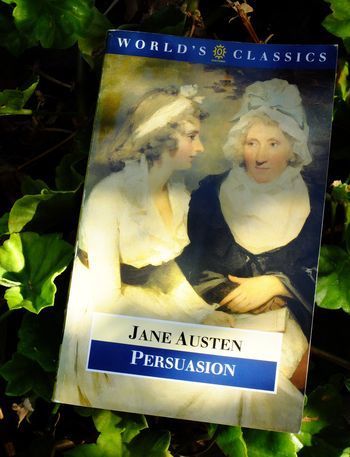
I do not worship at the shrine of Jane Austen. I do not count myself an Austenite. In fact, I needed to be persuaded of her greatness, so I took three of her novels with me on holiday. I'd read all but Mansfield Park before, but in recent years I have been badly put off revisiting the others by the commodification of JA which reduces her novels to heroes in wet shirts, pretty Hollywood heroines, a cult of Pride and Prejudice, innumerable spin-offs, and a great deal of tacky tourism.
Partly because I have been irked by the overdose of P&P and Sense and Sensibility in the media, and partly because it is a wonderfully gentle novel, I have always preferred Persuasion. So this is where I started. I knew I had yet to overcome my intense teenage dislike of Emma and my inability to get further than 50 pages into Mansfield Park, so I began in my only Jane Austen comfort zone.
I also took John Mullan's book to help me read the novels in a new way. I skipped all over it as I read the three novels, and found it entertainingly illuminating. Virginia Woolf said of Jane Austen, 'Of all great writers, she is the most difficult to catch in the act of greatness', and Mullan is particularly good at revealing her narrative techniques which are often so subtle and clever that you don't realise what she's doing and why she's so good until you have it explained to you.
I never need to be persuaded about Persuasion, though. Mullan calls it a 'melancholy novel', but here I disagree with him. It's very funny in places (I sensed JA was laughing a great deal as she wrote some parts), and sardonic in others (snobs and fools do not get off lightly). I like it because it is nowhere near as arch or as self-conscious as the earlier novels, and because Anne is a lovely, relatively plain and mature heroine with an incredible amount of steadfastness. There is the usual jeopardy - will Captain Wentworth see sense or not, some great weather-dependent plot turns (see Mullan), a marvellous, heart-stopping letter-writing scene, and a sigh-inducing end. It was a good start to overturning my own Austen prejudices.
[I read it in the 1992 edition as shown. Not a good preface, and minimal notes. The best current edition is the 2008 OUP one.]
July 26, 2013
spanishness
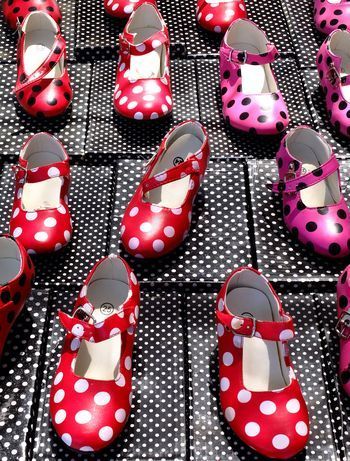
Thriving, bustling, noisy outdoor markets.
Spots and dots in reds and pinks and blacks.
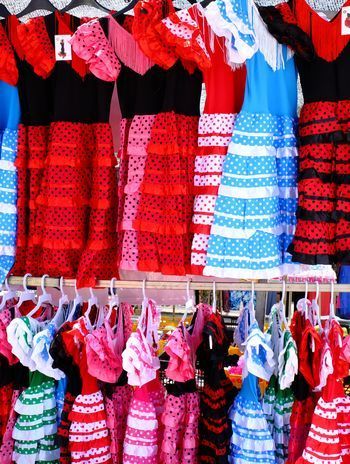
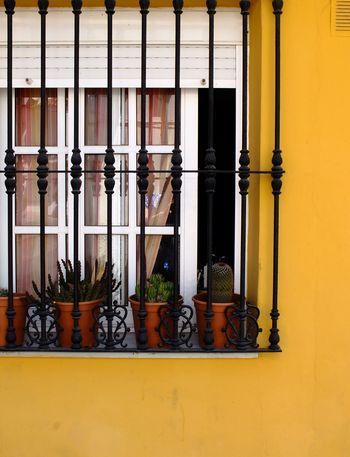
Bright blue and golden-yellow in skies and tiles and walls
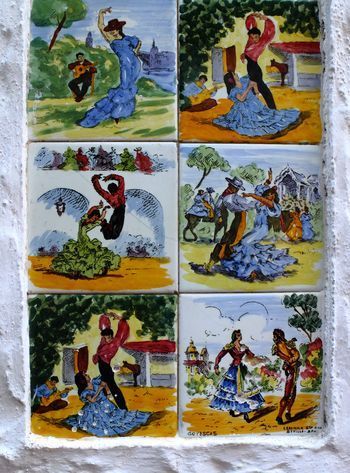
and decorations outside cool, shady indoor markets.
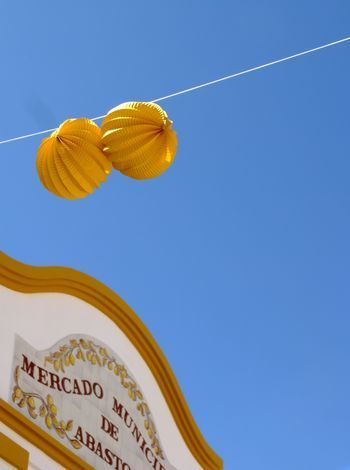
Bright fans
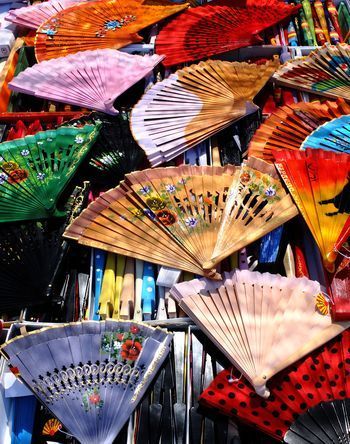
and rainbow sweets.

Spain is colour.
July 25, 2013
vacaciones
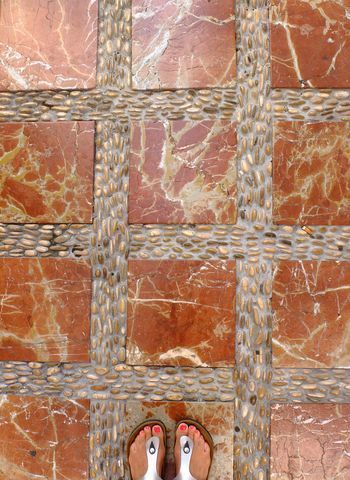
Two whole weeks of unbroken warmth. Not a shiver in a fortnight.
Beautifully laid pavements.
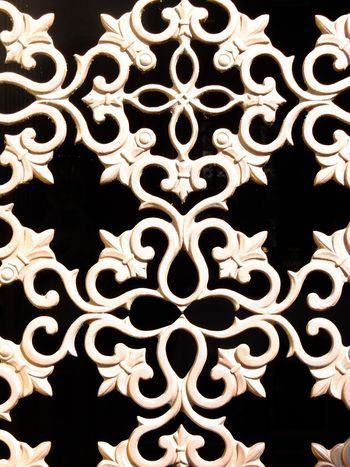
Curlicues of southern Spain.
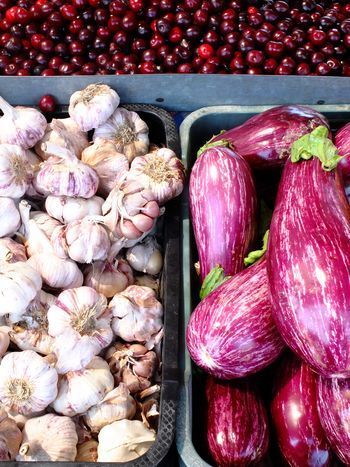
Variations on an edible violet theme.
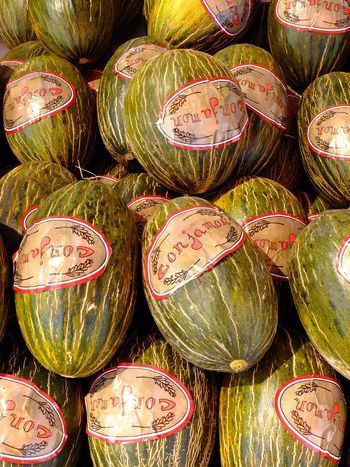
Carefully placed melons.
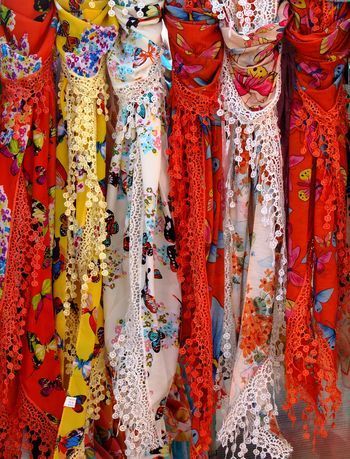
Pretty tourist tat.
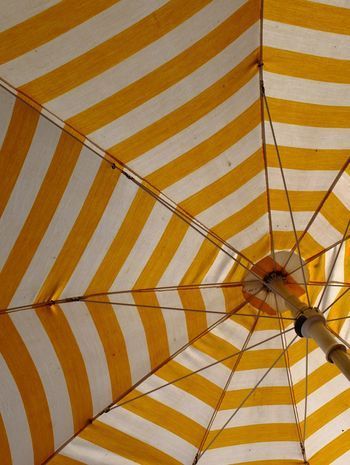
Great views from a shaded reading position.
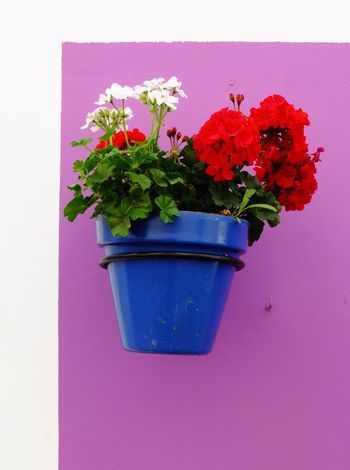
Geraniums in the right places.
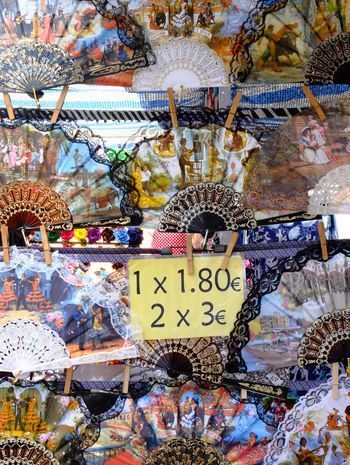
Traditional ways of keeping cool.
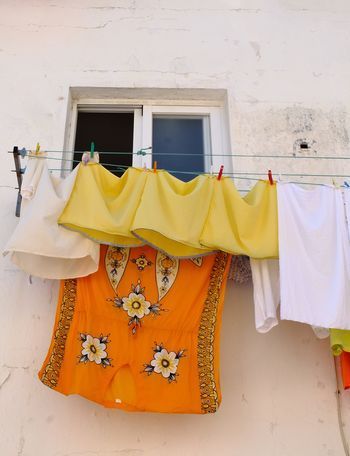
Drying weather we northeners can only dream of.
And great fellow turistas, cold beer, warm swimming, fine books, and a lot of relaxing.
July 8, 2013
hot workshop
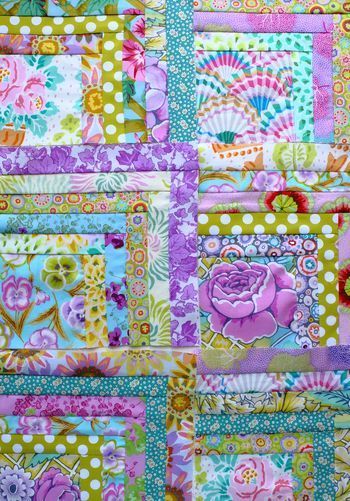
When we arranged the date months ago for the half log cabin workshop at Ray-Stitch, I didn't realise it would be the Wimbledon men's final, that Andy Murray would be in the final, and that it would be the hottest day of the year so far. Ah well, I am not complaining. Murray won, the room was cooler and more comfortable than the rest of London, and everyone produced really lovely half log cabin blocks which was the point of the workshop. I made a few with some strips and squares in fresh, clean sorbet colours and, while they didn't cool me down, they felt just right for the day.
Thank you to Jane, Clare (sp? Jayne/Claire?), Lynne, Rachel and Susan for making it a very enjoyable warm workshop.
July 5, 2013
our house
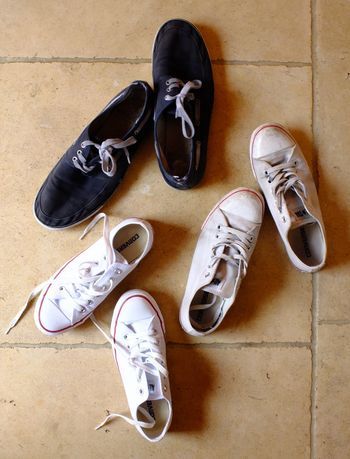
The house is full again. Full of noise, shoes (so many shoes), empty salami packets, geography books, history books, psychology books. There are cushions on the floor, jenga bricks on the floor, clothes on the floor, offspring on the floor. The fridge empties itself apparently overnight. I can't quite get the quantities for spaghetti for five right. I've recieved 'hostage' photos on my phone, seen eggs disappear as if by magic (a cake, a 4-egg omelette for one, a game of egg cricket - the latter now banned), and dyed the ends of someone's hair purple. I hadn't realised how quiet and civilised life had become with one teenager at home, Simon can't believe the shoe situation, and Phoebe isn't happy about the competition for the car (she passed her driving test recently).

When children leave home for university you know you have to accept it, get used to a different dynamic at home, and get on with it. It's the way life goes, and you just hope the first 18/19 years have prepared them well enough. They go off, and you can either brood on the emptiness or you can move on. We did the latter and it's amazing how quickly you can get used to the lack of mess, the reduced quantities of food, the slightly reduced number of shoes. One day you have three competitive teenagers at home filling the house with what three competitive teenagers do (the egg cricket is new - it used to be satsuma cricket), and the next you have just one. You revel in the peace and quiet, the cushions that stay on the settee, and think how well you have adapted to being 'the shore where they casually come again'.*
Then the students come back and you wonder how you could have been been so sanguine, so accepting of the big hole that appeared when they left. You realise that you might have filled it with other things, but that as soon as they return, there's still plenty of room for them. And their shoes.
[*Frances Cornford wrote the very fine and wise Ode on the Whole Duty of Parents]
July 3, 2013
shivering-sweet to the touch
To a Fat Lady Seen From the Train
O why do you walk through the fields in gloves,
Missing so much and so much?
O fat white woman whom nobody loves,
Why do you walk through the fields in gloves,
When the grass is soft as the breast of doves
And shivering-sweet to the touch?
O why do you walk through the fields in gloves,
Missing so much and so much?
by Frances Cornford (1886-1960)
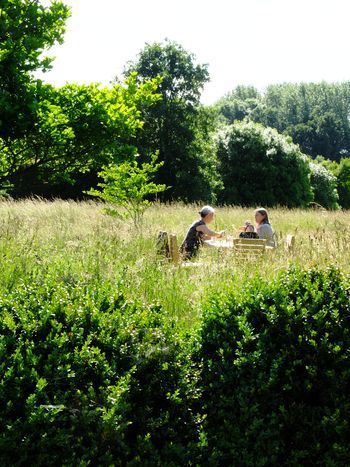
I was glad to see that no-one was wearing gloves as they sat, painted and walked through the fields and meadows of grass and wild flowers at the Festival of Garden Literature held in Tom Stuart-Smith's garden. I'm sure everyone who went near them automatically put their hands out to feel the soft, swaying grasses; I think it's a childlike, spontaneous reaction and this is what makes the 'fat white woman' so sad and so removed from enjoyment of life.
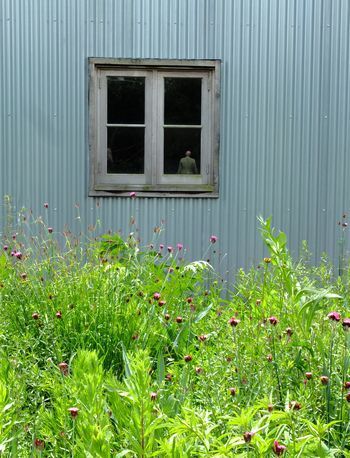
Although I've liked Frances Cornford's poetry for a long time, I have never owned a book of her poems. But I have just bought a very cheap, lovely 1955 edition (she is generally overlooked) of the Collected Poems and it's a real delight.
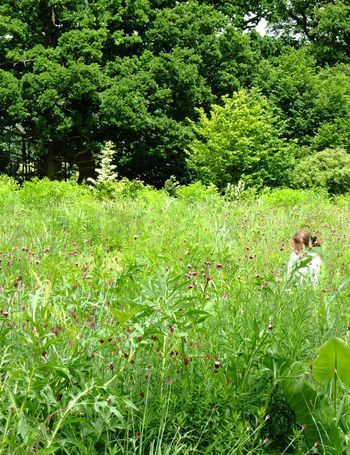
Like a lady who does put out a hand to feel the movement of grasses, she has a light touch which belies a greater profundity. I would bracket her with Wendy Cope, another female poet who is also accused of being too light to take seriously; both use old poetic forms such as triolets and the villanelle which are apparently much harder to master than you'd think from first appearances.
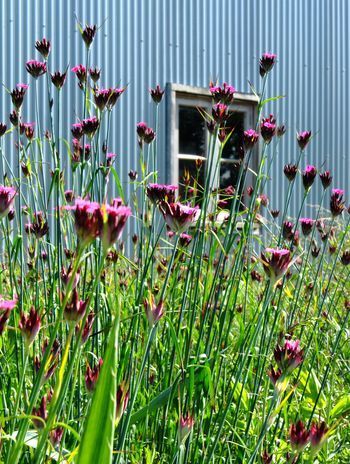
Frances Cornford was born Frances Darwin, great-granddaughter of Charles, and cousin of Gwen (Raverat) who writes about Frances in Period Piece (a book to read and re-read). Her poems often deal with sadness, illness, a wish to sleep, but they are lovely and uplifting: gentle, melancholic, wistful, evocative, personal. And despite the criticism from men such as GK Chesterton, I think she knew exactly what she was doing with the fat white lady, and knew why she was missing so much, and so much.
July 1, 2013
shoreditch


When I was young I never imagined I'd be able to see the London places we sang about in Oranges and Lemons; to me they were as exotic and remote as Bechuanaland and Orange Free State (I don't know why our teacher had such a thing about maps of South Africa). In my mind, these parts of London - Stepney, Bow, Whitechapel, Aldgate, not to mention all the churches which I still think of as all being built by Wren - only existed in a past where it's forever 1666, and I wasn't even quite sure whether they were real or not.

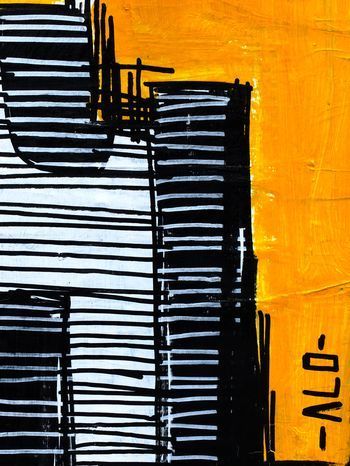
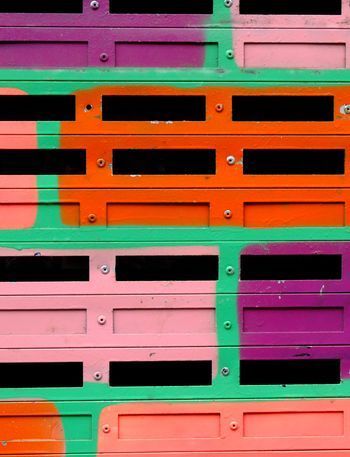
[detail]
So getting on a 243 bus from Waterloo to Shoreditch makes me think how far I have come from that crowded 11+ classroom with 39 children all colouring in those maps of South Africa and not caring a jot about the exact location of Rhodesia, and how much I now enjoy being able to map the old rhymes and songs of London for real.
[detail]
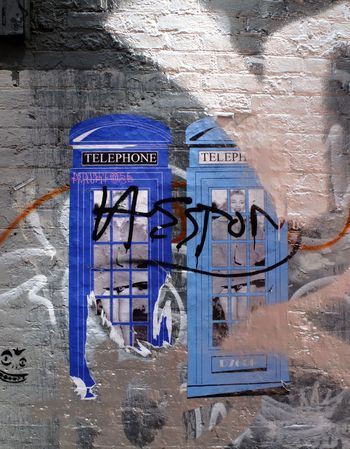
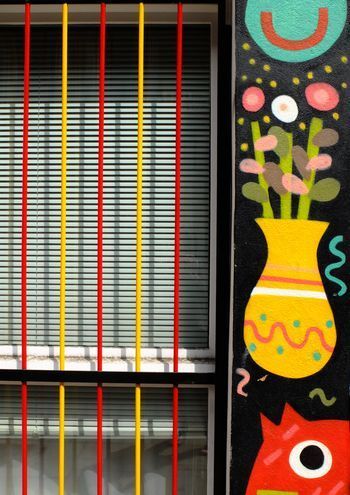
Lat week I had some time to spare in Shoreditch, and decided I would buy some bagels then have a look at Columbia Road on a weekday, but I never got there. Instead my walk to buy bagels took a huge number of mini detours to see the incredible range of street art that has appeared in this part of London.

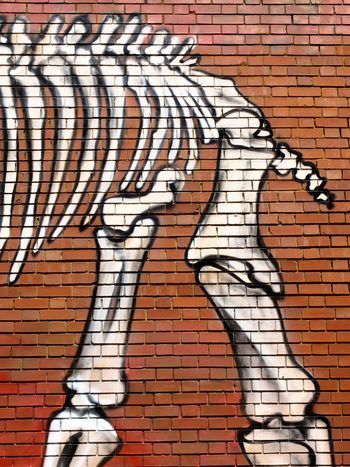
[section]
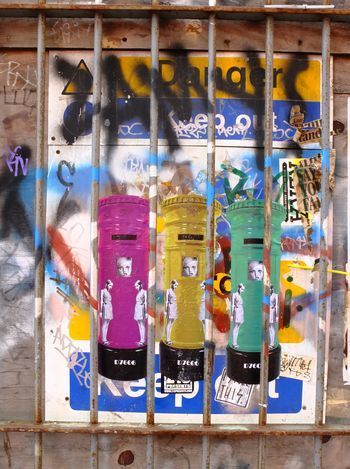
What a brilliant free gallery. What vibrancy, energy, inventiveness, and humour. What colour and beauty and wit and passion. What strangeness, aggression, and darkness. What a great way to spend ninety minutes on a warm sunny day when the pavements are full of people, the coffee smells good, and you can listen in on a graffiti tour - because, yes, that's what you can do in Shoreditch nowadays. Forget the bells of St Clement's, at Didsbury Road Junior School we were never told that London could be this exciting. Instead they just wasted our time with turquoise and magenta Banda-copied maps.

[front half of a creature]

[welly detail]

[The best places for street art are Sclater St, Cheshire St, Ebor St, Camlet St, Whitby St, Club Row, Brick Lane]
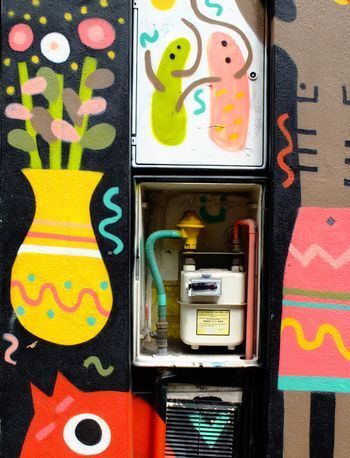
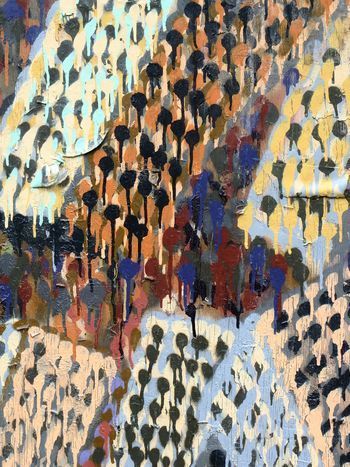
[detail of enormous painting]

June 28, 2013
the other stylish baker
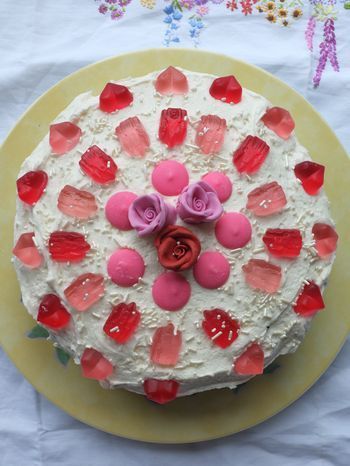
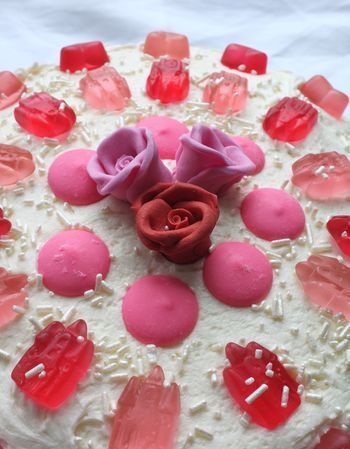
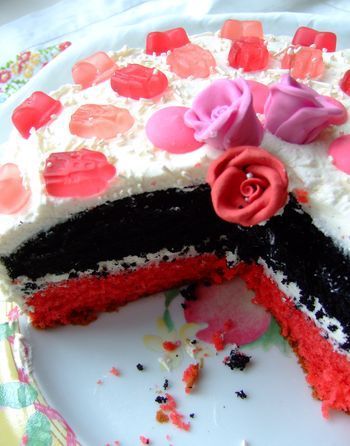
...is home from university and staking her claim to the mixer
and decorations
and food colouring.
Despite it having the blackest, most goth sponge we have ever eaten, the cake tastes great. Love it that this is Alice's 'Princess Cake' (inspired by the tub of gummy 'princess sweets' with castles and hearts that she found in the supermarket).
June 26, 2013
compleat women
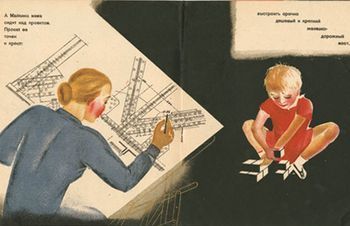
I recently re-read Hidden Lives (1995) by Margaret Forster which had made such an impression on me years ago, and it proved to be just as good a read the second time round. This led to me trying to recall where I'd come across more about MF's domestic and working arrangements (she has always done everything herself without help but with support from her husband while writing numerous books and bringing up three children) and I suddenly remembered it was The Compleat Woman Marriage, Motherhood, Career: Can She Have it All? (1986) by Valerie Grove. This had been one of the great serendipitous book finds of my thirties and I absorbed every single story it contained of different women achieving great things while married with at least three children, Margaret Forster included.
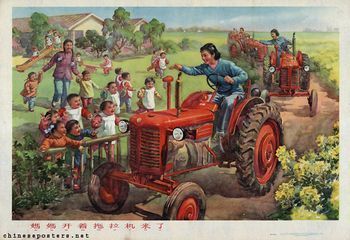
['Mama comes on a tractor', 1960]
I thought it would be interesting to re-read this as well, now that I have had my own experience of marriage, motherhood and work, and I have just raced through it with great enjoyment, a sense of astonishment at what some women do with their lives, a feeling that several were far more formidable and fierce than I'd remembered, and a realisation that many had had tremendous advantages and resources which had improved their lot - something I hadn't quite appreciated first time round when my first reaction was mostly one of awe and fascination. As you would imagine, they were all extremely talented and hard-working, organised their lives to accommodate their work, and virtually all of them had equally remarkable husbands.

However, the book already seems a little dated and I expect it would attract some criticism if it were written this way today. There is a preponderence of London families, doctors, and Oxford-educated women (8 out of 20, plus 2 who went to Cambridge) and an enormous emphasis throughout on fine schools and Oxbridge generally (most of the husbands and children seem to have gone to one or the other, as well) which makes it feel rather exclusive. There are also a fair few interviewees who were were very well-connected from the start (not many Margaret Forsters), and there's a huge reliance on paid help (nannies, au pairs, housekeepers, cleaners) which is to be expected given the the careers these women were pursuing.
However, I finished by thinking that many of the women lived in a world I didn't and don't fully recognise, and that I would now really like to know more about 'compleat women' who have lived less rarefied lives, have emerged from more diverse backgrounds, and who have achieved success in a wider variety of fields (beyond those of medicine, law, education and writing). The basic premise, though, is still brilliant (minimum 25 years of marriage and 3 children, plus an equally successful career to that of the husband) but it would be very interesting to cast the net wider in terms of career type and geography and to find who are, or come closest to being, the 'compleat women' of today.
[I have just discovered that it is very difficult to find paintings of women pictured with their children and husbands/partners but clearly depicted as workers/bread-winners or even in any image other than the classic, seated, motherly position/domestic setting. So I chose some Socialist Realist images of 'compleat women' because the USSR/China assumed women would marry, produce a comrade or two, and work.]
Jane Brocket's Blog

- Jane Brocket's profile
- 27 followers

