Thomas Armstrong's Blog, page 32
September 21, 2016
Biggest Study Yet Scheduled on Adolescent Brain Development (Will Last Years)
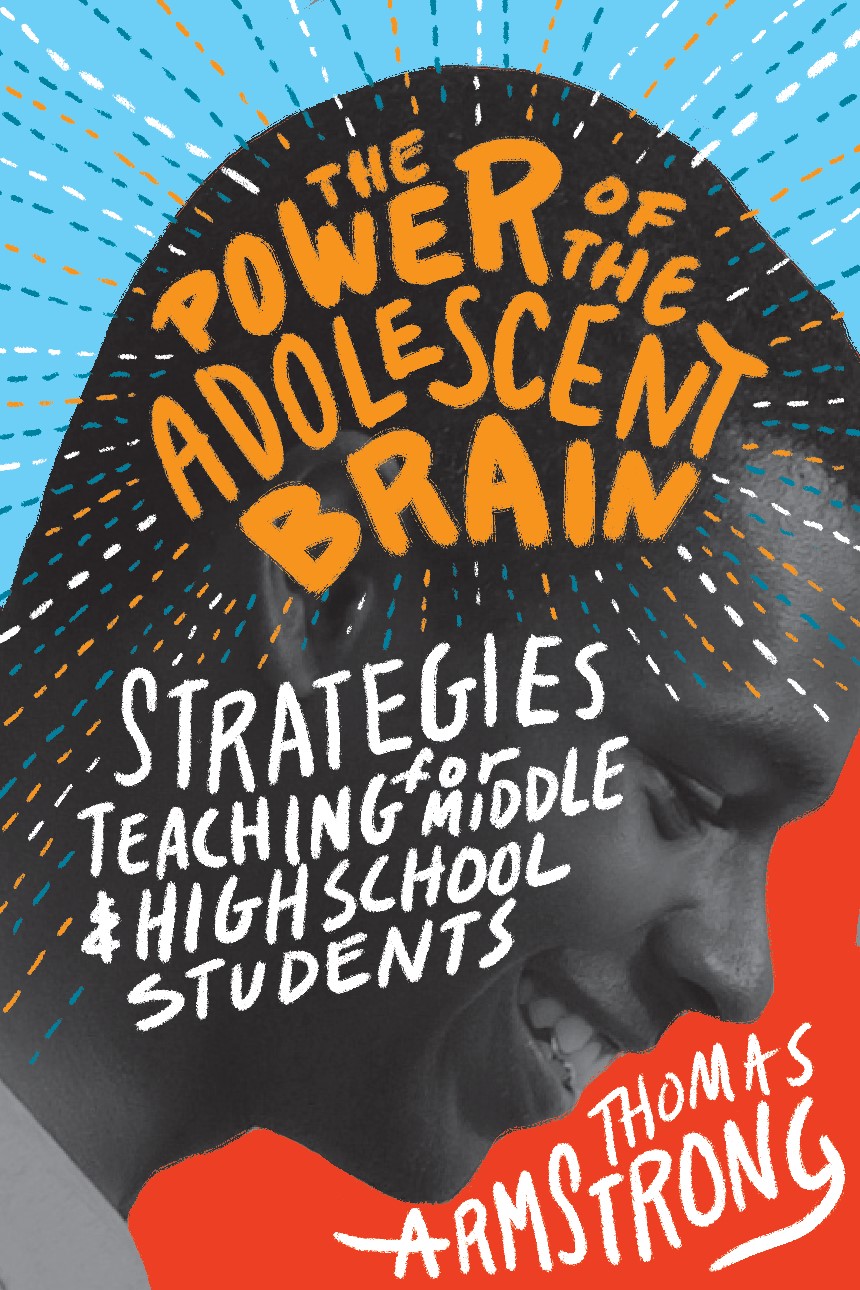 There’s been a lot of buzz in the news over the past few days about a humongous new longitudinal study being launched by the National Institutes of Health in conjunction with several universities to study the brains of 10,000 kids starting at age 9-10 and on into their early twenties using structural and functional brain imaging along with genetics, neuropsychological, behavioral, and other health assessments. It’s called the Adolescent Brain Cognitive Development Study (ABCD). It’s going to take two years just to recruit the subjects for the study (now, that’s a big study!). Researchers hope to discover things that will help to direct future educational strategies, child development innovations, research priorities, more effective public health interventions, and science-based policy decisions. The upside is that scientists are going to compile a lot of new data to inform our understanding of the teenage years. The downside is that we’re going to have to wait 10-15 years before the final results are in. In the meantime, if you’d like to learn about what we already know about the adolescent brain and how that knowledge translates into teaching strategies at the middle and high school level, read my book: The Power of the Adolescent Brain: Strategies for Teaching Middle and High School Students, published by ASCD.


September 15, 2016
Video: The Power of the Adolescent Brain: Part 2 – Six Key Facts About the Adolescent Brain
In this video, I explore six key findings from recent research into how the adolescent brain functions and develops over time. To further explore these issues, see my book The Power of the Adolescent Brain: Strategies for Teaching Middle and High School Students. Below is the transcript of the video:
Hi, I’m Dr. Thomas Armstrong, and this is Part 2 of my video series on the adolescent brain entitled 6 key facts about the adolescent brain. In the last video we noted that up until the 1990’s most scientists thought that the brain was pretty much fully developed by the end of the childhood. In this video we’ll explore some of the new discoveries of the past fifteen years that have transformed our understanding of the changes going on in the adolescent brain.
The first key fact coming out of neuroscience research is that gray matter in the brain is decreasing during adolescence. Gray matter refers to the cell body of the neuron or brain cell, as well as the dendrites (a word meaning ‘’branches’’) and axons which extend out of the cell body that connect with other neurons or brain cells – in this slide it would include the areas colored in burgundy. This decrease in gray matter comes about largely as a result of ‘’pruning’’ or the selective elimination of dendrite connections between brain cells, a process which seems like it should lead to less brain power, but which actually results in a fitter brain that is better adapted to the individual’s local environment. We’ll come back to this idea of ‘’pruning’’ when we talk about the neuroplasticity of the adolescent brain.
The second key fact that neuroscientists have discovered about the adolescent brain is that white matter in the brain is increasing. White matter refers to, among other things, the myelin or insulation (indicated in this slide by the color yellow) that covers the axons which connect to the dendrites of other brain cells. This process of insulation, referred to as myelination, allows for quicker and more efficient transmission of nerve impulses from cell to cell throughout the brain, thus creating a more effective brain.
The third key fact about the adolescent brain is that new brain cells are being created, a process called neurogenesis. In 1998, a brain researcher named Fred Gage at the Salk Institute in La Jolla, California demonstrated that brain cells are being created throughout the life span, something that hadn’t previously been thought possible. This slide depicts the neurogenesis of a brain cell taking place within the hippocampus, a structure important for the processing of emotion and memory.
The fourth important fact about the adolescent brain is that the process of ‘pruning’ that we discussed earlier moves over the course of childhood and adolescence in a wave-like manner from the back of the brain to the front. In this diagram, color is used to refer to the volume of gray matter in the brain. The blue and purple regions indicate areas with less volume of gray matter, less because of the pruning process described above, where dendrites, one form of gray matter, are being eliminated. Note how the blues and purples increase over time, sweeping over the whole brain from age 5 to age 20, and notice especially how that movement proceeds from the back area of the brain to the front (in the case of the brains shown below the diagonal arrow, from the bottom to the top).
The fifth key fact is that because the pruning of the brain proceeds from back to front, the front area of the brain—which is the primary reasoning area– is the last region to mature. This front area is called the prefrontal cortex (just behind the forehead) and is considered to be the seat of rationality. It contrasts with the limbic system, a group of structures underneath the cortex (that includes the amygdala among others), that collectively have been called the ‘’emotional brain.”
These two brain systems mature at different times – a fact which helps explain some of the problems associated with the adolescent years. The emotional brain matures first – in early adolescence – and is associated with such things as risk-taking, motivation, sensation seeking, impulsivity, and emotionality. The prefrontal cortex, which we might call the ‘’reasoning brain’’ on the other hand is associated with decision-making, planning, inhiibiting impulses, reflecting, and self-control, and other higher-order cognitive processes. This area doesn’t fully mature until the early to mid-twenties. So here we have a situation where the emotional brain – which we might compare to the ‘’gas pedal’’ of a car – is fully developed while the ‘’reasoning brain’’ – which according to our analogy would be the ‘’brakes’’ of a car – haven’t yet been fully installed. It’s this gap between the development of these two brain systems that encapsulates the dilemma faced by parents and teachers of adolescents. How to manage all that emotion while helping teens develop their ability to regulate it through reasoning.
The sixth and final key fact of this video is the most important one because it suggests that we can do something about this dilemma. The processes I’ve talked about in this video, including pruning, myelination, and neurogenesis, are all affected by inputs from the environment, including parenting and education. In other words, the way in which the adolescent brain is wired has a lot to do with the kinds of environmental inputs it gets. This flexibility to being shaped by the environment is called neuroplasticity. Jay Giedd, a neuroscientist who has been in the forefront of research on the adolescent brain over the past twenty years talked about adolescent neuroplasticity in this way:
‘’…the pruning-down phase is perhaps even more interesting, because our leading hypothesis for that is the “Use it or lose it” principle. Those cells and connections that are used will survive and flourish. Those cells and connections that are not used will wither and die. So if a teen is doing music or sports or academics, those are the cells and connections that will be hard-wired. If they’re lying on the couch or playing video games or MTV, those are the cells and connections that are going [to] survive.’’
This means that we have a responsibility as parents and teachers, to do all we can to make sure teens have the best and most positive learning and growing environment within which to thrive. In future videos, we’re going to talk about specific strategies that can be implemented at the middle school and high school levels to maximize the chances that the adolescent brain will wire itself for success.
If you want to find out about those strategies right now, or get further information about the material we just covered in this video get my book The Power of the Adolescent Brain: Strategies for Teaching Middle and High School Students. Thanks for watching, and I hope that you’ll look for my other videos in this series on adolescent brain development.
For Further Information: Thomas Armstrong, The Power of the Adolescent Brain: Strategies for Teaching Middle and High School Students. (ASCD)
September 14, 2016
New Video: The Passion and Promise of the Teenage Years (First in a Series)
I’m starting a new video series based upon my book The Power of the Adolescent Brain: Strategies for Teaching Middle and High School Students (ASCD). This is the first video, entitled ”The Passion and Promise of the Teenage Years.” For those of you who prefer to read a transcript rather than watch the video, I’ve provided an adapted version of the video that you can read, below:
Video 1: The Passion and Promise of the Teenage Years
Welcome to my video series on the adolescent brain. This series is based upon my book The Power of the Adolescent Brain: Strategies for Teaching Middle and High School Students. In this first video, we’re going to take a look at adolescence as a stage of life, and examine how it has been viewed throughout history. The word adolescence comes from the Latin word ‘’adolescere’’ which means ‘’to grow to maturity’’ – which, of course, is what we want to have happen during the teen years. And just to let you know that our concerns about adolescents aren’t new, here’s a quote attributed to the Greek philosopher Socrates by his disciple Plato over two thousand years ago:
“Our youth now love luxury. They have bad manners, contempt for authority; they show disrespect for their elders and love chatter in place of exercise; they no longer rise when elders enter the room; they contradict their parents, chatter before company; gobble up their food and tyrannize their teachers.”
Similarly, Plato’s disciple Aristotle had this to say about adolescents: “The young are heated by Nature as drunken men by wine.“ I wonder if Aristotle himself in his teen years was a discipline problem for his teacher Plato!
Four hundred years ago, the English playwright William Shakespeare interjected what might have been his own personal attitude about adolescence into his play Winter’s Tale:
‘’I would there were no age between sixteen and three-and-twenty, or that youth would sleep out the rest; for there is nothing in the between but getting wenches with child, wronging the ancientry, stealing, fighting–Hark you now! Would any but these boiled brains of nineteen and two-and-twenty hunt this weather? ‘’
For many thousands of years, indigenous cultures around the world have understand what a handful adolescents are and have developed rituals or what are called ‘’rites of passage’’ that take young teens through what are often quite brutal challenges in order to transition them into the adult world. In this historical photo, taken from Joseph Campbell’s Historical Atlas of World Mythology, you see some young aboriginal men from Australia being initiated by having to lie down under the hot sun for hours and maybe even days while stinging insects swarm over them. You’ll see some with white stakes near their heads. They are the ones who didn’t make it, who died during the ritual.
The good news is that we don’t have these brutal rites of passage anymore in post-industrial cultures like ours. Instead, we have vestiges of older rites like the quinceanera or celebration of a young girl’s fifteenth birthday in Latin American cultures, or the bar mitzvah or bat mitzvah in Jewish cultures, or the high school graduation and all night party in many communities around the United States. The bad news is that because the element of risk-taking is gone from most of these contemporary rites, adolescents try to fill in the gap by creating their own rites, by, for example, going through gang initiation ritual ceremonies, or engaging in drug use, binge drinking, or other risky practices.
This all comes back to the adolescent brain and how it’s wired differently (and actually wired for risky behavior) for just these few years between twelve and twenty to prepare it for the future. We’ll look at risk-taking in adolescence more fully in a future video. Our understanding of the adolescent brain has undergone a fundamental shift only in the last few years. As late as the 1990’s, it was thought by scientists that the human brain was pretty much finished developing by the end of childhood. By the age of 10, the brain reaches the size of the adult brain and won’t get much bigger after that. But over the past twenty years neuroscientists have discovered dramatic changes going on inside the adolescent brain; changes that are designed by nature to prepare teenagers for the challenges of adulthood. In the next few videos we’re going to look at some of the major findings of this brain research and what they tell us about how we need to educate our teens in middle and high schools.
Again, if you’re interested in the issues I’ve raised in this video get my book The Power of the Adolescent Brain: Strategies for Teaching Middle and High School Students.
Personalized Learning Systems from Big Ed are Depersonalizing
 In today’s educational climate, where students are increasingly being compressed by technology and accountability pressures into computable ‘’data units,’’ there’s never been a more vital priority than addressing the needs of students as persons. While the etymology of the word ‘’person’’ goes back to the idea of having a ‘’persona’’ or ‘’social mask,’’ I think what we’re really talking about when we say we want to expand opportunities for personalization in the classroom, is that we want to empower students to make meaningful learning choices that reflect their own personal needs, wishes, beliefs, feelings, aspirations, strengths, and challenges. That’s why I’m taken aback by some of the highly packaged ‘’personalized’’ learning systems now being developed and sold by Big Ed (my term for the equivalent of Big Pharma). These ed-tech products often give the appearance of offering personalization, but in reality, they more often rate and process a student’s learning needs, wishes, strengths, and aspirations through impersonal algorithms, then generate a profile of the student that includes content ‘’deliverables’’ to be consumed by the student at his leisure (time being the only dimension of the program that isn’t monetized to expand the company’s profit margin). Moreover, the data that students input into these so-called personalized systems can then be closely monitored by supervisory adults (e.g. teachers). Sounds kind of de-personalizing, doesn’t it?
September 13, 2016
New Study Says Teens Will Eat Healthy If They View Food Industry as Manipulative Authority
 A new study from the Proceedings of the National Academy of Sciences reveals that a adolescents will eat healthy foods if they believe they are ”sticking it to the man.” When given accurate information, for example, about how the food industry engineers junk food to make it addicting and engages in deceptive marketing practices aimed at young children, teens will mobilize their age appropriate rebellious attitudes toward unfair authority and begin to eat healthy natural foods. This practice then contributes their own self-concept as being an autonomous individual worthy of the admiration of one’s peers (e.g. a food rebel). This type of approach to adolescent eating habits is superior to the traditional strategy of giving objective information about unhealthy food habits since the latter approach is just another example of an adult authority (the information-giver) lording it over teens (the information-receiver) with their superior knowledge. I’m excited to see this type of novel approach to health education being advocated since it’s in line with research studies on the adolescent brain which suggest among other things, a neurologically-based propensity for peer approval, self-autonomy, and risk-taking (in this case, rattling the cage of Food Inc).
For more information about the educational implications of adolescent brain research, see my book The Power of the Adolescent Brain: Strategies for Teaching Middle and High School Students (ASCD), available from Amazon.
September 2, 2016
Aging Is Associated with Better Mental Health
 Think about the aging process and most people will project negative perceptions and feelings onto the later stages of life. However, a new study that randomly interviewed people in their later years, revealed that while cognitive and physical ailments may increase after sixty, mental health, resilience and the ability to shrug off the small stuff and deal more effectively with complex social relationship issues all get better as you age. That is welcome news for us curmudgeons! Here’s the Medscape article summarizing the research. Here’s the abstract for the original study. Good news for you youngsters coming up the aging ladder!
August 26, 2016
Sign Up For My ASCD Webinar on The Power of the Adolescent Brain
 On Tuesday, August 30, 2016 at 3:00 pm (eastern) and 12:00 pm (pacific), I’m giving a one-hour webinar on my new book The Power of the Adolescent Brain. The webinar is open only to ASCD members, but if you know someone who’s a member, watch it with them! Here’s where to go to register for the event. If you’re not a member and don’t know anyone who is, don’t worry, I’ll be doing more of these presentations on the adolescent brain and how we need to revamp the way we teach secondary school in the future!
July 5, 2016
Check Out Video on My New Book: The Power of the Adolescent Brain
My book The Power of the Adolescent Brain: Strategies for Teaching Middle and High School Students (ASCD, 2016) will be out on July 18th, and I wanted to share a video from Vimeo that gives you a picture in 2 minutes of what my book is about. Look for more videos on this blog in August! Happy watching!
Link to ASCD to order the book here
Link to Amazon to order the book here
May 17, 2016
Don’t Try to Predict What a Child Will Become
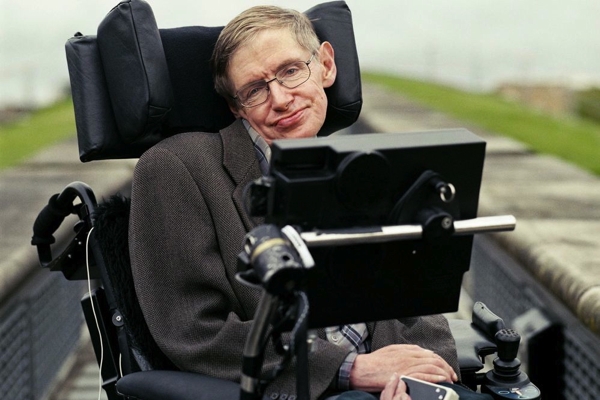
This quote came to me via email and it seems to speak so profoundly to those who look at young children, especially those with special needs, and place them in foretold futures (e.g. ”this child will never be able to …” or ”most children with this diagnosis will grow up to….”). I’m working on revising my book The Myth of the ADHD, and I see this so much with mental health professionals who want to put these kids in the Procrustean bed of self-fulfilled prophecies. This wise quote should remind us all that our children are full of possibilities and that we shouldn’t try to predict their futures for them.
“It might seem that it wouldn’t matter very much if we couldn’t predict what comes out of black holes — there aren’t any black holes near us,” he continued. “But it’s a matter of principle. If determinism — the predictability of the universe — breaks down in black holes, it could break down in other situations. Even worse, if determinism breaks down, we can’t be sure of our past history either. The history books and our memories could just be illusions. It is the past that tells us who we are. Without it, we lose our identity.”
Stephen Hawking’s second BBC Reith Lecture –
February 12, 2016
Sign of the Times: Teacher Verbally Abuses First Grader for Getting Confused on Math Problem
 The New York Times published an article today about a teacher at The Success Academy, a ”high achieving” school in New York City, who was observed abusing a young child verbally for getting confused on a math problem. The article includes an accompanying video filmed surreptitiously by an assistant teacher. In the video, we see the teacher ripping up the child’s paper and almost throwing it at her, we hear the teacher telling the student to go to the ”calm down” chair (even though the student [a first grader!] was sitting very still), and we feel the teacher blasting a whole lot of anger at the innocent child. I was so outraged by the video that I added a reader’s comment to the article. It reads:
”Bravo teacher’s assistant, and bravo New York Times, for capturing and disseminating this vivid example of pedagogical child abuse! There is no other term for it. This video segment serves as a symbol of the extent to which accountability and standards in the United States educational system are endangering our children’s emotional and creative lives. No amount of trying to minimize this incident by the so-called ”Success Academy” (success at what cost?) – can detract from the fact that the teacher’s ”model” behavior is in fact only one dramatic example of what happens all the time in schools across our nation while our educational and political leaders from Obama on down continue to legislate and enforce the stressful conditions under which the most vulnerable of our citizens – the children – labor. We’ve lost a generation. Is it any wonder that our country’s citizens seem now to be unable think for themselves and instead flock to mindless political blowhards who proffer simplistic and dangerous solutions to the world’s woes?”
It is not enough to simply criticize this single incident (the teacher by the way was initially suspended after the story broke, but was then shortly thereafter reinstated as one of the schools’ ”model” teachers). We must ask ourselves what our educational system is doing to children with its insistence on high test scores and grades, and how our society itself may be at risk because of the institutional child abuse that goes on in virtually every public school classroom in the nation where students are treated as test-taking machines and asked to do artificial learning tasks totally unsuited to their natures and needs as natural geniuses who were born with innate curiosity, creativity, and imagination.