Thomas Armstrong's Blog, page 33
October 28, 2015
What Children’s Play is Not
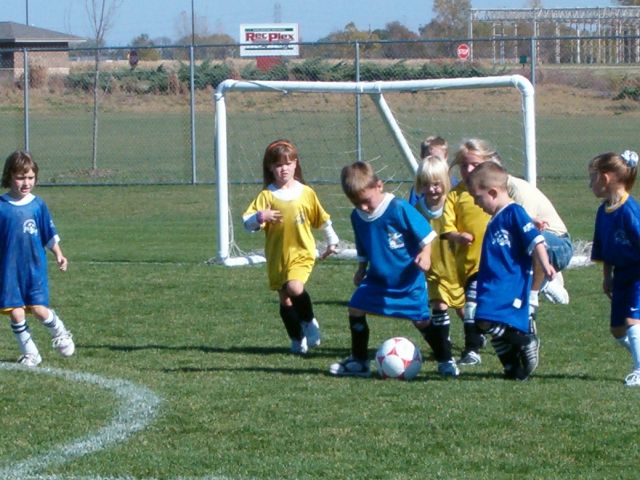 The word ”play” gets batted around a lot in conversations about children’s learning and development needs, but sometimes different people are holding different notions of what the word ”play” actually means. In this two-part blog post, I want to help clarify what I believe true child’s play actually is. In this first post, I want to help define the word by saying what it is not (and what some people think it really is). So okay, here goes:
1. Play is NOT competitive sports: Activities like organized soccer, baseball, basketball, or football are not children’s play because they involve adult-imposed rules and schedules that children generally must follow or suffer the slings and arrows of parents and peers’ disfavor.
2. Play is NOT digital anything. Yes, I know there are apps and sites and software programs that look like play (for example, with Minecraft, kids can play with blocks etc.). The problem, again, is that digital everything is programmed by adult minds, not by children’s minds, and the structures that children must work with are adult-imposed. Moreover, there’s a real problem with anything that’s digital as far as children’s play is concerned. Digital, after all, means that everything is programmed as 0’s and 1’s. Children’s minds don’t work (or play) like that. In true play, children imagine all the subtleties and nuances that scurry around in the nooks and crannies and spaces and corners that 0’s and 1’s never reach.
3. Play is NOT commercially made games. Yes, families can have a lot of fun playing games like Monopoly, Scrabble, and Pictionary, but again, they’re adult-imposed rules. Children’s play must come from children creating their own rules (and if you see kids making up their own rules while playing Pictionary or another commercially-manufactured game, then yes, okay, that’s moving closer to what play really is all about), but still the structure of the game (pieces, board, board design etc.) limit the possibilities of what children can do (and possibilities are a huge part of true child’s play).
4. Play is NOT ”play with a purpose”. This is a form of so-called play that has become very popular with the advent of ”academic scrunch-down” (my admittedly poor working term for how we’re expecting young children to do academic work that was only deemed appropriate for older kids a few years ago; I’m talking about preschool kids and kindergarten children doing worksheets and taking tests, and that sort of thing). In this hideous form of pedagogical child abuse, children are allowed to play ”if there is a purpose”, that is, if it teaches specific objectives that will directly or indirectly lead to academic related skills. So, yes, in this sort of restricted view, we’ll let kids stand around the tub of water to play ”Sink or Float” where they must try to determine if different types of items (sponges, rocks, paper etc.) will sink or float, and we’ll let them do this activity because it teaches skills like ”volume” or ”inference” or ”hypothesis testing” or at least prepares the way for these skills to be learned later on. No, this is not right. Children play because it is an activity worth pursuing in its own right, even if it leads to absolutely no outcomes, objectives, or skills. I’ll talk about why this is the case in my next post.


October 4, 2015
Irish Writer Colm Tóibín Didn’t Read Until He Was Nine
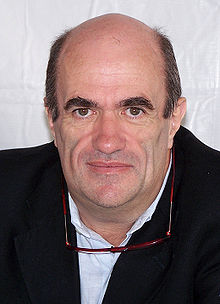 I’m in Jakarta, Indonesia right now, having finished a series of presentations for media, physicians, psychologists, and parents on multiple intelligences for Wyeth Nutrition-Indonesia. Yesterday, I was reading The International New York Times and was amused by this recollection from award-winning Irish writer Colm Tóibín:
”I could not read until I was 9, by which time I had developed a serious stammer. Although my mother once warned me that being a dimwit was likely to have dire consequences, my parents were sweet enough not to mention my stammer or my non-reading much and were smart enough not to seek professional help. They left me to myself. Thus I have no childhood books or authors, but I had plenty of time to think and also to study things and people. I did then learn to read . . . ”
Can you imagine the young child being overwhelmed by speech pathologists, learning disability specialists, reading instructors, diagnostic testing, and parental worry? Maybe he would have grown up to be a dimwit after all!
February 24, 2015
Evaluativism and the Neurodiversity Movement
 Today we have a guest blog from Chris Santos-Lang who is the founder and president of The Organization for Collaborative Leadership, Inc. Chris has written about evaluativism, which, simply put, is the disregard of people with differing values, including political, social, moral, philosophical, gender-based, sexuality-based, racial, ethnic, and class-based values, among other points of view. In this blog post, taken from Chris’s own blog GRIN: How to Let People Be Themselves, this innovative thinker applies the lessons of evaluativism to the neurodiversity movement:
”What do you call it when someone discriminates on the basis of evaluative diversity? For a long time, I didn’t know there was a word for it, but it turns out to be “evaluativism.” In his essay defending evaluativism, Hartry Field offered the following example:
…in dealing with a follower of the Reverend Moon, we may find that too little is shared for a neutral evaluation of anything to be possible, and we may have no interest in the evaluations that the Moonie gives.
In other words, an evaluativist is someone who disregards or avoids people with whom they have disagreements grounded in evaluative differences (and Field’s example is one in which many of us would behave as evaluativists).
Yet much significant research seems unaware of this term yet endorse its concepts. As examples:
Jennifer Mueller conducted experiments which found that, despite consciously endorsing creativity, the average person has an implicit bias against creative people (i.e., disregarding the ideas of Natural Gadflies)
Matt Motyl conducted experiments which found that people avoid communities with differing political ideologies (i.e., Natural Gadflies and the Naturally Institutional avoid each other)
Teresa Glomb analyzed current salaries and found wage inequity which discriminates against people skilled in emotional labor (i.e.,Naturally Relational people)
Jonathan Haidt conducted experiments which found that college students self-segregate even more on the basis of moral diversity (i.e., evaluative diversity) than on the basis of race or socioeconomic class.
To put it bluntly, we engage in evaluativism a lot and without realizing or naming it. Evaluativism is out of control. Where is the movement to fix it? It might have begun with the GRINfree website, or it might have begun with the neurodiversity movement.
The neurodiversity movement grew from the autism movement of the 1990s, especially from Jim Sinclairs’s essay, Don’t Mourn for Us, in which he pointed-out that autism is part of one’s identity, so a parent who wishes their child were not autistic effectively wishes that child were replaced. This sounds remarkably like evaluativism, where a mother wishes her son had not joined that church, or had not fallen in love with that girl, or become a liberal, or become a conservative, or become a materialist. To wish this is to reject the son’s identity, and the son may reciprocate. They may each disown aspects of the other by declaring topics like religion and politics “off the table” between them.
The neurodiversity movement, however, seems to be far ahead of the evaluativism movement. It has a logo (see above), a manifesto (the Holist Manifesto), a national symposium, a host of petitions (including for a neurodiverse doll, for special school districts, and for neurodiverse Disney characters), Thomas Armstrong’s book, The Power of Neurodiversity: Unleashing the Advantages of Your Differently Wired Brain, and even a course at the College of William & Mary (Interdisciplinary Studies 490: Neurodiversity).
Yet where does the scope of the neurodiversity movement end? It is called “neurodiversity” because it includes differences labeled “dyspraxia, dyslexia, Attention Deficit Hyperactivity Disorder (ADHD), dyscalculia, autistic spectrum, Tourette syndrome, and others.“ What are the others? Does the neurodiversity movement even include advocating for more regard between liberals, conservatives, and highly sensitive persons (political orientations do correlate to brain features, as does emotional sensitivity)?
Drawing a line is a problem for the neurodiversity movement because a line would force people to get diagnoses and wear labels. The better solution is for society to appreciate the distinctions observed in individuals even before diagnosis. In other words, appreciate people for who they are, rather than for the labels they wear. But to advocate for that kind of appreciation would be to fight evaluativism.
For example, in an analysis of whether it makes more sense to label people with “Asperger syndrome” and “high-functioning autism” as disabled or to treat them merely as different, Simon Baron-Cohen pointed out that the observable differences that lead to labeling are merely how the person chooses to spend their time, their interests, what they think is relevant and important, what kinds of experiences they prefer, and how easily they are influenced by others. In other words, the differences are all evaluative. Until diagnoses are made, with their accompanying stigmas, there is nothing but evaluativism for the neurodiversity movement to protect these people from.
Here we must take care to avoid stereotypes. Not all women have the same values, so we must not portray sexism as a kind of evaluativism, yet women are more likely to be Naturally Relational, so women’s liberation cannot be achieved without addressing evaluativism. Not all Muslims have the same values, so we must not portray religionism as a kind of evaluativism, yet religionism cannot be resolved without resolving evaluativism. Likewise, John Elder Robinson points out that although autistic people are more likely to reject organized religion today (much less follow Reverend Moon), some church leaders may have been on the autism spectrum. The resolution of evaluativism may be a high priority for the neurodiversity movement, but we should take care not to equate neurodiverse identities with evaluative types.
The word “evaluativism” may be as new to you as it was to me, but members of the neurodiversity movement have always known that evaluativism is an obstacle they face. Armstrong’s suggestion that we recognize the strengths of the children we raise and teach isn’t just a way to respond to a diagnosis–its a strategy for addressing evaluativism in general.
Recognizing this connection is especially important for people who previously thought they had no personal stake in the neurodiversity movement. The truth is that evaluativism threatens every family, company, and nation, and the neurodiversity movement may be best positioned to rescue us. For your own family’s sake, please start following the neurodiversity movement, encourage its activists, sign their petitions, and invite them to address your organization.”
Chris Santos-Lang (email: chris@grinfree.com; website: www.grinfree.com)
February 2, 2015
استراتيجيات لتحفيظ القرآن الكريم باستخدام الذكاءات المتعددة
 I قاد ورشة عمل في أبو ظبي في نهاية هذا الاسبوع حول موضوع الذكاءات المتعددة. كجزء من ورشة عمل لدينا، أنشأنا خريطة العقل من الطرق لتعلم الذكريات القرآن الكريم باستخدام استراتيجيات من تسعة الذكاء. هنا هو الخطوط العريضة للاستراتيجيات تستند إلى خريطة العقل الذي خلقنا.
حفظ القرآن
كلمة الذكية
كتابة الآيات
شفويا تكرار الآيات
الاستماع إلى الآيات
طبيعة الذكية
اختيار أفضل أوقات اليوم (مثل الفجر) لاحياء ذكرى
تحديد ومعرفة الآيات على اتصال مع الطبيعة
سمارت النفس
وضع خطة الدراسة
عدد / المنطق الذكية
إنشاء خط الوقت لتعلم الآيات
دراسة المعاني
الناس الذكية
المشاركة في مسابقة
تلاوة الآيات لوللآخرين
دراسة الآيات مع مدرس
الصورة الذكية
ربط الآيات إلى صور
الموسيقى الذكية
تعلم الآيات بشكل متوازن
سمارت الجسم
العمل من المعاني كما كنت أقرأ
تعلم الشفة والفم الأشكال من الآيات (التجويد)
تحرك الجسم في حين قراءة
الحياة الذكية
وضع المبادئ موضع التنفيذ
التأمل العميق
استخدام 5 صلوات عن وضع لتعلم
December 3, 2014
Neurodiversity Workshop in Plymouth, Minnesota
 Today I was in Plymouth, Minnesota, in the Minneapolis/St. Paul metropolitan area, to speak to around thirty educators at a workshop on ”Neurodiversity in the Classroom” sponsored by The Grants and Research Office (GRO) of Intermediate School District 287 and Northeast Metro District 916. We spent the day exploring principles and applications from my ASCD book Neurodiversity in the Classroom: Strength-Based Strategies to Help Students with Special Needs Succeed in School and Life. I mentioned to the educators that I would make my handouts available through SlideShare, so here is the link (it includes the Neurodiversity Strengths Checklist and the MI (Multiple Intelligences) Inventory for Students. I want to thank Duane Udstuen and his colleagues at GRO for inviting me to present this workshop to educators in the Mpls/St. Paul area!