Brian Dembowczyk's Blog, page 4
November 20, 2024
Jacob and Esau Meet Again
TLDR: A guide for having a family discipleship time on Genesis 33 based on the ACT Bible Study Method.
Act 3: God Promises JesusScene 19: Jacob and Esau Meet AgainGenesis 33:1–20Analyze the PassageStep 1: Introduce the PassageGenesis was written by Moses sometime between 1445–1405 BC to help the Israelites leaving Egypt understand their history with God. It’s one of the five books of the Law that Moses wrote, which we also call the Torah, or the Pentateuch, which means “five books.”
Today’s true story can be a little tense at first, as two estranged brothers meet again for the first time in many years. But we’ll soon see that God can heal and restore people to each other. This story is in Act 3: God Promises Jesus.
Step 2: Read the PassageStep 3: Summarize the PassageWhen Jacob saw Esau coming with 400 men, he divided his family and put the servants and their families in the front, Leah and her children next, and Rachel and Joseph last. Jacob then went ahead of them and bowed to Esau out of respect. Esau ran to Jacob, hugged him, and they both wept. Jacob then introduced his family to Esau.
Esau then asked about the gifts Jacob had given him. Jacob told him it was so he could find favor, but Esau responded that he didn’t need any of it. But Jacob urged Esau to accept the gift, so he did.
Esau then left for Seir and Jacob and his family and animals followed more slowly. Jacob went to Sukkoth and built a house and shelters for his animals. He then went to Shechem, where he purchased a portion of land. He built an altar there and called on God.
Step 4: Interrogate the PassageQuestions you and your family ask might include:
Why did Esau bring 400 men with him?Why did Jacob divide his family the way he did?Was there anything significant about Jacob bowing seven times?Why did Esau and Jacob go back and forth about the gift?Why did Jacob go to Sukkoth instead of Seir to see Esau as he had said?How long was Jacob at Sukkoth?Why did Jacob build an altar at Shechem?Step 5: Wonder about the PassageWonder statements you and your family make might include:
I wonder what Jacob thought seeing Esau coming with so many men.I wonder if Leah understood why she was closer to the front than Rachel?I wonder what it was like when Esau and Jacob embraced and wept together.I wonder if Jacob insisted that Esau keep the gift because he was still worried Esau was angry.I wonder if Esau understood that Jacob wasn’t coming to Seir right away.Connect the Passage to ChristStep 6: Find the World in Front of TextGod designed families to be loving and forgiving. While throughout Genesis Jacob’s family lived far from God’s design, here we see when they seemed to get it right. Esau seemed to genuinely forgive and welcome Jacob. While we cannot be sure about Jacob’s motives—why did he insist that Esau keep his gift?—he too seemed to some degree to want Esau to forgive him and to be restored as brothers.
Step 7: Find the World of Jesus of the TextWe have no greater example of forgiveness than Jesus—both what he did to provide our forgiveness of sins on the cross, and in how he demonstrated such amazing forgiveness for what others did to him. We can learn from Esau, and perhaps Jacob to a degree too, but we can surely live how God wants us to live by looking to Jesus.
Translate It to Your ContextStep 8: Connect the World of Jesus of the Text to Your WorldWho do you need to forgive? Who has wronged you in a big way or a small way that you can truly forgive? How can you let that person know they are forgiven? Who might you ask to forgive you for something you’ve done wrong?
NEXT: Act 3: God Promises Jesus; Scene 20: Joseph Is Wronged by His Brothers (Genesis 37:1–36)
Learn more about this family discipleship method here.


November 10, 2024
Jacob Wrestles with a Man
TLDR: A guide for having a family discipleship time on Genesis 32 based on the ACT Bible Study Method.
Act 3: God Promises JesusScene 18: Jacob Wrestles with a ManGenesis 32:1–32Analyze the PassageStep 1: Introduce the PassageGenesis was written by Moses sometime between 1445–1405 BC to help the Israelites leaving Egypt understand their history with God. It’s one of the five books of the Law that Moses wrote, which we also call the Torah, or the Pentateuch, which means “five books.”
Today’s true story is a turning point in Jacob’s life. Up to this point, Jacob has lived for himself mostly, always trying to get his way even if that meant taking advantage of someone else. That’s going to change now, though. Not completely and not immediately, but the encounter he has with a mysterious stranger will change his name and his life. This is the eighteenth story of Act 3: God Promises Jesus.
Step 2: Read the PassageStep 3: Summarize the PassageAs Jacob continued to travel, the angels of God met him and he believed it was the camp of God. He then sent messengers to meet Esau and determine if he’d receive him well.
The messengers returned and said Esau was coming with 400 men. Jacob was afraid. He divided his people and possessions into two camps, thinking if Esau attacked one, the other would escape.
He then prayed to God, reminding God of the promises he had made and recognizing God’s goodness to him. He asked God to rescue him from Esau, again reminding God of the promises he had made.
Jacob then sent a large gift of animals, divided into three herds, and instructed the servant of each to say the same thing: it is a gift for Esau and Jacob is coming behind them.
That night, Jacob took his family and sent them across a steam, but he stayed by himself where he was.
Then, a man wrestled with him all night long. When the man saw he couldn’t beat Jacob, he hurt his hip. The man told Jacob to let him go, but Jacob refused unless the man blessed him. The man asked his name, and Jacob told him. The man said he’d be called Israel from now on, because he fought with God and with men and prevailed.
Then, Jacob asked the man’s name, but the man only asked why he wanted to know. The man then blessed Jacob. Jacob named the place Peniel and recognized he had seen God and survived.
When the sun rose, Jacob walked with a limp. This is why the Jews do not eat the area of an animal’s hip.
Step 4: Interrogate the PassageQuestions you and your family ask might include:
Why did the angels of God meet Jacob?Was Jacob reminding God of his promises as a way of getting his way and being protected?Why did Jacob divide the gift into three herds?Did Jacob send his family across the stream toward Esau or away from him?Who was the man that wrestled with Jacob?Why did they begin to wrestle?Why did the man want to be let go because dawn was approaching?Why did the man ask why Jacob wanted to know his name?Step 5: Wonder about the PassageWonder statements you and your family make might include:
I wonder what the angels of God looked like and what they did when they met Jacob.I wonder if Jacob was trying to manipulate God in his prayer.I wonder how much of his herds Jacob wanted to give to Esau.I wonder what the man Jacob wrestled with looked like.I wonder how the man began wrestling with Jacob.I wonder how the man wounded Jacob’s hip.I wonder why the man chose to wound his hip.I wonder how Jacob prevailed against God.I wonder why the man didn’t give his name to Jacob.Connect the Passage to ChristStep 6: Find the World in Front of TextIn this account, we begin to see a change in Jacob. To this point, we’ve seen him swindle and trick to get his way. He did it to Esau to get the birthright. He did it to Isaac to get Esau’s birthright. He did it to Laban to get the bulk of the flocks. And he even does it here. He seems to try to bargain with Esau with the three gifts of the flock. Worst of all, it sure seems as if Jacob is bargaining with God in his prayer—reminding God that he had promised to protect him. That seemed less like a prayer of claiming God’s promises in joy and more of claiming them to expect God to work the way Jacob wanted.
Then, we get to the wrestling. This match is a picture of how Jacob lived his life to this point—always in combat with others. Even in this match, he wanted to get the upper hand on his opponent. When the man asked what Jacob’s name was, it was a way of asking what kind of person Jacob was. Names then were not just what a person was called, but was also about a person’s character. It might have been a way the man was asking Jacob what kind of person he was. That’s why this name change is important; it was the man’s way of saying that Jacob was about to be changed. And that’s why the heel wound and limp are important. This was a visible sign of humility.
We don’t see an immediate and complete change in Jacob after this, but this is when we see humility begin to enter his life. And that’s where we see God’s ideal world. God doesn’t intend for us to live in pride and sufficiency. He intends for us to humbly rely on him.
Step 7: Find the World of Jesus of the TextNo one defines humility like Jesus. He shows us perfectly what humility is. When he came to earth, he might not have limped like Jacob, but that he was a human and walked at all, is the greatest sign of humility ever. God wrapped in human flesh and coming to be a servant to people is complete humility. This is the humility we are to imitate.
Translate It to Your ContextStep 8: Connect the World of Jesus of the Text to Your WorldHow can you be especially humble this week? Remember, humility is not thinking poorly of yourself; it is thinking more highly of God and others. It is putting God first, others second, and yourself third. What are ways that you can display humility with your friends, family, and others to show them Jesus?
NEXT: Act 3: God Promises Jesus; Scene 19: Jacob and Esau Meet Again (Genesis 33:1–20)
Learn more about this family discipleship method here.
October 30, 2024
Jacob and Laban
TLDR: A guide for having a family discipleship time on Genesis 30–31 based on the ACT Bible Study Method.
Act 3: God Promises JesusScene 17: Jacob and LabanGenesis 30:25—31:55Analyze the PassageStep 1: Introduce the PassageGenesis was written by Moses sometime between 1445–1405 BC to help the Israelites leaving Egypt understand their history with God. It’s one of the five books of the Law that Moses wrote, which we also call the Torah, or the Pentateuch, which means “five books.”
Today’s true story continues the story of Jacob and we will see him becoming quite wealthy, before leaving Laban’s house with his wives and children. Today’s story is the seventeenth in Act 3: God Promises Jesus.
Step 2: Read the PassageStep 3: Summarize the PassageAfter Rachel gave birth to Joseph, Jacob told Laban that he wanted to leave and head back to his home land. Laban asked Jacob to stay and name his wages to do so, because Laban believed God had blessed him because of Jacob.
Jacob replied that he indeed had helped Laban prosper, but he had to do something for his own family. Laban asked again what he could pay Jacob, and Jacob responded that if Laban allowed him to remove every speckled or spotted sheep and goat, and every dark-colored lamb, that would be his wages. The markings on these animals would verify what was Jacob’s and what was Laban’s. So Laban agreed.
Laban separated Jacob’s animals and put them a three-day journey away. Jacob, meanwhile placed branches in all the watering troughs where the flocks drank. The animals then produced animals that were speckled and spotted. He only did this for the animals that were strong though. So Jacob had the better animals than Laban.
In time, Jacob learned that Laban’s sons were complaining about him becoming so prosperous and Laban’s attitude seemed to have changed toward him. God then told Jacob to return to his relatives. Jacob told Rachel and Leah that he could tell Laban was unhappy with him, but Laban had changed his wages ten times and he further explained that God had grown his flocks. Had Jacon chosen the other kind of animals, God would have grown that number. And now, God had told him to leave.
Rachel and Leah responded that Laban had treated them wrongly too. So, Jacob immediately packed his family and set out with them and his livestock for Canaan.
Because Rachel had stolen his household idols and Jacob had left without telling him, Laban pursued them for seven days. He caught up with them but God warned him in a dream not to bless or curse Jacob.
Laban asked Jacob why he had deceived him and taken away his daughters in secret. He denied him the chance to throw a celebration for them. He told him he could harm him, but God had warned him not to. He also asked why he stole the idols.
Jacob told Laban he left like he did because he was afraid and that if anyone had the idols, they would be put to death. Laban searched but did not find the idols in Leah’s saddle bags.
Then, Jacob became angry and told him all he had experienced because of Laban for 20 years. Laban responded by asking that they make an agreement. Jacob set up stones as a memorial and they promised that neither would cross the line to harm the other. Then, Jacob offered a sacrifice and his family ate a meal.
Early the next morning, Laban blessed his daughters and grandchildren and left.
Step 4: Interrogate the PassageQuestions you and your family ask might include:
Did Jacob need Laban’s permission to leave?Would Laban ever have been okay with Jacob leaving?Why did Jacob place the branches near the livestock?Had Laban changed Jacob’s wages 10 times, or was that Jacob exaggerating? Did Jacob really believe that God would have grown his flocks either way, even after Jacob had done things to intentionally grow his flocks?Had Rachel and Leah been unhappy with Laban before Jacob’s speech, or did that trigger them being unhappy?What were the household idols and why did Rachel steal them?Why did God not want Laban to bless Jacob?Would Laban have really thrown a party before Jacob left?Step 5: Wonder about the PassageWonder statements you and your family make might include:
I wonder why Jacob chose right after Joseph’s birth to leave.I wonder if Jacob truly worked as hard as he said he did.I wonder how many animals Jacob started with after separating Laban’s flocks.I wonder if Jacob knew the branches would help produce animals for him and how he knew that.I wonder if Jacob had planned this way to grow his flocks all along.I wonder if Jacob’s account of the 20 years was accurate.Connect the Passage to ChristStep 6: Find the World in Front of TextThis is another story where we see more of how the world isn’t supposed to be based on both Jacob and Laban’s actions. Both men seemed to be driven by the same thing: greed and selfishness. Both seemed willing to do whatever it took to have an advantage. Laban, it seems, used Jacob to his own benefit—prospering from his hard work and making him feel trapped. Jacob, meanwhile, saw an opportunity to better Laban and took it, growing his flocks while leaving Laban’s weaker. In the end, it led to a family being torn apart, with Laban’s own daughters being against him.
This is the opposite of what God intends. He intends for us to live with generosity and hospitality toward one another. This should have been a family that loved and cared for one another and desired one another’s good. They had ample resources from God, but they hoarded them instead of using them to bless.
Step 7: Find the World of Jesus of the TextWe see the amazing generosity and hospitality of Jesus, who extended both freely, even to those who were against him. Jacob and Laban both seemed to use the wrongs done by the other as a reason for doing wrong back. Jesus, however, gave freely to those who wronged him. And in doing so, Jesus provided the way for us to be forgiven and changed by him so that we can live like Jesus, not Jacob or Laban.
Translate It to Your ContextStep 8: Connect the World of Jesus of the Text to Your WorldHow can you be amazingly generous with someone this week to show them Jesus? Who might you be generous toward, how might you do it, and when might you do it?
How can you show someone hospitality this week? How can you treat someone with friendship, love, and kindness? Think about people who you know of or barely know, especially anyone who seems like he or she might need a friend. What will you do to be a friend to them?
NEXT: Act 3: God Promises Jesus; Scene 18: Jacob Wrestles with a Man (Genesis 32:1–32)
Learn more about this family discipleship method here.
October 20, 2024
Jacob Has a Family
TLDR: A guide for having a family discipleship time on Genesis 29–30 based on the ACT Bible Study Method.
Act 3: God Promises JesusScene 16: Jacob Has a FamilyGenesis 29:1—30:24Analyze the PassageStep 1: Introduce the PassageGenesis was written by Moses sometime between 1445–1405 BC to help the Israelites leaving Egypt understand their history with God. It’s one of the five books of the Law that Moses wrote, which we also call the Torah, or the Pentateuch, which means “five books.”
Today’s true story finds Jacob arriving in his parents’ homeland, and starting a family of his own. This is a major part of what God had promised him, but God makes good on this promise in a rather confusing way. Today’s story is the sixteenth story of Act 3: God Promises Jesus.
Step 2: Read the PassageGenesis 29:1—30:24 (Note: this story includes Jacob marrying two women, and Jacob having children with both and their two maids. If you have younger children, you might want to read much less of the text and summarize it broadly as God giving Jacob a big family.)
Step 3: Summarize the PassageWhen Jacob arrived in Haran, he met some people at a well and asked if they knew Laban, his mother’s brother. They answered that they knew him and indeed his daughter Rachel was at the well. He suggested they take the sheep back out to graze but they told him they couldn’t until after they watered the sheep.
As they were talking, Rachel came by and Jacob uncovered the well and watered her sheep. He told her that he was a relative and she ran to tell Laban. When Laban heard, he rushed to the well and Jacob went to stay with him.
Laban told Jacob that he shouldn’t work for him for free and asked what he wanted as payment. Jacob had fallen in love with Rachel, so he said he’d work for seven years if he could marry her. Laban agreed.
When it was time, Jacob asked for Rachel as his wife and Laban held a feast. That night, however, instead of bringing Rachel to Jacob, he brought his older daughter Leah. In the morning, Jacob learned what happened and asked Laban why he had tricked him. Laban explained that it isn’t customary for the younger daughter to marry first. Laban said if Jacob agreed to work seven more years, he could marry Rachel too. Jacob agreed and ended up marrying both sisters and worked a total of fourteen years. Jacob loved Rachel more than Leah.
When God saw Leah was unloved, he gave her sons—Reuben, Simeon, Levi, and Judah. Leah hoped that these sons would cause Jacob to love her, but it didn’t.
Meanwhile, Rachel couldn’t have children. So, she became jealous and she gave her servant to Jacob and they had sons—Dan and Naphtali.
When Leah couldn’t have children any more, she gave her servant to Jacob and they had sons—Gad and Asher.
One day, Reuben collected some mandrakes, and Rachel and Leah made a deal for them and Leah had another son with Jacob—Issachar. Then Leah had another son—Zebulun. She also had a daughter—Dinah.
Finally, Rachel ended up having a son—Joseph.
Step 4: Interrogate the PassageQuestions you and your family ask might include:
Why do so many of these stories include wells?Why did Jacob tell the shepherds to go back into the fields?Why did Jacob choose seven years as the time to work for Rachel?Why didn’t Laban let Jacob marry Rachel before working seven years?Why didn’t Jacob know Laban had brought Leah?Why did Jacob agree to work seven more years for Rachel, even if Laban had tricked him?Did God approve of Jacob having two wives?Did God approve of Jacob having children with the two maids?Step 5: Wonder about the PassageWonder statements you and your family make might include:
I wonder how Jacob felt being tricked, especially since he liked to trick people himself.I wonder if Jacob understood how favoritism can be so hurtful considering that had been a problem in his family.I wonder if Rachel and Leah had always been competitive and adversarial with each other.I wonder why the mandrakes mattered so much.I wonder if these children got along with each other.Connect the Passage to ChristStep 6: Find the World in Front of TextThe family is a central part of God’s design for the world, but not exactly in the way we see it in this passage. While things start well, with extended family members who didn’t even know each other connecting, bonding, and showing hospitality, it all quickly unraveled with Laban tricking Jacob (the tricker himself), Jacob marrying two women and favoring one, and the two wives competing for children for attention, love, and value. In the end, Jacob had the large family God promised, but it was another broken, hurting family This isn’t what God intends for families. He intends for committed, loving, unified families that flourish.
Step 7: Find the World of Jesus of the TextLove is at the center of this story, but not in a good way. It’s a story about a lack of love and conditional love. It’s a story about family love that isn’t strong enough for people to trick one another and compete with one another. It’s a story of what love can be, but seems to be so far from. This is heightened by a verse in the middle of the account of Jacob working seven years as if they were nothing because of his love for Rachel.
This all points us to a longing we too have for love, a love that we can find in Jesus. Jesus shows us what perfect love looks like—he isn’t manipulative. He isn’t conditional. He pours out his love on us in full measure. That’s what we want from him and that’s the same kind of love we should extend to others. We are to love with a deep and true love, nothing like the shallow love we seem to see in this passage.
Translate It to Your ContextStep 8: Connect the World of Jesus of the Text to Your WorldWho can you show the love of Jesus to this week? What are some ways you can love your family, friends, neighbors, and even strangers with the amazing and powerful love of Jesus?
NEXT: Act 3: God Promises Jesus; Scene 17: Jacob and Laban (Genesis 30:25—31:55)
Learn more about this family discipleship method here.
October 15, 2024
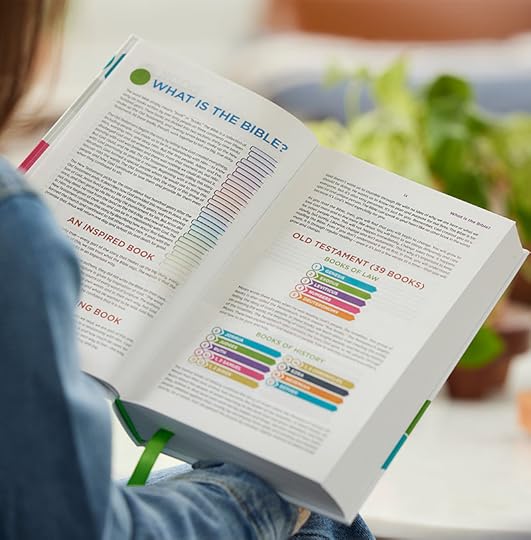
New Color Code Bible for Kids Released
TLDR: A refreshed Color Code Bible for Kids that introduces kids to the big ideas of the Christian faith has just hit store shelves.
One part of my job that I perhaps love the most is looking at great Bibles that we publish that could be made even better to serve kids, students, and adults. The Color Code Bible for Kids is one of those Bibles.
The Color Code Bible for Kids identifies nine big truths of Scripture—God, Sin, Jesus, Salvation, Love, Worship, Growth, Heaven, Family—and highlights verses for each in a different color to make them easy for children and families to find. A brief introduction for each book and a few helpful articles on what the Bible is, who wrote the Bible, how we should read the Bible, and interesting facts and figures about the Bible also help kids understand and grow to love God’s Word.

I love the Color Code Bible for Kids because it’s visually interesting for kids and helps them see these critical theological themes in the Bible without overwhelming them with too much information. It teaches subtly, but powerfully. It’s accessible without being shallow.
The Bible comes in three cover options: hard cover, blue leathersoft, and pink leathersoft.
October 10, 2024
Jacob Has a Dream
TLDR: A guide for having a family discipleship time on Genesis 28 based on the ACT Bible Study Method.
Act 3: God Promises JesusScene 15: Jacob Has a DreamGenesis 28:10-22Analyze the PassageStep 1: Introduce the PassageGenesis was written by Moses sometime between 1445–1405 BC to help the Israelites leaving Egypt understand their history with God. It’s one of the five books of the Law that Moses wrote, which we also call the Torah, or the Pentateuch, which means “five books.”
Today’s true story is one of hope, after a couple of stories that don’t show Jacob in the best light. Even though Jacob has proven to be unloving and dishonest, God meets with him and makes a familiar promise to him. Today’s story is the fifteenth story in Act 3: God Promises Jesus.
Step 2: Read the PassageStep 3: Summarize the PassageWhen Jacob was traveling, he stopped for the night and camped. When he fell asleep, he had a dream of a stairway reaching from the earth into heaven. The angels of God went up and down on the stairway, and God was at the top. God promised to give Jacob and his descendants the land he was on. He also promised that Jacob would have a large family and spread out, and that all families would be blessed because of them. God further promised that he would protect Jacob and be with him.
When Jacob woke up, he remembered the dream and recognized he had been with God. He took a stone that had been near his head and made an altar. He called the place Bethel and made a vow that if God was with him, protects him, provides for him, and returns him safely, God would be his God. He would then give a tenth of what he had.
Step 4: Interrogate the PassageQuestions you and your family ask might include:
Why did Jacob place a stone near his head?What did it mean that angels were going up and down a stairway?Why was Jacob afraid when he woke up?Why did Jacob pour oil on the stone?Why didn’t Jacob make God his God then?Step 5: Wonder about the PassageWonder statements you and your family make might include:
I wonder what the stairway and angels looked like.I wonder if Jacob recognized the promise God made to him was the same as he had made to Abraham and Isaac.I wonder if Jacob woke up from the dream in the middle of the night and went back to sleep, or if it was in the morning.Connect the Passage to ChristStep 6: Find the World in Front of TextThis story shows us an important truth about God; he is faithful to his promises no matter what and he is full of grace and mercy. Surely, Jacob has shown by now that he did not deserve God’s goodness. But God had promised that he would continue growing a people through Jacob. And that wouldn’t change.
From a human perspective, though, this story shows one big way the world is not supposed to be. Jacob is traveling away from his family because of his sin. Then, when he wakes up and loads several conditions upon his following of God. God had just promised to bless him, but he wants to see proof. And if he doesn’t see proof, he won’t follow God. Many people do the same, but God wants our complete trust in him.
However, Jacob does do something positive here, showing us a glimpse of the world God intends: he promises to tithe all he has. This is an act of obedience and generosity.
Step 7: Find the World of Jesus of the TextGod’s amazing generosity to Jacob, and Jacob’s lesser generosity in response, is key to this account. And this generosity points to Jesus. Just like God was generous toward Jacob even though Jacob didn’t deserve it, Jesus is generous with us, giving us his very life, even though we don’t deserve it.
Translate It to Your ContextStep 8: Connect the World of Jesus of the Text to Your WorldHow can you be amazingly generous with someone this week to show them Jesus? Who might you be generous toward, how might you do it, and when might you do it?
NEXT: Act 3: God Promises Jesus; Scene 16: Jacob Has a Family (Genesis 29:1—30:24)
Learn more about this family discipleship method here.
September 30, 2024
Jacob Steals Esau’s Blessing
TLDR: A guide for having a family discipleship time on Genesis 27–28 based on the ACT Bible Study Method.
Act 3: God Promises JesusScene 14: Jacob Steals Esau’s BlessingGenesis 27:1—28:9Analyze the PassageStep 1: Introduce the PassageGenesis was written by Moses sometime between 1445–1405 BC to help the Israelites leaving Egypt understand their history with God. It’s one of the five books of the Law that Moses wrote, which we also call the Torah, or the Pentateuch, which means “five books.”
Today’s true story continues the story of Jacob and shows more of how he wasn’t the first person we’d choose to become the father of the twelve tribes of Israel. This is the fourteenth story of Act 3: God Promises Jesus.
Step 2: Read the PassageStep 3: Summarize the PassageWhen Isaac was old and couldn’t see well, he called for Esau to hunt for some wild game, make him a meal, and bring it to him so that he could bless him. But Rebekah was listening and told Jacob to get two goats from the flock, and then she would make the meal and he would take it to Isaac to be blessed instead. Jacob asked about Esau being hairy, and Rebekah had him wear Esau’s clothes and put animal skins on his arms to appear to be hairy.
When Jacob, pretending to be Esau, took the food to Isaac, Isaac wondered how his son caught an animal so quickly, touched his arm, said the voice sounded like Jacob, and asked if it really was Esau. Jacob lied each time, and Isaac ended up blessing Jacob thinking he was Esau.
When Jacob left Isaac, Esau came in and they realized what had happened. Esau asked Isaac to bless him too, but Isaac could not. Esau became furious at Jacob for taking the birthright and now stealing the blessing. Esau hated Jacob and determined to kill him after Isaac died.
When Rebekah learned of Esau’s anger, she told Jacob that he needed to leave at once, going to Laban’s house to find a wife. So, Isaac agreed to send Jacob to Laban’s house to find a wife and Esau stayed there and married a Canaanite woman.
Step 4: Interrogate the PassageQuestions you and your family ask might include:
What did it mean for Isaac to bless Esau?Why did Rebekah want Jacob to get the blessing instead of Esau?Was the blessing that Isaac gave part of the covenant God had made with Abraham?How did Rebekah hear of Esau’s anger?Why didn’t Isaac want his sons to marry a Canaanite?Why did Esau marry a Canaanite woman?Step 5: Wonder about the PassageWonder statements you and your family make might include:
I wonder what the meal was that Isaac liked.I wonder if Isaac ever really thought it was Esau with him the first time.I wonder if Jacob felt guilty as he was tricking his father.I wonder if Rebekah didn’t realize Esau would be so angry.I wonder if Isaac and Esau learned Rebekah had played a part in the trickery.Connect the Passage to ChristStep 6: Find the World in Front of TextThis is another story that shows us how the world is not like it is supposed to be. Here, we see a family torn apart because of the sins of favoritism, lying and deception, and anger. This is far from the world that God intends. He designed families, especially, to be filled with love, truth, and peace.
Step 7: Find the World of Jesus of the TextThis is a family that surely needed an infusion of forgiveness and generosity especially. Ideally, they would have put an end to the favoritism and trickery, but a heart of forgiveness would have also greatly helped them avoid the strife that plagued them for years after this. Jesus shows us the better way; a way that is marked by radical forgiveness.
Likewise, the family was greedy. Jacob wanted what wasn’t his, and his mother wanted it for him too. Instead, they should have been generous, giving what they had to support Esau. Jesus shows us a better way in this regard too, as he lived with great generosity for the good of others, not for himself.
Translate It to Your ContextStep 8: Connect the World of Jesus of the Text to Your WorldWho do you need to forgive? Who has wronged you in a big way or a small way that you can truly forgive? How can you let that person know they are forgiven? Who might you ask to forgive you for something you’ve done wrong?
How can you be amazingly generous with someone this week to show them Jesus? Who might you be generous toward, how might you do it, and when might you do it?
NEXT: Act 3: God Promises Jesus; Scene 15: Jacob Has a Dream (Genesis 28:10–22)
Learn more about this family discipleship method here.
September 23, 2024
2024 KidzMatter Breakouts
TLDR: The slide decks for two breakouts presented at the KidzMatter conference in Evansville, Indiana September 24 and 26.
Developing a New Ministry ScorecardTuesday, September 24, 2024 (5 pm)For 2,000 years, our calling remains unchanged: to share the unchanging gospel. Amidst cultural shifts, it’s crucial to adapt our approach while preserving our message, starting with redefining “success” metrics.
BREAKOUT Ministry ScorecardDownloadBuilding a Family Discipleship CultureThursday, September 26, 2024 (12:30 pm)Transform your KidMin into a faith powerhouse! Join us to discover strategies for building a vibrant family discipleship culture where every member thrives spiritually. Leave equipped with practical tools to cultivate a lasting legacy of faith at home.
BREAKOUT Family MinistryDownloadSeptember 20, 2024
Jacob Takes the Family Birthright
TLDR: A guide for having a family discipleship time on Genesis 25 based on the ACT Bible Study Method.
Act 3: God Promises JesusScene 13: Jacob Takes the Family BirthrightGenesis 25:19–34Analyze the PassageStep 1: Introduce the PassageGenesis was written by Moses sometime between 1445–1405 BC to help the Israelites leaving Egypt understand their history with God. It’s one of the five books of the Law that Moses wrote, which we also call the Torah, or the Pentateuch, which means “five books.”
Today’s true story is one that introduces us to Jacob, Isaac’s son and the one who would become the father of the twelve tribes of Israel. It is the thirteenth story of Act 3: God Promises Jesus.
Step 2: Read the PassageStep 3: Summarize the PassageWhen Isaac was 40 years old, he married Rebekah, who couldn’t have children. But Isaac prayed for Rebekah and she became pregnant. She had twins in her womb, and they struggled with each other. When she asked God why, he said it was because they were two separate nations, one would be stronger, and the older would serve the younger.
The first boy born was Esau, he was reddish and hairy. The second boy was Jacob; he came out holding Esau’s heel.
When they were grown, Esau became a hunter and Jacob lived in the tents. Isaac loved Esau more; Rebekah loved Jacob more.
One day, Jacob made some stew while Esau was in the fields. Esau came in starving and asked for some stew. But Jacob made him sell his birthright for it. Esau said because he was about to die from hunger, he may as well and agreed.
Step 4: Interrogate the PassageQuestions you and your family ask might include:
Why did so many women have trouble having children in Genesis?How did Rebekah hear from the Lord?What did God mean by the children being two nations?What did it mean that Jacob lived in tents?Why didn’t Jacob just give his hungry brother some stew?What is a birthright?Did Esau really think he was about to die?What does it mean that Esau despised his birthright?Step 5: Wonder about the PassageWonder statements you and your family make might include:
I wonder how long Isaac prayed for Rebekah.I wonder what the children struggling in her womb felt like.I wonder why the older would serve the younger.I wonder what Esau looked like all reddish.I wonder if everyone knew Isaac and Rebekah had favorites.I wonder if the stew as good enough to be worth it to Esau.Connect the Passage to ChristStep 6: Find the World in Front of TextThis passage shows us more of how the world shouldn’t be. While we see Isaac praying for Rebekah and Rebekah going to God to try to make sense of things, beyond that, we more see how this family wasn’t living as God designed for families to be.
First, we see the twins struggling in the womb, and while we cannot be sure what that means, we know this was a picture of how their relationship would be pretty much their entire lives.
We also see favoritism in this family—a pattern that began with Abraham and Sarah and will continue through Jacob and his wives and children. Favoritism, as we will see, is hurtful and harmful. God calls on us to love others instead.
Finally, we see Jacob taking advantage of a situation to exploit his brother. Instead of loving his brother and being glad to give him food, he made him trade something of great value—an extra portion of the family inheritance—for a single meal.
Step 7: Find the World of Jesus of the TextAs we focus especially on Jacob and Esau’s interaction, we see that Jacob lacked compassion and generosity. He failed to lovingly care for his brother when he was in need. And he failed to give to Esau freely and generously. Instead, he leveraged the situation to get something he wanted from Esau.
Jesus, of course, shows us a different picture, a better picture, of what it looks like to live with compassion and generosity for others. Jesus cared for others during his time on earth and provided what they needed without cost. He was generous with all he had, even giving up his life for us.
Translate It to Your ContextStep 8: Connect the World of Jesus of the Text to Your WorldHow can you show others compassion this week? How can not only care about others, but act on that care by doing whatever you can for them, especially if they are in need. What can you do with your time, money, and possessions to help others in need?
How can you be amazingly generous with someone this week to show them Jesus? Who might you be generous toward, how might you do it, and when might you do it?
NEXT: Act 3: God Promises Jesus; Scene 14: Jacob Steals Esau’s Blessing (Genesis 27:1—28:9)
Learn more about this family discipleship method here.
September 10, 2024
Isaac and Abimelech
TLDR: A guide for having a family discipleship time on Genesis 26 based on the ACT Bible Study Method.
Act 3: God Promises JesusScene 12: Isaac and AbimelechGenesis 26:1–33Analyze the PassageStep 1: Introduce the PassageGenesis was written by Moses sometime between 1445–1405 BC to help the Israelites leaving Egypt understand their history with God. It’s one of the five books of the Law that Moses wrote, which we also call the Torah, or the Pentateuch, which means “five books.”
Today’s true story might sound a little familiar at first. That’s because Isaac does something just like his father had done not once, but twice. So this is the third time we see the same thing happen. This is the twelfth story in Acts 3: God Promises Jesus.
Step 2: Read the PassageStep 3: Summarize the PassageWhen another famine came, Isaac went to King Abimelech at Gerar. There, God told him not to go to Egypt, but stay where he was and God would bless him and make good on the promises he had first made to Abraham. So, Isaac stayed.
When the men of the area asked about Rebekah, Isaac was afraid they would kill him and take her, so he said she was his sister. But one day, Abimelech saw Isaac and Rebekah embracing and called for him to ask why he had lied about her. Abimelech ordered that no one could touch Rebekah.
When Isaac planted, God blessed him and he produced many crops and became wealthy. He also had many animals and servants. But the Philistines became jealous and filled his wells with dirt.
King Abimelech told Isaac to leave because he had become too wealthy, so he did. He went to where Abraham had lived and reopened his old wells. Some of the locals argued that the wells were theirs, so Isaac dug two more wells.
Then, Isaac went to Beer Sheba and God appeared to him and promised to bless him again. Isaac built an altar and worshiped God there. His servants dug another well.
Then, King Abimelech and two others came to Isaac asking him to make a treaty together. So Isaac made a feast and they made a treaty together. Then, Isaac’s servants came and told him they found water again.
Step 4: Interrogate the PassageQuestions you and your family ask might include:
Was this the same Abimelech as before?Why did God not want Isaac to go to Egypt?Why did Isaac lie about his wife being his sister and not trust God?Why was Abimelech afraid of someone taking Rebekah as a wife?Why did the Philistines fill in Isaac’s wells?Why does this story talk about wells so much?Step 5: Wonder about the PassageWonder statements you and your family make might include:
I wonder if Isaac wanted to go to Egypt.I wonder if Isaac knew that his father had said Sarah was his sister too.I wonder if Abimelech knew that God was with Isaac.I wonder if Isaac was okay with moving so much.Connect the Passage to ChristStep 6: Find the World in Front of TextThis part of Isaac’s life couldn’t have been easy. He was forced to move from place to place and faced opposition where he went. However, for the most part, we see him trusting and obeying God. God told him not to go to Egypt, and Isaac listened. Several times God met with him and reminded him of his promises to bless him. And God surely blessed Isaac in this account. This is what God wants from us—he wants his people to follow him, trust him, and obey him no matter what.
But Isaac’s trust wasn’t perfect. Like his father twice before him (Gen. 12:10–20; 20:1–18), Isaac lied about his wife being his sister, afraid that he would be killed by others. It’s possible Isaac didn’t know his father had done this. It’s also possible he had learned it from him. Either way, it shows a shared lack of faith and trust in God. How could God bless Isaac if he were dead? This reminds us of our need to cast off doubt and to trust in God no matter what.
Step 7: Find the World of Jesus of the TextWhen we think of obedience, of course we should think of Jesus’ perfect obedience. Isaac obeyed God by not going to Egypt; Jesus obeyed by coming to earth. God blessed Isaac because of his obedience; God blessed us because of Jesus’ obedience.
Another thread we see running through this story is hospitality and lack of hospitality. Abimelech allowed Isaac to settle in his land. But then when Isaac became too strong, Abimelech forced him to leave. Others became jealous of Isaac and filled his wells—an act of gross inhospitality. But Isaac seemed to resist the urge to retaliate. Finally, Abimelech came back to Isaac and asked for a treaty that ensured mutual hospitality. Like obedience, we see a mixture of what God wants and what has been broken because of sin. God intends for us to offer unlimited hospitality to others, even at our own expense. He wants us to welcome others, to care for them, and to treat them like family. This is what Jesus has done for us. He gave up his life to welcome us into God’s family.
Translate It to Your ContextStep 8: Connect the World of Jesus of the Text to Your WorldHow can you show someone hospitality this week? How can you treat someone with friendship, love, and kindness? Think about people who you know of or barely know, especially anyone who seems like he or she might need a friend. What will you do to be a friend to them?
How can you obey God this week, in big ways and small ways, so that people might see Jesus in you? Think about all the places you will be this week and what you will do. How can you obey God and people he has placed in authority with joy?
NEXT: Act 3: God Promises Jesus; Scene 13: Jacob Takes the Family Birthright (Genesis 26:1–33)
Learn more about this family discipleship method here.