
Rod Miller's Blog, page 12
December 28, 2020
Really stupid words, Chapter 15

Whereas the beginning of a New Year is the traditional time for Americans to elect to pursue goals and objectives in order to improve their lives and the lives of others; and
Whereas speakers of American English routinely abuse, misuse, overuse, and exhaust words by excessively employing trendy usages and clichés in misguided attempts to sound fashionable and knowledgeable; now, therefore, be it
Resolved, that in the New Year of 2021 and forever after, speakers of American English will eliminate these tired, hackneyed, banal, threadbare, and altogether stupid word usages from their vocabularies:
· source, when used as a verb (rather than its proper function as a noun) to indicate the location and acquisition of products or services or ingredients.
· pivot, unless specifically referring to rotation around a fixed point (and not in reference to any and every change or adjustment).
· curate, when used outside its common meaning pertaining to museums and exhibits (more precise but less trendy words such as choose or selectare preferable for other uses).
· unpack, when referring to discussion or explanation of a complicated subject (rather than when removing items from a crate, suitcase, or other container).
· surge, to describe any increase of any size (rather than the intended meaning to indicate a rise or movement of remarkable strength or speed or force).


December 19, 2020
The Big Rodeo.
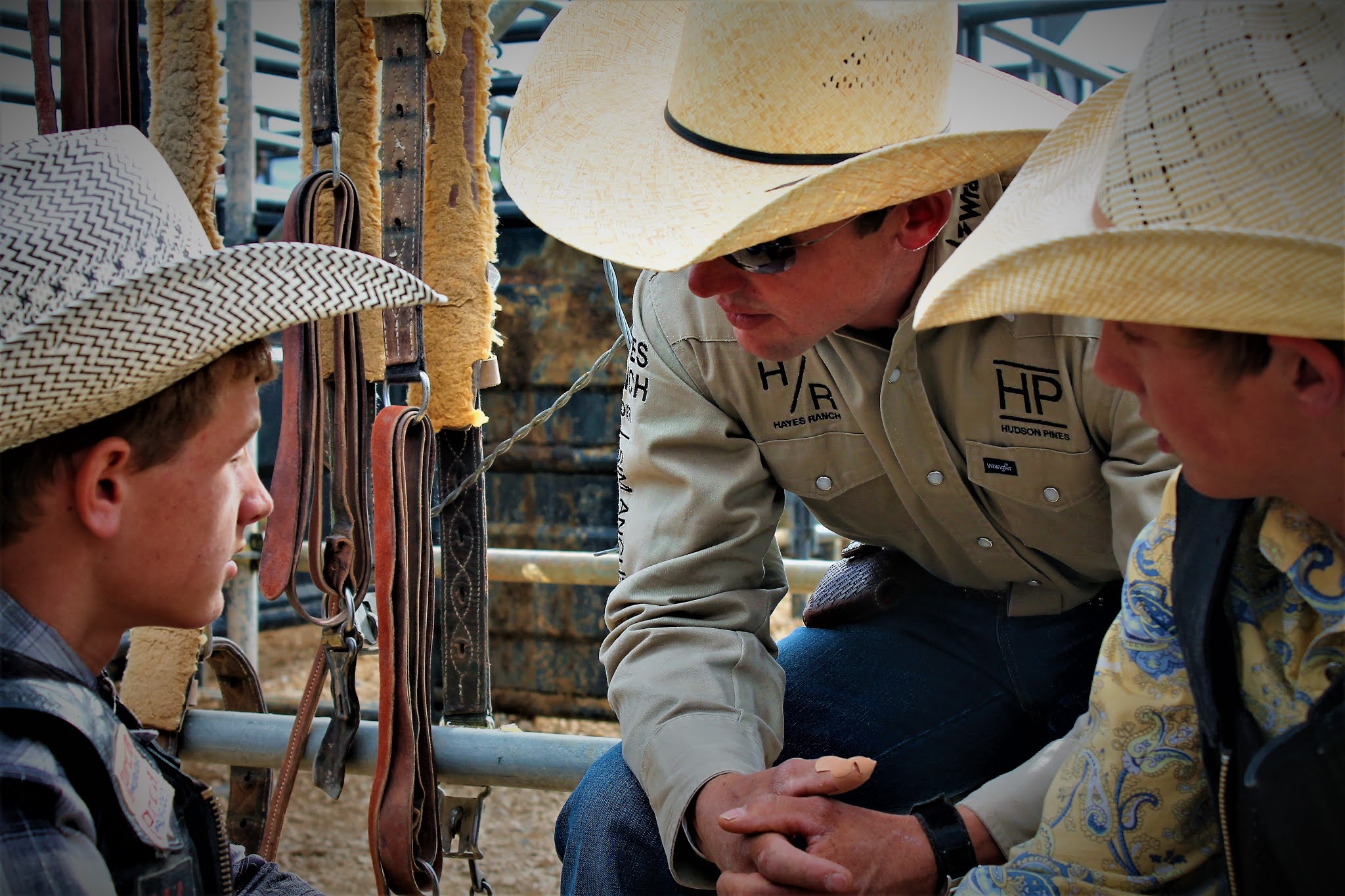
For ten nights in a row recently, we sat in front of the TV watching the National Finals Rodeo. We were especially impressed with how well the cowboys from Utah did, bringing home several world championships.
For years now, the saddle bronc riding at every level in rodeo has been dominated by the Wright family of Milford, a small, small town way off the beaten path in southern Utah. Before this year, six Wright brothers had won among them five world championships and more other accomplishments than you can imagine. The oldest of the brothers, Cody, won two of those world titles.
Now, it’s his sons who are in the limelight.
Back in 2018, I wrote a magazine article about that next generation of Wrights. I spent an afternoon and evening with two of the boys at the Utah State High School Rodeo Finals. The picture above is from that day—that’s father Cody in the middle offering advice and encouragement to his sons Ryder, on the left, and Rusty on the right. Too young for high school rodeo at the time was another son, Stetson.
All three are now full-time professional rodeo cowboys, and proved themselves the best of the bunch at the recent NFR.
Rusty, the oldest at 25, tied for first (with his brother) in a go-round of the saddle bronc riding, placed in seven of ten go-rounds and fifth in the average, and came away ranked fourth in the world standings.
Ryder, at 22, placed in nine and won or tied for first place in five saddle bronc riding go-rounds and won the average, and walked away wearing the World Champion belt buckle (for the second time).
Stetson, at the ripe old age of 21, won one saddle bronc riding go-round and tied for first in another and ended up seventh in the world standings. Stetson also rides bulls and won four go-rounds at the NFR and was crowned world champion. He entered the National Finals Rodeo second in overall winnings for the year in the All-Around Cowboy race, but passed the leader and left him more than $158,000 in the dust, bringing home his second All-Around Championship.
The Wrights are a wonderful family, making history in more ways than one, both in and outside the rodeo arena. It has been a pleasure to know them over the years, and we’ll be hearing more of them in the future.
It also bears mentioning that Kaycee Feild—son of the late Lewis Feild, five-time world bareback riding champion—matched his father’s accomplishment by winning his fifth world championship in my favorite rodeo event.
December 9, 2020
Where I’m going, Part Three.

For several years now I have wanted to visit Las Vegas.
Not that one.
I have been to Nevada’s Sin City more times than I care to remember, and only revisit when there’s a reason—say a rodeo, or a conference, or, in the past, family. The city’s main attractions hold no attraction for me.
I’m talking about the other Las Vegas.
Las Vegas, New Mexico, is of interest to me for its historic importance. It was a waystation on the Santa Fe Trail, for example, and played a role in the Mexican-American War and the Taos Revolt. And over time it has hosted Indians, Spanish colonists, cowboys, outlaws, lawmen, railroaders, and other pivotal figures in the history of the West.
Later, movie and TV folks showed up, and still do from time to time.
I once got within about 100 miles of the place when approaching from the north, but took a left turn for Amarillo. I once got within 50 miles when approaching from the south, but took a left turn for Albuquerque. When visiting Glorieta Pass while doing Civil War research I came within 40 miles, but u-turned for an engagement back in Santa Fe.
One of these days, I will make Las Vegas my destination, and I will see the sights on both sides of the Gallinas River.
And the city lights, such as they are.
November 28, 2020
My Favorite Book, Part 24
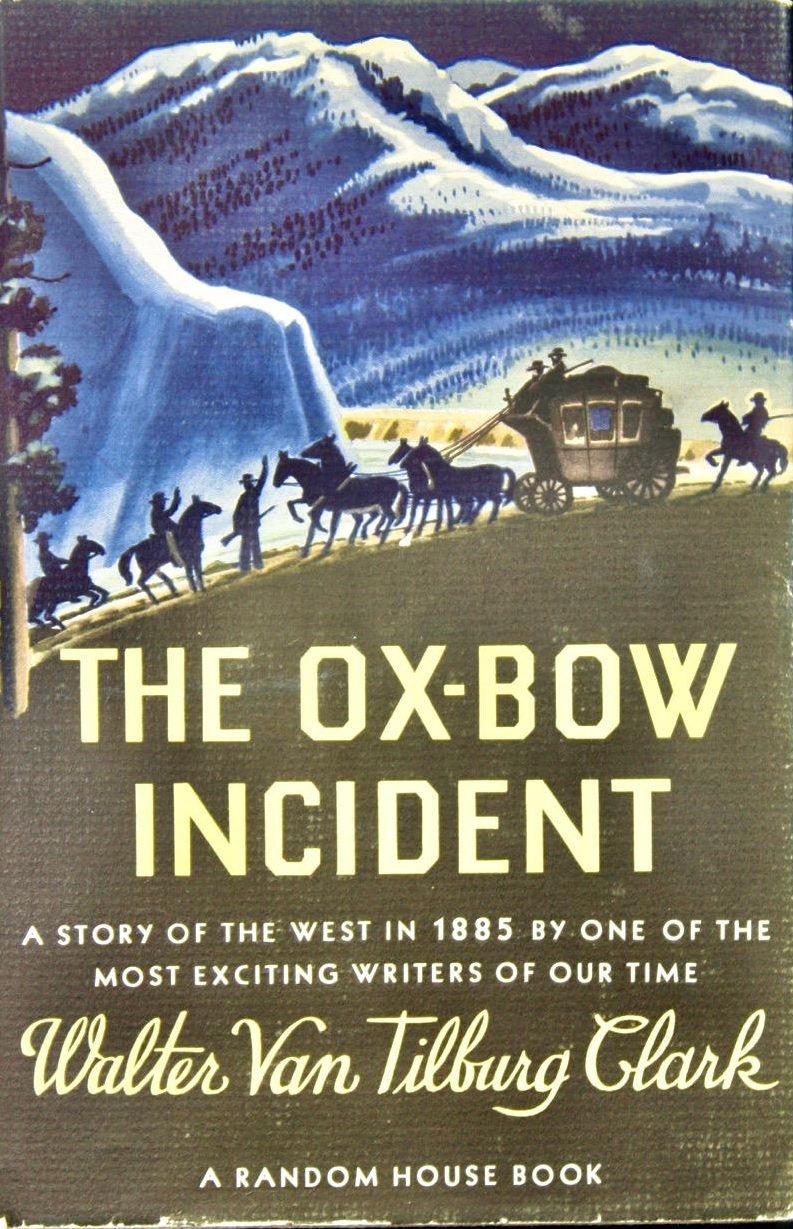
There’s a common belief about Western novels, practically a law, that the hero always saves the day and good always triumphs over evil. And, truth be told, that’s the formula behind most, almost all, Western novels.
But there are books that defy the doctrine and go a different way, presenting a more nuanced—you could say more realistic—way of seeing things. Some of them become classics.
One such is The Ox-Bow Incident by the late Nevada writer Walter Van Tilburg Clark. There is no hero in its pages, the day is not saved, and there is no triumph of good over evil—just the opposite, in fact. And yet upon publication in 1940 the novel achieved eminence, and has maintained its place among the best Western novels of all time, widely considered a masterpiece.
It just goes to show, I suppose, that while there is safety for Western writers and Western novels in following the herd, there is more than one trail that leads to success.
And, to my way of thinking, to better books.
November 18, 2020
New York speaks.
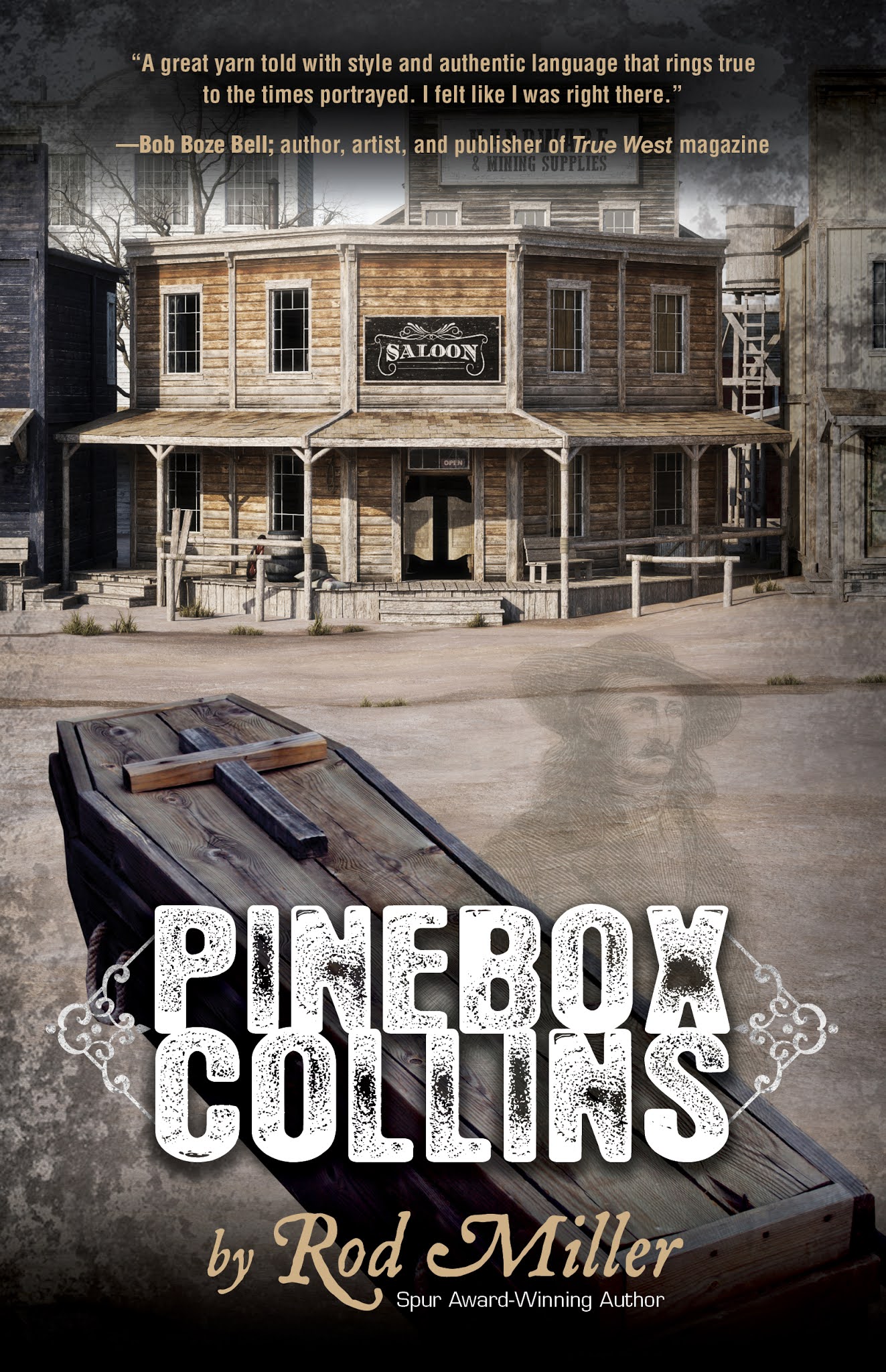
Regular readers here may have already heard of my most recent novel, Pinebox Collins . Perhaps not. The book was released just as we were all falling into the coronavirus and COVID-19 abyss, so it sort of got lost. In a word, it’s a story told by an itinerant one-legged undertaker in the Old West. Not long ago, I came across a review of the novel in the New York Journal of Books that I had not seen before. Here’s some of what the reviewer, Carolyn Haley (who I do not know), had to say:
“It’s all presented in a relaxed, steady style that melds what we think we know about the Old West with what it actually was like….
[T]he story belongs to Pinebox, whose character and trade we also get to learn about through subtly sketched detail. His voice is laconic, erudite, wryly humorous, and feels true to the period. He salts his narrative with colorful one-liners, such as ‘Abilene had grown like a litter of pigs’ and a saloon with ‘empty tables as rare as hair on a billiard ball….’
Rod Miller’s skills and knowledge, combined with a natural storyteller’s knack, make Pinebox Collinsboth a great introduction to the genre and an enlightening addition to it."
Some writers say they never read reviews of their books. I read this one. You can too, right here: https://www.nyjournalofbooks.com/book-review/pinebox-collins.
November 8, 2020
Really stupid words, Chapter 14.

For several years now there has been a tendency among us, when bereft of any logical argument against an opposing point of view, to sniff in derision and make a weak-kneed accusation of “political correctness.” It’s easy to do and allows us to simply—and thoughtlessly—dismiss people and ideas we disagree with.
When I was a young man (or old boy), I tended to run in packs that were (as we put it) rude, crude, and unabashed. And, in some sick way, we were amused by it. We poked oafish fun and made mean jokes based on race, ethnicity, physical appearance, religion, sexual orientation, employment, politics, ideas, points of view, or anything else we thought might get a laugh—no matter how cruel or heartless.
In hindsight, it wasn’t funny. Even then. And though it took too many years to outgrow those ways of thinking, I like to think they are behind me. I hope so.
A common defense, usually heard just prior to an accusation of “political correctness” is that “those people” are just thin-skinned and too easily offended.
Well.
I do not get to decide what offends you or anyone else. Likewise, it is not up to you to decide what I or anybody else finds offensive. Or cruel. Or hurtful.
It seems to me that anyone who claims to be guided by any kind of moral compass would make every effort to avoid causing pain to others. To, as the old saying goes, treat others the way we would like to be treated.
Then again, such thinking may be nothing more than “political correctness.”
October 27, 2020
Pedagogical distancing.
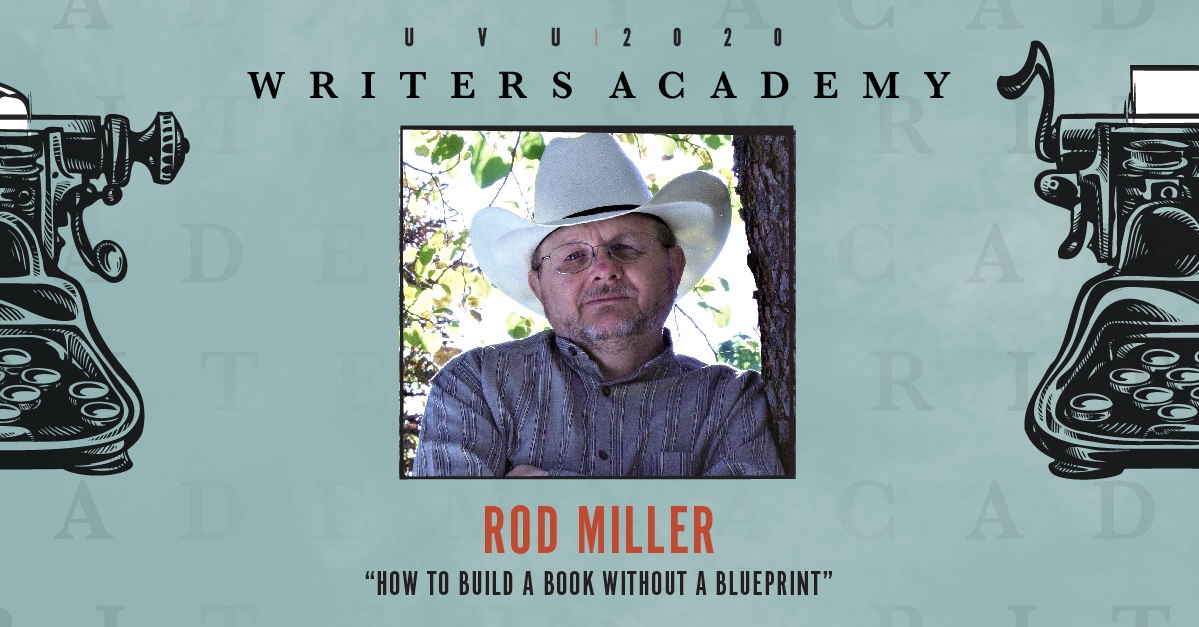
I am no stranger to teaching. While not formally trained, I have taught one thing or another throughout most of my adult life, from several semesters as adjunct faculty teaching advertising at a college and a university, to teaching Sunday School classes to people of all ages, to teaching many, many workshops at writers conferences.
But, come November 5, I will set sail on a 50-minute teaching trip the likes of which I have never before undertaken. It can all be summed up in one onomatopoetic word that heretofore described the sound of something moving quickly: zoom.
Owing to the ongoing coronavirus threat, the Utah Valley University Writers Academy went online this year, and has been in progress since October 9. My presentation, “How to Build a Book Without a Blueprint,” goes zoom Thursday, November 5 at 6:00 pm MST. For the first time ever, I will attempt to convey my message to conference participants via a zoom meeting, where we will all, theoretically, gather around our computer screens to watch and listen and, I hope, participate.
My presentations tend to involve a lot of back and forth, give and take, question and answer, and interaction with participants. That, in my limited experience on the receiving end, doesn’t always work out too well with zoom.
Still and all, I am as prepared as I’ll ever be and hoping for the best.
Ready.
Aim.
zoom.
October 16, 2020
In the News.
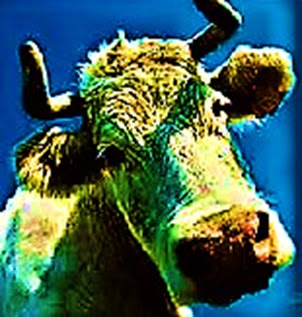
Today’s story is ripped from the pages of the Eureka (Utah) Reporter, 18 May 1917.
Henry Miller, the Elberta farmer who also owns a ranch near Jamison Hill on the old road, had a narrow escape from death yesterday when he was attacked by a cow which was no doubt suffering from rabies. Mr. Miller was at work near his home when the cow made a vicious charge upon him and then continued the attack after the farmer was knocked to the ground. Just at a time when Mr. Miller appeared to be in the greatest danger of receiving fatal injuries from the animal’s hoofs and horns the cow took a fit and this enabled him to crawl to a place of safety.
Propped up in bed at his ranch last evening Mr. Miller related his experience to Lewis Merriman, superintendent of the Yankee Cons mine, stating that the cow probably belongs to one of the Elberta ranchers. Mr. Miller’s injuries are painful but not serious and he will no doubt be out again within a few days.
Henry is my great-grandfather. And to think my very existence on earth was endangered by a bad, mad cow.
October 6, 2020
Where I’ve been.
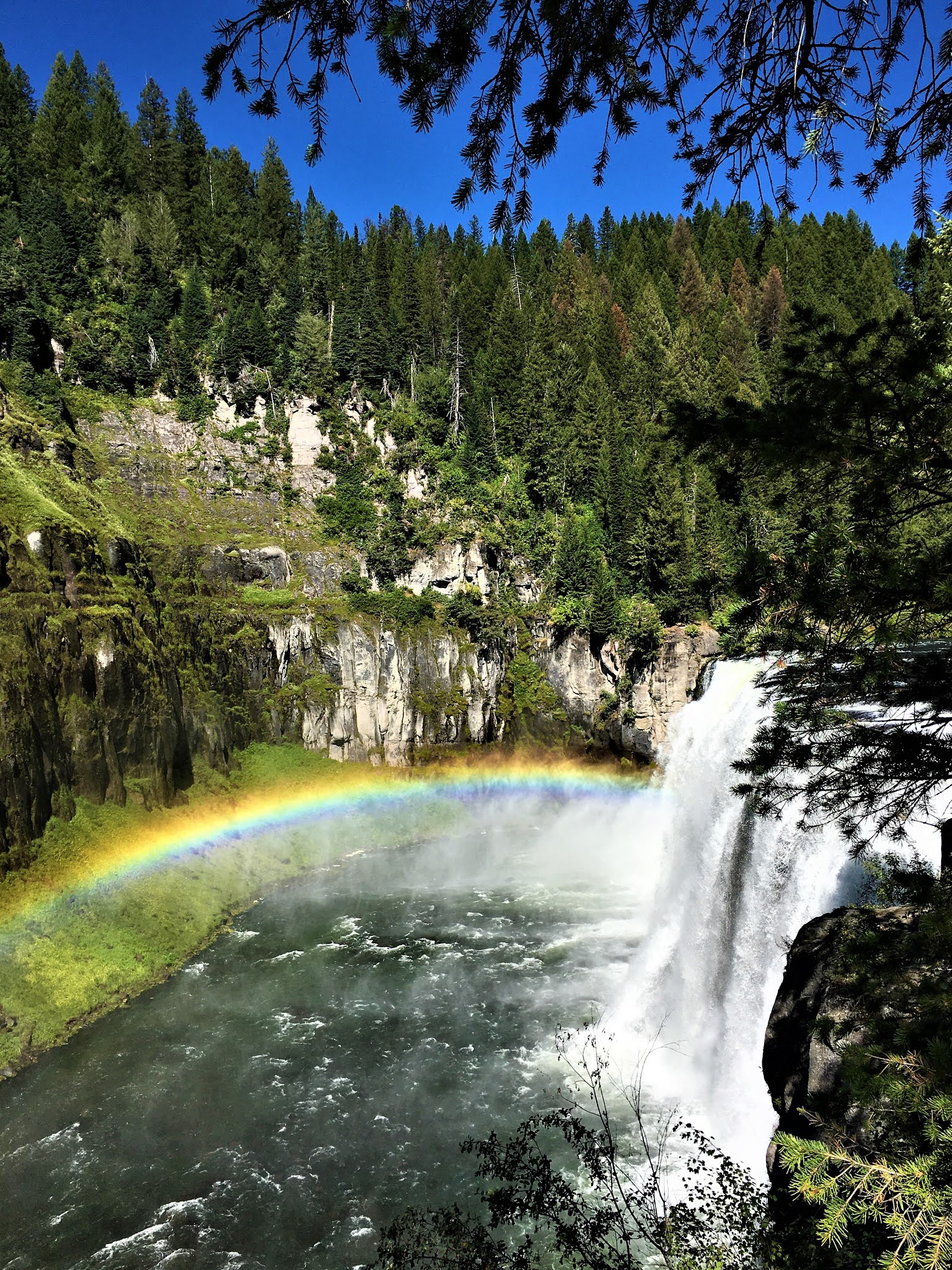
A while back, most of our family stole away for a week in a cabin in the woods. I took my computer along, and used some of the time to finish up a novel, but that was out of the way in a couple of days and it went back in the bag.
With no internet service, I did not check my e-mail for more than a week. As near as I can tell, nobody missed me. Cell phone service was spotty, but since I am one of the last men standing without one of the infernal machines, I hardly noticed.
We visited a few Old West historic sites, and did some sightseeing. And we did a lot of sitting around, which was nice. A bull moose stopped by one day and hung out in the back yard for a couple of hours. The black bear who visited another evening chose not to stay.
It was good to get away. Most of the plans we’d made for the year got canceled for safety’s sake, so it was nice to find a safe place to spend a different kind of time together—and alone.
September 25, 2020
Eat, sleep, write, repeat.
The title for this entry is stolen. It’s the theme from the 2020 Utah Valley University Writers Academy. Since I am among the workshop presenters, I will not be indicted for the theft.
Owing to the coronavirus, covid-19, the worldwide pandemic, social distancing, and other related considerations, UVU opted to put this year’s conference online. So, what was scheduled to take place October 9 and 10 will, instead, be spread from October 9 through November 6, with a selection of (mostly) Thursday evening online workshops along with other events on other days. You’ll find more information on the UVU Writers Academy web site, and you can register online. And there’s this, #UVUWriters2020, if you know what it’s for. I don’t.
If you write, want to write, hope to write, or wish to write, you’ll find the UVU Writers Academy helpful. Register, and you can access the online workshops and presentations live, and the sessions will be recorded for viewing or reviewing afterwards.
My contribution to the event, “How to Build a Book without a Blueprint,” is scheduled for November 5 at 6:00 pm. By then, I hope to have figured out how to pull it off.
I’ll send a reminder. See you (sort of) there.


