
Rod Miller's Blog, page 9
November 9, 2021
Gone south.
As has been the case most every fall over the past decade (except last year, when the world was on pause) I spent a weekend about as far south as you can go and still be in Utah. The occasion, as usual, was the Kanab Writers Conference.
It is not the biggest writers conference I have had the pleasure of presenting at, but it may well be the best. For one thing, the world’s “Little Hollywood” offers scenery the likes of which belongs on movie and TV screens, where it often is and has been. Even if you do no more than stand on the street in the center of town and turn a circle, you will be awestruck.
And, of course, there’s the conference. The staff keeps everything on an even keel. A diverse group of presenters holds forth on a variety of subjects of interest to writers. Readers, too, can browse the bookstore and meet authors and attend presentations that engage the community.
Next year, if plans hold true, the Kanab Writers Conference will move from the fall to late July. Summer puts a whole new face on the red rock country, and the change will add green leaves to the color scheme. If you’re a writer, or want to be, add a linkto the conference web site, and watch for information on the 2022 event. Just being to town will make a fine vacation.


October 27, 2021
Missing Will.

Not long ago, I was traveling far from home. Being away somewhat isolates you from what’s going on back home—but not altogether.
While away, we heard the tragic news of the death of Will Bagley. I counted Will among my friends, respected his research and writing, admired his wide-ranging intellect, marveled at the reaches of his memory, and listened to his infectious laughter. I will miss all that, and more.
Will had no reason to befriend me. He did not need to answer my questions, correct my misconceptions, or share his knowledge with me, whether in conversation or in the many writings—his own and those of others—he shared with me.
There will never be another historian like Will Bagley. Few will ever approach his many accomplishments. And no one will do so with his curmudgeonly good humor.
I will miss Will. Thank goodness I have a long line of his books on my shelves, and will hear his voice again whenever I open one of them.
October 15, 2021
January 29, 1863, is one of the darkest days in the histo...
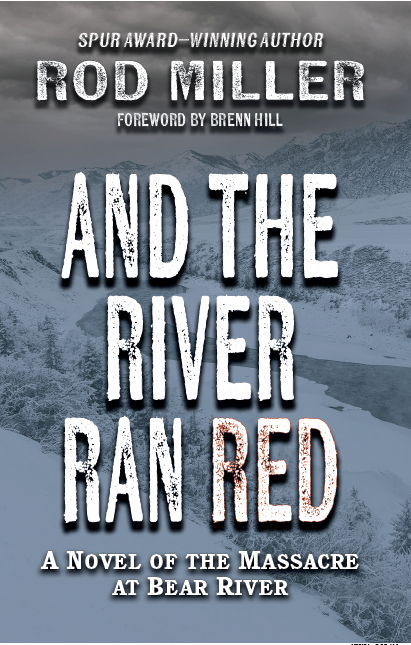
January 29, 1863, is one of the darkest days in the history of the American West. That morning, United States Army troops slaughtered some 250 to 350 Shoshoni men, women, and children on the banks of the Bear River in what is now southeastern Idaho. No other encounter between the army and Indian tribes in the West approaches that massacre in terms of Indian blood spilled, brutal savagery, or body count.
Just released from Five Star Publishing is my latest book, And the River Ran Red—A Novel of the Massacre at Bear River.
Earlier, I wrote a nonfiction book about this tragic event, Massacre at Bear River: First, Worst, Forgotten. I have also written about it for magazines, short stories, in poems, and, with Western singer and songwriter Brenn Hill, song lyrics.
This short novel—as with the fictional stories, poetry, and song—allowed me to build upon the known facts and consider the thoughts, feelings, and words of those involved in all facets of the massacre. So, while the novel is fiction, it presents truths of a different kind as it both hews closely to the facts and expands upon the emotional color of the times.
I hope many will read And the River Ran Red for the sole reason that it may help spread knowledge of, and horror about, what may well be the greatest of all tragedies in the history of the American West, as well as an appreciation for the people of the Northwestern Band of the Shoshone Nation who press on with determination and triumph still today.
October 9, 2021
Where I’ve been.
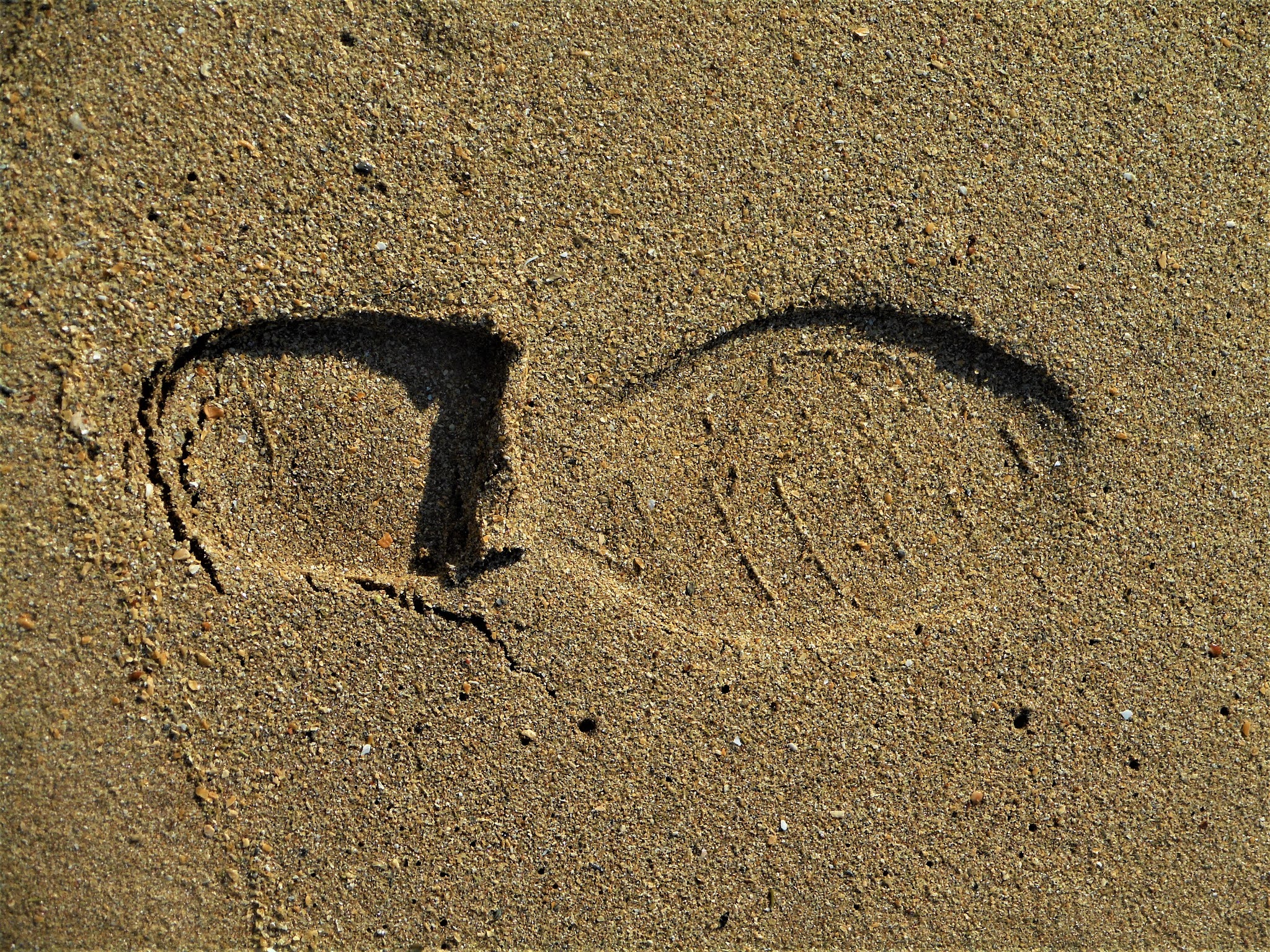
For the past couple of weeks, I have been traveling. I will not bore you with the hundreds of vacation photos I took except the one above.
That’s my bootprint in the sand at Acadia National Park on the coast of Maine, very near the easternmost point of the continental United States—and a long, long way from way out West where I typically hang my hat. The exact place I trod upon and took the picture is called Sand Beach. It is the only naturally occurring sand beach on the eastern seaboard north of Virginia Beach, some 800 miles—and heaven knows how many miles of coastline—away.
Been there. Done that. Didn’t get the t-shirt.
September 23, 2021
My Favorite Book, Part 27.
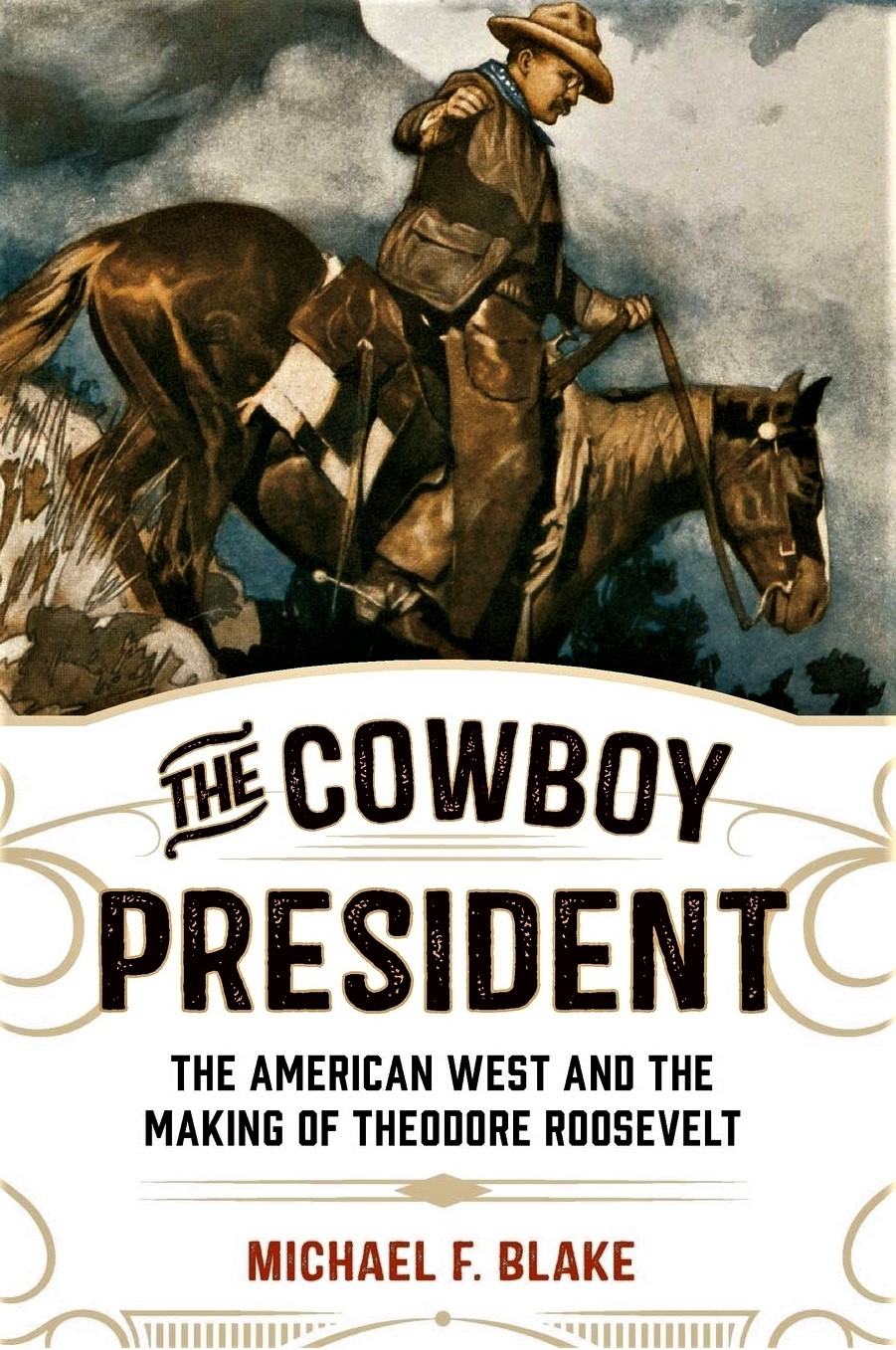
When President William McKinley was assassinated, a high-toned politician said, “Now look! That damn cowboy is President of the United States.” The “damn cowboy” in question was Theodore Roosevelt. And he remains, to this day—despite a few Texans and a make-believe movie actor—the only real cowboy to rise to that office.
Roosevelt’s cowboy career is chronicled in The Cowboy President: The American West and the Making of Theodore Roosevelt by Michael F. Blake.
Blake outlines the circumstances that sent Roosevelt, a patrician New Yorker, to the frontier West where he established cattle ranches in North Dakota. More than an owner, Roosevelt worked alongside his hired hands and became adept at handling horses, working cattle, riding the range, and surviving in a hard land.
Based on detailed research, Blake relates Roosevelt’s cowboy career to his wider life, telling how the lessons he learned in the West colored his endeavors in government service, the military, politics, and family life. The result is a well-rounded picture of the cowboy president that’s interesting, intriguing, and informative.
You’ll close the book with new understanding of and appreciation for “That damn cowboy.”
September 13, 2021
Camel bytes.
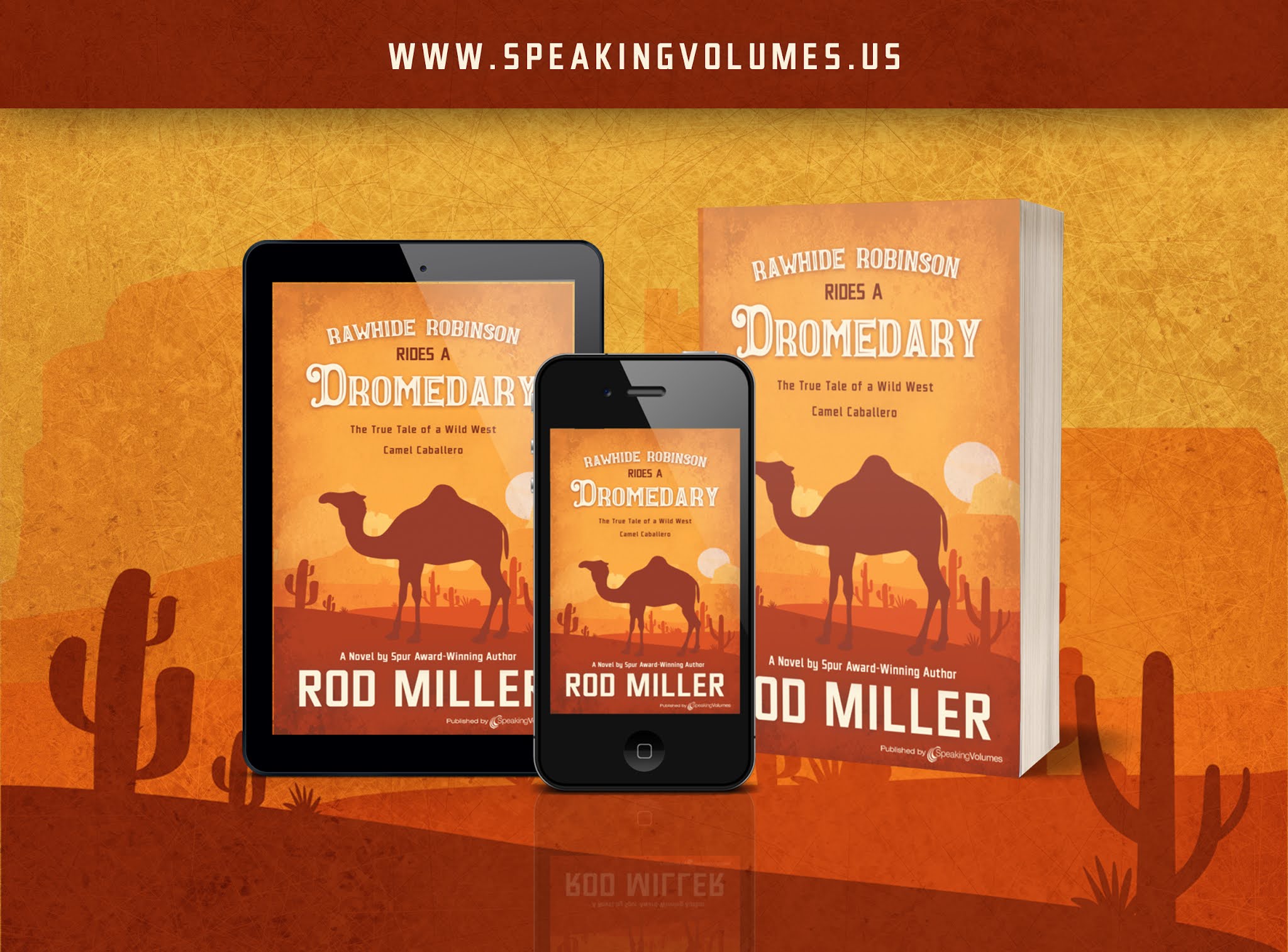
The Western Fictioneers Peacemaker Award winning and Western Writers of America Spur Award finalist novel, Rawhide Robinson Rides a Dromedary: The True Tale of a Wild West Camel Caballero, is now available from Speaking Volumesin digital bits and bytes. Which means you can download and read it on your Kindle, iPad, smart phone, or other electronic gadget. For us old-fashioned or unplugged types, it is also now available in paperback.
Here’s where to get your copy of the eBook:
Amazon US
Apple Books
Barnes & Noble
Google Play
Kobo Books
Here’s where to get your copy of the paperback print book:
Amazon US
You can read more about Rawhide Robinson, the ordinary cowboy who lives an extraordinary life—much of it a product of his imagination—on his very own web site. Enjoy.
August 31, 2021
Really stupid words, Chapter 18.

So, there’s word—a tiny two-letter word—that has been annoying me for some time now.
So I have been considering writing (whining) about it.
So, when several friends expressed similar irritation with hearing it ad nauseam, that spurred me to get it done.
So, here goes.
It seems there are hundreds, thousands, millions of speakers of North American English who can no longer start a sentence or other statement with any word that isn’t “so.” If your ears are like mine, they hear it all the time. All the time. Now, “so” is a useful word and has an important place in our language when used properly, usually to indicate a result: They said it, and said it, and kept saying it, and would not stop saying it, so I got annoyed.
But “so” has taken its place with other overcooked, overused, worn-out words and phrases and sounds such as “I mean,” “y’know,” “like,” and the ever-popular “um” that have insinuated themselves into our speech to the point that they are thrown about willy-nilly, automatically, without thought, and, I suspect, without the speaker even knowing it. Or, if they do know, without care.
So, what do we do? Perhaps we should arm ourselves with little bells or whistles and give a ding or toot whenever we hear it. I doubt all the racket raised would be any more annoying than its cause.
So, what do you think?
August 18, 2021
How he died.

Orrin Porter Rockwell is my favorite historical character. Given his notoriety in his day, he does not get the mention he deserves in the literature—whether dramatic or documentary—of the Old West.
What is written about him tends to be contradictory—some writers presenting him as a cold-blooded murdering gunslinger, others as a righteous gunman who never killed anybody who didn’t need killing. I know from experience that a strong case can be made for either conclusion.
Even his death supports both points of view when it comes to the mythology of how men died in the Wild West. Good men were said to die in bed, which Porter Rockwell did. Bad men, on the other hand, died with their boots on, which Porter Rockwell did.
Here’s how it happened. On the night of June 8, 1878, Ol’ Port attended a play in downtown Salt Lake City, then spent some time imbibing in one of the city’s saloons. He made his way on foot a few blocks to the Colorado Stables, one of many of his business interests—which also included the Hot Springs Hotel and Brewery, and cattle and horse ranches in the West Desert. Rockwell kept an office at his livery stable, along with a room with a cot where he sometimes spent the night when in the city. He went to bed feeling poorly and spent a fitful, painful night. He stayed abed the next day, suffering severe stomach pains and vomiting. Late in the afternoon, he sat up in bed, determined to arise, and managed to pull on his boots before he fell back into the rumpled covers and died, just a few weeks short of his sixty-fifth birthday.
Porter Rockwell, like a good man, died in bed. But, like a bad man, he died with his boots on. Life and death are seldom black and white.
August 7, 2021
Vacation time. I just spent several days in a cabin in th...
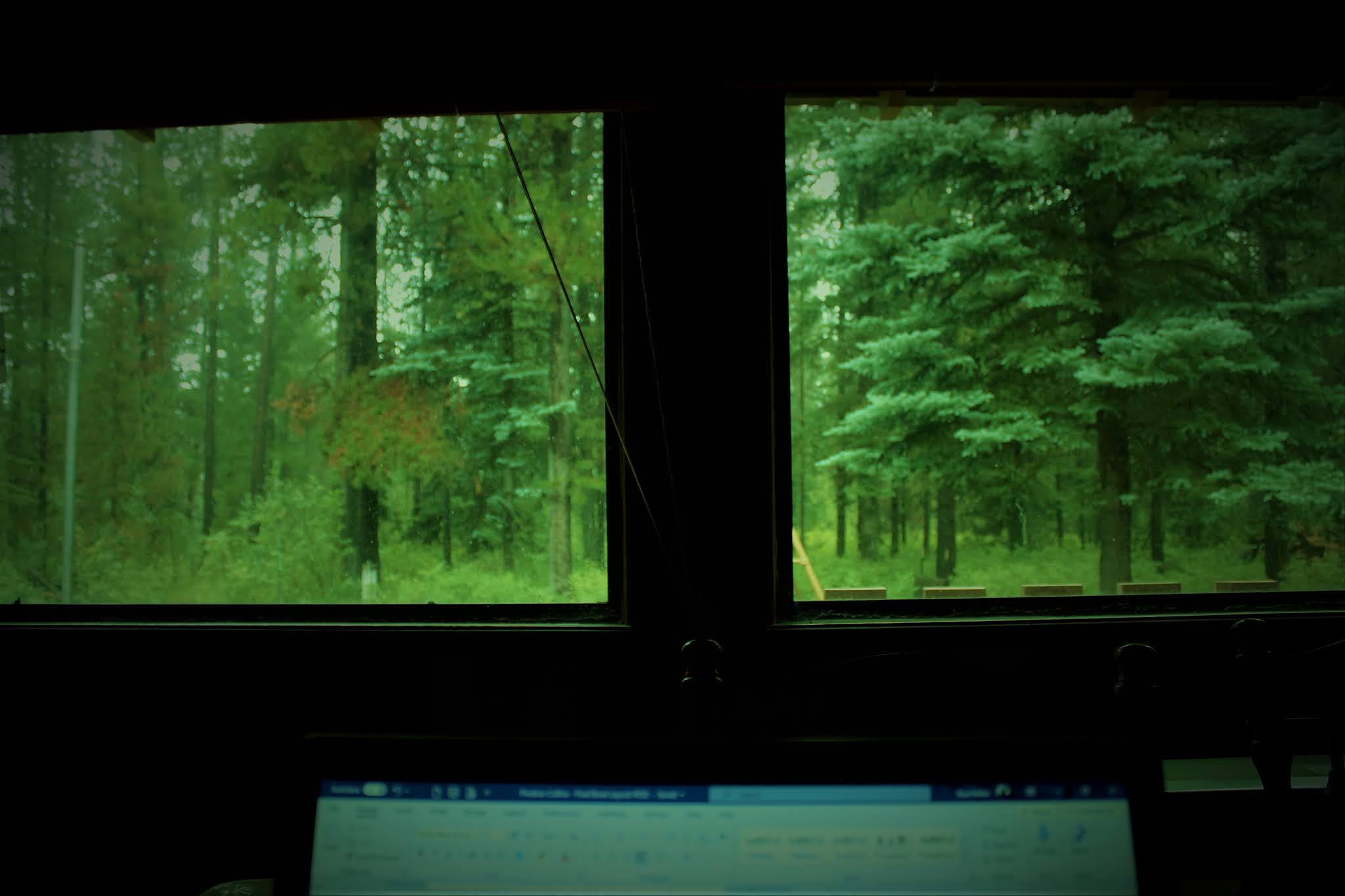
Vacation time. I just spent several days in a cabin in the woods a short walk from the Buffalo River near its confluence with Henry’s Fork of the Snake River.
While there, I managed to approve the cover design and proof the page gallies for a paperback reprint of Pinebox Collins, as well as deal with some editorial questions about a forthcoming novel, This Thy Brother, and complete the manuscript and associated paperwork for an upcoming collection of short fiction, Black Joe and Other Selected Stories.
However, the work was enjoyable, as evidenced by the above photo of the view beyond my computer screen. We even managed to fit in a bunch of rest and relaxation, some sightseeing, and tourism.
Now I am home and ready to get back to work.
July 27, 2021
For young readers of all ages.
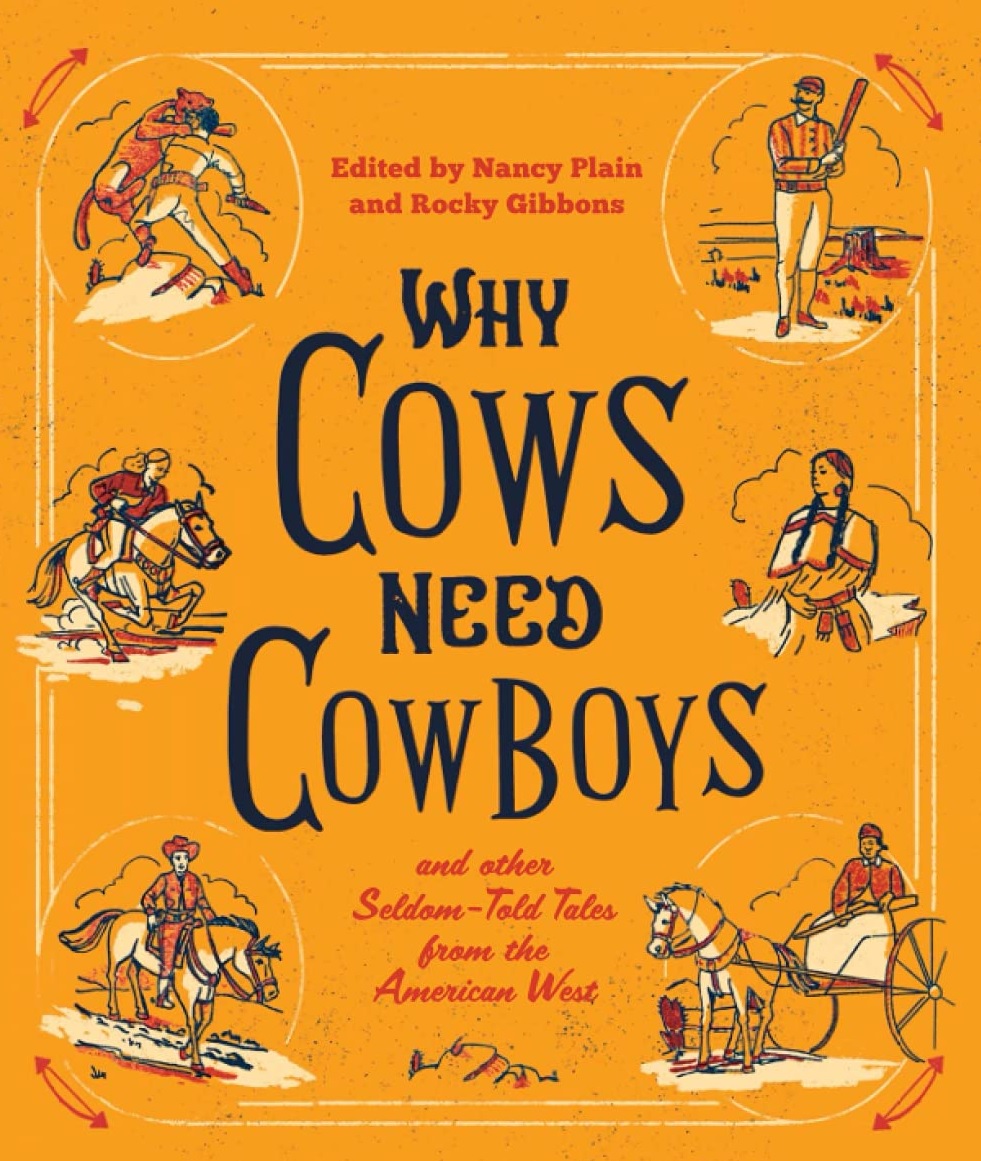
What happens when you round up twenty members of Western Writers of America, assign a couple of editors to ride herd on them, have each of them cut out a true—but little known—story from the Wild West and tell it in a way that will engage teenage readers?
You get Why Cows Need Cowboys and Other Seldom-Told Tales from the American West.
Editors Nancy Plain and Rocky Gibbons have accomplished a first in the annals of Western writing with this anthology. WWA has created other anthologies and collections over the years covering a wide range, but never before, not since its establishment in 1953, has a herd of some of America’s most accomplished Western writers pointed their pens and pencils in the direction of our youth.
Well done.
But you don’t have to be an adolescent to read and enjoy and learn from this book. Even those who are well-read in Western history will find new and entertaining incidents and episodes, people and places in these pages.
You’ll even find out why it took Earl—one of the Bronc-Bustin’ Bascom Brothers—sixty-five years to get the All-Around Cowboy trophy buckle he won at a rodeo. I know, because I got to tell that story.


