Ian S. Bott's Blog, page 18
November 11, 2017
Taking the scenic route
I made another discovery last year, while drafting The Ashes of Home: The power of writing in threads and scenes.
I blogged in more detail about this last year, but the essence is that my entire manuscript at this point is a long series of scenes with only a few tentative chapter breaks marked in as yet. Alongside, I have a summary spreadsheet listing the scenes, a brief description of what the scene is about, and the scene’s point of view. The latter is color coded so the whole list provides a great visual for how much attention each of the main characters is getting throughout the story.
I found this approach really helpful in keeping up momentum along the different parallel threads of the story during the drafting phase. I could just get on with writing each point of view as its own story and worry about weaving them together later.
Now I’m into final edits, the power of this technique is showing itself again. There is one particular story line that I want to draw more to the fore. There was a whole hive of activity linking two of the main characters that I never articulated in the first draft, mainly because I wasn’t even aware of it. When I thought about it, it was obviously present but happening entirely off stage. I decided to bring it explicitly on stage, which means writing a series of new scenes, or additions to existing scenes, and weaving them back into the storyline.
If I’d worked directly on the manuscript, agonizing over where to edit in new material at the same time as trying to draft it, I think I’d have been paralyzed by the complexity of the task. Instead, I focused simply on the thread I wanted to weave in as if it were a complete story in itself. I jotted down notes about how that storyline would evolve and ideas about point of view and timeline.
The novel’s scene list helped here, giving me an overview of the story structure and making it easier to see where this new thread would fit naturally into the overall structure. Then I simply wrote the new scenes as if they were a standalone story.
I’m now in the process of editing the new material into the whole, and I have to report I’m very pleased with the effectiveness of this technique.
I blogged in more detail about this last year, but the essence is that my entire manuscript at this point is a long series of scenes with only a few tentative chapter breaks marked in as yet. Alongside, I have a summary spreadsheet listing the scenes, a brief description of what the scene is about, and the scene’s point of view. The latter is color coded so the whole list provides a great visual for how much attention each of the main characters is getting throughout the story.
I found this approach really helpful in keeping up momentum along the different parallel threads of the story during the drafting phase. I could just get on with writing each point of view as its own story and worry about weaving them together later.
Now I’m into final edits, the power of this technique is showing itself again. There is one particular story line that I want to draw more to the fore. There was a whole hive of activity linking two of the main characters that I never articulated in the first draft, mainly because I wasn’t even aware of it. When I thought about it, it was obviously present but happening entirely off stage. I decided to bring it explicitly on stage, which means writing a series of new scenes, or additions to existing scenes, and weaving them back into the storyline.
If I’d worked directly on the manuscript, agonizing over where to edit in new material at the same time as trying to draft it, I think I’d have been paralyzed by the complexity of the task. Instead, I focused simply on the thread I wanted to weave in as if it were a complete story in itself. I jotted down notes about how that storyline would evolve and ideas about point of view and timeline.
The novel’s scene list helped here, giving me an overview of the story structure and making it easier to see where this new thread would fit naturally into the overall structure. Then I simply wrote the new scenes as if they were a standalone story.
I’m now in the process of editing the new material into the whole, and I have to report I’m very pleased with the effectiveness of this technique.


November 4, 2017
Musical nostalgia
I mentioned in a post last year how I discovered, unexpectedly, that music helps me to write. I say “unexpectedly” because I had many times tried writing with music on in the background, and always found it a distraction.
The difference was ... headphones.
Ambient music = distraction. But put on headphones and the music suddenly becomes a shield, a cocoon walling me off from the outside world.
At the time that was a new and surprising discovery, but it seems to be consistently true, not just a passing phase. Music has since carried me through many productive writing sessions, even when the going got tough and the words just weren’t co-operating.
Many writers use music to set the mood. They make up playlists that in some way reflect the writing. It’s not a mood thing for me. Regardless of what I’m writing, the music is simply my productive setting, like absolute silence is for some people, or their cozy writing den, or an inspiring landscape in front of them. For me this means the music has to be fairly loud, rhythmic, melodic, and not too demanding. Classical music would kill the muse.
I started off with recent artists like Taylor Swift (yes, I happen to like her music, don’t judge!) and Mumford & Sons because they were already in our family iTunes library.
Along the way, this started to turn into a bit of a nostalgia trip. I’ve been seeking out artists I remember from my university days. I found loads of early Genesis albums on iTunes, and am currently listening to The Stranglers.
Remember when punk horrified nations with its iconoclastic break from sugary pop blandness?
#DinosaurAlert
What a difference a few decades makes! In a world of rap and hip hop, some of that early rock and punk today sounds remarkably lyrical and I wonder what all the fuss was about.
What about you? Does music help or hinder your artistic endeavors. And is there any particular music that brings back powerful memories?
The difference was ... headphones.
Ambient music = distraction. But put on headphones and the music suddenly becomes a shield, a cocoon walling me off from the outside world.
At the time that was a new and surprising discovery, but it seems to be consistently true, not just a passing phase. Music has since carried me through many productive writing sessions, even when the going got tough and the words just weren’t co-operating.
Many writers use music to set the mood. They make up playlists that in some way reflect the writing. It’s not a mood thing for me. Regardless of what I’m writing, the music is simply my productive setting, like absolute silence is for some people, or their cozy writing den, or an inspiring landscape in front of them. For me this means the music has to be fairly loud, rhythmic, melodic, and not too demanding. Classical music would kill the muse.
I started off with recent artists like Taylor Swift (yes, I happen to like her music, don’t judge!) and Mumford & Sons because they were already in our family iTunes library.
Along the way, this started to turn into a bit of a nostalgia trip. I’ve been seeking out artists I remember from my university days. I found loads of early Genesis albums on iTunes, and am currently listening to The Stranglers.
Remember when punk horrified nations with its iconoclastic break from sugary pop blandness?
#DinosaurAlert
What a difference a few decades makes! In a world of rap and hip hop, some of that early rock and punk today sounds remarkably lyrical and I wonder what all the fuss was about.
What about you? Does music help or hinder your artistic endeavors. And is there any particular music that brings back powerful memories?
October 29, 2017
Sensory overload
With some exceptions, my view of the world is very flat. I perceive pretty much everything in my field of view with equal weight, nothing stands out except what I’m specifically focusing on at that moment.
This caused me no end of problems as a child, and no end of frustration for my parents. Asked to fetch something, I’d be frantically hunting for it, unable to see it even right in front of me. As an adult, I’ve learned to laugh this off as “can’t see for looking” but as a child it made me feel stupid.
The best way I can describe it is constantly playing a game of “Where’s Waldo”, or one of those “hidden object” puzzles. What you’re looking for is in plain view, but overwhelmed in a sea of similar but irrelevant distractions. The only way I can find and latch onto something is to scan my visual field systematically until I find what I’m looking for.
That is my view of the world, every minute of every day.
This shows up in everyday life in ways such as:
Finding the right product on supermarket shelves - and don’t get me started on the twin evils of supermarkets regularly moving things around, or manufacturers’ insistence on producing a dozen variations on a product in almost identical packaging. Why must shampoo, conditioner, and body wash all look identical?
Making sense of many websites, trying to track down the button or menu item I want from the smorgasbord of icons on display.
Trying to find the turnoff I need amongst the roadside background clutter of signs and driveways.
Even something as simple as breakfast can become a nightmare. Last week I traveled to a business workshop. With no direct flights it’s a long way from Victoria to Ottawa - about 10 hours of traveling. The first morning, I was still a bit woozy and looking for simple sustenance to set me up for the day.
First off, I had to ask at reception where they were serving breakfast because the bar where I’d eaten the previous evening was empty. I felt stupid when I realized my eyes had glossed over the head-high three-foot-wide sign alongside reception saying “Breakfast this way”. I get the same problem with headings on many websites too - you’d think bigger is more obvious, but unless my eye happens to take it in all at once it’s more likely to go unrecognized.
Then there was Ordeal by Buffet.
Don’t get me wrong, it was a fabulous buffet, and very visually appealing. But simply too much to take in.
I’m a tea drinker so the server brought me a pot of hot water and advised that I would find the tea over by the buffet. Searching, searching, searching ... it took me a good five minutes to recognize the row of shining steel pots for what they were - containers of loose tea to make your own tea bags.
Once I’d got my food, it was time for Hunt the Spoon. The table was laid with knife and fork, but I had a helping of yoghurt and no spoon. Back to the buffet. When looking for something (as my childhood experiences showed) everyday items simply don’t leap out from the background. I had to start at one corner of the room and work my way around the tables scanning every item on them looking for something recognizably spoon-like. It was a big room, so it took me a while, feeling increasingly foolish, thinking “it surely can’t be this hard?”
This may sound exaggerated, but it’s not. And it’s fairly typical of my experience in any unfamiliar place.
With familiarity, I’m happy to say that breakfast the following day was far less traumatic. And the food was truly delicious :)
How do you either portray (as a writer) or understand (as a reader) a sensory experience very different from your own?
This caused me no end of problems as a child, and no end of frustration for my parents. Asked to fetch something, I’d be frantically hunting for it, unable to see it even right in front of me. As an adult, I’ve learned to laugh this off as “can’t see for looking” but as a child it made me feel stupid.
The best way I can describe it is constantly playing a game of “Where’s Waldo”, or one of those “hidden object” puzzles. What you’re looking for is in plain view, but overwhelmed in a sea of similar but irrelevant distractions. The only way I can find and latch onto something is to scan my visual field systematically until I find what I’m looking for.
That is my view of the world, every minute of every day.
This shows up in everyday life in ways such as:
Finding the right product on supermarket shelves - and don’t get me started on the twin evils of supermarkets regularly moving things around, or manufacturers’ insistence on producing a dozen variations on a product in almost identical packaging. Why must shampoo, conditioner, and body wash all look identical?
Making sense of many websites, trying to track down the button or menu item I want from the smorgasbord of icons on display.
Trying to find the turnoff I need amongst the roadside background clutter of signs and driveways.
Even something as simple as breakfast can become a nightmare. Last week I traveled to a business workshop. With no direct flights it’s a long way from Victoria to Ottawa - about 10 hours of traveling. The first morning, I was still a bit woozy and looking for simple sustenance to set me up for the day.
First off, I had to ask at reception where they were serving breakfast because the bar where I’d eaten the previous evening was empty. I felt stupid when I realized my eyes had glossed over the head-high three-foot-wide sign alongside reception saying “Breakfast this way”. I get the same problem with headings on many websites too - you’d think bigger is more obvious, but unless my eye happens to take it in all at once it’s more likely to go unrecognized.
Then there was Ordeal by Buffet.
Don’t get me wrong, it was a fabulous buffet, and very visually appealing. But simply too much to take in.
I’m a tea drinker so the server brought me a pot of hot water and advised that I would find the tea over by the buffet. Searching, searching, searching ... it took me a good five minutes to recognize the row of shining steel pots for what they were - containers of loose tea to make your own tea bags.
Once I’d got my food, it was time for Hunt the Spoon. The table was laid with knife and fork, but I had a helping of yoghurt and no spoon. Back to the buffet. When looking for something (as my childhood experiences showed) everyday items simply don’t leap out from the background. I had to start at one corner of the room and work my way around the tables scanning every item on them looking for something recognizably spoon-like. It was a big room, so it took me a while, feeling increasingly foolish, thinking “it surely can’t be this hard?”
This may sound exaggerated, but it’s not. And it’s fairly typical of my experience in any unfamiliar place.
With familiarity, I’m happy to say that breakfast the following day was far less traumatic. And the food was truly delicious :)
How do you either portray (as a writer) or understand (as a reader) a sensory experience very different from your own?
October 21, 2017
Spinning misconceptions
Last week I talked about a world for my next novel, where the planet’s axis is tilted at a full 90 degrees to the plane of its orbit. In other words, if you picture the sun in the middle of your living room and the planet’s orbit traced out on the floor around it, it’s rolling around on its side rather than spinning upright like a top.
When I first envisaged this, I wondered if that meant one pole would always be pointing toward the sun. I quickly realized I’d fallen into a popular misconception. A bit more thought showed that this just ain’t gonna happen. Simple physics doesn’t allow it.
Yes, some worlds do have one side always facing their sun, but their axis is the more normal perpendicular (or near enough) to the plane of the orbit.
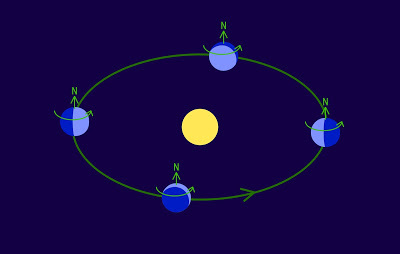
The perpetual day/perpetual night arises if the planet’s day (one rotation on its axis) is exactly the same length as its year (one full orbit of its sun).
This may sound like one heck of a coincidence, but tidal forces between two orbiting bodies act as a braking mechanism, slowly bringing rotational and orbital periods into line. This is called “tidal locking”. A familiar example of this phenomenon is our own moon, which always shows the same face to the Earth. For many years, astronomers thought Mercury was tidally locked to the sun, although that’s now known not to be true.
Back to our topsy turvy world. Although it’s spinning on its side and swinging around its sun, if you were watching it from somewhere outside the solar system you’d see that the planet’s axis is always pointing the same way relative to the universe as a whole.
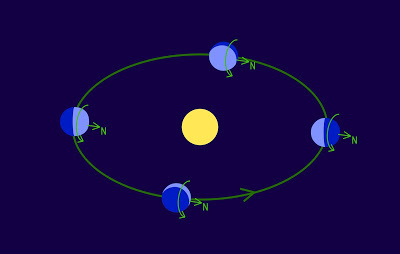
The whole planet is acting like a huge gyro compass. Again, this sounds bizarre and far-fetched, but our own Uranus is doing exactly this.
So, if anyone describing a sci-fi world proudly proclaims that their north pole always points at the sun, you can set them straight.
When I first envisaged this, I wondered if that meant one pole would always be pointing toward the sun. I quickly realized I’d fallen into a popular misconception. A bit more thought showed that this just ain’t gonna happen. Simple physics doesn’t allow it.
Yes, some worlds do have one side always facing their sun, but their axis is the more normal perpendicular (or near enough) to the plane of the orbit.
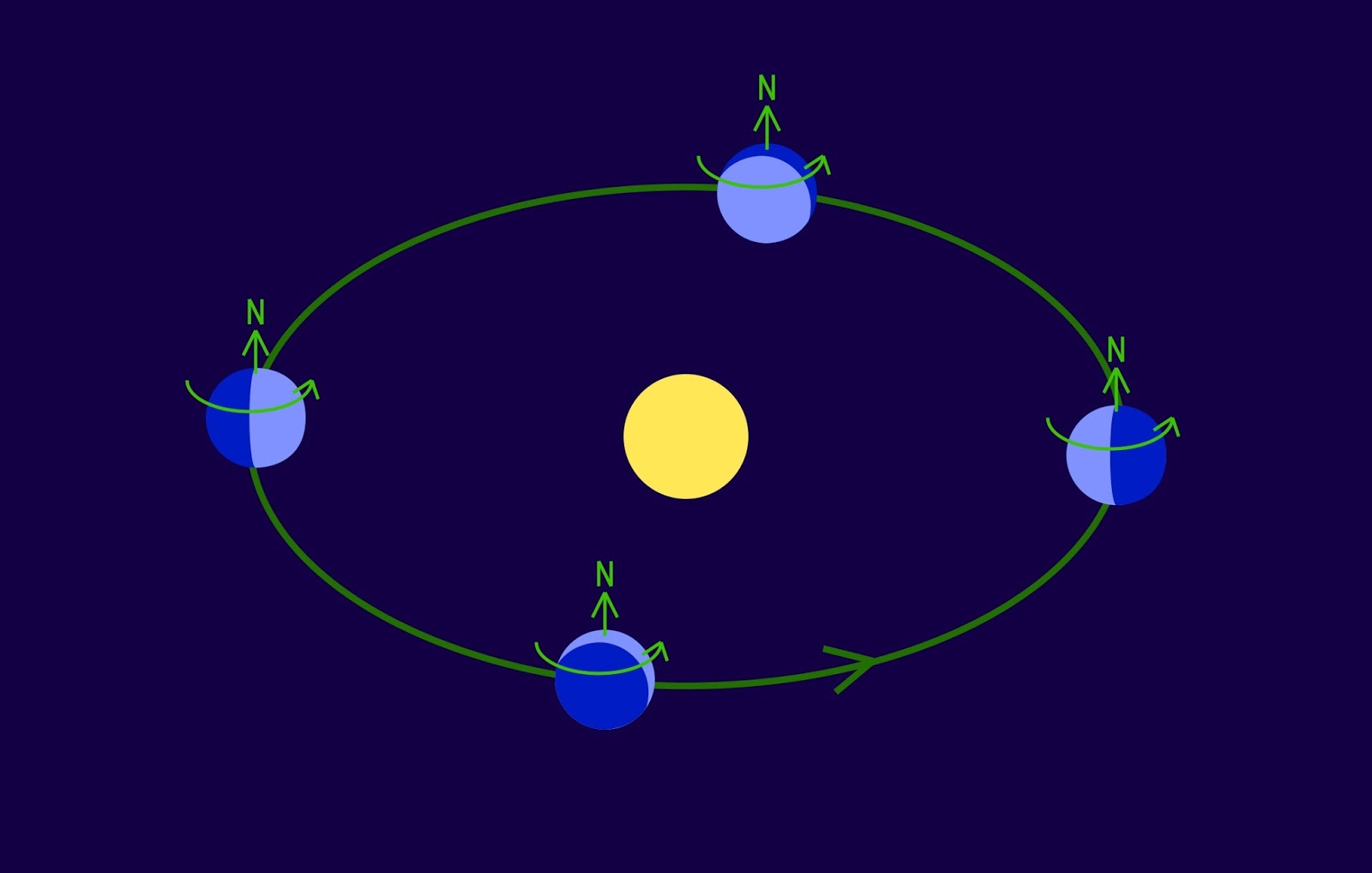
The perpetual day/perpetual night arises if the planet’s day (one rotation on its axis) is exactly the same length as its year (one full orbit of its sun).
This may sound like one heck of a coincidence, but tidal forces between two orbiting bodies act as a braking mechanism, slowly bringing rotational and orbital periods into line. This is called “tidal locking”. A familiar example of this phenomenon is our own moon, which always shows the same face to the Earth. For many years, astronomers thought Mercury was tidally locked to the sun, although that’s now known not to be true.
Back to our topsy turvy world. Although it’s spinning on its side and swinging around its sun, if you were watching it from somewhere outside the solar system you’d see that the planet’s axis is always pointing the same way relative to the universe as a whole.

The whole planet is acting like a huge gyro compass. Again, this sounds bizarre and far-fetched, but our own Uranus is doing exactly this.
So, if anyone describing a sci-fi world proudly proclaims that their north pole always points at the sun, you can set them straight.
October 15, 2017
Unnatural seasons
Although I’m still plugging away at editing The Ashes of Home, I’ve started turning my mind to a new project. Tentatively titled The Long Dark, this is another far-future story but set in a universe very different from Shayla’s.
More to the point, it’s set on a world rather different from anything we normally read about. For some reason, I had it in my mind that it would be fun to set a story on a planet with a 90 degree axial tilt.
What the heck does that mean?
Well, our Earth has a 23 degree axial tilt, which means that at midsummer/midwinter the poles are tilted 23 degrees towards or away from the sun. This tilt gives us our seasons.
Near the equator, day and night are roughly the same length no matter what time of year it is. But the further away from the equator you go, the greater the difference between summer and winter hours of daylight. When you cross the Arctic or Antarctic circles - lines of latitude 23 degrees down from the poles - something strange happens. You get periods of round-the-clock daylight and darkness. The closer to the poles you travel, the longer those spells of continuous light and dark last. The poles themselves experience close to six months each of light and six months of dark.
If your planet has a tilt of 90 degrees rather than 23, this picture is taken to extremes. The Arctic and Antarctic circles would actually run along the equator, and everywhere other than the equator will be a “land of the midnight sun”.
Because the planet’s spin is in line with the plane of its orbit, the motion of the sun will look very strange compared with what we are used to. At midsummer, the planet’s axis is pointing right at the sun, so the sun will be stationary in the sky - direct overhead at the summer pole, or hovering on the horizon if you’re at the equator. This will make for ferociously long and hot summers at the poles.
As the year progresses, the sun will start to move in increasingly large circles in the sky, a bit like the handle of a spinning top that’s losing speed and starting to topple over. Sooner or later, depending on what latitude you’re at, those circles will start dipping below the horizon and you’ll get a few weeks or months of a true day/night cycle ... until the sun vanishes below the horizon for good and you go into a much longer night.
Which is where the title comes from.
More to the point, it’s set on a world rather different from anything we normally read about. For some reason, I had it in my mind that it would be fun to set a story on a planet with a 90 degree axial tilt.
What the heck does that mean?
Well, our Earth has a 23 degree axial tilt, which means that at midsummer/midwinter the poles are tilted 23 degrees towards or away from the sun. This tilt gives us our seasons.
Near the equator, day and night are roughly the same length no matter what time of year it is. But the further away from the equator you go, the greater the difference between summer and winter hours of daylight. When you cross the Arctic or Antarctic circles - lines of latitude 23 degrees down from the poles - something strange happens. You get periods of round-the-clock daylight and darkness. The closer to the poles you travel, the longer those spells of continuous light and dark last. The poles themselves experience close to six months each of light and six months of dark.
If your planet has a tilt of 90 degrees rather than 23, this picture is taken to extremes. The Arctic and Antarctic circles would actually run along the equator, and everywhere other than the equator will be a “land of the midnight sun”.
Because the planet’s spin is in line with the plane of its orbit, the motion of the sun will look very strange compared with what we are used to. At midsummer, the planet’s axis is pointing right at the sun, so the sun will be stationary in the sky - direct overhead at the summer pole, or hovering on the horizon if you’re at the equator. This will make for ferociously long and hot summers at the poles.
As the year progresses, the sun will start to move in increasingly large circles in the sky, a bit like the handle of a spinning top that’s losing speed and starting to topple over. Sooner or later, depending on what latitude you’re at, those circles will start dipping below the horizon and you’ll get a few weeks or months of a true day/night cycle ... until the sun vanishes below the horizon for good and you go into a much longer night.
Which is where the title comes from.
October 8, 2017
First page review - Ghosts of Innocence
A blogger friend put me on to this blog hop taking place over the month of October.
If you'd like to sign up, the list is open for another week. The rules are simple. Post the first thousand words of your book or story, and link back to the list at: The First Page Review
This sounded like fun, so here I'm posting the first part of Ghosts of Innocence. This is my first novel, available in paperback and most e-book formats at major online outlets.
If you take the time to read this opening, I'd love to know whether or not you'd continue reading it. If it does capture your interest, I am preparing a sequel for publication early in 2018.
Enough rambling, on with the story ...
Mouth dry, Shayla Carver swallowed a sour taste at the back of her throat. An orbiting battle station, one of many surrounding the Emperor's home planet, Magentis, filled the nearest viewport of Chantry Bay's forward lounge. A mushroom forest of defensive batteries, domes blackened by centuries of conflict, studded the outward face of the fortress. The Imperial crest was barely visible on its dulled and scarred flank.
As it receded behind them, Shayla murmured a mantra to ready herself for action. But she couldn't rid herself of the unwelcome thought: that station was too damned close. They could blow us to Space and beyond when they realize what's happening.
No. The mission planners had discussed this possibility. The big plasma cannons were all facing away from the planet. They can't threaten us now.
Shayla forced her head back against the hard wall of the lounge, feeling the roughness of the hangings behind her. A tiny knot in the fabric pressed into her scalp. The pinprick pain helped steady her thoughts.
She breathed deep and surveyed the lounge through half-closed eyes. She counted at least sixty passengers scattered in groups amongst the benches and circles of stools and armchairs cluttering the coarse, grey carpet. People of all ages and races, resplendent in uniforms or formal dress denoting their professions in readiness for landfall.
Excited chatter barely masked growing tension as they approached their rendezvous with an orbiting reception base. A round-faced woman, wearing the crimson headdress of a planetary ambassador, paced the length of the lounge and brushed yet another imaginary speck from the sleeve of her robe. Even such a dignitary wasn't exempt from stringent interrogation before setting foot on Magentis.
But the knot in Shayla's stomach had nothing to do with security screening. Once more she mentally rehearsed her movements, awaiting her cue.
A diamond-bright spark separated from the expanding disk of the planet. The reception base.
According to the schedule, starhopper Chantry Bay should have slowed and docked.
It didn't.
A few puzzled gazes followed the sunlit jewel of the base as it flashed past the viewports. Shayla saw the first glimmer of comprehension in some faces. Decades of terrorism had sensitized the public psyche to unannounced deviations from schedule.
A coterie of scribes and administrators on the other side of the lounge looked up from their scrolls and notepads and stared at each other, styli wavering in their hands. External communications had died. Right on cue.
The lights flickered, then failed. Through the lounge's forward viewpoint, the daylight side of Magentis flooded the cabin with an aquamarine glow.
An eerie silence fell, the ever-present hum of machinery now deafening by its absence. Shayla closed her eyes, barely breathing. In the back of her mind she'd started a countdown at the first flicker of the lights. Eight and a half minutes until they hit atmosphere. Unless the navy caught them first.
Shalya squeezed her eyes even tighter shut, counting steadily, as bedlam erupted.
"Sabotage!"
"Terrorists!"
"The Insurrection!"
A wet crash and a shriek. Someone had toppled the samovar bubbling in the center of the room.
A groan and a sour whiff of curdled milk told Shayla that the jolly, mustachioed bureaucrat opposite her had brought up his lunch. He'd spent the last hour enthusing over his duties in the Office of Corrections, in charge of the public punishment stalls for the eastern end of the Bay of Jorka. His dedication to human suffering had made Shayla sick.
A hand squeezed her knee through the heavy embroidered textile of her robes. She opened her eyes a crack to see a worried face gazing at her. Not Scolt again, she groaned to herself. Not now.
She glanced around the lounge, then took his hand in hers. Scolt had taken unwelcome interest in her for the whole week-long flight. Another time, in another life, she might have returned the interest, but even out of uniform the emerald tattoo on his forehead and his preening arrogance had marked him out as a member of the Imperial Color Guard. Not a good bedfellow for a woman with treason on her mind.
Shayla had no time to waste. She gazed into his eyes, smiled, and finally did what she'd been longing to do the whole flight.
She broke his fingers.
As he shrieked in pain, Shayla slipped around the end of the bench and into the main corridor leading from the back of the lounge into the depths of the ship.
She squeezed into a crush of people jamming the short ramp up to the command deck. The captain, face ashen in the planet's ghostly light, faced the scared and angry crowd, trying to restore calm. Shayla felt a twinge of pity. The crew must have been shocked when the normally-secure door to the command deck had opened. The malicious code she'd inserted into the ship's command system had been designed by her twisted genius brother. Shayla was confident it couldn't be bypassed, but her mission planners had figured that the crew could do with some distraction to hamper any attempts at troubleshooting or communications.
She pressed her back against the wall and pushed past the edge of the crowd.
A figure in the gloom caught her eye. A young girl, eyes wide, clutched a stuffed toy lion tight to her chest. Shit! I thought this ship was for Imperial staff only!
Shayla glanced back towards the lounge. Through a gap in the press of bodies she saw that Scolt was already on his feet, his face twisted into a snarl. Damn, that was quick. She would have only moments more to get away from him.
That's it. Thank you for reading
If you'd like to sign up, the list is open for another week. The rules are simple. Post the first thousand words of your book or story, and link back to the list at: The First Page Review
This sounded like fun, so here I'm posting the first part of Ghosts of Innocence. This is my first novel, available in paperback and most e-book formats at major online outlets.
If you take the time to read this opening, I'd love to know whether or not you'd continue reading it. If it does capture your interest, I am preparing a sequel for publication early in 2018.
Enough rambling, on with the story ...
Mouth dry, Shayla Carver swallowed a sour taste at the back of her throat. An orbiting battle station, one of many surrounding the Emperor's home planet, Magentis, filled the nearest viewport of Chantry Bay's forward lounge. A mushroom forest of defensive batteries, domes blackened by centuries of conflict, studded the outward face of the fortress. The Imperial crest was barely visible on its dulled and scarred flank.
As it receded behind them, Shayla murmured a mantra to ready herself for action. But she couldn't rid herself of the unwelcome thought: that station was too damned close. They could blow us to Space and beyond when they realize what's happening.
No. The mission planners had discussed this possibility. The big plasma cannons were all facing away from the planet. They can't threaten us now.
Shayla forced her head back against the hard wall of the lounge, feeling the roughness of the hangings behind her. A tiny knot in the fabric pressed into her scalp. The pinprick pain helped steady her thoughts.
She breathed deep and surveyed the lounge through half-closed eyes. She counted at least sixty passengers scattered in groups amongst the benches and circles of stools and armchairs cluttering the coarse, grey carpet. People of all ages and races, resplendent in uniforms or formal dress denoting their professions in readiness for landfall.
Excited chatter barely masked growing tension as they approached their rendezvous with an orbiting reception base. A round-faced woman, wearing the crimson headdress of a planetary ambassador, paced the length of the lounge and brushed yet another imaginary speck from the sleeve of her robe. Even such a dignitary wasn't exempt from stringent interrogation before setting foot on Magentis.
But the knot in Shayla's stomach had nothing to do with security screening. Once more she mentally rehearsed her movements, awaiting her cue.
A diamond-bright spark separated from the expanding disk of the planet. The reception base.
According to the schedule, starhopper Chantry Bay should have slowed and docked.
It didn't.
A few puzzled gazes followed the sunlit jewel of the base as it flashed past the viewports. Shayla saw the first glimmer of comprehension in some faces. Decades of terrorism had sensitized the public psyche to unannounced deviations from schedule.
A coterie of scribes and administrators on the other side of the lounge looked up from their scrolls and notepads and stared at each other, styli wavering in their hands. External communications had died. Right on cue.
The lights flickered, then failed. Through the lounge's forward viewpoint, the daylight side of Magentis flooded the cabin with an aquamarine glow.
An eerie silence fell, the ever-present hum of machinery now deafening by its absence. Shayla closed her eyes, barely breathing. In the back of her mind she'd started a countdown at the first flicker of the lights. Eight and a half minutes until they hit atmosphere. Unless the navy caught them first.
Shalya squeezed her eyes even tighter shut, counting steadily, as bedlam erupted.
"Sabotage!"
"Terrorists!"
"The Insurrection!"
A wet crash and a shriek. Someone had toppled the samovar bubbling in the center of the room.
A groan and a sour whiff of curdled milk told Shayla that the jolly, mustachioed bureaucrat opposite her had brought up his lunch. He'd spent the last hour enthusing over his duties in the Office of Corrections, in charge of the public punishment stalls for the eastern end of the Bay of Jorka. His dedication to human suffering had made Shayla sick.
A hand squeezed her knee through the heavy embroidered textile of her robes. She opened her eyes a crack to see a worried face gazing at her. Not Scolt again, she groaned to herself. Not now.
She glanced around the lounge, then took his hand in hers. Scolt had taken unwelcome interest in her for the whole week-long flight. Another time, in another life, she might have returned the interest, but even out of uniform the emerald tattoo on his forehead and his preening arrogance had marked him out as a member of the Imperial Color Guard. Not a good bedfellow for a woman with treason on her mind.
Shayla had no time to waste. She gazed into his eyes, smiled, and finally did what she'd been longing to do the whole flight.
She broke his fingers.
As he shrieked in pain, Shayla slipped around the end of the bench and into the main corridor leading from the back of the lounge into the depths of the ship.
She squeezed into a crush of people jamming the short ramp up to the command deck. The captain, face ashen in the planet's ghostly light, faced the scared and angry crowd, trying to restore calm. Shayla felt a twinge of pity. The crew must have been shocked when the normally-secure door to the command deck had opened. The malicious code she'd inserted into the ship's command system had been designed by her twisted genius brother. Shayla was confident it couldn't be bypassed, but her mission planners had figured that the crew could do with some distraction to hamper any attempts at troubleshooting or communications.
She pressed her back against the wall and pushed past the edge of the crowd.
A figure in the gloom caught her eye. A young girl, eyes wide, clutched a stuffed toy lion tight to her chest. Shit! I thought this ship was for Imperial staff only!
Shayla glanced back towards the lounge. Through a gap in the press of bodies she saw that Scolt was already on his feet, his face twisted into a snarl. Damn, that was quick. She would have only moments more to get away from him.
That's it. Thank you for reading
September 10, 2017
Thoughts for the day
As Irma pounds its way up the Florida coast, my thoughts are with those caught up in its path.
As with all disasters like this, we see the best and the worst of people come out.
One sad story caught my eye this morning, of a city council opening up the floors of its parking lot for residents in low-lying areas to take shelter in. When they arrived, they found the space taken up by cars for sale, moved in there by an opportunistic car dealer.
This story seems to sum up the "me first" ethos that is taking over the world. All the arguments back and forth over the legality or otherwise of the car dealer's actions to me completely miss the point. The point is, in what universe does anyone think this kind of action is OK - a clear abuse of the intent behind a good gesture?
I think the real question we should be asking ourselves is - what kind of society I want to live in? What kind of values do I want to instill in my children?
Only by looking after each other as well as ourselves can we hope to stand against forces like Irma.
As with all disasters like this, we see the best and the worst of people come out.
One sad story caught my eye this morning, of a city council opening up the floors of its parking lot for residents in low-lying areas to take shelter in. When they arrived, they found the space taken up by cars for sale, moved in there by an opportunistic car dealer.
This story seems to sum up the "me first" ethos that is taking over the world. All the arguments back and forth over the legality or otherwise of the car dealer's actions to me completely miss the point. The point is, in what universe does anyone think this kind of action is OK - a clear abuse of the intent behind a good gesture?
I think the real question we should be asking ourselves is - what kind of society I want to live in? What kind of values do I want to instill in my children?
Only by looking after each other as well as ourselves can we hope to stand against forces like Irma.
August 23, 2017
Inadvertent writing research
I visited the optician this evening for a two-yearly check up. As I suspected, my near vision is steadily going downhill (along with most of my physique). It’s that little thing called age.
On the plus side, my eyes - apart from the overall loss of shape - are in very good health. So I have an extremely healthy pair of eyes that can’t see a lot. Oh well.
But I digress.
Reaching that conclusion involved eye drops to dilate the pupils, and a lengthy examination staring into bright lights.
Very bright lights.
Painfully bright, in fact.
To distract myself from this torture, during which I completely forgot which was left and which was right when it came to following instructions, I thought about the technology in Tiamat’s Nest, and in particular the kind of nasty tricks hackers play on each other in that world.
This not-too-distant-future story includes implants that delivery fully immersive virtual reality through direct stimulation of visual and auditory centres. The implants are equipped with safety limits that stop any damaging stimuli, but hackers can override the implants and over-stimulate nerves to the point of inflicting permanent damage.
Several times in the story, there are examples of painful attacks of sound and vision, but I’ve always worried that they come across as a bit tame. After all, it’s only loud sounds and bright lights, right?
But picture staring into something as bright as the sun, and not being able to shut it out! Closing your eyes or turning your head does nothing because the sensations are being fed straight into your brain.
My experience this evening persuaded me that even safe exposures can be painful, so maybe it isn’t so wimpy after all.
Have you ever managed to conduct some writing research without even realizing it?
On the plus side, my eyes - apart from the overall loss of shape - are in very good health. So I have an extremely healthy pair of eyes that can’t see a lot. Oh well.
But I digress.
Reaching that conclusion involved eye drops to dilate the pupils, and a lengthy examination staring into bright lights.
Very bright lights.
Painfully bright, in fact.
To distract myself from this torture, during which I completely forgot which was left and which was right when it came to following instructions, I thought about the technology in Tiamat’s Nest, and in particular the kind of nasty tricks hackers play on each other in that world.
This not-too-distant-future story includes implants that delivery fully immersive virtual reality through direct stimulation of visual and auditory centres. The implants are equipped with safety limits that stop any damaging stimuli, but hackers can override the implants and over-stimulate nerves to the point of inflicting permanent damage.
Several times in the story, there are examples of painful attacks of sound and vision, but I’ve always worried that they come across as a bit tame. After all, it’s only loud sounds and bright lights, right?
But picture staring into something as bright as the sun, and not being able to shut it out! Closing your eyes or turning your head does nothing because the sensations are being fed straight into your brain.
My experience this evening persuaded me that even safe exposures can be painful, so maybe it isn’t so wimpy after all.
Have you ever managed to conduct some writing research without even realizing it?
August 17, 2017
Advertising irony
Increasingly intrusive advertising may well go down in history as one of the greatest blights of the technological age.
Who honestly enjoys telemarketers and robocalls interrupting quality family time? Have you never dropped what you were in the middle of doing and rushed to the phone, no matter how inconvenient it might be because you were expecting an important call, only to be offered a “free” cruise?
Am I the only one to find many websites becoming nigh-on unusable due to pop-ups and overlays and auto-playing videos? It’s no longer enough to have adverts in the banners and sidebars. People have the temerity to ignore them, so they find ever more ingenious ways to force themselves into your vision and hearing, and many no longer have buttons to dismiss or pause them.
And have you ever wondered how much time websites these days spend downloading advertising compared with actual content? I wonder how long it will be before someone takes an advertiser to court for stealing their bandwidth by dumping unsolicited crap on them?
Yes, you may have guessed that I hate advertising in all its forms, which may be why I’m so stunningly bad at marketing.
And as far as I’m concerned, there is such a thing as bad publicity because any advert that makes it past my filters generally triggers a mental note never to do business with that company if I can possibly avoid it.
Which is why what happened on my way to work this morning was quite remarkable.
We are fortunate that highways where I live are mercifully free of commercial hoardings, except for one brief stretch of a few hundred meters that I drive through on my way to work.
Up ahead, a sign caught my eye ... but in a good way.
It was advertising the annual Greek Fest in Victoria, that only last weekend Ali and I had been talking about.
For once, I was ready to pay attention.
For once, and I can’t honestly remember when - if ever - this last happened, I wanted to read the advert . When is it taking place? Are tickets on sale yet? There must be dates up there but it’s still too far off to read properly.
But my curiosity went unfulfilled.
Before I got close enough to read, the electronic billboard switched over ... to advertise the advertising company that owned the sign.
Yes, they had a willing customer approaching and they chose that moment to advertise themselves at the expense of their paying client.
How ironic is that?
Who honestly enjoys telemarketers and robocalls interrupting quality family time? Have you never dropped what you were in the middle of doing and rushed to the phone, no matter how inconvenient it might be because you were expecting an important call, only to be offered a “free” cruise?
Am I the only one to find many websites becoming nigh-on unusable due to pop-ups and overlays and auto-playing videos? It’s no longer enough to have adverts in the banners and sidebars. People have the temerity to ignore them, so they find ever more ingenious ways to force themselves into your vision and hearing, and many no longer have buttons to dismiss or pause them.
And have you ever wondered how much time websites these days spend downloading advertising compared with actual content? I wonder how long it will be before someone takes an advertiser to court for stealing their bandwidth by dumping unsolicited crap on them?
Yes, you may have guessed that I hate advertising in all its forms, which may be why I’m so stunningly bad at marketing.
And as far as I’m concerned, there is such a thing as bad publicity because any advert that makes it past my filters generally triggers a mental note never to do business with that company if I can possibly avoid it.
Which is why what happened on my way to work this morning was quite remarkable.
We are fortunate that highways where I live are mercifully free of commercial hoardings, except for one brief stretch of a few hundred meters that I drive through on my way to work.
Up ahead, a sign caught my eye ... but in a good way.
It was advertising the annual Greek Fest in Victoria, that only last weekend Ali and I had been talking about.
For once, I was ready to pay attention.
For once, and I can’t honestly remember when - if ever - this last happened, I wanted to read the advert . When is it taking place? Are tickets on sale yet? There must be dates up there but it’s still too far off to read properly.
But my curiosity went unfulfilled.
Before I got close enough to read, the electronic billboard switched over ... to advertise the advertising company that owned the sign.
Yes, they had a willing customer approaching and they chose that moment to advertise themselves at the expense of their paying client.
How ironic is that?
August 12, 2017
Thought for the day
As long as you start off with sufficient credibility ...
You can inspire whole nations with powerful and resonant
"I will do"s
Witness the moon race in the 60s
But ...
you only earn lasting respect with meaningful
"I have done"s
What have you done today to make a difference in your world?
You can inspire whole nations with powerful and resonant
"I will do"s
Witness the moon race in the 60s
But ...
you only earn lasting respect with meaningful
"I have done"s
What have you done today to make a difference in your world?