J.B. Garner's Blog, page 22
December 18, 2015
Starving Interview: Benjamin Westbrook, Author of Infringement
Good morning, foodies, and welcome to another freshly-baked Starving Interview! This week, we sit down with Benjamin Westbrook, the chef behind this week’s review treat, Infringement, and see what makes this baker do what he does!
Please introduce yourself to my literary foodies!
I’m Benjamin Westbrook, author of “Infringement” and the soon-to-be-released sequel, “A Haunt for Jackals”. I grew up in Austin, Texas and currently live with my family in Missouri.
Do you do any work outside of the writing kitchen? Any non-work interests?
I do still have to keep a day job, but I hope to someday spend all of my work time in my writing kitchen. When I’m not working or writing, I’m spending time with my family, running, hiking, or diving into other chefs’ literary cuisine.
What is your latest dish to be served up? Are there any past pieces of literary cuisine you think we should take a bite out of?
I’m presently adding the final ingredients to my second dish, “A Haunt for Jackals”, which is the sequel to “Infringement”. This dish is slated for release in late-February, 2016. I’m also reworking my very first dish, which isn’t connected to “Infringement”, and hope to have a new-and-improved manuscript ready by April, 2016. There are no past pieces of literary cuisine. My culinary career began with “Infringement”, but I have at least another five or six novels swimming around in my head at any given time.
What made you want to put on the chef’s hat and whip up your own books?
I’ve wanted to put the chef’s hat on since I was twelve and I read “The Outsiders” for the first time. From that point forward, I was almost always consuming some literary dish or other, and dabbling in my own creations. It wasn’t until after I graduated from law school that I was able to finally complete a dish (three years of working toward one goal finally taught me persistence and perseverance).
Do you have a genre of specialty or do you dabble? Why?
I don’t know that I have a specialty yet. As I continue to cook up works, maybe one will develop, but so far my focus is on telling good stories, although not necessarily in the same genre(s).
Style! Every literary chef aspires to have their own unique one! What do you think sets yours apart and why?
So far, my style seems to be to let the action tell the story. I’m not big on exposition, at least not for my first two novels. I like the characters to reveal themselves to the reader along the way, and tend to use a heavy amount of dialogue to that end. My next project is very different than “Infringement” and “A Haunt for Jackals”. While the action is present, it’s more of an introspective conflict for the characters.
Even the best of us find inspiration is the dishes of others. Do you have any literary inspirations, heroes, and influences?
I’ve always been drawn to many of the Russian flavors. Leo Tolstoy and Anton Chekhov are my favorites. I also really love Somerset Maugham, Raymond Queneau, Michael Chabon, and certain Hemingway dishes. Lately, thanks to my children, I’ve developed a strong taste for the Harry Potter novels, which I never fully appreciated before.
Let’s get into the meat and potatoes: the art and craft of writing itself! Do you have a preference of points-of-view when you write?
So far, I’ve stuck with a generally omniscient 3rd person POV. I’m experimenting with 1st person in the dish I’m reworking, but I’m not yet convinced it’s the right perspective for that story.
Sparse or wordy, how do you like your descriptions served up? Are you a Hemmingway man or do you like some saucy adjectives with your nouns?
I tend to fall somewhere in between. Saucy adjectives, when used in the right places and amounts, can transform a good dish into an outstanding one; however, much like salt, too many sprinkles can ruin the flavor.
Picking off the menu of base literary conflicts, what’s your favorite and why?
So far, I’ve really dealt with man v. man and man v. self. I think the man v. self conflict is ever-present, regardless of the other conflicts playing out in the story.
What do you think is more important to your recipes, plot or characterization? Why?
It really depends on the dish. A constant in my recipes is the progression (or regression in some cases) of my characters. I want them to grow, even if it’s by just a pinch, and to learn something by the end of the story. “Infringement” is definitely plot-driven. The action is intentionally constant and the pace quick, but most of the characters, and particularly Declan Parker, find themselves different in some way by the closing line.
We all know that the first taste means the most! What do you do to get that first bite hook with your readers?
My favorite word chefs are Tolstoy and Chekhov, and I’ve always loved the slow build in a Tolstoy novel. There’s not generally an obvious “hook” in his opening chapters. I think the first bite hook is largely dependent on the literary cuisine. Because of its pace and content, “Infringement” called for a hook that was big, yet unexpected. Something full-flavored and spicy. The novel I’m in the process of reworking now allows for a more subtle hook, more character-based. Something more akin to a hint of cinnamon and apple to tickle the reader’s palate, as opposed to an explosion of flavor.
The most important of questions: Cake or pie?
Definitely pie. Pumpkin, pecan and apple are my favorites (though not all together), with a good French silk not far behind.
Finally, if you could give one piece of advice to aspiring literary chefs out there, what would it be?
The first piece of advice I’d offer is to read a lot. Taking in a wide-array of literary dishes is beneficial in so many ways, including sparking an idea, becoming familiar with other chefs’ techniques, and simply opening my mind to places and people I wasn’t familiar with previously. My other advice, which I’m sure has been said before, is to write often. Even if it’s something small, even if it’s just a spark which lights up a couple pages, write as often as possible because each word, each line, can become something unexpected.



December 16, 2015
Writing Is A Bad Habit: Give The Crowd What They Want … Or Not? a.k.a. Reader Expectations
The customer is always right and the reader is the customer. If that is true, we, as writers, should try to always give the readers what they want, right? We all know that a reader comes into any book with certain ingrained expectations, garnered through what they know to be the book’s genre, any reviews they may have read, the book blurb, and your own reputation as an author. Now, we have a few choices as an author in this situation. We can fulfill those expectations, we can subvert those expectations, or we can straddle the fence.
At first, the obvious thing to do would be to pander, pander, pander away! I mean, you want a happy reader, right? So give them what they are asking for, yeah? Well, sure. Sometimes you should do just that. However, sometimes you shouldn’t. After all, if the only experience you deliver, time and again, is one that conforms to all expectations, you can begin to bore your readers and causing them to loose interest. Also, people have a strange habit of voicing their desires, but actually wanting something else. They think they want one thing, but find themselves drifting towards something else when the actual situation comes up. It’s the classic idea of giving people what they need, not what they want.
So there can be a solid case made for subverting the reader’s expectations from time to time. There’s also a benefit to you as a writer and an artist, that chance to flex your creative muscles and break out of your own mold. Let’s not mention that you can add some drama and mystery to any work once you start playing with the reader’s expectations. Are they expecting high fantasy? Maybe an injection of science fiction or horror might spice up the mix. This sort of thing is the foundation of fusion genre fiction and can make for some really interesting work.
However, as with all things, you have to be careful with this subversion. There is a reason that it is effective to pander to your base, so to speak. If you continually yank the rug out from under the reader, you basically flip the scenario, creating a new expectation of you as a writer while likely alienating those readers who may follow you for the original expectations you created before your constant subversion. So, the answer, as it always seems to be, is to use such techniques with moderation, pulling it out when the story demands it or when you need a creative shake-up in your work.
What are your thoughts on reader expectations and how to handle them? Feel free to comment, criticize, or add your own insight to the conversation! Until next time, good reading, good writing, and good luck!


December 14, 2015
Monday … Starving Review?!: Wardbreaker (The Lillim Callina Chronicles 0.5) by J. A. Cipriano
What the deuce, you might ask? A review on a Monday? Well, this is going to be a twofer week, my fine friends, and this review does require a small disclaimer as to why I was able to do it. To get to the point, I was one of the beta readers for this particular volume, part of a series I have reviewed two previous volumes of (Kill It With Magic and The Hatter Is Mad). That made it child’s play to fit in a reread of the final edition once it came out alongside my usual review book of the week.
So, let’s get on with the show, eh?
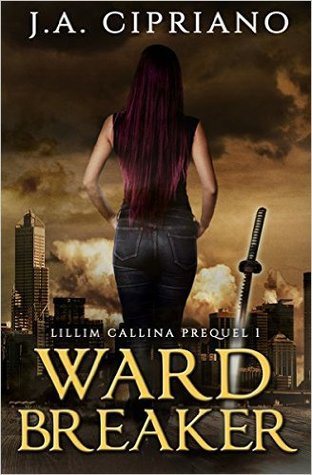
Wardbreaker (The Lillim Callina Chronicles Book 0.5) by J. A. Cipriano (Amazon, Goodreads)
It’s a curious literary meal to eat a prequel novel that was cooked up after six previous meals of a series. It’s not an unknown thing and I’ve devoured both delightful and disgusting attempts at such. Wardbreaker promised to be, judging from the previous two volumes of this series I had read, at the least a very wild group of flavors in my mouth. So, after what was a promising but somewhat confusing first meal and a more balanced second course, did the prequel continue on those trends or, like its volume number, tumble backward?
Before we find out, let’s recite the Starving Review creed:
I attempt to rate every book from the perspective of a fan of the genre.
I attempt to make every review as spoiler-free as possible.
Wardbreaker is, in many ways, the product of the chef’s continual literary refinement. While it retains the same key flavors of the manic-paced, over-the-top, urban fantasy as the previous volumes, this meal retains much of the literary consistency I noted in the more refined The Hatter Is Mad. Overall, that means a solid texture and consistent flavor for most of the meal. The dialogue is snappy and the descriptions are refined. It reads, outside of some odd editorial misses, as the work of an experienced author.
As with the previous meals I’ve reviewed of this series, characters and action are the best used spices in this book. The cast is intriguing and the protagonist, no doubt honed after so many volumes written, especially comes to life. As always, Mr. Cipriano puts together his usual, over-the-top, heavily anime-inspired action set pieces and executes them with aplomb.
The problems with this recipe are, well, the same as with the other meals I’ve reviewed. In this way, it is more akin with Kill It With Magic in that it eschews most exposition and back story (again, most of the crucial information about WHO Lillim is remains in the second (now third) book The Hatter Is Mad) for MORE ACTION. The pace is blisteringly fast with almost no stops to let the reader breathe and digest, making the curves of natural story progression more like a flatline. These aren’t good things, at least by my literary tastes, though they aren’t deal breakers either.
I’d say where these two problems intertwine is in the climax of the book. After all this action, the final climax is surprisingly flat (possibly from excessive action fatigue) and, as there is so little explanation of what the hell is going on (less so than the other two books), I was left with a large laundry list of dangling plot threads. Are there going to be more prequel novels to clear them up? I don’t know, but it definitely ends the book with a funny, flavorless taste I wasn’t expecting.
I’m really waffling here when it comes to my final verdict. Wardbreaker was a easy, breezy read in one sense, as the blistering pace tends to keep you reading until the end, expecting all those niggling questions to be answered, but they never really do. As a prequel, it doesn’t really add anything to my understanding of the series protagonist or the world, which means I’m not sure where it really fits in. It certainly isn’t a bad meal, not at all, and I was never ready to throw in the towel, reading it both in beta and in final form each within a night or two. Still, it’s not as good, in the end, as The Hatter Is Mad, sharing more of the confusing pedigree of Kill It With Magic, just more refined. In a more refined rating system, I’d rate it somewhere between the two, but more rounded down towards Kill, hence my final rating below. Obviously, if you’re a fan of The Lillim Callina Chronicles, you should definitely snap this up, and if you are a lover of non-stop, over-the-top action, I’d definitely suggest this series as a prime example of that genre. If you are looking for deeper exposition or a normally-paced bit of fiction, you won’t find that here.
FINAL VERDICT: *** (A prequel meal that is fed to you at a frantic pace, with no new information for the series as a whole!)


December 13, 2015
Stone and a Hard Place – Book Review
Here’s another reblog from my colleagues at the Book Review Directory! Enjoy!


It’s hard enough for Alastair Stone to keep his two lives—powerful mage and mundane Occult Studies professor—separate without an old friend asking him to take on a new apprentice. Especially after a university colleague wants him to investigate a massive old house for things that go bump in the night. Still, Stone figures it’s an easy job: just turn up, put on a little show, and announce that the house is clean.
View original post 618 more words


December 11, 2015
Book News: It’s Rough, But Done!
Good news, everyone! The first draft of my next book, the as-yet-untitled fantasy mystery LGBT romance drama set in a post-magical-apocalypse with film noir and cyberpunk overtones *gasps for air*, is finished. Now the trek of revision, beta input, editing, titling, and cover art remains!
Still, I really hope to get this out sometime in January, then immediately proceed to the next book of The Push Chronicles. Oh, if the paragraph above catches your fancy, contact me via e-mail (jbgarner58@gmail.com) if you’d like to be part of the beta reading crew.
Until next time, good reading, good writing, and good luck!


Starving Review: A Sword Into Darkness by Thomas A. Mays
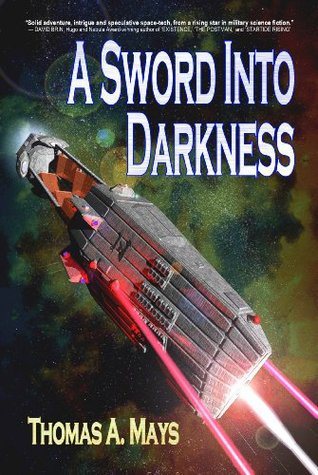
A Sword Into Darkness by Thomas A. Mays (Amazon, Goodreads)
I have to be honest, my foodies, in that I haven’t had a good dining experience at the military sci-fi table. Until now, I had thought this was just a genre of cuisine that would eternally curdle my stomach. So when I had another such dish get served up out of the pantry, I was hesitant to even crack the serving dome. Still, hope springs eternal in this diner’s heart, so I bravely dove into A Sword Into Darkness. Would this be the dish that broke through to me about this genre or would this spaceship crash and burn?
Before we find out, let us recite the rules of Starving Reviewing:
I attempt to rate every book from the perspective of a fan of the genre
I attempt to make every review as spoiler-free as possible
I have to be honest: Sword is a sharp bit of writing. Which is a good thing, because, uh, swords? Poor humor aside, this is definitely the first military sci-fi dish that truly impressed me, that had me focused on it for the entire read … and it’s also is wrapped in the crunchy roll of hard sci-fi, another thing that often puts my taste buds to sleep. So, what did the chef do right in this recipe that brought it above the pack?
As I say all the time, first and foremost, Sword has excellent cooking fundamentals. The key ingredients: a well-paced plot, smartly arranged exposition, relatable characters, and multi-layered dramatic conflict. Yes, there are plenty of solid genre conventions: spicy military action, that crunchy hard sci-fi layer I mentioned before, and an implacable yet imminently understandable race of alien invaders. However, it never lets these spices overwhelm those core fundamentals.
One thing I want to particularly focus on is the excellent foreshadowing and symbolism shown at various points in the meal. It was done in a nuanced fashion that, when certain plot points come to the fore of your literary palate, you suddenly taste that zest of flavor from that previous nugget of foreshadowing, that thrill of sudden understanding. As far as symbolism, if you do read Sword, a certain dinner fairly early on between three major characters is, though the detail at first blush seems excessive, deeply informative of their personalities and motives once you see the symbolism and meaning about those details.
There’s not much more I can say that won’t dive into SPOILERS, so let’s wrap this up! A Sword Into Darkness is a wonderfully flavorful and nuanced dinner of military sci-fi, the best I have read so far! If you like military sci-fi, it is a must read. If you are a general lover of sci-fi or genre fiction, it is also worth your time.
FINAL VERDICT: ***** (A wonderfully flavorful and nuanced dinner of military sci-fi, the best I have read so far!)


Starving Interview: Thomas A. Mays, Author of A Sword Into Darkness
Another Friday comes to us, my friends, so it’s time to have a sit-down in the kitchen with another literary chef for a Starving Interview. This week, welcome Thomas A. Mays, author of this week’s Starving Review subject, A Sword Into Darkness!
Please introduce yourself to my literary foodies!
Hi! I’m Tom Mays, or Thomas A. Mays, or Commander Thomas Mays, or The Improbable Author. I write Sci-Fi, Fantasy, military fiction, and bad puns.
Do you do any work outside of the writing kitchen? Any non-work interests?
Yes. My day job is in the US Navy, where I am a Commander in the Surface Fleet on the East Coast. I’ve served aboard destroyers, cruisers, carriers, big-deck amphibs, and various large staffs. My coolest SFF-related Navy job was as the Range Operations Officer at the Pacific Missile Range Facility in Kauai. I got to fire rockets up into space and then blow them up with kinetic kill warheads. I also bike, kayak, and play with my poor, doomed progeny.
What is your latest dish to be served up? Are there any past pieces of literary cuisine you think we should take a bite out of?
My latest project is a sequel to the novel you’re reviewing, A Sword Into Darkness, titled Lancers Into The Light. In a perfect world, I would have published it last year. Alas, life and the day job intervened. If folks like my work, they are encouraged to seek out my collection, REMO, or check out my short stories in Jim Baen’s Universe, the Grantville Gazette, Daily Science Fiction, or the Riding The Red Horse anthology.
What made you want to put on the chef’s hat and whip up your own books?
I love and consume SFF by the bucket-full and had a fairly good talent with wordsmithing. I realized that I’d never seen a proper primer for space warfare, so I set out to make one.
Do you have a genre of specialty or do you dabble? Why?
I guess you could call my cuisine a fusion of military sci-fi, hard science fiction, and space opera. I bring with it the aesthetics of modern naval warfare, but the rigors of actual space science. Most of the stuff you read – though great – are usually either Horatio Hornblower in space, or a pastiche of WWII submarine combat.
Style! Every literary chef aspires to have their own unique one! What do you think sets yours apart and why?
A sense of fun, a great deal of verisimilitude as far as the actual military goes, and some realistic physics (with a little bit of cheating to make the story more fun). And, take it or leave it, I spent a LOT of the book showing how you might build up such a thing as a space navy.
Even the best of us find inspiration is the dishes of others. Do you have any literary inspirations, heroes, and influences?
David Weber, David Drake, Robert Forward, John Ringo, and Robert Heinlein
Let’s get into the meat and potatoes: the art and craft of writing itself! Do you have a preference of points-of-view when you write?
As a newb, I followed the received, conventional wisdom and stuck with limited 3rd person for the most part. Now that my voice and know how are improved, I’m delving more into 1st person. A lot of it depends upon the story, but I think your protagonist should be an everyman caught up in events and learning the ropes alongside the reader.
Sparse or wordy, how do you like your descriptions served up? Are you a Hemmingway man or do you like some saucy adjectives with your nouns?
Wordy, verbose, and filled with purple prose (some have said). I love words and could probably stand a lot more judicious editing.
Picking off the menu of base literary conflicts, what’s your favorite and why?
I tend to use a mix of man vs man and man vs society, with technology and the supernatural as tools for either side, neither of which is demonized. I like to root for the underdog, but I don’t want my antagonists to not present a valid case. The bad guy is rarely the bad guy in his own mind.
What do you think is more important to your recipes, plot or characterization? Why?
I’d love to say characterization, but I know I write pulp. Plot is king. I love a lot of action and a lot of decision-making, with my characters riding the wave to victory. They may change some, but I haven’t really gotten into much navel-gazing. It’s not my strong suit.
We all know that the first taste means the most! What do you do to get that first bite hook with your readers?
Eccentricity. I posit an unusual scene, circumstance, or a character acting outlandishly so you stay for the explanation. My stories tend to build toward the action, so I have to hook you some other way.
The most important of questions: Cake or pie?
Pie. Specifically real Key Lime pie, and not the green stuff. Does cheesecake count as pie or cake? And what about quiche? Gimme all three (and fried chicken) and you could take me right to the gallows as a happy man.
Finally, if you could give one piece of advice to aspiring literary chefs out there, what would it be?
Keep writing, save it, let it sit, then go back to it with fresh eyes. Once folks read it and critique, sit on the critique and your response for a while. Let your subconscious be your best editor, but recognize that he edits slowly. Time heals all wounds, even the ones you inflicted on your writing yourself.


December 9, 2015
Writing Is A Bad Habit: Fingerpainting Prose a.k.a. Irregular Story Structure
Good day, my literary foodies! I’m sure we’re all familiar with typical story structure. If you need a refreshing, this is following a story from its chronological beginning and then progressing through the events of the plot through to the conclusion. Simple, basic, but almost always reliable. The old stand-by of storytelling! However, there are a variety of other interesting ways to structure and tell a story.
Another classic that most, if not all, should already know is in medias res. This is the technique of starting a story not with its beginning, but at some point in the middle of the plot. Why would you do this? Well, a good reason may be to hook the reader, by presenting them with some exciting or dramatic scene, especially if what would be the usual starting place begins at a slow, potentially uninteresting point. This way, you invest the reader in your plot immediately, satisfying them enough to let you go through the slower points of the story. The potential pitfalls, of course, is that you may confuse the reader by throwing them into a situation without the proper exposition, or by choosing a scene that either doesn’t truly invest the readers or winds up being irrelevant to the main plot.
One technique I have seen done both great and horrible is the ‘book-within-a-book’. Though not confined simply to books, this technique involves the inclusion of media in the fictional world you’re creating as part of the main story/plot. Most often, this is another book being read/written by one of the characters in the main story, providing insights on characters, plot, or the world in a non-standard fashion. You may also see this done with movies, television, poetry, and song. This technique can provide some fascinating insights into the world and the characters, but has its own risks. If overdone, this extra media might overshadow the main plotline, either in space or by presenting a more engaging story. It’s important to vet this technique carefully, especially for relevance to the characters and plot. If it doesn’t add to the story, don’t include it!
Another story structure, which could be considered a more advanced version of in medias res, is a non-linear timeline. While in medias res uses one scene out of order, a non-linear timeline plot may have any number, even all, of its scenes presented out of chronological order. They could be arranged in any number of systems, or even randomly. Possibilities include two parallel timelines separated by many years (such as a timeline moving in the Renaissance and one moving in modern times, cutting between the two as the plot progresses), a plotline that moves first forward until a certain point where it then backtracks from another viewpoint, or any number of other arrangements. This technique can create some fascinating works, really involving the reader as they puzzle out the order of events and the interactions between the scenes. The problem is an obvious one, simply that it can become more complicated than its worth, creating rampant confusion and frustration by your readers if you do not still make the scenes into a cohesive whole.
These are just a few examples of non-standard story structure to experiment with. There are many more and we shouldn’t be afraid, as authors and creators, to experiment with the range of options we have available. Just take your time and be ready to leap back from the pitfalls that may open up at any time! Remember, it’s never too late to change something that doesn’t work , well, at least until you’ve published.
Until next time, good reading, good writing, and good luck!


December 7, 2015
Monday Musings: One More Sneak Peek For The Road! a.k.a.Exactly What It Says
It’s been a busy week here at Starving Author LLC and it promises to be even busier this week! However, I promise not to leave you good folk hanging, so let’s start off the week with the final sneak peek (of this first round) of my newest novel, still really needing a title! You can read the first Sneak Peek here and the second here.
From Isaac’s Primer on Divinities by Isaac Yore, olden philosopher:
Divine beings are extradimensional, immortal beings that exert vast control over certain fundamental forces and concepts in our world. The power and influence of many divinities seems to fluctuate with the extent of their worship, though some core concepts of reality, such as death, have gods of vast and unyielding power. There are two general types of gods: the ascended, such as Inam Wallmaker, god of cities, and the eternal, such as Zain the Dealer, god/goddess of death, luck, and fate. Ascended deities were once mortal but accomplished acts of such legend that they underwent apotheosis. Eternal deities seem to have always existed and tend to have wide ranges of worship.
From Animating the Inanimate by Lady Alysa Hsu, myan sorcerer and researcher:
At its most basic, golemancy is the application of sorcery to animate unliving, inorganic matter. Several specific types of magic are utilized to this end, thus requiring the aspiring golemancer to possess a breadth of knowledge and an open mind to new techniques and practices. Let me be plain, though. The art of golemancy never delves into the animation of living or formerly living tissue. That is the focus of the necromantic arts, sorcery of dubious and often twisted morality. Never fall into the potentially quick-and-easy shortcuts necromancy can apply to your work and stay true to the golemancer’s ways.
From the notes of Lady Alysa Hsu, 14 Octavian 736 PC:
A day of mostly-wasted research. Not caused by any experimental missteps, fortunately, but instead by an unexpected visitor. After the ‘accident’, visitors of any kind at the manor are rare, even fellow researchers. Initially tried to ignore Xian’s repeated calls, but changed my mind when the golem added that it was a Watchwoman on duty.
Wondered at the time what the Watch could be doing here. I had to know. The last thing my work needed was a pack of bulldog Watchers sniffing around and getting underfoot. Best to put on my social face and get them gone swiftly. Grunting, I pulled myself up from the wheelchair to my steel legs. Hurt as usual, still can’t get the sympathetic link quite right.
Paid no attention to ruffled fur or matted hair as I rushed to the door. Regretful in hindsight. In the foyer, attended to by Xian, was an aard woman. The standard double-frock blue Watch coat with two red stripes around the cuffs, Junior Inspector’s stripes. Serious business then, could be trouble. Forgot for a moment about my sour feelings regarding the Watch when I focused on the woman, pushing a stray orange lock out of my eyes.
Silky red-and-white fur, thick as it came around the collar of the coat, matched by equally red hair. Brown eyes full of a life that I had forgotten existed in the world. Even with the unflattering uniform, could tell she was busty, with the broad shoulders and wide hips common to the canine-folk. My own fault, really, that her initial appearance had such an effect on me, those things denied for so long.
“Lady Alysa Hsu?” Husky voice, rich. Not a singer’s voice, but it pleased me all the same. Faint accent of the lower layers.
Got my senses, tried not to seem foolish. “I am. What can I do for the Watch today?”
“Junior Inspector Vela Redmane, milady.” Bowed fluidly. Noted the hand crossbow folded back in holster, truncheon too. Definitely serious business. “And, before we proceed to business, may I first express how much of an honor it is to meet you?”
Wasn’t sure then how to react. Been years since someone said something like that.
Redmane took my silence as invitation, taking my hand and kissing it. “To have a chance to meet one of the most renowned arcane researchers of our time and to find that she is a thing of beauty as well.” Still stunned, she continued, letting my hand go. “I am certain you will be able to help me find a killer most foul.”
Tried not to blush while gathering wits. Suspicion was rising. “How do you know what I do?”
“During my alchemical apprenticeship, my master was insistent we learn in general about all kinds of sorcery, regardless of our magical talents. Your treatise on golemancy was required reading. More importantly, I spoke with Master Chase as to who to consult with for my particular difficulty and he suggested you.” Seemed sincere, could smell the familiar scents of the laboratory on her, but no doubt Redmane could lie like the rogues she hunted. Came as part of the job. Still, if she was one of Yuri Chase’s, would be worth hearing her out.
“Very well, Inspector.” Realized how strange I had been acting. The years alone, after all. “I apologize for my seeming paranoia.” I gestured to the next room, sitting room. “Let us sit a spell and discuss this killer you mentioned. Xian, please bring tea and refreshments.”
Settled down in the sitting room. Strangely felt glad Xian was doing its rounds, cleaning and dusting even the unused chambers. Redmane sat politely and surprised me again as she caught the sigh of relief as I settled down.
“I apologize. If I had known you would be at discomfort, I would have asked to be brought to you.”
“Old wounds, Inspector. It is quite all right.”
“I will say that, while your lost legs are a tragedy, the golem ones are quite elegantly designed. I’ve not seen their equal.” More sincerity. What was the angle?
“I am glad you think so.” Strangely sincere myself. “Is it a golem that has committed your murder?”
“No, milady, it is not your past research that is of importance here.” Total shift in countenance in Redmane. Bringing up the death brought a set muzzle, intense gaze, and a serious air. “It is what you are currently working on.”
Chase was the last of the old colleagues to come by. Makes sense he would know, tell Redmane. Still hesitant to say it out loud, as if it violated my zone of privacy. “Enchanted music.”
Xian brought the tea and biscuits then, setting them in the center of the table. It was a well-programmed golem, but still could not sense the tension in the room. It left quickly enough when we both ignored its queries for more direction.
“Yes, milady.” Redmane put a purple crystal, slightly blackened, onto the table. “I do not know why you have lived in your mansion like this for these past years and I do not wish to impeded on your privacy as I am, but I do need your help.”
Picked up the crystal and rolled it in my fingers. A small incantation. Analytical spell. “A reverberation stone. It resonates with the exact sounds produced by the one it is linked to when activated.”
“I guessed it was something like that, though I was not certain.” Redmane sighed. “It sickens me that a pretty stone such as that was used to kill, even more so in the way it did.”
“Explain please, Inspector.”
“Lady Hsu, is there a magical song or note that can induce such pleasure in a Folk that one will die? If so, please tell me as that was how that stone was used.”
Frowned. Guessed Redmane was a Myrienite like I once was. Myrien, god/goddess of beauty, beauty beyond the shallow outer shell. True inner beauty, true wonder. Comforting, but for the young, the naive. Still, the look of anguish on Redman’s face stirred me. Couldn’t hurt to help some. Make the girl happy. Liked the thought of that.
“I can help you, Vela.” Smiled, not totally sure why. “I want to help you.” True, I did. Would interfere with my work, but not much. Might even help.
“Thank you, milady, truly.” Redmane smiled back; that stirred me once more. “Let us not waste your golem’s hard work and have tea. You can tell me the generalities of how this song and crystal work before we go deeper.” Before I could fetch my own, she had already started serving.
Not used to being doted on. Sweet, actually. Felt my control slipping, needed to remember that, as pleasant and gallant as Vela seemed to be, she was still part of the Watch. Not to be entirely trusted. Cleared throat and thanked the Inspector before starting again.
“Well, at its core, a resonating crystal is like many other forms of sympathetic magical tools. It is infused with the sorcerer’s own mana, the most intimate form of linkage, allowing it to serve as the source of the mage’s incantations. There are many practical uses for that linkage.” Sipped at tea, eyes locked on Redmane, see just how much she understood.
She nodded as she made her own tea. “Of course. Anything from stealth, anonymity, drama, or the most simplistic, to make a spell more efficient by vastly expanding the distance it can range without draining the wizard unduly.” One of Chase’s, certainly. Alchemists don’t use real magic; most forget key principles or don’t bother.
“Correct, Inspector. As any spell with the potency to kill, especially in such an exotic fashion, requires vast reserves of raw power, any way to lessen the burden would be welcome.” Figured wise to add, “Theoretically, of course. Also, it no doubt allowed your quarry the ability to do his grisly task from far away, well away from prying eyes.”
Redmane put down her cup and chewed her lip a moment. Indecisive not part of what I had seen so far. Still, worked out quickly. “Lady Hsu, what I am about to share is of the utmost secrecy, but you may be able to use this knowledge to advance the case.” Her brown eyes seemed to swell as she reached across the table with an open hand. Fine fingers, nimble, not like the average brute Watchman. “Can I entrust you with said knowledge? Do you swear to keep it safe?”
Wanted to say ‘no’, might have wanted to help but didn’t want to be drawn in. Don’t trust the Watch. Didn’t know, despite the truth I saw in those eyes and the flutter in my heart, if this just wasn’t another maneuver of Father. Still not sure now if I should not have left the room then.
Instead, took Vela’s hand. Warmth, rough pads mixed with tufts of soft fur. Moment felt like grabbing a lightning rod. Held that hand and those eyes for too long.
She didn’t seem to care, only letting go herself after too long. “Alysa. Milady. I believe our killer watched his target die. The stone wasn’t planted, no. It was fired into the room from the opposite roof.”
“How do you know?”
“There was a broken window pane at the right trajectory. More critically, there were charred remains of a shaft of ash, not the cheap fireplace wood, among the fire I found that crystal in. Like the shaft of an arrow or bolt, delivering that lethal payload. In fact, I dug this out of the back of the hearthstones after we moved the corpse.”
Redmane dug out of another pocket an arrowhead. Looked like pure silver, but knew better. Silver too soft for arrow, but silver-steel, alchemical alloy of the two. Beautiful but hard as normal metals. Couldn’t help but keep my eyes calm. Knew this arrowhead too well.
“What is it, milady?”
“Come, Inspector, let us discuss the rest of this in my laboratory.” Forced myself to rise, despite the twinges of pain. “Where it’s safe.”


December 4, 2015
Starving Interview: Shann Hurst, Author of Novelty
Good morning, folks! Today, we have a treat as we sit down in the kitchen with Shann Hurst, author of Novelty, this week’s Starving Review dish. Let’s see what this literary chef has to tell us!
Please introduce yourself to my literary foodies!
My name is Shann Hurst. I grew up in the American Midwest, spent several years in Hollywood California. I’ve had enough scares in my life to finally realize that each day is precious, and I’m now attempting to make the rest of my life into a personal adventure.
Do you do any work outside of the writing kitchen? Any non-work interests?
I’m also an illustrator. I went to art school and have a couple children books out. I’m now finishing a 90 page graphic novel called TUNDRA that I hope to release next month. Words or pictures, it’s always about the story.
What is your latest dish to be served up? Are there any past pieces of literary cuisine you think we should take a bite out of?
I should have read this question before answering the previous one. Still, that would be TUNDRA. It’s a full color graphic novel. A two hundred year old British sea captain walks into a village in Arctic Greenland. It’s winter with six months of darkness, he announces that he’s a vampire and will only kill a quarter of the population if they don’t resist. But he will kill them all if they do. So the town accepts the bargain. It’s a comedy adventure.
What made you want to put on the chef’s hat and whip up your own books?
Honestly, I didn’t want to spend the rest of my life wishing that I had written a book. That pretty much sums up a lot of things I do in life. I don’t want any regrets.
Do you have a genre of specialty or do you dabble? Why?
It looks like my thing might be magical realism. I like to mix things up. I remember watching the 50’s television show, LEAVE IT TO BEAVER, and thinking how wild it would be if they had an episode where the house became haunted.
Style! Every literary chef aspires to have their own unique one! What do you think sets yours apart and why?
Economy. I’m intrigued by the way a joke can be funny by using 10 words, and not nearly as funny when using 20 words. There’s something about the tempo of thought. There’s a music to language that goes deeper than just prose. I don’t know if I’m riding that wave yet… but I’m working on it.
Even the best of us find inspiration is the dishes of others. Do you have any literary inspirations, heroes, and influences?
Larry McMurtry. His characters make me laugh.
Let’s get into the meat and potatoes: the art and craft of writing itself! Do you have a preference of points-of-view when you write?
I like having the main character as a conduit into surreality. I keep the person grounded. That way, as the world alters beyond our normal confines, we can still find something we can relate to.
Sparse or wordy, how do you like your descriptions served up? Are you a Hemmingway man or do you like some saucy adjectives with your nouns?
Sparse. You already have a lifetime of memories to draw upon. When I talk about a cold glass against your forehead. There’s that distant five year-old in us who remembers. You don’t need me to spend a half a page describing it.
Picking off the menu of base literary conflicts, what’s your favorite and why?
Man vs Man. I want the chance to imagine the mind of the bad guy. Not just that he’s a bad guy because it helps the plot, but to really build up a character that’s really foreign to the way I view life. Maybe it’s a deep inner release. Hmmmmmm….
What do you think is more important to your recipes, plot or characterization? Why?
Oh, I’m a plot guy. I want that solid foundation. I will follow a boring guy on an adventure, but I don’t care how cool of a character he is. I’m not going to watch him just sit there. Obviously, we want both.
We all know that the first taste means the most! What do you do to get that first bite hook with your readers?
There should be some form of immediate intrigue. Why else would I want to spend 400 pages following this story?
The most important of questions: Cake or pie?
Oh, I’m a total cake guy. While I like the quaint nostalgia of a summer picnic pie. What I really want is that layered dark chocolaty chocolate that makes you cry out in agony for a cold glass of milk.
Finally, if you could give one piece of advice to aspiring literary chefs out there, what would it be?
Just create a world that enjoy being in because you’re going to be in there for a long time.