J.B. Garner's Blog, page 18
January 29, 2016
Starving Review: South of Rising Sun by J. D. McCall
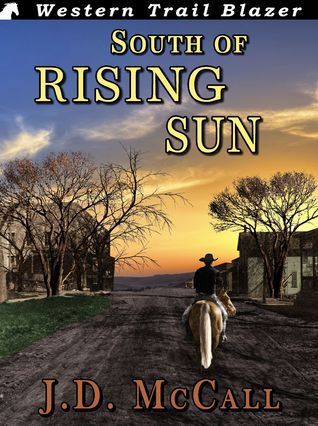
South of Rising Sun by J. D. McCall (Goodreads)
STARVING REVIEWER’S NOTE: Mr. McCall had the misfortune of his previous publisher imprint closing up shop. However, he has already been picked up by another, so South should be available through Amazon and other outlets again shortly. I will update the links when that happens.
If you’ve been hanging around the Starving Review kitchens, then you know by now that I love a good Western. Of course, the emphasis needs to be on the ‘good’ part. As a fan of the genre, I am obviously most sensitive to amateur chefs who burn the bottom, sour the filling, and generally botch up the recipe. From first bite, South of Rising Sun seems to be as pure of a Western genre recipe as possible, but does it live up to standards or do we have another cake dropped on the kitchen floor?
Before we find out, let us review the code of the Starving Reviewer:
I attempt to rate every book from the perspective of a fan of the genre
I attempt to make every review as spoiler-free as possible
As I am horrible at keeping my mouth shut when I love something, South is a souffle that rose beyond my best expectations. It fulfills all the tastes you would expect from a Western recipe, with saloons, gunfights, heroes, villains, the tastes of historical events, action mingled with contemplative moments in the saddle, everything. But what makes it rise above the expected? Well, the three key ingredients that are truly exemplary, in my opinion, are the rich, velvety characters, the well-laid out mystery at the heart of the plot, and the intelligent way Mr. McCall weaves in history and the issues of the times to the story.
South is filled with the warm, gooey filling of brilliantly realized characters. Even minor characters spring from the page fully formed, often showing depths of motivation and feeling that aren’t immediately apparent. The real treat this creates is a sense of history. The relationships of characters who have been long acquainted feel that way from their first appearance, making me feel as if this particular meal was made from well-aged beef. That sense of history and depth of relationship adds just another layer of flavor to the mix.
The other two ingredients I mentioned are as rich as they are straight forward. The core mystery is simply well-laid out, paced throughout the book, with the clues provided openly to the reader as well. When the whole plot is laid bare, if you hadn’t already divined it, you will realize that all the pieces were there for you to find. That’s a hallmark of a properly laid-out mystery.
Finally, the chef never refuses to fold in well-researched history to his recipe. More importantly than the events and places, Mr. McCall obviously strives to touch on the feelings and morals of the era in a more nuanced approach than many, especially in terms of the struggle with slavery and issues of race, things that haunt us even into the 21st century. Though this could be folded into talk of the excellent characters. it is also steeped in the history and attitudes of the time.
In final summation, South of Rising Sun is a sumptuous meal of hardy Western historical vittles that satisfies on every front! If you have any love of a good Western, make sure to get South as soon as it becomes available again. If you just love a good mystery-drama, you should grab it too. Really, the only people I would put off of this are children (the West was not a nice place!) and people that simply despise the genre.
FINAL VERDICT: ***** (A sumptuous meal of hardy Western vittles that satisfies on every front!)



Starving Interview: J. D. McCall, author of South of Rising Sun
Good morning from the Starving family homestead in Georgia! Despite my relative vacation, the Starving Author kitchens never entirely close. Today, we bring in J. D. McCall, the chef behind today’s literary treat, South of Rising Sun, to find out what makes him and his writing tick. Enjoy!
Please introduce yourself to my literary foodies!
Born on a mountain top in Tennessee . . . uh, wait, that was Davy Crockett. Ok, then; Daniel Boone was a man . . . no . . . no, that was JD’s great, great, great uncle. How about this: Born and raised in Kansas, John (JD) McCall’s first ever ambition was to be a stand-up comedian, a goal strongly discouraged by the many teachers who were forced to put up with his antics in class. He did manage to finally shelve that aspiration and earned a B. A. in biology and a Master’s degree in Industrial Hygiene late in life. He resides in the city of his birth, Ottawa, Kansas, with his wife and three children, along with three Labrador-mix dogs who do everything caninely possible to see that he has no spare time to write.
Do you do any work outside of the writing kitchen? Any non-work interests?
Since I’m not an A-lister in the literary world (and likely never will be), I support myself by working as an industrial hygienist for a good sized university. Besides doing things with my family and our dogs, I like rock collecting, movies and music. Recently I formed formed a duo with a guitarist friend of mine and will be going into the studio in March to record four songs we wrote. Never too late to try new things. Oddly enough, though, I’m not much of a book reader. Whoops! Guess I shouldn’t have admitted that.
What is your latest dish to be served up? Are there any past pieces of literary cuisine you think we should take a bite out of?
My newest novel is South of Rising Sun, which originally came out at the end of 2014 under the Western Trailblazer imprint, but since WB ceased operations, Sundown Press will be making it available under their label, soon. Borrowed Guns was my first offering, and South of Rising Sun is actually its prequel, based on an incident mentioned in it. If you like the characters in SoRS, you might enjoy Borrowed Guns, which is actually two shorter stories that are complete in themselves but connected.
What made you want to put on the chef’s hat and whip up your own books?
My first inspiration came from watching a special on anthropology at age eighteen, which prompted me to begin a novel about the Neanderthals of Shanidar Valley in Iraq. As writing didn’t come easily to me, I struggled mightily with the process for several years, and mid-way through it, I met the woman who would later become my wife, got side-tracked and never went back to it. About that time, Jean Auel came out with her book, Clan of the Cave Bear, which used the same setting and Neanderthal tribe as my abandoned novel, though the plot was different. In retrospect, it is probably a good thing this early attempt has stayed buried. My next attempt at a novel didn’t come until decades later when I was inspired by an “old time” photo from a modern day, novelty photo studio.
Do you have a genre of specialty or do you dabble? Why?
I like to cook up Westerns. I like writing westerns because it was such a unique period in U. S. history, and one that has no real parallel in any other country. Though the setting is simpler than in present day genres, you can still delve into the human conflict and interactions which is really what makes a story interesting. And it’s got horses! I wouldn’t be averse to trying another genre, though.
Style! Every literary chef aspires to have their own unique one! What do you think sets yours apart and why?
Not being a voracious reader on my own, I’m not sure I can answer that question satisfactorily. Although I have read within my genre in years past, when I started writing during the last few years, I deliberately avoided reading anything in my genre for fear of inadvertently copying someone else’s style. What I try to do is create a good blend of character development and storyline, and that can shift one direction or another, depending on whether the novel is plot driven or character driven. I place emphasis on giving my prose a sense of rhythm and cadence to make it easy for the reader to breeze through it. Throw in my own somewhat quirky take on things and some humor when it won’t disrupt the mood inappropriately, and you basically have my “style.”
Even the best of us find inspiration is the dishes of others. Do you have any literary inspirations, heroes, and influences?
One of my inspirations has been a man named Andrew Garcia, a mountain man in the late 1870s who chronicled a year of his life among the Native Americans in his autobiography, Tough Trip Through Paradise. Amazing and colorful prose with marvelous insights into his own head when he was twenty-three and just beginning his life in the mountains. In non-literary world, my inspiration was the life of a dear friend who passed a few years ago. The main character of both my novels is based upon him.
Let’s get into the meat and potatoes: the art and craft of writing itself! Do you have a preference of points-of-view when you write?
I’m partial to the omnipotent point of view but mostly filtered through the lens of one or two main characters. Since both of my books have been centered around a mystery of sorts, that point of view makes it easier to not expose the secrets of the mystery, while allowing the reader to figure things out on their own.
Sparse or wordy, how do you like your descriptions served up? Are you a Hemmingway man or do you like some saucy adjectives with your nouns?
Depends on what’s being described. Endless descriptions of scenery and weather are boring, akin to trying to describe an abstract painting (Tolkien comes to mind). Other, simpler things are self-limiting if an author is smart enough to quit while he’s ahead. I’d say I like just enough to get the point across, while being vivid enough make an impression. I don’t mind a colorful adjective once in a while, but showing off to the point of distracting the reader doesn’t do an author any favors. And you can create a colorful phrase with simpler words if you work at it.
Picking off the menu of base literary conflicts, what’s your favorite and why?
I think the basic good vs. evil conflict is the easiest to construct any number of scenarios out of.
What do you think is more important to your recipes, plot or characterization? Why?
I try to maintain somewhat of a balanced blend, but as I mentioned, it can be seasoned toward salty or sweet, depending on whether the book is character driven or plot driven. You have to have a mix of both unless you are an extremely skilled writer. All plot with no compelling characters usually makes for a story in which the reader cares little about the outcome. All character without much plot often leaves the reader what the point is. A really good writer can sometimes overcome those limitations, but most of us aren’t that skilled.
We all know that the first taste means the most! What do you do to get that first bite hook with your readers?
I am a big fan of the original Star Trek series, and their formula was to start either with the dilemma or problem, or else a foreshadowing of a future problem within the first five minutes. I like to give my audience that same thing.
The most important of questions: Cake or pie?
Cake, definitely. And I’m partial to angel food with chocolate icing.
Finally, if you could give one piece of advice to aspiring literary chefs out there, what would it be? Find a good editor to help you put a tasty dressing on your word salad.


January 27, 2016
Writing Is A Bad Habit: Lazy River or Raging Torrent a.k.a. The Many Rights of Pacing
Pacing, pacing, pacing! It’s one of the most vital elements to get right in a story and it’s one that I wind up commenting on often in my Starving Reviews. The problem with reading my reviews to learn about pacing is that the ‘right’ pacing for any work is an elusive beast. When I say in a review that the pacing was ‘sluggish’, that may mean something different depending on the book that I’m reviewing.
Pacing, maybe more than other core plot elements, is fluid. You need to think of pacing as a river. A river is water flowing down a channel. You want a safe current down that river, but how much water you need to make that current depends on the channel that’s cut. It also depends on what you want to do in that river. Do you want to go white-water rafting or spend a lazy day fishing on the river bank?
To turn the comparison back into actual literary terms, the ‘right’ pacing for a particular piece is determined by theme, content, genre, and the plot itself. Action pieces may call for a swift pace. Introspective pieces may call for something steady and methodical. It’s even quite likely that the pacing of a work will slow and speed, alongside the rises and falls of the dramatic curve. This all serves to reinforce the other elements of the book and the all-important dramatic tension of the plot. This is why pacing can be such a dominant force in whether a reader loves or hates a book.
So, when you put together your next work, pay attention to the ebbs and flows of your plot and use the pacing to help enhance and reinforce that plot. The pace is the spine and the speed limit of your tale. You need both to be just right to create the best works you can!
Questions, insights, or critiques? Drop them in the comments below! Until next time, good reading, good writing, and good luck!


January 25, 2016
Monday Musings: Sappy Post Incoming! a.k.a. Family
So I am now safely ensconced in my sister’s homestead with her family and my mother, only a month late for Christmas. It came to me last night that I am a fantastically lucky individual. Few people, after all, have grown apart from one family, find a brand-new family (Dave, Reyn, and Jon, gods rest his soul), then rebonded with the first family again. I have two entire families and, even better, they like each other too.
What it also tells me is that family is more than blood and it is more than the bonds of friendship. There is an ease and a comfort, something deeper and unique, that defines family. It is being able to show up on a doorstep at any time and be met with open arms. It is the feeling that you fit in like a bug in a rug. It is that sense that, no matter the time between visits, you can step in and pick it back up as if no time had passed at all.
It’s sappy and gooey and so Hallmark-card-cute, but it’s so very real. For we weak, clawless, fangless, pink-skins, I can’t help but believe that it was the bonds of family that were as important to our survival as our discovery of sharp rocks and fire.
So enjoy those, no matter accident of birth or circumstance, with which you feel that comfort, that warmth. Until next time, good reading, good writing, and good luck!


January 24, 2016
The Opening Bell by J.B. Garner
Another excellent honest review! Thanks to Ashley for the fine critique!

Leilani Ito has wrestling in her blood. As a rookie she’s not expecting to win all of her fights, but she is willing to work hard and do her time to get to the top. What Leilani doesn’t realize is that there is more than just wrestling in her family history. There is also a curse that could end her wrestling career–maybe even her life–forever.
First of all, I just want to say that I know NOTHING about wrestling. I think if you have any sort of background or knowledge about wrestling that this book would instantly become more enjoyable. That being said, I thought this book was pretty good though it did have some flaws. I thought the overall plot was interesting. There was a lot of conflict and interesting relationships developed between characters. There are fights in the ring as well as fights out of it and that creates…
View original post 237 more words


January 23, 2016
Weekend Update: To Georgia! a.k.a. A Week with Family
Hello, foodies!
Just to let you know, I’ll be spending most of the coming week in Georgia with my sister’s family and my mother. Good old family bonding … which is really make-up, as I couldn’t go there for Christmas.
The usual blog updates will still happen though! I can only promise one review this week, alas, as I will be spending time with the family.
Have a great week, folks, and we’ll be back into full production next week!


January 22, 2016
Book News: More Kind Words! a.k.a. Another Opening Bell Review
It gives me no greater pleasure than to hear that someone enjoys what I write. That being said, I’m pleased as punch to pass along another happy review for The Opening Bell. Enjoy! Here’s the link:
http://www.amazon.com/gp/customer-reviews/RXOZ8WN436ONC/ref=cm_cr_pr_rvw_ttl?ie=UTF8&ASIN=B013MKNACY


Starving Review: Lynne & Hope by Joey Paul
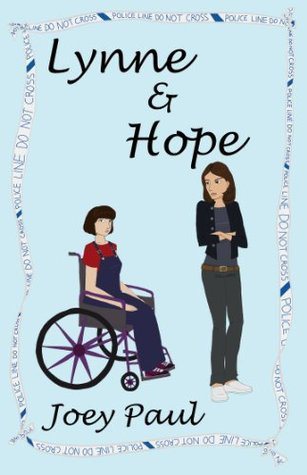
Lynne & Hope by Joey Paul (Amazon, Goodreads)
The difficulty sometimes with sitting down to a young-adult themed meal when you’re pushing forty should be obvious. If I need to spell it out, well, it’s the fact that you aren’t the age the meal is flavored for, so you may not always be able to enter that mindset. I almost fell into that trap myself when I starting digging into Lynne & Hope, but I managed to pull myself out before I went too far astray. Does that mean good things or bad things for the quality of the meal?
Before we find out, let us open up the rules of the Starving Reviewer:
I attempt to rate every book from the perspective of a fan of the genre
I attempt to make every review as spoiler-free as possible
To start with what I implied, my inability to enter the mind-set of my storied youth at the start looked to spell trouble for my critical thoughts of Lynne. No matter what you might say, that all meals are equal and should be judged on the same merits, different styles of cooking have different benchmarks. They seek to appeal to different things, different tastes, and different cultures. So, once I got my head back into the game and resampled the dish before me with my youthful tastebuds screwed in tight, I wound up with a very pleasant taste in my mouth.
You see, despite some of the garnish of a mystery thriller, Hope is almost entirely a character drama focused around a teenage, disabled girl and her decade-older sister. Their dysfunctional relationship, as well as their generally strained family life, form the real, driving conflict and story of the meal. The mystery and crime elements are purely there to help fuel and stress the relationship dynamic to the point of real resolution. My early mistake had been focusing on the more ‘mature’ crime plot, you see, and not the more critical and teen-focused relationship drama.
When Lynne focuses on these relationships and the two main characters, reinforced by the book’s framing device as the diaries of the two girls, it is at its best. Outside of the these two characters, the rest of the cast is a bit thin, especially outside of the two parents. While I would have enjoyed a bit more substance to the rest of the world, with so much of the real story focused on the sisters, this isn’t a real problem.
That isn’t to say this is a perfect meal, no matter the tastebuds screwed into place. Sometimes the author hews a bit too precisely to the diary device, forcing sections of repetition when the two sisters have dialogues with each other. Sometimes these sections do reveal new insights, while others are literal repetition and so wasted space. There may also be some initial confusion as to setting (the events of the book take place in Great Britain), something that I figured out fairly quickly but could have been easily corrected with one sentence at the beginning.
In summation, Lynne & Hope uses a dash of mystery to forge a heart-felt drama about the relationship of two sisters. If you love relationship dramas or love young adult books in general, this is a real treat! If you have a hankering for a pure mystery, though, this isn’t the book for you.
FINAL VERDICT: **** ( A dash of mystery spices up a heart-felt drama about the relationship of two sisters!)


Starving Interview: Joey Paul, author of Lynne & Hope
A double review day brings a double interview day! Our busy kitchen is ushering in Joey Paul, the chef behind Lynne & Hope, our second review subject this week. Let’s see what she has to tell us!
Please introduce yourself to my literary foodies!
Hi, I’m Joey, I’m 34 and I’m an indie author. I’m disabled, and chronically ill. I started writing when I was 19 and had just been retired from the working world on medical grounds. I decided that a lifetime of doing not much would drive me up the wall so I picked up my pen and took a previously-written book to pieces and wrote it again. Once that was done, I moved on and then from there a career was born. I’ve published eight books so far, with my ninth due out in the summer. However, I’ve finished twelve books in total, and I’m writing another two at the moment. I’m almost at the end of both of them and then I’ll move on to my next two. My books are all young adult, most of them are crime & mystery, although the series I write is also paranormal, and I’ve written one romance.
Do you do any work outside of the writing kitchen? Any non-work interests?
I love to read, usually crime and mystery books, but I can also be found with some chick lit, or even young adult dystopian and paranormal fiction. I also love going out and about looking for Tupperware with the aid of a GPS unit, which is otherwise known as geocaching! It’s a great way for me to get out in my electric chair and see new places while doing a treasure hunt! I love it!
What is your latest dish to be served up? Are there any past pieces of literary cuisine you think we should take a bite out of?
My most recent release is Dying Thoughts – Fourth Week (can be found here in paperback & here in e-book). It’s the fourth in the Dying Thoughts series which tells the story of Tara, who has a paranormal gift that allows her to see the last moments of someone’s life when she touches something they owned. In the fourth book, someone close to Tara is kidnapped and she works alongside her police contacts to try to bring them home safely.
My next book, which is due out in the summer, is a standalone called Destination: Unknown. It’s a mystery with hints of paranormal, concerning fifteen-year-old Harriet who lives with her chronically ill mother in an old house. One day she sees a ghost, and then the next she steps on a paving stone in her back garden and is sent back one hundred years to 1910. She then meets Dot, who wants her help to prove that her father is innocent of a crime. I’m really excited about this one, as it’s based in the Railway Village where I live. The village was built in 1840 for the railway workers, and is a historic site. I live in one of the houses, and they are all – from the outside at least – period accurate. I loved writing it and I’m hopeful that my readers will enjoy it too!
What made you want to put on the chef’s hat and whip up your own books?
As I said above, when I was 19, I got retired on medical grounds. I have had a lifelong lung condition, but on top of that I also got sick with M.E (also known as Chronic Fatigue Syndrome) and Fibromyalgia, which meant that I couldn’t continue working without putting my health at more risk. I had always been someone who loved to tell a story, even from a young age I was always making things up in my head. Of course I had bigger plans than writing at that point, I was going to become a doctor and help people with similar conditions to mine. When I got sicker in my teens, it became clear that wasn’t going to happen and I started doing a more conventional office job. And then I got even sicker and that was off the table too, so I decided to take up writing. I was first published with Author House in 2005, and then went indie with my own label in 2011. Since then, it’s been all I want to do and all I will ever do.
Do you have a genre of specialty or do you dabble? Why?
I started off with young adult because at the time, I *was* a young adult. I always loved a good mystery and thought I could have a go at writing one myself. With that done, I wanted to stay in the genre I knew I could write, so I started the Dying Thoughts series and almost without realizing it, I branched out into paranormal mystery. I stuck with that for a long while because I knew what I was doing and I was comfortable with it. It was only really when I realized that I could branch out that I decided to dabble with a young adult romance novel, and I’m told that sometimes it’s more contemporary than romance. The majority of my books are crime and mystery, but I don’t feel like I will always stay there. I’ll dabble and find new genres to try as I grow as a writer.
Style! Every literary chef aspires to have their own unique one! What do you think sets yours apart and why?
I think because I write from the point of view of the protagonist, I bring a unique look into the mind of my characters. I seem to have a good idea of what goes through the mind of an average teenage girl – probably because I was one at one point – and I bring a unique story to life through their thoughts, actions and situations. While I do think it’s true that nobody these days can think of an idea that hasn’t, at least in some way, been done before, I do think that it’s a talent to be able to take something that’s been done and make it your own. That’s what I do with my books.
Even the best of us find inspiration is the dishes of others. Do you have any literary inspirations, heroes, and influences?
I have always been a prolific reader. I remember when I was a teen. I would meet up with my best friend at the library in town, where you could take out eight books at once on your card (eventually they upped it to sixteen!) and we’d go there, return the books from last week and grab eight more. It was the way we spent our Friday nights until we finally left school. Even now, I still average about ten-fifteen books a month reading-wise, so I have a lot of inspiration from literary figures. I love Harlan Coben, his way of writing a mystery has always drawn me in from the first word. I also adore Sue Grafton and her alphabet series; I am now anxiously awaiting the last two in that series and I re-read from A to X pretty much once a year or more. I have also read all of Kathy Reichs and her young adult series, Virals, which have had some influence in my choice of staying in the young adult genre.
As far as other indie authors go, I love and adore everything that Jana Petken has written. I had never really read historical fiction before, but I grab everything she writes and devour it. I also like Jennifer Loiske who is another young adult, paranormal fiction writer and I know she has read my Dying Thoughts series and enjoyed it. There are a bunch more of writers that I will one-click buy without even reading the synopsis, but I don’t have the space to name them all!
Let’s get into the meat and potatoes: the art and craft of writing itself! Do you have a preference of points-of-view when you write?
I generally enjoy telling the story in first person, from the point of view of the main characters. I have once written in third person and a friend said I should do that more often, but I find it easier to tell the story how I want it to be told when I have access to my characters innermost thoughts. It also tells the story the characters want to tell, if that makes sense. They may not always be reliable narrators, but it gives the reader a chance to see it all through the eyes of Tara, Tally, Lynne or Hope, or any of my other main characters. I have thought seriously about telling the story from a different point of view in the last Dying Thoughts book, but as that has not been started yet, I’ve not had to make a decision!
Sparse or wordy, how do you like your descriptions served up? Are you a Hemmingway woman or do you like some saucy adjectives with your nouns?
I’m a mixture of both. I love reading long descriptions and picturing it in my head, but at the same time, sometimes I don’t. There are some scenes in my books where I have gone to great lengths to make sure everything is described, but generally speaking my style is more sparse and left to the reader’s imagination. I think there are times when it’s better to describe sparsely and other times when it’s best to go into great detail and I am neither more for nor against either one. I just like to go where the mood takes me!
Picking off the menu of base literary conflicts, what’s your favorite and why?
I’ve never really given this a lot of thought, but I guess my go-to is man vs man. I generally like to have my stories with a clear good guy and bad guy. In my crime fiction, usually someone’s committed a criminal act, and the protagonist needs to find the answer as to who, when and sometimes why. I am also partial to man vs society; I do love me some dystopian fiction and I have always wanted to write my own, but as of yet have not thought of a meaty enough plot!
What do you think is more important to your recipes, plot or characterization? Why?
Now that is a hard one because I fully believe that you need to have a good amount of both to be able to produce a story that works well. It’s all well and good have a great, engaging plot, but if your characters are flat and lifeless then it all seems to fall apart. On the other side, if you have engaging characters with excellent characterization that brings them to life, but a dreary, pointless plot then you’ll have a story that kind of falls flat. You need a mixture of both to bring about a good story, so because of that, I think it’s an equal split. You need to have good characterization that brings your characters to the front of the reader’s mind, but you also need to make sure that the plot backs that up.
We all know that the first taste means the most! What do you do to get that first bite hook with your readers?
I generally try and start in the middle of an engaging scene, have the reader get a full taste of what the life of the protagonist is about and where the story will take them. If it’s a Dying Thoughts book, I’ll usually make sure there’s a scene that tells them about Tara’s gift and it’s effect on her life, as well as what the story has in store for them.
The most important of questions: Cake or pie?
See, I’m English, so to me this is a no brainer, it’s always cake! While we do have some sweet pies, it’s much more likely to be a cake and the pie to be something savory and I do love to keep my sweet tooth sweet!
Finally, if you could give one piece of advice to aspiring literary chefs out there, what would it be?
My advice would be to keep going. I reached out to a lot of traditional publishing houses before I decided to go indie. I got a lot of rejection letters and I mistakenly thought that that was the only way I could ever get my books out into the world. Due to my conditions and the fragile state of my health, I struggle with stress – it’s the quickest way for me to flare and possibly end up in the hospital. I was offered a traditional contract, but realized very quickly that the way I wrote would have to change, and I would have to put myself under a lot of stress to meet deadlines. I ultimately decided that I couldn’t do that and keep writing. I didn’t want it to become something that made me sick when it had always helped me to forget the pain and issues I faced daily with my health. I made the decision to keep going, to keep writing and when I found a way to publish under my own label as an indie author, it opened up a lot of doors for me. It’s not completely stress free, but it is something I can do that still keeps the writing fun, my stress levels down and allows me to release one book a year as well as keep writing. So, to anyone who wants to publish, keep going, you will get there!


Starving Double Review: Durable Impressions and Certain Hypothetical (Slowpocalypse Books 0.5 and 1) by James Litherland
Durable Impressions (Amazon, Goodreads) and Certain Hypothetical (Amazon, Goodreads) (Slowpocalypse Books 0.5 and 1) by James Litherland
It’s a two course meal on the table today, my foodies! A double-shot of near-future dystopian eating, Durable Impressions is a small appetizer, setting us up for the main course of Certain Hypothetical. As the first is so short and is meant specifically as the lead-in to the second, I’ll be giving my review as one complete meal, with one final rating to wrap up the whole dish.
Now before we get to that review, let’s recite the Starving Review oath:
I attempt to rate every book from the perspective of a fan of the genre
I attempt to make every review as spoiler-free as possible’
Both Durable and Certain contain some interesting flavors, different touches and approaches to the rather large pot of dystopian fiction. The name of the series really says it all, that this meal is set to describe a ‘slowpocalypse’, a slower, gradual descent into chaos as opposed to a sudden crash. With the volatile political environment in the real United States, this kind of dystopian slide is certainly something that feels more realistic than some of the extreme scenarios in other recipes. It’s a refreshingly fresh flavor to add to the pot.
Likewise, there are a lot of solid recipe choices made. The main protagonists are fairly well fleshed-out and the core wordsmithing is well done. The primary plot, as well, is well-thought out and does a fine job with the mystery at its core. The pacing is a bit sluggish, but that has more to do with the world-building problem that is the main sour note of this recipe.
We really can’t go on without talking about this point. The world-building is almost non-existant and that is a critical problem, especially with a speculative future recipe. There are acronyms and abbreviations that are not explained in the texts. We know little about the specifics of where we are and the environment we are in. Not until the very, very end of Certain do we have any real idea of what is going wrong in the rest of the United States.
The reason this makes such a huge difference in how tasty this meal winds up is that, without this vital information, we have no idea what the actual stakes are. We have vague implications that things could go wrong, but we’re never told how this bad event would actually hurt anything. We get a vague sense that this compound the characters live at is somehow vital, but no clue as to why. We don’t even really get a sense of *why* the antagonists are doing what they are doing, only a very vague political reason. Without any real conception of the stakes of the situation, with no real dramatic pressure, there’s no dramatic tension to the situation, making the pacing seem sluggish and stretches of the plot feel meandering.
So, to sum it all up, Durable Impressions and Certain Hypothetical contain a lot of fine ingredients and one big, sour note that throws it all off. Let’s be clear, the lack of world-building doesn’t turn these into awful stories. It simply greatly diminishes them. What would have been nearly perfect turns into something much more average. Still, if you enjoy speculative dystopian works, this isn’t a bad one and it may possibly get the proper world-building in later volumes to make it really pop.
FINAL VERDICT: *** (A lot of fine ingredients but a major lack of world-building throws it all off!)