J.B. Garner's Blog, page 19
January 22, 2016
Starving Interview: James Litherland, Author of Durable Impressions and Certain Hypothetical
Good morning, folks! We have a busy day in the kitchen today, so let’s kick things off with a sit-down together with the chef behind Durable Impressions and Certain Hypothetical, James Litherland!
Please introduce yourself to my literary foodies!
Hi, I’m James. I got my BS in international studies from the University of South Florida, spent some time running around the mountains in Japan, among other things, and now I’m living in the wilds of West Tennessee while I write.
Do you do any work outside of the writing kitchen? Any non-work interests?
Writing is my work now. Outside of that, my main occupation is reading (and taking trips into the future or the past.)
What is your latest dish to be served up? Are there any past pieces of literary cuisine you think we should take a bite out of?
My newest novel is Whispers of the Dead, the first in a trilogy, a dystopian espionage adventure set in a post-apocalyptic Japan. It hasn’t been out long, but so far the response from readers has been the best yet. Maybe that’s because the setting is farther removed from the ordinary than my other stories, or maybe it’s just because I’m becoming a better writer. Then there are my Watchbearers books, for those who might like a little laid-back time-travel adventure or two.
What made you want to put on the chef’s hat and whip up your own books?
I’ve been an avid reader since kindergarten, and a writer since junior high because I wanted to tell my own stories. But it was the revolution in independent publishing that really got me spending all my time in the kitchen cooking up these books.
Do you have a genre of specialty or do you dabble? Why?
All my stories start from some speculative premise, because I don’t get excited unless I’m taking at least one step into Twilight Zone territory. But then I mostly consider them to be character-driven adventure tales, with dashes of mystery, suspense, action, sf, and any other genre elements that seem to suit the story. Sometimes even a bit of romance. All the genre spices are good, it’s just about knowing which ones will best enhance the dish you’re preparing.
Style! Every literary chef aspires to have their own unique one! What do you think sets yours apart and why?
I think my writing is defined by a fundamental sense of optimism that comes through even in the bleakest circumstances. Add to that a dash of dry humor and a sprinkling of the wry, and you get adventures that aren’t quite cozy, but more comfort food fare than you usually get with SF.
Even the best of us find inspiration in the dishes of others. Do you have any literary inspirations, heroes, and influences?
There are so many writers I admire, that inspire me, I don’t have time to name them all. But the only one I consider a real influence is Agatha Christie. Sure she’s known for her immaculate mystery plots, but she has such a deft hand with drawing great characters from simple sketches and propelling a story along at a good pace without putting too much description in the way. And she experimented with lots of different sorts of stories without losing her style or (for the most part) getting away from the type of dish her readers loved. She’s totally underrated!
Let’s get into the meat and potatoes: the art and craft of writing itself! Do you have a preference of points-of-view when you write?
Definitely tight third-person POVs for me. You get most of the benefits of first person but can maintain some objectivity at the same time. But spending so long inside my main characters heads means they need to be interesting and pleasant company – otherwise I won’t want to keep hanging out there.
Sparse or wordy, how do you like your descriptions served up? Are you a Hemmingway man or do you like some saucy adjectives with your nouns?
I’m definitely a minimalist when it comes to description. Heavy sauces are for covering up a main dish with mediocre flavor. Get good quality ingredients and prepare them properly, and then it only takes a little spice to bring out the flavor. Less is more, when you’re doing it right.
Picking off the menu of base literary conflicts, what’s your favorite and why?
Man vs. Self. We tend to be our own worst enemies, and it’s that struggle against one’s doubts, fears, uncertainties, and insecurities which I find really engaging. If a character can work out those issues while occasionally beating up a bad guy, even better.
What do you think is more important to your recipes, plot or characterization? Why?
The main characters are more important than anything, because they give the essential life to the story and make it satisfying. You can have a great plot, but if you can’t care about the characters you won’t care about what’s happening to them. It’s like trying to bake a pizza without using yeast or fat in the dough – you just end up with flat, tasteless cardboard. Then it won’t matter what plot toppings you put on, it just won’t be very good.
We all know that the first taste means the most! What do you do to get that first bite hook with your readers?
I like to start a story where something’s going wrong, where the main characters are facing new and unexpected challenges. Taking the time to setup how things are before the grease begins to pop only risks boring the reader – let them see your main characters struggling with sudden change from the get go and fill in the broader picture later, when readers have a reason to care.
The most important of questions: Cake or pie?
I’m a cobbler man. It’s the best of both worlds.
Finally, if you could give one piece of advice to aspiring literary chefs out there, what would it be?
I’ve gotten so much good advice I’d like to pass on. One tip is this – learn to touch type. Having to hunt around the keyboard is a hindrance to getting your thoughts onto the page. And even if you’re one of those who dictates your first draft and gets somebody else to type it for you, there’s still rewriting and revision. Being able to do that yourself, and fast, is a huge help. On a less mundane note – write what interests and excites you, without worrying about whether other people will or won’t like it. That way at least you can be sure to enjoy the story yourself, and you’ll end up with dishes that are uniquely your own rather than just a copy of somebody else’s recipe.


January 20, 2016
Writing Is A Bad Habit: Empty Spaces a.k.a. World Building and Lack There Of
So I’ve been away from the writing article thing for the past few weeks, trying to get a dent made in my TBR list, but something has come up that I must talk about. It’s something I’ve brought up undoubtedly many times, but it seems to be something that needs to be repeated. It’s time to talk about world building again, folks!
We all know what world building is. We should also all know how important it is to do. No matter what your setting is, no matter how familiar or contemporary it might be, there’s always a need for world building in any book. Why is that, you may be asking? Why should I take up a chunk of my narrative and my reader’s time talking about a contemporary setting, for example?
The first reason is that, no matter how familiar the world you may be writing in should be, there will always be someone unfamiliar with it. Be it foreign readers or simply sheltered ones, you will always find people that will be lost by your world. It can even be something more specific, such as a specific subculture, that may be familiar to you, the author, but it still needs to be explained to a broader audience.
The second reason is more subtle but even more expansive. Simply put, your world, no matter how based on a ‘real’ world that it may be, is going to be intrinsically different than the actual world it is based on. The process of creating it in a fictional format filters this new creation through your own thoughts, beliefs, and experiences. By that lone fact alone, your ‘real world’ may be considerably different in tone, fact, or history than the actual reality around us.
So, just as you shouldn’t overdo exposition and world building, you can’t cut it out entirely either. No matter how simple or how ‘real’ your world may be, you still need to take at least some time to fill out that world, or at least describe your unique take on that world.
What do you think? Leave any ideas, insights, or criticism in the comments below! Until next time, good reading, good writing, and good luck!


January 19, 2016


Book News: Surprisingly Good! a.k.a. Another Opening Bell Review!
Quick update, folks! Here’s another fresh review for The Opening Bell for you to chew on. Enjoy!


January 18, 2016
Contest Time!
More (possible) free stuff! Plus Ryan overall puts out a lot of nice stuff for writers!


Hello readers and writers!
Today marks the first day in a month-long contest. The talented Adrijus Guscia with Rocking Book Covers has generously donated prizes to 3 winners. Here’s what 3 lucky people will win:
View original post 434 more words


Monday Musings: A Failure to Communicate a.k.a. My Stumbles in Communities
I’ve heard it said many times that it is vital for a starting author to cultivate their position in the authorial community. Frequent forums, comment and support blogs, and provide what support you can for other starting authors, those were watchwords. Some even would take it to the unfortunate (and unethical) extreme of suppressing negative reviews or inflating them into positive reviews. That, though, is the extreme, and there’s nothing wrong with the rest of it. In fact, taking our own experiences with the art of writing and giving it to others is a way for all of us to improve our craft.
So why is this even a topic for me today? Because I frankly find myself stumbling through it, even after years of practice. Couldn’t tell you precisely why, at least in any specific sense. Part of it, certainly, is a lack of focus on it. Despite my social nature and my love of talking shop, I find it hard to justify taking the many hours it does to network to that extent, to visit dozens of blogs and forums a day, to spend hours of social media maintenance, when I have writing to do, books to read, and planning for future events, not to mention the basic day-to-day of living and raising the money to survive.
To compound that, I certainly made a fair share of missteps early on. For example, not understanding the concept of blog awards and how that community works, I refused a couple early on. Politely, more out of not feeling I deserved any special recognition and also out of confusion of who I would pass nominations along to, but certainly, in hindsight, I no doubt offended in some way those who put the effort up to nominate me. Add to that my unwavering honesty in reviewing, more than willing to introduce critiques and give blunt reviews when needed, it maybe has created a sour note among some people in the broader community, people with more friends and influence than myself. Have I made myself too aloof? I don’t know.
I would argue also, though much of the problem could squarely be put on my shoulders, that there is an element of arcane mysticism to the communities authors create. Many writer’s circles and author’s groups I have encountered in my immediate area are hard to peg down about specifics and hard to maintain contact with. They also present an aura of impenetrable cliquishness and membership requirements of baffling proportions. Maybe it’s just the bad luck of my circumstances or location or timing, but it certainly hasn’t made things easy!
I’m really not sure where I’m going with this in the end, but if you have your own community stories of confusion to share, or can light the way down the road for those of us lost in the mists, you’re encouraged to comment below. I honestly want to try to find ways to see more of the community out there and to spread what help I can (I do try to pump out helpful reviews, ones that hopefully provide real insight to reader and author alike, like a madman between my own work), and, let’s be bluntly honest, I want to feel that community support that can really make or break an author these days.


January 17, 2016
FREE BOOK PROMO – Book 1 in the Fluorescence Series: Fire Starter
I always like to pass along free book promos when I see them. Enjoy!

READERS, READERS, READERS!!!
Book 1 of the Fluorescence series –Fire Starter is FREE on kindle Unlimited, TODAY ONLY – Sunday January 17, 2016 – Worldwide!
Amazon.com – Fluorescence – Fire Starter
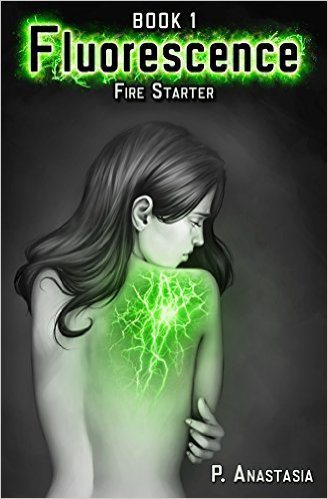
Book 1 of the Fluorescence tetralogy. (YA Urban Sci-Fi / Paranormal Romance)
Fluorescence lives in her bloodstream. It’s unpredictable and could flare up anywhere, anytime, exposing her secret to the world. Alice was a normal teenager until a dying race of aliens chose her and a handful of others to preserve endangered bioluminescent DNA known as Fluorescence. Now she and the others must hide their condition from the rest of the world, while trying to learn the truth behind the living light.
Not only is this amazing deal happening, today only, but in the next few days I will be posting the cover reveal for Book 4 –Lost Souls – The FINAL book in the series!…
View original post 84 more words


January 15, 2016
Starving Review: Shrugg, 1 Mile by G. A. Schindler

Shrugg, 1 Mile by G. A. Schindler (Amazon, Goodreads)
We finish off the bountiful repast of the week with Shrugg, 1 Mile, a morsel of a novella. The chef promises strange events, alien creatures, all tucked into a modern setting. Will the promise of the meal be fulfilled or will it simply be too brief a meal to be sustaining?
Before we dig in, let’s bow our heads and recite the Starving Review prayer:
I attempt to rate every book from the perspective of a fan of the genre
I attempt to make every review as spoiler-free as possible
Shrugg is, as I mentioned, a novella, and a short one, under 30,000 words I believe, but that doesn’t mean it can’t be a wonderful meal. It simply needs to follow a tighter recipe to meet all the right points of characterization and story arcs. Now, the real rub is whether the chef uses his limited dining time to conjure up a full meal or not.
In many ways, Mr. Schindler does an excellent job juggling his limited time in the kitchen. The cast of characters makes a quick, strong impression, giving us a good feel for them so we can dive into the meat of the meal quickly. The science fiction and alien spices are added at just the right points and given just the right amount of depth without waste, with the proper care not to tarry overlong on things that aren’t vital to the core story. These are all solid points in this meal’s favor.
The one real flaw in the mix, though, is the deep-down feeling to me that Shrugg starts busing the tables a bit too early. It concludes at what, in a normal dinner, would be in the midst of the main course, the peak of the climax. This is particularly annoying as the meal, to that point, had been really, really good.
Even with this abrupt closing, Shrugg remains an excellent morsel. It’s a morsel I would love to see turned into a full course meal, because the story elements it brings out and the characters it creates deserves that honor. At the end of the edition I read, the chef talks about writing more to continue the story and I would definitely sat that he should. The bones of this meal are more than strong enough to take plenty more meat!
To bring it all together, Shrugg, 1 Mile is a tempting treat of a sci-fi novella, only held back by its abrupt closure. Even with that flaw, I would highly suggest it as a nice, quick read for those who enjoy imaginative sci-fi. It is not however a high-action piece, so anyone who craves action in their sci-fi should look elsewhere. I know that if Shrugg‘s tale is continued, I’ll certainly come to the counter to get it and see the story finish.
FINAL VERDICT: **** (A tempting treat of a sci-fi novella … if only it were just a little longer!)


Starving Interview: G. A. Schindler, author of Shrugg, 1 Mile
Happy Friday, my friends, and welcome to the kitchen for another Starving Interview! Today, we have a chat with G. A. Schindler, author of one of this week’s Starving Review dishes, Shrugg, 1 Mile! Enjoy!
Please introduce yourself to my literary foodies!
‘Ellow there. I’m G. A. Schindler, Greg to my wife, mother, and a few close friends.
Do you do any work outside of the writing kitchen? Any non-work interests?
When not spilling forth great literary masterpieces, I dabble in pollen – hybridizing daylilies in my beautiful garden. I’ve retired from gainful employment, subsist on my entitlements and strictly avoid doing anything useful. Physical exercise to keep fit is as close as I get to work.
What is your latest dish to be served up? Are there any past pieces of literary cuisine you think we should take a bite out of?
Currently a pirate story has commandeered my pen. As yet it’s uncertain that the pen really is mightier, at least in my hand. Of my three splendid children’s books, Timmy and the Hotdog Song, perhaps stands out. Get it only if you know a child to read it to or have ever been a child. You’d likely find my book of poetry, songs, and humor quite accessible, and my sex education book (Love is the Smile) surprisingly educational – and both enjoyable.
What made you want to put on the chef’s hat and whip up your own books?
I’ve penned poetry since high school, journalism in college, and then song lyrics. Birthdays ending in zero are sobering. At sixty I put together the poetry/songs/humor book, lest it all disappear when I do. My prose is improving since I retired and joined a writing group.
Do you have a genre of specialty or do you dabble? Why?
I dabble. Good ideas are rare and I try to write them in the genre they best fit.
Style! Every literary chef aspires to have their own unique one! What do you think sets yours apart and why?
The poet in me dictates economy of words. And I like dialog. Other than that, it’s whatever works best. Whatever seems like the thing to do at the time.
Even the best of us find inspiration is the dishes of others. Do you have any literary inspirations, heroes, and influences?
Eliot and Frost influence my poetry. Pound and Browning are great, too. I’ve read prose for content many years. Now I should reread some perhaps, noticing style more.
Let’s get into the meat and potatoes: the art and craft of writing itself! Do you have a preference of points-of-view when you write?
First person’s best if one can just stay away from I, I, I sentences. But sometimes third person seems necessary.
Sparse or wordy, how do you like your descriptions served up? Are you a Hemmingway man or do you like some saucy adjectives with your nouns?
The poet in me dictates word economy, though I’ve begun to try to bring in imagery that needs more space sometimes.
Picking off the menu of base literary conflicts, what’s your favorite and why?
The story idea brings its own conflict(s). Once I get it going, the story seems to be telling itself to me. The characters are quite in control.
What do you think is more important to your recipes, plot or characterization? Why?
Thus far my stories have been more plot driven.
We all know that the first taste means the most! What do you do to get that first bite hook with your readers?
To grab the reader’s interest I usually start at what I consider an exciting part of the story. Or else I throw in a teaser or two early on.
The most important of questions: Cake or pie?
Pie. As long as it aren’t square. Some pie are.
Finally, if you could give one piece of advice to aspiring literary chefs out there, what would it be?
Write what you enjoy writing even if it’s hard work. Don’t be afraid to try a new genre if you get an idea. Find a writing group for feedback. If you start novels and don’t finish ’em, go back to a favorite and write the ending. Then fill in the middle. It’s easier to get there when you know where you’re going.


January 14, 2016
Starving Review: Savagery and Saviors by Ken Hollern

Savagery and Saviors by Ken Hollern (Amazon, Goodreads)
You have to respect chefs who have the tenacity to focus on real-world problems with their literary cuisine. Savagery loads up this recipe, though, with the genocide in Darfur combined with child kidnapping, sex slavery, and human trafficking from the United States. Are these spices too heavy and too far apart to mix well or do they blend together nicely?
Before we find out, let us cry out the Starving Review creed from the highest mountain:
I attempt to rate every book from the perspective of a fan of the genre
I attempt to make every review as spoiler-free as possible
I have to admit, when I first whipped out the utensils to start this meal, I was a bit confused. You see, Savagery early on bakes up two very distinct story layers to its cake. One is the child kidnapping tale, told on the high seas from California to Singapore and centered on two of our three main protagonists, and the other is focused on the violence in Darfur with the last protagonist. These two independent plots continue on their merry way, with very different flavors and spices, for a good two-thirds of the meal.
My confusion turned to interest as it carried on. The two layers, though each certainly describing tragedy, had very distinct flavors. Our boat-bound pair’s plot tasted more like a romantic thriller, with the distinct spices of a romance novel between our male and female leads and action more like a crime thriller. Our Darfur story was grim, emotional, and gritty, pulling no punches when it came to the tale our our third young protagonist’s village and people. Was the chef going to bind these tales, so different in tone and flavor and a world apart geographically, in some masterful thematic way?
Unfortunately, no. While it didn’t move in a horrible path, both layers wound up mixed thoroughly together. It wasn’t horribly done, but the two layers remained vaguely chunky, never smoothly mixed, and joined by startling coincidence. It isn’t horrible, let me be clear, but it’s just a bit awkward and ill-fitting. I think the meal would have been tastier if the chef had concentrated on one of the two stories, maybe then tackling the other in another book. Or maybe in a longer book, each layer could have more space to breathe and then been more smoothly blended.
On other technical fonts, Savagery is put together with skill and polish. The writing style is breezy and easy, if a little sparse in some of the dialogue. Our three main characters are fairly straight-forward and developed enough, though I feel that the young African protagonist doesn’t get enough real closure at the end of the tale. The antagonists, though, while not unrealistic, are quite cardboard, but they are serviceable for their purpose in the overall story. The pace is fairly relentless without being too crushing. Overall quite solid.
To bring it all together, Savagery and Saviors tries to layer two intriguing layers of story, but winds up lessening both of them in the process. Still, it isn’t a total loss, and if someone is interested in a thriller with some political and ethical elements mixed in, it wouldn’t make for a bad meal. Still, the mixed up layers and uneven blending leave it short of the potential that I think it could live up to.
FINAL VERDICT: *** (A meal that tries to layer two intriguing layers of story, but winds up lessening both of them in the process!)