
C.A. Hartman's Blog, page 3
September 21, 2016
Film Discussion: The Matrix
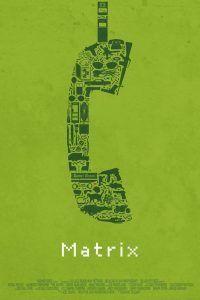
Original movie poster art by Maxime Pecourt. Click image…
The Matrix is one of my favorite science fiction films of all time.
I saw it for the first time NOT when it came out in the theater, but when it came out on DVD. I have a flashbulb memory of watching it in the afternoon before heading out for an event, and couldn’t believe I’d missed in the theater.
For me, nothing beats that opening scene with Trinity. Now the special effects are ho-hum, but at the time they were groundbreaking. Not to mention that Trinity was awesome and remains to this day one of my favorite female sci-fi characters. If I had dark hair and wasn’t a lazy-ass who hates dressing up, I would rock a Trinity cosplay at comic con.
I own the movie, of course. All three, actually. I’ve listened to the commentary and watched all the special features. Yet, I’d never seen The Matrix on the big screen. Fortunately, the Denver Film Society and their annual sci-fi film series changed that. I got to see it on the IMAX screen, actually (not technically the “IMAX experience,” but who gives a shit… I saw The Matrix in the big screen!).
I still love that opening scene most. Interestingly, as mentioned in my “strong female character” article, Roger Ebert had an interesting take on her:
“Carrie-Anne Moss, as Trinity, has a sensational title sequence, before the movie recalls that she’s a woman and shuttles her into support mode.”


September 15, 2016
Film Discussion: Star Trek: The Wrath of Khan
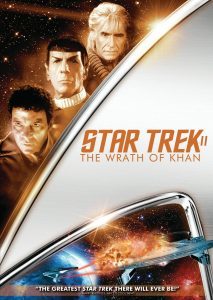 Spoiler Alert: I’m going to spoil the film here. Which probably doesn’t matter, because pretty much everyone has seen this classic…
Well, on Star Date 9/13/16, this rogue scientist finally–FINALLY–saw the film that many Star Trek fans say is the best of the Star Trek films: The Wrath of Khan. The Denver Film Society has put on a Star Trek at 50 series at the Sie Film Center, with showings of two TOS episodes and three Star Trek films plus discussion with local professor and Star Trek fan Vincent Piturro.
Incidentally, I watched the film only days after seeing “Space Seed,” the Star Trek TOS episode where Khan is first introduced. That was a first for me as well.
To be honest, as much as I love Star Trek, I never did watch the original series. I tried about 10 years ago, but the pilot was enough and I never developed an interest to see any more. Hey, it was before my time! And although I am old enough to have watched it in syndication before The Next Generation was released, I had no interest at that age.
I recall an old boyfriend of mine insisting we watch one of the first episodes of TNG (“The Naked Now“). He, like many men my age, grew up watching TOS in syndication. I was dubious but watched all the same. I had no idea that several years later, having graduated with a science degree and moved to Colorado during winter (where I knew only one person), I would see that very same episode with a new eye and begin my journey as a Star Trek lover.
Anyway, on to the film. First, I liked “Space Seed” too. When the camera closed in on Khan’s still-hibernating face, I gasped. I knew that face. That was Ricardo Montalban. That was Khan! Of course, once he awakened, I immediately disliked him, which means he would turn out to be a great villain. My only gripe about the episode is how they portrayed the historian as such a feminine fool, willing to subjugate herself so easily to Khan and risk the ship. But such portrayals of women are a function of that period in our history, and we can’t beat Star Trek too hard with the diversity/strong-female-character stick since the show was so far ahead of other shows from that time.
For the film, the powers that be shuttled Roddenberry to a consultant role and found a new director, all in the hopes of getting better reception than they had for the first movie. The film, released 15 years after “Space Seed,” was well-received by fans and critics. When still on the drawing table, many of the starring actors initially resisted accepting their famous roles, feeling like it had been too long or that they were too old. Through various means, the bosses managed to get them to sign on.
I enjoyed the film. It was well-paced, well-shot, and had good performances. I still marvel at how different Shatner seems in his role as Kirk than his more contemporary roles (Miss Congeniality comes to mind, a film I’ve always enjoyed). He was so serious, so understated. I can see why he’s so popular and why many choose him as their favorite Star Trek captain. And it was really fun to see Kirstie Alley play a Vulcan in her first major role.
Somehow, I managed to be surprised when Spock dies at the end. It didn’t upset me as much as it normally would, given that I know he appears in later shows, having aged. He’s EASILY my favorite TOS character.
Next week, Star Trek: First Contact.
Other Resources
Christie’s science fiction books
September 12, 2016
What is Anarchy?
 Anyone who knows me or who’s read my science fiction knows that my areas of expertise include psychology, genetics, and biology. Political science and economics, not so much. I recently published the first book in a new series entitled Daughters of Anarchy (DOA). The series — science fiction with a good dose of thriller/noir — is about a woman who uses her knowledge of genetics and her position of power to “clean up” her corrupt city.
At Denver Comic Con last June, just after rolling out the first season of DOA, people were intrigued by the title and then by the book’s premise. Eventually, I had a guy ask about my use of the word “anarchy” and why I chose it. Having never gotten that question before, I stumbled my way through an explanation. I’d spent time considering my use of “anarchy” in the title and whether or not it was the right word. However, the decision was an intuitive one, not a scientific one. Somehow, “anarchy” had the right feel, given the disorder in the story and the protagonist’s desire to restore order in her own special way.
This man nodded at my jumbled explanation, then went on to offer his own views on anarchy — for him, essentially a setup where people come together to rule themselves without needing a large or formal government. I asked him if he was a libertarian; he said no, that he’s an anarchist. Before that moment, I’d never known that anarchism as a political belief system existed. Moreover, I met THREE other anarchists that day, each one offering a similar perspective and each educating me in a way that wasn’t in the least bit dogmatic or judgmental.
I was intrigued. And I had to know more.
What is Anarchy?
From Google:
1) A state of disorder due to absence or nonrecognition of authority.
“He must ensure public order in a country threatened with anarchy”
Synonyms: lawlessness, nihilism, mobocracy, revolution, insurrection, disorder, chaos, mayhem, tumult, turmoil
“Conditions are dangerously ripe for anarchy”
2) Absence of government and absolute freedom of the individual, regarded as a political ideal.
From Wikipedia:
Anarchy is the condition of a society, entity, group of people, or a single person that rejects illegitimate hierarchies. It originally meant leaderlessness, but in 1840, Pierre-Joseph Proudhon adopted the term in his treatise What Is Property? to refer to a new political philosophy, anarchism, which advocates stateless societies based on voluntary associations. In practical terms, anarchy can refer to the curtailment or abolition of government.
Anarchism is a political philosophy that advocates self-governed societies based on voluntary institutions. These are often described as stateless societies, although several authors have defined them more specifically as institutions based on non-hierarchical free associations. Anarchism considers the state to be undesirable, unnecessary, and harmful, because anarchists generally believe that human beings are capable of managing their own affairs on the basis of creativity, cooperation, and mutual respect, and when making individual decisions they are taking into the account others.
Google’s definition fits with the average person’s view on what anarchy is, including mine… at least until Denver Comic Con. However, Wikipedia’s treatment seems more fitting with the views of the anarchists I met.
People tend to think of anarchy as “no rules.” But as someone somewhere put it, anarchy technically means “no rulers.” I found this idea extremely interesting. Part of me loves the idea of a small or nonexistent government, allowing people to grow up and govern themselves in a rational fashion, while another (larger) part of me doesn’t believe such a feat is possible, given human nature.
When I ran some of this by a close friend of mind who is far more knowledgeable about political systems, he said, “Anarchism doesn’t work.” Perhaps it doesn’t. However, I suspect it could under the right conditions. Paleolithic man, arranged in hunter-gatherer societies, didn’t need governments. They existed in small enough groups that self-management was achievable. Once the human population grew, once we gathered into larger “cities,” government or some type of rule became the norm and our history books are littered with widely varying examples of this.
Interestingly, John Zerzan, an anarchist known for his pen-pal relationship with Ted “Unabomber” Kaczynski, is known for idealizing paleolithic life. Discussions of this idea went on between the two men, and Kaczynski’s eventual criticism of Zerzan’s position effectively ended their long friendship. Read this article for more information on that.
I’ll have more to say on this topic as time goes on. But from what I’ve already learned, I can say that “anarchy” was the perfect word for the title of my novel series, for many reasons. Sometimes, one’s intuition is right on.
Other Resources
Christie’s science fiction books
August 29, 2016
Science Fiction and Fact: What are Neurotransmitters?

Two neurons communicating through neurotransmission. The neuron receives a signal, neurotransmitters released from vesicles, and then they bind to receptors on the next neuron.
The first time I can recall hearing neurotransmitters mentioned in science fiction was from Dr. Crusher on Star Trek: The Next Generation. Beverly Crusher was no ordinary ship’s doctor — the woman had a pretty strong understanding of the life sciences, including neuroscience, genetics, and more.
In my Daughters of Anarchy series, there are occasional mentions of neurotransmitters as the characters experience the behavioral and physiological effects of the substances.
So, what are neurotransmitters and why are they important?
What are Neurotransmitters?
Neurotransmitters are chemicals that enable the transmission of signals from a nerve cell (neuron) to another cell, whether a neuron, muscle cell, or gland cell. They play a huge role in our everyday functioning, and their imbalance can cause serious problems.
Here, I list the major neurotransmitters and the role of each:
Serotonin: Serotonin is involved in a wide variety of functions, including the regulation of mood, sleep, appetite, and pain. Many well-known antidepressants (e.g. Prozac, Paxil, Lexapro, Zoloft) modulate serotonin levels in the brain, as depression certainly impacts mood, sleep, appetite, and pain, often in unpredictable ways. A naturopathic doctor I know once characterized serotonin as the neurotransmitter of peace, love, and contentment.
Dopamine: Dopamine plays a major role in movement as well as mood. Parkinson’s Disease (as seen with Michael J. Fox) is caused by unexplained damage to an area of the brain high in dopamine neurons. Dopamine is also the neurotransmitter of motivation and reward. Areas of the brain rich in dopamine light up when we gamble (and win), when we fall in love, and when we use addictive drugs.
GABA: Gamma-amino-butyric acid is an inhibitory neurotransmitter involved in motor control and regulation of anxiety. Drugs that increase GABA levels are used to treat seizure disorders as well as anxiety disorders.
Norepinephrine: Norepinephrine is an excitatory neurotransmitter that’s important for attention/focus, sleeping, dreaming, and learning. Imbalanced norepi levels are implicated in PTSD (Post-Traumatic Stress Disorder) as well as bipolar disorder. Both disorders involve some level of agitation that can impact sleep, dreams (nightmares), and mood. In Daughters of Anarchy, Seth’s norepinephrine levels are referred to on a couple of occasions, as he suffers from nightmares and hyper-vigilance associated with his war trauma.
Epinephrine: Commonly referred to as adrenaline, epinephrine excites the central nervous system and is released during times of stress. It’s responsible for the increased heart rate and focus seen in the “fight or flight” response. If you’ve ever been in a car accident, or experienced trauma such as an attack (or the threat of an attack) or having been in a war zone, you know exactly what this feels like.
Of course, genetics and lifestyle play strong roles in how we regulate neurotransmitter levels, which is why some people seem to be naturally happy while others struggle, and why some become anxious very easily while others are unflappable.
Modern pharmaceuticals exploit these naturally occurring chemicals by manipulating the process you see in the image above, thus altering how the neurotransmitters are produced and transmitted in the body. However, because of our unique DNA and lifestyles, we all respond differently to such drugs. Give 100 people the same drug and some will respond well, others not so much, while others will develop problematic symptoms. This is why we have so many drugs for depression, for example.
I read somewhere that a certain kind of diets can alter tryptophan levels, thereby influencing serotonin levels, which then influenced aggressive behaviors. I’ll have to dig more to find out whether such an idea has any scientific basis at all. But it would sure make a good study… and an interesting science fiction story.
Other Resources
Christie’s science fiction books
August 10, 2016
Book Marketing Podcasts for Science Fiction and Fantasy Authors
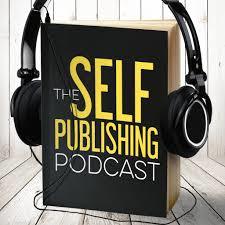 It took me a while to discover the awesomeness of podcasts. I don’t commute, and always prefer reading information to hearing it or, worse, watching it. Just a personal preference. However, I’ve been lucky enough to learn that podcasts are a great way to deliver information that would be downright tedious (and time consuming) to read. Now, I haul my giant red earphones to the gym and learn while I work out.
If you’re a new indie author or, like me, have a few books under your belt but are still building your backlist and trying to find new readers, you’re probably filled with questions. How do I get the word out about my books? How do I sell more? How do I find my target audience? Do I go exclusive on Amazon or go wide with all the book sellers? How do I market cross-genre books?
Findings answers can be a challenge. You can get some of them from the books I recommended in this article. However, as I mentioned, a book can only tell you so much. On the other hand, a weekly hour-long podcast can deliver an absurd amount of information that’s up-to-date and that tackles more topics. Even better, the podcasts are run by authors who, in most cases, are a few steps ahead of you in their careers. They’ve been there, and they like sharing their knowledge to help out the writing community while they promote themselves and their own books.
Below, I list 3 podcasts that have really educated me about running a self-publishing business and selling books. Much like my list of recommended books, these are podcasts that I’ve tried and found really helpful. There may also be others I haven’t come across.
The Self-Publishing Podcast. This show is hosted by the guys who wrote my favorite book marketing tome, Write. Publish. Repeat. It’s the first podcast I tried and the one that convinced me that podcasts are worthwhile. Johnny, Sean, and Dave are prolific writers of spec fiction (sci-fi, fantasy, horror, you name it… part of their brand is that they write cross-genre). They offer good advice on all aspects of self-publishing and book marketing based on tons of experience, including a willingness to take lots of risks and make lots of mistakes (something many authors aren’t good at). The podcast is funny, irreverent, and very informal — however, if you hate the occasional f-bomb or go nuts when the hosts veer off on long tangents, SPP may not be for you.
The Creative Penn Podcast. Joanna Penn is half thriller author, half self-publishing guru. I discovered her blog years ago and she’s been my go-to person for advice ever since. She’s very organized and is one of those high achievers at whom you marvel because she seems to get more done than any human should. Her gift is the vast breadth of her knowledge — she stays updated on the latest Amazon changes, the new technologies and platforms for reading, and the global market for books. She stays ahead of the curve and is interested in where the book industry is heading. She also has a lovely British accent :). Penn isn’t a sci-fi/fantasy author, but she does write genre fiction and her advice caters to anyone.
Science Fiction and Fantasy Marketing Podcast. Hosted by three sci-fi/fantasy authors, this podcast covers every topic you can think of when it comes to marketing books, from choosing Amazon categories to advertising on book sites like BookBub to obeying your genre’s beloved tropes. A great benefit is that the show caters to those who write sci-fi and fantasy, which is my genre. Lindsay Buroker, Joseph Lallo, and Jeffrey Poole write in this genre, as do all the guests they interview. This podcast has become my favorite and I have learned a TON after only a handful of trips to the gym. It’s a nuts and bolts podcast that emphasizes teaching over entertaining, perfect for me and for those still in the early stages of their careers or those further along and looking to bolster theirs. If marketing is a challenge for you (it certainly is for me), this is a must-hear show.
What podcasts have you found useful in your career as an author? Educate me and others by listing your favorites, and why you like them, in the comment section.
More Information
Join my fiction email list for more information and goodies!
July 28, 2016
The Martian: Science vs. Fiction
 I saw The Martian last night at the Denver Science Museum‘s IMAX theater, as part of the Denver Film Society’s annual sci-fi film fest. It was good to see the film again, especially on a giant screen, and especially when a Mars expert joined us to discuss the film.
Unlike many of the films we watch as part of this series, The Martian doesn’t lend itself to deep discussion about its meaning. It’s a straightforward survival story, a hero’s journey. It does, however, lend itself to great discussions about science, about Mars, and about the realities of trying to survive on a planet that isn’t Earth. The movie is chock full of good science, much of which was carefully researched by Andy Weir, the author of the book that spawned the film.
However, of course, there are some things that occurred in the film that are not feasible, done instead to make an exciting and visually appealing film. These include:
1. The storm. The storm at the beginning of the film, the giant dust storm that put Matt Damon’s character in jeopardy and started everything. would never happen on Mars. Mars has a very thin atmosphere that couldn’t generate that kind of storm. It does, however, generate dust devils and milder storms that will cover various structures in dust or, in at least one instance, shroud the entire planet in dust. The scientist at the talk suggested that a more realistic problem would have been some issue with solar radiation, a serious concern without a magnetic field to shield Mars from the radiation and a factor that challenges the scientists bent on having a human set foot on Mars.
2. The topography. The scenery in the film, with its gorgeous red soil and craggy mountains, actually comes from Jordan, the footage of which was then transferred to a green screen in Europe where the actual scenes were shot. The red was added. According to the scientist, and to the pictures he showed us, actual Mars is quite sandy and rocky like in the movie, but it’s relatively flat with only small peaks. Moreover, the sunsets we enjoyed in the film look quite different in real life. They have a bluish cast, likely due to a lack of the atmosphere that contains the particles needed to create sunset colors.
3. The farming. In the story, the protagonist creates a makeshift greenhouse and grows the potatoes that wind up keeping him alive. Apparently, recent research has shown that the soil on Mars indicates high levels or perchlorates, substances that have been shown to thwart life (including bacteria). The author had no way of knowing that when he worked on the book, and it’s feasible with less toxic soil to growing things if you have fertilizer and water.
Interestingly, I also wondered if one could safely live on that many potatoes. Potatoes are nightshade plants, which are high in alkaloids and thus somewhat toxic. In small amounts, the amounts we consume, this isn’t an issue for most. But with daily ingestion over a long period, I wonder if the toxicity would create problems. I finally got up the nerve to raise my hand and pose that question, but we ran out of time.
I mention these issues not to criticize the story or film, neither of which deserve such criticism. It was a good film, and the source material put considerable effort into doing research to make the story not only entertaining, but scientifically feasible. And it succeeded in that goal beyond that of most science fiction. As a sci-fi author myself, I know how vastly time-consuming research can be, and have a great appreciation for the sheer amount of work that Andy Weir put into that book.
Rather than criticism, I wanted to offer some education on what the reality of what conditions are really like on Mars and, by extension, address some of the challenges NASA and others face when hoping to set foot on Mars. The scientist at the film said that NASA is aiming for 2030-ish for that goal. I look forward to that day.
Other Resources
April 12, 2015
Artist Alley Table Tips for Authors
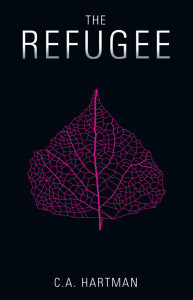 If you’re an author in any of the speculative fiction genres, one way to promote yourself and your books is to exhibit at comic conventions. I’ve done quite a few myself and find them really fun and a great way to connect with readers. Although I’m no veteran yet, I’ve worked enough big cons to have learned a few things about how to sell books, especially in a setting that puts more emphasis on art and comic books.
Here are a few tips to try:
Get a backdrop. Most exhibitors, whether authors or artists, have something behind them that shows people what they’re about and draws them to the table. Artists have their art; authors need something else, whether a poster, banner, or pull-up with something to do with your books on it. Make it attractive and interesting, and make it tall enough to easily see while remaining within the con’s rules.
More is more. More books and merchandise is better than less. I’ve found this to be true for myself and for other authors. Ideally, you would have multiple books and other merch such as t-shifts, stickers, etc. If you’re just starting out with one book (like I did), put out many stacks of those books. Along with your other important information (business cards, information about you, sign-up sheet to collect emails, signs), you’ll have a full table.
Stand up. Standing up means engaging with people, whereas sitting down is passive. Make eye contact with people passing by. Say hello. Your feet will get tired, so it’s okay to sit down from time to time, but don’t stay seated all day. And, just as important, greet people who do come over. Make them feel welcome.
Stand your books up. You want people to easily see the cover of your book(s). You can buy plexiglass stands that will stand your books up for you, or you can stack 8-10 books and then lean one against the stack. Make sure you have multiple copies facing passersby. This not only draws people to your table if you have an interesting cover, but it makes the books seem more accessible, increasing the probability that someone will pick one up.
Pitch, don’t bore. Pitching your book(s) is an art that takes practice. Work on your “elevator speech” and make sure you can summarize your book or series in a sentence or two. What genre is it? Does it have a sub-genre? Who do readers compare it to? What’s it about? Keep it short and let them look through your books or materials, and offer to answer any questions.
Regarding selling style: Some authors will try to pull potential customers in by calling out to them as they pass by (“Do you love to read?”) or putting copies into passersby’s hands. Others will hang back more, allowing people to decide if the book covers and backdrop interest them. The right way is the way that works for you. How do you like to be sold to? What feels most comfortable to you? Personally, I don’t like a hard sell; if something interests me, I will approach the table. I’ve found that the readers will come to my table without my doing anything other than look friendly: they’re attracted to the book’s cover, my sign, or they just love to read.
Pricing. Always make your prices clear by posting them on cards or signs. Offer deals if you can. I offer a “special con price” that’s lower than what my books cost online. For payment, keep change for those who pay cash. And make sure you take credit cards. The PayPal Here swiper (or Square) is super easy to use with your phone and free with a PayPal account.
Network. During slow periods, talk to other authors. What’s working for them? What other events do they like to do? Find them on social media and stay in touch. You can meet great friends and colleagues this way. And it never hurts to look around and buy books or art from other artists, if their stuff appeals to you.
This is just a partial list, which will likely expand as I learn more. If you have other suggestions, feel free to add in the comment section.
February 23, 2015
Film Review: Jupiter Ascending
 For the better part of a year, I looked forward to Jupiter Ascending. After all, we’re talking about Andy and Lana Wachowski, of The Matrix Trilogy fame, an enduring fave of mine.
I liked the movie. It had great actors, interesting characters, intriguing visuals, and a complex world. Its weakness? It failed to develop some of these interesting aspects and instead relied upon a familiar action movie framework, replete with very long action scenes, a hero-rescues-hapless-girl setup, laying waste to major buildings in large cities, CGI buildings falling apart while the protagonist scrambles to avoid plunging to her doom, unimaginative antagonists. I like a good action movie, sci-fi or not, but it’s a bit of a shame when intriguing ideas are left underdeveloped.
Sci-fi is about ideas. Ideas that make us think, imagine, speculate, wonder. Or at least make for interesting storytelling. Jupiter Ascending had some good ideas, but it had so many of them and they were explained by various characters in a passing way rather than developed. For example:
The idea of Earth being one of many inhabited planets ruled and managed by some imperialist family. This in itself could have driven a lot of the film, especially given that the protagonist, along with all humans, didn’t even know that life existed on other planets. Such a discovery would captured the imagination when the protagonist realizes that not only are we not alone in the Universe, we are a pawn in a much larger game.
“Splices”–those genetic hybrids made of spliced DNA of humans and animals. Channing Tatum plays one of these characters (and does a good job of it), playing essentially a human-wolf mix who, when angry, may possibly tear out an enemy’s throat with his teeth. Genetics was a theme throughout this film, but as with most sci-fi films, it’s used as a plot or character device rather than developed in any real way. The possibilities of genetics, idea wise, are immense.
The spontaneous creation of a person who has an identical DNA match to a previous person. Not feasible from a numbers perspective, but still an interesting idea. This idea served as foundation to the film but was barely mentioned.
The ability to live for millennia with a little help from science. Again, not especially feasible, but still interesting.
The Matrix had plenty of action, but it was its ideas that blew our minds. Too bad Jupiter Ascending didn’t do the same.
January 25, 2015
Gender and Politics in Film: G.I. Jane
 The great thing about film is that it can serve as a way to address or comment on issues facing one’s society or culture. In our culture, and many others, the issue of gender roles is an important one. Gender roles and expectations have changed drastically over the decades, but we still struggle with what it means to be a woman or man in today’s world.
An interesting way to explore this is with the military. Why is it that men are traditionally drafted and or expected to enlist, but not women? This interesting issue is explored in the film G.I. Jane.
I watched it again last night. I’ve seen it many times, although I didn’t see it initially until 2009 or so, long after it was released. Sure, it’s a bit cheesy and “on the nose.” But it manages to address the issue of women in the military in an interesting way.
To sum up, G.I. Jane is about politicians making issue about women being allowed the same roles and opportunities within our military. A tough female senator puts the military’s feet to the fire, and they agree to allow a female soldier to enter SEAL training, which is 12 weeks of grueling fare. The assumption is that she’ll wash out, thus appeasing the prickly senator and perhaps confirming the belief that there are some places women simply don’t belong. The woman they choose is Demi Moore’s character, Jordan, who faces the physical and mental pain of the training with the other men, in addition to facing sexism of varying kinds.
The sexism she encounters comes in a variety of packages:
Women are Too Weak for This
This is the most common argument you’ll hear against women in combat or in other jobs that require abilities usually attributed to men (strength, mental toughness, etc). Some men don’t believe women should be in the military at all, while others are uncomfortable with the idea of women in powerful positions, in combat, or in sensitive, dangerous, or “special” elite jobs (e.g. SEALs).
For some, it’s that women lack the physical or mental strength to handle the jobs. For others, it’s that war is simply men’s domain and women shouldn’t be allowed in it, much like men-only clubs in the 1800s. This type of sexism is portrayed well by CO Salem, a tough old white guy who expresses his clear resentment at having Jordan forced upon him, having to staff a gynecologist and have separate this and that for female recruits, at the mere notion of having to worry about accommodating women and curtailing any behavior that might offend them.
Salem represents the conservative, old school thinking that says that men have their domain, women have theirs, and never the twain shall meet.
Are Women’s Lives More Precious Than Men’s?
Traditionally, we send men off to war, while women stay home to care for home and children. But why? Why are men’s lives disposable, while women’s are to be protected? Does it go back to the previous issue, that men make better soldiers, that they’re cut out for such business and thus should make the sacrifice because they’re “built” for it, much like women are “built” for childrearing?
It’s Jordan who brings up this issue in the film, as she questions why she’s being thwarted at every turn, even having the female senator flip-flop on her because “America doesn’t want to see its women and children killed.”
Women Put the Men at Risk
The last, potentially most interesting, and probably least considered of the issues regarding women in combat is the idea that, when push comes to shove, men seeing their female comrades threatened or blown to bits may be too much for them and cause them to fall apart, try too hard to protect the women, or otherwise threaten the mission’s probability of success.
This concern is eloquently put by Master Chief Urgayle, who challenges Jordan in the shower, telling her of women in the Israeli army, where men would weep over their dead bodies in battle.
This is an interesting perspective because it seems to suggest it isn’t the women who can’t handle dying in combat, but that the men can’t handle the toll of watching a woman perish that way. In this sense, men may see themselves as protectors, not only of their country, but of women and children. To watch a woman soldier die, or (in special ops situations) take a beating or get raped, may be a challenge for them that others cannot understand.
It’s interesting that Master Chief says this to Jordan while she’s naked in the shower (alone because she’s on a different showering schedule than the men), when she’s more vulnerable. He then presses the issue again during a field exercise where Jordan is captured and he tortures her for information while the other men watch in horror. And while his words may reflect his own beliefs as a seasoned military man, they also reflect his own feelings for her. He took note of her fortitude from the start, saw the other men attempt to sabotage her and made them pay for it, and potentially had deeper feelings for her. He never went easy on her, but he wrestled with his own struggles as he watched her struggle.
In the end, Master Chief says to his comrade that she isn’t the problem… they are.
And he’s right. Having women in combat forces people to face uncomfortable feelings or, in some cases, uncomfortable realities. And these are the growing pains that come with changing how we view men, women, and their roles in our society.
December 1, 2014
Color in Film: 2001: A Space Odyssey
 I watched Stanley Kubrick’s 2001: A Space Odyssey for the first time nearly 20 years ago. I thought it was great. And just recently, I watched it again. This time, I concluded that it isn’t great… it’s a masterpiece. But that’s another article for another time.
The visuals in this film require volumes all their own. The use of color in film is something many don’t notice, at least not consciously. And in 2001, it’s probably tough to notice color in a film that’s primarily set on colorless machines making their way through the black vacuum of space.
Yet the sterility of white at the space station, the dramatic black of the monolith, and even the pink suits of the space flight attendants make a strong statement about those things.
And then there was red. The color red shows up many times in 2001: for example, in the molecule-like chairs the scientists sat on in the space station, in various parts of the spacecraft (particularly in the cockpit), in HAL’s omnipresent eye, and, at the very end of the film, in the new life form created from the astronaut’s death. The color is such a marked contrast to that of the rest of the film, to the point of being a shock. In this very sterile, clean, futuristic, quiet, spacious, even lifeless place, here is the color red, something that’s life-filled, loud, stimulating, and messy.
Red is the color of blood, of the heart. It’s the color of life, and can represent strongly passionate feelings, from anger and aggression to love and sexual passion.
 The strong color of those chairs sits in sharp contrast to the expansive and somewhat lifeless surroundings of the space station, and even to the somewhat banal and lifeless conversation of those who sat upon the chairs. And the chairs, with their oval and almost disc-like shapes, remind me of erythrocytes (red blood cells). The red in the crafts and particularly the cockpits remind us of the life that’s aboard, but that it’s somewhat insignificant compared to the vast white crafts or stations, or the darkness of space… reminding us of how tiny we are when viewed from the perspective of our galaxy.
And what of HAL’s eye? HAL, for his being a machine, had some human qualities that even the astronaut seemed to acknowledge. One film reviewer noted that HAL had the most “life” of all the characters in the film, all of whom seemed lacking in feeling or personality. Perhaps the red showed us this, showed us HAL’s strong feelings, even his “human” frailty in the form of aggressive tendencies, tendencies that are alluded to early on in the film. And recall the computer room, HAL’s brain center… red.
And finally, the bright red spherical zygote, created in the alternate universe, suggesting new (and perhaps better) life.
C.A. Hartman's Blog

- C.A. Hartman's profile
- 26 followers

