
C.A. Hartman's Blog, page 2
January 21, 2017
Feminism and “The Girl with the Dragon Tattoo”
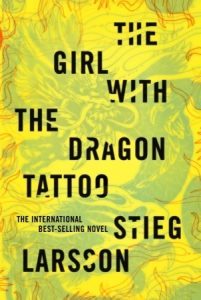 I avoided this book for years because of the sexual abuse content, even after watching the film twice. But my mom, a heavy reader, urged me to read it, and I’m glad I did.
I would consider this a feminist book. A feminist book written by a man. It explores the themes of patriarchy and male entitlement gone very wrong. It has a fascinating female protagonist who struggles against a variety of types of oppression, another strong female as Blomkvist’s partner Berger, interesting female members of the Vanger family (good and bad), and a strong view about the repugnance of sexual violence against women. The main character involves himself sexually with a few different women, but doesn’t seem to care about the women’s ages (which vary from 20s to 50s), and makes no mention of body parts he can’t stop staring at or where they rank on a 1-10 scale or how manly he feels after going to bed with one. To him, they are women he finds attractive and enjoys being sexual with, not objects to fuck. He treats Berger like an equal, and she does the same for him. He treats Lisbeth like a person–not a freak (like many), not a victim to exploit (like Bjurman), not a sexual object (like Armansky). In the end (spoiler), women come to take control of a formerly male-dominated empire, not because they’re women, but because they’re qualified and it’s the wise decision.
The book also explores social justice ideas through Salander, whose control over her own life is in the hands of institutions that don’t understand her. It shows us that women who aren’t protected by the system or by society will be exploited by men like Bjurman or Martin. Through Blomkvist, the book explores financial corruption and the role of the media and others in furthering that corruption instead of questioning rich and powerful financial powers who need questioning.
Because of these things, this interest in social ills and social justice, the author seems like someone I would have actually wanted to meet in person… and I never say that.
After writing this review, I did some quick research on Stieg Larsson. In his younger years, he wrote science fiction and was actively involved in sci-fi-related organizations in Sweden. He is deceased how, but he was a journalist who specialized in reporting on far right extremist groups. His profession yielded him numerous death threats. At the age of 15, he witnessed his friends gang rape a young girl. His girlfriend/partner stated that the event and his lack of action against it upset him deeply and influenced his work and life from then on. She considers him a feminist.
It took me a while to get used to the writing style. The book breaks a lot of rules the books teach these days: telling instead of showing, a ton of description that doesn’t move the story forward, feeding the reader information that’s obvious, writing from multiple POVs at once, dialogue that sounds the same no matter who’s speaking, plus writing with a lot of narrative distance when going deep would have made it more powerful. I finally realized it’s journalistic writing. And it totally works for a story like this, where there’s a ton of information that a journalist would have to sort through to make a good story. After the first 100-150 pages, I got sucked in and had a very difficult time putting the book down. Kudos to the author for that too. Screw the damned writing rules… write a good story that makes people want to turn those pages. This dude did that.
Rest in peace, Stieg Larsson. Your contribution to women and the betterment of the world will not go unappreciated.
The post Feminism and “The Girl with the Dragon Tattoo” appeared first on cahartmanfiction.


December 22, 2016
Why I No Longer Actually Love “Love Actually”

I borrowed this image from a Jezebel article on this topic. Click image to read it.
I loved Love Actually the first time I saw it. And I loved it every time I’ve seen it since its release, which adds up to a lot of viewings if I watch it every December.
But this year, something changed. It all started with the stupidest line in the film: “Shut up, Miss Dunkin’ Donut 2003.”
Seriously? In a witty British film?
For one thing, the line is stupid and not up to snuff with most of the film’s humor. It’s also inaccurate, as the donut chain didn’t find its way to Europe until 2015, making one wonder why a Portuguese man living in southern Europe would use such a reference (hint: the writers made him do it). Finally, and most important, it was a cheap, fat-shaming insult to Aurelia’s sister. More on that thing later.
I watched this last week with a girlfriend. The guys came around and watched the second half with us. When that donut line dropped, everyone laughed. Loudly. Really, I said? That line? The next day, I thought more about the donut line and what it meant. Then a flood of realizations hit me about one of my favorite films. And they weren’t good.
Let’s start with the donut thing. When Jamie appears at Aurelia’s home and asks her father if he can marry his daughter, Dad produces Aurelia’s sister, who is heavier (and not nearly as hot) as Aurelia. From there the jokes commence and Dad insults the sister on multiple occasions. The whole town follows Jamie and the family to watch Jamie propose to Aurelia, who he barely knows and with whom he’s never had a real conversation. The message? Fat girls aren’t worthy of love, even their father’s love. But women who are super hot get proposed to even when the doting lad doesn’t even speak her fucking language.
True, Aurelia’s sister wasn’t exactly a well-mannered girl. Yet, Aurelia took a few shots at Jamie in Portuguese, making her seem more like his snarky ex (the one who fucked his brother). But perhaps such insults are more tolerable coming from a hot chick.
Then, I thought some more. And came to a few more realizations:
Keira Knightly (so hot even I have a girl crush on her) has two men vying for her: a husband who loves her and his friend who secretly loves her.
Widower Daniel grieves his dead wife (cancer!) briefly before winding up with an actual supermodel (Claudia Schiffer).
The much older, cranky boss Harry has his modelicious Red Devil Girl assistant if he wants her.
The much older Prime Minster gets much younger beautiful coworker (who gets hit on by the US President as well!)
Colin (who has no social skills and picks his nose) goes to America and within a couple of hours bags not one but FOUR hot women.
Shy 11-year-old Sam gets beautiful Joanna’s attention, despite her being the most popular girl in school.
Hell, even awkward musical manager Joe earns the love of Billy the Rock Star.
See a pattern yet?
Sure, there are many movies about the awkward or under-appreciated getting the hottie. However, in those, the main character is usually in HIGH SCHOOL, when all we care about is getting the hottie, and those films showcase one unrealistic romance at a damned time rather than a dozen of them, for fuck’s sake.
So, let’s look at the not-hot girls of Love Actually. How did they fare?
Matronly mom Karen gets a compact disc while her husband gives Red Devil Girl a beautiful and extremely expensive gold necklace. Her resulting tears break your dang heart.
In perhaps the most heartbreaking storyline, cute but insecure Sarah never gets her hot Karl because she feels some absurd obligation to her schizophrenic brother.
Aurelia’s sister will wind up single, or married to whomever her father can pawn her off to.
In other words, the hot chicks get adoring men. The average-looking women get little or nothing.
Is this some misogynist film brought to you by the patriarchal oppressors of our time? Hardly. But I did a search and it took about 2 seconds to find that many considered the film to be sexist.
Moreover, there’s the fat-shaming: Aurelia’s sister and her love of American donuts, BIlly Mack’s sweet manager (who Billy calls ugly and fat in public), and the insulting of the Prime Minister’s beloved’s thighs. Aren’t we past this yet? The 80s and dieting to stay thin are over, dude. Grow the fuck up.
Finally, there are the messages about love. I didn’t think much about this until coming across an article in the Atlantic entitled Love Actually is the Least Romantic Film of All Time, which then had a follow-up article to further buttress his argument and address criticisms. In a nutshell, he notes that the romances in the film are based entirely on physical attraction and that the couples bond or marry after knowing very little about one another. He adds that the romance is either extremely easy, or doomed.
I know, I know… I’m analyzing a film whose primary goals are to be funny and heartwarming. And it’s both. But film influences our culture just as much as it reflects it, and I think this one takes us backward. The crude and hilarious American Pie films (yes, I own all three) do more justice to love and women than Love Actually does.
No offense, Love Actually. The romance is over.
December 19, 2016
The Korvali Chronicles Book Covers (Part 1)
When I’ve exhibited at comic and science fiction conventions, people will often remark upon my book covers. This is especially true for the Korvali Chronicles trilogy covers, which have several characteristics that set them apart from other book covers.
For one, the covers don’t conform to the conventions of most science fiction, space opera, or military sci-fi books. There are no references to starships, planets, or space. That has its pros and cons and can be a risky choice, but I chose it because I’m not a fan of many sci-fi book covers. Another thing people remark upon is how clean and minimalist the covers are. That’s a stark contrast from most covers in the genre, which are quite busy and have a lot of colors, images, and elements. Finally, the physical cover itself is matte, not glossy, which also goes against convention. The books feel velvety, and someone in the printing industry told me that the cover material is actually called velvet matte. Who knew?
So, beyond those things, what is the significance of the Korvali Chronicles cover designs and why did I chose them?
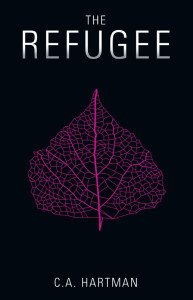 The cover for The Refugee, the first book in the trilogy, is a magenta leaf. It represents the crest of the Shereb clan among the Korvali people, the clan that Eshel, the refugee himself, belonged to before he escaped. The leaf, like all Korvali clan crests, is tattooed upon the left hand of its members.
The symbol represents the leaf of a tiny, moss-like, water-borne plant that grows in the rivulets flowing throughout Fallal Hall’s gardens. The pigment is not one you would see naturally on Earth and it’s used to create the tattoo. The leaves don’t look exactly like this image. This is actually an artistic rendition of the leaf, created by the Korvali as a symbol of the clan. If you look closely, you will notice that there is literally no curved edge in the entire piece. To me, that gives it a more linear feel that fits the Korvali.
I told Chris Voeller my idea and sent him images of leaves I’d hunted down on Google, especially those with lots of netting and veins. I wanted the leaf to be cordate (heart-shaped), mostly because it would fit better on a hand. He came up with this design, which I loved from moment one. I chose it to represent Eshel, since the first book is primarily about him and his notorious escape not just from his people, but from those who were most privileged and powerful.
A few have assumed it was an aspen leaf… not an unfair assumption given its shape and the fact that I live in Colorado, where aspens are ubiquitous. However, I didn’t have an aspen in mind when I drummed up this idea; it was the shape that I wanted.
From a cultural perspective, this crest is the showiest and most ornate of the Korvali crests. Magenta is bright, showy, even regal (think purple). It fits with the Shereb clan’s arrogance and desire for power.
Why a black background? Black is mysterious. Black is the unknown, the vacuum of space. All of these things represent Eshel, his escape, and the journey he and Catherine and everyone else go on in the trilogy.
 The cover for the second book, The Operative, has a different feel. [Spoiler Alert: You’ll need to have read Book 2]. “Operative” can refer to several people in the book, the most obvious of which is Catherine, who is moonlighting as a clandestine operative for the ship’s brass. But when you consider that an operative is anyone who serves as agent, spy, or someone who’s up to secret things, I think Ashan plays this role quite well.
Ashan is a key player in Book 2, despite him having a relatively small role. He’s a former Korvali Guardsman and member of the Moshal clan. The Moshal often become Guard; their clan emphasizes simplicity, trustworthiness, and protection. I wanted a clan crest, and thus a book cover, that embodied that.
The directions I gave Chris for this one were less clear than any other I’ve done. I wanted to see what he’d come up with. I wanted something circular, something that could convey wholeness and integrity, that could look like a ring or a planet, like the planet the Moshal protect with their Guard duty. The Korvali are xenophobes, but they are united and whole in many ways and both Eshel and Ashan want to restore that integrity to their people.
Also, the background color is dark gray. The Moshal wear dark gray robes. Gray could also represent Ashan’s neutrality (he resists being part of Eshel’s cause at first), his careful and conservative nature (he’s not a risk-taker like Eshel is), or even the depression he suffers from after the loss of his lifemate.
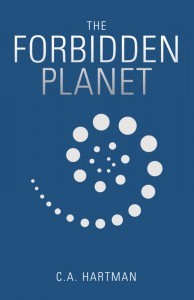 Finally, the cover for the last book in the trilogy, The Forbidden Planet. The moniker is not an homage to the classic film, but represents the nickname the humans give Korvalis, referring to the fact that no one’s allowed to visit. The third book spends much of its time there.
My original idea for this cover changed as the story evolved. For a long time, the plan was to put the crest of the Osecal on the cover, which is the multi-branched vines in gray. This crest appeared on some of the dead who escaped with Eshel.
The Osecal ruled Korvalis before the Shereb usurped power, and my plan was to restore them to power after [Book 3 Spoiler Alert] Eshel and Catherine and the gang come over to take Elisan down. But, that’s not what came about. That ending didn’t fit who the Korvali really are, people who are too smart for monarchies but who just don’t like change.
So, given that the Osecal played no significant role in Book 3, who do I put on the cover? Nothing other that the crest of the Tobeb clan, a spiral design that represents the spiral shape of the archipelago that’s part of their territory. Why them? They’re the ones who find Catherine and save her life. They rescue her from the talons of the great birds and try to revive her. They think she’s dead but still offer her a ritual burial despite her being human. They keep her until Eshel shows and discovers that she’s in stasis.
That shade of blue is what I imagine’s Korvalis’s oceans to look like when the clouds briefly clear. It’s close to what I imagine the Shereb robes to look like. Blue is calm, it’s water and sky, all of which fit who the Korvali are. A spiral is a powerful symbol as well. It is the shape of sea creatures and galaxies. It’s biological and cosmic. It can represent evolution and one’s connection to larger things, to the spiritual. This fits the Tobeb, who are a primitive tribe (by choice), who carve rocks into giant animals, who revere the giant birds, who knew to preserve Catherine’s body despite her being the enemy.
As you can see, a lot of thought goes into a book cover. Color, font, design, symbols… all impact the potential reader on some level.
If you want to stay updated on my latest books, appearances, and any freebies or special deals, sign up for my email list!
December 11, 2016
The Korvali Chronicles Covers (Part 1)
When I’ve exhibited at comic and science fiction conventions, people will often remark upon my book covers. This is especially true for the Korvali Chronicles trilogy covers, which have several characteristics that set them apart from other book covers.
For one, the covers don’t conform to the conventions of most science fiction, space opera, or military sci-fi books. There are no references to starships, planets, or space. That has its pros and cons and can be a risky choice, but I chose it because I’m not a fan of many sci-fi book covers. Another thing people remark upon is how clean and minimalist the covers are. That’s a stark contrast from most covers in the genre, which are quite busy and have a lot of colors, images, and elements. Finally, the physical cover itself is matte, not glossy, which also goes against convention. The books feel velvety, and someone in the printing industry told me that the cover material is actually called velvet matte. Who knew?
So, beyond those things, what is the significance of the Korvali Chronicles cover designs and why did I chose them?
The cover for The Refugee, the first book in the trilogy, is a magenta leaf. It represents the crest of the Shereb clan among the Korvali people, the clan that Eshel, the refugee himself, belonged to before he escaped. The leaf, like all Korvali clan crests, is tattooed upon the left hand of its members.
The symbol represents the leaf of a tiny, moss-like, water-borne plant that grows in the rivulets flowing throughout Fallal Hall’s gardens. The pigment is not one you would see naturally on Earth and it’s used to create the tattoo. The leaves don’t look exactly like this image. This is actually an artistic rendition of the leaf, created by the Korvali as a symbol of the clan. If you look closely, you will notice that there is literally no curved edge in the entire piece. To me, that gives it a more linear feel that fits the Korvali.
I told Chris Voeller my idea and sent him images of leaves I’d hunted down on Google, especially those with lots of netting and veins. I wanted the leaf to be cordate (heart-shaped), mostly because it would fit better on a hand. He came up with this design, which I loved from moment one. I chose it to represent Eshel, since the first book is primarily about him and his notorious escape not just from his people, but from those who were most privileged and powerful.
A few have assumed it was an aspen leaf… not an unfair assumption given its shape and the fact that I live in Colorado, where aspens are ubiquitous. However, I didn’t have an aspen in mind when I drummed up this idea; it was the shape that I wanted.
From a cultural perspective, this crest is the showiest and most ornate of the Korvali crests. Magenta is bright, showy, even regal (think purple). It fits with the Shereb clan’s arrogance and desire for power.
Why a black background? Black is mysterious. Black is the unknown, the vacuum of space. All of these things represent Eshel, his escape, and the journey he and Catherine and everyone else go on in the trilogy.
The cover for the second book, The Operative, has a different feel. [Spoiler Alert: You’ll need to have read Book 2]. “Operative” can refer to several people in the book, the most obvious of which is Catherine, who is moonlighting as a clandestine operative for the ship’s brass. But when you consider that an operative is anyone who serves as agent, spy, or someone who’s up to secret things, I think Ashan plays this role quite well.
Ashan is a key player in Book 2, despite him having a relatively small role. He’s a former Korvali Guardsman and member of the Moshal clan. The Moshal often become Guard; their clan emphasizes simplicity, trustworthiness, and protection. I wanted a clan crest, and thus a book cover, that embodied that.
The directions I gave Chris for this one were less clear than any other I’ve done. I wanted to see what he’d come up with. I wanted something circular, something that could convey wholeness and integrity, that could look like a ring or a planet, like the planet the Moshal protect with their Guard duty. The Korvali are xenophobes, but they are united and whole in many ways and both Eshel and Ashan want to restore that integrity to their people.
Also, the background color is dark gray. The Moshal wear dark gray robes. Gray could also represent Ashan’s neutrality (he resists being part of Eshel’s cause at first), his careful and conservative nature (he’s not a risk-taker like Eshel is), or even the depression he suffers from after the loss of his lifemate.
Finally, the cover for the last book in the trilogy, The Forbidden Planet. The moniker is not an homage to the classic film, but represents the nickname the humans give Korvalis, referring to the fact that no one’s allowed to visit. The third book spends much of its time there.
My original idea for this cover changed as the story evolved. For a long time, the plan was to put the crest of the Osecal on the cover, which is the multi-branched vines in gray. This crest appeared on some of the dead who escaped with Eshel.
The Osecal ruled Korvalis before the Shereb usurped power, and my plan was to restore them to power after [Book 3 Spoiler Alert] Eshel and Catherine and the gang come over to take Elisan down. But, that’s not what came about. That ending didn’t fit who the Korvali really are, people who are too smart for monarchies but who just don’t like change.
So, given that the Osecal played no significant role in Book 3, who do I put on the cover? Nothing other that the crest of the Tobeb clan, a spiral design that represents the spiral shape of the archipelago that’s part of their territory. Why them? They’re the ones who find Catherine and save her life. They rescue her from the talons of the great birds and try to revive her. They think she’s dead but still offer her a ritual burial despite her being human. They keep her until Eshel shows and discovers that she’s in stasis.
That shade of blue is what I imagine’s Korvalis’s oceans to look like when the clouds briefly clear. It’s close to what I imagine the Shereb robes to look like. Blue is calm, it’s water and sky, all of which fit who the Korvali are. A spiral is a powerful symbol as well. It is the shape of sea creatures and galaxies. It’s biological and cosmic. It can represent evolution and one’s connection to larger things, to the spiritual. This fits the Tobeb, who are a primitive tribe (by choice), who carve rocks into giant animals, who revere the giant birds, who knew to preserve Catherine’s body despite her being the enemy.
As you can see, a lot of thought goes into a book cover. Color, font, design, symbols… all impact the potential reader on some level.
If you want to stay updated on my latest books, appearances, and any freebies or special deals, sign up for my email list!
The post The Korvali Chronicles Covers (Part 1) appeared first on cahartmanfiction.
December 6, 2016
Why I No Longer Actually Love “Love, Actually”
[image error]I loved Love Actually the first time I saw it. And I loved it every time I’ve seen it since its release, which adds up to a lot of viewings if I watch it every December.
But this year, something changed. It all started with the stupidest line in the film: “Shut up, Miss Dunkin’ Donut 2003.”
Seriously? In a witty British film?
For one thing, the line is stupid and not up to snuff with most of the film’s humor. It’s also inaccurate, as the donut chain didn’t find its way to Europe until 2015, making one wonder why a Portuguese man living in southern Europe would use such a reference (hint: the writers made him do it). Finally, and most important, it was a cheap, fat-shaming insult to Aurelia’s sister. More on that thing later.
I watched this last week with a girlfriend. The guys came around and watched the second half with us. When that donut line dropped, everyone laughed. Loudly. Really, I said? That line? The next day, I thought more about the donut line and what it meant. Then a flood of realizations hit me about one of my favorite films. And they weren’t good.
Let’s start with the donut thing. When Jamie appears at Aurelia’s home and asks her father if he can marry his daughter, Dad produces Aurelia’s sister, who is heavier (and not nearly as hot) as Aurelia. From there the jokes commence and Dad insults the sister on multiple occasions. The whole town follows Jamie and the family to watch Jamie propose to Aurelia, who he barely knows and with whom he’s never had a real conversation. The message? Fat girls aren’t worthy of love, even their father’s love. But women who are super hot get proposed to even when the doting lad doesn’t even speak her fucking language.
True, Aurelia’s sister wasn’t exactly a well-mannered girl. Yet, Aurelia took a few shots at Jamie in Portuguese, making her seem more like his snarky ex (the one who fucked his brother). But perhaps such insults are more tolerable coming from a hot chick.
Then, I thought some more. And came to a few more realizations:
Keira Knightly (so hot even I have a girl crush on her) has two men vying for her: a husband who loves her and his friend who secretly loves her.
Widower Daniel grieves his dead wife (cancer!) briefly before winding up with an actual supermodel (Claudia Schiffer).
The much older, cranky boss Harry has his modelicious Red Devil Girl assistant if he wants her.
The much older Prime Minster gets much younger beautiful coworker (who gets hit on by the US President as well!)
Colin (who has no social skills and picks his nose) goes to America and within a couple of hours bags not one but FOUR hot women.
Shy 11-year-old Sam gets beautiful Joanna’s attention, despite her being the most popular girl in school.
Hell, even awkward musical manager Joe earns the love of Billy the Rock Star
See a pattern yet?
Sure, there are many movies about the awkward or under-appreciated getting the hottie. However, in those, the main character is usually in HIGH SCHOOL, when all we care about is getting the hottie, and those films showcase one unrealistic romance at a damned time rather than a dozen of them, for fuck’s sake.
So, let’s look at the not-hot girls of Love Actually. How did they fare?
Matronly mom Karen gets a compact disc while her husband gives Red Devil Girl a beautiful and extremely expensive gold necklace. Her tears break your dang heart.
In perhaps the most heartbreaking storyline, cute but insecure Sarah never gets her hot Karl because she feels some absurd obligation to her schizophrenic brother.
Aurelia’s sister will wind up single, or married to whomever her father can pawn her off to.
In other words, the hot chicks get adoring men. The average-looking women get little or nothing.
Is this some misogynist film brought to you by the patriarchal oppressors of our time? Hardly. But I did a search and it took about 2 seconds to find that many considered the film to be sexist.
Moreover, there’s the fat-shaming: Aurelia’s sister and her love of American donuts, BIlly Mack’s sweet manager (who Billy calls ugly and fat in public), and the insulting of the Prime Minister’s beloved’s thighs. Aren’t we past this yet? The 80s and dieting to stay thin are over, dude. Grow the fuck up.
Finally, there are the messages about love. I didn’t think much about this until coming across an article in the Atlantic entitled Love Actually is the Least Romantic Film of All Time, which then had a follow-up article to further buttress his argument and address criticisms. In a nutshell, he notes that the romances in the film are based entirely on physical attraction and that the couples bond or marry after knowing very little about one another. He adds that the romance is either extremely easy, or doomed.
I know, I know… I’m analyzing a film whose primary goals are to be funny and heartwarming. And it’s both. But film influences our culture just as much as it reflects it, and I think this one takes us backward. Hell, the American Pie films (yes, I own all three) do more justice to love and women than Love Actually does.
No offense, Love Actually. The romance is over.
The post Why I No Longer Actually Love “Love, Actually” appeared first on cahartmanfiction.
October 25, 2016
Cosby, Trump, and Brock Turner: Why We Doubt the Victims of Sexual Crimes
 This has been a big year for awareness about sexual assault and sexism. The Stanford rape case with Brock Turner made a huge impact on women and men everywhere by painting a vivid picture of the realities of rape and how we as a society allow it to continue. And Donald Trump’s “locker room talk” tape showed people just how rampant sexist attitudes toward women still are in our culture, and why.
And in recent years, allegations against Bill Cosby grew as more and more women emerged from the shadow of secrecy and admitted what they’d suffered at his entitled, sick, manipulative hand.
These events and issues have generated such publicity that they’ve crawled their way into my Daughters of Anarchy series, especially the 3rd book.
What’s been especially interesting (to coin a euphemism) is seeing how people respond to such allegations, especially when the evidence for their veracity is strong. Here are a few patterns I’ve witnessed:
The “I don’t believe her.”
When women step up to accuse a famous man, there are many who will be skeptical of such accusations and wonder if they stem from a desire for attention, revenge, fame, publicity, or money. This is especially common with celebrity cases, where all of those things can be factors.
In reality, false accusations of rape and other crimes hover around 1-2%, and that doesn’t include the vast number of sexual abuse survivors that never come forward. Moreover, no victim wants attention or money; they want to heal and hopefully prevent others from being victims.
The “What did she expect?”
These people question the victim’s actions. These are often posed as “I’m just curious” questions, but are actually just sneaky ways to suggest that victim is somehow responsible for what happened to her. For example:
1. “You go to parties and drink too much, what do you think is going to happen?” (Um, how about she has fun, or, on bad nights, prays to the porcelain god and wakes up hungover?)
2. “She was dressed like that and went to his hotel room/his house. Why is she surprised that he got too physical with her?” (Because even if she showed up naked, consent is still consent and she’s allowed to refuse consent or change her mind. She’s surprised because any decent guy already knows that and will back off if she isn’t fully consenting.)
3. “She’s a porn star. Why would she be offended that he touched her inappropriately?” (Porn stars and other sex workers are human beings with rights. And their work, no matter how shocking or questionable to you, is done WITH CONSENT.)
The “Why now?”
These folks will question why a victim didn’t speak up “sooner.” If you wait more than, say, ten minutes after an assault has occurred, the immediate assumption is that it didn’t really happen or wasn’t a “real” crime and thus the woman must have an ulterior motive for speaking out now.
In reality, people don’t speak up because they know instinctively that people (friends, coworkers, family, and especially cops and judges) will do or say one of the things I talk about in this article. For them, the abuse was painful enough… to add people judging them or denying their experience makes it MUCH worse. Sometimes it’s easier to keep quiet.
The “It wasn’t a big deal.”
These are the people who will minimize what happened and make it seem like the perpetrator’s actions weren’t as bad as other sexual crimes or were normal for that time. These are the Rape Apologists. For example, Brock Turner’s female friend stated that what he did wasn’t real rape. Or people will poo-poo Cosby’s actions or the accusations because “things were different back then.”
So, why? Why are people willing to believe that the victim is lying or out for cash (something that has a probability of 1-2% at most) instead of believing the 98-99% probability option that the victim is telling the truth? Why do people blame the victim, question why they hid the truth, or try to minimize the act? This rogue scientist will pull from her psychology background and sum it up into one word:
FEAR.
These stories scare people down to their marrow. They know, deep in their reptilian brains, that humans are capable of sexual abuse and that it could happen to them or someone they love at any time. Thus, the brain’s protective mechanism known as denial kicks in to protect them from the unsavory truth. And the behaviors I discuss above are all manifestations of that defense mechanism.
Denial over the short term makes some sense, at least until you can come to terms with the painful truth. But over the long term, it poisons us as a society and turns us into cowards who allow perpetrators to get away with their crimes, all hedging our bets that it won’t happen to us. However, social disapproval and chastisement are FAR more powerful than what the justice system can offer, and if people stood up against such crimes, they would become far less common. The Brock Turners of the world would think twice before forcing themselves on an unconscious woman if they knew that the consequences would be harsh judgment from their parents and peers. Instead, Sir Brock had at least three rape apologists to defend him (his father, his female friend, and the judge who gave him that shameful light sentence), telling the world and all males that rape is okay.
Many would argue that criminals are gonna crime no matter what. I think that’s true for some, but not most. If we pull our heads out of our asses and take a stand against sexual harassment and sexual violence, its prevalence will decrease.
October 13, 2016
Daughters of Anarchy Chapter Names, Season 1
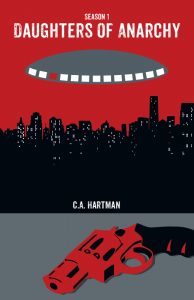 [Spoiler Alert]: You need to have read DOA 1 to avoid spoilers.
Organizing a novel into chapters requires making important choices. You can do short or longer, name each chapter or merely assign it a number, have each chapter include the point of view of one character at a time, etc. There are benefits and drawbacks to each way, and there’s no real right or wrong.
I organized DOA like a cable television series: i.e. four “seasons” (books) with 10 “episodes” (chapters) each. Thus, the episodes are long, but they include multiple scenes and developments that advance the plot (and the many subplots). Each episode includes a variety of scenes for these various plots, whether it’s Stevie chatting with Seth, Stevie researching and then going after Steeple, Stevie researching and then confronting Ronald Carr, Stevie’s interactions with Pomade (and his girlfriend), etc.
However, sometimes it’s possible, even fun, for each episode to have a theme, something that embodies what’s going on in the episode and that makes it unique from the others. In some cases, the title (and theme) can have multiple levels.
Here are the DOA 1 chapter titles, and the importance of each:
Nice To Meet You: This is what Stevie says to Library guy, just before she pulls out her Oakenfold and kills him. It’s dramatic (and darkly funny) to tell someone it’s nice to meet them, and then shoot them. It also embodies Stevie’s two sides: her desire to be polite in any given situation, along with her desire to rid the City of those who bring it harm. On another level, given that this is the first episode of the first season, “nice to meet you” is in some ways directed at the audience. It’s as if Stevie’s saying, “Nice to meet you, reader. I’m polite but I kill bad guys.”
Good Taste, Good Manners: This second episode lets you in on more of the culture and “rules” of Stevie’s world. What is considered good taste or good manners? In Stevie’s mind, she hears her own mother comment on Seth’s taste and manners, reflecting that his dislike of Yellows shows good taste but his commenting that Stevie would “look good with longer hair” shows less-than-ideal manners. Overall, this is a world where manners are important to Stevie (and her mother) but lacking in the average person (although not necessarily Seth), while taste refers to the external quality of things (like cheap yellow hair). By this standard, Pomade shows good “taste” but abysmal manners. Overall, this title underlies that things like taste and manners can be a cover for less ideal traits.
Man’s Best Couture Collie: By now, you know a “couture collie” is a dog that’s been genetically modified to look the way its owner wants it to look. These changes are purely cosmetic, focusing on fur thickness, shine, and color, as well as adornments to a dog’s tail, size, etc. They’re quite expensive as well. Couture collies are meant to signify the shallow aspects of Stevie’s society, that in a post-war world where many still struggle financially (and dogs are a rarity thanks to the 2nd war), dogs aren’t companions so much as they’re status symbols. This is seen clearly with Blonde Bob, who couldn’t afford the couture collies that made her feel special in front of others but whom she neglected behind closed doors. This a good metaphor for west bank folks in affluent neighborhoods, who Stevie spends much of her time targeting in Season 1.
The Passage of Truth: This is the chapter where Stevie returns to her native Hood and hangs out with Mobius. They visit the Passage, filled with murals that offer strong but controversial messages about the ills of their society, from the ravages of war to the way the Financials have “pissed” on their world. In a City that’s filled with couture collies, Rosa Queens, and people like Steeple, Krokus is where people wear brown (not black), bright colors (not muted ones that the rest of the rainy, drab City wear), create art, and tell the damned truth on that wall of murals.
Feckless Misspent Privilege: I love the word “feckless.” I picked it up from watching Billions, a Showtime show that I love and that had some influence on DOA 1. In this chapter, we find out who defaced the Passage, and Stevie risks her job and her goals to expose the young men. And why? Because who hasn’t watched others shake their heads in judgment about inner city black people rioting and “destroying their own neighborhoods” after a gross misuse of power and lack of justice, while no one condemns the disgusting absurdity of watching middle or upper class white kids piss on everything they’ve been handed in order to vanquish their boredom and do bad things. Read The Great Gatsby or watch Pretty in Pink, both of which capture the theme of misspent privilege.
Sleepless in Artemisia: This is a simpler title, a nod to “Sleepless in Seattle” and a reflection of Pomade and his girlfriend’s dysfunctional, self-involved relationship squabbles and their obliviousness to how it impacts others, including Stevie and her need for sleep. The sleep deprivation brings things to an interesting head.
Roses are Red, Violets are Dead: This is an insider phrase of warning among Pansies (pansies and violets are in the same flower genus, Viola). Stevie uses this phrase to gain access to Marigold and knock him off. It’s also a statement of irony, since this “violet” (i.e. native Pansy) winds up dead instead of safe, as does another later when he clotheslines and attacks Stevie in an alley.
Narcissus and Echo: Narcissus and Echo are characters from Ovid’s Metamorphoses. Echo is cursed by Hera and unable to speak other than repeating what others say. She falls in love with Narcissus, who rejects her love and proceeds to fall in love with his own reflection until he wastes away. This title refers to Pomade (a true narcissist) and his girlfriend Amanda (who pined for him)… and the conclusion of their terrible connection.
Wasn’t Expecting You: A rather ordinary title, but with a lot of pain attached. “Wasn’t expecting you” refers to Ronald Carr’s surprise when Stevie shows up to the Larkspur Cafe and asks to meet where there are no eyes. He wasn’t expecting her, or what she had to say. Likewise, it refers to the chapter’s end, when the masked person who breaks into Stevie’s apartment, grabs her, and ties her up turns out to be the person she trusts most.
How You Like Me Now?: I love this saying, because it perfectly captures how one feels after having revealed something important about themselves, especially something that makes others take pause. This could be Stevie’s question to Seth: you’ve taken me out and expressed sexual interest in me, but what do you think of me now that you know the truth about my extracurricular activities? Likewise, it could be Seth’s question to Stevie: how you like me now that I’ve learned the truth, broken into your home, and shown you my anger… and after I turn you into the authorities? Here, we have the story’s two main characters dropping their facade and seeing the other for who she (he) really is, good and bad.
Other Resources
For new book announcements and special deals, sign up for my mailing list!
October 5, 2016
KDP Select versus Going Wide: Which is Right for You?

Image from JustPublishingAdvice.com. Click image for another article on this topic.
As an indie author, you have multiple book sites at which you can sell your books. Some of these include:
Amazon
iBooks
Barnes and Noble
Kobo
Aggregators such as Draft2Digital and Smashwords
Given that these establishments have similar rules and royalty schemes (for the most part), putting your books up for sale at any or all of these sites makes sense, right? Sure, except for one thing:
Amazon and its wily ways.
Amazon offers a program called KDP Select, where those with a Prime membership and Kindle device, and those who subscribe to the Kindle Unlimited program, can borrow or read your book without purchasing it. You receive royalties for these borrows, and you also receive opportunities to do price promotions, all of which add up to sales and, hopefully, pushing your book(s) up the Amazon ranks. Amazon explains more about the program in this article.
However, there is a downside to KDP Select: any books you enroll in the program cannot be sold on any other book site. Thus, the question becomes:
Do the benefits of KDP Select offset sales lost on all those other sales channels?
This is a question that all authors, new and established, wrestle with. Some well-known authors laud the benefits of the program, while others think it’s the worst thing ever in independent publishing. And both sides offer good arguments.
In the end, you have to decide whether the program is right for YOU. Moreover, you can pick and choose which books or book series to enroll in the program, as some might be right for it while others aren’t.
Lindsay Buroker, sci-fi/fantasy author and host of the Science Fiction and Fantasy Marketing Podcast, wrote an excellent article examining this question from a neutral standpoint. The article, entitled “Should You Go Wide or Join KDP Select/Kindle Unlimited?”, does a good job helping you evaluate not whether the program is good or bad, but whether it’s right for you or some of your books. It’s also a relatively recent article on the topic (May 2015), which is important because the Select royalty payout rules changed just before that and had a lot of authors wringing their hands.
That’s the thing about Amazon and the publishing industry: things change often. What works this year won’t work anymore next year.
Check out Lindsay’s article and decide for yourself whether to give KDP Select a try. From my perspective, when you’re just starting out, you have little to lose by trying it. It’s a 90-day commitment to exclusivity, you haven’t built up loyal readers on other sites yet, and you might generate some readership.
Let me know your experiences with the program…
Other Resources
Christie’s science fiction books
Join my fiction email list for more information and goodies!
October 3, 2016
Understanding Genetics: What are SNPs?
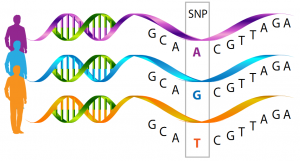 In a recent article, entitled “What Does it Mean to Have “The Gene” for Something? Not What You Think…“, I explained basic genetic variation. In summary, I talked about the fact that no one actually has “the gene for” some trait or disease, but instead they have the allele or variant necessary for that trait or disease.
This is an area of confusion for many because understanding it requires an understanding of how the genome works, and the workings of the genome are pretty complex.
To sum up that article:
Everyone has all the same genes. What differs and makes us unique is what “version” we have of that gene.
These “versions” are referred to as alleles or variants, but are sometimes called mutations. (“Mutation” can have multiple meanings as well, making this even more confusing. Here, “mutation” just means variant.).
If, for example, you study the gene for eye color, we all have an eye color gene, but we have different versions of that gene. If you have two “brown eye” alleles (one from each parent), you’ll have brown eyes. If you have two “blue eye” alleles, you’ll have blue eyes. If you have one of each, you’ll have brown eyes since brown eyed genes are dominant. (In actuality, eye color is the result of more than one gene, but it’s useful to illustrate the point).
So, in that last article, I used a VNTR (variable number of tandem repeats) as an example of different versions of one gene. However, today, much of the genotyping that’s done in research and used by 23andMe and similar companies focuses on SNPs (pronounced Snips), which stands for Single Nucleotide Polymorphisms.
Single Nucleotide Polymorphisms (SNPs)
To show you what a SNP looks like, let’s use the example of Gene D again:
ACGGTGCATGCACATG (Allele 1)
ACGGGGCATGCACATG (Allele 2)
This time, instead of the red representing a VNTR, it represents a SNP. The variation in the gene is due to ONE change in ONE nucleotide. That’s all it takes to produce a different result. So, if Gene D coded for eye color, you could say Allele 1 codes for brown eyes while Allele 2 codes for blue eyes.
When dealing with actual genetic data, where you have two copies of all genes (one from each parent), you would see something more like this:
Person #1
ACGGTGCATGCACATG
ACGGTGCATGCACATG
Person #2
ACGGGGCATGCACATG
ACGGGGCATGCACATG
For Gene D, Person #1 has the TT genotype for that SNP, while Person #2 has the GG genotype for that SNP. This is the sort of information you’ll get with your raw data from 23andMe.
In addition, most genes have multiple loci where variation occurs (i.e. multiple SNPs, VNTRs, etc). For example:
Person #2
ACGGGGCATGCACATGAATGGTTTACCTCTGA
ACGGGGCATGCACATGAATGGATTACCTCTGA
The genotype for SNP #1 is GG and the genotype for SNP #2 is TA. When you get on a site like 23andMe or LiveWello, they will tell you which variant you have at specific SNP locations in specific genes, and then cite research studies examining any traits or conditions associated with that particular variant.
This kind of genetic information is interesting, but it’s also a hotbed for misunderstanding and misinformation. In the next article, I explain more by offering an example with the so-called “Warrior Gene.”
Other Resources
Christie’s science fiction books
Christie’s science article archive
The post Understanding Genetics: What are SNPs? appeared first on cahartmanfiction.
Understanding Genetics: SNPs
In a recent article, entitled “What Does it Mean to Have “The Gene” for Something? Not What You Think…“, I explained basic genetic variation. In summary, I talked about the fact that no one actually has “the gene for” some trait or disease, but instead they have the allele or variant necessary for that trait or disease.
This is an area of confusion for many because understanding it requires an understanding of how the genome works, and the workings of the genome are pretty complex.
To sum up that article:
Everyone has all the same genes. What differs and makes us unique is what “version” we have of that gene.
These “versions” are referred to as alleles or variants, but are sometimes called mutations. (“Mutation” can have multiple meanings as well, making this even more confusing. Here, “mutation” just means variant.).
If, for example, you study the gene for eye color, we all have an eye color gene, but we have different versions of that gene. If you have two “brown eye” alleles (one from each parent), you’ll have brown eyes. If you have two “blue eye” alleles, you’ll have blue eyes. If you have one of each, you’ll have brown eyes since brown eyed genes are dominant. (In actuality, eye color is the result of more than one gene, but it’s useful to illustrate the point).
So, in that last article, I used a VNTR (variable number of tandem repeats) as an example of different versions of one gene. However, today, much of the genotyping that’s done in research and used by 23andMe and similar companies focuses on SNPs (pronounced Snips), which stands for Single Nucleotide Polymorphisms.
Single Nucleotide Polymorphisms (SNPs)
To show you what a SNP looks like, let’s use the example of Gene D again:
ACGGTGCATGCACATG (Allele 1)
ACGGGGCATGCACATG (Allele 2)
This time, instead of the red representing a VNTR, it represents a SNP. The variation in the gene is due to ONE change in ONE nucleotide. That’s all it takes to produce a different result. So, if Gene D coded for eye color, you could say Allele 1 codes for brown eyes while Allele 2 codes for blue eyes.
When dealing with actual genetic data, where you have two copies of all genes (one from each parent), you would see something more like this:
Person #1
ACGGTGCATGCACATG
ACGGTGCATGCACATG
Person #2
ACGGGGCATGCACATG
ACGGGGCATGCACATG
For Gene D, Person #1 has the TT genotype for that SNP, while Person #2 has the GG genotype for that SNP. This is the sort of information you’ll get with your raw data from 23andMe.
In addition, most genes have multiple loci where variation occurs (i.e. multiple SNPs, VNTRs, etc). For example:
Person #2
ACGGGGCATGCACATGAATGGTTTACCTCTGA
ACGGGGCATGCACATGAATGGATTACCTCTGA
The genotype for SNP #1 is GG and the genotype for SNP #2 is TA. When you get on a site like 23andMe or LiveWello, they will tell you which variant you have at specific SNP locations in specific genes, and then cite research studies examining any traits or conditions associated with that particular variant.
This kind of genetic information is interesting, but it’s also a hotbed for misunderstanding and misinformation. In the next article, I explain more by offering an example with the so-called “Warrior Gene.”
Other Resources
Christie’s science fiction books
C.A. Hartman's Blog

- C.A. Hartman's profile
- 26 followers

