Hannah Brencher's Blog
October 31, 2025
From Burnout to Balance: How Rhythms and Routines Helped Me Find Peace and Productivity
 I used to live a lot of my life on autopilot.
It was all hustle and go– a life powered by momentum, ambition, and that constant, invisible pressure to prove myself and keep climbing the ladder everyone talks about.
And that drive worked for a while.
Then it worked less when I walked through a season of deep depression.
Even less during a pandemic, when no one really knew what was happening in the world.
And almost not at all, once I became a working mom trying to find balance and peace alongside productivity in my days.
Looking back, I can see that at every turning point, my spirit was slowly shifting—away from the relentless grind and toward a life rooted in rhythms, routines, and healthy habits.
And now I can say this with confidence: if you’re worn out and exhausted, tired but wired, and juggling “all the things” to no avail, you can choose a new path at any time. I know the idea of adding something more might sound counterintuitive, but I’ve learned that weaving life-giving rhythms into my days actually helps me feel lighter, freer, and closer to the balance and peace I’d been searching for all along.
As we wind down the year, I wanted to share a few of the rhythms that anchor my days, my weeks, and my months:
DAILYPomodoro + Power Hours: This is essentially how I manage my workdays – in time blocks. As a mom with a 20-hour workweek, I don’t get an 8-hour day to get my work done. I must be strategic, focused, and efficient with my time. For years, I’ve worked in 25-minute increments. I write more about the Pomodoro Method here. Since I started unplugging, I’ve learned the value of a single hour, and it has become my daily currency. When I am overwhelmed, I look to the hour ahead. When I have a project I don’t feel like doing, I throw one hour at it. My office closet is currently taunting me, and I have no desire to clean it out but after I finish writing this, I’ll set a time for one hour and do what I can. The key to both of these methods – power hours and pomodoros – is staying focused in the flow. No distractions. No podcasts. No outside noise. It’s truly monotasking in all its glory, and it’s helped me get more done, stay focused, and feel less overwhelmed by all the things I’m juggling.
Morning Meeting: In 2024, I started reframing my quiet time. If the day was busy or things got off to a bad start, I would push quiet time to the side. But, at the same time, I don’t think my life or my business can really run smoothly without God in all the grooves. So, I changed the name and “rebranded” my quiet time to what I now call My Morning Meeting. I write about it extensively here but in a nutshell, it’s a chance to quiet my spirit, get away from the noise, read my Scriptures for the day, and pray and plan for the day ahead. When I was just doing quiet time, I didn’t really plan my day or business tasks. But why wouldn’t I invite God into those things? Why wouldn’t I want his strength, power, and wisdom for emails and writing projects, and business plans? Reframing my quiet time as my Morning Meeting makes me feel like I’m meeting with God each morning before the chaos of the day begins. I wouldn’t miss a meeting with someone that was on my calendar, so why would I miss this one?
Turndown Service: At the start of 2025, I added this rhythm to my habit tracker and made it official. Essentially, the Turndown Service is a 60-minute block of time during which I visit each room, tidying, lightly cleaning, and prepping the space for the evening. We are big fans of anything cozy, so the actual rhythm of preparing for nighttime gives me so much peace. I clear away clutter, I light candles, I draw the blinds, and make the space one of peace after a long day. One of the unexpected benefits of Turndown Service is that I no longer feel constantly overwhelmed by my home or spend hours of the day trying to keep up with cleaning. This one daily rhythm that I genuinely enjoy helps my brain recognize that there is a designated time and space in the day where things are put away and put back in order. Something about that allows my spirit to exhale and move through my day, no longer worried about all the clutter and mess.
WEEKLYWeek Mapping: Every Sunday evening, before the weeks begin, you’ll find me in my office with a candle lit, a cup of peppermint tea, and my holds-my-entire-life notebook by my side as I map out the week ahead. I’ve been mapping my week for nearly a decade now, and I swear by the results. It helps me create a manageable plan that takes into consideration the people I love, the tasks I have to do, and the things I really care about – instead of one, never-ending to-do list that will only get longer as the week goes on. If you’re curious about week-mapping, I teach my entire method in this mini-course so that you can step into your own intentionally designed weeks ahead.
Practicing Sabbath: This rhythm goes hand in hand with another rhythm I love: unplugging. If you’re unfamiliar with the rhythm, the Sabbath is a day of rest traditionally observed at the end of the week. It is one whole day—twenty-four hours within a 168-hour week—reserved for restoration, delight, and learning to cease. For me, practicing this rhythm – from Friday night to Saturday night – is a challenge to myself to put down the work, step away from emails, and take a genuine break from screens and productivity. This simple rhythm also helps me reset my system week after week, so I can start Monday feeling recharged and ready to have a productive and intentional week.
SEASONALBattle Plan Prep: I started creating what I call “battle plans” back in 2015, after walking through a life-threatening depression. Coming out of that season, I knew I couldn’t keep living on autopilot—I needed to build habits that would actually give me life. But as anyone who’s tried knows, building habits is hard. And as I mentioned earlier, the “total overhaul” approach rarely works. So I started small. I identified five key areas of life and chose one non-negotiable habit in each—simple actions that, together, pointed toward better overall health. That first battle plan changed everything. I’ve been making them ever since, and now, I help others do the same. If you’re feeling stuck or just overwhelmed, it might be time to take some intentional, meaningful steps forward. A six-week battle plan can help guide you there.
Finance Friday: For years, my finances felt scattered and overwhelming. I never knew exactly where my money was going, bills would sneak up on me, and I often felt stressed whenever I opened my accounts. To change that, I created Finance Friday—a monthly ritual where I review my QuickBooks, spot money leaks (like unused subscriptions), and plan my giving and budget for the month ahead. I now look forward to seeing exactly where my money went, making intentional decisions with my income, and planning how I can give generously. This small, consistent habit has transformed how I manage my finances—and my stress level—month after month.
P.S. If building consistent routines feels overwhelming or out of reach, I’d love to help. My routine-building course is designed to guide you in creating simple, life-giving systems that bring more peace, order, and calm to your everyday life—especially during the upcoming season. Check it out here.
I LOVE HEARING FROM YOU:
Which rhythm I described do you think could have the biggest impact on your life? Let me know in the comments below!
The post From Burnout to Balance: How Rhythms and Routines Helped Me Find Peace and Productivity appeared first on Blog.


October 14, 2025
When Your Work Feels Unsatisfying
These words come from Ruth Chou Simons’ new book, The Way of the Wildflower. I hope this essay meets you right where you are, encourages you, and gives you a deep breath of fresh truth and beauty. You can grab a copy of her book here.
jj
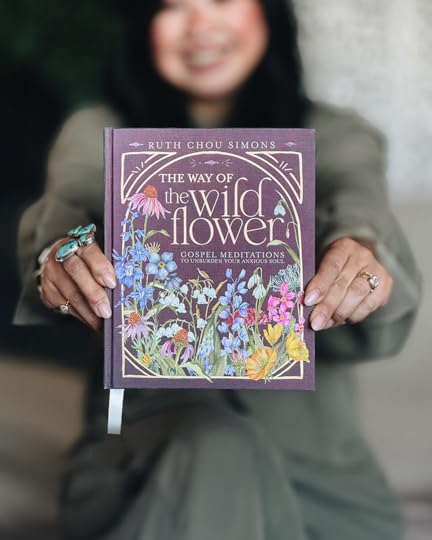
How would you head into work today if you knew that everything you put effort into would succeed and satisfy? What if you could see the fruit of your labors today—not tomorrow or two years from now? Or if you could tangibly connect the work of your hands with the harvest you seek? What if you were confident, beyond a shadow of a doubt, that you were doing exactly what you were called to do?
It’s not hard to feel motivated to do work that rewards.
If showing up faithfully at work meant a promotion, and discipling your children secured good behavior, and hours spent cleaning meant lasting beauty at home, and diligent efforts in creating promised receptivity from your audience, and your responsibilities perfectly aligned with your giftings . . .
Wouldn’t that be wonderful? Work would always feel satisfying, and we’d always be motivated to give it everything we have. Because, simply put, we long to find satisfaction through what we accomplish.
Here’s the problem with that: In the very beginning, God told Adam in the garden that one result of sin was that man would forever work but never feel satisfied by his labors.
Cursed is the ground because of you; through painful toil you will eat food from it all the days of your life.
It will produce thorns and thistles for you, and you will eat the plants of the field.
By the sweat of your brow you will eat your food
until you return to the ground, since from it you were taken;
for dust you are and to dust you will return. (Genesis 3:17–19 NIV)
Do you see it?
We were created to know a life of total peace, satisfaction, and wholeness through dependency on God, not in producing or toiling. This means that even if we were to land our dream job with the best benefits, we would not know true satisfaction. Even if our days were replete with fulfilling tasks, we’d still lack true satisfaction. Even if we received every accolade for our accomplishments, something would still be missing in our lives. Because the work of our hands was never meant to bring us the meaning and purpose we long for. The dissatisfaction we feel in our labors accompanies this life of toil and striving, that is, apart from Christ. This reality is why at the arrival of Jesus our Messiah, “the weary world rejoices.”20
If our good work were enough, we wouldn’t need a Savior. Our labor and diligent efforts will never be enough to secure our welcome before God or belovedness in his presence. Instead, we can only come to God by faith. Not by how well we get good and godly things done. We can’t work our way to the belovedness we long for. This is the good news, friend!
We were never meant to be fully satisfied, secure, or saved through the labors of our hands. We can’t please God by our own effort; it can only happen by him, through him, and for him: “For by him all things were created, in heaven and on earth, visible and invisible, whether thrones or dominions or rulers or authorities—all things were created through him and for him” (Colossians 1:16).
So, if we need God’s help to do any and all things, what does that mean for the work in front of us today? If it won’t satisfy or save us, if it can’t make us more loved by God, why work at all? The simple answer is this: We keep working out of desire to please the God who first loved us because of who he is. He’s already done the work to rescue you and prove his love for you. To work in this way is to work from a posture of soul rest instead of anxious toiling.
It’s a work ethic that: Doesn’t Meddle, But Stewards:Works With Sincerity:
“Aspire to live quietly, and to mind your own affairs, and to work with your hands, as we instructed you” (1 Thessalonians 4:11).
Works For God’s Approval, Not People:
“Bondservants, obey in everything those who are your earthly masters, not by way of eye-service, as people-pleasers, but with sincerity of heart, fearing the Lord” (Colossians 3:22).
“Whatever you do, do your work heartily, as for the Lord and not for people” (Colossians 3:23 nasb).
How might you work differently today if you remembered that the finished work of Christ is your true satisfaction and source of rest? Would you see your work (and your responsibilities) in a new way if the desire to please God rather than yourself or others was at the forefront of your mind?
I believe the gospel changes everything—including the way we work. So don’t forget that the faithful work of our Savior eliminated the meaninglessness of toil for us. Your mundane everyday moments matter, and your God will supply you with the satisfaction you’re longing for.
Meet the Author
[image error]Ruth Chou Simons is a Wall Street Journal bestselling and award-winning author of several books and Bible studies, including The Way of the Wildflower, GraceLaced, Beholding and Becoming, When Strivings Cease, and Now and Not Yet. She is an artist, podcaster, speaker, and the founder, CEO, and Chief Creative Officer of GraceLaced, an art and lifestyle brand. Simons uses each of these platforms to spiritually sow the Word of God into people’s hearts, making deep truths beautifully accessible with her signature art and relatable communication style. Simons has been featured on Good Morning America, Fox, Christianity Today, and Hallmark Home and Family. Ruth and her husband, Troy, live in Western Colorado and are grateful parents to six boys—their greatest adventure.
**Taken from The Way of the Wildflower by Ruth Chou Simons. Copyright Ruth Chou Simons (October 2025) by Thomas Nelson. Used by permission of Thomas Nelson, www.thomasnelson.com.
The post When Your Work Feels Unsatisfying appeared first on Blog.
September 23, 2025
A Winter Wellness Plan for Seasonal Affective Disorder (SAD)
The days are shorter.
The morning light drags its feet, resistant to waking up.
The holiday momentum has slowed to a halt.
And somehow, without fail, the month of January always feels 4,528 days long.
Winter is the season when, for millions of Americans, Seasonal Affective Disorder (SAD) is in full swing. If you’re unfamiliar with SAD, it’s a type of depression that occurs at a specific time of year, usually in the fall or winter, when there is less natural sunlight. Symptoms often include low mood, fatigue, difficulty concentrating, and changes in sleep and appetite.
I didn’t always have a name for what I was feeling. For years, I just thought something was wrong with me in January. Why was I so exhausted? Low? Lacking motivation once mid-January hit?
Technically, SAD can start as early as fall or even summer. But I think many of us mask the symptoms through the busyness and excitement of the holidays. For me, it’s typically right around this time of year that the sadness tries to enter.
But the hopeful news? I’ve battled SAD for years to a point where I am now fully prepared for the winter months, and the effects are less and less each year.
It’s because I know what I am walking into. I prepare for the season ahead. And I’m now someone who embraces winter for all its beauty (I’m definitely not there yet with embracing summer in Georgia), even if it does make me feel a little more melancholy.
Today I’m sharing some of the bits of wisdom I’ve foraged along the path of my winter mental health journey:Make a PlanWhen I battled through severe depression in 2014, a lot of those recovery months were rooted in winter. Winter is already a tough time for many of us. Add depression into the equation, and it can be so hard to do the basics like getting out of bed or putting on pants.
During those winter months, I created my first Battle Plan– a resource I am now proud to offer others, having lived out the material on its pages for ten years. I knew in recovery that I could no longer “wing it” with my health. I had to be deeply intentional, and that required a plan. You’ll find in the guide that the plans don’t have to be fancy or extensive– it’s a matter of small things on repeat.
Throughout that season, I had five daily action steps that I held myself accountable for. They were attainable and hinged on all aspects of my health – mental, physical, emotional, spiritual, and relational. I looked down at my plan and thought, “If I focus on these five things, then I will be the healthiest version of myself.”
If I were having an off day, I would review the list to ensure I was doing everything possible to stay healthy.
If I were having an off week, I could often look at my battle plan and notice right away what I wasn’t doing – either isolating myself from the community or skipping a few days in my Bible reading. I would recommit to the plan and keep going.
Since then, I’ve created countless plans, and they’ve been lifelines and lifeboats to me at all different parts of my life– going through a friend breakup, continuing my recovery with depression, preparing for postpartum, and walking through loss. I’ve always had a grace-filled plan by my side because, if I’m being honest, I’m just not the best version of myself without one.
There’s power in having a plan, especially in harder seasons where you feel stuck or isolated by the winter. You may need a Winter Blues Battle Plan. The guide is easy to follow, and I would love for it to be a companion for you during this challenging and dreary season.
Follow the Seasons
Admittedly, this is a new one for me. Five years ago, you would have never come to this corner of the internet to hear the words, “Slow down. Take a rest. You’re okay.” I used to be a girl boss, a hustler to my core. And while I still love efficiency and productivity hacks, I’ve become more keenly aware of how the seasons of life require different approaches.
Last January, I didn’t set a single goal. I didn’t sprint into the new year. I decided to slow things down to a crawl, rather than feeling the pressure to keep up. And that decision? It is slowly but miraculously changing my life (and, surprise, I’m getting more done in the process).
I learned last year that the New Year originally began on March 25 until around 250 years ago. The ancient Roman calendar year had ten months, with March as the first month and December as the tenth. The government added January and February along the way. However, for practical purposes, the New Year still fell in March until the fall of the Roman Empire.
With spring’s arrival at the end of March, the seasonality of this older New Year feels more intuitive to me, especially compared to starting a running plan in the bitterly cold of January. If you’ve been craving slowing down but everything around you is yelling at you to keep up, lean in:
You can follow the seasons.
You can hibernate.
You can dream in the margins.
You can slow-simmer.
You can nourish yourself with soups, stews, and other warm, feast-worthy foods.
You can cut back on plans.
You can save the planners and plans for another month.
You can meet your body’s winter needs.
If everything inside of you is exhausted, that’s not a sign that you are broken – it might just be your spirit tuning into the things you need this winter: nourishment, quiet, stillness, rest, slowness, and all the other comforts that winter wears so well.
Keep Moving
I realize the irony in telling you to slow down and then, immediately after, giving you the call to keep moving. But I don’t mean hopping on the New Year’s treadmill; I mean honoring your body with movement, because it’s one of the most critical things you can do for your mental health.
Years ago, my psychologist at the time, who prescribed me Prozac, went on to tell me that working out for 45 minutes a day, five times a week, was the equivalent of taking 20mg of Prozac. She wasn’t saying that to negate the fact that I needed medication (and I still do), but that moving my body was important in my mental health journey. I think it’s the cornerstone for a lot of us. It might not be the favorite part of the day. You might dread it. But there hasn’t been a single time that I’ve moved my body and then regretted it afterwards.
During these cold winter months, we need to stay active. We need those endorphins, the mental boost alone that comes from movement. And this isn’t a call to buy a brand-new pair of sneakers or a whole new workout wardrobe; it’s simply a call to start where you are with what you already have.
YouTube is full of free workouts.
Peloton has strength training workouts that don’t require a bike for $12 a month.
Walking is free. If you live in an area where walking is impossible in these lower temperatures, then consider a walking pad. This is the one I use. I added this to my routine during the summer months in Georgia, and immediately, my 3-mile walks returned. I prioritized them in my battle plan, and I didn’t make excuses for not having them.
You don’t have to make this more complicated than it needs to be. Pair your walks with a podcast you love. Or morph them into prayer walks. Commit to a local studio if you know you need that extra accountability. Go back to what you love – if that’s barre, weight training, running, or yoga. Again: don’t make it harder than it needs to be.
Let the Light In
Speaking of the glowing reminders, I want to emphasize the importance of light during this season; however, you can get it.
Desiree Oostland, for Vogue, writes, “The internal clock is synchronized with the day-to-night rhythm via light; Only when the circadian rhythm is intact do we feel healthy.” That’s where we get our luscious supplies of serotonin and dopamine. But what about these shorter days? What about these bleaker forecasts?
We have to improvise, friend.
We have to be ruthless with ourselves about bundling up and getting outside, whether we’re walking outside or sitting on the steps with our morning cup of coffee. The earlier the better. And opt for that natural sunlight instead of the deadening morning scroll before you’ve even gotten out of bed.
Another way to introduce light is through a therapy lamp. These are often recommended to individuals dealing with SAD. Light therapy involves exposure to artificial light, typically from a lightbox or lamp, that mimics natural sunlight. It helps you improve your mood and energy levels by regulating your sleep-wake cycle (the very thing that gets thrown off in these days with less light).
Just a few nitty-gritty details about light therapy: Try to stick to the morning, sitting in front of your lamp for 20-30 minutes.Ensure the lightbox emits 10,000 lux and is free from UV radiation.Keep the lightbox 16–24 inches from the face without looking directly at it.I’ve often paired my light lamp with my morning quiet time. I’ll sit with my bible and my journal and have the lamp on a desk or table in front of me. That way, I’m not looking directly at it, but I’m still getting the benefits while reading, journaling, and planning my days.
Here are a few options:There’s this one.
Another great option.
This one actually resembles a piece of decor.
Another strategy I use in the winter months (and throughout the year) is using an alarm clock that simulates sunrise. It doesn’t compare to real sunlight on your face, but it is another way to get more light into your day-to-day life.
Here’s a budget-friendly option.
And here’s a splurge.
Get Cozy
There will be those who wait for the winter months to pass and those who learn to fully embrace the season for what it has to offer. One of the things that, to me, is undeniably meant for these colder, darker winter seasons is the practice of hygge. If you’re unfamiliar, I wrote a whole post about my love for hygge over here.
Essentially, hygge is the love of coziness and a feeling of contentment. It’s blankets and pillows. It’s warm mugs and hot cups of soup. It’s togetherness and feasting. In a season where there is naturally less light, the practice of hygge isn’t afraid to lean into the reality with candles, low lighting, and lit fireplaces.
Hygge looks like baking cinnamon rolls in the oven.
Hygge is family movie nights wrapped up in blankets on the couch.
Hygge is warm baths and candles lit.
It’s inviting friends over for a game night, throwing something in the crockpot, and enjoying the company of one another as the kids play.
I’ve found in my own life that winter has become much easier and something I actually look forward to, thanks to the practice of hygge. Something about digging in, rather than resisting, during these winter months has helped me transition from merely surviving winter to savoring it deeply. I now see winter as a season for reflection, rebooting, unplugging, gathering, slowing, and letting all the light in, however we can.
Go Where the Help Is
I want to make this undeniably clear, in as many formats and ways as possible, that I am the biggest advocate of going where the help is. You do not need to struggle or suffer alone. You do not need to prove yourself. You do not need to “just get stronger.” Please, if you are struggling in these winter months, tell someone.
Don’t expect that people will naturally know something is off with you. In this social media age, it is easy to hide (and I’m convinced that parts of us like the hiding), but you should not and do not need to battle the sadness or depression or the anxiety alone. That’s what your village is for.
Let someone in.
Pick up the phone.
Send the text.
My girlfriends and I do this naturally in our group text. Every once in a while, one of us will chime in and share where they are on the map. The rest of us quickly rally around them with encouragement and “been there” affirmations. And while these texts are never really cries for help, they’re a way of being vulnerable with one another, a way of saying, “Hey, this is where I’m at currently.
I’m feeling sad…
The baby isn’t sleeping…
The sick season feels endless..
I need some reminders that this won’t last forever.” And that’s what we become for one another– over and over again: glowing reminders in each other’s darker times that nothing lasts forever. That this, too, shall pass.
The post A Winter Wellness Plan for Seasonal Affective Disorder (SAD) appeared first on Blog.
August 5, 2025
The Power of a Starting Ritual

If you ever walk into my house and notice a tea kettle on, with a peppermint teabag waiting in a ceramic mug, it can only mean one thing: I’m about to do something I reallyyyyyy don’t feel like doing.
It might be tackling an unruly inbox (I’m officially retired from the Inbox Zero Club).
It could be writing in the later hours of the day where inspiration doesn’t feel so spry.
Or it might be a project I’ve been putting off, even though I know, once I finish, I will feel 1,000 pounds lighter.
I call these things “resistance tasks.” They are things we know we should do–things that would make us feel like we’re stepping into the better versions of ourselves–but they come with a lot of, well, resistance.
When it comes to these tasks, I often find myself in a mental headlock before beginning, telling myself all the lies: I lack motivation. I don’t want to start. I’ll never make real progress. Deep down, I know that everything in my life will feel a little smoother if I simply begin.
So I’ve learned to trick my brain with a small but powerful tool: a starting ritual.
I’m curious: What’s the resistance task for you?
The daily workout?
The evening turndown service?
Sitting down to read the Bible?
A consistent writing practice?
Whatever it is, the starting ritual can help you get there.
If you’ve never heard the term before, a starting ritual is a practical, repeatable action that serves as a trigger for an upcoming task. It’s a mental priming– a way of signaling to your brain that you are about to begin something, for better or worse.
Charles Duhigg would call this the “cue” in the habit loop (something we dive deep into in my course about creating your dream routines).
Michael Hyatt refers to this as a startup ritual– a revving of the engine before you hit the gas.
Before the workout, you drink your favorite pre-workout.
Before the nightly turndown service, you put on a good playlist and light a candle.
Before you crack open your Bible, you brew a fresh cup of coffee and take a moment to pray.
Before sitting down to write, you tuck away your phone and put on your favorite, cozy sweatshirt.
window.fd('form', { formId: '67355833dcbbd10456f3b7f9', containerEl: '#fd-form-67355833dcbbd10456f3b7f9' });
Just before I sat down to write you this email, I followed my little starting ritual: I made peppermint tea. I put on some classical Christmas music. I turned on a timer to keep me focused. And I lit a candle in my office.
Just those steps were enough to overcome the resistance and get me into go-mode.
I like to think of them as kind, little messages to myself: This is going to be cozy. It’s going to be relaxing. It might even be enjoyable. And if it’s not? Well, good news: Christmas is only four months away.
When it comes to choosing your starting ritual, here are three tips I’ve learned along the way:
001. Make it Repeatable
A starting ritual doesn’t have to break your brain or be too complicated. Do it enough times, and it should eventually happen on autopilot.
When I don’t feel like doing emails, you can find me following the same routine: Laptop on the counter—tea brewing. Candle lit. Clearing a space brings me joy, and it’s a kind way to tell myself, “We’re doing this.”
002. Make it Small
The smaller the better. A starting ritual can be anything from turning on the record player or closing the office door to dimming the lights or driving to the gym.
Years ago, to get my workout done in the early morning hours, I would prep the coffee maker as my starting ritual. That tricked my brain into beginning the workout without even really trying. I knew that if I could show up and do the reps, the reward would be coffee. Glorious, delicious coffee.
003. Make it Enjoyable
I don’t know about you, but brushing my teeth or cleaning up my office isn’t going to get me into the mood to write. But a cozy beverage and reading a few pages of one of my favorite authors? That’s a sure way to prime my brain (and calm it down at the same time).
That’s the beautiful thing about rituals– they’re meant to mean something more than just habits. So if you’re struggling to pick your starting ritual, ask yourself, “What is the feeling I want to stir in this moment?” Is it peace? Relaxation? Energy? Confidence? Deeper presence? Pick a ritual that will prime you to experience more of that emotion.
So here’s to starting– even when the resistance feels weighty.
As simple and maybe mundane as these actions can seem, they hold a lot of power. They help us beat that dreaded resistance. They give our minds a second to prepare and adapt as we tell ourselves the better truths:
This might feel uncomfortable at first.
But uncomfortable things are often the most worthwhile.
Ready or not, we’re beginning. Hallelujah, we’re starting, and that’s enough of a reason to be proud.
Happy starting.
hb.
P.S. If you’re ready to break through resistance and build routines that finally stick , my course on building better habits is designed to help you do just that.The post The Power of a Starting Ritual appeared first on Blog.
July 11, 2025
Why the Slow Process is Worth It
 A few years ago, Lane and a few friends of ours slipped away to a mountain cabin for a few days.
Catching up on sleep, trivia games, true crime documentaries, and cozy dinners in the North Georgia Mountains were the only things on the agenda.
We were off the grid and recharging our batteries.
Waking up that first morning in the cabin, I lazily poured myself a cup of coffee and heaped some eggs and bacon onto a plate. Within that first bite of eggs, I could tell these eggs were some of the best eggs of my entire existence. And let me tell you, I eat a lot of eggs.
“Hoke, what did you do to make these eggs so amazing?” I asked. They were cheesy and fluffy, with the perfect, creamy texture.
“Nothing really,” he said. “I just cooked them slowly.”
I’d seen him do this before. He stood by the stove for a solid 25 minutes, patiently stirring the eggs as they cooked on low. The process felt tedious as I watched it, but I now had firsthand evidence that the end result was glorious—something to behold.
I’ll admit I’m not the most patient person in the world. Most of my prayers involve a petition for more patience. At that point in my life, I was used to operating at a fast pace. An occasion like breakfast was not necessarily what I wanted to spend my time on. I’d crank up the heat on our stove and cook the morning eggs in five minutes or less. And, as far as I could tell, the eggs were pretty good.
But it wasn’t until I had the slow eggs that I realized I was missing out on something entirely better.
A few mornings later, Novi picked at her waffles while sitting in her high chair, and I stood by the stove attempting my first batch of slow, cheesy eggs.
And my friend wasn’t kidding, it’s a process. You have to stand there and stir, then stand there and stir some more until your eggs reach the right consistency.
As I gently guided the eggs around the frying pan, I thought about how much of life is potentially meant to be this way. We need slowness, but we neglect it. Slowness makes for greatness, makes beautiful things come together, and produces the best results. Yet, our culture demands things at a frenetic pace.
As a writer, I must remind myself to slow down and enjoy the creation process, resisting the urge to press “publish” because I think there’s some external race, and I need to keep up somehow. Greatness takes time, I tell myself. It takes so much time.
The best novels aren’t written in a day.
The most beautiful paintings aren’t created in a rush.
The most delectable meals are not popped in the microwave.
Most mornings, I sit down in my chair to write, and there’s pressure (self-inflicted) to make every word shine. It takes the joy out of the process.
But then I remind myself that this is a slow process. It takes time to simmer, to think, to marinate, and to allow things to form on the page that I would never see if I were only ever seeking a finished product.
Creation is a process. Growth involves many stops, stalls, and periods of waiting along the way. This should not discourage us—it should push us to want to grow more and experience all the stops, stalls, and waiting as they arrive in full force.
window.fd('form', { formId: '673554f57d3f85bd8cd933e0', containerEl: '#fd-form-673554f57d3f85bd8cd933e0' });
This isn’t just for creators, though. So much of life– the good, good stuff– takes time.
Parenting. Building a life you love and tending to relationships. Keeping a home. Investing in your health. Rhythms and routines.
You can try to rush it, but ultimately, greatness takes time.
It’s okay to stand by the stove and slowly stir the eggs.
It’s okay to take the backroads.
It’s okay to connect more organically.
It’s okay to forge a vision for yourself slowly.
It’s okay to pause and wait and listen and meander.
It’s okay to scrap the world’s expectations and learn to linger in what you already are– a child of God. A beloved child of God.
Lately, I wish I could go back and tell my younger self this: Slow down, babe. This rat race isn’t for you. They’ll keep hustling– but you can take the backroads. Dare to take the scenic route. Dedicate yourself to the winding, imperfect process above the need for instant results, and all the world will start to unfold and open up to you. I have a feeling it will be more beautiful than you can even dare to imagine.
Stop romanticizing deadlines, hustle culture, and “overnight success” and, instead, figure out how to lean into the slow burn, the gradual process, and the everyday victories. Greatness may be slow, but the best stories are often written one word at a time.
p.s. If you are looking to create your own plan for “slowing down,” I have the perfect resource to get you started.
The post Why the Slow Process is Worth It appeared first on Blog.
May 14, 2025
The Homer Learning App: An Honest Review from a Pre-K Parent

We struggled to teach our daughter how to read until we discovered the Homer Learning App. Homer stood out for its personalized, research-backed approach. It adapts to your child’s level, supports more than just reading (like math, creativity, and emotions), and makes screen time feel intentional. Want to see if it’s the right fit for your family? Try Homer free for 30 days.
I’ll be honest—teaching my daughter how to read has not come easily.
We tried workbooks. We tried the apps. But every time we sat down, one or both of us ended up frustrated. I knew this couldn’t be the right path—because deep down, I believe learning (especially reading!) should feel fun, not forced.
That’s when we found Homer.
If you know me, you know I research everything before I bring it into our home—especially when it comes to kids. I dig through reviews. I test different options. So when I started looking into phonics and reading tools, Homer came up again and again.
We signed up for the free 30-day trial—and right away, something just clicked. (Sidenote: this post is not sponsored in any way by the Homer Learning App and we pay monthly for the subscription).
We didn’t go all in at once. Instead, we slowly built it into our evening routine. Unless we’re traveling or on a road trip, our daughter doesn’t use the tablet on her own. So every night, we’d curl up on the couch—me and her, or sometimes all three of us—and do 15 or 20 minutes of what we now call “reading lessons.”
And honestly? It’s been a total game-changer.
The pressure melted away. We started laughing more, learning more, and just enjoying it. I could see her confidence building in real time.
Here’s what I love about the Homer Learning App:It Meets Your Child Exactly Where They Are
From the moment you sign up, the Homer Learning App adapts to your child’s needs. There’s an initial assessment that sets the starting point based on their age, skills, and interests—and the app keeps adjusting from there.
What really impressed me is how Homer notices the areas where your child needs more support. If my daughter struggled with a certain letter sound or concept, it didn’t just move on—it circled back and reinforced that skill in a way that felt gentle and natural.
No pressure to keep up. No skipping ahead before she’s ready. Just a steady, personalized learning path designed for her.
It’s So Much More Than Reading
While the Homer Learning App was built around early literacy, it’s far from just a reading app. There are interactive games that support early math, creativity, social-emotional learning, and more.
My daughter especially loves the drawing and storytelling activities. She can create her own pictures, tell stories, and even explore emotions in simple but meaningful ways.
I’ve noticed her confidence grow not just with letters and sounds—but with numbers, problem-solving, and even memorization skills. It’s all connected, and Homer brings it together beautifully.

This isn’t just a cute or colorful app—it’s built on something called the Homer Method, which was developed by literacy experts and rooted in child development research.
The the Homer Learning App focuses on more than memorization. It uses a four-step process to help kids build foundational skills, develop critical thinking, and foster a genuine love of learning.
It covers things like letter recognition, phonics, vocabulary, early math, emotional awareness, and even real-life social skills like empathy and cooperation. It’s truly a holistic approach to early education.
It’s Screen Time That Actually Feels Worth It
I’ll admit—I have a complicated relationship with screen time. I don’t think tech is inherently bad, but I do think how we use it matters.
That’s why I love that the Homer Learning App isn’t something I just hand over to my daughter while I do something else. It’s something we do together.
Even if I’m not naturally a “teacher” type, I can sit beside her, support her, and share the joy of learning with her. It’s not about perfection—it’s about presence. And that has made all the difference.
It Genuinely Works—and That’s Why We’re Sticking With It
We started with the free trial, and by the end of the month, it was clear we’d be continuing.
She now knows all her letters and sounds. She’s beginning to sound out words on her own. And most importantly—she’s excited about reading.
That was my goal all along. Not to rush her. Not to turn learning into a chore. But to help her love the process.
The Homer Learning App is now the only app we pay for and the only one we really use. It has everything she could want to explore—reading, storytelling, drawing, math, emotions—wrapped up in a tool that truly supports her development.
For us, the subscription is a no-brainer.
Want to Try the Homer Learning App? Try Homer free for 30 days.
p.s. Print out the “teacher’s favorite things” survey, and the silent mode of motherhood.
The post The Homer Learning App: An Honest Review from a Pre-K Parent appeared first on Blog.
The Spiritual Discipline of Remembering
 TL; DR
What if remembering is more than looking back—what if it’s a way to grow your faith right now? In this post, I’m sharing simple, personal ways I’m practicing the spiritual discipline of remembering—through journaling, prayer, and small acts of love.
On the day I finished the first draft of The Unplugged Hours, I opened my front door to find a beautifully curated bucket full of goodies.
The carefully-curated bin held a cookbook, a new rolling pin, some hand towels, and a box of gluten-free baked goods from my favorite bakery.
One only has to see this kind of display of extravagant love on their front porch for a single moment to know it’s from one person: my friend Cara.
Cara is a gem of a human—the kind I wish every person had in their life. She’s a celebrator of her people. She’s a champion of the small things. And what I love most about her is that she remembers—big celebrations and little moments.
Handing in the first draft of a book should feel like a big deal, but it is often overshadowed by the shinier moments: when the book deal comes, when the hardcover is in hand, and when the publication date arrives. Yet, my friend Cara took time to celebrate a milestone that I was ready to pass by quickly. She was at my front door with baking supplies (remembering that I started baking while writing the first draft to pull myself out of my brain and work with my hands a little more) as a way to say, “Good job, friend. We’re savoring this. We’re remembering this milestone.” Her act of celebration was a reminder I needed of the importance of appreciating and valuing even the smallest of victories in the journey.
Though it’s happening somewhat unintentionally, we are spending these first few weeks of 2025 in the Monday Club talking about these lesser-known spiritual disciplines like paying attention, living alert, and choosing to remember. I didn’t plan for this, but I absolutely love it here.
Remembering– and the act of it– is all over the Bible.
In Psalm 77, the psalmist declares, “I will remember the deeds of the Lord; yes, I will remember your miracles of long ago.” At the Last Supper with his disciples, Jesus broke bread, and said to the long table, “This is my body, given for you; do this in remembrance of me.”
Remembrance is a crucial part of the fabric of faith. It’s how, when we walk through dark tunnels and land in darker pits, we are able to hear the words, “You’re coming through this.” We remember times when we’ve come through it in the past, and we remember how it all felt when the sun shined again.
But in the age of overstimulation and too much information, I feel like choosing to be someone who remembers is not just a spiritual discipline, it’s a spiritual gift that ultimately– when given– builds others up.
So how? That’s the question. How do we remember more? Remember better? Remember with intention?
Today, I’m sharing a few ways I practice the discipline of remembrance in daily life:
Remembering Through Old Journals
I recently posted on social media, asking people what they did with their old journals. I can’t stand to part with dozens of them, but, let’s be honest, they’re taking up too much space.
My friend Jane suggested a practice I now love and have been practicing since. She said she thumbs through old journals and marks the pages with washi tape—the pages where something significant happened, a prayer was answered, or a collection of words was waiting to be written. It’s the act of going back through old journals to remember how God showed up for you, how that circumstance worked itself out, and who you were before you grew and changed and shed skin.
I’ve picked up this practice of thumbing through old journals as a way of remembering God’s faithfulness. I use gold washi tape exclusively to remind myself, “This is a spot where you found gold. X marks the spot.”
Remembering In Prayer
I’m trying out a different prayer journal this year, but I’ve been a long-time lover of Val Marie Paper if you are looking for a solid prayer journal recommendation.
For this year, I’ve picked up a 5-year prayer journal from Hosanna Revival that has been sitting in my office for the last two years.
What I love about this journal is the simple yet profound structure it offers. Each day has just enough space to write a short paragraph, but here’s the kicker: every day of the year has five spaces for the 5 years to come. That means that when you finish one year, you can look back at your prayers from the previous years as you journal the next—and you’ll see how God has shown up in each season.
p.s. I just checked and my code from Hosanna Revival still works for the entire shop! Use code HANNAHBRENCHER for 10% off!
This is what I call a long-haul spiritual discipline. The results and the impact of remembering might not be immediate but, if you stick with the practice, the results will compound and deepen in meaning over time.
Remembering Others
People remember on social media. They chronicle. They share what matters to them.
Little by little, I’ve been scrolling through the accounts of my closest friends and family members, and I’ve been marking dates on my calendar: the day her mother passed away, the day they lost the baby, the birthdays of children, the anniversary dates.
I want to be a remember-er of my people’s celebrations and losses. I’ve witnessed that power from others in my life, who have remembered for me in remarkable and thoughtful ways, and that’s a quality far more critical than being efficient, or successful, or booked and busy.
In my morning meeting the other week, I felt God pressing into my spirit to send more flowers. The reason I think this could be God is that I’m not a big flower lover; this would never be my go-to idea. But I finished that quiet time with such a serene peace, saying, “I hope this is the year that I send more flowers than ever before.” Flowers to celebrate. Flowers to remember. Flowers to say, “Hey, I know to everyone else this feels like a normal day, but I’m standing with you on this day– I remember your pain three years ago.”
I hope I can reach the end of this year and say, “I sent too many flowers.”
Here’s the thing: I might be on a flower-sending rampage this year, but remembering others doesn’t always require a bouquet on their doorstep. You can choose to remember someone every day—without spending a dime. It’s as simple as this: look up from your screen, open your contacts, close your eyes, and scroll for a moment. Pause. Wherever your finger lands, send that person a text. Right now, if you can, and if it’s an ex, don’t text them—choose someone else.
I’m doing this with you. Hold on.
The first person I landed on wasn’t the right choice for this. Let me try again.
Okay, the next name was an old team member I hadn’t spoken to in a while. I paused and immediately sent her a quick message of encouragement. It took about ten seconds, maybe less. That’s how simple it can be to reach out in the middle of a busy Monday. It costs nothing, and it’s easy—but it matters.
In a world where we’re all trying to remember that we matter, that we’re seen, loved, and known—receiving a text from an old friend can be just the reminder someone needs today. And you have the power to offer that reminder.
**Update: She texted back immediately with a minute-long voice memo. We’ve been catching up ever since, volleying voice updates back and forth.
Remembering Out Loud
I came across a line in Psalm 34 recently that has stayed with me since I first found it:
“I will bless the Lord at all times; His praise shall continually be in my mouth.”
I’ve thought about this a lot over the last few weeks. Yes, I bless God but there’s something significant about what the psalmist says here. It’s not that he blessed God in prayer or that he blesses God in the lines of his journal. He blesses God with his mouth– out loud and on display.
Translation: you remember the blessings and share them in conversation with friends. You remember the blessings and share them in public places, for others to be encouraged. And I’m not only focusing on the big blessings that are easy to share on social media but the small ones. The ones that can easily get overlooked.
When’s the last time we shared out loud, about the small blessings? About miracles? About what God is up to on a Tuesday? When’s the last time we made a social media post about those things? And what would that do within our hearts? Or within the hearts of others?
Remembering the Days
Want to start small? This is a good idea for the person who simply wants to remember more, to look back and savor the small and big parts of life.
There’s a variety of journals that will help you start remembering. It doesn’t have to be your big prayers or micro miracles- you can simply start to remember the days and, as a result, you’ll reflect on the bright spots in your life.
•I used to have this one.
•This one is gorgeousss.
Remembering GodYears ago, on a podcast interview, a friend shared her discipline of keeping a bible on the countertop. By having it in plain sight, in a highly trafficked area, she would remember to flip it open and read a verse or two in the midst of the chaos, or while she was waiting for her tea to brew, and the dino chicken nuggets to cool down.
I started practicing this spiritual discipline, and it is now one of my favorites. It does not require much effort but it yields a lot of fruit. It’s the simple act of remembering God in daily life. In the busyness of the day. In the moments where I typically choose checking in on social media over checking in with him.
Some days, just seeing the Bible on the countertop, stirs a reminder in me to breathe and remember God, and remember all that is growing and changing in me at this present moment.
The pockets of opening the Scriptures aren’t long but they always leave me more refreshed than an app ever could.
**For reference, I use these journals and I keep a pen in the spiral bound part so I can journal little notes in the margins. I am making a habit of rotating them seasonally. Right now, the Poetry journal (Psalms and Proverbs) is sitting on my kitchen counter.
xx,
hb.
p.s. a booklist to reset your spirit, and my favorite nighttime rhythm.
The post The Spiritual Discipline of Remembering appeared first on Blog.
May 8, 2025
Why I Recommend Flodesk to Every Creator I Know (And How You Can Save 50%)

I started building my email list in 2013.
For a long time, email was a big struggle for me. I could never quite get the emails to look the way I wanted them to.
I tell people all the time that I literally dreaded having to send emails because the interface was confusing, the process was daunting, and then, to top it all off, the emails never looked the way I wanted them to look.
The text, images, and buttons were so clunky, it felt like something only a tech bro could have designed.
I knew email was critical to my growing business and continued readership, but why did it have to feel like such a necessary evil?
At the time, the email provider I was using would charge more as your list grew– which felt like the ultimate defeat. Being penalized for growing your list? No thanks.
I wanted something simpler—something more thoughtful, more human. As wild as it sounds, I was looking for email marketing that felt softer, more intentional.
And it turns out, that was always going to be in the cards for me and my business.
Finding Flodesk
A few years ago, I discovered Flodesk and instantly made the switch. Thankfully, the process of moving my email list was seamless, and suddenly, I was introduced to this company that never charged you for growing your list, built a truly beautiful interface, and gave me those gorgeous emails I was looking for without needing to be a coding expert.
I haven’t stopped gushing about Flodesk since. It’s woman-owned, constantly innovating, and always finding new ways to serve its community. And those beautiful, aesthetic emails I had dreamed of? Those dreams have more than come true.
My assistant (who I also convinced to switch over to Flodesk) and I talk constantly about how easy it is to come up with a vision and then execute that vision with Flodesk’s easy plug-and-play email builder.
Honestly, at this point, I’m convinced: Flodesk is ready to take over the marketing world.
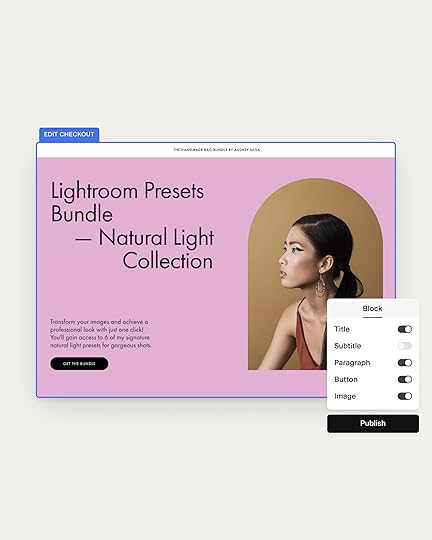
Meet Flodesk’s New Feature: The Checkout Page
More recently, I’ve been trying out one of Flodesk’s newer features: the checkout page.
As someone who offers digital products and online courses, I know how vital a good checkout experience is.
If a checkout page is scattered, confusing, disorganized—or, let’s be honest, ugly—it can lead to fewer people completing their purchases.
I didn’t want to create checkout pages that felt salesy or clunky. I wanted them to reflect the way I aim to feel every day—smart, seamless, thoughtful, and effortless.
That’s why I was over the moon to discover that Flodesk now offers not only checkout pages, but also sales pages that lead right into them.
I recently created my first one for a guide I just launched, and the process was easier than I could have imagined. I set a timer for 90 minutes, easily made the colors and fonts match my guide, and sent the page off to my assistant for review. Anywhere else, with any other provider, would have definitely taken me the entire day.
Plus, with built-in checkout buttons, there’s no chance of forgetting to link something important—it’s all taken care of.
Everything Connects Seamlessly
Since I already use Flodesk to share freebies and email updates with my community, everything connects seamlessly. When someone checks out, they automatically receive their digital download and are added to the right segment—all without me having to work extra in the backend.
More than anything, I want people who check out my work to have a peaceful, beautiful, calm experience, whether they are reading a Monday Club email with their morning coffee or going through a checkout experience.
I want it to feel streamlined—and Flodesk delivers that across the board, from emails to checkout pages to embedded forms on my blog.
A Note for Aspiring Creators
I can’t say this enough: if you feel the urge to create—do it. Don’t wait for permission. Don’t hold back because others haven’t caught the vision yet.
This is your time to build something:
A digital product.
An email newsletter.
A freebie for your website.
When I first got online in 2009, it was the Wild West. We were hand-coding everything, piecing things together with trial and error and a lot of elbow grease. The tools we have today simply didn’t exist.
But now? Everything you need is at your fingertips. It has never been easier to get started.
If I were starting from scratch today, my very first move would be signing up for Flodesk—for the stunning email designs, the powerful analytics running quietly in the background, and the smooth, intuitive systems that help me show up, share what I offer, and connect with my audience exactly where they are.
If you’re an online creative building a shop or a writer who is ready to build their email list, Flodesk is a tool I can’t recommend highly enough. It’s been a total game-changer for my business.
In a world where many marketing tools feel cumbersome, Flodesk feels simple and fun. If you’re not using it right now, sign up with my affiliate link to get 50% off your first year.
The post Why I Recommend Flodesk to Every Creator I Know (And How You Can Save 50%) appeared first on Blog.
May 1, 2025
Practicing Sabbath in an “Always On” World

Before the pandemic, practicing the Sabbath was a centerpiece in my life.
If you’re unfamiliar with the rhythm, the Sabbath is a day of rest traditionally observed at the end of the week. It is one whole day—twenty-four hours within a 168-hour week—reserved for restoration, delight, and learning to cease.
But my Sabbath rhythm was the first thing to come undone when the world shut down. I knew I needed it more than ever, but I was turning to my phone for answers and hope, so how could I possibly take a break? I convinced myself that if I unplugged, something crucial would happen, and I would miss it.
When I started the unplugged hours on my thirty-third birthday, returning to my regular Sabbath practice came with it. Since 2021, I’ve been practicing the Sabbath from Friday night to Saturday night of each work. It’s a 24-hour period where I rest, play, enjoy, and savor. No work, emails, deadlines, or urgency.
These days, I’m a student of the Sabbath, and I’m always learning new things—about myself, about the nature of a God who built rest into his blueprint, and about how sometimes a good gift is right in front of us, but we have to take hold of it.
Here are some of the most golden and enduring lessons I’ve learned from practicing the sabbath:Rest is Holy But Hard.
Taking a break is hard. There are some Sabbaths that I float into joyfully- rejoicing for the chance to power down and take a break. But there are plenty of other Sabbaths I want to resist and plug-in just to get ahead because maybe the week didn’t unfold as planned, or I’m in a hectic season.
All the same, I take a break.
I love my work. I could do it 24/7, and I realize the privilege of being able to say that. However, the more significant issue is when I have to keep working or things will stop moving. That makes me too big and God too small.
In his book The Sabbath, Rabbi Abraham Joshua Heschel writes, “Six days a week we wrestle with the world, wringing profit from the earth; on the Sabbath we especially care for the seed of eternity planted in the soul. The world has our hands, but our soul belongs to Someone Else.” I think that’s the worthiest reminder we could have for a twenty-four-hour reset—the world has our hands, but our soul belongs to Someone Else.
I’m Not Holding The World Together.
I hate to be the bearer of this news, but someone has to say it: you and I are not holding the world together. We are not in control. We are not hoisting any kind of globe on our shoulders, though it feels like it at times. Sabbath has been my continual reminder to hand over the keys and repeat to myself: You can take a break. You are not responsible for keeping everything afloat.
Sabbath is my way of saying, “God, you’re bigger than me. Your ways are higher than mine. Therefore, I’m taking a break and releasing everything I’m responsible for stewarding well into your hands.”
I wrote in The Unplugged Hours, “We tend to think that if we leave the race for just a moment, we’ll lose our footing and be unable to keep up. That’s the fear that keeps most of us going full-speed at all hours of the day. But when we leave the race to embrace rest, we step back into the bustle with new strength. Otherworldly strength. We run even better and with a completely different cadence—one rooted in deep rest rather than deep striving.”
window.fd('form', { formId: '673554f57d3f85bd8cd933e0', containerEl: '#fd-form-673554f57d3f85bd8cd933e0' });
Your Body Responds to Rhythms.
This one observation has been a wild discovery for me. Every Friday, around quitting time, I notice that my body starts to get sleepy and loose. I start yawning, and there’s this weird kind of peace that overtakes me, almost like something in my spirit is saying to me, “We made it. Good job. Time for a break.”
After years of practicing it nearly every Friday, my body is responding to the rhythm of Sabbath. My body expects the break, so I give it. Like clockwork, it settles in. It is a reminder to me that Sabbath isn’t just a mental practice or a spiritual one—it’s physical. Our bodies respond to rest. They love and savor rest. Rest is one of the ways we can honor our bodies and give them what they need.
“We become different versions of ourselves when we clear the space to rest and honor the truth that empty cups need to be refilled by sources bigger than themselves. Only then can they serve their true purpose without wearing out.”
The Key Word Is “Practice.”
I think many of us hold back from practicing the sabbath because there’s a lot of rigidity to the rules of the Sabbath. One person will tell you one thing, and another scholar will propose something else.
But what if we just decided to practice? We practice prayer. We practice gratitude. Why not practice the sabbath? Even if you can’t hop right into a 24-hour sabbath, could you practice a sabbath for three hours on a Saturday? Can you show up wobbly and a little afraid? Can you take social media off your phone for the weekend? Or decide not to check emails one day a week?
What do you even do with a sabbath? I included this piece about sabbath in the book:
“As a family, we had to ask ourselves, “What are the sparks that restore us and bring us back to life after a long week?” We practice those things—trips to the local farmer’s market, a slower pace, spontaneous decisions, extra coffee, concerts, park dates, and presence. Presence, along with fostering a deep appreciation for this life we’re living, has become the deep, thudding heartbeat of our Sabbath.”
I “practice” the sabbath every week. And it is rather liberating. But I’m a student in the practice, which means I don’t always feel like practicing, and there are some weeks where I want to skip altogether. But I dig in. And I press for the gold that comes from self-discipline. And there hasn’t been a single sabbath that I’ve walked out of not feeling grateful for the practice.
Rest IS Productive.
Every few months, and always before a road trip, my husband takes our Toyota to the dealership to get a tune-up. He has the tires checked and the oil changed. He realizes that cars, like a lot of other things, need frequent maintenance. Trust me, without this man, that car would never get a tune-up, and I’d be broken down on the side of the road.
Cars need tune-ups. And we need tune-ups. We need moments to pause, look over our systems and inner worlds, and ensure things are running smoothly.
But how can we do a tune-up if we’re never powered down?
If we’re always moving?
If we view slowing down to be unproductive or not worth our time?
Through Sabbath, I’ve learned that rest is productive and necessary. Powering down is productive and necessary. Taking breaks is necessary and productive. Doing nothing at all for a moment or two is necessary and productive.
If we never pump the brakes and look under the hood, we never figure out what’s not working, what needs fixing, or what’s beautifully growing within us right on time.
“You don’t have to be afraid to rest. Rest isn’t weakness—it’s the secret to so much strength you’ve yet to tap into. You can take the break. Cease striving.. Take the weight of the world off your shoulders. No one is asking you to hold it. So go ahead—let that weight roll off you for good.”
The post Practicing Sabbath in an “Always On” World appeared first on Blog.
The Power of Checking In With Yourself

As a new mom in the middle of the pandemic, I remember the countless times I’d pick up my phone while doing something and begin to scroll. The habit was engrained in me. I would find myself grabbing my phone– at all hours of the day– and checking social media, emails, and calendars. Even if there wasn’t anything pressing to check, I still reached for the phone. The pull was always there, and I’d often catch myself holding my phone and wondering, “What did I even pick up the phone to do?”
As I started unplugging, I had to accept that I wasn’t checking in; I was checking out.
If you feel that way too, let me be the first to tell you: you’re not alone. It’s a prevalent feeling to want to check out over checking in. I hope these words help guide you toward the check-in we all need occasionally.
Be Kind To Yourself
Being kind to yourself is the biggest thing, and if you read The Unplugged Hours, I pray you will feel yourself wrapped up in a hug rather than met with words of shame. There is no shame allowed in this story.
“It’s not our fault that we check in and out of things so frequently. Our brains are wired for dopamine—the chemical that allows us to feel pleasure. Daily life brings all sorts of natural dopamine releases—exercise, sunlight, conversing with a friend. But our devices deliver intense doses in less time than it takes to lace up our shoes or get outside. So we scroll. And we click. And we shop. And we search. And our brains get hungrier for something more. But we keep reaching for the easiest surge—getting cheap dopamine hits from a device that has programmed us to check out of real life more and more every day.”
If you’re checking out a lot, don’t jump to shame. Be kind to yourself. Be aware and be curious. All change begins with awareness and the willingness to say, “I think I’d like to try things differently.”
Scrolling Isn’t Self-Care
There are definitely times throughout our busy lives when checking into apps is necessary and efficient. But I also think we can cross a line at some point (or at least I did) where it wasn’t that I had anything to check; it was just that I didn’t want to check in with myself.
I was avoiding feelings. I was trying to stay busy at all times. I was operating from a place of needing to be doing something at all times to maintain worth, value, and connectivity.
In the vein of being kind to yourself, I had to accept a reality: scrolling wasn’t helping me. It wasn’t a good form of self-care. It may feel good initially, and small doses might provide a mental break or a form of entertainment, but excessive scrolling is a soul drainer, not a soul charger.
Here are some better forms of self-care I’ve started practicing when my brain is tired, or I’m avoiding my feelings. These are, indeed, soul chargers:Taking a bathKeeping my bible on the countertop for easy readingReading in bed at night instead of scrollingJournaling in small dosesPracticing prayerGoing for walks around the block
window.fd('form', { formId: '673554f57d3f85bd8cd933e0', containerEl: '#fd-form-673554f57d3f85bd8cd933e0' });
Check-Ins Can Be Small
I’ve learned to lace my days with little checkpoints– little ways that I check in with myself to make sure I’m okay- and that I am taking care of myself. Because I am worth that, and you are, too. At all these little junctures throughout the day, I’m checking in with myself when it would be easier to pick up my phone and check out.
But the check-ins don’t have to be significant practices. It doesn’t have to be a whole hour or an extensive morning routine. Sometimes, checking in looks like a cup of tea brewing or lighting a candle. I wrote in The Unplugged Hours, “Sometimes, checking in looks like drinking a big glass of water or remembering to eat something that contains a nutrient or two. It might look like scribbling down a quote I’d like to read again or listening to a voice memo from a friend.”
You Are Worth The Check-In
I know, friend. Trust me, I know how easy it is to claim there’s no time to check in or that something else is more important. But today, I’ll step in as the friend you might need to tell you that you are worth the check-in. Whether it’s five minutes or the chance to breathe before the baby stirs, you are worth checking in with yourself.
“Author Anne Lamott writes, “Almost everything will work again if you unplug it for a few minutes, including you.”
So breathe. Power down. Check in.
You might just be trying to get your own attention.
The noise isn’t going anywhere—I can promise you that. It will all be here when you get back. But maybe you’ll be the one who has changed.”
xx,
hb.
p.s.
My new favorite nightly ritual that feels like a daily check-in.
p.p.s
The power of a morning meeting.
The post The Power of Checking In With Yourself appeared first on Blog.