Kelly Flanagan's Blog, page 6
June 30, 2020
The Most Resilient Thought I’ve Ever Had
“Are you okay?”
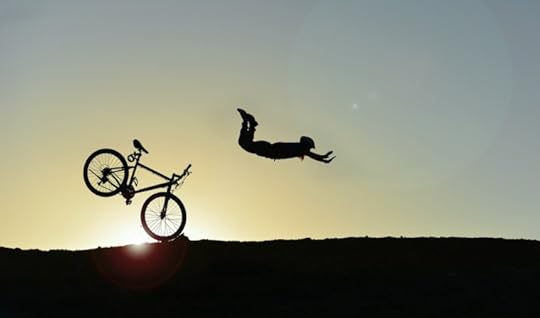
I’ve just flown over the handlebars of my bike to avoid being hit by a car, landing on asphalt at 15 mph, my shoulder taking the brunt of the impact. I’ve dragged myself and my bike to the curb. This kind man has materialized out of nowhere to help. I tell him I think my shoulder is broken, but I won’t know for sure until the shock wears off. Five minutes later I know for sure.
I’ve broken my collarbone.
As the pain sets in, a completely unexpected and entirely salvific thought enters my head: What are you going to learn from this? Immediately, I know the question isn’t about what just happened. It’s not about the importance of bike helmets or the consequences of riding a little too recklessly. It’s about all of the pain and loss and limitation in the weeks to come.
By the time my wife arrived at the scene to take me to the emergency room, the question had morphed into an even more specific one: What is it that only this could teach you?
It taught me that I can endure lonely emergency rooms and painful x-rays on my own, because in the age of COVID-19, my wife could not accompany me for that part of the journey.
Later that evening, when I was forced to let her help me with my shower, I learned that I am really bad at letting other people take care of me. I learned that I resist it because it is vulnerable. I learned how to stop resisting it.
I learned that my kids want me to be strong and aren’t quite sure how to relate to me when I’m weak. I learned just how strong they can become when they need to be.
I learned that my friends like to be with me even when I’m broken.
I learned that my lack of time to simply be present and to relax is entirely a figment of my imagination. In reality, there has not been a lack of time to take care of myself but a lack of will. Once the decision was made for me, I learned there is all sorts of spaciousness in my life. I learned to settle into it once again.
I learned that at about 8 o’clock on a June evening in our neighborhood, when everything on the ground is in darkness and shadows, there is sunlight still touching the treetops. I learned that if I look at that long enough, it’s a reminder that I don’t always have to feel the light on me, as long as I can trust that it is somewhere up above.
I learned how to take the lid off of the peanut butter with one hand.
I would never choose to go through this again, but I would also never want to give back the very good lessons I’ve learned. So, I guess I will gratefully keep them both. And when the next thing in my life breaks, I hope once again the first thought to enter my head will be,
What am I going to learn from this?
You can leave a comment by clicking here.


May 31, 2020
What a Little Girl Can Teach You about a Better Bucket List
Two months of quarantine. And counting.
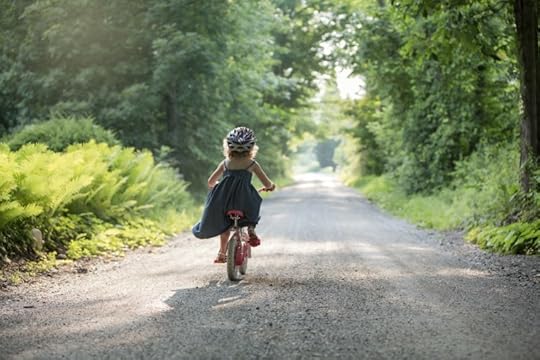
On a Thursday afternoon, I’m looking for new ways to feel alive, so I suggest to the kids we get on our bikes, ride to see friends, and reconnect with them as well as we can from the end of their driveway. It works. They are a sight for sore eyes, and we mostly succeed at staving off the pandemic blues for another day.
We’re on our way home when she says it.
The bike path on which we’re pedaling follows the river that runs through our town. Ten-year-old Caitlin and I are passing a long, wooded island that sits in the middle of the river, not far from the river bank, when she asks over her shoulder, “Daddy, do you think there are coyotes on the island?” I tell her probably not. She’s quiet for a moment or two. Then, over her shoulder, with a smile in her voice that I can only assume is on her face, she says, “I want to go out there some day to find out. It’s on my bucket list.”
It’s on my bucket list.
Before this pandemic, I was hard at work on my bucket list. Our family had just returned from a speaking event in Aspen, where we’d flown down mountainsides on snow coasters and snow-shoed through a tranquil forest preserve on a mountain peak. In a few months, we were planning to travel to Europe for the first time. I was adding extraordinary experiences to my bucket list as quickly as I could check them off. The pandemic has changed all of that. In fact, the pandemic has made the whole concept of a bucket list laughable, at least for a while.
Or at least the kind of bucket lists we adults tend to make.
We associate bucket lists with extraordinary experiences. Just prior to the quarantine, a motivational speaker came to our town, encouraging us to make a bucket list. His story was inspirational. He’d lived a hard life and had turned it around by doing exceptional things, like meeting the President and landing his own show on MTV. The message was: don’t underestimate yourself or your life. It’s a good message. One we need to hear from time to time. However, from time to time, it can also leave you feeling like the best things in life are way out of reach.
For Caitlin, though, having a bucket list means being curious about what’s right in front of her.
That’s the way of children. They’re not busy banking their lives on things they can’t see and can barely imagine. They’re too busy paying attention to the life they can see, the life for which they can reach, if they so choose. In response to the motivational speaker, I’d put one experience at the top of my bucket list: a ten-day silent retreat. It sounds a little more attainable than most things, but the truth is, with three kids whose lives I don’t want to miss, a business to run, a new book to publish, and a million other little responsibilities, ten days of nothingness feels like a trip to the moon.
What would it look like if, instead, I made Caitlin’s kind of bucket list?
I think every morning I’d wake up with a bucket list just for that day. At the top of it would be a ten-minute silent retreat. Ten minutes of nothingness. Ten minutes to just be. Not to think. Not to do. To simply exist and know that existence without all the inner chatter and outer clamor is at least tolerable and at most magical.
My bucket list would be driven by curiosity about the things right in front of me.
I’d wonder more about the conflicted look in my middle-schooler’s eyes—that look which says he wants to tell me things but doesn’t know how. I’d be curious about the podcast my teenage son is listening to, rather than writing it off as nonsense. I’d ask Caitlin about what else is on her bucket list. Travel would be near the top of my list, but it would consist mostly of traveling further than ever before into the life and love of my wife.
I’d add to the list all the little things that make up the joy of an ordinary life, like paying attention to the warmth of the water in the shower, the sound of wind through treetops, the dappled dance of summer sunlight across the kitchen floor, grace in its various disguises.
I’d put gratitude on my daily bucket list, because gratitude is something that is often just out of my reach, but something I can reach for if I so choose. I’d choose to be grateful for a quarantine that left me pedaling with my little girl on a bike path along a river, where she asked me a question, I gave her an answer, and then with the wisdom of a child, she gave me back my life, in all of its ordinary grace.
Tonight,
I washed the dishes,
with an otherwise quiet mind,
and then I checked it off my bucket list,
before adding it once again to my list for tomorrow.
You can leave a comment by clicking here.
April 30, 2020
Release everything.
Cancel everything.
When I read that headline in The Atlantic, it was my B.C./A.C. moment. Before Coronavirus. After Coronavirus. Most of us have had a moment like that—the hinge moment when COVID-19 finally felt real, and we sensed our lives were going to be changing for a while, maybe even forever.
Earlier in the day, I’d told an event planner in Louisiana that I didn’t think we should cancel the events at which I’d be speaking the following week. I’d beaten the old flu before and I figured that, as a healthy 43-year-old, I could beat this new one. Lying in bed and scrolling through the news, however, I was noticing the tone of doctors and public officials had changed significantly in the past twelve hours. Then, that headline: Cancel everything. The following day, the NBA suspended its season.
The rest of life quickly followed like dominoes.
Our family deleted much of what we hold dear from our family calendar. Caitlin’s basketball camp. Quinn’s scholastic bowl and soccer seasons. Aidan’s spring musical. My speaking events. My wife’s visit to see her ailing grandmother. It was easy to cancel those things. I just swiped left on our family calendar app. Releasing them, though, was a little more difficult. Releasing them meant swiping left on them in our hearts.
And hearts don’t tend to let go so easily.
The last time Caitlin went to basketball camp, she didn’t know it was the last time she’d laugh in the presence of her friends for at least a month. It’s hard to swipe left on analog laughter. Quinn’s scholastic bowl team had been the hub of his friendships. It’s hard to swipe left on a centerpiece of companionship. His soccer games are our favorite reason to sit in a lawn chair on a crystal clear spring morning and do nothing but enjoy our son growing up for an hour. It’s hard to swipe left on the ordinary grace of that. No spotlight on opening night for Aidan. No hug with a grandmother who may not be here much longer for my wife.
So. hard. to. swipe. left.
Nevertheless, we did it. Not only did we cancel all of it, we truly released everything for March and April, too. We let it go. However, we weren’t able to do so because we’re spiritual giants. No, we were able to do so because all of this releasing felt like a temporary thing. We had an unspoken agreement that we can endure any kind of loss for a little while. We were able to release April and May because of our hopes for May and June. Then came another headline:
“Minnesota cancels summer.”
It was the first of many headlines like it. As these kinds of cancellations have proliferated, I’ve watched the mood of my therapy clients and my household and my own heart begin to decline. A deep, deep sadness has set in, the likes of which has not been widely known amongst humanity for generations. Some are fighting back against this sadness. Literally. Cue protests.
Because it’s really, really hard to swipe left on a season, maybe even a year.
In June, for the first time ever, my family was going to leave our continent and travel overseas. My wife and I had spent days upon days meticulously planning it. Everything was in place. Last week, I opened up my travel apps a half dozen times before finally forcing myself to push the cancel buttons. When I did so, it felt like something physical was tearing within me. Maybe I’m being dramatic.
Maybe I’m just being human.
Every year, the pinnacle of our family’s summer is our town’s annual Fourth of July festival. On the Saturday morning of the festival, the whole town comes out for a 5k run. Last week, they canceled the run, and it felt like something tore inside of me again. It’s not just the feeling of canceling something. That feels like a thumb swiping left over glass. It’s the feeling of a little more hope for normality being taken away.
It’s the feeling of releasing everything.
Last night, our family watched a television show called “Songland.” Each episode centers around four songwriters pitching their best song to three producers and a professional musician. The group chooses three of the four songwriters, and they work together to make each song as good as it can possibly be. You get to watch creativity at work.
And we watched something remarkable happen.
Of the three songs, the one we liked most at first wound up being our least favorite song, and the song we liked least at first was transformed into our favorite song by the end of the episode. Indeed, it was chosen as the winner. That’s what creativity does. It doesn’t just churn out beautiful things. It transforms rough and unfinished things into beautiful things. But only under one condition. The winning song was transformed the most because the songwriter who’d written it was the one most willing to let it be transformed. She was the one most willing to watch the thing she loved become something different.
She released it.
So, as you and I are forced to cancel more and more of what we hold dear—and as we are faced with the decision to also release those things in our hearts, or not—I wonder what it would look like if we began drawing upon our creativity to swipe left on the lives we were planning to live, not as an act of desperation, but as an act of transformation? Maybe, just maybe, we’d begin to embrace that in order to create something beautiful with our rough and unfinished days, we have to do something else first.
We have to release everything.
You can leave a comment by clicking here.
April 10, 2020
An Ancient Kind of Easter

It’s Saturday, the day between death and resurrection.
Two thousand years ago, Holy Saturday was a day of stillness, uncertainty, grief, and the kind of emptiness that couldn’t have been fathomed a few weeks earlier. However, for most of us modern people, the Saturday before Easter has come to mean hustle and bustle and preparation. Hard-boiled eggs to dye, plastic eggs to fill, and both kinds of eggs to hide-and-seek. Brightly-colored baskets to stuff with brightly-colored grass and candy. Presents to wrap. Kids trying on last year’s loafers, and last minute trips to the shoe store for a larger size. All of it preamble to the following day’s celebratory gatherings in churches and homes across the world.
This year, though, the day between death and resurrection feels much more like that ancient Saturday.
A pandemic has rendered this year’s Holy Saturday a more somber one. We have grown still and uncertain once again, in a way that was unfathomable just a few weeks ago. A sense of grief has been restored to this day of mourning. The space between the crucifixion and the celebration feels empty once more. For the first time in centuries, not only are we observing the death of Jesus on Good Friday, but we are also living in the absence of Easter.
Or at least the absence of Easter as we’ve come to know it.
Over the last two-thousand years, Easter has gathered an aura about it. It’s become a magnificent, joyful celebration of triumph over death, an exultant rewriting of the conclusion to the human story. It has been marked by ecstatic exclamations of, “He is risen!” and the faithful replying with equal fervor, “He is risen, indeed!” Easter morning has become a mountaintop experience, the promise of eternity condensing into a single sunrise.
This year, there will be very little of that.
We cannot come together in our churches to sing with one another, nor gather in our homes to break bread with one another. Plastic Easter eggs are hard surfaces on which the virus might live for days, perhaps even weeks, so Easter egg hunts have been cancelled. This year, it’s going to be easy to feel as if Easter isn’t really happening at all, as if resurrection has been conquered by quarantine. The virus has taken so much from us. Now, it’s taking Easter, too.
Maybe, though, we can take it back.
As Holy Saturday darkens and then brightens into Easter morning, what if we took this opportunity to remember that the original Easter has been disguised by two-thousand years of ornamentation? It’s been tweaked, over and over again. It has drifted little by little into something glorious and grand. This year, more than ever, what if we celebrated the resurrection by trying to remember that this is how that first Easter really went?
It was a quiet, confusing mess…
A small group of women show up at a tomb on a Sunday morning to care for the body of their beloved rabbi. They are grieved by the tomb’s emptiness. They assume the body has been stolen. Angels appear, announcing joyfully that his body isn’t stolen, it’s risen. Nothing is as they expected. They are so discombobulated that when they are greeted by their beloved rabbi, they fail to recognize him at first. With dawning awareness that their worlds have changed for good, though, they go tell the rabbi’s inner circle of his apparent resurrection from the dead. The friends are scared at first, then confused, then mostly disbelieving. One friend named Thomas is so doubtful that when the rabbi actually shows up, in the flesh, Thomas refuses to believe it’s him until he can press his hands into the wounds of that very flesh.
The bewilderment and disorientation don’t end there, though.
The rabbi appears to two old friends as they walk a long road between towns. He talks with them for a while, and then breaks bread with them, but it isn’t until the he departs that it finally occurs to them that they’ve seen the risen Christ. Similarly, he appears on the shore as his friends are out at sea fishing, and they fail to recognize him until he duplicates a miracles he’s previously worked. Then they rush to shore, and what do they do? They don’t gather in great crowds to sing at the top of their lungs the good news, as we did on Easter morning in the year of our Lord 2019. Nor do they give gifts of chocolate and marshmallow and bicycles and iPhones. They don’t cook more food than any family could possibly consume, nor search for colored eggs. No, they do two simple things. They eat a quiet breakfast together.
And three times, they vow companionship with one another.
So, tomorrow morning, if you wake on this strange, quarantined Easter day, and your life feels discombobulated, if some places in your life feel emptier than they should be, if it feels like important things have been stolen from you, if some of the angels in your life are overwhelming you with their exultations, if for a while you fail to recognize the risen Christ in the ones you love most, if you feel confused and disbelieving and doubtful, if you go for a walk with your beloved so distractedly that you don’t realize until it’s over that you’ve missed it altogether, if you need a miracle to get your feet back on solid ground, if you have a quiet breakfast with your people, and if, perhaps, you look at one another and vow a little bit of companionship through whatever lies ahead, well then, you aren’t missing out on Easter.
In fact, you are celebrating an ancient kind of Easter.
Tomorrow, our family is going to wake up and we will stubbornly do some very modern things. My daughter’s Easter dress was bought a month ago, when the world was still spinning, so we’re going to wake up and we’re going to get dressed in our Sunday best. The boys’ hair will get slicked down. We’ll go outside to take the same photo we take every year—the five of us looking pasty and winter-white in the new spring light, a few buds on the trees behind us. We’ll be in less of a hurry than last year, though. Church will start when we start it and it will be what we make of it. I’m thinking we’ll do it the way they did church around Easter two thousand years ago. We’ll gather together on solid ground for a humble little breakfast. Then,
we’ll look at each other,
and we’ll vow three times,
to be each other’s companions,
through whatever may come our way,
and that will be enough resurrection for one day.
You can leave a comment by clicking here.
March 30, 2020
This Season of Ashes (A Reflection on COVID-19)
This year, instead of doing Lent, Lent is doing me.
In my faith tradition, Lent is the spiritual season observed in the days leading up to Easter, during which the faithful commit to fasting and giving up certain luxuries. These sacrifices are meant to replicate Jesus’s 40-day withdrawal into the wilderness, where he sacrificed his appetites, his security, and his power, in order to claim freedom from such attachments.
For many years, I’ve been very intentional about my Lenten sacrifices. This year, however, there was just too much going on to give much thought to the season. I had several speaking events on the calendar, a book to finish, a business going through growing pains, and a family with a busier social calendar than the Kardashians. Lent begins on Ash Wednesday, with the placing of ashes on the forehead, often while reciting the dictum, “Remember that you are dust, and to dust you shall return.” This year, I had no time for ashes, thank you very much.
Then, COVID-19.
This viral wilderness into which we’ve wandered has taken away my speaking events and my favorite places to gather with some of my favorite people. It has taken away my kids’ schooling and socializing and, thus, it has taken away my solitude. It has taken away whatever illusory sense of safety and control I had left. And COVID-19 has taken away my words. As a father and therapist and author and speaker, words are the tools of my trade. However, for the last week, I’ve been contemplating what to write about in this blog post, and…nothing.
I don’t know what to say.
I could tell you about my daughter and her friends who have been sewing masks for local healthcare workers, but that feels like turning a small act of support into performance art. I could write about the possibility of a more united humanity on the other side of this global crisis, but that kind of shiny optimism sounds pretty tone deaf, as the death count doubles every two days in my country. I could write about the back spasms I’ve been having for the last three days, which make it difficult to sleep, let alone sit upright and write a blog post; yet I’m not alone on a ventilator, possibly saying goodbye to this world, with no one there to wave farewell in return. So…
I don’t know what to say.
Several days into this wordless season, it occurred to me that, although COVID-19 had taken away my words, it had given me back something else. It’s given me back this season of ashes. Lent isn’t ultimately about self-denial or self-punishment or self-diminishment. Lent is about getting back to basics. The question Lent always asks of us is this: What attachments must you relinquish in order to get back to the basics of being human, which are loving well and suffering well, sometimes in the same instant?
We human beings get attached to so many wonderful and silly and complicated things, and we populate our lives with them. In this crowd of our attachments, we lose sight of the basics. For instance, I love words and words are wonderful things, but sometimes my life gets so crowded with them—helpful answers to hard questions, book chapters, keynote speeches, healing and mentoring and parenting—that I can lose sight of the basics. This viral Lent has thinned out my crowd of words, and I’m beginning to catch a glimpse of the basics once again. In the spirit of my Lenten season, I won’t tell you about all of the things I’ve seen.
Just one…
All five of us were sitting at the dinner table for the tenth night in a row. I can’t recall the last time we ate ten dinners together in a month, let alone in a row. Our conversation was less crowded than usual, too. Having no day-to-day activities to catch up on, no playground altercations to debrief, no car pools to coordinate, no homework to do, no vacations to plan, we were talking about things we’ve never discussed before, including our kids’ favorite blankets and teddy bears as toddlers.
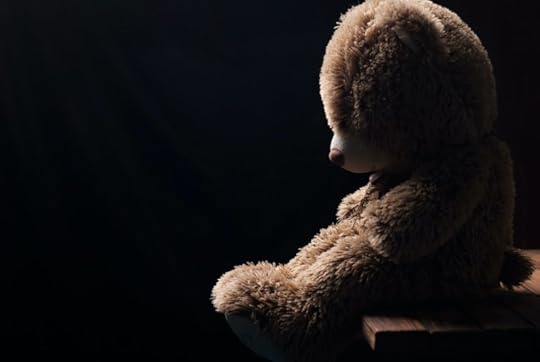
We told our 16-year-old a story we’d never gotten around to telling him before. When Aidan was an infant, he had a favorite teddy bear he called Mimi—his best attempt to call it by the name we’d assigned it: Mr. Bear. He eventually outgrew Mimi, of course, but for years that bear was his best friend. However, we’d never told Aidan that Mimi was actually Mimi Junior.
When Aidan began daycare, my wife and I hatched a plan to keep the daycare germs at the daycare. We bought a second teddy bear, closely resembling Mimi, and we sent it with Aidan to daycare, so he would have one bear for daycare and one for home. Aidan, though, would have none of it. He insisted on bringing his new bear home for evenings and weekends. We caved, and Mimi Junior became the new Mimi, while Mimi Senior was stashed away for good.
Or at least until the virus.
As Aidan listened to the story, he became indignant, wondering why the existence of Mimi Senior was kept from him. We told him life had simply gotten crowded, and stories like that had gotten crowded out. Aidan wondered aloud what his original Mimi looked like. My wife whispered something to our daughter. Caitlin ran to her bedroom and returned moments later with an old teddy bear held out in front of her. It was Mimi Senior. Aidan grabbed the teddy bear and looked at it, his eyes shining. It was just a silly little fifteen-year reunion between boy and bear.
But it gets back to basics, doesn’t it?
It’s about being human and being in love, and losing that love, and being reunited. It’s about the inexorable march of time and growing up and moving on and the eternal child that lives on within each of us. It’s about families doing the best they can with what they have and making decisions and reversing those decisions and those reversals becoming a new way of life. It’s about what happens when the crowd thins out and you begin to see old things anew in the midst of your shrinking life. It’s about a season of ashes and suffering that brings you to your knees, so you can see your whole life from a different angle.
It’s about things I can’t understand, and I have no words to articulate.
But that’s okay, because that’s what this Lenten season is all about.
It’s about giving up your addiction to appetites and answers,
so you can get back to the basics of being human,
which are love and suffering, and the kind of love
only suffering can help you see.
You can leave a comment by clicking here.
February 28, 2020
Quit Listening to Your Feelings ASAP (Says the Shrink)
The plane is taxiing for takeoff and my ten year-old daughter Caitlin is terrified.
She’s sitting next to me, folded into me, clinging to my arm, holding my hand, palms sweaty. This is her first flight since we flew to the TODAY Show together six years ago, and it’s possible we watched every episode of LOST with her in those intervening years, which might explain some of her fear, and probably does explain her suggestion that we pack sand toys (even though we’re flying from Chicago to Colorado in the wintertime) because she wants “something to play with on the beach if we crash on the island.”
The pilot announces we are the next in line for take-off.
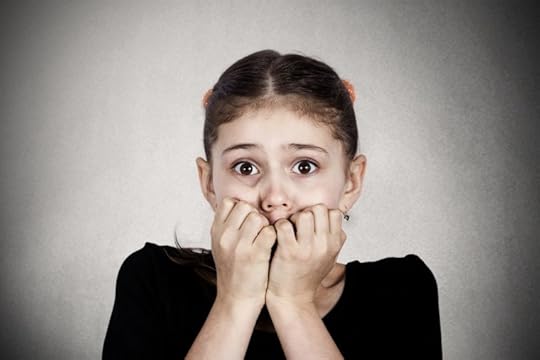
Caitlin’s sweaty grip on me loosens. She leans away from me and gazes out the window at the tarmac. She’s quiet. Contemplative. Then she looks back at me and, with a steady resolve in her voice, says, “I’m going to try to do it without holding your hand.” I tell her she is the bravest young lady I know. And she is. Especially according to a definition of courage by which I’ve been trying to live:
Courage is listening to your wisdom rather than your feelings.
I’m not saying feelings are bad or that we shouldn’t pay attention to them. In fact, as a psychologist, I think we need to become aware of all of our feelings. We need to observe them. We need to be curious about them. We need to become more familiar with them.
Then, we need to run them through the sieve of our inner wisdom.
Our wisdom—or heart or soul or true self or center or divine ground, depending upon your culture or tradition—is meant to be the control center within us. It’s the quiet space within us, which can calmly sort through all the chaotic data of life, including our feelings, and suggest the most optimal path forward. When we run our feelings through this control center, we’ll discover that some of our feelings actually arise from the wisdom itself, but others do not. For instance:
Joy arises from wisdom, but happiness does not.
Love arises from wisdom, but infatuation does not.
Guilt arises from wisdom, but shame does not.
Sorrow arises from wisdom, but despair does not.
Anger arises from wisdom, but rage does not.
Confidence arises from wisdom, but arrogance does not.
Problem-solving arises from wisdom, but worry does not.
Happiness. Infatuation. Shame. Depression. Rage. Arrogance. Worry. These are not bad feelings; they are human feelings. They are real and important and valid. But they don’t get to call the shots. The control center does. Of course, this control center can often be harder to hear than our feelings. However, I can assure you it is always broadcasting its best and highest instincts. Sometimes the reception is crystal clear. Sometimes we hear a little too much static. Sometimes, the radio waves seem to be empty altogether. That’s okay. When the reception is poor, it’s not a time to mindlessly follow your feelings.
It’s time to turn the dial.
Sitting in an idle plane at O’Hare, Caitlin turns the dial, finds her inner wisdom, and it tells her this is one of those hinge moments in her life. She can cling to her father, or she can cling instead to her own strength and resilience. The engines rev, we are pushed back in our seats, and Caitlin flies again, with her hands in her lap, and determination on her face.
Several hours later, we land in Colorado and, though I can’t prove it, I could swear Caitlin is walking off the plane about an inch taller. Now, though, I’m the one who is anxious. In a few hours, I’ll be on a stage delivering an address to a room full of exceedingly successful men. My feelings are crowded. There’s my lifelong fear about being unliked. Also, there’s a strong desire to hide the fact that this kind of thing still makes me anxious. And there’s a desperate urge to practice my talk until I’m certain I won’t make any mistakes. Instead, I think about Caitlin on the runway in Chicago.
And I turn the dial.
And there’s my inner wisdom, this voice of grace within me, and it’s not assuring me I’ll do perfectly, nor is it telling me everyone will love what I have to say. It’s reminding me of what I discovered many years ago: that I’m loveable even if no one loves me. It’s reminding me that fear makes my life small, but walking my path in spite of my fear makes my life meaningful. Then, the control center within me says something totally unexpected: it tells me I’m going to have fun up on that stage.
And I know that’s truer than everything my fear has been saying.
You don’t have to feel confident to have inner wisdom; you just have to have faith in its presence. You don’t have to heal to have inner wisdom; indeed, learning to listen to your inner wisdom is a big part of everyone’s healing process. You don’t have to have it all figured out to hear your inner wisdom.
You just need to keep turning the dial, until the broadcast becomes clearer.
Note: If you missed the resources in my monthly email for helping you approach your feelings differently, after midnight on March 1, 2020, you can click here to view the email.
You can leave a comment by clicking here.
January 31, 2020
Look Up at the Magic Show
I didn’t even look up.
We were boarded and buckled in, our phones were on airplane mode, and the flight attendants were standing in the aisles. They were each holding one of those yellow life preservers, showing us how to inflate them by blowing through that little plastic tube. I’d kept my eyes on my book, my noise cancelling headphones on my ears, and I’d barely noticed it was happening.
I did notice the little girl, though.
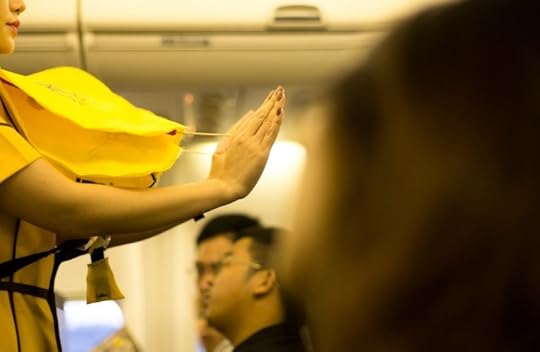
While everyone around her stared down at tablets and phones and books and magazines, she had taken off her pink headphones and she was peering over the top of her seat. She was focused. Her attention was wrapt.
In her, I saw my once upon a time self.
The first time I flew on a plane, I gave this life vest routine my fullest attention. I knew it might be the difference between life and death, and I didn’t want to miss a thing. Over the years, though, with repetition, I’ve gradually become desensitized to it. In part because I’ve learned it and I no longer need the instruction. But even more so, because I’ve habituated to it. Habituation is what happens when something becomes so familiar that we stop perceiving it altogether.
We habituate to many of the most important things in life.
Not because they are inconsequential, but because they are repetitive and ordinary, and because we are looking down at new things and exciting things. We fail to look up and notice the slow dance of dust motes in a long shaft of sunlight. We fail to look up at the lengthening crinkles around the corners of our loved one’s eyes. We fail to look inward and notice the quiet whisper of intuition or grace or soul or spirit—whatever you would like to call it.
In the words of musician Ryan O’Neal, we fail to notice “there’s magic in all of this.”
While the flight attendants showed the little girl and I how to cinch that waist strap on the life vest, I recalled the night before. I’d decided to treat the evening as if it would be my last, as if tomorrow my plane would crash. Not surprisingly, I didn’t use the time to search for new content on my new streaming device. I didn’t wonder what news was breaking on CNN. I didn’t think about posting a farewell photo on Instagram. (Okay, maybe I did, for a minute or two, but can we all agree that would have been a little weird?) I didn’t keep my eyes cast downward at all of these things.
Instead, I looked up.
While my wife read Caitlin her bedtime book, I curled up in the chair at the foot of Caitlin’s bed, and I watched. I noticed how Caitlin held her mother’s hand the whole time, intermittently intertwining their fingers together, then separating them, then intertwining them again. I noticed how Caitlin’s left fingernails were polished, but not her right, because she’s not yet dexterous enough with her left hand to paint her right. I wished I’d taken a moment earlier in the day to paint those fingernails for her.
I looked up at my oldest son Aidan, too.
He’d just picked up his little brother Quinn from a friend’s house. When they’d gotten home, Quinn had found out his plans with friends for the next day were going to disrupted by a soccer practice, and he’d become distraught. Aidan had gone into Quinn’s room and told him that when crappy things happen, you oftentimes can’t change them, but you can decide how to make the best of them. Quinn had calmed down. I told Aidan I was grateful for him and his care for his brother. I told him I admired him.
I looked up at Quinn, too.
I went into his room and he immediately apologized for his reaction to the news. He said he’d go to soccer practice without a fuss. I asked him if he was still sad about not going to his friend’s house. He said yes. I asked him if he was happy about how he was handling it. He said yes. I told him I was proud of him for learning those two things can go together. I told him he’s learning that almost three decades ahead of me, and I couldn’t be happier to be losing at something.
I looked up at everything.
On an otherwise unremarkable evening, I acted like a little girl with discarded pink headphones, enthralled by the yellow life vest that is my life. I re-sensitized myself to my moments. I noticed there was magic in all of it. There’s magic in bedtime books and in unfinished fingernails, in disappointment and in sorrow, in tenderness and in brotherhood, in forgiveness and in resilience, in grief filled goodbyes and in hoped for homecomings, in the tenuousness and in the sacredness of it all. In the ordinary moments making up our ordinary lives.
For today, at least, let’s look up at all of it.
Let’s look up at the magic show.
Note: If you missed the resources in my monthly email for helping you to look up, after midnight on February 1, 2020, you can click here to view the email.
You can leave a comment by clicking here.
December 30, 2019
Take Back Your Attention, Your Year, and Your Life

As I write this, it’s mid-December 2019, and I turned 43 this week.
The average American male lives to the age of 76. Statistically speaking, I’m past the halftime show of my life. If this mortal coil I’m shuffling along were a World Cup soccer game, I’d already be six minutes into the second half, with thirty-nine minutes to go. Sure, the big referee in the sky might add a little extra stoppage time for me, but it’s just as likely the game will end early due to bad weather.
I think about death all the time.
My mortality is like a little kid tugging at my sleeve insistently, until I eventually look down at him. This awareness of my fragility used to feel like a curse. It would sometimes depress me. It would almost always make me anxious. I’d feel something uncomfortable in my body and scour WebMD for the most benign explanation. Of course, I’d wind up focusing on the most dire explanation, instead.
Whoops.
I don’t regret my depressed and anxious years. I had to have them in order to get tired of them, and I had to get tired of them in order to trade them in for something better. I haven’t glanced at WebMD in years. However, mortality has continued to tug at my sleeve: “Daddy. Daddy. Daddy. Lookit. Daddy. Lookit. Daddy. Daddy. Lookit.” I hear him when I look in the mirror. The circles under my eyes used to go away with a good night’s sleep. Now, they seem to be here for good. Most of my hair is gone for good, and most of what’s left has gone gray.
If life is a soccer game, mine is looking more and more like a senior league.
In recent years, when mortality has tugged at my sleeve, instead of getting depressed or anxious, I’ve gotten active. I’ve tried to make the most of my dwindling days by getting the most out of them. I’ve worked hard and I’ve played hard. I certainly don’t regret these generative years, either. They’ve produced a lot of good things. However, with only thirty-nine minutes left in the game of my life, I’m increasingly aware they’ve produced at least one troubling thing.
Over the last decade, my most valuable resource has been fractured.
This resource is like a tract of land within me that has been subdivided over and over again, with each subplot given away to the cleverest bidder. Indeed, in most cases, I pay these settlers to live on my land. Every morning, I invite them back in, giving up the space within me bit by bit all over again.
It starts with my alarm clock.
Back in the first half of my life, when my alarm went off, I slapped the biggest button on it, and I fell back to sleep for another nine minutes. Now, when my alarm clock goes off, I pick it up, swipe up, and give up the first few moments of my day—and my most valuable resource—to a dozen different icons on the screen. This resource I’m speaking of, this land within me, this space on the inside, it has a name.
It is my attention.
With only thirty-nine minutes left, my most valuable resource is the attention I have to give to those minutes, to what’s going on inside of me, to the teammates who are right here on the field with me, to my analog life itself, with its complicated mixture of joy and sorrow, conflict and harmony, clarity and confusion, victory and defeat. In the end, I’ll wish for more time but, even more so, I’ll wish I’d paid more attention to the time I had. So, as a birthday gift to myself, I awoke early, before anyone else. I planned to sit quietly with a cup of coffee and enjoy the lighted Christmas tree in the darkest hour before dawn.
An hour later, I’d picked up my phone twelve times.
I’d divided my attention and given it away to two social media sites, a news app, text messaging, my to-do list, a weather app, Google, YouTube, and my calendar. The attention I could have given to myself, I gave to Silicon Valley. The attention I could have given to the moment, I gave to ones and zeros. The attention I could have given to my life, I gave to my device.
In 2020, it’s not going to get easier to claim for myself this land called attention within me.
Digital media is becoming increasingly clever at harvesting its most valuable commodity: human attention. The space within me is worth a lot of dollars to the programmers and marketers and advertisers who are designing these technologies. They are getting better and better at getting our attention by scaring us and angering us and entertaining us. A year from now—when I only have thirty-seven minutes or so left in the game—how much of my attention will I have traded for fear and rage and memes, how much more of the game will I have missed?
This year, my New Year’s resolution is not to make the most of my time. It’s to take back most of my attention, so that, to paraphrase Thoreau, when I come to die, I will not discover that I have not noticed my life. I invite you to join me. Take back the land within you. Take back your attention. Take back your year.
Take back your life.
Note: If you missed the helpful resources in my monthly email for aiding you in this resolution, after midnight on January 1, 2020, you can click here to view the email.
You can leave a comment by clicking here.
November 29, 2019
You Don’t Find Your Passion in Reflection, It Finds You in Action
My oldest son Aidan is sixteen, and last weekend he did something that gives me great hope for his life.
Actually, he did several things. They had nothing to do with his GPA, nor his SAT scores, nor his college resume. They probably won’t have anything to do with his ultimate career. And they didn’t give me hope because he was succeeding at something; they gave me hope because he was trying something and working at something. In other words, he was doing what it takes to fumble and stumble and bumble his way toward a meaningful life.
You don’t find your passion and then start living; you start living and then, eventually, on some distant day, you get a glimpse of your passion in the rearview mirror.

There is a paralyzing, debilitating myth going around amongst our young people that you can’t really get started on your journey until you have “found your passion” and you know exactly where that journey will take you. There’s an entire industry—books and conferences and summits and master classes—built around selling the formula for finding your passion so you can get on with living your best life. This industry sees a need and tries to meet it. That’s a good thing. I have no problem with its existence. I have a problem with its premise.
I have a problem with the idea that the finding comes before the living.
When I was Aidan’s age, I wanted to be a lawyer, like Tom Cruise in A Few Good Men. In hindsight, this interest reflected some passion for ideas and persuasion. However, after a psychology course introduced me to the wonder and mysteries of the mind, I abandoned law and declared my major at the University of Illinois to be psychology. While at Illinois, though, my interest shifted from our brains to our relationships. I joined a marriage research lab, where I was surprised by a passion for science. So, I applied to doctoral programs in clinical psychology. I thought I wanted to stay at Illinois for graduate school. The Fates sent me to Penn State.
Life will close doors on you. It’s not a failure; it’s an opportunity to find out what else you are here to do.
I met my wife on day one at Penn State and, for a year or two, my passion for relationships was focused entirely on her. Within two years we were married, and within two more years we were parents. That was sixteen years ago. For sixteen years, becoming a better dad has been a passion of mine.
In graduate school, my passion for science proved temporary—it helped me find my wife but it wasn’t going to help me find a career—and it was replaced with a passion for therapy. I decided all I wanted to do, for the rest of my life, was sit in a room with one or two people and talk about how to improve their lives. I did this for more than a decade, and it remains a passion of mine, but there are always other passions lurking neglected in the wings.
The finding of our passions doesn’t happen once. It’s an ongoing event.
For years, I repeatedly pushed my passion for creating things back into the depths. A few years ago, I stopped pushing and started a blog. My passion for writing grew. I became passionate about publishing a book. It was grueling. I didn’t love every moment of it. But that’s okay. A passion isn’t bliss; it’s something you’re so extravagantly fond of doing you’d be willing to suffer for it if necessary. After publishing the book, I started to get invitations to speak to groups, and I discovered a passion for that, as well. The kid who once wanted to be a prosecuting attorney now speaks about how to live loveable and love your life.
Finding your passion is not about having an epiphany; it’s about having experiences.
It’s about trying the next most obvious thing, even when that thing isn’t very obvious at all. It’s about getting into the game and learning from the wins and losses. It’s not about shaping the future; it’s about discerning the shape of your past. These days, when I look back at my journey, I have more clarity than ever about my core passion—my life’s mission statement, if you will. I’m passionate about speaking in the tender voice of a father so that the people who hear me know they are worthy.
In the rearview mirror, you see that your passion is less about what you do and more about how you were made to be.
I get to practice this passion for tenderness as a husband and as a father and a practice owner and a therapist and a writer and a speaker and a youth soccer coach and a customer in the checkout line. It is terribly ordinary and yet totally meaningful to me. It is something I can be in everything I do. And it is not static. It too is always evolving, every time I try something new, work at it, and learn from it.
Last weekend, Aidan played one of the leads in his sophomore fall play and, afterward, his cast mates honored him with the best actor award. It wasn’t the success of it that gave me hope for him. The odds that Aidan makes a career of acting are not high. But he’s trying. He’s noticing what he wants to do, and he’s working at it. And in the work, he’s learning about himself—where he finds meaning and where he doesn’t.
The morning after Aidan’s opening night, he awoke to more good news. This fall, he and five friends have, with no financial or logistical help from anyone else, launched their own streetwear company called Javach. It went live on Friday afternoon, hours before Aidan went on stage, and within 24 hours the company was already in the black. I’m not hopeful for Aidan because of the numbers. I’m hopeful because he’s trying the next best thing he can think of, he’s working at it, and he’s learning from it.
We don’t find our passions in reflection; they find us in action.
What is the next most obvious thing you’d like to try with your one ordinary, fleeting, and precious life? What do you want to work at? What do you want to learn from? What are you waiting for? If it’s guarantees or certainty or a destination, you’ll wait forever. Get started. Do the next best thing. Then, eventually, some day, you’ll find your passion.
When you glimpse it in the rearview mirror.
You can leave a comment by clicking here.
October 31, 2019
Maybe It’s Better to Break It Than to Protect It
The dining room table was protected.
I was leading the 2019 Loveable Retreat Weekend at the 4U Ranch outside of Park City, Utah, and I was eating breakfast in the ranch house with some of the Loveable tribe, when someone pointed out the mat covering the table. I thought about how my wife and I have been wanting to get a new dining room table for years, but every time we begin to seriously consider it, our kids do something to our old table that makes us wonder if they’ve ever really lived in the civilized world. So, we stick with the old table and just hope they’ll quit dropping knives. And knocking over candles.
And spilling glittery nail polish.
Someone noted the beauty of the table beneath the mat and wondered why they’d ever take it off and run the risk of harming it. I acknowledged the conundrum, comparing it to how, when we buy a phone, we also also buy a case to put it in. Our mobile devices are valuable, so we want to protect them from damage. “The last time I traded in my phone,” someone said over quiche and gluten free cinnamon rolls, “I took the case off and remembered how beautiful it was. I’d forgotten it was the color of a rose.” When we cover our most treasured possessions in protection, we can quickly forget about the beauty underneath.
The same is true of our hearts.
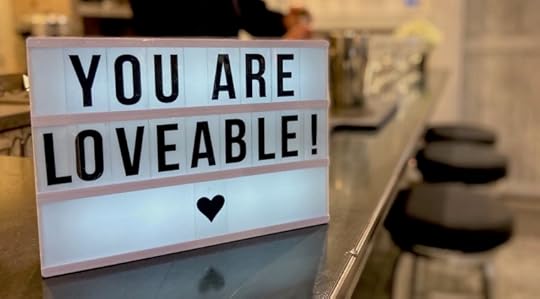
Our hearts come into the world beautiful and pristine, more lovely even than a rose-colored iPhone. However, early on, our hearts get nicked and scratched by the wayward words of the ones we love and the ones we barely know. Sometimes, they even get dropped by clumsy and careless companions, or shattered by abusive aggression or cruel intention. At the very least, every rose-colored heart gets shamed for its particular hue—we all get told in one way or another that we are not good enough exactly the way we are. So, we add protection. This isn’t dysfunctional. It’s natural.
If a phone is valuable enough to protect, how much more so a heart?
A few weeks ago, I traded in my old iPhone for a new one, and I bought a crystal clear case, because it will protect my phone while still allowing me to appreciate a bit of its beauty. It is thin and almost imperceptible. Once again, the same is true of our heart’s protections—they mostly look like strengths and virtues, so they are mostly transparent and invisible, but their job is to keep us out of harm’s way by keeping us just out of touch with the people we love and the lives we live.
For instance, we engage in peacemaking that is really peacefaking—we hide what we really think and feel in order to create a false sense of harmony. We act certain about everything so no one can surprise us with anything. We pretend to be easy, forsaking our boundaries and hiding our needs, because we fear if we’re too heavy someone will decide to drop us. We stay hurried and productive so we don’t have to get honest and connective. We try to fix our feelings instead of daring to feel them. We try to control the messiness of life, rather than learning how to surrender to it. We seek the thrill of fun rather than the tedium of friendship. We get aggressive about our anger rather than honest about our fears. Thanks to all our protections, we can get all the way through this life without a single additional scratch on us.
Nor a single true companion.
The evening before our breakfast table conversation about protection and beauty, the Loveable Retreat had opened up with a round of introductions. It lasted more than an hour, as brave soul after brave soul took off their protections and pointed out the nicks and scratches on their hearts. There was barely a dry eye in the house. I don’t think the tears were about our pain, though. I think the tears were about a moment in which we realized protection is great—it helps us to survive a lot of life—but while we’re protecting, we forget we are rose-colored underneath.
The tears were about remembering how beautiful we all really are, on the inside.
Sure, our original beauty has been nicked up and banged up. However, that doesn’t make it any less beautiful. After all, perfect beauty is either a sign that we haven’t really lived or that, from within our protections, we haven’t really loved. Broken beauty, on the other hand, is a sign that we’ve been in direct contact with the world, with our people, with our life. It’s not a sign of failure.
It’s a sign of bravery.
I think my wife and I are going to start shopping for a new dining room table. I suspect we’ll buy a protective mat for it, but we’re going to use it as little as possible. And, many years from now, when we look upon it, we’ll try to remember that the scars and scorches and stains are not a reduction of its beauty, but the culmination of its beauty—the natural result of days lived in connection rather than protection.
We’ll try to remember the same thing about our hearts:
if we don’t try to end up pristine, something else will happen.
We’ll all come up roses.
You can leave a comment by clicking here.