Kyle Fitzgibbons's Blog, page 15
February 3, 2014
Free Will or Chaotic Will?
I have been fascinated with the idea of free will for a long time. Questions like, “What is it and does it exist?” go through my head regularly. During college, I felt as though free will must surely exist, but that evil didn't necessarily spring from it as many religions or philosophers seemed to believe. People often think, largely because of the bible, that if we have free will, then we have choice. That choice can be good or bad, as illustrated in the bible by Eve’s decision to eat the apple in the garden of Eden.
I never saw it that way. I assumed that free will did exist, but it was not responsible for good and evil. Instead, if anything was considered “evil”, it was simply an act committed by a person that was either ignorant or insane. Even with the person’s free will being exercised, I never put responsibility of malice or evil intent on them.
I still believe that ignorance or insanity are the two reasons for any sort of act that causes another person pain or suffering. I simply do not believe that people act maliciously. To me, insanity means lacking any ability to empathize or reason due to genetic disabilities in your brain or intense emotions like rage and jealousy - both of which are outside a person’s control. The first is a lifelong problem, whereas intense emotions are temporary. Ignorance, on the other hand, simply means lacking the knowledge needed to empathize or reason properly, but having full control over your emotions. Since college, however, my understanding (read belief) of free will has changed as I've learned more about the world, especially neuroscience.
History of Free Will
The idea of will goes back a long way. I am not going to attempt to trace it to its origin. What’s important in this conversation is that traditionally the idea of free will is largely linked to the idea of a soul separate from the body and intimately connected to reason.
If our soul is disembodied from our flesh, emotions, and feelings, then reason can reign undisturbed by our environment. It is ethereal and acting solely of its own logic, without interruption from our unconscious brain or the influence of external stimuli.
This belief seems pretty untenable at this point based on the evidence coming out of the field of neuroscience. Naturally, nothing has been proved or written in stone, but the probability is getting smaller and smaller and if I were a betting man, I would definitely not put any chips down on a disembodied soul or mind.
As mentioned in my recent post on dress codes, research by people like Eagleman, Churchland, Lakoff, and Damasio points more and more strongly to the fact that reason is not unconnected from our feelings, brain, or environment. In fact, multiple cases like Phineas Gage, a man with a brain injury that no longer allowed him to experience normal social emotions, show that without our feelings we are incapable of making even the most mundane decisions. We need emotion to reason. If this is true, then what does it mean to have free will?
Meaning of Chaotic Will
Chaos theory is the idea of the butterfly flapping its wings in India and a hurricane forming in the Caribbean as a result. It means that small events can have exponentially larger consequences. It also means that we can’t predict the future very well because of the non-linearity of a chaotic system. It does not mean that there is no reason or cause for an event, just that we can’t easily predict it.
The best example I’ve seen to explain this is the idea of filling a bucket up with ping pong balls and dumping it upside down. You would have an almost zero percent chance of predicting where one particular ping pong ball would finally come to rest and if you did happen to get it right, it would almost assuredly be from luck. Even with that being true, there are obvious causal factors that determine where those ping pong balls come to rest. We know enough about physics to understand that gravity, friction, potential and kinetic energy all exist and they impact where each ping pong ball goes. We just don’t have the mental computing power to put all that knowledge to use in predicting where an individual ball will go. When we dump the bucket upside down, it looks random, but we know it’s not. It’s all a result of physics.
This is what the idea of a chaotic will looks like to me. It might look like I have free will because I seem to be making conscious choices. That is simply an illusion though. Most of my decision making ability is being carried out subconsciously in an area of the brain I have no conscious control over. This nonconscious activity is calculating all sorts of knowledge and data I don’t even know exists. It’s taking into account things such as past decisions and their outcomes, my current needs and wants, my current physiological state, my emotions, my genetic predispositions, and a million other aspects outside of my conscious choice.
We can think of all of this as the physics of the brain. The biology that we have been endowed with via evolution has given our brains a million deterministic factors for our choices. What looks like free will is really just all the physics of the brain doing its thing behind the scenes. Of course, our conscious brain likes to believe it is in control. So when we are asked why we made a certain choice, it will come up with a simple reason. “A led to B, and B led to C.” Obvious.
This is all a logical fallacy of the post hoc variety. Assuming we decided something because it happened after something else. It’s just our conscious brain’s way of believing it’s in control when really the majority of decision making is happening beneath the surface.
Conclusion
That’s my current understanding on free will. My current belief is that it’s largely an illusion. We may appear to have it, but really it’s just an amalgamation of our genetics, environment, and past experiences and that most of our decision making ability comes from subconscious brain activity.
You don’t need to trust me that this is true. Think about it for yourself. When was the last time you made a decision and not your emotions? I ran through this question with my wife not too long ago just to illustrate the point to her.
She said she makes decisions all the time. For example, she decided what we were going to eat for dinner. I then asked her how she did that. She said she wanted something healthy. Lean meat and vegetables. How does she know those are healthy? She read a book or saw a TV show. How does she know those are trusted sources? She believes them because of their credentials and converging evidence. Ah, belief. That is a feeling and not something you control. At the end of the day, you simply feel something is right. Even with all the converging evidence in the world, you can’t be sure. Nassim Taleb has written about this extensively and uses the examples of black swans and turkeys.
Everyone in England thought all swans were white until they went to Australia and saw black swans for the first time. All turkeys think they have the best life in the world and that it will continue to be so until Thanksgiving day comes around and it quickly turns for the worse.
Even with all that, there is still a part of me, deep down, that simply believes free will must exist. It has to, right? How else can we better ourselves or reach for a better world. I’m not sure. The evidence I’ve seen suggests free will doesn’t exist, but I deeply hope it does. I don’t want my life to be completely at the whim of my genetics and desire to reproduce and adapt to the environment. But if that’s all there is, who really cares anyway? I'm just lucky to be alive and somewhat conscious for most of it. Lacking free will wouldn’t really bother me all that much.
I never saw it that way. I assumed that free will did exist, but it was not responsible for good and evil. Instead, if anything was considered “evil”, it was simply an act committed by a person that was either ignorant or insane. Even with the person’s free will being exercised, I never put responsibility of malice or evil intent on them.
I still believe that ignorance or insanity are the two reasons for any sort of act that causes another person pain or suffering. I simply do not believe that people act maliciously. To me, insanity means lacking any ability to empathize or reason due to genetic disabilities in your brain or intense emotions like rage and jealousy - both of which are outside a person’s control. The first is a lifelong problem, whereas intense emotions are temporary. Ignorance, on the other hand, simply means lacking the knowledge needed to empathize or reason properly, but having full control over your emotions. Since college, however, my understanding (read belief) of free will has changed as I've learned more about the world, especially neuroscience.
History of Free Will
The idea of will goes back a long way. I am not going to attempt to trace it to its origin. What’s important in this conversation is that traditionally the idea of free will is largely linked to the idea of a soul separate from the body and intimately connected to reason.
If our soul is disembodied from our flesh, emotions, and feelings, then reason can reign undisturbed by our environment. It is ethereal and acting solely of its own logic, without interruption from our unconscious brain or the influence of external stimuli.
This belief seems pretty untenable at this point based on the evidence coming out of the field of neuroscience. Naturally, nothing has been proved or written in stone, but the probability is getting smaller and smaller and if I were a betting man, I would definitely not put any chips down on a disembodied soul or mind.
As mentioned in my recent post on dress codes, research by people like Eagleman, Churchland, Lakoff, and Damasio points more and more strongly to the fact that reason is not unconnected from our feelings, brain, or environment. In fact, multiple cases like Phineas Gage, a man with a brain injury that no longer allowed him to experience normal social emotions, show that without our feelings we are incapable of making even the most mundane decisions. We need emotion to reason. If this is true, then what does it mean to have free will?
Meaning of Chaotic Will
Chaos theory is the idea of the butterfly flapping its wings in India and a hurricane forming in the Caribbean as a result. It means that small events can have exponentially larger consequences. It also means that we can’t predict the future very well because of the non-linearity of a chaotic system. It does not mean that there is no reason or cause for an event, just that we can’t easily predict it.
The best example I’ve seen to explain this is the idea of filling a bucket up with ping pong balls and dumping it upside down. You would have an almost zero percent chance of predicting where one particular ping pong ball would finally come to rest and if you did happen to get it right, it would almost assuredly be from luck. Even with that being true, there are obvious causal factors that determine where those ping pong balls come to rest. We know enough about physics to understand that gravity, friction, potential and kinetic energy all exist and they impact where each ping pong ball goes. We just don’t have the mental computing power to put all that knowledge to use in predicting where an individual ball will go. When we dump the bucket upside down, it looks random, but we know it’s not. It’s all a result of physics.
This is what the idea of a chaotic will looks like to me. It might look like I have free will because I seem to be making conscious choices. That is simply an illusion though. Most of my decision making ability is being carried out subconsciously in an area of the brain I have no conscious control over. This nonconscious activity is calculating all sorts of knowledge and data I don’t even know exists. It’s taking into account things such as past decisions and their outcomes, my current needs and wants, my current physiological state, my emotions, my genetic predispositions, and a million other aspects outside of my conscious choice.
We can think of all of this as the physics of the brain. The biology that we have been endowed with via evolution has given our brains a million deterministic factors for our choices. What looks like free will is really just all the physics of the brain doing its thing behind the scenes. Of course, our conscious brain likes to believe it is in control. So when we are asked why we made a certain choice, it will come up with a simple reason. “A led to B, and B led to C.” Obvious.
This is all a logical fallacy of the post hoc variety. Assuming we decided something because it happened after something else. It’s just our conscious brain’s way of believing it’s in control when really the majority of decision making is happening beneath the surface.
Conclusion
That’s my current understanding on free will. My current belief is that it’s largely an illusion. We may appear to have it, but really it’s just an amalgamation of our genetics, environment, and past experiences and that most of our decision making ability comes from subconscious brain activity.
You don’t need to trust me that this is true. Think about it for yourself. When was the last time you made a decision and not your emotions? I ran through this question with my wife not too long ago just to illustrate the point to her.
She said she makes decisions all the time. For example, she decided what we were going to eat for dinner. I then asked her how she did that. She said she wanted something healthy. Lean meat and vegetables. How does she know those are healthy? She read a book or saw a TV show. How does she know those are trusted sources? She believes them because of their credentials and converging evidence. Ah, belief. That is a feeling and not something you control. At the end of the day, you simply feel something is right. Even with all the converging evidence in the world, you can’t be sure. Nassim Taleb has written about this extensively and uses the examples of black swans and turkeys.
Everyone in England thought all swans were white until they went to Australia and saw black swans for the first time. All turkeys think they have the best life in the world and that it will continue to be so until Thanksgiving day comes around and it quickly turns for the worse.
Even with all that, there is still a part of me, deep down, that simply believes free will must exist. It has to, right? How else can we better ourselves or reach for a better world. I’m not sure. The evidence I’ve seen suggests free will doesn’t exist, but I deeply hope it does. I don’t want my life to be completely at the whim of my genetics and desire to reproduce and adapt to the environment. But if that’s all there is, who really cares anyway? I'm just lucky to be alive and somewhat conscious for most of it. Lacking free will wouldn’t really bother me all that much.


January 27, 2014
Choosing Abuse Over Loneliness
As many of you know, I work at an elementary school. This lets me see children interacting in a safe social atmosphere daily. I find this really interesting. Seeing how children deal with their problems is often enlightening for understanding how adults deal with their problems as well.
This learning something about adults from the children happened not too long ago.
We have a new student without many friends yet. He has made a couple of friends with a group of boys who do not seem to treat him very well. They call him names and pick on him. Nothing serious, but not the way most "friends" treat each other.
However, even after his mother asked him stay away from the boys and us to keep them separated, he continues to interact and play with them when no one is watching. We can tell the boys not to play with each other on the playground repeatedly, but he continues to make his way over to them. It is his first impulse during free play.
Don't get me wrong, most of the time they are fine. None of the interaction is even to the point of me considering it bullying. He just gets irritated with how they act and talk and it makes them feel even more inclined to act and talk that way when they see they are getting a rise out of him. They are ribbing him for ribbing's sake, not out of malice.
I tried to figure out what would make a person, child or not, continue to voluntarily hang out with people they are constantly tattling on and accusing of hurting their feelings. The only thing in this boy's case I could see as a causal factor is that he is new to the school.
He doesn't have any other friend options at this point. He can either play with them and be mildly upset or be lonely and play by himself. In his case, he repeatedly chooses to be "abused" over loneliness.
I don't think this is much different than adults. Many adults I know will continue to hang out with people they don't like simply because they think it's better than being alone. In fact, some of the adults I know will even say bad things about their friends behind their backs because they have no adult figure like the boys do to tattle to. This gossip in adults is much like tattling with kids. It's a way to voice dissatisfaction and "wrong doing". Instead, they just say what a bad friend they have and continue hanging out with them when they're lonely.
It's really amazing what humans will put up with to avoid loneliness. In many cases, they'd rather be unhappy with others, than be alone and happy or neutral at worst. The examples above are very moderate in their consequences. However, I do think this acceptance of abuse in any form can often stem from the fear of loneliness. Not every time. Just often.
As adults, here's my suggestion. Maybe try choosing the loneliness once in a while instead of abuse. There is no reason to let negativity into our lives.
This learning something about adults from the children happened not too long ago.
We have a new student without many friends yet. He has made a couple of friends with a group of boys who do not seem to treat him very well. They call him names and pick on him. Nothing serious, but not the way most "friends" treat each other.
However, even after his mother asked him stay away from the boys and us to keep them separated, he continues to interact and play with them when no one is watching. We can tell the boys not to play with each other on the playground repeatedly, but he continues to make his way over to them. It is his first impulse during free play.
Don't get me wrong, most of the time they are fine. None of the interaction is even to the point of me considering it bullying. He just gets irritated with how they act and talk and it makes them feel even more inclined to act and talk that way when they see they are getting a rise out of him. They are ribbing him for ribbing's sake, not out of malice.
I tried to figure out what would make a person, child or not, continue to voluntarily hang out with people they are constantly tattling on and accusing of hurting their feelings. The only thing in this boy's case I could see as a causal factor is that he is new to the school.
He doesn't have any other friend options at this point. He can either play with them and be mildly upset or be lonely and play by himself. In his case, he repeatedly chooses to be "abused" over loneliness.
I don't think this is much different than adults. Many adults I know will continue to hang out with people they don't like simply because they think it's better than being alone. In fact, some of the adults I know will even say bad things about their friends behind their backs because they have no adult figure like the boys do to tattle to. This gossip in adults is much like tattling with kids. It's a way to voice dissatisfaction and "wrong doing". Instead, they just say what a bad friend they have and continue hanging out with them when they're lonely.
It's really amazing what humans will put up with to avoid loneliness. In many cases, they'd rather be unhappy with others, than be alone and happy or neutral at worst. The examples above are very moderate in their consequences. However, I do think this acceptance of abuse in any form can often stem from the fear of loneliness. Not every time. Just often.
As adults, here's my suggestion. Maybe try choosing the loneliness once in a while instead of abuse. There is no reason to let negativity into our lives.
January 21, 2014
Dress Codes: Are they sexist?
some back story "The girls are always getting in trouble at the middle school I work at for the clothes they wear, but they never say anything to the boys," said one of my co-workers.
I replied, "Well, it's not like boys are wearing tube tops and short shorts with skin and parts hanging out everywhere the majority of the time."
"Yeah, but for example, one boy had a shirt with a woman in a very small bikini that was pretty sexually explicit. How is that any different?"
"Well, one is a picture on a shirt and one is an actual middle school girl. Most boys don't get that worked up over a picture, but they can have some seriously twisted thoughts about the girl sitting next to them with a low cut shirt and miniskirt. It's more about preventing those thoughts from leading to physical actions than censoring pictures."
"Yeah, but that just goes along with the whole blame the victim mentality and saying that girls bring sexual assault on themselves. The boys should just have more self-control." My full thoughts I had the above conversation with a co-worker last week and I didn't really know how to respond at first. I felt like she was missing something, but I didn't want to get into an argument over something as sensitive as sexual assault with a female co-worker while working at an elementary school.
So I made a mental note and moved on.
Now that I've had time to think over it for several days, I can better articulate my point.
First, a disclaimer: I am not blaming any girl for any violent crime committed against them by a male or even another female. I've had several of my closest female friends go through terrible experiences because of the actions of men they thought they could trust and it is awful to listen to their stories.
I do think young boys (and all boys for that matter) need to be explicitly taught and given time to practice self-control.
BUT, that is missing the point in this argument. A failure of self-control can lead to a very scarring episode for one of those middle school girls. Punishing the boy, boys, or offender of whatever age or sex is reactive.
It doesn't stop the act from being committed.
The saying, "An ounce of prevention is worth a pound of cure," is extremely apt in this case. A dress code for both girls and boys can help to prevent many issues from ever coming up. Especially since self-control as a cure is something that is coming under more and more scrutiny by the research being done in neuroscience.
Both David Eagleman and Patricia Churchland have argued very convincingly that self-control can largely be an illusion of the conscious brain. Their research, and that of many others, has shown that the non-conscious aspects of the brain account for over 90% of all brain activity. This includes decision making and things closely related to it - i.e. self-control.
Much of what we take for granted under the title of "free will" is actually a very complex interaction of hormones, neurotransmitters, neurofactors, and environmental pressures. It is quite easy to say that boys should have more self-control, it is another to actually explain what that means. Middle school is a time where most students are going through puberty and their hormones and other bodily functions are going out of control. It seems that asking them to overcome and defeat their biology is asking a lot when a dress code can help to prevent much of it from ever being an issue.
Do I think the boy should have been wearing a sexually charged t-shirt? No. However, I don't think the t-shirt and the female dress code are the same thing.
I replied, "Well, it's not like boys are wearing tube tops and short shorts with skin and parts hanging out everywhere the majority of the time."
"Yeah, but for example, one boy had a shirt with a woman in a very small bikini that was pretty sexually explicit. How is that any different?"
"Well, one is a picture on a shirt and one is an actual middle school girl. Most boys don't get that worked up over a picture, but they can have some seriously twisted thoughts about the girl sitting next to them with a low cut shirt and miniskirt. It's more about preventing those thoughts from leading to physical actions than censoring pictures."
"Yeah, but that just goes along with the whole blame the victim mentality and saying that girls bring sexual assault on themselves. The boys should just have more self-control." My full thoughts I had the above conversation with a co-worker last week and I didn't really know how to respond at first. I felt like she was missing something, but I didn't want to get into an argument over something as sensitive as sexual assault with a female co-worker while working at an elementary school.
So I made a mental note and moved on.
Now that I've had time to think over it for several days, I can better articulate my point.
First, a disclaimer: I am not blaming any girl for any violent crime committed against them by a male or even another female. I've had several of my closest female friends go through terrible experiences because of the actions of men they thought they could trust and it is awful to listen to their stories.
I do think young boys (and all boys for that matter) need to be explicitly taught and given time to practice self-control.
BUT, that is missing the point in this argument. A failure of self-control can lead to a very scarring episode for one of those middle school girls. Punishing the boy, boys, or offender of whatever age or sex is reactive.
It doesn't stop the act from being committed.
The saying, "An ounce of prevention is worth a pound of cure," is extremely apt in this case. A dress code for both girls and boys can help to prevent many issues from ever coming up. Especially since self-control as a cure is something that is coming under more and more scrutiny by the research being done in neuroscience.
Both David Eagleman and Patricia Churchland have argued very convincingly that self-control can largely be an illusion of the conscious brain. Their research, and that of many others, has shown that the non-conscious aspects of the brain account for over 90% of all brain activity. This includes decision making and things closely related to it - i.e. self-control.
Much of what we take for granted under the title of "free will" is actually a very complex interaction of hormones, neurotransmitters, neurofactors, and environmental pressures. It is quite easy to say that boys should have more self-control, it is another to actually explain what that means. Middle school is a time where most students are going through puberty and their hormones and other bodily functions are going out of control. It seems that asking them to overcome and defeat their biology is asking a lot when a dress code can help to prevent much of it from ever being an issue.
Do I think the boy should have been wearing a sexually charged t-shirt? No. However, I don't think the t-shirt and the female dress code are the same thing.
January 8, 2014
Scarcity, Slack, and Granularity
I recently read a book titled Scarcity by two academic researchers, Sendhil Mullainathan and Eldar Shafir. Sendhil is a professor of economics, while Eldar is a professor of psychology. They gave me a couple interesting new terms and ways of thinking about my experiences and life across several domains.
Scarcity is simply not having enough of something and is a term I was already familiar with from my undergraduate degree in economics and daily life experiences. However, the academic terms "slack" and "granularity" were new to me in this context.
The authors use the metaphor of attempting to pack a suitcase to explain both. The more space left inside the suitcase, the more slack you have. As you fill the suitcase, you are taking slack out of the suitcase and making space more scarce. Granularity refers to the size of the items you use to fill the suitcase. The bigger the items are, the fewer you can obviously put into the suitcase, but also the more free space you will have around the items.
If you decide to fill the suitcase with small items, you can obviously fit more items, but you will also have less space around those items. The different size items are how the authors explain granularity. This idea is very relevant when you are attempting to "pack" your schedule. You can fit many more smaller events on a schedule than bigger ones. However, it is also a good idea to leave some "slack" in your schedule when dealing with large events because there is more of a chance that they take up extra time.
If you're just planning on taking five minutes to do the dishes, you probably don't need much extra slack in your schedule. However, if you have a 20 page paper to write, you may need to schedule extra space (i.e. "slack") around that event. This will save you a lot of stress and issues with time scarcity in case the paper takes longer than expected to finish.
Personal Implementation
A major note that I made about granularity was about information acquisition. The size of the material I read or watch often determines how ready I am to sit down and begin. For example, I can read through several 500 word articles on my smart phone while waiting for an appointment because of their small granularity and the small amount of mental "bandwidth" required for me to read and absorb them.
However, I am often reluctant to start a long chapter from a difficult textbook unless I know that I have the necessary time and attention to really focus on it. This is also true for longer videos and books.
By managing the granularity of the text I am attempting to get information from, I can actually absorb much more information throughout a day. Granted, I still need time in my schedule to sit down and do really "deep" work with certain texts, but that does not mean that I should toss out shorter articles or videos simply based on their length.
I believe granularity has a huge impact on knowledge acquisition and expertise. It also seems to be directly connected with both "deep" and "shallow" work, but I need some more time to think over the connections there. I think clustering small grain items together and then providing some buffer around larger grain items to allow for more deep work could be the way to go in my daily schedule.
Scarcity is simply not having enough of something and is a term I was already familiar with from my undergraduate degree in economics and daily life experiences. However, the academic terms "slack" and "granularity" were new to me in this context.
The authors use the metaphor of attempting to pack a suitcase to explain both. The more space left inside the suitcase, the more slack you have. As you fill the suitcase, you are taking slack out of the suitcase and making space more scarce. Granularity refers to the size of the items you use to fill the suitcase. The bigger the items are, the fewer you can obviously put into the suitcase, but also the more free space you will have around the items.
If you decide to fill the suitcase with small items, you can obviously fit more items, but you will also have less space around those items. The different size items are how the authors explain granularity. This idea is very relevant when you are attempting to "pack" your schedule. You can fit many more smaller events on a schedule than bigger ones. However, it is also a good idea to leave some "slack" in your schedule when dealing with large events because there is more of a chance that they take up extra time.
If you're just planning on taking five minutes to do the dishes, you probably don't need much extra slack in your schedule. However, if you have a 20 page paper to write, you may need to schedule extra space (i.e. "slack") around that event. This will save you a lot of stress and issues with time scarcity in case the paper takes longer than expected to finish.
Personal Implementation
A major note that I made about granularity was about information acquisition. The size of the material I read or watch often determines how ready I am to sit down and begin. For example, I can read through several 500 word articles on my smart phone while waiting for an appointment because of their small granularity and the small amount of mental "bandwidth" required for me to read and absorb them.
However, I am often reluctant to start a long chapter from a difficult textbook unless I know that I have the necessary time and attention to really focus on it. This is also true for longer videos and books.
By managing the granularity of the text I am attempting to get information from, I can actually absorb much more information throughout a day. Granted, I still need time in my schedule to sit down and do really "deep" work with certain texts, but that does not mean that I should toss out shorter articles or videos simply based on their length.
I believe granularity has a huge impact on knowledge acquisition and expertise. It also seems to be directly connected with both "deep" and "shallow" work, but I need some more time to think over the connections there. I think clustering small grain items together and then providing some buffer around larger grain items to allow for more deep work could be the way to go in my daily schedule.
January 6, 2014
2013 in Review
This was a big year. I originally set out four ambitious goals on the whiteboard I keep in my bedroom, but only met or exceeded one of them. Despite that, I feel like 2013 was my best year yet.
Four original goals:
1,200 pound total between the three powerlifts (squat, bench press, and deadlift)Finish M.Ed.Read 52 booksVisit three new places
Actual accomplishments:
1,165 pound total (390 lbs squat, 275 lbs bench press, 500 lbs deadlift)Technically this will post in January, but all work is doneRead 108 booksVisited two places (Lake Bass, top of Mt. Whitney)
Non-goal related accomplishments:
Proposed to my long time girl friend and was married on January 4th
Wrote a 15,000 word non-fiction book and self-published on Amazon (ranked 12th best seller in linguistic e-books)Made some really awesome new friendsHiked over 20 miles in one day for the first time (in order to summit Mt. Whitney above)Went up in a hot air balloon for the first timeCrossed two things off my bucket list (hike over 20 miles, hot air balloon ride)
Four original goals:
1,200 pound total between the three powerlifts (squat, bench press, and deadlift)Finish M.Ed.Read 52 booksVisit three new places
Actual accomplishments:
1,165 pound total (390 lbs squat, 275 lbs bench press, 500 lbs deadlift)Technically this will post in January, but all work is doneRead 108 booksVisited two places (Lake Bass, top of Mt. Whitney)
Non-goal related accomplishments:
Proposed to my long time girl friend and was married on January 4th
Wrote a 15,000 word non-fiction book and self-published on Amazon (ranked 12th best seller in linguistic e-books)Made some really awesome new friendsHiked over 20 miles in one day for the first time (in order to summit Mt. Whitney above)Went up in a hot air balloon for the first timeCrossed two things off my bucket list (hike over 20 miles, hot air balloon ride)
November 4, 2013
The Read-Aloud Handbook
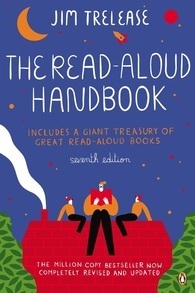 I finished reading this over a week ago now. I've since finished reading Stephen King's On Writing, but probably won't say much about that. It was exactly what it sounds like.
The Read-Aloud Handbook, however, should be read by all teachers/parents, especially those with kids in elementary school. It discusses the importance of reading in education and literacy and the research that has been done on the topic. It also shares a number of memorable anecdotes and experiences from the author's personal life.
The largest takeaways are that reading is so powerful and that read-alouds should not be taken for granted. They should be done by all teachers, in class, every day, for most grades, in all schools, no exceptions. Read-alouds work like advertisements for the pleasure of reading books. They let children see adults reading and allow them to understand more than they would by simply reading on their own, as most children have a higher aural (listening) vocabulary than they do a reading vocabulary.
As children get older, of course it is acceptable to allow them to read on their own, but that doesn't mean adults should stop reading to them or talking about books they are enjoying themselves. Creating "life time" readers who are passionate about reading is the goal of this book and it all starts with young children and parents reading to them.
Along with many other worthwhile piences of knowledge in teh book, the author, Jim Trelease, describes the "Three B's" of getting children to read more:
Book accessBook baskets throughout the houseBook reading lamps by the bed
These "Three B's" have connected quite directly to my own life recently. Although my life history of reading follows the research and experience talked by Trelease throughout the book, these "Three B's" have been completely encapsulated in the last couple of years with the advent of the e-reader. I first began reading e-books in Korea on the Nook, but have since switched to my smart phone. The e-book on a tablet or smart phone represents the ultimate in "Three B" convenience.
You have access to millions of books in the palm of your hand.
You have digital "book basket" in your e-reader library.
You have an LCD back-light that that works just like a book lamp in bed.
Between these three aspects of the e-reader, my reading has taken off in the last two years. I was always an avid reader, but since adopting the e-reader as my go-to choice for books, I have read 82 books in 2012 and 94 books so far in 2013 with more to come before the end of the year.
In wrapping this up, I didn't mean for this post to turn into an endorsement for e-books, but the endorsement was there to be made. I strongly suggest getting a copy of The Read-Aloud Handbook for yourself if you are a current or future teacher/parent, or if you know a current or future teacher/parent. That basically means everyone ought to have this book. Reading has absolutely changed my life for the better and this book gives me and anyone else who reads it all the information they need to explain how and why reading is so powerful for themselves and their children as well.
October 29, 2013
Language as a Complex Adaptive System
I recently published a best selling book on Amazon in the linguistics category about my ideas on language learning and acquisition. It discussed the integral role of adaptation to the whole process and how essentially language acquisition is the process of adapting to various stresses induced by a new language. Since doing this, I've been attempting to find research that backs up this idea or is also looking at it.
Turns out there is.
The 60th anniversary edition of the journal Language Learning was devoted entirely to the idea. Just released in 2009, it is very new research and views language a complex adaptive system or CAS. This is very exciting for me to find and I just got the book with conference and journal papers from that anniversary in 2009. I can't wait to read. Below I discuss this a little more detail.
Turns out there is.
The 60th anniversary edition of the journal Language Learning was devoted entirely to the idea. Just released in 2009, it is very new research and views language a complex adaptive system or CAS. This is very exciting for me to find and I just got the book with conference and journal papers from that anniversary in 2009. I can't wait to read. Below I discuss this a little more detail.
October 25, 2013
Taking on Chomsky
This post is admittedly ambitious. It won't be long or super technical, but it will discuss what I view as Chomsky's largest error in thinking on language. I am currently reading his book On Language, which is a series of interview responses and talks that he gave over a long period of time. The following passage is what struck me most while reading the book.
Bodily structures such as muscles and organs develop in a predetermined way constrained by our genetics. We all develop a heart or skeleton regardless of the small variations. This development is genetically predetermined. We cannot will ourselves to grow wings or scales.
However, how we use these structures is willed. We can move in an infinite number of ways, none of which are genetically predetermined. Of course, these willed movements are constrained, due to our physical structures determined by genetics. We cannot fly, because we do not have wings. We cannot swim like a fish, because we do not have gills. We rely on our genetically determined physical structures to move in an infinite number of new and novel ways, even without any prior experience. We do not have to see someone else jump onto our couch to do so ourselves. We can do this because of the mix of our past genetically developed physical structures and environmentally developed adaptations of those structures.
This is fundamentally true of language as well. Language is analogous to movement, not bodily structures. It is the coordination of our past genetically developed cognitive structures and environmentally developed adaptations of those structures that allow novel language.
Language is equivalent to the idea of movement which relies on structures, not the structures themselves.
Chomsky's largest disagreement with the behaviorist notions of language was the fact that they could not explain novel sentences generated from the "limited and impoverished experience" that people have throughout life. This is not a problem from my viewpoint. People do not wonder how children are able to produce novel movements from their "limited and impoverished experiences". They develop their physiological structures that develop through adaptation to their environment in a genetically constrained way. These developments and adaptations of their bones, muscles, tendons, etc. allow them to employ those same physical structures in novel ways without relying on past experience to do so.
Chomsky seems to believe that language is a structure that develops, like a heart or lung, and then wonders how it is possible to use those organs in novel ways. This is incorrect. We don't use our organs in novel ways. We use our organs to express novel movement, just as we use our brain's structure and past experiences to express novel language.
But human cognitive systems, when seriously investigated, prove to be no less marvelous and intricate than the physical structures that develop in the life of the organism. Why, then, should we not study the acquisition of a cognitive structure such as language more or less as we study some complex bodily organ?This above passage is the central issue I have with his way of thinking. I agree with Chomsky that the acquisition of cognitive structures should be studied in the same way we study the acquisition of bodily structures like organs. However, I completely disagree that language is a cognitive structure, unless I misunderstand his meaning of cognitive structure.
Bodily structures such as muscles and organs develop in a predetermined way constrained by our genetics. We all develop a heart or skeleton regardless of the small variations. This development is genetically predetermined. We cannot will ourselves to grow wings or scales.
However, how we use these structures is willed. We can move in an infinite number of ways, none of which are genetically predetermined. Of course, these willed movements are constrained, due to our physical structures determined by genetics. We cannot fly, because we do not have wings. We cannot swim like a fish, because we do not have gills. We rely on our genetically determined physical structures to move in an infinite number of new and novel ways, even without any prior experience. We do not have to see someone else jump onto our couch to do so ourselves. We can do this because of the mix of our past genetically developed physical structures and environmentally developed adaptations of those structures.
This is fundamentally true of language as well. Language is analogous to movement, not bodily structures. It is the coordination of our past genetically developed cognitive structures and environmentally developed adaptations of those structures that allow novel language.
Language is equivalent to the idea of movement which relies on structures, not the structures themselves.
Chomsky's largest disagreement with the behaviorist notions of language was the fact that they could not explain novel sentences generated from the "limited and impoverished experience" that people have throughout life. This is not a problem from my viewpoint. People do not wonder how children are able to produce novel movements from their "limited and impoverished experiences". They develop their physiological structures that develop through adaptation to their environment in a genetically constrained way. These developments and adaptations of their bones, muscles, tendons, etc. allow them to employ those same physical structures in novel ways without relying on past experience to do so.
Chomsky seems to believe that language is a structure that develops, like a heart or lung, and then wonders how it is possible to use those organs in novel ways. This is incorrect. We don't use our organs in novel ways. We use our organs to express novel movement, just as we use our brain's structure and past experiences to express novel language.
October 23, 2013
The Relationship of Efficiency, Intensity, and Volume
I have been looking more and more into the consequences of learning and adaptation. My recent book, seen in the sidebar to the right, attempted to explain many of the ideas that I have on the topic. However, while listening to a polyglot on YouTube today, I realized that I completely missed a very important idea. The relationship between efficiency, intensity, and volume is not linear. To my knowledge, no one else has realized this either.
This hypothesis implies that as the efficiency of your work increases, the intensity of the work you are capable of increases in a non-proportional way. Essentially, Increasing your efficiency by one unit, does not just increase your intensity capability by one unit. Your capability to work intensively actually increases by more than one unit. They are not one to one.
The reverse is true for volume. As your efficiency of work increases, your capacity for volume of work at a fixed intensity actually decreases in a non-proportional way as well. For example, this means the volume of work you were previously able to do at 60 percent intensity, will decrease by more than one unit for each one unit increase in efficiency.
EXAMPLE
Let's look at a real life example using weight lifting as I did in my book.
When you begin weight lifting, you are very inefficient at the movements. Your coordination and neural connections are not automatic. You must think about every exercise you do and this reflects in an awkward looking squat or bench press for an onlooking expert. Basically you are wasting energy on many things besides the actual work of lifting the weight.
Let's say you are able to lift 100 pounds for one set of one repetition. This represents 100 percent intensity for you on that day. Let's also say that you are able to lift 60 pounds, or 60 percent intensity, for five sets of ten repetitions. This represents a total of 50 repetitions done with your 60 percent maximum intensity level. This workout would be very easy for most people to complete who are beginners at this stage.
Let's also assume you are 50 percent efficient at lifting the weight, which means that 50 percent of the effort you apply to lifting the weight actually translates into the weight being lifted. This whole workout would look like this in a training log or diary:
100 lbs x 1 rep x 1 set (100% intensity, 1 rep of volume)
or
60 lbs x 10 reps x 5 sets (60% intensity, 50 reps of volume)
Now, let's look at a more experienced weight lifter who has been lifting weights for ten years and is very efficient at the movements.
Let's pretend he is a world champion and record holder who can lift 1,000 pounds for one set of one repetition. The 1,000 pounds represents his 100 percent intensity. Translating what we did above, 60 percent intensity would equal 600 pounds. Doing the same volume, five sets of ten repetitions, would equal a total of 50 repetitions. Again, a training log or diary would look like this:
1,000 lbs x 1 rep x 1 set (100% intensity, 1 rep of volume)
or
600 lbs x 10 reps x 5 sets (60% intensity, 50 reps of volume)
Now, let's assume from the ten years of hard work and experience, this lifter is 90 percent efficient at lifting the weight. This means that 90 percent of the energy he applies to lifting the weight translates to the weight actually being lifted.
If efficiency had no effect on intensity and volume, then these two workouts would represent relatively equal experiences to the lifter. However, in real life, the first workout is actually no problem and the second is impossible. The beginner would leave the gym feeling fine, while the experienced lifter would mostly likely not be capable of completing it or at best be completely wrecked and require an extended recovery period.
This is what I mean when I say that the relationship between efficiency, intensity, and volume is non-linear. As your efficiency of work increases, you are capable of increased intensity, but decreased volume at a given fixed intensity. You can see from this imaginary lifter that his efficiency went up 40 percent (50 to 90), but his maximum intensity was able to increase 1,000 percent (100 lbs to 1,000 lbs). However, his capacity for volume at any given intensity would go down (50 total reps to perhaps 25 total reps).
OTHER DOMAINS
This is not unique to weight lifting.
Polyglottery. As I said at the beginning of this post, I realized this while watching a YouTube video by a polyglot. He mentioned that when he began studying languages, he could study for eight to ten hours per day, every day. Now he can only study a language for four to five hours each day. He stated he was unsure why this was, but assumed it was simply because he gets bored more easily now.
I believe that is the wrong explanation.
I believe his efficiency at studying languages has dramatically increased over the time it's taken him to learn the ten or more languages he speaks and he is now simply incapable of sustaining the volume of study he undertook at the beginning. I am sure that most of his energy was wasted on tasks other than learning a language and now that close to 100 percent of his energy can actually be devoted to learning, it is simply more taxing.
He is not the first polyglot I have heard make this remark. I have seen several of the polyglots on YouTube say very similar things. They were all able to devote eight to 12 hours each day to learning a single language when they began, but now are simply incapable.
Schooling. This non-linear relationship is seen throughout life once you are aware of it. Schooling is another excellent example. Students begin K-12 with six to eight hours of study each day. However, as they grow up and go off to college, then graduate school, and possibly even earn a doctorate, their volume of work gets relatively lower as the intensity increases. A typical course at the graduate level consists of meeting once a week for two to three hours. Compare this with elementary school where students meet five days each week for eight hours a day. The volume is lower in graduate school, but the intensity is much higher.
Expertise. This idea also corresponds highly with the work of Anders Ericsson on the nature of expertise. His work has found that the majority of experts are incapable of exceeding roughly four hours of deliberate practice each day. This has been found to be true across domains as diverse as chess and concert piano. This is also the exact same number of hours many advanced polyglots and weight lifters state they are incapable of exceeding as well.
As you can see, this relationship was realized from the connection of various fields of personal interest. It is my personal experience in weight lifting, studying polyglots, the education system, and knowledge from Ericsson's research that helped me connect the dots. Right now, it is only a theory. However, I believe it to be absolutely true and something that could be empirically tested with time.
To conclude and reiterate once more, as your efficiency of work increases, your capacity to apply intensity increases in a non-linear way and your capacity to apply volume decreases in a non-linear way.
This hypothesis implies that as the efficiency of your work increases, the intensity of the work you are capable of increases in a non-proportional way. Essentially, Increasing your efficiency by one unit, does not just increase your intensity capability by one unit. Your capability to work intensively actually increases by more than one unit. They are not one to one.
The reverse is true for volume. As your efficiency of work increases, your capacity for volume of work at a fixed intensity actually decreases in a non-proportional way as well. For example, this means the volume of work you were previously able to do at 60 percent intensity, will decrease by more than one unit for each one unit increase in efficiency.
EXAMPLE
Let's look at a real life example using weight lifting as I did in my book.
When you begin weight lifting, you are very inefficient at the movements. Your coordination and neural connections are not automatic. You must think about every exercise you do and this reflects in an awkward looking squat or bench press for an onlooking expert. Basically you are wasting energy on many things besides the actual work of lifting the weight.
Let's say you are able to lift 100 pounds for one set of one repetition. This represents 100 percent intensity for you on that day. Let's also say that you are able to lift 60 pounds, or 60 percent intensity, for five sets of ten repetitions. This represents a total of 50 repetitions done with your 60 percent maximum intensity level. This workout would be very easy for most people to complete who are beginners at this stage.
Let's also assume you are 50 percent efficient at lifting the weight, which means that 50 percent of the effort you apply to lifting the weight actually translates into the weight being lifted. This whole workout would look like this in a training log or diary:
100 lbs x 1 rep x 1 set (100% intensity, 1 rep of volume)
or
60 lbs x 10 reps x 5 sets (60% intensity, 50 reps of volume)
Now, let's look at a more experienced weight lifter who has been lifting weights for ten years and is very efficient at the movements.
Let's pretend he is a world champion and record holder who can lift 1,000 pounds for one set of one repetition. The 1,000 pounds represents his 100 percent intensity. Translating what we did above, 60 percent intensity would equal 600 pounds. Doing the same volume, five sets of ten repetitions, would equal a total of 50 repetitions. Again, a training log or diary would look like this:
1,000 lbs x 1 rep x 1 set (100% intensity, 1 rep of volume)
or
600 lbs x 10 reps x 5 sets (60% intensity, 50 reps of volume)
Now, let's assume from the ten years of hard work and experience, this lifter is 90 percent efficient at lifting the weight. This means that 90 percent of the energy he applies to lifting the weight translates to the weight actually being lifted.
If efficiency had no effect on intensity and volume, then these two workouts would represent relatively equal experiences to the lifter. However, in real life, the first workout is actually no problem and the second is impossible. The beginner would leave the gym feeling fine, while the experienced lifter would mostly likely not be capable of completing it or at best be completely wrecked and require an extended recovery period.
This is what I mean when I say that the relationship between efficiency, intensity, and volume is non-linear. As your efficiency of work increases, you are capable of increased intensity, but decreased volume at a given fixed intensity. You can see from this imaginary lifter that his efficiency went up 40 percent (50 to 90), but his maximum intensity was able to increase 1,000 percent (100 lbs to 1,000 lbs). However, his capacity for volume at any given intensity would go down (50 total reps to perhaps 25 total reps).
OTHER DOMAINS
This is not unique to weight lifting.
Polyglottery. As I said at the beginning of this post, I realized this while watching a YouTube video by a polyglot. He mentioned that when he began studying languages, he could study for eight to ten hours per day, every day. Now he can only study a language for four to five hours each day. He stated he was unsure why this was, but assumed it was simply because he gets bored more easily now.
I believe that is the wrong explanation.
I believe his efficiency at studying languages has dramatically increased over the time it's taken him to learn the ten or more languages he speaks and he is now simply incapable of sustaining the volume of study he undertook at the beginning. I am sure that most of his energy was wasted on tasks other than learning a language and now that close to 100 percent of his energy can actually be devoted to learning, it is simply more taxing.
He is not the first polyglot I have heard make this remark. I have seen several of the polyglots on YouTube say very similar things. They were all able to devote eight to 12 hours each day to learning a single language when they began, but now are simply incapable.
Schooling. This non-linear relationship is seen throughout life once you are aware of it. Schooling is another excellent example. Students begin K-12 with six to eight hours of study each day. However, as they grow up and go off to college, then graduate school, and possibly even earn a doctorate, their volume of work gets relatively lower as the intensity increases. A typical course at the graduate level consists of meeting once a week for two to three hours. Compare this with elementary school where students meet five days each week for eight hours a day. The volume is lower in graduate school, but the intensity is much higher.
Expertise. This idea also corresponds highly with the work of Anders Ericsson on the nature of expertise. His work has found that the majority of experts are incapable of exceeding roughly four hours of deliberate practice each day. This has been found to be true across domains as diverse as chess and concert piano. This is also the exact same number of hours many advanced polyglots and weight lifters state they are incapable of exceeding as well.
As you can see, this relationship was realized from the connection of various fields of personal interest. It is my personal experience in weight lifting, studying polyglots, the education system, and knowledge from Ericsson's research that helped me connect the dots. Right now, it is only a theory. However, I believe it to be absolutely true and something that could be empirically tested with time.
To conclude and reiterate once more, as your efficiency of work increases, your capacity to apply intensity increases in a non-linear way and your capacity to apply volume decreases in a non-linear way.
October 21, 2013
My 10 Favorite Books (OK, Actually 28)
The following list is my favorite books as of right now. This is, of course, subject to change over time. I was asked for my ten favorite books by a family member and immediately went to my goodreads account to refresh my memory.
My initial strategy was to only look at books that I rated a perfect five out of five stars. However, this actually didn't work at all. When I was making the list, I kept remembering books that "had" to be on it, but for whatever reason didn't receive a five star rating from me. It's strange to think that many of the books the wound up on the final list were not ones I originally reacted to with complete appreciation.
The Wind-Up Bird Chronicle is the best example of this. I had plod through much of the second half of the book and force myself to finish. I finished with a rather sour taste for it, but it was the first book I thought of to include on this list and one that absolutely had to be on it. As I said at the beginning, my family member asked me for ten. I actually emailed her 11, but the 28 below were all on the first draft before widdling it down to 11. I bolded the 11 that I actually sent her.
The Brothers Karamazov by DostoyevskyThe House of the Dead by DostoyevskyDead Souls by GogolPolitics by AristotleDubliners by JoyceDune by HerbertFoundation by AsimovSiddhartha by HesseThe Things They Carried by O'BrienEthics by SpinozaPractical Programming for Strength Training by RippetoeNutrition and Physical Degeneration by PriceThe Affluent Society by GalbraithThree Kingdoms by GuanzhongA River Sutra by MehtaA Nietzsche Compendium by NietzscheThe Art of Happiness by The Dalai LamaSpark by RateyThe Stress of Life by SelyeAnitfragile: Things That Gain from Disorder by TalebMan's Search for Meaning by FranklToward a Psychology of Being by MaslowGreen Hills of Africa by HemingwayAntilinguistics by GethinThe Wind-Up Bird Chronicle by MurakamiSouth of the Border, West of the Sun by MurakamiAlexander by DodgeFamily Happiness by Tolstoy
Hopefully I can look back at this list in the future and see if any changes have occurred. I'm really interested to see how my tastes change over time. Also, it is interesting to note that seven of the eleven sent were non-fiction and four were fiction. From this list of 28, there are 12 non-fiction and 16 fiction. I wonder if this will change over time or not.
My initial strategy was to only look at books that I rated a perfect five out of five stars. However, this actually didn't work at all. When I was making the list, I kept remembering books that "had" to be on it, but for whatever reason didn't receive a five star rating from me. It's strange to think that many of the books the wound up on the final list were not ones I originally reacted to with complete appreciation.
The Wind-Up Bird Chronicle is the best example of this. I had plod through much of the second half of the book and force myself to finish. I finished with a rather sour taste for it, but it was the first book I thought of to include on this list and one that absolutely had to be on it. As I said at the beginning, my family member asked me for ten. I actually emailed her 11, but the 28 below were all on the first draft before widdling it down to 11. I bolded the 11 that I actually sent her.
The Brothers Karamazov by DostoyevskyThe House of the Dead by DostoyevskyDead Souls by GogolPolitics by AristotleDubliners by JoyceDune by HerbertFoundation by AsimovSiddhartha by HesseThe Things They Carried by O'BrienEthics by SpinozaPractical Programming for Strength Training by RippetoeNutrition and Physical Degeneration by PriceThe Affluent Society by GalbraithThree Kingdoms by GuanzhongA River Sutra by MehtaA Nietzsche Compendium by NietzscheThe Art of Happiness by The Dalai LamaSpark by RateyThe Stress of Life by SelyeAnitfragile: Things That Gain from Disorder by TalebMan's Search for Meaning by FranklToward a Psychology of Being by MaslowGreen Hills of Africa by HemingwayAntilinguistics by GethinThe Wind-Up Bird Chronicle by MurakamiSouth of the Border, West of the Sun by MurakamiAlexander by DodgeFamily Happiness by Tolstoy
Hopefully I can look back at this list in the future and see if any changes have occurred. I'm really interested to see how my tastes change over time. Also, it is interesting to note that seven of the eleven sent were non-fiction and four were fiction. From this list of 28, there are 12 non-fiction and 16 fiction. I wonder if this will change over time or not.