Sachin Ketkar's Blog, page 5
November 17, 2010
Transforming our Performance: A Review of The Three Laws of Performance
Why did your father behave the way he did? Why do your mother or child or your spouse act the way they do? Why does your boss say and do the things the does? Why do you behave and act the way you do, even if you don't want to act that way? Why do organization and corporation function in the way they do? Psychologist, management experts and philosophers have sought to explain human behaviour in innumerable ways. There are plenty of theories and systems of thought to explain and understand the way we and people around us act and do things. But the problem with these theories and concepts is precisely this: they explain and help us to understand but don't allow us a concrete, hands-on access to alter the behaviour and action of people or us. They give us 'tips and strategies' to 'fix' the problems.
The Three Laws of Performance: Rewriting the Future of Your Organization and Your Life by Zaffron and Logan is not a theoretical book or a book giving 'tips and strategies or solutions' to 'problems'. Most of the times, Zaffron and Logan say, 'the problem-solution' mode of thinking doesn't work. The reason they say lies in what they term 'the problem-solution mass' where the solution to a problem becomes an additional problem. The example they give is a youngster who feels lonely and frustrated and thinks that marriage will 'solve' the 'problem of loneliness'. However, after marriage, what really happens is that he has two problems on his hands: loneliness and marriage! He tries to 'fix' this by raising a family and how he has three problems on his hand: loneliness, marriage and children! He tries to 'fix' it by 'divorce' or an extramarital affair and now he has one more problem in his life! The answer lies in 'transforming' rather than finding solutions to the problems.
The laws are not 'ideas, strategies, principles or theories': they are 'laws' like the law of gravitation. Knowing these laws help not just to explain but also transform the performance of a person or an organization, that is, rewrite the future of that person or organization. That's the incredible power of this book. Let's look at the three simple laws in brief.
The First Law: How people perform correlates to how situations occur to them.
The law is very simple and yet we simply have no idea how deeply it affects our life and the life of the organization. The most important words here are 'occur' and 'correlate'. The word 'occur' indicates that it is NOT what situation or a person really IS but how it OCCURS TO US that determines our behaviour. For instance, if we see a situation or person as threatening, our actions will be correlated to our perception of threat IRRESPECTIVE of the fact whether it IS threatening or not.
Speaking from my own experience, my mother 'occurred' to me as a person who has treated my father badly and as a person who did not care for me at all. After I was able to distinguish that this is how my mother occurred to me and that was NOT how she WAS, great bitterness and anger towards her vanished. This realization transformed my behaviour towards her so much that I don't fight with her at all after this. When this bitterness and anger and fights disappeared, there was unprecedented peace and affinity in my life. In fact, before this realization, when my psychotherapist had asked me to tell him 'three good qualities' of my mother I could not even tell him one! So much was the anger and resentment I was carrying around.
How situations or person occur to us is closely dependent on Zaffron and Logan term as 'default future'. Default Future, according to the authors, is our future which we SEE as certainly coming unless something dramatic and unexpected happens. This 'default future' does not include the inevitable things like death or ageing. It includes the things like 'how your evening will turn out' or what you will be doing tomorrow, unless something unexpected happens for instance. We know this future at the gut level. If we know we are going to meet someone we love in the evening, our present becomes something else and if we know that she or he has changed the plan our present becomes something else. In fact, it is not our past that controls our life; it is our 'default future' which controls our life. Our present moment, our activities in the present are CORRELATED to how our FUTURE OCCURS to us this moment. That is, our present way of being and acting is a function of our 'default future'. If we see in the morning when we wake up that it is going to be 'the same routine day' in our default future, our actions will be correlated to this perception. If we receive a phone call informing us of something totally unexpected, our morning changes for better or for worse. Imagine, a phone call informing us that we have won something by the sale scheme we got yesterday while shopping. Or imagine a call telling us about our application for something has been turned down. It changes our present way of being and acting.
What applies to us as individuals applies for the institutions and organization. The way people in the organization are working at present is correlated to their 'default future'. If it is bleak and uninspiring, people's activities will be correlated to this perception.
The question which comes to our mind now is HOW a situation (or a person) occurs to us the way it does? What made my mother occur to me the way she did? This brings us to the second law of performance.
The Second Law: How a situation occurs arises in language.
Simple again. How my mother occurred to me was based on what I kept SAYING to myself over and over again in my mind to myself or to her openly. I kept on saying, 'she does not care for me or for my father. She treats him badly'. Remember this saying was not always conscious, it was often at the 'gut level'. I ran this conversation repeatedly and every time I repeated it my anger went up exponentially. My feelings, expectations and beliefs are nothing but my conversations with myself and they determine how someone occurs to me. If I keep saying, as I did, that this is an 'arranged marriage' and there is no space for love in it, there wasn't any.
Conversations are verbal and nothing is 'just words'. Our feelings and emotions are correlated to our words. The 'default future' is a conversation we have with ourselves at the gut level. If you look at the conversation I had about my mother 'she does not care for me at all and she treats my father badly', you will realize that it started in the PAST, and that it uses language to DESCRIBE what my mother IS. This is a past-based use of language and it is mostly 'descriptive'. In this use of language situation (or a person) 'IS' the way it is. When I describe something by saying it is the way it is, I m speaking from my past experience. For instance, if I say, as I have said often, 'the most of the teachers in the colleges and universities are not really eligible for the job', that is how I will see them, that is, this is how they will occur to me and how I behave with them is correlated to how they occur to me.
Zaffron and Logan call this 'reality illusion', the illusion that reality IS the way it OCCURS to us. It is the illusion that reality is 'fixed' and is independent of our conversations. . This is similar to what structuralists and poststructuralist philosophers (under influence of Heidegger) have been pointing out. That doesn't mean, they point out, there is no 'reality' 'out there', but they emphasize that we cannot access it without language. My reality illusion was 'this is how my mother is'. When we realize that there is no 'fixed and stable' reality existing independently of our conversation, reality becomes 'malleable' to us. We can now 'rewrite' our future.
Now if our performance is correlated to how situation occurs to us and how a situation occurs to us is due the language we use to talk about it to ourselves with others, how can we transform our performance? We can transform our performance by transforming our language (not 'changing' it mind you, this is not a book about 'positive thinking') and consequently transforming the way the situation occurs to us.
Most of our conversations are past based. Our complaints, our expectations, our intentions, our communication strategies that we use to get results all are based on our past. There is nothing wrong with this, except for the fact that most of us put them into our future most of the time. Zaffron and Logan call this 'filing error'. The stuff that should go into the box file labeled 'past' should go into that file; however, it goes into the file labeled 'future'. My conversation,' mine is an arranged marriage and there is no scope for love' came from some past conversations; however, by putting it into my 'default future', it controls my present. I don't see any scope for love to exist at present. The 'filing error' makes me see my marriage as a closed space. There is no possibility of love here. I can see a possibility only when I put my past based conversation to where it belongs to the file called past only then can I see some 'space' some possibility in my default future and hence in my present as my present. This practice of rectifying the 'filing error' by putting the files from my past back into my past instead of my default future is called 'completion'. This completion opens up a blank space from which new possibility can be created. How can I create a new possibility?
The Third Law: Future-based language transforms how situation occur to people.
By declaring your commitment to create a new possibility and keeping your word, you can create new future from the cleared space in the 'default future'. The future based speech acts like, 'I will do………………', 'I will create' or 'I declare the possibility of being…………..' actually can CREATE new future. If you don't believe this, just look at your past. When I was a very young child I said to my self, 'I am not wanted, I am unwanted' and I became 'unwanted' in my eyes. People said they loved me but as I saw myself as 'unwanted', I did not believe them. I thought they were manipulating me. Here was a classic 'filing error'; I was putting my past based conversation into future. When I dropped this conversation, I no longer feel 'unwanted'. I can sense that people want me and love me, in their own ways.
But the statement ' I am unwanted' is actually nothing but a speech act. A verdict that I passed on myself: I was the judge, the jury, the advocate and the culprit at the same time. I BELIEVED in it, it was 'TRUTH' to me. If this decade old statement determined all my past, a speech act based in future can create my future.
The future based language, or what Zaffron and Logan call, 'generative language' is not an empty ' positive thinking' as it comes from the space in default future cleared up by putting past into past, it comes out of a perception of possibility. Most of the 'positive thinking' fails because one does not SEE POSSIBILITY in this thinking. If I SEE myself sitting in front of a hungry lion, no amount of positive thinking can actually CONVINCE me that I won't be eaten, unless I see that it is actually chained to the tree. No completion (rectifying the 'filing error'), no possibility, no possibility, no new future.
Zaffron and Logan make a very interesting use of the term 'integrity', which is at heart of creating a future. According to Logan and Zaffron, 'integrity' has nothing to do with 'ethics' or 'morality' as it is commonly understood. It has nothing to do with right or wrong. It has everything to do with 'workability' in our life. Integrity, according to the authors, means keeping your word, honoring your word. If you don't keep your word, the work cannot be done. If you cease to honour your word, people will be even quicker to cease to honour it. Integrity, according to Zaffron and Logan, is 'being whole or complete'. A chair with one leg missing has no workability; a wheel with one spoke missing has no workability. Only when it is restored can there be any workability in life. A chair with a broken leg is not 'bad or wrong', a wheel with a broken spoke is not 'bad or wrong', it simply doesn't WORK. The key to rewriting a new future is by using future based language and with integrity.
This is a book about results and not about ideas. This is a book which leads to action. Reflections and insights are usually dime a dozen. This is a book which is not concerned with 'explanation' or 'understanding', but with performance: as a leader, as a father, as a teacher, as a doctor, as a brother, as a daughter, as a friend, as an employee, as an employer, as a businessman and as anyone. The book, the authors tell us, can be our coach in this game of life. If we sit and argue with our coach about theoretical niceties, we won't be on the court. So I recommend this book about anyone who wants to act effectively and powerfully so as to get the results one wants. So get hold of a copy and get on the playground!
Steve Zaffron and Dave Logan. Three Laws of Performance: Rewriting the Future of your Organization and your Life, San Francisco: Josey-Bass, 2009 Distributed in India by the Times Books, Rs. 395
The Three Laws of Performance: Rewriting the Future of Your Organization and Your Life by Zaffron and Logan is not a theoretical book or a book giving 'tips and strategies or solutions' to 'problems'. Most of the times, Zaffron and Logan say, 'the problem-solution' mode of thinking doesn't work. The reason they say lies in what they term 'the problem-solution mass' where the solution to a problem becomes an additional problem. The example they give is a youngster who feels lonely and frustrated and thinks that marriage will 'solve' the 'problem of loneliness'. However, after marriage, what really happens is that he has two problems on his hands: loneliness and marriage! He tries to 'fix' this by raising a family and how he has three problems on his hand: loneliness, marriage and children! He tries to 'fix' it by 'divorce' or an extramarital affair and now he has one more problem in his life! The answer lies in 'transforming' rather than finding solutions to the problems.
The laws are not 'ideas, strategies, principles or theories': they are 'laws' like the law of gravitation. Knowing these laws help not just to explain but also transform the performance of a person or an organization, that is, rewrite the future of that person or organization. That's the incredible power of this book. Let's look at the three simple laws in brief.
The First Law: How people perform correlates to how situations occur to them.
The law is very simple and yet we simply have no idea how deeply it affects our life and the life of the organization. The most important words here are 'occur' and 'correlate'. The word 'occur' indicates that it is NOT what situation or a person really IS but how it OCCURS TO US that determines our behaviour. For instance, if we see a situation or person as threatening, our actions will be correlated to our perception of threat IRRESPECTIVE of the fact whether it IS threatening or not.
Speaking from my own experience, my mother 'occurred' to me as a person who has treated my father badly and as a person who did not care for me at all. After I was able to distinguish that this is how my mother occurred to me and that was NOT how she WAS, great bitterness and anger towards her vanished. This realization transformed my behaviour towards her so much that I don't fight with her at all after this. When this bitterness and anger and fights disappeared, there was unprecedented peace and affinity in my life. In fact, before this realization, when my psychotherapist had asked me to tell him 'three good qualities' of my mother I could not even tell him one! So much was the anger and resentment I was carrying around.
How situations or person occur to us is closely dependent on Zaffron and Logan term as 'default future'. Default Future, according to the authors, is our future which we SEE as certainly coming unless something dramatic and unexpected happens. This 'default future' does not include the inevitable things like death or ageing. It includes the things like 'how your evening will turn out' or what you will be doing tomorrow, unless something unexpected happens for instance. We know this future at the gut level. If we know we are going to meet someone we love in the evening, our present becomes something else and if we know that she or he has changed the plan our present becomes something else. In fact, it is not our past that controls our life; it is our 'default future' which controls our life. Our present moment, our activities in the present are CORRELATED to how our FUTURE OCCURS to us this moment. That is, our present way of being and acting is a function of our 'default future'. If we see in the morning when we wake up that it is going to be 'the same routine day' in our default future, our actions will be correlated to this perception. If we receive a phone call informing us of something totally unexpected, our morning changes for better or for worse. Imagine, a phone call informing us that we have won something by the sale scheme we got yesterday while shopping. Or imagine a call telling us about our application for something has been turned down. It changes our present way of being and acting.
What applies to us as individuals applies for the institutions and organization. The way people in the organization are working at present is correlated to their 'default future'. If it is bleak and uninspiring, people's activities will be correlated to this perception.
The question which comes to our mind now is HOW a situation (or a person) occurs to us the way it does? What made my mother occur to me the way she did? This brings us to the second law of performance.
The Second Law: How a situation occurs arises in language.
Simple again. How my mother occurred to me was based on what I kept SAYING to myself over and over again in my mind to myself or to her openly. I kept on saying, 'she does not care for me or for my father. She treats him badly'. Remember this saying was not always conscious, it was often at the 'gut level'. I ran this conversation repeatedly and every time I repeated it my anger went up exponentially. My feelings, expectations and beliefs are nothing but my conversations with myself and they determine how someone occurs to me. If I keep saying, as I did, that this is an 'arranged marriage' and there is no space for love in it, there wasn't any.
Conversations are verbal and nothing is 'just words'. Our feelings and emotions are correlated to our words. The 'default future' is a conversation we have with ourselves at the gut level. If you look at the conversation I had about my mother 'she does not care for me at all and she treats my father badly', you will realize that it started in the PAST, and that it uses language to DESCRIBE what my mother IS. This is a past-based use of language and it is mostly 'descriptive'. In this use of language situation (or a person) 'IS' the way it is. When I describe something by saying it is the way it is, I m speaking from my past experience. For instance, if I say, as I have said often, 'the most of the teachers in the colleges and universities are not really eligible for the job', that is how I will see them, that is, this is how they will occur to me and how I behave with them is correlated to how they occur to me.
Zaffron and Logan call this 'reality illusion', the illusion that reality IS the way it OCCURS to us. It is the illusion that reality is 'fixed' and is independent of our conversations. . This is similar to what structuralists and poststructuralist philosophers (under influence of Heidegger) have been pointing out. That doesn't mean, they point out, there is no 'reality' 'out there', but they emphasize that we cannot access it without language. My reality illusion was 'this is how my mother is'. When we realize that there is no 'fixed and stable' reality existing independently of our conversation, reality becomes 'malleable' to us. We can now 'rewrite' our future.
Now if our performance is correlated to how situation occurs to us and how a situation occurs to us is due the language we use to talk about it to ourselves with others, how can we transform our performance? We can transform our performance by transforming our language (not 'changing' it mind you, this is not a book about 'positive thinking') and consequently transforming the way the situation occurs to us.
Most of our conversations are past based. Our complaints, our expectations, our intentions, our communication strategies that we use to get results all are based on our past. There is nothing wrong with this, except for the fact that most of us put them into our future most of the time. Zaffron and Logan call this 'filing error'. The stuff that should go into the box file labeled 'past' should go into that file; however, it goes into the file labeled 'future'. My conversation,' mine is an arranged marriage and there is no scope for love' came from some past conversations; however, by putting it into my 'default future', it controls my present. I don't see any scope for love to exist at present. The 'filing error' makes me see my marriage as a closed space. There is no possibility of love here. I can see a possibility only when I put my past based conversation to where it belongs to the file called past only then can I see some 'space' some possibility in my default future and hence in my present as my present. This practice of rectifying the 'filing error' by putting the files from my past back into my past instead of my default future is called 'completion'. This completion opens up a blank space from which new possibility can be created. How can I create a new possibility?
The Third Law: Future-based language transforms how situation occur to people.
By declaring your commitment to create a new possibility and keeping your word, you can create new future from the cleared space in the 'default future'. The future based speech acts like, 'I will do………………', 'I will create' or 'I declare the possibility of being…………..' actually can CREATE new future. If you don't believe this, just look at your past. When I was a very young child I said to my self, 'I am not wanted, I am unwanted' and I became 'unwanted' in my eyes. People said they loved me but as I saw myself as 'unwanted', I did not believe them. I thought they were manipulating me. Here was a classic 'filing error'; I was putting my past based conversation into future. When I dropped this conversation, I no longer feel 'unwanted'. I can sense that people want me and love me, in their own ways.
But the statement ' I am unwanted' is actually nothing but a speech act. A verdict that I passed on myself: I was the judge, the jury, the advocate and the culprit at the same time. I BELIEVED in it, it was 'TRUTH' to me. If this decade old statement determined all my past, a speech act based in future can create my future.
The future based language, or what Zaffron and Logan call, 'generative language' is not an empty ' positive thinking' as it comes from the space in default future cleared up by putting past into past, it comes out of a perception of possibility. Most of the 'positive thinking' fails because one does not SEE POSSIBILITY in this thinking. If I SEE myself sitting in front of a hungry lion, no amount of positive thinking can actually CONVINCE me that I won't be eaten, unless I see that it is actually chained to the tree. No completion (rectifying the 'filing error'), no possibility, no possibility, no new future.
Zaffron and Logan make a very interesting use of the term 'integrity', which is at heart of creating a future. According to Logan and Zaffron, 'integrity' has nothing to do with 'ethics' or 'morality' as it is commonly understood. It has nothing to do with right or wrong. It has everything to do with 'workability' in our life. Integrity, according to the authors, means keeping your word, honoring your word. If you don't keep your word, the work cannot be done. If you cease to honour your word, people will be even quicker to cease to honour it. Integrity, according to Zaffron and Logan, is 'being whole or complete'. A chair with one leg missing has no workability; a wheel with one spoke missing has no workability. Only when it is restored can there be any workability in life. A chair with a broken leg is not 'bad or wrong', a wheel with a broken spoke is not 'bad or wrong', it simply doesn't WORK. The key to rewriting a new future is by using future based language and with integrity.
This is a book about results and not about ideas. This is a book which leads to action. Reflections and insights are usually dime a dozen. This is a book which is not concerned with 'explanation' or 'understanding', but with performance: as a leader, as a father, as a teacher, as a doctor, as a brother, as a daughter, as a friend, as an employee, as an employer, as a businessman and as anyone. The book, the authors tell us, can be our coach in this game of life. If we sit and argue with our coach about theoretical niceties, we won't be on the court. So I recommend this book about anyone who wants to act effectively and powerfully so as to get the results one wants. So get hold of a copy and get on the playground!
Steve Zaffron and Dave Logan. Three Laws of Performance: Rewriting the Future of your Organization and your Life, San Francisco: Josey-Bass, 2009 Distributed in India by the Times Books, Rs. 395


October 26, 2010
Sinbad's Afterlife Blues: A Poem by Sachin Ketkar
Sinbad's Afterlife Blues
Sachin Ketkar
Ocean is an old discarded myth.
I hear the leisurely blue songsOf the whale swimmingSerenelyAt the back of my mindI view her sprout jets of loveAs she dives and crashesI thought she was an islandOn which I could liveBut she fled.
I have gone down under the waves of sleepWaters as voluptuous as deathHave engulfed me
When I open my eyes The world turns its back upon me
They sayShe is just a blue apparition On an inky night
Her songs are the merely moving ridgesTumbling over one another
Plug your ears they say
Now that I am just a pallid corpseFloating like a weed under the seaI will reach out to her
And let her secret songs Run like silk through my veins
12 August 2010 12 pm
Ocean is an old discarded myth.
I hear the leisurely blue songsOf the whale swimmingSerenelyAt the back of my mindI view her sprout jets of loveAs she dives and crashesI thought she was an islandOn which I could liveBut she fled.
I have gone down under the waves of sleepWaters as voluptuous as deathHave engulfed me
When I open my eyes The world turns its back upon me
They sayShe is just a blue apparition On an inky night
Her songs are the merely moving ridgesTumbling over one another
Plug your ears they say
Now that I am just a pallid corpseFloating like a weed under the seaI will reach out to her
And let her secret songs Run like silk through my veins
12 August 2010 12 pm
October 16, 2010
On Being No Good: A Note on Diwali Cleaning
For thirty eight years and one month, I was living my life from the position ' I am No Good'. This 'sentence' which I passed on to myself at the age of three or four formed the core of most of the later conversations I had with myself and the world. The later conversations like ' I am not healthy, I am sick',' I am not wanted, I am unwanted', ' I am not understood, I am misunderstood', ' I don't belong, I am a waif', ' I am not attractive, I am unattractive', ' I am not smart, I am drab', ' I am not lovable, I am unlovable', ' I am not loved, I am unloved' and so all actually are branches of the tree whose trunk was ' I am No Good'.
When I did my Landmark Forum in July 2009, I discovered that these are my conversations my 'core negative beliefs'. But this discovery was largely from my analytical intelligence. After 'Communication for Access to Power course' and after some really bad upsets, I found 'heard' this dialog clearly and thus could 'distinguish' it. Distinguishing it is what works, intellectually 'knowing' about it doesn't work. When I distinguished it, I realized how humbug the story was and how I was living a fake life from past thirty eight years and how I was trying to 'prove' that I was 'good enough' all the time.
Along with the Communication course, I am also doing the Landmark Forum in Action Series (LFIA) and our coach Nirav Vyas revised the distinction 'Racket' once again for us and introduced to us another distinction ' upset'. Distinctions, it should be borne in mind, are not 'concepts'. A distinction operates at a different 'cognitive' level than a concept. For instance, 'balancing on a bicycle' is a distinction. It is not an intellectual act, it is not a concept which is to be 'understood.' Ability to 'distinguish' is not a conceptual activity. When a fish leaves the water for a moment as it jumps, it realizes what water is ,i.e. it distinguishes 'water' from non-water and hence as per Landmark technology it ' gets the distinction 'water''.
Nirav told us that once you 'distinguish' 'the Racket', it no longer 'runs us' but we realize that it is we who 'run it.' The racket is ' a fixed way of being ( angry, sad, shocked, confused, upset etc) plus a persistent complaint'. This persistent complaint may be somebody's complaint towards us or our complaint to someone or a complaint of one person in your life with some other person in your life. The racket has a payoff, and thats why we simply love our rackets. The payoff is of many types: proving that you are right and the other is wrong, winning and losing, dominating other or avoid domination and so on. No wonder we keep running them all the time. But what the Landmark Forum distinguishes is the 'cost', what actually we lose when we run this game of persistent complaints. We lose affinity, love, self expression, fulfillment, health, vitality and we cease to feel 'alive'. We become numb and dead within. We become isolated and alone. We master the art of ' How to Lose Friends and Alienate People'. Once we distinguish it, the racket no longer runs us, we know that it is we who are running it all the time and hence a possibility of getting off the racket emerges and with this possibility emerges the possibility of getting your self expression, affinity, love and vitality back. This possibility gives us a choice to choose between the payoff and the cost.
Closely linked to the Racket is the distinction ' Upset'. The distinction appears in LFIA and not in the Forum. They tell us that we are 'Already Always Upset' and we only need a very small trigger to make us upset: no toothpaste in the morning, annoying phone call at night, that irritating driver who overtakes from the wrong side, or your husband or wife or just simply anything. LFIA teaches us how to 'dismantle ' these upsets in a remarkably simple way. LFIA points out that an upset is made up of three components, i) 'thwarted intention', ii) 'unfulfilled expectations' and iii) 'undelivered communications'. The coach asks us a simple question whose intention is it? whose expectations and whose communications?. Obviously it is ours, which means the situation, person or an event has NOT made us upset. There is only one person who can make you feel upset and it is YOU.
The Forum also tells us that most of the time of our lives we are living from 'the racket' to 'strong suit' and back. We are our rackets and strong suits most of the time of our lives. Hence the homework for the LFIA: Clean up you rackets before Diwali and you will have a real festival of your life.So move your asses and start cleaning up the mess we have made till now!
So I am on cleaning drive and the biggest racket I had was with Yours Truly. He is 'no good' remember? So there was no affinity, self expression, vitality and love with him. He was distanced from me and had no confidence. He was not living a real life. He was all the time trying to prove he is 'good enough' and feeling that no one really wanted him. Probably because he did not want himself.
So here it goes folks! I am getting off the racket I am running with myself! Diwali begins!Now I am living from a different position: If someone thinks I am no good, its his/her problem not mine.

When I did my Landmark Forum in July 2009, I discovered that these are my conversations my 'core negative beliefs'. But this discovery was largely from my analytical intelligence. After 'Communication for Access to Power course' and after some really bad upsets, I found 'heard' this dialog clearly and thus could 'distinguish' it. Distinguishing it is what works, intellectually 'knowing' about it doesn't work. When I distinguished it, I realized how humbug the story was and how I was living a fake life from past thirty eight years and how I was trying to 'prove' that I was 'good enough' all the time.
Along with the Communication course, I am also doing the Landmark Forum in Action Series (LFIA) and our coach Nirav Vyas revised the distinction 'Racket' once again for us and introduced to us another distinction ' upset'. Distinctions, it should be borne in mind, are not 'concepts'. A distinction operates at a different 'cognitive' level than a concept. For instance, 'balancing on a bicycle' is a distinction. It is not an intellectual act, it is not a concept which is to be 'understood.' Ability to 'distinguish' is not a conceptual activity. When a fish leaves the water for a moment as it jumps, it realizes what water is ,i.e. it distinguishes 'water' from non-water and hence as per Landmark technology it ' gets the distinction 'water''.
Nirav told us that once you 'distinguish' 'the Racket', it no longer 'runs us' but we realize that it is we who 'run it.' The racket is ' a fixed way of being ( angry, sad, shocked, confused, upset etc) plus a persistent complaint'. This persistent complaint may be somebody's complaint towards us or our complaint to someone or a complaint of one person in your life with some other person in your life. The racket has a payoff, and thats why we simply love our rackets. The payoff is of many types: proving that you are right and the other is wrong, winning and losing, dominating other or avoid domination and so on. No wonder we keep running them all the time. But what the Landmark Forum distinguishes is the 'cost', what actually we lose when we run this game of persistent complaints. We lose affinity, love, self expression, fulfillment, health, vitality and we cease to feel 'alive'. We become numb and dead within. We become isolated and alone. We master the art of ' How to Lose Friends and Alienate People'. Once we distinguish it, the racket no longer runs us, we know that it is we who are running it all the time and hence a possibility of getting off the racket emerges and with this possibility emerges the possibility of getting your self expression, affinity, love and vitality back. This possibility gives us a choice to choose between the payoff and the cost.
Closely linked to the Racket is the distinction ' Upset'. The distinction appears in LFIA and not in the Forum. They tell us that we are 'Already Always Upset' and we only need a very small trigger to make us upset: no toothpaste in the morning, annoying phone call at night, that irritating driver who overtakes from the wrong side, or your husband or wife or just simply anything. LFIA teaches us how to 'dismantle ' these upsets in a remarkably simple way. LFIA points out that an upset is made up of three components, i) 'thwarted intention', ii) 'unfulfilled expectations' and iii) 'undelivered communications'. The coach asks us a simple question whose intention is it? whose expectations and whose communications?. Obviously it is ours, which means the situation, person or an event has NOT made us upset. There is only one person who can make you feel upset and it is YOU.
The Forum also tells us that most of the time of our lives we are living from 'the racket' to 'strong suit' and back. We are our rackets and strong suits most of the time of our lives. Hence the homework for the LFIA: Clean up you rackets before Diwali and you will have a real festival of your life.So move your asses and start cleaning up the mess we have made till now!
So I am on cleaning drive and the biggest racket I had was with Yours Truly. He is 'no good' remember? So there was no affinity, self expression, vitality and love with him. He was distanced from me and had no confidence. He was not living a real life. He was all the time trying to prove he is 'good enough' and feeling that no one really wanted him. Probably because he did not want himself.
So here it goes folks! I am getting off the racket I am running with myself! Diwali begins!Now I am living from a different position: If someone thinks I am no good, its his/her problem not mine.
October 11, 2010
Transformation of Communication and Communication for Transformation
I did the 'Communication for Access to Power' course from the Landmark Education from Mumbai on 2, 3 and 5th October 2010 and it was awesome! It revealed to me the hidden patterns that controlled my communication and the blockages it created. There were two main reasons I wanted to do this course. The first was the personal and the other was related to my occupation. I had discovered that I was unable either to 'open up' emotionally as a person to people close to me and that I was not able to remain 'present' with the people communicating with me. This resulted in me appearing as evasive and uninterested and hence ultimately insulting. I could see how I communicated 'first hand' when I attended the Tuesday completion evening of this course in Ahmedabad. A powerful exercise exposed 'how I looked' when I communicated and was shocked. I would not myself have loved to interact with such a person. So I knew before hand that the course would be terrific and obviously it did not let me down. The other reason was that I am a writer and teacher and hence my bread, butter and chicken is dependent on communication!
The course used the distinctions we learned in the Landmark Forum and offered us some crucial new distinctions. The course enabled us to distinguish between the 'inherited'(default) old model of communication and the 'invented' or new model of the communication that this course provides. This distinctions is parallel to the default or inherited model of 'being' and living and the invented model of 'being' provided by the Landmark Forum which brings forth 'a new realm of possibilities and the new possibility of being calls us powerfully into action'.
Like in the Landmark Forum what we need is to 'distinguish' this limiting and restrictive model before we can do something about it. In the Landmark philosophy what it means to 'distinguish' is explained by an analogy: The fish in the water doesn't know what water is unless it takes a jump out of it. Until it knows that there is something like 'non-water', it wont understand that it has been living in what is water after all. Hence unless the fish 'distinguishes' and gets the 'distinction'- water, it has no idea what and where it is living. Hence until we are exposed to the non-inherited and non-default model of 'being', living or communication, we are not able 'to distinguish' between the default and the invented models.
The 'default' model of communication all of us inherit is built on the assumption that the world 'IS' 'out there'/'in here' and the function of language is to 'fit' the word into the already existent world. The function of language basically to 'describe', 'command' or 'express' the pre-existent world out there or in here ( in our mind).
In this model we realize that we are 'small, separate, weak and alone' in this gigantic world which exists irrespective of our existence. Hence within this default paradigm we are constantly trying to 'survive and fix' things, people, circumstances, people( including ourselves).In the default model we are constantly doing things needed to survive and fix like avoiding, withholding, controlling, manipulating, forcing an outcome and so on. Hence 'survive and fix' life is all that we have. As our coach Nirav Vyas put it,' Even when we get used to living in the dark and get expertise of living in the dark, we are still living in the dark.' Most of us live within this model and we don't even know that we are living in this model.
In the default model, we are revealed how 'the sentence' we have passed on ourselves when we were very young runs our life. This sentence is usually a statement like ' I am not x, I am y' which we said to ourselves when we were not even seven years. This 'sentence' is still active when we just look beneath upsets we experience in the day to day life. In my case I discovered that my sentence is ' I am not wanted, I am unwanted.' Hence, to use the coach's words again, if hundreds of people told me that they wanted me with thousands of flowers and even wrote it in the skies with an aeroplane, I would still not believe them because I was living from the context of' I am not wanted, I am unwanted' and looking at the world from this point of view. The coach also pointed out that this was not just 'A point of view' but I WAS that point of view and so if someone offered an alternate point of view it would be read as a threat to my survival ( as I WAS that point of view). Once I could distinguish this, I was able to give up this point of view. It also meant, in the words of the coach, ' a five year old upset child' was running my life till date.
In the default model of communication we also tend to ask, 'one unanswerable question' beneath ALL our communication. This unanswerable question could be ' Do you love me?' or 'Do you want me?' Once we can distinguish this question , we are able to see how absurd and meaningless this question is.
The new model of communication is simply exciting. It is based on the assumption that the world 'IS not simply out there or in here ( in our minds), it is created out of words. For instance, the sentence ' I am not wanted, I am unwanted' shaped my life and determined how I look at life and the world. What was the sentence but a speech act?The older model which was designed in order to survive and fix was also based on the hidden contexts which were purely linguistic ( e. g the unanswerable question). This means that the world is CREATED from our words. What we see, how we see, what we think or how we think is determined solely by our conversations which we have with ourselves and the others. The function of language in this new paradigm is no longer to 'describe', 'command' or 'express', but to 'create' the world. This new language is language of transformation and usually takes the form of 'declaration' ( e.g Declaration of Independence or ' I have a dream' speech of Martin Luther King). The power to create can come only when we honour our word ( the distinction known as 'integrity'- not to be confused with morality or ethics).
The new model of communication comes into existence when we bring forth 'listening from nothing', that is, listening from a space rather than listening from the older conversation ( 'already always' running within our mind). In this model, there is no need to 'survive or fix' anything. The communication is no longer controlled by the past discourses and concerns which are put aside. Hence the moment we put the internal dialogues about people aside and be present to the person's current communication, we bring 'everything' into our communication. The person gets freedom and space for expression in our listening which has come from nothing. The communication becomes a 'dance' and we can sense love and affinity running in the background.
This listening also allows us to enter the world and the point of view of the other. We can get to look at how we look from the other's point of view. And often what we see is not very flattering!
Some of the other very significant distinctions I got was that communication is not 'content' but 'intent'. 'Intent' not as purpose but in the phenomenological sense of 'intentionality' , the space where the self and the other are related and that communication involves creating 'being-in-communication' as against 'talking'.
During the course I called up my dad and told him how much I love him and how he is the most important person in our life. After good 38 years of life. I told him that it was because I used to live from ' I am not wanted, I am unwanted' that I did not open up my heart to him. I told my sister the same thing. I told them I give up this point of view. I told Amogh and Ashwini the same thing. After the Landmark Forum, I discovered the negative stories I was running and thus destroying my life, after communication course, I discovered what lay beneath these negative stories and blame games.
The Advanced Communication course teaches us how to dismantle and get rid of habitual modes of communication. It teaches us how to alter not just our communications but also the communications of one person in our life with another. It also teaches us how to resolve multiple concerns in a single conversation! The course starts November 20th and I am so very excited about it.
Parallel to these communication courses, I am also participating in the Landmark Action Seminar series which takes place on Thursday evenings. Each session strengthens the distinctions we have got in the Forum by giving us an opportunity to get them once again and practice them. Hence almost a year after doing my Forum , I am 'back in conversation' ( though I was never really out of it).
The course used the distinctions we learned in the Landmark Forum and offered us some crucial new distinctions. The course enabled us to distinguish between the 'inherited'(default) old model of communication and the 'invented' or new model of the communication that this course provides. This distinctions is parallel to the default or inherited model of 'being' and living and the invented model of 'being' provided by the Landmark Forum which brings forth 'a new realm of possibilities and the new possibility of being calls us powerfully into action'.
Like in the Landmark Forum what we need is to 'distinguish' this limiting and restrictive model before we can do something about it. In the Landmark philosophy what it means to 'distinguish' is explained by an analogy: The fish in the water doesn't know what water is unless it takes a jump out of it. Until it knows that there is something like 'non-water', it wont understand that it has been living in what is water after all. Hence unless the fish 'distinguishes' and gets the 'distinction'- water, it has no idea what and where it is living. Hence until we are exposed to the non-inherited and non-default model of 'being', living or communication, we are not able 'to distinguish' between the default and the invented models.
The 'default' model of communication all of us inherit is built on the assumption that the world 'IS' 'out there'/'in here' and the function of language is to 'fit' the word into the already existent world. The function of language basically to 'describe', 'command' or 'express' the pre-existent world out there or in here ( in our mind).
In this model we realize that we are 'small, separate, weak and alone' in this gigantic world which exists irrespective of our existence. Hence within this default paradigm we are constantly trying to 'survive and fix' things, people, circumstances, people( including ourselves).In the default model we are constantly doing things needed to survive and fix like avoiding, withholding, controlling, manipulating, forcing an outcome and so on. Hence 'survive and fix' life is all that we have. As our coach Nirav Vyas put it,' Even when we get used to living in the dark and get expertise of living in the dark, we are still living in the dark.' Most of us live within this model and we don't even know that we are living in this model.
In the default model, we are revealed how 'the sentence' we have passed on ourselves when we were very young runs our life. This sentence is usually a statement like ' I am not x, I am y' which we said to ourselves when we were not even seven years. This 'sentence' is still active when we just look beneath upsets we experience in the day to day life. In my case I discovered that my sentence is ' I am not wanted, I am unwanted.' Hence, to use the coach's words again, if hundreds of people told me that they wanted me with thousands of flowers and even wrote it in the skies with an aeroplane, I would still not believe them because I was living from the context of' I am not wanted, I am unwanted' and looking at the world from this point of view. The coach also pointed out that this was not just 'A point of view' but I WAS that point of view and so if someone offered an alternate point of view it would be read as a threat to my survival ( as I WAS that point of view). Once I could distinguish this, I was able to give up this point of view. It also meant, in the words of the coach, ' a five year old upset child' was running my life till date.
In the default model of communication we also tend to ask, 'one unanswerable question' beneath ALL our communication. This unanswerable question could be ' Do you love me?' or 'Do you want me?' Once we can distinguish this question , we are able to see how absurd and meaningless this question is.
The new model of communication is simply exciting. It is based on the assumption that the world 'IS not simply out there or in here ( in our minds), it is created out of words. For instance, the sentence ' I am not wanted, I am unwanted' shaped my life and determined how I look at life and the world. What was the sentence but a speech act?The older model which was designed in order to survive and fix was also based on the hidden contexts which were purely linguistic ( e. g the unanswerable question). This means that the world is CREATED from our words. What we see, how we see, what we think or how we think is determined solely by our conversations which we have with ourselves and the others. The function of language in this new paradigm is no longer to 'describe', 'command' or 'express', but to 'create' the world. This new language is language of transformation and usually takes the form of 'declaration' ( e.g Declaration of Independence or ' I have a dream' speech of Martin Luther King). The power to create can come only when we honour our word ( the distinction known as 'integrity'- not to be confused with morality or ethics).
The new model of communication comes into existence when we bring forth 'listening from nothing', that is, listening from a space rather than listening from the older conversation ( 'already always' running within our mind). In this model, there is no need to 'survive or fix' anything. The communication is no longer controlled by the past discourses and concerns which are put aside. Hence the moment we put the internal dialogues about people aside and be present to the person's current communication, we bring 'everything' into our communication. The person gets freedom and space for expression in our listening which has come from nothing. The communication becomes a 'dance' and we can sense love and affinity running in the background.
This listening also allows us to enter the world and the point of view of the other. We can get to look at how we look from the other's point of view. And often what we see is not very flattering!
Some of the other very significant distinctions I got was that communication is not 'content' but 'intent'. 'Intent' not as purpose but in the phenomenological sense of 'intentionality' , the space where the self and the other are related and that communication involves creating 'being-in-communication' as against 'talking'.
During the course I called up my dad and told him how much I love him and how he is the most important person in our life. After good 38 years of life. I told him that it was because I used to live from ' I am not wanted, I am unwanted' that I did not open up my heart to him. I told my sister the same thing. I told them I give up this point of view. I told Amogh and Ashwini the same thing. After the Landmark Forum, I discovered the negative stories I was running and thus destroying my life, after communication course, I discovered what lay beneath these negative stories and blame games.
The Advanced Communication course teaches us how to dismantle and get rid of habitual modes of communication. It teaches us how to alter not just our communications but also the communications of one person in our life with another. It also teaches us how to resolve multiple concerns in a single conversation! The course starts November 20th and I am so very excited about it.
Parallel to these communication courses, I am also participating in the Landmark Action Seminar series which takes place on Thursday evenings. Each session strengthens the distinctions we have got in the Forum by giving us an opportunity to get them once again and practice them. Hence almost a year after doing my Forum , I am 'back in conversation' ( though I was never really out of it).
July 25, 2010
The Landmark in the Journey of my Life
I took Landmark Education's basic programme 'The Forum' last year and my life is no longer what it used to be. People keep asking me what the hell is this and why the hell are you promoting it all over the place? Answer to the second question follows from the answer to the first.
Landmark is first and foremost a very intensive workshop. Here we are taught how to redesign, recreate and reprogramme our entire life into something much more fulfilling, effective and powerful. The programme...
Landmark is first and foremost a very intensive workshop. Here we are taught how to redesign, recreate and reprogramme our entire life into something much more fulfilling, effective and powerful. The programme...
July 9, 2010
The Book in the Age of Facebook:The Game of Reading in Twenty-first Century
( A talk given at senior school students of Nalanda International School, Vadodara on 9 July 2010)
Let's start inauspiciously by giving a thought to some common ominous rumours regarding the future of the book and art of reading.We have been told that the art of reading and the book are either on their way out or they are dead already. People don't read books these days. They watch the TV and surf the Net. For a change they go to watch movies. Books don't figure much in their lives. Whatever...
Let's start inauspiciously by giving a thought to some common ominous rumours regarding the future of the book and art of reading.We have been told that the art of reading and the book are either on their way out or they are dead already. People don't read books these days. They watch the TV and surf the Net. For a change they go to watch movies. Books don't figure much in their lives. Whatever...
May 13, 2010
Releasing the Erratically Lazy Jarasandha
He is out and is at large. He shouldn't be.He should be long dead, and far off in the world of myths. He belongs to pre-capitalist, even pre feudal hoary antiquity. But then now he is in our midst. He is all over the place. Divided and unredeemable, but alive,contrary to what the Mahabharata says. He is evil. He is a serial killer who aught to be imprisoned. Who released him? Well, Devy released him on 6 th May in the VY Kantak Seminar Room of the Dept.of English, Faculty of Arts, MS Universi...
May 3, 2010
Book Release Function Invitation 6 May 5pm
[image error]DEPARTMENT OF ENGLISH AND DEPARTMENT OF MARATHI FACULTY OF ARTS THE MAHARAJA SAYAJIRAO UNIVERSITY OF BARODA VADODARA_____________________________________________________________________________________
You are cordially invited to the Book Release Function of
Dr. Sachin Ketkar's Collection of Marathi Poems Jarasandhachya Blogvarche Kahi Ansh
On Thursday, 6th May 2010 at 5:00 p.m. in VY Kantak Seminar Room, Department of English
Chief Guest Prof. NJ Vyas, Dean, Faculty of Arts
span
You are cordially invited to the Book Release Function of
Dr. Sachin Ketkar's Collection of Marathi Poems Jarasandhachya Blogvarche Kahi Ansh
On Thursday, 6th May 2010 at 5:00 p.m. in VY Kantak Seminar Room, Department of English
Chief Guest Prof. NJ Vyas, Dean, Faculty of Arts
span
April 25, 2010
Masculinity, Modernity and Other Miseries: Kiran Nagarkar's Cuckold
I have only one word to describe it.Stunning. I havent read anything like this before. I don't know why I did not read it sooner.Superbly dramatic in treatment, full of wicked twists and turns in its plotting, amazingly passionate, imaginative and heartbreaking, it is one of the best novels written by an Indian novelist. Nagarkar has put in an impressive amount of research into this novel. It is way better than the `NRI and imported' navel-gazing 'diaspora exile' horseshit fiction euphemisti...
April 16, 2010
The Mind-Forged Manacles: Landmark Education and CBT and Adler too
William Blake, one of the most powerful poets of all times, in his famous poem "London" says," In every cry of man/ In every infant's cry of fear/ In every voice, in every ban/ The mind-forged manacles I hear."
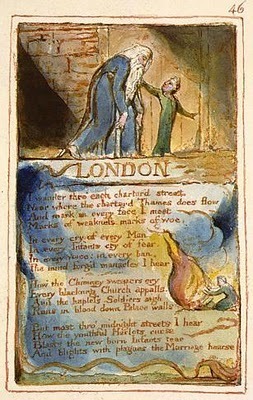
These`mind-forged manacles' are the handcuffs and constraints on our lives imposed by our habitual incorrect thinking patterns, our " core negative beliefs' in the language of Cognitive Behaviour Theapry (CBT) which we have developed over years. In the language of Landmark...
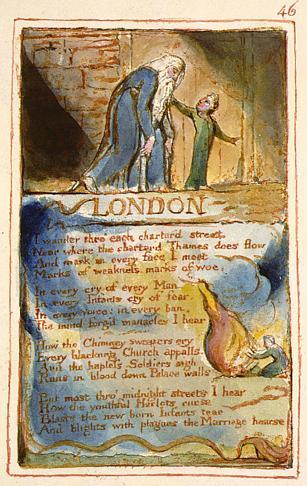
These`mind-forged manacles' are the handcuffs and constraints on our lives imposed by our habitual incorrect thinking patterns, our " core negative beliefs' in the language of Cognitive Behaviour Theapry (CBT) which we have developed over years. In the language of Landmark...