Sachin Ketkar's Blog, page 4
June 2, 2011
Uncovering the Hidden Contexts of My Life: Finding My S from the Hole in the Ground
When I was returning from the Landmark Branding Event last month, I boarded a reserved compartment in the train during the 'peak season' of the summer vacation. And I had no reservation. I knew I had to pay the fine etc. I talked to the Ticket Conductor. There were two other people like me and the TC told me that it would cost Rs. 350. I agreed. Out of the two other people, one looked confident about the whole business. He had done this sort of thing before. In fact, I had done the same thing in the morning. However, being the bird of the feather, I stuck together with two of these people. We had to move from compartment to compartment before, the TC could allot a final place to us. The more experienced chap said that we would buy two tickets and the three of us would managed. Unthinkingly, I agreed. Late evening, when the things settled and I got a place, an upper berth, I somehow had to adjust a stranger and it became very very uncomfortable indeed. This might be apparently just a trivial episode in my life, but it is the story of my life: lack of confidence and unthinking commitments and plenty of situations like this. I used to rely on my father for his advice, reassurance and support in almost all important decisions in my life. And I even used to resent him for being so caring and supportive so as to make me dependent! So what was at the source of my lack of confidence and resentment? Well, towards the end of the Self Expression and Leadership Program of the Landmark Education, I could 'distinguish' the source. The context, in fact, the hidden context of my life.
The Landmark Education is all about distinguishing and uncovering the hidden contexts of our life which keep us in dis-empowered and transforming them. In the Landmark Technology, 'Context' has nothing to do with the theories or notions of contexts. The context is what determines what and how things show up in our life, but the 'context' itself never shows up. It is like the white background, in front of which a black or blue object shows up, but a white object remains invisible. It is like yellow light in the room where a blue colored object shows up as green. The power of context can be illustrated by an anecdote. A man sees two workers breaking stone on the street. One of them looks joyous and elated and the other looks upset and tired. The man asks the person who looks fatigued and angry what he was doing, the worker replied that he was breaking the stones since morning and he hated his job. The man asks the other person why did he look joyous though he was doing the same work. The happy man replied that he was building a university where his grandchildren and their grandchildren might study and have a better life. Two people doing the same work were working with different contexts and hence their work showed up -occurred- in entirely different ways to them. My mother used to constantly tell me to take non-conventional medicines: haldi, kaadha and Ayurvedic syrups of all sorts, and this used to infuriate me. I hated those medicines and thought that my mother was pestering me and harassing me all the time with this non-sense. Later, thanks to the Forum, I realized that it was her love and concern and this was the way she expressed it. It would seem obvious for lots of other people, but for me the context was hidden, and hence I saw it as irritant.
So what was the hidden context of my lack of self confidence? I was lead to this context during a powerful inquiry into our lives in the Self Expression and Leadership Program using the distinction -"Who are you being such that others show up the way they are.." I was inquiring into certain issues I was dealing with in my family. My parents did not directly complain to me about what they did not like about me. Instead they kept on telling it to Ashwini and she used to bring it to me. Our coach Nandak Pandya asked me, 'Who are you being such that your parents or the wife cant deal with the things on their own and have to bring those things to you, directly and indirectly? What will you call people who cant deal with their problems on their own? '. The people who cant deal with the issues and problems on their own are obviously weak. So who was I being such that others in my life showed up as 'weak'? I asked myself was I being dominating? Was I being evasive? Was I scared to address these issues directly out of the fear of quarrels in the home? What will you call a person who is dominating, evasive and scared of confronting issues? Well, here was the hidden context of my life: I showed up in my life - I occurred to myself as WEAK. The whole life was then the game of hiding the fact ( it was a fact for me) that I was weak. My whole life, my diseases, my crushes, my habits, all the ways of being showed up in the context- I was weak.
In the Advanced Course, Praveen Puri demonstrated to us what the context is. He put up his two fingers and asked us what it was. We said 'two', 'sign of victory' or 'two fingers'. Then he asked us 'where' was 'two', 'sign of victory' or 'two fingers' were. We said they were their on his hand and where else. He said that we couldnt tell our S from the hole in the ground. He took a tennis ball and tossed it up and caught it. He asked us 'Where was the ball falling?', we said that it was falling in his hands. Again we were told that we could not tell our S from the Hole in the Ground. He said 'two', 'the sign of victory', or'two fingers' were words and they existed in language- not any language in our conversation. If no words like these existed the things would not exist for us the way they were doing now. A dog doesn't have the words' electricity pole' and so it uses it for a different purpose then we do. So these words become the context of what we see- our language-the language we use- is the hidden context of our life. My act- 'Stay Away from People' , my chief rackets- they don't care about me vs. I am no good' all these were basically conversations, meanings, stories which were the contexts of my life. They ran my life. These were the sources of my dis-empowerment, So I give up this conversation,'I am weak' and whole new relationship with myself begins. I see myself as powerful and effective. I see myself as someone who can make difference to the lives of people in my life. One of the intentions of the Advanced Course is to change our relation with ourselves so that all our relations, with people and with reality changes. This is what is meant by transformation.
I talked to my parents straight and asked them if they were afraid of me or found me dominating or evasive. They said that from now onwards, we will tell you straight.I also declared that I was taking up a project for bringing oneness and happiness in the family. They were quite happy with the idea.
A weak man clings to others when he feels insecure as during the boarding a reserved train compartment without reservation. A weak man 'adjusts' in spite of difficulties ( 'being adjusting' is one of my 'strong suits').A weak man worries about people finding out that he does not have stamina or health that other people. A weak man drives over cautiously and is worried about driving a four wheeler on an express highway. A weak man is scared of fights in the family and evades the issues. A weak man is afraid of being straight. A weak man feels he lacks stamina or strength. A weak man keeps people around him weak. So when I dropped this conversation and continuously distinguish and drop it every time it crops up, new possibilities of being and new possibilities of action call forth powerfully into action. I can drive my two wheeler more effectively, I can be someone who cant be messed with, I can be someone makes his money work for him. I can be someone who can be in charge of the affairs. I can be someone who is a possibility of empowerment. Now I am confidence. I am empowerment.
P.S. I asked myself- how does my body occur to me? I said 'burdensome', ' source of suffering', ' and ' unattractive'. I dropped the conversation ( you need the Landmark training to do that) and my body occurs to me light, a source of joy and attractive........the game of transformation is so thrilling and hellua fun!
The Landmark Education is all about distinguishing and uncovering the hidden contexts of our life which keep us in dis-empowered and transforming them. In the Landmark Technology, 'Context' has nothing to do with the theories or notions of contexts. The context is what determines what and how things show up in our life, but the 'context' itself never shows up. It is like the white background, in front of which a black or blue object shows up, but a white object remains invisible. It is like yellow light in the room where a blue colored object shows up as green. The power of context can be illustrated by an anecdote. A man sees two workers breaking stone on the street. One of them looks joyous and elated and the other looks upset and tired. The man asks the person who looks fatigued and angry what he was doing, the worker replied that he was breaking the stones since morning and he hated his job. The man asks the other person why did he look joyous though he was doing the same work. The happy man replied that he was building a university where his grandchildren and their grandchildren might study and have a better life. Two people doing the same work were working with different contexts and hence their work showed up -occurred- in entirely different ways to them. My mother used to constantly tell me to take non-conventional medicines: haldi, kaadha and Ayurvedic syrups of all sorts, and this used to infuriate me. I hated those medicines and thought that my mother was pestering me and harassing me all the time with this non-sense. Later, thanks to the Forum, I realized that it was her love and concern and this was the way she expressed it. It would seem obvious for lots of other people, but for me the context was hidden, and hence I saw it as irritant.
So what was the hidden context of my lack of self confidence? I was lead to this context during a powerful inquiry into our lives in the Self Expression and Leadership Program using the distinction -"Who are you being such that others show up the way they are.." I was inquiring into certain issues I was dealing with in my family. My parents did not directly complain to me about what they did not like about me. Instead they kept on telling it to Ashwini and she used to bring it to me. Our coach Nandak Pandya asked me, 'Who are you being such that your parents or the wife cant deal with the things on their own and have to bring those things to you, directly and indirectly? What will you call people who cant deal with their problems on their own? '. The people who cant deal with the issues and problems on their own are obviously weak. So who was I being such that others in my life showed up as 'weak'? I asked myself was I being dominating? Was I being evasive? Was I scared to address these issues directly out of the fear of quarrels in the home? What will you call a person who is dominating, evasive and scared of confronting issues? Well, here was the hidden context of my life: I showed up in my life - I occurred to myself as WEAK. The whole life was then the game of hiding the fact ( it was a fact for me) that I was weak. My whole life, my diseases, my crushes, my habits, all the ways of being showed up in the context- I was weak.
In the Advanced Course, Praveen Puri demonstrated to us what the context is. He put up his two fingers and asked us what it was. We said 'two', 'sign of victory' or 'two fingers'. Then he asked us 'where' was 'two', 'sign of victory' or 'two fingers' were. We said they were their on his hand and where else. He said that we couldnt tell our S from the hole in the ground. He took a tennis ball and tossed it up and caught it. He asked us 'Where was the ball falling?', we said that it was falling in his hands. Again we were told that we could not tell our S from the Hole in the Ground. He said 'two', 'the sign of victory', or'two fingers' were words and they existed in language- not any language in our conversation. If no words like these existed the things would not exist for us the way they were doing now. A dog doesn't have the words' electricity pole' and so it uses it for a different purpose then we do. So these words become the context of what we see- our language-the language we use- is the hidden context of our life. My act- 'Stay Away from People' , my chief rackets- they don't care about me vs. I am no good' all these were basically conversations, meanings, stories which were the contexts of my life. They ran my life. These were the sources of my dis-empowerment, So I give up this conversation,'I am weak' and whole new relationship with myself begins. I see myself as powerful and effective. I see myself as someone who can make difference to the lives of people in my life. One of the intentions of the Advanced Course is to change our relation with ourselves so that all our relations, with people and with reality changes. This is what is meant by transformation.
I talked to my parents straight and asked them if they were afraid of me or found me dominating or evasive. They said that from now onwards, we will tell you straight.I also declared that I was taking up a project for bringing oneness and happiness in the family. They were quite happy with the idea.
A weak man clings to others when he feels insecure as during the boarding a reserved train compartment without reservation. A weak man 'adjusts' in spite of difficulties ( 'being adjusting' is one of my 'strong suits').A weak man worries about people finding out that he does not have stamina or health that other people. A weak man drives over cautiously and is worried about driving a four wheeler on an express highway. A weak man is scared of fights in the family and evades the issues. A weak man is afraid of being straight. A weak man feels he lacks stamina or strength. A weak man keeps people around him weak. So when I dropped this conversation and continuously distinguish and drop it every time it crops up, new possibilities of being and new possibilities of action call forth powerfully into action. I can drive my two wheeler more effectively, I can be someone who cant be messed with, I can be someone makes his money work for him. I can be someone who can be in charge of the affairs. I can be someone who is a possibility of empowerment. Now I am confidence. I am empowerment.
P.S. I asked myself- how does my body occur to me? I said 'burdensome', ' source of suffering', ' and ' unattractive'. I dropped the conversation ( you need the Landmark training to do that) and my body occurs to me light, a source of joy and attractive........the game of transformation is so thrilling and hellua fun!


April 21, 2011
समकालीन मराठी समीक्षा: काही प्रश्न सचिन केतकर
तुमच्या मते
१) समीक्षा म्हणजे काय? समीक्षेच प्रयोजन काय व एकंदरीत साहित्य संसकृतीत समीक्षेचे कार्य काय?
२) स्वातंत्रोतर काळातली महत्वाची मराठी समीक्षा /समीक्षक/ ग्रंथ/लेख कोणते? व का?
३) इतर भारतीय भाषेत महत्वाची समीक्षा /समीक्षक/ ग्रंथ/लेख कोणते? का?
४) इंग्रजी सहित जगातल्या इतर भाषेत महत्वाची समीक्षा /समीक्षक/ ग्रंथ/लेख कोणते? का?
५) राजकिय भूमिकेतून लिहीलेली समीक्षा महत्वाची वाटते का?
६) 'चळवळी' आणि 'समीक्षा' मधल्या नात्या विषयी काय म्हणने आहे?
७) अनियतकालिक चळवळीतून समोर आलेल्या समीक्षेचे काय महत्व?
८) विसाव्या शतकाच्या उत्तरार्धात पुढे आलेल्या पाश्चात्य 'सैद्धान्तिक' समीक्षेचे (Theory)
आजच्या मराठी समीक्षेत स्थान काय?
९) जागतिकीकरणाचा आणि समीक्षेचा काय संबंध आहे?
१०) स्वातंत्रोतर मराठी साहित्याच्या (१९४७-२०११) ईतिहासलेखना विषयी काय वाटतं?
११) तुम्हाला समकालीन मराठी कवितेच्या बाबतीत कोणता सैद्धान्तिक अभिगम/ दॄष्टीकोन योग्य वाटतो?
१२) तुमच्या लेखनावर समीक्षेचा/समीक्षकांचा प्रभाव आहे का? कोणत्या?
१३) मराठीत आजच्या पिढीच्या समीक्षेबद्दल काय वाटते?
१४) एकंदरीत मराठी समीक्षेची बलस्थाने व उणीवा कोणत्या वाटतात?
१५) साहित्याच्या भवितव्याचा आणि समीक्षेच्या दर्ज्याचा संबंध आहे काय? आहे तर कोणता/कसा?
ह्या प्रश्नांच्या निवडक उत्तरांना बडोद्याहून लवकरच प्रकाशित होणार्या 'उंट' ह्या अनियतकालिकात स्थान देण्यात येईल.
उत्तर sachinketkar@gmail.com हया पत्यावर किंवाडॊ. सचिन केतकर, असोसीयट प्रोफ़ेसर इन ईंगलीश, फ़ेकलटी ओफ़ आर्ट्स, द महाराजा सयाजीराव युनिव्हर्सिटी, बदोदे, गुजरात,३९०००२ ह्या पत्त्यावर पाठवावे.

April 10, 2011
What Did I get Out of Participation in Landmark Education? A Quick Look
Landmark Education is one of the most powerful education and training programs in the world which provides hands on training in producing dramatic results in those areas where we have not been able to produce results (only program of its kind). It empowers and enables you to live life powerfully and live the life you love by making you capable of getting what is important to you and your life. It is designed to cause positive and permanent shifts in various areas of your life.
I did the Landmark Forum in July 2009 and participated in various courses offered by Landmark Education. I created dramatic and positive shifts in overall quality of life and in particular the following areas:
Serial No Area of Life Before Landmark Education After Landmark Education Created Possibility 1 Relations Enormous anger especially with mother and wife. I either used to explode and take it out on them or on myself or suppress it. Created depression, loneliness and lack of desire to live. Very little anger and can dismantle it without suppressing it.Found out the source of my anger. Love, Affinity and peace in family. Peace of Mind and happiness. 2 Self Esteem Very low self esteem lacked confidence and assertiveness Used to blame myself.
Found it difficult to say 'No'.Considered myself a 'team player' rather than as leader. Created positive and powerful self image.
More assertive and can say 'no' to people.
Can relate to myself as a leader. Leadership and courage. Power 3 Work Used unproductive teaching techniques ('spoon feeding/broadcasting) and kept a distance from students and colleagues. Not effective in dealing with stress and meeting deadlines. Had no vision of my role in society. Far more effective teaching method (learner-centric and interactive), improved rapport with students. Effective in dealing with stress and meeting deadlines.Have a vision of my role in society Effective and powerful in teaching and mentoring. Fulfillment and Job satisfaction 4 Health and Well being Deteriorating physical and mental health due to chronic asthma. Heavy medication for asthma, related illness and depression.No exercise and personal neglect. Enormous improvement in health and well being. Reduced medication almost by seventy percent.Exercise regularly by walking 50 mins every day. Follow diet-chart given by the dietician Positive shift in health and well being. 5 Communication Ineffective listening skills, though good with ideas and thoughts, unable to express emotions and feelings , not being with the people Better listening skills,Can listen to people without prejudice. Can listen to people's deepest concernsCan express my innermost feelings and thoughts.
Love and affinity. Positive impact on all areas of life.
Here are the links to its websites:
http://landmarkforum.net/ You can watch video introduction
http://www.landmarkeducation.co.in/ You can find out about the dates and the cities on this site
Dates for Mumbai Landmark Forum (click below) http://lereg.landmarkeducation.com/SearchEvents.aspx?pgid=117&crid=356&ctid=22198&sdt=0
Dates for Ahmedabad Landmark Forum (click below) http://lereg.landmarkeducation.com/SearchEvents.aspx?pgid=117&crid=356&ctid=229&sdt=0

I did the Landmark Forum in July 2009 and participated in various courses offered by Landmark Education. I created dramatic and positive shifts in overall quality of life and in particular the following areas:
Serial No Area of Life Before Landmark Education After Landmark Education Created Possibility 1 Relations Enormous anger especially with mother and wife. I either used to explode and take it out on them or on myself or suppress it. Created depression, loneliness and lack of desire to live. Very little anger and can dismantle it without suppressing it.Found out the source of my anger. Love, Affinity and peace in family. Peace of Mind and happiness. 2 Self Esteem Very low self esteem lacked confidence and assertiveness Used to blame myself.
Found it difficult to say 'No'.Considered myself a 'team player' rather than as leader. Created positive and powerful self image.
More assertive and can say 'no' to people.
Can relate to myself as a leader. Leadership and courage. Power 3 Work Used unproductive teaching techniques ('spoon feeding/broadcasting) and kept a distance from students and colleagues. Not effective in dealing with stress and meeting deadlines. Had no vision of my role in society. Far more effective teaching method (learner-centric and interactive), improved rapport with students. Effective in dealing with stress and meeting deadlines.Have a vision of my role in society Effective and powerful in teaching and mentoring. Fulfillment and Job satisfaction 4 Health and Well being Deteriorating physical and mental health due to chronic asthma. Heavy medication for asthma, related illness and depression.No exercise and personal neglect. Enormous improvement in health and well being. Reduced medication almost by seventy percent.Exercise regularly by walking 50 mins every day. Follow diet-chart given by the dietician Positive shift in health and well being. 5 Communication Ineffective listening skills, though good with ideas and thoughts, unable to express emotions and feelings , not being with the people Better listening skills,Can listen to people without prejudice. Can listen to people's deepest concernsCan express my innermost feelings and thoughts.
Love and affinity. Positive impact on all areas of life.
Here are the links to its websites:
http://landmarkforum.net/ You can watch video introduction
http://www.landmarkeducation.co.in/ You can find out about the dates and the cities on this site
Dates for Mumbai Landmark Forum (click below) http://lereg.landmarkeducation.com/SearchEvents.aspx?pgid=117&crid=356&ctid=22198&sdt=0
Dates for Ahmedabad Landmark Forum (click below) http://lereg.landmarkeducation.com/SearchEvents.aspx?pgid=117&crid=356&ctid=229&sdt=0
April 5, 2011
The Poet and the Game of Transformation
I have often wondered at the impact of the powerful training of Landmark Education on my poetry. Most of the poetry that I wrote before Landmark Forum was written by a person who was very lonely, very depressed, frustrated and agonizingly suffocated. It was the poetry of the person who hardly believed in love, who hardly had any power, and who preferred to 'stay away' from life, others and even from one's own self. So my poetry too was very lonely, full of darkness and grief and which preferred to ' stay away' from life, others and my self. He definitely had the necessary ' on-the-court distinctions' for writing very creative poetry, and it definitely gave him fulfillment in his life- in fact it was among very few things that really gave him fulfillment in life. This was the reason he kept writing poetry in spite of general indifference from people. He said that he wrote poetry because he 'had to'; it was a compulsion, it was one of the ways of surviving. He told people that he 'was' a poet, when all he did was write poetry.
In fact, one of my best friends and fellow poets Hemant Divate suggested to me that I dont need these things like the communication program or the Landmark education and hinted that one should leave 'the exit door open' once one enters something fully. He was referring to my involvement with Landmark, of course. He told me about all these things in my 'Interview' with him. Many people have expressed their concern regarding my involvement with Landmark in various and I totally get their concern and love for me. However, they don't know what Landmark can create in life and whats more they don't even know that they don't know. Far from blaming them or making them wrong, I cheerfully recommend Landmark Education to them once again!
Hemant told me this in an 'interview', which I had with him. This very fascinating 'distinction' in the Self-Expression and Leadership Program, the last phase of the Curriculum for Living', called 'The Interview', which obviously is not the same as what people generally understand as the interview. The distinction Interview follows the distinctions 'Community' and 'The Map of communities' where the participants are asked to make maps of various communities they are part of and think about what people in the communities think about them and how they see them. The interview is about actually going to the communities and finding out what they actually think about us and how they actually see us. The key idea in the SELP is that our expression is not where we are but where others are. Who we are exist in other people's way of looking at us, in the way they listen to us and in the space they provide us to be who we are and who we are not.
Coming back to poetry, the poetry I wrote before the Landmark Education came from the 'identity' named Sachin Ketkar. My Identity consists of my Act, my Sentence,my rackets and my strong suits. My act ( the command I gave at the experience of failure and which is clearing for my identity) is ' Stay Away' from life, people and my self, my strong suits ( the ways of being I have to get produce results I have been producing in life over decades) are being 'analytical/learner', being 'nice/adaptive', and being 'self- dependent', my chief rackets ( unproductive ways of being comprising of a persistent complaint+a fixed way of being) are ' Others don't understand me or care for me' ( so stay away) and ' I am no good or inadequate' (so stay away) and my Sentence ( I wanted to be X but I am Y) is that "I am 'unwanted'". My identity comes from 'something is wrong' and 'this isn't it'. My identity comes from the bad experiences of my past which I constant put into future. There is no new possibility in my identity, no fulfillment, no love, no power, no self expression, and no peace. The training is all about distinguishing my identity 'on the court' and ' putting it aside', so that new realm of possibility and new opening for action arises. It takes one to the source of who one is and who one is not. I discover my true self , the self which is not a 'thing' or 'experience', but the clearing/ space/Being/ Possibility inside of which my life shows up. Before Landmark, the identity had me, now I have identity. This discovery transforms who I am in my eyes, who I am for myself. This is after all what the game of ontological transformation called the Landmark education is all about.
So now onwards the possibility is that my poetry can come not from my ' experiences'or my past or my identity but from the space and clearing inside of which my experiences and my identity shows up.Instead of coming from 'something wrong' and 'this isn't it', it can come from 'this is it and it is perfect'. It can come from the possibility of abundance of love and power.
One of the distinctions of the Landmark technology which was taken deeper and expanded in the Advanced course and SELP, is 'DO-HAVE-BE' vs. 'BE-DO-HAVE', i.e. the mode of Becoming vs. Being. In Do-Have-Be, our default mode of living life, the mode of Becoming, we think we frantically hunt for what do we need to do, so that we can get the results we want to have and which will lead to us 'being' who we want to be. For instance, what should I 'do', so that I 'have' lot of money, so that I can be 'happy and fulfilled' , is one common question human beings ask. This is the default mode of life, the mode of 'becoming'. Unfortunately inside this mode, our 'being' ( happy and fulfilled) depends on our 'having' what we want and on our finding the ways of 'doing' what we have to do. So if my business fails, my being will be sad and frustrated. However, in the real life, our being determines what we do and what we do determines what we have- the real life moves in BE-DO-HAVE direction, the direction of Being. Which means if a person who fails in business is depressed and frustrated, he will do what a depressed and frustrated man does and he gets what a failed and depressed man gets. This becomes a vicious cycle. So instead of asking what should I do to earn lot of money, Landmark Technology suggests we should ask who should I 'Be' so that I will 'do' the things necessary to 'have' lot of money.
Coming to my life as a poet and creative writer, before 'playing Landmark Education', I used to often ask myself - What should I 'do' as a writer so that I 'have' recognition and fame, so that I get thrill, joy and happiness in life. So my joyousness and happiness depended on what I did and what I got from doing what I did. Obviously, I did not 'have' much recognition and fame and so I was depressed and frustrated. But life moved in 'Be-Do-Have' the mode of Being, and hence, I 'did' what a depressed and frustrated man did, and I got what a depressed and frustrated man got- more depression, more frustration and a handful of poets who were more, or at least, as depressed and frustrated as I was!!! Out of this frustration due to lack of recognition, I also contemplated writing novels, as many poets probably do, in-order-to achieve what my friend and fellow senior colleague Prof Salat calls ' fifteen seconds of fame'.
As I am half way through the Self-Expression and Leadership Program (SELP), I am a different person today. I do not prefer to 'stay away' from life, people and myself. I am possibility of love,leadership and creativity. So what I will be writing most of the time will be written by a different person. 'On-the-court distinctions', the devices and techniques remain with me but the person who uses them will be different. So today I can write from Be-Do-Have, as a possibility of abundance of love and power, not as a compulsion or strategy to survive, so I will 'do' what a person with abundance of love and power does and 'have' what such doing gives me. Besides, I am not worried about how people will receive my poetry, because I know that they will receive it hundreds of different ways and none of them will be 'true'. Hence, I will not write'in-order-too' achieve fame, but as a possibility of love, power and fulfillment, and that I know that 'being' a poet is unreal, writing poetry is reality.
So how will my poetry look from now onwards? Many close friends have already told me that there is shift in the way you write. How do I know how it will look when it will be what it is and what it is not in your clearing, in the space you provide, in your listening, and I acknowledge you all, my readers and the readers to come, for your generosity of providing space for my writing to show up, irrespective of your liking or disliking it, for my poetry IS your generosity.................
In fact, one of my best friends and fellow poets Hemant Divate suggested to me that I dont need these things like the communication program or the Landmark education and hinted that one should leave 'the exit door open' once one enters something fully. He was referring to my involvement with Landmark, of course. He told me about all these things in my 'Interview' with him. Many people have expressed their concern regarding my involvement with Landmark in various and I totally get their concern and love for me. However, they don't know what Landmark can create in life and whats more they don't even know that they don't know. Far from blaming them or making them wrong, I cheerfully recommend Landmark Education to them once again!
Hemant told me this in an 'interview', which I had with him. This very fascinating 'distinction' in the Self-Expression and Leadership Program, the last phase of the Curriculum for Living', called 'The Interview', which obviously is not the same as what people generally understand as the interview. The distinction Interview follows the distinctions 'Community' and 'The Map of communities' where the participants are asked to make maps of various communities they are part of and think about what people in the communities think about them and how they see them. The interview is about actually going to the communities and finding out what they actually think about us and how they actually see us. The key idea in the SELP is that our expression is not where we are but where others are. Who we are exist in other people's way of looking at us, in the way they listen to us and in the space they provide us to be who we are and who we are not.
Coming back to poetry, the poetry I wrote before the Landmark Education came from the 'identity' named Sachin Ketkar. My Identity consists of my Act, my Sentence,my rackets and my strong suits. My act ( the command I gave at the experience of failure and which is clearing for my identity) is ' Stay Away' from life, people and my self, my strong suits ( the ways of being I have to get produce results I have been producing in life over decades) are being 'analytical/learner', being 'nice/adaptive', and being 'self- dependent', my chief rackets ( unproductive ways of being comprising of a persistent complaint+a fixed way of being) are ' Others don't understand me or care for me' ( so stay away) and ' I am no good or inadequate' (so stay away) and my Sentence ( I wanted to be X but I am Y) is that "I am 'unwanted'". My identity comes from 'something is wrong' and 'this isn't it'. My identity comes from the bad experiences of my past which I constant put into future. There is no new possibility in my identity, no fulfillment, no love, no power, no self expression, and no peace. The training is all about distinguishing my identity 'on the court' and ' putting it aside', so that new realm of possibility and new opening for action arises. It takes one to the source of who one is and who one is not. I discover my true self , the self which is not a 'thing' or 'experience', but the clearing/ space/Being/ Possibility inside of which my life shows up. Before Landmark, the identity had me, now I have identity. This discovery transforms who I am in my eyes, who I am for myself. This is after all what the game of ontological transformation called the Landmark education is all about.
So now onwards the possibility is that my poetry can come not from my ' experiences'or my past or my identity but from the space and clearing inside of which my experiences and my identity shows up.Instead of coming from 'something wrong' and 'this isn't it', it can come from 'this is it and it is perfect'. It can come from the possibility of abundance of love and power.
One of the distinctions of the Landmark technology which was taken deeper and expanded in the Advanced course and SELP, is 'DO-HAVE-BE' vs. 'BE-DO-HAVE', i.e. the mode of Becoming vs. Being. In Do-Have-Be, our default mode of living life, the mode of Becoming, we think we frantically hunt for what do we need to do, so that we can get the results we want to have and which will lead to us 'being' who we want to be. For instance, what should I 'do', so that I 'have' lot of money, so that I can be 'happy and fulfilled' , is one common question human beings ask. This is the default mode of life, the mode of 'becoming'. Unfortunately inside this mode, our 'being' ( happy and fulfilled) depends on our 'having' what we want and on our finding the ways of 'doing' what we have to do. So if my business fails, my being will be sad and frustrated. However, in the real life, our being determines what we do and what we do determines what we have- the real life moves in BE-DO-HAVE direction, the direction of Being. Which means if a person who fails in business is depressed and frustrated, he will do what a depressed and frustrated man does and he gets what a failed and depressed man gets. This becomes a vicious cycle. So instead of asking what should I do to earn lot of money, Landmark Technology suggests we should ask who should I 'Be' so that I will 'do' the things necessary to 'have' lot of money.
Coming to my life as a poet and creative writer, before 'playing Landmark Education', I used to often ask myself - What should I 'do' as a writer so that I 'have' recognition and fame, so that I get thrill, joy and happiness in life. So my joyousness and happiness depended on what I did and what I got from doing what I did. Obviously, I did not 'have' much recognition and fame and so I was depressed and frustrated. But life moved in 'Be-Do-Have' the mode of Being, and hence, I 'did' what a depressed and frustrated man did, and I got what a depressed and frustrated man got- more depression, more frustration and a handful of poets who were more, or at least, as depressed and frustrated as I was!!! Out of this frustration due to lack of recognition, I also contemplated writing novels, as many poets probably do, in-order-to achieve what my friend and fellow senior colleague Prof Salat calls ' fifteen seconds of fame'.
As I am half way through the Self-Expression and Leadership Program (SELP), I am a different person today. I do not prefer to 'stay away' from life, people and myself. I am possibility of love,leadership and creativity. So what I will be writing most of the time will be written by a different person. 'On-the-court distinctions', the devices and techniques remain with me but the person who uses them will be different. So today I can write from Be-Do-Have, as a possibility of abundance of love and power, not as a compulsion or strategy to survive, so I will 'do' what a person with abundance of love and power does and 'have' what such doing gives me. Besides, I am not worried about how people will receive my poetry, because I know that they will receive it hundreds of different ways and none of them will be 'true'. Hence, I will not write'in-order-too' achieve fame, but as a possibility of love, power and fulfillment, and that I know that 'being' a poet is unreal, writing poetry is reality.
So how will my poetry look from now onwards? Many close friends have already told me that there is shift in the way you write. How do I know how it will look when it will be what it is and what it is not in your clearing, in the space you provide, in your listening, and I acknowledge you all, my readers and the readers to come, for your generosity of providing space for my writing to show up, irrespective of your liking or disliking it, for my poetry IS your generosity.................
February 18, 2011
Catching the Cobra or The Death of Sachin Ketkar
 If Landmark Forum opened up all the doors and windows of my house which were closed for thirty eight years, The Landmark Advanced Course blew up my house instead. If the Landmark Forum was carpet bombing, the Advanced Course was a thermonuclear explosion, with a mushroom and all that. The Advanced Course leader Praveen Puri said that he will catch that elusive beast, the cobra which runs our life-our identity -and he gestured with his hands making a cutting motion across his throat- and kill it. Well that's what happened, I could catch the elusive beast- what the Advanced Course calls our 'Act', and kill it. The Act is the Cobra-the source of our Identity. Consider, no amount of information, conceptualization, or theorization about what 'balance' is, would help us to 'get' balance on a bicycle. In the same way, no amount of theorization about our 'identity' can help us 'get' our identity.
 So what the hell is the source of our identity, our 'Act'? What is my 'Act'? Well the Landmark Education, distinguishes 'Act' as a powerful command- an order basically, which we give when when we experience severe failure for the first time in very early in our life. It is a speech act, which we make the context of our lives. It is designed to cause repeated failures as we choose people and situations around us which would actually justify our 'act'. When I was about seven months old, I got severe dysentery which lasted for almost five years. I remember coming back halfway from school as I would start getting sensations. Somewhere then, I thought dirtying people's places was so embarrassing that I should 'STAY AWAY FROM PEOPLE'. This was my command and my whole life showed up in this command. It became the context of my life.'. I looked at life from this context .
So everything I did was within 'Stay Away'. I clothed in a way so as not to attract attention I even refused to comb my hair when I was very young, for I thought people would notice me and laugh at me for trying to appear good! I isolated myself and kept distance from people. I became a bookworm so as to avoid confronting real relationships. This intense engagement with books made me analytical, logical and imaginative. I created an imaginary world of daydreams and fantasies when helped me to say away from confronting real people and relationships. I even developed diseases which justified ' staying away' from people. My intellectualism and being formal and nice are masks behind which I hide my perceived vulnerability. This masks helps me to keep safe distance from the people. My job too is consistent with my'act'.
My basic recurrent complaints in life were consistent with my 'act': 'people don't care about me or even try to understand me' and ' I am no good'. These complaints justified 'staying away' from people. I complained that I was no good in sports and preferred the world of books. I saw myself as 'awkward', weak, helpless and even less 'manly. I preferred masturbation to real relationship with girls, though I used to fall in love every now and then. Only staying away from real people, would I be in my 'comfort zone' and so I said that I dont really need anyone in my life- I can live all by myself. This is the power of 'Act'.
So inside of this act, I kept distance from my parents, sister, wife, friends, enemies and did not open up emotionally as I thought it would reveal me as 'weak and embarrassing' and 'look bad'. Inside of my act, the life was hellishly suffocating and agonizing. I wanted to die and I contemplated suicide a couple of times. After all dying was the best way to 'STAY AWAY"!
After my Advanced Course, I hugged my parents and said that in every life I want you as my parents and I promised my mom that I give up drinking and eating meat. She thought these were the reasons for my illness, though I drank only socially and in moderation and ate meat only once in a while. But they were so happy and said all the money spent on landmark have not gone in vain. If you cant make your parents happy, you cant make anyone happy in life.Before Landmark I used to fight so bitterly, using foulest of foul words with my mother. Then it started with Ashwini and that shocked my dad as everyone else. Ashwini decided to quit. After Landmark she thinks I am very loving husband and loving father whom she could trust her child and her own parents with.
I also hardly used to pay attention when people were talking with me as I was not 'being with them'. I was daydreaming- the world of 'Stay Away from People'. I pretended to be listening when I was actually elsewhere.
My poetry was also of 'Stay Away From People' kind of poetry. People stayed away from my works, after all thats what I wanted so that I could blame them for not giving a damn for me.
Before the Landmark Education, the Act was not only running my life, but I WAS my Act. Now I have an Act. It no longer runs me and whenever its on, I catch it by its tail and flush it down what Praveen Puri colourfully termed as 'Ontological Toilet'. It comes up again and again I push it down. I have defanged the Beast.
So what emerges if 'Stay Away' goes down the drain? Staying with people!Being present to them, as they really are and as they really are not. Being with situations as they really are and as they are not. I invented the possibility of love and leadership from the space of nothing left where my identity once was.
The intention of the Advanced Course was taking first step toward obtaining mastery over the distinctions of Landmark and over reality. The next obvious step was the next programme of Landmark Curriculum for Living which was 'Self Expression and Leadership (SELP) program, and I am proud to say that I am part of the biggest SELP program ever comprising of 109 participants including me and Ashwini.
In the morning of the very next day of our first Workday (30 Jan), I entered into the 'distress' caused by asthma. I discovered that I was unnecessarily over dependent on the Asthalin inhaler and used to take it at least ten times a day at the slightest discomfort. I found that the real reason behind this was panic and fear at slightest symptom of distress. Fear of being rendered helpless and weak and unmanly and being exposed as vulnerable. It was about avoiding 'looking bad' and about fear which arose because of my putting past experiences into future. My 'being' was being afraid and panicky and looking good.I started doing what a panicky person does and what a person who wants to avoid looking good does and I started getting what such a person gets: loss of power, self expression and agony. The distress is acerbated by my saying something is wrong. So instead of seeing it as 'something wrong', I say 'this is it and it is perfect'. And out of nothing I create the possibility of Relaxation, Courage and Self Expression.
 Today I take inhaler 4-5 times at the most, instead of more than ten times.I dont carry it in my pocket all the time. I have declared that I will give up the dependency on inhaler completely by workday two. In Landmark, miracles are not product of anyone's grace or miracles of saints or even Programme Leaders, but products of our skills and mastery of distinctions of technology.
 Now Sachin Ketkar who was 'Stay Away' is dead. I am the possibility of Love and Leadership. What comes out of this possibility will be miraculous.
 The Cobra is caught and I am reborn.
February 5, 2011
Inventing the Third Nation: A Brief History of Marathi Poetry of Past Hundred Years
Yesterday, I read my paper titled' Re-imagining the Nation in the Post Global Period:The Case of Post-Nineties Marathi Poetry' at the National Workshop on Literary Historiography organized by the UGC-DRS-I SAP Program and the Department of English, Faculty of Arts, The MS University of Baroda.
I began my talk by commenting on how academia and intellectuals of this country are obsessed with the desire for mourning for 'dying languages' and cultures and are blind to new languages and cultures being BORN everywhere around them. My talk was about these 'birth' of new languages and cultures. The English which I was using in the seminar hall, I said, was a newly born language and not the older one by the same name which was born on the British isles one thousand years ago. The birth of new languages, like the language of Manya Joshi or Sanjeev Khandekar, is the focus of my talk, I said.
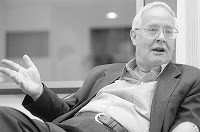 Using Benedict Anderson's theorization of nation as an imagined political community, I looked at how the nationhood was constructed in the Marathi poetry of the twentieth and the twenty first century.
I talked about how the invention of modern nation was possible in India in the nineteenth century due to colonial modernity , especially the rise of print-capitalism and colonial education system. This nation, as we know, was an orientalist construct which was elitist, upper caste,Brahminical, and masculine. It was based on the view of culture which was High Textual. This paradigm was radically questioned from within by Jyotiba Phule (1827-1890) and Mahatma Gandhi (1869-1948) in their distinctive ways. The impact of the print capitalism and the western education on Marathi language gave birth to new kind of Marathi which did not exist earlier. The birth of a new nation was actually a birth of a new language.
Marathi poetry of this period, as characterized by the poetry of Keshavsuta (1866-1905)and Balakavi (1890-1918)is reformist, idealist, and influenced by the Anglo American romanticism. The exception to this paradigm was the poetry of Bahinabai Chaoudhary (1807-1882), an illiterate genius whose brilliant works were unavailable to the 'community' as they were orally composed, and hence outside of the print-capitalism of literary culture of the time.
The second discontinuity in imagining nation was after independence. This 'post-colonial nation' was a critique of the colonial nation. The attempts were made to democratize and open up the colonial nation. This was a 'demotic' re-imagining of the colonial nation which attempted to democratize both modernity and literary culture. The efforts to democratize modernity and literary culture resulted in the rise of 'little magazine movements'. These vision of culture and modernity which these magazines embodied was democratic, pluralist and anti-establishment.
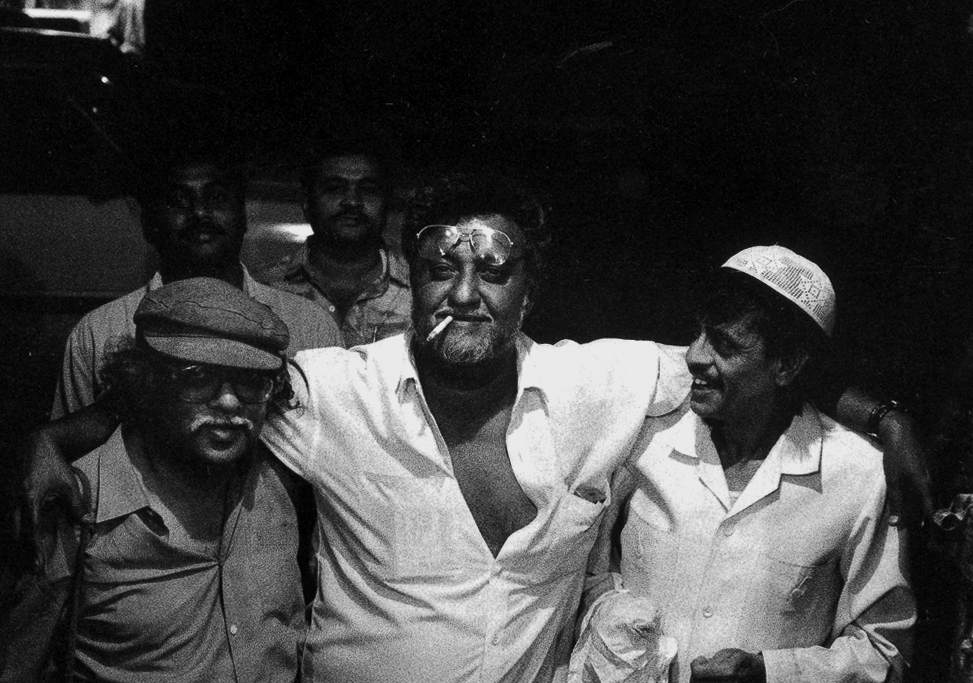
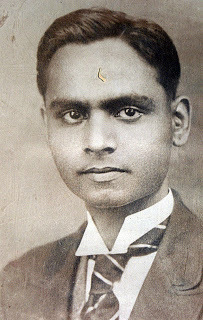 The avant-garde poetry of B.S. Mardhekar (1909-1956)is situated at the cusp of these two imaginings of nations and heralds a paradigm shift in Marathi poetry. His poems express despair resulting from World War II, growing industrialization, urbanization and erosion of traditional values. They mark a departure from the earlier practice of poetry and opens up possibilities for expression which did not exist earlier. Mardhekar's attempt to integrate the non-conformist aspects of Bhakti poetics and native traditions with international modernist aesthetics is a significant characteristic of the post-colonial cultural tendencies. From 1955 to 1975, poetry which expressed this dissenting vision of life, culture and nationhood pervaded the little magazines. (Right: Pic of Maradhekar)
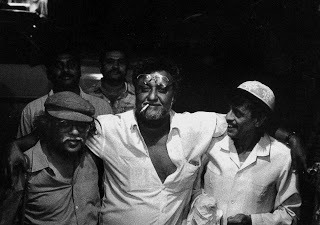 The 'little magazines' like 'Shabda', 'Vacha', and 'Asmitadarsha' had a distinct anti-Establishment outlook. Complex, experimental and challenging poetry of Arun Kolatkar (1932-2004), Dilip Chitre (1938-2009), Vasant Dahake (1942- ) and Namdeo Dhasal (1949- ) emerged from the movement. Their works bear a distinct influence of the international modernist and postmodernist poetry. The Dalit poetry or 'the poetry of the oppressed', influenced by the radically reformist philosophy of Dr. Babasaheb Ambedkar (1891-1956) and Jyotiba Phule (1827-1890), exploded on the scene in the same period. The poets like Dhasal straddled both avant-garde and the Dalit poetics. Feminism also started making its presence felt in this period. Malika Amar Sheikh (1957- ) writes vigorous poetry which combines feminism with other dissenting political ideologies. In the eighties, the tribal poets like Bhujang Meshram (1958-2007) started writing poetry which combined their quest for tribal identity with protest against the exploitative social system and the poets like Arun Kale (1952-2008) continued the tradition of Dalit poetry.
This alternative way of imagining a nation was also an alternative way of using language and so the language of post-colonial Marathi poetry was more inclusive, demotic and radical. This birth of new languages and new languages of literature is correlated to the birth of the new idea of nation.
The third shift in the way we imagine ourselves, I argued, takes place in the nineties, largely due to economic reforms, globalization and revolution in media. While the colonial nation was constructed by introduction of print-capitalism, national imagination today is shaped by satellite television ( news, soaps and reality shows), the Internet, cell phone revolution and the overwhelming power of market. The context of post-cold war geopolitics is a significant context to this construction of nation.
This new construction of nation can be theoretically analyzed in multiple ways. For instance, one can fruitfully combine Anderson's theorization of nation as an imagined community with Howard Rheingold's theorization of 'virtual communities' ( 1991/2000).A virtual community is a social network of individuals who interact through specific media, potentially crossing geographical and political boundaries in order to pursue mutual interests or goals. One of the most pervasive types of virtual community includes social networking services, which consist of various online communities. Following Toffler, one can also think of this new imagining of nation as the 'Third Wave' nation.
Following Raymond Williams (1977), I think we can in the year 2011 also think of the first construction of the nation as 'archaic', the post-colonial nation as 'residual' and the third post-nineties 'nation' as `emergent'. The critique of this 'global nation' ( an oxymoron)is only possible on globalized platforms. This contradiction- that globalization can be critiqued only on globalized platform-is the crucial aspect of globalization.
Marathi poetry of this period reflects this emergent nation in multiple ways. Poetic idiom was transformed in the nineties due to the social and cultural crises caused by these processes of globalization, technological revolution, and economic reforms. New little magazines like 'Shabadvedh' (1989-2009), 'Abhidhanantar' (1992-2009) played an important role by providing a platform for new voices to emerge.
Saleel Wagh's satirical poetry mocking at the globalized urban culture and corporate world, Manya Joshi's effort to convert the chaos of contemporary metropolitan culture into cacophonic music, Hemant Divate's asphyxiation of living in a sham urban upper middle class, Sanjeev Khandekar's prosaic caricature of disfigured human self in the world transformed by scientific-technological forces and the forces of global capitalism can be considered as a few representative poets of this period. The Dalit poetry of Arun Kale and Mahendra Bhavre rethink the Dalit politics and poetics in the context of the globalized world. The works of these poets also appear mostly in the new little magazines of this period.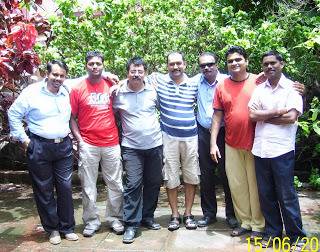
These poets I argued are inventing the language of Marathi poetry because the new Marathis are being born outside the academic world which is simply engaged in mourning the death of Marathi.
The discussions that followed my presentations were equally interesting. Deeptha asked me if the events like Babri Mosque demolition can be understood within this new idea of nation. I replied that the communalism of the late eighties and the nineties was not the same as the communalism of partition era. Even the Naxal movement of the nineties and first decade of the twenty first century are not same. The altered context is what I was emphasizing. The altered context, I could not respond due to the lack of time, was the rise of 'new capitalism' of the nineties. There were questions about 'heterogeneous times', about multiple time frames inside globalization. I responded by drawing the attention to Raymond Williams' terms I mentioned in the talk. He talks about how the archaic, the residual and the emergent exist simultaneously in a single moment.
WORKS I CITED IN MY TALK:
Anderson, Benedict R. O'G. (1991). Imagined communities: reflections on the origin and spread of nationalism (Revised and extended. ed.). London: Verso. pp. 224.
Rheingold, H. (2000). The Virtual Community: Homesteading on the Electronic Frontier. London: MIT Press.
Toffler, Alvin. The Third Wave. Bantam Books, 1981
Williams, Raymond. Marxism and Literature. Oxford: Oxford University Press, 1977, pp 121-6

I began my talk by commenting on how academia and intellectuals of this country are obsessed with the desire for mourning for 'dying languages' and cultures and are blind to new languages and cultures being BORN everywhere around them. My talk was about these 'birth' of new languages and cultures. The English which I was using in the seminar hall, I said, was a newly born language and not the older one by the same name which was born on the British isles one thousand years ago. The birth of new languages, like the language of Manya Joshi or Sanjeev Khandekar, is the focus of my talk, I said.
 Using Benedict Anderson's theorization of nation as an imagined political community, I looked at how the nationhood was constructed in the Marathi poetry of the twentieth and the twenty first century.
I talked about how the invention of modern nation was possible in India in the nineteenth century due to colonial modernity , especially the rise of print-capitalism and colonial education system. This nation, as we know, was an orientalist construct which was elitist, upper caste,Brahminical, and masculine. It was based on the view of culture which was High Textual. This paradigm was radically questioned from within by Jyotiba Phule (1827-1890) and Mahatma Gandhi (1869-1948) in their distinctive ways. The impact of the print capitalism and the western education on Marathi language gave birth to new kind of Marathi which did not exist earlier. The birth of a new nation was actually a birth of a new language.
Marathi poetry of this period, as characterized by the poetry of Keshavsuta (1866-1905)and Balakavi (1890-1918)is reformist, idealist, and influenced by the Anglo American romanticism. The exception to this paradigm was the poetry of Bahinabai Chaoudhary (1807-1882), an illiterate genius whose brilliant works were unavailable to the 'community' as they were orally composed, and hence outside of the print-capitalism of literary culture of the time.
The second discontinuity in imagining nation was after independence. This 'post-colonial nation' was a critique of the colonial nation. The attempts were made to democratize and open up the colonial nation. This was a 'demotic' re-imagining of the colonial nation which attempted to democratize both modernity and literary culture. The efforts to democratize modernity and literary culture resulted in the rise of 'little magazine movements'. These vision of culture and modernity which these magazines embodied was democratic, pluralist and anti-establishment.
 The avant-garde poetry of B.S. Mardhekar (1909-1956)is situated at the cusp of these two imaginings of nations and heralds a paradigm shift in Marathi poetry. His poems express despair resulting from World War II, growing industrialization, urbanization and erosion of traditional values. They mark a departure from the earlier practice of poetry and opens up possibilities for expression which did not exist earlier. Mardhekar's attempt to integrate the non-conformist aspects of Bhakti poetics and native traditions with international modernist aesthetics is a significant characteristic of the post-colonial cultural tendencies. From 1955 to 1975, poetry which expressed this dissenting vision of life, culture and nationhood pervaded the little magazines. (Right: Pic of Maradhekar)
 The 'little magazines' like 'Shabda', 'Vacha', and 'Asmitadarsha' had a distinct anti-Establishment outlook. Complex, experimental and challenging poetry of Arun Kolatkar (1932-2004), Dilip Chitre (1938-2009), Vasant Dahake (1942- ) and Namdeo Dhasal (1949- ) emerged from the movement. Their works bear a distinct influence of the international modernist and postmodernist poetry. The Dalit poetry or 'the poetry of the oppressed', influenced by the radically reformist philosophy of Dr. Babasaheb Ambedkar (1891-1956) and Jyotiba Phule (1827-1890), exploded on the scene in the same period. The poets like Dhasal straddled both avant-garde and the Dalit poetics. Feminism also started making its presence felt in this period. Malika Amar Sheikh (1957- ) writes vigorous poetry which combines feminism with other dissenting political ideologies. In the eighties, the tribal poets like Bhujang Meshram (1958-2007) started writing poetry which combined their quest for tribal identity with protest against the exploitative social system and the poets like Arun Kale (1952-2008) continued the tradition of Dalit poetry.
This alternative way of imagining a nation was also an alternative way of using language and so the language of post-colonial Marathi poetry was more inclusive, demotic and radical. This birth of new languages and new languages of literature is correlated to the birth of the new idea of nation.
The third shift in the way we imagine ourselves, I argued, takes place in the nineties, largely due to economic reforms, globalization and revolution in media. While the colonial nation was constructed by introduction of print-capitalism, national imagination today is shaped by satellite television ( news, soaps and reality shows), the Internet, cell phone revolution and the overwhelming power of market. The context of post-cold war geopolitics is a significant context to this construction of nation.
This new construction of nation can be theoretically analyzed in multiple ways. For instance, one can fruitfully combine Anderson's theorization of nation as an imagined community with Howard Rheingold's theorization of 'virtual communities' ( 1991/2000).A virtual community is a social network of individuals who interact through specific media, potentially crossing geographical and political boundaries in order to pursue mutual interests or goals. One of the most pervasive types of virtual community includes social networking services, which consist of various online communities. Following Toffler, one can also think of this new imagining of nation as the 'Third Wave' nation.
Following Raymond Williams (1977), I think we can in the year 2011 also think of the first construction of the nation as 'archaic', the post-colonial nation as 'residual' and the third post-nineties 'nation' as `emergent'. The critique of this 'global nation' ( an oxymoron)is only possible on globalized platforms. This contradiction- that globalization can be critiqued only on globalized platform-is the crucial aspect of globalization.
Marathi poetry of this period reflects this emergent nation in multiple ways. Poetic idiom was transformed in the nineties due to the social and cultural crises caused by these processes of globalization, technological revolution, and economic reforms. New little magazines like 'Shabadvedh' (1989-2009), 'Abhidhanantar' (1992-2009) played an important role by providing a platform for new voices to emerge.
Saleel Wagh's satirical poetry mocking at the globalized urban culture and corporate world, Manya Joshi's effort to convert the chaos of contemporary metropolitan culture into cacophonic music, Hemant Divate's asphyxiation of living in a sham urban upper middle class, Sanjeev Khandekar's prosaic caricature of disfigured human self in the world transformed by scientific-technological forces and the forces of global capitalism can be considered as a few representative poets of this period. The Dalit poetry of Arun Kale and Mahendra Bhavre rethink the Dalit politics and poetics in the context of the globalized world. The works of these poets also appear mostly in the new little magazines of this period.
These poets I argued are inventing the language of Marathi poetry because the new Marathis are being born outside the academic world which is simply engaged in mourning the death of Marathi.
The discussions that followed my presentations were equally interesting. Deeptha asked me if the events like Babri Mosque demolition can be understood within this new idea of nation. I replied that the communalism of the late eighties and the nineties was not the same as the communalism of partition era. Even the Naxal movement of the nineties and first decade of the twenty first century are not same. The altered context is what I was emphasizing. The altered context, I could not respond due to the lack of time, was the rise of 'new capitalism' of the nineties. There were questions about 'heterogeneous times', about multiple time frames inside globalization. I responded by drawing the attention to Raymond Williams' terms I mentioned in the talk. He talks about how the archaic, the residual and the emergent exist simultaneously in a single moment.
WORKS I CITED IN MY TALK:
Anderson, Benedict R. O'G. (1991). Imagined communities: reflections on the origin and spread of nationalism (Revised and extended. ed.). London: Verso. pp. 224.
Rheingold, H. (2000). The Virtual Community: Homesteading on the Electronic Frontier. London: MIT Press.
Toffler, Alvin. The Third Wave. Bantam Books, 1981
Williams, Raymond. Marxism and Literature. Oxford: Oxford University Press, 1977, pp 121-6
January 3, 2011
TOWARDS MASTERING ENGLISH
For Indians, probably along with sex, money and in-laws, English is associated with the greatest amount of misery and negativity. We envy those who speak English fluently, and we resent them for being snobbish and dominating. We feel neglected and inadequate in the presence of English. We feel ashamed of not knowing it. Often we hate English and blame it for destroying 'our' culture and languages. We deplore it for being the language of ex-rulers. We hate ourselves for wanting English and for being enslaved by the speakers of English. Yet the fact remains that along with sex and money, English is what we desire the most. Hence as a teacher of English, I would I would like to briefly share my views on how to master English. My views are based on Steve Zaffron and Dave Logan's powerful book Three Laws of Performance (2009).(Read my review of the book by clicking here) The ideas presented here may not be 'new', for there are hardly any 'new' ideas, but these ideas in my view are the most effective ones. The ideas aim at transforming our relation with English.
Zaffron and Logan argue that our performance is correlated not to how or what something or someone is, but how something, someone or some situation occurs to us and that how something, someone or a situation occurs to us is inside of what conversations we have about it with ourselves or with others. They point out that by altering these conversations about something, someone or a situation, we can alter how it occurs to us and there by alter our performance. Hence in order to alter our performance in English we have to look at how English occurs to us and inside of which conversations does it occurs to us. In short, let us look at what we keep telling ourselves and others about English.
Typically, we say English is not 'our' language; it is the language of outsiders. It is not our 'mother tongue', it is our 'auntie tongue' or it is 'step-mother' tongue. We say it is the language of slavery. We say it is the language that is destroying our languages and it contaminates our Glorious Indian Culture. We say it the language of the dominant and elite class, which is consequently 'less Indian' than us. We call this class neo-colonizers or colonial collaborators.
We also say it is too difficult and we will never learn it properly. We say English is all about speaking English fluently (look at the thriving 'spoken English' cottage industry in India). We say we want to 'think' in English. We say that by making mistakes in English would make us 'look bad' and that by speaking it fluently we will 'look good'. We say that by learning grammar properly, we will learn English.
Consider that inside all these conversations, we have already ruled out any possibility of English being 'our language' or using it like our mother tongue, because we have already declared it to be 'other tongue' and our 'second language'. When we call it a 'foreign' language, we can never make it our own. Hence the possibility of being as fluent in English as one is in one's own language is already ruled out, even before we start learning it seriously. Unless we stop telling others and ourselves these things, we can never use English as well as we use 'our' non-English languages. Surprisingly we say all these things when our nationalist leaders like Swami Vivekanand, Sri Aurobindo, Dr. Ambedkar, Jawaharlal Nehru and even Mahatma Gandhi who opposed English in theory and who brought out an English newspaper, were highly accomplished in English and even the Constitution of India was drafted in English. Inside of these conversations of blame, we have already distanced ourselves from English and closed our access to the language.
Our complaint that English is the language of the upper class elite or the class of neo-colonizers/ colonial collaborators does not prevent us from desiring the language and from sending our own children to English medium schools. This means that though we resent that class and are envious of it, we want to be part of that class . This means that our complaint is nothing but hypocrisy and this hypocrisy takes on a different shade when the academics who should be teaching English and who themselves belong to this class start saying that the English is the language of upper class elite. These academics imply that they are ashamed of being who they are and hence want to prevent others from having English. This simply means they don't want to do their jobs, although they don't mind being paid for it. If we want English and we want to belong to the English speaking elite, it is honest to abandon this hypocrisy and blame games.
Now consider that inside of the conversations like 'it is too difficult and we won't be able to speak it properly', we are again ruling out the possibility of mastering English and using it with proficiency for ourselves. Hence it is extremely important that we accept the responsibility of all these conversations and drop them every time they crop up in our heads or on our tongues because they are blocking all the possibilities of our getting English.
Once we drop all these dialogues which prevent us from acquiring proficiency in English, we should access the language through our listening. There is no other way of acquiring a language. We feel language is all about talking and we feel that the only way to learn speaking English is by speaking. However, listening is the only way we can reach the core of the language. Consider, for instance, among the dumb and deaf people, most of the people classified as 'dumb' actually unable to speak as they are deaf. The chief reason why most of the people remain 'dumb' in English are actually 'deaf' as far as English is concerned.
In my view, instead of having 'spoken English' classes, we should have classes which teaches us how to listen to English. If we pay close attention to how we listen, we realize that we hardly listen or listen only through our thoughts continuously going on in our minds. We hardly remain present to someone or something as our mind wanders all over the place: through our opinions, day dreams, memories and various kinds of distractions inside our heads. We should develop awareness about these distractions and pay attention to what is being spoken, why it is being spoken, how it is spoken and what all is going on behind what is being spoken. Paying this kind of attention dramatically improves not just our spoken English but also our relationship with people. Regularly listening attentively to just how English words are pronounced, enhances quality of our spoken English.
One can see that a lot depends on the attitude and mindset regarding English. What we need is the right spirit and the right spirit is all about treating it as a game. We begin the game by declaring openly that you will master the language and as Zaffron and Logan put it 'play as if our life depended on it'. Declaration is significant, because when you openly declare your intention, people hold you accountable for it and which makes you work without giving up. The authors suggest 'Play the game passionately, intensely, and fearlessly. But don't make it significant. It's just a game'. (2004)
We may have hundred reasons for not using English, we don't have people who can speak it with us, we don't have enough vocabulary, and our grammar is poor and so on. But the point is to play it anyway. Zaffron and Logan suggest, 'if something occurs to you as an obstacle, you will push back by playing on the obstacle's terms. Instead, make the obstacles, conditions of the game.' (201). We have to remember that the distance between two set of stumps on the cricket pitch is twenty two yards is not an obstacle, but the condition of the game itself.
The most important thing is being in action with English. Though there is great desire for English, there is an inbuilt reluctance in using English. It is usually reluctance to take risk in using English. It is about fear of failure and one is reminded of an old joke where a person declares, 'I won't step into water, till I learn how to swim properly'. Unless you jump into the language and take risk of 'looking bad', you wont be able to use English at all.
Zaffron and Logan make a profound distinction between 'taking about the game, from the stands' and 'playing the game on the court'. They give example of a football game where the conversations of people who stand in the stands is all about 'judging, evaluating, assessing, making excuses about their teams, or saying what their teams did right, or rationalizing' (199). The authors' note that from the stands there is little at stake and the conversation has no impact on the action of the game. They suggest, 'You leave the stands when you stop assessing and judging and instead put something at risk.' No action, no result, no mastery.
Hence to attain mastery over English, it is essential to drop the conversation which actually block our access to the language and inside of which there are no possibilities of mastering it. It is essential to declare your intention of mastering it so that people around you, hold you accountable for your performance. Without this accountability, we won't work to enhance our performance. Finally, leaving the stands and being in action on the court with English, taking risks and making all the obstacles, conditions of the game will lead to mastery over English. Obviously, performance cannot be a one time affair. Playing this game of mastering English is a life long process, where we keep climbing 'Mt. Neverest', jumping from one peak of excellence, to another – till we are burned, buried or fed to birds……
Reference:
Steve Zaffron and Dave Logan. Three Laws of Performance: Rewriting the Future of your Organization and your Life, San Francisco: Josey-Bass, 2009. Distributed in India by the Times Books, Rs. 395
Zaffron and Logan argue that our performance is correlated not to how or what something or someone is, but how something, someone or some situation occurs to us and that how something, someone or a situation occurs to us is inside of what conversations we have about it with ourselves or with others. They point out that by altering these conversations about something, someone or a situation, we can alter how it occurs to us and there by alter our performance. Hence in order to alter our performance in English we have to look at how English occurs to us and inside of which conversations does it occurs to us. In short, let us look at what we keep telling ourselves and others about English.
Typically, we say English is not 'our' language; it is the language of outsiders. It is not our 'mother tongue', it is our 'auntie tongue' or it is 'step-mother' tongue. We say it is the language of slavery. We say it is the language that is destroying our languages and it contaminates our Glorious Indian Culture. We say it the language of the dominant and elite class, which is consequently 'less Indian' than us. We call this class neo-colonizers or colonial collaborators.
We also say it is too difficult and we will never learn it properly. We say English is all about speaking English fluently (look at the thriving 'spoken English' cottage industry in India). We say we want to 'think' in English. We say that by making mistakes in English would make us 'look bad' and that by speaking it fluently we will 'look good'. We say that by learning grammar properly, we will learn English.
Consider that inside all these conversations, we have already ruled out any possibility of English being 'our language' or using it like our mother tongue, because we have already declared it to be 'other tongue' and our 'second language'. When we call it a 'foreign' language, we can never make it our own. Hence the possibility of being as fluent in English as one is in one's own language is already ruled out, even before we start learning it seriously. Unless we stop telling others and ourselves these things, we can never use English as well as we use 'our' non-English languages. Surprisingly we say all these things when our nationalist leaders like Swami Vivekanand, Sri Aurobindo, Dr. Ambedkar, Jawaharlal Nehru and even Mahatma Gandhi who opposed English in theory and who brought out an English newspaper, were highly accomplished in English and even the Constitution of India was drafted in English. Inside of these conversations of blame, we have already distanced ourselves from English and closed our access to the language.
Our complaint that English is the language of the upper class elite or the class of neo-colonizers/ colonial collaborators does not prevent us from desiring the language and from sending our own children to English medium schools. This means that though we resent that class and are envious of it, we want to be part of that class . This means that our complaint is nothing but hypocrisy and this hypocrisy takes on a different shade when the academics who should be teaching English and who themselves belong to this class start saying that the English is the language of upper class elite. These academics imply that they are ashamed of being who they are and hence want to prevent others from having English. This simply means they don't want to do their jobs, although they don't mind being paid for it. If we want English and we want to belong to the English speaking elite, it is honest to abandon this hypocrisy and blame games.
Now consider that inside of the conversations like 'it is too difficult and we won't be able to speak it properly', we are again ruling out the possibility of mastering English and using it with proficiency for ourselves. Hence it is extremely important that we accept the responsibility of all these conversations and drop them every time they crop up in our heads or on our tongues because they are blocking all the possibilities of our getting English.
Once we drop all these dialogues which prevent us from acquiring proficiency in English, we should access the language through our listening. There is no other way of acquiring a language. We feel language is all about talking and we feel that the only way to learn speaking English is by speaking. However, listening is the only way we can reach the core of the language. Consider, for instance, among the dumb and deaf people, most of the people classified as 'dumb' actually unable to speak as they are deaf. The chief reason why most of the people remain 'dumb' in English are actually 'deaf' as far as English is concerned.
In my view, instead of having 'spoken English' classes, we should have classes which teaches us how to listen to English. If we pay close attention to how we listen, we realize that we hardly listen or listen only through our thoughts continuously going on in our minds. We hardly remain present to someone or something as our mind wanders all over the place: through our opinions, day dreams, memories and various kinds of distractions inside our heads. We should develop awareness about these distractions and pay attention to what is being spoken, why it is being spoken, how it is spoken and what all is going on behind what is being spoken. Paying this kind of attention dramatically improves not just our spoken English but also our relationship with people. Regularly listening attentively to just how English words are pronounced, enhances quality of our spoken English.
One can see that a lot depends on the attitude and mindset regarding English. What we need is the right spirit and the right spirit is all about treating it as a game. We begin the game by declaring openly that you will master the language and as Zaffron and Logan put it 'play as if our life depended on it'. Declaration is significant, because when you openly declare your intention, people hold you accountable for it and which makes you work without giving up. The authors suggest 'Play the game passionately, intensely, and fearlessly. But don't make it significant. It's just a game'. (2004)
We may have hundred reasons for not using English, we don't have people who can speak it with us, we don't have enough vocabulary, and our grammar is poor and so on. But the point is to play it anyway. Zaffron and Logan suggest, 'if something occurs to you as an obstacle, you will push back by playing on the obstacle's terms. Instead, make the obstacles, conditions of the game.' (201). We have to remember that the distance between two set of stumps on the cricket pitch is twenty two yards is not an obstacle, but the condition of the game itself.
The most important thing is being in action with English. Though there is great desire for English, there is an inbuilt reluctance in using English. It is usually reluctance to take risk in using English. It is about fear of failure and one is reminded of an old joke where a person declares, 'I won't step into water, till I learn how to swim properly'. Unless you jump into the language and take risk of 'looking bad', you wont be able to use English at all.
Zaffron and Logan make a profound distinction between 'taking about the game, from the stands' and 'playing the game on the court'. They give example of a football game where the conversations of people who stand in the stands is all about 'judging, evaluating, assessing, making excuses about their teams, or saying what their teams did right, or rationalizing' (199). The authors' note that from the stands there is little at stake and the conversation has no impact on the action of the game. They suggest, 'You leave the stands when you stop assessing and judging and instead put something at risk.' No action, no result, no mastery.
Hence to attain mastery over English, it is essential to drop the conversation which actually block our access to the language and inside of which there are no possibilities of mastering it. It is essential to declare your intention of mastering it so that people around you, hold you accountable for your performance. Without this accountability, we won't work to enhance our performance. Finally, leaving the stands and being in action on the court with English, taking risks and making all the obstacles, conditions of the game will lead to mastery over English. Obviously, performance cannot be a one time affair. Playing this game of mastering English is a life long process, where we keep climbing 'Mt. Neverest', jumping from one peak of excellence, to another – till we are burned, buried or fed to birds……
Reference:
Steve Zaffron and Dave Logan. Three Laws of Performance: Rewriting the Future of your Organization and your Life, San Francisco: Josey-Bass, 2009. Distributed in India by the Times Books, Rs. 395
MASTERING ENGLISH
For Indians, probably along with sex, money and in-laws, English is associated with the greatest amount of misery and negativity. We envy those who speak English fluently, and we resent them for being snobbish and dominating. We feel neglected and inadequate in the presence of English. We feel ashamed of not knowing it. Often we hate English and blame it for destroying 'our' culture and languages. We deplore it for being the language of ex-rulers. We hate ourselves for wanting English and for being enslaved by the speakers of English. Yet the fact remains that along with sex and money, English is what we desire the most. Hence as a teacher of English, I would I would like to briefly share my views on how to master English. My views are based on Steve Zaffron and Dave Logan's powerful book Three Laws of Performance (2009).(Read my review of the book by clicking here) The ideas presented here may not be 'new', for there are hardly any 'new' ideas, but these ideas in my view are the most effective ones.
Zaffron and Logan argue that our performance is correlated not to how or what something or someone is, but how something, someone or some situation occurs to us and that how something, someone or a situation occurs to us is inside of what conversations we have about it with ourselves or with others. They point out that by altering these conversations about something, someone or a situation, we can alter how it occurs to us and there by alter our performance. Hence in order to alter our performance in English we have to look at how English occurs to us and inside of which conversations does it occurs to us. In short, let us look at what we keep telling ourselves and others about English.
Typically, we say English is not 'our' language; it is the language of outsiders. It is not our 'mother tongue', it is our 'auntie tongue' or it is 'step-mother' tongue. We say it is the language of slavery. We say it is the language that is destroying our languages and it contaminates our Glorious Indian Culture. We say it the language of the dominant and elite class, which is consequently 'less Indian' than us. We call this class neo-colonizers or colonial collaborators.
We also say it is too difficult and we will never learn it properly. We say English is all about speaking English fluently (look at the thriving 'spoken English' cottage industry in India). We say we want to 'think' in English. We say that by making mistakes in English would make us 'look bad' and that by speaking it fluently we will 'look good'. We say that by learning grammar properly, we will learn English.
Consider that inside all these conversations, we have already ruled out any possibility of English being 'our language' or using it like our mother tongue, because we have already declared it to be 'other tongue' and our 'second language'. When we call it a 'foreign' language, we can never make it our own. Hence the possibility of being as fluent in English as one is in one's own language is already ruled out, even before we start learning it seriously. Unless we stop telling others and ourselves these things, we can never use English as well as we use 'our' non-English languages. Surprisingly we say all these things when our nationalist leaders like Swami Vivekanand, Sri Aurobindo, Dr. Ambedkar, Jawaharlal Nehru and even Mahatma Gandhi who opposed English in theory and who brought out an English newspaper, were highly accomplished in English and even the Constitution of India was drafted in English. Inside of these conversations of blame, we have already distanced ourselves from English and closed our access to the language.
Our complaint that English is the language of the upper class elite or the class of neo-colonizers/ colonial collaborators does not prevent us from desiring the language and from sending our own children to English medium schools. This means that though we resent that class and are envious of it, we want to be part of that class . This means that our complaint is nothing but hypocrisy and this hypocrisy takes on a different shade when the academics who should be teaching English and who themselves belong to this class start saying that the English is the language of upper class elite. These academics imply that they are ashamed of being who they are and hence want to prevent others from having English. This simply means they don't want to do their jobs, although they don't mind being paid for it. If we want English and we want to belong to the English speaking elite, it is honest to abandon this hypocrisy and blame games.
Now consider that inside of the conversations like 'it is too difficult and we won't be able to speak it properly', we are again ruling out the possibility of mastering English and using it with proficiency for ourselves. Hence it is extremely important that we accept the responsibility of all these conversations and drop them every time they crop up because they are blocking all the possibilities of our getting English.
The right spirit, as Zaffron and Logan (200) tell us, is treating it as a game. We begin the game by declaring openly that you will master the language and 'play as if our life depended on it'. Declaration is significant, because when you openly declare your intention, people hold you accountable for it and which makes you work without giving up. Then they suggest 'Play the game passionately, intensely, and fearlessly. But don't make it significant. It's just a game'. (2004)
We may have hundred reasons for not using English, we don't have people who can speak it with us, we don't have enough vocabulary, and our grammar is poor and so on. But the point is to play it anyway. Zaffron and Logan suggest, 'if something occurs to you as an obstacle, you will push back by playing on the obstacle's terms. Instead, make the obstacles, conditions of the game.' (201). We have to remember that the distance between two set of stumps on the cricket pitch is twenty two yards is not an obstacle, but the condition of the game itself.
The most important thing is being in action with English. Though there is great desire for English, there is an inbuilt reluctance in using English. It is usually reluctance to take risk in using English. It is about fear of failure and one is reminded of an old joke where a person declares, 'I won't step into water, till I learn how to swim properly'. Unless you jump into the language and take risk of 'looking bad', you wont be able to use English at all.
Zaffron and Logan make a profound distinction between 'taking about the game, from the stands' and 'playing the game on the court'. They give example of a football game where the conversations of people who stand in the stands is all about 'judging, evaluating, assessing, making excuses about their teams, or saying what their teams did right, or rationalizing' (199). The authors' note that from the stands there is little at stake and the conversation has no impact on the action of the game. They suggest, 'You leave the stands when you stop assessing and judging and instead put something at risk.' No action, no result, no mastery.
Hence to attain mastery over English, it is essential to drop the conversation which actually block our access to the language and inside of which there are no possibilities of mastering it. It is essential to declare your intention of mastering it so that people around you, hold you accountable for your performance. Without this accountability, we won't work to enhance our performance. Finally, leaving the stands and being in action on the court with English, taking risks and making all the obstacles, conditions of the game will lead to mastery over English. Obviously, performance cannot be a one time affair. Playing this game of mastering English is a life long process, where we keep climbing 'Mt. Neverest', jumping from one peak of excellence, to another – till we are burned, buried or fed to birds……
Reference:
Steve Zaffron and Dave Logan. Three Laws of Performance: Rewriting the Future of your Organization and your Life, San Francisco: Josey-Bass, 2009. Distributed in India by the Times Books, Rs. 395
Zaffron and Logan argue that our performance is correlated not to how or what something or someone is, but how something, someone or some situation occurs to us and that how something, someone or a situation occurs to us is inside of what conversations we have about it with ourselves or with others. They point out that by altering these conversations about something, someone or a situation, we can alter how it occurs to us and there by alter our performance. Hence in order to alter our performance in English we have to look at how English occurs to us and inside of which conversations does it occurs to us. In short, let us look at what we keep telling ourselves and others about English.
Typically, we say English is not 'our' language; it is the language of outsiders. It is not our 'mother tongue', it is our 'auntie tongue' or it is 'step-mother' tongue. We say it is the language of slavery. We say it is the language that is destroying our languages and it contaminates our Glorious Indian Culture. We say it the language of the dominant and elite class, which is consequently 'less Indian' than us. We call this class neo-colonizers or colonial collaborators.
We also say it is too difficult and we will never learn it properly. We say English is all about speaking English fluently (look at the thriving 'spoken English' cottage industry in India). We say we want to 'think' in English. We say that by making mistakes in English would make us 'look bad' and that by speaking it fluently we will 'look good'. We say that by learning grammar properly, we will learn English.
Consider that inside all these conversations, we have already ruled out any possibility of English being 'our language' or using it like our mother tongue, because we have already declared it to be 'other tongue' and our 'second language'. When we call it a 'foreign' language, we can never make it our own. Hence the possibility of being as fluent in English as one is in one's own language is already ruled out, even before we start learning it seriously. Unless we stop telling others and ourselves these things, we can never use English as well as we use 'our' non-English languages. Surprisingly we say all these things when our nationalist leaders like Swami Vivekanand, Sri Aurobindo, Dr. Ambedkar, Jawaharlal Nehru and even Mahatma Gandhi who opposed English in theory and who brought out an English newspaper, were highly accomplished in English and even the Constitution of India was drafted in English. Inside of these conversations of blame, we have already distanced ourselves from English and closed our access to the language.
Our complaint that English is the language of the upper class elite or the class of neo-colonizers/ colonial collaborators does not prevent us from desiring the language and from sending our own children to English medium schools. This means that though we resent that class and are envious of it, we want to be part of that class . This means that our complaint is nothing but hypocrisy and this hypocrisy takes on a different shade when the academics who should be teaching English and who themselves belong to this class start saying that the English is the language of upper class elite. These academics imply that they are ashamed of being who they are and hence want to prevent others from having English. This simply means they don't want to do their jobs, although they don't mind being paid for it. If we want English and we want to belong to the English speaking elite, it is honest to abandon this hypocrisy and blame games.
Now consider that inside of the conversations like 'it is too difficult and we won't be able to speak it properly', we are again ruling out the possibility of mastering English and using it with proficiency for ourselves. Hence it is extremely important that we accept the responsibility of all these conversations and drop them every time they crop up because they are blocking all the possibilities of our getting English.
The right spirit, as Zaffron and Logan (200) tell us, is treating it as a game. We begin the game by declaring openly that you will master the language and 'play as if our life depended on it'. Declaration is significant, because when you openly declare your intention, people hold you accountable for it and which makes you work without giving up. Then they suggest 'Play the game passionately, intensely, and fearlessly. But don't make it significant. It's just a game'. (2004)
We may have hundred reasons for not using English, we don't have people who can speak it with us, we don't have enough vocabulary, and our grammar is poor and so on. But the point is to play it anyway. Zaffron and Logan suggest, 'if something occurs to you as an obstacle, you will push back by playing on the obstacle's terms. Instead, make the obstacles, conditions of the game.' (201). We have to remember that the distance between two set of stumps on the cricket pitch is twenty two yards is not an obstacle, but the condition of the game itself.
The most important thing is being in action with English. Though there is great desire for English, there is an inbuilt reluctance in using English. It is usually reluctance to take risk in using English. It is about fear of failure and one is reminded of an old joke where a person declares, 'I won't step into water, till I learn how to swim properly'. Unless you jump into the language and take risk of 'looking bad', you wont be able to use English at all.
Zaffron and Logan make a profound distinction between 'taking about the game, from the stands' and 'playing the game on the court'. They give example of a football game where the conversations of people who stand in the stands is all about 'judging, evaluating, assessing, making excuses about their teams, or saying what their teams did right, or rationalizing' (199). The authors' note that from the stands there is little at stake and the conversation has no impact on the action of the game. They suggest, 'You leave the stands when you stop assessing and judging and instead put something at risk.' No action, no result, no mastery.
Hence to attain mastery over English, it is essential to drop the conversation which actually block our access to the language and inside of which there are no possibilities of mastering it. It is essential to declare your intention of mastering it so that people around you, hold you accountable for your performance. Without this accountability, we won't work to enhance our performance. Finally, leaving the stands and being in action on the court with English, taking risks and making all the obstacles, conditions of the game will lead to mastery over English. Obviously, performance cannot be a one time affair. Playing this game of mastering English is a life long process, where we keep climbing 'Mt. Neverest', jumping from one peak of excellence, to another – till we are burned, buried or fed to birds……
Reference:
Steve Zaffron and Dave Logan. Three Laws of Performance: Rewriting the Future of your Organization and your Life, San Francisco: Josey-Bass, 2009. Distributed in India by the Times Books, Rs. 395
December 30, 2010
The Shabdopnishad : Advanced Communication Course: Power to Create
Something extraordinary happened when I was on my way back from Mumbai on 22 November after participating in the 'Advance Communication Course: Power to Create' course. From the windows I was startled to discover that with my uttering of the word 'the mountains' , the mountains appeared in all their glory. The utterance and the appearance of mountains in my phenomenological space was a simultaneous event. The things appear to us the moment we utter their names. The words create the worlds. But, you would say, the things exit 'out there' whether we use language or not and, the things do not appear in front of us 'in reality' if we mention them. The world 'out there', however, cannot exist independently of our language and the distinction between 'the imagination' and 'reality' is not so distinct in our phenomenological space. In fact, phenomenology 'brackets' the questions like these and treats the objects in our consciousness at par, irrespective whether they are 'real' ( in the sense of having 'objective' existence) or 'imaginary'. The space of our life, in the phenomenological terminology, is the space of our 'intentionality'. Words create worlds in our life. Our thoughts and our cognition is shaped by our words.
I am a poet, as if I didn't know this. I knew all this very exactly, but I thought it was limited to my art and my life had nothing to do with this startlingly obvious fact. In fact, as an artist, I was operating from 'the new model' of communication as distinguished by the Landmark Communication Curriculum: I was not 'expressing' anything in particular as a poet- I was creating an alternative world. And this is exactly what was setting me apart from my contemporary Marathi poets- they were 'expressing' something-ideas, feelings etc, I was creating. What the Communication Curriculum revealed to me was, that 'the reality' of the life I was living, the world I was inhabiting, was also made of words, and not just that, they are 'created' by me.
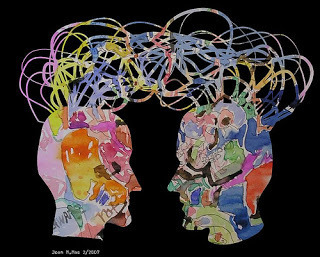
I have already written about the Communication for Access to Power course in my earlier blog entry. The Advance Communication Course focussed on getting rid of our habitual modes of communication. It began by distinguishing those 'triggers' and 'cues' which throw us back into the 'default/inherited/old model' of communication which is based on the assumption that the world is 'out there' or 'in here', and the function of communication was to bridge the gap between 'us' and the 'world' which may be within us or 'out there'. When we are living in the old model, we are 'stimulus-response' machines and the basic purpose of communicating in our life was to either 'survive' (someone, something, some situations or ourselves) or to 'fix' someone or something ( including ourselves). The old model of communication is based on past which we project into our future. The triggers could be phrases like' You are inefficient' or ' You are boring' or ' You too are like others' and so on. We were given hands-on exercises to respond to these words from 'nothing' instead of responding from past-based, habitual responses. We were shown that now we have a choice when it comes to responding, instead of responding in a mechanical way.
A fascinating distinction was the 'Automatic Recurring Dialogues (ARDs)' in our lives existing at all levels of communication. In fact, we live our lives within these ARDs. These are conversations are variations on fixed basic themes and are used not just by people in our lives to us, but also among themselves. In my life, I find the dialogues like ' You are lazy or not paying attention'and so on recurring not just between me and others but also among others to others. We were taught to uncover the past episodes which underlay ARDS and dismantle them. We were also trained to deal with the communications that we 'withhold' from others.
One of the most important part of the course dealt with the ways in which we 'resist' communication from others and communicating with others. I discovered that though after the Forum I given up huge anger against my mother, I still did not communicate with her and the reason I gave myself was that what she wants to talk about is rather trivial and unimportant compared to the things I was doing. These 'trivial' things like what maid servant does or what the neighbours are saying are important in her life. The idea is to enter the other person's world to 'get' what that person is saying. This is called 'recreating' in the Communication Course terminology. To 'recreate' someone is 'to get' ( not 'to understand') what others are saying in its entirety. We were given exercises for 'recreating' what others had said- word to word- " nothing added, nothing taken away, nothing changed". Yours faithfully, obviously performed below average to average in these exercises. We were also asked to recreate other's concerns, commitments and contexts and not just the words. Very powerful exercises indeed. People listen only through their opinions and on going thought processes. We were taught to 'distinguish' these things and put them aside and communicate from ' nothing'. Only then one can fully 'recreate' what others are saying . The Forum gave us the distinction of ' Already Always Listening' (AAL) where in we discovered that we listen to others through through our internal dialogue which is made up of our opinions, beliefs and assumptions. Already existing beliefs, opinions and assumptions limit our perception of possibilities. If I believe that someone is an idiot, boring or naive, my listening of that person will be through this and even if that person is saying something interesting and intelligent, I will filter that out. There is no possibility in 'Already Always Listening'.The AAL is always past based and as long as you are inside of that you are not really present for new possibilities. This AAL, as the Forum teaches, is part of our design as humans, a part of our machinery and hence, not really who we are. The Advanced Communication Course gave us yet another fascinating distinction- The Morass.
The Morass is nothing but an associational network of images, ideas, sensations, and memories into which we slip every now and then. The Stream of Consciousness of James Joyce, the free- association of Freud are actually 'morasses'. If communication is not about talking but about ' being-in-communication'- something that has to be caused from the space of 'nothing', the morasses, day-dreaming and the AAL are things which keep us ' out of communication' most of the time. Thats the reason why they say we are checked out of communication most of the time, and very rarely we 'check into' communication.
The Advanced Course actually started only in the last one and half hours of the two and half days course! This was because the earlier part of it was about completing the past based habits of communication. The last session on Sunday was probably most profound and spiritual experience of my life. One can create something only from nothing-one can create, say 'X' only from 'not-X'. But we discovered that 'not-X' is 'a lie', because 'not-X' consists of 'X' hidden and concealed inside of 'not-X'. Hence the distinction between the Self and the Other has to be rethought. The Other is actually 'not-Self' which means it is the Self hidden and concealed in the 'not-Self'. We were to told to look at the Other, our partner, and be present to him so that we realize him as our 'non-self'. But 'not-self' is a lie! Now we know who the Other is! In first Communication Course: Access to Power course, we were given the distinction about who we are. I discovered who ' I' was. I was not the meaning making machinery, not experiences,not thoughts, not sensations but I was 'space' -nothing- in which my life, my thoughts, feelings, emotions, ideas, experiences emerged. This 'space of nothing' was like a blackboard in which white chalk marks come into being. I am not my life, I am a 'clearing' for my life. Communication is about giving this 'space of nothing' for other's communication, about being clearing for other's communication. Only then can you 'recreate' others or achieve miracles like 'achieving multiple outcomes from a single communication'. In Advanced Course I also discovered who the Other was- the Other was 'me' - the space of nothing- a clearing for life- hidden inside 'not-me'.

However, apart from the distinctions of the Advanced Communication course, I did something else. Raghu Sawney, our trainer, advised the participants to stand naked in front of mirror and fall in love with ourselves. Love every part of our body, look into our eyes and say- I love you and accept the way you are and way you are not. We also have to tell ourselves that we respect this person completely and everyone else should do the same. When I did so, I ended the bitter quarrels- 'the rackets'- I had with myself and was complete. I could sense a great surge of confidence and assertiveness. I felt powerful. Strangers noticed and told me that I looked 'complete'. I discovered the power of loving myself and respecting myself for the first time in my life. Today,I write poetry not 'because of' or ' in order to' survive or fix or even 'look good'. I write poetry because I choose to write it.
My classroom teaching has changed. How I interact with people has changed. Ashwini received comments from relatives when I attended my nephew's wedding regarding how I have changed and how I talk nicely and properly with people! Communication Course brings back 'love and affinity' in our lives, for presence of ' love and affinity' is an indication of 'being-in-communication'. I remember the wonderful distinction of ' dancing-in-communication' which happens when you are not trying to control communication and simply 'correlate' ourselves to others. I experienced it a couple of time too and it was fun. Communication which is not 'in order to' survive or fix something gives you a sense of freedom and love in communication. Nowadays I discover when I am 'resisting' communication and when I am operating from the older communication model of stimulus-response based on surviving and fixing. I have experienced great freedom, joy, confidence and have noticed a distinctive shift in people's 'listening' of me. Now that's awesome! Highly recommended! If you are wondering whether you should do it or not, I suggest -go get it!


I am a poet, as if I didn't know this. I knew all this very exactly, but I thought it was limited to my art and my life had nothing to do with this startlingly obvious fact. In fact, as an artist, I was operating from 'the new model' of communication as distinguished by the Landmark Communication Curriculum: I was not 'expressing' anything in particular as a poet- I was creating an alternative world. And this is exactly what was setting me apart from my contemporary Marathi poets- they were 'expressing' something-ideas, feelings etc, I was creating. What the Communication Curriculum revealed to me was, that 'the reality' of the life I was living, the world I was inhabiting, was also made of words, and not just that, they are 'created' by me.

I have already written about the Communication for Access to Power course in my earlier blog entry. The Advance Communication Course focussed on getting rid of our habitual modes of communication. It began by distinguishing those 'triggers' and 'cues' which throw us back into the 'default/inherited/old model' of communication which is based on the assumption that the world is 'out there' or 'in here', and the function of communication was to bridge the gap between 'us' and the 'world' which may be within us or 'out there'. When we are living in the old model, we are 'stimulus-response' machines and the basic purpose of communicating in our life was to either 'survive' (someone, something, some situations or ourselves) or to 'fix' someone or something ( including ourselves). The old model of communication is based on past which we project into our future. The triggers could be phrases like' You are inefficient' or ' You are boring' or ' You too are like others' and so on. We were given hands-on exercises to respond to these words from 'nothing' instead of responding from past-based, habitual responses. We were shown that now we have a choice when it comes to responding, instead of responding in a mechanical way.
A fascinating distinction was the 'Automatic Recurring Dialogues (ARDs)' in our lives existing at all levels of communication. In fact, we live our lives within these ARDs. These are conversations are variations on fixed basic themes and are used not just by people in our lives to us, but also among themselves. In my life, I find the dialogues like ' You are lazy or not paying attention'and so on recurring not just between me and others but also among others to others. We were taught to uncover the past episodes which underlay ARDS and dismantle them. We were also trained to deal with the communications that we 'withhold' from others.
One of the most important part of the course dealt with the ways in which we 'resist' communication from others and communicating with others. I discovered that though after the Forum I given up huge anger against my mother, I still did not communicate with her and the reason I gave myself was that what she wants to talk about is rather trivial and unimportant compared to the things I was doing. These 'trivial' things like what maid servant does or what the neighbours are saying are important in her life. The idea is to enter the other person's world to 'get' what that person is saying. This is called 'recreating' in the Communication Course terminology. To 'recreate' someone is 'to get' ( not 'to understand') what others are saying in its entirety. We were given exercises for 'recreating' what others had said- word to word- " nothing added, nothing taken away, nothing changed". Yours faithfully, obviously performed below average to average in these exercises. We were also asked to recreate other's concerns, commitments and contexts and not just the words. Very powerful exercises indeed. People listen only through their opinions and on going thought processes. We were taught to 'distinguish' these things and put them aside and communicate from ' nothing'. Only then one can fully 'recreate' what others are saying . The Forum gave us the distinction of ' Already Always Listening' (AAL) where in we discovered that we listen to others through through our internal dialogue which is made up of our opinions, beliefs and assumptions. Already existing beliefs, opinions and assumptions limit our perception of possibilities. If I believe that someone is an idiot, boring or naive, my listening of that person will be through this and even if that person is saying something interesting and intelligent, I will filter that out. There is no possibility in 'Already Always Listening'.The AAL is always past based and as long as you are inside of that you are not really present for new possibilities. This AAL, as the Forum teaches, is part of our design as humans, a part of our machinery and hence, not really who we are. The Advanced Communication Course gave us yet another fascinating distinction- The Morass.
The Morass is nothing but an associational network of images, ideas, sensations, and memories into which we slip every now and then. The Stream of Consciousness of James Joyce, the free- association of Freud are actually 'morasses'. If communication is not about talking but about ' being-in-communication'- something that has to be caused from the space of 'nothing', the morasses, day-dreaming and the AAL are things which keep us ' out of communication' most of the time. Thats the reason why they say we are checked out of communication most of the time, and very rarely we 'check into' communication.
The Advanced Course actually started only in the last one and half hours of the two and half days course! This was because the earlier part of it was about completing the past based habits of communication. The last session on Sunday was probably most profound and spiritual experience of my life. One can create something only from nothing-one can create, say 'X' only from 'not-X'. But we discovered that 'not-X' is 'a lie', because 'not-X' consists of 'X' hidden and concealed inside of 'not-X'. Hence the distinction between the Self and the Other has to be rethought. The Other is actually 'not-Self' which means it is the Self hidden and concealed in the 'not-Self'. We were to told to look at the Other, our partner, and be present to him so that we realize him as our 'non-self'. But 'not-self' is a lie! Now we know who the Other is! In first Communication Course: Access to Power course, we were given the distinction about who we are. I discovered who ' I' was. I was not the meaning making machinery, not experiences,not thoughts, not sensations but I was 'space' -nothing- in which my life, my thoughts, feelings, emotions, ideas, experiences emerged. This 'space of nothing' was like a blackboard in which white chalk marks come into being. I am not my life, I am a 'clearing' for my life. Communication is about giving this 'space of nothing' for other's communication, about being clearing for other's communication. Only then can you 'recreate' others or achieve miracles like 'achieving multiple outcomes from a single communication'. In Advanced Course I also discovered who the Other was- the Other was 'me' - the space of nothing- a clearing for life- hidden inside 'not-me'.

However, apart from the distinctions of the Advanced Communication course, I did something else. Raghu Sawney, our trainer, advised the participants to stand naked in front of mirror and fall in love with ourselves. Love every part of our body, look into our eyes and say- I love you and accept the way you are and way you are not. We also have to tell ourselves that we respect this person completely and everyone else should do the same. When I did so, I ended the bitter quarrels- 'the rackets'- I had with myself and was complete. I could sense a great surge of confidence and assertiveness. I felt powerful. Strangers noticed and told me that I looked 'complete'. I discovered the power of loving myself and respecting myself for the first time in my life. Today,I write poetry not 'because of' or ' in order to' survive or fix or even 'look good'. I write poetry because I choose to write it.
My classroom teaching has changed. How I interact with people has changed. Ashwini received comments from relatives when I attended my nephew's wedding regarding how I have changed and how I talk nicely and properly with people! Communication Course brings back 'love and affinity' in our lives, for presence of ' love and affinity' is an indication of 'being-in-communication'. I remember the wonderful distinction of ' dancing-in-communication' which happens when you are not trying to control communication and simply 'correlate' ourselves to others. I experienced it a couple of time too and it was fun. Communication which is not 'in order to' survive or fix something gives you a sense of freedom and love in communication. Nowadays I discover when I am 'resisting' communication and when I am operating from the older communication model of stimulus-response based on surviving and fixing. I have experienced great freedom, joy, confidence and have noticed a distinctive shift in people's 'listening' of me. Now that's awesome! Highly recommended! If you are wondering whether you should do it or not, I suggest -go get it!

December 19, 2010
Texture of Forgetfulness: A New Poem by Me
Texture of forgetfulnessSlips away from my fingers
I don't even remember how it felt
Probably it was like sand or silkOr like a young woman's curvesOr like nothingness Or like feathers of a dead sparrow
Texture of forgetfulness is like daylightInside which we can see everything clearly
For instance when I am on my bikeI don't see the vacant spaces between vehiclesThe spaces which would be vacantAnd those which are already vacant
Texture of forgetfulness Is like the eyesLimpid and sharp In their absenceI don't even see What I am not seeingEven the invisibility Is invisible to me
Texture of forgetfulness is like a poemWe have forgotten to write We don't even remember what it wasAnd how it wentOr where it went
I dream of touching forgetfulnessWhich is full like a cup of teaOr empty like the forgotten sea
I smell the texture of forgetfulness
It smells the touch of mother's sarisBefore she went away to sleepOr dad's trousersWhen he used to take me out for Bruce Lee movies
I listen to the texture of forgetfulnessIt sounds like the music of the forgotten sonWhich you can't even replay in your heads
Texture of forgetfulness grows like a cobweb On a winter afternoon
I feel like a lazy spiderSpinning the web of my forgetfulnessTrying to trap some unknown buzzing wordsWhich I don't even know They exist.
19 December 20102.55 pm

I don't even remember how it felt
Probably it was like sand or silkOr like a young woman's curvesOr like nothingness Or like feathers of a dead sparrow
Texture of forgetfulness is like daylightInside which we can see everything clearly
For instance when I am on my bikeI don't see the vacant spaces between vehiclesThe spaces which would be vacantAnd those which are already vacant
Texture of forgetfulness Is like the eyesLimpid and sharp In their absenceI don't even see What I am not seeingEven the invisibility Is invisible to me
Texture of forgetfulness is like a poemWe have forgotten to write We don't even remember what it wasAnd how it wentOr where it went
I dream of touching forgetfulnessWhich is full like a cup of teaOr empty like the forgotten sea
I smell the texture of forgetfulness
It smells the touch of mother's sarisBefore she went away to sleepOr dad's trousersWhen he used to take me out for Bruce Lee movies
I listen to the texture of forgetfulnessIt sounds like the music of the forgotten sonWhich you can't even replay in your heads
Texture of forgetfulness grows like a cobweb On a winter afternoon
I feel like a lazy spiderSpinning the web of my forgetfulnessTrying to trap some unknown buzzing wordsWhich I don't even know They exist.
19 December 20102.55 pm