Sachin Ketkar's Blog, page 3
April 4, 2012
A BEGINNER’S GUIDE TO DOING PH.D. IN ENGLISH LITERATURE
There is a sudden rise in PhD aspirants in these parts of the country. This may be because many universities in Gujarat and elsewhere offering PhD Entrance Test (TET) in a quick succession. It may also be due to the UGC resolution that those who have completed their PhD following 2009 norms will be exempt from National Eligibility Test (NET) for lecturership, and probably also due to the new Academic Performance Index being introduced by the UGC in the sixth pay commission. However, not many are clear about what research in literary studies means, or why they are doing it in the first place.These dreadful questions may haunt them later in many forms if they jump into the bandwagon hastily.
This lack of clarity shows up in the stock responses to the question ‘why do you want to do Ph.D/doctoral research?’ The typical responses range from ‘ I want to develop myself further/ increase my knowledge’ or ‘ For intellectual pleasure’ to ‘ for a better job/salary/ status’. Though all these reasons are valid, it should be kept in mind that doing doctoral research is not the only way of fulfilling on these objectives. One could read widely, or clear N.E.T., or get rich by starting one’s own business or become a religious preacher, for instance. So why should one do doctoral or Mphil research at all? An answer to this question lies in knowing what doctoral or Mphil research is.
So what is doctoral or M.Phil research after all? Well, the obvious answer is that it is a program that trains you to become a systematic and disciplined researcher: it builds the foundation to the later research actitivity. Hence the real reason why should do Mphil or PhD is that you want to be researcher for the rest of your life, and the doctoral research program is the opportunity to equip and train yourself to become a serious researcher. It is a net practice and coaching program if you want to graduate from gully-cricket to international cricket. (Click here to read my other entries on research).
Research is commonly perceived as as purposive and systematic search for information and knowledge about something. Even the hunt for a date on the internet can be an example of research. However, research as we understand it academically is not primarily a search for answers to the personal questions. The whole idea of ‘objectivity’ in research does not imply that you are ‘ impersonal’ but what you are investigating, and exploring has value beyond one’s personal quest for answers. Hunting for a date for yourself may also be research, but gathering information about pretty girls in your surrounding locality has relevance to more than one person and hence of greater value.
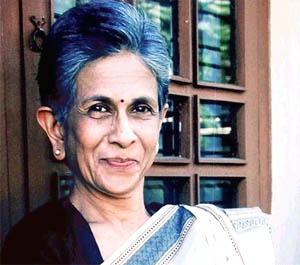 So what is research, especially in literary studies, after all? In very ordinary language, research is a contribution to a particular domain of knowledge. By contribution, I mean addition to what we already know about the particular area. If I want to write one more thesis on ‘Postcolonialism in Amitav Ghosh’ ‘ Spirituality in Sri Aurobindo’ or ‘ Feminism in Shashi Deshpande’ I am not really adding to what scholars already know about these things. Research which provides knowledge which is obvious is of little use to anyone.
By ‘particular domain’ I imply an area of research which is sufficiently specific and sufficiently narrow enough to be ‘ do-able’ within time and space of the thesis. Yet it should not be so narrow that the generalization we make would be nullified. Postcolonial consciousness in Indian Writing in English would be too vast an area, and probably an analysis of a single novel by Salman Rushdie would be too narrow for making valuable generalizations about either Salman Rushdie or Indian writing in English.

Learning how to develop an argument is a crucial research skill. It is very important to understand the logical movements from specific and particular to generalized knowledge or theoretical knowledge ( inductive approach) and from generalization ( theoretical) to particular and specfic ( deductive approach) in your exploration. You may start with a general understanding of the area and form a hypothesis which can be verified by analysis of specific texts or patterns or else you may start with particular observations about the patterns in the texts/ authors and then generalize and theorize them. Which approach is suitable for your purpose depends on your research question. If you want to examine ‘ Representations of Masculinity in the post-independence Indian novels in English’, you may start with the hypothesis that the representation of masculinity in the post-Independence Indian novels in English differs significantly from the representation of masculity in the pre-Independence Indian novels in English and that this shift occurs because of historical reasons. The logical movement of your argument would largely be deductive. ‘Archetypal Patterns in the Post-nineties Indian Poetry in English by women’ may start with analysis of patterns in various Indian women poets in English writing in the nineties and move on to theoretical generalizations in an inductive fashion. Though usually it is a combination of both logical processes, one process is often primary.
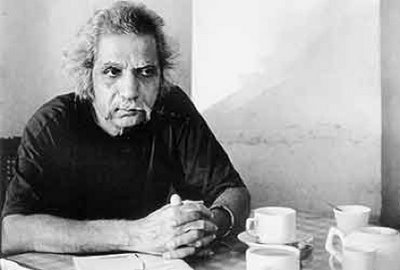
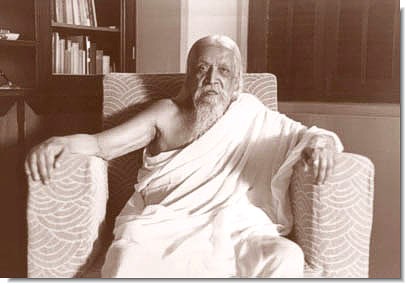 The key to successful research lies in asking a valuable research question, an important question which is not often asked or not sufficently explored regarding the area of research. ‘The Elements of Grotesque in Sri Aurobindo’s Poetry’ or ‘ Folk motifs in Shashi Deshpande Short Fiction’ would be yield knowledge that is not very common and hence,interesting. ‘Surrealism in Arun Kolatkar’s poetry’ is an obvious observation, the research, however, begins when you want to understand why surrealism is found in his works, how does he deploy surrealistic devices, what does it do in the particular cultural context and what is its significance.
 One of the most important questions of writing a research paper or thesis is the question of language of research. What is the appropriate ‘register’ of the language of research? What is the place of technical and theoretical vocabulary in the language of research? What about the jargon? The answer becomes clear when we understand that a research thesis is a serious dialogue or a conversation between two experts and scholars, and not between two M.A. students or even between a postgraduate student and the examiner, or even worse, between a teacher and a student. In your research paper or thesis, an expert speaks with an expert. Hence the language has to be technical ( remember two lawyers discussing law in the court or doctors discussing a disease or treatment?). This does not mean that you should use the technical terminology to show-off your learning ( pedantary) or obscure you own ignorance (cheating). Bad research today often suffers either from naivette ( as if a teacher talking to her student) or from the other extremity- pedantary, obscurantism and masking of ignorance ( brahminism).
When we understand that in research writing, an expert is talking to another expert, we can also cut down and structure our thesis in a better way. What is already well-known is usually not elaborately discussed and is often reduced to minimum. So the things like biographical details, details of various works or well known facts and information occupies minimum space.This brings us to yet another important and problematic question: what is the place of ‘theory’ in the period which is ‘post-theory’. Theory as we know is not vaseline or Tiger Balm to be ‘ applied’. Theoretical approaches ( Psychoanalytical, Marxist, structuralist, postcolonialist, Feminist,subaltern, LGBTs, poststructuralists etc etc) are perspectives, points of views, ways of looking and conceiving the object of our research. Today we know what ‘IS’ our object of research ( what we once knew as ‘literature’ in our good very old days) has become more and more problematic and contested and what is literature often depends on how we look at it. ‘What’ we see is very often a function of ‘How’ we see it, and so it is not as simple as there is preexisting ‘literature’ “ out there” and we use theoretical frameworks as spects to see it. You cannot imagine literature existing independently of a conceptual frame and when you claim that you are not using any theory, it is very likely that some theory already is using you. Today if you are honest, you have to self-conscious of which theory is using you and you are using which theory and you should have an awareness of advantages and limitations of your own conceptual frames ( those which are using you and those you are using). Literary research today has to be autocritical.

 Besides, I have also often heard complaints that too much criticism and theory is spoil sport and it takes away ‘fun’ from reading literature. You don’t need to ‘study’ literature in order to have fun and enjoyment. You may enjoy watching flowers, but you don’t become botanist in order to enjoy flowers. You may get pleasure and enjoy studying plants, but you need not produce a body of knowledge about plants to enjoy viewing them or tending them. You need not be an expert in evolutionary biology to enjoy playing with your cat. The same thing applies to the study of literature. When you ‘study’literature, you are engaging with a vast body of knowledge about literature. That it provides a distinctive type of intellectual pleasure may be a bonus, but it is more likely to produce lot of pain in some unmentionable parts of your body.You HAVE to go beyond your personal likes and tastes , and you HAVE to read plenty of difficult theoretical writings if you want to be a serious researcher. Reading Lacan, Judith Butler or Spivak is not an enjoyable passtime, but then research in literature is not a passtime.
 I want to end this longish entry by recommending two very useful books for the beginners here: i) Research Methods for English Studies by Gabrielle by Gabriele Griffin and ii) Literary Theory: A Very Short Introduction by Jonathan Culler. Critical comments, suggestions and feedback on my blog entries are welcomed.


A BEGINNER'S GUIDE TO DOING PH.D. IN ENGLISH LITERATURE
There is a sudden rise in PhD aspirants in these parts of the country. This may be because many universities in Gujarat and elsewhere offering PhD Entrance Test (TET) in a quick succession. It may also be due to the UGC resolution that those who have completed their PhD following 2009 norms will be exempt from National Eligibility Test (NET) for lecturership, and probably also due to the new Academic Performance Index being introduced by the UGC in the sixth pay commission. However, not many are clear about what research in literary studies means, or why they are doing it in the first place.These dreadful questions may haunt them later in many forms if they jump into the bandwagon hastily.
This lack of clarity shows up in the stock responses to the question 'why do you want to do Ph.D/doctoral research?' The typical responses range from ' I want to develop myself further/ increase my knowledge' or ' For intellectual pleasure' to ' for a better job/salary/ status'. Though all these reasons are valid, it should be kept in mind that doing doctoral research is not the only way of fulfilling on these objectives. One could read widely, or clear N.E.T., or get rich by starting one's own business or become a religious preacher, for instance. So why should one do doctoral or Mphil research at all? An answer to this question lies in knowing what doctoral or Mphil research is.
So what is doctoral or M.Phil research after all? Well, the obvious answer is that it is a program that trains you to become a systematic and disciplined researcher: it builds the foundation to the later research actitivity. Hence the real reason why should do Mphil or PhD is that you want to be researcher for the rest of your life, and the doctoral research program is the opportunity to equip and train yourself to become a serious researcher. It is a net practice and coaching program if you want to graduate from gully-cricket to international cricket. (Click here to read my other entries on research).
Research is commonly perceived as as purposive and systematic search for information and knowledge about something. Even the hunt for a date on the internet can be an example of research. However, research as we understand it academically is not primarily a search for answers to the personal questions. The whole idea of 'objectivity' in research does not imply that you are ' impersonal' but what you are investigating, and exploring has value beyond one's personal quest for answers. Hunting for a date for yourself may also be research, but gathering information about pretty girls in your surrounding locality has relevance to more than one person and hence of greater value.
So what is research, especially in literary studies, after all? In very ordinary language, research is a contribution to a particular domain of knowledge. By contribution, I mean addition to what we already know about the particular area. If I want to write one more thesis on 'Postcolonialism in Amitav Ghosh' ' Spirituality in Sri Aurobindo' or ' Feminism in Shashi Deshpande' I am not really adding to what scholars already know about these things. Research which provides knowledge which is obvious is of little use to anyone.By 'particular domain' I imply an area of research which is sufficiently specific and sufficiently narrow enough to be ' do-able' within time and space of the thesis. Yet it should not be so narrow that the generalization we make would be nullified. Postcolonial consciousness in Indian Writing in English would be too vast an area, and probably an analysis of a single novel by Salman Rushdie would be too narrow for making valuable generalizations about either Salman Rushdie or Indian writing in English.
Learning how to develop an argument is a crucial research skill. It is very important to understand the logical movements from specific and particular to generalized knowledge or theoretical knowledge ( inductive approach) and from generalization ( theoretical) to particular and specfic ( deductive approach) in your exploration. You may start with a general understanding of the area and form a hypothesis which can be verified by analysis of specific texts or patterns or else you may start with particular observations about the patterns in the texts/ authors and then generalize and theorize them. Which approach is suitable for your purpose depends on your research question. If you want to examine ' Representations of Masculinity in the post-independence Indian novels in English', you may start with the hypothesis that the representation of masculinity in the post-Independence Indian novels in English differs significantly from the representation of masculity in the pre-Independence Indian novels in English and that this shift occurs because of historical reasons. The logical movement of your argument would largely be deductive. 'Archetypal Patterns in the Post-nineties Indian Poetry in English by women' may start with analysis of patterns in various Indian women poets in English writing in the nineties and move on to theoretical generalizations in an inductive fashion. Though usually it is a combination of both logical processes, one process is often primary.
The key to successful research lies in asking a valuable research question, an important question which is not often asked or not sufficently explored regarding the area of research. 'The Elements of Grotesque in Sri Aurobindo's Poetry' or ' Folk motifs in Shashi Deshpande Short Fiction' would be yield knowledge that is not very common and hence,interesting. 'Surrealism in Arun Kolatkar's poetry' is an obvious observation, the research, however, begins when you want to understand why surrealism is found in his works, how does he deploy surrealistic devices, what does it do in the particular cultural context and what is its significance.
One of the most important questions of writing a research paper or thesis is the question of language of research. What is the appropriate 'register' of the language of research? What is the place of technical and theoretical vocabulary in the language of research? What about the jargon? The answer becomes clear when we understand that a research thesis is a serious dialogue or a conversation between two experts and scholars, and not between two M.A. students or even between a postgraduate student and the examiner, or even worse, between a teacher and a student. In your research paper or thesis, an expert speaks with an expert. Hence the language has to be technical ( remember two lawyers discussing law in the court or doctors discussing a disease or treatment?). This does not mean that you should use the technical terminology to show-off your learning ( pedantary) or obscure you own ignorance (cheating). Bad research today often suffers either from naivette ( as if a teacher talking to her student) or from the other extremity- pedantary, obscurantism and masking of ignorance ( brahminism).When we understand that in research writing, an expert is talking to another expert, we can also cut down and structure our thesis in a better way. What is already well-known is usually not elaborately discussed and is often reduced to minimum. So the things like biographical details, details of various works or well known facts and information occupies minimum space.This brings us to yet another important and problematic question: what is the place of 'theory' in the period which is 'post-theory'. Theory as we know is not vaseline or Tiger Balm to be ' applied'. Theoretical approaches ( Psychoanalytical, Marxist, structuralist, postcolonialist, Feminist,subaltern, LGBTs, poststructuralists etc etc) are perspectives, points of views, ways of looking and conceiving the object of our research. Today we know what 'IS' our object of research ( what we once knew as 'literature' in our good very old days) has become more and more problematic and contested and what is literature often depends on how we look at it. 'What' we see is very often a function of 'How' we see it, and so it is not as simple as there is preexisting 'literature' " out there" and we use theoretical frameworks as spects to see it. You cannot imagine literature existing independently of a conceptual frame and when you claim that you are not using any theory, it is very likely that some theory already is using you. Today if you are honest, you have to self-conscious of which theory is using you and you are using which theory and you should have an awareness of advantages and limitations of your own conceptual frames ( those which are using you and those you are using). Literary research today has to be autocritical.
Besides, I have also often heard complaints that too much criticism and theory is spoil sport and it takes away 'fun' from reading literature. You don't need to 'study' literature in order to have fun and enjoyment. You may enjoy watching flowers, but you don't become botanist in order to enjoy flowers. You may get pleasure and enjoy studying plants, but you need not produce a body of knowledge about plants to enjoy viewing them or tending them. You need not be an expert in evolutionary biology to enjoy playing with your cat. The same thing applies to the study of literature. When you 'study'literature, you are engaging with a vast body of knowledge about literature. That it provides a distinctive type of intellectual pleasure may be a bonus, but it is more likely to produce lot of pain in some unmentionable parts of your body.You HAVE to go beyond your personal likes and tastes , and you HAVE to read plenty of difficult theoretical writings if you want to be a serious researcher. Reading Lacan, Judith Butler or Spivak is not an enjoyable passtime, but then research in literature is not a passtime. I want to end this longish entry by recommending two very useful books for the beginners here: i) Research Methods for English Studies by Gabrielle by Gabriele Griffin and ii) Literary Theory: A Very Short Introduction by Jonathan Culler. Critical comments, suggestions and feedback on my blog entries are welcomed.
January 31, 2012
How Did I Become a Researcher? An Autobiographical Aside
When I look at my life as a researcher and how I ended up in the world of academic research, I can't help being surprised.I never saw myself as excelling in academics. I thought I was an average student whose percentage hovered around sixty most of the times. Had someone told me when I was doing my graduation that I would end up writing a PhD dissertation or research papers and hopping from one national conference to another international conference, I wouldn't have believed it. Nor would I have believed it if someone were to tell me that I would be teaching obscure literary theory and criticism to postgraduate classes and writing books on translation theory. In short, I never dreamed of being a research scholar or university teacher.
What I dreamed of when I was a kid was to be a terrific cricketer. I used to play lots of gully cricket with a tennis ball or a rubber ball in my friend Tejas's cemented compound. However, I was scared of fast deliveries and used to get out very early most of the times. As a bowler, I am credited for giving away a couple of million runs and as a fielder I might have given away billions of runs. I ran slower than others, thanks to my weight, ill-health and probably, knock-knees. The more I failed more I fantasized of becoming a cricketer. I thought I will never be good enough for physical sports.
In my early teens, the eighties, I decided that the only way to overcome my failures as cricket was to have lots of knowledge about the game. I started keeping a diary and hoarding plenty of information about the game from magazines like ' Sports-star' and the newspapers -there was no Google in those days, friends- in Valsad library. I even learned how to bowl a googly from a book. I made a decision that the only way to excel in performance in a game was to acquire lots of knowledge about it. Knowledge acquisition became a habit, a habit that was formed in response to my perceived failure to be a sportsman. The habit consolidated when the asthma became more and more chronic. By the time I was in my twelfth standard I discovered that even if I jogged for two hundred meters, I would not only be out of breath, but my lungs would hurt very badly too.
When I was in my teens, I had a series of one-sided crushes started with a one sided love for a girl in my school-bus in the seventh standard. I found myself on the wrong side of these ' one sided' travails. I said to myself that I am timid and can never express my feelings and emotions to the girl I loved and that I was a failure in love. When I fell in love at the age of thirteen, I did not know there was something like love and had I really gathered courage and spoke to the girl, I don't know what I would have said! I said to myself, I don't know what happens to me when I fall ill, I don't know what happens to me in such situations- I must try to understand what's wrong with me.
And I tried to cope with or overcome my sense of failures with the drive for knowledge acquisition. I tried to 'understand' what was wrong with me and how could I fix it.I read voraciously on occultism in my twenties and thought that if I could have occult powers, I would be able to overcome all failures of my life. I read on Yoga and occultism and tried to actually practice it. I thought the best way to overcome the sense of failure and the idea that I was weak was to acquire more and more knowledge. What I actually gathered was a tremendous amount of absolutely useless information like what was the colour of agna-chakra or what is a chinaman or how is the Petrarchan sonnet different from the English sonnet-or how Derridian 'differance' undoes the architecture of western thought.The drive for knowledge acquisition became my habitual way of being. It has played a role in whatever success I have got till now, but even then, it was constituted to survive and fix what I thought was 'wrong' with me, and so more I went about gathering knowledge, more unfulfilled I was. It was a habitual way of being put in place to compensate for lack of power and effectiveness in my life and the more I practiced it the more powerless and ineffective I felt in life. So whenever, I perceive something is wrong, I bring out this habitual mode of being to deal with it- I try to 'understand', 'analyze' and 'research' that problem instead of taking actual actions needed to deal with it.
So here it goes-I selected ' Translation of Narsinh Mehta's Poetry into English: With a Critical Appreciation' in order to' fix' what was wrong with my cultural identity- I saw myself as a 'rootless' person- having no real language or land of his own- a Maharashtrian born and brought up in Gujarat and teaching English literature to students who are neither interested in English nor in literature. I thought translation was a strategy to overcome my own cultural predicament and overcome my cultural alienation. I thought writing poetry in Marathi would help me overcome this estrangement. Obviously, neither of the strategies worked.
This habitual mode of being that is more or less productive and that has given us some results in life is called a 'strong suit' in the language of Landmark Education. The strong suits are past-based and work in the default context of human life: survive and fix something seen as wrong or shouldn't be.It is our personal 'best practice' but it is incapable of giving us 'breakthrough' results in life where we are struck- had it been so capable it would have created breakthrough results by now.
In fact, the strong-suits often result in misery. This drive for knowledge acquisition isolates me from friends and people in life who don't have such drives, I am estranged from them and I end up living in the world of loneliness and suffering.What actually was coming between me and my wife was my intellectual arrogance. It often has a negative influence on my performance. The Landmark Education points out how 'knowledge' doesn't necessarily lead to action- that there is no ' cause-effect' relation between knowledge and action ( Hamlet taught us something like this - but then Hamlet was all about 'literature' for a student of literature). Steve Zaffron and Dave Logan in The Three Laws of Performance point out that the real source of our action is how situations or people 'occur' to us. Knowing how to control anger or fear or how to reduce weight does not necessarily lead us to taking actions- when the situation 'occurs' infuriating we are angry -no matter what formulas we have memorized or what knowledge of anger we have.
So how does one become a researcher?
What I dreamed of when I was a kid was to be a terrific cricketer. I used to play lots of gully cricket with a tennis ball or a rubber ball in my friend Tejas's cemented compound. However, I was scared of fast deliveries and used to get out very early most of the times. As a bowler, I am credited for giving away a couple of million runs and as a fielder I might have given away billions of runs. I ran slower than others, thanks to my weight, ill-health and probably, knock-knees. The more I failed more I fantasized of becoming a cricketer. I thought I will never be good enough for physical sports.
In my early teens, the eighties, I decided that the only way to overcome my failures as cricket was to have lots of knowledge about the game. I started keeping a diary and hoarding plenty of information about the game from magazines like ' Sports-star' and the newspapers -there was no Google in those days, friends- in Valsad library. I even learned how to bowl a googly from a book. I made a decision that the only way to excel in performance in a game was to acquire lots of knowledge about it. Knowledge acquisition became a habit, a habit that was formed in response to my perceived failure to be a sportsman. The habit consolidated when the asthma became more and more chronic. By the time I was in my twelfth standard I discovered that even if I jogged for two hundred meters, I would not only be out of breath, but my lungs would hurt very badly too.
When I was in my teens, I had a series of one-sided crushes started with a one sided love for a girl in my school-bus in the seventh standard. I found myself on the wrong side of these ' one sided' travails. I said to myself that I am timid and can never express my feelings and emotions to the girl I loved and that I was a failure in love. When I fell in love at the age of thirteen, I did not know there was something like love and had I really gathered courage and spoke to the girl, I don't know what I would have said! I said to myself, I don't know what happens to me when I fall ill, I don't know what happens to me in such situations- I must try to understand what's wrong with me.
And I tried to cope with or overcome my sense of failures with the drive for knowledge acquisition. I tried to 'understand' what was wrong with me and how could I fix it.I read voraciously on occultism in my twenties and thought that if I could have occult powers, I would be able to overcome all failures of my life. I read on Yoga and occultism and tried to actually practice it. I thought the best way to overcome the sense of failure and the idea that I was weak was to acquire more and more knowledge. What I actually gathered was a tremendous amount of absolutely useless information like what was the colour of agna-chakra or what is a chinaman or how is the Petrarchan sonnet different from the English sonnet-or how Derridian 'differance' undoes the architecture of western thought.The drive for knowledge acquisition became my habitual way of being. It has played a role in whatever success I have got till now, but even then, it was constituted to survive and fix what I thought was 'wrong' with me, and so more I went about gathering knowledge, more unfulfilled I was. It was a habitual way of being put in place to compensate for lack of power and effectiveness in my life and the more I practiced it the more powerless and ineffective I felt in life. So whenever, I perceive something is wrong, I bring out this habitual mode of being to deal with it- I try to 'understand', 'analyze' and 'research' that problem instead of taking actual actions needed to deal with it.
So here it goes-I selected ' Translation of Narsinh Mehta's Poetry into English: With a Critical Appreciation' in order to' fix' what was wrong with my cultural identity- I saw myself as a 'rootless' person- having no real language or land of his own- a Maharashtrian born and brought up in Gujarat and teaching English literature to students who are neither interested in English nor in literature. I thought translation was a strategy to overcome my own cultural predicament and overcome my cultural alienation. I thought writing poetry in Marathi would help me overcome this estrangement. Obviously, neither of the strategies worked.
This habitual mode of being that is more or less productive and that has given us some results in life is called a 'strong suit' in the language of Landmark Education. The strong suits are past-based and work in the default context of human life: survive and fix something seen as wrong or shouldn't be.It is our personal 'best practice' but it is incapable of giving us 'breakthrough' results in life where we are struck- had it been so capable it would have created breakthrough results by now.
In fact, the strong-suits often result in misery. This drive for knowledge acquisition isolates me from friends and people in life who don't have such drives, I am estranged from them and I end up living in the world of loneliness and suffering.What actually was coming between me and my wife was my intellectual arrogance. It often has a negative influence on my performance. The Landmark Education points out how 'knowledge' doesn't necessarily lead to action- that there is no ' cause-effect' relation between knowledge and action ( Hamlet taught us something like this - but then Hamlet was all about 'literature' for a student of literature). Steve Zaffron and Dave Logan in The Three Laws of Performance point out that the real source of our action is how situations or people 'occur' to us. Knowing how to control anger or fear or how to reduce weight does not necessarily lead us to taking actions- when the situation 'occurs' infuriating we are angry -no matter what formulas we have memorized or what knowledge of anger we have.
So how does one become a researcher?
January 22, 2012
On Being a Researcher: A counter-intuitive observation
Most of the discussion of research seems to focus entirely on research methodology, or theory of research. However, the question of 'how to be a researcher' has hardly received any attention, probably because of the assumption that 'knowing how to do research effectively' will automatically lead to 'being an effective researcher'. Though this assumption looks logical enough, in actual practice the knowledge of 'how to do' research' hardly seems to lead automatically to ' how to be a researcher'. The crucial distinction which seems to be missing in the most of such discussions is the one between 'being someone' and 'knowing how to do something', that is 'being' is distinct from ' knowing' or 'having'. For instance, 'knowing about scientific method or having scientific knowledge' as being distinct from ' being a scientist', or 'knowing how to cook' being distinct from 'being a cook', or even 'knowing how to raise children' is distinct from 'being a parent'. Similarly, 'being a manager' is distinct from ' knowledge of how to manage'.
If one asks 'WHO is a scientist?' or 'WHO is a doctor?', we realize that the scientist is not just a person who knows 'how to do' science, and the doctor is not just a person who 'knows' medical science, though it is just a part of who he is. A scientist is not just a scientist when he is in the laboratory or a seminar hall or library, a scientist is a scientist even when he is playing with his children, and a doctor is a doctor even when he is with his girlfriend. Entire life seems to show up as laboratory, seminar hall or library for someone who IS a scientist. The scientist IS a scientist not when he HAS scientific outlook but the scientist IS a scientist when the scientific outlook HAS HIM. A scientist is not 'somebody who USES scientific method, the scientist is the person who is USED BY scientific method. Hence, while we think that being a scientist or a parent is all about knowing 'how to do science' or how to parent' well, it seems that it is 'being a scientist or a parent' leads to 'knowing how to' do these things.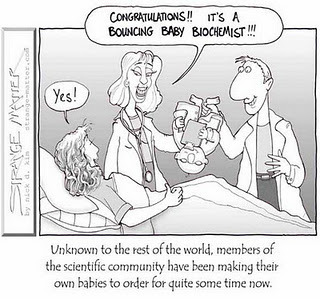 Therefore, it seems that the researcher is not a person who 'uses' research methodology, but someone who is used by research methodology. A literary theorist is not someone who 'uses theoretical terminology' but someone who is used by theoretical terminology. One is a critical theorist not when one 'knows how to to think critically', but someone who is used by critical thinking. A researcher is not someone who 'has research skills' but someone whom research skills have. You become a researcher not when you 'learn how to do research' but when the research starts having you, and you no longer use 'research methodology' but research methodology starts using you. The research or scientific outlook becomes the context of the researcher's life and the whole life shows up inside this context.The activity of research and writing dissertation, thesis or research report , then, becomes a natural expression of who the researcher is, much in the same fashion as a poem is a natural expression of who the poet is or parenting is a natural expression of who the parent is.
The above observations are counter-intuitive and out-of-the-box, but I think they will definitely be useful to people who want to 'do research'. I owe these insights to the profound ontological technology developed by Werner Erhard, one of the greatest and unacknowledged educationists of our times. Indeed, such insights start showing up when the ontological technology made available by Landmark Education start using you.
If one asks 'WHO is a scientist?' or 'WHO is a doctor?', we realize that the scientist is not just a person who knows 'how to do' science, and the doctor is not just a person who 'knows' medical science, though it is just a part of who he is. A scientist is not just a scientist when he is in the laboratory or a seminar hall or library, a scientist is a scientist even when he is playing with his children, and a doctor is a doctor even when he is with his girlfriend. Entire life seems to show up as laboratory, seminar hall or library for someone who IS a scientist. The scientist IS a scientist not when he HAS scientific outlook but the scientist IS a scientist when the scientific outlook HAS HIM. A scientist is not 'somebody who USES scientific method, the scientist is the person who is USED BY scientific method. Hence, while we think that being a scientist or a parent is all about knowing 'how to do science' or how to parent' well, it seems that it is 'being a scientist or a parent' leads to 'knowing how to' do these things.
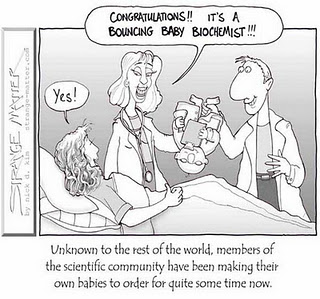 Therefore, it seems that the researcher is not a person who 'uses' research methodology, but someone who is used by research methodology. A literary theorist is not someone who 'uses theoretical terminology' but someone who is used by theoretical terminology. One is a critical theorist not when one 'knows how to to think critically', but someone who is used by critical thinking. A researcher is not someone who 'has research skills' but someone whom research skills have. You become a researcher not when you 'learn how to do research' but when the research starts having you, and you no longer use 'research methodology' but research methodology starts using you. The research or scientific outlook becomes the context of the researcher's life and the whole life shows up inside this context.The activity of research and writing dissertation, thesis or research report , then, becomes a natural expression of who the researcher is, much in the same fashion as a poem is a natural expression of who the poet is or parenting is a natural expression of who the parent is.
 The above observations are counter-intuitive and out-of-the-box, but I think they will definitely be useful to people who want to 'do research'. I owe these insights to the profound ontological technology developed by Werner Erhard, one of the greatest and unacknowledged educationists of our times. Indeed, such insights start showing up when the ontological technology made available by Landmark Education start using you.
October 6, 2011
Catching the Lecturer in his Act: The Birth of Netrutva
When I completed my graduation in 1993 , I had not even dreamed that I would become a college lecturer or university 'reader' one day. It was only when I started my postgraduate studies in Baroda, that the idea of becoming a lecturer occurred to me a possibility. As an undergraduate student, I remember being a loner. I can hardly recall names of more than two of my batch-mates. In those days my friends were Vikas Upadhyay, a student of psychology who had changed from science stream to arts like me, Amit Bhatt, who was studying Economics and Hitesh Parekh who was also studying Economics. This aloofness and detachment was a product of a wall that I had built around myself in order to 'stay away' from life, others and even my own real self. This 'stay away' was the command I had given to myself, people and life before the age of six probably and I not only did not know , but I also did not know that I did not know how my entire life has unfolded within this command. It was, what we at Landmark Education, call our 'act' which has gone into our 'blind-spot' ( others can sense it, the person who has them, can't).. Everybody has their own act. It is the lie on which our identity- who we are in our eyes- is based. As they say, we don't have our 'act', our act has us.
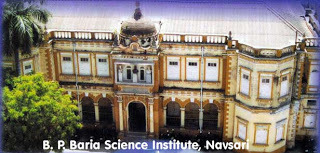 After I completed my post-graduation in 1995, I immediately got a job as an adhoc lecturer in English at the SVR college of Engineering, Surat for a couple of months, and then I got a permanent post in SB Garda College, Navsari, where I taught for almost eleven years. I joined the Department of English in 2006 in a different role. This makes me sixteen year old as far as the experience of being a lecturer or university teacher goes.
I was not at all satisfied with my own performance as a teacher. Not that I did not work hard in preparation and delivery of lectures( which I enjoyed) or shirk my other responsibilities like answer-book assessing ( which I hated) or other examination related duties, but my effectiveness as a teacher was questionable. I enjoyed talking about books to students, but I was not satisfied with my performance. Most of my teaching was about 'looking good' and 'avoiding looking bad' before students. I used to 'broadcast' simplified and digested 'knowledge' in 'chalk-and-talk' manner and I did not bother about what happened to that digested or simplified stuff after I had delivered it. I did not ask students whether they found it useful either in their studies, exams or life, because I did not care. My assumption was that I was teaching one to two percent of exceptional students, and the rest were 'masses' of faces for whom I did not care. I knew these 'masses' were warm, goodhearted youngsters, but I believed that they were simply not interested in reading or writing. I did not know their names ,where they came from, what they did or what were they dealing with in their lives or what they cared about in their life.I had no commitment or stand for them. I did not take responsibility for the entire classroom. I had no vision of what I am supposed to do as a college teacher. I had not idea of what my role was in the society or in the classroom.
My relation to my colleagues, my organization and the faculty, was equally problematic. I pretended to be nice and warm and scholarly and all that, but actually I was extremely arrogant and thought that most of the people in the faculty of arts were mediocre and the government was wasting money on teaching liberal arts. I wrote a letter to the editor of a Gujarati newspaper that the faculty of arts has become 'the last refuge of the mediocre'. It had become a 'white elephant'.I believed that Government would sooner or later discontinue arts and it would be good thing too. My accusation of mediocrity against most of the teachers in colleges goes back to my student days. Apart from a handful of teachers here or there,I thought, most of them hardly had anything to do either with English or with literature. This harsh condemnation was actually my contemptuousness. I was accusing most of other teachers of hypocrisy when I was the one who was pretending. I was blaming everyone of ineffectiveness without realizing that my own performance was rather low in effectiveness. My vision of the future of the faculty of liberal arts was bleak and derogatory.Inside this outlook towards profession, I was deeply isolated, bitter, angry and frustrated. I was extremely cynical and resigned . The difference between work and personal life makes no sense at 'ontological level'. My "being' was the same in both the domains. When you are 'being' frustrated, depressed, bitter and resigned , it means you are 'being' frustrated, depressed, bitter and resigned at home as well as at your work or anywhere else. The hidden context of my life that I was 'weak and unfit to live' which crippled me in my personal life also was my handicap in my professional life.
It was during my Landmark Curriculum for Living and the Communication Curriculum that I realized that the things that were severely limiting me in my personal life were the same things which were limiting me in profession. When I distinguished my act in the advanced course, I had my act instead of my act having me! One of the boards in the Forum titled ' Transformation: Genesis of new Realm of Possibility' reads, " Constraints that the past imposes on your view of life disappears. New possibilities of being call you powerfully into being. New openings for action call you powerfully into action. Experience of being alive, transforms." I realized powerfully that as a teacher it was a privilege to contribute to the lives of hundreds of people, and opportunity was where I was. It dawned upon me that my job was not merely to give 'knowledge' to 'ignorant' masses but to shape teachers, researchers and leaders of tomorrow. My job was not give 'information or concepts, but develop abilities to think, read, write and speak. My focus in teaching shifted from 'concepts/ information' to 'ability' and my methodology shifted too, and it changed the way I related to the students.My job was to make them see how future would look like if they had these abilities. My job was no longer to 'stay away' from them, 'look good and be popular' or 'avoid looking bad', but create real opportunities for students to develop their abilities. My job was also to "listen for and reliably deliver that which makes real difference to what students are dealing with and what they care about, and in the process to leave them with more power, freedom , self expression and peace of mind." Hence, I actually opened to counselling and mentoring. I started reaching out to them-something which I had never done before. Some students report finding my new approach more challenging and some students have reported improved results. They asked why didn't you do all this before!
During the training, I saw that the humanities is not 'the white elephant' or 'the last refuge for the mediocre' as I once believed, but a powerful space from which one could rewrite the future of the entire society, after all who would teach languages, history, economics and logic to the children of the MBAs or doctors or technocrats, bureaucrats or businessmen, but the teachers trained by us. We are the teachers who create teachers.I grasped that we have a decisive role to play in future. We are the leaders because we create leadership. It is possible that we are not equipped to deal with the challenges and issues of the twenty first century effectively, but that doesn't mean we have no say in the matter and the governments can do away with us. At Self Expression and Leadership program, I could see this 'us', earlier it was only 'me and I'- I could relate to teachers as 'community'. Community implies 'communion', certain oneness which goes into the 'us' . It was here that my project 'Netrutva' was born. It is the project to rewrite the future of humanities in the twenty-first century.
So when I was appointed the chief mentor for English in Task force for Teacher Training for recently implemented Choice Based Semester System or as coordinator of English BISAG-SANDHAN TV the state-wide classroom TV , I know it is not ' Sachin Ketkar' the act 'who is going to do his job but 'Netrutva' the project and the possibility...
(Landmark Introduction Leadership Program starts tomorrow)

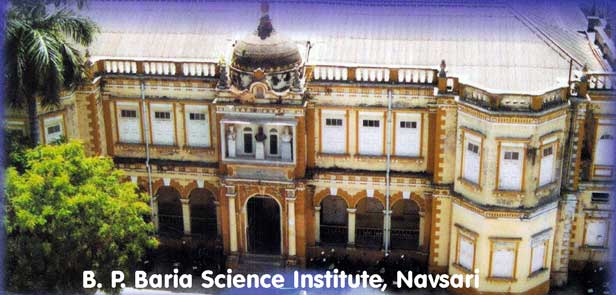 After I completed my post-graduation in 1995, I immediately got a job as an adhoc lecturer in English at the SVR college of Engineering, Surat for a couple of months, and then I got a permanent post in SB Garda College, Navsari, where I taught for almost eleven years. I joined the Department of English in 2006 in a different role. This makes me sixteen year old as far as the experience of being a lecturer or university teacher goes.
 I was not at all satisfied with my own performance as a teacher. Not that I did not work hard in preparation and delivery of lectures( which I enjoyed) or shirk my other responsibilities like answer-book assessing ( which I hated) or other examination related duties, but my effectiveness as a teacher was questionable. I enjoyed talking about books to students, but I was not satisfied with my performance. Most of my teaching was about 'looking good' and 'avoiding looking bad' before students. I used to 'broadcast' simplified and digested 'knowledge' in 'chalk-and-talk' manner and I did not bother about what happened to that digested or simplified stuff after I had delivered it. I did not ask students whether they found it useful either in their studies, exams or life, because I did not care. My assumption was that I was teaching one to two percent of exceptional students, and the rest were 'masses' of faces for whom I did not care. I knew these 'masses' were warm, goodhearted youngsters, but I believed that they were simply not interested in reading or writing. I did not know their names ,where they came from, what they did or what were they dealing with in their lives or what they cared about in their life.I had no commitment or stand for them. I did not take responsibility for the entire classroom. I had no vision of what I am supposed to do as a college teacher. I had not idea of what my role was in the society or in the classroom.
My relation to my colleagues, my organization and the faculty, was equally problematic. I pretended to be nice and warm and scholarly and all that, but actually I was extremely arrogant and thought that most of the people in the faculty of arts were mediocre and the government was wasting money on teaching liberal arts. I wrote a letter to the editor of a Gujarati newspaper that the faculty of arts has become 'the last refuge of the mediocre'. It had become a 'white elephant'.I believed that Government would sooner or later discontinue arts and it would be good thing too. My accusation of mediocrity against most of the teachers in colleges goes back to my student days. Apart from a handful of teachers here or there,I thought, most of them hardly had anything to do either with English or with literature. This harsh condemnation was actually my contemptuousness. I was accusing most of other teachers of hypocrisy when I was the one who was pretending. I was blaming everyone of ineffectiveness without realizing that my own performance was rather low in effectiveness. My vision of the future of the faculty of liberal arts was bleak and derogatory.Inside this outlook towards profession, I was deeply isolated, bitter, angry and frustrated. I was extremely cynical and resigned . The difference between work and personal life makes no sense at 'ontological level'. My "being' was the same in both the domains. When you are 'being' frustrated, depressed, bitter and resigned , it means you are 'being' frustrated, depressed, bitter and resigned at home as well as at your work or anywhere else. The hidden context of my life that I was 'weak and unfit to live' which crippled me in my personal life also was my handicap in my professional life.
It was during my Landmark Curriculum for Living and the Communication Curriculum that I realized that the things that were severely limiting me in my personal life were the same things which were limiting me in profession. When I distinguished my act in the advanced course, I had my act instead of my act having me! One of the boards in the Forum titled ' Transformation: Genesis of new Realm of Possibility' reads, " Constraints that the past imposes on your view of life disappears. New possibilities of being call you powerfully into being. New openings for action call you powerfully into action. Experience of being alive, transforms." I realized powerfully that as a teacher it was a privilege to contribute to the lives of hundreds of people, and opportunity was where I was. It dawned upon me that my job was not merely to give 'knowledge' to 'ignorant' masses but to shape teachers, researchers and leaders of tomorrow. My job was not give 'information or concepts, but develop abilities to think, read, write and speak. My focus in teaching shifted from 'concepts/ information' to 'ability' and my methodology shifted too, and it changed the way I related to the students.My job was to make them see how future would look like if they had these abilities. My job was no longer to 'stay away' from them, 'look good and be popular' or 'avoid looking bad', but create real opportunities for students to develop their abilities. My job was also to "listen for and reliably deliver that which makes real difference to what students are dealing with and what they care about, and in the process to leave them with more power, freedom , self expression and peace of mind." Hence, I actually opened to counselling and mentoring. I started reaching out to them-something which I had never done before. Some students report finding my new approach more challenging and some students have reported improved results. They asked why didn't you do all this before!
During the training, I saw that the humanities is not 'the white elephant' or 'the last refuge for the mediocre' as I once believed, but a powerful space from which one could rewrite the future of the entire society, after all who would teach languages, history, economics and logic to the children of the MBAs or doctors or technocrats, bureaucrats or businessmen, but the teachers trained by us. We are the teachers who create teachers.I grasped that we have a decisive role to play in future. We are the leaders because we create leadership. It is possible that we are not equipped to deal with the challenges and issues of the twenty first century effectively, but that doesn't mean we have no say in the matter and the governments can do away with us. At Self Expression and Leadership program, I could see this 'us', earlier it was only 'me and I'- I could relate to teachers as 'community'. Community implies 'communion', certain oneness which goes into the 'us' . It was here that my project 'Netrutva' was born. It is the project to rewrite the future of humanities in the twenty-first century.
So when I was appointed the chief mentor for English in Task force for Teacher Training for recently implemented Choice Based Semester System or as coordinator of English BISAG-SANDHAN TV the state-wide classroom TV , I know it is not ' Sachin Ketkar' the act 'who is going to do his job but 'Netrutva' the project and the possibility...
(Landmark Introduction Leadership Program starts tomorrow)
September 15, 2011
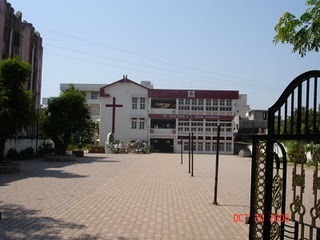
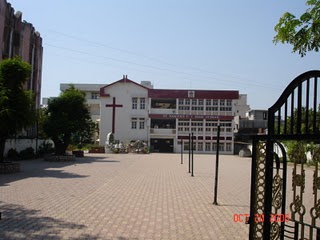
Confessions of a Middle-Bencher: My Life in St. Joseph E.T. High School
Even today I dream ( quite literally) of entering St. Joseph High school building on a monsoon day. I still dream of being admitted to the school and studying in the class. I can clearly see Maniar madam, our English teacher, threaten us with her 'high' English if did not behave. I see late Mr. Prajapati, our Math teacher, holding his own left shirt collar with his right hand and zealously teach us Math. " Is this the way we are going to study ?", he asks me angrily and flings my notebook on my face. He had curious way of using ' we' for you. He was a tall , dark and stern man who sent shivers through the spines of many. His zeal for Math bordered on fanaticism and whatever minuscule math I have in me, is because of this man. He was not ' nice'. He was a brilliant teacher. He proved that you don't have to be 'nice' and 'friendly' to be an excellent teacher. I still see Mr. Khurshid Pathan, our then Physics teacher demanding the I complete my Physics experiment journals. My palms still sweat at the thought. Mr. Pathan, in total contrast to Mr. Prajapati was nice and friendly, and very popular with girls. I still see Mr. Gupta, our jolly roly-poly Hindi teacher ( who I discovered today is also a poet and astrologer) getting stuck on the descriptions of food in Hindi lessons and struggling to leave them behind. He got struck at the description of baked potatoes in Premchand's 'Kafan'.
I can still remember Mathew Kotnani, my friend, tell me with excitement that one of my sarcastic poems have appeared in the local youth section of the Indian Express. This was my first publication. After that I became a public nuisance, and with the advent of the internet and blogging in the twenty first century, I became a global infliction.
I can still see the chloroformed frog meant for dissection in the Biology lab regain consciousness and jump on the screaming girls. Today, I suspect, one of the pretty girls from our class must have kissed it and it must have turned into 'fully awake' frog instead of a prince. Women, those eternal optimists, seem to keep on kissing frogs for a long time in their life, and by the time they realize that the frogs will be frogs forever, they have their own tadpoles to nurture. Talking of princes, I also recall one of my classmates whose surname was Champaneri, who often used to come to the school on horseback!
I joined St. Joseph English Teaching High School, Valsad, in 1988, for my eleventh and twelfth standard because I did not have a choice and it seems, St. Joseph's admitted me because they did not have much choice either. I studied in Bai Avabai High School for most of my life and there was no English medium eleventh and twelfth standard for science stream in Bai Avabai school and St. Joseph's was the only school which had this facility in those days. St. Joseph's was the only 'convent' school in our area in those days. My sister had studied there till her tenth standard and it was located at a stone's throw from our residence. The principal Sister Clara Fernandes in St. Joseph was not very happy at the idea of allowing 'desi', ill-mannered ruffians from Avabai to run freely in the more disciplined and elite school. I remember her giving a very stern piece of mind to the entire classroom for bad behaviour, and her focus was on certain girls who talked 'inappropriately' with the boys. Till I entered the 'convent' I associated 'Sisters' with people who either tied rakhi on your hand or jabbed a syringe into you. I was an awkward outsider who even did not know how to tie a tie.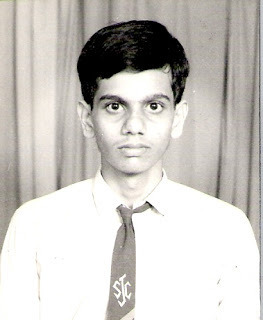
I was a committed middle-bencher. Unlike backbenchers and front benchers, I lived in the grey no-man's land of 'averageness', both in terms of intelligence as well as in terms of capacity for naughtiness. I was in the same place as far as looks were concerned and I marveled at my friend Abhay Thosar's wicked coolness at his being one of the handsomest and smartest kid in the class. He hardly got carried away by girls doting on him. Many of my friends from Avabai were there: Chinmay and Hoshedar for instance. I made new friends with Abhay, Sanat, Rajesh Jainval, Vivekand Pandey, Amit Purohit and Mathew Kotnani for instance. One of the good things about St. Joseph's was that unlike my one year at Kendriya Vidyalaya, Ordnance Factory, Chandrapur, I was not bullied or humiliated.
This was the period when asthma became more chronic, and started to pervade my life. I remember this was the period, when on insistence of one Shri Prabhuji, a family friend and a local holy man, I started doing all sorts of trick to get rid of asthma. He suggested that I wake up very early in the morning, study for the twelfth standard with my friend Chetan Patel, go for jogging, or go cycling to Tithal Sai Mandir some five to six kilometers from my house, do ' alni' fasts or salt-free meal days , count beads chanting Gayatri mantra, chant Hanuman chalisa, water basil plant or go to Shiva temple on Mondays. Obviously, all this did not work. I remember sitting on the veranda in the afternoons on the days when I could not attend schools due to asthma attack and watching students of St. Joseph, especially the girls, return home.
People expected me to do well in the exams. I scored fifty-odd percent. Baba believed that a person who knows a bit of English and knows stenography will never die of hunger and there was no point in doing B.Sc and work in a factory in Vapi as a chemist from eight in morning to six in the evening. On his suggestion, I took up B.A with English course from Valsad. People were shocked. Arts was seen as the lowest rung of the educational Varnashrama with medicine and engineering at the top. I never even dreamed of doing doctorate and teach in one of the best universities in India. The middle-bencher was basically a day dreamer, and not a dreamer. He sat in the ambivalent middle of the spectrum, and doodled away cartoon characters in his rough work book. He is not difficult to find, just look around you.
( St. Joseph English Teaching High School, Valsad, is celebrating its Diamond Jubilee in December this year)
I can still remember Mathew Kotnani, my friend, tell me with excitement that one of my sarcastic poems have appeared in the local youth section of the Indian Express. This was my first publication. After that I became a public nuisance, and with the advent of the internet and blogging in the twenty first century, I became a global infliction.
I can still see the chloroformed frog meant for dissection in the Biology lab regain consciousness and jump on the screaming girls. Today, I suspect, one of the pretty girls from our class must have kissed it and it must have turned into 'fully awake' frog instead of a prince. Women, those eternal optimists, seem to keep on kissing frogs for a long time in their life, and by the time they realize that the frogs will be frogs forever, they have their own tadpoles to nurture. Talking of princes, I also recall one of my classmates whose surname was Champaneri, who often used to come to the school on horseback!
I joined St. Joseph English Teaching High School, Valsad, in 1988, for my eleventh and twelfth standard because I did not have a choice and it seems, St. Joseph's admitted me because they did not have much choice either. I studied in Bai Avabai High School for most of my life and there was no English medium eleventh and twelfth standard for science stream in Bai Avabai school and St. Joseph's was the only school which had this facility in those days. St. Joseph's was the only 'convent' school in our area in those days. My sister had studied there till her tenth standard and it was located at a stone's throw from our residence. The principal Sister Clara Fernandes in St. Joseph was not very happy at the idea of allowing 'desi', ill-mannered ruffians from Avabai to run freely in the more disciplined and elite school. I remember her giving a very stern piece of mind to the entire classroom for bad behaviour, and her focus was on certain girls who talked 'inappropriately' with the boys. Till I entered the 'convent' I associated 'Sisters' with people who either tied rakhi on your hand or jabbed a syringe into you. I was an awkward outsider who even did not know how to tie a tie.

I was a committed middle-bencher. Unlike backbenchers and front benchers, I lived in the grey no-man's land of 'averageness', both in terms of intelligence as well as in terms of capacity for naughtiness. I was in the same place as far as looks were concerned and I marveled at my friend Abhay Thosar's wicked coolness at his being one of the handsomest and smartest kid in the class. He hardly got carried away by girls doting on him. Many of my friends from Avabai were there: Chinmay and Hoshedar for instance. I made new friends with Abhay, Sanat, Rajesh Jainval, Vivekand Pandey, Amit Purohit and Mathew Kotnani for instance. One of the good things about St. Joseph's was that unlike my one year at Kendriya Vidyalaya, Ordnance Factory, Chandrapur, I was not bullied or humiliated.
This was the period when asthma became more chronic, and started to pervade my life. I remember this was the period, when on insistence of one Shri Prabhuji, a family friend and a local holy man, I started doing all sorts of trick to get rid of asthma. He suggested that I wake up very early in the morning, study for the twelfth standard with my friend Chetan Patel, go for jogging, or go cycling to Tithal Sai Mandir some five to six kilometers from my house, do ' alni' fasts or salt-free meal days , count beads chanting Gayatri mantra, chant Hanuman chalisa, water basil plant or go to Shiva temple on Mondays. Obviously, all this did not work. I remember sitting on the veranda in the afternoons on the days when I could not attend schools due to asthma attack and watching students of St. Joseph, especially the girls, return home.
People expected me to do well in the exams. I scored fifty-odd percent. Baba believed that a person who knows a bit of English and knows stenography will never die of hunger and there was no point in doing B.Sc and work in a factory in Vapi as a chemist from eight in morning to six in the evening. On his suggestion, I took up B.A with English course from Valsad. People were shocked. Arts was seen as the lowest rung of the educational Varnashrama with medicine and engineering at the top. I never even dreamed of doing doctorate and teach in one of the best universities in India. The middle-bencher was basically a day dreamer, and not a dreamer. He sat in the ambivalent middle of the spectrum, and doodled away cartoon characters in his rough work book. He is not difficult to find, just look around you.
( St. Joseph English Teaching High School, Valsad, is celebrating its Diamond Jubilee in December this year)
September 5, 2011
Body-Image, Kafka and the Game of Transformation
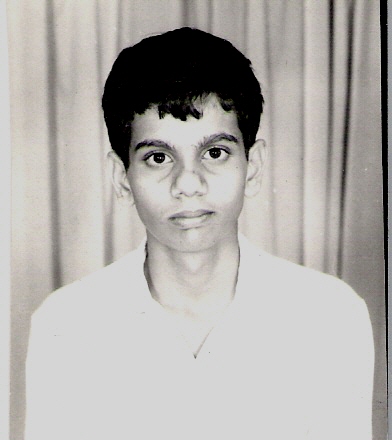 It was the first day of my fourth standard and the year was probably 1982. I was sitting on the sixth or seven row of classroom benches, when all of a sudden some of my batch-mates looked at me and burst out laughing. 'You have grown so fat in the vacations that we could not recognize you! You have almost doubled." The mangoes in the summer vacation did it. I had put on plenty of weight. From that day onward, I was nicknamed 'double'. I said to myself that something was seriously wrong with me and my body. I felt ashamed and I lost self respect. I was scared of people laughing at me too. I am laughable, I am awkward and I am weird, I said to myself and kept saying this for decades. In fact, I saw myself as so abjectly inferior in looks and I was so scared of classmates laughing at me that I even used to avoid combing my hair out of fear that they will laugh at me saying that even me - yes even me- is trying to look smarter!! I thought my nose was totally ugly and misshapen and my soft pot belly appeared to me as if it was 'weirdly ungainly, and clumsy' as a sign of my being 'not fit enough to live'. I But that wasn't all.
 It was probably in the eighth or ninth standard, when I remember a classmate named Rajat Doshi. He thought that my chest which had extra fat on it resembled woman's breasts. He used to constantly make fun of me by squeezing my chest, and saying ' pom, pom' and I used to get immensely hurt, hugely angry, and ashamed of it. I hated him for it, but I hated myself even more. I carried these events in my mind and made them mean that there was not just something wrong with me but also my 'manliness' as my chest seemed 'feminine'. My doubts about something being 'inadequate' about myself and my 'manliness' continued as I stated thinking and believing that my penis is 'short' and I kept reassuring myself by measuring it at times and saying that it seems to be ok!
As far as my health was concerned, I was convinced that I was destined to be ill forever as "my unit was defective and there was an inbuilt manufacturing defect". This basically meant I was unfit to live in this world and I was not made for this world. I was deeply resigned to my fate.
Whenever, I was with people, especially girls, I maintained a safe distance out of fear of people laughing at me. I avoided being noticed so as not to get 'caught' as someone who is awkward and shamefully inadequate in looks. I walled myself off from others. Obviously, I not only did not try to express my love or even talk to the girls I had crush upon, but I, who was ashamed of being who I was, was also ashamed of being timid and I punished myself for being timid. How can a girl love someone as 'unlovable' and 'deficient' as me? I became more and more reclusive, lonely, sad, very angry at myself and depressed. My sexual expression was in the safe 'risk-free' zone of fantasy and masturbation ( though 'fantasy' is hardly a risk-free zone, it used to run amok during night giving me terrors of being alone in the dark. I often used to imagine dead people turning up and invisible beings appearing all of a sudden and the very idea of being frightened frightened me!).
 Like Gregor Samsa in Franz Kakfa's The Metamorphosis, I was morphed into a dung beetle. Kafka's story celebrates the power of human imagination and language in literally transforming what is considered 'real'. That I was a dung beetle was no myth or archetype but 'reality'. Kafka is not using 'magic realism', he is talking about real things. The idea that I 'am' deficient if not downright ugly, 'unlovable' and 'unfit' to live was so 'real' that when some girls actually proposed to me, I did not believe a word of it!! I also remember that when I got engaged to Ashwini and she praised men for their looks and smartness, I told myself that how could she possibly love me and that I was 'not the man of her dreams' and due to economical reasons, she has to marry me. My self-image, my body image and my beliefs played havoc in my married life and love life.
 Steve Zaffron and Dave Logan in their powerful book Three Laws of Performance state that our actions and behaviour is 'correlated' to how things 'occur or show up' to us and how the things occur to us arises only through and in language. Language is the context which determines how things show up in our life, and how and what we see. Our conversations determine what we see and how we see things. What is 'real' to us is determined by the language. The pretty girl walking on the crowded street becomes pretty for me when I have a conversation about her prettiness. She becomes 'real' as a pretty girl on the street. Otherwise there are billions of things on the street which exist at level of undifferentiated mass of experience. My conversation about her, 'differentiates and distinguishes' her from the mass of undifferentiated experiences on the street and makes her 'real' for me. My word creates my world.
 Same thing happened to me and my body. My conversation that 'something was wrong' with my body created this wrongness.That my body was 'awkward, clumsy, unattractive, defective' and that I was 'timid', 'unlovable' were the conversations which provided the context to how things occurred or showed up in my life. These conversations, however, remained in the background like 'blind-spots'. The black showed up only against the white background. In fact, when I look back, I am doubtful whether was 'really as obese' in those days as I had imagined I was. It was something like 'body dysmorphic disorder' where person isexcessively concerned about and preoccupied by a perceived defect in his or her physical features.
When I distinguished that I had created my body as it occurred to me with my own conversation, I took responsibility for the way my body is and the way it is not. Instead of seeing myself as a'victim' of my own body, or nature or my fate, I place myself in the position of the creator. I saw that MY conversations that my penis is small, my belly is weak and weirdly flabby, my chest is 'feminine' , my nose is misshapen and that I am timid, 'defective unit' and unlovable created the contexts in which all relationships, including the those with myself, showed up. When I see this, I can 'drop these conversations', I dismantle this disempowering life full of suffering and struggle.
This, however, does not mean I am advocating 'positive thinking'. In positive thinking, the 'occurring reality' does not change. One keeps on mechanically saying positive things about oneself, because one 'knows' that 'something is truly wrong'. The things which are threatening or wrong are still threatening and wrong to people who are practicing 'positive thinking'. The people who try to think 'positively' fail because the assumption that the things are 'negative' does not change. The positive thinker does not take 'responsibility' for generating 'negative reality' through language.
Today, I see my body as being whole, complete and perfect and there is nothing wrong with it. I created a possibility of being comfortable with myself, peaceful in mind and relaxed with people of all genders. I can naturally be who I am, instead of fretting and feeling awkward about my looks and my body. I feel so happy and light about my body. The possibility of authentic and powerful self-expression and authentic intimacy shows up in my life for the first time. The resignation about my health vanishes and I standing in these possibilities, I take action......

July 30, 2011
On Caste-Based Reservation in Education
Historically, due to caste system, the access to knowledge in India was restricted to very low percentage of population . So technically, we have always had the system since centuries,only that it worked in primarily favour of the " upper castes". What is the Gurukul system but a system of reservation where only the top three Varnas were allowed to enter. When the system of reservation was turned up side down after the Independence, there was hue and cry regarding merit from people who have been enjoying the privileges since centuries. Had Eklavyas been 'admitted' on the bases of 'merit' instead of "only upper caste" system of reservation functioning at Dronacharya Gurukuls,we would not have needed the reservation system today.
Caste system is in essence is " reservation system" which goes back five thousand years on the subcontinent. Reservation applies to who can or cannot be 'touched', who can marry whom, who can eat with whom, who will do which work, who is 'pure' and who is 'impure'. Basically who is 'superior' and who is 'inferior' and all this is decided by birth- no amount of financial or social mobility can erase your 'distinction'. Unlike 'race' where biological markers play a prominent role ( though not always) caste has no biological markers- a brahmin can be dark skinned and a shudra can be fair and yet brahmin remains 'superior' to others.
There are still plenty of cases where children of poor illiterate parents enter educational system and allowing them to compete with students whose parents and grandparents and great grandparents have had the benefits of " upper caste only" system of reservation in India functioning since centuries is simply callous and hypocritical. Reservation in theory is about providing level playing field, though in practice it has not worked very effectively like most of well intentioned schemes in India.Just because something is not being implemented effectively does not mean it should be scrapped. If this were the case we should scrap the traffic rules also.
Reservation is not about being condescending and obliging. It is about giving equal opportunity which all citizens of India deserve. If the thesis is bad than no amount of pestering should be permitted to get it through just because of the caste of the researcher, reservation does not mean breaking the rules, it is about following them.
People who raise hue and cry about reservation dont realize that reservation is given at the level of 'admission' and it is not gracing to pass. An ST or SC might get 'admission' but he/she has to work equally hard as others to pass and if he/she does he is as good as or as bad as others...
In a fundamentally unfair society, there is a 'choice' between injustice at the individual level ( an upper caste student who gets high percentage and does not get admission due to reservation) and injustice at collective level- entire community being denied 'admission' for centuries. Not that I like this predicament myself, but I prefer doing injustice to a minority of individual than doing injustice to entire communities.
It so happens that the most of the people who have access to technology and are articulate against the system of reservation are the people who have belonged to communities which benefited from the 'unofficial' and 'informal' system of reservation and hence they are heard the most on the media ( TV and the Net)...but I do know some people who belonged to the so-called backward castes and have rejected reservation....
( Views expressed on the Facebook community called Netrutva: Teachers for Transformation and Leadership)
Caste system is in essence is " reservation system" which goes back five thousand years on the subcontinent. Reservation applies to who can or cannot be 'touched', who can marry whom, who can eat with whom, who will do which work, who is 'pure' and who is 'impure'. Basically who is 'superior' and who is 'inferior' and all this is decided by birth- no amount of financial or social mobility can erase your 'distinction'. Unlike 'race' where biological markers play a prominent role ( though not always) caste has no biological markers- a brahmin can be dark skinned and a shudra can be fair and yet brahmin remains 'superior' to others.
There are still plenty of cases where children of poor illiterate parents enter educational system and allowing them to compete with students whose parents and grandparents and great grandparents have had the benefits of " upper caste only" system of reservation in India functioning since centuries is simply callous and hypocritical. Reservation in theory is about providing level playing field, though in practice it has not worked very effectively like most of well intentioned schemes in India.Just because something is not being implemented effectively does not mean it should be scrapped. If this were the case we should scrap the traffic rules also.
Reservation is not about being condescending and obliging. It is about giving equal opportunity which all citizens of India deserve. If the thesis is bad than no amount of pestering should be permitted to get it through just because of the caste of the researcher, reservation does not mean breaking the rules, it is about following them.
People who raise hue and cry about reservation dont realize that reservation is given at the level of 'admission' and it is not gracing to pass. An ST or SC might get 'admission' but he/she has to work equally hard as others to pass and if he/she does he is as good as or as bad as others...
In a fundamentally unfair society, there is a 'choice' between injustice at the individual level ( an upper caste student who gets high percentage and does not get admission due to reservation) and injustice at collective level- entire community being denied 'admission' for centuries. Not that I like this predicament myself, but I prefer doing injustice to a minority of individual than doing injustice to entire communities.
It so happens that the most of the people who have access to technology and are articulate against the system of reservation are the people who have belonged to communities which benefited from the 'unofficial' and 'informal' system of reservation and hence they are heard the most on the media ( TV and the Net)...but I do know some people who belonged to the so-called backward castes and have rejected reservation....
( Views expressed on the Facebook community called Netrutva: Teachers for Transformation and Leadership)
July 1, 2011
'Complayt, Comp. Lit or Complete' Or 'What the *#$% is Comparative Literature and Why are They Saying such Awe(Ful/some) Things About It?
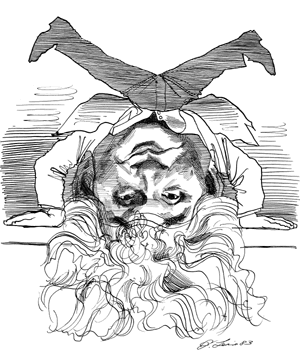 The word 'complayt' is a colloquial Gujarati word which signifies perfection and completeness of the job done or to be done as in 'kaam complayt'. The word, of course, is borrowed from English. I noticed the pun on 'Comp. Lit' and 'complete' ( in the sense of being finished), in the sly word-play of Jacques Derrida in his lectures delivered at Yale University in 1979-80 published as ' Who or What Is Compared? The Concept of Comparative Literature and the Theoretical Problems of Translation' in the Winter and Spring 2008 Issue of Discourse (translated by Eric Prenowitz). Derrida astutely points out the hackneyed and facile binary of' 'life' and 'death' seems to haunt the theoretical discussions on comparative literature. This was well two-and-half decade before Derrida's translator and postcolonial theorist Gayatri Spivak declared Death of the Discipline in 2004 and Susan Bassnett's contention that the emerging discipline of translation studies will eclipse comparative literature. Haun Saussy report on the health of the discipline in America in 2006 declares,"Comparative literature has, in a sense, won its battles. It has never been received in the American university ". Reports of the death or rebirth or renewal of the discipline are rather tedious, as is the agonized navel gazing regarding its own methodology. The skepticism regarding its foundations is as old as the discipline itself. Derrida's critique is aimed at the universalist- imperialist ambitions of comparative literature as manifested in its 'encyclopediac' nature, which he compares with the figure of Prof. Pangloss, an optimistic scholar, in Voltaire's Candide.
 The earliest attempts to establish 'Comp.Lit' were often met with dismissive hostility. Rene Wellek cites Lane Cooper of Cornell University who said that Comparative Literature was a "bogus term" that "makes neither sense nor syntax." "You might as well permit yourself to say 'comparative potatoes' or 'comparative husks.'" Croce in 1903 saw it as a non-subject and the efforts to establish it as a separate discipline were futile. Croce saw it as methodology which was part of the effort to arrive at complete explanation of a literary work in the context of the 'universal literary history'. If something is a methodology, it cannot be a discipline in its own right. The skepticism regarding the discipline has persisted throughout the period of what Rene Wellek called the 'Crisis' of comparative literature.
  Personally, I don't think 'Comparative Literature' is either a distinct discipline or a distinct methodology. It is rather
an alternative
conception
of literature
. Instead of the mono-literary studies which see a single literature as something organic, static and autonomous, 'comparative literature' conceives literature as essentially heterogeneous, dynamic and open ended cultural phenomenon, which can be understood only in the context of a complex network of historical relationships which cut across cultures, languages, places, periods and even media. Though comparative literature may be struggling to find itself as a distinct discipline, this alternative conception of literature has gained wide acceptance in serious literary research, thanks to the explosion of 'Theory' in the later half of the twentieth century. It is is in this sense, that Saussy feels that comparative literature has won its battles. Saussy feels that comparative literature is selfless, meaing that it has no unique or distinct identity as well as in the sense of its generosity. It doesn't, for instance, demand a small tax from English literature departments, every time they quote Spitzer, Auererbach, Wellek, Spivak or de Man. This discipline, Saussy thinks, is an 'anonymous universal doner' to mono-literary studies.
Personally, I don't think 'Comparative Literature' is either a distinct discipline or a distinct methodology. It is rather
an alternative
conception
of literature
. Instead of the mono-literary studies which see a single literature as something organic, static and autonomous, 'comparative literature' conceives literature as essentially heterogeneous, dynamic and open ended cultural phenomenon, which can be understood only in the context of a complex network of historical relationships which cut across cultures, languages, places, periods and even media. Though comparative literature may be struggling to find itself as a distinct discipline, this alternative conception of literature has gained wide acceptance in serious literary research, thanks to the explosion of 'Theory' in the later half of the twentieth century. It is is in this sense, that Saussy feels that comparative literature has won its battles. Saussy feels that comparative literature is selfless, meaing that it has no unique or distinct identity as well as in the sense of its generosity. It doesn't, for instance, demand a small tax from English literature departments, every time they quote Spitzer, Auererbach, Wellek, Spivak or de Man. This discipline, Saussy thinks, is an 'anonymous universal doner' to mono-literary studies. In the Indian context, scholars like Sisir Kumar Das, Amiya Dev, Chandra Mohan, GN Devy , Sujit Mukherjee and Avadhesh Kumar Singh have tireless promoted 'Comp. Lit' as the only true way of studying Indian literature in a multillingual and multi cultural context such as ours. I believe this is the only way you study ANY literature, not just 'Indian Literature', meaningfully in our country. Even when the Birje-Patils and V.Y. Kantaks of the yore wrote about Shakespeare, they were reading Shakespeare as Indians- they couldn't possible read him as native speakers. Consciously or unconsciously, they were already practicing comparative literature. When we 'teach' Jane Austen to the undergrads, we are actually doing comparative literature. How else can the things 'coming out' or 'curtsy' in Jane Austen make any sense to the Indians? Is not teaching of literature in India, an inherently comparative practice?
 This year, when we at the Department of English of the Maharaja Sayajirao University of Baroda are introducing comparative literature as a core paper at the post graduate level for the first time, you-know- who will be the instructor. Susan Bassnett says that people start in different people but soon find themselves moving towards 'comp.lit' . Though my journey towards 'comp. lit' as a discipline officially began with my doctoral research in translation studies at the beginning of the new millennium, I was already 'doing it' when I was translating excerpts from Macbeth and Savitri during my undergrad years. I was already 'doing it' when I was reading Alfred Hitchcock and the Three Investigators, Sherlock Holmes and Adventures of Tintin as an Indian teenager, from a specific cultural, historical and social location. Though it was unconscious, the location had distinctly shaped my perception and reception of these texts. It was during my doctoral research into translation, where I translated poetry of a great Gujarati poet of the fifteenth century- Narsinh Mehta into English for my thesis-by-translation that I was 'self-consciously' a comparatistic. I remember Prof. Kimbahune who recommended Dionyz Durisin, a major Slovak comparitist and gifted me a photocopy of Durisin's important book Theory of Literary Comparatistics (1984). Prof Kimbahune believed, and quite rightly so, that the theories of the East European scholars like Durisin are more relevant to the Indian context. Durisin's notions of 'interliterariness' and interliterary processes provide a critical and more useful alternative to the influential positivist French School framework of ' influence studies' based on the 'binary' system.
 Bassnett believed that translation studies would eclipse comparative literature. I, however, believe that translation studies should eclipse all literary studies in India . After all, I think, we as Indians are essentially translated people,living in a translated culture, eating translated food, wearing translated clothes, watching translated movies, studying translated texts and using translated ideas. Translation studies as a inter-discipline investigating the complex phenomenon and the processes of intercultural transfer and transformation would be one of the most important disciplines in the age of globalization where the global and the local are continuously translating each other at a rapid speed. This rapid and mutual transformation would be resulting in a 'world culture' probably which would neither be fully global nor local and connected by information technology networks and satellite media. Translation studies will be able to tell us how this world culture is shaping up and why.
Consider the case for the word 'complayt' in colloquial Gujarati. It is an example of what JC Catford in his famous A Linguistic Theory of Translation (1965) calls ' transference' , and a form lexical borrowing which though is used in more or less same semantic field but in an entirely different register and context. These are the processes which make our languages. Languages, after all, are our cultures and are who we are. And then they are also who we can be.
In an era where the mourning for 'death of Indian languages' is quite intense, translation studies will demonstrate how new languages are being born everywhere. These new languages will be our languages of the future. As academicians mourn the death of Marathi or Gujarati or Bengali, newer and newer Marathis and Gujaratis and Bengalis are being born outside the academia. What is translation, after all, but creation of a new language, a language which is neither the 'source/original' nor is it 'target'. As newer and newer languages are born ' between' languages- translation studies will provide us with tools to study contemporary cultures. I don't think the cultural studies will swallow translation studies, I am afraid, it will be the other way round. Translation studies will have to 'complayt' the work started by cultural studies,literary studies and comparative literature.........

June 2, 2011
Uncovering the Hidden Contexts of My Life: Telling My S from the Hole in the Ground
When I was returning from the Landmark Branding Event last month, I boarded a reserved compartment in the train during the 'peak season' of the summer vacation. And I had no reservation. I knew I had to pay the fine etc. I talked to the Ticket Conductor. There were two other people like me and the TC told me that it would cost Rs. 350. I agreed. Out of the two other people, one looked confident about the whole business. He had done this sort of thing before. In fact, I had done the same thing in the morning. However, being the bird of the feather, I stuck together with two of these people. We had to move from compartment to compartment before, the TC could allot a final place to us. The more experienced chap said that we would buy two tickets and the three of us would managed. Unthinkingly, I agreed. Late evening, when the things settled and I got a place, an upper berth, I somehow had to adjust a stranger and it became very very uncomfortable indeed. This might be apparently just a trivial episode in my life, but it is the story of my life: lack of confidence and unthinking commitments and plenty of situations like this. I used to rely on my father for his advice, reassurance and support in almost all important decisions in my life. And I even used to resent him for being so caring and supportive so as to make me dependent! So what was at the source of my lack of confidence and resentment? Well, towards the end of the Self Expression and Leadership Program of the Landmark Education, I could 'distinguish' the source. The context, in fact, the hidden context of my life.
The Landmark Education is all about distinguishing and uncovering the hidden contexts of our life which keep us in dis-empowered and transforming them. In the Landmark Technology, 'Context' has nothing to do with the theories or notions of contexts. The context is what determines what and how things show up in our life, but the 'context' itself never shows up. It is like the white background, in front of which a black or blue object shows up, but a white object remains invisible. It is like yellow light in the room where a blue colored object shows up as green. The power of context can be illustrated by an anecdote. A man sees two workers breaking stone on the street. One of them looks joyous and elated and the other looks upset and tired. The man asks the person who looks fatigued and angry what he was doing, the worker replied that he was breaking the stones since morning and he hated his job. The man asks the other person why did he look joyous though he was doing the same work. The happy man replied that he was building a university where his grandchildren and their grandchildren might study and have a better life. Two people doing the same work were working with different contexts and hence their work showed up -occurred- in entirely different ways to them. My mother used to constantly tell me to take non-conventional medicines: haldi, kaadha and Ayurvedic syrups of all sorts, and this used to infuriate me. I hated those medicines and thought that my mother was pestering me and harassing me all the time with this non-sense. Later, thanks to the Forum, I realized that it was her love and concern and this was the way she expressed it. It would seem obvious for lots of other people, but for me the context was hidden, and hence I saw it as irritant.
So what was the hidden context of my lack of self confidence? I was lead to this context during a powerful inquiry into our lives in the Self Expression and Leadership Program using the distinction -"Who are you being such that others show up the way they are.." I was inquiring into certain issues I was dealing with in my family. My parents did not directly complain to me about what they did not like about me. Instead they kept on telling it to Ashwini and she used to bring it to me. Our coach Nandak Pandya asked me, 'Who are you being such that your parents or the wife cant deal with the things on their own and have to bring those things to you, directly and indirectly? What will you call people who cant deal with their problems on their own? '. The people who cant deal with the issues and problems on their own are obviously weak. So who was I being such that others in my life showed up as 'weak'? I asked myself was I being dominating? Was I being evasive? Was I scared to address these issues directly out of the fear of quarrels in the home? What will you call a person who is dominating, evasive and scared of confronting issues? Well, here was the hidden context of my life: I showed up in my life - I occurred to myself as WEAK. The whole life was then the game of hiding the fact ( it was a fact for me) that I was weak. My whole life, my diseases, my crushes, my habits, all the ways of being showed up in the context- I was weak.
In the Advanced Course, Praveen Puri demonstrated to us what the context is. He put up his two fingers and asked us what it was. We said 'two', 'sign of victory' or 'two fingers'. Then he asked us 'where' was 'two', 'sign of victory' or 'two fingers' were. We said they were their on his hand and where else. He said that we couldnt tell our S from the hole in the ground. He took a tennis ball and tossed it up and caught it. He asked us 'Where was the ball falling?', we said that it was falling in his hands. Again we were told that we could not tell our S from the Hole in the Ground. He said 'two', 'the sign of victory', or'two fingers' were words and they existed in language- not any language in our conversation. If no words like these existed the things would not exist for us the way they were doing now. A dog doesn't have the words' electricity pole' and so it uses it for a different purpose then we do. So these words become the context of what we see- our language-the language we use- is the hidden context of our life. My act- 'Stay Away from People' , my chief rackets- they don't care about me vs. I am no good' all these were basically conversations, meanings, stories which were the contexts of my life. They ran my life. These were the sources of my dis-empowerment, So I give up this conversation,'I am weak' and whole new relationship with myself begins. I see myself as powerful and effective. I see myself as someone who can make difference to the lives of people in my life. One of the intentions of the Advanced Course is to change our relation with ourselves so that all our relations, with people and with reality changes. This is what is meant by transformation.
I talked to my parents straight and asked them if they were afraid of me or found me dominating or evasive. They said that from now onwards, we will tell you straight.I also declared that I was taking up a project for bringing oneness and happiness in the family. They were quite happy with the idea.
A weak man clings to others when he feels insecure as during the boarding a reserved train compartment without reservation. A weak man 'adjusts' in spite of difficulties ( 'being adjusting' is one of my 'strong suits').A weak man worries about people finding out that he does not have stamina or health that other people. A weak man drives over cautiously and is worried about driving a four wheeler on an express highway. A weak man is scared of fights in the family and evades the issues. A weak man is afraid of being straight. A weak man feels he lacks stamina or strength. A weak man keeps people around him weak. So when I dropped this conversation and continuously distinguish and drop it every time it crops up, new possibilities of being and new possibilities of action call forth powerfully into action. I can drive my two wheeler more effectively, I can be someone who cant be messed with, I can be someone makes his money work for him. I can be someone who can be in charge of the affairs. I can be someone who is a possibility of empowerment. Now I am confidence. I am empowerment.
P.S. I asked myself- how does my body occur to me? I said 'burdensome', ' source of suffering', ' and ' unattractive'. I dropped the conversation ( you need the Landmark training to do that) and my body occurs to me light, a source of joy and attractive........the game of transformation is so thrilling and hellua fun!
The Landmark Education is all about distinguishing and uncovering the hidden contexts of our life which keep us in dis-empowered and transforming them. In the Landmark Technology, 'Context' has nothing to do with the theories or notions of contexts. The context is what determines what and how things show up in our life, but the 'context' itself never shows up. It is like the white background, in front of which a black or blue object shows up, but a white object remains invisible. It is like yellow light in the room where a blue colored object shows up as green. The power of context can be illustrated by an anecdote. A man sees two workers breaking stone on the street. One of them looks joyous and elated and the other looks upset and tired. The man asks the person who looks fatigued and angry what he was doing, the worker replied that he was breaking the stones since morning and he hated his job. The man asks the other person why did he look joyous though he was doing the same work. The happy man replied that he was building a university where his grandchildren and their grandchildren might study and have a better life. Two people doing the same work were working with different contexts and hence their work showed up -occurred- in entirely different ways to them. My mother used to constantly tell me to take non-conventional medicines: haldi, kaadha and Ayurvedic syrups of all sorts, and this used to infuriate me. I hated those medicines and thought that my mother was pestering me and harassing me all the time with this non-sense. Later, thanks to the Forum, I realized that it was her love and concern and this was the way she expressed it. It would seem obvious for lots of other people, but for me the context was hidden, and hence I saw it as irritant.
So what was the hidden context of my lack of self confidence? I was lead to this context during a powerful inquiry into our lives in the Self Expression and Leadership Program using the distinction -"Who are you being such that others show up the way they are.." I was inquiring into certain issues I was dealing with in my family. My parents did not directly complain to me about what they did not like about me. Instead they kept on telling it to Ashwini and she used to bring it to me. Our coach Nandak Pandya asked me, 'Who are you being such that your parents or the wife cant deal with the things on their own and have to bring those things to you, directly and indirectly? What will you call people who cant deal with their problems on their own? '. The people who cant deal with the issues and problems on their own are obviously weak. So who was I being such that others in my life showed up as 'weak'? I asked myself was I being dominating? Was I being evasive? Was I scared to address these issues directly out of the fear of quarrels in the home? What will you call a person who is dominating, evasive and scared of confronting issues? Well, here was the hidden context of my life: I showed up in my life - I occurred to myself as WEAK. The whole life was then the game of hiding the fact ( it was a fact for me) that I was weak. My whole life, my diseases, my crushes, my habits, all the ways of being showed up in the context- I was weak.
In the Advanced Course, Praveen Puri demonstrated to us what the context is. He put up his two fingers and asked us what it was. We said 'two', 'sign of victory' or 'two fingers'. Then he asked us 'where' was 'two', 'sign of victory' or 'two fingers' were. We said they were their on his hand and where else. He said that we couldnt tell our S from the hole in the ground. He took a tennis ball and tossed it up and caught it. He asked us 'Where was the ball falling?', we said that it was falling in his hands. Again we were told that we could not tell our S from the Hole in the Ground. He said 'two', 'the sign of victory', or'two fingers' were words and they existed in language- not any language in our conversation. If no words like these existed the things would not exist for us the way they were doing now. A dog doesn't have the words' electricity pole' and so it uses it for a different purpose then we do. So these words become the context of what we see- our language-the language we use- is the hidden context of our life. My act- 'Stay Away from People' , my chief rackets- they don't care about me vs. I am no good' all these were basically conversations, meanings, stories which were the contexts of my life. They ran my life. These were the sources of my dis-empowerment, So I give up this conversation,'I am weak' and whole new relationship with myself begins. I see myself as powerful and effective. I see myself as someone who can make difference to the lives of people in my life. One of the intentions of the Advanced Course is to change our relation with ourselves so that all our relations, with people and with reality changes. This is what is meant by transformation.
I talked to my parents straight and asked them if they were afraid of me or found me dominating or evasive. They said that from now onwards, we will tell you straight.I also declared that I was taking up a project for bringing oneness and happiness in the family. They were quite happy with the idea.
A weak man clings to others when he feels insecure as during the boarding a reserved train compartment without reservation. A weak man 'adjusts' in spite of difficulties ( 'being adjusting' is one of my 'strong suits').A weak man worries about people finding out that he does not have stamina or health that other people. A weak man drives over cautiously and is worried about driving a four wheeler on an express highway. A weak man is scared of fights in the family and evades the issues. A weak man is afraid of being straight. A weak man feels he lacks stamina or strength. A weak man keeps people around him weak. So when I dropped this conversation and continuously distinguish and drop it every time it crops up, new possibilities of being and new possibilities of action call forth powerfully into action. I can drive my two wheeler more effectively, I can be someone who cant be messed with, I can be someone makes his money work for him. I can be someone who can be in charge of the affairs. I can be someone who is a possibility of empowerment. Now I am confidence. I am empowerment.
P.S. I asked myself- how does my body occur to me? I said 'burdensome', ' source of suffering', ' and ' unattractive'. I dropped the conversation ( you need the Landmark training to do that) and my body occurs to me light, a source of joy and attractive........the game of transformation is so thrilling and hellua fun!