Reino Gevers's Blog, page 3
June 30, 2025
Reclaiming Democracy: A Call for Moral Action
Authoritarian movements are not historical accidents. They are the outcome of a long, steady erosion of the moral and spiritual foundations that once underpinned Western societies. The Judaic-Christian values that emphasized community, compassion, and responsibility have weakened, leaving a vacuum filled by grievance culture and divisive tribalism.
A growing number of people feel frustrated, aggrieved, and desperate as societies fracture between the privileged and the left-behind. Rapid technological disruption and sweeping social changes have upended long-held certainties. Entire communities have been dislocated, and the Covid-19 pandemic only deepened the sense of instability and loss.
Traditional institutions in education, religion, media, and politics have not addressed the alienation felt by millions. Students of history will recognize these conditions. Today’s authoritarian movements bear an uncanny resemblance to the turmoil and mass manipulation of the late 1920s and 1930s.
In A Preface to Morals (1929), Walter Lippmann foresaw the dangers of moral relativism and cultural drift:
“When men can no longer be the slaves of tradition, they must be the slaves of reason. If they will not be slaves of reason, they must be the slaves of their passions… And if each man is to judge for himself what is true and false, right and wrong, then we are already at the end of civilization.”
Authoritarian movements offer the illusion of safety and belonging. But instead, they further tear apart the fabric of civil society. Families, communities, and congregations fracture into warring factions, each loyal to its own tribe, and its own version of truth.
The Role of MediaTraditional media once acted as a civic compass, a watchdog of power. But in the digital age, social media algorithms amplify the most extreme, emotional, and divisive content. Outrage sells; nuance does not. Facts struggle to compete with feelings. In this climate, truth is no longer a shared destination but a weapon of personal or political gain.
 The Sacrifice of Traditional Values
This is fertile ground for demagogues who distort Judaic-Christian values beyond recognition. Empathy is rebranded as a fatal flaw. Power is idolized; the weak and vulnerable are mocked as “parasites.” Even the medieval theology of ordo amoris—originally a call to rightly ordered love—is weaponized to justify a hierarchy of compassion: prioritize citizens over foreigners, neighbors over strangers. In this logic, cutting humanitarian aid for millions of people becomes not just acceptable, but righteous.
Yet most theologians, including Pope Francis, have challenged this interpretation. He reminds us that unconditional love lies at the heart of the Christian faith, and that true morality cannot be confined to borders or tribal interests. The parable of the Good Samaritan teaches that love recognizes no boundary.
As former U.S. President Jimmy Carter once put it:
The Choice Before Us“It is the weak nation that must behave with bluster, boasting, rashness, and other signs of insecurity.”
Strong societies practice humility. They uphold compassion, generosity, and justice—especially toward the most vulnerable.
With traditional norms under siege and authoritarianism corroding democratic institutions, the burden of responsibility falls on we the people, every one of us. Troubled times, however grim, present a profound opportunity for reflection and moral clarity. There will come the realization that there is no hero coming and no savior on the horizon.
Change begins within—when individuals reclaim their agency, resist distraction, and choose courage over comfort. But it cannot end there. Lasting transformation happens when people come together, organize with purpose, and hold power to account.
For democracy to endure, it must do more than preserve procedures. It must recover its soul and the shared commitment to truth, moral responsibility, and compassion.
A democracy worthy of its name serves all people, not just the powerful elite. It confronts inequality, ensures access to healthcare, housing, and education, and defends the dignity of every human being. It protects the environment not as an afterthought, but as a sacred trust, recognizing that the future of life itself depends on how we care for the Earth today.
Democracy ultimately is not merely a system of governance. It is an expression of our collective values. And its survival depends on whether we are willing to live them.
Reino Gevers – Author – Mentor –Speaker
P.S: If you enjoyed this article you might be interested in my very latest book: Sages, Saints and Sinners Get it today on Amazon, Barnes & Noble and where all good books are sold.
WordPressFacebookInstagramBlueskyAmazon

June 23, 2025
The Dark Forces Behind Trump’s Ascent
Outside the United States, the dominant narrative often ridicules Donald Trump as a bumbling demagogue, rambling, incoherent, and detached from the nuances of governance. But this portrayal misses the deeper forces at play.
Trump’s rise was not accidental; it was engineered with the backing of ultra-conservative oligarchs who possess both vast resources and a strategic vision. These were not grassroots movements but top-down maneuvers with ideological roots and economic interests.
Read also my Blogs, some written well before the events currently unfolding
Sleepwalking into authoritarianism
You are the master of your destiny
The evolutionary advantage of empathy
The erosion of the political center
The erosion of the political center and the rise of polarization in the U.S. have been profoundly shaped by libertarian and conservative factions endowed with virtually unlimited funds. Billionaires like Peter Thiel and Elon Musk have openly stated that Trump’s ascent would not have been possible without their support. And their motivations are far from altruistic.
Both Thiel and others in this elite class have cited Ayn Rand as a formative influence. Her novels, widely read across the U.S., present a moral universe where self-interest is a virtue and government is the enemy. Rand’s rejection of regulation and welfare has nurtured a radical anti-state ideology that now animates the far right with their “deep state” conspiracy narratives. In her worldview, society’s value lies with the so-called “makers”—a few brilliant individuals who create wealth and innovation, while the majority are portrayed as burdensome “losers.” Here is an interesting background report to Thiel’s philosophy.
The disturbing elitist anti-democratic instinct
This elitist framing feeds into a disturbing anti-democratic instinct, where the “masses” are seen as lazy, entitled, and undeserving of political agency. It justifies an authoritarian approach under the guise of meritocracy.
Yet Rand’s extreme individualism stands in stark contrast to the core values that have historically bound societies together, such as empathy, community, shared responsibility, and spirituality. Her ethical framework, which pits rational selfishness against what she paints as servile altruism, ignores the vast moral terrain between those extremes. Most philosophers reject her ideology as an inadequate foundation for a just society. It fails to account for justice, compassion, and the relational fabric that makes us human.
Rand’s capitalism is idealized as a flawless, self-correcting system—blind to monopolistic power, environmental destruction, labor exploitation, and corporate manipulation. Within this context, the so-called crusade by Elon Musk’s “Doge team” to dismantle the “deep state” is easier to understand. It is not a battle for freedom—it is a push to eliminate oversight, regulation, and democratic checks and balances that constrain oligarchic power.
Truth is the first casualty
This becomes especially alarming when such immense power is concentrated in individuals who can bend public opinion to their will through control of social platforms and narratives. Truth is often the first casualty of authoritarian ambition, and we are witnessing this erosion in real time. Media outlets that deviate from the approved script are threatened with lawsuits or delegitimized outright.
What is unfolding in the United States will reverberate globally. Liberal democracies—already struggling to maintain the credibility of their institutions—are on the defensive. The far-right argument is gaining traction: that democracy is inefficient, corrupt, and too cumbersome to solve today’s challenges. Bureaucracy is cast as inept; public service is derided; the concept of government itself is being hollowed out.
This narrative is not unique to the U.S. During the Brexit debate, the cry of “freedom from Europe” resonated with voters convinced that Brussels was squandering British taxpayers’ money. That campaign triumphed, but the aftermath has been devastating. Brexit has curtailed travel, limited residency rights, and is expected to shrink the U.K.’s GDP by at least four per cent annually in the years ahead. It is one of the most self-destructive political decisions in modern European history.

The argument from the extreme right is increasingly explicit: benevolent authoritarianism is superior to democracy. But history tells a different story.
Vladimir Putin rose to power promising order after the chaos of the Yeltsin years. Over time, he dismantled Russia’s democratic structures entirely. Today, the wealth of the nation is concentrated in the hands of Putin and a small cadre of oligarchs, while dissenters are imprisoned, exiled, or killed.
Even so-called reformist authoritarians come with deep costs. Mustafa Kemal Atatürk modernized Turkey and established a secular state, but did so through repression of opposition and suppression of civil liberties. Deng Xiaoping lifted millions out of poverty in China, but maintained strict one-party rule and oversaw brutal crackdowns, including Tiananmen Square.
Ultimately, the question facing millions in this age of disorientation and instability is stark:
How much personal freedom are we willing to trade for the promise of economic stability and safety?
Authoritarians offer a compelling message: democracy is messy, crime-ridden, and overly tolerant of “the other.” They promise law, order, and security. But this is a mirage. There is no true safety in an authoritarian state. Free expression becomes a privilege of conformity. Those who think differently, worship differently, or challenge the status quo are criminalized, dehumanized, imprisoned, or worse.
Such regimes give birth to dystopias devoid of creativity, individuality, and hope. Citizens are reduced to obedient subjects, forced to idolize leaders who, in truth, hold them in contempt.
Authoritarianism doesn’t just erode the soul of a society but rewires its moral compass, hollowing out the institutions that hold truth, justice, and human dignity in place. Once that unraveling begins, rebuilding becomes a generational challenge.
It often follows in the aftermath of economic ruin, fractured communities, and the silencing of critical thought. The cost is not merely political; it is spiritual and cultural. What is lost is not easily recovered: the ability to dream freely, to dissent without fear, to imagine a shared future that belongs to all. The true danger lies in the kind of people we become under authoritarian rule.
Reino Gevers – Author – Mentor –Speaker
P.S: If you enjoyed this article you might be interested in my very latest book: Sages, Saints and Sinners Get it today on Amazon, Barnes & Noble and where all good books are sold.
WordPressFacebookInstagramBlueskyAmazonJune 15, 2025
When the Lights go Out
It doesn’t take a coup or a dictator to kill a democracy. Sometimes, the rot begins from within, in slow motion and in plain sight.
Across America and other traditional democracies, the checks and balances that are foundational in free societies are being chipped away.
If history teaches us anything, it’s this: when authoritarianism rules everyone loses—freedom, dignity, truth, and the very social fabric that makes us human.
The grim reality of authoritarian rule
Envision yourself living in a country where even the mildest critique of the ruler could land you behind bars or strip you of your livelihood. The airwaves echo incessant hymns of praise for the leader, while simultaneously stoking hate towards both real and imagined adversaries. Meanwhile, your son lives in constant fear, knowing he could be conscripted at any moment into a futile war.
This is a grim reality in Russia and a growing number of countries, casting a shadow over the lives of its citizens.
Alarmingly, this pattern could potentially spread to democracies where generations have relished unparalleled freedoms, blissfully unaware of the true implications of authoritarian rule and its pervasive influence on society.
Across the globe, we witness a gradual erosion of fundamental liberties and democratic principles. Even within Western democracies long considered bastions of stability, nefarious political factions are becoming mainstream, posing a major threat to the established order.
The Democracy Index for 2019 found that democratic backsliding across the world has led to the worst score since the index was first produced in 2006, with only 5.7 percent of the global population living in what could be considered a “full democracy.”
Rightwing extremist parties weakening entrenched democracies
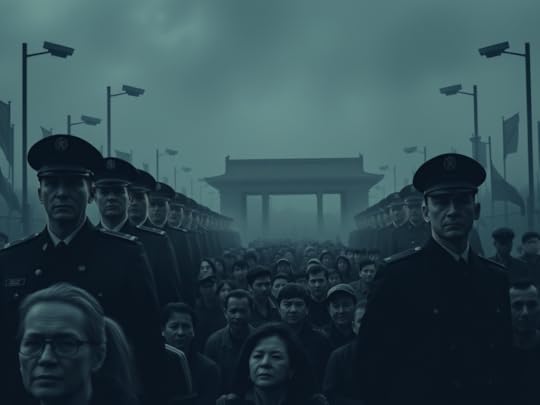
A Berlin-based leading Civil liberties network has warned that the rule of law is declining across the European Union as far-right parties continue to weaken legal and democratic checks and balances. Liberties in entrenched democracies such as Sweden and Italy are in a gradual process of retreat and risk becoming systematic, according to the 2024 Liberties Rule of Law Report.
Democracy and civil liberties take many decades to be entrenched in society while it takes only one government to dismantle everything. Freedom of the press can be stifled overnight, opposition parties banned or intimidated, and judges and civil service members replaced with regime-friendly acolytes. All this has played out in Hungary, once a democratic country but now under authoritarian rule of Victor Urban.
The frightening scenario is that the process takes place gradually and incrementally with an electorate sleepwalking into authoritarianism.
We need only to look at history to understand how quickly basic freedoms can be usurped when a society fails to heed the warning signs. Adolf Hitler’s ultimate plan to extinguish the Jewish population with a German Reich controlling all of Europe was clearly outlined in his 1925 autobiographical manifesto “Mein Kampf”, compounding existing beliefs, fears, and xenophobia.
When opinion becomes an entrenched belief when truth becomes a lie and the mind refuses to accept an alternative idea or perspective, it is but a short road to authoritarianism.
Hitler’s explicit racial theories were openly portrayed in “Mein Kampf” and in his speeches before coming to power: Jews, Slavs, and other non-Aryan groups were described as subhuman and deserving of extermination or subjugation. His vision for a racially pure society involved the systematic elimination of “undesirable” populations that eventually culminated in the Holocaust. People in the mid-1920s failed to fully comprehend Hitler’s intentions for territorial expansion (Lebensraum) and the establishment of a racially pure Aryan state.
The suppression of dissent, the elimination of political opposition, and the manipulation of propaganda to indoctrinate the German population with Nazi ideology was introduced gradually. The policy of appeasement with influential groups of Nazi sympathizers in the United States, Britain, and other countries, eventually paved the way for one of the darkest periods in human history.
Authoritarianism goes against all human dignity and essentially gives power to a single ruler or small clique that inevitably ends up enriching itself at a terrible cost to the majority of the population. It is a one-way street where everyone loses.
Democracy can only endure when it is grounded in a robust system of checks and balances, supported by a vigilant and critical civil society. The authoritarian regimes of the last century unleashed unimaginable catastrophes, including two world wars and a genocide unparalleled in human history.
At its core, democracy champions freedom of expression, individual liberty, and tolerance. It allows you to fully express and live your potential without fearing repression and control by a state.
Democracy can be chaotic, messy and loud, allowing a platform and freedom of speech for everyone.
Yet, these very values are increasingly vulnerable to exploitation by extremists. Before we fully recognize the threat, power can fall into the hands of individuals whose sole aim is personal advantage, subjugation and control.
Authoritarianism, grounded in fixed belief and fanaticism ultimately creates a toxic emotional state, blending fear, anxiety, and anger. It fosters dehumanization, deepens political polarization, and fractures social cohesion.
On a personal level, it becomes a significant barrier to self-growth and spiritual evolution. In a rapidly changing world, adapting is essential for survival. Clinging to rigid beliefs not only limits personal transformation but also blinds you to the new opportunities and possibilities the universe continually offers.
Reino Gevers – Author – Mentor – Speaker
P.S: If you enjoyed this article you might be interested in my very latest book: Sages, Saints and Sinners Get it today on Amazon, Barnes & Noble and where all good books are sold.
May 26, 2025
The peril of rigid belief
Throughout history, one of the most potent catalysts of conflict and war has been humanity’s deep-seated addiction to rigid concepts and beliefs, particularly those rooted in religion, ideology, and political affiliation. These mental fixations often block the path to growth, empathy, and the elevation of consciousness.
While society rightly highlights the dangers of substance addictions like alcohol and drugs, we often overlook an equally destructive force: the psychological and emotional dependence on fixed worldviews. This addiction becomes especially visible during periods of rapid social upheaval and crisis. In such times, people often cling even more tightly to their beliefs, seeking certainty in a world that feels uncertain.
At the heart of these belief systems lies a refusal to entertain alternative perspectives. Even when faced with overwhelming evidence or scientific data, those entrenched in ideological thinking will often reject reason itself. For many, admitting they might be wrong is more terrifying than death. They become prisoners of their own convictions.
Scapegoating and misinformation
The COVID-19 pandemic offered a sobering modern example. As the virus swept across the globe, so too did a parallel wave of conspiracy theories, scapegoating, and misinformation. Rational discourse was drowned out by fanaticism. In many places, especially the United States, this led to deepening political polarization and extremism. Civil debate between differing political camps has become virtually impossible.
During the lockdown, I delved into the social consequences of previous pandemics. One of the most harrowing was the Black Plague of the 14th century, which devastated Europe and left cities and countrysides empty for decades. Faced with unimaginable death, people sought easy answers. In Strasbourg, a vicious rumor claimed Jews had poisoned the water wells, leading to the massacre of the city’s Jewish population. Those who were different—whether in religion, race, or opinion—were blamed.
In my latest book, Sages, Saints and Sinners, I explore how two central characters respond to such a crisis. While some individuals rise to the occasion with compassion and courage, others descend into violence and hatred. This story, rooted in historical truth, offers a mirror to our turbulent times. I encourage you to read it as a call to self-reflection.
Just like substance addiction, ideological addiction often stems from unresolved trauma and fear. In times of economic uncertainty or personal crisis, people gravitate toward simple answers to complex problems. This is the moment when deceivers step in, offering an easy scapegoat: You are not the problem—it’s “them.” The others. The outsiders. Those who think, look, or believe differently from you.
This narrative is tragically familiar. It has fueled genocides, invasions, land thefts, torture, witch hunts, and pogroms. History is littered with the consequences of belief systems weaponized against fellow human beings.

Healing begins within
Ideological fixation poisons the mind. The path to healing begins with honest inner reflection. We must each ask:
What lies beneath my anger, my sadness, my resentment?
How can I transmute these emotions into love, compassion, and understanding?
The responsibility rests with each of us. Our highest calling and our divine purpose is to cultivate and spread love. Love that transcends division. Love that sees the humanity in all beings. Love that embraces life in its fullness.
This is the true revolution. And it begins within.
Reino Gevers – Author – Mentor –Speaker
P.S: If you enjoyed this article you might be interested in my very latest book: Sages, Saints and Sinners Get it today on Amazon, Barnes & Noble and where all good books are sold.
WordPressFacebookInstagramBlueskyAmazonMay 19, 2025
The Hoopoe and life’s quiet invitations
There’s a bird that has fascinated me since childhood—the hoopoe.
With its elegant crown, zebra-striped wings, and quiet mystery, it’s always felt like more than just a bird. Here in Mallorca, a whole family of them lives in my garden, and I often watch them flit from tree to ground, moving with purpose and poise. But just the other day, one came unusually close—right up to my window.
We looked at each other for a moment. Still. Silent.
There was a sense that something was being exchanged without words. A subtle pause in time.
Was it a blessing? A message?
The Hoopoe as Spiritual GuideIn ancient literature and spiritual tradition, the hoopoe is no ordinary bird. It is said to move between the seen and unseen realms—a spiritual guide and messenger of deeper truths.
In the Persian classic The Conference of the Birds, the hoopoe leads a group of birds on a perilous inner journey, urging them to face their fears and seek union with the Divine. It doesn’t offer easy answers—it calls them to transformation.
That moment at the window made me wonder:
What is the hoopoe inviting me to see?
What fear am I being called to face?
What truth am I being asked to follow?
 The Noise of the World and the Power of Whispers
We live in a world where the loudest voices often get the most attention. Where urgency, anxiety, and constant stimulation pull us in every direction. It’s so easy to be swept into the maelstrom of noise, to live in reaction rather than reflection.
And yet, life doesn’t always speak in volume.
Sometimes, the most important messages come not with noise—but with presence. Not in shouting—but in whispers.
These whispers can take many forms. They are gentle nudges that awaken something within us and guide us back to our soul’s purpose:
A sudden encounter with an animal or bird rich in symbolic meaningA word, song, or conversation that strikes a deep, unexpected chordA chance meeting with a stranger who feels like a messengerA chapter in a book that completely shifts your pathA Whisper That Changed EverythingThat last one happened to me.
Years ago, I picked up The Pilgrimage by Paulo Coelho. I read it in one night. And something inside me stirred awake. That book became a whisper—a gentle push that led me to walk the Camino de Santiago for the first time in 2006.
At the time, I was living in a dysfunctional marriage, navigating a stressful job, and anchored in a place that never truly felt like home. But that quiet invitation—a story—shifted the course of my life.
Becoming Who We Truly AreI’ve come to believe, deeply and wholeheartedly, that every soul is born with a purpose.
Life is not about becoming someone new. It is about remembering who we truly are. We are sculpted by experience, softened through struggle, awakened by beauty. The adventure of life is the gradual unfolding of the self.
As Carl Gustav Jung once wrote:
“The privilege of a lifetime is to become who you truly are.”
But this becoming doesn’t happen in the noise. It happens in stillness—in the quiet space where truth can finally reach us.
An Invitation to PauseSo, today I invite you:
Step away from the noise.
Take a walk in nature. Open your senses to the miracle of sight, smell, and touch. Breathe deeply. Sit in stillness. Offer gratitude—for your breath, your being, and the mystery of your life.
You are not random.
You are not alone.
You are part of something vast and sacred—a web of meaning, love, and purpose.
And sometimes, all it takes to remember that… is a whisper.
Reino Gevers – Author – Mentor –Speaker
P.S: If you enjoyed this article you might be interested in my very latest book: Sages, Saints and Sinners Get it today on Amazon, Barnes & Noble and where all good books are sold.
WordPressFacebookInstagramBlueskyAmazonMay 4, 2025
When Life Hurts, Purpose Heals
Everything can be taken from a man but one thing: the last of the human freedoms—to choose one’s attitude in any given set of circumstances, to choose one’s own way.” Victor Frankl
In just nine days after being liberated from a Nazi death camp, Viktor Frankl poured his unimaginable ordeal into one of the most profound testaments to human resilience and the indomitable spirit ever written.
Upon his return to Vienna he found that his wife and almost entire family had died in concentration camps.
Most people would have been broken by such devastating pain, but Frankl managed to turn his suffering into a powerful pschological and spiritual mission.
His book: Man‘s Search for Meaning serves as a powerful guideline for all people currently experiencing almost insurmountable difficulties.
Frankl firmly believed that meaning can be found even in the most harsh conditions.
Purpose
Essential for Frankl was a firm belief in the Why.
Knowing your „why” helped people survive even the most brutal conditions, Frankl found. For him, it was the hope of seeing his wife again and the desire to rewrite his lost manuscript on his logotherapy psychological theory.
Detachment
He learned to detach from his suffering by focusing on memories, nature, and moments of beauty or spiritual reflection. He found that even in the camps, one could choose a different mindset—what he called the “last of human freedom.
Helping Others
As a psychiatrist, Frankl often counseled fellow prisoners, helping them find meaning and hope. This act of service gave him a sense of dignity and reinforced his own resilience.
Focusing on the Present
Frankl adapted to the harsh camp routines by focusing on small daily tasks and not letting himself be overwhelmed by fear of the future.
Belief
Recent groundbreaking studies reveal that individuals who anchor their lives in the belief in a higher power demonstrate significantly greater resilience in navigating and transforming adversity.
Evil has a persistent way of manifesting itself, sometimes infecting entire nations and societies—as seen in Nazi Germany. It can appear all-powerful, overwhelming any hope for goodness to prevail.
Yet, history shows that in the darkest hours, seeds of light and righteousness are quietly sown, preparing the way for a new dawn. Evil, by its nature, violates the deeper laws of creation. It tends to overreach—and in doing so, ultimately sows the seeds of its own destruction.
Reino Gevers – Author – Mentor –Speaker
If you enjoyed this article you might be interested in my very latest book: Sages, Saints and Sinners Get it today on Amazon, Barnes & Noble and where all good books are sold.
April 21, 2025
Finding Peace Through Contemplative Prayer
In times of crisis, prayer can become a sacred act of surrender and spiritual growth. When we release the need to control, prayer opens a quiet space where the soul can rest, realign, and remember its connection to the greater Oneness.
Regardless of religious background, contemplative prayer can serve as a lifeline, anchoring the soul in resilience and peace. By turning inward and detaching from external distractions, we remember who we truly are.
The great 13th-century Mystic Meister Eckart describes his concept of prayer as one of “Gebet aus ledigem Gemüt”, which translates from the German as a prayer detached from the conceptual mind – a turning inward to the heart-mind.

The two eyes of the soul
Eckart describes the soul as having two eyes. The soul’s inner eye is that which sees into being, and derives its being without any mediation from God.
The soul’s outer eye is turned toward all creatures, observing them as images and through the ‘powers.’
“Any man who is turned in on himself, so as to know God by His own taste and in His own ground, that man is made free of all created things, and is enclosed in himself in a very castle of truth.
As I once said, our Lord came to his disciples on Easter day behind closed doors.
So it is with this man who is freed from all otherness and all createdness: God does not come into this man – He is essentially within him.” (Meister Eckhart, The Complete Works of Meister Eckhart, Sermon 66, Page 336)
For Eckhart, prayer “aus ledigem Gemüt” was a contemplative state of inner stillness with the soul liberated from all egoic desire and becoming receptive to the Divine presence, driven not by need but by love and union.
What we ask for may not serve our highest good
According to Meister Eckhart, God cannot always grant our requests, for we may still be in a state of unpreparedness. What we ask for may not serve our highest good, or it may simply not be the right time.
Like the soil that must first be tilled, the soul requires a practiced detachment. A receptiveness to divine gifts can only come by letting go of ego and desires. When we are prepared we receive not only what we ask for, but perceive the miracles of the very presence of God within all things. Without such preparation, we risk spoiling both the gift and the giver.
Reino Gevers – Author – Mentor –Speaker
If you enjoyed this article you might be interested in my latest book: Sages, Saints and Sinners
WordPressFacebookInstagramBlueskyAmazonApril 14, 2025
The Cost of Ego-Driven Leadership
There appears to be a growing fascination with the “Elon Musk” style of forceful leadership glorifying a macho bravado over emotional intelligence. But behind the tough talk lies a troubling truth: Such an approach quietly erodes the foundations of a business. After 15 years in the consultancy field, I’ve seen it firsthand. If you want to damage a company from the inside out, lead with ego and ignore the human element.
My work facilitating countless in-house workshops in a wide variety of business sectors is backed by research. Leadership matters. How managers and supervisors engage with their teams directly influences motivation, performance, absenteeism, customer satisfaction, innovation, and long-term loyalty. The impact is immediate and often irreversible.
A significant share of workplace-related mental health issues such as burnout and depression, can often be traced back to organizational dysfunction, and how supervisors and managers treat their teams. When disengaged or unhappy employees are asked to evaluate their leaders, they frequently highlight a lack of core social and emotional skills.
Common complaints include:
Inability to address or resolve conflictsReluctance to acknowledge or validate good workMicromanagement and controlling behaviorExcessive focus on minor mistakes or faultsIn some cases, managers transferred to new departments quickly saw the same pattern emerge—high absenteeism, low morale, and disengagement—indicating that leadership style, not just environment, was the root cause.
On the other end of the spectrum, passive or absent leadership is equally damaging. Teams want leadership—but they want it from someone who leads with integrity, consistency, and emotional intelligence. The most respected leaders don’t shy away from accountability. They address underperformance, but they do so with what can best be described as tough love—firm yet fair, grounded in mutual respect.
People who feel dehumanized, disconnect
Constructive feedback uplifts and encourages growth. In contrast, harsh, demeaning, or fear-based criticism—what some might call the “kick-arse” style—erodes trust, silences initiative, and ultimately dehumanizes. And when people feel dehumanized, they disconnect. That’s how organizations slowly begin to lose their heart—and their talent.
Sport teams offer a great example of leadership style in action. Authoritarian coaches often bring short-term success but fail in the long-term.
Clear expectations, discipline, and structure can boost performance, especially in high-pressure or high-stakes environments like playoffs or elite competition.
Reduced Player Autonomy, Creativity
Over time, however, athletes under this style of leadership show reduced motivation, creativity, and autonomy. A lack of personal agency can stifle adaptive thinking on the field, a key to navigating unpredictable situations.
While some authoritarian leaders succeed in rallying teams through sheer force of will, they often fail to build trust or psychological safety. When things go wrong, blame replaces support, and that kills morale and camaraderie.
My experience is that companies grossly underestimate the cost of bad leadership. Costs can be prohibitive when highly-skilled staff leave, absenteeism rises, and new staff have to be recruited and trained. This comes in addition to the costs caused by demotivated staff in a culture of fear and negativity.
Authoritarian leadership fails over time
Authoritarian leaders in business often deliver quick results. They take control, issue orders, and expect compliance. In moments of crisis or chaos, that decisiveness can seem like strength. But over time, the cracks start to show—both on the field and in the office.
Great teams thrive on trust, mutual respect, and shared purpose. Authoritarian leaders undermine that by silencing voices and centralizing power. Over time, teams stop collaborating and start competing—for attention, approval, or simply survival.
Leaders who foster inclusion, creativity, and emotional intelligence over time are more successful. Satya Nadella, revitalized Microsoft with his emphasis on shifting from a know-it-all culture to a learn-it-all culture, emphasizing emotional intelligence and humility.
Ed Catmull, co-founder of Pixar, and author of Creativity, Inc., a go-to book on healthy leadership. is quoted as saying: “Give a good idea to a mediocre team, and they will screw it up. Give a mediocre idea to a great team, and they will either fix it or come up with something better.”
Success and happiness at the workplace is increasingly dependent on how we communicate and interact with others. At the workplace people operate either as takes, matches, or givers without expecting anything in return, according to famous Organizational psychologist Adam Grant.

Takers are those who almost exclusively act in ways that advance their own personal agendas. In their interactions with others, they are internally asking the question, “What can you do for me?” Matchers operate on a quid pro quo basis, giving in equal measure as others have given to them. Matchers’ interactions are based on fairness, with interactions based on the idea that “If you do something for me, I’ll do something for you.” The third group, the givers, is made up of people who are characterized by serving those around them. The interaction of givers is based on the question, “What can I do for you?”
Grant’s research, based on interviews with 30,000 people across a variety of industries and cultures, reveals that although some givers get exploited and burn out, the rest achieve extraordinary results across a wide range of industries.
Reino Gevers – Author – Mentor –Speaker
If you enjoyed this article you might be interested in my latest book: Sages, Saints and Sinners and “The Turning of the Circle” on how the underlying the laws of nature, give an invaluable insight into life’s evolutionary cycle.
WordPressFacebookInstagramBlueskyAmazonApril 6, 2025
Free Trade vs. Protectionism: Lessons from History
Humans are inherently wired for connection and cooperation. Our mental, emotional, and even physical health depends on it. Prolonged isolation, whether personal or collective, challenges our capacity to thrive. When nations retreat into isolationist protectionism, they may gain short-term relief but risk long-term stagnation, weakened innovation, and social fragmentation.
Historically isolationist economic policies leads to stagnation, inefficiency, and missed opportunities. One of the best examples of a nation falling behind in naval, military, and industrial technology was the Chinese Ming and Qing dynasties of the 14th century. Fearing foreign influence and cultural impurity, the rulers severely restricted trade, costing China its competitive edge for centuries.
Industries become bloated and inefficient under protectionism
Post-independence, India adopted a protectionist, centrally planned economy. Foreign goods and investment were restricted, and most industries heavily regulated. The result: industries became bloated and inefficient. India nearly defaulted on its debt in 1991 and was forced to liberalize its economy.
Throughout history, we can find countless examples of nations thriving when they get together to form a common economic space, standardize rules and break down commercial barriers.
The success story of Hanseatic League of medieval merchant cities
The Hanseatic League (from the 13th to 17th century) was a confederation of merchant towns that collaborated for mutual benefit, and in many ways was a precursor to the European Union. Located along the North Sea and Baltic sea routes cities like Hamburg, Bremen, Lübeck, Danzig created an economic powerhouse based on shared interests, smart geopolitics, and commercial innovation.

The European Union stands as a remarkable testament to the power of unity, bringing together nations like France and Germany, once bitter enemies in centuries of war, into a partnership of peace and collaboration.
Countries once marked by poverty, such as Spain and Portugal, along with former Soviet Bloc nations like the Czech Republic, Poland, the Baltic states, and Romania, have found profound benefits in their EU membership—economically, politically, and socially. The EU has not only transformed these nations but has also reshaped the very idea of cooperation, showing how shared purpose can overcome history’s deepest divisions.
The notion that free trade is beneficial for all was first mooted by David Ricardo, a 19th-century British political economist. Ricardo introduced in 1817 the theory of comparative advantage in his book “On the Principles of Political Economy and Taxation.” His idea was that even if one country is more efficient at producing all goods than another country, both can still benefit from trade if they specialize in the goods they produce relatively more efficiently.
Factories in Bangladesh, Vietnam or China can for instance produce clothing much cheaper than in the United States, Canada or Europe. Consumers in these countries again can buy such imported clothing at a much cheaper price than if they were produced at home.
Key Points of Ricardo’s Concept:Comparative advantage (not absolute advantage) determines what a country should specialize in.By each country focusing on producing goods where they have the lowest opportunity cost, total global production increases.Then, through trade, all countries can consume more than they could in isolation.Before Ricardo, Adam Smith had also praised free trade in his 1776 book “The Wealth of Nations,” arguing for absolute advantage—that countries should produce what they’re best at. But Ricardo’s theory was more powerful because it showed how even less efficient countries can benefit from trade.
Open markets push companies to innovate or die. Exposure to international competition fosters dynamic economies and technological advancement. Countries that trade together are less likely to go to war with trade interdependence promoting diplomatic ties and global stability. Free trade has lifted millions of people out of poverty especially in east Asia.
Most economists agree that tariffs or quotas should only be used selectively such as protecting key sectors during economic transitions. Free trade should also include safety nets such as retraining programs and unemployment benefits.
Brexit is one of the most compelling modern case studies on free trade vs. protectionism, and more broadly, economic integration vs. sovereignty. The United Kingdom (UK) was a member of the European Union from 1973 until 2020. It decided to leave the EU, known as “Brexit” following a referendum in 2016. The populist call for protectionism and sovereignty gained more traction than rational economic arguments. Economists and analysts at Cambridge Econometrics found that, by 2035, the UK will be 311 billion pounds worse off and is anticipated to have three million fewer jobs. Other estimates put the annual loss in GDP at four per cent annually.
In summary, at the micro level, individuals who come together in a community experience greater mental and physical well-being. Human connection fosters resilience, purpose, and meaning. At the macro level, nations that cultivate shared values, mutual cooperation, and strategic alliances lay the foundation for lasting prosperity and peace. Connection is based on trust and courage. Isolationism however is marked by fear, divisive tribalism, and conflict.
Reino Gevers – Author – Mentor –Speaker
If you enjoyed this article you might be interested in my latest book: Sages, Saints and Sinners to be launched globally on April 8th, 2025.
WordPressFacebookInstagramBlueskyAmazonApril 1, 2025
Why we need each other: The longevity secret
“Consuming things does not satisfy our longing for meaning. We’ve learned that piling up material goods cannot fill the emptiness of lives which have no confidence or purpose.” Jimmy Carter
We’ve never been more connected and more alone. In the race for success, self-expression, and consumerism, something vital has been lost: deep, meaningful community relationships.
Active participation in a community can add years to your life and improve your overall well-being. Humans thrive when they feel at home in communities that serve each other.
Former U.S. president Jimmy Carter was well aware of this, serving his community well into old age and reminding us of our true strength and values.
Meanwhile, depression and anxiety rates are rising significantly in urban areas. Research shows that people in cities are more likely to suffer from mental health issues compared to those in rural areas.
In big cities such as Stockholm, Berlin, and London about half the population live in single-households with high density housing, and transient populations of students and professionals leading to weaker social bonds.
The “Blue Zones” and community bonds
However, in those parts of the world, the so-called “blue zones”, where people live the longest strong community bonds are a common denominator.
In Okinawa, Japan, the elders have moais or tight-knit social circles that provide lifelong support. In Sardinia, Italy and many other southern European regions, inter-generational living keeps elders socially engaged.
The Harvard Study of Adult Development, which has been running for over 80 years, consistently finds that close relationships and strong social bonds are the most significant predictors of long-term health and happiness.
On my more than a dozen pilgrimage walks through rural northwestern Spain I have repeatedly witnessed the strong community spirit in the villages and towns. Regular religious and cultural festivals are held to celebrate local saints or historical events. People of all generations are strongly engaged in these events, providing purpose and meaning.
 The Power of Social ConnectionStudies show that strong social ties can increase lifespan by up to 50 percent compared to those with weak social connections.Loneliness and isolation are as harmful to health as smoking 15 cigarettes a day.Close relationships help reduce stress, improve mental health, and boost the immune system.
Cultivating strong social ties is one of the most effective ways to enhance health and happiness over time. Faith, purpose, and community engagement are particularly strong factors for resilience and longevity. When people look after each other they are more likely to stay physically active, eat healthier, and seek medical care when needed.
Reino Gevers – Author – Mentor –Speaker
If you enjoyed this article you might be interested in my latest book: Sages, Saints and Sinners to be launched globally on April 8th, 2025.
WordPressFacebookInstagramBlueskyAmazon