Reino Gevers's Blog, page 2
September 1, 2025
The Gift of Money: Spiritual Perspectives
Since the earliest days of organized religion, money has played a pivotal role. It has been used to “spread the word” and to entrench religious power, sometimes abused for exploitation, but also put to good use. It has funded countless schools, hospitals, and welfare that shaped much of our society today.
The Roman Catholic Church, for centuries, built its power on a system of tithes. People were taught that by giving money, they could buy tickets out of purgatory and into heaven.
My own family’s story is intertwined with the Lutheran tradition. My grandparents were hardworking farmers who managed to build some wealth through self-sufficiency and discipline. But extravagance was frowned upon. Any money not reinvested in the farm usually went to the church. Holidays, luxury clothing, and even the small consumer comforts that many middle-class families enjoy today were considered wasteful. The unspoken rule was simple: every cent could be put to “better use.”
Is money the root of all evil?
I often heard the phrase: “Money is the root of all evil.” It shaped me more than I realized. Wealth, if earned at all, had to come through sweat, toil, and tears. Quick fortunes, whether through inheritance or the stock market, were regarded with suspicion. For years, I carried this heavy view of money as something dangerous, almost shameful.
But over time, I began to see that this idea rested on a mistranslation. Paul actually wrote: “The love of money is a root of all kinds of evil” (1 Timothy 6:10). Not money itself, but the love of it, the obsession, the addiction, the false security it promises. That realization was freeing. Money is not moral or immoral; it is neutral. It simply amplifies what is already in us.
Money amplifies character
I have seen this truth play out in my own circle. Friends who were always kind and generous only became more so when entrusted with wealth. They gave freely, they created opportunities, they lifted others up. But those who were by nature fearful, self-centered or controlling became even more so once money entered their lives.
I also found new meaning in the parables I had heard as a child. The Parable of the Talents (Matthew 25:14–30) used to feel like a simple lesson about money and responsibility, but as an adult it spoke to me on a deeper level. In the story, a master entrusts his servants with sums of money before leaving on a journey. Two of them take risks, invest, and return with more than they were given. The third buries his portion in the ground, paralyzed by fear of losing it. When the master returns, he praises the first two as faithful and trustworthy, but calls the last one lazy and casts him out.

For me, this is no longer a story about coins or wealth. It is a metaphor for life itself. Each of us is entrusted with something: gifts, time, energy, relationships, and resources. To bury those gifts, to let fear dictate our choices, is to betray the trust of the One who gave them to us in the first place.
The ultimate sin, I have come to realize, is not failure: It is waste. It is letting your unique talents go unused, your light hidden behind a veil, your voice silenced. From the moment of birth, we are called to grow into the fullness of who we are meant to be. Ignoring that inner calling is not just a missed opportunity. It is, in a sense, a treachery against the soul itself.
Burying your talent, your voice, or even your capacity for love is just as wasteful as burying a coin in the dirt. We are meant to risk, to create, to step out in faith, even if it means stumbling along the way. For it is only in using our gifts, be it wealth, wisdom, or creativity that you truly live in alignment with our calling.
Another great example from scripture is the widow in the temple (Mark 12:41–44). She gave two small coins, all she had, while others gave out of their abundance. Jesus noticed her, not for the amount, but for the spirit of trust with which she gave. That story has always humbled me. It reminds me that generosity has nothing to do with size, but with the heart.
Money is a form of energy
Through these reflections, I began to form a new relationship with money. I no longer see it as shameful or corrupting, but as a form of energy. It can be something that can be directed toward building, healing, and serving. If invested ethically, money can create jobs, sustain communities, and bring hope. Used rightly, it becomes spiritual because it reflects love in action.
I hold onto these mantras now:
Money creates freedom of choice.Money provides the means to be generous.Money provides comfort and joy.Money removes anxiety and fear.When money is a gift, not a god, it can truly serve. As Proverbs 11:25 says: “A generous person will prosper; whoever refreshes others will be refreshed.”
That decision to quit a safe job set me on an entirely new path into writing, podcasting, giving workshops, and exploring the realms of self-realization and spirituality. At first, it felt like stepping into a void, but slowly I discovered that the void was full. Every time I shared my journey, someone would come forward and say, “I needed to hear that.” Every time I gave a workshop, I realized that the experiences and lessons I had once considered private struggles could become bridges of connection.
And strangely, once I began to live into that calling, resources began to align with my purpose. Opportunities opened, doors I couldn’t have forced began to swing wide, and money itself flowed differently, less as something to chase, more as something that supported the work I was meant to do. It was as though life itself was saying: finally, you are using what I gave you.
But the inward and outward journey has shown me a different truth. Money, like talent, is a gift. It is neither evil nor good on its own, but it becomes holy when it is placed in service of something greater. It is energy waiting to be directed. To hoard it, or to bury our gifts in fear, is to shrink from the life we are called to live.
Jesus praised both the servants who multiplied their talents and the widow who gave her last two coins. The size of the gift never matters. What matters is the courage to release it, to trust that God can do more with it than we can ever imagine.
That is the lesson I carry forward: when money is a gift, not a god, it can be a force for freedom, generosity, and joy. And when talents are used, not buried, life opens in unimaginable ways and miracles.
I no longer see money as the root of all evil, nor do I see security as the highest goal. My prayer is simpler now: to be a faithful steward of what I have, to invest in love, to risk my gifts, and to walk each path with trust, knowing that even the detours are part of the journey.
Reino Gevers – Host of the LivingToBe podcast
P.S.: If you enjoyed this article, you might be interested in my latest book, Sages, Saints, and Sinners. Get it today on Amazon, Barnes & Noble, and wherever good books are sold.
WordPressFacebookInstagramBlueskyAmazon

August 24, 2025
Beyond Noise: Rilke’s Invitation to Stillness
I’ve been contemplating one of Rilke’s poems lately. It has stayed with me because it speaks so directly to our world today, where noise and distractions pull from all directions. Rilke envisions a silence so profound that all the noise, chatter, busyness of the senses, and endless distractions simply fall away.
And, in that stillness, he says, we might finally glimpse the divine with full clarity.
If only it would be, just once, completely quiet…
If only it would be, just once, completely quiet.
If the random, and the approximate
went mute, and the neighbors’ laughter,
if the noise that my senses make
wouldn’t so stubbornly keep me from waking–
Then I could, in a thousandfold
thought, think you right to the edge of you
and have you (just a smile long),
to give to all life as a gift
like a thank-you.
Reading this, I couldn’t help but notice how often we treat noise, chatter, and distraction as normal. Yet maybe our constant talking, scrolling, and background hum are really a way of avoiding something scarier: just sitting with the stillness within.

Stillness can feel so unsettling because it invites us to hear the inner voice we’ve been ignoring, the voice of authenticity, of truth, of God. Rilke reminds me that silence isn’t empty at all. It’s a threshold. If we dare to step into it, we may discover presence, gratitude, and a deeper connection with life than all our distractions could ever offer.
You could also take a walk in nature, opening the senses to natural sounds that are different from noise. Birdsong, the waters of a creek, the rustling of leaves in the trees—all of it forms a beautiful symphony. In those moments, you can feel yourself connected to a larger whole and begin to perceive the subtle whispers of the universe.
So here’s a simple practice: find just five minutes today to sit in stillness. Turn off the phone, close your eyes, and notice the quiet beneath the noise. At first it may feel uncomfortable, but stay with it. Listen for that subtle inner voice—the one that whispers rather than shouts. You may find, as Rilke did, that in the stillness something sacred begins to stir.
Reino Gevers – Host of the LivingToBe podcast
P.S.: If you enjoyed this article, you might be interested in my latest book, Sages, Saints, and Sinners. Get it today on Amazon, Barnes & Noble, and wherever good books are sold.
WordPressFacebookInstagramBlueskyAmazonAugust 17, 2025
Walking the Camino: A Pilgrimage of Body, Mind and Soul
I walked my first pilgrimage on the Camino de Santiago in the summer of 2006. I set out from Sarria, unfit and unprepared, with too much in my backpack and bad hiking boots. After just three days, my feet were blistered, my shoulders sore, and my backpack was slowly coming apart at the seams. And yet, every aching step felt like a quiet reclaiming of body and mind and soul.
It was in those early days, as I rested in pilgrim hostels and listened to the stories of fellow walkers of grief, hope, and longing, that I began to understand that the Camino was far more than a physical trail. It was a journey into presence, patience, and the sacredness of ordinary life.
Stripping Away Excess BaggageOn the Camino, I quickly realized how little I truly needed. Every unnecessary item in my backpack felt heavier with each step, and gradually I learned to let go of what wasn’t essential. This outer shedding mirrored an inner process, the release of a thousand thoughts of the head-mind. What remained was a raw encounter with myself. In that stripped-down honesty, I began to feel space open for the divine to enter.
Experiential SpiritualityThe Camino taught me a prayer of movement, unlike anything I had experienced before. Each step became a rhythm of surrender: inhaling with gratitude, exhaling with release.
Spirituality rarely comes in dramatic revelations. Instead, it appears in nuanced whispers, in small, ordinary moments: the sound of church bells echoing across a valley, the scent from a forest on a misty morning, a shared meal with strangers who quickly feel like old friends. These moments shimmered with presence, reminded me that the divine was not elsewhere. I just hadn’t noticed or seen it before.
 Rediscovering Communion with Humanity
Walking alongside pilgrims from all corners of the world, I began to see the sacred thread that connects all of humanity. I listened to stories of grief, hope, and longing shared on dusty trails and over bowls of soup. In hearing their experiences, I discovered that spirituality is not just an inward journey. It is also found in the recognition of our shared humanity and the ways we reflect the divine in one another.
Whispers from the UniverseThere were long stretches of silence, hours with nothing but the sound of my footsteps, birdsong, and the slow turning of my own thoughts. Over time, my inner chatter began to fade, leaving a spaciousness that felt like prayer. In that quiet, I realized the divine was not distant. It was a subtle certainty within, present with every heartbeat.
The Real Camino Begins After the CaminoReaching Santiago is both an ending and a beginning for me. The true journey is never about arriving. It is about awakening to the sacredness of each step along the way. The Camino becomes less a trail across Spain and more a way of living: to walk with presence, to notice the divine in the ordinary, and to live as though every breath were part of a pilgrimage.
The Camino has rekindled my spirituality in unexpected ways by simplifying, grounding, and embodying the divine. It has taken faith out of abstraction and placed it into the rhythm of footsteps, the ache of muscles, the beauty of landscapes, and the kindness of strangers. For me, it has become not just a journey across Europe—but a way of walking through life itself.
Reino Gevers – Host of the LivingToBe podcast
P.S.: If you enjoyed this article, you might be interested in the two books I wrote on the Camino: Walking on Edge – a Pilgrimage to Santiago and Deep Walking for Body, Mind and Soul my latest book, Get it today on Amazon, Barnes & Noble, and wherever good books are sold.
WordPressFacebookInstagramBlueskyAmazonAugust 11, 2025
Impermanence: Lessons from Mystics and Sages
All the ancient sages and saints return to one non-negotiable truth: the law of impermanence. It is the invisible thread that runs through the fabric of life, weaving and shifting in cycles that shape every experience, identity, and attachment to what once was and is no more.
In Buddhist teachings, the very nature of all phenomena is this: it arises, it changes, and it then passes away. Resisting such impermanence is like trying to dam a river with your bare hands. You only exhaust yourself, and the water still finds its way through. You get wet!
Yet in our materialist culture, we are indoctrinated with the false belief that self-worth is equal to possessions, status, and the glitter of external achievement. The blueprint is enticing: When I have a million in the bank, the perfect home, and a Ferrari in the garage, then I will be happy. When I retire. I will do ... As if life only starts with retirement?
But sooner or later, you discover that what you want is not always what you need, especially when the outer trappings are disconnected from the soul’s true purpose. The more you own, the more you may fear losing it. There is a real danger that you become obsessed with thoughts on what might happen, forgetting that no insurance policy, stock strategy, or health plan can shield you from the law of impermanence.
Paradoxically, the mystics embrace impermanence because it reveals what does not change: the permanence of the soul and its unbroken connection to God, the Source, the Tao, the Universal Consciousness. By meditating on the transient world, the Mystics learned to anchor themselves in what transcends time.

Meister Eckhart, the 14th-century Christian mystic, taught a similar truth when he said, “To be full of things is to be empty of God. To be empty of things is to be full of God.” For Eckhart, the art of detachment was not withdrawal from life, but freedom within it. It is releasing the need to grasp at what inevitably passes so that the soul can rest in what is eternal. In letting go of form, the formless Presence is discovered.
In mystical thinking, endings are thresholds to new beginnings, with death merely being a passage to another dimension. Just as autumn clears the ground for spring’s blossoms, life’s losses make space for new insights, relationships, and states of being. The Sufi poet Hafiz reminds us: “Don’t get lost in your pain; know that one day your pain will become your cure.”
The mystics teach that surrendering to the law of impermanence brings peace of mind, dissolving fear at its root. We are travelers on the journey called life and only guests in the house of time. Like the river that does not mourn the stone it passes, everything you touch, everything you experience, is a moment flowing by.
So let your walk be soft and light. Love deeply. Release gently. You lose nothing, because the current carries you, steadily, inevitably, toward the eternal ocean.
Reino Gevers – Host of the LivingToBe podcast
P.S.: If you enjoyed this article, you might be interested in my latest book, Sages, Saints, and Sinners. Get it today on Amazon, Barnes & Noble, and wherever good books are sold.
WordPressFacebookInstagramBlueskyAmazonAugust 4, 2025
The Sacred Principle of Diversity
There’s something quietly profound about spending time in a natural landscape that hasn’t been tamed or touched by human hands. Whether it’s in the African bush, a lonely walk in the Galician mountains, or on a mundane path in the Meseta. What strikes me every time is how life insists on diversity. Every insect, tree, bird, and creature is somehow interconnected in a grand, mysterious harmony. Nature doesn’t strive for sameness. It thrives because of its differences.
And I’ve come to believe the same is true for humanity.
Every different culture, cuisine, language, and spiritual tradition feels like a distinct fingerprint of life, carrying its own wisdom, colors, and cadence. They’re not threats to one another but complementary parts of a much larger whole.

When we try to flatten the world into one belief system, one way of being, one “truth,” we violate a deep principle embedded in creation itself.
So many of the “isms” we’ve inherited, such as nationalism, tribalism, and certain flavors of extreme patriotism, tend to dehumanize those who don’t fit neatly into the mold. When difference becomes a threat instead of a teacher, it often escalates into exclusion, oppression, and even violence.
And yet, the ancient sages and mystics remind us: under all these differences, there is unity.
The Baha’i Faith teaches that all religions stem from the same divine source, evolving like chapters in one great story of spiritual awakening with the great spiritual teachers from different religions appearing at a certain chosen time and place.
Mahayana Buddhism tells us that all beings possess Buddha-nature, regardless of the path they walk; the light within is the same.
In Christian Mysticism, creation is declared “good,” and every human made in the image of God, each of us carrying a unique spark of divine purpose. Meister Eckhart, the 13th-century mystic, wrote:
“The eye through which I see God is the same eye through which God sees me; my eye and God’s eye are one eye, one seeing, one knowing, one love.”
Another echo of this truth comes from the writings inspired by Julian of Norwich (c. 1342 – after 1416), an English woman who lived in quiet prayer and seclusion:
“Each soul is a unique expression of God’s love, as varied and wondrous as the colors in creation.”
This isn’t just theology. It’s a call to practice. A spiritual responsibility. If diversity is sacred, then how I relate to it matters. Am I listening? Am I open? Am I willing to be changed by what I don’t yet understand?
This can become a daily transformative spiritual practice:
What can I learn from the differences I perceive in others?What is it that provokes my discomfort, anger, or fear?Why am I drawn to some cultures and landscapes, and repelled by others?These questions may serve as an invitation into a deeper clarity and humility.
In a world increasingly shaped by division, choosing to honor diversity is a form of sacred resistance. It’s a return to the original design of creation: not uniformity, but unity through difference. And when you lean into that, something holy begins to take shape both around you and within.
Reino Gevers – Host of the LivingToBe podcast
P.S.: If you enjoyed this article, you might be interested in my latest book, Sages, Saints, and Sinners. Get it today on Amazon, Barnes & Noble, and wherever good books are sold.
WordPressFacebookInstagramBlueskyAmazonJuly 28, 2025
Cycles of Renewal: Embracing Life’s Challenges
“A human being is a part of the whole called by us ‘universe,’ a part limited in time and space. He experiences himself, his thoughts and feelings, as something separated from the rest — a kind of optical delusion of his consciousness.”
— Albert Einstein
For millennia, ancient sages and saints taught that a sacred order underlies all of creation with a divine intelligence woven into the fabric of life itself. Today, modern science is beginning to echo this timeless wisdom, recognizing patterns of evolution and interconnection that hint at a universal consciousness at work.
When we begin to see that there may be a higher purpose behind life’s chaos, pain, and obstacles, we are invited into a deeper surrender, trusting that the challenges are shaping us into the fullness of who we are meant to become.
At the heart of this understanding lies a universal truth: The Law of the Seasons.
Life, like nature, moves in cycles in an eternal rhythm of growth, shedding, rest, and rebirth.
This rhythm is beautifully expressed in the Chinese philosophy of the Five Elements: Wood, Fire, Earth, Metal, and Water. Rooted in ancient Taoist and Buddhist traditions, these elements reflect the dynamic forces of nature and the continuous flow of transformation that is the secret of life. The sages who developed this framework were not only spiritual teachers but also profound observers of the natural world, recognizing that every season, every phase of life, mirrors a deeper cosmic order.
Spring, the season of the Wood element, marks the beginning of life’s great unfolding. It is the time of birth — when we take our first breath with a cry, entering the world with raw vitality. Just as a newborn deer rises and leaps within moments of birth, life itself surges forward with energy and possibility. In nature, it is the season of sowing: farmers plant seeds, trees awaken with tender blossoms, and birds gather twigs to build their nests. Everything is in motion, fueled by the vision of youth, growth, and a sense of new beginnings.

Summer, aligned with the element of Fire, is the season of full expression. What was planted in spring now bursts into bloom, radiating color, energy, and vibrancy. Fire represents passion, joy, and connection. It is the time of reaching outward into the world and celebrating life’s fullness. Like the sun at its peak, we shine our light most brightly, engaging with others, forging relationships, and expressing our true essence. In this season, nature is alive with movement, with bees humming between blossoms, fruits ripening, and long days inviting us to dance with life.
Late summer ushers in the Earth element. This is the stabilizing force that grounds and nourishes. It is the season of ripening and harvest, when the fruits of earlier seasons are gathered and shared. Earth represents balance, care, and sustenance. It is a time of reflection and integration, when we pause to absorb, digest, and appreciate what has come to fruition. In nature, the fields are golden, the air thick with the scent of abundance, and the pace begins to soften. Earth reminds us of the importance of centering ourselves of being rooted, generous, and in harmony with the rhythms of life. It is time to give gratitude for all the blessings and opportunities that life has provided.
Autumn, governed by the element of Metal, is the season of refinement and release. As the trees let go of their leaves, we too are called to surrender what no longer serves us. Metal represents clarity, value, and the distillation of wisdom, the process of turning experience into insight. It is a time of letting go with grace, making space for what is essential. The air grows crisp, the light softens, and the world becomes quieter, more reflective. In this sacred shedding, we reconnect with our inner worth and recognize the beauty in simplicity and stillness.
Winter, the domain of the Water element, draws us inward to the depths of stillness and rest. It is the season of restoration, of returning to the source. Water symbolizes wisdom, intuition, and the unseen currents of life. Beneath the frozen surface, life is quietly gathering strength. Just as seeds lie dormant beneath the soil, preparing for rebirth, we are invited to pause, reflect, and reconnect with our inner truth. This is a time for dreaming, for listening deeply, and for trusting the mystery of the unknown. Water teaches us that even in darkness, life continues, silently, powerfully, and with purpose. As in life, there is a season to pause, to withdraw, and to hold still.
Together, the Five Elements offer more than a framework for understanding nature. They mirror the unfolding journey of life. Each season calls forth a different quality within you: the courage to begin, the joy of full expression, the grounding of nourishment, the wisdom of release, and the depth of renewal. When you attune yourself to these rhythms, you begin to see that life is not a straight line but a sacred cycle.
It fills me with hope, and I can affirm this from my own experience, when looking back and connecting the dots to life-changing events, that even in times of struggle or uncertainty, you can trust that everything is always in motion, evolving, becoming, and returning again to the truest self. There is a great truth to the saying, attributed to Abraham Lincoln at the height of the American Civil War: This too shall pass!
Reino Gevers – Host of the LivingToBe podcast
P.S.: If you enjoyed this article, you might be interested in my latest book, Sages, Saints, and Sinners. Get it today on Amazon, Barnes & Noble, and wherever good books are sold.
WordPressFacebookInstagramBlueskyAmazonJuly 21, 2025
Why are we all feeling so disconnected?
Have you ever found yourself surrounded by people, yet feeling completely alone? Or waking up with a low hum of worry in your chest, and you can’t quite name why? If so, you’re not alone.
You may be carrying what many experts now recognize as one of the most widespread pains of our time – loneliness.
Emotional loneliness rooted in disconnection has become an epidemic of our time. The World Health Organzation Commission on Loneliness equates the health risks of loneliness to smoking 15 cigarettes a day with increased risk of heart disease, stroke, dementia, anxiety and depression. Social isolation and loneliness is a global epidemic affecting at least one in six people across all age groups.
Disconnection doesn’t just happen when we lose touch with others. It happens when we lose touch with the inner self, with purpose and the divine.
This can be especially true during transitions in life, such as adolescence, retirement, when old friendships fade, or when mothers in midlife face a season of redefinition after their children have left home. You may feel invisible after years of showing up for others.
But here’s the sacred truth: Your worth is not tied to your productivity. You are not meant to disappear. You are meant to go deeper into exploring your soul purpose and who you really are.
The Underlying Hum of AnxietyModern life is overstimulating, and there is a constant information overload, which compounds underlying anxieties such as financial, health, and other concerns. This emotional static gradually wears down your spirit and vibrational energy.
But the way out isn’t to hustle harder. It is to pause, reflect, and readjust. Take a step back with a deep inhaling and exhaling breath. Say to yourself. I love and accept myself the way I am. I am guided and protected.
Our world is shifting rapidly, technologically, politically, and spiritually. Change is part of the evolutionary process and the cycle of life. It can be a gift, but it can also create uncertainty, fea,r and the retreat into an “uncomfortable” comfort zone. But stability is never created externally. It begins with the sacred center. In the space of stillness, the spirit speaks.

Here are a few soul practices to gently guide you home:
Sacred SilenceTake just five minutes a day to sit in stillness with no agenda, no expectations. Simply be. Let your breath become your prayer, anchoring you to the present moment. If sitting feels challenging, take a gentle walk in nature. Tune your awareness to the symphony around you, the birdsong, the hum of bees, the whisper of the wind through the trees. I feel especially connected when I practice Tai Chi outdoors. Often, I’ve experienced magical moments with animals drawing near, as if responding to the quiet presence and deep focus of the moment.
Reach OutTalk to friends, reach out to people that you connect to deeply, and who elevate your energy. A great way of building resilience is to really connect with people. We are hard-wired as social beings. But sometimes we tend to retreat into quiet, lonely suffering if we don’t feel good.
Affirm Your TruthHow you talk to yourself, both positively and negatively, has a huge impact. Instead of saying: “This will never walk. I’m a fraud and a failure. Nobody loves me.” “I’m alive and blessed in multiple ways. Opportunity and abundance come my way.“
Or,
“I am not alone. I am connected. I am safe in this moment.”
Repeat it until it begins to feel true.
And here are some gentle questions for reflection:
Where in my life do I feel most disconnected?What do I need to feel seen and supported?What practices help me return to my grounded self?Reino Gevers – Host of the LivingToBe podcast
P.S.: If you enjoyed this article, you might be interested in my latest book, Sages, Saints, and Sinners. Get it today on Amazon, Barnes & Noble, and wherever good books are sold.
WordPressFacebookInstagramBlueskyAmazonJuly 14, 2025
From Burnout into Becoming who you really are
Have you ever felt like you’re just running on empty, and feeling emotionally exhausted that comes from carrying too much, too often, and for too long? You’re not alone.
At some point, most of us find ourselves stuck in the burnout spiral by juggling responsibilities, absorbing too much information on social media, and feeling the quiet weight of stress pressing in from every side. It’s easy to lose your sense of calm, purpose, and energy when overwhelm takes hold.
You might feel disconnected from what is ultimately your journey into becoming who you really are.
But here’s the truth: You don’t need a dramatic life reset to feel better.
Small, intentional steps can help you rebuild your energy and resilience. Doable practices that can help you restore your strength from the inside out.
Acknowledge the Overwhelm
“Let’s start with honesty: Are you constantly running on empty?” The difference between normal stress vs. chronic overwhelm. Common sources: caregiving, decision fatigue, emotional burnout, information overload.
The Science
The body has a natural defence mechanism when under duress. The hormone cortisol puts you into fight, flight or freeze mode. Your breathing becomes fast and shallow as all your senses go into survival mode. Your cognitive functions, the ability to find creative solutions is impaired. At the same time all your vital body organs do not get the nutrients they need, steadily breaking down your immune system. We are simply not designed to cope with permanent stress over long periods of time.
Common misconceptions on building resilience
A common misconception about building resilience is to “toughen it out.” But it’s not about swimming against the tide and bouncing back as before. It’s more about integrating the experience and adapting accordingly.

Micro-Shifts That Build Strength
Simple routines and mind habits can restore control. Your intuition will tell you that you are not aligned if what you are doing is inevitably causing fatigue and exhaustion. Learning to say „no“ and setting healthy boundaries to people who deplete your energy takes practice. Pause for a moment and breathe before reacting. In this way you are building space between stimulus and response.
The Role of Faith and Belief
Integrating faith can be pivotal in providing an anchor of guidance during stormy times. It could be a morning meditation or prayer that aligns you with your authentic self. Several studies have confirmed that taking a walk in the green and blue spaces of nature and opening the senses to the sights, sounds, and smells of nature reduces the stress hormones in your body significantly.
Building a Resilience Toolbox
Stress is not necessarily harmful. It can help you focus on the task at hand. But too much of it is harmful. The key is finding a good sprint and recovery system. Practices such as breathwork, walks in nature, digital breaks, gratitude reflection and nurturing positive relationships are just some examples. What and who grounds you? Mental reframing: “Is this pressure pointing to a shift I need? What is life throwing at me from which I can learn?“ You can ask for help without guilt. Learn to sit with discomfort without shutting down.
What’s one small choice you can make this week to calm the overwhelm? It could be a simple question such as: “When I feel overwhelmed, I want to remember…”
Reino Gevers – Author – Mentor –Speaker
P.S.: If you enjoyed this article, you might be interested in my latest book, Sages, Saints, and Sinners. Get it today on Amazon, Barnes & Noble, and wherever good books are sold.
WordPressFacebookInstagramBlueskyAmazonJuly 7, 2025
Art as a Lens: Exploring History and Human Experience
Great artists possess the rare ability to pierce through the veil of the ordinary, revealing the deeper truths that lie beneath life’s surface. In times when power distorts reality and fear stifles truth, their work becomes a courageous act of revelation.
A few days ago, I was vividly reminded of this while visiting the Tate Britain gallery in London. Entrance to most of London’s famous galleries is free, and it’s a great way to spend a few quiet hours in a big city.
I was particularly struck by the works of the late 17th and 18th centuries. The expanding British Empire was marked by conflict, built by the sacrifices of soldiers and the toil of slaves and factory workers. Child labour was common, and women were condemned to giving birth and running the household.

Subtle hints beneath the surface
Artists were often commissioned to glorify the king and the empire, yet beneath the surface of landscape paintings, market scenes, and depictions of mixed-status couples, subtle traces of class divisions and social tensions quietly emerge.
The tumultuous times of the late 18th and 19th centuries, along with global wars, came at a huge cost, marked by massive taxation for ordinary people, widening wealth gaps, poverty, and unemployment. Artists responded by painting dramatic battle scenes or images that either evoke a Romantic past or feelings of awe and terror.
Art and spirituality
Much of religious art was commissioned by monasteries in medieval times to convey the gospel because most people were illiterate. In contemplation of the art, the individual had a unique gateway to experiential spirituality.
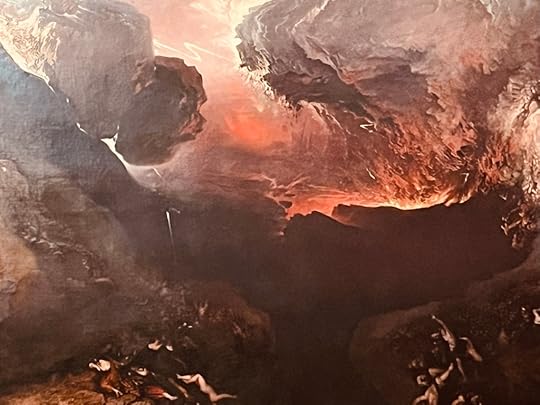
Apocalyptic imagery from the Book of Revelation reflects the deep anxieties of a time when rapid technological and social upheaval left many feeling unmoored. Long-held certainties, norms, and values were beginning to crumble. In many ways, these ancient fears echo our own and mirror the disruptions in today’s world.
Artists sensing underlying tensions
Major social and political shifts are often preceded by conflict and upheaval. Artists sense these underlying tensions long before they burst into the open ,but also give some cues to a brighter future.
Art offers us a unique lens through which to view the past, revealing not just historical waymarkers but the deeper rhythms of human experience.
History moves in cycles. Out of hardship and resilience emerges renewal and growth, only to give way once more to seasons of disruption and decline. Yet, from each winter of decay, a new spring is born, reminding us that regeneration is woven into the very fabric of life.
Reino Gevers – Author – Mentor –Speaker
P.S: If you enjoyed this article you might be interested in my very latest book: Sages, Saints and Sinners Get it today on Amazon, Barnes & Noble and where all good books are sold.
WordPressFacebookInstagramBlueskyAmazonUnderstanding our world through art
Great artists possess the rare ability to pierce through the veil of the ordinary, revealing the deeper truths that lie beneath life’s surface. In times when power distorts reality and fear stifles truth, their work becomes a courageous act of revelation.
A few days ago, I was vividly reminded of this while visiting the Tate Britain gallery in London. Entrance to most of Londonˋs famous galleries is free and it is a great way of spending a few quiet hours in a big city.
I was particularly struck by the works of the late 17th and 18th centuries. The expanding British Empire was marked by conflict, built by the sacrifices of soldiers and the toil of slaves and factory workers. Child labour was common and women were condemned to giving childbirth and running the household.
Subtle hints beneath the surface
Artists were often commissioned to glorify king and empire, yet beneath the surface of landscape paintings, market scenes, and depictions of mixed-status couples, subtle traces of class divisions and social tensions quietly emerge.
The tumultuous times of the late 18th and 19th centuries and global wars come at a huge cost with massive taxation for ordinary folk, rising wealth gaps, poverty and unemployment. Artists responded by painting dramatic battle scenes or images that either evoke a Romantic past or feelings of awe and terror.
Art and spirituality
Much of religious art was commissioned by monastries in medieval times to convey the gospel because most people were illiterate. In contemplation of the art, the individual had a unique gateway to experiential spirituality.
Apocalyptic imagery from the Book of Revelation reflects the deep anxieties of a time when rapid technological and social upheaval left many feeling unmoored. Long-held certainties, norms, and values were beginning to crumble. In many ways, these ancient fears echo our own and mirror the disruptions in today’s world.
Artists sensing underlying tensions
Major social and political shifts are often preceded by conflict, and upheaval. Artists sense these underlying tensions long before they burst into the open but also give some cues to a brighter future.
Art offers us a unique lens through which to view the past, revealing not just historical waymarkers but the deeper rhythms of human experience.
History moves in cycles. Out of hardship and resilience emerges renewal and growth, only to give way once more to seasons of disruption and decline. Yet, from each winter of decay, a new spring is born, reminding us that regeneration is woven into the very fabric of life.
Reino Gevers – Author – Mentor –Speaker
P.S: If you enjoyed this article you might be interested in my very latest book: Sages, Saints and Sinners Get it today on Amazon, Barnes & Noble and where all good books are sold.