
Harrison Bae Wein's Blog: Harrison Bae Wein
December 16, 2025
Awe and wonder with a Vermont accent
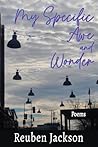 My Specific Awe and Wonder: Poems by Reuben Jackson
My rating: 5 of 5 stars
I first came to know of Reuben Jackson as the host of the radio jazz program "The Sound of Surprise" on WPFW in Washington, D.C. It was my son who discovered him as a poet at the American Poetry Museum, an outreach museum where Jackson worked on weekends giving advice and mentoring young poets. I met him only a couple of times before he died in February 2024 of a stroke. After his death, I learned of his years in Vermont and discovered that one of my writing colleagues knew him from his life there.
My Specific Awe and Wonder: Poems is a collection that Jackson was working on before his death. His publisher says he called it "a love letter to Vermont...with all the potholes visible." It's a consistently excellent collection, opening with a section about Vermont, particularly his experience of being a Black man there. This is followed by a set of witty, incisive persona poems supposedly written by a cranky friend named Kelly Donaldson. Next is a section of travel poems and then copies of handwritten drafts for several more poems paired with typed versions.
The collection holds thoughtful insights into being a Black American, both at home and abroad, but Jackson has too broad a lens to focus on our differences. One poem, "East Barre," begins with the lines:
The salesclerk claimed that the snow fell
with a Vermont accent.
It seems a good characterization of the collection's overall vibe.
The fairly small volume also opens with a tribute poem by Rajnii Eddins and ends with a transcription of a voicemail Jackson left his publisher in December 2023 with a wonderful draft poem, "How to Get There, 11th Grade Mix." Jackson's last words on the voicemail are an apt conclusion: "Thanks for listening. Keep on keeping on, okay? These are trying times. Trying AF. Bye-bye."
Jackson’s poetry has been published in many anthologies. This final collection of warm, wide-ranging poems is a great addition to his body of work.
View all my reviews


December 6, 2025
The joke is on us
 The Joke by Milan Kundera
My rating: 4 of 5 stars
Milan Kundera's The Joke is a complicated novel. It takes place against a background of initial enthusiasm over the Communist Party takeover of Czechoslovakia, which is replaced by disillusion as authoritarianism and bureaucratic corruption create a state of decay.
Ludvik, the main character, is a faithful member of the Communist party and a true believer. The "joke" that sparks the novel's action is a silly, snide comment on a postcard that he writes in frustration to provoke an infuriatingly humorless love interest: "Optimism is the opiate of the people! A healthy atmosphere stinks of stupidity! Long live Trotsky!"
Seeing this as a statement against the party, she hands it over to the authorities. Ludvik's friends then turn against him, and he is expelled from the party and sent to work in the mines at a military camp. His anger consumes him and years later, once he is out and living comfortably, he sees an opportunity to get revenge on a former friend who betrayed him. He seizes it and commits a cringey, despicable act with disastrous results.
The book's title works on many levels. Beyond the postcard that serves as the spark for the novel's action, the bigger joke is on Ludvik, and on greater society for embracing a corrosive, destructive force that crushes their souls. Trotsky advocated for a decentralized form of planning that focused on workers' control. He criticized the bureaucracy and anti-democratic tendencies of the Soviet state, believing in continuous change driven by workers. Over the course of his life, he was arrested, exiled, and eventually assassinated in 1940 by a Stalinist agent. Trotsky was an idealist crushed by the power of the state, and Ludvik can be seen in much the same way. Despite the novel's age (it came out in 1967, delayed for two years by the Communist party) and setting, it serves as a chillingly relevant cautionary tale for us today.
The Joke works simultaneously on personal, philosophical, and societal levels. Its critiques about how both capitalism and communism, when used in the wrong ways, can harm the individual, are sobering. But it is a bit clunky and difficult to get through. This was Kundera's first novel, and it's told from four different points of view, which can be confusing, as their voices aren't easy to tell apart. The last section rotates among three perspectives without any of the headers that preceded it, and I had trouble distinguishing two of the voices except from the context of their stories. The fourth perspective, which appears only in one fairly long, solid block, is almost an authorial voice, revealing secrets about Ludvik's love interest from years ago that Ludvik never had any idea about. How the man came to know about this and then convey it to Ludvik depends on ridiculous coincidences, although it was probably the most entertaining part of the book.
View all my reviews
November 15, 2025
Poems by Gil Scott-Heron
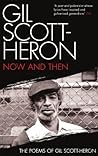 Now and Then by Gil Scott-Heron
My rating: 4 of 5 stars
Gil Scott-Heron was a poet, writer, and musician whose work in the 1970s was a major influence on rap and hip-hop. Now and Then collects many of his poems and other writings. If you're familiar with him, it's got well-known song/poems like "Pieces of a Man," "Whitey on the Moon," and "The Revolution will not be Televised."
Scott-Heron wrote biting social commentary and had a clever sense of wit. If you're not familiar with him, though, this collection probably isn't the best place to start. His delivery was fantastic, and many of these pieces were meant to be heard. I'd start with the albums Pieces of a Man or Winter in America, collaborations with the musician Brian Jackson. For those who already know Scott-Heron's work, this collection but has many excellent poems, and I discovered several new gems.
View all my reviews
October 10, 2025
Imaginary cities
The Venetian explorer Marco Polo met Kublai Khan, the first emperor of the Yuan dynasty of China, in the 1270's. Kublai Khan was impressed with Marco Polo and made him foreign emissary, after which Marco Polo traveled throughout his empire for years. Italo Calvino's quirkly 1972 novel Invisible Cities imagines Marco Polo's descriptions of the cities he finds and the conversations between the two during their meetings.
Marco Polo's descriptions of the different cities are fanciful and wildly imaginative. Many of them touch on the themes of how cities change and remake themselves. For example, in Maurilia, the traveler is invited to examine old post cards that show the city as it used to be while they stand in the identical spaces. They are constantly expected to praise the magnificence of the new metropolis while acknowledging that it couldn't compensate for a certain lost grace. Another of my favorite cities was Fedora, which has at its center a metal building with a crystal globe in each room with a model of Fedora as people imagined at the time it could ideally develop. In the speculative descriptions of all these imaginary cities, this novel reminded me of Einstein’s Dreams (which came later, in 1992), in which Einstein dreams of difference conceptions of time.
The cities are divided into different categories: Cities & Memory, Cities & Desire, Thin Cities, etc. They're also numbered within these groups. The order in which the categories appear seemed random to me when I was reading it, but on doing some research, I found that Calvino followed a mathematical pattern, designing the book as a geometric shape that the reader can approach in different ways--for example, by reading all the cities in each category together.
While clever, I don't think this overall design adds anything to the novel, and it potentially detracts. There are key conversations near the end between Marco Polo and Kublai Khan that give insight into the existential questions Calvino is getting at. Reading these earlier would give away the game, so while the city descriptions may be read out of order, I don't think the conversations should be, which to me undercuts this "mathematical" scheme.
Invisible Cities doesn't reach the wildly inventive heights of Cosmicomics and didn't resonate emotionally with me like the wonderful If on a Winter’s Night a Traveler. But it's creative and thought-provoking. In the end, it's not clear to either the readers or the characters what is real and what isn't, a common theme in Calvino's work.
This is a thoughtful read overall. It's also short and can be picked up, put down, read out of order, and come back to later. It's worth checking out if you like existential and experimental novels.
Marco Polo's descriptions of the different cities are fanciful and wildly imaginative. Many of them touch on the themes of how cities change and remake themselves. For example, in Maurilia, the traveler is invited to examine old post cards that show the city as it used to be while they stand in the identical spaces. They are constantly expected to praise the magnificence of the new metropolis while acknowledging that it couldn't compensate for a certain lost grace. Another of my favorite cities was Fedora, which has at its center a metal building with a crystal globe in each room with a model of Fedora as people imagined at the time it could ideally develop. In the speculative descriptions of all these imaginary cities, this novel reminded me of Einstein’s Dreams (which came later, in 1992), in which Einstein dreams of difference conceptions of time.
The cities are divided into different categories: Cities & Memory, Cities & Desire, Thin Cities, etc. They're also numbered within these groups. The order in which the categories appear seemed random to me when I was reading it, but on doing some research, I found that Calvino followed a mathematical pattern, designing the book as a geometric shape that the reader can approach in different ways--for example, by reading all the cities in each category together.
While clever, I don't think this overall design adds anything to the novel, and it potentially detracts. There are key conversations near the end between Marco Polo and Kublai Khan that give insight into the existential questions Calvino is getting at. Reading these earlier would give away the game, so while the city descriptions may be read out of order, I don't think the conversations should be, which to me undercuts this "mathematical" scheme.
Invisible Cities doesn't reach the wildly inventive heights of Cosmicomics and didn't resonate emotionally with me like the wonderful If on a Winter’s Night a Traveler. But it's creative and thought-provoking. In the end, it's not clear to either the readers or the characters what is real and what isn't, a common theme in Calvino's work.
This is a thoughtful read overall. It's also short and can be picked up, put down, read out of order, and come back to later. It's worth checking out if you like existential and experimental novels.
The hero of his own life
 David Copperfield by Charles Dickens
My rating: 5 of 5 stars
After reading Barbara Kingsolver's Demon Copperhead, I felt the need to revisit the book it was based on, Charles Dickens' David Copperfield. I'd first read it during or soon after college, and it's stood in my mind ever since as one of my favorite novels. It has lovable characters, an expansive plot, and social commentary delivered with a sugar coating.
Reading it again 35+ years later, I found it just as wonderful as the first time. Despite all the trauma David is subjected to as he strives to become the hero of his own life (as he puts it in the first sentence), it manages to be a cozy, comforting read. It's a tale of optimism, friendship, and love in the face of adversity. Unlike Kingsolver in her play on this story, Dickens never loses his main character in outrage at his circumstances.
Some people see Dickens' characters as little more than caricatures, but I don't think that's true. In our high-pressure society, with TVs and phones and computers fighting for our attention, we're constantly filing off our rough edges for others. These were different times, when people didn't follow their favorite celebrities' every habit. Many lived in isolation and developed particular quirks and habits that Dickens was very attuned to. I'm not sure he exaggerated all that much.
That said, this sprawling, expansive novel doesn't stand out for its realism. One thing that particularly jars is David's angelic first love, which is ridiculously over the top, and then too easily resolved. But the intricate plot is excellent, and you meet numerous wonderful characters along the way, like Betsy Trotwood, Wilkins Micawber, and Mr. Dick. So while it may not be a perfect novel, it's still one of the greats for me.
View all my reviews
June 8, 2025
A play on a classic
 Demon Copperhead by Barbara Kingsolver
My rating: 4 of 5 stars
My wife can attest to the fact that, ever since reading David Copperfield thirty-five or so years ago, I've half-jokingly talked about the novel I intended to write about a poor boy from Brooklyn, David Cooperstein, finding his way in the world. I suppose I could still do it, but Barbara Kingsolver will have already taken the wind out of my sails, as her take on David Copperfield set in Appalachia, Demon Copperhead, has been a huge success, winning the Pulitzer Prize and others.
Like David Copperfield, Demon Copperhead is a gripping read. It follows the general outline of Dickens's semi-autobiographical classic (his best novel, in my opinion as well as Dickens's) down to the characters and many events. Even when the parallels became forced, they made me smile, as if I were listening to a jazz group's version of an old classic. Overall, the book raced along and kept my interest throughout its thousand plus pages on my e-reader.
Kingsolver's tale is tonally very different than Dickens's, though. It isn't nearly as warming, for one. This is partly from necessity, I think. Dickens highlighted poverty, the cruelty of child labor, and other social issues in Victorian life. To do this, he created a cast of memorable characters for readers to love, a sweet coating to deliver a bitter medicine. In Kingsolver's case, assuming that people generally know about poverty and the opioid crisis, her book slaps you in the face with the reality of it, practically screaming, "Pay attention!" There are harsh, extended segments dealing with the consequences of addiction that reminded me of The Story of Christiane F. more than anything by Dickens. And people often behave despicably, including many who should be helping Demon.
Demon Copperhead is a great achievement, no doubt, and very effective in many ways, but it works more as social criticism than a beloved novel. The main problem is that Demon has little agency. Things happen to him, not because of the choices he makes. David Copperfield famously begins, "Whether I shall turn out to be the hero of my own life, or whether that station will be held by anybody else, these pages must show." Dickens's novel is about the formation of a complete person. Demon Copperhead, in contrast, is foremost about the societal problems, particularly the oppressive effects of poverty and drug addiction. It begins, "First I got myself born. A decent crowd was on hand to watch, and they've always given me that much: the worst of the job was up to me, my mother being let's just say out of it." It's passive, resigned, and cynical.
This tone runs throughout the book. Even though it's told from Demon's point of view, his life choices seem imposed on him, as if he's had no say in the matter. In the end, this makes it a less satisfying book than it could have been. While Demon is saved in the end, he gives little thought as to the consequences of his own actions or why he was lucky enough to be saved.
That all said, if my David Cooperstein turns out half as good as this, I'd be pretty happy with myself. Demon Copperhead is an important book highlighting social problems we should be paying a lot more attention to, and well worth reading.
View all my reviews
June 2, 2025
A most clever invasion
 The Midwich Cuckoos by John Wyndham
My rating: 4 of 5 stars
John Wyndham was a mid-twentieth century author who, to my mind, follows in the tradition of literate English science fiction writers like H.G. Wells and Olaf Stapledon. I'd only read his The Day of the Triffids before and liked it very much, although maybe not as much as the wonderfully weird (and not very faithful) sci-fi movie adaptation from the early 60's. The Midwich Cuckoos was likewise turned into a classic horror film that I'd seen and loved as a kid. Called Village of the Damned, it was then remade by John Carpenter in 1995 into what I remember as not his best work.
The basic plot is that one day, everyone in a small, remote English village falls asleep. The military, called in to investigate, uses animals to determine the boundaries of the phenomenon and also discovers that there is a mysterious metal object on the ground at the center of the effect. After a day, everyone suddenly wakes up with no apparent ill effects, and the object is gone. Several weeks later, though, people begin to realize that every woman of child-bearing age is now pregnant. The novel focuses on how the close-knit people in this small town cope as their unusual children are born, clearly not their own, and begin to display alarming abilities to control them. Quiet, understated, and philosophical, the novel addresses how people respond to what amounts to an alien invasion involving mass rape, forced pregnancy, and coerced parenthood.
The novel does seem outdated in using a male-centered, outsider perspective to depict something so intimately imposed through the women of the town. The restrained style is also almost too much for the outlandish events depicted, although it is typical for a novel taking place in a small English town at this time. It certainly does help add more tension. Overall, this is a creepy, unsettling, and thought-provoking novel.
View all my reviews
December 29, 2024
Avoiding societal expectations
 The Vegetarian by Han Kang
My rating: 5 of 5 stars
Han Kang's The Vegetarian focuses on Yeong-hye, who decides to become a vegetarian after a dream, although exactly why isn't clear. Her story is told in three novellas, each from a different point of view, starting with her callous husband, then her obsessive brother-in-law, and finally her overworked, deeply troubled sister.
As the narrative progresses and Yeong-hye's behavior becomes more puzzling, her reasoning doesn't quite come into focus, but we gain a greater understanding of her motivation, even if she seems unable to articulate it herself. Each of the three narratives gradually deepens the disconnection, desperation, and sadness underlying the characters' interactions.
I don't want to reveal more about the meager plot, as I feel it would ruin the experience of reading it. But this is a remarkable book about the tensions between societal expectations and an individual's sense of agency. It's an unsettling dissection of the isolation and disconnection plaguing South Korean society, somewhat similar to the work of contemporary Japanese authors like Hiroko Oyamada and Sayaka Murata.
View all my reviews
November 27, 2024
A deceptive tranquility
 Sea of Tranquility by Emily St. John Mandel
My rating: 5 of 5 stars
I feel that the less said about the plot of Sea of Tranquility the better. It's best to go into this novel with no expectations and just let Emily St. John Mandel take you along for the ride. And it's a great ride. You meet richly drawn characters that you care about, but you never quite know where this expansive, yet efficiently-told story is going. This is a literary science fiction novel that touches on big, existential questions: who you are, the choices you make in life, and the forces beyond your control. St. John Mandel, who also wrote Station Eleven and The Glass Hotel, has definitely become one of my favorite authors. Very highly recommended.
View all my reviews
November 13, 2024
This petty pace
 Tomorrow, and Tomorrow, and Tomorrow by Gabrielle Zevin
My rating: 3 of 5 stars
Tomorrow, and Tomorrow, and Tomorrow, about a trio of young video game creators, is a very well-crafted novel. Gabrielle Zevin perfectly executes the kind of approach you learn from novel-writing workshops. Zevin moves the puzzle pieces around with skill and efficiency to achieve the desired beats and outcomes right on schedule. It reads quickly, although with random vocabulary words thrown in to show that it's meant to be taken as a serious novel.
That's not in itself a bad thing. There are plenty of excellent books written this way, but I led with this impression because I found other aspects of this book lacking. I'm not a gamer, so I can't speak to how realistic these characters are, but they came across as thinly drawn to me. The characters seemed to act in service of the plot rather than feeling like people who had their own agency. The reader is given identity markers for the characters (half Korean, Japanese, gay, etc.) and the traumas that define them (childhood car accident, illness, sexual abuse, etc). These are the kind of distinguishing characteristics that writer's workshops encourage you to develop on worksheets. But in this case, these facts seemed arbitrary rather than an integral part of who any of the characters are, as if people can just slip on identities like clothing or, well, video game characters.
This is the second Gabrielle Zevin book I've read, after The Storied Life of A.J. Fikry. That was a bit thin with characterization, too, but it was quirky and interesting in a way this novel wasn't. It also seemed to have a bit more soul to it. Here, there was some nodding toward greater themes--the creative process, how trauma shapes us, etc.--but none was explored in any depth. The characters just reacted and moved to the next stage, as if they were in a video game themselves, deciding their next moves without really thinking through why and how it might affect those around them. It's possible this was the whole point of a story about video game creators, but there was nothing in the novel that suggested a serious critique like this.
In the end, the novel comes across as a depiction of the people in a specialized world, but it held little interest or insight for someone who wasn't already interested in it before. It's a quick enough read, though, and I can see why people who are into video games would love it.
View all my reviews
Harrison Bae Wein
Harrison Bae Wein is author of the novel "The Life and Opinions of the Housecat Hastings." Or the human front for Hastings, depending on whom you believe. You can visit his website at http://harrisonw
...more
- Harrison Bae Wein's profile
- 2 followers

