Keziah Shepherd's Blog, page 4
August 23, 2014
A homage to the creative impulse
The beauties of ‘Mycelium – Génie savant, génie brut’

This exhibition, in an old abbey on the route of Saint Jacques de Compostelle, “L’abbaye d’Aberive” is showing 25 artists. Within monastic meditation rooms, the artworks glow in the space and light that they have been given to shine in.
In one room, the artist Pesset, who carves insightful sayings and adages into wood, and decorates the work elaborately carved hazel bush and ivy branches.
‘Wealth comes from the mind and not the mind comes from wealth’
It is clear that the motivation of the works are not financial. There is a feeling that the genuine creativity is born of something deeper. Quite often in art history, the artists must use fine, expensive materials, are commissioned, produce their work which can be bought, sold, used to express an idea or principal. We see this at the Louvre, Versaille, Contemporary Art Markets.
But what is striking about this exhibition is a use of non-expensive materials. This exhibition uses the very basic, often natural materials to make art: shells, sticks, disused cardboard, papier maché, junk. The artists make the work without patrons, commissioners or galleries, the work is not made to adorn churches or be symbols of power.
The art works have been quietly made without fanfare, as if from a deeper necessity. Weaving as unquestioningly as a bee might a hive, or a bird might a nest, the artists work with the same slow, painstaking care, combining the urgency to complete the work. Another of the artists, Durand uses the natural colour of sea shells to create reliefs made entirely from shells. These very precise and sensitiveimages are of deer, crocodiles, polar bears, falcons, couples, fountains, each constructed with exquisite care and love. Jeanne Giraud creates intricate illustrations made out of embroidery and Vrankic, just with fine lead pencil, creates three metre high images of people from original perspectives.
 Davor Vrankic
He says:
“When I start to draw there is an idea at the beginning but I never try to explain it. It is rather like a need or urgency. I feel something and I want to make it. It’s a paradox because my drawings are very slow and laborious, but at the same time there is always a feeling of urgency to get it finished. It is this contradiction between the slowness and the force of this real urgency, I think, that produces my work”
Each artists has a unique ‘voice’, an individual way of expression using their images, manner of creating. John Ruskin described this as something within us:
“I don’t think myself a great genius, but I believe I have genius, something different from mere cleverness, for I am not clever in the sense that millions of people are – lawyers, physicians, but there is a strong instinct in me, which I cannot analyse, to draw and describe the things I love – not for reputation nor for the good of others, nor for my own advantage but a sort of instinct like that for eating or drinking”
Almost an obsession, the art works each have a ‘birthing’ with a unique method. There are the sculptures of Ghyslaine and Sylvain Staëlens, potent and striking figures formed from sticks, wool, stone, wire, mud, chains, string, paint and nails, the almost alive portraits of Jean-Luc Giraud which eerily move and transform, with use of computer animation, to the wooden panels of Reynaud, who paints almost ritualistic patterns, almost Buddhist mandala-like, with a sense of numerology and the sacredness of number.
We see artists explore and follow their obsessions. Vidal, for instance, has a fascination with twins. His photography shows people in double. And Chesné has a fascination with the microscosmic or interior of a continual doodle of pattern, which he calls a“perpetual zooming inward”
In a spiritual sense, the work represents the accomplishment of individual expression. In India, this expression of ones purpose, an expression of one’s deep life calling is called the ‘Dharma’ This expression of the self-purpose in life comes from deep within. It is the nurturing of the god or goddess that lies in embryo form, deep within the soul where the talents unique to every individual lie. Other spiritual guides, such as Jesus, might be refering to Dharma when he said:“Lay up for yourselves treasures in heaven, where neither moth nor rust doth corrupt, and where thieves do not break through nor steal: For where your treasure is, there will your heart be also”
Laurent Danchin, curator of the exhibition, celebrates the eclectism of this birthing of talent and creativity, paying homage “not to art but to the endless diversity of the creative impulse, which seems to be the only power capable of putting a stop to the forces of destruction that run abundantly in our world today”
Some of the artists refer to the healing power of their creativity. After working in a palliative care unit, Ghislaine worked on her complex skeleton people drawings and Lorande describes the process of his creating his meticulous coloured pencil crayon drawings on card in saying:
“Real life is a lot more chaotic and a lot more explosive than my world, which is very constructed”
 Ghislaine
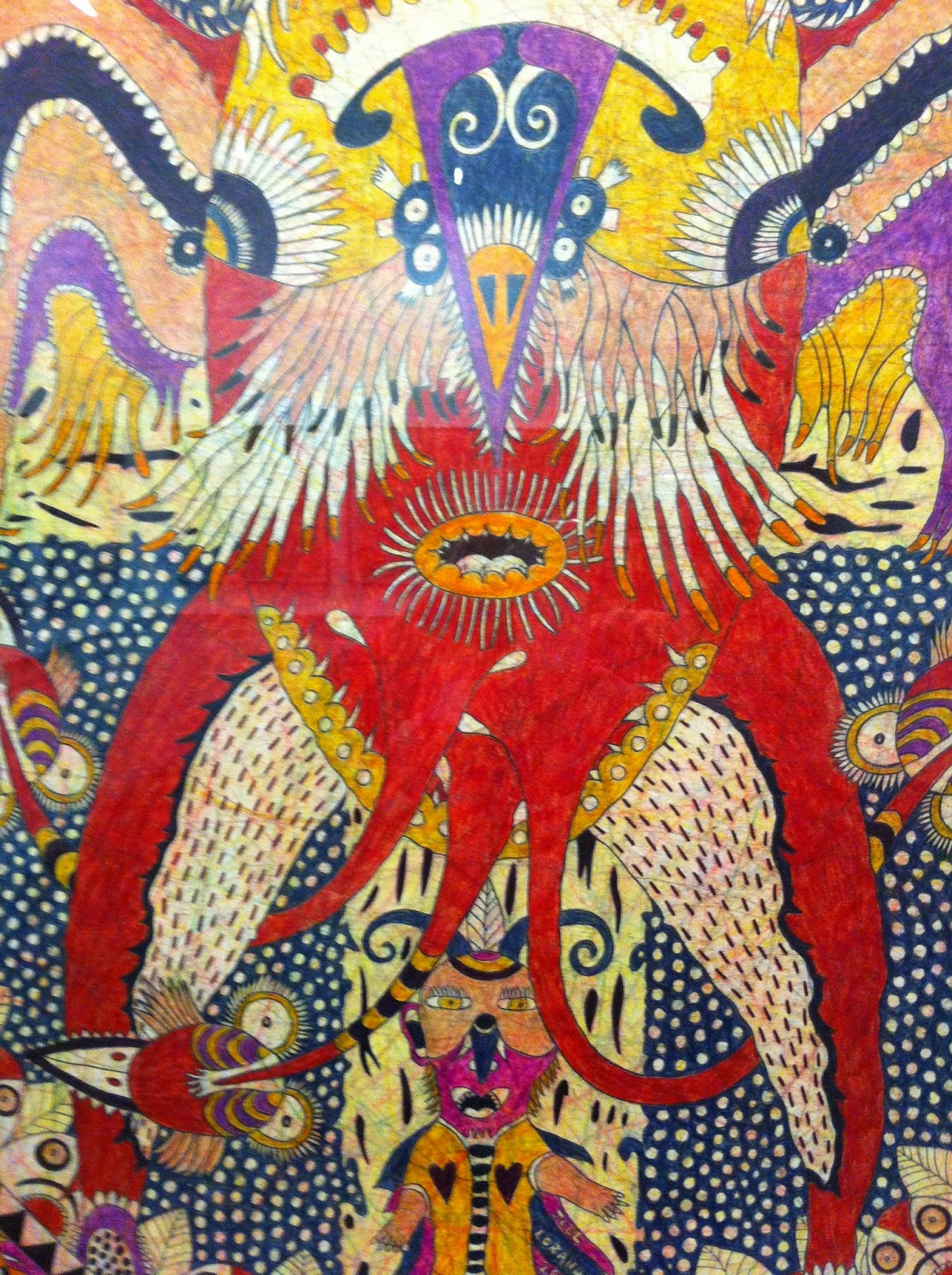 Joel Lorand
Coutant started his patterned abstracts after a bout of tubercolosis and Vollin dealt with the grief of his lost family in Algeria by painting his childhood memories. He says:
“I can’t paint things realistically and I prefer the vision of the reality”
The artists experience their instinct and genius and feel great pleasure in the act of creation. However, Paul Amar, finds this genius comes to him so easily he doesn’t even see himself as ‘an artist’ He says
“I am not an artist”
and yet his amazing glitter-covered shells form into incredible shrine-like monuments.
 Paul Amar
Other artists simply stop listening to their ego or doubts or thinking. Joaquim Baptista Antunes said:
“Following my unconscious drive, I’ve taught myself. It was my way of breathing. An enormous pleasure”
Franck Lundangi says:
“Drawing, I do it naturally, just like I breath. So I haven’t needed to be taught. For me it is natural. Everything I do, it is first and foremost a pleasure. I do it without any confinements. I do what I do and that’s all. The colours also come naturally. When I work, everything is instinct.”
Ghislaine says:
“I no longer wait for exhibitions. I work when I can and no longer force myself to produce. If you’ve got something to say it will come out whether you try or not. If you think too much about it, it will spoil it. It will become false”
This capacity the artists show for raw, expressive creativity, Danchin suggests, has been somehow demeaned over the last few centuries.
“The twentieth century has been a century of deconstruction, of decomposition, of return to the elementary principles. With its strange hybridizations and its rediscovery of complexity and skills, the twenty first century will see the emergence of new synthesis and new foundations which will boldy dip their roots into the compost of the most ancient cultures, hoping to bridge the gap between the old and the new civilization, a task of vital importance today”
 Joaquim Baptista Antunes
The works have very raw power, such as Antune’s giant monsters and explore the complexities of human feeling in Sander’s hanging totem like drape of human figures.
Jim SandersThe fresh colours and joyful expressions of Abello Vive’s paintings on card, or Boudeau’s naïve expressions Mont St Michael and Germain Tessier images on discarded cardboard using ripolin enamel and Maité’s enchanting studies of still-life, delighting in the physicality of colour, form and light.
 Maïté DDanchin goes onto suggest that we have neglected within us something very deep and vital to our preservation on our earth.
 Catherine Ursin gives life to witch life, painting large powerful images of witches on paper with gouache and Kurhajec’s fetish sculptures give space for this vitality. He says:
“My work, like African festish, comes to life here and now, in a paradoxical way inexplainable, as if a part primitive of mind had conserved an ancestral memory able to combat our complaisancy and weaknesses”
Using antelope horns, rocks, feathers, hair, wood shells his figures show the expressions of some raw, wild interior being and Patoux is in pursuit of this raw power, obsessively photographing the last fetish makers in West Africa.
This deep vital life-force within us is expressed by Reynaud.“When you touch the depths of water, or the spirituality of the sky, that is religion. It is a force which lets you go, the same you have to get to work in the morning. It’s not really a mental force, because the subject doesn’t dominate. It’s a force that is in the plexus that dominates, a little like pregnant woman when she’s giving birth”
and and we can see this in Lundangi’s paintings of umbilical cords, seeds, birth and animals.This giving birth to new ideas and vision, quite outside the trends and ideologies of the current society, is what is remarkable of this exhibition. Danchin says
“The twenty first century will see the emergence of new synthesis and new foundations which will boldy dip their roots in the compost of the most ancient cultures, hoping to bridge the gap between the old and the new civilization, as task of vital importance today”
It runs until 28th September 2014.Information at www.abbaye-auberive.com


July 23, 2014
Outside 'Art'
OUTSIDE ART?
If you were ever wondering what ART really is, and if we are often manipulated by media views and influenced by changing trends and popularity, then sometimes it's good to recoil and stand outside the flurry of this crazy world and reflect.
Only 5 percent of communication between human beings is conscious. The other 95 percent is unconscious communication. Art, as communication, begins in a dark place deep within and begins to be conceived there, like the roots of an underground plant, finding a safe place where it can be nourished and grow. When it is ready to be seen and communicate itself, it will come to be seen in the bright visual light of the world.
So often we are educated on the codes of artist professionals, and yet much of the deeper communication is enamelled over, and it is often artists who come from this deep, raw place that tap into a striking, raw vision that punctuates the heart of some powerful insight.
Where in Paris can we find this deep conception, where art is born straight from its raw nature, unpasteurised and unprocessed by rational education or rules?
And is it possible to find this place in Paris?The Musée d’Art Naïf et d’Art Brut in Paris is one such place. Much of the art shown is ‘outsider art’ : art which is often left on the edge for being unable to slot into the chronological story of society’s art history.
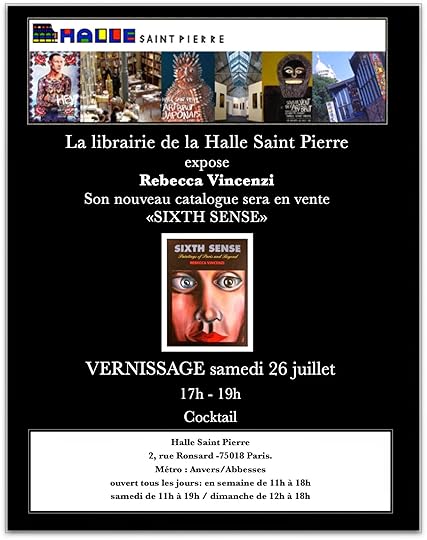
And yet the art here speaks of those deeper realms in us that move and grow under us, beneath the finesse and order of our civilised, organised surfaces. It inspires and communicates to our deeper sub-conscious, tapping into language that often modern codes, trends and concepts fail to speak to. Currently the exhibition Raw Vision exhibition 80 artists and 400 works on show now until 22nd August.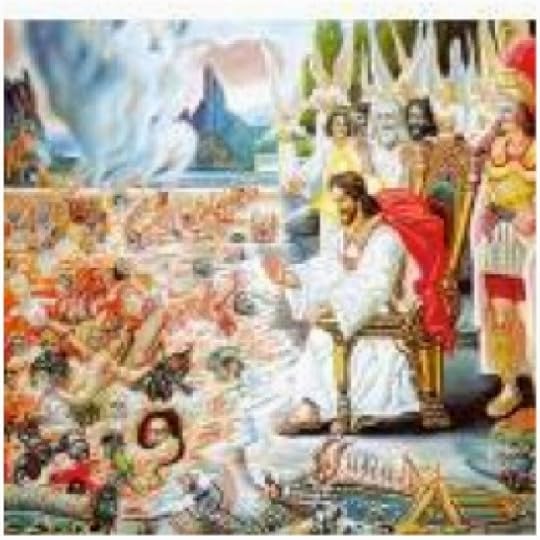 More than 400 works by 81 artists from around the world continue to show in the Raw Vision 25 years exhibition at Halle Saint Pierre.
The museum is set in an old market building at the foot of the Sacré Cœur and it has a café and a bookshop, currently showing work.
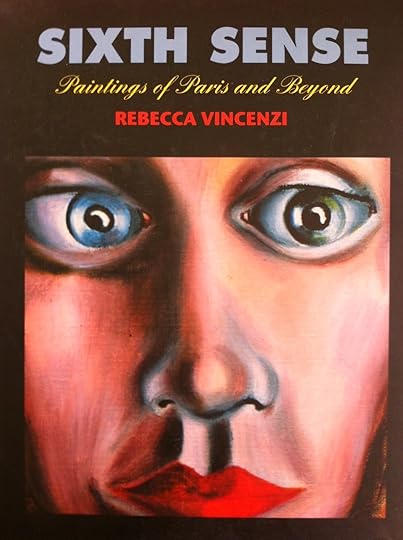

If you were ever wondering what ART really is, and if we are often manipulated by media views and influenced by changing trends and popularity, then sometimes it's good to recoil and stand outside the flurry of this crazy world and reflect.
Only 5 percent of communication between human beings is conscious. The other 95 percent is unconscious communication. Art, as communication, begins in a dark place deep within and begins to be conceived there, like the roots of an underground plant, finding a safe place where it can be nourished and grow. When it is ready to be seen and communicate itself, it will come to be seen in the bright visual light of the world.
So often we are educated on the codes of artist professionals, and yet much of the deeper communication is enamelled over, and it is often artists who come from this deep, raw place that tap into a striking, raw vision that punctuates the heart of some powerful insight.
Where in Paris can we find this deep conception, where art is born straight from its raw nature, unpasteurised and unprocessed by rational education or rules?
And is it possible to find this place in Paris?The Musée d’Art Naïf et d’Art Brut in Paris is one such place. Much of the art shown is ‘outsider art’ : art which is often left on the edge for being unable to slot into the chronological story of society’s art history.
And yet the art here speaks of those deeper realms in us that move and grow under us, beneath the finesse and order of our civilised, organised surfaces. It inspires and communicates to our deeper sub-conscious, tapping into language that often modern codes, trends and concepts fail to speak to. Currently the exhibition Raw Vision exhibition 80 artists and 400 works on show now until 22nd August.
 More than 400 works by 81 artists from around the world continue to show in the Raw Vision 25 years exhibition at Halle Saint Pierre.
The museum is set in an old market building at the foot of the Sacré Cœur and it has a café and a bookshop, currently showing work.


June 22, 2014
Why a tattoo?
 Why a tattoo?
When I arrived at the ‘Tattooed, Tattooists’ exhibition at the Musée du Quai Branly in Paris, tattoos seemed like the craziest thing you could do to your skin. Plus I have an uncle who regretted for life the tiny anchor he had tattooed to his chest.What motivates a person to clog up the skin with an indelible mark, often painful to create and very difficult to ever remove?
This prejudice of mine did not dissolve when I saw the painful tools used to inflict the indelible inks onto the skin.
History

Human beings have been having their skin tattooed since before recorded time. In 4,450 BC, Ötzi, a man from the Chalcolithic period, was found preserved in the ice lands of the Alps decorated with 57 tattoos.
Sado-masochismThe process of making a tattoo does have resemblances to the practice of self-harm. Someone practising self-harm is really an effort to bring to the surface a deep and hidden pain of an emotional experience. This pain is then brought visually to the skin so that it can be felt and seen, like a wound, and left as a memory for the pain to heal, like scar tissue.Some tattoos are actually images or statements telling of inner pain, broken hearts, failed love stories and the exhibition has examples of some of the early tools used for making tattoos. These tools were known even to raise blood, such as needles, combs and stamps in which to embed the skin with ink.Doctor Jean Lacassagne kept a record of many examples of different tattoos on his interns. Some examples spoke of broken hearts:“I loved. I suffered. Now I hate” Another recorded tattoos that spoke of the wounds caused by love and women: “Women tear the heart and rip up the skin”
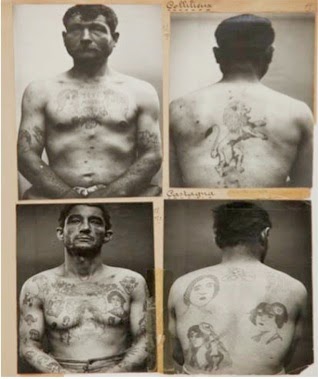 As well as the wounds caused by Cupid’s arrow, broken heart images, and images of love and hate run amok. There are also images to suggest the pains and dangers just of living, making a tattoo also a trophy to boast of such dangers in life, which had been survived. For instance“Children of misfortune” tells the tale of a difficult childhood and the symbol of an eye on the back of a neck with the words “Watch out” carries the message that environment that has never felt safe but by watching out, they have survived.
 Just as with self-harm, when a feeling of inner pain is brought to the surface to be seen, so too with the tattoo, where it is visually shared and brought to light with the purpose to heal, literally bringing the inner pain to the surface and sharing it in a cathartic way.
SutraAnother purpose of the tattoo is to express a fundamental truth reached by the person on their journey. In India the word for this is ‘sutra’, meaning the insight or clarity a person has gained from their life experiences. This word in Sanskrit means ‘thread’, which is also interestingly used by surgeons in the sewing up of wounds (suture) This mysterious thread, therefore suggests that a tattoo is rather like a tapestry of a growing consciousness of a person’s life and shows people the revelations they have had, like a roadmap of their life, expressing their current state of consciousness and thoughts and feelings.“Friends until death”
Social ExclusionHowever, not all the tattooed people in history have chosen to be tattooed. Tattoos can also be the marks intended to demean and derogate a person’s sense of self by the ruling ranks of the society.Millions of people were tattooed with digits during the period of Nazi concentration camps, and the tattoo itself turns the human being into a mere labelled object. Not only was this a sort of psychological abuse, by invading the sacred space of a person, but also it excluded the person from society, thereby depriving the individual its natural need of society in an interdependent nature.
 During the Algerian war, women who were violated or forced into prostitution were also marked on the face permanently, having the effect of permanently excluding them from society in the future. Throughout history, just as cattle were marked, slaves were also often marked by a tattoo, as proof of ownership.

CondemnationMany prisoners were allowed to have the tattooing tools in prison, and so this self-expression could persist there. However a tattoo often meant that you belonged to this deviant group. Therefore prison offenders were marked permanently as asocial beings and ostracized for life. During the time of Stalin, 1927 to 1953, Sergei Vasiliev archived and recorded many of the motifs and codes which signified anti-establishment thinkers who were also imprisoned for their alternative thinking. For instance, the ‘devil’s head’ image represented someone hostile to Stalin’s harsh government. On discovery of the meanings of this underground language, Stalin, in retaliation, had such tattoos removed form his prisoners before putting them to death.
TruthOthers took the side against dishonesty and social injustice, such as Auguste Formain, who had the degradation of Dreyfus tattooed onto his back. His tattoo was a heartfelt statement against false accusation, and akin to the spirit of Emile Zola, who had also fought for the freeing of Dreyfus, famously saying ‘the truth is out there and no-one can put an end to it’
VenerationTattooing had a rebellious nature, and like a wall for graffiti, the skin was a place for self- expression. But tattoos were also found on the skin of soldiers and army members, to express pride of country and establishment. Flags, symbols of conquest, and medals would be drawn onto the skin. Sailors both of the navy and the merchant navy would tell of their adventures and story in the form of marks and symbols. Achievements in life were recorded, such as the eagle, representing the conquering army, the lion’s head, representing power or the tiger and skull symbolising dangers faced on the person’s life path.Bridge to the other WorldAll of American Indian tribes from the Inuit’s to the Cree have practiced tattooing. In the same way that Egyptians believed that little objects and amulets were needed to take one to the after world, it was also believed that tattooed images would accompany a person through death and help them in the beyond.Just as votive body parts are offerings in prayer, in the hope of healing of someone or some part of the body, it was not uncommon for tattoos to be drawn with the same motive. Like picturing and wish fulfilment, the tattoo would be a method of getting healing or help. Sometimes the breasts had tattoos put on them to improve the lactation process, for instance.HierarchySome tattoos were marks of respect and position in a society. Maori chiefs and warriors were given certain marks that no one else was allowed. In Polynesia, many warrior faces were tattooed, as masks of defiance, proving their value and evidence of rites of passage they had succeeded in. In Samoa, some tattoos were results of a mandatory initiation rite given to all youth. Engagements or marriageSome marks were symbolic of marriage and the person being the territory of a partner. In Japan, a courtesan had a tattoo marked on her to symbolise an engagement. Once the lover’s passions had been consummated, the tattoos were effaced using a substance called moxa. MagicIn Thailand, the tattooed motifs were called yantra, and functioned as a talisman: there to protect the bearer against bullets or illness. The tattooist’s art was an incantation, a visual blessing of protection.However the use of such a good luck charm began to wane away when missionaries encouraged the wearing of clothes and exhorted men to cover their bodies.CleansingIn China the fortuitous dragon form was used to bring good luck. One monk claimed that the process of tattooing had helped him to take a safer path in life. Now 51 years old he had been a monk 26 years, claiming that his previous life had been fraught with danger and that it was the act of tattooing that had guided him down his rightful path.
 MedicinalDuring the upper Neolithic period it was also believed that tattooing could treat osteoarthritis. WonderChristian missionaries prohibited tattoos, however the art continued to thrive despite this ban. Although the colonised world abandoned tattooing, Marco Polo, in the 13thcentury, brought examples of tattoos via his travelling expeditions, through the capture of prisoners and among his itineraries.Captain Cook also returned with tattooed images. In 1776, one of his team John Webber had drawn and illustrated a tattooed man, causing wonder. And when Joseph Kabie came back his travels totally tattooed, on his death he had to be cremated just to prevent people stealing his body in order to sell his skin.SideshowsIn the nineteenth century tattooing became an entertainment piece in circuses and sideshows. It was the cause of fascination. Sword swallowers, fire-eaters, lion tamers, telepathists, and other daring circus acts were often tattooed head to toe.
 Art formTattooing became a form of decoration. Famous tattoo artist Charlie Wagner covered the skin of his wife with tattoos, her skin a canvas on which to proudly manifest his talents as a tattoo artist. In Japan, the process is called ‘Irezumi’, the ‘ire’ meaning to introduce, the ‘sumi’ meaning ink. The styles in Japan were adopted by America and there the art form grew. The artist Felix Leu then rejected any distinction between academic art and popular art. The body as storybook or galleryOften the tattoo artists are considered the friends of the individual tattooed and the connection means more than the actual tattoo. People willingly make their skin a gallery wall, happy to lovingly exhibit the skilled artwork of the tattooists.The skin becomes a book or journal to record life’s journey, a roadmap of life. Some people have been tattooed by as many as 170 tattoo artists, and are nearly completely covered in tattoo. Since the time that Samuel Reilly invented the electric tattoo machine in 1908, methods of tattooing have changed and evolved. The first big convention was in Huston in 1976 and now tattooing demands an apprenticeship of five years before one is considered to be professional. ReverenceIn an effort to give tattooing the justified reverence it deserves, the organisers of the exhibition have also included the work of some of its pioneers and heroes who have evolved the art, and some thirty tattoo artists in the world are showing their work, some of it shown on prosthetic body parts.Yet, what is fascinating about this exhibition is that one comes away with something else. This exhibition not only succeeds at bringing an art so often left on the fringes to centre stage, but cleverly reveals and marvels at the capacity for individuals in society to use art to survive difficulties and adversities in life, how, throughout each historical epoque, which is so uniquely challenging, each individual manages to adapt itself to the time and the art of tattooing mutates and caters to social changes and needs. Always marginalised and regarded as outside art, with artworks destined to go to the grave, the tattoo artists never the less have flourished and it is this very fact that the exhibition celebrates, giving the art of tattooing the reverence and status it has always deserved.

Bill Viola: How can images manage to tell of the unspoken and unsayable?

How do Bill Viola’s video images manage to make you feel like you’ve understood the ‘unspoken and unsayable’? You come away feeling as if you’ve understood something hard to put into words. It is like the 14th century anonymous writer said, in ‘The Cloud of Unknowing’ where he is pointing out what Dionysius said
“the most godlike knowledge of god is that which is known by unknowing”
Jesus, before ascension, was trapped by time and space. After his ascension, he slipped through a sliver of time to find the timeless. There are those who believe ascension is not possible before death. However there are those who believe that the wholeness of love, when used to fill the separated inner self, where wounded past muffles and blears perception, ascension can be achieved in life and that, beyond ego and bound time, love and boundlessness can be attained by contemplation.
Blake was one of those to believe this:“If the doors of perception were cleansed every thing would appear to man as it is, Infinite”
Viola uses Blake’s quote in his current exhibition in the Grande Palais in Paris.
He describes his video works as sculptures travelling through time. His work forces the viewer to contemplate, for it is through contemplation that those ‘sullied doors of perception can be cleansed’. How does he manage to force contemplation on his viewers?For one, it is his meticulous appreciation of life’s senses. His films are alert to every sound, movement, sight, whilst moving through space, as Ibn Arabi (1165 – 1240) said“If you engage in travel, you will arrive”
He captures the flecks of sunlight on water, radiating dilations, the sharp contours of a shadow, the gentle sputter of a raindrop. At first these details mesmerise a viewer.
Then comes his expert narrative and story telling, which keeps crowds compelled to watch. Though the films are slow motion and tell little more of a story then a person’s dreaming or a person’s jumping into a pool of water or people walking or staring, there is a transfixing quality, keeping the viewer fixed to the spot for the whole sequence.
Viola said that the camera helps us to “re-learn how to look at things beyond appearances” and his regular image of plunging into water is often a metaphor for this plunging of the mind into something deeper and a cleansing for deeper clarity. These recurring images of water, fire, air and earth are the landscape, which Viola says unites the internal mind with the external mind.
The experience of going to this exhibition is like going into the black depths of a cinema but instead of coming away with a story, you come away with absence of story, a story about storylessness. It’s a very powerful exhibition.

April 24, 2014
BULL'S EYE: Epic moments in history photographed by Cartier Bresson. Just how did he know to be on the scene?
Henri Cartier Bresson photographed Gandhi, just days before he was shot.
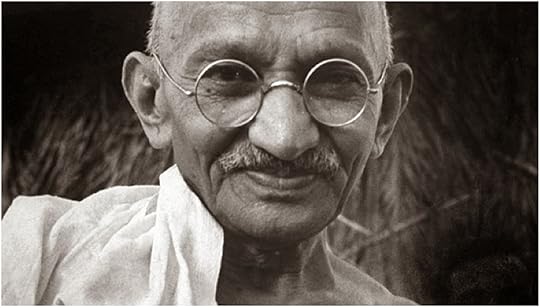 Last smiles of Mahatma Gandhi caught by Cartier Bresson
But HOW did he manage to be there at the right time?
Not only that, he was present at Chairman Mao's revolution, the Cuban missile attack, King George V1's coronation... like a Mercury with wings, he seemed to be there. Was this simply chance?
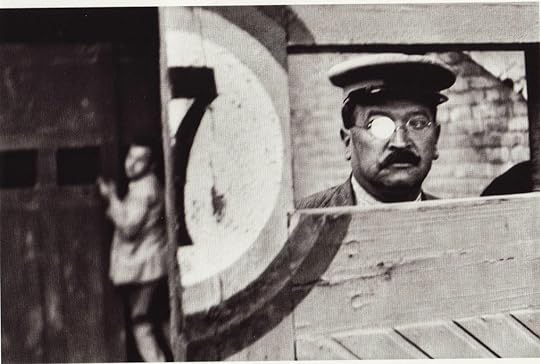 Bull's eye: 1933 in Spain, Cartier Bresson captures a fleeting glint
How did he hit bull's eye at every shot?
In fact it was Carl Jung who said that 'Accidents happen to the prepared mind' and Bresson's mind was very well prepared.
He began photography as a child, at 14 years in 1922. He worked hard on painting too, interested in the composition. In his younger years he travelled around southern France, Spain and Africa, learning to open his eyes to the wonders of African life: people, places, happenings (and loathing colonialism)
Preparations
Through Lhote's teachings, he became aware of the 'Golden Rule' and Pythagorean theorem, using this rule to frame his photos: even sometimes having a wall at a right angle as the framing. His background was picked for its texture, geometric structure, its images or signs. Then he waited, this frame like a trap, and he the hunter, for whatever life would send into it, calling this meeting of chance and order an 'instant coalition' This system gave his photos a simultaneous feeling of movement and rest.
He came across the world of André Breton and the surrealist artists and their fascination with the unconscious. This circumstantial magic added to his photos, making him unleash a person's unconscious by making a kind of montage between the idea in his frame and the chance event caused by intuitive analogy. His photos became layered like dada collages, with symbols and life happenings clashing in a moment to trigger the brain to make a connection.
Certain Themes
Sleeping people and veiled eroticism came from this period, such as this sleeping boy and the wall which triggers a sense of his internal world.
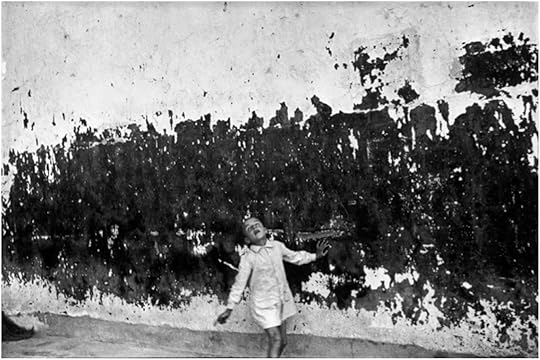
He also became interested in the narrative structure of film, working with Jean Renoir on Maupassant's 'A day in the country' (in which he even performs as a saucy priest)
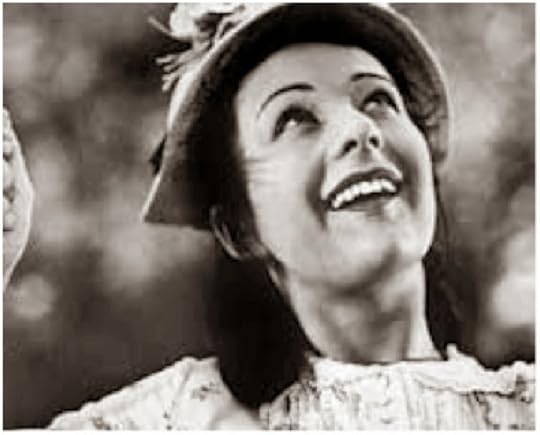 Cartier Bresson was camera assistant for this masterpiece of a film
But when war broke out, he joined the communist struggle and was imprisoned for over three years, before filming transit camps after the war.
Work as a reporter for Magnum
His reportage work for Magnum caused him to be present at epic moments in history, meeting Gandhi just days before he was shot and filming his cremation.
By this time in his life, he was so conscious of the synchronicity of life, the preparation both inner and outer had trained him to heed his intuitive forces, picking up his leads for his camera to follow. His Mercury like tread, light dancing feet, his camera at the read, set to shoot with the Cupid accuracy of his miraculous images.
It is his appreciation of inner forces, ancients structures and the trusting of his hugely individual and unique way of art, that he followed a trail and left a trail of the magical moments captured, reminding us of a wonderful world and theses instances in infinity that make life so awesome.
Henri Cartier Bresson is currently being exhibited at the Pompidou Centre in Paris

 Last smiles of Mahatma Gandhi caught by Cartier Bresson
But HOW did he manage to be there at the right time?
Not only that, he was present at Chairman Mao's revolution, the Cuban missile attack, King George V1's coronation... like a Mercury with wings, he seemed to be there. Was this simply chance?
 Bull's eye: 1933 in Spain, Cartier Bresson captures a fleeting glint
How did he hit bull's eye at every shot?
In fact it was Carl Jung who said that 'Accidents happen to the prepared mind' and Bresson's mind was very well prepared.
He began photography as a child, at 14 years in 1922. He worked hard on painting too, interested in the composition. In his younger years he travelled around southern France, Spain and Africa, learning to open his eyes to the wonders of African life: people, places, happenings (and loathing colonialism)
Preparations
Through Lhote's teachings, he became aware of the 'Golden Rule' and Pythagorean theorem, using this rule to frame his photos: even sometimes having a wall at a right angle as the framing. His background was picked for its texture, geometric structure, its images or signs. Then he waited, this frame like a trap, and he the hunter, for whatever life would send into it, calling this meeting of chance and order an 'instant coalition' This system gave his photos a simultaneous feeling of movement and rest.
He came across the world of André Breton and the surrealist artists and their fascination with the unconscious. This circumstantial magic added to his photos, making him unleash a person's unconscious by making a kind of montage between the idea in his frame and the chance event caused by intuitive analogy. His photos became layered like dada collages, with symbols and life happenings clashing in a moment to trigger the brain to make a connection.
Certain Themes
Sleeping people and veiled eroticism came from this period, such as this sleeping boy and the wall which triggers a sense of his internal world.
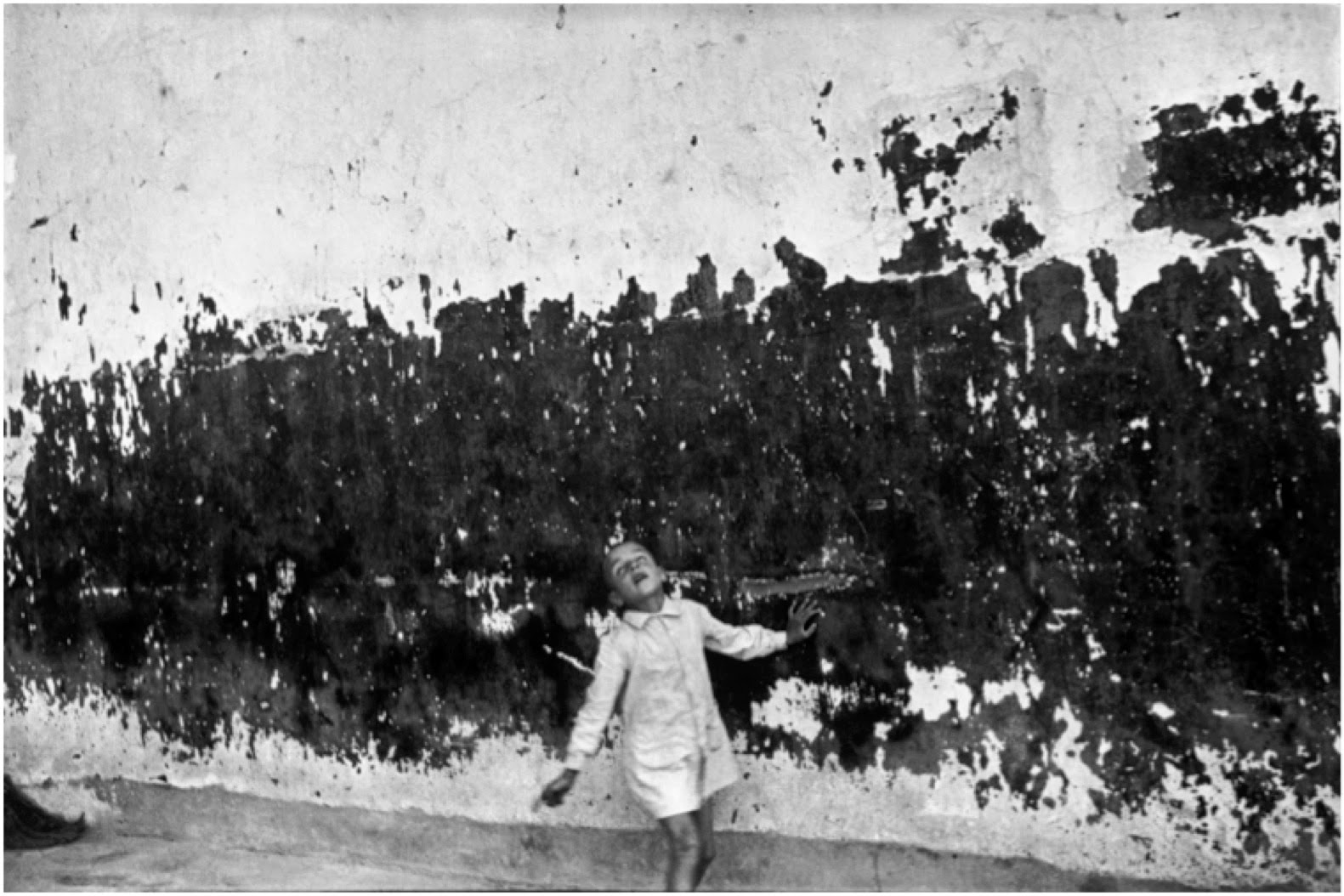
He also became interested in the narrative structure of film, working with Jean Renoir on Maupassant's 'A day in the country' (in which he even performs as a saucy priest)
 Cartier Bresson was camera assistant for this masterpiece of a film
But when war broke out, he joined the communist struggle and was imprisoned for over three years, before filming transit camps after the war.
Work as a reporter for Magnum
His reportage work for Magnum caused him to be present at epic moments in history, meeting Gandhi just days before he was shot and filming his cremation.
By this time in his life, he was so conscious of the synchronicity of life, the preparation both inner and outer had trained him to heed his intuitive forces, picking up his leads for his camera to follow. His Mercury like tread, light dancing feet, his camera at the read, set to shoot with the Cupid accuracy of his miraculous images.
It is his appreciation of inner forces, ancients structures and the trusting of his hugely individual and unique way of art, that he followed a trail and left a trail of the magical moments captured, reminding us of a wonderful world and theses instances in infinity that make life so awesome.
Henri Cartier Bresson is currently being exhibited at the Pompidou Centre in Paris
April 5, 2014
Realisation: The Vestoj Storytelling Salon
 Simon Costin at the Vestoj Storytelling Salon Recently I saw a film called 'Lunchbox', all about a lunchbox... just that one object: a simple lunchbox. The object is the cause of a complex, beguiling story and the film cleverly tells of the lunchbox's function and destination. My favorite moments was when the lunchbox was filmed, flying its way on the back of a lorry, gleeful in its mission.
 The Vertoj storytelling salon, that took place on 5th April 2014 in Paris was also about objects and how they are so fundamental in storytelling. I wondered, on arrival, how the salon would reveal the seven objects and how they would be used in the stories.
The Salon was created by Anja Aronowsky Cronberg, who had selected seven storytellers who had dedicated their lives to the intimate study of dress, hoping for them to throw light on their pasts, and how their chosen objects, related to dress, had influenced their futures. How would each storyteller narrate a life episode which is woven around or linked to a garment or an object?
The audience went to each storyteller, who each had a room to pass over their story and show their chosen object. Quickly it became clear that these objects had risen into view at pivotal moments in the story teller's lives and were often signposts of spiritual openings, revelationary awakenings and launches of new consciousness.
For Frances Corner it was a delicate, ivory wedding dress, chosen for its uniqueness and its ability to draw the attention on the spiritual significance of her special wedding day. For her this day would be one to empower her future, uniting her with a very non-conventional partner who would help her launch her life trajectory and achieve her dreams and potentials.
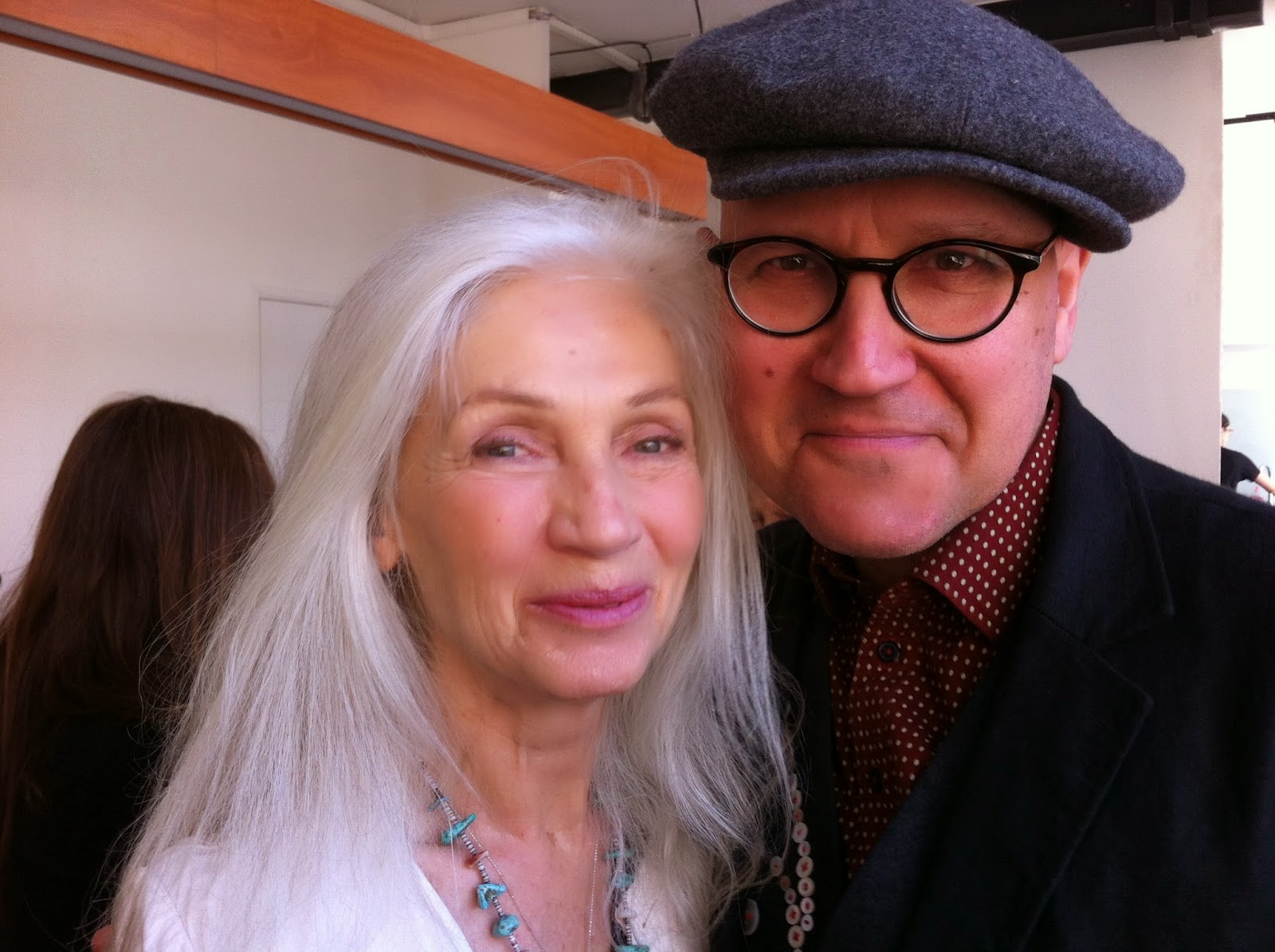 The beautiful Ingmari Lamy and Simon Costin at the Vestoj Storytelling Salon in Paris
For Michelle Lamy, her object was a dress that she had never actually possessed, yet for her represented her spiritual home: India, with tissue and essence that summed up all the color and love she felt for Delhi and her time in India. Although the dress, designed by husband Rick Owens, never materialized, the dress remains like a sort of chimera, a dream, a vision, a representation of her feelings and aspirations.
For Ingmari Lamy, her chosen object was her very first collection, that she modeled in Paris. Spotted by the photographer Bob Richardson, she was guided by him and show how to wear the garments. She described the fascinating journey of opening to the camera from the inside, with Bob Richardson being very charismatic and special, guiding her through her first shoot with him.She described the feeling of being dressed by him, having beads and jewels adorning her by him, and the sensual and erotic feeling of the process, including having felt spiritually supported and held in the awakening process. When finally asking her to cry, she found the tears falling down her cheeks and that as photographer's muse, the potent experience resulted in the launch of her modeling career.
For Jean-Charles de Castelbajac, the garment that was revelationary was actually one he had to design for the Pope. He recalls, when asked to dress the pope during his visit to Paris, a board of Directors and the tight Catholic protocol. And yet, during the process of creation, he found that the creative process triggered a wondrous series of events. The rainbow emblem was that of Gay Pride, Muslim seamstresses worked on the stitching, protestants worked on the materials and Castelbajac was struck by the non-religious wonder of a vital spiritual workforce uniting to create this final garment with loving care.
For Irene Silvagni, it was a huge black overcoat, resembling a soldier's winter coat, part of a collection that was for women who had lost their husbands. The soft, black overcoat gave Irene a sense of protection but more poignant was that her own mother had lost her father during world war two, when she was only a baby, who had ben incarcerated in a concentration camp and was tracked won and shot while escaping in a forest.
And Simon Costin's object was a top hat, designed by Stephen Jones, which had been part of a costume to launch his caravan tour of Britain while launching his project to start a museum of British Folklore.
For Simon, the hat represented all that is important about our precious folklore. It contains the relics from ancient customs and rituals that he feels the museum will protect and guard. There is the pagan egg, the symbolic apple, the evergreen tree, the garden of creativity, the hare, the horned deer, the sheath of wheat and adorning the black hat is the paintwork of the traditional British canal barge.
In the form of a mad hatter shape, the hat completes a costume to draw attention to Costin's vision: a realized Folklore museum. He is, like a pilgrim, on this sacred quest to have it materialize: a much needed venue to store the relics passed down to us from our ancient folkloric history.
Overall, the realization of the objects is so deeply entwined into the lives of the storytellers that one can hardly differentiate from personal self-realisation and the actual realization of the objects. It is hard to tell where each begins and ends, but overall the salon was a treasure trove of story, reminding us that the tangible object is deeply connected to the intangible, a resultant product of something more deeply conceived deep down beneath the seismic shifts of deep down within brewing subconsciousness of the story teller and that storytelling itself is something that continues to connect past, present and future, giving birth to objects to signify the process and illustrate that on-going story.

March 28, 2014
Painting in Paris

We have a few fleeting days on this earth. In the scheme of things, dinosaur-wise, our days are really a passing glance, a short crevice, a tiny crenellation peek at the enormity of change. We see a tiny change in fashions. I mean, I myself was lucky enough to see hippy mini-skirts, punk and grunge, and living in Paris today, I am surrounded by a fascinating living population.
Painting is just one way of recording existence and what is good about painting is that you can delight in looking around at life, while show a little what it feels like to live. It feels as if one is part of a buzzing whole of energy and all that is going on around one is part of the noise, smell, sight and sound that can't be escaped by the senses.
Only painting can express this whole connectedness to the city in which we live. Painting can show the multi dimensions and multi perspectives and multitude of delights, all in one frame. Cameras are split second shots of one view and one moment. But a painting can be an orchestration of lots of shots, a representation of what it's like to think, see, have memory and turn the head during a short time in one place.
And what a place: Paris. Here are are some scenes in Paris. The Trocadero, the Place St Madeleine and a nude man in an atelier in Montparnasse.


March 23, 2014
Hannah Höch: Craft Activities to end all wars
Give a magazine and scissors to school kids and there is a tinkling sense of creativity. All dispute, all worries cease and they proudly carry home a piece of sugar paper, weeping tears of glue and spattered with images of televisions, microwaves and men with a chest expanding machines.
It was well known fact that Adolf Hitler applied to art school and was refused entry. Many wonder what would have happened if he had been accepted? Would he have happily cut out magazine images too and forgotten about mastering the universe? Would he have joined the Dada artists, the precursors of Surrealism and drawn a mustache on a Mona Lisa?
The Dada artists began in Zurich in about 1915. They were fascinated with the power of magazine and newspaper journalism and manufactured objects, and would transform ready made objects and photographs into other things.
Continuing in the style of the Dada artists came Hannah Hock
 Hannah HochShe pursued the Dada ideas, which were at their peak until 1925. She continued to collect the magazine images of pre-Nazi Germany, while such magazines were insidiously influencing the thinking of Germany in the thirties. The wave of brain wash was something that Hannah Hoch steadily dismantled with her ceaseless creativity. The forceful ideas of 'pure race' were succinctly counteracted with in her collage 'hybrids'
In the images below, we see her, with poetic simplicity, the hybrid of monkey's head and beautiful woman. It powerfully illustrates a deeper truth, so beautifully belittling the fashionable current trends of super race thinking of contemporary Nazi Germany, by conjuring Darwin's origin of the species, subtly reminding us of the base truth of all our origins.

In the same way Shakespeare sets out a succinct argument in a sonnet, take for example "Shall I compare thee to a summer's day" building up to the conclusion love is compared to a summer's day, and concluding that temporary weather can never be compared to love's eternal flame, Hannah Höch also takes two arguments and neatly argues her way to a poignant truth. She splices together two images, producing a moving commentary of her current time, questioning the concept of beauty, often in an astute and funny way.
Ironically she had to bury 'her well of truth' in a dry well in her garden just outside Berlin, where she lived quietly during the war. Other Dada artists of the time, such as John Heartfield, whose work is much more politically mocking of Hitler, had to be much more careful and many of them had to leave Germany.
Her photomontage work continued after the war, when other artists moved away. For Hoch, it proved to be a lifelong love affair. Her work has such a bedrock of truth about it, that it has a timeless, universal truth about it, that is still understandable today, whereas Heartfield's work, being more political is more dated.
Höch's work is very balanced with a powerful sense of composition and she was much admired by George Grosz, Kurt Schwitters and Theo Van Doesburg. She was hugely prolific and her creative output immense. It reflects deeply on peace, contemplation, conflict resolution among other themes and one can't help wondering if everyone got cutting and pasting and having the fun she did, the world would be a much more peaceful place.
Her work is currently being shown at the Whitechapel Gallery in London until 23rd March 2014.

March 16, 2014
Intuition: how Samuel Van Hoogstraten paints insight
Samuel Van Hoogstraten: MAGIC, CLUES AND REVELATIONS IN YOUR REGULAR DAY
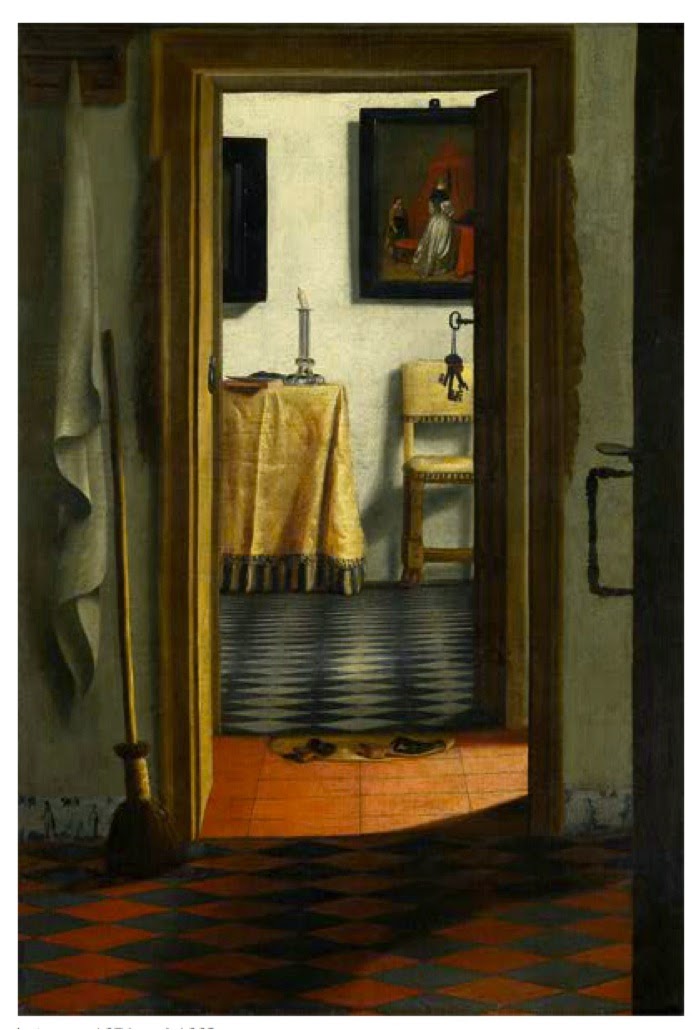 The Slippers by Samuel Hoogstraten
If we are lucky to have a day to ourselves, it is so like a painting. Conscious life is framed in the borders of night and sleep, so that what lies in the waking hours are often a series of events, happenings, moments, often triggering a new understanding or insight, within the time frame of a day.
Today, for instance, on waking from darkness, sun poured in from outside, and the gardens were a green carpet, studded with yellow and red tulips, trailing purple climbing violets and velvety viridian bushes and pines. Seeming to writhe in the new bright cerulean blue sky, the ant antennae branches of winter trees.
What I like about Samuel Hoogstraten's painting is the very simpleness of it. It is a painting of nothing. It is a space you would meditate in. It is inviting you to go and live in it. The actual frame is a doorway for you, the viewer, to go inside and sit down. You want to walk over the terra-cotta tiles and snoop around the inner room.
It is very much like a day in a life. It contains simple features: a broom, light coming from the outside, a candle, a painting on the wall, a towel, some slippers.
Taken at a very physical level, it is a daily view, a mundane day, with the repetitive tasks of the day to day. It has the sunlight, rising, filling the picture. It has the mop, the daily tasks to be done, and then the candle, for the coming evening. It is, in its most simple way, a groundhog day... a treadmill day... a routine day.
And yet.... with further meditation and sitting watching, enjoying its physical sense, the feeling of containment and structure and formed created so brilliantly by his sense of perspective, you are mesmerized by the bathing of sunlight on the floor, which seems to bless the very tiles with gold. This very special light has an allusion to spiritual enlightenment, entering the enclosed form, in the same way a medieval painter would show enlightenment by way of gold lines sprouting from the head of a saint or a Buddhist would fill the physical form with enlightenment. Light coming into rooms is often a symbol in paintings, especially when angels bring messages and people are given insights, guidance and use their intuition.
The keys, left in the door, may allude to St Peter, who was entrusted with the keys to heaven and thought by Jesus so rock solid and reliable he carried the knowledge passed on by Jesus.
So, the pureness of the sunlight makes one feel peaceful in the silent room, and yet at the same time as this spiritual presence, the artist makes this visit into this room like a peeping tom or a fly on the wall, also telling of the 'no-good' of the occupant, making the experience objectified at the same time, so that one can take a critical appraisal.
There are clues of misdemeanor and tumult. A pair of slippers are thrown over the floor, as if quickly and thoughtlessly abandoned for outside shoes, with no time for neat arrangement. Contrasting with the plentiful light, the candle, threatening a limited light, and a painting on the wall so similar to the one by Gerard der Borch, of a woman consumed by venial love and vanity, throwing herself away on extra-marital affairs... insinuating that the storms of passion have carried this occupant away, leaving her keys in the door for anyone to take (her reputation at risk)
Obviously, the building of ones love life on purely viceful foundations as this will lead to loss. St Peter, once given the keys, built the church on solid rock, and certainly not on the precarious sand of desire, passion, lust and cravings of human love. Any attachment of this kind will cause pain and karmic suffering.
Is the artist making a moral statement? I don't know. It's just an observation, I think, at how, in each day, we can all be tempted by filling our day with the wasteful contemplations when the really substantial part of the day is the filling the head with meditation and spiritual guidance.
What I like most about Samuel Hoostraten is how all his little clues, once you've mulled them over, make you form your own intuitive story. His other works, the little peep boxes, which show Dutch interiors, using mirrors to help build the perspective, are also totally delightful.
 Anamorphic Art by Samuel Van Hoogstraten
February 22, 2014
"The Wise Man builds his House upon the Rock": William Morris's Red House
Compared to the intoxicating loves of Rossetti, William Morris's love was very grounded.
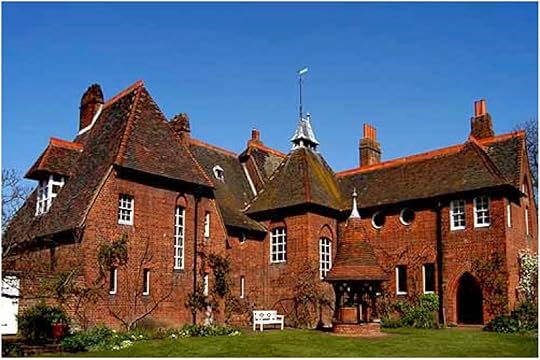
He was inspired by courtly love and perseverance of high minded ideals. He built his Red House in the style of an Arthurian Legend. It was just off Watling Street, which was the pilgrim's road, leading directly to Canterbury, one train ride from Charing Cross, London. Chaucer wrote the Canterbury Tales about this route, with stories told by his pilgrim characters, with similar appreciation of nature and surrounding countryside.
'of al the flours in the med,
Thanne love I most this flours whiter and rede,
Swiche as men called daises in our town'
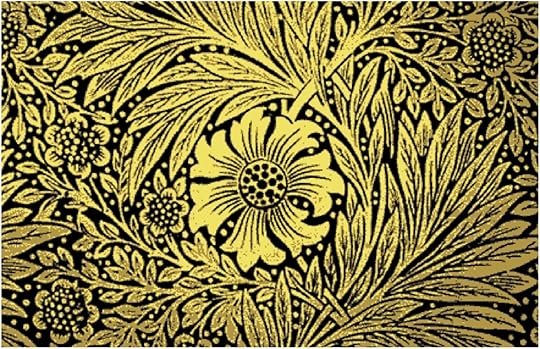
And nature, for Morris, was the inspiration for all his creations and designs.
Geographically positioned on this famous route of pilgrimage meant spiritual renewal, blessing and the paying of penance. For Morris this route represented the Medieval world, whose ideals were the Knights' conquests and feats of the King Arthurian legends, a passion and fascination of Morris since childhood.
The house, red bricked, is stalwart and bold, though its northern facade was gone green from the cool, damp moss. Morris worked on the house with the passion and commitment of a medieval knight, a Sir Gallagher or a Sir Lancelot, in alliance with his friend architect Philip Webb. He constructed the unusual red brick house with a castle-like appearance, with turrets, wind vanes, arched doorways, stained glass windows in medieval style, tapestries, fireplaces and dresses painted 'dragon-blood red'
The house was also to lure his bride, the 'stunner' of a beauty, Jane Burden, with whom he had met at the theatre while living in London. During their stay in Red house they conceived and gave birth to two children. The years there were described by Georgina Burne-Jones as idyllic,
"the time we spent tighter was one to swear by if human happiness were doubted"and at the same time Morris's firm flourished and prospered, with the making of wallpaper, furnishings and designs.
Morris had dreamed of an artist's brotherhood, as bold and creative as King Arthur's round table of knights, and had invited other artists to come and work and stay, among them Dante Gabriel Rossetti and Burne-Jones, but human complexities had complicated his perfect vision, for during their stay in the Red House there became an attraction between Morris's wife Jane and Dante Gabriel Rossetti.
Rossetti often came to Red House with his wife Elizabeth Siddal. Siddal and Rossetti were a deeply interwoven couple, for he had helped her start drawing and painting, and though she had been a stalwart model, even catching pneumonia when posing as Ophelia while modeling in a bath of water, there became a strong attraction between Rossetti and Jane.
In 1865, five years after moving to Red House, Morris's marriage to Jane became strained.
Siddal must have noticed the attraction between her husband and Jane while she was staying at the Red House, for she had begun painting a mural on one of o the bedroom walls.
William Morris stood back and let the romance between Rossetti and Jane happen. He left for Iceland and he put his heart and mind into the designs he was working on, so that his business flourished.
But it was not so easy for Elizabeth Siddal. Though Rossetti's attractions to other women was no surprise to her, her poetry the disappointment she feels and she shows longing for the initial perfect intoxication of love when at first it had seemed true and reliable.
"Love held me joyful through the day
And dreaming ever through the night;
No evil thing could come to me,
My spirit was so light.
O Heaven help my foolish heart
Which heeded not the passing time
That dragged my idol from its place
And shattered all its shrine"
Her modeling potential had been discovered at 19 years old while working as a milliner's assistant. She was an intelligent, interesting and lively minded person, as well as being a 'stunner'
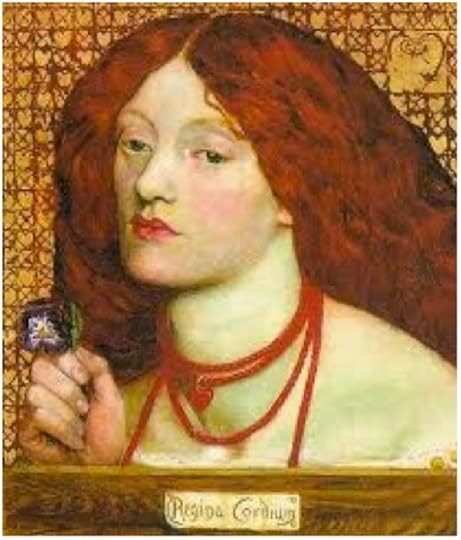
, yet Rossetti had been reluctant to propose marriage, supposedly in part because of Siddal's working class background. Since their romantic debut, Siddal and Rossetti had become less congenial toward each other. Rossetti's wandering eye had caused grief and pain to Elizabeth Siddal.
In the pain, she could not carry herself with independence and strength, unable to nourish herself when Rossetti was on his womanizing romps. She was also suffering from increasingly poor health. She could be needy, demanding, and irritating.
Her own self-portrait reveals someone who is not a goddess to worship, not someone formidable and strong, but someone who is frail and delicate.
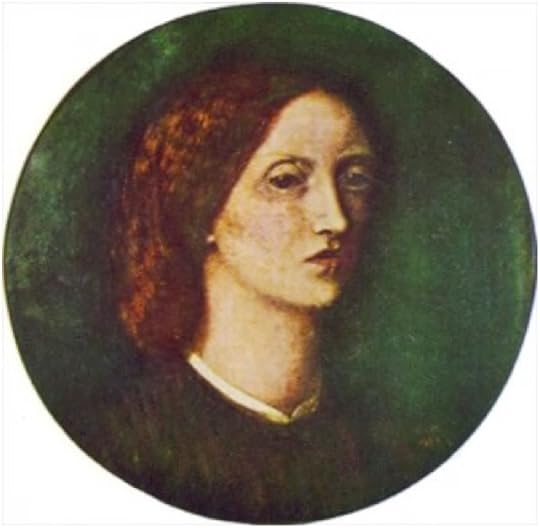
The intoxication of Rossetti's initial love which had been given plentifully at first, but she
resented its withdrawal. Like an addict, she had longed for the source of his love.
She had tried to improve herself by fleeing to France, only began filling the void in herself with laudanum, which was then an easily available drug, cheaper to buy than alcohol and people were ignorant of its addictiveness and danger.
Soon after her stay at the Red House, Elizabeth gave birth to a still born, which some say was caused by her addiction to laudanum. The cycle of her addiction worsened, and, while pregnant once again, it is believed she took an overdose when Rossetti was out.
Finding her dead Rossetti was mortified, throwing all his poems into her grave, only to want them back seven years later. The grave was exhumed and the grave diggers said that her red hair was still growing and bubbling out of the coffin.
Jane removed herself from Rossetti when she realized that he too was an addict of sleeping tablets, although many of his greatest paintings were when she was his muse. Gradually Rossetti became more and more isolated, attempting also to overdose on laudanum and finally he lost all his money.
However Morris's friendship with Jane remained solid until the end and theirs was a love that was strong.
Morris and Jane only stayed at the Red House for five years, before moving to London and then the Cotswolds, to where Morris moved his business, but the dream of the Pre-Raphaelite brotherhood was always strong to him and his social ideals were hugely inspirational. The broken dreams, the laudanum disguised dragons and false loves of witches and creativity of wizards and the stumbling blocks of all good knights on their chivalrous missions were part of the trips and deceptions of his artist companions, but it could be argued that Morris's knightly ideals grounded him to the end.
Jane was buried with her daughters and William Morris in a family tomb, their love and friendship consistent until the end.


He was inspired by courtly love and perseverance of high minded ideals. He built his Red House in the style of an Arthurian Legend. It was just off Watling Street, which was the pilgrim's road, leading directly to Canterbury, one train ride from Charing Cross, London. Chaucer wrote the Canterbury Tales about this route, with stories told by his pilgrim characters, with similar appreciation of nature and surrounding countryside.
'of al the flours in the med,
Thanne love I most this flours whiter and rede,
Swiche as men called daises in our town'
And nature, for Morris, was the inspiration for all his creations and designs.

Geographically positioned on this famous route of pilgrimage meant spiritual renewal, blessing and the paying of penance. For Morris this route represented the Medieval world, whose ideals were the Knights' conquests and feats of the King Arthurian legends, a passion and fascination of Morris since childhood.
The house, red bricked, is stalwart and bold, though its northern facade was gone green from the cool, damp moss. Morris worked on the house with the passion and commitment of a medieval knight, a Sir Gallagher or a Sir Lancelot, in alliance with his friend architect Philip Webb. He constructed the unusual red brick house with a castle-like appearance, with turrets, wind vanes, arched doorways, stained glass windows in medieval style, tapestries, fireplaces and dresses painted 'dragon-blood red'
The house was also to lure his bride, the 'stunner' of a beauty, Jane Burden, with whom he had met at the theatre while living in London. During their stay in Red house they conceived and gave birth to two children. The years there were described by Georgina Burne-Jones as idyllic,
"the time we spent tighter was one to swear by if human happiness were doubted"and at the same time Morris's firm flourished and prospered, with the making of wallpaper, furnishings and designs.
Morris had dreamed of an artist's brotherhood, as bold and creative as King Arthur's round table of knights, and had invited other artists to come and work and stay, among them Dante Gabriel Rossetti and Burne-Jones, but human complexities had complicated his perfect vision, for during their stay in the Red House there became an attraction between Morris's wife Jane and Dante Gabriel Rossetti.
Rossetti often came to Red House with his wife Elizabeth Siddal. Siddal and Rossetti were a deeply interwoven couple, for he had helped her start drawing and painting, and though she had been a stalwart model, even catching pneumonia when posing as Ophelia while modeling in a bath of water, there became a strong attraction between Rossetti and Jane.
In 1865, five years after moving to Red House, Morris's marriage to Jane became strained.
Siddal must have noticed the attraction between her husband and Jane while she was staying at the Red House, for she had begun painting a mural on one of o the bedroom walls.
William Morris stood back and let the romance between Rossetti and Jane happen. He left for Iceland and he put his heart and mind into the designs he was working on, so that his business flourished.
But it was not so easy for Elizabeth Siddal. Though Rossetti's attractions to other women was no surprise to her, her poetry the disappointment she feels and she shows longing for the initial perfect intoxication of love when at first it had seemed true and reliable.
"Love held me joyful through the day
And dreaming ever through the night;
No evil thing could come to me,
My spirit was so light.
O Heaven help my foolish heart
Which heeded not the passing time
That dragged my idol from its place
And shattered all its shrine"
Her modeling potential had been discovered at 19 years old while working as a milliner's assistant. She was an intelligent, interesting and lively minded person, as well as being a 'stunner'

, yet Rossetti had been reluctant to propose marriage, supposedly in part because of Siddal's working class background. Since their romantic debut, Siddal and Rossetti had become less congenial toward each other. Rossetti's wandering eye had caused grief and pain to Elizabeth Siddal.
In the pain, she could not carry herself with independence and strength, unable to nourish herself when Rossetti was on his womanizing romps. She was also suffering from increasingly poor health. She could be needy, demanding, and irritating.
Her own self-portrait reveals someone who is not a goddess to worship, not someone formidable and strong, but someone who is frail and delicate.

The intoxication of Rossetti's initial love which had been given plentifully at first, but she
resented its withdrawal. Like an addict, she had longed for the source of his love.
She had tried to improve herself by fleeing to France, only began filling the void in herself with laudanum, which was then an easily available drug, cheaper to buy than alcohol and people were ignorant of its addictiveness and danger.
Soon after her stay at the Red House, Elizabeth gave birth to a still born, which some say was caused by her addiction to laudanum. The cycle of her addiction worsened, and, while pregnant once again, it is believed she took an overdose when Rossetti was out.
Finding her dead Rossetti was mortified, throwing all his poems into her grave, only to want them back seven years later. The grave was exhumed and the grave diggers said that her red hair was still growing and bubbling out of the coffin.
Jane removed herself from Rossetti when she realized that he too was an addict of sleeping tablets, although many of his greatest paintings were when she was his muse. Gradually Rossetti became more and more isolated, attempting also to overdose on laudanum and finally he lost all his money.
However Morris's friendship with Jane remained solid until the end and theirs was a love that was strong.
Morris and Jane only stayed at the Red House for five years, before moving to London and then the Cotswolds, to where Morris moved his business, but the dream of the Pre-Raphaelite brotherhood was always strong to him and his social ideals were hugely inspirational. The broken dreams, the laudanum disguised dragons and false loves of witches and creativity of wizards and the stumbling blocks of all good knights on their chivalrous missions were part of the trips and deceptions of his artist companions, but it could be argued that Morris's knightly ideals grounded him to the end.
Jane was buried with her daughters and William Morris in a family tomb, their love and friendship consistent until the end.