Josh Langley's Blog, page 15
January 13, 2017
Don’t try too hard
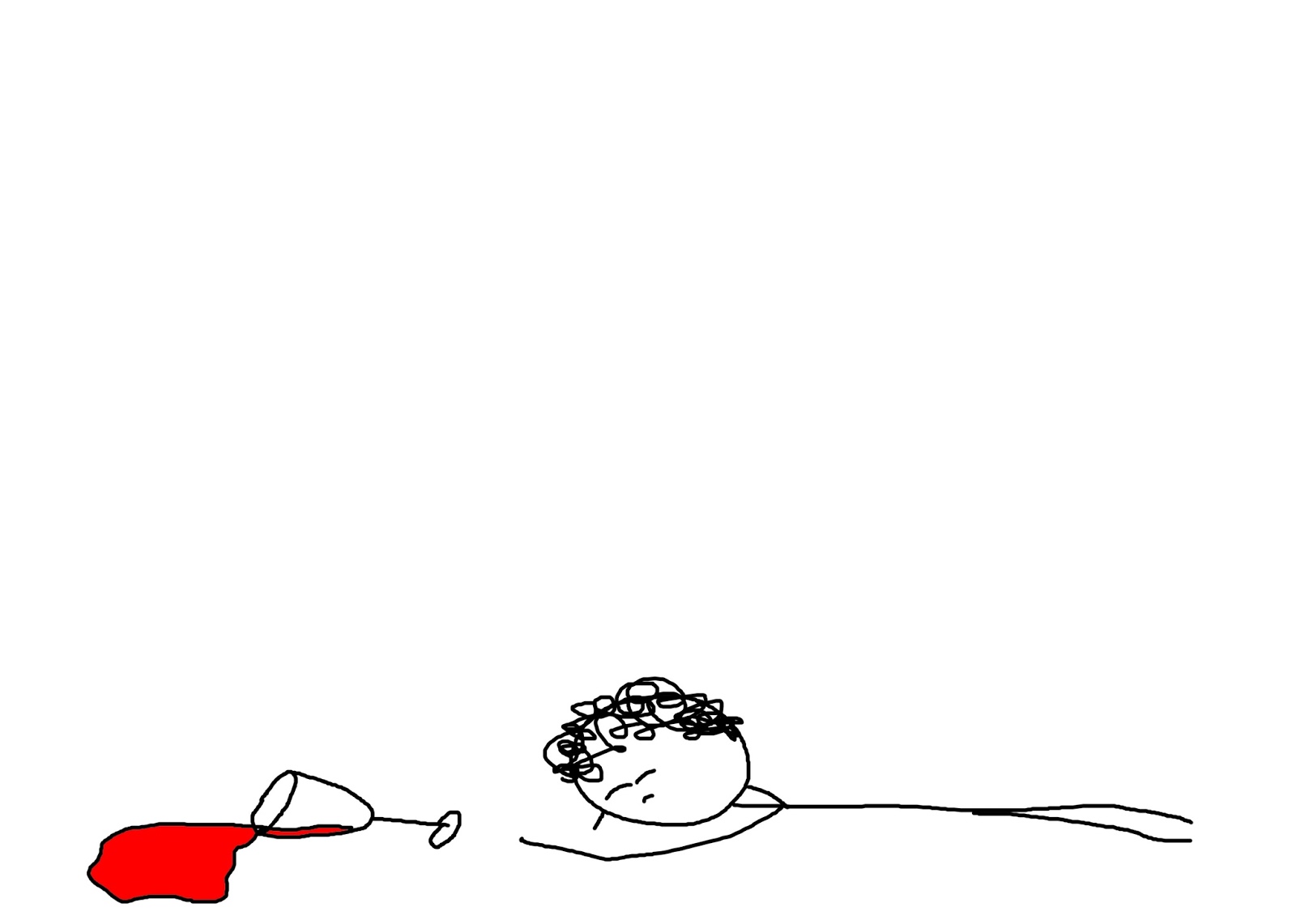
‘Letting it Happen’ Acrylic on old cupboard door by Josh Langley
Don’t try too hard.
Trying too hard to achieve an outcome sometimes gets in the way of things.
Like life.
Like grace.
Trying to be the best puts you at exclusion of everyone else.
You lose.
You no longer connect with people because you’re trying to beat them.
We race each other to the grave.
Winning is ultimately about losing.
Losing our connection, our love, our story, our humanity.
When we don’t try to win, we can then try to understand and listen to each other.
We become whole and connected.
We learn.
We grow.
Our hearts become bigger and more open.
And we all win.


January 6, 2017
9 Incredible Things They Don’t tell you When You Quit Your Job
[image error]
You’ve most probably thought about it (maybe thought about it a lot), but the idea of quitting your job with nothing to go to just seems way too scary to consider. Well 12 months ago I was like you. I’d had enough of my day job and decided to walk away from a 20 year career working in radio. It was a spur of the moment thing and wasn’t actually planned. I’d lost my mojo and my job was affecting my mental health and was making me feel miserable. Luckily I had the full support of my partner who also quit his job at the same time. We jumped together without anything to go to. Now I understand that goes against all conventional wisdom, but we didn’t stop to think about it, because if we did we might have stayed and missed out on living an amazing life.
Here are some of the biggest things I’ve learned from chucking in my job, which I hope may help you if you want to do the same. However this is where I put in the obligatory legal disclaimer, in that it’s not for everyone I know, everyone’s situation is different, but if you could take away something from these insights and apply it to your life, like the saving money bit, then go for it.
Fear: most of it is unfounded.
You know how it goes, you’re wide awake in the middle of the night with eyes like saucers, and all sorts of horror scenarios run through your head about what could happen, might happen and possibly go wrong. I had them too. “We were never going to be employed again, we’d run out of money, default on the mortgage, sell the house and end up homeless eating sandwich crusts out of bins.” But you know what? None of that happened. Not one fear riddled thought came true; in fact only good things happened. A world of opportunity opened up when I quit my job, which was just the opposite of what my mind was telling me.
So don’t pay any attention to the crazy little voice in your head, it’s only making up stories that aren’t based on any truth. In fact it’s trying to keep you from realising how awesome you really are. Also try and avoid listening to other people as they’ll have their opinion and most of them are just as fear based as yours.
You have to think big, think new and open up.
Working a regular job day in day out can leave you feeling tired and brain dead, I know as its how I felt most of the time. Between work, eating and sleeping there was little time for imagination, creativity, play and inspiration. After working in the same job, in the same building with pretty much the same people and doing the same thing for so many years, I now had to open myself up to new experiences, ones that fitted into my vision of what I want to be and where I wanted to go. So I made friends with other artists and writers, listened to podcasts about writing and entrepreneurs and went out and visited art galleries, took the back streets and explored the laneways.
[image error]
We realised it was so important to listen to people and friends who are positive and wanted to support you. If your friends tell you how crazy you are, they’re just expressing their own fears…. you don’t have to listen to them. Life is too short to live in fear. Seriously.
You live deliberately and live consciously.
I now live a deliberate life, a life that I’m consciously creating. Even though it took a while for my partner and I to decide to restart out small advertising business, when we did, we committed to it, we made it happen. We knocked on doors, sent emails, made contacts and ran workshops and now 12 months later it’s starting to earn us some good money.
I also wanted to pursue my writing and with two more books about to be published I now had the chance to give them the attention they deserved. I was able to become an ‘Authorpreneur’ and apart from my publisher promoting my books, I could personally promote signed copies directly myself. I set up a Paypal account and sold off my website and bought a Square reader credit card thingy and sold books at festivals, on the road and book launches. I also hired a booking agent and now I get invited to talk at events, festivals and schools. I was doing things I hadn’t ever dream I’d be doing.
We now have over five or more different income streams (including some passive ones) that are growing or have the potential to grow into awesome sources of cash.
When you quit your job, you create space to come up with new ideas of how to make money. You might have a long forgotten skill that you can now put into practice or suddenly a new job opportunity comes along that would never have eventuated had you still been stuck in your job.
Cask wine- it’s not as bad as you think.
Ok, we like a drink or two and that wasn’t going to change just because we no longer had steady incomes so we had to reassess what shape that was going to take. And it ended up being in the shape of a box, a cardboard box to be exact. In the end we saved a heap of money and also became unofficial connoisseurs of boxed vintages, which only made us appreciate the bottled stuff even more when it came along.
Tip: It may take a few attempts to find the cask wine that you like, but It’s worth persevering. I enjoyed the Tangle Vine Cabernet Merlot. Try here for a good guide to goon.
Lunch – you can save up to 100 a week!
When you work in an office all week long, it’s easy to fall into the trap of buying your lunch everyday and it can get darn expensive spending up to $100 a week.
We live miles from anywhere so we now had to make our own lunch and have leftovers more often, mind you I’ve always been a fan of leftovers! By simply switching to tuna and cheese toasted sandwiches (or any other filling) we ended up having healthier lunches, ate less and saved a bucket load of money. It was win win all round.
[image error]
Tip for leftovers: Get a wrap, fill it with your left overs (like Nasi Goreng) add cheese and baby spinach leaves, fold quesadilla style and toast in the sandwich press til melted. OMG!
You stop wasting money.
Speaking of saving money, we soon realised how much we were wasting. About 50% was on non essential items or things we could have got cheaper.
Why save?
We still had a mortgage to pay and had switched to an interest only loan to see us through our transition period. However with the help of a financial planning friend, we realised that we could actually put every little thing we saved still on the mortgage and that helps reduce the principle and thus the interest payments. Now that was a great reason to look at what we were spending!
And it also creates the perfect opportunity to downsize, de clutter and live a more simple life. Sell the stuff you don’t use and put the money on your mortgage or into a high interest savings account. That kind of thinking will help when you start to earn big dollars because you’ll be more appreciative of it when you have it.
Tip: The first thing to go should be the treadmill you’ve got gathering dust and guilt in the shed! There’s some good cash right there!
I realised I was an entrepreneur trapped in an office cubicle.
Some people are suited to working in an office for some organisation, that’s cool, but I always had a crushing feeling of being trapped by my job (no matter what it was) and I never really understood why. I disliked being managed, resented being told what to do and how to do it, I hated inane procedures, red tape and meetings for the sake of meetings. The empty platitudes of ‘core values’ and ‘mission statements’ made my skin crawl and don’t get me started on the glorification of busy!
It wasn’t until about 6 months into my new life when I was listening to a Brian Clark’s podcast, ‘Unemployable’, and he was interviewing Henry Rollins. I found myself nodding to everything they were saying. They were talking to me, about me! All the things I actually did like about working in my previous job; creativity, collaboration and innovation, I realised were the traits that all entrepreneurs knew were part of their DNA. Now I understood who I really was.
So if you feel like I did back then, you’re not a bad employee you might in fact be an entrepreneur. Now you can do something about it, which is awesome.
It’s ok to not know what you’re doing.
We didn’t know what we were going to do when we quit. We just did it. Sure we both were highly skilled, but I didn’t have any formal qualifications so that narrowed my options down pretty quickly. But to tell you the truth I didn’t want to work for anyone. Lucky we had some cash saved up for bathroom renovations, so that allowed us to have a month or two breather to see what we felt like doing before we needed to panic and start hitting the streets.
Unlike conventional wisdom, you don’t need a plan. Just see where the winds of life take you.
You’re going to die in the end anyway.
You could die at any moment, so would you rather die living a life of adventure or would you rather drop dead draped over your computer in some cubicle in a windowless office while working to make someone else rich?
The choice is simple, scary but simple.
[image error]
This is your life and you can live whatever way you want. Don’t let fear trap you into being small and living small. You have unlimited potential and the possibilities for your life are endless. Go and live your best life.
[image error]About Josh: After failing high school twice and spending a ridiculous amount of time being unemployed, Josh went onto create a successful career as an award winning radio creative writer spanning 20 years. He’s also published 3 illustrated books about happiness and two nonfiction Bill Brysonesque travelogues of his adventures to find evidence of the afterlife. Josh lives on 7 and a half acres in the South West of Western Australia with his partner and a bunch of neurotic chickens.


December 15, 2016
My year of living adventurously – in pictures
I quit my job, started a business, published 2 books, took my #beingyouisenough presentation to over 25 primary schools, travelled all across the state (Albany to Port Hedland and everywhere in between), made public appearances, held book signings, visited my first aboriginal community, held my first market stall, finished the manuscripts for 3 more books, met lots of amazing people, had therapy, cried, laughed, drank too much wine and saw my first live jazz show in years!
And…..I never felt anxiety, felt trapped or depressed, instead I felt alive! And I did it all with my super-duper husband Andy Macleod Writer, poet, thinker
Here’s the year in pictures.

(Photo by Elena Shumilova)
January: I quit my secure full time job and ended a 20 year career in Radio.
February: Andy and I realised we still needed to eat, and not wanting to get real jobs we restarted our advertising copywriting business, Outside Creative. It’s gone from strength to strength, having created the new campaign for Treendale and built up the radio creative side so much that we’ve now welcomed on board 5 radio stations that we help write commercial copy for.

March: I didn’t know it then, but this little kids book would literally change my life and take me to places I’d never thought I’d go! But most importantly the book would change the lives of kids and their parents as well. I still get messages from Mums telling me how they cried reading the book, because it says exactly what they wanted to hear when they were young. 
April: I started to get featured regularly in the local newspapers much to the amusement of my barber. ‘What’s wrong? I didn’t see you in this week’s paper? What! Were you sick?’

May: I never envisioned in my wildest dreams I’d be talking to kids at primary schools. However, that became a thing when I was invited to be part of the Margaret River Young Readers and Writers Festival, where I toured 14 primary schools across the south west with BIG time kids’ authors Louise Park and Andrew Daddo!

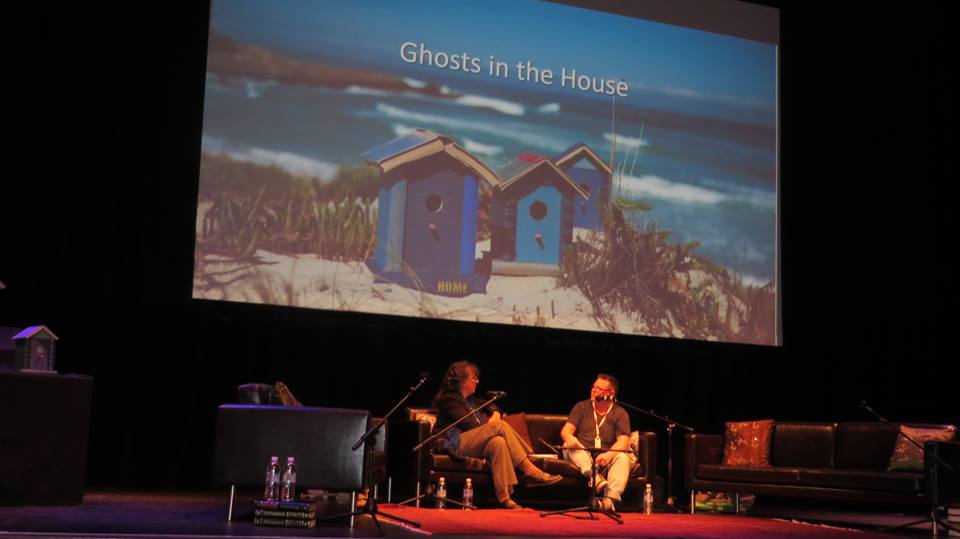
June: My dream of being invited to talk at a writers festival came true when I spoke about Dying to Know: is there life after death at the Margaret River Readers and Writers Festival in June. I’d have to say it was one of the most amazing experiences of my life.

July: The South Western Times previewed my new adult non fiction book, Turning Inside Out. The photo shoot was done in the archive room of the paper and it was freezing. The ‘ghost’ in the back is journo Lincoln Bertelli

August: Heaps of people turned out for the launch my 5th book, Turning Inside Out: what if everything we’ve been taught about life is wrong at Footprints Resort Preston Beach. And yes it proved once again that I love talking in public as people laughed in the right places and no-one fell asleep!

September: Andy and I packed up the car and took the #beingyouisenough tour south to Albany to talk to the kids at Yakamia Primary School. 
September: The school visits in Albany were based around my first real instore signing at a book store, in this case Dymocks Albany. It was great to meet so many of my readers and talk about what inspires them.

October: Andy and I packed the car again, this time heading north to take the #beingyouisenough tour to Geraldton. I had great promotional support from all the media including the Geraldton Guardian, Everything Geraldton website, Radio stations 98.1 Spirit and ABC Midwest.

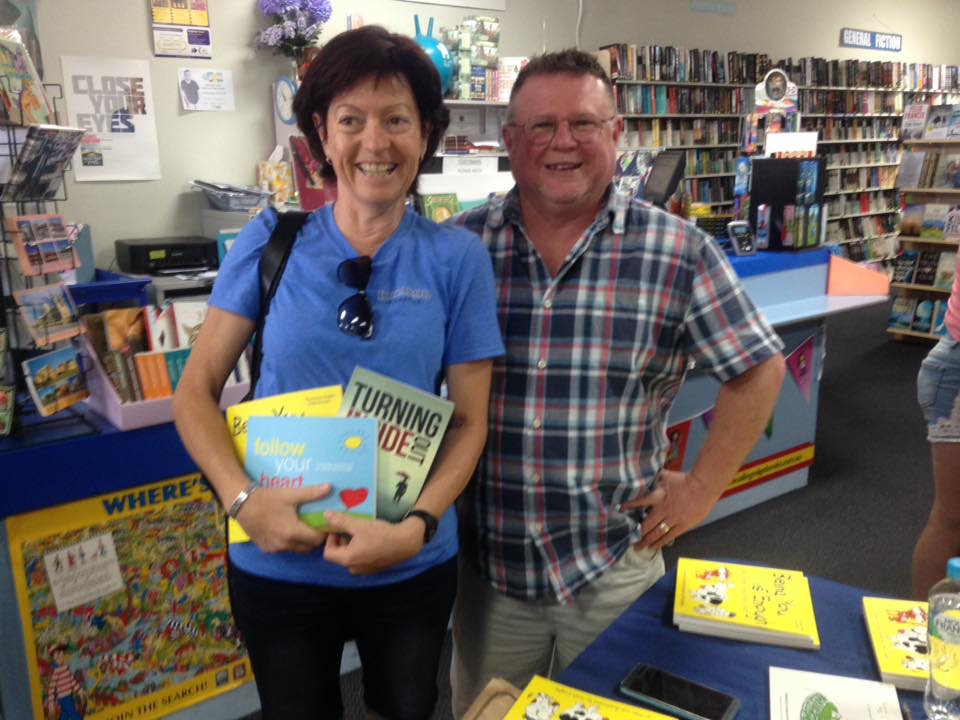
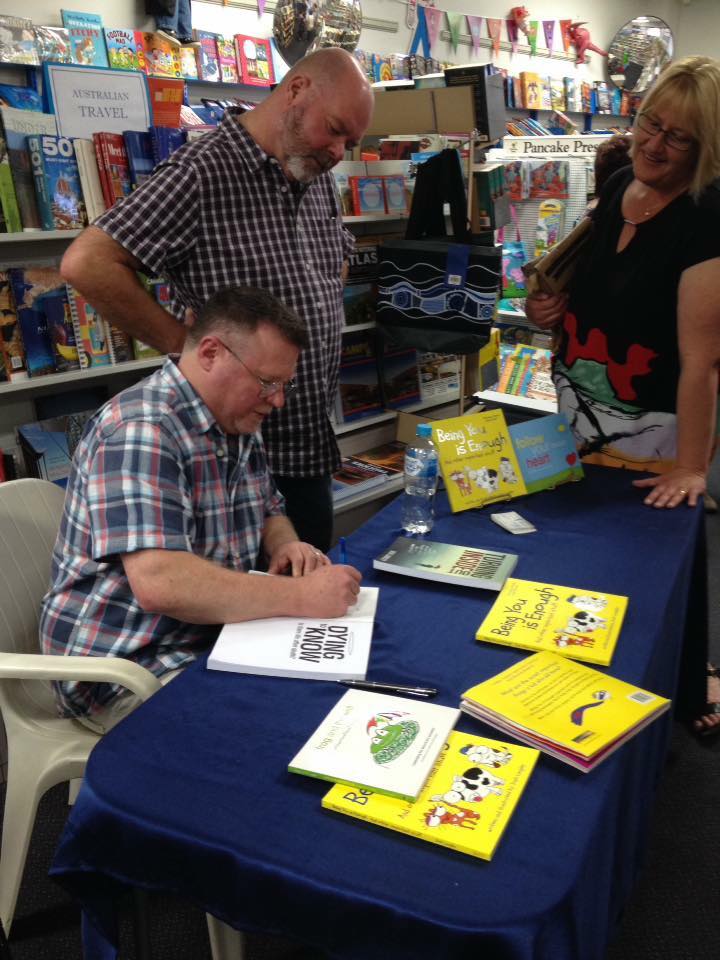
The Geraldton Book Signing was held at Read a Lot Books and the owner was delighted to have sold out of all copies of my books! Plus I got to meet lots of old friends and make some new ones.

November: I’d got myself a booking agent a couple of months earlier and now things got seriously real! I was invited to go on a 3 day school tour of Port Hedland and Norseman, which also included visiting my first remote aboriginal community. I was lucky enough to travel with famous fantasty illustrator Marc McBride.

December: Andy and I took it to the streets, being part of our first ever market event at the Victoria Street Artisan Fayre. We had a cracker day, selling out of almost everything!
Mental Freedom.
In less than 12 months I’d gone from suffering some serious anxiety and feeling like a caged animal to being a fully fledged entrepreneur with some sense of control in my life. And strangely that also included letting go of some control and allowing the universe to weave it’s magic.
Obviously it wasn’t all beer and skittles and big bowls of tortellini; we had our tense moments, awkward moments, fear filled moments and flashes of ‘what the hell have we done?’ But Andy and I supported and listened to each other and made sure that whatever it was we were doing, was going to work. Most of the time we had no idea of what we were doing, but that was part of the adventure.
Bring on 2017.


My year of living adventurously - in pictures
 January: I quit my secure full time job and ended a 20 year career in Radio. (Photo by Elana Shumilova)
 February: Restarted our Advertising copywriting business with my partner Andy Macleod
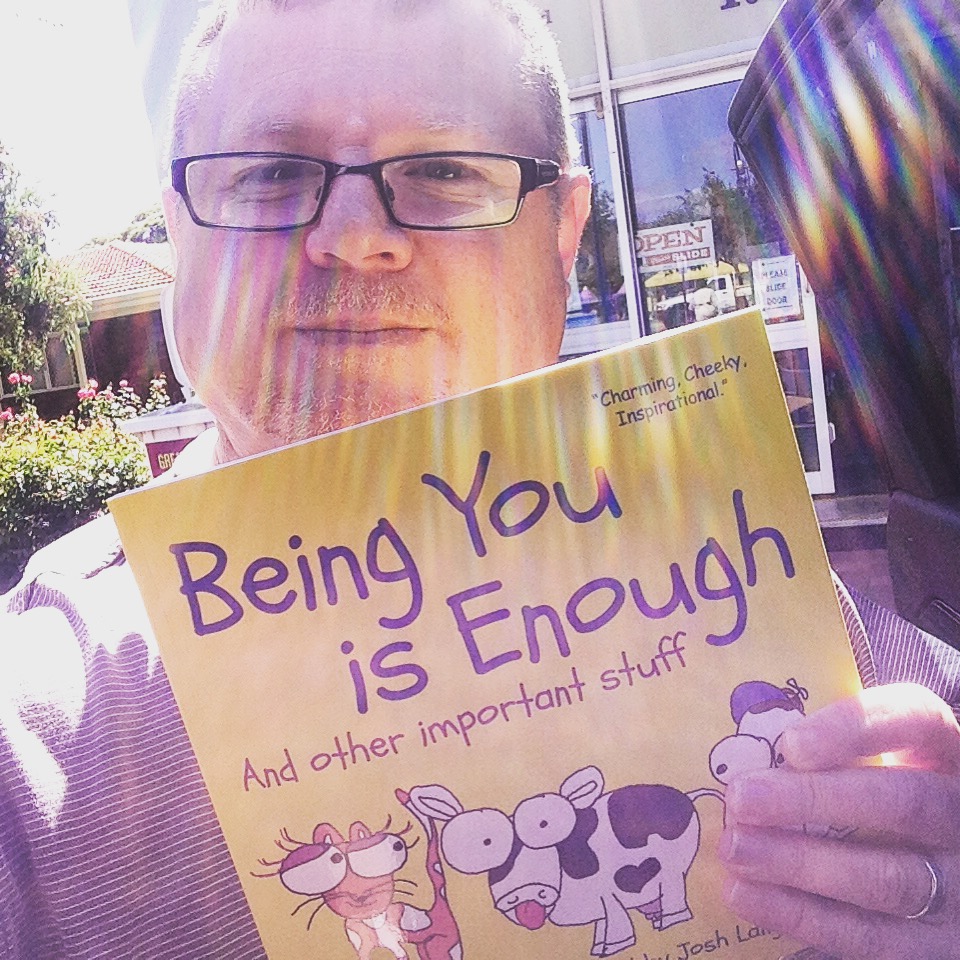 March: Released my Kid's Book Being You is Enough
 April: Feature in newspaper
November 22, 2016
Have you jumped before?
 Image courtesy of Google Images and Palm Press
Its fast coming up to 1 year since I left the safety of fulltime employment with nothing to go to except a vague hope of doing something fulfilling. I call these moments ‘Jumping Off Points’ or JOPs for short. I’ll write more about what the last 12 months have brought myself and Andy a bit later.
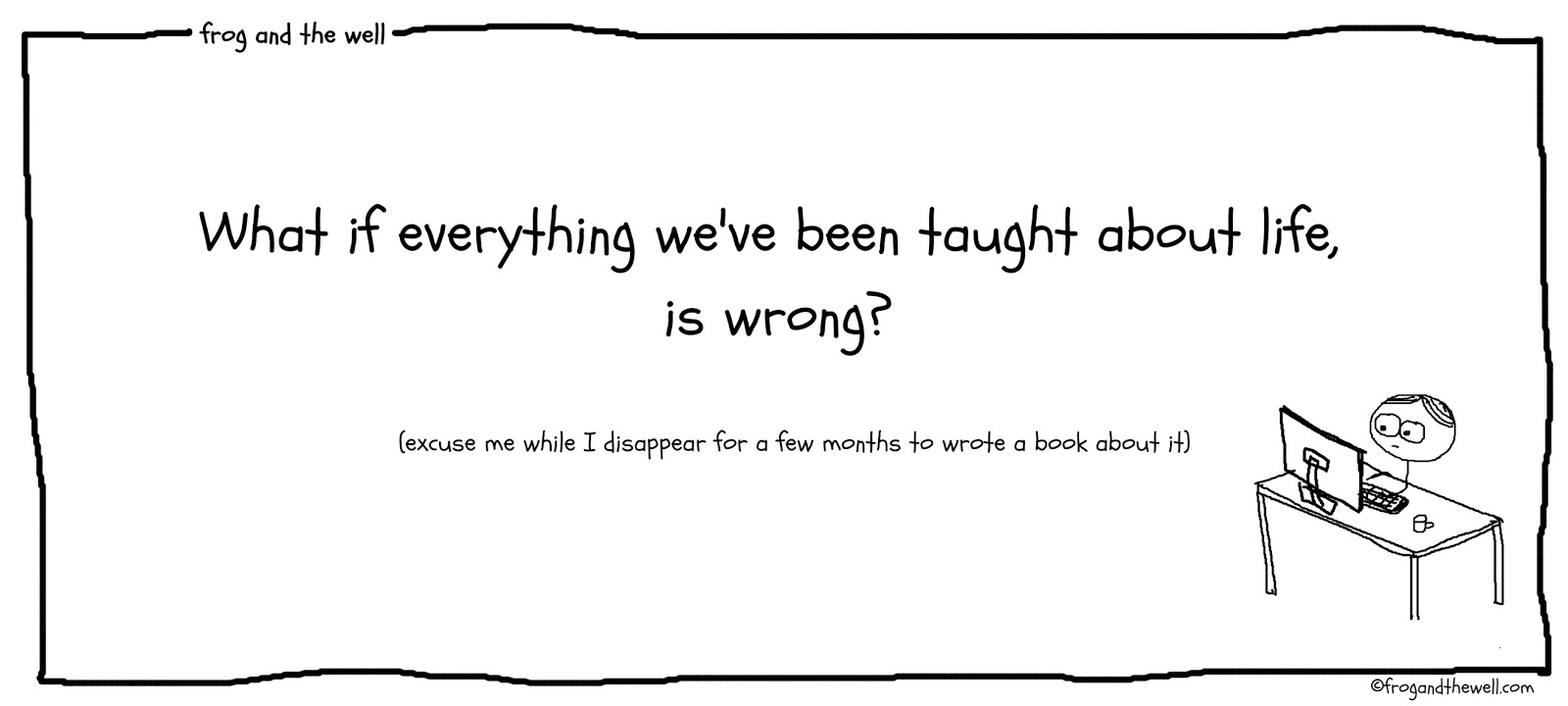
If you’ve read my mini biography Turning Inside Out: What If everything we've been taught about life is wrong you’ll know that I’ve done it before. 16 years ago I left my radio copywriting job to start my own business from the back room of a friend’s house. I only had a $500 to my name, so I spent it on a computer which didn’t even have a monitor so I had to quickly borrow one. ($500 didn’t get you much of a computer in those days) My learning curve was steep and I had to climb it. There was no other choice. And when I look back there were lots of other JOPs in my life, but at the time they went unheralded, they were just things I had to do to change my life at the time or pull myself out of a rut. JOPs are when we have to leave our existing comfort zone for something unfamiliar, yet whatever it is it promises to be
We all have our own Jumping off Points and more often than not, it’s only in hindsight you can recognise them. They are mini milestones (or bloody great big ones) that show you are braver than you think. And more often than not, when you look back on your JOP and remember how scared you were you realised that in the end everything turned out fine didn’t it? (If not way better.) It always does.
 You can jump on your own or you can do it with someone else. My first major one, I did myself and this time Andy and I jumped together. Now nearly 12 months since jumping I’m happier than I’ve ever been. I’m learning to embrace the unknown and see everything with a sense of possibility and adventure. I’m learning, growing and expanding in ways that I could never have imagined. I’m now writing more books, doing author talks, inspiring kids with the #beingyouisenough school visits, running Outside Creative and holding workshops with Andy and scheming up new ideas every day.
 It’s far more preferable than sitting in an office full of anxiety and fear which is what I was doing before. It hasn’t been easy though, life wasn’t meant to be, but I can guarantee you I feel well and truly ALIVE!

You can either trust life or not. I choose to trust life and my JOPs prove that life has my back too.
JOP's are not for everyone and everyone's situation is different, but if you find yourself where you are left with no choice, then trust the universe. It always will have
If you’ve had a jumping off point, I’d love to hear about it as it may help other people to have the confidence to get out of a rut or situation they feel stuck in.
Go. Jump!
October 26, 2016
The day I met the kid with the grotty jumper.
Working in radio had shielded me from the real world. And now a little aboriginal kid had shown me what the other side of life can be like. He was about 9 years old, with a mop of tangled hair and a jumper that I soon realised may not have been washed in weeks, if not months. The kid looked poor and may also have been one of those kids whose only food for that day had come from the Food Bank that delivered fruit to the school each morning. But this kid didn’t act poor.
He listened with eagerness to my entire presentation and asked lots of great questions. His drawing skills weren’t the best, but it was their imagination that I wanted the kids to exercise not their drawing skills and boy did he have an imagination! He didn’t hesitate when I asked him share to his invention with the class and even wanted to know how to get to where I was doing a book signing the following day. What will become of the kid with the grotty jumper? Will all that enthusiasm and energy be crushed when he gets home by something more pressing like hunger? Will his family be supportive or will they neglect him or even worse abuse him? I have no way of knowing. I know the teachers and the school do their best with what they’ve got and I’m in awe of what they do. But is it enough? How does this kid with the grotty jumper know that he is enough?I didn't seen him at the book signing so I'm going to try and track him down and get him a copy of the book. It might help in some small way.
October 23, 2016
Geraldton Book Signing




October 14, 2016
How to Get Published. The Basics
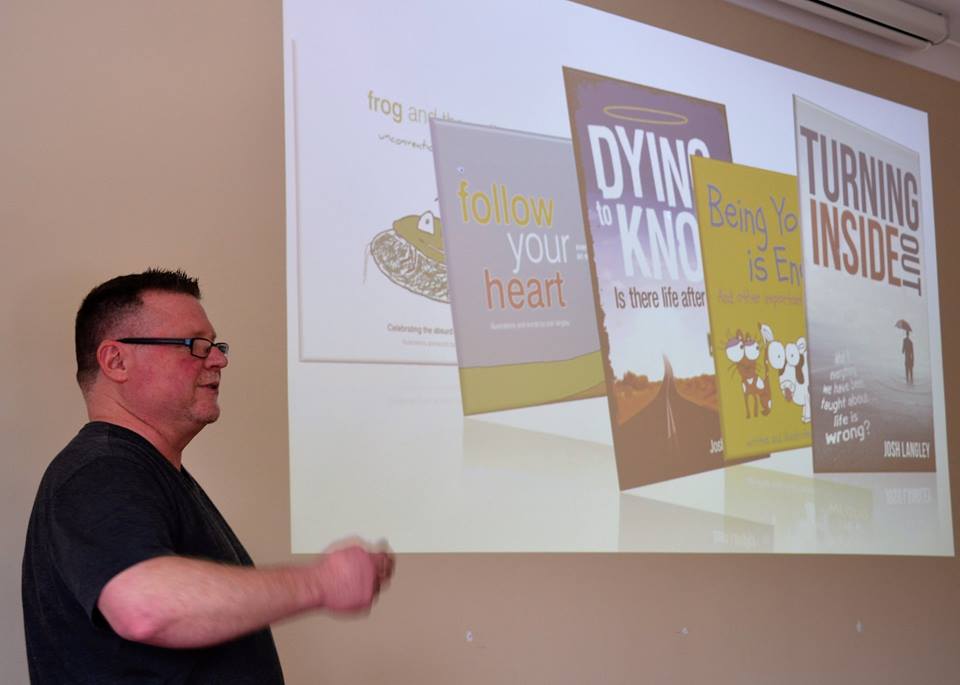
So you've written a book or want to write a book and have no frigging idea of what to do next. Well hopefully over the next couple of glasses of wine I'll help fill in some gaps and give you the motivation and knowledge to take your work out and show it to the world. Disclaimer first: This information is based on my own experience of getting published along with reading countless other blog posts, websites and books by other authors, publishers and agents. So I’ve done all the boring research for you. However this is no way a definitive guide but it can get you started and demystify the publishing process. So pour a glass of wine and read on. It’s all about the moneyKeep in mind that publishing is a business designed to make money. Agents and publishers don’t just publish books to make people feel good, they want to know if your book will sell and make money. It’s that simple. Always keep that in the back of your mind when going through this process. How the publishing industry works – the basic version
· A publishing house will work with you to get your book finished and to print.
· They work closely with a distribution company to work on the ‘sales’ angle for your book and then the distributor ‘sells’ the book to bookshops and retail outlets.
· A bookshop will buy a certain number of copies and if after a set number of months, if there are any copies left, they can send the books back to the publisher and get a refund. Some distributors will charge a ‘return postage fee’ which may affect how many books the bookshop will initially order.
· The publisher will arrange promotion and publicity.
· With assistance from the publisher / agent the author will develop an author platform to run complimentary to promotion and publicity.
· You get paid a royalty (percentage) of each book sale. Usually 10% paid twice yearly.
Know your book. It’s important to know where your book fits into the scheme of things. Is it fiction or non fiction? What genre does it fit into? What other books are out there like yours? Visit book shops to see what’s out there. Do a Google search for similar genres and categories. It’s about learning how to describe your book in a quick and easy fashion. Like an elevator pitch where you only have 30 seconds to describe your book to a stranger.
Publisher or agent? Firstly you have to decide if you either want to start with a Literary Agent who champions your book on your behalf or go straight to a publisher. However if you go to the publishers first and they reject you, you can’t go and pitch to an agent, because if the publishers reject your work, then an agent won’t able to ‘sell’ it to the publishers if they’ve already rejected it. It’s complicated. Top up your wine.
 Literary Agents:
 Having an agent is like having your very own manager. They champion you and your books to publishers and have your best interests in mind. They make their money by taking a percentage of your royalties, yet they can usually help negotiate a better percentage with a publisher than what you could have done yourself, so it all balances out. All the top authors have a literary agent, however, unfortunately they are very reluctant to take on unpublished authors or unsolicited manuscripts. There are also only a handful of Literary Agents in Australia which makes it almost impossible to get one if you’re not known or even moderately known.
Traditional Publishers: Examples include Random House, Allen and Unwin, Penquin etc.They pay and arrange for everything, including manuscript review and advice, editing, spellchecking, cover design, typesetting, distribution, promotion and publicity. You get around 10% in royalties per physical book and you don’t have to pay out anything. You also get other royalties such as ebooks, overseas rights and subsidiary rights ie audio books, film rights etc. The publisher works with a distributor to get your book into bookshops and the online bookshops. However the publisher will offer you a contract on their terms and if you don’t have very good negotiating skills and you don’t know what you’re doing you could get diddled. Check out the Australia Society of Authors information about author contracts
Self publish / print on demand. With this model, you have to arrange everything (editing, cover design, printing etc) however you get to keep most of the cash! You could either pay thousands to get your books printed and fill up your garage or do POD (Print on Demand) via Amazon etc. Unfortunately you won’t be able to get your books into the bricks and mortar retailers. If your book is just text only, you may want to look at doing an ebook and uploading straight to Amazon and other ebook sites. There are some incredible success stories of authors publishing straight to Amazon and then being offered a publishing contract with a traditional publisher. AG Riddle is a perfect example. However with this model, you have to do all the publicity and promotion yourself which is time consuming and may cause you to consume lots of wine. However there are some great books out there on promotion such as Emma Noble’s book, The DIY PR guide.
Vanity PublishingThey look and feel like a traditional publisher, yet they expect you to pay some of the costs upfront. They may not have the relationship with a distributor so it’s harder to get your book into bookshops if at all. I know of a few people that have been burnt or have been left disappointed by going down this path. Look out for words like ‘Hybrid Publisher ‘, ‘assisted self publishing’ and the like. It can be a minefield and some vanity publishers may be genuine and give your manuscript the attention and criticism that any self respecting traditional publisher would give, but most don’t. They just want your money and will often accept any manuscript no natter how good or bad. Don’t confuse hybrid publishers with hybrid authors. Hybrid authors use a combination of traditional and self publishing. Research the topic well. It may involve more wine. Read more about it.
Getting startedIf you want to go down the Traditional Publishing route (highly recommended) It’s best to Google all the publishers in Australia. Read their submission guidelines and stick to them! They’re very picky. The guidelines usually involve (but not always) 4 things:
1. An introductory letter. This is very brief, less than one page and you have to sell your book, and yourself, in only a couple of paragraphs.
2. The Book Pitch. This is the most important aspect of the whole process. You may have a sensational manuscript, but if the pitch is boring as cold porridge, then it’s not going to do you any favours. Google about how to write a book pitch or just email me josh@outsidecreative.com.auand I’ll email you the ones I’ve done for non fiction. You don’t need to reinvent the wheel, just use what’s already out there as a guideline.
3. An Author Bio. Again Google the best way to write an author bio. These are the hardest to write as it has to be in 3rd person (Josh is a prolific writer having published 5 books and drinks too much wine etc) and you have talk yourself up. Once you’ve written several versions, run them past your partner or a friend and get their thoughts. Here’s a place to start. 4. Sample chapters: Again depending on the submission guidelines, usually you’re requested to send the first 3 chapters so they can get an idea of whether the book is remotely interesting, if it'll be would profitable, and it gives them an idea of your writing style. If they’re interested they’ll request the rest of the manuscript to read and consider. It’s important that this is your best work! Check it for spelling and grammar and make sure there are no typos.
 Once you have to your ‘submission pack’ ready to go then start hitting up the publishers and go to their submissions page. Often the big ones like Harper Collins, Random house etc, don’t take unsolicited manuscripts (meaning you can’t send to them direct) as they only accept submissions from agents (or their submissions window maybe closed and may not reopen until 2028 by which time you could be dead). Yes I know; if agents don’t take unsolicited manuscripts and neither do the big publishers, how the hell are you going to get your foot in the door?
 Where there’s a will, there’s always a way.
Allen and Unwin has the Friday pitch: https://www.allenandunwin.com/about-allen-and-unwin/submission-guidelines/the-friday-pitchHachette has it’s submission window open: https://www.hachette.com.au/Information/ManuscriptSubmission.page
And many smaller publishers are quite happy to take unsolicited manuscripts, like Big Sky Publishing, Echo Publishing,Pantera Press, Text Publishing and many more. Google Publishers in Australia and work out which ones publish your genre of book. Also like their Facebook pages / Twitter pages etc and start to engage with them by liking and commenting on their posts and tweets. However don’t be an annoying twat.
I found my publisher by responding to a post they had made on Facebook where I asked who the person was to send a submission to. I got a name and an address, Bingo. Pitching:
You pitch the same way as you do to an agent as you do a publisher. However triple check the submission guidelines. Don’t pitch to more than 2 or 3 publishers at a time as it’s considered ‘rude’ if you make a submissions editor get excited about your work only then to tell them that another publisher has already offered you a contract. And with Agents only do one at a time. Wait for the rejection / acceptance and then hit up another one. Most agents take between 4 and 12 weeks to consider your submission. Yes that makes it a very lengthy and bloody boring process and you could most probably get married and have 2 kids by the time one finally accepts you. For a full list of Literary Agents in Australia check out https://austlitagentsassoc.com/
Develop your author platform. Ok, pour another glass of wine. I’ll only briefly touch on this one as it could make another blog post altogether. It’s not enough to rely on your publisher to promote you unless you’re JK Rowling, Stephen King or Jimmy Barnes, so you have to develop your author platform and work it like a boss. Basically an author platform is about how you interact with your readers. · How personable are you? (Are you friendly? Are you easy to work with? Do you like people?)
· Social media (what platforms are you working? Facebook, Twitter, Instagram? How many people to do you reach and how well do your interact with them? Do you interact with other authors and people with similar interests to your book?)
· Public Appearances. (Do you do book signings, talk at festivals, do radio , TV and press interviews?)
· Blogs / websites: (Do you have a website or blog where people can easily interact with you? Are you blogging and even commenting on other people’s blogs? This blog post is an example of working the author platform)
· Other websites / news outlets and blogs. Do you contribute stories or articles to other outlets and blogs?)
Any publisher or agent will be Googling your name like some crazed stalker to see if you already have a ‘presence’ and if your author platform is something they can work with. There is so more I could talk about but I’m sure your glass is getting nearly empty.
Now the positive ending. Persistence is the key to getting published. Keep trying, trying and trying. If one avenue doesn’t seem be working, then try another one. Be humble accept feedback and criticism. Take it on board and use it to improve your work and your methods. Go to writers festivals and ask other authors how they got published. Stalk them on Facebook as well and be that curious but not too annoying fan that just wants to know everything. Authors secretly love being asked these questions as it makes them feel like they contributing something back.Also checkout the links below:Writers resources for each state: http://www.austwriters.com/AWRfiles/groups.htmAustralian Writers Centre: http://www.writerscentre.com.au/Australian Society of Authors: http://www.asauthors.org/
That’s enough for now and your glass might need topping up, so if you have any other questions or want to tell me what a load of crap this is, or if you’re an agent and want to represent me, then feel free to email josh@outsidecreative.com.au
I want to see your name on a book spine and I’m sure you do too.
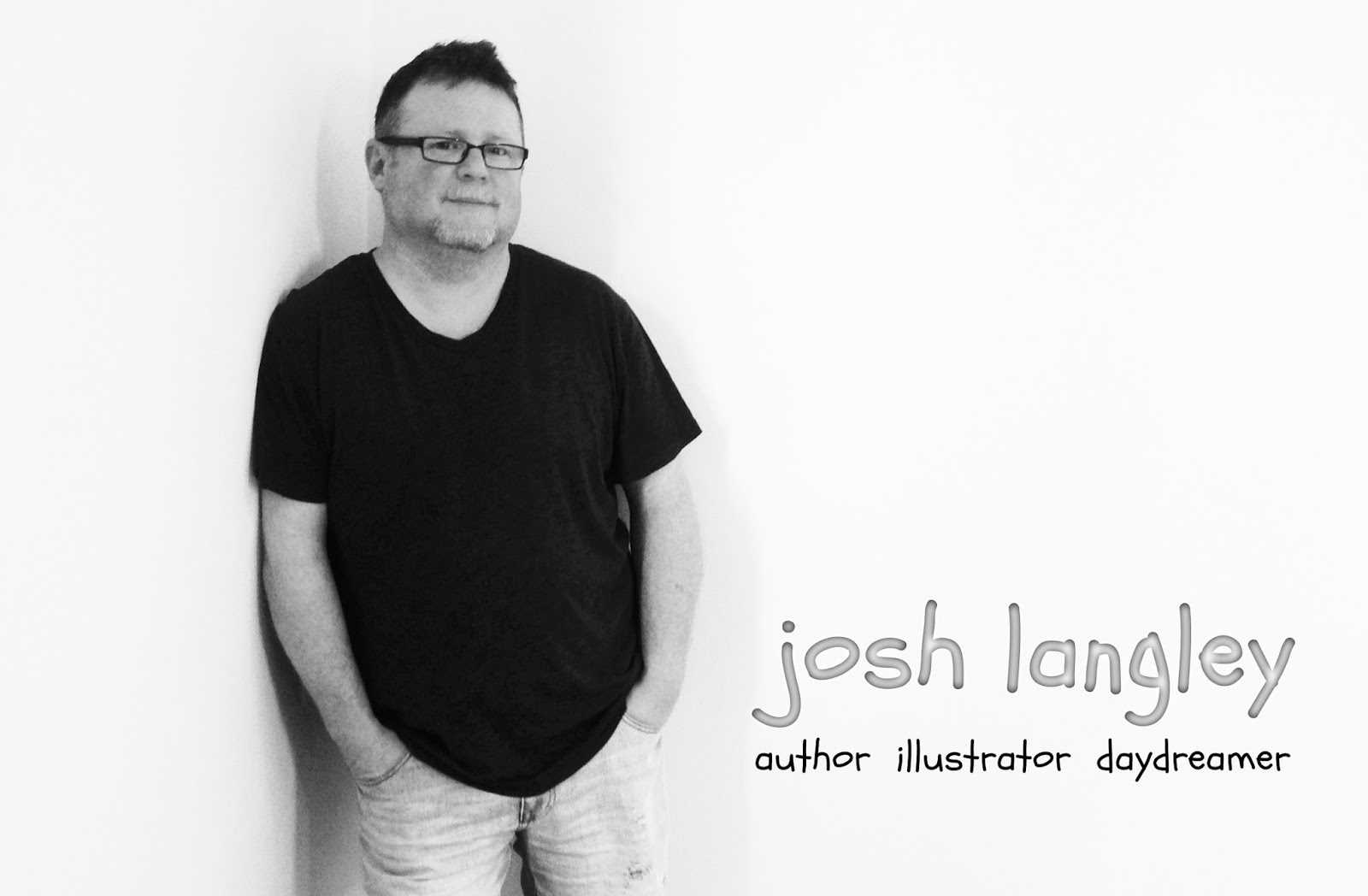 About Josh Langley, author, illustrator and daydreamer. After failing high school twice and spending a ridiculous amount of time being unemployed, Josh went onto create a successful career as an award winning radio creative writer spanning 20 years. However it was his insatiable thirst to find the meaning to life and death and the insights he received that led to the publishing of 3 illustrated books about happiness and two nonfiction Bill Brysonesque travelogues of his adventures to find evidence of the afterlife. Josh has nearly finished his 6th book, How to Find Your Creative Mojo, which he hopes will help everyday people express their creative passion without any fear.
 Josh lives on 7 and a half acres in the South West of Western Australia with his partner and a bunch of neurotic chickens.
October 11, 2016
Frog and the Well Wall Art and Prints now available.

From a simple request by my sister in law to help decorate her home before it went on the market, I've now had lots of people ask if they could buy their own prints.
The answer is YES!
A4 prints are $25 + pp
A3 prints are $30 + pp
Buy up to 3 prints and get postage for $12.
Here's the link the to the gallery. Frog and the Well Print Gallery.
September 17, 2016
Ghosts of Oz Interview and feature
 You can read the full interview here: http://www.ghostsofoz.com/goo-magazine/im-dying-to-know-our-authors-inside-out