Gillian Marchenko's Blog, page 3
April 28, 2016
Still Life Book Trailer
InterVarsity Press helped me put together a book trailer for Still Life. I cried when I watched it. God has been faithful in my family’s journey through major depressive disorder thus far, and I believe he will continue to lead us as we navigate this, at times, tumultuous but beautiful life.
Life with depression is Still Life
I’d so appreciate it if you could share this book trailer of Still Life.
Here’s a small excerpt from the book:
“Mrs. Marchenko, our tests indicate you suffer from major depressive disorder. The numbers are low, some of the lowest I’ve seen. If the information is correct, than you are extremely depressed.” I nod my head and offer another shaky smile, attempting to project understanding and confidence. But inside, I start to break down and break apart. Major depressive disorder. Sounds ominous and final. Sounds like a real honest-to-God mental illness. Is this what I wanted—confirmation of a cracked-up head? a loss of life? A saying of Jesus comes to mind: “For whoever wants to save their life will lose it, but whoever loses their life for me will find it” (Matthew 16:25). Yeah, okay, but what about those of us who watch our lives drift away and we do nothing about it? What if we no longer know who we lose our lives for? What if there seems to be no purpose or way to stop it?
Why Are You Smiling? I reach my left hand up to my cheek and rub it for a second. I’m here, right? I’m still here. My toe starts to tap. The cheerful man’s lips transition from a smile to a straight line. He stares at me, his eyes attempt to pierce mine, but I don’t let them. I hold his stare but block the piercing. What does that say about me, that now, in this pivotal moment in my life, I still fake, or at least try to fake, my feelings? It’s because I’ve disappeared already. At some point my body became a solid sheet of ice over a raging sea of emotions. The cold I put out has caused people to look past me. They started to see through me. Or not see me at all. And now I am a master at pretending—that is, in front of anyone but Sergei—because I hate the fear, the guilt, the paranoia. Freezing meant a final attempt to hold on to myself and not disappear: stay cold and get through the day. But now I hear the diagnosis. I sit in an uncomfortable chair in a bare cream-colored room. In one moment my fingertips tingle. My feet begin to burn. I start to thaw. No, I can’t thaw. No! I imagine myself starting to crack and break apart inside.
When my siblings and I were kids, my mom took us ice skating. I don’t remember gliding across ice, but I remember my feet killing me afterward. Back at home, my mom ordered me to undress. “Take off your socks too. It’s best if you don’t have anything on your feet right now.” She set a bowl of tepid water in front of a chair. “Here. Sit. Put your toes in there.” I stuck my feet in the water, and pain shot up my legs. My feet were on fire, burning, burning, burning in a bowl of warm water. “It hurts, Mom. Make it stop,” I cried. Now, at the clinical trial, I watch myself thaw. Hold yourself together, Gillian. Stay cold. Don’t break. I suppose that as with frozen toes after ice skating, one must be stripped bare to start to thaw. I thought I wanted this—help—but now I don’t know. -Still Life, Page 21-22
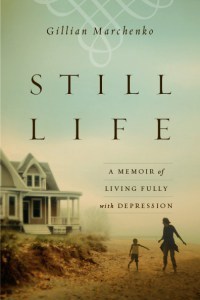
Still Life, A Memoir of Living Fully With Depression
InterVarsity Press
You might also like:
 Book launch day! Still Life is here…
 Struggle with Depression during the Holidays
 Depression: no longer under lock and key
 5 strategies for YOU when your spouse fights depression
 On depression, hiding, and the need for raised handsZemanta
The post Still Life Book Trailer appeared first on Gillian Marchenko.


April 13, 2016
Book launch day! Still Life is here…
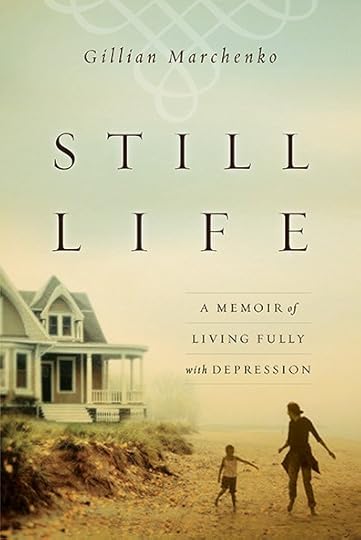
It is Still Life’s book launch day.
It is finally, officially my book launch day. Still Life, A Memoir of Living Fully with Depression is here. I can’t believe it. It seemed like this book launch was far away and now here it is, actual pages, a book with a binding and everything, being shipped off to people to read (well, I hope that part is true).
“A person who publishes a book appears willfully in the public eye with his pants down.”
― Edna St. Vincent Millay.
Oh Edna, Edna, why don’t I listen to you?
This is a vulnerable book. I write about my depression. I write about wanting to take pills or stab myself in the stomach. I write about how much my illness hurts my family and friends. And I write about Jesus and how he believes in me when I don’t believe in him. Do I really want this book launch?
My daughter Zoya is reading the book right now and she says the only way she is getting through it is by imagining it was written by someone else. “Every time I see one of our family’s names, I realize this is your book, Mom. And that makes me sad.”
It makes me sad, too. I’m sad that my kids and my husband live with depression because of me. But I am also thankful I can tell our story. Writing helped me gain perspective. I realize that I’ve learned, grown, and healed some. I’m not completely healed. But I’ll take what I can get because I know depression is an active illness. I need to keep fighting every day.
1 out of 4 people struggle with some kind of mental illness. This is a huge topic in our society and a lot of people don’t think it is real.
I’m not exactly sure why I decided to throw my hat into the proverbial ring of advocacy and vulnerability. But I did, and it’s book launch day. It is out there now. I hope Still Life helps others who have faith (anyone, really) and depression to know that they are not alone.
If you are so inclined, I’d love for you to help get the word out about Still Life. You can tweet this blog post, share the picture below, or check out my author Facebook page for more ideas. Thanks so MUCH.
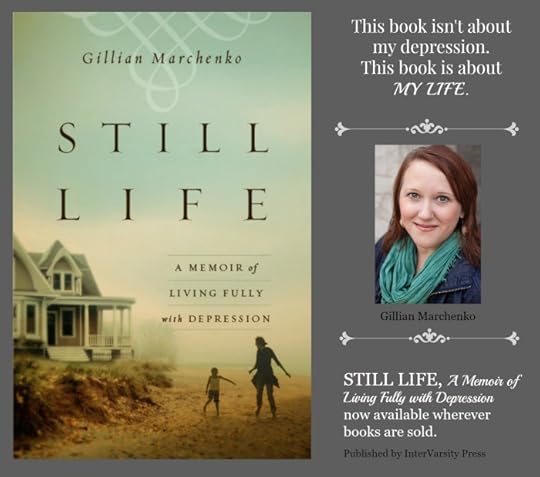
If you struggle with depression or know someone who does, there is help to be had. In addition to Still Life, the book, I’ve started a private Facebook group for individuals with depression and their loved ones. A community is blooming. I’m so glad to be a part of it. Request to join Still Life Insiders today. We’d love to have you.
“The light shines in the darkness, and the darkness has not overcome it.” -John 1:5
Related articles across the web
 Join my Still Life Insiders Facebook Group!
 The Part of My Depression That Terrifies Me
You might also like:
Struggle with Depression during the Holidays
Depression: no longer under lock and key
 My Big News… A Book Deal about Depression
5 strategies for YOU when your spouse fights depression
Join my Still Life Insiders Facebook Group!Zemanta
My Big News… A Book Deal about Depression
5 strategies for YOU when your spouse fights depression
Join my Still Life Insiders Facebook Group!ZemantaThe post Book launch day! Still Life is here… appeared first on Gillian Marchenko.
March 24, 2016
Join my Still Life Insiders Facebook Group!
As many of you know, I have struggled with severe depression for many years. Still Life, A Memoir of Living with Depression (publishing May 1st!) is a book that will give you a first hand, insider’s look at what that does to a mother, a family, and to a faith. I pray that God uses the book for good and helps others who struggle with mental health and their families to know they are not alone. With that being said, I have a great opportunity for all of us. Please consider joining my Still Life Insiders Facebook group.
The Still Life Insiders Facebook group is a private group that I have created as a place to support one another on the depression journey and to help launch Still Life out into the world.
Still Life Insiders Facebook group will:
-Receive a 30% discount on #StillLife for a limited time when you join and order a copy of the book through my publisher InterVarsity Press.
-Participate in a community amidst an illness that can be difficult to tackle alone. My prayer is that we can share prayer requests, tips, resources, and support with one another.
-Have a chance to participate in a book study in the coming months.
I hope to see you there!!
Request membership here –> Still Life Insiders.
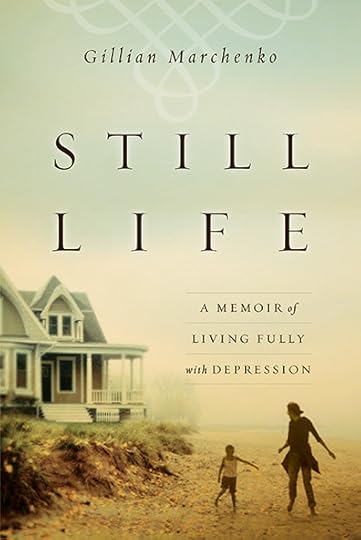 Still Life, A Memoir of Living Fully with Depression is now available for pre-order at:
InterVarsity Press
and
Amazon
You might also like:
 A few places I’m showing up…
 Run and get your shoes
 On being as dumb as Peter, where I’m at today…
 Church: 5 reasons why you must minister to families affected by special needs
 On fighting depression: do the next thing…Zemanta
The post Join my Still Life Insiders Facebook Group! appeared first on Gillian Marchenko.
March 22, 2016
10 things not to say to a mother fighting depression

10 things not to say to a mother fighting depression
10. Go outside for a walk.
It’s true that for me, sunshine and fresh air help me sometimes when I am depressed, but I get tired of people suggesting these the outdoors like I never thought of it or tried it. Now, I do have a friend who shared with me how exercise and healthy eating made a difference in her husband’s depression. I appreciated the careful, loving way she attempted to help me from experience.
9. You’re lazy.
This is a tough one for me. My mom and I recently figured out that I struggled with depression as a kid, but I was always just thought to be lazy. I have friends and family members who equate my depression with laziness. I get it. If a person hardly moves and stays in bed, it can seem pretty lazy. But please understand, I’m not choosing NOT to do things. I simply, when I am depressed, am not able to.
8. Oh, my friend had that. She did XYZ to get rid of it.
When I am not in the midst of a major depressive episode, I appreciate hearing stories about others who have found helpful ways to elevate their pain in depression. But if I am really struggling, please don’t blow me off with a pat answer to my struggle. It’s real. It’s painful. I need understanding and validation.
7. Your kids shouldn’t have to go through this (i.e. You’re a bad mom).
This is the hardest part of depression and motherhood. Kids absolutely should not have to go through this. Nor should their mothers for that matter. Trust me, guilt is a big part of the cycle of depression, especially when one has kids. Find ways to encourage the mom, and point out concrete examples of her ability to mother well. Our kids are our biggest motivators to tackle depression.
6. Snap out of it.
A lot of people can’t snap out of depression. It is an illness, one that no one prefers to have. Therapy, medication, exercise, eating right, and other things help, and when they do, Praise God! But it is not a question of a person snapping out of it. To say that is just mean.
5. I’d be depressed but I don’t have time.
Ah, the active busy mom who just can’t understand how another mom has the time to be depressed. Comments like this hurt. Moms who fight depression, again, do not choose the illness. Please know, we really want to be able to do more, and there are times when we are jealous of you and all that you accomplish. Depressed moms don’t make time to be sad. They carve out time to be well.
4. Pray harder.
Ouch. If only our faith was stronger, we would not be depressed. God has blessed us with so much, isn’t it disrespectful not to be joyful? The joy of the Lord is our strength, is it not? If you have a friend who is depressed, absolutely pray for them. Absolutely gently encourage them to pray, and seek God, and read scripture. But please don’t make their illness a spiritual deficit. Trust me, if they are people of faith, they are praying like hell.
3. Just take an antidepressant.
Antidepressants do help a lot of people who struggle with depression. And I am so thankful they make a difference in my battle. But our methods of treatment are not really your business to discuss. If your friend had cancer, would you be inclined to advise her the best route of recovery?
2. If you tried harder, you’d feel better.
People who struggle with depression WANT TO FEEL BETTER.
1. How can you be depressed when you have so many good things in your life?
Whether or not one’s depression is situational or clinical, it is not a decision a person makes. “I think I’ll be depressed today.” Um, no. Please don’t say something condescending like this. But also, please, again gently, tactfully, point out the good things in our lives. Chances are, we need to hear about them.
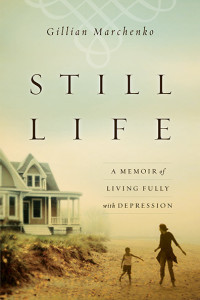 My new book, Still Life, A Memoir of Living Fully with Depression launches next month. Still Life is my story about depression, and the struggles my family and I deal with as we all fight towards health.
If you battle depression and are a mom, I’d love your feedback. Do you agree, disagree? What would you add or omit in your list?
You might also like:
 A glimpse at a mother’s depression
 Why I tell my kids about my depression
 6 things a mom struggling with depression can do to start the day off better
 5 strategies for YOU when your spouse fights depression
Depressed mom = failed momZemanta
5 strategies for YOU when your spouse fights depression
Depressed mom = failed momZemantaThe post 10 things not to say to a mother fighting depression appeared first on Gillian Marchenko.
December 17, 2015
Struggle with Depression during the Holidays
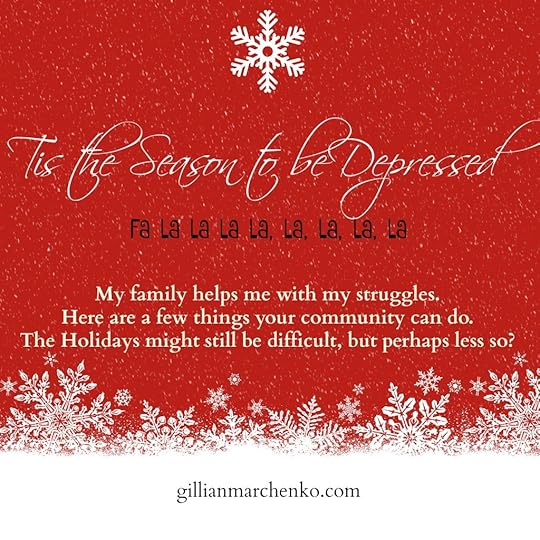 depression… Tis the season
Struggle with depression. Tis the season, fa la la la la, la, la, la, la. 1 out of 4 people in America struggle with depression or some kind of mental illness. There are also people who deal with chronic pain, grief, post traumatic stress, and probably too many other things to list here that are often greatly enhanced throughout the holidays.
I have major depressive disorder… (I know, shocker. I never talk about this… and just so you know, I am so sick of talking about it. I am definitely having more good days then bad but my depression is a curve :). But my publicist for my upcoming book Still Life, living fully with depression (coming May 1st, 2016, InterVarsity Press, available now for pre-order) gently encouraged me to post about the trickiness and struggle with depression during the holidays and how friends and family can support loved ones specifically during these times.
Now, I want to be careful with this post because I know there are some of you who are alone in this struggle without family or community. I hope this doesn’t hurt you. You are not alone. Those of us who struggle with depression are here. We can be your community.
And I know there are some families and communities who still just don’t understand. They don’t see your illness as an illness. I’m sorry. I can imagine that is very painful. My heart is with you.
Here are some of my specific struggles with depression during the holidays:
Unrealistic self-inflicted pressure on myself and quickly embracing the guilt of lack of fulfillment as opposed to the victories. (My wise husband Sergei keeps telling me to do what I can, and for that day, what I can do is enough and to keep praying and to take my thoughts captive to God, to draw me nearer to him.)
I struggle with large groups of people for an extended amount of time (even people I love and who love me.)
I also struggle with one on one conversation, too. Double whammy. My kids sometimes play ‘name the end of the sentence mom is trying to get out.’ Ha!
My anxiety is enhanced from the stress of caring for our two daughters with special needs in other people’s homes (Want to learn about that aspect of our lives? Check out my first memoir Sun Shine Down that published in 2013. Gosh, I am a plugging machine today but what can I say, an author has gotta eat).
I sweat during conversations, sometimes cry, and sometimes laugh uncontrollably (so weird).
I worry about what others (specifically my family) think of me instead of knowing (because I know they do) that they love me unconditionally.
I have other issues, but wait for it… I struggle with depression today and I’m not great so I can’t think of any more.
Last year for Christmas we stayed with my sister Amy and her family in Michigan for a few days. Evangeline was over stimulated, I was over stimulated, and my husband ended up exhausted from taking care of us.
Amy, and the rest of our family made several accommodations that we appreciated and that helped relieve stress. She and I were on the phone a few days ago and she reminded me that it went better than I remember, and that we all, gasp!, had fun.
So, friends and family who love people who struggle with mental illness, here are some things my family does to help me during the holidays:
They gave space. I disappear from time to time for an hour or two to retreat to my room during a full day of family. They are fine with it and even pitch in with the girls during my absence. If Sergei is busy or just needs a break, all I have to do is say the word and my niece steps in and takes over the care for one of our girls (she does great with Evie who can be a challenge for those who aren’t used to her).
They are growing in their discernment. One time (not at Christmas) we visited my parents and right away my mom could tell I was in a depressive episode. She put me to bed for a rest and helped with the kids.
They include me in activities, even if I start to laugh and cry uncontrollably, or grow sullen and disengaged within one simple conversation. They also understand if Sergei and I aren’t up for an activity because it will be too taxing on our family.
They encourage me. My brother-in-law encourages me with scripture and helps me remember that God is with me in the struggle.
My struggle with depression is no longer an elephant in the room. They get that it is an illness. My dad and brother often check in with me to see how I am doing. My sister sees me wilting and steps in and helps where I should be helping. My mom hugs me and offers one hundred percent understanding w/o judgement. Heck, one time my two adult nephews Ben and Will actually came into my room while I was bad off. I was embarrassed but they didn’t care. One joked with me until I laughed and the other actually climbed over the bed to give me a hug and tell me he loved me. During one of Evie’s autism melt downs she and I spent hours in a dark room in an attempt to help calm her down and keep her safe in different surroundings. My sister-in-law Kris had the brilliant idea to send my brother Justin into the room with a glass of wine for me. That kind gesture reminded me that even when absent, I am missed and cared for.
They care for all of our family. My niece Karli and my brother and his family make sure our older children without special needs have fun by paying loads of attention to them, asking them for sleep overs, going to the movies, and in Karli’s case, taking approximately 100 selfies a visit with them to post on social media. My whole family makes sure Elaina and Zoya are included in all activities even if we all can’t go, and they get a lot of great time with their cousins.
They are gracious. Our daughter Polly just loves people (especially her family). She has no concept of personal space and climbs up into people’s’ laps to cup her hands around their faces and constantly wants someone to play with her. They are also upfront with her, telling her sometimes to get down and it is enough, she can’t always get what she wants (but if we try sometimes we just might find… we get what we need).
They are growing in knowledge, acceptance, and love just as they are (and I, as well) with all the intricacies of a loving, happy, but messy family (like all other families on the planet). I think we’d all prefer not to deal with my mental illness. At times, they (and Sergei and I, for that matter) don’t know how to deal with it or how to support us. I know they’d prefer (as would I) the goofy engaged Gillian that I can be. But regardless, we all continue to love.
So, we are going to visit our family for Christmas, and as I read through this list, I see growth for all of us, and dare I say it?,.. am exciting to go.
Merry Christmas. Indeed, we live in a broken world. Tis the season to struggle with depression, but it is also the season to grow and to love and I know that it is because of Jesus, Emmanuel, God with us.
Here are some other posts that can help with these issues:
Surviving Holiday Party Small Talk When You Have Chronic Illness, The Mighty
The Struggles of Depression and Anxiety, NAMI
Holiday Anxiety, Depression, and Stress, Medicine.Net.Com
Related articles across the web
 depression and anxiety symptoms treatment
 What Is Depression? The Difference Between Feeling Depressed And Actually Having The Mental Illness
You might also like:
5 strategies for YOU when your spouse fights depression
 My Big News… A Book Deal about Depression
 Depression: no longer under lock and key
On coming out of depression
Why I tell my kids about my depressionZemanta
Depression: no longer under lock and key
On coming out of depression
Why I tell my kids about my depressionZemantaThe post Struggle with Depression during the Holidays appeared first on Gillian Marchenko.
October 1, 2015
October is Down syndrome Awareness Month – Get Involved!

October is Down syndrome Awareness Month – Get Involved!
I love the fall, for sure. But I also love a whole month dedicated to help educate the world about my two daughters with Down syndrome, Evie and Polly, and about so many individuals living in our communities who are amazing contributors to society.
My CHALLENGE to you this month is to:
–Share something about Down syndrome on social media (you can lift stuff from my blog at gillianmarchenko.com or from my Facebook page).
Here’s a quick cheat sheet of my top Down syndrome posts:
To the new mother of a baby with Down syndrome
For Parents who aren’t ready to celebrate Down syndrome
What to do with a severe and profound label for my daughter with Down syndrome
10 things to say when a baby is born with Down syndrome
10 things not to say to a parent of a child with Down syndrome
This little light of mine, watching my daughter with Down syndrome ‘get it’ with PECS
She’s enough: Parenting a child with ‘low functioning’ Down syndrome
An eight-year-old birthday party with Down syndrome
Introducing children with Down syndrome to the classroom
10 things teachers should know about Down syndrome
And a couple Memes you can use, or just steal the idea:

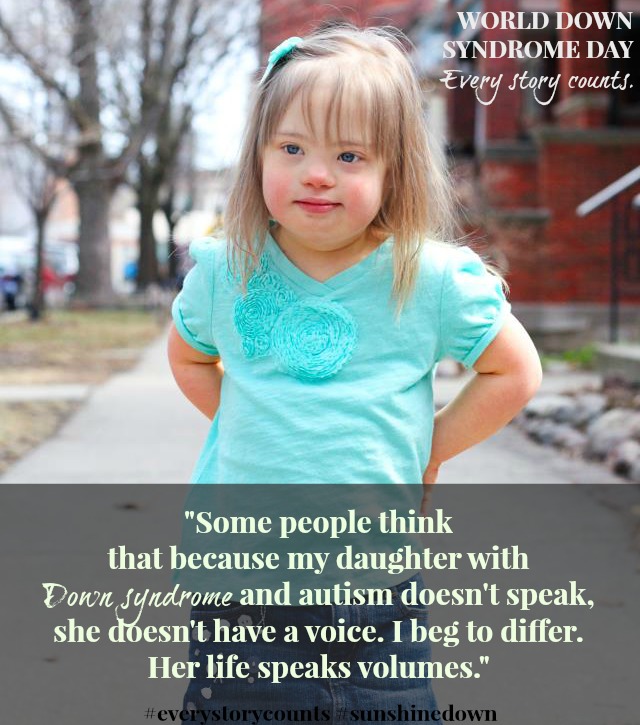

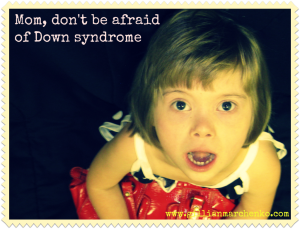
–Purchase an extra
copy of my book SUN SHINE DOWN and donate it to a school, church, or library .
.
–Volunteer once at an organization (or donate) in your area that focuses on Down syndrome (GiGi’s Playhouse, Down syndrome Associations, Special Olympics, and so many more! These organizations also have literature you can pass out in your neighborhood, to your doctor, and at schools. Cool, huh?
-Check out a great list of bloggers: parents and self advocates who share their lives and experiences with others.
Click here for Down syndrome Blogs
As I like to say, the trick is to be so aware that a month is no longer required!
You might also like:
 World Down Syndrome Day according to Polly, an 8 year old with Down syndrome
Ten things not to say to a parent of a child with Down syndrome
World Down Syndrome Day according to Polly, an 8 year old with Down syndrome
Ten things not to say to a parent of a child with Down syndrome
 10 things TO SAY when a baby is born with Down syndrome
 My top Down syndrome posts
October is Down syndrome Awareness MonthZemanta
My top Down syndrome posts
October is Down syndrome Awareness MonthZemantaThe post October is Down syndrome Awareness Month – Get Involved! appeared first on Gillian Marchenko.
September 18, 2015
Depression: no longer under lock and key
 Depression: No longer under lock and key
I have a book coming out in the spring about my battle with depression. People who know I am a writer often ask me what I am working on. “A memoir about depression,” I say, and they look at me out of the corners of their eyes. Why would anyone want to write, or for that matter, read a book about that, I decide they are thinking.
But I know why.
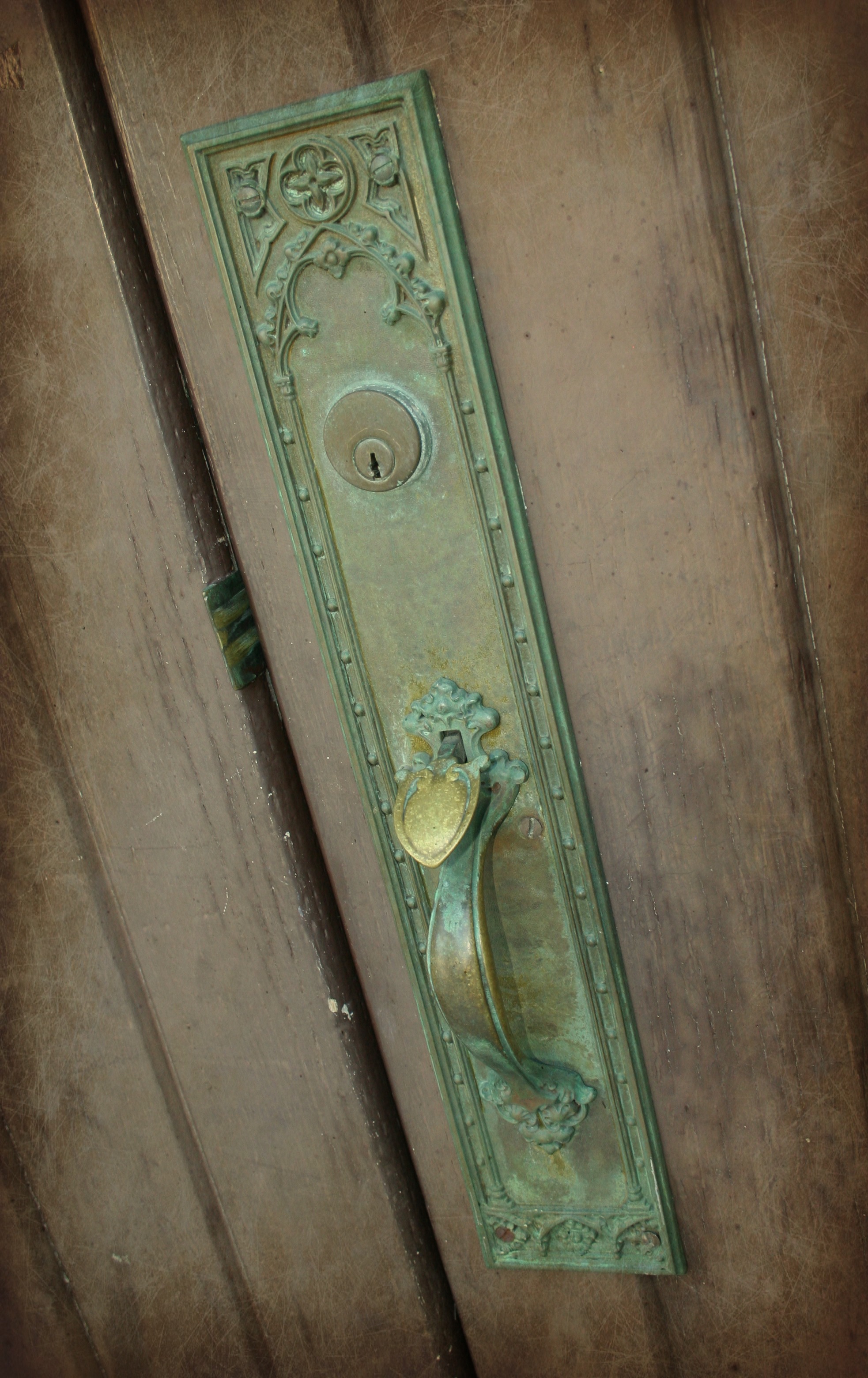
I’m writing about the parts of my life under lock and key because that’s my way of setting myself free in the struggle. I have depression. So how can I glorify God with it?
I think it is by opening up my safe and letting others see in.
Safes
Most of us have safes tucked deep within our hearts. It’s where the real parts of life hide out, the stuff we don’t necessarily want others to see: hurts, insecurities, jealousy, fear. I also think that a lot of our struggles stem from this hidden safe within us, and we end up spending whatever amount of energy we have for life hiding the safe, and trying to show others and ourselves that we are okay. We can do this. We don’t have problems, or at least we don’t have problems we wish for other people to see.
I’ve also come to believe that one of the biggest problems with the church today is that too many of us show up on Sundays with our safes under lock and key. We hoard the hard parts of our lives because Christians are supposed to be joyful and faithful. This is the most dangerous type of hoarding. If we can’t be honest with each other about what is in our safes, we will stunt our communion with one another and with God. Annie Dillard talks about this in regards to writing, but I think it is true for life, too:
“One of the things I know about writing is this: spend it all, shoot it, play it, lose it, all, right away, every time. Do not hoard what seems good for a later place in the book or for another book; give it, give it all, give it now. The impulse to save something good for a better place later is the signal to spend it now. Something more will arise for later, something better. These things fill from behind, from beneath, like well water. Similarly, the impulse to keep to yourself what you have learned is not only shameful, it is destructive. Anything you do not give freely and abundantly becomes lost to you. You open your safe and find ashes.”
Anything we do not give freely and abundantly becomes lost to us. I firmly believe this includes the dark parts of ourselves we’d rather not share. One day, we may open our safe and find ashes.
Why must we hide? Why must I hide? I am a Christian, a mother, a writer, a friend, a pastor’s wife, and a lot of times I hoard my secrets in a safe. Some days, depression swallows me whole. I don’t know how to parent my kids well. Prayer is hard. I think way more about my thighs than about helping other people. I’m writing this to know that I’m not alone, and to tell you that you’re not alone either.
The concepts of darkness and light are eternally connected. How can we know one without the other? And how can the light in us shine if we are preoccupied with keeping hidden in the dark? Did you know that Jesus is with you in your darkness? If you are his child, you are never alone, not even if you lock yourself up in a safe. Did you know that your darkness can lose some of its power? It can. It loses power when it is put in the light.
The light shines in the darkness, and the darkness has not overcome it. -John 1:5
What is under lock and key in your life? I hope today we all can be brave enough to tell someone about it, to bow and talk to God about it, and to allow our lives to open up a bit more, for His glory, yes, but also for our sake, and for the sake of our universal church where far too many people show up under lock and key.
My book, Still Life, a Memoir of Living Fully with Depression is slated to publish in the Spring with InterVarsity Press. I appreciate your prayers as I prepare to open up my depression safe for all to see.
You might also like:
5 strategies for YOU when your spouse fights depression
Can a Christian be depressed?
Why I tell my kids about my depression
 10 things not to say to a mother fighting depression
 On depression, hiding, and the need for raised handsZemanta
The post Depression: no longer under lock and key appeared first on Gillian Marchenko.
July 27, 2015
What about us? A sibling to kids with disabilities shares her needs
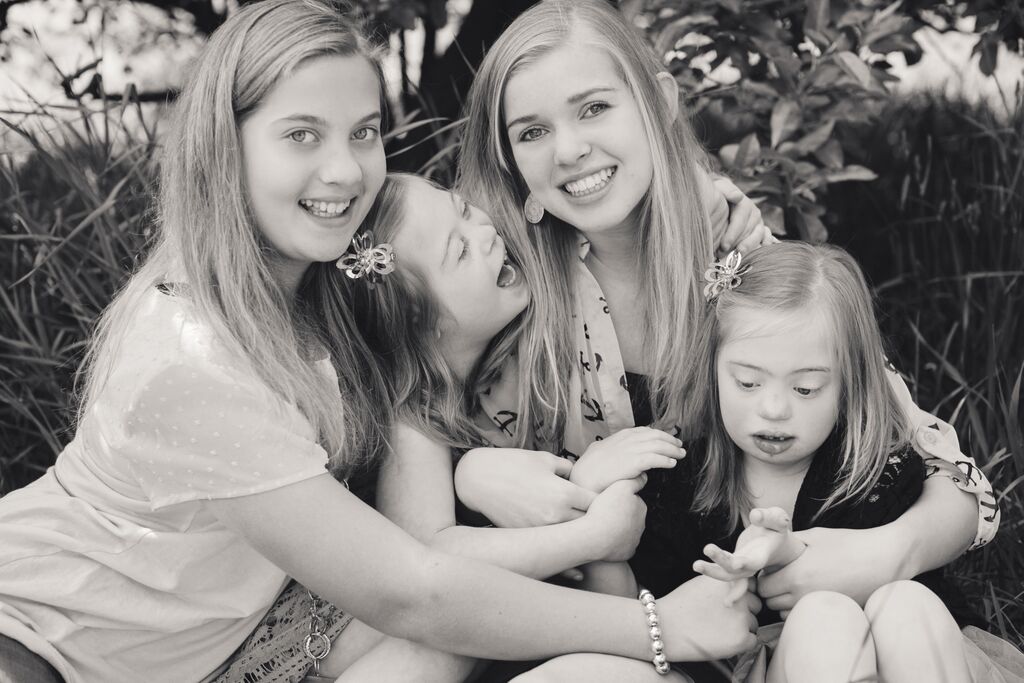
Please help me welcome my beautiful (almost 15 year old) daughter Elaina as she writes about her experience with having siblings with disabilities. Great job, Elaina! I love you!
What about us? A sibling to kids with disabilities shares her needs
By Elaina Marchenko
Today, my sister Zoya and I watched Polly and Evie, our two little sisters with disabilities, while my mom went out for a haircut. It being summer we do watch our sisters more often, but we don’t really mind. Usually we pop in a movie, go outside, or just have fun playing Barbies together. But, today Evie threw a tantrum, stressing us out, pushing Polly’s attention more out of the way, and resulting in bickering. After mom came home, we talked about what happened and how everybody was. It warmed my heart when my mom asked me if I was okay! I wasn’t the one throwing a tantrum or having trouble communicating, yet my mom took a minute to check in with me. Little things like that help remind me that my parents do care about me and don’t forget about their other kids. In light of my experience today and others like it, I came up with a list of three things parents can do to make sure their kids without special needs feel just as important as their siblings with special needs. Keep reading to see what my three tips are…
1. Take Time to do Fun stuff
Now, this may be an ‘aha’ moment or just a good reminder but it is very important to take one on one time to do things with your child. By planning fun activities to do with your kid it makes them feel like you care about their happiness and that you aren’t forgetting that they are in tough boat too. I understand that parents to kids with special needs have a lot of obstacles and struggles, but sometimes the kids who are typical share some of those struggles. So plan a day of shopping, see a movie, or even just talk! Just make sure it is one on one and something you both want to do.
2. Ask us simple questions that might have slipped your mind otherwise
I know I appreciate it when my family is having a hard day and my parents ask how my day at school was. It shows you not only care about big struggles with your kids with special needs but you also care about your typical kid’s homework or what their are planning to do on the weekend. This is a simple way to show you care.
3. Ask us our opinions on things regarding your kid(s) with special needs
By asking us our opinions it makes us feel like we are in the loop and we get to know about what things have been taking up a lot of our parent’s energy or time. We better understand it instead of being outside of it all and feeling neglected. Even if we don’t really get a say, it’s nice to feel like our opinions are heard.
I hope this helped! Remember that siblings of kids with special needs are usually pretty flexible and understanding. Yes, we all have our moments, but we love our family members with disabilities as much as our parents do, just maybe in a different way.
Thanks for reading and I hope this helped!
You might also like:
 An eight-year-old birthday party with Down syndrome
Sisters are the best therapists
An eight-year-old birthday party with Down syndrome
Sisters are the best therapists
 Love pushes us to the front of the crowd, reflecting on a dual diagnosis
The Tent, disability blog hop
Love pushes us to the front of the crowd, reflecting on a dual diagnosis
The Tent, disability blog hop
 The importance of sunny soccer Saturdays in a special needs lifeZemanta
The post What about us? A sibling to kids with disabilities shares her needs appeared first on Gillian Marchenko.
April 29, 2015
Church: 5 reasons why you must minister to families affected by special needs
Church: 5 reasons why you must minister to families affected by special needs
This last weekend, I got to speak to a church about special needs ministry. It was such a valuable time for them and for me, I thought I’d share some key thoughts.
Here are 5 reasons why you must minister to families affected by special needs…
1. It’s in the Bible
2 Samuel 9: David and Mephibosheth. David took in his friend Jonathan’s son who had special needs and brought him to eat at the King’s table.
Mark 2:4: A man who was a paralytic wanted to get to Jesus for healing but couldn’t, so his friends lowered him through the rough to meet Jesus.
Luke 14: 12-14: Jesus commands us to interact with the special needs community
12 Then He also said to him who invited Him, “When you give a dinner or a supper, do not ask your friends, your brothers, your relatives, nor rich neighbors, lest they also invite you back, and you be repaid. 13 But when you give a feast, invite the poor, the maimed, the lame, the blind. 14 And you will be blessed, because they cannot repay you; for you shall be repaid at the resurrection of the just.”
2. It’s missional
Matthew 28:18-20: The Great Commission
18 And Jesus came and spoke to them, saying, “All authority has been given to Me in heaven and on earth. 19 Go therefore and make disciples of all the nations, baptizing them in the name of the Father and of the Son and of the Holy Spirit, 20 teaching them to observe all things that I have commanded you; and lo, I am with you always, even to the end of the age.” Amen.
Some disability statistics:
-600 mil people world-wide are affected by disabilities.
-About 50 mil people in the US are affected by disabilities.
-Almost 13% of children in America have a developmental disability.
-1 out of 68 are diagnosed with Autism
-1 out of 691 live births result in Down syndrome.
So, we are talking about a large community of people and a huge mission field right here in our back yard.
Also, a lot of families affected by disability don’t/can’t attend church.
*I asked people who have kids with special needs on my Facebook page if they attend church. Here’s what some of them said:
-My son was 4 and not yet fully toilet trained. A church volunteer who was unfamiliar with my son told me he couldn’t be checked in to Sunday School because he wasn’t toilet trained. It was Easter weekend so the line to check in was long and other parents were waiting behind me. I felt so embarrassed and hurt that we left the building and haven’t been back. That was two years ago. Just thinking about going to church makes me panic.
Another parent said:
-I worry he will disturb people, and to be honest I don’t like the looks I get from people. I have gotten the angry look, shhh’ed, and the pity look. The last one is the one that hurts the most – my son is a gift, not one to be pitied.
And this:
-Our church rallied around us when we were pregnant with our child with Down syndrome but since we had him, its been one saddening experience after the next, mainly because the volunteers are spread thin and uneducated in acceptance and inclusion… One time our child was put in a plastic bin in the corner for children’s church while the rest of the kids learned about Jesus.
Brothers and sisters, this should not be.
3. It’s good for the church
Diversity is essential for the heath of the local church.
Paul talks about the church being one body with many members in 1 Corinthians 12:21-23:
21 And the eye cannot say to the hand, “I have no need of you”; nor again the head to the feet, “I have no need of you.” 22 No, much rather, those members of the body which seem to be weaker are necessary. 23
The so-called ‘weak’ members are necessary for the health of the body. Also, if we are honest, aren’t we all weak at some point? Jurgen Moltmann said “Congregations without disabled members are – to put it bluntly – disabled congregations.”
Including people with disabilities makes a church healthier. Gifts like compassion and service are exercised. A theology of suffering develops. Our church in Chicago discovered that by serving those with special needs we learn to serve everyone better.
4. It’s good for individuals
It gets you out of your comfort zone. Francis Chan, in his book Crazy Love: Overwhelmed by a Relentless God said “But God doesn’t call us to be comfortable. He calls us to trust Him so completely that we are unafraid to put ourselves in situations where we will be in trouble if He doesn’t come through.”
If the idea of ministering to and becoming friends with people who are different from you; say, people who have disabilities, scares you or makes you uncomfortable, than you should absolutely do it.
5. And lastly, I t glorifies Jesus
The glory of the Gospel is revealed through ministry to and with individuals with special needs. It’s not just that God commands this, or because the church functions better with it, or because individuals are sanctified through it, but because this ministry glorifies and honors Jesus Christ.
Think about the gospel. Jesus accomplished the work of redemption not by strength but by weakness. Poverty, loneliness, pain, suffering, death, rejection, homelessness – all were part of the Savior’s life. Should the church try to be what Christ wasn’t? Of course, there is also power and glory of Christ. But they are revealed in our weakness lest we boast in ourselves.
1 Corinthians 1:27
27 But God has chosen the foolish things of the world to put to shame the wise, and God has chosen the weak things of the world to put to shame the things which are mighty.
God is glorified in our weaknesses, because then he is strong. The works of God are displayed in our brokenness. And we all are broken, every single one of us, outside of Jesus.
I care about special needs ministry…
It’s personal. My family needs help/respite/spiritual care. My children deserve to be valued, loved, and served by the church. My children should also serve, just like any other person who is part of a community. Individuals with special needs are important to the church.
You might also like:
 Starting a special needs ministry at your church
“A Church For Every Child” by Stephen Grcevich, MD (President, Board of Directors Key Ministry)
Starting a special needs ministry at your church
“A Church For Every Child” by Stephen Grcevich, MD (President, Board of Directors Key Ministry)
 The Special Needs Soul
 Church: This is how to greet my child who is nonverbal
Run and get your shoesZemanta
Church: This is how to greet my child who is nonverbal
Run and get your shoesZemantaThe post Church: 5 reasons why you must minister to families affected by special needs appeared first on Gillian Marchenko.
April 20, 2015
Church: This is how to greet my child who is nonverbal

Today I had the pleasure of being a guest on one of the most popular Christian shows on the radio: Midday Connection.
The host Lori Neff and I talked about my story (and my book Sun Shine Down), and about the specific challenges and joys in the lives of families affected by special needs.
We discussed what churches can do to support children with special needs and their parents and siblings, which got me thinking about our youngest daughter, Evangeline.
Evangeline has Down syndrome and autism and is nonverbal. Some of her go to behaviors (rocking, mouthing things, pulling hair, and ignoring people) can be alarming for those who have never met her.
And a lot of times people don’t know how to talk to Evangeline or how to interact with her, so they don’t.
I understand. You don’t want to say or do the wrong thing.
I find this especially in church settings.
So church, this is how to greet my child who is nonverbal:
1. When we walk into the building, please don’t give our family ‘the deer in the headlights’ look because you are unsure what to do. Even if you are unsure, hide it. Instead, welcome us warmly.
2. Welcome ALL of us. Attempt to make eye contact with me, my husband, and my children, even the daughter who will not make eye contact with you. This says, ‘I see you. I’m glad you are here.’
3. Don’t speak louder than normal to Evangeline. She’s not hard of hearing.
4. Don’t assume she doesn’t understand you or what is going on because she does not speak. My daughter picks up way more socially than you would imagine. Also, ask if she is utilizing another form of communication such as sign language or pictures.
5. Ask us if we have been to the church before, and what we think our children would like to do during the service (stay with parents, go to Sunday school, etc.)
6. Follow our lead. If we talk about Evangeline’s special needs, then feel free to ask questions to learn more about the dynamics of our family.
7. Don’t speak slower to Evangeline than the rest of us. Again, she understands.
8. Don’t be offended if our daughter ignores you. She struggles socially and her eye contact is sporadic at best.
9. Also, don’t say hello to her and then ignore her the rest of the time.
10. And don’t solely pay attention to Evangeline and ignore our other children. They all need a little attention. We don’t want Evangeline to be ‘special.’ Just treat her like you would treat any other new child to the church.
11. If we want to try a Sunday school class, take us to meet the teacher, and if there isn’t a program or buddy in place to help her that day, lay out our options for the morning with grace, whatever they may be (she stays with us, someone will come in a shadow her, we may have to stay with her for this week). But make sure we know that if we decide to come back, we can all brainstorm to have a plan.
12. Make it clear that you really are glad we came to church and that you hope the church can (if they don’t already) make certain modifications and alterations that help us all to feel comfortable and ultimately grow closer to Jesus.
Churches don’t have to have a full-blown special needs ministry.
But in this day and age, odds are many families with special needs will walk through your doors. Train your hospitality team how to greet them, and have a basic protocol of what to do to help them feel welcome and comfortable.
Believe me, we’ll be thankful for it.
Resources that can help your church with special needs:
If you’d like to listen to me on Midday Connection, here it is!
You might also like:
Love pushes us to the front of the crowd, reflecting on a dual diagnosis
The importance of sunny soccer Saturdays in a special needs life
 Should you throw a birthday party for your child with special needs?
The Special Needs Soul
“A Church For Every Child” by Stephen Grcevich, MD (President, Board of Directors Key Ministry)Zemanta
Should you throw a birthday party for your child with special needs?
The Special Needs Soul
“A Church For Every Child” by Stephen Grcevich, MD (President, Board of Directors Key Ministry)ZemantaThe post Church: This is how to greet my child who is nonverbal appeared first on Gillian Marchenko.