Gillian Marchenko's Blog, page 2
March 2, 2018
To the new mother of a baby with Down syndrome
[image error]
To the new mother of a baby with Down syndrome
Meeting Her
You had a baby with Down syndrome.
I remember the feeling.
That first meeting with another family farther along the path of Down syndrome after the birth of our child with the same diagnosis.
I remember fear and fascination.
Fear of the child four or five years old who’s eyes mirrored my baby’s. She shouldn’t have looked like him. I birthed her. She should have resembled me.
Fascination, as I watched his sister play with him; he hit her, she cried, mother reprimanded. So common, so usual, so family. Things I thought we may have lost with the appearance of an extra chromosome.
I cried quietly for two hours while visiting this dear little boy and his family. They loved him. They cherished him. He played games, and communicated with his hands and with his voice. He chowed down on his lunch.
But still, I cried, because this path wasn’t my choice. At my point of weakness his mother appeared strong. I was an anthill. She, a mountain. I clutched my baby to my chest, each second teetering between relief and uncertainty.
His mother was gracious, tender. We whispered to each other as her children played nearby. “I love him. Our life is good. Really. It is.”
Her smiling eyes met mine.
I looked away.
I loved my baby.
But that day I did not love Down syndrome. It was too big, too unknown.
Meeting You
Your husband contacted us last week. We scheduled dinner. The following days you kept popping up in my mind. A mother forced to move from a typical parenting landscape to some place new, a place everyone claimed was special. If you are anything like me, shocked by a culture wildly unknown and unsolicited.
“Mom, why are you cleaning up around the house, and making us all put on fresh shirts and brush our hair?” Elaina asked as I set the table. “You usually don’t make such a big deal out of dinner guests.”
Several responses queued on my tongue. Instead, in a brief moment of clarity, understanding that Elaina would learn more from the truth, I responded.
“Because, this family had a baby a few months ago with Down syndrome and I want them to feel welcome. I want them to see that we are happy, and that Papa and I treasure all four of our girls. I want them to see that we are OK.”
Your family arrived. We cooed over both of your children. I held your new baby in my arms. He smelled like sunshine.
His eyes mirrored my daughter’s.
I held your little one to my chest as our children played close by. Polly hit Zoya. Zoya cried which made Evie cry, and Elaina played on the floor with your son.
You probably aren’t excited to be a part of our special needs club. I have to tell you, though, welcoming you into my home was like welcoming family.
You teared up as you talked about your love for your son. “Down syndrome is something different. It’s a lot to take in.”
Oh, how I know.
I am a bit farther down your new path. Give yourself time to fall in love with your son, and to get used to Down syndrome. Breathe in his baby smell. Watch how his brother kisses the top of his head, how your husband gently puts him down to sleep, how your baby locks eyes with you when he eats. The weight of the world is in those eyes.
Today, you don’t have to love Down syndrome. Just love your son.
And know that we, other parents in this very special club, are here when you need us and that someday, you will be the one looking a new mother in the eye saying,
“Our life is good. Really. It is.”
You might also like:
 World Down Syndrome Day 2013, RAISE YOUR FLAG
 10 things TO SAY when a baby is born with Down syndrome
 She lives hard and well, and falls asleep fast
 An unusual story of a Down syndrome diagnosis
 Leading the way, thoughts about sisterhood and Down syndrome
Sovrn
The post To the new mother of a baby with Down syndrome appeared first on Gillian Marchenko.


August 15, 2017
10 things teachers should know about Down syndrome
10 things teachers should know about Down syndrome
It’s that time of year again. Backpacks are bought. New tennis shoes are donned. Back to school. It’s also time to educate our teachers on what they should know about Down syndrome.
I have two girls with Down syndrome. Polly is going into 2nd grade, fully included with an aid, and Evangeline is going into 1st grade in a special education school.
When a parent asks me how to find a good school for their child with Down syndrome, after having been down the education road now for five years, my answer is this:
It depends on the TEACHER.
It all comes down to the teacher in the classroom. Teachers can make or break the experience for the child, for the family, for the classroom, and for the whole school, especially when it comes to children with Down syndrome.
So here’s my list of 10 things teachers should know about Down syndrome:
1. Know the definition of Down syndrome.
Here’s a technical definition for adults: Down syndrome is a genetic condition. There are *three* types of Down syndrome: trisomy 21 (nondisjunction) accounts for 95% of cases (what my daughters have), translocation accounts for about 4% and mosaicism accounts for about 1%.
People with Trisomy 21 have 47 Chromosomes instead of 46 in each cell. This is because of an error in cell division called nondisjunction. At some point, a pair of 21st chromosomes in either the sperm or the egg fails to separate. As the embryo develops, an extra chromosome is copied in every cell of the body. (Read on to find out how to explain Down syndrome to kids …)
2. Use people first language.
People first language is simply putting the person before the disability in speech. Don’t say the Down syndrome girl. Use the child’s name, and if needed in the conversation, add that she has Down syndrome. (e.i. Polly, who happens to have Down syndrome.) Also, the correct term is Down syndrome. Not Down’s syndrome. A child does not have Downs. Terminology is important, and often mistaken.
3. Pay attention to how you treat the child.
Remember, you set the tone. Please treat your student with Down syndrome like the other kids in class. I’ve been in classrooms where the child with Down syndrome is babied, or considered the class project. Don’t give special treatment, and don’t ignore him or her because it is easier. Your other students are watching, and they will act like you.
4. Explain Down syndrome to your students, and to the school.
In an inclusive setting, teachers should talk to their class and explain Down syndrome. At the beginning of each school year, I visit Polly’s class to discuss Down syndrome. Invite the parent to come help! Here’s a post that will tell you exactly how to teach kids about Down syndrome.
5. Find out about health and safety concerns.
An added chromosome can bring about health and safety concerns. Be sure to review your student’s medical records. Find out if she has any constraints for recess or gym, and check with the parents about safety issues.
6. Identify how the child learns.
First and foremost, children with Down syndrome LEARN! But all children learn differently. Your job is to figure out how your student learns, and then work with other professionals in your school to modify the classwork to give him every chance to succeed.
My kids are visual learners, and it is difficult for them to stay on task. So their teachers break things down to small, step by step assignments, and reinforce with visual and tactile cues. Not sure how/what to do? RESEARCH. Ask the parents. Check with special education teachers.
7. Partner with the child’s parents.
No one knows your student better than her parents. Network and communicate with them often. Don’t wait for an IEP meeting that happens twice a year. I have a communication journal that I send back and forth with my kids’ teachers daily.
8. Read your student’s IEP often.
I seriously think that some teachers just skim students’ IEPs once and assume the school therapists will help the student achieve her goals. My recommendation? Read the IEP often. Look for ways to incorporate your student’s goals in the everyday life of the class.
9. Don’t assume your student can’t do something.
Always start with the idea that he or she can do anything other students do. Just realize you may have to break the task down or teach it in a different way. Model the task for your student, or maybe pair him up with a buddy who can help. Peer interaction will be a huge motivator for a child with Down syndrome.
10. Realize that you play a big role in your student’s success!
Create a wonderful environment for your student. Use his gifts and talents and interests to motivate him in his work and give lots of positive feedback and encouragement. What a privilege it is to play such a vital role in your student’s life.
HERE’S AN ADDED BONUS TO THIS POST:
CLICK HERE: 10 things teachers should know about Down syndrome AND DOWNLOAD THE PDF. You have permission to print it out and give it to the teachers in your life. I ask that you link back to me, or email me for permission to reprint for larger groups at gillianmarchenko@gmail.com.
Parents, do you agree with my list? What would you add? Teachers, any other suggestions? Have a great year everyone!
You might also like:
 Things I thought I wouldn’t do because of a child with Down syndrome
 When mom screws up … thoughts about jipping siblings of kids with Down syndrome
 10 special needs of special needs parents
Who’s in your pit crew? Parenting a child with special needs
10 special needs of special needs parents
Who’s in your pit crew? Parenting a child with special needs
 October is Down syndrome Awareness Month – Get Involved!Sovrn
The post 10 things teachers should know about Down syndrome appeared first on Gillian Marchenko.
May 11, 2017
The gospel and depression
The gospel and depression
It is enough: now, O Lord, take away my life, for I am no better than my fathers. (1 Kings: 19:4 )
“Will you speak with a visitor named Jean?” my husband asks at church. “I think she’s depressed.”
Now, I’m confused. How can he suspect depression after one conversation?
Of course, he can’t know for sure.
Soap box
Mental illness is difficult to diagnose. Careful screening and training is a must. One may assert depression for other reasons; a couple of down days, a lack of motivation towards faith and life in general, or sometimes, even a more serious excuse for a disinterest in a close relationship with Christ or all out rejection of the gospel.
I sound harsh. Who am I to understand people’s’ hearts and lives (I don’t always understand mine)? My job is not to pontificate that some people don’t have depression. Situations exists (difficult and stressful times in one’s life) that lead to depression. It’s the real deal. I don’t own a corner on this topic and probably shouldn’t write about it. But we live in a culture (both in and out of the church) that fosters an indifferent attitude towards depression. And frankly, it weakens the legitimacy of mental illness and offend the battle 1 in 5 adults in the U.S. face.
Depression is a bona-fide illness, one that is similar to a person who takes insulin for diabetes or breaks her leg.
Back to Jean
My husband is acquainted with outward indicators of depression because of me. I’ve had major depressive disorder for over a decade, and possibly, my whole life. We can’t know if Jean has depression. But regardless, she is hurting. She needs help.
I locate her after the service and we find a place to talk.
“How am I supposed to live?” she asks. Her jaw clenches and dull, charcoal eyes stare through me. “I pray. I read scripture.” She points to her chest. “Nothing breaks through.”
Jean is not the only one who asks this question. It’s in my veins every second, pumping doubt and fear to my heart and mind like blood.
Lord, how am I supposed to live?
The gospel and depression
I speak about depression. I write books. But shame exists deep within. Part of the reason (outside of the battle of the mind) is because the stigma is alive in churches. “You are less spiritual than others,’ my illness whispers in my ear. “You can’t be a Christian and depressed,” I believe the enemy chimes in.
And so I, and others like me, tend to cower in the back rows of churches, in the corner pews, or at home on Sunday mornings instead of worshiping with the family of God.
The truth? We know that the stigma is wrong, but we tend to believe it anyway. God will deliver us if we ‘do’ more.
The theology of grace morphs into works. “I should do more. Why can’t I get myself together?”
What do people think about the gospel and depression? Sarah Collins and Jayne Haynes take the issue of one’s inability to be a Christian and depressed head on in their book, Dealing with Depression: Trusting God through the Dark Times as noted in this blog post from the Gospel Coalition. Collins and Haynes begin by “reassuring sufferers that being a Christian and being depressed are not mutually exclusive…” They way I read the interview, the authors note the vital role of the spiritual life in depression (I will add, it IS important). But they subscribe to the belief that although faith is a component of health, it’s not about Christians with mental illness praying harder, repenting of sin, trusting God more, and getting their spiritual act together.
It’s crazy, really (bad choice of words), that people are still uneducated, biased, quiet, and judgmental. Close your eyes, open the Bible and point. Chances are you don’t have to read far to come across a person with a distraught soul. King David, Jonah, Job, Hannah, Paul. God used these people in big ways despite their afflictions. Since when did being ‘together and healthy” become signs of faith? What scripture backs up the theology?
The gospel and depression as seen in Elijah
In 1 Kings, I read about the prophet Elijah’s lowest point. “It is enough: now, O Lord, take away my life, for I am no better than my fathers.” (Chapter 19:4 )
Is it terrible that it gives me comfort to know that someone in the Bible says this kind of stuff to God?
God’s response is gracious. Elijah falls asleep and an angel of the Lord awakens him twice, providing sustenance through food and water. God comes close. He nourishes him. He sits with him.
Pay attention to the story. What an amazing correlation to important elements of the gospel. ‘I am no better than my fathers,’ (realization of sin), God responds with grace (forgiveness), an Angel of the Lord (many commentators believe that this is Jesus) provides him food and water (communion with God through the bread and the cup).
Elijah asks God to kill him. God saves him instead. He sits with him. Jesus has conquered death. He does not leave him or forsake him (Hebrews 13:5).
People often ask me how to help others with depression
I’m still learning, but here’s what might help:
Sit with them in the pain.
Don’t fix, act, or judge.
Don’t appease yourself by offering trite Bible verses and walking away.
Nourish them with your presence (either near or far depending on how they are doing).
Come close to them like God did with Elijah (a ‘stick-with-themness’).
When appropriate (maybe when they are coming out of an episode. Maybe not directly. Pray about that one!), point them back to Christ.
Every pain and affliction we experience comes back to the gospel. God is the great physician (Psalm 103:3). He promises that we are and will be whole in the presence of our Savior because of his work on the cross. Speak the truth in word and deed to your hurting friend, but always, ALWAYS from a place of support, love, and understanding that it is not up to them to ‘heal thy self.’
Jean
“I’m sorry, Jean. Your pain is real. I can’t do much, but can I sit with you for a while?”
Jean wipes her eyes and nods.
How are Jean and I supposed to live? Remember that God came close through Christ and that through the gospel, he’s not going anywhere. Acknowledge that scripture is full of hurting, sick, imperfect people trying to serve a perfect Savior. Our healing is not up to us. God has a purpose with our lives. We are not a waste.
Church, believers, I urge you. Educate yourselves. Don’t dismiss. Sit with those among you with mental illness in word and deed. Find them at the back of the church or hidden in pews. Reach out to them at home on a Sunday morning. Affirm God’s love and presence in their lives by being a person who doesn’t judge or walk away. Search the scriptures and ask God to confirm the theology of weakness (illness) and grace.
The theology of illness and grace is still a mystery to me. But I sat with Jean that Sunday morning, certain that Jesus was sitting with us, too.
You might also like:
 Still Life Book Trailer
 5 strategies for YOU when your spouse fights depression
[image error]
Depression is lonely, It helps to identify why
5 strategies for YOU when your spouse fights depression
[image error]
Depression is lonely, It helps to identify why
 On depression, hiding, and the need for raised hands
 Struggle with Depression during the HolidaysSovrn
The post The gospel and depression appeared first on Gillian Marchenko.
April 6, 2017
Special needs and guilt management
Special needs and guilt management
Guilt management and special needs – hard, hard, hard, hard, hard topic. For most parents, guilt is a big part of their lives, anyway. But for a lot of moms and dads who have children with special needs, it can be immobilizing.
I’m one of those parents.
I have two kids with Down syndrome and I struggle with guilt all the time. Am I doing enough for them? Are there other therapies I don’t know about? Why does that mom seem to be able to handle everything and I can’t? Why won’t my kid potty train? What is this doing to my marriage? What about my other kids?
How can one manage with this?
I’m not a guilt management expert.
No diploma here. I didn’t take a weekend class at a hotel. I surely don’t have it all together. But I care about the affects of guilt because it is something I battle daily. Guilt can be one of the fastest fires in our lives. It will burn us out fast.
So, what can we learn about guilt management that can help?
Admit your guilt. A lot of us try to bury and hide that emotion. Why? Is it because we care about what others think? Um, yes. Is it because if we give in to our guilt we will lose it (as in, lose it personally, like lose life)? Again, yes. But ignoring our guilt WILL jurt our health, families, our whole lives. You don’t have to shout it out. You don’t have to tell every person you know. But admit it. Name it and claim it… at least to one person (or to a counselor, never hurts to pay for a friend!). It will help. Trust me.
Let go of comparison. Friends, comparison is quick sand. We have little energy, and yet so much of it is wasted on looking around and seeing what other parents are doing, how their kids act, how they look, etc. One way we can attempt let go of comparison is to become an ally of the person with whom you compare yourself. Ask her out to coffee. Talk about your life. Let her talk about her life. We all know that the best resources in our special needs journey are other parents. Tap into that. Odds are, you’ll have things to offer her, too. And you are more likely than not, in the same boat.
Take care of yourself. This is a hard one. Every time I encourage people to take care of themselves I get push back. And for good reason. “How can I take care of myself, I don’t have any help with my kids.” “I have to work.” “There isn’t an extra second in the day.”
Here’s the thing…
I’m not going to tell you that you can find time for yourself. I’m not going to pretend that I know your situation. I hate it when people do that.
Maybe there is no way to get help. I don’t know if it is impossible to do something for yourself. But, I encourage you to try. Look for respite programs at churches or through the State. Ask a family member or friend to watch your kids for one hour. Buy macaroni and cheese for a meal so that you can use the extra money for coffee. I want to be sensitive, though. I know some of you will read this and still say, “Yeah, right, Gillian.”
I see you. And I care. All I’m saying is that if there is any way possible, try.
4. Set small goals to pay attention. If you are anything like me, than I guarantee that having kids with special needs does hard things to your marriage and to your other kids. It just does. One thing I’ve found is that it helps to set really small goals. I’m talking super tiny goals to pay attention to the people you love. Sit down and talk to your husband for 10 minutes. Look your kids in the eye when they get home, ask them about their day, and really listen. Show you care by writing a note or sending a short text. Of course, big gestures are great, too; date night, a movie out with one kid at a time. But if that doesn’t happen often, then set small goals to pay attention, and let those small acts feed your soul. Fight your guilt.
Special needs and guilt management? Really, this little list helps?
Maybe it is too trite. I’m in a tug boat trying to make a dent in an iceberg. But I hope these few thoughts help. At best, this blog post has created five minutes in your life to even think about your guilt. At least, you are reminded that you are not alone.
Because you are not alone.
You might also like:
The Tent, disability blog hop
 What about us? A sibling to kids with disabilities shares her needs
 My response to being called an attention whore for advocating for my children with special needs
I’m afraid of going on vacation with my kids who have special needs …
10 special needs of special needs parentsSovrn
My response to being called an attention whore for advocating for my children with special needs
I’m afraid of going on vacation with my kids who have special needs …
10 special needs of special needs parentsSovrnThe post Special needs and guilt management appeared first on Gillian Marchenko.
March 2, 2017
Sign up for MEMOIR 101 & get a FREE 30 minute writing consult! My birthday present to you.
Sign up for MEMOIR 101 & get a FREE 30 minute writing consult!
A present for you! A FREE 30 minute writing consult. Here’s how and why… Today is my birthday. I’m happily 42 years old. For real. My 30s were pretty terrible (another blog post, or a book, or another book. Wait, already have ’em. Also, yes, I know I’m a drag). But, I’m excited about my new endeavor. Recently, I launched an online writing course called MEMOIR 101, write a memoir worthy of publishing. The class offers six lessons (details and topics here!) and each one includes an intro video, PowerPoint with embedded videos, downloadable notes, and an opportunity to interact in a comment section.
So, what’s the birthday present?
Okay, here’s my birthday present to you. Sign up for Memoir 101 (Just $167. Some online courses are over $1000!) and you’ll get a FREE 30 minute writing consult with me (Facetime!). My consultations regularly start at $65. If you grab on to this, you’re getting a deal. I don’t know everything, but I have published two memoirs and self-published one eBook. We can talk about anything you want, but it will probably be about writing because that makes the most sense, right?
What is memoir?
Just a quick explanation in case someone needs one: Memoir is nonfiction. It is different from ‘how to’ books. Memoirs are true stories made into art, hopefully the kind that pushes both the reader and writer towards a greater universal truth, self-exploration, and the need we all have; to know we aren’t alone.
Don’t get memoir confused with autobiography. An autobiography is a book about a whole life. A memoir is about a portion of (or you could say, an occurrence in) life.
Think of it like this: in memoir, you are looking at a part of your life through a microscope. An autobiography is a panoramic view.
When memoir is done right, it reads like fiction. Even though all the events are true, it is still a story that must contain scene, characterization, dialogue, etc.
Everyone has a story.
I’ve been writing professionally for over eight years. People often ask me about my experience. They tell me that they have a story to write. Well, now I have a concrete way to help! Memoir 101!
Birthdays come and go. And so will this gift! My FREE 30 minute writing consult opportunity is available until next Thursday, March 9th.
Wanna join me? I hope so!
SIGN UP FOR MEMOIR 101 and get your free consultation with me. Once you purchase the course, I’ll send you an email to set up a time to chat.
I promise I’m not as obnoxious as I’m coming off in this blog post.
At least, I don’t think I am? Hmm…
You might also like:
 My writing course: Memoir 101, write a memoir worthy of publishing
 Writing a book, one author’s process
 How can a mother fit writing into her life?
 The Rules of Inheritance Book Giveaway & an Interview with Claire Bidwell Smith
 Use Your Words, A Writing Guide for Mothers Book Giveaway & Interview with Kate HopperSovrn
The post Sign up for MEMOIR 101 & get a FREE 30 minute writing consult! My birthday present to you. appeared first on Gillian Marchenko.
February 13, 2017
How to help a depressed friend
People often ask me how to help a depressed friend. That depends.
If you are not super close, help a depressed friend by:
-Reaching out via text or with a card letting her know you are praying for and thinking of her.
-Leaving a small gift or a meal (without the expectation that she will open the door).
-Praying for them regularly.
If you are a bit closer, help a depressed friend by:
-Doing all of the above.
-Noticing when she is withdrawing (no longer attending church, events, or other activities he previously participated in).
-Taking a little more intentional action when you notice; call once a week. Text more often. Let her know she is loved and not alone.
-Inviting her out without the pressure of acceptance. If you are refused, try again (but give it time. It may feed into her guilt and anxiety).
-Dropping off a book or another thoughtful gift. For instance: a small box of encouraging quotes and verses.
If you are a very close, help a depressed by:
-Doing all of the above.
-Reminding her that getting out will help her get out her head.
-Standing there. Don’t give up on her. She needs support in and out of depressive episodes. While depressed, that support may be from afar. When she is doing better, she needs to know that she still has friends, that she isn’t judged, or considered a lost cause.
-Being more specific with Bible verses, direct encouragement, and gentle reminders of things that have helped her in the past during particularly difficult episodes. You’ve earned her trust to speak into her life. If you aren’t close enough to her, she will resent it.
-Telling someone. If she talks of self-harm or suicide but doesn’t want you to tell anyone, tell anyway.
-Expecting to run the show if she agrees to come out.
How exactly does that help a depressed friend? Let me explain:
Drive her to a coffee shop, pick where to sit, and order for her. Decisions can be grueling at times. If you want to talk, please do, but don’t expect interaction. You are responsible for the conversation. You will basically talk to yourself. No worries. Please keep talking. It helps. Cloudy thinking and interaction are very difficult.
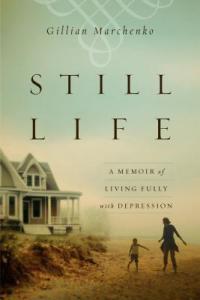
Like I wrote in my book, Still Life, A Memoir of Living Fully with Depression, a friend equated socializing while one is depressed to running a marathon with a broken leg.
Please know that your friendship is a vital part of recovery. If you are a friend to someone with depression, thank you, thank you, thank you.
*NOTE: ‘Her’ stands for ‘Him,’ too.
Want to know more about my journey with Major Depressive Disorder? Check out my book:
Still Life, A Memoir of Living Fully with Depression
*Interested in writing memoir? Checking out my online course: Memoir 101, Write a memoir worthy of publishing.
You might also like:
 Book launch day! Still Life is here…
[image error]
Depression is lonely, It helps to identify why
Sometimes the praise is in the poop
Struggle with Depression during the Holidays
Still Life Book TrailerSovrn
Book launch day! Still Life is here…
[image error]
Depression is lonely, It helps to identify why
Sometimes the praise is in the poop
Struggle with Depression during the Holidays
Still Life Book TrailerSovrnThe post How to help a depressed friend appeared first on Gillian Marchenko.
February 6, 2017
Depression is lonely, It helps to identify why
Depression is lonely. I know because I am lonely when I am in a major depressive episode.
Saying that depression is lonely probably makes my husband sigh and people in my life cringe because they try to be there for me. They want to be my friends and I reject them. Can I be honest? It makes me sigh and cringe, too. Loneliness is part of my illness. It is a battle, friendship that is, one in which I’m often unable to tackle even though I want friends.
But know what? Identifying why I am lonely helps.
Now that I experience less depressive episodes that aren’t quite ao long and dark (well, except sometimes), I am trying to work out what makes friendships difficult. Here’s what I’ve come up with.
1. Depression is lonely because my illness exhausts me.
My energy is sparse after an episode and if I do too much, I get depressed again. I have a family who needs me. I try to reconnect with them first. If I put time into friendships, guilt seeps in. And I hate guilt. Guilt is a huge part of my depression. Friendship comes last.
2. Depression is lonely because I am afraid of hurting people.
Friendship takes work. Can I work at it? Can I be there for someone instead of going dark for a time? Is it fair? My actions and words communicate that I don’t want friends. A friend texts, emails, calls, and I look at the message, perhaps smile, and then forget about it. Not answering communicates disinterest. At least, I think it’s true.
3. Depression is lonely because I’ve decided that I am not worth having a friend.
Negative thoughts hold me hostage. Who would want to be friends with me? After years of struggle, I decided that people no longer wanted to hear what I had to say. I missed so many things, I assumed my presence was no longer needed. My self-esteem is often in the toilet.
4. Depression is lonely because friendship is challenging when I don’t want to leave my house.
Please don’t make me leave my safe place. I am afraid to be alone, but even more petrified of a friend coming into my mess. What’s worse? Going out into the world. I struggle with the idea of people seeing me struggle. They can read my memoir. I can explain it. But I don’t want to show them. It’s so much easier to go inward.
5. Depression is lonely because I forgot how to socialize.
Looking a person in the eye for more than a couple of minutes equals torture. I don’t know what to say. I used to decipher social cues, how to listen and then respond. But now? I sit opposite of someone and stare and obsess about the fact that I am staring and not talking. Say something. Say something! Ugh. When can I leave?
6. Depression is lonely because I don’t want to be a drain.
I’ve known people who take and take and take. I never want to do that. My life is heavy and self focused. I don’t want to drain people. “How are you?” How should I answer? ‘Um, I am resisting the urge to go home and crawl under my bed. You?’ Won’t people get tired of discouraging answers? I would.
Can you identify with this?
If so, you are not alone. Oh, what a tangled web we weave. But this can be changed. My therapist told me that my fear of friendships is what actually pushes people away. We didn’t DECIDE to be lonely. It is a symptom of the disease. But depression is an active illness. It takes work to move towards health. When we can do the work, we must.
Start small. Don’t decide for others what they think of you. Call or text a friend. Plan an outing, push through, and go (hint: maybe just an hour?). Be honest if you are having a hard time. Naming social awkwardness makes you less awkward. People care for you. Open up a little bit, and you will see.
And if YOU have a friend or loved one who is depressed, listen to me.
It’s not that they don’t want to let you in. It’s probably that they’ve forgotten how. It’s not that they don’t to care. It’s probably because they have grown accustom to silencing the outside world because of the continual screaming inside their head. Hang on. They care, I promise.
Stay tuned for my blog post next week: How to be a friend to someone who is depressed.
[image error]
Want to know about my journey with depression?
Read my book, Still Life, A Memoir of Living Fully with Depression.
Interested in writing a book?
Check out my online course: Memoir 101, Write a memoir worthy of publishing.
You might also like:
Still Life Book Trailer
Book launch day! Still Life is here…
Struggle with Depression during the Holidays
Sometimes the praise is in the poop
 Goodreads Still Life Giveaway!Sovrn
The post Depression is lonely, It helps to identify why appeared first on Gillian Marchenko.
December 20, 2016
My writing course: Memoir 101, write a memoir worthy of publishing

Write a memoir worthy of publishing.
Guys, let me tell you about my new project! I am working on an online course called Memoir 101, write a memoir worthy of publishing. Do you have a story? Love to write? Want to write? Are you in the middle of a project?
This course is for you!
My approach:
My goal is to help you write a publish worthy memoir. Why these specific words? Because they provide an all-encompassing thesis for Memoir 101. Whether you want to publish a book, or grow as a writer, or even if you are simply exploring the genre, this course will teach you to work towards writing a book worth reading. You’ll learn about craft, build writing muscles, and better understand the genre of memoir. Wherever you are in the process, I want you to make PROGRESS. I want these eight lessons to mean something to you. So, watch the videos, take notes, and utilize assignments and resources I provide, and interact with me through the comment section. I give you this information to make you a better writer. Take advantage of it!
My plan:
I’m purposefully going to write about craft and practical aspects of writing. I know that as I was writing my books, I was just as interested in the publishing process as I was in becoming a better writer. Might be backwards, cart before the horse, etc. but it’s true. I plan to share some of what I’ve learned about publishing because I know that everyone who writes is at least a little interested in the topic (Note. I am not going to share everything. That’s the next course :)).
I plan to push you. I believe that people who want to write, can. But it takes work. I’m not going to pretend this is easy. I’m going to tell you that you can’t rush this process. A thick skin is important in writing. I am going to help you grow.
Here’s a video explaining a little bit about it. Look for enrollment details in the new year! I can’t wait! I’m excited!
Want to know more? Sign up for my newsletter here on my home page for details in the next few weeks or check out my Facebook author page Gillian Marchenko.
You might also like:
Join my Still Life Insiders Facebook Group!
The Rules of Inheritance Book Giveaway & an Interview with Claire Bidwell Smith
Advice to a mom who wants to start writing
Use Your Words, A Writing Guide for Mothers Book Giveaway & Interview with Kate Hopper
How can a mother fit writing into her life?SovrnThe post My writing course: Memoir 101, write a memoir worthy of publishing appeared first on Gillian Marchenko.
August 25, 2016
Sometimes the praise is in the poop
A few days ago, I posted a live video on Facebook about motherhood and depression… and then I fell into a pit of depression. Good times. Today I posted a much shorter video regarding all this, and how sometimes, the praise is in the poop… that is, little things can prove to us that God will never leave us nor forsake us (Deuteronomy 3:6), even if the reminder of coming out of an episode is through our olfactories. Check it out to see what I mean. Love to you, my fellow sojourners, along this undesired, treacherous, but praise worthy path.
What have been some minute things in your life that have brought you to new-found praise in the one and only true God who provides victory of our struggles? I’d love to hear…
Life with Depression is STILL LIFE.
You might also like:
 Book launch day! Still Life is here…
 Still Life Book Trailer
 Struggle with Depression during the Holidays
 Depression: no longer under lock and key
 Goodreads Still Life Giveaway!Zemanta
The post Sometimes the praise is in the poop appeared first on Gillian Marchenko.
June 29, 2016
Goodreads Still Life Giveaway!
Hey everyone! For the next month, I am hosting a Goodreads Still Life Giveaway. Enter on Goodreads and perhaps you’ll get 1 of the 3 free copies! The giveaway opened today and goes through July 29th, so make sure you check it out in the next month to get in on the fun!
Some friends have contacted me saying they’d like a copy of Still Life but don’t have the funds to purchase one right now. Well, here’s YOUR chance to get one! A Still Life giveaway!
In case you aren’t sure what Still Life is about, here’s a short synopsis:
“I stand on the edge of a cliff in my own bedroom.” Gillian Marchenko continues her description of depression: “I must keep still. Otherwise I will plunge to my death. ‘Please God, take this away,’ I pray when I can.” For Gillian, “dealing with depression” means learning to accept and treat it as a physical illness. In these pages she describes her journey through various therapies and medications to find a way to live with depression. She faces down the guilt of a wife and mother of four, two with special needs. How can she care for her family when she can’t even get out of bed? Her story is real and raw, not one of quick fixes. But hope remains as she discovers that living with depression is still life.
My goal in writing Still Life was to help people know they are not alone in their depression or other mental illness. I’m trying to remember that life with depression is STILL LIFE. I hope the book helps others to do the same.
Hope to see you there! And if you already have a copy, perhaps you can try to win one for a friend in your life or to donate somewhere. Don’t you like free things? A Still Life giveaway. It’s free :).
Goodreads Book Giveaway
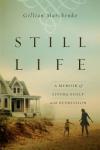
Still Life
by Gillian Marchenko
Giveaway ends July 29, 2016.
See the giveaway details
at Goodreads.
You might also like:
Still Life Book Trailer
Struggle with Depression during the Holidays
Book launch day! Still Life is here…
 5 strategies for YOU when your spouse fights depression
Depression: no longer under lock and keyZemanta
5 strategies for YOU when your spouse fights depression
Depression: no longer under lock and keyZemantaThe post Goodreads Still Life Giveaway! appeared first on Gillian Marchenko.