
Kelly Steel's Blog, page 9
July 6, 2015
Hidden Backdrop by Jacqui Jacoby, Dead Men Play The Game #Giveaway
After One Bite Leads To Another released in print, I'm busy editing Book 2 in the series One Bite For The Unborn.
Please welcome author Jacqui Jacoby.
Follow her at:

Website Blog Twitter Facebook
Hidden Backdrop
I’m trying to remember exactly where I heard this. I know I was teaching a class and a woman was taking it. She wanted to write a romance novel. That was fine. That is a subject I can teach and I was willing to help her out.That was until we got further into the class it became apparent we weren’t on the same page. Her heroine was a nurse and her hero, an architect. “That’s great,” I said. “What are you doing for the research?” “Oh, there’s no research,” she said. Can’t remember if I mumbled something or just stared blankly. “It’s a romance book,” she pointed out as if I was an idiot. “You don’t need that kind of stuff. All you have to do is get the hero and heroine into the same room and they will know what to do.” Wink wink, nudge, nudge, Yeah, I don’t remember her name and pretty sure it didn’t appear on the New York Times best seller list. There a multitude of components we need to make our book work. You have to have characters. That much is a given. A plot is good, one that doesn’t involve merely getting them into a room and letting them figure things would be even better. Characters & a Plot…to sustain those elements, research in a necessity if you want anyone to read your book. Because if you put in that little tidbit about the rocket science being used in the cafeteria I can guarantee someone who works in rocket science is going to e-mail you and let you know how far off you are. And if they are in a good mood, they will use Twitter, too, and Facebook and pretty much every other social network they can think of. That review on Amazon? Ewww. We don’t have to know about rocket science. But we do have report what we learn on that subject if it is going to appear in the pages of our books. I have spoken to rock bands, The CIA, The FBI (not nearly as friendly as the CIA). I have cold called experts in fields of New York architecture to verify parks settings back east. Last year, I needed a Gaelic word I could not find anywhere. The hero of DEAD MEN PLAY THE GAME is Scottish, so there is the starting point. Scotland. I emailed The University of Edinburgh (Googled the address), got one department who didn’t have the answer but was willing to pass the question to the department they knew would. The word I needed is in the book. And that right there is the key. The majority of people in the world have a job. They do the same thing pretty much day in and day out. It’s get a little boring. And then they get this phone call or this email from a writer --always provide your credentials even if it’s your first book—and it’s a spice added to their day. One of two things is going to happen from the mere asking of your question.A) They are swamped, not interested and really don’t want to be bothered or…B) They love that you called because people like to talk about their work or their hobby, they love to share their knowledge. People just want to be asked “Hey what do you think, know, do you have an opinion on the direction that would make this real …?”
In my experience, I almost always hit ‘B’. I cold called the manager of a well known rock band when I heard they were going to be in town. I asked if I could meet with the band between shows for information on a novel I was working on. Not only did I get the interview with several members, but the following day when I went back with the family to enjoy the show, the band took interest in my kids and treated them down right nice. I still have the photo of all of them together. “We’ve all been there,” the lead singer said, ”what do you need from us to make this happen?” We start out with our story and we know the heroine is a nurse and the hero is an architect, such as my student. Okay, let’s go from there. What department does she work in? Predicates? Did you know, like I know after an Internet search on “A Day in the Life of a Nurse” that it is not uncommon for a pediatric nurse to have an Elmo sticker stuck on her stethoscope? Or to have throw-up wiped up and stained on her uniform on a daily basis? And how about an architect? What does he design? Houses? Commercial housing? Malls? That information will make a difference in everything from his stress load to his available time. Making up names for businesses is research, too, as it’s in the back of the story. And making up names is not a bad practice if you are using local businesses. Using well known commercial establishments is okay as long as you don’t stage a crime or murder there. Having someone choke to death on a Whopper in a Burger King will get you a Cease and Desist Order from their law firm.I called the Hershey Amusement Park in Pennsylvania and spoke to their PR department and they told me yes, it was fine to use the name of their park in the story--as long as no one got hurt or killed on one of their roller coasters. Where do you get research? Books. Books are good. I just picked up one of religious cults as I need it for Book III of THE DEAD MEN SERIES. I also hid it from my mother<g>. Calling people is really outstanding. You get to talk to someone who knows the subject and can give you that little detail you might otherwise miss. How do you find them? Google, or the search engine of your choice. And then use the same search engine to find articles on your required subject. Remember to take notes from the people you talk to or print out from the computer. Keep a three ring notebook and a hole punch handy to store everything in. And I do mean everything. Books are not short term projects and as you get to the end, you might be wondering just what is was Mr. Nice Guy told you when you were a quarter of the way through.
Research is the hidden backdrop we don’t know we are reading. We never see it as it is seamlessly sprinkled into the main text, but it is there, giving our characters and our plot the momentum to move forward.
Dead Men Play The Game
 For a hundred years, Ian Stuart has fought the monster controlling his life. Living as a human among humans, he wants to fill the void that has followed him from one empty, lonely relationship to another other.
Ashley Barrow is working the worst murder case in Davenport, Oregon's history. She needs a drink to forget the detailed images in mind. When she walks into Ian's pub, Ian knows their lives are about to change, if only for a short while. Vampire and human, their relationships can only last so long. But an enemy from Ian's past has his own agenda about their future.
His sadistic revenge changes Ashley forever, leaving Ian and his long time friends – Travis, Jason, Quinn and Evan -- desperate to ease her into her new life and find a way to defeat their enemy.
Buy Links:
Amazon Kindle
iBooks on Apple store
Amazon Paperback
iBookStore
B&N
Kobo
Amazon UK
Amazon Aus
Smashwords
And enter this Goodreads Giveaway to win signed copies of Dead Men Play The Game!


June 8, 2015
Tips For Writing Love Scenes By Dani Collins
After One Bite Leads To Another released in print, I'm busy editing Book 2 in the series One Bite For The Unborn.
So please welcome author Dani Collins with her tips for writing Love Scenes. This is Part 1. Part 2 of Crafting Love Scene tips will be on Revisions & Editions on 11th June. Check R&E for more tips on 11th June!
Tips For Writing Love Scenes Part 1By Dani Collins
I’m a tools-not-rules type of writer. I love reading craft books and articles, and I’m always willing to try a new technique, but I’m also really protective of my process. I don’t deconstruct it for fear I’ll convince myself I’m doing something ‘wrong’ and the whole house of cards will fall apart.
So, when I’m asked to write a craft article, I often go to the business side and offer tips on blog tours and the like. Alternately, I look at the agony and ecstasy of publishing and offer strategies for finding more ecstasy, less agony. I feel confident offering that sort of advice since I’ve made a bit of a study of it.
Today I thought I’d tackle a ‘real’ topic: love scenes.
I knew I was decent at writing love scenes long before I sold. On those rare occasions when I got more than a form rejection letter, and in my contest feedback, I often received praise on my sexual tension and love scenes.
I know some struggle with love scenes without putting any words on the page. Are you one of those authors who freeze up because your mom might read it? (Fun fact: my son took one of my books to school for Silent Reading. He was in Grade Nine and I asked him if he wanted me to tell him which pages to skip. He said no, but a few weeks later he said, “I should have asked you which pages to skip.”
I wish I knew how to coach you past worrying what people will think of you. I won’t say I love talking about sex in other venues. It annoys me, actually, when people think that my writing sexy books gives them a right to ask about my sex life. So worrying what people will think is a genuine concern, but for me, the bottom line is, I prefer the hotter side when I read so when I write, I write what I would like to read. So:
1) Write what you like to read
We’ve all heard this in relation to writing the story, but it’s the crux of crafting a good love scene as well. As with the rest of the book, the author has to write authentically. If you don’t like what you’re writing, if you’re hesitating to put those words on the page, that will come across to the reader. Sweet done well is far superior to hot done poorly.
2) Treat a love scene like every other scene in your book
This is the most important thing to remember about love scenes: they have to advance the story. In a romance, you’re advancing the relationship narrative, showing the characters growing closer, letting down their guard, creating a bond between them that will be tested afterward by other pressures.
I should point out here that erotic romance doesn’t do this in the same way. In my humble opinion, erotic romance is about pushing past sexual inhibition as well as developing a love relationship. So those graphic love scenes might down play emotional intimacy in favor of the developing sexual intimacy.
3) Intimacy
Let’s look a little closer at the difference between sexual intimacy and emotional intimacy and how they are linked. Did you ever see Monty Python’s The Meaning Of Life? John Cleese is teaching his class of schoolboys about sex and asks how they might arouse a woman. One suggests rubbing the clitoris. “How about a kiss, boy?” is John Cleese’s response. “Before we stampedetoward the clitoris?”
Jumping into intimate touches or describing risqué sex acts can be exciting for the reader, but it doesn’t create emotional intimacy unless you put the character’s emotions on the page. How does having sex endanger them emotionally? What part of their soul do they reveal during the sex act? (Insecurities, backstory, fears, motives.) How do these characters feel vulnerable before, during, or after? Do they overcome that through this experience? If not, why not? Why are they having sex at all? What are their expectations for afterward and does the sex change their mindset?
Sexual intimacy can create emotional intimacy, but only if the characters see it that way. Which is a reminder to:
4) Keep them in character
Again, treat this scene like every other. If your hero is a dominant alpha, you can show him letting the heroine take the lead, but set it up so it makes sense. Give the reader that line or two of thought or dialogue that tells us why he’s acting out of character. (eg. He’s excited that she is making advances for the first time, or he respects that she needs to move at her own pace, not his.) Which leads into:
5) Consensual!!
Like using condoms, some authors find putting consent on the page cumbersome. Handled wrong, it can definitely pull the reader from the story and kill the mood for everyone. Here’s a snippet from The Marriage He Must Keep, coming out next year. They’re married and the hero is letting his rough edges show:
He manacled her wrists in one hand and used his free one to take a handful of her hair, dragging her head back. Rather than kiss her, though, he set his teeth against her neck, not hurting, just letting her know he could return her injury and then some if he wanted to. He had all the power here.
She struggled with more determination, but only wound up rubbing herself where he was hardening. Her breasts began to ache from the friction against his hard chest. The strap of her gown fell off her shoulder and he opened his mouth on her bared skin.
How could this be turning her on?
“This is kinky,” she accused. She might have lived a sheltered life, but she read. She surfed. She knew a little about the games couples played. “Don’t we need a safe word if you’re going to overpower me?”
“Or you could just tell me to let you go,” he said with a silent laugh, releasing her hair to push the other strap of her gown down, baring the cup of her bra. He didn’t lift his gaze from the poke of her nipple against the blue lace. “Are you going to?” His voice was gruff and hungry.
That’s all it takes: a little pause where the hero checks in, reassures her he’s only playing and makes sure she’s willing to continue.
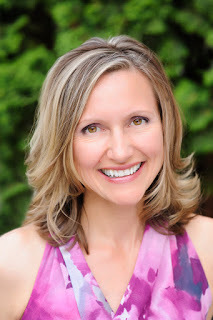 Award winning author Dani Collins wrote for twenty-five years before selling to Harlequin Mills & Boon in May of 2012. Since then, she’s turned in more than a dozen titles to Harlequin Presents, two erotic romances to HarlequinE and four sexy, small-town novellas to Tule’s Montana Born. She has even found homes for some of her previously rejected manuscripts, including indie-publishing her single title romantic comedy, Hustled To The Altar and signing with a small press for her medieval fantasy, The Healer.
Dani doesn’t have any hobbies. She’s too busy writing. Her current releases include, Seduced Into The Greek’s World, a June print and ebook from Harlequin Presents and His Blushing Bride from Montana Born, an ebook that can be found on most major platforms.
Stay current with Dani’s new releases by joining her newsletter or visiting her here:
Website | Facebook | Twitter | Goodreads
Dani Collins latest release:
Sebastian (Bastian) is a smart, sexy, doctorate student who shows up on Piper’s parents’
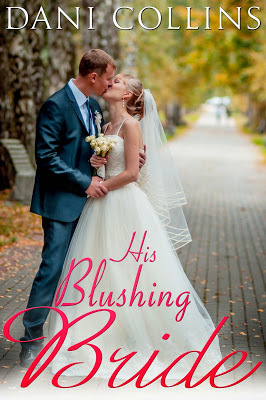 porch looking like a drifter. He’s recently been robbed and is only in town for his sister’s wedding. Piper can see he’s a player from a mile off, is instantly attracted, but doesn’t think he’d be interested in her. She carries some baggage associated with her ex and the birthmark on her face and is still a virgin because of it. Once she gets to know him, however, she thinks he might be able to show her around the sexual block. He does, they do laps, then it’s time for him to leave and that part doesn’t go so well for either of them. His Blushing Bride is my fourth novella for Montana Born. All the books are connected but can be read as stand-alones.
Thanks for having me here today!BUY LINKS: AmazonUS http://amzn.to/1E25XldCA http://amzn.to/1IHHUHxUK http://amzn.to/1GmfRjwAUS http://www.amazon.com.au/Blushing-Bride-Montana-Born-Brides-ebook/dp/B00VS2DSR6iBooks: https://itunes.apple.com/us/book/his-blushing-bride/id983322529?mt=11
GooglePlay
Kobo
SMASHWORDS
So please welcome author Dani Collins with her tips for writing Love Scenes. This is Part 1. Part 2 of Crafting Love Scene tips will be on Revisions & Editions on 11th June. Check R&E for more tips on 11th June!
Tips For Writing Love Scenes Part 1By Dani Collins
I’m a tools-not-rules type of writer. I love reading craft books and articles, and I’m always willing to try a new technique, but I’m also really protective of my process. I don’t deconstruct it for fear I’ll convince myself I’m doing something ‘wrong’ and the whole house of cards will fall apart.
So, when I’m asked to write a craft article, I often go to the business side and offer tips on blog tours and the like. Alternately, I look at the agony and ecstasy of publishing and offer strategies for finding more ecstasy, less agony. I feel confident offering that sort of advice since I’ve made a bit of a study of it.
Today I thought I’d tackle a ‘real’ topic: love scenes.
I knew I was decent at writing love scenes long before I sold. On those rare occasions when I got more than a form rejection letter, and in my contest feedback, I often received praise on my sexual tension and love scenes.
I know some struggle with love scenes without putting any words on the page. Are you one of those authors who freeze up because your mom might read it? (Fun fact: my son took one of my books to school for Silent Reading. He was in Grade Nine and I asked him if he wanted me to tell him which pages to skip. He said no, but a few weeks later he said, “I should have asked you which pages to skip.”
I wish I knew how to coach you past worrying what people will think of you. I won’t say I love talking about sex in other venues. It annoys me, actually, when people think that my writing sexy books gives them a right to ask about my sex life. So worrying what people will think is a genuine concern, but for me, the bottom line is, I prefer the hotter side when I read so when I write, I write what I would like to read. So:
1) Write what you like to read
We’ve all heard this in relation to writing the story, but it’s the crux of crafting a good love scene as well. As with the rest of the book, the author has to write authentically. If you don’t like what you’re writing, if you’re hesitating to put those words on the page, that will come across to the reader. Sweet done well is far superior to hot done poorly.
2) Treat a love scene like every other scene in your book
This is the most important thing to remember about love scenes: they have to advance the story. In a romance, you’re advancing the relationship narrative, showing the characters growing closer, letting down their guard, creating a bond between them that will be tested afterward by other pressures.
I should point out here that erotic romance doesn’t do this in the same way. In my humble opinion, erotic romance is about pushing past sexual inhibition as well as developing a love relationship. So those graphic love scenes might down play emotional intimacy in favor of the developing sexual intimacy.
3) Intimacy
Let’s look a little closer at the difference between sexual intimacy and emotional intimacy and how they are linked. Did you ever see Monty Python’s The Meaning Of Life? John Cleese is teaching his class of schoolboys about sex and asks how they might arouse a woman. One suggests rubbing the clitoris. “How about a kiss, boy?” is John Cleese’s response. “Before we stampedetoward the clitoris?”
Jumping into intimate touches or describing risqué sex acts can be exciting for the reader, but it doesn’t create emotional intimacy unless you put the character’s emotions on the page. How does having sex endanger them emotionally? What part of their soul do they reveal during the sex act? (Insecurities, backstory, fears, motives.) How do these characters feel vulnerable before, during, or after? Do they overcome that through this experience? If not, why not? Why are they having sex at all? What are their expectations for afterward and does the sex change their mindset?
Sexual intimacy can create emotional intimacy, but only if the characters see it that way. Which is a reminder to:
4) Keep them in character
Again, treat this scene like every other. If your hero is a dominant alpha, you can show him letting the heroine take the lead, but set it up so it makes sense. Give the reader that line or two of thought or dialogue that tells us why he’s acting out of character. (eg. He’s excited that she is making advances for the first time, or he respects that she needs to move at her own pace, not his.) Which leads into:
5) Consensual!!
Like using condoms, some authors find putting consent on the page cumbersome. Handled wrong, it can definitely pull the reader from the story and kill the mood for everyone. Here’s a snippet from The Marriage He Must Keep, coming out next year. They’re married and the hero is letting his rough edges show:
He manacled her wrists in one hand and used his free one to take a handful of her hair, dragging her head back. Rather than kiss her, though, he set his teeth against her neck, not hurting, just letting her know he could return her injury and then some if he wanted to. He had all the power here.
She struggled with more determination, but only wound up rubbing herself where he was hardening. Her breasts began to ache from the friction against his hard chest. The strap of her gown fell off her shoulder and he opened his mouth on her bared skin.
How could this be turning her on?
“This is kinky,” she accused. She might have lived a sheltered life, but she read. She surfed. She knew a little about the games couples played. “Don’t we need a safe word if you’re going to overpower me?”
“Or you could just tell me to let you go,” he said with a silent laugh, releasing her hair to push the other strap of her gown down, baring the cup of her bra. He didn’t lift his gaze from the poke of her nipple against the blue lace. “Are you going to?” His voice was gruff and hungry.
That’s all it takes: a little pause where the hero checks in, reassures her he’s only playing and makes sure she’s willing to continue.
 Award winning author Dani Collins wrote for twenty-five years before selling to Harlequin Mills & Boon in May of 2012. Since then, she’s turned in more than a dozen titles to Harlequin Presents, two erotic romances to HarlequinE and four sexy, small-town novellas to Tule’s Montana Born. She has even found homes for some of her previously rejected manuscripts, including indie-publishing her single title romantic comedy, Hustled To The Altar and signing with a small press for her medieval fantasy, The Healer.
 Dani doesn’t have any hobbies. She’s too busy writing. Her current releases include, Seduced Into The Greek’s World, a June print and ebook from Harlequin Presents and His Blushing Bride from Montana Born, an ebook that can be found on most major platforms.
Stay current with Dani’s new releases by joining her newsletter or visiting her here:
Website | Facebook | Twitter | Goodreads
Dani Collins latest release:
Sebastian (Bastian) is a smart, sexy, doctorate student who shows up on Piper’s parents’
 porch looking like a drifter. He’s recently been robbed and is only in town for his sister’s wedding. Piper can see he’s a player from a mile off, is instantly attracted, but doesn’t think he’d be interested in her. She carries some baggage associated with her ex and the birthmark on her face and is still a virgin because of it. Once she gets to know him, however, she thinks he might be able to show her around the sexual block. He does, they do laps, then it’s time for him to leave and that part doesn’t go so well for either of them. His Blushing Bride is my fourth novella for Montana Born. All the books are connected but can be read as stand-alones.
 Thanks for having me here today!BUY LINKS: AmazonUS http://amzn.to/1E25XldCA http://amzn.to/1IHHUHxUK http://amzn.to/1GmfRjwAUS http://www.amazon.com.au/Blushing-Bride-Montana-Born-Brides-ebook/dp/B00VS2DSR6iBooks: https://itunes.apple.com/us/book/his-blushing-bride/id983322529?mt=11
GooglePlay
Kobo
SMASHWORDS
June 1, 2015
What Makes A Love Story by Inge Saunders

I recently watched the movie The Lake House for the hundredth time. It’s become one of my favourite romantic dramas. These two people who fall in love with each other through writing letters because one lived in the past in the other in the future. Talk about having problems! *smile*

So, of course, I did some ‘cyber-stalking’ because I haven’t read anything about Keanu Reeves in a while. (Let’s just take a moment‒Keanu Reeves *deep sigh*) The man does a very good job of staying out of the entertainment news *thumbs up* And I stumbled on an interview done by Keanu and Sandra Bullock about the movie (http://bitly.com/1KgejJj).
After a series of questions, the journalist asked them a question that had the writer in me sitting up. He asked, “What’s your definition of a good love story?”At this point Sandra had answered all the questions first, but for some reason Keanu responded first this time and his response had me re-evaluating my current writing project. He answered, “A good love story is a story of passion. It starts with that first look — I believe in love at first sight. You want that connection, and then you want some problems. You want them to have to fight to be together, maybe even have an epic battle, like they have to figure out how to break the boundaries of time. And then there’s a good kiss. I think this film qualifies.”Obviously he’d stuck closely to the plot of The Lake House *grin* But there’s a level of truth here that the romance writer in me couldn’t ignore. A good love story needs passion, he’s right. But believable passion. It can be created on such a subtle and sophisticated way as letters written across time itself, where the actions and emotions of the characters drives the mutual attraction through their words and sharing. Or it can be an instant bolt of lightning that freezes the characters into ‘seeing’ the other for the first time and literally being stunned into stillness at the realization on a subconscious or conscious level, that this person’s going to become significant to them. Hence the ‘love at first sight’. The connection’s established and like he said, then come ‘the problems’. The stakes. What keeps them apart? This shouldn’t be something that could be solved by a simple conversation. It should create enough relevant tension and suspense that it’s either (in my opinion) a ‘fight against outside forces to stay together’ or a ‘fight against their inner demons to stay together’ or both. And then there’s the HEA. Sounds simple right? *laughs* As a new author I’m still learning, I can’t say I’ve figured out all the kinks to writing and don’t think I ever will. It’s a skill I’m constantly working on. Keanu’s quote stood out to me because he explained what a good love story meant to him, and as much as views differ, there’s a universal feel to his view point. I believe there are some great tips in what he said, and have applied them to my current WIP. I hope his summary of a good love story also inspires you to write your version of one.
Author Bio:
 Inge Saunders fell in love with books when she started reading romance novels with her grandmother. Intrigued by the worlds books unlocked, it was inevitable she would take pen to paper. At age fourteen she wrote her first novel which wasn`t such a roaring success according to her brother. Not discouraged, she realized something fundamental: as a writer you can only write about what interests you, a principle she still upholds in adulthood. When she`s not writing about that ‘inexplicable attraction’ she`s reading almost every sub-genre in romance out there, spending time with friends and family and taking hikes in her hometown`s National Karoo Park. She forms part of Romance writers` Organization of South Africa (ROSA) and currently has two books out with Decadent Publishing; Falling for Mr. Unexpected and new release Dance of Love. Blog: Inge Saunders - Inside These Lines Twitter:http://ingeulrikesaunders.twitter.com Facebook:http://ingesaunders.facebook.comOther Sites:http://ingesaunders.goodreads.com : http://ingesauders.pinterest.com
Inge Saunder's new release:
DANCE OF LOVE
 All roads lead to Rome when Ashley Solomons embarks on fulfilling her dream to become a world-class dancer. But there’s one person who stands in her way. “It`s a no from me,” Antonio Machiavelli.
 When Antonio’s auditions for a lead principal end in wintry Cape Town, the last thing he expects is to have more than a knee-jerk reaction to an audition. Ashley not only verbally challenges him, but also translates her fire and cheekiness into an edge of your seat performance.
Can Antonio keep his distance from Ashley? Can Ashley focus on fulfilling her dream of becoming a lead principal? Or will love have its way?
Buy Link:
Amazon
May 4, 2015
Places To Write By Mickey J Corrigan
Let's welcome author Mickey J Corrigan as she talks about Places To Write. She came with a kindle copy giveaway of THE BLOW OFF.
Places to WriteMickey J. Corrigan
We just moved to a tumbledown house a block from the beach. The location is awesome, but I have to pull myself away from the computer screen and go down to the sand. It's too easy to work all day, especially when I'm ghostwriting for others or editing their work.Back in the suburbs, distractions were a huge issue. My child was home schooled. My husband worked nights so he was around during the day. The neighbors dropped by, the laundry needed doing, and we were always out of something essential requiring a car trip to the store.Arising very early was essential if I wanted to get any work done. Virginia Woolf said that a woman required "a room of one's own" if she wanted to write. Day after day, this rang so true for me. My work space was in the middle of the living room. I ached for a place I could go to be alone for an extended period of time. No kids, no friends, no errands, no distractions. Just me and my writing.Not all writers feel this way. Some people prefer the background hum of a café. JK Rowling is famous for writing the Harry Potter series in her local cafés. She's a genius, though. She could probably have written those books on her phone while stopped at red lights. I can't do that, I need to be able to focus. That means I can't be watching the cute couple making eyes at one another over lattes. I can't be at the local library either, listening to the retirees compare recent surgeries. I need to be alone. In a bare room. With my thoughts.Stephen King advises writers to strip the writing room. No TV, no phone, no windows that provide a distracting view of the real world. You need to go inside your own head and stay in there. So the story can tell itself to you. One day, the tumbledown house could serve as a getaway for writers. The only distraction is the sound of the waves on sand, and you can only hear that in the wee hours when the offshore breeze blows west.Anybody want to come stay for a while? I promise, I won't talk to you while you're writing.
***Originally from Boston, Mickey J. Corrigan lives and writes and gets into trouble in South Florida, where the men run guns and the women run after them. The tropics provide a lush, steamy setting for hot Florida pulp. Books include the edgy novellas in The Hard Stuff series from the Wild Rose Press (Whiskey Sour Noir, Vodka Warrior, Tequila Dirty, andRealLife Rum); the spoofy Geekus Interruptus and F*ck Normal from Australia's Bottom Drawer Publications; and the thriller Sugar Babies from Champagne Books. Her urban crime novel, Songs of the Maniacs, was released by Salt Publications in the UK.
Visit at:www.mickeyjcorrigan.comhttp://www.goodreads.com/author/show/5828647.Mickey_J_Corriganhttp://mickeyjcorrigan.tumblr.com/
THE BLOW OFF
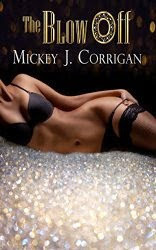 One long, hard night of working the streets is more than enough for twenty-five-year-old Shea O'Grady, a Boston-based grad student. She just doesn't have the stomach for it. Or the lips. So she comes up with a better way to use her youthful sexiness to pay off her debts. When she shares her plan to seduce and rob johns with her nasty tempered pimp, he agrees to fence her take for a generous cut. So Shea puts together a team of girls to work with her and convinces her downstairs neighbor, a hunky Rastafarian dealer dude, to help with the knockout drugs. But picking up rich guys and relieving them of their excess bling is not as easy as it seems. Sometimes it's even more dangerous than a job on the street.
The Blow Off is a cautionary tale, a romantic black comedy, and a satirical look at student debt, prostitution, woman on man crime, and the things we do for love.
Buy on Amazon
Places to WriteMickey J. Corrigan
We just moved to a tumbledown house a block from the beach. The location is awesome, but I have to pull myself away from the computer screen and go down to the sand. It's too easy to work all day, especially when I'm ghostwriting for others or editing their work.Back in the suburbs, distractions were a huge issue. My child was home schooled. My husband worked nights so he was around during the day. The neighbors dropped by, the laundry needed doing, and we were always out of something essential requiring a car trip to the store.Arising very early was essential if I wanted to get any work done. Virginia Woolf said that a woman required "a room of one's own" if she wanted to write. Day after day, this rang so true for me. My work space was in the middle of the living room. I ached for a place I could go to be alone for an extended period of time. No kids, no friends, no errands, no distractions. Just me and my writing.Not all writers feel this way. Some people prefer the background hum of a café. JK Rowling is famous for writing the Harry Potter series in her local cafés. She's a genius, though. She could probably have written those books on her phone while stopped at red lights. I can't do that, I need to be able to focus. That means I can't be watching the cute couple making eyes at one another over lattes. I can't be at the local library either, listening to the retirees compare recent surgeries. I need to be alone. In a bare room. With my thoughts.Stephen King advises writers to strip the writing room. No TV, no phone, no windows that provide a distracting view of the real world. You need to go inside your own head and stay in there. So the story can tell itself to you. One day, the tumbledown house could serve as a getaway for writers. The only distraction is the sound of the waves on sand, and you can only hear that in the wee hours when the offshore breeze blows west.Anybody want to come stay for a while? I promise, I won't talk to you while you're writing.
***Originally from Boston, Mickey J. Corrigan lives and writes and gets into trouble in South Florida, where the men run guns and the women run after them. The tropics provide a lush, steamy setting for hot Florida pulp. Books include the edgy novellas in The Hard Stuff series from the Wild Rose Press (Whiskey Sour Noir, Vodka Warrior, Tequila Dirty, andRealLife Rum); the spoofy Geekus Interruptus and F*ck Normal from Australia's Bottom Drawer Publications; and the thriller Sugar Babies from Champagne Books. Her urban crime novel, Songs of the Maniacs, was released by Salt Publications in the UK.
Visit at:www.mickeyjcorrigan.comhttp://www.goodreads.com/author/show/5828647.Mickey_J_Corriganhttp://mickeyjcorrigan.tumblr.com/
THE BLOW OFF
 One long, hard night of working the streets is more than enough for twenty-five-year-old Shea O'Grady, a Boston-based grad student. She just doesn't have the stomach for it. Or the lips. So she comes up with a better way to use her youthful sexiness to pay off her debts. When she shares her plan to seduce and rob johns with her nasty tempered pimp, he agrees to fence her take for a generous cut. So Shea puts together a team of girls to work with her and convinces her downstairs neighbor, a hunky Rastafarian dealer dude, to help with the knockout drugs. But picking up rich guys and relieving them of their excess bling is not as easy as it seems. Sometimes it's even more dangerous than a job on the street.
 The Blow Off is a cautionary tale, a romantic black comedy, and a satirical look at student debt, prostitution, woman on man crime, and the things we do for love.
Buy on Amazon
March 30, 2015
Conflict By Kate Walker #Giveaways
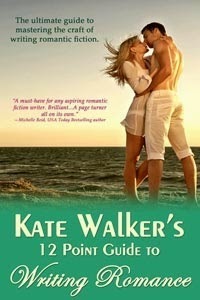
Let's welcome UK based author Kate Walker as she talks about Conflict. She came with a kindle copy giveaway of Kate Walker's 12 Point Guide To Writing Romance.
Connect with Kate Walker on the web:Website Blog Facebook
 Amazon.com Amazon.co.uk Amazon.au The Book Depository
Barnes and Noble
Amazon.com Amazon.co.uk Amazon.au The Book Depository
Barnes and Noble
Over to Kate now...
CONFLICT
When I’m teaching the romance writing courses I run, one of the elements of the books that seems to cause people a lot of problems is that word CONFLICT. People seem to get tangled up in just what it is; whether it’s external or internal; what makes a conflict t strong enough.
Conflict is not just your characters arguing and opposing each other. Conflict in a romantic novel is something that keeps coming between your characters, driving them away from each other when really they want to be together for the rest of their lives.
Without conflict, you won’t have a story. Your characters would meet, fall into each others’ arms and live happily ever after from then onwards. There is no emotional tension in such a story. No emotional punch, because that comes from the overcoming of odds against the relationship. It is the moments of conflict and their resolution that bring about the emotion that we're trying to get into a book
Conflict can be of two types:
External conflict
This is when something or someone outside of the central characters causes the problem that keeps them apart.
Internal conflict
Internal conflict arises from the characters' personalities and beliefs, and affects their reactions to the other person. They are usually emotional in origin and are resolved by the characters learning more about each other or themselves.
In a romance, this second sort of conflict, the internal one , is much more important than what is going on outside of your characters.
But conflict has to be worthwhile - it has to be something that would really matter, something worth taking the risk of losing the love of your life for. So your conflict needs to be believable, one that your hero and heroine really care about enough to keep fighting over it, keep hurting over it. Something that really means the ruin of their love if they can't resolve it.
Very few reasons for conflict, however powerful, can actually last through the whole of a book without changing, adapting, developing, or just varying in tone and emphasis. The best sorts of conflicts are those that have layers of involvement, and as each one is dealt with and peeled away, it reveals another complication, another aspect of the same problem, or a different development of it, going deeper and deeper until finally the central core of the problem is exposed, ready for you characters to tackle it.
Not every conflict needs to be a major one and not ever problem is one that lasts through the book. You can vary the pace and the intensity of your story by using long-term problems and short-term problems. Short-term problems are usually what catapult the hero and heroine together, putting them in a situation in which they have to work out their emotional (long-term) problems.
This pacing and staging of the revelations that make up the conflict adds to the suspense and the tension that keeps the reader turning the page. It also has the bonus of increasing and building on the sexual tension between the hero and heroine as they want to be together but feel more and more that it will be a mistake.
You need to make the conflict between your characters one that is strong, understandable and believable. But it also needs to be sympathetic, specially if you’re writing about some really strong conflict . You risk really alienating readers from your hero or heroine if you don’t justify that conflict and make it believable. To be justified, it needs to be specific and directly connected to the people your character is in conflict with.
So what you need to do is to understand your hero and heroine so well that you know that this is exactly what they would do and WHY. If you have that clear in your head – your characters’ personal reasons for doing anything then it will convince even someone who thinks, ‘Oh come on, no one would ever do that!’ – But if they think, well I would never do that but I see exactly why Mary – or Joe – or whoever would then it you’ve justified it.
Perhaps you’ve had a criticism on you story where an editor says that there should be more at stake. They mean more at stake for that particular individual. So it doesn’t mean that – say she should owe him more money than you’ve said is at stake, (though any scenario where a heroine is forced into something for some measly amount of money would be unbelievable in a time when the banks would offer a loan etc) but it means that this would cause more distress/ have a more devastating effect on her life. So it might affect not just her but her father’s health, her mother’s reputation, her brother’s liberty, her sister’s chance of carrying a child to term – or just her own desperate need to please her parents once in her life because . . . . anything that adds emotional pressure – that ups the emotional stakes. And emotions always deepen the conflict because emotions aren’t rational – that’s why they’re emotions!
So then if you have 2 characters who are in a position where the reader believes that for them this is the only way they would go, then your story and the conflict in it will convince fully. So, whatever the conflict you’ve come up with, if you want to make it believable, sustainable and packing the right emotional punch, look at your characters and see WHY they would do whatever they do – it’s their story after all.
Kate Walker also has a new release out:Olivero's Outrageous Proposal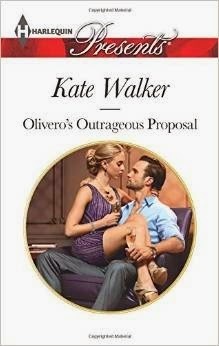 One problem…
For Dario Olivero, Alyse Gregory was supposed to be a way to reap revenge against his estranged half brother. But Alyse carries the key to the family acceptance he's always craved and, realizing just how much trouble she's in, he can't turn away.
One solution!
A marriage proposal is not what Alyse was expecting. But this deliciously sexy Italian will resolve her family's debts if she becomes his convenient wife… Her head says no but her body begs her to say yes.
With an intensity rivaling the Tuscan sun, their mutual desire soon escalates to something inconvenient, creating a whole new dilemma!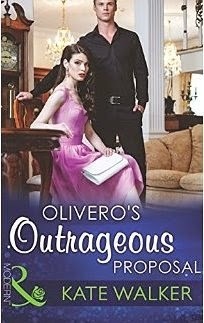 Buy at:
Amazon
Amazon UK
Book Depository
Connect with Kate Walker on the web:Website Blog Facebook
 Amazon.com Amazon.co.uk Amazon.au The Book Depository
Barnes and Noble
Amazon.com Amazon.co.uk Amazon.au The Book Depository
Barnes and Noble
Over to Kate now...
CONFLICT
When I’m teaching the romance writing courses I run, one of the elements of the books that seems to cause people a lot of problems is that word CONFLICT. People seem to get tangled up in just what it is; whether it’s external or internal; what makes a conflict t strong enough.
Conflict is not just your characters arguing and opposing each other. Conflict in a romantic novel is something that keeps coming between your characters, driving them away from each other when really they want to be together for the rest of their lives.
Without conflict, you won’t have a story. Your characters would meet, fall into each others’ arms and live happily ever after from then onwards. There is no emotional tension in such a story. No emotional punch, because that comes from the overcoming of odds against the relationship. It is the moments of conflict and their resolution that bring about the emotion that we're trying to get into a book
Conflict can be of two types:
External conflict
This is when something or someone outside of the central characters causes the problem that keeps them apart.
Internal conflict
Internal conflict arises from the characters' personalities and beliefs, and affects their reactions to the other person. They are usually emotional in origin and are resolved by the characters learning more about each other or themselves.
In a romance, this second sort of conflict, the internal one , is much more important than what is going on outside of your characters.
But conflict has to be worthwhile - it has to be something that would really matter, something worth taking the risk of losing the love of your life for. So your conflict needs to be believable, one that your hero and heroine really care about enough to keep fighting over it, keep hurting over it. Something that really means the ruin of their love if they can't resolve it.
Very few reasons for conflict, however powerful, can actually last through the whole of a book without changing, adapting, developing, or just varying in tone and emphasis. The best sorts of conflicts are those that have layers of involvement, and as each one is dealt with and peeled away, it reveals another complication, another aspect of the same problem, or a different development of it, going deeper and deeper until finally the central core of the problem is exposed, ready for you characters to tackle it.
Not every conflict needs to be a major one and not ever problem is one that lasts through the book. You can vary the pace and the intensity of your story by using long-term problems and short-term problems. Short-term problems are usually what catapult the hero and heroine together, putting them in a situation in which they have to work out their emotional (long-term) problems.
This pacing and staging of the revelations that make up the conflict adds to the suspense and the tension that keeps the reader turning the page. It also has the bonus of increasing and building on the sexual tension between the hero and heroine as they want to be together but feel more and more that it will be a mistake.
You need to make the conflict between your characters one that is strong, understandable and believable. But it also needs to be sympathetic, specially if you’re writing about some really strong conflict . You risk really alienating readers from your hero or heroine if you don’t justify that conflict and make it believable. To be justified, it needs to be specific and directly connected to the people your character is in conflict with.
So what you need to do is to understand your hero and heroine so well that you know that this is exactly what they would do and WHY. If you have that clear in your head – your characters’ personal reasons for doing anything then it will convince even someone who thinks, ‘Oh come on, no one would ever do that!’ – But if they think, well I would never do that but I see exactly why Mary – or Joe – or whoever would then it you’ve justified it.
Perhaps you’ve had a criticism on you story where an editor says that there should be more at stake. They mean more at stake for that particular individual. So it doesn’t mean that – say she should owe him more money than you’ve said is at stake, (though any scenario where a heroine is forced into something for some measly amount of money would be unbelievable in a time when the banks would offer a loan etc) but it means that this would cause more distress/ have a more devastating effect on her life. So it might affect not just her but her father’s health, her mother’s reputation, her brother’s liberty, her sister’s chance of carrying a child to term – or just her own desperate need to please her parents once in her life because . . . . anything that adds emotional pressure – that ups the emotional stakes. And emotions always deepen the conflict because emotions aren’t rational – that’s why they’re emotions!
So then if you have 2 characters who are in a position where the reader believes that for them this is the only way they would go, then your story and the conflict in it will convince fully. So, whatever the conflict you’ve come up with, if you want to make it believable, sustainable and packing the right emotional punch, look at your characters and see WHY they would do whatever they do – it’s their story after all.
Kate Walker also has a new release out:Olivero's Outrageous Proposal
 One problem…
 For Dario Olivero, Alyse Gregory was supposed to be a way to reap revenge against his estranged half brother. But Alyse carries the key to the family acceptance he's always craved and, realizing just how much trouble she's in, he can't turn away.
One solution!
A marriage proposal is not what Alyse was expecting. But this deliciously sexy Italian will resolve her family's debts if she becomes his convenient wife… Her head says no but her body begs her to say yes.
With an intensity rivaling the Tuscan sun, their mutual desire soon escalates to something inconvenient, creating a whole new dilemma!
 Buy at:
Amazon
Amazon UK
Book Depository
March 16, 2015
Breathing Life Into Your Characters by Kamy Chetty
Let's welcome author Kamy Chetty as she discusses about Breathing Life Into Your Characters. Chat with her and share your stories!
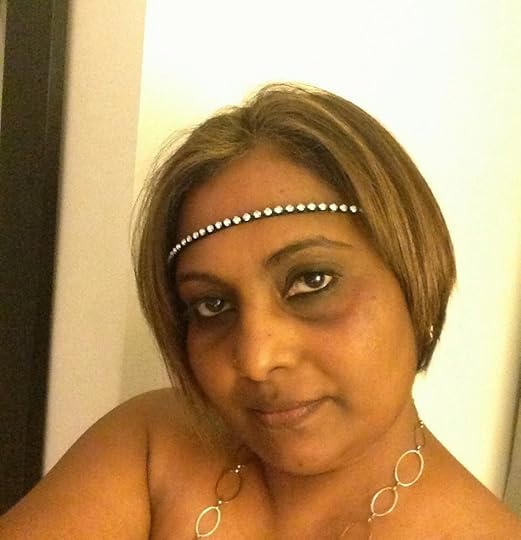 You can connect with Kamy Chetty on the Web:
Website Facebook Twitter Author Page
Breathing life into your characters
As writers we’re always told, make your characters believable. Make them real for the reader. Make the reader care about what happens to your characters.
You might ask why this is important. The key to getting your reader to turn that page and get to the end of the book to make sure it all turns out okay, is to have your reader form an emotional connection with the character.
You might think this is easy, but it’s not. The art to doing this, is knowing your character so well, you’d know exactly what their reaction would be to any given situation. For something like this, it helps to be a people person who genuinely cares.
Be a people watcher, watch reactions, overreactions and responses to situations. How does a father deal with the loss of his wife?
How does a sister deal with the loss of her sister? Would she feel relief if she’d been made to save her sister? What did she feel growing up? Was there ever any resentment between the siblings and how was that dealt with?
There is a lot about your characters you’d know when you start your WIP, that you never tell your readers. If you did, your book would be boring and would result in a lot of info dump in the first few chapters. But in order to keep the readers’ curiosity piqued, you sprinkle little bits of information in exactly the right places, to make them want more. It’s one of the best ways to get them invested in the story. It’s effective in making them care about what’s going to happen next.
If your strong lead character is acting too soft, then ask yourself why? Has all the years of bottling things up been too much? Is being back to where it all began now breaking down those walls she’d built?
What about your male lead? Is he rushing off charging to save the day? Do you think he might have been hurt and he’s too scared to put himself out there again? Maybe he has more responsibility like a child to take care of and he can’t be reckless anymore, because that would leave the child an orphan?
What about the villain? There’s always a reason the bad guy, is the bad guy. Whether its money, power or love, the reason is always the motivator for someone doing things they wouldn’t normally do. In order to make it real, the motivator has to be believable.
What I enjoyed most about writing Made to Die are the characters and getting to see how they developed or unraveled over the course of their journey. Getting that balance between character driven and plot driven is what makes a book exciting.
MADE TO DIE
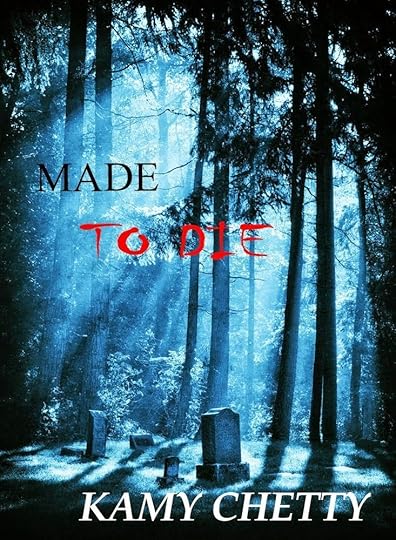 When a young woman comes home to find closure and say goodbye to the sister she was made to save, she discovers a program for organ trafficking linked to a mass body dump.
What has Cedar Falls become in her absence and what has her mother and Troy Saban, her sister’s husband has to do with it? Sophie Summerfield must fight for her life and those she loves as she figures out who is behind this scheme to steal organs from young woman.
Intrigue and drama captures the mind of the suspense reader.
Buy Links:
Amazon
Amazon UK
Smashwords
 You can connect with Kamy Chetty on the Web:
 Website Facebook Twitter Author Page
Breathing life into your characters
As writers we’re always told, make your characters believable. Make them real for the reader. Make the reader care about what happens to your characters.
You might ask why this is important. The key to getting your reader to turn that page and get to the end of the book to make sure it all turns out okay, is to have your reader form an emotional connection with the character.
You might think this is easy, but it’s not. The art to doing this, is knowing your character so well, you’d know exactly what their reaction would be to any given situation. For something like this, it helps to be a people person who genuinely cares.
Be a people watcher, watch reactions, overreactions and responses to situations. How does a father deal with the loss of his wife?
How does a sister deal with the loss of her sister? Would she feel relief if she’d been made to save her sister? What did she feel growing up? Was there ever any resentment between the siblings and how was that dealt with?
There is a lot about your characters you’d know when you start your WIP, that you never tell your readers. If you did, your book would be boring and would result in a lot of info dump in the first few chapters. But in order to keep the readers’ curiosity piqued, you sprinkle little bits of information in exactly the right places, to make them want more. It’s one of the best ways to get them invested in the story. It’s effective in making them care about what’s going to happen next.
If your strong lead character is acting too soft, then ask yourself why? Has all the years of bottling things up been too much? Is being back to where it all began now breaking down those walls she’d built?
What about your male lead? Is he rushing off charging to save the day? Do you think he might have been hurt and he’s too scared to put himself out there again? Maybe he has more responsibility like a child to take care of and he can’t be reckless anymore, because that would leave the child an orphan?
What about the villain? There’s always a reason the bad guy, is the bad guy. Whether its money, power or love, the reason is always the motivator for someone doing things they wouldn’t normally do. In order to make it real, the motivator has to be believable.
What I enjoyed most about writing Made to Die are the characters and getting to see how they developed or unraveled over the course of their journey. Getting that balance between character driven and plot driven is what makes a book exciting.
MADE TO DIE
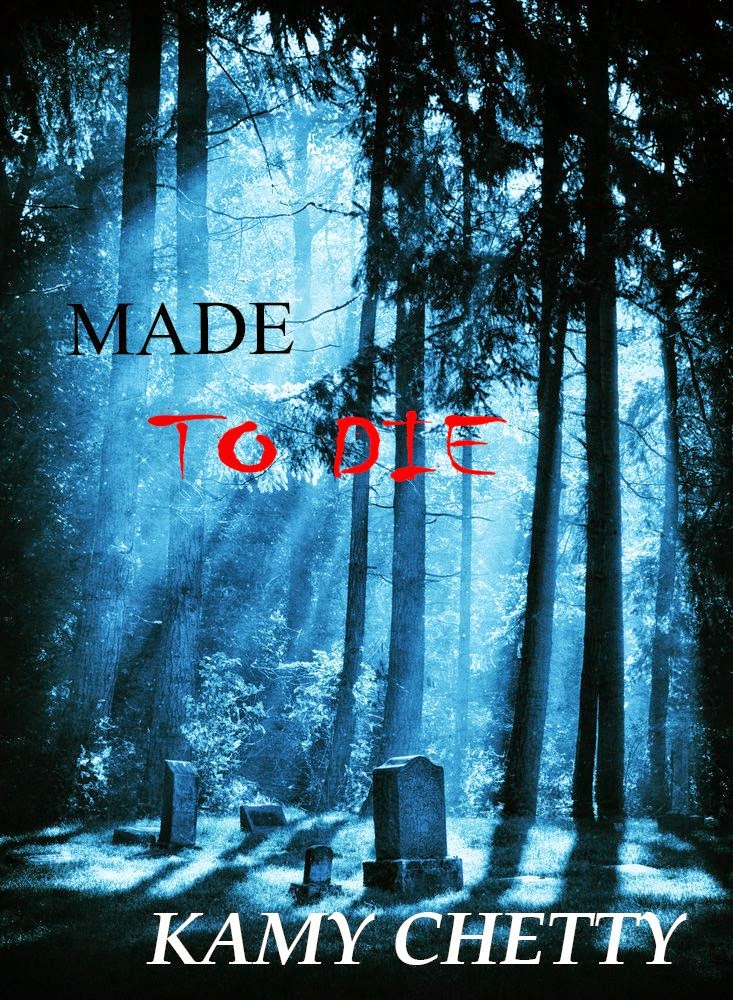 When a young woman comes home to find closure and say goodbye to the sister she was made to save, she discovers a program for organ trafficking linked to a mass body dump.
 What has Cedar Falls become in her absence and what has her mother and Troy Saban, her sister’s husband has to do with it? Sophie Summerfield must fight for her life and those she loves as she figures out who is behind this scheme to steal organs from young woman.
Intrigue and drama captures the mind of the suspense reader.
Buy Links:
Amazon
Amazon UK
Smashwords
March 7, 2015
The W Plot Technique by Lynne Marshall
Let's welcome author Lynne Marshall as she discusses The W Plot Technique. Chat with her and share your stories!

You can connect with Lynne Marshall on the Web:
Website Facebook RomanceWiki Author Page
The W Plot Technique by Lynne Marshall
Contrary to popular belief, there isn’t a formula for writing Romance. However there are specific ways to plot it.
Commercial fiction of all types makes a promise:Mystery – Solve the caseThriller – Catch the villainFantasy – Complete the conquestRomance – Happy ending with hero and heroine in love and committed to each other.
Getting there (to the happy ending) can happen in countless ways, as individual as each author.
I’m going to use the steps of the W Plot format with the popular movie The Proposal to make my point.
SPOILER ALERT!The beginning – h/h meet – the inciting incidentSuper editor Margaret is being threatened with deportation to Canada and won’t be ableto come back for one year, which means she’ll lose her job – the job she lives for sinceshe has no other life.
Lead up to plot point I – i.e. call to action – She bamboozles her assistant, Andrew, into marrying her. Andrew has dreams of becoming an author, and has taken this job as a foot in the door. He seizes the moment and asks her to publish his book. She won’t so he makes sure she’ll make him an editor if he goes along with her ruse. She agrees. Hemakes a completely phony statement to convince the publishers - “We are two peoplewho weren’t supposed to fall in love…” This is a foreshadowing statement.He takes her home to Alaska for his Gammy’s birthday. Margaret realizes Andrewcomes from money, has a family that loves him, and isn’t the person she has pegged him to be. His family throws a party in honor of their fake engagement. They annoy andhumiliate each other as often as possible. They realize they need to quit bickering and act like they’re in love in order to pull this off.
Plot point I - They kiss and feel something. The story question arises: Will Margaretand Andrew be able to pull this off? Moving up toward the first peak of the W – The H&H get to know each other and many problems arise. They have to share a bedroom, though he gallantly sleeps on the floor. They bond singing a silly song together. She gets to know his family. He sees her dancing and singing a crazy song and calls her a freak! They kinda sorta begin to like each other for real.
The Stakes get higher when they run into each other naked.
Peak of W - Middle of the book –A monkey wrench gets thrown into the mix. Often alove scene can bring on this point of no return, bonding the H/H to each other. But thereisn’t a love scene in The Proposal.
Midpoint (Peak of W) Andrew’s family forces them to marry right then on that weekend.Margaret gets swept up with the preparations and with his family. She tries on hisGammy’s wedding dress. Being an orphan since the age of fifteen, she has forgottenwhat it is like to have a family.
Here’s where the monkey wrench gets thrown in: she feels guilty about hermanipulating plan. Confused and upset by the surfacing of her long forgotten conscience, she takes off in his boat, falling overboard, and she almost drowns. Andrew rescues her and comforts her. She feels cared for and it shakes her up even more.
Traditionally, in the second half of the book the heroine must deal with the fact that shehas feelings for the hero. Romances are all about emotion, emotion, emotion. Don’t beafraid to delve deeply into the issues of loving someone who, by all outward signs, is theworst person in the world for you.
Sliding down that W peak– first there is that rosy glow, some reflection, the futurelooks bright! In order to keep your reader’s interest, you must have conflict and tensionat every turn of the page.
Plot point II -- The immigration officer shows up, and Andrew’s father makes a deal toget him off the hook. BUT Andrew doesn’t accept the deal and tells Margaret he reallywants to marry her. This genuine, heroic and sacrificial gesture changes Margaret’sheart.
Crisis (The black moment) the last W peak– Margaret can’t go through with thewedding. She confesses in front of everyone that it is all a sham, takes full responsibility, and runs out.
First waylaid by his family, then by Gammy’s fake heart attack, then finding a note left tohim by Margaret telling him what a wonderful writer he is, and that she will make surehis book gets published before she leaves the company, Andrew chases her to the airport to confront her about her sudden change of heart.
The screws tighten - Margaret flies off, Andrew stands watching her, and realizes hereally has fallen in love with her.
Climax – A day or two has passed. Andrew shows up in New York where Margaret isclearing out her office. In front of everyone, he asks her to marry him. She confesses she is more comfortable in life alone. He won’t let her take the easy way out. She’s willing to take the chance.
Anti-climax – They kiss in front of everyone.
The story is brought full circle when she accepts his honest and heartfelt proposal.Here is where the Romance promise comes into play: The heroine reaches the end of the story on higher ground than where she first started, and she has found her soul mate along the way.
Though there is a structured process by which all good stories are told, each story is asindividual as the hero and heroine’s personalities. I reiterate – there isn’t a formula forwriting romance.
A well-written romance will clutch your heart, make you laugh or cry (hopefully both) and leave you with a good feeling. That feeling is called hope, and hope is a hot commodity these days!
Lynne Marshall has a new romance novel out...
HER PERFECT PROPOSAL
WRITING HER OWN HAPPY ENDING?
 Journalist Lilly Matsuda just writes headlines; she doesn't make them. That is, until she runs afoul of Gunnar Norling while on assignment in the tiny town of Heartlandia. The handsome policeman intrigues more than Lilly's investigative senses…but she isn't going to let Gunnar's megawatt smile or smoldering good looks melt her heart.
Gunnar isn't a fan of people snooping around Heartlandia. He's been sworn to secrecy about the town's mysterious past, and he refuses to compromise that for anyone…even beautiful Lilly, who's hot on the story's trail. Besides, she's not going to stick around forever, and Gunnar refuses to let his heart get trampled on—unless Lilly decides to put love first!
Read Excerpt
Read Reader Reviews
Buy Links:
Amazon
Harlequin
Book Depository
B&N Nook
March 2, 2015
Writing Alone by Christina Hollis
Let's welcome author Christina Hollis as she discusses how solitary a writer's journey is. Chat with her and share your stories!
Writing alone, and together by Christina HollisIs your plot going nowhere, while your characters go round in circles? Are you fed up of staring at a blank screen? Get help, increase your productivity and enjoy yourself at the same time by finding some like-minded helpers.
Creative writing is a solitary business. The desperate writer starving in a garrett is an outdated cliche. Most people fit their writing in and around a full-time job these days, but when it comes to getting those words down, you’re on your own. Nobody can fit them together for you. It’s often hard, and sometimes impossible. That’s when it helps to have a back-up team. Why struggle on your own, when inspiration is never far away?
Beta readers and critique partners go through your manuscript, and give their honest opinion of your work. If you’ve got a friend who won’t sugar-coat the pill too much, ask them to do it. They need to be tactful, and open minded—especially if you present them with an 18-rated shocker. If you’re too shy to ask anyone you know, or if you’d never be able to look your friend in the face again once they’d read what you’ve dreamed up, this is where the internet really scores. If you’re a member of the Romance Writers of America (https://www.rwa.org), The Romantic Novelists’ Association (http://www.rna-uk.org) or other writing group, contact them about finding help. The RNA’s New Writer Scheme in particular provides a great service.
Workshops are a good way to test your work out on a wider audience. Generally, you submit a sample of your work in advance to be read and commented on by the leader, or other members of the group, if your workshop runs on the collegiate system. You can read about my experience of a workshop run by The Marcher Chapter of The Romantic Novelists’ Association at my blog, here: http://bit.ly/1lDHSsy. Workshops need to be carefully structured and controlled, to make sure everyone’s voice is heard, and no one feels victimized. Constructive criticism is useful. Bullying should never be allowed. The best way to choose a good workshop is to ask other writers. When you’re called on to comment on someone else’s work, a good rule of thumb is to give three stars for every cross. That is, praise three times as many things about the sample as you criticize. Before you open your mouth, always stop and think how you’d like to hear that particular piece of advice. I’m a great believer in workshops. The reaction of those who read the extract from His Majesty’s Secret PassionI’ve reproduced at http://bit.ly/1BBzb8L persuaded me to send the completed manuscript to The Wild Rose Press. They loved it too, and published it on 4th February this year. You can find out more about Sara and Leo’s love story at http://bit.ly/1ujX5zc, Amazon at http://amzn.to/1zajHZA (US) and http://amzn.to/1DF99Dv (UK)
There are creative writing Courses for everyone, no matter whether you’re just starting out or you’re an old hand at the writing game. Again, word of mouth is the best way to find one that’s right for you. The top authors Sharon Kendrick and Kate Walker each run great courses for the aspiring romance writer. Sharon operates in the romantic surroundings of an Italian watermill (see here: http://bit.ly/1vJWexJ), while Kate’s courses are based in England and Wales (http://bit.ly/1LWuPL5 ). Creative writing courses always add up to more than the sum of their parts. Not only do you get the benefit of the tutor’s expertise, you’ll learn a lot from working with your fellow students, too.
Conferences are the perfect way to meet other like-minded writers. You can get a taste of the RNA’s 2014 conference on my blog, here: http://bit.ly/WgZGiQ. It’s a real treat to discover you’re not the only one who prefers writing to housework! With all the socialising that goes on, don’t expect to get much writing done, but you will learn a lot, and find loads of new friends. Make sure you’ve polished up your sales pitch, just in case an agent or publisher asks the question you’re longing to hear—”...and what are you working on at the moment?”
Never underestimate the power of Professionals when it comes to perfecting your novel. Whether you’re aiming to be taken on by a publisher or you intend to self-publish, a good editor is worth their weight in time and money saved. A developmental editor will make sure your story is on the right track, while line and copy editorsclean up your typescript and text. It’s a false economy to miss out on this step if you’re going to publish your own work, as spelling mistakes, errors in grammar and typos are guaranteed to upset your readers. They may even make the difference between you making a sale, and missing out.
Where do you look for help with your writing?
About Christina
 I live deep in the English countryside. I met my husband on a blind date, and during a career break to raise our family I wrote non-fiction articles and award-winning short stories for national magazines, to fit in with my parenting timetable.My first full length novel, Knight’s Pawn, was an historical romance published by Harlequin Mills and Boon under my pen name of Polly Forrester. Then in 2007, Mills and Boon published my first Modern Romance, The Italian Billionaire’s Virgin. Since then, I’ve written many full-length historical novels and contemporary romances which have been released internationally by various publishers. In all, my work has been translated into nearly twenty different languages.
 My current release, His Majesty’s Secret Passion, is available From The Wild Rose Press at http://bit.ly/1ujX5zc and Amazon at http://amzn.to/1zajHZA(US) and http://amzn.to/1DF99Dv(UK). You can find a selection of my other work at http://christinahollis.com, find out what I’m doing right now by following me on Twitter at https://twitter.com/ChristinaBooks, liking my Facebook page at http://on.fb.me/1Ee1urMand following my blog at http://christinahollis.blogspot.com
February 24, 2015
Marie Dry's Editing Journey Part 2
Marie Dry is back with the second part of her editing journey! Let's welcome her...
Marie Dry on the web:

Facebook Website Twitter
Marie is a proud member of ROSA, Romance Writers Organisation of South Africa.

I promised to talk about Lori Wilde, Margie Lawson and a few other craft books and places. Oh and body language for dialogue tags.
Cassandra and I both did a course with Lori Wilde that entailed plotting, rough draft and editing. If you ever get a chance to do this course with Lori Wilde, take a loan on your house or something because it will be worth it. The course was offered by www.savvyauthors.com Unfortunately she haven’t done it for a while due to work pressure but if she ever offers the course again I might just do it again. The thing I liked most about her was her work ethic. I don’t think that woman ever sleeps. She set deadlines and stuck to them. I think there were at least more than twenty of us in class and she read each and every assignment and gave feedback. ON TIME. So you had time to do changes and keep up and learn a lot if you put in the required hours every day.
The funny part was that she did not know paranormal romance. She did not write it or read it so certain concepts were strange to her. She admitted this up front and even so, this course was excellent for Cassandra and me because we both write paranormal romance. It was hilarious because sometimes she asked questions or gave feedback on things that someone who read paranormal would immediately understand. Sometimes Cassandra and I just shook our heads good-naturedly. However, for a pantser like me she taught how to do more plotting, the tools available for plotting. Enneagrams, the hero’s journey, the heroine’s journey, Michael Hauge’s plotting method and the three part plot etc.Next up Margie Lawson. She offers excellent courses although if you are living in the US try and attend one of her immersion classes. I am drooling over those. If I ever get to attend the RWA conference I will try my best to hook an immersion class onto that. She offers all her lecture packages on her website and it’s worth every dollar. www.margielawson.com I took a few of her classes and I could see the difference in the quality of my writing after each course. She really pushes you a step higher. And yeah, you guessed it, Cassandra steered me to her classes.
Body language is an indispensable tool for a writer. There is a series ‘Lie to me’. It is about a company that specializes in body language. I cannot remember the name of the actor but he is the owner of this company and has a daughter he is very protective of. I watch this programme every few months and it’s amazing the subtle nuances I can add while editing when I am just more aware of body language. You get to watch a great series and sharpen your body language skills at the same time. There are many books out there about body language and I don’t think you can ever have enough. I ordered one written by Desmond Morris and of course that would be the time we had the post office strike in South Africa. I’m keeping fingers crossed it still gets to me.
I mentioned WriterU in the previous blog and here is the link to their website. www.WriterUniv.com Lori Wilde sometimes do classes with them as well as Mary Buckham so it’s worth it to check their schedule every now and then.
Lastly a list of books I found helpful. It was great chatting to everyone and thank you so much to Kelly Steel for the opportunity to do this blog.
Scene and Structure – Jack M. BickhamGoal motivation and conflict – Debra DixonSelf editing for fiction writers. – Renni Browne and Dave KingDialogue – Gloria KemptonWriting the breakout novel – Donald MaasThe emotion thesaurusWriting active settings – Mary Buckham (Keep an eye out, more of her craftbooks are coming)
Marie Dry's latest release...
 In a bleak and apocalyptic future, Julia Benzoni flees the violence-saturated world of her mafia family to build a peaceful life in a No Name Town, Montana. Now, while civilization disintegrates into anarchy around her and evil men prey on the innocent, she’s pursued by an alien, whose warrior life thrusts her back into the world where might makes right and violence is the order of the day. Torn, she now has to choose between her need to distance herself from war and violence and the alien warrior who holds her heart.You can purchase Alien Mine from the following stores:
Amazon.com | Barnes & Noble | Smashwords
Black Opal Books | Kobo Books | All Romance Ebooks
February 16, 2015
MARIE DRY’S EDITING JOURNEY & Giveaway!
We invited author Marie Dry. She's here with her latest release ALIEN UNDER COVER. There's a Kindle Copy Giveaway of Alien Under Cover to one commenter!
Marie Dry on the web:
Facebook Website Twitter
Marie is a proud member of ROSA, Romance Writers Organisation of South Africa.

MARIE DRY’S EDITING JOURNEY
I tried to think about this brilliant craft blog that would wow everyone and have writers talk about it for weeks afterwards, but I think I may have been over confident. All that came to mind to do was something about editing and I became almost panicky trying to write something fresh and interesting. There are so many good craft posts so I will talk Instead about my journey and where and how I learned and are still learning to edit my work and my CP’s as well.
Somewhere in my life I must have done something really well and was rewarded with the best critique partner a person can imagine. She suggested we take the same courses so that we can grow at more or less the same rate and critique each other’s work. I would suggest this to every writer and their critique partners.
Cassandra L Shaw (my CP) introduced me to savvy authors and that really put me on the right path. I did many of their short courses and they had something tailor made for me at every stage of my writing journey. In 2010 Liz Pelletier presented a three month editing course which both Cassandra and I enrolled for. At the time I still thought checking spelling and grammar was the major part of the editing process. I changed the story structure a bit but mostly I had no clue on how to edit a rough draft into a polished manuscript. With Liz I learned how to check the pacing, to ruthlessly cut out any sentences, paragraphs or chapters that does not serve a purpose. I will never forget we had a Webinar with Liz and she looked at my manuscript and cut out huge chunks of it and I was secretly horrified. She was cutting out all the good stuff. The long boring scenes of dialogue (I thought it was witty and insightful at that stage), the endless inner monologue (I thought I had some good inner conflict going there) and what little descriptions I had. I had promised myself from the beginning that I would learn from people like Liz so even though I wanted to put every precious word she cut back, I listened to her and tried to put my story into some kind of three arc structure. I did win one argument though and I was sneaky. Liz taught me that you cannot have too many characters in your story and I was determined to have loads of aliens on tap for future stories. She insisted no more than four. So I parked them in a spaceship orbiting earth. Even though the story arc is planned for three books I am glad for the aliens in the space ship. Eventually I can write a few more stories that are knocking at the back of my head.
The other good thing about this course was that Liz suggested a few good craft books. Up to that point I had read Stephen King’s On Writing and found it really helpful. I bought Secrets of the selling writer by Dwight Swain but I was just not on the right level for it yet. That is a brilliant book and never far from me when I edit. I went ahead and bought the books Liz suggested. The one that stands out for me is Save the Cat by Blake Snyder. It made me aware of the fact that the characters in my story needed different voices. This is the first time I really thought about how you would practically manage that. I had this horror of all my characters speaking English with a strong South African accent. Giving my characters different sounding voices is something I struggle with in every book, but being made aware of this helped me take a huge step forward with my writing. Another book that helped me tremendously wais Self Editing for Fiction Writers by Renni Browne and Dave KIng. It pointed out all the rookie mistakes I made and put me on the right road.
You have to excuse me for raving about the next person that crossed my writing path. Once again Cassandra suggested I do course at WriterU and she specifically mentioned Mary Buckham, who is just amazing and if you ever can take any of her classes jump at the chance. And if you don’t have her craft books on your shelve you have a space there that needs filling. She self published some of her craft books and it was picked up by a publisher so it might be withdrawn from the market for a little while, until the publishers bring out the new versions. I cannot edit without her Active Settings book next to me. It’s like my security blanket. I tend to be very sparse with descriptions. The first thing the editor at Black Opal Books pointed out to me was that my alien didn’t have any clothes on.
Doing the active setting course with Mary showed me that I can do descriptions that serve a purpose in my story. By the way Mary write great fiction as well and her latest book was released this month. The first course I took with her was about the twelve steps to intimacy. I am keeping my fingers crossed that will be one of the first books released. It is a must for every romance writer. It saved me from writing damp panties and peaking nipples the moment the hero and heroine met.
I will continue this blog next week and I’ll talk about Lori Wilde, Margie Lawson and a few other craft books and what I have learned. Also about the importance of body language for dialogue tags and few other things.
Marie Dry's latest release...
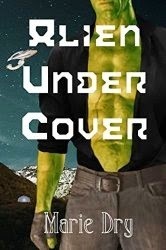 In a bleak and apocalyptic future, Julia Benzoni flees the violence-saturated world of her mafia family to build a peaceful life in a No Name Town, Montana. Now, while civilization disintegrates into anarchy around her and evil men prey on the innocent, she’s pursued by an alien, whose warrior life thrusts her back into the world where might makes right and violence is the order of the day. Torn, she now has to choose between her need to distance herself from war and violence and the alien warrior who holds her heart.You can purchase Alien Mine from the following stores:
Amazon.com | Barnes & Noble | Smashwords
Black Opal Books | Kobo Books | All Romance Ebooks
Marie Dry on the web:
Facebook Website Twitter
Marie is a proud member of ROSA, Romance Writers Organisation of South Africa.
MARIE DRY’S EDITING JOURNEY
I tried to think about this brilliant craft blog that would wow everyone and have writers talk about it for weeks afterwards, but I think I may have been over confident. All that came to mind to do was something about editing and I became almost panicky trying to write something fresh and interesting. There are so many good craft posts so I will talk Instead about my journey and where and how I learned and are still learning to edit my work and my CP’s as well.
Somewhere in my life I must have done something really well and was rewarded with the best critique partner a person can imagine. She suggested we take the same courses so that we can grow at more or less the same rate and critique each other’s work. I would suggest this to every writer and their critique partners.
Cassandra L Shaw (my CP) introduced me to savvy authors and that really put me on the right path. I did many of their short courses and they had something tailor made for me at every stage of my writing journey. In 2010 Liz Pelletier presented a three month editing course which both Cassandra and I enrolled for. At the time I still thought checking spelling and grammar was the major part of the editing process. I changed the story structure a bit but mostly I had no clue on how to edit a rough draft into a polished manuscript. With Liz I learned how to check the pacing, to ruthlessly cut out any sentences, paragraphs or chapters that does not serve a purpose. I will never forget we had a Webinar with Liz and she looked at my manuscript and cut out huge chunks of it and I was secretly horrified. She was cutting out all the good stuff. The long boring scenes of dialogue (I thought it was witty and insightful at that stage), the endless inner monologue (I thought I had some good inner conflict going there) and what little descriptions I had. I had promised myself from the beginning that I would learn from people like Liz so even though I wanted to put every precious word she cut back, I listened to her and tried to put my story into some kind of three arc structure. I did win one argument though and I was sneaky. Liz taught me that you cannot have too many characters in your story and I was determined to have loads of aliens on tap for future stories. She insisted no more than four. So I parked them in a spaceship orbiting earth. Even though the story arc is planned for three books I am glad for the aliens in the space ship. Eventually I can write a few more stories that are knocking at the back of my head.
The other good thing about this course was that Liz suggested a few good craft books. Up to that point I had read Stephen King’s On Writing and found it really helpful. I bought Secrets of the selling writer by Dwight Swain but I was just not on the right level for it yet. That is a brilliant book and never far from me when I edit. I went ahead and bought the books Liz suggested. The one that stands out for me is Save the Cat by Blake Snyder. It made me aware of the fact that the characters in my story needed different voices. This is the first time I really thought about how you would practically manage that. I had this horror of all my characters speaking English with a strong South African accent. Giving my characters different sounding voices is something I struggle with in every book, but being made aware of this helped me take a huge step forward with my writing. Another book that helped me tremendously wais Self Editing for Fiction Writers by Renni Browne and Dave KIng. It pointed out all the rookie mistakes I made and put me on the right road.
You have to excuse me for raving about the next person that crossed my writing path. Once again Cassandra suggested I do course at WriterU and she specifically mentioned Mary Buckham, who is just amazing and if you ever can take any of her classes jump at the chance. And if you don’t have her craft books on your shelve you have a space there that needs filling. She self published some of her craft books and it was picked up by a publisher so it might be withdrawn from the market for a little while, until the publishers bring out the new versions. I cannot edit without her Active Settings book next to me. It’s like my security blanket. I tend to be very sparse with descriptions. The first thing the editor at Black Opal Books pointed out to me was that my alien didn’t have any clothes on.
Doing the active setting course with Mary showed me that I can do descriptions that serve a purpose in my story. By the way Mary write great fiction as well and her latest book was released this month. The first course I took with her was about the twelve steps to intimacy. I am keeping my fingers crossed that will be one of the first books released. It is a must for every romance writer. It saved me from writing damp panties and peaking nipples the moment the hero and heroine met.
I will continue this blog next week and I’ll talk about Lori Wilde, Margie Lawson and a few other craft books and what I have learned. Also about the importance of body language for dialogue tags and few other things.
Marie Dry's latest release...
In a bleak and apocalyptic future, Julia Benzoni flees the violence-saturated world of her mafia family to build a peaceful life in a No Name Town, Montana. Now, while civilization disintegrates into anarchy around her and evil men prey on the innocent, she’s pursued by an alien, whose warrior life thrusts her back into the world where might makes right and violence is the order of the day. Torn, she now has to choose between her need to distance herself from war and violence and the alien warrior who holds her heart.You can purchase Alien Mine from the following stores:Amazon.com | Barnes & Noble | Smashwords
Black Opal Books | Kobo Books | All Romance Ebooks


