Pamela Q. Fernandes's Blog, page 12
October 5, 2020
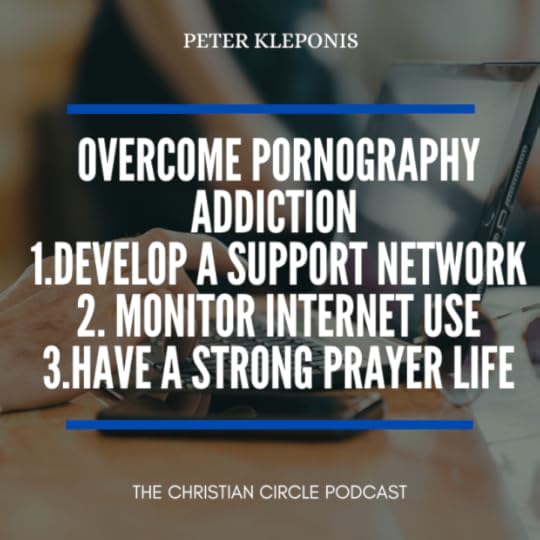
67 How to Overcome An Addiction to Porn by Dr. Peter Kleponis
No where do I see more damage done by pornography than in marriage.
Dr. Peter Kleponis
Who Is Peter Kleponis?
 Dr. Peter Kleponis
Peter C. Kleponis, Ph.D. is a Licensed Clinical Therapist and Assistant Director of Comprehensive Counseling Services in Conshohocken, Pennsylvania.
Dr. Kleponis has over 20 years of professional experience working with individuals, couples, families, and organizations. He specializes in marriage & family therapy, pastoral counseling, resolving anger, men’s issues, and pornography addiction recovery. You can find out more about him at https://www.peterkleponis.com/. There’s also more information about his programs at https://integrityrestored.com/
How to Overcome An Addiction to Porn?
PQF · 67 How to Overcome The Addiction to Porn by Dr. Peter Kleponis
In this episode, Pamela Q. Fernandes talks to Dr. Peter Kleponis about overcoming an addiction to pornography. He talks about:
i. What are the signs that someone is addicted to pornography and why is it a problem?
ii. How does it affect relationships and marriages?
iii. What steps can someone take to overcoming this addiction?
iv. What to do if someone falls back into this…
Tips to Overcome This Battle
I found Peter via his article on National Catholic Register. All the experts were giving their advice. I love how Peter says our first tendency is to pray something away whereas he suggests you invite God into your sin.
He also explains how we can talk to our children and teenagers and prevent them from falling into this habit. Peter explains the steps and how everyone, including engaged couples and married people can talk about this grave addiction to porn.
I appreciate that he’s so forgiving in saying as you battle you will fall and there will be slip ups. Peter does explain how childhood problems can play a role in this addiction and the reason why people use it as an escape. He suggests literature and an inner healing retreat can help, but seeking therapy as the surest step to create a sobriety plan.
ENJOYED THIS PODCAST?
We hope you enjoyed this podcast. Check out our podcasts on St Augustine and Men of Virtue. If you liked this podcast, like us, leave us a comment and share our episodes on social media with those who may benefit from it. If there is a particular saint that you would like to hear about us, tell us and we’ll add him or her to our future episodes.
We are on iheartradio, Stitcher, Itunes, and tunein.com. We’d love to hear from you. If you hear us on Itunes, please rate and review us.
The post 67 How to Overcome An Addiction to Porn by Dr. Peter Kleponis appeared first on PAMELA Q. FERNANDES.


September 14, 2020
5 TIPS FROM MY LATEST BOOK COVER

Today, I’m sharing my next book cover from Melange Publishing/ Satin Romance. This is my second book with this publishing house. My previous one was for a competition and the book was Under A Scottish Sky. Now that I’m releasing my gorgeous cover for the next book with this house, here are 7 tips I learned from my latest book cover.
5 TIPS FROM MY LATEST BOOK COVER
Creating a book cover is like baking a cake. You have the ingredients on the table but that doesn’t make the cake. Any baker worth her salt will tell you, that the right ingredients with the right mixing and folding will make an excellent, airy, fluffy cake. So here are my ingredients/tips for a good book cover.
1. Working with your Cover Designer
I’ve realized with every successive book cover, that you need to work with your book designer. Fortunately, for the publishing houses I work with, many invest in a professional book cover designer. This person doesn’t know anything about your book. They haven’t read it and they don’t know your characters. For many houses, often the book cover is ready before or even while the edits are being made.
Right now I’m doing the edits for FIND ME IN THE SNOW. Yet, I gave my book cover designer, Ashley Byland from Redbird Designs, all the information that was necessary to create this cover. So, when she sent me a first draft of this cover, I was in love with it. There were very little changes to make and the result was spectacular.
What do I mean by all the information? Read on.
2. Theme
I knew this was a romantic suspense. Light or dark. I knew this was going to be dark. The story involves murder and secrets. This is not a sweet happy romance like STARTING OVER. So, I wrote down in my cover sheet about the theme.
The other central theme, was SNOW. Snow is not just in the title but snow is essential to the story. Its integral as things unfold. Basically, the snow, in many ways takes on personification as it becomes a character and features from the beginning to the end. Personally, I love how Ashley actually captures the snow and the snowy feel of the book. It nails down that part of the brief perfectly.
Here’s what I wrote on my art sheet: Snowy background, Connecticut town, forest and snow.
3. Images
TIP 3 from my latest book cover. Since FIND ME IN THE SNOW is a romantic suspense, I was sure I didn’t want any couples on the front. Just, my central female protagonist who goes out and saves the guy instead of vice versa. I wanted a single female in the snow.
Here’s what I wrote: I actually wrote this “I’d prefer to focus on having a single female on the cover! Female Characteristics: Winter clothes, Portuguese woman, tanned, long blue black hair, petite. “

4. FONT
A lot of us don’t think about this much as the cover designer picks these and decides what’s best with your book based on comp titles. However, I’d seen my comp titles by Linda Howard and JD Robb aka Nora Roberts. There were things I liked and things I didn’t like.
I thought back to what is the deciding factor for me when I’m at the book store. If I have two books similarly priced at the store, I realized that the font influences my purchase. And I decided my font, the script and way I’d liked to do the font style.
Here’s what I wrote on my art sheet: Snow with the back of a woman, gold loopy script. Idea only below… and I pasted a cover I had done with some free images and the font I liked.

5. Back Matter & Front Matter
The front matter usually includes a tagline and the front matter includes the blurb. You can’t say how its going to look unless its on the cover.
My blurb:
When Althea meets Morgan Hunter at Muldoon’s pub for the first time, she thinks he’s a handsome, ego tripping, prissy-pants executive. She quickly rebuffs him only to find him thundering at her in the operation theater, the very next day. He’s dogged in his censure of her, but not immune to her allure. Through a snowy December Morgan courts Althea and wins her heart but not her trust.
When she travels with him at his request for Christmas to his home in Finesse, a tumble in the snow leads to the discovery of Morgan’s missing ex -girlfriend. Dead. Morgan pushes Althea away and she doesn’t understand his reasons. Althea returns to build the new rural clinic in Finesse. She discovers the truth about Morgan’s heritage, the murdered ex-girlfriend and the secrets about the Hunter clan. Can she save the man she loved from going to prison?
That’s a lot of words!


That’s the before and after version after we just made changes so the back matter wouldn’t appear so packed. It’s a subtle difference, but you can tell with the white space, it’s easier to read. The rest of the cover was just fantastic! Ashley did the revision real quick, because the cover was so perfect to begin with.
It takes thinking
My biggest of the tips from my latest book cover is that you have to start imagining your covers while you write the book. Don’t just rush this and get it ready once the art sheet is sent to you. Themes and images should be part of your vision board even as you write. Carry the same vision for your covers. I know lots of people who have covers that they don’t like even from publishing houses. I know I had those too.
I’ve realized that by virtually handing all the information exactly what you want and how you want it, you can get a very good cover. No cover designer can read your mind. Show them your vision and they will reciprocate.
In the meantime, we’re kicking off a giveaway until launch day. Leave a comment on what makes snow romantic on my Facebook page to enter a raffle draw.
How about you? Have any tips to share for book covers? Let me know.
The post 5 TIPS FROM MY LATEST BOOK COVER appeared first on PAMELA Q. FERNANDES.
September 1, 2020
66 The Power of Praise
I’m in awe of the the fact, that God holds me into being.
Lyn Mettler
Who is Lyn Mettler?
 Lyn Mettler
Lynn Mettler is a 30+ year nonbeliever who never would have dreamed she’d be looking at herself as a Catholic and passionately so! All she can say is “never say never.” I’ve learned that again and again!
She’s a wife and mother of two school-age boys, who lives in the lovely little village of Zionsville near Indianapolis. Lynn describes herself a Butler Bulldog who writes about travel for many national media outlets and shows others how to fly their families almost entirely free, we do on, on her blog, www.gototravelgal.com.
Lynn came to Catholicism in 2011 after being married to a nonpracticing Catholic for 10+ years. She had never had a shred of interest — and in fact was averse to it — until she began to feel a faint desire to go to the local Catholic church. It only grew from there! You can find out more about her at her website.
The Power of Praise
PQF · 66 The Power of Praise
In this episode, we talk to Lyn Mettler about the importance of praising God. She talks about:
i. What does it mean to praise God? How is it different from thanksgiving?
ii. Why does He want us to praise Him?
iii. What power is there in praising God?
iv. What steps can we take to praise God in our a) our prayer life and b) in our everyday life?
Praise Always
I asked Lyn to talk to us after I read her post on praise. Lyn does explain how praise puts us in a right position with God. I love how she mentions, that despite how hard it is that we should praise God even during the difficult times. Simply because God has a plan and she mentions the surrender novena to simply offer everything up to God. This is a beautiful novena. Its an act of surrender where you give everything to God in trust, knowing that He will make everything work in due time.
She also encourages us to offer up our day to the Lord and thank God for all the “coincidences.” Keep a gratitude journal and document all the miracles in your life. At the end of the day, examine your day for all the good and look to the future for new opportunities to praise Him. She also talks about the book that her friend recommended and that I also suggest you read.
ENJOYED THIS PODCAST?
We hope you enjoyed this podcast. Check out our podcasts on Adoration and Making Time for Prayer.If you liked this podcast, like us, leave us a comment and share our episodes on social media with those who may benefit from it. If there is a particular saint that you would like to hear about us, tell us and we’ll add him or her to our future episodes.
We are on iheartradio, Stitcher, Itunes, and tunein.com. We’d love to hear from you. If you hear us on Itunes, please rate and review us.
The post 66 The Power of Praise appeared first on PAMELA Q. FERNANDES.
August 30, 2020
10 Steps to Better Doctor Patient Conversations

This week we were asked to attend a training session on communications to improve doctor patient conversations. And so as I was taking notes, I decided to create a post about it. A lot of these tips are for both; the outpatient and inpatient but they’re more necessary in the inpatient setting since basic principles of conversation and communication are basically ignored.
10 Steps to Better Doctor Patient Conversations
Here are ten steps to better doctor-patient conversations.
1. Start with Empathy
Come to the table with empathy. Everybody is battling something. They all have their crosses to bear and obstacles to overcome. Think of where people are coming from. They have a lot on their plate as do you.
Never:
assume that their matters are trivial while yours are all important. Its easy to pull rank and feel rank in a hospital setting, especially if you’re at the top of the food chain. Don’t give in to the temptation to look down but look sideways. There’s this beautiful video from Cleveland clinic that I have shared widely. You must have already seen it but here it is.
2. Pay Attention
The second step is in my 10 steps to better doctor patient conversations is pay attention. You must have always heard advice to nod and repeat the last word of a sentence when a person is talking so it looks like you’re paying attention.
People!
You don’t have to fake paying attention if you’re actually paying attention.
Celeste Headlee
Follow the conversation, even if you’re falling off the cliff.
3. Be In The Moment
While you’re talking with a patient or their family member, don’t think about the CT scan for the previous patient, or how your Chief wants you make the numbers or whether they did the booking for this weekend’s date night.
Stay present in the moment.
Stop multitasking, fiddling with your phone, reading the EMR, and all of that. Be fully present with all your faculties.
4. Don’t listen to respond
Stephen Covey, author of The Seven Habits of Highly Effective People said that,’Most people do not listen with the intent to understand; they listen with the intent to reply.‘
Hold your horses. Don’t wait to interject with your response. Often patients are asking askew, read between the lines. Sometimes they’re not even asking. They’re just telling. You don’t have to wait for them to breathe so that you give them your two bits.
5. Don’t Repeat Yourself
If the patient doesn’t understand something the common strategy I’ve seen among doctors is to repeat what they’re saying but with a more forceful tone and a higher decibel. Have you seen this happen in doctor patient conversations?
I have and its embarrassing.
We’re pressuring and scaring the patient to understand and make them cower into understanding. Who are we fooling? Instead, try another way, reset, and ask questions, break it down, and start all over if your have to. And for goodness sake, don’t pontificate. Nobody likes it.
6. Ask open ended questions
Journalists are supposed to ask who what, where, when, why? Ask these instead of leading questions. Let them describe what they’re feeling for you. Yes and no answers might be great to help you rule out your differential but let the patient diagnose their condition for you by giving you a full picture.
7. Assume everyone knows something
People are not idiots. Everyone is a subject matter expert on something. In every encounter with a patient, look for something to learn. That gives you a healthy measure of respect for the person sitting in front of you or lying in bed even though they’re sick. Assume everyone knows something.
8. Don’t Equate Experiences
Do not say to patients, “you understand.” Even if you have had the very same breast cancer yourself, or if you’ve had a family member who went through the exact same experience, do not say that you understand. Because you don’t. Everybody is different and their experiences are different. Don’t boast and say how you handled something better. This is their time. Let them have it.
9. Be Selfless
This is not about you. I’ve seen many doctor patient conversations. And it’s strange, how sometimes physicians can make an entire conversation about themselves while a patient is telling their story, even in the IPD when the patient is sick and in bed.
Put your your ego to sleep and step aside. Get out of your own head. Stop being superficial and get to know this person. This is not your drama. Be selfless and focus on the patient and their story. Give them the attention they deserve.
10. Listen, really listen
I know, listening takes time and energy. You’d rather get to the next patient on the list, see that consult you got beeped about, review the labs, answer all these messages, write those prescriptions, answer those emails, deal with that mountain of paper work if only this patient would stop talking. They will at some point and they will sooner, if you’re really listening.
Listen.
Actively listen. It takes work but listen. This will only be possible if you’re really interested in other people.
Your Turn
Do you have some recommendations for better doctor patient conversations. Let me know. Also, check out some of our other posts on staying creative in medicine.
The post 10 Steps to Better Doctor Patient Conversations appeared first on PAMELA Q. FERNANDES.
August 14, 2020
Featured on Speak Up Talk Radio
I’m so happy to share my interview on Speak up Talk radio with Pat Rullo. When I first spoke with Pat, I was a bit tense. She was so prompt and everything just fell in to place.
Who is Pat Rullo?
 Pat Rullo
Patricia (Pat) J. Rullo is an author, national radio talk show host, and a sought after speaker. In 2012, Pat teamed up with Salem Media Group to produce a radio talk show based on her book – Speak Up and Stay Alive, the patient advocate hospital survival guide. The radio program became a broadcast success through Salem and other stations across the United States, including iHeart Radio and over 5,000 stations via XDS Cumulus Satellite.
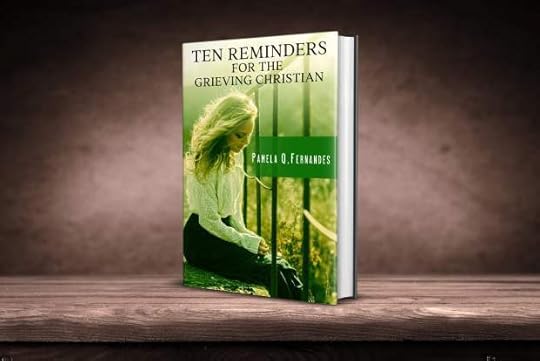
Ten Reminders for the Grieving Christian
My book has only been released a week and already I can feel the ripples of effect. I wrote Ten Reminders for the Grieving Christian for those experiencing the aftermath of this winter of grief. I’m so happy that many people find comfort in the words written there.
Pat Rullo was wonderful host and so nice about settling my nerves before, during and after the podcast. It was so refreshing to not have to second guess her questions and from there everything just flowed naturally.
I just want to encourage everyone through the podcast and the book. There’s no perfect answer and there’s no perfect book, except your own Bible (read more on that).
For those who want to listen to it at twice the speed, there’s a YT version.
Speak Up Talk Radio
So hop over and listen to the show. Let me know what you think. I love to hear feedback. Speak Up Talk Radio has many other episodes that you’d probably like to listen to. Happy Listening!
The post Featured on Speak Up Talk Radio appeared first on PAMELA Q. FERNANDES.
August 11, 2020
65 How To Get Satan Out Of Your Mind?
If you are battling sins of the flesh, how about you go to Adoration and stare at the flesh of Jesus to get Satan out of your mind.
Ray Sullivan

Who is Ray Sullivan?
 Ray Sullivan
Born in Texas in 1951, Ray Sullivan was raised on a ranch. He went to college on a math scholarship. He played high school and semi- pro baseball. Ray worked in Mission Control at NASA in Houston for the Flight Surgeons, as well as a project engineer on the Spacelab Program. Ray retired from the USAF Civil Service in 2013. After that he taught math in a
Catholic school for 3 years. Finally, he tutors math online and in person. This September, he will be teaching math classes at a Friday only school for home schoolers. He’s married and has two grown up children, and two dogs. You can find out more about him at Catholic101.com.
How To Get Satan Out Of Your Mind?
PQF · 65 How To Get Satan Out Of Your Mind?
In this episode, we talk to Ray Sullivan about how to get Satan out of your mind. He talks about:
i. What are the areas the devil gets in our head?
ii. Why do we need to keep the devil out?
iii. What are the practical solutions to keep the devil out of our minds?
iv. Some tips to get spiritually stronger?
Keep Your Mind Free
I read Ray’s article on How to keep the devil out of your head. It really needs to dawn on us that we are fighting principalities of darkness. (Eph 6:12)
Ray has very simple steps to battling things in our mind because he blieves that once we imagine them, they come into our memory and emotions, our conscience and finally our will.
Our mind is a battle ground. Here are some of his solutions:
Pray: don’t we just all know this.Ask God to supplement the virtues lacking in your life. Attend mass and confession.Spend time in Adoration. Contemplate on the Passion of Christ. I love when Ray says, there’s no time in heaven. Even now we can console Jesus in His agony. Meditate on the Rosary and ask Mary as a mother to help you. Talk to someone, a spiritual director or a friend who’s been in the same situation. If you backslide, double down. Never give up. It takes years. Allow God’s will in your life.
I loved how matter of the fact Ray is about everything and how honest he is about his own personal struggles. It’s refreshing to hear someone who admits they’re frail and needs God’s grace. His steps to get Satan out of your mind have been discussed in many of our episodes.
ENJOYED THIS PODCAST?
We hope you enjoyed this podcast. Check out our podcasts on St Augustine and Making Time for Prayer.If you liked this podcast, like us, leave us a comment and share our episodes on social media with those who may benefit from it. If there is a particular saint that you would like to hear about us, tell us and we’ll add him or her to our future episodes.
We are on iheartradio, Stitcher, Itunes, and tunein.com. We’d love to hear from you. If you hear us on Itunes, please rate and review us.
The post 65 How To Get Satan Out Of Your Mind? appeared first on PAMELA Q. FERNANDES.
August 1, 2020
Book Launch: In Memory of My Father
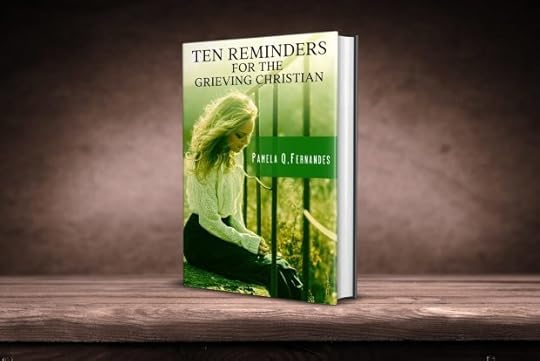
Ten Reminders for the Grieving Christian is out today, August 1. This is also the date of my dad’s death anniversary. And so this book birthday is in memoriam of my father, Paul Richards Fernandes.
In my life everything is now divided into before dad and after dad. Like BC and AD. Whenever I talk with my family, it’s always what life was before he died and then after. It was such a big loss that I can’t comprehend how I’ve come this far. Everyone knew my dad as Richard. He was the most vivacious man, with a perpetual smile and a naughty gleam in his eye.
He was the giant umbrella under which we all took shelter. And when he was gone, it was like losing a home, losing that shelter, that mantle of love. It still hurts. Yet, as I said in his eulogy, I know of God’s love because I experienced my father’s love. I can trust my father in heaven, because I could absolutely trust my father on earth.
The Book
I started writing soon after as a way of keeping myself tethered to Jesus. And I remember when I started, I hated everything. I was so lost until I went back to His word. I actually wrote an article about this that got published last week about how the Bible was my best book on grief.
I scribbled and wrote a few things but its been years since I could get clarity on my experience. Even last year, I tried to finish this book and was not ready. Somewhere in June and July of 2019, I struggled and couldn’t get through it without the deluge of tears. It was painful.
Come 2020, as I reflected on several personal losses, Adoration became my daily bread and my meditation strengthened me. Through Lent, I started to reflect and write. I streamlined, edited and proof-read the book. Still I had doubts. I reached out to an author friend Adele McgGill who was on our podcast and asked her to read my book. Was it worth it? Would it help people who like me were going through so much pain.

Amazon
B&N
Kobo
Apple Books
Ten Reminders For The Grieving Christian
The thing is I read every book on grief. I even compiled a list. That’s how far I went searching for answers. Where did I find them? In my Bible. And Peter’s words from John 6:68 echoed in my heart, “Lord, to whom can we go? You have the words of eternal life.”
Ten Reminders is not the best book on Grief, it simply points you to the one that is. Your Bible. Grief is a lonesome journey. It touches all of us and how we deal with it shapes our future. God has brought some of my greatest ministerial work and my Apostolate through my father’s death.
It doesn’t make things perfect. I still grapple with questions why me? Why him? Why, why, why? If, if, if? The truth is that the world is passing and all of us have to understand this world is a ship not our home. If you are grieving then I want you to know that you will never be the same again. The loss is always there. However, with Jesus what hurts today will hurt less tomorrow. And with Jesus there is life.
Dear Dad

I know you’re in heaven. And I wonder if you can see me. See my success in the small things. Are you proud? I wish there was more time. Even though I’ve said it many times, I wish I had said it more: how much I love you. Thank you for everything you did for us, for me. Thank you for fulfilling all our dreams by sacrificing your own. But most of all thank you for simply loving me…
Daddy I miss you!
The post Book Launch: In Memory of My Father appeared first on PAMELA Q. FERNANDES.
July 22, 2020
The Best Books for Grieving

Since Ten Reminders for the Grieving Christian will be out on August 1, I’ve drawn up a list of similar books. Here are some of the best books for those who are grieving. I’ve read them and feel like they somehow helped me go through this long period of pain. They helped me understand that I’m not alone on this journey.
The Best Books on Grieving
Here’s my list of books on grieving. There are definitely others out there and there are many more based on the loss but these are broad and helped me so I listed them.
1. A GRIEF OBSERVED
Written after his wife’s tragic death as a way of surviving the “mad midnight moment,” A Grief Observed is C.S. Lewis’s honest reflection on the fundamental issues of life, death, and faith in the midst of loss. This work contains his concise, genuine reflections on that period: “Nothing will shake a man — or at any rate a man like me — out of his merely verbal thinking and his merely notional beliefs. He has to be knocked silly before he comes to his senses. Only torture will bring out the truth. Only under torture does he discover it himself.” This is a beautiful and unflinchingly honest record of how even a stalwart believer can lose all sense of meaning in the universe, and how he can gradually regain his bearings.
2. The Year of Magical Thinking
From one of America’s iconic writers, a stunning book of electric honesty and passion. Joan Didion explores an intensely personal yet universal experience: a portrait of a marriage–and a life, in good times and bad–that will speak to anyone who has ever loved a husband or wife or child.
3. Time Lived Without Its Flow
‘I work to earth my heart.’
Time Lived, Without Its Flow is an astonishing, unflinching essay on the nature of grief from critically acclaimed poet Denise Riley. From the horrific experience of maternal grief Riley wrote her lauded collection Say Something Back, a modern classic of British poetry. This essay is a companion piece to that work, looking at the way time stops when we lose someone suddenly from our lives. A book of two discrete halves, the first half is formed of diary-like entries written by Riley after the news of her son’s death, the entries building to paint a live portrait of loss. The second half is a ruminative post script written some years later with Riley looking back at the experience philosophically and attempting to map through it a literature of consolation. Written in precise and exacting prose, with remarkable insight and grace this book will form kind counsel to all those living on in the wake of grief. A modern-day counterpart to C. S. Lewis’s A Grief Observed.
4. Tuesdays with Morrie
Mitch Albom had a second chance. He rediscovered Morrie, his mentor in the last months of the older man’s life. Knowing he was dying, Morrie visited with Mitch in his study every Tuesday, just as they used to back in college. Their rekindled relationship turned into one final “class”: lessons in how to live.
Tuesdays with Morrie is a magical chronicle of their time together, through which Mitch shares Morrie’s lasting gift with the world.
5. When Breath Becomes Air
At the age of thirty-six, on the verge of completing a decade’s worth of training as a neurosurgeon, Paul Kalanithi was diagnosed with stage IV lung cancer. One day he was a doctor treating the dying, and the next he was a patient struggling to live. And just like that, the future he and his wife had imagined evaporated. When Breath Becomes Air chronicles Kalanithi’s transformation from a naïve medical student “possessed,” as he wrote, “by the question of what, given that all organisms die, makes a virtuous and meaningful life” into a neurosurgeon at Stanford working in the brain, the most critical place for human identity, and finally into a patient and new father confronting his own mortality.
What makes life worth living in the face of death? These are some of the questions Kalanithi wrestles with in this profoundly moving, exquisitely observed memoir.
6. Letter to a Grieving Heart
Go on and cry a river. Let it rain down like tears from heaven. And let it cleanse and carry you to the arms of those who will be strong for you.
After losing his beloved fiancé in a tragic car accident, musician and author Billy Sprague understands the loneliness, heartbreak, and pain of losing a loved one. And he wants to help. Stepping out of the shadow of his own loss, Billy penned these heartfelt insights to encourage you as you walk through your own valley of grief and heartache.
Let Billy’s comforting words lift you up and point you to the ultimate mender of broken hearts—Jesus.
7. It’s OK That You’re Not OK
When a painful loss or life-shattering event upends your world, here is the first thing to know: there is nothing wrong with grief. “Grief is simply love in its most wild and painful form,” says Megan Devine. “It is a natural and sane response to loss.”
So, why does our culture treat grief like a disease to be cured as quickly as possible?
In It’s OK That You’re Not OK, Megan Devine offers a profound new approach to both the experience of grief and the way we try to help others who have endured tragedy. Having experienced grief from both sides—as both a therapist and as a woman who witnessed the accidental drowning of her beloved partner—Megan writes with deep insight about the unspoken truths of loss, love, and healing. She debunks the culturally prescribed goal of returning to a normal, “happy” life, replacing it with a far healthier middle path, one that invites us to build a life alongside grief rather than seeking to overcome it.
8. I Wasn’t Ready to Say Goodbye
The grief book that just “gets it.” Whether you’re grieving the sudden loss of a loved one or helping someone else through their grief, I Wasn’t Ready to Say Goodbye offers a comforting hand to help guide you through the grieving process, from the first few weeks to the longer-term emotional and physical effects. It then reveals some of the myths of the grieving process and what really happens as you navigate through the pain.
Grieving the loss of a child, partner, parent, sibling, friend, or petThe physical and emotional effects of griefNavigating difficult days such as holidays, anniversaries, and birthdaysHelping children cope with griefUnderstanding the grief recovery process
Written by two authors who have experienced it firsthand, this book has offered solace to over one-hundred fifty-thousand people, ranging from seniors to teenagers and from the newly bereaved to those who lost a loved one years ago.
An exploration of unexpected death and its role in the cycle of life, I Wasn’t Ready to Say Goodbye provides those people coping with grief with a rock-steady anchor from which to weather the storm of pain and begin to rebuild their lives.
9. Walking with God through Pain and Suffering
The question of why God would allow pain and suffering in the world has vexed believers and nonbelievers for millennia. Timothy Keller, whose books have sold millions of copies to both religious and secular readers, takes on this enduring issue and shows that there is meaning and reason behind our pain and suffering, making a forceful and ground-breaking case that this essential part of the human experience can be overcome only by understanding our relationship with God.
As the pastor of Redeemer Presbyterian Church in Manhattan, Timothy Keller is known for his unique insights into religion and culture. Keller’s series of books has guided countless readers in their spiritual journeys. Walking with God through Pain and Suffering uses biblical wisdom and personal stories of overcoming adversity to bring a much-needed, fresh viewpoint to this important issue.
10. From Grief to Grace
Grief touches all of our lives, but it does not have to paralyze us with fear or inaction. God allows suffering because He knows how powerful it can be to our spiritual lives and to helping us fully embrace His love and mercy. In this insightful and practical book, you’ll learn how to live a life of redemptive suffering that will draw you through grief into a state of tenacity, meaning, holiness, and joy.
Author Jeannie Ewing is no stranger to suffering. Her family has long struggled with bipolar disorder and depression, and her baby daughter was born with a rare genetic disorder that caused her bones to prematurely fuse together. Despite the many layers of sadness, loss, confusion, and anger, Jeannie responded to Gods calling and transformed her life into one with profound purpose and joy.
Combining her training in psychology and counseling with real-life examples, Jeannie will show you that there is much life to be lived in the midst of loss, and that all things even the most painful life experiences are working together for a greater good.
11. Ten Reminders for the Grieving Christian

Are you a grieving Christian that has been deep in the valley of darkness?Are you questioning your own faith as you mourn the loss of a loved on?Have you been wondering where to next? Why has God done this to me? How could he have taken my loved one away?
If this is you, then Ten Reminders for the Grieving Christian is for you.
In this book, Dr. Pamela Q. Fernandes talks about how you can remain in God’s love and make it through this winter of grief.
As a follow up book in her Ten Reminder Series, she talks about her own struggles with her faith as she grieved the loss of her father, Richard Fernandes. She explains how long and how far she’s come through the mind-numbing pain of grief. By God’s grace, she wrote a book to help others on their journey knowing fully well that you can never completely move on but heal only by trusting Jesus.
Are you a grieving Christian looking for answers? Then this book might help you.
Your Recommendations?
Do you have any best books that you recommend while grieving? I’d be happy to hear what literature has helped you.

The post The Best Books for Grieving appeared first on PAMELA Q. FERNANDES.
July 12, 2020
Preorder Ten Reminders For The Grieving Christian
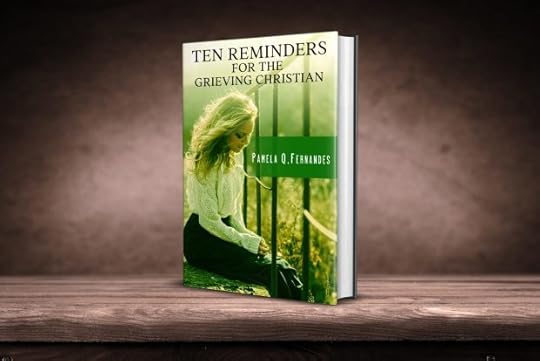 Ten Reminders For The Grieving Christian
Ten Reminders For The Grieving Christian: Available for Preoder
After four years, I’ve finally managed to complete Ten Reminders for the Grieving Christian. Finally!!!!
Can I just say that even as I read my last edits and proofs, it was incredibly painful. That being said, I’m so glad to finally share this book. Ten Reminders For The Grieving Christian is available for preorder until August 1,2020 which will be my book launch day!
Amazon
B & N
Kobo
Apple
The Origins
As most of my readers are aware, I always release my Christian non-fiction books around the first week of August. This book is close to my heart since I’m releasing it on August 1, 2020 on my dad’s death anniversary. Since he’s been gone, this book has been on my mind. I tried to finish it last year but couldn’t. It was still too painful to write it.
This year as I mourned other failures and personal losses, I picked up this project again. Through Lent, I managed to write and edit this book. It’s funny how the tiny brushstrokes of God can form the masterpiece of our lives. I see God’s hand in everything. Even in the loss of my father, who in many ways was the love of my life. I don’t know why what happened, happened. I know that God has a plan. For some reason, I found I could write this in 2020 and not feel as broken as I once did. I don’t know the why but I’ve written down the how.
I’ve seen God’s providence since dad’s death and I see His designs hidden in the everyday incidents of my life.

Book Blurb
Here’s the book blurb:
-Are you a grieving Christian that has been deep in the valley of darkness?
-Are you questioning your own faith as you mourn the loss of a loved on?
-Have you been wondering where to next? Why has God done this to me? How could he have taken my loved one away? If this is you, then Ten Reminders for the Grieving Christian is for you.
In this book, Dr. Pamela Q. Fernandes talks about how you can remain in God’s love and make it through this winter of grief.
As a follow up book in her Ten Reminder series, she talks about her own struggles with her faith as she grieved the loss of her father, Paul Richard Fernandes. She explains how long and how far she’s come through the mind-numbing pain of grief. By God’s grace, she wrote a book to help others on their journey knowing fully well that you can never completely move on but heal only by trusting Jesus.
Launch Day
I’m still working on making the trailer and then organizing interviews. So for August 1, 2020, as we launch, I’ll be sharing the events on my newsletter and to the Facebook page. I might do an AMA, I’m not sure but I’d like to see enough feedback about whether I should do one. There will be a giveaway and some interviews on my YT channel.
For now, I’m all focused on launch day. I thank God, my family and all my readers for having come so far with this book.
Talk Soon,
Xoxo
The post Preorder Ten Reminders For The Grieving Christian appeared first on PAMELA Q. FERNANDES.
July 4, 2020
Publishing in Academic Medicine

As a freelance medical writer for over a decade now, I’ve been asked hundreds of times to write, edit and publish academic work. And always there are a few nutty queries. Queries that make me bang my head on the wall. So, here’s my advice on publishing in academic medicine. I hope it clears a few myths.
1. Know The Study
For people who are doing the research, they know what they’re doing. They’ve already figured out the type of project and where it’s going to be submitted. However, for many folks who are using “other” people’s data, they have no idea what they’re publishing. Is this a clinical trial or a case report? Know the difference between a cross-sectional study, case, report, cohort study and clinical trial. The writing guidelines are different for all. Know what your project is.
2. Writing Takes Time
I once had a request for a systematic review in 10 days. Ten days!!!!