Amy Susan Crohn's Blog, page 5
December 17, 2013
Venus Envy
Ah, vanity thy name is woman (and man). When we are coping with chronic illness we worry about how we look. Yes, it's true. When I was being treated with aggressive chemotherapy for Stage 4B cancer and ended up looking like a bald-headed ogre, I vowed that I wasn't going to die looking like that. Maybe that was one of the reasons I survived - stubborn as I was.
I also had Cushings Syndrome from the vast amount of steroids used to save my life. Pumped up to twice my natural size (ouch, that hurt) with a humped back, I was aghast when I looked in the mirror.
Even today, dealing with Lupus, fibromyalgia and the never-ending affects of chemotherapy, I want to look my best but my clothes must not hurt. They can't be binding or scratchy. No wool sweaters for me because just like the liver or heart our skin is an organ and it gets inflamed just like other parts of my body. Sometimes my bed sheets hurt!
And then there's the worsening eyesight due to medications or my illnesses and never-ending adjustments to my eyeglass prescription. The lenses are quite thick now and will soon get even thicker. Add worry lines due to how I must care for myself each day and, damn, I sure ain't Venus de Milo, the historical statue that represents beauty in many cultures.
According to the statue's story, however, scholars are not sure if beauty was the sculptor's intent and the fact that she was discovered in 100 BC minus her arms shows frailty and flaw - just like us!
I don't like hiding myself away on days I feel awful; when the dark circles under my eyes or my unkempt hair keep me away from others. There was a time when I wore the messy, sick me proudly because, regardless of how I looked, I was alive. But now I am less sure since the years have passed and I am simply aging.
There are virtually no pictures of me when I was at my worst - when, in my most swollen state, my sister said I looked like the Elephant Man and my brother deemed me a Hawaian Princess. (Most of my swelling was from the chest up so my head and shoulders were large.) I still hate pictures of myself because I see the saggy skin on my neck where the tracheotomy was performed, I see the scars and imperfections and I think most of my chronically ill friends do, too.
But our beauty is not dependent on our outward appearances. Thanks to the internet, I regularly communicate with others with crippling and disfiguring auto-immune disorders or disease. And they are quite extraordinarily beautiful, these mostly faceless friends of mine. Their determination and grit during hard times is gorgeous. And if life is like a box of chocolates, as Forrest Gump famously said, we never know what we're going to get from one day to the next.
 Venus de Milo, The Louvre, Paris, France
I also had Cushings Syndrome from the vast amount of steroids used to save my life. Pumped up to twice my natural size (ouch, that hurt) with a humped back, I was aghast when I looked in the mirror.
Even today, dealing with Lupus, fibromyalgia and the never-ending affects of chemotherapy, I want to look my best but my clothes must not hurt. They can't be binding or scratchy. No wool sweaters for me because just like the liver or heart our skin is an organ and it gets inflamed just like other parts of my body. Sometimes my bed sheets hurt!
And then there's the worsening eyesight due to medications or my illnesses and never-ending adjustments to my eyeglass prescription. The lenses are quite thick now and will soon get even thicker. Add worry lines due to how I must care for myself each day and, damn, I sure ain't Venus de Milo, the historical statue that represents beauty in many cultures.
According to the statue's story, however, scholars are not sure if beauty was the sculptor's intent and the fact that she was discovered in 100 BC minus her arms shows frailty and flaw - just like us!
I don't like hiding myself away on days I feel awful; when the dark circles under my eyes or my unkempt hair keep me away from others. There was a time when I wore the messy, sick me proudly because, regardless of how I looked, I was alive. But now I am less sure since the years have passed and I am simply aging.
There are virtually no pictures of me when I was at my worst - when, in my most swollen state, my sister said I looked like the Elephant Man and my brother deemed me a Hawaian Princess. (Most of my swelling was from the chest up so my head and shoulders were large.) I still hate pictures of myself because I see the saggy skin on my neck where the tracheotomy was performed, I see the scars and imperfections and I think most of my chronically ill friends do, too.
But our beauty is not dependent on our outward appearances. Thanks to the internet, I regularly communicate with others with crippling and disfiguring auto-immune disorders or disease. And they are quite extraordinarily beautiful, these mostly faceless friends of mine. Their determination and grit during hard times is gorgeous. And if life is like a box of chocolates, as Forrest Gump famously said, we never know what we're going to get from one day to the next.
 Venus de Milo, The Louvre, Paris, France

December 14, 2013
Rocks for Christmas?
Turns out, we could do worse. While coal as we traditionally know it is dark, ugly and hard, there are as many variations to this rock as there are to individial people. There are actually four types of coal that are broad and beautiful. It can be brilliant or dull; hard or soft; lumpy or smooth. And at Christmas, it can be downright mean if placed in a child's stocking.
My practical joker father once did something quite unwise. One year along with all the gifts my now-deceased brother, Steve, received, he also put lumps of coal in his Christmas stocking. It affected my brother harshly and he often mentioned it throughout his life.
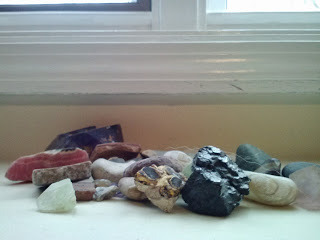
Perhaps, however, as some sort of blunt childhood reversal, he became a collector of rocks, crystals and stones of all types and variations, including coal. I recall walking with him on beaches or among trees and leaves or even on the streets of New York City and he would stoop down as soon as something caught his eye. Some believe that rocks and crystals have healing and, even, spiritual properties. My brother believed this and would gift me with unusual pieces throughout the years.
After his death nearly four months ago, one of the items I selected to keep was a bowl of his rocks. I look at each one, admire it's unique beauty, and see what my brother saw - the glory of nature. Just holding one for awhile or admiring one sitting on my desk or windowsill makes me feel good.
I'm sure it was his inherit artist's eye that could see what others couldn't; their color and style, subtleties that evolved over thousands of years in each particular piece of stone.
Isn't that what we are - subtle yet brilliant pieces of nature's glory? With all our flaws, isn't there still beauty? When we make mistakes we usually create something unexpected. With cataclysmic geographical or personal events come tangible, hold-in-your-hand miracles.
And that's what personal trauma does. Through traumatic events, we find resources and support from friends we didn't know we had. We find good in what we once saw was evil. We, as members of humankind, turn ugly things into useful lessons. Just like the Earth is constantly in flux, so are we - shifting and changing with the events that shape us.
It is a somber Christmas for me this year. But I can sit and sift through my brother's rocks and remember the joy that he left me for eternity in the spirit of the season; in the spirit of love.
My practical joker father once did something quite unwise. One year along with all the gifts my now-deceased brother, Steve, received, he also put lumps of coal in his Christmas stocking. It affected my brother harshly and he often mentioned it throughout his life.
Perhaps, however, as some sort of blunt childhood reversal, he became a collector of rocks, crystals and stones of all types and variations, including coal. I recall walking with him on beaches or among trees and leaves or even on the streets of New York City and he would stoop down as soon as something caught his eye. Some believe that rocks and crystals have healing and, even, spiritual properties. My brother believed this and would gift me with unusual pieces throughout the years.
After his death nearly four months ago, one of the items I selected to keep was a bowl of his rocks. I look at each one, admire it's unique beauty, and see what my brother saw - the glory of nature. Just holding one for awhile or admiring one sitting on my desk or windowsill makes me feel good.
I'm sure it was his inherit artist's eye that could see what others couldn't; their color and style, subtleties that evolved over thousands of years in each particular piece of stone.
Isn't that what we are - subtle yet brilliant pieces of nature's glory? With all our flaws, isn't there still beauty? When we make mistakes we usually create something unexpected. With cataclysmic geographical or personal events come tangible, hold-in-your-hand miracles.
And that's what personal trauma does. Through traumatic events, we find resources and support from friends we didn't know we had. We find good in what we once saw was evil. We, as members of humankind, turn ugly things into useful lessons. Just like the Earth is constantly in flux, so are we - shifting and changing with the events that shape us.
It is a somber Christmas for me this year. But I can sit and sift through my brother's rocks and remember the joy that he left me for eternity in the spirit of the season; in the spirit of love.

November 25, 2013
Finding grace...
A writing hiatus of about three months now has left me with lots to ponder. Most of all, after the suicide of my beloved brother, I seek ways to honor his legacy. Knee-deep in his belongings (after a long red-tape tangle of bureacracy and the move of his lifetime of goods and hundreds of pieces of his artwork to a storage facility near my home), I sort carefully and cautiously. Yet, there are moments when I feel like I am throwing him away, casting his precious memories aside.
This is where I must find the grace to select the items that comfort me and offer the rest of his things to extended family and friends. His art, however, should be shared widely in my opinion as it speaks loudly of a lifetime of growth and raw emotion during a post-WWII era of enlightenment and change. The things we are finding are extraordinary, including photographs of his participation in the Selma to Montgomery, Alabama march in 1965 led by Dr. Martin Luther King alongside his vivid sketches and paintings that he produced for over 50 years. He did lead a colorful life, in more ways than one.
And there is my own battle with illness and trauma where I find myself returning to that dark hole known as post-traumatic stress disorder (PTSD). I've learned that I've carried PTSD signs and symptoms my whole life, most prounounced during my life-threatening battle with stage 4 cancer. In fact, psychiatrist and writer Mark Epstein writes in an article entitled The Trauma of Being Alive in The New York Times that there is also a human condition called "pre-traumatic stress syndrome."
"Trauma is not just the result of major disasters. It does not happen to only some people. An undercurrent of trauma runs through ordinary life, shot through as it is with the poignancy of impermanence. I like to say that if we are not suffering from post-traumatic stress disorder, we are suffering from pre-traumatic stress disorder. There is no way to be alive without being conscious of the potential for disaster. One way or another, death (and its cousins: old age, illness, accidents, separation and loss) hangs over all of us. Nobody is immune. Our world is unstable and unpredictable, and operates, to a great degree and despite incredible scientific advancement, outside our ability to control it." - Mark Epstein
So, I search for "the quality or state of being considerate or thoughtful" as Merriam-Webster offers as one definition of grace. And I try not to leave myself out of the benefits of that grace; to remember that it is a quality that I want and need to process yet another trauma in my life.
Once again, my legs were knocked out from under me on August 24, 2013. Three months later, it is time to accept grace into my life again and carry myself with the energy of my brother's soul. He is my greatest supporter and source of strength. He will carry me back to my work and my life. He will always be in my heart and his talents will be brought more to light through me and my writings and the accomplishments of the generations of family that are already springing forth.
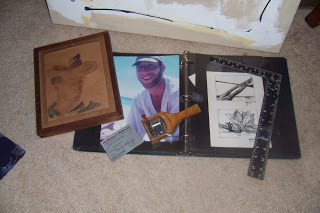
This is where I must find the grace to select the items that comfort me and offer the rest of his things to extended family and friends. His art, however, should be shared widely in my opinion as it speaks loudly of a lifetime of growth and raw emotion during a post-WWII era of enlightenment and change. The things we are finding are extraordinary, including photographs of his participation in the Selma to Montgomery, Alabama march in 1965 led by Dr. Martin Luther King alongside his vivid sketches and paintings that he produced for over 50 years. He did lead a colorful life, in more ways than one.
And there is my own battle with illness and trauma where I find myself returning to that dark hole known as post-traumatic stress disorder (PTSD). I've learned that I've carried PTSD signs and symptoms my whole life, most prounounced during my life-threatening battle with stage 4 cancer. In fact, psychiatrist and writer Mark Epstein writes in an article entitled The Trauma of Being Alive in The New York Times that there is also a human condition called "pre-traumatic stress syndrome."
"Trauma is not just the result of major disasters. It does not happen to only some people. An undercurrent of trauma runs through ordinary life, shot through as it is with the poignancy of impermanence. I like to say that if we are not suffering from post-traumatic stress disorder, we are suffering from pre-traumatic stress disorder. There is no way to be alive without being conscious of the potential for disaster. One way or another, death (and its cousins: old age, illness, accidents, separation and loss) hangs over all of us. Nobody is immune. Our world is unstable and unpredictable, and operates, to a great degree and despite incredible scientific advancement, outside our ability to control it." - Mark Epstein
So, I search for "the quality or state of being considerate or thoughtful" as Merriam-Webster offers as one definition of grace. And I try not to leave myself out of the benefits of that grace; to remember that it is a quality that I want and need to process yet another trauma in my life.
Once again, my legs were knocked out from under me on August 24, 2013. Three months later, it is time to accept grace into my life again and carry myself with the energy of my brother's soul. He is my greatest supporter and source of strength. He will carry me back to my work and my life. He will always be in my heart and his talents will be brought more to light through me and my writings and the accomplishments of the generations of family that are already springing forth.

October 24, 2013
Over My Head
It's that drowning feeling when so many things are coming at your immuno-compromised physical and mental being that you want to shut down, but you don't. You rest. We rest.
Lupus, fibromyalgia, depression, medication side effects, headaches, sore throats, joint pain and brain fog are common among the chronically ill. Doesn't mean we like it. Add cancers, PTSD and new traumatic events and we need to be thrown a lifeline.
I'm grateful that each day someone or something tosses me that lifeline.
Sometimes, it's just a call from a friend or an email or even a Facebook post that can lift me up and make me feel that my head is above water. Or a snuggle from my perceptive dog or a good piece of dark chocolate. Like a duck, my legs are running fast underneath but I am breathing overhead. I look so deceptively calm and peaceful.
As the leaves change their color due to the shortening of days and the coming of winter, I can't help but think of it as a time of shedding. I've had a tremendous loss (my brother) and this was his favorite time of year, particularly in New York's Hudson Valley. I have to shed my dreams of crunching through the leaves with him; of leaf peeping right outside our front doors. I have to shed the protective cloak of my big brother. I have to shed the illusion that he will be back.
When a life force as strong as my brother's is snuffed out, it's hard to understand life at all. This seems to be my only focus these days as I meander through time, not really present but here nonetheless.
Lupus, fibromyalgia, depression, medication side effects, headaches, sore throats, joint pain and brain fog are common among the chronically ill. Doesn't mean we like it. Add cancers, PTSD and new traumatic events and we need to be thrown a lifeline.
I'm grateful that each day someone or something tosses me that lifeline.
Sometimes, it's just a call from a friend or an email or even a Facebook post that can lift me up and make me feel that my head is above water. Or a snuggle from my perceptive dog or a good piece of dark chocolate. Like a duck, my legs are running fast underneath but I am breathing overhead. I look so deceptively calm and peaceful.
As the leaves change their color due to the shortening of days and the coming of winter, I can't help but think of it as a time of shedding. I've had a tremendous loss (my brother) and this was his favorite time of year, particularly in New York's Hudson Valley. I have to shed my dreams of crunching through the leaves with him; of leaf peeping right outside our front doors. I have to shed the protective cloak of my big brother. I have to shed the illusion that he will be back.
When a life force as strong as my brother's is snuffed out, it's hard to understand life at all. This seems to be my only focus these days as I meander through time, not really present but here nonetheless.

October 15, 2013
Tangled Webs
Oh what a tangled web we weave,When first we practise to deceive!Sir Walter Scott, Marmion, Canto vi. Stanza 17.Scottish author & novelist (1771 - 1832)
Well, why not? It's nearly Halloween and I want to talk about metaphorically tangled webs. Deception and lies weave pretty nasty webs ... of confusion at best and ruin at worst.
According to an article in Psychology Today, a 2010 study revealed the following:
(1) The average number of lies told per day by an individual is 1.65.
(2) Only about 400 of the sample 1000 participants reported telling a lie in the past 24 hours.
... and that's excluding the politicians, of course. (my words).
We're a bunch of liars and we know it. But why do we lie, cheat, scheme, and scam? In another article found in the online magazine Real Simple, one doctor of philosophy explains it this way:
"The tendency to tell tales is “a very natural human trait,” explains David L. Smith, Ph.D., associate professor of philosophy at the University of New England, in Biddeford, Maine. “It lets you manipulate the way you want to be seen by others.”
Ah, manipulation. What else could it be? The one of six reasons people lie that struck me most was this one: Lying to Make Oneself Feel Better (click on Real Simple link above for more.)
Some want attention or are feeling lonely and will complain about aches and pains that do not exist. Others simply want to reassure themselves and might tell a self-serving lie (I graduated from ABC University. No, I've never been fired. The check's in the mail.) But, says Jenna McCarthy, the article's author "when people start to believe their self-deceptions, it can snowball, which is especially dangerous."
I'm dealing with a huge snowball right now (hey, I said Halloween not winter!) and it isn't comfortable, pretty, or pleasant. I am the bug trapped in the spider web and I'm trying to get out. It will take time.
Oh time, time, time. If we had unlimited time, all would be possible. I'm just impatient. And that's no lie.
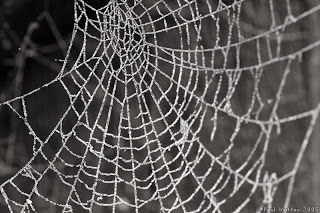
Well, why not? It's nearly Halloween and I want to talk about metaphorically tangled webs. Deception and lies weave pretty nasty webs ... of confusion at best and ruin at worst.
According to an article in Psychology Today, a 2010 study revealed the following:
(1) The average number of lies told per day by an individual is 1.65.
(2) Only about 400 of the sample 1000 participants reported telling a lie in the past 24 hours.
... and that's excluding the politicians, of course. (my words).
We're a bunch of liars and we know it. But why do we lie, cheat, scheme, and scam? In another article found in the online magazine Real Simple, one doctor of philosophy explains it this way:
"The tendency to tell tales is “a very natural human trait,” explains David L. Smith, Ph.D., associate professor of philosophy at the University of New England, in Biddeford, Maine. “It lets you manipulate the way you want to be seen by others.”
Ah, manipulation. What else could it be? The one of six reasons people lie that struck me most was this one: Lying to Make Oneself Feel Better (click on Real Simple link above for more.)
Some want attention or are feeling lonely and will complain about aches and pains that do not exist. Others simply want to reassure themselves and might tell a self-serving lie (I graduated from ABC University. No, I've never been fired. The check's in the mail.) But, says Jenna McCarthy, the article's author "when people start to believe their self-deceptions, it can snowball, which is especially dangerous."
I'm dealing with a huge snowball right now (hey, I said Halloween not winter!) and it isn't comfortable, pretty, or pleasant. I am the bug trapped in the spider web and I'm trying to get out. It will take time.
Oh time, time, time. If we had unlimited time, all would be possible. I'm just impatient. And that's no lie.

October 7, 2013
Sane and Able?
Is it possible to renew one's life after personal tragedies hit the double digits? Yet again, while I try to cope with my varying degrees of chronic illness due to cancer, Lupus and fibromyalgia coupled with the traumatic loss of my brother nearly six weeks ago, I am seeking to be sane and able.
How many blows are too many? When does the day come when enough is enough? The sheer number of traumatic events that have hit my little family of four over the past 25 years have ranged far and wide, from serious injuries to 9/11 to near fatal illnesses to shocking deaths plus more. We are the people that others pity.
Paradoxically, is it enough that I have my immediate loving family and friends? Is it enough that I am free of major worry about finances and can sit in two modest, comfy places that I call home where at one I roam the beach and at the other I can light a fire, gaze freely at the majestic Hudson River, and do nothing?
Is it enough that I've been married to the same man for almost 30 years and we've settled into a comfortable albeit routine pattern of living? Is it enough that I have food to eat, clothes to wear, a car to drive, a bed to sleep in and grown children who still want to talk and be with me?
I must answer "yes" and continually remind myself I am very, very blessed. So why is it so hard.?
You see, I'm not an "enough" sort of gal, however, and this land is foreign to me. I'm a goal-setter and charting a revised course one more time isn't easy. Recently, my husband and I both joined a suicide survivors support group and went to our first meeting last week. Since both our brothers took their own lives (two years apart), we think it will be helpful. Maybe we'll go back.
So, I guess its enough that I can still kick myself in the butt to to live regardless of the pain; regardless of the shame; regardless of the guilt; regardless of the grief. I find the nights are the hardest. This is when my nerves jangle and my head aches and my sorrow feels like knife blades. I can't settle down to sleep. I wonder what's next. I pray.
I know I am clinically depressed. I've been here before, albeit a long time ago when it was also tied to tremendous grief. And I am getting help and taking things one step at a time. After being on such a high with the launch and great reviews of my book, I find myself completely upside down; swirling in a vortex and weighted down with worry and pain.
I know. It does get better. As the sayings go: Time heals all wounds. God only gives you as much as you can handle. This too shall pass. When God closes one door he opens another, etc. etc. Those of you who follow my blog or who have read my book are aware of my internal guidepost - my Statue. It's a cement figure of a human that I envision when I need to 'take my temperature' - understand how I am feeling. Today, my Statue is in medium-sized pieces all over the ground. That's better than crumbled or dust. I'll take it - for now.
There is no point to this blog other than to say I'm still trying my best and following my own advice about taking charge of your own health and well-being. Perhaps if I try through my tears, you will, too. And I will gladly accept any words of encouragement through comments on this blog or to ascrohn@gmail.com.

* * *
NOTE: As is typical, we find that my brother is receiving fame in death that he should have had in life. Stories have already been written in The New York Times, The Los Angeles Times, NPR and various other newspapers around the country. I have also been contacted by New York Magazine that will be compiling a feature about his interesting, varied, and fully-lived life as well as The Lancet for the contributions he made to medical research. My own book takes a back seat for now as I tend to the business of honoring my brother's legacy.
How many blows are too many? When does the day come when enough is enough? The sheer number of traumatic events that have hit my little family of four over the past 25 years have ranged far and wide, from serious injuries to 9/11 to near fatal illnesses to shocking deaths plus more. We are the people that others pity.
Paradoxically, is it enough that I have my immediate loving family and friends? Is it enough that I am free of major worry about finances and can sit in two modest, comfy places that I call home where at one I roam the beach and at the other I can light a fire, gaze freely at the majestic Hudson River, and do nothing?
Is it enough that I've been married to the same man for almost 30 years and we've settled into a comfortable albeit routine pattern of living? Is it enough that I have food to eat, clothes to wear, a car to drive, a bed to sleep in and grown children who still want to talk and be with me?
I must answer "yes" and continually remind myself I am very, very blessed. So why is it so hard.?
You see, I'm not an "enough" sort of gal, however, and this land is foreign to me. I'm a goal-setter and charting a revised course one more time isn't easy. Recently, my husband and I both joined a suicide survivors support group and went to our first meeting last week. Since both our brothers took their own lives (two years apart), we think it will be helpful. Maybe we'll go back.
So, I guess its enough that I can still kick myself in the butt to to live regardless of the pain; regardless of the shame; regardless of the guilt; regardless of the grief. I find the nights are the hardest. This is when my nerves jangle and my head aches and my sorrow feels like knife blades. I can't settle down to sleep. I wonder what's next. I pray.
I know I am clinically depressed. I've been here before, albeit a long time ago when it was also tied to tremendous grief. And I am getting help and taking things one step at a time. After being on such a high with the launch and great reviews of my book, I find myself completely upside down; swirling in a vortex and weighted down with worry and pain.
I know. It does get better. As the sayings go: Time heals all wounds. God only gives you as much as you can handle. This too shall pass. When God closes one door he opens another, etc. etc. Those of you who follow my blog or who have read my book are aware of my internal guidepost - my Statue. It's a cement figure of a human that I envision when I need to 'take my temperature' - understand how I am feeling. Today, my Statue is in medium-sized pieces all over the ground. That's better than crumbled or dust. I'll take it - for now.
There is no point to this blog other than to say I'm still trying my best and following my own advice about taking charge of your own health and well-being. Perhaps if I try through my tears, you will, too. And I will gladly accept any words of encouragement through comments on this blog or to ascrohn@gmail.com.

* * *
NOTE: As is typical, we find that my brother is receiving fame in death that he should have had in life. Stories have already been written in The New York Times, The Los Angeles Times, NPR and various other newspapers around the country. I have also been contacted by New York Magazine that will be compiling a feature about his interesting, varied, and fully-lived life as well as The Lancet for the contributions he made to medical research. My own book takes a back seat for now as I tend to the business of honoring my brother's legacy.
September 29, 2013
Back to the Basics!
Those of us with chronic illness are constantly challenging ourselves to get through the day. With the recent trauma of losing my brother to suicide, I have to check myself all over once more.
Will I go into a Lupus flare? Will my gastroparesis act up and make me unable to eat? Will I lose precious sleep? Will my headaches return? Will my joints hurt more than usual? Will I fall into a depression? Do I have to increase/decrease medications and supplements?
Can I take a shower today and not exhaust myself? Can I cook a meal? Can I go grocery shopping? Can I walk the dog? Can I, can I can I? And what about my ever-present To-Do List that is growing and growing and growing!
So it's back to the basics for me. Once again a Wiley Coyote anvil has fallen on my head and I have to start with 'activities of daily living' like getting out of bed, showering, and dressing. I have to start at square one. I've been here before and I know you have, too.
Chronic, unrelenting illness is not insurmountable if we change how we look at things; perhaps, turn them upside down. In Psychology Today, a writer suggests a NOT-TO-DO list. What a concept?
Toni Bernhard, J.D. a former professor at the University of California and the author of How To Be Sick has compiled a wonderful list of NOT to dos like:
DO NOT say 'yes' to an activity if your body is saying 'no.'DO NOT wait until the last minute to get ready for something.DO NOT strive for a spotless living environment.DO NOT speak unkindly of yourself.DO NOT wear uncomfortable clothes. (Yeah. I can feel the little rough fabric pills inside sweat pants or pajamas and always wear them inside out. They hurt!)And one that I like best is DO NOT think about pleasures from your pre-illness life, freeze them in time, and assume they'd be as much fun today. They just can't.
Her point is that everyone's life is constantly changing and rearranging itself. As she says: "Relationships change, job conditions change, and bodies change" for both the healthy and the ill. All of us have to adjust and readjust and sometimes it's a daily thing.
Will I adjust and settle into yet another 'new normal?' I believe I will, in time. I took a very long, fast-paced walk today (with my trusty little dog, Shadow by my side) to see if I could catch up to what I had attained before my brother died. It has been five weeks and I'm not even close. But I tried.
The anvils will continue to fall and, like you, I will bear the brunt of them - slowly, with compassion for myself, and with a new NOT-TO-DO list ingrained in my brain.
Will I go into a Lupus flare? Will my gastroparesis act up and make me unable to eat? Will I lose precious sleep? Will my headaches return? Will my joints hurt more than usual? Will I fall into a depression? Do I have to increase/decrease medications and supplements?
Can I take a shower today and not exhaust myself? Can I cook a meal? Can I go grocery shopping? Can I walk the dog? Can I, can I can I? And what about my ever-present To-Do List that is growing and growing and growing!
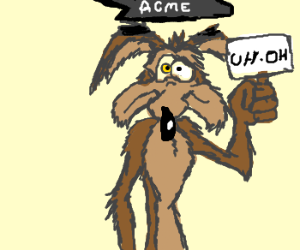
So it's back to the basics for me. Once again a Wiley Coyote anvil has fallen on my head and I have to start with 'activities of daily living' like getting out of bed, showering, and dressing. I have to start at square one. I've been here before and I know you have, too.
Chronic, unrelenting illness is not insurmountable if we change how we look at things; perhaps, turn them upside down. In Psychology Today, a writer suggests a NOT-TO-DO list. What a concept?
Toni Bernhard, J.D. a former professor at the University of California and the author of How To Be Sick has compiled a wonderful list of NOT to dos like:
DO NOT say 'yes' to an activity if your body is saying 'no.'DO NOT wait until the last minute to get ready for something.DO NOT strive for a spotless living environment.DO NOT speak unkindly of yourself.DO NOT wear uncomfortable clothes. (Yeah. I can feel the little rough fabric pills inside sweat pants or pajamas and always wear them inside out. They hurt!)And one that I like best is DO NOT think about pleasures from your pre-illness life, freeze them in time, and assume they'd be as much fun today. They just can't.
Her point is that everyone's life is constantly changing and rearranging itself. As she says: "Relationships change, job conditions change, and bodies change" for both the healthy and the ill. All of us have to adjust and readjust and sometimes it's a daily thing.
Will I adjust and settle into yet another 'new normal?' I believe I will, in time. I took a very long, fast-paced walk today (with my trusty little dog, Shadow by my side) to see if I could catch up to what I had attained before my brother died. It has been five weeks and I'm not even close. But I tried.
The anvils will continue to fall and, like you, I will bear the brunt of them - slowly, with compassion for myself, and with a new NOT-TO-DO list ingrained in my brain.

September 24, 2013
"To laugh often..."
From a refrigerator magnet my brother gave me many years ago:
"To laugh often and much, to win the respect of intelligent people and the affection of children, to earn the appreciation of honest critics and endure the betrayal of false friends, to appreciate beauty, to find the best in others, to leave the world a bit better, whether by a healthy child, a garden patch... to know even one life has breathed easier because you have lived. This is to have succeeded!" Ralph Waldo Emerson
My brother, Steve, did all of these things. He succeeded in life. It's whether or not we succeed in death that makes me ponder.
In the late 1990's, I battled two, concurrent fatal illnesses and survived. From about 2005 on, my brother fought through loss, loneliness, and deep internal pain and chose to die. The paradox is frightening. I remain confused.
But if I look at his life, I know he set a wonderful example for many.
Did he "laugh often?" He did loudly and with abandon to the delight of his friends and family and, in particular, his young nieces and nephews over a span of 23 years (13 of them, aged 4 to 23). The "affection of children" was guaranteed once he started talking like Donald Duck or handed out silly nicknames like they were candy or rolled around the floor playing just like a kid.
"Win the respect of intelligent people"? Of course. He was a MENSA member and there was no one he couldn't engage in elevated, useful conversation or debate, including me. I guess I, too, like to think I'm intelligent although I've never been tested for genius. Up until just a few weeks before his death, we battled at online Scrabble, sometimes starting and finishing a game in one day. He won every time. Every single time.
Did he "earn the appreciation of honest critics?" Over and over again Steve put his heart on display via his art, his writing and editing, his advocacy for the lesbian, bisexual, gay, and transgender (LBGT) community, and his volunteerism via the Saugerties Public Library, the Burrill B. Crohn Research Foundation and many local art events, festivals and fairs. His participation both actively and vocally during the Civil Rights era earned him respect and life-long compatriots. The comments flowing in about his present and past efforts are glowing and numerous.
Ah, "the betrayal of false friends." I know of an occasion or two where he got hurt by those he thought were true. I'm sure there were many more. I know I hurt him more than once but I was never a false friend; just a typically-flawed sibling.
God did he "appreciate beauty." His eyes were beautiful lenses as he would always remark about color and palette and the wondrous and breathtaking glory of the natural world. He would see things others did not see. He would point them out for us to enjoy. And he "found the best in others." More than one colleague has said he lit up the room when he walked in and made everyone feel good with his razor sharp wit and emanating love.
Yes, he "left the world a bit better." A whole lot better in my opinion. He helped research scientists find a viable cure for HIV! He volunteered his blood. He went back to the researchers over and over again. He made this incredible difference for all of mankind all while growing glorious "garden patches."
I literally "breathed easier" because he lived. He sat by my side after an emergency tracheotomy and I wasn't so scared anymore. My big brother was there. He protected me and I breathed, albeit with the aid of a machine for weeks, but I breathed because he held my hand. He was there.
So I guess what I'm saying is success can be marked by simple good deeds or by remarkable achievements. My brother did both. May I be worthy enough to carry the torch.
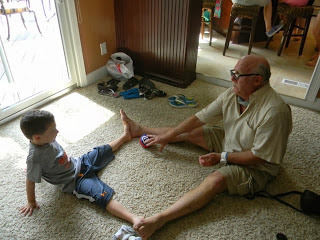 Great-nephew Peter with Uncle Steve
"To laugh often and much, to win the respect of intelligent people and the affection of children, to earn the appreciation of honest critics and endure the betrayal of false friends, to appreciate beauty, to find the best in others, to leave the world a bit better, whether by a healthy child, a garden patch... to know even one life has breathed easier because you have lived. This is to have succeeded!" Ralph Waldo Emerson
My brother, Steve, did all of these things. He succeeded in life. It's whether or not we succeed in death that makes me ponder.
In the late 1990's, I battled two, concurrent fatal illnesses and survived. From about 2005 on, my brother fought through loss, loneliness, and deep internal pain and chose to die. The paradox is frightening. I remain confused.
But if I look at his life, I know he set a wonderful example for many.
Did he "laugh often?" He did loudly and with abandon to the delight of his friends and family and, in particular, his young nieces and nephews over a span of 23 years (13 of them, aged 4 to 23). The "affection of children" was guaranteed once he started talking like Donald Duck or handed out silly nicknames like they were candy or rolled around the floor playing just like a kid.
"Win the respect of intelligent people"? Of course. He was a MENSA member and there was no one he couldn't engage in elevated, useful conversation or debate, including me. I guess I, too, like to think I'm intelligent although I've never been tested for genius. Up until just a few weeks before his death, we battled at online Scrabble, sometimes starting and finishing a game in one day. He won every time. Every single time.
Did he "earn the appreciation of honest critics?" Over and over again Steve put his heart on display via his art, his writing and editing, his advocacy for the lesbian, bisexual, gay, and transgender (LBGT) community, and his volunteerism via the Saugerties Public Library, the Burrill B. Crohn Research Foundation and many local art events, festivals and fairs. His participation both actively and vocally during the Civil Rights era earned him respect and life-long compatriots. The comments flowing in about his present and past efforts are glowing and numerous.
Ah, "the betrayal of false friends." I know of an occasion or two where he got hurt by those he thought were true. I'm sure there were many more. I know I hurt him more than once but I was never a false friend; just a typically-flawed sibling.
God did he "appreciate beauty." His eyes were beautiful lenses as he would always remark about color and palette and the wondrous and breathtaking glory of the natural world. He would see things others did not see. He would point them out for us to enjoy. And he "found the best in others." More than one colleague has said he lit up the room when he walked in and made everyone feel good with his razor sharp wit and emanating love.
Yes, he "left the world a bit better." A whole lot better in my opinion. He helped research scientists find a viable cure for HIV! He volunteered his blood. He went back to the researchers over and over again. He made this incredible difference for all of mankind all while growing glorious "garden patches."
I literally "breathed easier" because he lived. He sat by my side after an emergency tracheotomy and I wasn't so scared anymore. My big brother was there. He protected me and I breathed, albeit with the aid of a machine for weeks, but I breathed because he held my hand. He was there.
So I guess what I'm saying is success can be marked by simple good deeds or by remarkable achievements. My brother did both. May I be worthy enough to carry the torch.
 Great-nephew Peter with Uncle Steve
September 16, 2013
FIGHTING TO LIVE: When does the pain become too much?
I often write about pain, both physical and emotional. Those of us who have survived life-changing traumatic events or suffer from chronic illness (or both) endure our fair share of pain.
But when does pain reach a level that is beyond our endurance? When do we know?
My dear brother, Stephen Lyon Crohn, knew and now it is public. As reported in the The New York Times, he took his own life. "The Man Who Couldn't Catch AIDS" was still susceptible to a lot of everyday things that cause searing pain. Of course the story has gone viral and, not surprisingly, the 'haters' (as my son calls them) are leaving comments of questionable taste and accuracy. It is taking quite a bit of strength for me not to register and sign in to all these 'news' and other sites and leave comments of my own. But I won't take the bait.
How my brother died is vastly less important to me than how he lived. His sheer love of life during the 66 years he was here with us was the wonderfully contagious thing about him. You can see it in his art. You can read it in his words. You could feel it in his 'snuggle hugs' as one of his friends described them. This world is, indeed, a better, more beautiful place because he was here.
Living With Pain
But I want to know how we continue to fight to live with our tragedies and traumas and the hurts that accompany them? How do we choose life day after day? Simply put, there is no easy answer.
In a September 2011 article in Psychology Today, Shawn T. Smith, Psy.D. explains:
"There is a certain kind of thinking that fuels suicide, and for most of us it is a terribly difficult idea to sit with: suicide is problem-solving behavior. In the mind of someone considering suicide, the act may seem like an expeditious and effective way to eliminate pain."
My brother was an extremely logical thinker. He was that 'problem-solver.' And while his logic in the case of deciding to take his life, may have been flawed, it led him to a conclusion that felt right for him.
Smith continues:
"The thought of suicide most often occurs when a person feels they have run out of solutions to problems that seem inescapable, intolerably painful, and never-ending."
We all have problems that seem insurmountable at times. My brother was no different. To respect his eternal privacy, I will not outline the WHYS and HOWS of his final act. Many are asking (rudely) and he left some answers; but they are not for me to reveal. It is my job to help my family and I heal.
There are a number of resources for people who are thinking of suicide: Hotlines, websites, support groups and each begin with CALL SOMEONE or 911. Of course, we ask why my brother did not make that one last phone call. Why didn't he reach out before... But we've learned he had his reasons. We have to accept his choice. Enough said.
Now, though, we find we are the sufferers. According to supportaftersuicide.org:"Many people bereaved by suicide feel alone and isolated. The silence that surrounds the issue of suicide can complicate the experience. Because of the social stigma surrounding suicide, people feel the pain of the loss, yet may not believe they are allowed to express it."
Ayup. It's just awful. I visit his website daily - Crohn Studio - and I check his Facebook page for new messages that might make me breathe more easily, ease the lump in my throat and close the hole in my heart. My sister and I decided to create a Facebook memorial page soon. In the meantime, we field phone calls from reporters and friends, colleagues and admirers, family and old school chums from grade school. He certainly left an indelible mark.
Irreconcilable Differences
I would be lying if I said it wasn't difficult for me to reconcile how I fought to live, died to live, and still take one step in front of the other every day with painful, frustrating remnants of cancer treatment, Lupus and chronic illness. My brother stopped stepping up the stairs. I have to remember that it was his choice; maybe not my choice, but a choice nonetheless.
Looking for quotes on living and treasuring life, I found some inspiration in words attributed to George Washington Carver, a former slave who became a celebrated inventor, botanist and chemist until a tragic fall down the stairs led to his death at age 78.
"How far you go in life depends on your being tender with the young, compassionate with the aged, sympathetic with the striving and tolerant of the weak and strong. Because someday in your life, you will have been all of these."
My brother was all of these. I guess the last person he could be tender with was himself. Or was he?
Part of Carver's epitaph could be my brother's own:
"HE COULD HAVE ADDED FORTUNE TO FAME BUT CARING FOR NEITHER, HE FOUND HAPPINESS AND HONOR IN BEING HELPFUL TO THE WORLD"
This is how I will remember him. This is how I will honor him. This is how I will choose to go on.
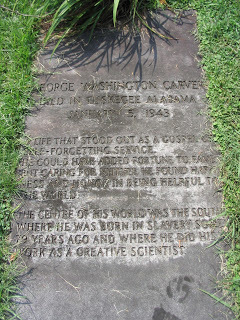 Gravestone of George Washington Carver
But when does pain reach a level that is beyond our endurance? When do we know?
My dear brother, Stephen Lyon Crohn, knew and now it is public. As reported in the The New York Times, he took his own life. "The Man Who Couldn't Catch AIDS" was still susceptible to a lot of everyday things that cause searing pain. Of course the story has gone viral and, not surprisingly, the 'haters' (as my son calls them) are leaving comments of questionable taste and accuracy. It is taking quite a bit of strength for me not to register and sign in to all these 'news' and other sites and leave comments of my own. But I won't take the bait.
How my brother died is vastly less important to me than how he lived. His sheer love of life during the 66 years he was here with us was the wonderfully contagious thing about him. You can see it in his art. You can read it in his words. You could feel it in his 'snuggle hugs' as one of his friends described them. This world is, indeed, a better, more beautiful place because he was here.
Living With Pain
But I want to know how we continue to fight to live with our tragedies and traumas and the hurts that accompany them? How do we choose life day after day? Simply put, there is no easy answer.
In a September 2011 article in Psychology Today, Shawn T. Smith, Psy.D. explains:
"There is a certain kind of thinking that fuels suicide, and for most of us it is a terribly difficult idea to sit with: suicide is problem-solving behavior. In the mind of someone considering suicide, the act may seem like an expeditious and effective way to eliminate pain."
My brother was an extremely logical thinker. He was that 'problem-solver.' And while his logic in the case of deciding to take his life, may have been flawed, it led him to a conclusion that felt right for him.
Smith continues:
"The thought of suicide most often occurs when a person feels they have run out of solutions to problems that seem inescapable, intolerably painful, and never-ending."
We all have problems that seem insurmountable at times. My brother was no different. To respect his eternal privacy, I will not outline the WHYS and HOWS of his final act. Many are asking (rudely) and he left some answers; but they are not for me to reveal. It is my job to help my family and I heal.
There are a number of resources for people who are thinking of suicide: Hotlines, websites, support groups and each begin with CALL SOMEONE or 911. Of course, we ask why my brother did not make that one last phone call. Why didn't he reach out before... But we've learned he had his reasons. We have to accept his choice. Enough said.
Now, though, we find we are the sufferers. According to supportaftersuicide.org:"Many people bereaved by suicide feel alone and isolated. The silence that surrounds the issue of suicide can complicate the experience. Because of the social stigma surrounding suicide, people feel the pain of the loss, yet may not believe they are allowed to express it."
Ayup. It's just awful. I visit his website daily - Crohn Studio - and I check his Facebook page for new messages that might make me breathe more easily, ease the lump in my throat and close the hole in my heart. My sister and I decided to create a Facebook memorial page soon. In the meantime, we field phone calls from reporters and friends, colleagues and admirers, family and old school chums from grade school. He certainly left an indelible mark.
Irreconcilable Differences
I would be lying if I said it wasn't difficult for me to reconcile how I fought to live, died to live, and still take one step in front of the other every day with painful, frustrating remnants of cancer treatment, Lupus and chronic illness. My brother stopped stepping up the stairs. I have to remember that it was his choice; maybe not my choice, but a choice nonetheless.
Looking for quotes on living and treasuring life, I found some inspiration in words attributed to George Washington Carver, a former slave who became a celebrated inventor, botanist and chemist until a tragic fall down the stairs led to his death at age 78.
"How far you go in life depends on your being tender with the young, compassionate with the aged, sympathetic with the striving and tolerant of the weak and strong. Because someday in your life, you will have been all of these."
My brother was all of these. I guess the last person he could be tender with was himself. Or was he?
Part of Carver's epitaph could be my brother's own:
"HE COULD HAVE ADDED FORTUNE TO FAME BUT CARING FOR NEITHER, HE FOUND HAPPINESS AND HONOR IN BEING HELPFUL TO THE WORLD"
This is how I will remember him. This is how I will honor him. This is how I will choose to go on.
 Gravestone of George Washington Carver
September 7, 2013
How long is long...
It's hard for me to believe that two weeks have passed since my brother died. And I know the five stages of grief as first outlined by Elisabeth Kubler-Ross, M.D. in her book, On Death and Dying, a book that was less a scientific study but more a psychological study. She collected observations from those who were dying and the loved ones surrounding them. The conclusions she drew about "stages" are mere guides; that is, they don't go in order, nor do they proceed graciously. They knock you down and lift you up in no particular order.
For the terminally ill and those hit with traumatic events including the death of a loved one, they are:
Denial — "I feel fine."; "This can't be happening, not to me."
Denial is usually only a temporary defense for the individual. This feeling is generally replaced with heightened awareness of possessions and individuals that will be left behind after death. Denial can be conscious or unconscious refusal to accept facts, information, or the reality of the situation. Denial is a defense mechanism and some people can become locked in this stage.
Anger — "Why me? It's not fair!"; "How can this happen to me?"; '"Who is to blame?"
Once in the second stage, the individual recognizes that denial cannot continue. Because of anger, the person is very difficult to care for due to misplaced feelings of rage and envy. Anger can manifest itself in different ways. People can be angry with themselves, or with others, and especially those who are close to them. It is important to remain detached and nonjudgmental when dealing with a person experiencing anger from grief.
Bargaining — "I'll do anything for a few more years."; "I will give my life savings if..."
The third stage involves the hope that the individual can somehow postpone or delay death. Usually, the negotiation for an extended life is made with a higher power in exchange for a reformed lifestyle. Psychologically, the individual is saying, "I understand I will die, but if I could just do something to buy more time..." People facing less serious trauma can bargain or seek to negotiate a compromise. For example "Can we still be friends?.." when facing a break-up. Bargaining rarely provides a sustainable solution, especially if it's a matter of life or death.
Depression — "I'm so sad, why bother with anything?"; "I'm going to die soon so what's the point?"; "I miss my loved one, why go on?"
During the fourth stage, the dying person begins to understand the certainty of death. Because of this, the individual may become silent, refuse visitors and spend much of the time crying and grieving. This process allows the dying person to disconnect from things of love and affection. It is not recommended to attempt to cheer up an individual who is in this stage. It is an important time for grieving that must be processed. Depression could be referred to as the dress rehearsal for the 'aftermath'. It is a kind of acceptance with emotional attachment. It's natural to feel sadness, regret, fear, and uncertainty when going through this stage. Feeling those emotions shows that the person has begun to accept the situation.
Acceptance — "It's going to be okay."; "I can't fight it, I may as well prepare for it."
In this last stage, individuals begin to come to terms with their mortality, or that of a loved one, or other tragic event. This stage varies according to the person's situation. People dying can enter this stage a long time before the people they leave behind, who must pass through their own individual stages of dealing with the grief.
* * *
So, I sit in this jumble of stages bouncing from one to the other. As I said, Kubler-Ross also extended this model to include those struggling with loss or trauma of any kind. The key is to not get stuck.
I saw my psychiatrist yesterday and actually had to fight with him NOT to give me more medicine. He insisted that I was depressed while I insisted I was grieving and sad but not clinically depressed. According to his 'protocol,' the traumatic event of my brother's death REQUIRED him to put me on more anti-depressant and anti-anxiety medications. I refused. I told him I knew where he was and how to get in touch with him and I would ask for help if I needed it.
In fact, although I am clearly grieving, I have never felt stronger in my life! With my brother gone, I have to prepare my shoulders to carry an even bigger load for my own children and future generations. It will take time...a long time. So what?
Finally, I will quote Kubler-Ross once again because, to me, what she says is absolutely beautiful. I hope you think so, too.
“How do these geese know when to fly to the sun? Who tells them the seasons? How do we, humans, know when it is time to move on? As with the migrant birds, so surely with us, there is a voice within, if only we would listen to it, that tells us so certainly when to go forth into the unknown.” Elisabeth Kubler-Ross
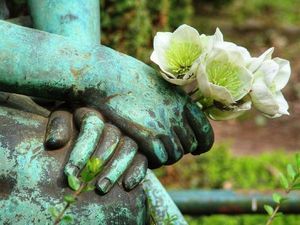 Photo from Alliance of Hope
For the terminally ill and those hit with traumatic events including the death of a loved one, they are:
Denial — "I feel fine."; "This can't be happening, not to me."
Denial is usually only a temporary defense for the individual. This feeling is generally replaced with heightened awareness of possessions and individuals that will be left behind after death. Denial can be conscious or unconscious refusal to accept facts, information, or the reality of the situation. Denial is a defense mechanism and some people can become locked in this stage.
Anger — "Why me? It's not fair!"; "How can this happen to me?"; '"Who is to blame?"
Once in the second stage, the individual recognizes that denial cannot continue. Because of anger, the person is very difficult to care for due to misplaced feelings of rage and envy. Anger can manifest itself in different ways. People can be angry with themselves, or with others, and especially those who are close to them. It is important to remain detached and nonjudgmental when dealing with a person experiencing anger from grief.
Bargaining — "I'll do anything for a few more years."; "I will give my life savings if..."
The third stage involves the hope that the individual can somehow postpone or delay death. Usually, the negotiation for an extended life is made with a higher power in exchange for a reformed lifestyle. Psychologically, the individual is saying, "I understand I will die, but if I could just do something to buy more time..." People facing less serious trauma can bargain or seek to negotiate a compromise. For example "Can we still be friends?.." when facing a break-up. Bargaining rarely provides a sustainable solution, especially if it's a matter of life or death.
Depression — "I'm so sad, why bother with anything?"; "I'm going to die soon so what's the point?"; "I miss my loved one, why go on?"
During the fourth stage, the dying person begins to understand the certainty of death. Because of this, the individual may become silent, refuse visitors and spend much of the time crying and grieving. This process allows the dying person to disconnect from things of love and affection. It is not recommended to attempt to cheer up an individual who is in this stage. It is an important time for grieving that must be processed. Depression could be referred to as the dress rehearsal for the 'aftermath'. It is a kind of acceptance with emotional attachment. It's natural to feel sadness, regret, fear, and uncertainty when going through this stage. Feeling those emotions shows that the person has begun to accept the situation.
Acceptance — "It's going to be okay."; "I can't fight it, I may as well prepare for it."
In this last stage, individuals begin to come to terms with their mortality, or that of a loved one, or other tragic event. This stage varies according to the person's situation. People dying can enter this stage a long time before the people they leave behind, who must pass through their own individual stages of dealing with the grief.
* * *
So, I sit in this jumble of stages bouncing from one to the other. As I said, Kubler-Ross also extended this model to include those struggling with loss or trauma of any kind. The key is to not get stuck.
I saw my psychiatrist yesterday and actually had to fight with him NOT to give me more medicine. He insisted that I was depressed while I insisted I was grieving and sad but not clinically depressed. According to his 'protocol,' the traumatic event of my brother's death REQUIRED him to put me on more anti-depressant and anti-anxiety medications. I refused. I told him I knew where he was and how to get in touch with him and I would ask for help if I needed it.
In fact, although I am clearly grieving, I have never felt stronger in my life! With my brother gone, I have to prepare my shoulders to carry an even bigger load for my own children and future generations. It will take time...a long time. So what?
Finally, I will quote Kubler-Ross once again because, to me, what she says is absolutely beautiful. I hope you think so, too.
“How do these geese know when to fly to the sun? Who tells them the seasons? How do we, humans, know when it is time to move on? As with the migrant birds, so surely with us, there is a voice within, if only we would listen to it, that tells us so certainly when to go forth into the unknown.” Elisabeth Kubler-Ross
 Photo from Alliance of Hope