Matthew C. Mitchell's Blog, page 78
September 9, 2016
Win a Copy of "Good & Angry" by David Powlison

It's hard to communicate how excited I am about this brand new book from David Powlison, Good & Angry, which officially releases on Monday.
I've been waiting 15 years for this book!
Ever since I learned of the ministry of CCEF and the Journal of Biblical Counseling, I've been reading the excellent (though sporadic) articles that David has written on this difficult subject, and I've also heard him teach on it in person. And for all of those years, he's been promising a book-length treatment but has been providentially hindered from producing it. But now in 2016, Good & Angry has finally arrived!
Seeing Red
I haven't finished reading it, but I can already tell you that it's very good. David has a unique way of seeing and saying truth. He's both feisty and humble at the same time. He captures both the essence of anger and all of its contours. I think Andy Naselli nails it in calling David "the Yoda of biblical counseling," David is one of the wisest people when it comes to understanding how people tick and how the Word of God meets and changes them [I've been learning from and quoting him for years and years!].
Even the title says so much. I've been reading another pretty good book recently about how not to be personally offended, and I've been helped very much by it. But the author basically argues away the concept of righteous anger as a self-justifying fiction [see this excellent review of Unoffendable by my friend Benjamin Vrbicek. Powlison, instead, would see anger redeemed and gives us biblical categories for understanding good anger (i.e. "the constructive displeasure of mercy"). Yet at the same time, Powlison never excuses sinful anger and constantlly offers helpful counsel for change. [See this review by Tim Challies to get a fuller picture of the book's strengths.]
Not only does David break new ground, but he does it with gentleness and grace. He writes as one struggler to other fellow strugglers, and it feels like a personal conversation. I can hear his voice in every sentence. This book is biblical counseling at its best written by one its leading theorists and
practitioners.
Win One for Yourself!
Starting today, I'm offering a contest to win a free copy.
Entering this contest is very simple:
1. Leave a comment on this post (either here or on Facebook) with your name on it.
2. Wait to see if you win. I'll be drawing the names out of a hat. It's that easy! (Don't forget to check back or subscribe to updates to find out if you win--I'll need your mailing address if you do.)
You can also increase your chances of winning by posting about this contest on your social media page (FB, Twitter, Blog, Pinterest, etc.). Just send me an email or leave a comment with the link so that I know that you've expanded the reach of the contest. For each time you link to the contest, you get your name added to the hat one more time (limit of 7 chances, the contest ends at 12am EST on Wednesday night, September 21st).
I'll announce the winner on Thursday.
But if you can't wait, order your copy today!


September 4, 2016
[Matt's Messages] "You Will Know that I Am the LORD"
 “You Will Know that I am the LORD”
The King of Kings in the Books of Kings
September 4, 2016 :: 1 Kings 20:1-43
If I were a betting man, I’d be willing bet that most if not nearly all of us here have never heard a sermon on 1 Kings chapter 20.
Most of us have heard multiple sermons on 1 Kings 18 where Elijah confronts the prophets of Baal on Mt. Carmel, and the LORD sends the fire and the rain.
And a good many of us have heard a sermon or two on 1 Kings 19 where Elijah was discouraged because it seemed like his victory on Mt. Carmel had not changed a blessed thing. Ahab and Jezebel were still worshiping Baal. And Jezebel still wanted Elijah dead.
And yet, as we learned last week, the LORD was still God.
And He encouraged Elijah with both power and gentleness that He was still working and still faithful to all of His promises.
But most of us have never heard a sermon on 1 King chapter 20.
We’ve all read it when making our trip through the whole Bible, but it often feels like a story to just get through on your way to the good stuff.
It’s a little hard to follow. The characters do stuff that you don’t expect or understand very easily. And there’s another guy who gets eaten by a lion.
It’s a story full of surprises.
You don’t always know what to do with it.
But it’s a story worth spending some time in.
It’s in God’s Word, so you know it’s inspired.
You know it’s useful for teaching, rebuking, correcting, and training in righteousness.
It’s worth some meditation and some digging into.
What I noticed especially this week, as I studied it, was the desire of the LORD to be known. There’s this phrase that occurs twice, both times on the lips of the same prophet, when he explains why the LORD is going to do something.
It’s this phrase, “And you will know that I am the LORD.”
That’s important to God.
Not just that we know that there is a God out there somewhere.
But that this God wants to be known as God.
He does not want to be a secret. He wants to be revealed.
He desires to be known, and His actions will bear that out.
Now, the focus shifts in these last 3 chapters of 1 Kings from the prophet back to the king. From the prophet Elijah (who doesn’t even show up in this chapter!) to the King named...who is the king right now in Israel?
King Ahab.
Thumbs up or thumbs down?
Last week, we said “6 thumbs down.”
This was the worst king so far in a very disappointing list of bad kings.
King Ahab
The focus shifts in these last 3 chapters from the days of Elijah to the days of Ahab.
And at the risk of spoiling the story for you, I’ll share that these are the last days of Ahab.
I think that, in large part, chapters 20 and 21 are there in our Bibles to make the case for the downfall and death of Ahab.
Not that you and I have much question about whether or not Ahab should go down, but the LORD seems to think it’s important for us to know the details.
Because, as we do, we get know Him better.
So, you could call these three chapters, the “Downfall of Ahab.”
But that doesn’t mean it’ll be a straight downward line. No, in fact, there are a number of unexpected twists and turns in this story. Hang onto your hat!
The first twist is that in chapter 20 the LORD fights for Ahab!
That’s surprising, isn’t it, after what happened in the last 2 chapters?
1 Kings chapter 20, verse 1.
“Now Ben-Hadad king of Aram mustered his entire army. Accompanied by thirty-two kings with their horses and chariots, he went up and besieged Samaria and attacked it.” Stop there for just a second.
We’ve met a king named Ben-Hadad before in chapter 15. This is probably his son, perhaps his grandson. So he’s Ben-Hadad, Jr. or maybe B-H the third.
He is king of Aram which is a people group that settled in the region of Syria north of Israel. He was the most powerful king in Syria at the time and the leader of a coalition of other kings from all around that same region.
Last week, the LORD told Elijah to see that his successor, Hazael, is anointed, but that hasn’t happened yet.
Ben-Hadad is king of Aram and he’s on the warpath. He’s invaded Israel and has attacked Ahab’s capital city.
There are three battles in this chapter, and this is the first one. Ben-Hadad has clearly won it, and he expects some spoils from his victory. V.2
“He sent messengers into the city to Ahab king of Israel, saying, ‘This is what Ben-Hadad says: 'Your silver and gold are mine, and the best of your wives and children are mine.'’ The king of Israel answered, [No way, Bub. No, he says,] ‘Just as you say, my lord the king. I and all I have are yours.’”
Ahab backs down.
I think that shows us a little bit of what Ahab was like.
He’s kind of a little man. He sees that he’s beat, and he just says, “Okay, what do you want?”
Now, I think that what’s going on here is that Ben-Hadad is asking for tribute and loyalty. That Israel would become a vassal-state under the overrule of Aram.
These wives and children and silver and gold are tokens of their new allegiance.
And Ahab gives up the store, too easily. And that makes Ben-Hadad a little more greedy. V.5
“The messengers came again and said, ‘This is what Ben-Hadad says: 'I sent to demand your silver and gold, your wives and your children. But about this time tomorrow I am going to send my officials to search your palace and the houses of your officials. They will seize everything you value and carry it away.'’”
“I want it all!
I want everything you think you’re hiding.
I want everything you’ve got.”
And that’s too much for Ahab. He was willing to part with some wives and children and little bit of protection money.
But not the whole thing! V.7
“The king of Israel summoned all the elders of the land and said to them, ‘See how this man is looking for trouble! When he sent for my wives and my children, my silver and my gold, I did not refuse him.’
The elders and the people all answered, ‘Don't listen to him or agree to his demands.’ [Them’s fighting words!]
So he replied to Ben-Hadad's messengers, ‘Tell my lord the king, 'Your servant will do all you demanded the first time, but this demand I cannot meet.'’ They left and took the answer back to Ben-Hadad.
Then Ben-Hadad sent another message to Ahab: [Oh yeah? He said,] ‘May the gods deal with me, be it ever so severely, if enough dust remains in Samaria to give each of my men a handful.’
The king of Israel answered [with more trash-talking], ‘Tell him: 'One who puts on his armor should not boast like one who takes it off.'’
Ben-Hadad heard this message while he and the kings were drinking in their tents, and he ordered his men: ‘Prepare to attack.’ So they prepared to attack the city.”
Now, what you do you think is going to happen?
Up till now, Ben-Hadad has been the winner in every contest. He has a massive army.
And we all know what kind of an evil wimp King Ahab is even though he talks a good game.
What do we expect? We expect a slaughter coming on.
But God.
But God intervenes. Verse 13.
“Meanwhile a prophet came to Ahab king of Israel and announced, ‘This is what the LORD says: 'Do you see this vast army? I will give it into your hand today, and then [here’s our sermon title] you will know that I am the LORD.'’”
Why would He do that?
Why would the LORD send a prophet (apparently not Elijah, so there are other prophets of Yahweh during this time period, why would the LORD send a prophet) to tell Ahab that He was going to beat the vast army of Ben-Hadad?
I’ll tell you this–it’s not because Ahab deserved it.
It’s not for Ahab’s glory.
It’s so that the LORD would be known. V.13 again.
“Then you will know that I am the LORD.”
Does that phrase sound familiar to you, at all?
It shows up several places in the Old Testament, but the place where it gets repeated again and again is to Pharaoh in the book of Exodus.
God says again and again that He is going to free His people from the grips of Pharaoh so that he will know that “I am the LORD.”
“I am Yahweh.”
He does not want to be disregarded.
#1. NOT DISREGARDED.
He does not want to be neglected, missed, or overlooked.
He’s going to show up and fight for Israel, not because Ahab deserves it, but because God wants the glory.
He wants to be known.
Now, Ahab almost doesn’t know what to do with this.
This is the first time in a long time that a prophet of Yahweh has brought him good news! That never happens!
Elijah is always bringing doom and gloom and shutting off the rain.
And now the LORD says that He’s going to bring victory? V.14
“‘But who will do this?’ asked Ahab. The prophet replied, ‘This is what the LORD says: 'The [newbies, the] young officers of the provincial commanders will do it.'’ ‘And who will start the battle?’ he asked. The prophet answered, ‘You will.’ [Okay, it’s worth a shot. My big mouth has gotten into this, what do I have to lose? V.15] So Ahab summoned the young officers of the provincial commanders, 232 men. Then he assembled the rest of the Israelites, 7,000 in all.
They set out at noon while Ben-Hadad and the 32 kings allied with him were in their tents getting drunk.”
And you can tell all of a sudden how this is going to turn out!
Cocky Ben-Hadad thinks he’s got this one all sewn up. They’re already celebrating. V.17
“The young officers of the provincial commanders went out first. [Just like God said.] Now Ben-Hadad had dispatched scouts, who reported, ‘Men are advancing from Samaria.’ He said, ‘If they have come out for peace, take them alive; if they have come out for war, take them alive.’”
Those are difficult orders to follow if I ever heard one! V.19
“The young officers of the provincial commanders marched out of the city with the army behind them and each one struck down his opponent. At that, the Arameans fled, with the Israelites in pursuit. But Ben-Hadad king of Aram escaped on horseback with some of his horsemen. [And he didn’t fall off the horse!] The king of Israel advanced and overpowered the horses and chariots and inflicted heavy losses on the Arameans.”
Why? Because the LORD wants to be known.
Not disregarded, neglected, forgotten, but known.
And that’s true today, as well.
The world loves to disregard the Lord.
To pretend that He’s a nonentity.
To suppress the truth about His power and glory and holiness.
To go our own merry way without regard to Who God really is.
But the LORD will not be trifled with.
He shows up again and again in the story of the world to make Himself known.
He’s interested in bringing glory to Himself.
Now when I try to bring glory to myself, I get into trouble. Because I’m just not worth glorifying. But when the LORD does it, He deserves all of that glory, and it would just be wrong to deny it to Him.
In fact, it’s what’s best for us. There is nothing better for you and me than to receive the revelation of the glory of God.
This banner right here. “We rejoice in the hope of the glory of God.”
Just knowing that is the greatest thing there is.
Our church exists to bring people into a life-changing relationship with God through Jesus Christ.
In other words, to know Him and to make Him known.
Do you know Him? And are you making Him known?
Now, there is some serious post-game analysis of this second clash between the two armies. The first one went to King Ben-Hadad. The second one went very decisively to King Ahab. Why? V.22
“Afterward, the prophet [same one] came to the king of Israel and said, ‘Strengthen your position and see what must be done, because [there’s going to be a rematch] next spring the king of Aram will attack you again.’
Meanwhile, the officials of the king of Aram advised him, ‘Their gods are gods of the hills. That is why they were too strong for us. But if we fight them on the plains, surely we will be stronger than they.
Do this: Remove all the kings from their commands and replace them with other officers. You must also raise an army like the one you lost–horse for horse and chariot for chariot– so we can fight Israel on the plains. Then surely we will be stronger than they.’ He agreed with them and acted accordingly.”
How was their post game analysis?
Well, they have a pretty good strategy.
With their bigger numbers and all of their horse and chariots, it makes sense for them to engage the Israelites on the plains instead of on the hills.
But, their theological analysis is all messed up.
They believe that the gods of Israel are gods of the hills. But they are not gods of the plains or the valleys.
So, Aram will win if they fight where their gods have the homefield advantage.
What’s the problem with that assessment?
The LORD is not just the god of the hills. Amen? V.26
“The next spring Ben-Hadad mustered the Arameans and went up to Aphek to fight against Israel [a third time]. When the Israelites were also mustered and given provisions, they marched out to meet them. The Israelites camped opposite them like two small flocks of goats, while the Arameans covered the countryside.”
Or as they say in sports, “Uh oh. Those guys are big.”
The odds are not in their favor.
But God. V.28
“The man of God came up and told the king of Israel, ‘This is what the LORD says: 'Because [get that! Because] the Arameans think the LORD is a god of the hills and not a god of the valleys, I will deliver this vast army into your hands, and you will know that I am the LORD.'’”
Do you see God’s logic?
He is not fighting right now for the glory of Ahab or because Ahab has made wise choices or because Ahab might get rid of the Baals if he sees Yahweh at work.
He’s fighting for the Israelites because the Arameans need an adjustment to their theology.
“Because the Arameans think the LORD is a god of the hills and not a god of the valleys, I will deliver this vast army into your hands, and you will know that I am the LORD.'’”
The Lord does not want to be discounted.
#2. NOT DISCOUNTED.
The world does that all of the time.
God is the God of Sunday mornings but not Monday mornings, right?
God is the God of women and children but not the God of real men.
God is the God of grace but not of holiness.
Do you see what I’m saying?
The world loves to discount God. To put Him in a box and see Him as something you do on Sundays, maybe. But He is not Lord of all.
Of course, we laugh at these Arameans, but we do the same thing sometimes, too, don’t we?
We don’t say it. But we act like it.
Dale Ralph Davis in his book on 1 Kings puts it this way, “[This] theology simply says that there is some turf beyond the reach of Yahweh’s power. And we easily slip into this mentality, contrary to our expressed beliefs. We may catch ourselves assuming that God is at work in religious things but not in routine things. Or some have had a wretched and perverse past that has left multiple scars; they are such victims of their experiences that they can expect, they say, no change, no deliverance. The Holy Spirit may regenerate and sanctify more kosher folks, but, one of these will say, he cannot do anything with the absurd medley of genetics, environment, and folly that have made me the twisted mess of hopelessness that I am. Yahweh is only the god of the hills. And then one sometimes meets this attitude in a small church of forty or fifty members, most of whom are age sixty and above; we can’t expect God to do anything in us or among us; we are growing older, we’ve not younger couples or children; we can’t muster up any revival starter-kit like larger churches can do. We can’t expect God to stir us–he’s not a god of the valley” (The Wisdom and the Folly, pg. 287).
Can you relate?
How do you discount the Lord?
How do you compartmentalize Him, setting Him over here, but not over here?
God will not be discounted for long.
He wants to be known and known fully.
I look around our community, and I see some pretty hard cases. I was at the West Branch football game on Friday night, and looking at some of the folks, I found myself thinking, “There isn’t much hope for changing that person. That one, maybe, but not that one.”
Why? Why would I think that?
Because God is not the God of hard cases?!
He’s the God of easy cases only?
Let’s not discount Him.
“Because the Arameans think the LORD is a god of the hills and not a god of the valleys, I will deliver this vast army into your hands, and you will know that I am the LORD.'’”
So He did. V.29
“For seven days [a perfect number, reminiscent of Jericho?] they camped opposite each other, and on the seventh day the battle was joined. The Israelites inflicted a hundred thousand casualties on the Aramean foot soldiers in one day. [On the plains!]
The rest of them escaped to the city of Aphek, where the wall collapsed on twenty-seven thousand of them. And Ben-Hadad fled to the city and hid in an inner room. [A total reversal of fortunes.]
His officials said to him, ‘Look, we have heard that the kings of the house of Israel are merciful. Let us go to the king of Israel with sackcloth around our waists and ropes around our heads. Perhaps he will spare your life.’ [Dress up like a slave. It’s your only hope because the shoe is on the other foot.]
Wearing sackcloth around their waists and ropes around their heads, they went to the king of Israel and said, ‘Your servant Ben-Hadad says: 'Please let me live.'’ The king answered, ‘Is he still alive? He is my brother.’ [Hmmm.]
The men took this as a good sign and were quick to pick up his word. ‘Yes, your brother Ben-Hadad!’ they said. ‘Go and get him,’ the king said. When Ben-Hadad came out, Ahab had him come up into his chariot.
‘I will return the cities my father took from your father,’ Ben-Hadad offered. ‘You may set up your own market areas in Damascus [my city], as my father did in Samaria [your city].’ Ahab said, ‘On the basis of a treaty I will set you free.’ So he made a treaty with him, and let him go.”
That almost sounds good.
But it’s not.
Ahab has won, but he’s actually lost.
Because the battle was not Ahab’s. The battle was the LORD’s.
So that means that this royal prisoner was not Ahab’s prisoner, and certainly not Ahab’s “brother,” but the LORD’s prisoner. And Ahab should have known what to do with him.
But Ahab was taken in by the royal sweet-talking, and failed to obey the LORD’s command, showing clemency when he should have required justice.
So Ben-Hadad lives to fight another day. We’ll see him again.
But now, it’s time for Ahab to be confronted with his disobedience.
And of course, the LORD does it in a surprising way. V.35
“By the word of the LORD one of the sons of the prophets said to his companion, ‘Strike me with your weapon,’ but the man refused. So the prophet said, ‘Because you have not obeyed the LORD, as soon as you leave me a lion will kill you.’ And after the man went away, a lion found him and killed him. The prophet found another man and said, ‘Strike me, please.’ So the man struck him and wounded him. Then the prophet went and stood by the road waiting for the king. He disguised himself with his headband down over his eyes.”
What’s going on?
The LORD has an illustrated message about obedience for Ahab.
And He’s going to require obedience from everyone in the chain of this illustrated message.
The guy dies by lion bite to remind us that the word of the LORD is serious.
We saw that back in chapter 13.
The word of the LORD is serious.
The LORD wants to be known.
And He does not want to be disobeyed.
#3. NOT DISOBEYED.
The point of this death by large feline is that it is not safe to ignore the word of Yahweh.
It’s weird, but He got our attention didn’t He?
God’s word is not a game.
We’re not a playing a game up here with this thing.
This is serious stuff.
The prophet puts on this disguise, and he confronts Ahab–kind of like Nathan confronted David. V.39
“As the king passed by, the prophet called out to him, ‘Your servant went into the thick of the battle, and someone came to me with a captive and said, 'Guard this man. If he is missing, it will be your life for his life, or you must pay a talent of silver.' [But something bad happened to me.] While your servant was busy here and there, the man disappeared.’
‘That is your sentence,’ the king of Israel said. ‘You have pronounced it yourself.’ [You didn’t do what you were supposed to! This is an easy one. You had one job! V.41]
Then the prophet quickly removed the headband from his eyes, and the king of Israel recognized him as one of the prophets. [Uh oh.] He said to the king, ‘This is what the LORD says: 'You have set free a man I had determined should die. Therefore it is your life for his life, your people for his people.'’”
The LORD does not want disobedience. He want obedience.
And He’s serious about that.
“You had one job, Ahab. And you didn’t do it either.”
Some of the scariest words to ever come out of Jesus’ mouth were “Not everyone who says to me, 'Lord, Lord,' will enter the kingdom of heaven, but only he who does the will of my Father who is in heaven. [To those who live lives characterized by disobedience...] I will tell them plainly, 'I never knew you. Away from me, you evildoers!'” (Matthew 7:21-22).
Is there some area of your life where you know you are disobeying? Actively disobeying the Lord?
I don’t just mean sin. We all sin.
But you know what the Lord says in this area, and you are just not planning to do that.
That’s a scary place to be. You don’t want to live there.
The LORD wants to be known, not to be disobeyed.
Here’s the question. When you are confronted in your disobedience, how do you respond?
What do you do next?
What did David do? He repented. He confessed!
And he found the blessing of God’s forgiveness. He found the blessing of God’s grace to undeserving sinners.
“Blessed is he whose transgressions are forgiven, whose sins are covered. Blessed is the man whose sin the LORD does not count against him and in whose spirit is no deceit.”
That’s what David did.
But that’s not what Ahab did. Ahab sulked.
Ahab was a sulker. That was his downfall.
God has been so good to him, so gracious. And what does he do? V.43
“Sullen and angry, the king of Israel went to his palace in Samaria.”
Kicking a can with his hands in his pockets the whole way.
Ahab won the big battle, but he was still a big loser.
Don’t be like Ahab.
When the Lord puts His finger on some area of disobedience in your life, don’t ignore him. Don’t neglect Him. Don’t disregard Him or discount Him.
Know Him.
Confess your sins and follow Him by faith.
And Know Him.
Because the LORD our God desires to be known.
***
Messages in this Series:
01. Who Will Be King?
02. The Wisdom of the King
03. The Temple of the King
04. The Incomparable King of the Temple
05. A Breathtaking King
06. The Turned King and the Torn Kingdom
07. The Two Kings and the Tearing of the Kingdom
08. The Word of the LORD
09. In the Eyes of the LORD
10. The LORD Lives
11. The LORD Is God!
12. The LORD Is Still God.
September 3, 2016
Three Years of "Resisting Gossip"
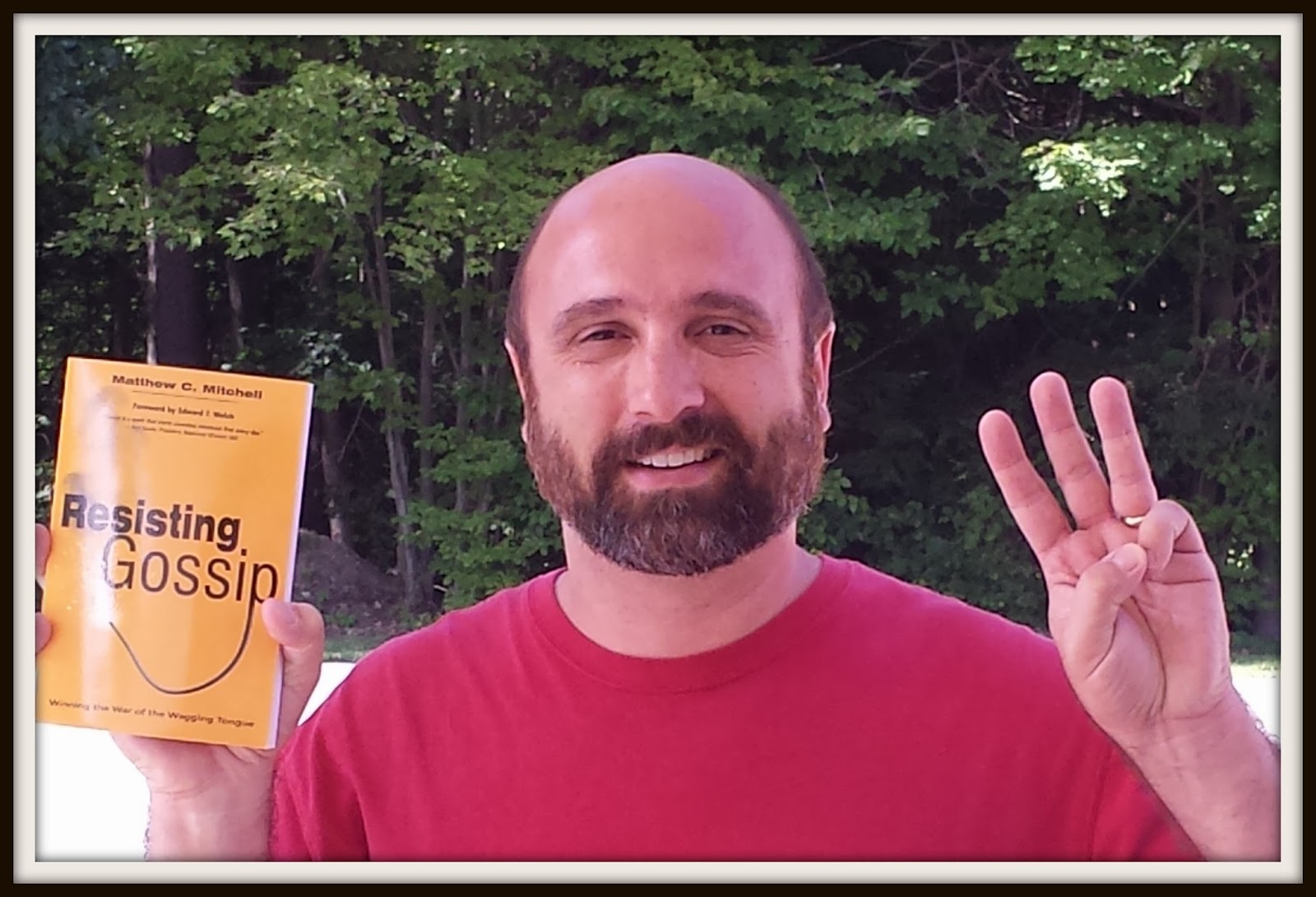 Aww. Our little book turns three today!
It's hard to believe, but Resisting Gossip: Winning the War of the Wagging Tongue was released on September 3, 2013.
Yesterday, I went through all of the posts on this blog marked Resisting Gossip , and reviewed what a wonderful adventure it has been over the last twelve months.
This year has definitely been a quieter year than the previous one when we had the release of Resisting Gossip Together , the ten-part Resisting Gossip Video Teaching Series (free online!), and the Spanish translation Resistiendo El Chisme (remember that time it was on Colombian national television?!?!).
But even though it hasn't been as busy, I am still amazed at how far Resisting Gossip has traveled and thankful for how it continues to have an effect on people's lives.
En français!
A year ago, the French version, Résister à la médisance was released in both France and Canada.

 I got to actually be present for the Canadian release. Dave Almack of CLC Ministries and I traveled up to the beautiful city of Montreal where I got to meet Antoine Roberge and the rest of the CLC Canada team and share the message of my book through a translator.
In a word, this experience was "Merveilleux!"
In Wales, Too
 The next international stop was an article in the Welsh magazine originally titled, "Y Cylchgrawn Efengylaidd," or in English, "The Evangelical Magazine." They published an adapted form of chapter 6, "Instead of Gossip: Listening." Thank you to CLC Publications for giving them permission to share this with their readers.
CCEF National Conference
In between those two international events, I had the privilege of presenting a breakout seminar at the CCEF National Conference entitled, "Behind the Back: When Gossip Distorts Side-by-Side Ministry."
Speaking at CCEF was a "bucket list" level event for me and brought Resisting Gossip full circle as it started its life as a doctoral project encouraged by Ed Welch. I spoke to a room full of highly-engaged listeners who asked great questions to interact with what I had to share. I would do it again in a heartbeat.
Hope Church
In January, I had the opportunity to present the Resisting Gossip Seminar and preach at Hope Church in Spenser, Iowa which is pastored by my friend Russell Muilenburg. Russell wove the seminar into a sermon series he was doing on "Taming the Tongue" for which he interviewed me.
Still Being Read
 I'm encouraged that Resisting Gossip continues to be a bestseller for CLC Publications, and I still get emails and mail from readers who are being helped to fight the good fight against this pernicious temptation.
I'm so glad that we went with CLC as our publisher, especially because of their international missions outreach. In April, I was invited to be the speaker for their special 75th Anniversary Celebration at their annual conference in Philadelphia. What a joy to be with those precious people who pour out their lives to get solid evangelical literature into the hands of the nations!
More Still To Come
The good folks at CLC tell me that the Russian translation has been completed, and they hope to release it this Fall and that the Korean translation is in the final stages of translation and may even be out this month. How exciting to think about the impact of our little book on people around the world.


August 30, 2016
Blaise Pascal on Gossip
 "I set this down as a fact, that if all men knew what each said of the other, there would not be four friends in the world."
(Quoted in "Do Your Friendships Live Out the Gospel?" by Jonathan Holmes in the newest issue of the Journal of Biblical Counseling. Holmes says, "Though gossip and slander can (and should) be forgiven like any other sin, it can take considerable time for trust to be rebuilt, and the hard truth is that many friendships never recover fully" (pg.37)).
August 28, 2016
[Matt's Messages] "The LORD Is Still God."
 “The LORD Is Still God.”
The King of Kings in the Books of Kings
Back 2 School Sunday :: August 28, 2016 :: 1 Kings 19:1-21
This is Back 2 School Sunday, and it seemed appropriate to me for us to go BACK to 1 Kings.
Back to 1 Kings on Back 2 School Sunday.
Does anybody remember what was going on 1 Kings?
Well, we’ve met a lot of kings so far. In fact, we’ve met 13 different kings.
David, Solomon, Rehoboam, Jeroboam, Abijah, Asa, Nadab, Baasha, Elah, Zimri, Tibni (if you count him), Omri, and last and worst so far, Ahab.
Do you remember all of those guys?
A few of those kings were thumbs up guys, at least for part of their life.
But most of them were two thumbs down in the eyes of the LORD.
Especially this last one, King Ahab.
This guy was worse than everybody before him.
The author says that he “considered it trivial to commit the sins of Jeroboam son of Nebat.” So he married the wicked queen Jezebel and began to serve and worship Baal. He was the worst so far. Six thumbs down.
And it was during his reign that we began to hear another story being told. A story about a prophet named Elijah. The days of Ahab turned out to be the days of Elijah. Like we sang this morning.
Elijah had a tough job–to prophesy during the reign of Ahab and Jezebel.
They were prophet-killing-type rulers.
Jezebel especially hated the prophets of Yahweh and wanted them all dead.
So Elijah spent a lot of his ministry on the run. Hiding out from Jezebel’s hitmen.
But he didn’t hide all of the time. He also confronted the prophets of Baal.
First, he showed up one day and announced that it wouldn’t rain again until he said it would. Remember that?
And they went more than 3 years without rain.
That’s because Baal was supposed to be the god of the storm.
But the LORD, Yahweh, had turned off the faucet.
Three years.
And then one day when the cattle dying, Elijah shows back up and calls for a contest to see who’s god is real. Who’s god lives. Who’s god is really God.
Remember this? They have a contest up on Mount Carmel. 450 prophets to 1. And they are still no match.
Because the Baal isn’t real. He doesn’t answer. He isn’t powerful. He is not God.
Do you remember what all of the people of Israel yell after the fire came from heaven and sucked up all of the water and the sacrifice and even the altar?
“The LORD–he is God! The LORD (Yahweh)–he is God!”
And then the rains came.
And Elijah, empowered by the LORD runs faster than Ahab’s chariot all the way to Jezreel.
That’s where left off last time.
“The LORD–he is God! Yahweh–he is God!”
Here’s the title of today’s message.
“The LORD is Still God.”
Yahweh is still God.
Even when it doesn’t seem like it.
Even when it hurts.
Even when we lose.
Even when we feel alone.
Even when we are discouraged.
Even when we are weary.
Even when it feels like nothing ever works.
The LORD is still God.
That’s the point of today’s message.
My guess is that some of us really need to hear it.
Because in chapter 19, Elijah–who has just won the biggest showdown of the prophets since Moses versus the Magicians of Egypt–Elijah is going to be significantly disappointed.
He has just won. Yahweh has sent the fire. Baal has been discredited, dishonored, and disgraced. The prophets of Baal have been put to the sword. The people are shouting, “Yahweh is God.” And Elijah has run with supernatural speed to confront Jezebel.
It’s even possible that now that Ahab has seen the power of the LORD with his own eyes, that he will repent and lead Israel to return to Yahweh. National revival may be on the way!
But none of that happens.
That’s not how it turns out.
In fact, it looks like all of this was for nothing.
Let’s read. Chapter 19, verse 1.
“Now Ahab told Jezebel everything Elijah had done and how he had killed all the prophets with the sword. So Jezebel sent a messenger to Elijah to say, ‘May the gods deal with me, be it ever so severely, if by this time tomorrow I do not make your life like that of one of them.’
Elijah was afraid and ran for his life. When he came to Beersheba in Judah, he left his servant there, while he himself went a day's journey into the desert. He came to a broom tree, sat down under it and prayed that he might die. ‘I have had enough, LORD,’ he said. ‘Take my life; I am no better than my ancestors.’”
Wow. That’s a big change, isn’t it?
From running full tilt towards Jezebel in victory to running full tilt away from Jezebel in what felt like defeat?
That’s a big change in a very short amount of time.
Have you ever felt like Elijah?
“I’ve had enough, LORD. Take my life.”
This guy was depressed. He was despondent. He was heartsick. He was despairing.
Elijah was discouraged.
It seemed like it hadn’t worked.
All that stuff he’d been doing for the last how many years, and it didn’t change anything!
Ahab didn’t repent. He tattled. He didn’t Jezebel that Yahweh was God, and they were now going to follow Him.
He said just told her what happened and then let her do whatever she wanted.
And what she wanted was to go after Elijah.
There was no national revival.
Nothing changed!
The official religion of the royalty of Israel was still Baalism!
After all that?!
In the NIV, verse 3 says that Elijah was afraid, and it seems like he had good reason to be.
But the footnote says that the Hebrew could be translated, “Elijah saw.” I think that’s probably more likely.
Elijah saw the way things were and what was going to happen next.
And it was almost devastating to him.
He leaves his servant at Beersheba, I think that means he doesn’t expect to come back. And he finds a broom tree which is as desolate as it sounds and plops down and tells God that he’s ready to do.
“I’ve had enough, LORD. Take my life.”
He doesn’t want Jezebel to take to his life. He doesn’t want her to win. But he’s just played out. He doesn’t have anything left.
It feels like the game is over, and he’s lost it.
Have you ever felt like that?
I know you have.
Probably some of you are basically feeling that way today.
“I’ve had enough.”
“I did all of this, and it didn’t work.”
“Why has it turned out like this?”
I’m not sitting blessed under my vine and my fig tree (4:25).
I’m sitting depressed under a broom tree in the desert. And I just want to curl up and die.
I love it when we win.
When things are going great for other Christians.
Last week, we had a tremendous Good News Cruise. We prayed for it all Summer and did all of that work and we had a great turnout. And a little bit of rain. And so many affirmations from people that we had done a good job.
That felt good. God is good! Amen?
What if it had rained all day long?
What if nobody had come?
What if all of those hotdogs and chips that Art had been stockpiling went bad and uneaten?
What if there had been an accident and somebody’s car got totaled in our parking lot?
There is no promise in Scripture that those things would not happen at our Good News Cruise.
And if they did, would the LORD still be God?
Cancer.
Divorce.
Death.
Losing the game.
Losing your savings.
Losing the culture war.
Losing your country.
I’ve been the pastor here for 18 years, and they’ve all been good years. Some harder than others. Some have been more fruitful.
But we’ve never seen great revival. Never seen an amazing spiritual awakening in our community.
And we’ve not seen national revival though we’ve prayed for it many times.
It’s easy to get discouraged.
“Nothing changes. It didn’t ‘work.’ I’m just so tired. I’ve had enough. Take my life.”
It’s times like that when we need to be reminded that LORD is still God.
Yahweh is still God.
Not just in the exciting times when we’re winning.
But after that when it doesn’t seem like anything has changed.
Four points this morning. Here’s number one.
#1. HE IS STILL GOOD. V.5
“Then [Elijah] lay down under the tree and fell asleep. All at once an angel touched him and said, ‘Get up and eat.’ He looked around, and there by his head was a cake of bread baked over hot coals, and a jar of water. He ate and drank and then lay down again.”
I love that. God is so good to Elijah. He’s so gentle and generous.
Elijah wants to die, but God gives him sleep, something warm to eat, something cool to drink, and an angel to deliver it.
God’s still good.
These may not be the things that Elijah wanted, but they were just what the doctor ordered. They were what Elijah really needed.
God’s still good.
And He’s always giving little gentle gifts to us even when things are at their worst.
Last week, Dan Kerlin’s brother was in that bad accident.
I texted him to find out how Murph was doing. He replied, “Pretty much the same, induced coma, brain bleed drain has been removed, lots of movement, still on vent. God is working in this situation.
I said “Thanks for the update. Praising and praying.”
And Dano wrote back, “Thank you. God is good all the time.”
He’s still good. Even in the worst of times, He’s still looking out for us and giving us little, gentle gifts of His grace.
In verse 7, we find out that this was the angel of the LORD Himself who was taking care of Elijah. And He’s got a new plan for him. V.7
“The angel of the LORD came back a second time and touched him and said, ‘Get up and eat, for the journey is too much for you.’ So he got up and ate and drank. Strengthened by that food, he traveled forty days and forty nights until he reached Horeb, the mountain of God.”
Now, if you’ve read your Bible for a while, all kinds of bells and whistles should be going off in your head right now.
Forty days and forty nights? Remind you of anybody? Moses on Mount Sinai?
What’s the other name for Mount Sinai? Mount Horeb.
This is the place where God made the covenant with His people.
This is the place where they broke the covenant, and then He made it again.
This is the place, the mountain of God, where Moses asked God to show him His glory. In fact, this may be the very spot on “Covenant Mountain!” (What Dale Ralph Davis calls Horeb.) V.9
“There he went into a cave and spent the night. [Is that the cleft in the rock? We don’t know.] And the word of the LORD came to him: ‘What are you doing here, Elijah?’”
Now some people think that that’s big rebuke. Like God is saying, “And what do you think you’re doing here, mister?”
“Come for a little pity party, have we?”
And maybe there is a little bit of a rebuke there, but I don’t think much. Why is Elijah here? Because God told to him come here. V.7 indicates that, right? Elijah wanted to die in the desert. The LORD wanted him to eat up to take a forty day journey to Horeb.
“What are you doing here, Elijah?”
Maybe God is saying, “Why do you think I have you here?”
It’s an invitation to trust Him.
Here’s Elijah’s answer. Tell me if you think he answers the question or not. V.10
“He replied, ‘I have been very zealous for the LORD God Almighty. The Israelites have rejected your covenant, broken down your altars, and put your prophets to death with the sword. I am the only one left, and now they are trying to kill me too.’”
Is that an answer?
Now many people think that Elijah is whining here. He’s just a big whiner. I heard a preacher once read verse 10 like this, “I have been very jealous for Yahweh and all I got was this lousy t-shirt!”
That’s a possible interpretation of this verse (and verse 14). And I think there is an element of complaint here. And some exaggeration. Elijah knows that his friend Obadiah has hidden 100 prophets in Israeli caves. He might be the only one who was public, but there were others.
But I think he’s mainly just pouring out his lament to the LORD.
“Lord, it hurts!
Lord, it didn’t work!
Lord, we lost!
Lord, it’s all falling apart!
I do love you, LORD. I’ve been very zealous. You know I have.
I’ve given my life to this work.
But it hasn’t been working.
And I’m just so tired. And I feel so alone.”
Have you ever been depressed for God’s sake? [I got this language from Dale Ralph Davis.]
Elijah is not just depressed for Himself. He hates what has happened to the name of the LORD.
The Israelites have rejected the covenant.
They have broken down the true altars and erected them to Baal.
They have put the true prophets to death and elevated their own.
This is not the way things ought to be!
Have you ever looked out on the world, and said, “Lord! This is not the way things ought to be. They are dragging your name through the mud. And it hurts me to see it.”
But even when that happens, the LORD is still God. V.11
“The LORD said, ‘Go out and stand on the mountain in the presence of the LORD, for the LORD is about to pass by.’ Then a great and powerful wind tore the mountains apart and shattered the rocks before the LORD, but the LORD was not in the wind. After the wind there was an earthquake, but the LORD was not in the earthquake. After the earthquake came a fire, but the LORD was not in the fire. And after the fire came a gentle whisper.”
#2. HE IS STILL SPEAKING.
I’m not sure all of the reasons why God puts on this fireworks display for Elijah.
I don’t think it’s to scare him or shame him.
“Oh yeah? You’re gonna whine like that? I’ll show you who’s still God!”
But it is probably to remind Elijah that God is still powerful.
He’s the same God who burned up that sacrifice yesterday.
And He’s the same God that set this whole mountain on fire when He gave the 10 commandments to Moses.
But more important than the demonstration of power is the still small voice of God.
The gentle whisper.
He’s not just like Baal the storm god. All flash and thunder supposedly but nobody really home.
He’s the speaking God.
The God who is there.
And He’s still speaking today.
What’s He saying to you?
He’s calling you to trust Him. V.13
“When Elijah heard [the gentle whisper], he pulled his cloak over his face and went out and stood at the mouth of the cave. Then a voice said to him, ‘What are you doing here, Elijah?’
[Do you know why you are here?]
He replied, ‘I have been very zealous for the LORD God Almighty. The Israelites have rejected your covenant, broken down your altars, and put your prophets to death with the sword. I am the only one left, and now they are trying to kill me too.’”
“I’m here because I belong to you.
I’m here because I love you.
I’m here because of your name.
I’m here because things aren’t working the way I thought they would.
I’m here because you have me here.
Same story as before.
I’m tired. It hurts. And I feel alone.
What do we do now?”
It’s possible that he’s whining. It’s possible that he didn’t learn anything from all of this.
It’s possible that God is rebuking Elijah by asking him the same question a second time.
But that’s not how it feels to me when I read it today.
It doesn’t feel like an accusation. It feels like an invitation.
And see what God does next?
He sends him on a new mission. V.15
“The LORD said to him, ‘Go back the way you came, and go to the Desert of Damascus. When you get there, anoint Hazael king over Aram. Also, anoint Jehu son of Nimshi king over Israel, and anoint Elisha son of Shaphat from Abel Meholah to succeed you as prophet. Jehu will put to death any who escape the sword of Hazael, and Elisha will put to death any who escape the sword of Jehu. Yet I reserve seven thousand in Israel–all whose knees have not bowed down to Baal and all whose mouths have not kissed him.’”
You know what that feels like to me?
It feels like Yahweh says, “You’re right, Elijah. You have been very zealous for my name. They have broken the covenant. They have broken the altars. They have killed the prophets. And I’m not done yet.”
“I understand how you feel, but this story is not even close to being over.”
#3. HE IS STILL WORKING.
The LORD is still at work.
And He’s got more work for Elijah to do.
Now, we’ll find out that Elijah doesn’t have a lot more to do. He’s coming to the end of his fantastic ministry.
But God still has a job for him–anointing.
Anointing two kings and a new prophet.
Hazael over Aram. And he’s going to rain down judgment on Israel.
And Jehu to be the next king of Israel. And he’s going to rain down judgment on Baalism.
And Elisha to come alongside Elijah so he isn’t so lonely and so that someone else can take up and keep the work going.
“What are you doing here, Elijah?”
“Let me tell you. You’re not here to die. You’re here to know that I’m still God and to know that I’m still at work. And to get back to work yourself.”
“I assure you that this story is not over. I assure you that Baal does not prevail. I assure you that you Ahab does not prevail. And you can bet the house that Jezebel does not win.”
“I am still at work. No matter how bleak it seems, I have not gotten even close to quitting.”
#4. HE IS STILL FAITHFUL.
God always keeps His promises.
Always.
I love verse 18. Because Paul quotes it in Romans chapter 11. Remember that?
“Did God reject his people? By no means! [Paul says,] I am an Israelite myself, a descendant of Abraham, from the tribe of Benjamin. God did not reject his people, whom he foreknew. Don't you know what the Scripture says in the passage about Elijah–how he appealed to God against Israel: ‘Lord, they have killed your prophets and torn down your altars; I am the only one left, and they are trying to kill me’? And what was God's answer to him? ‘I have reserved for myself seven thousand who have not bowed the knee to Baal.’”
There is always a remnant.
Even if the nation goes down in flames and exile.
God always keeps His promises and always preserves a remnant for Himself.
Because He is still faithful.
And that calls for us to trust Him.
Trust Him for salvation.
God has promised to save all of who will trust in Jesus.
Jesus died and rose again to save sinners like you and me.
And God promises to save us if we will turn from our sins and put our faith in Jesus and Him alone.
The LORD is faithful, and He will do it.
Trust Him. And follow Him by faith.
Seek His kingdom.
That’s what Elijah does. He gets up right from there and goes right back to work.
I’m not saying that he doesn’t still hurt. I’m sure he does.
None of this erases the pain. But He’s heard from God. God is still working and still has a job for him, and God is faithful. So Elijah goes back to seeking His kingdom.
He goes to find Elisha. V.19
“So Elijah went from there and found Elisha son of Shaphat. He was plowing with twelve yoke of oxen, and he himself was driving the twelfth pair. Elijah went up to him and threw his cloak around him [Swack. Gotcha!]. Elisha then left his oxen and ran after Elijah. ‘Let me kiss my father and mother good-by,’ he said, ‘and then I will come with you.’ ‘Go back,’ Elijah replied. ‘What have I done to you?’ [Sounds good. No problem. Go say goodbye, and off we go. V.21] So Elisha left him and went back. He took his yoke of oxen and slaughtered them. He burned the plowing equipment to cook the meat and gave it to the people, and they ate. Then he set out to follow Elijah and became his attendant.”
That’s burning your bridges right there. Or burning your beef, at least.
No turning back, no turning back.
“Bye Mom! Bye Dad! I’m off to seek the kingdom of Yahweh, with His prophet Elijah!”
How do you burn your bridges like that?
How do you give up everything and throw a feast then follow, follow, follow?
You believe that the LORD is still God.
And He’s still faithful.
And that He’s still keeping every one of His promises.
School starts this week.
Here’s the message for all of our students, all of their parents, and everybody else who is headed back to school.
The LORD is still God.
No matter how it feels.
No matter how much it hurts.
No matter whether this school year goes like you want it to or if it just flops.
The LORD is still good, He is still speaking, He is still working, and He is still faithful.
The LORD is still God.
***
Group Discussion Questions
1. Remind each other of the story so far. Who was Elijah and what was his mission? What do you think Elijah might have expected to happen after the events of chapter 18?
2. Read 1 Kings 19:1-5. Why do you think Elijah was so discouraged?
3. Read 1 Kings 19:6-9. How does the LORD minister to Elijah in his time of testing?
4. Read 1 Kings 19:10-14. Do you think Elijah is whining? Why or why not? If he’s not whining, he is certainly expressing his lament with the LORD. As Christians, we often don’t understand the language of lament, but it is godly way of expressing our tear-filled pain to the Lord. Where else in the Bible can believers learn to lament? What have you learned about lament that helps you to understand Elijah’s prayers in verse 10 and verse 14?
5. Read 1 Kings 19:15-21 and review Pastor Matt’s 4 points about how the LORD is still God. How does each point come from the story?
6. Did you need this story today? Why? When have you felt the kind of discouragement that Elijah felt? What helps you when you feel that way? How should we apply 1 Kings 19 to our lives today?
***
Messages in this Series:
01. Who Will Be King?
02. The Wisdom of the King
03. The Temple of the King
04. The Incomparable King of the Temple
05. A Breathtaking King
06. The Turned King and the Torn Kingdom
07. The Two Kings and the Tearing of the Kingdom
08. The Word of the LORD
09. In the Eyes of the LORD
10. The LORD Lives11. The LORD Is God!
August 27, 2016

August 20, 2016

August 14, 2016
[Matt's Messages] "Ready to Answer?"
 “Ready to Answer?”
Good News Cruise 2016
August 14, 2016 :: 1 Peter 3:15-18a
We will return to the Days of Elijah in 1 Kings next time I get up here to preach.
But today, I want to help us get ourselves ready for the Good News Cruise.
We’re working hard to get all of the details together. We need your help. Water bottles, gift bags, door prizes, cooler, canopies, set-up, parking, food service. All of that. All hands on deck! We need to get all of that ready for this big event.
But even more important than all of that, we need to get ourselves ready spiritually.
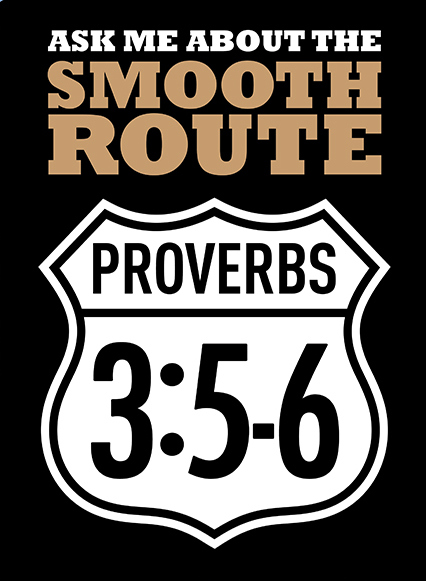
Because, you may have noticed, we’ve put an invitation on your back.
Everybody see the back of the t-shirts this year? They are really cool.
They have our theme verse reference for our Hide the Word verse, Proverbs 3:5-6.
And it says, “Ask me about the Smooth Route.”
So, if they ask, what are you going to say?
If someone says to you on Saturday, “So what’s this ‘Smooth Route’ all about?” what are you going to say?
Are you ready to answer?
Because we’ve put a big target on your back. “Ask me!”
Now, some of you are saying, “Then I’m not wearing that t-shirt this Saturday!”
But the fact is that God has placed a big target on your back already. “Ask me!”
If you are a Christian, if you have been marked out as one of Jesus’ followers, then you need to be ready to talk about Him whether you wear a t-shirt or not.
That’s what baptism is. It’s like putting on the t-shirt and going out in public.
“I’m with Jesus. Go ahead, ask me about Him!”
Are you ready to answer?
That’s what Peter is talking about in chapter 3 of his first letter.
He’s writing to Christ-followers who are being persecuted for their faith. They are doing good and being good, but they are suffering for it.
They are getting a raw deal.
By the way, that’s one thing we do NOT mean by the “smooth route.” We do not mean that if you trust in Jesus then your life will run smoothly all of the time. No bumps, no roadblocks, not detours.
Is that what Jesus promised us?
No way. Jesus promised us, “In this world you will have...what?” Trouble! But take heart, Jesus has overcome the world.
That’s what it means by saying, “He will make your paths straight.” He will direct your paths, and you will get home safely. We will safely reach our destination by faith. That’s the smooth route.
Not that it won’t be painful at times.
These Christians were experiencing the painful times.
And Peter was encouraging them to hold on and to keep doing what was right even when they weren’t seeing the blessings yet in return.
And in the middle of this kind of teaching, Peter tells his readers to always be ready to answer questions about their hope in God.
Because they have big target on their backs saying, “Ask me!”
In this passage, I see at least 3 ways that we need to get ready spiritually for the Good News Cruise.
#1. READY YOUR HEART. Look at verse 15.
“But in your hearts set apart Christ as Lord.”
You won’t be ready to talk about Jesus if your heart isn’t right with Jesus.
In the context, Peter is telling the believers to not live in fear of other people, but instead to set apart Christ as Lord.
Do you need to hear that? I need to hear that. Especially when I’m going into a possible evangelistic encounter. A potential gospel-sharing moment.
What I am I thinking about?
I’m worried (afraid) of what someone is going to say to me, do to me, or (gasp!) think about me!
But Peter says, “Don’t think about that. Think about how Jesus is your Lord.”
The old King James says, “Sanctify the Lord God in your hearts.”
Worship Him at the heart level. The fear of the Lord is the beginning of wisdom, and that’s how you get your heart ready to reach out at the Good News Cruise.
Or at work. Or at school. Or at soccer. Or in the neighborhood.
“But in your hearts set apart Christ as Lord.”
That means prayer, doesn’t it?
We’ve been praying for the Good News Cruise. Every month at the Harvest Prayer Time. Every Wednesday night at the Prayer Meeting. And, I’m sure, lots of other places.
Have you prayed for yourself and the Good News Cruise? That you would, in your heart, set apart Christ as Lord.
Is there some area of your life that is not under the lordship of Christ? Some area that you’re holding back from Him?
Repent.
Set apart Christ as Lord IN YOUR HEARTS. In your innermost being.
That’s where the ALL comes from right, in our key verse? “Trust in the LORD with ALL your heart and lean not on your own understanding. In ALL your ways acknowledge him, and he will make your paths straight.”
Set apart ALL of your hearts to the Lord.
Ready your heart.
#2. READY YOUR MOUTH.
It’s not good enough to just set apart Christ in our hearts. We must also talk about Him with our mouths.
People need to know the gospel. They need to know the good news of Jesus Christ.
So somebody’s gotta tell them. V.15 again.
“But in your hearts set apart Christ as Lord. Always be prepared to give an answer to everyone who asks you to give the reason for the hope that you have.”
This is like the Christian Boy Scout verse.
“Always be prepared!” Right?
Be prepared to serve someone a hot dog? Right?
Always be prepared to park another car, right?
Yes, but also “Always be prepared to give an answer to everyone who asks you to give the reason for the hope that you have.”
“Ask me about the smooth route.”
So, what are you going to say if someone asks you?
Everybody ought to have something ready to share.
It doesn’t have to be long. In fact, it shouldn’t be long.
If you are answer is a half an hour sermon, you’re doing it wrong.
Try 30 seconds.
Have you ever heard of an elevator speech?
They teach salesmen to give their presentation in the same time it takes to ride an elevator with someone you want to persuade.
Now, we’re not selling anything. Including the gospel.
But we can learn to give elevator-ride-length answers to Jesus questions.
Go ahead and try it.
I’ll give you 1 minute. Answer the question, “What is this smooth route?” to the person next to you and then give them a chance to answer it to you.
Go ahead!
[wait a minute]
That wasn’t so bad, was it?
Now these instructions from the apostle Peter have a lot more to do with just being ready to speak out than they do to having a short speech prepared.
Peter is not teaching that we have to have a sales pitch ready to go.
But he is saying that we need to be ready to speak.
When I was a student at Moody Bible Institute, they used to tell us that we needed to be ready to preach, pray, or die at moment’s notice.
Preach, pray, or die!
And I always think, “Which one do you want?”
Two of those are easier than the others.
Some of you are thinking, “I’d rather die than preach or pray!”
The point is that people need Jesus and we need to be ready to talk about Him.
Do you know who was good at that? Blair Murray was.
He’s going to be missed this year at the Cruise-In.
Keith Folmar has written a little tribute to Blair and to Lenny Mondock. Remember Lenny? He was always in the center of the fun at the Good New Cruise. He was the guy who was arranging for us to have all of those chips and stuff donated.
Since last year’s cruise, we have lost both Blair and Lenny. And Keith has written up a little tribute to them that will be in each of the bags for all of the vehicle participants and on the literature table for the spectators to grab. It’s called “Missing but not Gone: What Blair and Lenny Would Want You to Know Today.”
You know, some of you might want to use that in your answer.
I’m not going to tell you today how to answer the question. I’m not going to give you a little canned speech for you to deliver on Saturday.
That’s not how it works in real life is it?
If we have 120 of us here next week, we should have like 120 different answers.
I’ve put a letter in each of the participant’s bags that explains the Smooth Route and quotes Proverbs 3:5&6. You could refer someone to that.
Or you could quote it yourself and say what it means to you and how you’ve seen it work in your life.
It’s going to be on each bottle of water. And you should have it memorized by now.
Here’s the point that Peter is making:
You have hope. People are going to want to know where it comes from.
That was especially true for Peter’s readers because they had hope even when things were going bad.
And they were living their lives in such a way that people could tell there was something different about them.
“Hey! You’re getting beat up by the people around you. Why are you so happy? Where does your joy come from? Where does your hope come from?”
“Let me tell you.”
Do you have a painful hope?
I mean hope through the tears?
Back on September 11th during the terrorist attacks, author Jill Briscoe was on a plane to the United States that got re-directed to Greenland for two weeks. And everyone was miserable there. No one could go home, they had to sleep on military cots. And New York was in rubble.
And Jill had a kind word, a shared blanket, and a smile for others, even when they gave her grief about it. She wrote when she got back that some of the people said, "What in the world do you have to smile about?"
And she says, "So I told them!"
Are you ready to tell people what you are smiling about?
Maybe God is bringing pain into your life so that your hope shows through so that people ask.
If you weren't hurting, they might miss your hope. But your hope is all you have when you hurt so God brings in pain to bring out your hope and make them ask.
Ready your mouth.
#3. READY YOUR MANNER.
There is a right way and wrong way to do this. Look at verse 15 once again.
“Always be prepared to give an answer to everyone who asks you to give the reason for the hope that you have. But do this with gentleness and respect, keeping a clear conscience, so that those who speak maliciously against your good behavior in Christ may be ashamed of their slander.”
Your manner matters.
It matters how we talk to people, not just what we say.
Peter with “with gentleness.”
That means don't shove it down their throats. Be tender with people. Warren Wiersbe reminds us that when we are doing evangelism, we are “witnesses not the prosecuting attorney” (Be Hopeful, 84). The purpose of explaining our hope is not winning an argument but winning souls to Christ and that can only be done with gentle winsomeness. Are you ready to do it that way?
“With Respect” means not lording your knowledge over them, but handing it to them respectfully. You aren't a Christian because you are so great and they are so bad. You are a Christian because of the grace of God. Show that grace to them as you share your hope with them.
And “With a Clear Conscience” means living the life that you are talking about on the inside as well as the outside. Not being a hypocrite. Walking the walk, not just talking the talk. Because they are watching your life to see if it matches your words.
Do you trust in the Lord with all you heart?
Do you lean not on your own understanding?
Do you acknowledge Him in all your ways?
They want to know that it’s for real. Not just some sales pitch.
People are watching your life to see if it matches your words–not perfectly but truly.
And if it does, Peter says, that someday (if only on the Judgement Day) they will be ashamed that they picked on you.
Verse 16. “...so that those who speak maliciously against your good behavior in Christ may be ashamed of their slander. [Hopefully, nobody at the Good News Cruise will be slandering you. But if you are getting it in the rest of life, we have this vindication to look forward to. V.17] It is better, if it is God's will, to suffer for doing good than for doing evil. [So keep on doing good. That’s what Jesus did! V.18] For Christ died for sins once for all, the righteous for the unrighteous, to bring you to God.”
He showed us the way.
Gentleness, Respect, a Clear Conscience.
That’s the right manner to give out the gospel.
It’s the way of love.
We need to love the people we talk to.
Even the ones that are against us.
That’s what Jesus did. When WE were against Him.
“For Christ died for sins once for all, the righteous for the unrighteous, to bring you to God.”
Tell ‘em that!
That’s the gospel. That’s the good news that this cruise is built on.
“For Christ died for sins once for all, the righteous for the unrighteous, to bring you to God.”
It doesn’t have to be fancy. We just have to keep our focus on the main thing.
The main thing is to keep the main thing the main thing.
And the main thing is the gospel of Jesus Christ.
Let’s ready our hearts.
Let’s ready our mouths.
Let’s ready our manner.
And let’s go out there at the Cruise and in the rest of life and answer the question we’ve got on our backs.