Matthew C. Mitchell's Blog, page 76
November 13, 2016
[Matt's Messages] “No God in the All the World Except in Israel”
 “No God in the All the World Except in Israel”
The King of Kings in the Books of Kings
November 13, 2016 :: 2 Kings 5:1-27
We’ve turned the corner from the first Book of Kings to the second Book of Kings. And we’ve turned the corner from the first major prophet in the Books of Kings, Elijah, to the second major prophet in the Books of Kings, Elisha.
But we have not been introduced to a second God.
It’s all been about the same God–Yahweh.
Yahweh is the God of 1 Kings, and He is the same God in 2 Kings. And He’s the same God forever.
He’s a God of Wonders. He’s is compassionate and powerful and generous.
Even though Israel’s kings have been dismal failures, two thumbs down, God has continued to graciously care for His people through His wonder-working prophet.
And in chapter 5, that prophet, Elisha, does yet another miracle that reveals the glory of Yahweh.
But this time, the miracle is done for someone who is...not a Jew.
Someone who is not from Israel at all.
Someone who, at least at the start of the story, does not yet even believe in the LORD!
And yet God shows his mercy and grace and power and glory to this man.
So that he proclaims the title of today’s message, “Now I know that there is no God in all the world except in Israel.”
And that’s the God that gets the glory.
Today, as we read this story, let’s see what it reveals about Who God truly is and what that means for us today.
The story in 2 Kings is very familiar to many. Other than the Elijah and the fiery chariot of chapter 2, this is probably the most familiar story in 2 Kings.
And for good reason. It’s a great little story. It’s really interesting and different, and it’s funny. There are so many humorous little twists and turns in these 27 verses. And it’s weird and strange like many of the other stories in the Books of Kings, so it keeps your interest the whole time.
Raise your hand if you already know this story.
I know you do, Wally. When Wally was a kid, his pastor, preached on this story and Wally still remembers the title, “Seven Ducks in a Muddy River,” right? Clever!
I remember Doreen Crandall of WTLR tell this story to our Kids for Christ at a Kick Off many years ago.
I remember our missionary Kim Cone preaching on this story a few different times when he was here.
And the president of Wheaton, Phillip Ryken, told this story to us at the last EFCA One national conference.
It’s a very familiar and beloved story to us.
BUT...IT WOULD NOT HAVE BEEN LOVED BY ISRAEL.
It would not have been a beloved story for most Israelites.
In fact, it was more like a slap in the face.
You know why?
Because it was a story about how God was gracious to one of their enemies.
A man named “Naaman.”
Look at verse 1.
“Now Naaman was commander of the army of the king of Aram. He was a great man in the sight of his master and highly regarded, because through him the LORD had given victory to Aram. He was a valiant soldier, but he had leprosy.”
Now try to put yourself in the shoes of an ancient Israelite who is hearing this story for the first time.
Listen again to the first sentence.
“Now Naaman was commander of the army of the king of Aram.”
What would be your reaction if you were in the shoes of an ancient Israelite that hears that sentence?
“Boo! Hiss!” Right?
This is a bad guy. We’ve already met this army of Aram. They are the enemies of Israel. Sometimes, Israel beats them. Sometimes, Israel loses to them.
And this guy is the current commander of the army.
And he’s big stuff back in Aram. Modern day Syria. Second sentence.
“He was a great man in the sight of his master and highly regarded [his face was on the cover of Aram Today Magazine, he was a highly decorated general, had all the stars and bars. And so an Israelite had every reason to hate him. But catch where this goes! He was ‘highly regarded...”], because through him the LORD had given victory to Aram.”
Wait, what?
Who had given this guy victory?
The LORD? Yahweh? The God of Israel?!
Now, this does not mean that Naaman knew that Yahweh had given him victory or that he gave credit to Yahweh for his successes. It just means that the Bible knows where Naaman’s victories came from.
They were from the LORD.
Here’s point number (one of three) this morning.
The God of Israel is:
#1. SOVEREIGN.
There is no God in all the world but the God of Israel, and He is sovereign.
He is in control.
He reign and rules over all.
He is sovereign over even the victories of His people’s enemies.
And He uses them for His good purposes.
And one of the implications of that truth is that we shouldn’t get too saucy about our successes because they ultimately come, not from us, but from the LORD.
And on the flipside, we shouldn’t get too worried about our enemies’ victories either because they are in the hands of the LORD, as well. And He has good reasons for allowing them, in His wisdom.
Last sentence. “He was a valiant soldier, but he had leprosy.”
And what do you say if you’re an Israelite?
“Hooray!”
“He’s got leprosy!
“He may be a winner, but he’s probably in pain all the time and he looks funny. Maybe he shouldn’t be on the cover of the magazine. His skin is all white and funny looking.
And he’s unclean. Uggh. He could never worship at the temple.
Not only is he a stinking Gentile, but he’s got a skin disease!”
“Yes!”
That’s how an Israelite would feel about this story so far, right?
Well, there was at least one Israelite who didn’t feel that way.
Even though she might have had every reason to. V.2
“Now bands from Aram had gone out and had taken captive a young girl from Israel, and she served Naaman's wife. She said to her mistress, ‘If only my master would see the prophet who is in Samaria! He would cure him of his leprosy.’”
This young girl demonstrates great faith and love.
We don’t know her name. But she’s a great example of both faith and love.
Imagine her life. She had been kidnaped by the Arameans.
Taken for a slave. Ripped away from her parents, from her homeland.
But here she is caring about her master, Naaman.
‘If only my master would see the prophet who is in Samaria! He would cure him of his leprosy.’”
Maybe Naaman was a good master. Maybe Mrs. Naaman was a good mistress easy to become endeared to.
I don’t know, but I do know that this little girl was not bitter about the hand that had been dealt to her. Instead, she showed love to the people around her.
She knew that the God of Israel was sovereign.
Not just over the big things like military victories, but over the relatively small things like the living situation of a little nameless slave girl.
Friends, the LORD is sovereign. So don’t get bitter.
You never know why the Lord may have you placed in a difficult situation.
You know that nothing “just so happens” right?
We says, “it just so happens that...” but there are no true accidents.
The world is broken, but it is not out of God’s control.
God is sovereign over victories and defeats.
Over wins and losses.
Over triumphs and kidnapings.
So don’t get saucy if you’re succeeding but also don’t get bitter if you are losing.
You never know why the Lord may have planed you in your situation.
You might even have leprosy so that you come to know God.
Or you might be forced into slavery so that you point others to God!
God is sovereign.
This little girl is a great example of faith. She knows the stories of the God of Wonders that we’ve been learning about in 2 Kings. She’s maybe heard of the healing of the water in Jericho, or the widow’s oil, or the Shunammite’s son, or the death in the pot that was no more, or the feeding of the hundred with the barley bread.
She knows that God is powerful and that He is doing miracles through Elisha. And she says, “If only my master would see the prophet who is in Samaria! He would cure him of his leprosy.’”
And Naaman hears about this and goes to the king with the news. V.4
“Naaman went to his master and told him what the girl from Israel had said. ‘By all means, go,’ the king of Aram replied. ‘I will send a letter to the king of Israel.’ So Naaman left, taking with him ten talents of silver, six thousand shekels of gold and ten sets of clothing. [That is a fortune.] The letter that he took to the king of Israel read: ‘With this letter I am sending my servant Naaman to you so that you may cure him of his leprosy.’”
Now, this is curious.
Apparently, this is during a time of detente, a time of relative peace between the two nations. A cease-fire or a limited treaty.
And the king or Aram sent Naaman with a letter requesting that the king of Israel cure Naaman of his leprosy.
Now, again, how do you read this if you’re an ancient Israelite?
You might say, “Alright! Let’s see Elisha do it!”
But the letter doesn’t say anything about Elisha directly.
The king of Israel (probably Jehoram though it doesn’t say) is flabbergasted by the letter! V.7
“As soon as the king of Israel read the letter, he tore his robes and said, ‘Am I God? Can I kill and bring back to life? Why does this fellow send someone to me to be cured of his leprosy? See how he is trying to pick a quarrel with me!’”
See what I mean about this story being funny?
This is a thumbs-down king. And he’s just flabbergasted.
Who is he supposed to be contrasted with in this story?
The little girl, right?
She has no power, no social standing, and she’s not even in Israel, but she has faith.
He is the king! But he doesn’t even think about Elisha.
Poor guy. Thinks that the king of Aram is trying to make excuses for a fight.
Lucky for him, word reaches Elisha anyway. V.8
“When Elisha the man of God heard that the king of Israel had torn his robes, he sent him this message: ‘Why have you torn your robes? Have the man come to me and he will know that there is a prophet in Israel.’ [Send him on down.] So Naaman went with his horses and chariots and stopped at the door of Elisha's house. [The motorcade pulls right up to the front door. Everybody gets out. Naaman walks up and knocks. But Elisha doesn’t answer it. I love it! V.10]
“Elisha sent a messenger to say to him, ‘Go, wash yourself seven times in the Jordan, and your flesh will be restored and you will be cleansed.’”
“Don’t stick around here. Go several miles away and take a bath, and all will be well. I don’t even need to stick my head out the door. Just go and do it. Okay? Go.”
Well, this doesn’t sit well with Naaman. V.11
“But Naaman went away angry and said, ‘I thought that he would surely come out to me and stand and call on the name of the LORD his God, wave his hand over the spot and cure me of my leprosy. Are not Abana and Pharpar, the rivers of Damascus, better than any of the waters of Israel? Couldn't I wash in them and be cleansed?’ So he turned and went off in a rage.”
Here’s point number two.
The God of Israel is:
#2. PARTICULAR.
There is no God in all the world but the God of Israel, and He is particular.
What I mean is that God wants us to do things His way and no other way.
He’s particular about it.
God wants us to do things His way and no other way.
It’s not that He’s fussy. He’s holy.
It’s not that He hard to please. This request is not difficult or demanding. And we’re going to see that it’s completely and totally FREE.
But that doesn’t mean that it comes any which way.
It comes God’s way.
And that requires humility and faith.
This was offensive to Naaman.
He had a different idea of how He wanted God to work.
Have you ever had a different idea of how you wanted God to work?
How you expected God to work?
And He didn’t work that way?
I know I have.
I’ve been disappointed with God’s way. And I say that to my shame.
V.11 again.
“Naaman went away angry and said, ‘I thought that he would surely come out to me [he’s used to be the one people come out to!] and stand and call on the name of the LORD his God, wave his hand over the spot and cure me of my leprosy. [He wanted magic! He wanted hocus pocus. He wanted Benny Hinn.] Are not Abana and Pharpar, the rivers of Damascus, better than any of the waters of Israel? Couldn't I wash in them and be cleansed?’ [Can’t I do it my way? With prestige!] So he turned and went off in a rage.”
I think he also expected to pay something for this great miracle.
That’s why he brought all of that money with him.
And Elisha wouldn’t even come to the door!
Have you ever felt like Naaman?
God’s way is counter-intuitive, surprising, and offensive to you?
It’s fundamentally humbling to do things God’s way.
So it takes humility and faith.
God is particular. He requires things to be done His way and only His way.
Salvation, for example.
Jesus said, “I am the way and the truth and the life. No one comes to the Father except through me.”
Is that hard?
No.
But it is particular.
God is inclusive in that everyone who comes to Him through Jesus will be saved.
But He is exclusive in that you must come through Jesus to get to Him.
You can’t come some other way.
You don’t call the shots.
The Lord calls the shots.
So humble yourself.
Is there another area, besides salvation where you need to humble yourself and begin to do things God’s particular way?
In your family?
At your work?
In your private life?
Humble yourself and do what God says.
Even if it doesn’t seem to add up at first.
He knows what He’s doing. He made the world in a particular way. And He wants His children to act in a particular way. To trust Him.
Humble yourself. Try it!
That’s what Naaman’s servants said to him. V.13
“Naaman's servants went to him and said, ‘My father, if the prophet had told you to do some great thing [some difficult thing], would you not have done it? How much more, then, when he tells you, 'Wash and be cleansed'!’ [It’s worth a try.]
So he went down and dipped himself in the Jordan seven times [1-2-3-4-5-6-7], as the man of God had told him, and his flesh was restored and became clean like that of a young boy.”
Now if you are an ancient Israelite who is hearing this story for the first time, you’ve begun to root for Naaman and you’re really proud he listened to your Jewish prophet, Elisha, and got healed in your own river, Jordan, by your own God, the LORD.
And you love it when Naaman returns in verse 15.
“Then Naaman and all his attendants went back to the man of God. He stood before him and said, ‘Now I know that there is no God in all the world except in Israel.”
There’s our title for today!
I wouldn’t say it that way. He’s a new believer, so he gets excused. He has much to learn.
The point is not that God is ONLY in Israel.
The point is that there is not other God than the God OF Israel.
Naaman will eventually learn that God is not limited to the boundaries of Israel.
But he knows now that the God of Israel is REAL and glorious and powerful and gracious even to a Gentile like him.
That’s number three, by the way.
The God of Israel is:
#3. GRACIOUS.
There is no God in all the world but the God of Israel, and He is gracious.
How gracious? He gives His best gifts out for FREE.
V.15 again.
“‘Now I know that there is no God in all the world except in Israel. Please accept now a gift from your servant.’”
“Where do I pay?”
Like at the restaurant. “Do I pay you or at the counter?”
Neither. V.16
“The prophet answered, ‘As surely as the LORD lives, whom I serve, I will not accept a thing.’ And even though Naaman urged him, he refused.”
The point is that this gift is free. It is gracious.
Naaman did not earn it and cannot pay for it.
No matter what he says.
“As surely as the LORD lives...I will not accept a thing.”
The LORD is gracious.
Amen?
Salvation is a free gift. It does not come through our good works.
And we can’t even pay God back by doing good works!
Titus 3:5-6, “[He] saved us, not because of righteous things we had done, but because of his mercy. He saved us through the washing of rebirth and renewal by the Holy Spirit, whom he poured out on us generously through Jesus Christ our Savior, so that, having been justified by his grace, we might become heirs having the hope of eternal life.”
That’s our God for you. He is so gracious.
You know why?
Well, it’s just the way He is.
But also because “the giver gets the glory.” (A phrase from John Piper.)
If Naaman could boast that he paid enough to get healed, then Naaman would get he glory for his miracle.
But if Naaman couldn’t pay for it, then all the glory stays with God.
And God is jealous for His glory.
There is no God in all the world but the God of Israel, and He is gracious.
And He wants to be seen to be gracious, to be known to be gracious.
You must do things His way, but His way is FREE!
Naaman is overjoyed and you can tell that he’s beginning to “get it.” v.17
“‘If you will not [accept a gift],’ said Naaman, ‘please let me, your servant, be given as much earth as a pair of mules can carry, for your servant will never again make burnt offerings and sacrifices to any other god but the LORD.
[If you won’t take a gift, please let me take a gift. A bunch of Israelite soil so that I can worship on Israelite soil back in my own homeland.
Now, I think that’s kind of superstitious. But he’s just been a believer for one day! And his instincts are right.
He is never again going to worship any other god but the God of Israel, Yahweh! V.18]
But may the LORD forgive your servant for this one thing: When my master enters the temple of Rimmon to bow down and he is leaning on my arm and I bow there also–when I bow down in the temple of Rimmon, may the LORD forgive your servant for this.’”
He’s not saying that he is planning to worship this false god, but that his work requires him to be present and respectful when his boss does.
But in his heart, he’s with the LORD. That’s great spiritual sensitivity for someone who was a pagan just yesterday! And it seems to be enough for now. V.19
“‘Go in peace,’ Elisha said.”
And I wish the story ended there.
Because we’ve already seen a God who is sovereign over the big and the small, the mighty and the powerless, a God who is particular and requires we humble ourselves and do things His way and only His way, a God who is gracious who gives away His mercies to those who do not deserve them and cannot pay for them.
But this story isn’t over.
And we can’t miss this last bit.
Because it’s really important to the Lord.
His grace is really important to the Lord. V.19
“After Naaman had traveled some distance, Gehazi, the servant of Elisha the man of God, said to himself, ‘My master was too easy on Naaman, this Aramean, by not accepting from him what he brought. As surely as the LORD lives, I will run after him and get something from him.’
So Gehazi hurried after Naaman. When Naaman saw him running toward him, he got down from the chariot to meet him. ‘Is everything all right?’ he asked.
‘Everything is all right,’ Gehazi answered. ‘My master sent me to say, 'Two young men from the company of the prophets have just come to me from the hill country of Ephraim. Please give them a talent of silver and two sets of clothing.'’
‘By all means, take two talents,’ said Naaman. He urged Gehazi to accept them, and then tied up the two talents of silver in two bags, with two sets of clothing. He gave them to two of his servants, and they carried them ahead of Gehazi.
When Gehazi came to the hill, he took the things from the servants and put them away in the house. He sent the men away and they left. Then he went in and stood before his master Elisha.
‘Where have you been, Gehazi?’ Elisha asked. ‘Your servant didn't go anywhere,’ Gehazi answered. But Elisha said to him, ‘Was not my spirit with you when the man got down from his chariot to meet you? Is this the time to take money, or to accept clothes, olive groves, vineyards, flocks, herds, or menservants and maidservants?
Naaman's leprosy will cling to you and to your descendants forever.’ Then Gehazi went from Elisha's presence and he was leprous, as white as snow.”
Why is this story in your Bible?
Why isn’t there a happy ending to this story?
Well, for one, it’s true. This is what happened.
For two, it’s to show us that Gehazi won’t ever be the successor of Elisha like Elisha was for Elijah.
And third, it shows us the ugly sinfulness of greed and covetousness and lying and deception.
But why was the penalty so severe?
I think it was because Gehazi was perverting the grace of God.
His actions here sent the wrong message about how free God’s grace really is.
You know in the ancient world, there were these rules that govern hospitality. You would offer something several times. And it might get refused several times, but that was all show. It was all ritual.
Some places in the world are like that. My sister-in-law and her husband have been to Ireland a number of times. And they have to refuse something 3 times for it stick.
“No, thank you.”
“No, thank you.”
“No, thank you.”
They don’t believe you unless you say it three times.
What do you think Naaman might have thought when Gehazi showed up?
“Oh finally, we now know what the price really was.”
He said it was completely free, but that was just for show.
Gehazi was perverting the grace of God.
God’s gifts are not fee-based. That’s a lie.
And it’s a heresy.
When it comes to salvation, when Paul hears someone talking like you can earn your salvation, working towards it, he says that it is damnable heresy.
Don’t try to earn God’s favor or to distort His grace by extorting from others.
It doesn’t work that way.
And it angers our God.
Our God is a gracious God, and it’s dangerous to present Him as anything but.
God will not be mocked and He will not be used.
And He wants to be known as the abundantly merciful and gracious One who lavishes people with unmerited favor.
Did you see (in verse 20) how Gehazi thought that Elisha had let Naaman off too easy?
We can be like that, too. We can get mad about how gracious God is.
That’s what happened to the older brother right, in Jesus’ story about the prodigal son?
He got angry that God was gracious to the big sinner.
The people Jesus preached to Luke 4 felt the same way.
They didn’t like it that Jesus was saying that Gentiles who had not even been a part of the people of Israel were getting saved and experiencing God’s favor even passing over nice, religious, legalistic Jewish men and women.
He said, “And there were many in Israel with leprosy in the time of Elisha the prophet, yet not one of them was cleansed–only Naaman the Syrian.”
And they were furious when they heard that and tried to kill Jesus.
They didn’t succeed, but they tried.
Don’t get angry about God’s grace.
Receive it, humbly. And then pass it on.
Don’t be like Gehazi. Hoarding God’s grace and goodness.
Be like the little Jewish slave girl who knew that God was sovereign and He was good. And she wanted to share Him with others.
And be like Naaman who humbled himself and received the gift of God.
And trusted in the only God there truly is.
There is no God in the all the world, except the God of Israel, whose son is Jesus Christ.
***
Messages in this Series:
01. Who Will Be King?
02. The Wisdom of the King
03. The Temple of the King
04. The Incomparable King of the Temple
05. A Breathtaking King
06. The Turned King and the Torn Kingdom
07. The Two Kings and the Tearing of the Kingdom
08. The Word of the LORD
09. In the Eyes of the LORD
10. The LORD Lives
11. The LORD Is God!
12. The LORD Is Still God.
13. “You Will Know that I am the LORD”
14. "Thus Saith the LORD!"
15. What the LORD Says
16. Is There No God in Israel?
17. Where Is the God of Elijah?
18. How NOT To Relate to God
19. God of Wonders


November 12, 2016

November 11, 2016
2016 Deep and Wide Conference
I thoroughly enjoyed spending the weekend with the folks at Faith EFC in Mountain Lake Park, Maryland for their "Deep & Wide" Conference. Our theme was "Overflow of the Heart" on the source and power of words [audio].
Thank you, Pastor Jeff and Vivian Kroll, and the FEFC church family for your hospitality and deep engagement with the biblical teaching!
Here are a few pictures to give a sense of the flavor our time together:
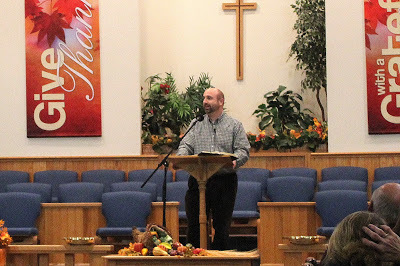 "Out of the overflow of the heart the mouth speaks."
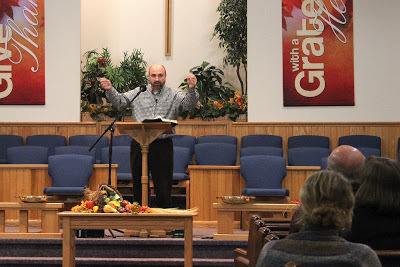 "The tongue is a fire. Whom have you recently burnt?"
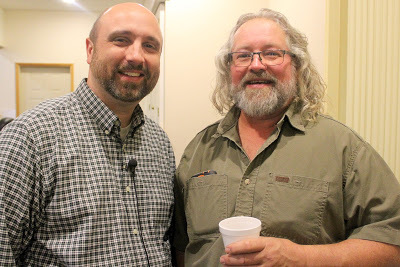 Me and Jeff, one of the leaders at Faith
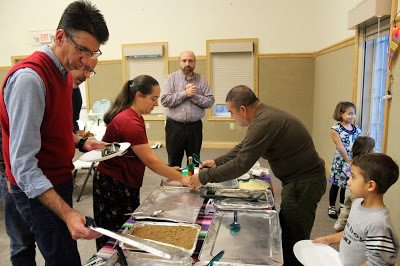 Oh yummy food! International dinner. "Wide" stands for global outreach and my expanding wasteline after eating this big meal!
 Meeting some of the FEFC elders
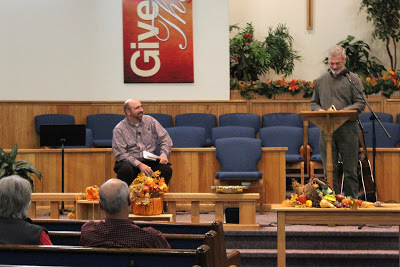 Pastor Jeff joking with me in the introductions.
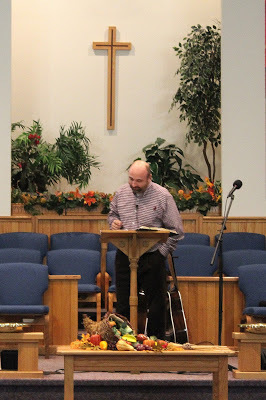 "Pleasant words are a honeycomb, sweet to the soul and healing to the bones."
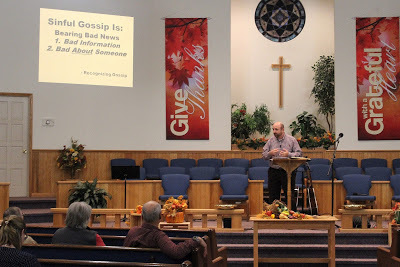 Gossip is bearing bad news behind someone's back out of a bad heart.
Thank you, Pastor Jeff and Vivian Kroll, and the FEFC church family for your hospitality and deep engagement with the biblical teaching!
Here are a few pictures to give a sense of the flavor our time together:
 "Out of the overflow of the heart the mouth speaks."
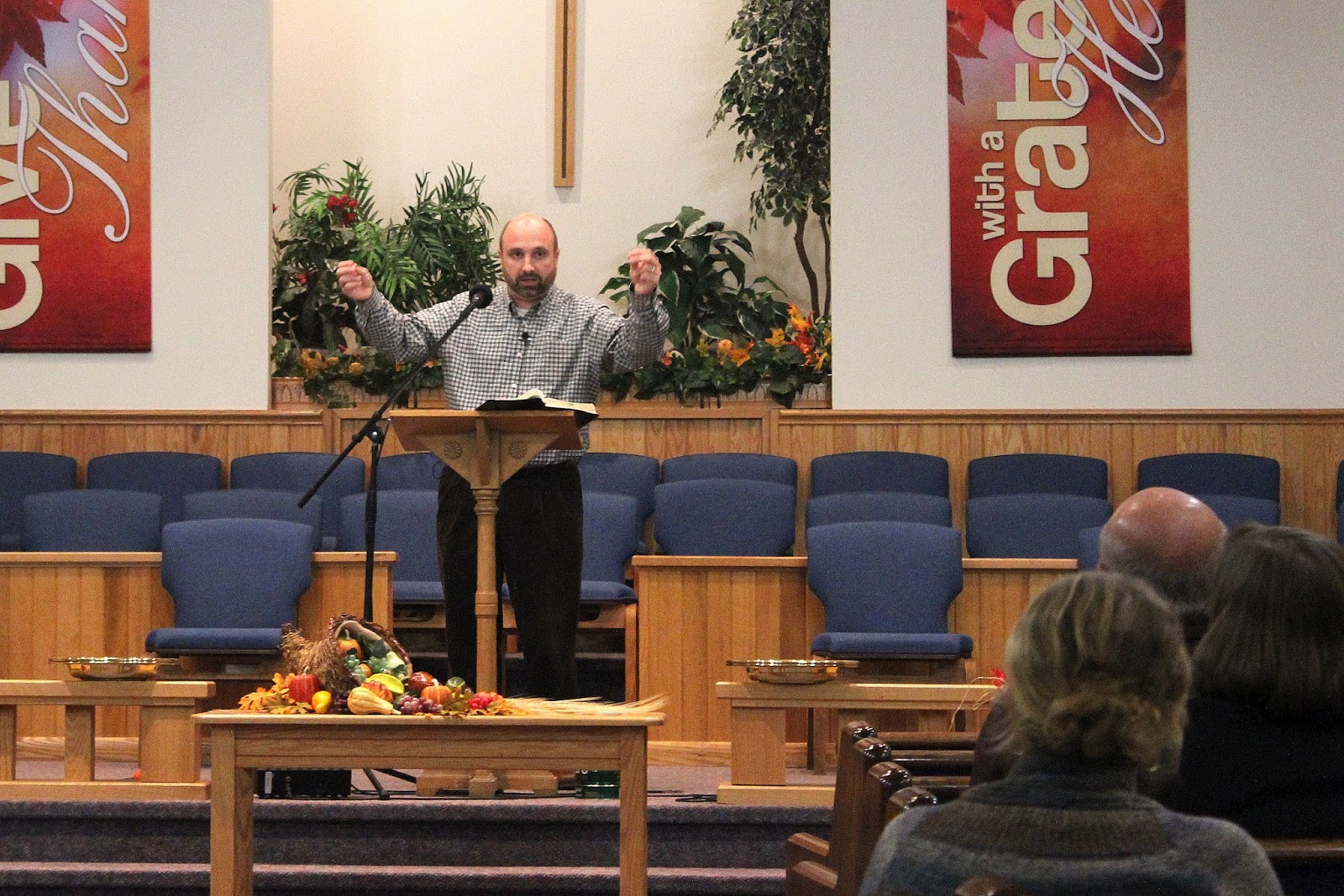 "The tongue is a fire. Whom have you recently burnt?"
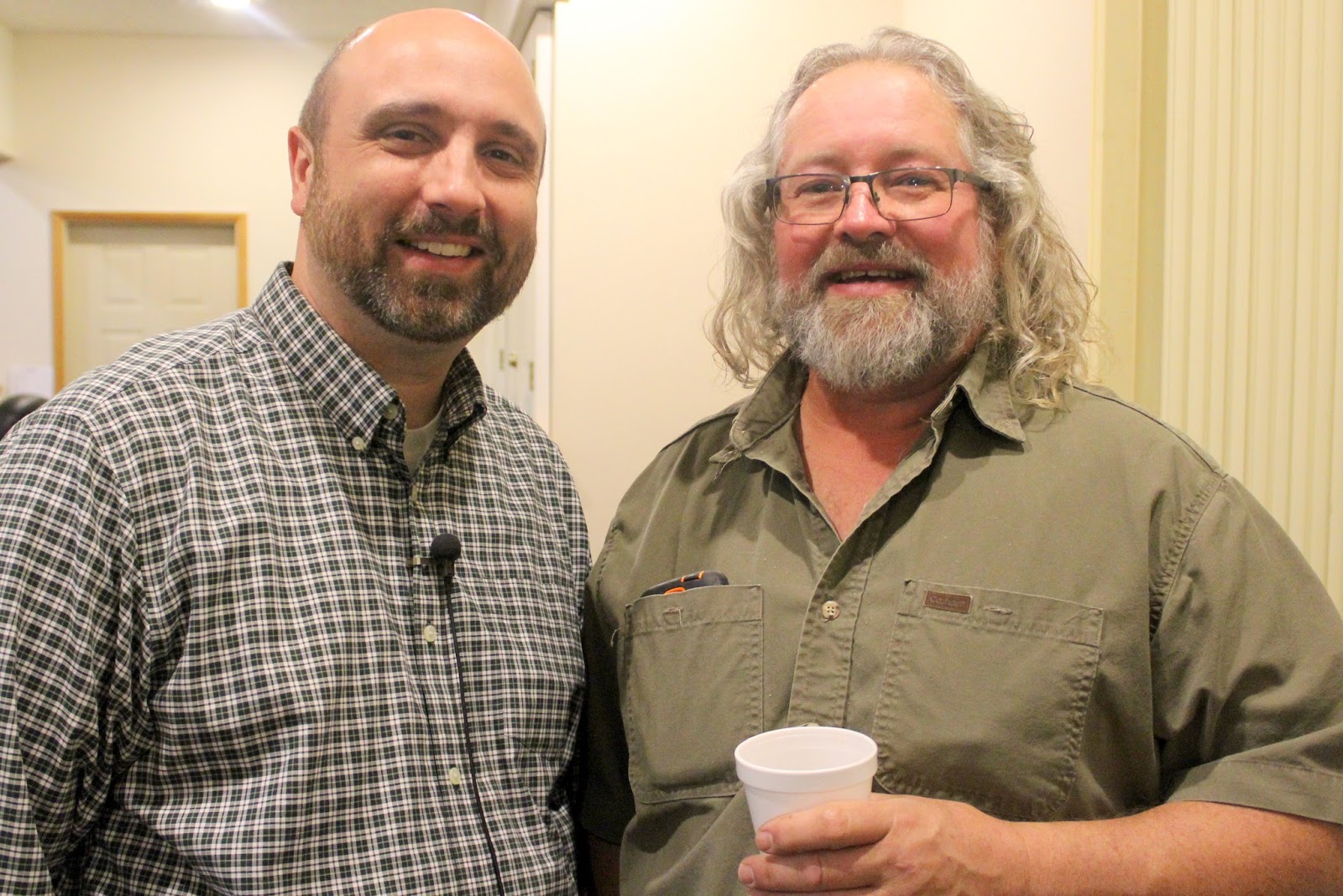 Me and Jeff, one of the leaders at Faith
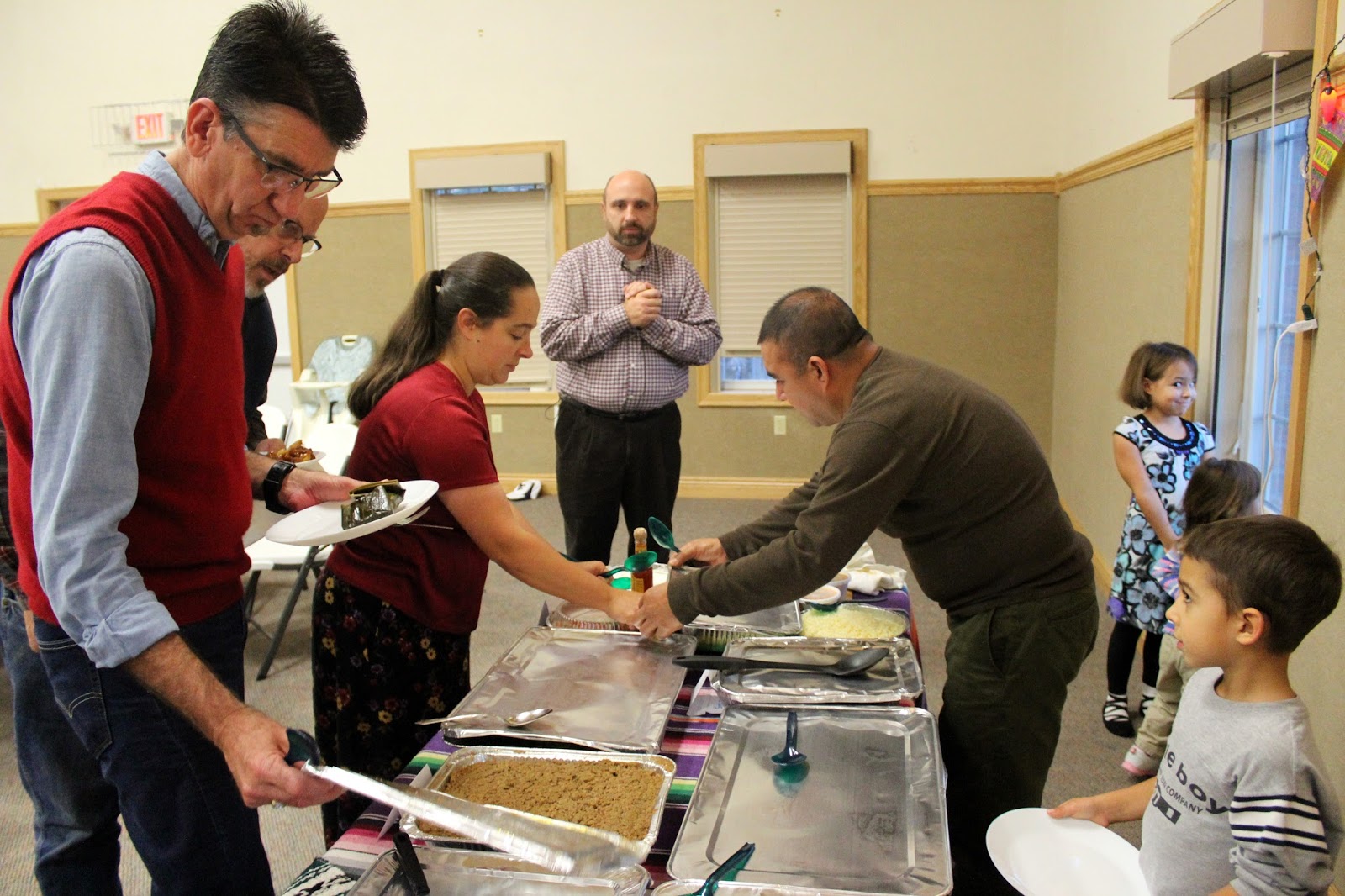 Oh yummy food! International dinner. "Wide" stands for global outreach and my expanding wasteline after eating this big meal!
 Meeting some of the FEFC elders
 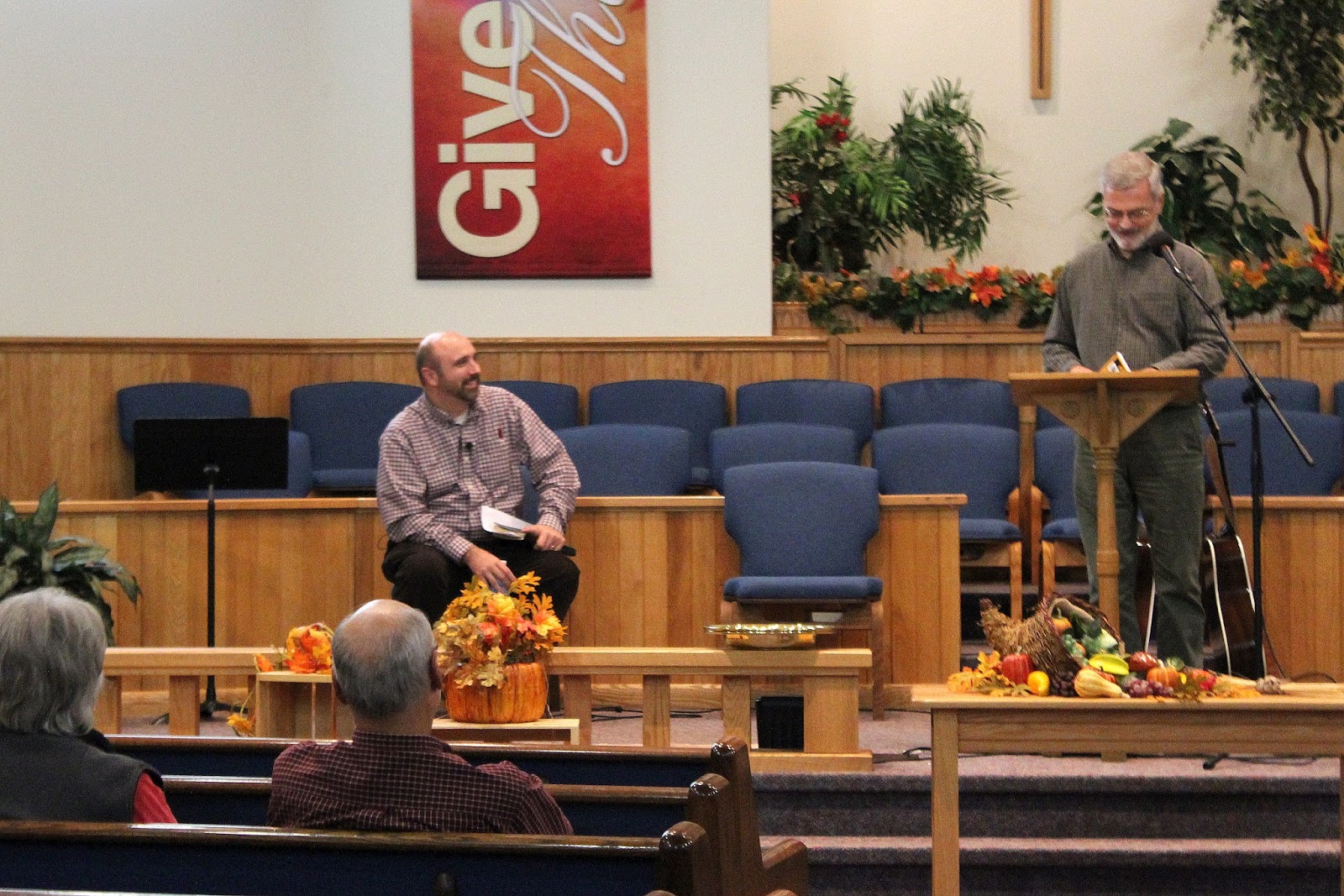 Pastor Jeff joking with me in the introductions.
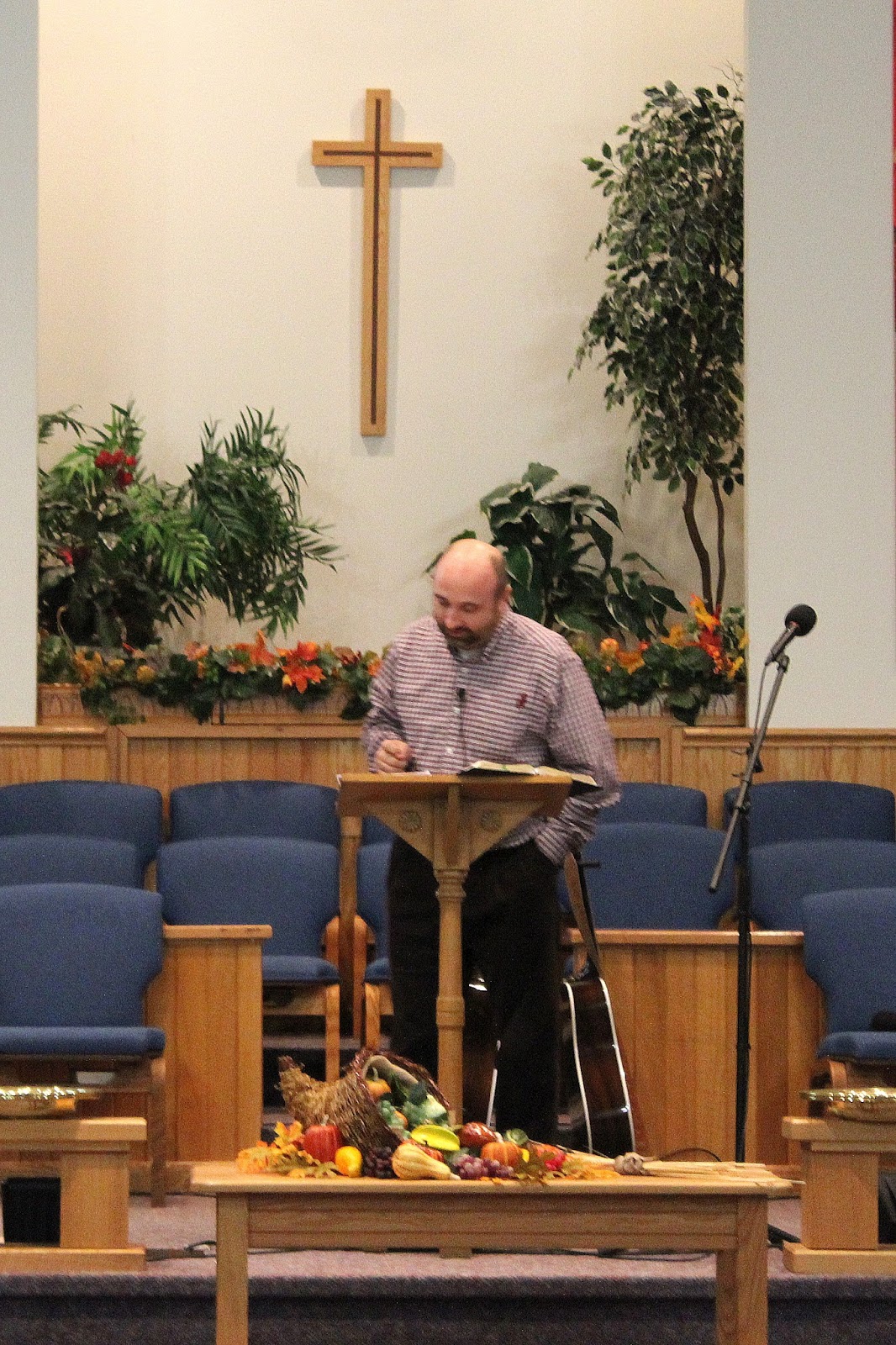 "Pleasant words are a honeycomb, sweet to the soul and healing to the bones."
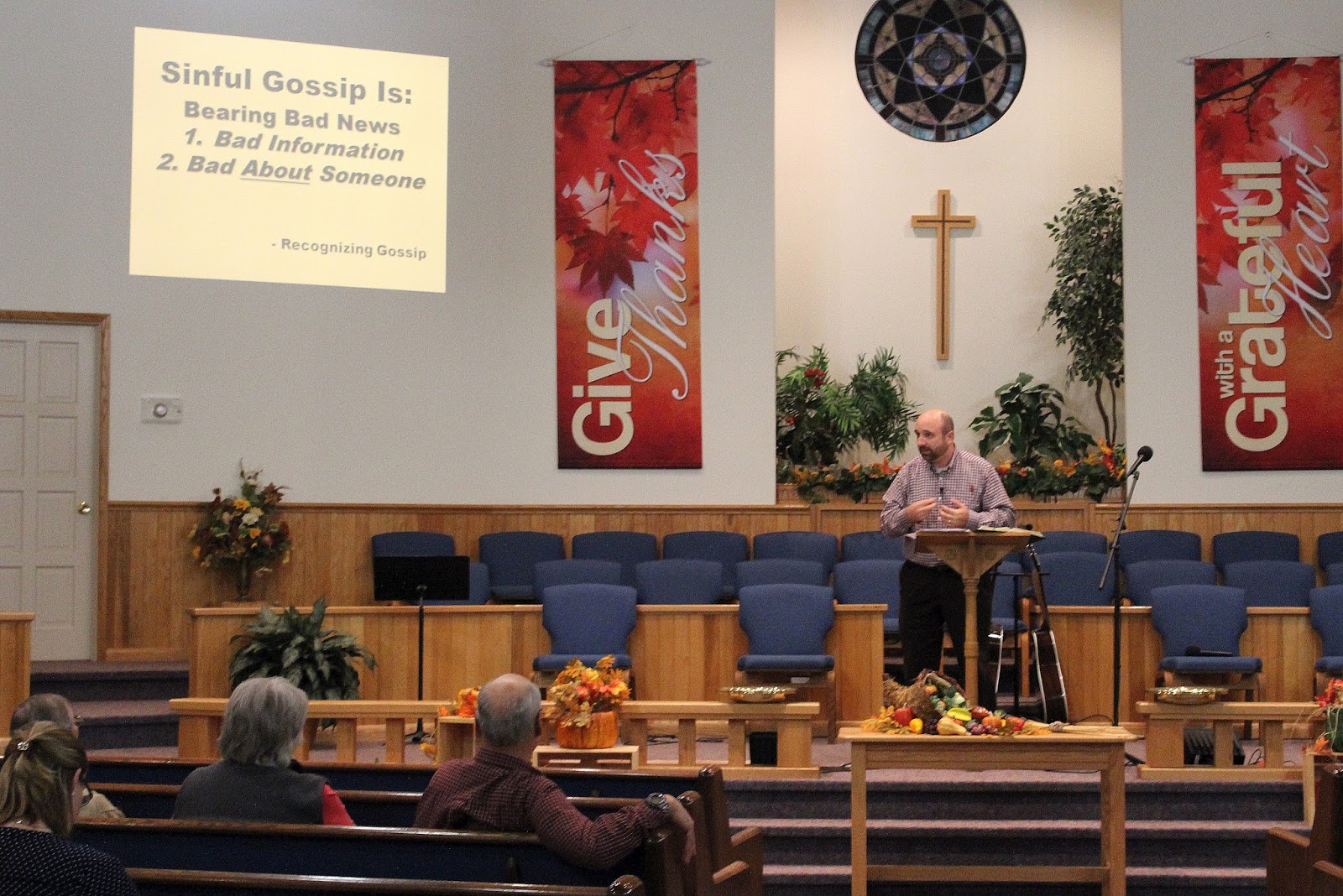 Gossip is bearing bad news behind someone's back out of a bad heart.
November 5, 2016

October 30, 2016
[Matt's Messages] "God of Wonders"
 “God of Wonders”
The King of Kings in the Books of Kings
October 30, 2016 :: 2 Kings 4:1-44
You may have noticed that the amount of miracles in this book has been increasing.
There have been a lot of miracles in the Books of Kings, some of them pretty super-amazing. Many of them very weird.
But starting with Elijah and now stepping up even more with Elisha, the number of miracles in the center of these two books has been growing.
I’m not sure why. I have a few ideas, but they are hard to prove.
There is no one verse that says, “And here is why there are so many miracles in the last chapters of 1 Kings and the first chapters of 2 Kings.”
But they are there.
One of my of hypotheses is that these miracles are showing that God is still powerfully and compassionately at work even when He’s disciplining His people.
God is still powerfully and compassionately at work even when He’s disciplining His people.
Even though every single king in the northern kingdom is a thumbs-down king.
Including King Joram that we learned about last week.
Thumbs down.
Here’s a king who is failing His people.
But the LORD never fails His people.
I think that’s a big reason for these miracles, Elijah’s and Elisha’s miracles.
And some of Elisha’s miracles are here to mirror Elijah’s miracles. We saw that two weeks ago. The same God is doing the same thing even through different prophets.
God has not changed or gone away.
He is the same God of wonders: yesterday, today, and tomorrow.
And, of course, that’s good news for us.
Because even though we don’t live in the age of the kings of Israel or in the age of the prophets of Israel like Elijah and Elisha, we belong to the exact same God.
The God of Wonders.
So, today, we’re going to read four fairly short miracle stories from the days of Elisha, and then we’re going to sketch out a picture of Who this God of Wonders truly is. What we can learn about the God of Wonders by studying a few of His miracles.
Let’s look at story number one.
Chapter, verse 1.
“The wife of a man from the company of the prophets cried out to Elisha, ‘Your servant my husband is dead, and you know that he revered the LORD. But now his creditor is coming to take my two boys as his slaves.’”
That’s a real problem.
We aren’t told the name of this widow, but we are told that her husband had been on of the company of the prophets.
But he died. Perhaps he died at the hands of Jezebel and her prophet-killing men.
It doesn’t say. But it does say that his widow is in desperate trouble.
Her husband had had to borrow money and now that he’s dead, there is no way to pay it back except for her two sons, who should grow to take care of her, to be taken into slavery.
Can you imagine?
Can you imagine how she felt?
Her husband had loved the Lord, and look where that got them!
Her husband had feared the Lord, the beginning of the wisdom, but the end of his life.
And now here is she is with nothing but her boys and they’re going to get taken away from her.
So she cries out to the head prophets, “Help!”
And see how Elisha responds. V.2
“Elisha replied to her, ‘How can I help you? Tell me, what do you have in your house?’ ‘Your servant has nothing there at all,’ she said, ‘except a little oil.’”
I never noticed this before, but there’s a big difference between how Elisha responds to this nameless needy widow and how he responded to King Joram in the last chapter, isn’t there?
Remember how sarcastic he was with Joram when Joram asked for help? “What we do have to do with each other? If Jumpin’ Jehoshaphat wasn’t right here, I wouldn’t even talk to you. I would pretend you weren’t here!”
But with this lady, it’s “How can I help you?”
I think that’s significant. We’ll come back to that.
All she has is a little bit of oil.
Now, that should sound familiar, right? Kind of like Elijah in 1 Kings 17 with the widow at Zarephath?
Different prophet, same God. V.3
“Elisha said, ‘Go around and ask all your neighbors for empty jars. Don't ask for just a few. Then go inside and shut the door behind you and your sons. Pour oil into all the jars, and as each is filled, put it to one side.’ She left him and afterward shut the door behind her and her sons. They brought the jars to her and she kept pouring. When all the jars were full, she said to her son, ‘Bring me another one.’ But he replied, ‘There is not a jar left.’ Then the oil stopped flowing. [Wow!] She went and told the man of God, and he said, ‘Go, sell the oil and pay your debts. You and your sons can live on what is left.’”
The God of Wonders.
Overflowing blessings from the God of Wonders.
Story number two. This one is longer, and it’s got more twists and turns in it. Verse 8.
“One day Elisha went to Shunem. And a well-to-do woman was there, who urged him to stay for a meal. So whenever he came by, he stopped there to eat. She said to her husband, ‘I know that this man who often comes our way is a holy man of God. Let's make a small room on the roof and put in it a bed and a table, a chair and a lamp for him. Then he can stay there whenever he comes to us.’”
Get the picture?
Have you ever heard of a household having a guest room for traveling preachers called a “prophet’s chamber?” This is where that comes from.
Elisha had a standing invitation to stay at this wealthy couple’s home.
By the way, verse 7 introduced Elisa with the title “the man of God.” That phrase to describe a prophet occurs like 70 some times in the Old Testament, like 55 of them in the Books of Kings, and it’s applied more times to Elisha than to any other one man. He is the “man of God.” Representing God. Speaking for God. Acting for God. So when they cry out to him for help, it’s almost the same as them crying out to God for help. He’s the man of God.
And the man of God has a standing invitation to enjoy the hospitality of this well-to-do couple.
And he really appreciates it. V.11
“One day when Elisha came, he went up to his room and lay down there. He said to his servant Gehazi, ‘Call the Shunammite.’ So he called her, and she stood before him. Elisha said to him, ‘Tell her, 'You have gone to all this trouble for us. Now what can be done for you? Can we speak on your behalf to the king or the commander of the army?'’ She replied, ‘I have a home among my own people.’ [I’m good, thanks. I’ve everything I need right here.] ‘What can be done for her?’ Elisha asked. Gehazi said, ‘Well, she has no son and her husband is old.’ Then Elisha said, ‘Call her.’ So he called her, and she stood in the doorway. ‘About this time next year,’ Elisha said, ‘you will hold a son in your arms.’
‘No, my lord,’ she objected. ‘Don't mislead your servant, O man of God!’ But the woman became pregnant, and the next year about that same time she gave birth to a son, just as Elisha had told her.”
Wow. We learn a few new things here.
First off, Elisha has a servant of his own. I’m glad his name wasn’t Eliba or Eliga. That would get really confusing!
His name is Gehazi, and we’ll learn more about him in the coming weeks.
We also learn that Elisha is grateful and wants to reward his friends for their generosity. He offers the help of the king, perhaps he’s willing to cash in a favor from King Joram after all the help he was in last week’s battle.
But she says that she doesn’t need anything.
Gehazi reads the situation and says that a baby would be really appreciated, but who can do that? The husband is really old.
Does that remind you of anything? Yes. We’re supposed to think of Abram and Sarah, and Mr and Mrs. Manoah, and Elkanah and Hannah, and for us on this side of the story, Zechariah and Elizabeth.
Who can bring life out of a barren womb?
The God of Wonders.
She can hardly believe it, but in the Spring, she’s holding a newborn in her hands.
That’s like miracle number 2A.
Because this boy grows a little, and tragedy strikes. V.18
“The child grew, and one day he went out to his father, who was with the reapers. ‘My head! My head!’ he said to his father. His father told a servant, ‘Carry him to his mother.’ After the servant had lifted him up and carried him to his mother, the boy sat on her lap until noon, and then he died.”
Meningitis?
It doesn’t say. It just says that he cried out about his head, and then he died.
The miracle child died.
How sad is that?
How wrong is that?
We live in such a broken world.
And now this mother faces an even greater enemy than the widow did in verse 1.
She isn’t facing the slavery of her two sons. She’s facing the grief of losing her one and only son.
And she feels it deeply and desperately. But watch what she does. V.21
“She went up and laid him on the bed of the man of God, then shut the door and went out. She called her husband and said, ‘Please send me one of the servants and a donkey so I can go to the man of God quickly and return.’ ‘Why go to him today?’ he asked. ‘It's not the New Moon or the Sabbath.’ [It’s not a break day or a religious holiday.] ‘It's all right,’ she said [cryptically]. She saddled the donkey and said to her servant, ‘Lead on; don't slow down for me unless I tell you.’ So she set out and came to the man of God at Mount Carmel.
When he saw her in the distance, the man of God said to his servant Gehazi, ‘Look! There's the Shunammite! Run to meet her and ask her, 'Are you all right? Is your husband all right? Is your child all right?'’ ‘Everything is all right,’ she said [cryptically].
When she reached the man of God at the mountain, she took hold of his feet. Gehazi came over to push her away, but the man of God said, ‘Leave her alone! She is in bitter distress, but the LORD has hidden it from me and has not told me why.’”
I love that.
You know why?
Because it shows that Elisha is just a regular human like you and me.
These stories can almost make him seem super-human because the Lord uses him to do all of these miracles.
But here he is at a loss.
He doesn’t know what’s going on. The God of miracles, Yahweh, has not yet revealed it. But now, she does. V.28
“‘Did I ask you for a son, my lord?’ she said. ‘Didn't I tell you, 'Don't raise my hopes'?’”
And now he knows.
Now he knows what’s happened. Something bad has happened to the miracle child.
And this woman is beside herself with bitter grief, but her eyes are on the Lord.
She’s crying out, yes, but in faith. If anyone can do anything about it, it would be the God of Elisha. The God of Wonders. V.29
“Elisha said to Gehazi, ‘Tuck your cloak into your belt, take my staff in your hand and run. If you meet anyone, do not greet him, and if anyone greets you, do not answer. Lay my staff on the boy's face.’
But the child's mother said, ‘As surely as the LORD lives and as you live, I will not leave you.’ So he got up and followed her. [Interestingly, those are the exact same words that he used in chapter 2 when he followed Elijah all around that last day. They indicate fierce loyalty and faithfulness. V.31]
Gehazi went on ahead and laid the staff on the boy's face, but there was no sound or response. So Gehazi went back to meet Elisha and told him, ‘The boy has not awakened.’ When Elisha reached the house, there was the boy lying dead on his couch.
He went in, shut the door on the two of them and prayed to the LORD. Then he got on the bed and lay upon the boy, mouth to mouth, eyes to eyes, hands to hands. As he stretched himself out upon him, the boy's body grew warm.
Elisha turned away and walked back and forth in the room and then got on the bed and stretched out upon him once more. [Life for life.] The boy sneezed seven times and opened his eyes. Elisha summoned Gehazi and said, ‘Call the Shunammite.’ And he did. When she came, he said, ‘Take your son.’
She came in, fell at his feet and bowed to the ground. Then she took her son and went out.”
Wow. Wow! Wow!!!!
This miracle son was brought back from the dead.
He was a double miracle son! And the second was more amazing than the first.
Why did the miracle work like this?
I don’t know. It’s similar to what Elijah did in Zarephath in 1 Kings 17.
I’m not sure why it worked like that there, either.
But I know who did it. It wasn’t Elisha.
It was the God of Wonders.
It was YHWH.
That’s Whom Elisha was praying to in verse 33.
And that’s Who answered.
Two more miracles in this chapters. Both are very short and very similar. V.38
“Elisha returned to Gilgal and there was a famine in that region. While the company of the prophets was meeting with him, he said to his servant, ‘Put on the large pot and cook some stew for these men.’ One of them went out into the fields to gather herbs and found a wild vine. He gathered some of its gourds and filled the fold of his cloak. When he returned, he cut them up into the pot of stew, though no one knew what they were.
The stew was poured out for the men, but as they began to eat it, they cried out, ‘O man of God, there is death in the pot!’ And they could not eat it.
Elisha said, ‘Get some flour.’ He put it into the pot and said, ‘Serve it to the people to eat.’ And there was nothing harmful in the pot.”
This is teaching the danger of potluck dinners.
Watch out for the Fall Frenzy of Food!
I’m just kidding. But I would be happy to take the first bite of every dish today to make sure that they’re all safe.
Somebody put something bad into the pot, and it apparently became deadly.
And that’s a potential tragedy on two levels. One is if anybody dies. But two is that there is a famine in the land, and this is some food, that they’re apparently going to have to throw away!
We can’t lose sight of that fact that these folks are desperate.
But Elisha miraculously saves the day.
It doesn’t say outright that it’s a miracle, but it’s right here with all of these other similar miracles, so I think it’s safe to say that it is another miracle from the God of Wonders.
And here’s the fourth and last one. It goes right with it. Verse 42.
“A man came from Baal Shalishah, bringing the man of God twenty loaves of barley bread baked from the first ripe grain, along with some heads of new grain. ‘Give it to the people to eat,’ Elisha said.
‘How can I set this before a hundred men?’ his servant asked [There isn’t nearly enough. There’s a famine out there. People are hungry.]. But Elisha answered, ‘Give it to the people to eat. For this is what the LORD says: 'They will eat and have some left over.'’ Then he set it before them, and they ate and had some left over, according to the word of the LORD.”
The God of Wonders.
Just like the oil that didn’t run out until they had enough.
Everybody gets fed today.
Everybody gets fed.
By the God of Wonders.
Now, what does all of this mean?
Again, I’m not sure I know all of why the author put these miracle stories into the Books of Kings.
I definitely believe that they happened, but lots of things happened that don’t make it into our Bibles.
This got included in our Bibles.
At least one reason is to show that the same God that worked with Elijah is at work with Elisha.
And that this God is at work doing good for His people even when the Kings of Israel are not doing good for their people.
If the king won’t take of them, then the King of Kings will. And He’ll use a man of God to do it.
I think that’s part of what we’re supposed to see here.
And another part of it is just to show off what kind of a God the God of Wonders truly is.
Let me sketch out three points for you to describe Him.
#1. COMPASSIONATE.
The God of Wonders is Wonderfully Compassionate.
Do you feel that in these four stories?
The recipients of every one of these miracles was a desperate person in a desperate situation.
They were needy.
They were helpless.
They were desperate.
And the God of Wonders cared. He moved toward them. He stepped into their difficult situation, and He miraculously provided for them.
It really struck me that the God of Wonders did His miracles for needy people.
He didn’t just show off.
You know, His miracles weren’t like, “Let me pull a rabbit out of my hat! Watch me make a rainbow appear out of nowhere. Now you see me, now you don’t!”
It’s not magic.
It’s miracles.
And they are miracles to aid desperate people. Needy people.
That’s because God cares.
He cares about widows.
He cares about nameless widows. People we would never know about if it wasn’t right here in the Bible.
He cares about single moms who are struggling to make it.
He cares about grieving moms who are mourning and missing their offspring.
He cares about couples who can’t have children.
He cares about starving people with not enough to eat.
He cares about the poor, the defenseless, the helpless, the vulnerable.
The God of Wonders is compassionate.
That’s such good news, isn’t it?
Especially if you are needy.
If you are desperate right now, take heart in this, the God of Wonders cares about you and your situation.
Cry out to Him when you are in need.
2 Kings 4 is in your Bible to remind you that the God of Wonders doesn’t just love to do wonders. He loves to do wonders in the lives of those who are desperate.
Now, there is no promise here that He will give a miracle to everyone everytime they ask in faith.
That’s what the health and wealth and prosperity teachers false promise to unwitting people today.
Jesus has actually promised that in this world we will have trouble.
But He cares about our troubles.
And He is intimately involved in our troubles, walking with us through them.
And He wants us to cry out to Him in faith like the women in this chapter and look to Him for a miracle.
We can see His heart here. And it’s good!
Cry out to Him when you are in need.
And LOOK OUT for others when they are in need.
Because we need to cultivate our heart to be like His heart.
We need to care about what He cares about.
Do we care about the poor?
Do we care about the needy?
Do we care about the defenseless, the helpless, the vulnerable?
Do we care about widows?
Do we care about single moms who are struggling to make it?
Do we care about grieving moms who are mourning and missing their offspring?
Do we care about couples who can’t have children?
Do we care about starving people with not enough to eat?
And not just, do we say we care, but do we act on that compassion?
Because the God of Wonders acted. He did something.
Something powerful.
#2. POWERFUL.
The God of Wonders is Wonderfully Powerful.
That’s obvious, right?
Oil that doesn’t run out.
A child when they couldn’t have one.
Soup that was saved.
And bread that fed everyone.
Which one did I skip?
Oh yeah. Brought back from the dead.
I think that this story and the Elijah one from 1 Kings 17 are what the author of Hebrews is talking about when he glories in the accomplishments of faith in Hebrews chapter 11.
He writes, “And what more shall I say? I do not have time to tell about Gideon, Barak, Samson, Jephthah, David, Samuel and the prophets, who through faith conquered kingdoms, administered justice, and gained what was promised; who shut the mouths of lions, quenched the fury of the flames, and escaped the edge of the sword; whose weakness was turned to strength; and who became powerful in battle and routed foreign armies. Women received back their dead, raised to life again.”
That’s power!
Wonder-working power.
Whenever Paul wants to talk about power, He doesn’t go directly to creation, which is where I would tend to go.
He goes to resurrection. The power to bring back from the dead.
And only God has that power.
Life from death.
Does that remind you of anybody?
It turns out that it isn’t not just the kings in the books of Kings that remind us of Jesus.
Jesus is our perfect PROPHET, priest, and king.
When they are at their best, the prophets remind us of Jesus, too.
The man of God.
Remember the time when Jesus stopped the funeral?
I mean literally. It was in the town of Nain. And the funeral procession was parading through the town and the widow was crying by her son who had died.
And Jesus stopped the train and told the boy to get up.
And Jesus said (like verse 36), “Here’s your boy.”
And what did the people say? Luke 7:16, “They were all filled with awe and praised God. ‘A great prophet has appeared among us,’ they said. ‘God has come to help his people.’”
The God of Wonders is Wonderfully Powerful.
So trust Him.
That’s the point of Hebrews 11, right?
It was by faith that these women received back their dead.
Trust in the power of the God of wonders.
Now, I don’t expect resurrections these days.
But I do expect resurrections in the last days.
Read 1 Corinthians 15 and see how many resurrections are on the way.
Every one of us who BELIEVES will get a new body!
A resurrection body like Jesus’ new body.
We should long for that day.
Philippians 3 says that we “eagerly await a Savior from [heaven], the Lord Jesus Christ, who, by the power that enables him to bring everything under his control, will transform our lowly bodies so that they will be like his glorious body” (Phil 3:20).
That’s even better than the miracle that Elisha did.
Because that boy died once more, probably when he was an old man.
But one day we will be raised to glorious undying new bodies.
By the One who said, “I am the resurrection and the life.”
By the powerful God of Wonders.
And we don’t deserve it.
It’s all because the God of Wonders is wonderfully generous.
#3. GENEROUS.
Do you feel the generosity of God in this chapter?
His graciousness?
I pick it up in how God goes above and beyond the need in every story.
I love the picture of the widow and her sons collecting all the pots in town for the oil.
{Knock knock.} “Hey, umm, could we borrow all of your bowls and pots and pans for a couple of days? Yeah, it’s for a science project the boys are doing. I’m not supposed to say. It’s classified. Can we?”
And they are all full.
And the woman doesn’t need a son, but she gets one.
And then she gets him back.
And people get the stew they need.
And they all get their fill of bread.
What does that story remind you of?
You know when Jesus multiplied the bread and the fishes, everybody who realized that there was a miracle happening, would have been thinking about 2 Kings 4.
This is the generosity of God!
He goes above and beyond.
He pours out His grace.
He shows us His magnanimity.
“How great is the love the Father has lavished on us, that we should be called children of God! And that is what we are!” (1 John 3:1).
All of these miracles are foretastes of the kingdom to come.
They all pointed to Jesus’ first coming.
And they all point to Jesus’ second coming, too.
When the God of Wonders will bring salvation to those who are faithfully waiting for Him.
In the Kingdom, there will be no famine, and the feast will never run out.
In the Kingdom, the curse will be reversed, there will be no death in the pot.
In the Kingdom, the last enemy, death, will die itself.
And the God of Wonders will get the glory forever.
***
Messages in this Series:
01. Who Will Be King?
02. The Wisdom of the King
03. The Temple of the King
04. The Incomparable King of the Temple
05. A Breathtaking King
06. The Turned King and the Torn Kingdom
07. The Two Kings and the Tearing of the Kingdom
08. The Word of the LORD
09. In the Eyes of the LORD
10. The LORD Lives
11. The LORD Is God!
12. The LORD Is Still God.
13. “You Will Know that I am the LORD”
14. "Thus Saith the LORD!"
15. What the LORD Says
16. Is There No God in Israel?
17. Where Is the God of Elijah?
18. How NOT To Relate to God
October 29, 2016

October 23, 2016
[Matt's Messages} "How NOT to Relate to God"
 “How NOT To Relate to God”
The King of Kings in the Books of Kings
October 23, 2016 :: 2 Kings 3:1-37
We might call this section of the Books of Kings, “The Days of Elisha.” Because not only have we turned the corner from book 1 to book 2, but we’ve moved from big prophet 1 to big prophet 2.
Last week, Elisha asked, “Where is the God of Elijah?” and the answer was that He hasn’t gone anywhere! He’s right here with Elisha doing redemptive miracles and keeping His threats and promises.
And that’s a theme that is going to stick with us for the next several chapters because we’re going to see that same God do some amazing miracles through Elisha.
So, I thought about calling this message, “The God of Elisha,” but as it was developing, I realized I had a more provocative title for this one.
I’m going to call this message, “How NOT to Relate to God.”
Four mistakes that people can easily fall into and do in this one chapter.
How NOT to Relate to the God of Elisha.
Which is the same God that we know today.
What would you put on that list?
I’ll bet that all of us here could make a short or even a long list of things to avoid when relating to the LORD. And most of them true!
These are just four things that waved their hand at me as I was studying 2 Kings 3.
But, I think, we can learn from all of them.
Okay. So, we know who is the big prophet right now.
Who is the king? Who is king over Israel?
I couldn’t remember either.
We were told his name at the end of chapter 1, but he didn’t figure into the story in chapter 2. His name is King Joram, or actually the Hebrew is King “Jehoram” in most of these verses, but the NIV went with this variant version of his name because there will be another king in the Southern Kingdom with the same name soon, so they use different variations of their names to help us keep them straight.
This King Joram was actually the brother of the last king, King Ahaziah. Ahahiah died with no son as his heir so it went to his brother. Joram is another son of Ahab.
And here’s the question, right?
Thumbs up or thumbs down?
Let me tell you a little secret. I may or may not have shared this with you yet.
Every single king of the northern kingdom of Israel is a thumbs-down king.
After the split, some of the kings of Judah are thumbs up. They are men like David, men after God’s own heart. Men who lead the nation to love and serve the Lord.
But I’m sorry to say, every king of Israel in the north is a thumbs-down king.
Joram is a king of Israel. So what do you think he is?
Thumbs down. Look at verse 1.
“Joram son of Ahab became king of Israel in Samaria in the eighteenth year of Jehoshaphat king of Judah, and he reigned twelve years. He did evil in the eyes of the LORD, but not as his father and mother had done. He got rid of the sacred stone of Baal that his father had made. Nevertheless he clung to the sins of Jeroboam son of Nebat, which he had caused Israel to commit; he did not turn away from them.”
Two thumbs down.
Now, he may not be six thumbs down like his dad Ahab had been.
Verse 2 says he wasn’t as bad as that. And he did, at least for a time, put away a major sacred stone of Baal.
But he didn’t worship the LORD alone. And he didn’t lead Israel to worship Yahweh alone. He was two thumbs down.
So that means we know that life will be hard for him. There will be consequences for his choices. Maybe not always in the short run, but always in the long.
With disobedience comes danger.
There will be consequences for Joram’s choices.
And we’ll see some of them today.
Because it’s from him that we will learn most of our “don’t list.” “Don’t do this” and “Don’t do that.” How NOT to relate to God.
The story in chapter 3 revolves around the revolt of Moab.
Moab was, at this point in history, something of a vassal state to Israel. They had been subjects of united kingdom since the time of King David and had apparently still owed the northern kingdom tribute, taxes, but they didn’t want to pay them, they didn’t want to stay in that relationship. They wanted out. V.4
“Now Mesha king of Moab raised sheep, and he had to supply the king of Israel with a hundred thousand lambs and with the wool of a hundred thousand rams. But after Ahab died, the king of Moab rebelled against the king of Israel.”
Now, this is interesting.
Anybody here know what this is?
This is the Moabite Stone discovered intact in 1868.
It’s also called, ready for this? “The Mesha Stele”
Because it dates from the time of King Mesha of 2 Kings 3, and it describes in his own words some of what he thought of as his greatest accomplishments.
Those included winning victories in the northern area of his kingdom, the land of Medeba, and slaughtering seven thousand Israelites in devotion to his god Chemosh.
It also describes how oppressed Mesha felt as a neighbor of Israel especially during the years of King Omri of Israel.
A very interesting ancient piece for archeology. You can read about it online. You see the cracks in it? Those happened after it was discovered and after a scholar made an imprint of the front. The people of Jordan split it up into pieces so the West couldn’t have it, but eventually it got pieced back together and is now displayed in the Louvre in Paris.
This is one of the oldest surviving pieces of inscribed stones to have the name Yahweh on it.
So, it was probably done by or at least for Mesha himself, and it gives you a window into the feelings and thoughts that would lead him to rebel against King Joram.
He doesn’t mention the events of 2 Kings 3, and I think we’ll see why in just a second.
So, it’s Joram versus Mesha. Who should win that one?
Well, one is an enemy of Israel, and the other is the thumbs-down wicked king of Israel. It’s a hard one to call.
But Joram calls on his royal neighbor Jehoshaphat king of Judah. Same one as before. V.6
“So at that time King Joram set out from Samaria and mobilized all Israel.”
He’s fixin’ to win back the service of Moab, but he needs help. V.7
“He also sent this message to Jehoshaphat king of Judah: ‘The king of Moab has rebelled against me. Will you go with me to fight against Moab?’ ‘I will go with you,’ he replied. ‘I am as you are, my people as your people, my horses as your horses.’”
Does that sound kind of familiar?
It’s the same thing he said to Joram’s daddy, King Ahab back in 1 Kings 22.
And that story didn’t turn out so good. So that might give us a clue that this isn’t the best idea. And unlike that time, he doesn’t ask for a prophet to confirm that this is God’s plan for them. It kind of looks like they might be walking into a trap. V.8
“‘By what route shall we attack?’ he asked. ‘Through the Desert of Edom,’ he answered. So the king of Israel set out with the king of Judah and the king of Edom. After a roundabout march of seven days, the army had no more water for themselves or for the animals with them.”
Uh oh.
This plan isn’t turning out so well.
Joram said that they needed to take the southern route.
Why do you think that was? I think it’s because Mesha has won so many battles in the north. He’s strong up there.
So they have to come in from the Desert of Edom. Seven days in the desert of Edom.
What could go wrong?
Well, they ran out of water.
But Joram has not run out of excuses. V.10
“‘What!’ exclaimed the king of Israel. ‘Has the LORD called us three kings together only to hand us over to Moab?’”
Here’s point #1 for you:
#1. DON’T BLAME GOD FOR YOUR ERRORS.
I don’t think there is any evidence that the LORD sent the king of Israel, the king of Judah, and their friend the king of Edom on this mission.
But Joram acts like it’s all God’s fault.
He acts scandalized: “Why is this happening to me?”
“Why did God lead us here and then dump us?”
Now, it would be a mistake to grumble and complain even if God had led them there.
The LORD had led Moses and the Israelites to the desert, and they got thirsty, too.
But I think that Joram is using the LORD’s name in vain.
He’s passing the buck.
And not blaming just anybody, but the LORD.
That’s a very old way of sinning.
Remember when the LORD caught Adam redhanded in the garden?
What did he says, “The woman you put here with me–she gave me some fruit from the tree, and I ate it.”
“It’s basically your fault.”
Have you ever done that one?
“Lord, you made me this way.”
“Lord, you put me in this family, in this job, in this situation, near this temptation.”
Joram is going even further.
He’s saying, “God you led me to make this mistake.”
Not a wise thing to do. If you are doing anything like that, repent!
But King Jehoshaphat for all of his weaknesses, often makes wise choices. He knows where to turn. V.11
“But Jehoshaphat asked, ‘Is there no prophet of the LORD here, that we may inquire of the LORD through him?’ [Why, yes there is, want to guess who?] An officer of the king of Israel answered, ‘Elisha son of Shaphat is here. He used to pour water on the hands of Elijah.’ [His servant.] Jehoshaphat said, ‘The word of the LORD is with him.’ So the king of Israel and Jehoshaphat and the king of Edom went down to him.”
That’s the right place to turn. Probably should have gone there first!
These are the days of Elisha. Let’s hear what he has to say.
Well, it’s not soft words, I’ll tell you. V.13
“Elisha said to the king of Israel, ‘What do we have to do with each other? Go to the prophets of your father and the prophets of your mother.’”
Ooh, sick burn.
Here’s number two. How NOT to relate to God.
#2. DON’T SEEK GOD ONLY WHEN YOU’RE IN TROUBLE.
Elisha’s like, “Have we met? I’ve never you seen you at church before.”
“What do we have to do with each other?”
“You are not a worshiper of Yahweh. You worship the gods of your father, Ahab, and the gods of your mother, Jezebel. Get out of here.”
Don’t seek the one true God only when you’re in trouble!
Have you ever made that mistake?
I know I have. So many times.
We turn to the Lord when the water runs out.
Not when it’s flowing.
And that’s a mistake.
Now, some people say the, “Don’t turn to the LORD if you’re in trouble.”
But that’s not right either. God wants us to bring our troubles to Him.
Seek the LORD at all times. Cry out to the LORD in your distress.
He loves to answer needy people who turn to Him!
But don’t just do it then. Do it all the time.
Like the songs says:
Blessed Be Your name
When I'm found in the desert place
Though I walk through the wilderness
Blessed Be Your name
I call on you then.
But also:
Blessed Be Your Name
In the land that is plentiful
Where Your streams of abundance flow
Blessed be Your name
Every blessing You pour out, I'll
Turn back to praise
When the darkness closes in, Lord
Still I will say
Blessed be the name of the Lord
That song says that we praise Him in the bad times and the good times. Not just one or the other.
God wants an every day relationship with us.
Not just the bad days.
Not just the hard days.
Don’t see God ONLY when you’re trouble.
Do it then. If you are in trouble now, call out to Him.
But don’t stop when the trouble stops.
He wants all of you.
Joram was only looking for a way out. He didn’t really care about God.
That’s why Elisha met him with the “snarkasm.”
‘What do we have to do with each other? Go to the prophets of your father and the prophets of your mother.’”
Why are you interested now? V.13
“‘No,’ the king of Israel answered, ‘because it was the LORD who called us three kings together to hand us over to Moab.’”
There he goes again!
He’s still blaming God, and just about saying that God has evil plans.
This is a textbook case of what it means to use the Lord’s name in vain.
It’s just about blasphemy.
And guess what God is going to do about it?
He’s going to rescue King Joram!
Wait, what?
Joram’s doing everything wrong here.
He’s blaming God for his own mistakes and seeking God only when he’s in a fix.
But we’re going to see that God is going to help him anyway.
But not because of anything great about King Joram. It’s all grace. V.14
“Elisha said, ‘As surely as the LORD Almighty lives, whom I serve, if I did not have respect for the presence of Jehoshaphat king of Judah, I would not look at you or even notice you.”
But he’s actually going to help him.
Here’s point #3. How NOT to relate to God.
#3. DON’T COME TO GOD ON YOUR OWN.
And by that, I mean on your own merits.
Don’t come just by yourself and say, “I’m worthy of your help, O God.”
In fact, “You’ve got to help me. I deserve it. You got me into this fix. And that’s your job, God, to get people out of their problems. Including their sin. Come on, let’s go.”
Don’t come to God on your own.
Joram had all kinds of sin hanging off of him.
He had no record with God to build on.
But verse 14 says that he was there with King Jehoshaphat of Judah.
He was there with a true man of God.
He was there with a true son of David.
And because Jehoshaphat was with him, Elisha says, “I’ll do it.”
Now, I don’t want to make too much of that, but it sounds a little bit like King Jesus doesn’t it?
When these kings are at their worst, they show us that we need King Jesus. That’s Joram. He needed it, for sure!
And when these kings are at their best, they remind us of King Jesus.
Here, they remind us that when we are with Him, we can ask God for anything.
Salvation, prayer requests, anything.
You and I don’t come to God on our own.
We come through the blood of Jesus Christ.
We come through being connected to the person of Jesus Christ.
We’re with Him.
Isn’t it amazing that we can pray in the name of Jesus Christ?
“In the name of Jesus Christ” is not just a cute little phrase that we tack onto prayers.
It’s a powerful reality that we come to God in prayer not on our own merits but on Jesus’.
I heard someone say the other day, it’s like Jesus gave us the password to His account.
We get “in” because we’re with Him.
Don’t come to God on your own. Come through Jesus.
If you have never come to God for salvation, here this. There is only one way. Jesus said that He is the way, the truth, and the life, and no one comes to the Father except by Him.
So come by Him to the Father!
You’re invited. You won’t get there on your own. But you can through Jesus.
Don’t come to God on your own. But come to Him, through Jesus.
And pray!
Jesus is our password to God in prayer.
Ephesians 2:18, “For through [Jesus] we both have access to the Father by one Spirit.”
Access to the Father!
Are you taking advantage of that access? Are you praying? Are you praying in Jesus’ name?
I had a friend at Moody Bible Institute named Bob, and Bob would always start his prayer by saying, “Lord, we come to you in Jesus’ name.” He didn’t just tack it onto the end.
That really stood out to me that that was what was going on when we pray in the name of Jesus.
Don’t come to God on your own.
Joram needed David’s son Jehoshaphat to get Elisha to help.
And you and I need Jesus, great David’s greatest son, to find the help we need.
And here’s number four. How NOT to relate to God.
#4. DON’T UNDERESTIMATE WHAT GOD CAN DO. V.14 again.
“Elisha said, ‘As surely as the LORD Almighty lives, whom I serve, if I did not have respect for the presence of Jehoshaphat king of Judah, I would not look at you or even notice you. But now bring me a harpist.’ While the harpist was playing, the hand of the LORD came upon Elisha and he said, ‘This is what the LORD says: Make this valley full of ditches. For this is what the LORD says: You will see neither wind nor rain, yet this valley will be filled with water, and you, your cattle and your other animals will drink.”
Verse 16 is hard to translate from the Hebrew. It could mean that they should dig some ditches in expectation, but it’s actually more likely that it’s saying the LORD Himself will make the valley full of pools of water.
They don’t have to do anything.
It’s a desert, and they are dying of thirst, but tomorrow, they will have plenty of water enough for them and for their animals.
God says so.
But that’s not all. V.18
“This is an easy thing in the eyes of the LORD; he will also hand Moab over to you. You will overthrow every fortified city and every major town. You will cut down every good tree, stop up all the springs, and ruin every good field with stones.’”
I almost titled this message, “That’s nothing! Watch this!”
Because that’s how Elisha talks in verse 18.
“This is an easy thing.”
“This is a light thing.”
“It’s nothing.”
“Easy peasy.”
“You want to really see something? Let me show you what I can do.”
Don’t underestimate God.
He loves to do big things that bring Him the glory.
I am so guilty of this one.
I’m always selling God short.
My prayers are not just too few but too small.
Can you relate to that?
Sometimes, because God doesn’t always answer my prayers when or how I would like Him to, I begin to act like God can’t do big things.
Actually, when He’s saying, “No” or “Wait” to my prayer requests, it’s because He has something bigger and better in mind!
Don’t underestimate what God can do.
“This is an easy thing in the eyes of the LORD,” not only will He do that, He’ll do this, too!
Above my desk in my office, I have the words of a John Newton hymn posted to remind me to pray bigger prayers.
It’s called “Thou Art Coming to a King.”
And the second stanza says:
Thou Art Coming to a King
Large petitions with thee bring;
For His grace and power are such,
None can ever ask too much.
None can ever ask too much.
Amen?
Elisha has spoken the word of the LORD and it’s exactly what happens. V.20
“The next morning, about the time for offering the sacrifice, there it was–water flowing from the direction of Edom! And the land was filled with water.
[And the LORD used that to do the other thing.]
Now all the Moabites had heard that the kings had come to fight against them; so every man, young and old, who could bear arms was called up and stationed on the border. When they got up early in the morning, the sun was shining on the water. To the Moabites across the way, the water looked red–like blood.
‘That's blood!’ they said. ‘Those kings must have fought and slaughtered each other. Now to the plunder, Moab!’
[And they underestimated what it would take to win.]
But when the Moabites came to the camp of Israel, the Israelites rose up and fought them until they fled. And the Israelites invaded the land and slaughtered the Moabites. [Just like God said.] They destroyed the towns, and each man threw a stone on every good field until it was covered. They stopped up all the springs and cut down every good tree. Only Kir Hareseth was left with its stones in place, but men armed with slings surrounded it and attacked it as well. When the king of Moab saw that the battle had gone against him, he took with him seven hundred swordsmen to break through to the king of Edom, but they failed.
Then he took his firstborn son, who was to succeed him as king, and offered him as a sacrifice on the city wall.
[And here’s the surprising ending to this story.]
The fury against Israel was great; they withdrew and returned to their own land.”
Wait, what?
After all of that, they go home without ruling Moab again?
Yeah.
Even though the LORD brought them victory in town after town and field after field just like He said He would.
He didn’t promise Joram that he would continue to rule over Moab.
Even though the king of Moab desperately sacrificed his own son to Chemosh the evil pagan god of Moab, and total victory was in Israel’s hands, they went home deflated if not defeated.
Why?
It doesn’t say much. It just says, “The fury against Israel was great.”
Now, that could mean the fury of Moab because they lost their prince to this sacrifice.
And it’s possible that it is the fury of the Israelites themselves, disgusted at the human sacrifice.
But I think the clearest meaning is that God was angry with them.
Not because of Moab, but because of Joram.
He’s two thumbs down. And he never stops being two-thumbs down (Verse 3 told us that.).
God may be gracious to him in the short run. Moab does not take Israel down.
But Israel doesn’t get to continue ruling over Moab either.
Don’t underestimate what God can do.
Even in judging Israel.
Even in bringing discipline.
Don’t forget that the God of Israel, the God of Elijah, the God of Elisha is a dangerous God.
We saw it two weeks ago, we saw it last week, and here it is again.
Don’t trifle with this God.
He is serious.
He is not tame.
He is good, but He is not tame.
He is not a great grandfather in the sky.
He is the LORD of heaven and earth, and He is not to be underestimated.
Don’t blame God for your errors.
Don’t seek God only when you’re in trouble.
Don’t come to God on your own.
And don’t underestimate what God can do.
That’s how NOT to relate to the God of Elisha.
***
Messages in this Series:
01. Who Will Be King?
02. The Wisdom of the King
03. The Temple of the King
04. The Incomparable King of the Temple
05. A Breathtaking King
06. The Turned King and the Torn Kingdom
07. The Two Kings and the Tearing of the Kingdom
08. The Word of the LORD
09. In the Eyes of the LORD
10. The LORD Lives
11. The LORD Is God!
12. The LORD Is Still God.
13. “You Will Know that I am the LORD”
14. "Thus Saith the LORD!"
15. What the LORD Says
16. Is There No God in Israel?
17. Where Is the God of Elijah?
October 22, 2016

October 16, 2016
[Matt's Messages] "Where is the God of Elijah?"
 “Where Is the God of Elijah?”
The King of Kings in the Books of Kings
October 16, 2016 :: 2 Kings 2:1-25
Last week, we crossed over from 1 Kings to 2 Kings which wasn’t much of a change because it was originally probably one book.
And the main prophet, Elijah, from book one was the headliner in the sequel, the first chapter of book two.
But now, in chapter 2, the main prophet of this ongoing story is about to change.
We’re going to go from Elijah to Elisha. Look at verse 1.
“When the LORD was about to take Elijah up to heaven in a whirlwind, Elijah and Elisha were on their way from Gilgal.”
So, the author tells us up front that this is a really big day. This is “accession day” for Elijah. It is “succession” day for Elisha!
Do you remember Elisha? We met him back in 1 Kings chapter 19.
Elijah was depressed about the Lord’s apparent lack of victory, and the Lord whispered to him and gave him a friend.
Elisha was plowing a field with twelve yoke of Oxen, and Elijah threw his cloak around him and took him on as an assistant.
Elisha had a big barbecue of the oxen, shared it with the neighbors and then went out with Elijah as his little shadow.
And I say, “shadow” because he hasn’t been mentioned since, but I think he was there the whole time, watching, watching, watching Elijah the big prophet in action.
But today, that’s all going to change. Change is in the air. (Literally, right?!)
Now, it’s not totally clear how much everyone knows about this change. As I read this story, I think that Elijah knew most of what was going to happen. Probably not every miraculous detail, but that today was the day.
And, as you read it, you see that Elisha seems to know that, too.
And so do this group called “the company of the prophets” or the “sons of the prophets” which show up in 3 different places.
Apparently all of God’s prophets were somehow aware that today was the big day.
And I don’t think they were happy about it.
Nobody really wanted Elijah to go. Especially his assistant. V.2
“Elijah said to Elisha, ‘Stay here; the LORD has sent me to Bethel.’ But Elisha said, ‘As surely as the LORD lives and as you live, I will not leave you.’ So they went down to Bethel.”
Now, in this story, it’s important to pay attention to the geography, the place names.
They start out at Gilgal and they go to Bethel.
Bethel is the southern tip of the northern kingdom.
Jeroboam set up one of his golden calves here.
So, it’s not been a particularly godly place. Remember that for later in this chapter.
Elijah has to go there, YHWH has said so.
And he tells Elisha to stay behind.
You know what I think is going on there? He’s offering for Elisha to stay behind. It’s not a command so much as an offer for Elisha to quit, to get off of the train.
“You don’t have to do this, Elisha. You don’t have to watch me go, and you don’t have to take up my role. Not if you don’t want to. You can stay here. It’s okay.”
But “Elisha says, ‘No. I’m in.’” So they go to Bethel. V.3
“The company of the prophets at Bethel came out to Elisha and asked, ‘Do you know that the LORD is going to take your master from you today?’ ‘Yes, I know,’ Elisha replied, ‘but do not speak of it.’”
“Let’s not talk about that now.
Yes, I’m aware of what day it is, but I don’t want to talk about succession. I just want to be with my friend.” v.4
“Then Elijah said to him, ‘Stay here, Elisha; the LORD has sent me to Jericho.’ And he replied, ‘As surely as the LORD lives and as you live, I will not leave you.’ So they went to Jericho.”
Stop number two. Pay attention to the geography.
What kind of a place was Jericho? It was also not a good place, historically.
The walls came tumblin’ down there back in Joshua’s day.
And what has happened to Jericho in the Books of Kings?
It was, sadly, rebuilt by a guy named Hiel of Bethel. And he did at the cost of losing his firstborn son and his youngest son because of the word of the LORD. We learned that back in chapter 16.
Historically, not a good and godly place. But the LORD wants Elijah to go there.
Elijah gives Elisha and out, but he doesn’t take it. So they go, and there are other prophets there, too. V.5
“The company of the prophets at Jericho went up to Elisha and asked him, ‘Do you know that the LORD is going to take your master from you today?’ ‘Yes, I know,’ he replied, ‘but do not speak of it.’”
“Now is not the time for that conversation. Now is the time to stick with Elijah.”
Do you feel the tension growing? You know it comes in threes, right?
Bethel, Jericho, now, the Jordan. V.6
“Then Elijah said to him, ‘Stay here; the LORD has sent me to the Jordan.’ And he replied, ‘As surely as the LORD lives and as you live, I will not leave you.’ So the two of them walked on.”
He’s kind of retracing or backtracking the path that Joshua took back at the conquest of the Promised Land.
That was the Jordan, then Jericho, then Bethel and Ai, and then the whole nation over time.
This is Bethel, then Jericho, and now the Jordan.
How are they going to get across? V.7
“Fifty men of the company of the prophets went and stood at a distance, facing the place where Elijah and Elisha had stopped at the Jordan.”
These guys don’t ask, “Do you know it’s today?”
They just watch. V.8
“Elijah took his cloak, rolled it up and struck the water with it. The water divided to the right and to the left, and the two of them crossed over on dry ground.”
What does that remind you of?
The Red Sea Rescue, yes, but even more the crossing of the Jordan.
Because this is crossing the Jordan. And on dry land!
Now, they’re alone.
No more company of the prophets.
Just the two of them, and Elijah asks a key question. V.9
“When they had crossed, Elijah said to Elisha, ‘Tell me, what can I do for you before I am taken from you?’ ‘Let me inherit a double portion of your spirit,’ Elisha replied. ‘You have asked a difficult thing,’ Elijah said, ‘yet if you see me when I am taken from you, it will be yours–otherwise not.’”
Now, I’ve always assumed that Elisha was going big here with this request.
He wants double the prophetic power of Elijah!
And we’ll see just how much God uses him in the next 12 chapters. It’s amazing!
It might be double.
I think he was asking for something more modest than that. He was just asking to receive the blessings of a spiritual father.
The “double portion” is the portion of the firstborn son.
It’s double what any other sons would get.
He’s just saying, “I want to be your heir.” “I want to inherit your position in the family of prophets.” “I want to take up the role that the LORD promised for me back in chapter 19 when He said that you should anoint me as your successor.”
“I’m ready to take over.” That’s the double portion.
And I don’t think he said it lightly.
I think he realized that this was a heavy responsibility.
And it would only come with grief, with the loss of his friend and mentor!
I think that’s why Elijah said that was a difficult things that Elisha asked for.
I could be wrong. He could have been asking for more spiritual power than Elijah had.
Either way, it would only come if Elisha saw Elijah be taken.
So it was good that he stuck with him all day long.
And then it happened. Verse 11.
“As they were walking along and talking together, suddenly a chariot of fire and horses of fire appeared and separated the two of them, and Elijah went up to heaven in a whirlwind.
Elisha saw this and cried out, ‘My father! My father! The chariots and horsemen of Israel!’ And Elisha saw him no more.”
What a moment!
There is no Marvel movie CGI that could compete with that moment in history.
That really happened.
A chariot of fire and horses of fire whoosh in and separate the two of them.
And then Elijah goes up and up and up in great big swirling storm.
And then he’s gone!
He’s just gone.
And that thing that Elisha says? I never noticed this before, but I don’t think he’s talking about the chariot or horses of fire.
He says, “The chariots and horsemen of Israel.”
He’s talking about Elijah there.
He’s crying out, “There goes the real army of Israel.”
“That guy was worth an armored division!”
“That guy was the true army of one of Israel.”
“And now he’s gone.”
It’s statement of grief and sadness and lament. V.12
Elisha saw this and cried out, ‘My father! My father! The chariots and horsemen of Israel!’ And Elisha saw him no more. Then he took hold of his own clothes and tore them apart.”
He was grieving something fierce.
Elijah was his spiritual father.
And he was gone.
Oh, it’s exciting that it came in whirlwind. Just like at the end of Job. Same word for the storm here.
It’s exciting that it came with the chariot of fire. Nothing else quite like it in Scripture.
It’s exciting that Elijah apparently cheats death. It doesn’t say it outright, maybe this included his death. But it seems more like Elijah just got a heavenly ride, translated straight to God like Enoch. And Baal “the storm god” and Mot the “death god” lose again!
But it feels terrible to Elisha. Because he’s left alone.
Have you ever felt like Elisha?
Like your world just ended?
Like nothing was every going to be good, never going to be the same again?
Like you know that you have to go on, but your heart is full of grief and sadness and lament and loss.
Maybe you’re feeling that way, today.
I haven’t told you the title of today’s message yet.
Last week, it was a question that the LORD sent to Ahaziah.
This week, it’s a question that Elisha asks the world in verse 14.
“Where Is the God of Elijah?” Look at verse 13.
“He picked up the cloak that had fallen from Elijah [that was all that was left of him here] and went back and stood on the bank of the Jordan. Then he took the cloak that had fallen from him and struck the water with it. ‘Where now is the LORD, the God of Elijah?’ he asked.”
Where is the God of Elijah?
Did you ever feel that question?
Elijah is gone. Where is Elijah’s God?
That spiritual hero has passed from the stage of human history.
Where is God?
That era is clearly over. Is God still around?
The work is not done, and yet our leader is gone. What now? How do we go on? Who will finish the job?
I’m not Elijah. He was a giant. He was an army. What now?
Where is the God of Elijah?
I think that Elisha felt that question.
But he was also clearly making a statement.
Because even as he asks it, he picks up the mantle, the cloak of Elijah, and just like Elijah did, he strikes the Jordan from the other bank. V.14
“When he struck the water, it divided to the right and to the left, and he crossed over.”
Where is the God of Elijah?
#1. RIGHT HERE.
The same God that parted the Red Sea.
The same God that parted the Jordan for Joshua.
The same God that parted the Jordan for Elijah.
Is still right here.
No matter what else changes, the God of Elijah is still here and still at work.
That’s one of the reasons why I like that song, “Days of Elijah.”
Parts of it don’t make much sense. David never rebuilt "a temple of praise.”
But saying, “These are the days of Elijah” over and over again remind us that God si the same yesterday, today, and forever.
Do you need to hear that?
Have you been shaken by something recently?
A year ago, this week, we were shaken, as church by the sudden loss of of our friend Blair Murray.
And I couldn’t help but think about that as I wrote this message.
But there’s been plenty of other items to shake our world in the last 12 months.
Do you find yourself asking the question, “Where is the God of Elijah?”
Is He still around?
Can we still count on Him?
No matter what else changes, our same God is here. Right here.
Elisha knew that and he asked the question in such a dramatic fashion, not just because he felt it but because he saw the answer coming.
Yes, God is here. Right here. With us.
#2. WITH US.
The company of the prophets may not have seen what happened to Elijah on the other side of the Jordan, but they saw the Jordan splitting in two once again and Elisha come walking over on dry ground. V.15
“The company of the prophets from Jericho, who were watching, said, ‘The spirit of Elijah is resting on Elisha.’ And they went to meet him and bowed to the ground before him.”
They get it.
The God of Elijah is still here.
He’s with Elisha. He’s still with us.
With little old us!
I think that part of the point of this whole passage is that you don’t have to be “Elijah the Army” for God to use you.
You don’t have to be Billy Graham or Franklin Graham or Dale Linebaugh or Lew Sterrett.
You don’t have to be Blair Murray.
You don’t have to be anybody except someone who belongs to the Lord.
Just think about this:
 You plus God are a big enough team to accomplish whatever mission the Lord wants you to take together. Right?
You plus God. Is that a big enough team?
You feel like it’s a trick question, don’t you?
"Well, what is He going to ask me to do?"
Don’t worry. He’ll do it with you.
Because the God of Elijah is right here with us.
Do you need to hear that today?
I’ll bet you do. What might be the mission that God is sending you on?
You know that he doesn’t just deploy us from back behind the lines? He goes with us, right?
You plus God are a big enough team to accomplish whatever mission the Lord wants you to take together.
You say, "Well God minus me is a big enough team to accomplish His mission, too, right?"
Absolutely. But He’s inviting you along.
And there is nothing to lose.
He doesn’t just use giants, one-man armies, somebodies.
He uses nobodies. Elisha was a farmer.
Now he’s the new Elijah.
What might be the mission(s) that God is sending you on?
Now, I said pay attention to the geography. Where are they now?
They were across the Jordan. Now they’re at Jericho with the company of the prophets who are showing respect for their new leader. V.16
“‘Look,’ they said, ‘we your servants have fifty able men. Let them go and look for your master. Perhaps the Spirit of the LORD has picked him up and set him down on some mountain or in some valley.’ ‘No,’ Elisha replied, ‘do not send them.’ But they persisted until he was too ashamed to refuse. So he said, ‘Send them.’ And they sent fifty men, who searched for three days but did not find him. When they returned to Elisha, who was staying in Jericho, he said to them, ‘Didn't I tell you not to go?’”
Elijah is truly gone. It wasn’t a big fakeout, and he wasn’t killed by the story, and his body dumped somewhere. He’s gone. Gone, gone.
And Elisha is at Jericho. Now, watch what happens there. V.19
“The men of the city said to Elisha, ‘Look, our lord, this town is well situated, as you can see, but the water is bad and the land is unproductive.’”
“People die here.
You know the curse on Jericho. Is there anything that can be done?”
Yes. V.20
“‘Bring me a new bowl,’ he said, ‘and put salt in it.’ So they brought it to him. Then he went out to the spring and threw the salt into it, saying, ‘This is what the LORD says: 'I have healed this water. Never again will it cause death or make the land unproductive.'’ And the water has remained wholesome to this day, according to the word Elisha had spoken.”
Number three. Where is the God of Elijah?
He’s right here with us...
#3. DOING MIRACLES.
Redemptive miracles!
He’s turning around the curse of Joshua 6 and 1 Kings 16.
He’s bring sweet water like He did at Marah in Exodus 15.
He’s turning around something barren and dead and bringing grace and new life.
He’s the God of redemptive miracles.
I don’t know the why the salt. Perhaps it’s like a seed.
Or maybe it’s something even deader, salt water, can now produce life because of God’s Word.
I don’t know. But it reminds me of the Cross.
Where God took our sin and death and turned it, transformed it, changed it into grace and life.
Jesus Christ took our sin on Himself and died the death that we deserve.
And somehow out of that, miraculously, comes grace and eternal life!
The point that the author of Kings is making, I think, is that this is the same God.
This is the God of Elijah. Elijah was here. Now Elisha is here. But they have the same God.
And He’s up to his same old tricks.
Redemptive tricks!
Is that encouraging to you? It should be. Because He’s up to these redemptive tricks still today.
Pastor Dale Ralph Davis writes about this in his commentary on 2 Kings.
He says, “Isn’t there hope here for that woman in the third row from the front [at church] who has had two abortions in her past? Does this text not address the man who still despairs as he looks back to that sin-twisted, knowingly rebellious decision he made, and, though he has long since repented in tears and sincerity, a cloud seems to hover over his life–he fears that he can never enjoy the sunlight of God’s smile again. Or perhaps it was that immoral act, years ago, that has infected your marriage and infested your conscience; and, though finally confessed, you are convicted that, though God may tolerate you, he can never welcome you or delight in you. Sometimes [we] must grab such folks by the scruff of the neck, and when they say, ‘Hey, where are you taking me,’ we must say, ‘I’m carting you off to Jericho, and when we get there, I’m going to shout at you, ‘Here is your God!’ Is there anything as thrilling as that–as meeting the Lord who ‘binds up the brokenness of his people, and heals the wounds inflicted by his blow’ (Isaiah 30:36).” (2 Kings: The Power and the Fury, pg. 37).
The God of Elijah is right with us in this room doing redemptive miracles.
#4. AND KEEPING HIS PROMISES.
Which also means keeping His threats.
Let me show you what I mean with this last story.
Where is Elisha? Pay attention to the geography.
He’s at Jericho. Where did Elijah come from before he went to Jericho on that last day?
Bethel.
So it’s back to Bethel to show that it’s the same God as before. V.23
“From there Elisha went up to Bethel. As he was walking along the road, some youths came out of the town and jeered at him. ‘Go on up, you baldhead!’ they said. ‘Go on up, you baldhead!’ He turned around, looked at them and called down a curse on them in the name of the LORD. Then two bears came out of the woods and mauled forty-two of the youths. And he went on to Mount Carmel and from there returned to Samaria.”
This is not a random story.
And as much as I like to joke about it, it’s not a story about the blessings of being bald or the danger that comes from making fun of us who are!
And it’s not a story about how cruel God is to children.
Here’s what’s happening.
Elisha has come to Bethel to retrace Elijah’s steps.
But unlike at Jericho, Elisha is unwelcome.
At Bethel, they reject him.
As he’s walking along the road, a gang of young punks start to threaten him.
The King James has “children” here, but they are not little kids. They are youths. They are somewhere between twelve and thirty.
They are the Bad Boys of Bethel. Young thugs.
And there are a bunch of them. Forty two die, but it’s clear that there are more than that in the crowd.
And they are taunting, jeering, disrespecting and basically threatening the prophet.
Remember what happened last week when the prophet of God was disrespected by King Ahaziah and his 2 captains with their 50 man tactical teams?
Last week, we said that Elijah’s God was dangerous.
The same God is with Elisha.
These young punks say, “Go on up, you baldhead” which is a pretty serious thing to say.
“Go on up” be saying, like Elijah. How about you go to heaven.
Or it could be “Go on up the road. We don’t like your kind here. Get out of town.”
And they could be just making fun of Elisha’s baldhead or they might be saying that he’s not much of a prophet.
Elijah had a big head of hair. Remember?
“You’re no Elijah! You're follically challenged.”
“Where’s the hair, ‘Mr. Prophet’?”
What did God say would happen to Israel if they rejected Him?
Here’s what Leviticus 26:22 says, “If you remain hostile toward me and refuse to listen to me, I will multiply your afflictions seven times over, as your sins deserve. I will send wild animals against you, and they will rob you of your children,”
Elisha was just calling for God to keep that promise.
And God did.
The main point here is that God has stayed the same.
The God of Elijah is the God of Elisha.
The jealous dangerous God of Elijah that we saw last week is the same jealous dangerous God of Elisha that we see this week.
And He is still keeping His promises and His threats.
That’s scary to realize if you are God’s enemy.
But it’s so sweet to realize if you God’s child.
Are you God’s enemy?
So many are. That is our default position.
Ephesians 2 says that all of us were dead in our transgressions and sins and followed the ways of this world and its evil ruler.
But God, who is rich in mercy makes us alive with Christ if we repent of our sins and put our faith in Jesus Christ and believe His promises.
We receive His grace.
“For it is by grace you have been saved, through faith–and this not from yourselves, it is the gift of God–not by works, so that no one can boast” (Ephesians 2:9).
And that was true then and it’s true now.
Bethel, Jericho, Jordan, Jordan, Jericho, Bethel.
Days of Elijah, Days of Elisha, Days of Jesus, Days of Paul
2016.
Where is the God of Elijah?
He’s right here, right now, with us, doing redemptive miracles and keeping His promises including His threats.
May be we rightly scared if we are His enemies.
And rightly rejoices if He calls us His sons and daughters!
***
Messages in this Series:
01. Who Will Be King?
02. The Wisdom of the King
03. The Temple of the King
04. The Incomparable King of the Temple
05. A Breathtaking King
06. The Turned King and the Torn Kingdom
07. The Two Kings and the Tearing of the Kingdom
08. The Word of the LORD
09. In the Eyes of the LORD
10. The LORD Lives
11. The LORD Is God!
12. The LORD Is Still God.
13. “You Will Know that I am the LORD”
14. "Thus Saith the LORD!"
15. What the LORD Says
16. Is There No God in Israel?