
Ksenia Anske's Blog, page 4
December 9, 2018
Learn your grammar—it's part of your toolbox
I'm a foreigner, and I had to learn English grammar together with the English language. I still stumble, mostly on articles. And I still study it, to get better.
Grammar is part of your writer's toolbox.
How can you expect to write well if your tools aren't as sharp as they need to be, and if you don't know how to use them?
Yeah, yeah, yeah. Every teacher told you this, probably since elementary school. And yeah, grammar is hard, and learning how to use it right sucks.
However, when you master...


December 8, 2018
Just like your muscles, your brain needs rest
If your goal is to do some writing every day, invariably, just like with exercise, one day you'll wake up fatigued. Only when the muscles are sore after long days of exercise and by simply being sore stop you from moving, quite often your brain isn't capable of stopping you (my case), and as part of your writing routine you need to learn to recognize this fatigue. To learn to stop. To learn to give your brain a rest.
And it really does need rest, to recharge.
Not to write something else.
Not to...
December 7, 2018
Carry a notebook with you to jot down ideas

There are those pockets of downtime you don't know how to fill.
A minute here. Two minutes there. It's very convenient to pull out your phone and kill those minutes by scrolling through some posts or pictures.
What if for that one minute or two you allowed your mind to wander?
What if you pulled out a notebook and held it open, thinking?
What if an idea popped into your head, and you wrote it down?
Make it a practice to carry a notebook with you, always. Not your phone where you can, of course, t...
December 6, 2018
Set a goal for every day
It can be anything: word count, page count, minutes of writing (or hours of writing), number of ideas, cups of coffee consumed, an amount of times of hitting your head on the wall...you get the drift.
Once you set your goal, chip away at it EVERY DAY.
The reason for this is, if you do something very small every day, at the end of the year it'll be a huge thing (over 365 days!). And this is the only way you'll know for sure you're moving forward. Because you'll know you're working toward someth...
December 5, 2018
Writing is not the same as talking

We tend to forget that when we talk, more of the information we relay is presented in the form of the facial and body movements. We don't really listen to the one speaking, we watch them.
This is the fundamental difference between writing and talking, and the reason why it seems so deceptively easy to write (anyone can do it!) and yet is so incredibly hard (why does everything I write down sucks?).
Writing is not the same as talking.
In writing your job is to show the reader what they can't see...
December 4, 2018
There is always something to write about
Most of the time when you don't what to write about is when you're afraid it won't be perfect.
Develop the discipline to write even when you don't feel like it. If your aim is to make it your full time profession and to make money, there will be good days, and there will be shitty days, and on all of those days you'll have to write.
So show up, get your butt in chair, and do it.
Journal first, if you have to warm up. Or (my favorite) write about something that bothers you at the moment. For ex...
December 3, 2018
Your book will outlive you
So stop doubting yourself and write it. Finish it. Ship it.
Even if no one reads it except you and your close family and friends, think about this.
You did it for the few people who matter—truly matter in your life.
And in that way you gave them love. Your children. People who will have history holding in their hands—your history.
You don't know what kind of impact that will have on them. You don't know if that one sentence you don't even remember writing will forever change their lives. You...
December 2, 2018
Make it funny

Humor and comedy are hard to write well. And yet...
...if you make the readers laugh, they'll forgive you all your other lapses, so focus on it.
Have a character who provides comic relief.
Have your characters joke.
Make your descriptions of things funny with hidden humor.
Find a way to make the reader laugh.
Your reader will keep reading.
(Check out the very opening of A Game of Thrones, the first book, A Song of Ice. Not only the dialogue but every word drips with such clever, quiet humor th...
December 1, 2018
Every good story hides under a veil
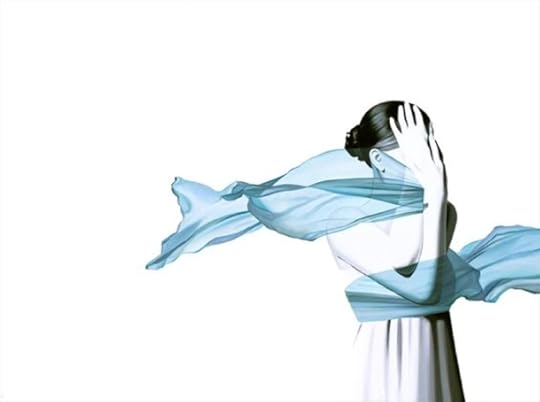
Imagine you're throwing a veil over your story, and everything—EVERYTHING—becomes hidden under that veil. That's what the reader will be excited to pull back, to see what's underneath.
You can do a simple exercise. Take one page of your writing and re-write it as if it were hidden under a veil.
How? By hiding each sentence underneath another, by hiding each line of dialogue underneath another.
For example:
They sat down to eat dinner.
"I'm worried about our son," she said. "He's gotten into ye...
November 30, 2018
Turn, turn, and turn it again
I’ve talked about this multiple times, and it bears repeating as I keep seeing examples of your writing and how by simply applying the turning idea (or twisting, or flipping, or reversing, or whatever word you want to use to a complete upside down turnaround of the events) it can be improved.
Lately it was by watching Mindhunter that I was reminded of the importance of it again. And, of course, after starting to write Book 2 of T.U.B.E. and training myself to slow down and think and do the sa...


