Sue Fagalde Lick's Blog, page 31
June 20, 2016
Portuguese-American novel lives again
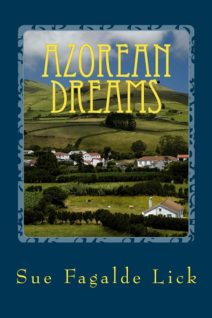 Summer 2016 is becoming the summer of revisiting and revising past writing projects. First I did a new edition of Stories Grandma Never Told: Portuguese Women in California. Now I have a new edition of my Portuguese-American novel Azorean Dreams. This is the novel I wrote while I was still trying to sell the Grandma book. One of the women I interviewed, who had published her own book, convinced me that a novel would sell better than nonfiction. I no longer believe that’s true, but since nothing was happening with “Grandma,” I started writing a novel. Some of the people, places and events came directly from my experiences researching Stories Grandma Never Told. Others stem from things that were happening in the late 1990s in San Jose, California. And a lot of it is from my imagination.
My protagonist, Chelsea Faust, is a newspaper reporter working for a local weekly but with ambitions to move up in the business. She’ll do anything to prove herself as a great reporter. Although her mother’s side of the family is Portuguese, with roots in the Azores Islands, she doesn’t know or care much about her heritage. Then an assignment sends her into Little Portugal, and she meets the handsome Simão Freitas, who has not been in the U.S. very long. Romance blooms, but they disagree on many things, plus an incident from Simão’s past threatens to ruin everything.
I never imagined anyone real could have the name Chelsea Faust, but there is a real Chelsea Faust, with whom I connected online. She’s okay with her name being in the book. I have not met a real Simão (sim-OW) Freitas, but there probably are several men with that name because it’s pretty common.
Anyway, my Portuguese-American mother got a chance to read Azorean Dreams before she passed away, and she loved it. For that alone, I’m glad I published it when I did. The first time, I went through a company called iUniverse, that offers “print-on-demand” publishing, meaning when an order comes in, they print a book. There are not boxes of printed books sitting around somewhere. You pay for the service and—here’s the catch with these companies—you pay for copies of your own book. Their designers decide what the book will look like. They also determine the retail price.
To be honest, I never liked the look, the size or the price of the iUniverse version. I have seen the same cover art photo used in advertisements for several products. The background is not even the Azores. I’m pretty sure it’s Italy. The print inside is huge, making the book itself huge. And they charged $20.95 a copy. Who would pay that much for a paperback novel by an unknown writer? Judging by my sales, almost nobody. But I had signed a contract and thought I couldn’t get out of it. I was wrong. As of last month, I am free from iUniverse. They’re not all bad, but it didn’t work for me.
A few years ago, I revised Azorean Dreams a bit and published it as a Kindle e-book. Same stupid cover. But now I have a new cover for both the e-book ($2.99) and the new paperback version. I used Amazon.com’s CreateSpace program, which allowed me to design the whole book myself, so now I love the way it looks. It’s a more reasonable size and price, $14.95. I feel so much better about it, and maybe a few new readers will take a look.
Now I’m immersed in another project that I will tell you about soon. Happy summer, everyone. Get some books and start reading.



June 13, 2016
Finding peace and beauty at Oregon’s Cape Perpetua
![IMG_20160612_112710756[1]](https://i.gr-assets.com/images/S/compressed.photo.goodreads.com/hostedimages/1465934403i/19418772._SX540_.jpg) In light of current events, I think we could all use a little peace and beauty. Yesterday I ran away to Cape Perpetua Scenic Area, a wonderful park about 25 miles south of my home. The sun was shining, although the cool breeze made me glad I was wearing my sweatshirt. I took a trail and then another and then . . . realized I’d never get back to my car if I kept walking, so I backtracked and sat overlooking the incredible ocean view with my journal.I breathed in the quiet and relaxed. A sparrow kept me company. My photos only hint at the gorgeousness of this place. Admission is $5 for day use, but there’s a great campground for those who want to stay longer. The visitors center offers lots of information, frequent nature talks, movies, and books. I found out the names of the flowers I’d been seeing and learned which of them I can eat. Salmonberries, yes. Foxglove, no! If you find yourself on the Oregon coast, definitely stop at Cape Perpetua. Meanwhile, enjoy the pictures.
In light of current events, I think we could all use a little peace and beauty. Yesterday I ran away to Cape Perpetua Scenic Area, a wonderful park about 25 miles south of my home. The sun was shining, although the cool breeze made me glad I was wearing my sweatshirt. I took a trail and then another and then . . . realized I’d never get back to my car if I kept walking, so I backtracked and sat overlooking the incredible ocean view with my journal.I breathed in the quiet and relaxed. A sparrow kept me company. My photos only hint at the gorgeousness of this place. Admission is $5 for day use, but there’s a great campground for those who want to stay longer. The visitors center offers lots of information, frequent nature talks, movies, and books. I found out the names of the flowers I’d been seeing and learned which of them I can eat. Salmonberries, yes. Foxglove, no! If you find yourself on the Oregon coast, definitely stop at Cape Perpetua. Meanwhile, enjoy the pictures.
![IMG_20160612_112857642_HDR[1]](https://i.gr-assets.com/images/S/compressed.photo.goodreads.com/hostedimages/1465934403i/19418773._SX540_.jpg) After starting on the Whispering Spruce trail, I came upon this rock shelter. Note guitar in opening on the right. Inside, a young musician was posing for a photo shoot.
After starting on the Whispering Spruce trail, I came upon this rock shelter. Note guitar in opening on the right. Inside, a young musician was posing for a photo shoot.![IMG_20160612_110119638[1]](https://i.gr-assets.com/images/S/compressed.photo.goodreads.com/hostedimages/1465934403i/19418774._SX540_.jpg)
![IMG_20160612_110927911[1]](https://i.gr-assets.com/images/S/compressed.photo.goodreads.com/hostedimages/1465934403i/19418775._SY540_.jpg) The path wasn’t always smooth like this. Along the Amanda trail, I encountered steep ups and downs and some pretty gnarly roots, along with this tree, below, that looked like a chair.
The path wasn’t always smooth like this. Along the Amanda trail, I encountered steep ups and downs and some pretty gnarly roots, along with this tree, below, that looked like a chair.![IMG_20160612_111556422[1]](https://i.gr-assets.com/images/S/compressed.photo.goodreads.com/hostedimages/1465934403i/19418776._SX540_.jpg)
![IMG_20160612_105943801[1]](https://i.gr-assets.com/images/S/compressed.photo.goodreads.com/hostedimages/1465934403i/19418777._SY540_.jpg) World getting you down? Turn off the Internet, find a path, and go.
World getting you down? Turn off the Internet, find a path, and go.All contents copyright Sue Fagalde Lick 2016. Publish without permission, and my dog Annie will eat you for lunch.


May 30, 2016
Portuguese grandma book lives on and on
 Stories Grandma Never Told was conceived one day more than 25 years ago when I was hiding out in my parents’ vacation trailer making random notes in the wake of publishing my first book, The Iberian Americans. That book was an overview of the experiences of immigrants from Portugal, Spain and the Basque Country. My roots lead back to all of those places.
What about the Portuguese women, I asked myself. What has been passed down from my great grandmother to my grandmother to my mother to me that makes me who I am? The eyes, the nose, the body, yes, but what else? Who were these women? The few books about Portuguese immigrants that I had found focused on the men, as if the women didn’t come at all. There were stories to be shared.
The result was my next published book, Stories Grandma Never Told: Portuguese Women in California. The title is slightly misleading because the book does not include my grandmother’s stories. I never heard them. Instead, I looked up “Portuguese” in the phone book (pre-Google) and started interviewing women: family, friends, people who were active in the Portuguese community and the people they insisted I speak to. I had never been exposed to much of the Portuguese culture. A few words, a few foods, but not much more. My parents’ generation insisted on being as American as possible. Forget the old country. But I got involved, I learned, and I wrote.
It took almost a decade to get this book published. We had already moved to Oregon when I finally got the letter (pre-email!) from Malcolm Margolin of Heyday Books offering to publish Stories Grandma Never Told. It was released at The Dia de Portugal celebration in San Jose in June 1998. That was one of the best days of my life. My family was there, and the books sold like crazy.
Eighteen years later, the book is still selling, but not in the same way. After nine years doing a fantastic job with my book through three printings, the people at Heyday decided it wasn’t selling enough to be worth doing another printing. But it was still selling, and I wasn’t ready to let it go, so I started my own publishing company, Blue Hydrangea Productions, hooked up with a local printshop, Lazerquick in Newport, and produced my own edition with a gorgeous new cover photo of my grandmother, Anne Avina, on her wedding day.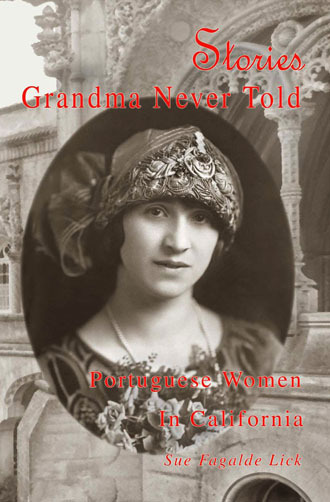
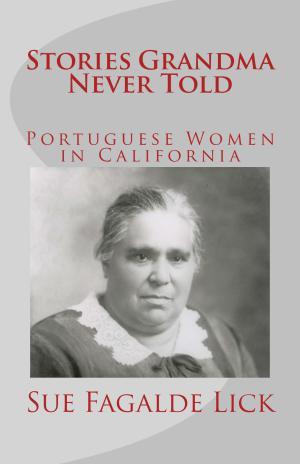
That first Blue Hydrangea edition kept selling. I went through three printings, and I’m still getting orders. I’m out of envelopes and almost out of books, but Stories Grandma Never Told lives on. I am releasing a new edition this month through Amazon’s CreateSpace print-on-demand program. You can order it online right now. Again, we have a new cover. This one features my great grandmother, Anna Souza. Why go through Amazon this time? Cost and efficiency. It costs me nothing, saving me a big printing bill and allowing me to charge less for the book. I can also offer it as a Kindle ebook for the first time ever. Plus, since most of my orders come from Amazon, they won’t have to get the books from me, meaning readers can get copies more quickly. I will still get paid and should make more money than before.
Why self-publish? These days, it’s a big question in publishing. It’s so hard to get accepted by traditional publishers, although I have done it several times and expect to do it again. Some self-published books are poorly written and badly edited, but many respected authors are taking control of their own careers by publishing their own books. We have the technology now sitting on our desks. Why depend on someone else?
“Grandma” was originally edited and formatted by the best at Heyday Books. I’m just keeping their work going. Why? Because the readers still want the book, and they don’t care how it came to be. I marvel at this, that I wrote something people want to buy and share with their mothers, daughters and friends. How could I let it die?
Grandma Souza, who died in 1954, would be shocked to find her face on the front of a book. She never learned to read in either Portuguese or English. But here she is, digitized in 2016 and being written about in a “blog.” As she might have said, “Ay, Jesus.”


May 23, 2016
TV finales leave me with PTSD
I’m traumatized. In the last week, I have gone through so much: gunshots, car accidents, falling in love, breaking up, rape, beatings, standing ovations, singing with Elton John, a C-section without anesthesia, getting hired, getting fired, dancing with the stars, and having sex—so much sex. I have traveled by plane, train, car, bicycle, and on foot. I’ve spent a lot of time in New York, but I have also gotten soaked in the rain in Seattle, sung on a stage in Nashville, and ridden with cops through the streets of Chicago. I have said goodbye to so many friends this week, and I have cried an ocean of tears.
And that’s just on TV. Season finale week, oy.
No wonder I can’t get up in the morning. I have been through so much. I need that kind old lady in the book I’m reading to bring me some of her blueberry muffins and give me a hug. I need her to tuck me in and tell me everything will be all right. Where is she? And where is the best friend who always appears on the TV shows?
I watch a lot of prime time TV, probably too much. Last week, I watched the series finales of “Castle,” “Nashville” and “Mike and Molly.” I watched the season finales of “Grey’s Anatomy” and “Mom.” Oh, and last week with “Madame Secretary,” I almost got fired and we almost had a war and . . . it never stops. On the cop shows, someone gets murdered every episode. Once an hour, we see some hapless man or woman get stabbed, shot, strangled, beaten or poisoned. On the last “Castle,” they burned a guy up in the trunk of a car. And they shot both Castle and Beckett.
How can I sleep after that? How can I wake up and go on with my life?
I have been through so much.
Now, I know this is all fiction, but I’m starting to wonder how much this affects the viewer. How much stays in one’s mind and body as if it happened to them personally? Do we suffer PTSD from all this fictional trauma? Can one’s subconscious distinguish between real events and fictional ones?
God knows, I have cried after happy movies where true love wins when I look around and discover that my husband is still dead and I’m still living alone and I don’t look half as pretty as the heroine in the movie. I’ll never be young, beautiful, uber talented and famous like Scarlett on “Nashville.” My books will never sell like Castle’s. I will never be able to eat ice cream from the carton or drink gallons of booze like the women on “Grey’s Anatomy” and not gain weight. My phone does not ring with amazing opportunities every two minutes. Handsome men are not pursuing me. Reality does not match up.
So I bury myself in my shows. But I go through so much. And now, as soon as the show is over, I go online to read the reviews and recaps and watch clips of the most dramatic moments because I don’t want to let them go. Living on the West Coast, I can read what the columnists have already written based on the East Coast showings. After the “Castle” finale, I had to know: Did Beckett and Castle die? After “Nashville” ended, I needed someone to sum it all up for me because so much happened. Poor Rayna and Deacon. Poor Scarlett. What was Juliette thinking sleeping with the “Dancing with the Stars” guy? And thank God Cole wasn’t killed. It just a concussion. I mean, so much.
Now that the season finales have happened, what will I do every night? How will I live until September? Am I the only one who is this nuts? Please comment. Tell me I’m not alone. Be gentle. I have been through so much.


May 16, 2016
Hearing aids amplify every little cricket chirp
When I went to have my hearing checked last week, I had no idea I’d be walking out an hour later with hearing aids in both ears. I just wanted to find out if everybody was mumbling or I really couldn’t hear.![IMG_20160516_140629411[1]](https://i.gr-assets.com/images/S/compressed.photo.goodreads.com/hostedimages/1463498323i/19125322.jpg)
About 8 years ago, I had my hearing checked by the same audiologist, whom I had interviewed for the local newspaper. At the time, she saw a dip in the hearing in the right ear, but not enough to need hearing aids. A whole lot of life has happened since then. There are certain people in my life whom I just can’t hear. At the last two literary readings I attended, I couldn’t hear them read. It drove me nuts.
So into the booth I went. The doc placed heavy-duty headphones over my ears, blocking out all other sounds, then played beeps and boops at various volumes and pitches. I was supposed to say “yes” when I heard one. Often there seemed to be an echo of the sounds, and sometimes I didn’t hear anything for a long time. She followed the sounds with spoken words that got softer and softer.
A mild to moderate loss, she said afterward, pointing to a graph that shows normal hearing at about 20, mine at about 35, and 60 where it may ultimately go. Hereditary, she said. Thanks, Mom and Dad.
I sat there in shock as she told me about the types of hearing aids I could get and how much they would cost–$5,000 for two hearing aids–and oh by the way, they don’t take credit cards. Then she shifted me over to the hearing aid guy, who stuck these loaners on my ears and set about programming them. He told me about all the extra features I could buy. All the while, I heard what sounded like crickets. Part of it was my own voice whenever I said an S or a C. But eventually I realized the cricket sound I was hearing was the clicking of his computer mouse. Whoa.
I walked out into the world with new ears, the biggest part perched on the top of my ears, with little nubs inside my ears. It helped a little with hearing things I wanted to hear: voices, the TV, music on the computer, but my own voice sounded weird to me. Rustling papers, plastic bags, car keys and my dog’s tags were annoyingly loud.
When I played music, the piano and guitar sounded tinny and my singing voice sounded like I was singing into a tin can. Normally blessed with almost perfect pitch, I couldn’t hear whether I was singing the right notes or not.
Trying to talk to a friend in a crowd, I felt like I was a radio station that wasn’t quite tuned in. Plus my ears itched. Hearing aids take getting used to, I’m told. That’s an understatement.
As I walked around hearing every foot shuffle and mouse chirp, I made myself crazy trying to figure out where to get $5,000. When I talked to my dad, who at 94 has not gotten the hearing aids he most definitely needs, he said I didn’t really need them that bad. He thinks that because everything at his house is so loud my problem is hearing too much. If his next-door neighbor weren’t deaf, she could hear every word on his TV. In her house. In her garage on the other side of her house. So, no sympathy there.
The batteries on my loaner hearing aids died on Saturday night. I had hoped to use them at a meeting on Sunday. Oh well. I decided, for now, that I don’t need them. I will revisit the situation in a year. I’m still trying to grasp the news that I have a measurable hearing loss and it’s going to get worse. One shock at a time, right? Besides, most of the time, I’m at home alone where the quiet is a blessing.
I did some research on this whole hearing aid biz. A recent article in the New York Times said that nearly 30 million Americans, including two-thirds of those over 70, are said to have a hearing loss. But only 15 to 30 percent of those who would benefit from hearing aids use them. Why? Because the cost is ridiculous and rarely covered by insurance, and the results are not that satisfying.
My experience was not wasted. Now I know where I stand, hearing-wise. I also know how much I DO hear. I hear a lot. I can still hear the birds, the foghorn, the click my cellphone makes when I get a Facebook message, and my dog whimpering in her sleep when she has a nightmare. I can hear the voices of the people I love. Now that I know what’s coming, I’m grateful for every sound, even the trucks on the highway and the neighbor’s rooster crowing.
My Uncle Bob used to say his hearing aids let him hear the grass grow. Well, I listened and I didn’t hear it. I don’t think I need to.


May 9, 2016
Try a Little Love Potion No. 9
Remember Love Potion Number 9? If you’re a baby boomer, you do. For those who are ready to click off in confusion, it’s a song, a hit record by The Searchers from 1964. Remember the famous line when the music stopped and singer sang, “I held my nose, I closed my eyes, I took a drink”? After which he says, “I didn’t know if it was day or night. I started kissing everything in sight.” When he kissed a cop at 34th and Vine, the cop broke his little bottle of Love Potion No. 9. They don’t write ‘em like that anymore.
Check it out here on YouTube. The guy up front is not really playing that guitar, is he? If he is, he has a pretty weird picking style. But he’s having fun.
That song came out a long time ago. I was 12. Many of you were not even born. Yet yesterday at our South Beach open mic/jam session, when our leader Renae started playing it, we all knew all the words. In a minute, we knew all the chords, too: Am, Dm, C, D, E7. That goofy song brought us together in ways that very few other things do. And that led me to a revelation, one of those God knocking on my head moments.
I’ve been struggling with a bad case of the “why bothers” lately with my writing. Why struggle over poems and essays that I send to literary magazines and mostly get rejected. Even when I get something accepted, the readership is so small, and nobody I know reads those publications, so why bother? I’m sending out my novel, and nobody’s buying it, so why bother? I’ve written a ton of songs, but I don’t exactly have a record deal, so why bother?
Here’s why. Because when people know your work and share it, magic happens. When my words touch just one person’s heart, magic happens. When people sing together, magic happens.
Music has a special power. Think of all the good old singalongs that everybody knows. “Down by the Riverside.” “Amazing Grace.” The Jeremiah was a Bullfrog version of “Joy to the World.” “Your Cheatin’ Heart.” “You are My Sunshine.” Somebody wrote those songs, and somebody shared them. And it was worth the bother.
One of our local high school teachers brought some of his special ed students to perform as a band at yesterday’s open mic. Most are developmentally disabled, some severely. But they ran up front with their tambourines and shakers and sang Prince’s “Purple Rain” and Leonard Cohen’s “Hallelujah.” It wasn’t on pitch, and the words were slurred, but they were so full of joy, the rest didn’t matter.
Other singers paid tribute to the late Merle Haggard and the late David Bowie by singing their songs. The writers are gone, but their songs remain. We will sing them forever. Even if we get dementia and forget everything else, we will remember the songs because music lives in a different part of our brains. It matters.
So, write your writing and sing your songs and don’t worry about the rest. If you’re not a writer or singer, that’s okay. Do what you do. It matters.
Next time, maybe we’ll sing “Itsy Bitsy Teeny Weenie Yellow Polka Dot Bikini.” Man, we had good songs back in the 60s.


May 2, 2016
Dad’s 94th birthday full of surprises
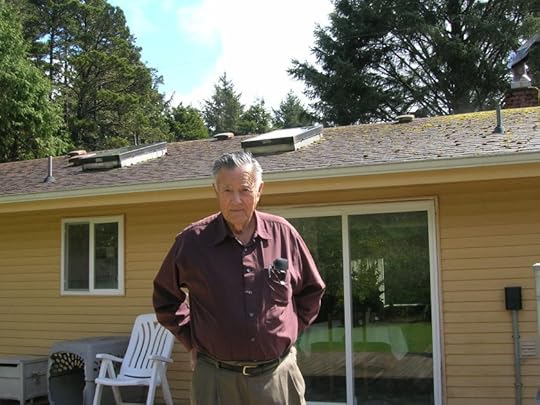 People can be rude, annoying and selfish, but sometimes they can be so very, very good.
Yesterday was my father Ed Fagalde’s 94th birthday. I couldn’t be in San Jose to help him celebrate. I worried that he’d be spending the day alone, that even though he says, “It’s just another day,” he would be sad. But people stepped up, people you wouldn’t even expect.
Yes, Dad’s cousin called from Texas, my aunt took him to lunch on Saturday, and my brother’s family took him to lunch on Sunday (Thank you!). Yes, I sent a gift, which arrived on his doorstep on time. But nobody expected a neighbor he barely knew to call hto wish him happy birthday and invite him to come over. And nobody expected what happened when he went to dinner alone at his favorite restaurant, the Country Inn on Saratoga Avenue.
Eating dinner alone at a restaurant can be daunting. You find yourself surrounded by couples and families while you have no one to talk to. I always bring a book, but Dad just eats in silence since Mom died in 2002.
Not this time. The manager joined him at the table, saying the staff could run the place without him. They talked like old friends. Indeed they have been seeing each other at the restaurant for many years. At dessert time, seven workers sang to him and brought him a candlelit slice of cake that was so big he brought most of it home to enjoy later. And when he asked about his check, he was told the meal was “on the house.”
It wasn’t over. At church yesterday morning, even though it was First Communion Day and the place was packed with little girls in white dresses and little boys in suits, the congregation honored my father. He didn’t expect it. He’s not active in church activities. He sits in the second to last row with a young family with three kids who have claimed him as an extra grandfather. They’re the only ones who know his name. He had just come back from the restroom when a woman up front told him not to sit down. She announced that it was his birthday, and over 500 people applauded him. He was thrilled. The priest asked how old he was—94—and how long he had been coming to St. Martin’s—65 years. San Jose is a big city. It’s easy to be anonymous in the crowd. But not this time. People recognized and honored him. That was the best gift anyone could have given him.
Last night on the phone, Dad said someone asked him how he kept going so long. Eating and sleeping, he said. When you stop doing that, you’re done.
Dad still lives on his own in the house where I grew up. Since he broke his hip in 2014, he can’t move like he used to, but he’s an independent cuss and he has good genes. His father lived to 98. His cousin made it to 96. We all know that things could change at any minute—or not. Meanwhile, I am blessed to have him, and I am so grateful that people paid attention this year. It matters.
Look up and notice the people sitting alone. Say hello. They might be great people like my my father.
Happy birthday, Dad.


April 25, 2016
The Trifecta of Technology Failure
![IMG_20160425_124252092_HDR[1]](https://i.gr-assets.com/images/S/compressed.photo.goodreads.com/hostedimages/1461689301i/18897906.jpg) Sometimes I really miss the days of typewriters and saving our words on paper. Yes, I’m old, so old that when I had to use an electric typewriter in my college typing class, I walked up to the teacher and said, “Ma’am, I can’t do that. I’m used to a manual typewriter. These keys move too fast. I’m going to flunk this class.” Her response was something along the lines of “get over it.” And I did.
Sometimes I really miss the days of typewriters and saving our words on paper. Yes, I’m old, so old that when I had to use an electric typewriter in my college typing class, I walked up to the teacher and said, “Ma’am, I can’t do that. I’m used to a manual typewriter. These keys move too fast. I’m going to flunk this class.” Her response was something along the lines of “get over it.” And I did.
At my early newspaper jobs, I typed on manual typewriters, using leftover sheets of newsprint and carbon paper to make copies. We edited with pencils, and typesetters retyped our words into long strips of heavy paper that we pasted on cardboard and marked up with blue pencils that didn’t show when the pages were photographed. I also took pictures on film and developed them in a darkroom, but that’s a whole other story.
Over the years, I’ve gotten used to electric typewriters, word processors, my first Radio Shack computer, a $1500 box with no connection to the Internet, Apples and IBMs, DOS and Windows, disks as big as dinner plates, disks down-sized to cake plates, and floppy disks that could double as coasters, CDs, DVDs and flash drives, portable phones, cell phones, smart phones, Kindles, iPads, iPods, Etc. None of which lasts more than two years.
So, on Friday night, when I turned on my computer, the screen was blank. The power light was on, and the computer seemed to be on. The computer is relatively new, sold to me by Staples, which just happens to have closed their local store last month. I didn’t do anything different to it. I had simply turned it off before I went to my weekly jam in Waldport. Of course you know where the user’s manual is these days? Right. Online. You can’t read it if you’re staring at a blank screen. Note to computer makers: Bring back printed manuals. Your online help is not that helpful.
Luckily, I have a laptop as well as a desktop computer, and I managed to find some suggestions for my dilemma. Lots of unplugging and restarting. Ultimately, I unplugged the monitor and went searching in the garage for the ancient 50-pound monitor that I have never gotten around to taking somewhere to recycle. It had been there for years. It just about killed me lugging it from the garage to my office and muscling it into place. But guess what? It worked. I’m using it now. The print is too small and kind of fuzzy. My new monitor, ordered online from Staples, should arrive today. None of the coupons they keep sending me in the mail applied to this purchase. They charged me extra for insurance I did not buy. The Staples guy insists I did. I give up.
But that wasn’t the end of the weekend’s technical difficulties. Nope. I went to Corvallis yesterday for a Timberline Review reading at Grass Roots Books and Music, to be followed by a meeting to decide which poems to publish in the next issue. At a rest stop on Highway 20, I glanced at my phone and read DEVICE LOCKED. I had recently installed McAfee antivirus protection on the phone, and they had decided that it had fallen into the hands of a criminal. I could only unlock it with my pin number. My pin number was at home. I could not use my phone for five hours. At home last night, I found the pin, got into the phone and uninstalled that SOB program. I can’t believe an outside force could keep me from my own phone.
That’s still not the end of it. Our poetry meeting had to be aborted because the WiFi didn’t work in the café where we planned to have our discussion and the folks at the bookstore next door didn’t know the password to their WiFi. Our only copies of the poems were online, so we gave up and went home. If we’d brought them on paper, our meeting would have happened and we’d have our final list of poems today. Grumble.
Today, at this moment, everything is working, but I have no confidence that when I go into the kitchen to make my lunch, the microwave will work. I miss the good old days. How about you? Feel free to comment on your frustrations or joys with technology.
PS. Lunch went fine, but I just got an email from Staples. They no longer have the monitor I ordered, and it will not be coming. Is that smoke coming out of my ears?


April 18, 2016
The Hydrangea Nearly Won
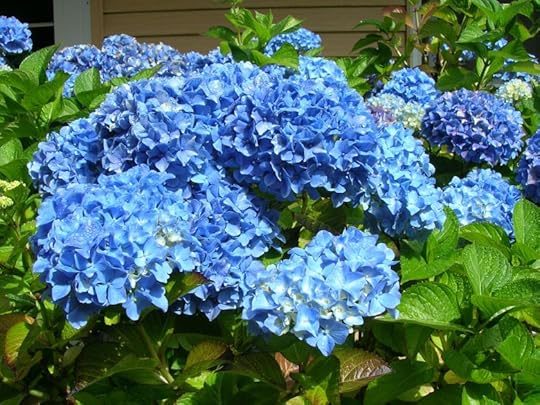
Last week I was whining about the dead hydrangea bush I was having a hard time removing. Actually “hard time” is putting it too mildly. I dug and chopped and pulled at that thing for weeks. I kept coming back to it like a dog trying to get at a rat under the house, digging and pushing and bending, nicking up my piano-playing hands. It was thoroughly dead, its branches turned to bamboo. I blame the freeze of 2014, plus the blackberries that grew up around it and choked it to death. I had given it two whole seasons to recover, but it didn’t.
![IMG_20160412_110723903[1].jpg](https://i.gr-assets.com/images/S/compressed.photo.goodreads.com/hostedimages/1461102446i/18824730._SX540_.jpg) Two weeks ago, I saw that this job was getting too big for me and contacted a gardener. After a week, he had not responded, and it was bugging me, so I dug and chopped and tugged some more as my good shoes got crusted with mud. The branches that were too thick to cut kept scratching me. I went at it with a hatchet. The branches laughed. I tried to cut it with my loppers. Nyah, nyah, they said. I gave up for a while, but I’m not one to quit on things. I did a search on YouTube and watched a guy named Bob demonstrate the proper technique. Okay, I can do this, I thought. I didn’t own the fancy spade that he had, but I did own a spade.
Two weeks ago, I saw that this job was getting too big for me and contacted a gardener. After a week, he had not responded, and it was bugging me, so I dug and chopped and tugged some more as my good shoes got crusted with mud. The branches that were too thick to cut kept scratching me. I went at it with a hatchet. The branches laughed. I tried to cut it with my loppers. Nyah, nyah, they said. I gave up for a while, but I’m not one to quit on things. I did a search on YouTube and watched a guy named Bob demonstrate the proper technique. Okay, I can do this, I thought. I didn’t own the fancy spade that he had, but I did own a spade.
It was working. Then I got down to the last mega roots, thick as parsnips. I chopped with my hatchet. I dug with my spade. I grabbed and pulled with all my might. I could hear roots popping. Progress. But then with one of those mighty heave-hos, I heard my back popping, too, and thought, uh-oh. Time out.
I threw myself on the grass in a sweaty savasana and let it go. It was hard. I knew I was close. I also knew I didn’t want to end up in the hospital.
The gardeners finally contacted me on Monday. They would charge $40 to get the plant out. Fine. Late Wednesday afternoon, they came. Three guys, two speaking mostly Spanish. One of them grabbed my rusty spade that was still leaning up against the wall. He shoved it down into the ground hard about three times, pulled on the plant and it came out, roots and all. Just like that. He carried the corpse to the truck. They smoothed the dirt, and they were done.
I was so close! I almost had it. Just a little more upper body strength and it would have been my victory. It should have been. After all, I am the founder and CEO of Blue Hydrangea Productions. That was my glorious standard for my company. I loved it when it was blooming and I should have been the one to perform the final rites. But no. Because I’m a freaking girl. I thought they would bring fancy equipment to dig and cut. Wrong. They used my rusty old spade that I found in the shed after I watched the YouTube video. Not fair!
Two minutes! They should have paid me for doing all the prep work. I should have had Annie help me. If that dog can bite through an allegedly indestructible Kong or a log from the woodpile, why can’t she take down a dead hydrangea?
Everybody says I should have called them in the first place. They also say I need to hire a gardener. Mowing the lawns kills me. My lawn is like a golf course. Huge. But there’s wonderful satisfaction in watching that lawn get neater with each row I cut. So, not yet.
Any day now, I’ll be planting a new blue hydrangea, all by myself. And I took down a dying rosebush yesterday in five minutes. Thank you, YouTube.


April 11, 2016
Why I don’t move back to San Jose
Last week in Newport, it was “Dine Out for Samaritan House” day. Once a month, a local restaurant offers a percentage of its proceeds to support the local homeless shelter. That shelter was founded and is maintained by people I know, mostly from my church. Years ago, I even did a story about it for the local newspaper.
This month’s restaurant was Nana’s Irish Pub in Nye Beach. I had a hankering to try bangers and mash, so I invited my friend Pat to join me for dinner after her shift at Samaritan House. When I walked in the door and paused by the bar to scan the crowded tables, I realized half the people in there were people I knew. It soon turned into a party, complete with beer and Irish music in the background. We talked, gossiped about our priest, and compared Irish dishes. I don’t have a Celtic palate—more Mexican and Italian—but my bangers and mash were good and Pat nearly swooned over her bread pudding.
I had already been to Nana’s the previous week for the church ladies’ monthly lunch. Best Reuben sandwich anywhere.
The same thing happens at Georgie’s Beachside Grill every Sunday when friends fill the tables after church. Party time. That simply does not happen back in San Jose. People commune with their phones.
Newport has 10,000 people, fewer than fill the average professional sports stadium. Everywhere I go, I meet people I know, and that makes my life as a childless widow a lot less lonely. For example:
* I go to the hospital for minor surgery. The anesthesiologist is a music friend. The nurse goes to my church. All of my friends have the same doctor.
* When I visit one friend at the local rehab facility, another friend is just down the hall, and I pass yet another just leaving.
* When I shop at Fred Meyer, I meet at least one and more likely a half dozen friends as I peruse the vegetables and stock up on dog food.
* I go to see a play. I know the guy handing out programs and most of the cast members. One is my hair stylist; another is a writer. And I know the performing arts center so well it feels like home. I have been on stage, backstage, in the dressing rooms, and in every section of the seating area. I have sung in the lobby and in both theaters. Unlike the enormous airport-like facilities in big cities, there is no way I can get lost here.
* When Annie and I go hiking, we wave at the drivers of every vehicle that passes us, and they wave back.
* I not only know where everything is at the J.C. Market, I know what the J and C stand for: Jim and Cleo.
* My neighbors have promised to take care of me should the mega-earthquake and tsunami come. I know they will. They have already helped me plenty, feeding Annie when I go away, fixing my gutters, power-washing my house, and sharing halibut and elk from their fishing and hunting trips. My dog Annie and their dog Harley are in love.
Also:
* My mortgage for a four-bedroom house on a massive lot near the beach is a third of what people are paying to rent apartments in San Jose.
* I get paid to play piano and sing solos at church, even though I don’t have a music degree.
* We don’t have black widow spiders, yellow jackets, poisonous snakes, or poison oak.
* I can run four or five different errands in a half hour because everything is close, and there are no crowds. I can even renew my driver’s license in a half hour.
* We complain about the traffic if we have to wait for three cars to pass.
*“Nature” is right outside my door. I don’t have to drive for hours to get to it.
* I am still awed by the beauty I see in every direction. Not concrete and cars, but the ocean, hills, forests, and wildflowers.
Some of my relatives don’t understand why I stay here. Sometimes I do want to go home. I miss my family so bad it hurts, and the rain gets tiresome when it comes day after day. I’m not fond of ice and snow. It gets frustrating when I have to drive for hours to the airport or major stores. What I wouldn’t give for an Olive Garden restaurant. And I’d kill for an electric or gas heating system to replace the pellet stove. But I don’t miss the traffic, the smog, or the crowds in which everyone is anonymous. My father doesn’t even know most of his neighbors. When he goes out, he almost never meets anyone he knows, and no one gives way for an old man with a cane.
We born-again Oregonians don’t want lots more people to move here. With luck, the weather and the lack of jobs will keep out the crowds. Maybe I can claim some rights to Oregon soil. My Fagalde great grandparents settled in Oregon back in the 1800s. If only I could visit them on their ranch and talk to them.
This summer I will have been here 20 years. Fred and I lived together on the Oregon coast longer than we lived together in San Jose, and I have stayed five years since he passed away. Someday I may have to go back to California to help my dad or deal with his house. Maybe I will need the kind of health care I can’t get here. But not today. This is where I live. Like the dead hydrangea I have spent the past week trying to dig out of the ground, I have put down thick roots that would be nearly impossible to cut.
P.S. Somebody help me get this stupid plant out of the ground. I have company coming this week, and it looks awful. Anybody got a chain saw?