Brandon Ellis's Blog, page 7
July 14, 2013
I Didn’t Know My Father Loved Me
A True Story by Brandon Ellis
I’m an author by night, Sports Massage Therapist by day. I’ve worked on thousands of people throughout my Sports Therapy career and there’s one thing in common with all of the people I’ve had the pleasure of working on–they all have unique, incredible stories. This next story I’m going to share with you is of no exception.
~ ~ ~
I Didn’t Know My Father Loved Me
As I press on an area between Jim’s belly button and the front hip bone of his pelvis called the ASIS, he asks, “Is that the Sore-As muscle?”
“It’s the psoas muscle.” I correct him, putting a little more pressure on it, doing what is called trigger point therapy.
“It should be called the “Sore As Hell” muscle.” He smiles. It’s his usual joke. He then looks at me, eyes a little wider than usual. ”I’ve been thinking of my father lately.”
Jim is 78 and has been a client of mine for about 7 years, so I’ve had the pleasure of being in his presence for quite some time now. His father passed away many years ago, way before I met Jim. I think he died even before I was alive. Nonetheless, it had been a while, so I had never heard Jim speak of his father much, until now.
Still pressing on his psoas, I move his leg left and right with my other hand, stretching and contracting the targeted muscle, and ask, ”What did he die of?”
“Prostate cancer.”
“How old was he when he died?”
“81.”
I take my finger pressure off of his psoas, walk over to the head of the table, and sit on my stool, facing the top of his head. I press both hands on the sides of his neck, and start my neck assessment.
“He was a complete jerk my entire life.” Jim sighs. I can tell he still has anger over his father. “You know, growing up, he never once told me he loved me. Never told anyone he loved them, not my mom and not my brother. He was Russian and I think he had a hard life, just like his own father. So, he was probably raised that way.” Jim points to the ceiling, acting as if he is his father. “He’d point, saying, ‘You’re a bad boy. Bad boy.’ He never gave me a compliment.” Jim shakes his head, disappointment written all over his face.
I take a deep breath, bringing my focus to the anterior scalene muscles close to the front of his neck. They are tight, which is unusual for Jim. Knowing that the scalenes hold a lot of stress, I could tell he has probably been thinking about his father for days. I remember something Jim once told me about his life, probably something his father caused, so I bring it up. “Didn’t you leave your parent’s house at fifteen years old?”
“I was 16, but my brother was 14 when he left. That was several years before I took off. My brother couldn’t take my father anymore, leaving me there alone, so I got the brunt of what my brother used to get, making my life in that tiny apartment hell. So, at age 16 I enrolled in the Air Force to get as far away from dad as I could.”
“You enrolled at age 16? I thought you had to be 17 in order to be part of the military,” I say.
He laughs. “I lied to them.”
“You did? Wow.” I’m clearly surprised. He’s a small man and I wondered how anyone could have ever thought he was old enough to enter the armed forces. He probably looked much younger than 17, but who knows. “So, what did you do in the Air Force?”
He waves his hand in the air, dismissing the question. “Ah, nothing. I was a file clerk. I learned how to type and that’s about all. I was stationed in Japan for two years. I, at least, was able to travel on an aircraft carrier to get there. That was cool. It took two weeks to get there by boat.”
“What was that like?”
He laughs again. “I learned that if you kept walking around, avoiding any eye contact, and act busy, then you really don’t have to do anything. Everyone was doing there jobs, but I didn’t do anything. I just slept and ate. And, when I got to Japan, I spent two years filing, typing, and having sex, then came home.” He shrugs, as if saying military life was easy as pie. “After I got home, I’d call dad every so often through the years. I’d say, ‘Hi dad!’ and he’d reply with, ‘What car are you driving?’
“When mom divorced him, I knew he was sad, but each time I’d call, he’d ask what car I was driving. Whenever I told him I loved him, he’d grumble in the phone, quickly changing the subject.” Jim frowns. “At least he taught me how to paint. And, whenever I painted with him, he would say the meanest things to me, like I was the worst thing that happened to him.” Shaking his head, he rolls his eyes. “He was Russian and grew up with a hard life. I bet his dad beat him.”
I cradled the back of his head, touching the suboccipitals attached there. “Is that tender?”
“Oh, yeah.”
I place his head in a position that can help me easily release the tension in his suboccipital muscles. He moans. “I love it when you do that.”
“Did you see your dad at all after coming back from Japan?”
“No, I was never around. Like I said, I did my best to call him whenever I remembered to, but that wasn’t much. My brother never spoke to him, though. My dad was a son-of-a-you know what, so no one ever talked to him much. You know, there was one time when I was three years old. It’s so weird that I can remember this, but I was doing something that little kids do, playing or something, and he comes into my room and spanks me, calling me ‘bad’. And, I didn’t even know what I did.” Jim points in front of him, mimicking his father. “Bad, Bad, Bad! Why didn’t he just tell me what I did? Well, that’s how he probably grew up and so I got a lot of what he got. I got a lot of it.” Jim exhales as his suboccipitals release. I place my fingers on the back of his neck, gliding them down his levator scapula and trapezius, one of the best ways to relax those group of muscles.
“Did he ever call you?”
“No, no. Well, he did when he was dying. So, I went to go see him.”
“At your old home?”
Jim giggles. “He left there long ago. I went to the hospital and there he was, dying in a hospital bed. I knew I was his only visitor and he looked terrible. Skinny, very skinny. His face was sunken in and his eyes looked sickly.” Jim screwed up his brow. “He looked like death. I mean, I saw death in him.”
“Yeah, I’ve seen that before,” I reply. “I was there when both my grandpa’s were dying.”
“Well, I walked over to him, feeling so sorry for him. I did love him, imagine that. I sat down on the edge of the bed, telling him how much I loved him. He then asked me to help him up. So, I lifted him up, helping him to sit next to me. He grabbed my hand and squeezed it. I told him I loved him again. He squeezed much harder, then looked me in the eyes and for the first time in my life, I heard him say it. He said, ‘I love you, son.’ He put his head in my chest and cried and cried. I held him as we cried together. This was the first time he’d ever said anything nice to me and this one wasn’t just nice, it was meaningful. There was truth in it and it hit me in the heart. I could feel his love and I knew right then and there that he got it. It took him his entire life to get to this moment, to finally get it, and I was the one to teach it to him. I taught him to love. That’s why I was there, in the hospital, at that moment.”
If eyes could smile, I could see it in Jim’s eyes. His whole body lightened up and he started breathing easier. It was almost as if Jim, himself, understood something for the first time. His father wasn’t a terrible man. He was a hard working, scared individual that may have thought that raising a son meant you have to be hard to prepare them for a tough, uncaring world. In that way, perhaps, he was giving love.
Jim smiles. “That’s why we’re here, for those precious moments. It’s love. And, my father passed away soon after that, and he got it. He figured it out. He understood. He figured out the whole meaning of life in that moment and I was there to witness it.”
And, like always, Jim puts his arms in the air, praising the ceiling or praising God, saying his usual, “I’m blessed. I’m so, so blessed.” Then he, himself, got it.


July 10, 2013
The PureLights & The PureLight Order
There comes a time when you’ve completed “ANOTHER” book. For me, that time is now. We’re getting the small things done for the book in order to get it onto Amazon by July 26th, 2013. I’ll be giving updates here and there, but with only about 2 weeks to deadline, I’ll be working my tail off to get it online for all of those readers that have been asking for the second book.
The cover image is to the right of this post, so, if you have time, tell me what you think of it?
Happy Readings!
Brandon Ellis,
www.thepurelights.com
June 25, 2013
The PureLights of Ohm Totem Book Trailer
Take a look at my new book trailer. It’s pretty neat. I had a woman do it for me over at fiverr.com. Check it out!
June 24, 2013
Harry Potter’s Author, JK Rowling, in an Interview with Oprah
Below is Oprah’s interview with writing sensation, JK Rowling. It’s one of Oprah’s most interesting interviews.
June 17, 2013
Writing Award for The PureLights of Ohm Totem
Several months ago I entered my first book in a writing competition. And, lo’ and behold, I got 4th place. I know, it’s not 1st, but regardless, I beat out a lot of other writers and I think that’s pretty good considering that this is my first book. It tells me that perhaps I have a chance in writing. It’s my passion, my love, and hopefully my full time career someday, so receiving this is a huge blessing in my life.
Below is the certificate. Thank you for supporting me in my endeavor.

- Brandon Ellis,
www.thepurelights.com
June 5, 2013
Guest Post by Robin Lythgoe
IDEA MINING
The subject of where writers get their ideas seems to be a hot one recently—in my circles, anyway. Frankly, the notion of a writer being without ideas boggles me. We live in an idea-rich age, with a plethora of books, movies, news, music, graphics, events, museums, online interaction, and opportunity for personal experiences. It’s a gold mine! The truth is that the writer with the empty poetic pan simply refuses to do the work involved in turning information into useable concepts, starting with constantly searching for useful tidbits. Like most talents, this one takes practice, but it can be fun!
Let’s take a look at some “firstlies.”
Make time for writing. The old “butt in chair” maxim didn’t get its fame because it’s cute or whimsical. If you want to get something done, you have to buck up and do it. Want to be a writer? Sit down and write. That means leaving the distractions alone, whether it’s cleaning, watching TV, checking Facebook or Twitter, or playing with the dog. Commit yourself to writing, whether it’s for a certain period of time or a certain number of words. Try to schedule your writing stint for the same time every day; knowing when it will be helps you to prepare for it mentally and emotionally.
Practice makes perfect. The principal impulse to write comes from a love of reading. A great book (or sometimes a terrible one!) can stir us profoundly, light within us a burning desire to write something equally moving (or better), and set us on a course of authorship. Rarely do we take into account the first umpteen books written-and-rejected before that masterpiece made it into print. “The professional writer is the amateur who didn’t quit.” (Richard Bach) That determination not to quit means we write and write and write—and learn and learn and learn.
Don’t wait for inspiration. There exists a romantic notion of magical muses sitting upon the shoulders of writers, spouting endless streams of dramatic revelation. When the muse takes off without a word, we are left with the dreaded Writer’s Block. In reality, “writer’s block” could be more aptly called “writer’s laziness” or “writer’s excuse.” We can, after all, always write something, and taking the time to get in the writing zone will cure the most stubborn of blockage. William Faulkner said: “I write only when I’m inspired. Fortunately I’m inspired at 9 o’clock every morning.”
Now for the “secondlies”—cultivating those ideas. As I pointed out before, a huge number of ideas touch our lives every day. Dennis Whitcomb wrote: “If we could ever harness all the potential story material that flows through our lives, I think a week’s worth would keep us at our typewriters for the next two years for five days a week.” In their raw forms, those pieces of information might not make an entire story, but they are wonderful kernels to be added to, subtracted from, and joyfully—gleefully!— manipulated into a plot. You might want to start with a simple notebook in which to jot down those morsels: the clever quote, the intriguing situation, a description of an article of clothing, a line from a song…
Just the other day I read a delightful article by David Farland about what he calls “cloud writing.” It’s a style I’ve used before, though I’ve been far less organized about it than he, and I frequently do much of it in my head. You can see some obvious problems with that, I’m sure. Random Access Memory and all that… This is what he suggests:
1) Write out your unembellished ideas, your germs for stories
2) Link them together until you begin to “find” your scene
3) Compose the first draft of a scene
Start with an empty piece of paper or a new document on your computer. Engage in some free-writing. Take one of those details you’ve harvested and expand on it, letting the words and images take you where they may. At some level, your subconscious will start taking over, and you’ll discover things you’d never thought of before. Some of them may turn out to be junk, but there will be nuggets to collect. Save your scribbling for a few days, then look it over again, circling the concepts that inspire you or seem important. Draw lines between things (Scenes! Look, you’ve just created scenes!) that connect. Rinse and repeat! Er… Scoop, swish, repeat! (Must mind those metaphors!)
BOOK BLURB:
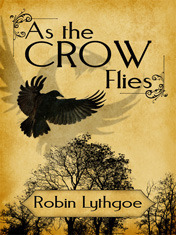
“One more job” means that Crow, a notorious thief, can retire with Tarsha, the woman of his dreams, but “one more job” may just mean his life.
When Crow sets out to steal that last brilliant treasure and seek a life of ease and pleasure with the jewel of his heart, he seriously underestimates his mark, the Baron Duzayan. For a thief, getting caught is never a good thing. Getting caught by a wizard is even worse. Under threat of death by poison, Crow is coerced into stealing an improbable, mythical prize. To satisfy the wizard’s greed and save the life of his lady love, he must join forces with Tanris, the one man Crow has spent his entire career avoiding.
But what’s a man to do when stealing that fabled prize could level an empire and seal his fate?
From a dungeon black as night, to the top of a mountain peak shrouded in legend, a man’s got to do what he must. Unless, of course, he can think of a better plan…
BIO: After many years spent tending to a prince, three princesses and a king, Scribe Robin is now free to take to her tower to write tales about wizards and magic, fantastical places and extraordinary journeys. From time to time, when she is not writing, she invokes the magic of Photoshop to create maps, scenery, insignias, book covers, and various bits and pieces of artwork suitable for use in the mysterious ether plane. She has regularly been victorious at the NaNoWriMo tourneys, and has several books in various stages of progress in addition to a published work of fiction about a thief and his trusty sidekick. Now if only she could find that spell for manipulating time so that she could turn all of her ideas into stories…
LINKS:
Website: http://www.robinlythgoe.com
Blog: http://robinlythgoe.blogspot.com/
Facebook: https://www.facebook.com/RobinLythgoe...
Twitter: https://twitter.com/RobinLythgoe
Goodreads: http://www.goodreads.com/author/show/...
Praise From Reviews
I was pleased to discover an interesting story line and an engaging and complex protagonist whose voice and personality evolve throughout the novel. — V. Burnett
From the moment I opened this book to when I closed it I was caught up in the adventures of a charming, sarcastic, and clever thief who stole a very large chunk of time from me, but it was well worth the theft. A delightful time was spent in another world filled with adventure, mystery (I love mystery!), wizards, and magic… — M.C.
I loved it from start to finish and it leaves you wanting more. Robin is amazing at describing the picture so it is real in your head. Crow, the main character, was a lovable thief with a wonderful sense of humor. — Marla Oveson
I love a good cloak and purse-cutting dagger, and Crow delivers. He’s armed with a silver tongue, sleeping dust, feet that’d make a cat feel ungainly, a razor mind, and a diploma for best-in-class at the school of fine thieving and infiltration (awarded by me). I’ve read about approximately a billion thieves and even played the vintage first-person-looter games Thief, but Crow still impressed me as a sterling example of skulduggery. — A. E.

June 1, 2013
Rare J.R.R. Tolkien Interview
First broadcast on January 1971 on the BBC Radio 4 program ‘Now Read On …’. The interviewer was Dennis Gerrolt.
This is a great interview. It speaks volumes on J.R.R. Tolkien’s work, why he did it, and where it all came from.
Enjoy!
Brandon Ellis
www.thepurelights.com
* ~ * ~ * ~ * ~ * ~ * ~ * ~ * ~ * ~ * ~ * ~ * ~ * ~ * ~ * ~ * ~ * ~ * ~ * ~ * ~ * ~ * ~ * ~ * ~ * ~ * ~ * ~ * ~ * ~ * ~ * ~ * ~ * ~ *
Tolkien: …long before I wrote The Hobbit and long before I wrote this I had constructed this world mythology.
Gerrolt: So you had some sort of scheme on which it was possible to work?
T: Immense sagas, yes … it got sucked in as The Hobbit did itself, the Hobbit was originally not part of it at all but as soon as it got moving out into the world it got moved into it’s activities.
[realistic BBC match striking sound effect]
G: So your characters and your story really took charge.
T: [lights pipe]
G: I say took charge, I don’t mean that you were completely under their spell or anything of this sort…
T: Oh no no, I don’t wander about dreaming at all, it isn’t an obsession in any way. You have this sensation that at this point A, B, C, D only A or one of them is right and you’ve got to wait until you see. I had maps of course. If you’re going to have a complicated story you must work to a map otherwise you can never make a map of it afterwards. The moons I think finally were the moons and sunset worked out according to what they were in this part of the world in 1942 actually. [pipe goes out]
G: You began in ’42 did you, to write it?
T: Oh no, I began as soon as The Hobbit was out – in the ’30s.
G: It was finally finished just before it was published…
T: I wrote the last … in about 1949 – I remember I actually wept at the denouement. But then of course there was a tremendous lot of revision. I typed the whole of that work out twice and lots of it many times, on a bed in an attic. I couldn’t afford of course the typing. There’s some mistakes too and also [relights pipe] it amuses me to say, as I suppose I’m in a position where it doesn’t matter what people think of me now – there were some frightful mistakes in grammar, which from a Professor of English Language and Lit are rather shocking.
G: I hadn’t noticed any.
T: There was one where I used bestrode as the past participle of bestride! [laughs]
G: Do you feel any sense of guilt at all that as a philologist, as a Professor of English Language with which you were concerned with the factual sources of language, you devoted a large part of your life to a fictional thing?
T: No. I’m sure its done the language a lot of good! There’s quite a lot of linguistic wisdom in it. I don’t feel any guilt complex about The Lord of the Rings.
G: Have you a particular fondness for these comfortable homely things of life that the Shire embodies: the home and pipe and fire and bed – the homely virtues?
T: Haven’t you?
G: Haven’t you Professor Tolkien?
T: Of course, yes.
G: You have a particular fondness then for Hobbits?
T: That’s why I feel at home… The Shire is very like the kind of world in which I first became aware of things, which was perhaps more poignant to me as I wasn’t born here, I was born in Bloomsdale in South Africa. I was very young when I got back but at the same time it bites into your memory and imagination even if you don’t think it has. If your first Christmas tree is a wilting eucalyptus and if you’re normally troubled by heat and sand – then, to have just at the age when imagination is opening out, suddenly find yourself in a quiet Warwickshire village, I think it engenders a particular love of what you might call central Midlands English countryside, based on good water, stones and elm trees and small quiet rivers and so on, and of course rustic people about.
G: At what age did you come to England?
T: I suppose I was about three and a half. Pretty poignant of course because one of the things why people say they don’t remember is – it’s like constantly photographing the same thing on the same plate. Slight changes simply make a blur. But if a child had a sudden break like that, it’s conscious. What it tries to do is fit the new memories onto the old. I’ve got a perfectly clear vivid picture of a house that I now know is in fact a beautifully worked out pastiche of my own home in Bloomfontein and my grandmother’s house in Birmingham. I can still remember going down the road in Birmingham and wondering what had happened to the big gallery, what happened to the balcony. Consequently I do remember things extremely well, I can remember bathing in the Indian Ocean when I was not quite two and I remember it very clearly.
G: Frodo accepts the burden of the Ring and he embodies as a character the virtues of long suffering and perseverance and by his actions one might almost say in the Buddhist sense he ‘aquires merit’. He becomes in fact almost a Christ figure. Why did you choose a halfling, a hobbit for this role?
T: I didn’t. I didn’t do much choosing, I wrote The Hobbit you see … all I was trying to do was carry on from the point where The Hobbit left off. I’d got hobbits on my hands hadn’t I.
G: Indeed, but there’s nothing particularly Christ-like about Bilbo.
T: No…
G: But in the face of the most appalling danger he struggles on and continues, and wins through.
T: But that seems I suppose more like an allegory of the human race. I’ve always been impressed that we’re here surviving because of the indomitable courage of quite small people against impossible odds: jungles, volcanoes, wild beasts… they struggle on, almost blindly in a way.
G: I thought that conceivably Midgard might be Middle-earth or have some connection?
T: Oh yes, they’re the same word. Most people have made this mistake of thinking Middle-earth is a particular kind of Earth or is another planet of the science fiction sort but it’s just an old fashioned word for this world we live in, as imagined surrounded by the Ocean.
G: It seemed to me that Middle-earth was in a sense as you say this world we live in but at a different era.
T: No … at a different stage of imagination, yes.
G: Did you intend in Lord of the Rings that certain races should embody certain principles: the elves wisdom, the dwarves craftsmanship, men husbandry and battle and so forth?
T: I didn’t intend it but when you’ve got these people on your hands you’ve got to make them different haven’t you. Well of course as we all know ultimately we’ve only got humanity to work with, it’s only clay we’ve got. We should all – or at least a large part of the human race – would like to have greater power of mind, greater power of art by which I mean that the gap between the conception and the power of execution should be shortened, and we should like a longer if not indefinite time in which to go on knowing more and making more. Therefore the Elves are immortal in a sense. I had to use immortal, I didn’t mean that they were eternally immortal, merely that they are very longeval and their longevity probably lasts as long as the inhabitability of the Earth. The dwarves of course are quite obviously – wouldn’t you say that in many ways they remind you of the Jews? Their words are Semitic obviously, constructed to be Semitic. Hobbits are just rustic English people, made small in size because it reflects (in general) the small reach of their imagination – not the small reach of their courage or latent power.
G: This seems to be one of the great strengths of the book, this enormous conglomeration of names – one doesn’t get lost, at least after the second reading.
T: I’m very glad you told me that because I took a great deal of trouble. Also it gives me great pleasure, a good name. I always in writing start with a name. Give me a name and it produces a story, not the other way about normally.
G: Of the languages you know which were the greatest help to you in writing The Lord of the Rings?
T: Oh lor … of modern languages I should have said Welsh has always attracted me by it’s style and sound more than any other, ever though I first only saw it on coal trucks, I always wanted to know what it was about.
G: It seems to me that the music of Welsh comes through in the names you’ve chosen for mountains and for places in general.
T: Very much. But a much rarer, very potent influence on myself has been Finnish.
G: Is the book to be considered as an allegory?
T: No. I dislike allegory whenever I smell it.
G: Do you consider the world declining as the Third Age declines in your book and do you see a Fourth Age for the world at the moment, our world?
T: At my age I’m exactly the kind of person who has lived through one of the most quickly changing periods known to history. Surely there could never be in seventy years so much change.
G: There’s an autumnal quality throughout the whole of The Lord of the Rings, in one case a character says the story continues but I seem to have dropped out of it … however everything is declining, fading, at least towards the end of the Third Age every choice tends to the upsetting of some tradition. Now this seems to me to be somewhat like Tennyson’s “the old order changeth, yielding place to new, and God fulfills himself in many ways”. Where is God in The Lord of the Rings?
T: He’s mentioned once or twice.
G: Is he the One?…
T: The One, yes.
G: Are you a theist?
T: Oh, I’m a Roman Catholic. Devout Roman Catholic.
G: Do you wish to be remembered chiefly by your writings on philology and other matters or by The Lord of the Rings and The Hobbit?
T: I shouldn’t have thought there was much choice in the matter – if I’m remembered at all it will be by The Lord of the Rings I take it. Won’t it be rather like the case of Longfellow, people remember Longfellow wrote Hiawatha, quite forget he was a Professor of Modern Languages!
May 23, 2013
What Exactly is J.R.R. Tolkien’s Middle-earth?
Ever since reading Lord of the Rings, I’ve always wondered where Middle-earth was. Was it on a different planet? Was it the middle ages? What exactly did Tolkien mean by “Middle-earth”?
I’ve heard several writers, friends, and acquaintances, who obviously hadn’t read this interview, say that Middle-earth means the inner earth–the earth underneath us–also known as the hollow earth. I’ve also heard some say it’s in a different dimension, much like C.S. Lewis Narnia books. I’ve also heard that middle earth was simply the middle ages, but with fantasy like creatures and races.
Well, with some research and a lot of reading, I now know what it means.
Recently, I found a J.R.R. Tolkien interview where he spoke on this very topic.
When J.R.R. Tolkien was asked if Midgard might be Middle-earth or have some connection, J.R.R. Tolkien responded: “Oh yes, they’re the same word. Most people have made this mistake of thinking Middle-earth is a particular kind of Earth or is another planet of the science fiction sort but it’s just an old fashioned word for this world we live in, as imagined surrounded by the Ocean.”(http://www.lordotrings.com/interview.asp)
So, what is “Midgard”?
Midgard is Norse for Earth. It’s the home of men and women. A world inhabited by the human race. Midgard = Middle-earth. Middle-earth is simply earth. The planet we live on.
So, if you were wondering, or have ever wondered what Middle-earth was, well, I hope this answers it for you.
Best Regards!
- Brandon Ellis,
www.thepurelights.com
May 6, 2013
I’ve Been Nominated for an Award
You read that right! I’ve made it to the first round in the Global Ebook Awards. The winners will be announced August 19th, 2013. I’m hoping to be one of them.
Keep your fingers crossed!
If you haven’t seen the book or purchased it, take a look here: http://goo.gl/a2Uoy
- Brandon Ellis
May 5, 2013
From Omon Hart to Brandon Ellis
Hello Everyone,
For about a half a year I’ve been going under the pen name of Omon Hart. It’s not sticking well with me and I’ve found it’s been difficult for people to pronounce “Omon”. My mom’s even having trouble with it and I’ve told her the name several times over. I recently asked my sport’s massage clients what they preferred, Omon or Brandon. It was unanimous–Brandon. So, I’ve gone through all of my posts and changed everything to my “real name”–Brandon Ellis.
It fits, because it’s me.
Much Love,
Brandon Ellis, www.thepurelights.com