Guest Post by Robin Lythgoe
IDEA MINING
The subject of where writers get their ideas seems to be a hot one recently—in my circles, anyway. Frankly, the notion of a writer being without ideas boggles me. We live in an idea-rich age, with a plethora of books, movies, news, music, graphics, events, museums, online interaction, and opportunity for personal experiences. It’s a gold mine! The truth is that the writer with the empty poetic pan simply refuses to do the work involved in turning information into useable concepts, starting with constantly searching for useful tidbits. Like most talents, this one takes practice, but it can be fun!
Let’s take a look at some “firstlies.”
Make time for writing. The old “butt in chair” maxim didn’t get its fame because it’s cute or whimsical. If you want to get something done, you have to buck up and do it. Want to be a writer? Sit down and write. That means leaving the distractions alone, whether it’s cleaning, watching TV, checking Facebook or Twitter, or playing with the dog. Commit yourself to writing, whether it’s for a certain period of time or a certain number of words. Try to schedule your writing stint for the same time every day; knowing when it will be helps you to prepare for it mentally and emotionally.
Practice makes perfect. The principal impulse to write comes from a love of reading. A great book (or sometimes a terrible one!) can stir us profoundly, light within us a burning desire to write something equally moving (or better), and set us on a course of authorship. Rarely do we take into account the first umpteen books written-and-rejected before that masterpiece made it into print. “The professional writer is the amateur who didn’t quit.” (Richard Bach) That determination not to quit means we write and write and write—and learn and learn and learn.
Don’t wait for inspiration. There exists a romantic notion of magical muses sitting upon the shoulders of writers, spouting endless streams of dramatic revelation. When the muse takes off without a word, we are left with the dreaded Writer’s Block. In reality, “writer’s block” could be more aptly called “writer’s laziness” or “writer’s excuse.” We can, after all, always write something, and taking the time to get in the writing zone will cure the most stubborn of blockage. William Faulkner said: “I write only when I’m inspired. Fortunately I’m inspired at 9 o’clock every morning.”
Now for the “secondlies”—cultivating those ideas. As I pointed out before, a huge number of ideas touch our lives every day. Dennis Whitcomb wrote: “If we could ever harness all the potential story material that flows through our lives, I think a week’s worth would keep us at our typewriters for the next two years for five days a week.” In their raw forms, those pieces of information might not make an entire story, but they are wonderful kernels to be added to, subtracted from, and joyfully—gleefully!— manipulated into a plot. You might want to start with a simple notebook in which to jot down those morsels: the clever quote, the intriguing situation, a description of an article of clothing, a line from a song…
Just the other day I read a delightful article by David Farland about what he calls “cloud writing.” It’s a style I’ve used before, though I’ve been far less organized about it than he, and I frequently do much of it in my head. You can see some obvious problems with that, I’m sure. Random Access Memory and all that… This is what he suggests:
1) Write out your unembellished ideas, your germs for stories
2) Link them together until you begin to “find” your scene
3) Compose the first draft of a scene
Start with an empty piece of paper or a new document on your computer. Engage in some free-writing. Take one of those details you’ve harvested and expand on it, letting the words and images take you where they may. At some level, your subconscious will start taking over, and you’ll discover things you’d never thought of before. Some of them may turn out to be junk, but there will be nuggets to collect. Save your scribbling for a few days, then look it over again, circling the concepts that inspire you or seem important. Draw lines between things (Scenes! Look, you’ve just created scenes!) that connect. Rinse and repeat! Er… Scoop, swish, repeat! (Must mind those metaphors!)
BOOK BLURB:
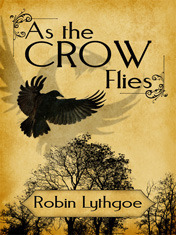
“One more job” means that Crow, a notorious thief, can retire with Tarsha, the woman of his dreams, but “one more job” may just mean his life.
When Crow sets out to steal that last brilliant treasure and seek a life of ease and pleasure with the jewel of his heart, he seriously underestimates his mark, the Baron Duzayan. For a thief, getting caught is never a good thing. Getting caught by a wizard is even worse. Under threat of death by poison, Crow is coerced into stealing an improbable, mythical prize. To satisfy the wizard’s greed and save the life of his lady love, he must join forces with Tanris, the one man Crow has spent his entire career avoiding.
But what’s a man to do when stealing that fabled prize could level an empire and seal his fate?
From a dungeon black as night, to the top of a mountain peak shrouded in legend, a man’s got to do what he must. Unless, of course, he can think of a better plan…
BIO: After many years spent tending to a prince, three princesses and a king, Scribe Robin is now free to take to her tower to write tales about wizards and magic, fantastical places and extraordinary journeys. From time to time, when she is not writing, she invokes the magic of Photoshop to create maps, scenery, insignias, book covers, and various bits and pieces of artwork suitable for use in the mysterious ether plane. She has regularly been victorious at the NaNoWriMo tourneys, and has several books in various stages of progress in addition to a published work of fiction about a thief and his trusty sidekick. Now if only she could find that spell for manipulating time so that she could turn all of her ideas into stories…
LINKS:
Website: http://www.robinlythgoe.com
Blog: http://robinlythgoe.blogspot.com/
Facebook: https://www.facebook.com/RobinLythgoe...
Twitter: https://twitter.com/RobinLythgoe
Goodreads: http://www.goodreads.com/author/show/...
Praise From Reviews
I was pleased to discover an interesting story line and an engaging and complex protagonist whose voice and personality evolve throughout the novel. — V. Burnett
From the moment I opened this book to when I closed it I was caught up in the adventures of a charming, sarcastic, and clever thief who stole a very large chunk of time from me, but it was well worth the theft. A delightful time was spent in another world filled with adventure, mystery (I love mystery!), wizards, and magic… — M.C.
I loved it from start to finish and it leaves you wanting more. Robin is amazing at describing the picture so it is real in your head. Crow, the main character, was a lovable thief with a wonderful sense of humor. — Marla Oveson
I love a good cloak and purse-cutting dagger, and Crow delivers. He’s armed with a silver tongue, sleeping dust, feet that’d make a cat feel ungainly, a razor mind, and a diploma for best-in-class at the school of fine thieving and infiltration (awarded by me). I’ve read about approximately a billion thieves and even played the vintage first-person-looter games Thief, but Crow still impressed me as a sterling example of skulduggery. — A. E.