Victoria Noe's Blog, page 27
December 18, 2013
Friends and/or Loved Ones
 If you’re like me, you’ve been through your share of wakes and funerals. Although every culture has their own traditions, one is universal: the role of a friend.
Family members are typically at the center of the grief universe. They’re the ones notifying the world, making arrangements, dealing with logistics. But I think we can all agree on what most people expect friends of the deceased to do: support the family. Just support the family.
I saw a lot of exceptions to this when I worked in the AIDS community. People, whose families had rejected and abandoned them, even as they were dying, relied on their friends for everything. But generally speaking, if a friend of yours dies, you’re relegated to a supporting role.
You do as you’re told, or asked. If you’re lucky, the family asks you to be a pallbearer, or say a few words at the service. You keep your mouth shut when the family does things that your friend would’ve hated, telling yourself that funerals are to comfort the living. You listen while people with tenuous connections to your friend exaggerate their importance in the life that you are trying to celebrate.
And you wonder who came up with the phrase “friends and loved ones”.
I’d like you to think about that phrase the next time you read an obituary or listen to a eulogy. Think about the separate designation for friends, as if you weren’t loved.
You don’t have to file a formal protest or create a scene – just make a promise to yourself to refer to all mourners as “loved ones”.
Because it’s true.


December 11, 2013
#ThrowbackThursday
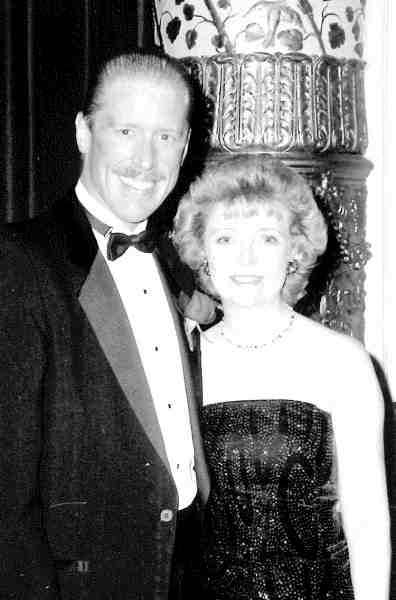 I know today’s Wednesday. Bear with me.
 For those not on Facebook, the online community has embraced a couple of day-specific rituals. One is “Hump Day” on Wednesdays (admit it – you’re thinking about that commercial with the camel in the office, aren’t you?). Fridays, of course are “TGIF”. One that is relatively new is reserved for Thursdays.
#ThrowbackThursday is devoted to recalling the past. On that day, you will likely see people posting photos of themselves and people they know. Sometimes they post pictures of themselves as children. Sometimes they post old family photos. But what I’ve noticed is that most of their pictures are of friends.
Sometimes it’s a photo of just one person, a friend from their childhood, their neighborhood or school. Sometimes it’s a photo of themselves with a group of friends. And very often, the friend in the photo is dead.
This is the photo I posted on the Thursday before World AIDS Day. It was taken in September, 1990, at a black-tie fundraiser that my assistant, Steve Showalter and I worked on for months. Our reward, at the point in the evening when that picture was taken, was to have one dance together. He was a hard-working, sweet guy, who later died of AIDS.
Sometimes people will post a photo of a group of friends – from work or school, on vacation or at a rock concert – and mention who in the group is still alive. Others will weigh in with remembrances of those who have died.
“If you still remember them, they’re not really dead,” Doctor Who once said. That’s where the internet – sites like Facebook and Pinterest – give us the ability to remember our friends, and share them with others.
So, if you’re on Facebook tomorrow, join in the #ThrowbackThursday remembrances. Post a picture of a friend, with a story of why they were so important in your life.
“Gone, but not forgotten.” That’s the beauty of the internet.
December 1, 2013
World AIDS Day 2013
 In his November 4 review of Time Line Theatre’s revival of The Normal Heart, the Chicago Tribune’s Chris Jones attempts to put the play in historical context: “AIDS is no longer a death sentence.” If only.
While it is true that those newly diagnosed are not given a prognosis of, say, thirty days (like Ron Woodroof in Dallas Buyers Club), in the fourth decade of the epidemic, there is still no cure and no vaccine.
According to the Joint United Nations Programme on HIV/AIDS (UNAIDS), new infections are on the rise in Eastern Europe and Central Asia: 13% since 2006. In the past 12 years, new HIV infections have doubled in North African and the Middle East. Worldwide, 1.6 million people died from AIDS last year.
But, that’s not us, right? That’s not the demographic so powerfully depicted in Larry Kramer’s play. Except it is.
The Centers for Disease Control reported this year that there was a 22% increase in new infection among young gay/bisexual men in the US between 2007 and 2010. They estimate that this will translate to 1 in 2 young gay men becoming infected by the time they reach the age of 50.
According to a December, 2012, report from the Chicago Department of Public Health, the city’s infection rate for gay African-American men is 35%; gay white men 16.8 percent; gay Hispanic men 12.5 percent.
As my friends in ACT UP know all too well, AIDS is not history.
And, as I knew 30 years ago, when I began volunteering, donating and raising money in the AIDS community in Chicago, everyone is at risk. Young straight women are now relying on apps to tell them when it’s “safe” for them to have unprotected sex. They define “safe” as avoiding pregnancy, without considering the risk of being exposed to HIV or other sexually-transmitted infections. Older straight women, past menopause, feel no need to use a condom because they can’t get pregnant.
There is a frightening level of denial out there. Some of it is ignorance: when we limit sex education in schools to abstinence-only, we can’t be surprised that people have incorrect assumptions about HIV transmission.
More troubling, at least to me, is the attitude that Jones alluded to: AIDS is not a death sentence. A generation has grown up being told that AIDS is “no big deal”. It’s “like having diabetes”. It’s a chronic disease – just take a pill every day and you’ll be fine.
A recent study by Case Western Reserve University of HIV positive gay men found that “those younger than 50 suffered from greater disconnection from family and friends than the older cohorts. HIV stigma played a major role; the peers of the younger group apparently don’t identify as well with someone who is living with a chronic condition. The blame game is also at play: Young people with HIV may feel that others both fault them for acquiring the virus and try to avoid them because they perceive them to be sick.” Those who are over 50 tended to have stronger support networks.
I don’t long for the “bad old days”, when memorial services and fundraising events constituted most of my social life. But the immediacy of the crisis created a sense of community that is largely gone. Other issues have stolen our attention. Our lives went on, even if those of our friends did not.
The 26th annual World AIDS Day is December 1. The theme this year is “Shared Responsibility: Strengthening Results for an AIDS-Free Generation”.
Shared responsibility, to me, begins with the widespread dissemination of accurate information on HIV/AIDS prevention and treatment: in schools and colleges, bars and homeless shelters, clinics and churches. There is shocking ignorance, particularly among young people, of their options for avoiding infection (not just condoms, but PrEP) and emergency treatment after possible infection (PEP).
Education is just the start. Funding has leveled off or declined at the federal, state and local levels: not just for prevention and treatment, but for the complicating issues of poverty, homelessness, drug abuse, mental health. Those issues represent high-risk populations that are not getting the focus they deserve.
For those living with HIV/AIDS, there is a need for more effective coordination of services: food and housing, medical treatment, mental health or drug counseling, employment, peer support. And now, thirty-plus years after the beginning of the epidemic, we have a new demographic we never anticipated: long-term survivors.
I have friends who were diagnosed in the 80s, who, thanks to the introduction of anti-retroviral medications in the 90s, are alive and reasonably well. But their HIV status – along with the previously unknown long-term effects of these powerful drugs – creates new issues for an aging population.
Over 1.1 million Americans are living with HIV/AIDS. It’s estimated that almost 20% don’t know they’re infected because they haven’t been tested. Even now – over thirty years after the first documented cases – we see 50,000 new infections a year: more than the number of people diagnosed each year with ovarian or pancreatic cancer. And people are still dying, so yes, AIDS can still be a death sentence.
If we truly believe in shared responsibility, then it is up to us to change that. Move AIDS education, prevention and treatment to the front page. Get tested and educate yourself first, and then spread accurate information to others. Demand increased funding at all levels of government. Volunteer for an AIDS-service organization. Join PFLAG or ACT UP. Include HIV and AIDS in any discussion about poverty, drug abuse or healthcare.
The title of Elton John’s memoir is Love is the Cure, and it’s true. Until we eliminate the stigma surrounding HIV/AIDS, until we embrace groups of people with whom we may have little in common, until we pull together, there will be no AIDS-free generation, here or anywhere else.
I have a daughter, niece and nephews who have never known a world without AIDS. But if we can find that sense of community again, if we can commit to widespread, accurate education about HIV/AIDS and take care of those already infected, then maybe, just maybe, their children will finally be able to say “AIDS is history.”
To learn more about HIV and AIDS prevention and treatment, click here.
For information on ACT UP, and what you can do to work towards an AIDS-free generation, click here.
November 26, 2013
The Next Friend Grief Books
 Do you consider the people you work with to be friends?
 Have you experienced the death of one of them?
I’m currently looking for people to interview for the next two books in the Friend Grief series.
Book #4 is Friend Grief and Community: Band of Friends. It focuses on active duty military and veterans – men and women, of any age - who have lost a battle buddy, either in combat or from suicide.
Book #5 is Friend Grief in the Workplace: More Than an Empty Cubicle. This book’s focus is obvious, and will have a broad definition of “workplace”. You don’t have to work in an office building. Maybe you are an actor, a paramedic, a teacher, a cashier, a nun.
As always, if I use your story, you have the option of being anonymous. I’ll be conducting interviews via email (questionnaire), phone or in person, depending on the location (through mid-January for book #4; late February for book #5). If you are interested – or know someone who is – please email me at victorianoe@friendgrief.com.
November 6, 2013
November Death Café Schedule
 "Sometimes I think it’s easier to talk about this topic with complete strangers, which I think can help open the door to talk about it with family and friends.”
That was a comment from a participant in one of the Death Café events I’ve co-facilitated in Chicago. I love it, because it’s so true for many people.
We’re all going to die someday – though hopefully not anytime soon. Most people have no problem talking about food or politics or sex, but death? No, thanks: too depressing.
But that doesn’t mean we don’t have issues. Sometimes we are struggling to bring up the topic with older parents. Sometimes we’ve been to one too many funerals in a short amount of time and start reflecting on our own lives and legacies. Sometimes we just have questions.
I remember my friend, Delle, saying that you learn what you really believe when faced with death. Do you believe in an afterlife? Are you ready for it?
Death Cafés are not grief support groups. There are many, great organizations and individuals who provide that service. A Death Café brings together a group of people to talk about death, and how to make the most of their finite lives.
And many who have come to our events have said the discussions – ranging from defining your legacy to what kind of funeral you want – have given them the courage to discuss these topics with family and friends. Talking about death doesn’t hasten your own death, but it can certainly ease your mind and focus you on your goals.
We have two Chicago Death Cafés coming up in November, both at Metropolis Coffee House, in Edgewater. They will be held on November 12 and November 20. Space is limited, so RSVP now to get your award-winning coffee or tea and decadent desserts.
Why do we call it an introduction? Because we hope that the conversations you have that night will be the beginning of a dialogue with your family and friends on how you want to make the most of your life.
So, join us this month for a conversation about death – and life. Don’t be surprised if there’s a lot of laughter.
For more on the international Death Café movement, click here.
November 5, 2013
How to Help A Friend Who’s Dying

Since I saw Dallas Buyers Club (my review here) I’ve been doing a lot of thinking. Although the main character, Ron Woodroof, is initially focused only on his own survival, eventually the people he helps – especially Rayon – become friends. He is literally helping them stay alive. And that got me thinking: what would I do?
Sometimes what we are called upon to do, what we are able to do, seems insignificant: running errands, chauffeuring to doctor’s appointments, cooking meals. All serve a dual purpose: taking the burden of the mundane off the shoulders of someone who needs to focus all their attention and energy on fighting their disease, and also to provide a tangible example of friendship.
Not everyone’s good at asking for help, and those who are dying may be less likely. They don’t want to see ‘the look’ that we often unwittingly wear on our faces: a mixture of sympathy and pain that they’d never seen before.
But those of us who are lucky, really lucky, are allowed in to what my friend Delle called “the cancer vortex”. It may not be cancer that is killing our friend, but you get the idea. Reality has changed for your friend and for you.
What, then, are you willing to do? I don’t mean “call me if you need anything”. You’ll grow old and grey before you get that call. I mean what are you willing to actually do for them? Depending on your proximity and available time, there are many things:
- Set up a Caring Bridge page or Facebook group to keep other far-flung friends up-do-date on their progress.
- Schedule regular trips to the grocery store. Take them with you if they’re able.
- Make a date for lunch or brunch, depending on their energy and appetite.
- Do something stupid together that will make you both laugh.
- Ask old friends to contact them.
- Make their favorite foods, especially if their appetite is waning.
- Do their laundry, or clean for them.
- Don’t whine. Do your best to keep their spirits up. This isn't about you.
- Send cards, DVD’s, packages; burn a CD or Skype..
These are all tasks that most people are capable of accomplishing. But what if the situation is drastic? What if, like Ron Woodroof, their doctor gives then 30 days to live? What would you do then?
- Would you go public for them?
- Would you steal for them?
- Would you break the law for them?
I’ve had this conversation with several friends in the past few years. So far, what we’ve pledged to do has been without concerns about legal ramifications (I mean, really: does it matter if the marijuana is officially medicinal?).
I hope one of the conversations that comes out of Dallas Buyers Club is just this: what would you do for a friend who’s dying? Would you let your own fears or prejudices or disapproval stop you from supporting them? Or would you do whatever you could (and hopefully get away with) to help prolong their life, improve the quality of their life, or help them die as peaceful a death as possible?
Because I guarantee if you don’t, you won’t just feel guilty.
You’ll wonder what your remaining friends would do for you.
October 29, 2013
"Dallas Buyers Club"
 Matthew McConaughey (Focus Features)“You’ve got 30 days.”
To live.
We’ve just met Ron Woodroof, an electrician and rodeo cowboy, who seems to spend an equal amount of time getting drunk and having sex. Suddenly ill, he finds himself in the hospital, being told what was unthinkable for a straight man in 1985: he was HIV positive. “Get your affairs in order,” the doctor tells him. He doesn’t. Instead, his crash course in research about AIDS makes him the most unlikely – and initially, unlikeable - cinematic hero you will even encounter.
Based on a true story, Dallas Buyers Club recounts with great authenticity a moment in history. Rock Hudson had just died. Tens of thousands of non-celebrities had died of AIDS. ACT UP hadn’t been formed. It would be three years before President Reagan actually said the word “AIDS” out loud. It was five years into the epidemic, and there was no known effective drug to treat those who were infected. Most people still believed only gay men – and IV-drug users – were at risk.
Woodroof, played by Matthew McConaughey, is scammed by a hospital employee who for a time sold him AZT – only available to those in a clinical trial, and even then, only to those who weren’t unknowingly getting a placebo. But he refers Ron to a doctor in Mexico. There he finds alternatives to AZT not available in the US because they hadn’t been approved by the FDA. That didn’t mean they weren’t effective – just not approved (so they were technically illegal). But when given a month to live, those are details easily ignored.
 Jared Leto (Focus Features)It doesn’t take long for Woodroof to realize that there was money to be made in the gay community. But someone that obviously homophobic couldn’t make headway. Enter Rayon, a transsexual played by Jared Leto, who is in the clinical trial. Together they start a “buyer’s club”, where AIDS patients pay a monthly fee and receive all the drugs they need. Technically – an argument the FDA and IRS don’t agree with – he’s selling memberships, not illegal drugs.
The AIDS epidemic made advocates of unlikely people, and Ron Woodroof was one of the most unlikely. He did not live 30 days. He lived seven years. Other buyer’s clubs sprang up in New York and San Francisco, among other cities, though they tended to be nonprofit organizations. There was nothing nonprofit about the Dallas Buyers Club. And Woodroof didn’t stop at Mexico. He traveled to Amsterdam and Tokyo and wherever there were drugs that could help him and his members.
To understand the panic, you have to realize the perfect storm of 1985. The FDA demanded clinical trials where half of the patients got placebos, effectively sentencing them to death. It could take ten years to work through the bureaucracy before approval. Only AZT was “available”, though there were other drugs (like those Woodroof acquired) that could be purchased over the counter in other countries. Once diagnosed, a 30-day life expectancy was not uncommon. Those known to have AIDS frequently were fired from their jobs and lost their homes, which happened to Woodruff.
I attended a screening with other members of ACT UP. None of us knew what to expect. But I found myself nodding my head at times: characters who were afraid to touch Ron, suspicion and misinformation, unsympathetic doctors more committed to drug money than their dying patients. I remembered it all too well.
Director Jean-Marc Vallee does a terrific job of taking us back to that moment in time: the irrational fears, the bigotry, the governmental indifference, the entrenched medical community. And his film confirmed something I said in my book: that the story of the AIDS epidemic would be about friendship. Ron and Rayon are the oddest of friends: joined by a health crisis that neither could’ve predicted, slowly putting aside their own prejudices to help themselves and others.
Matthew McConaughey and Jared Leto both give Oscar-worthy performances, and Jennifer Garner does well as a doctor who gradually comes around to Woodroof’s side.
Dallas Buyers Club is a powerful, deeply moving film that will move you and possibly offend you, too (especially if you don’t like hearing the F word). But it may be the most important movie of the year. It opens in select cities on November 1. Don’t miss it.
To watch a trailer or behind-the-scenes video of Dallas Buyers Club, click here.
October 25, 2013
Letting Your Friend Die
 benawyn.wordpress.comI think most people agree that everyone has the right to make decisions about their health. No one wants to be forced to have medical procedures they don’t want. And who wouldn’t want to decide their own end-of-life care?
But theory can be very different from practice, especially when it comes to our friends.
I remember when my friend, Delle Chatman, announced she was discontinuing treatment for yet another recurrence of ovarian cancer. Before that, she’d led us to expect miracles each time it came back. But after a month of treatments, she emailed her friends to say her body couldn’t take anymore. Everyone agreed in theory that the decision was her right. But that didn’t mean we weren’t angry. Yes, it was her decision, but no one wanted her to go.
Recently, a Facebook post to members of ACT UP NY told the story of a man who’d decided to stop taking his AIDS meds, knowing full well that he’d die. The reactions of his friends ranged from sadness to anger to outright rejection. He was lucky to have a friend who drove him cross-country, so he could die surrounded by a few people who supported his right to make that decision.
He didn’t go peacefully, as Delle did. He lashed out at those who rejected him, who tried to talk some “sense” into him. I don’t blame him.
Did they commit suicide? I don’t know. I guess in the strictest sense, they did. But this wasn’t making a decision to end your life without telling anyone.
This was different: they told everyone that they were refusing further medical treatment. They’d struggled for years with painful treatments and toxic drug regimens. They made the decision we believe they had the right to make.
And boy, were we pissed off.
The classic movie The Big Chill is about a reunion of college friends at the funeral of one of their group who committed suicide. Their responses range from shock to anger to guilt. Some of them felt they could’ve stopped Alex from killing himself if they’d only known he was considering it. They believed they had that kind of power over their friends: to keep them alive.
They were wrong.
No one wants to watch their friends die. No one wants to get that call or email, or read the news on Facebook. We expect to outlive our parents. Who expects to outlive their friends?
But the sad truth is that sometimes we do. It’s not that our friends don’t love us, or believe that we love them. But the heartbreaking decision they make is one that is their right: theirs, not ours.
Let’s be honest: we’re being selfish when we argue with them to change their minds. We don’t want to let go of them, no matter the physical cost. We want more time, more fun, more memories. Who wouldn’t?
Except…
Sometimes the best way, the only way, we can love our friends is to let them go. Let them make the hardest decision they’ve ever made without feeling guilty for upsetting us. Let them take some control in a life that has become, for them, unbearable.
You may be in this kind of situation one day: your friend has announced they’re stopping their medical treatment, a decision that will hasten their death. What will you do?
Will you try to take control, convince them to change their mind?
Will you scream and curse when they refuse?
Will you cut off all contact until and unless they come to their senses?
You’ll want to do all that and more, believe me.
But don’t – don’t let their last memory of you be of your anger and disapproval. Instead, put your pain aside, and let them know that even though you don’t agree, you’re there for them. You didn’t always agree before then, did you? Of course not, but you stayed friends.
Prove just how good a friend you are.
Let go.
October 16, 2013
Another Hero Remembering His Friends
 Capt. William Swenson
Photo: Washington PostNearly lost is in the chaos coming out of Washington, DC, was the most important event of the week: Army Capt. William Swenson was awarded the Medal of Honor.
Swenson is the subject of some controversy. His believes his criticism of Army superiors, for not providing sufficient air and artillery support during the 2009 Gangjal battle, delayed his award for years (the Army said his nomination packet was lost in their computer for 19 months). You may remember former Marine Cpl.
Controversy aside, there is no debate over what Swenson did: risked his life to save US and Afghan troops, as well as retrieve the bodies of four of our soldiers who died in the battle on September 8, 2009.
What struck me – and many – was something Swenson did that day that was not heroic. It was not big or loud or macho. It was, instead, the definition of the bond between battle buddies.
“Amidst the whipping wind and the deafening roar of the helicopter blades, he does something unexpected. He leans in and kisses the wounded soldier on the head – a simple act of compassion and loyalty to a brother in arms,” President Obama said at the ceremony.
(The soldier, Sgt. 1st Class Kenneth Westbrook – who with Swenson had been an embedded Afghan trainer for a year - died a month later of complications from a blood transfusion.)
But more amazing is the fact that a crew member on the medevac chopper videotaped it. Swenson says he had no memory of it until he saw the video.
“To see him and to see me in that situation gives me comfort,” Swenson said after the ceremony. “I would trade anything for that not to be our last moment, but that was our last moment and I’ll always have that now.”
We hardly ever know for sure when it’s the last time we’ll see a friend. Sometimes we are aware of the possibility, but mostly we assume there will be more time. Human nature, denial, call it what you will. But sometimes the result is being denied the opportunity tell our friends how much we love them.
I don’t know if the controversy around Swenson is warranted. Most heroes are far from perfect; so are most of us who aren’t genuine heroes. I do know that his actions that day in Afghanistan distinguished him as not only a hero, but a friend. And for that, he deserves our thanks.
Here is a video of that action. I believe it happens at about 4:10.
October 10, 2013
Death Cafe and Other Events
 I’ve been co-facilitating Death Café events in Chicago for almost a year now. Our events have attracted over 150 attendees. Some of those who attended are now facilitating their own Death Cafés, and I couldn’t be more excited.
For those not familiar with Death Café, I highly recommend their website. You’ll not only learn the history, but read fascinating accounts of what people are doing in Death Cafés in the UK, Canada, Italy, Australia and all around the US. No two are the same, but all have the same goal: to provide a safe, supportive environment for people to discuss issues surrounding death and dying, with a goal to making the most of their finite lives.
After our last event – which was filled up two weeks in advance – my partner and I sat down for a series of discussions. Obviously the need is there. The evaluations were glowing and some offered suggestions for improvement (which we’re implementing). But was there more we could offer? Were people looking for more specific kinds of discussions related to death and dying?
What we came up with was a series of events to meet different needs and interests:
Death Café: This is our introduction to death and dying issues, for people who have never attended a Death Café. We have group discussions, individual activities, as well as with a partner. As much as we can, we allow the attendees to drive the discussion topics, always with a goal of allowing people to consider their legacy. On October 28, we’ll be back at Curt’s Caféin Evanston, Illinois.
"Friend Grief": This is a themed event for those who have attended a Death Café and asked for more! Our first one will be led by me at Drake & Sons Funeral Home in Chicago on October 23 and will address friend grief. Other topics are in the pipeline.
Field trips: Now at first glance, you might think our events would be limited to locations such as cemeteries or funeral homes, and that’s possible (though our first themed event will take place in a funeral home). But they’re meant to be gatherings that are more casual than sitting around a table in a room. Our first one, on October 14, is a kayaking excursion at Skokie Lagoons in Glencoe, Illinois.
Ultimately, our goal is to eliminate the resistance to attending a Death Café - or any event where the discussion is revolves around death and making the most of your life. Don’t want to set foot in a funeral home? Then come to a coffeehouse. Don’t want to discuss living wills? Then come to a Death Café where we’ll talk about lots of things.
So if you’re in the Chicago area, join us! If not, check the Death Café website for a list of upcoming events in your area. You can also find out how to host your own Death Café. It’s easy. It’s fascinating. It’s even fun.
And you’ll be surprised how much you learn about yourself in a very short time.