
Caroline Abbott's Blog, page 24
December 10, 2013
How Can We Fight Human Trafficking?

What is human trafficking? It is a criminal activity in which human beings are treated as possessions to be controlled and exploited; such as being forced into prostitution or involuntary labor. A simpler definition – human trafficking is modern-day slavery.
Slavery in this day and age? In the United States? Europe? Australia? That seems hard to believe. Didn’t these countries eradicate slavery in the 1800s? Officially yes. This is an underground, criminal activity, similar to the trafficking of drugs and illegal firearms. Heroin is not sold from storefronts, neither are people. But, believe me, people are sold as slaves, even in “first world” countries, even in your town.
Here are some statistics* that you may already know, and some that may startle you:
There are at least 27 million slaves in the world today.
80% of all slaves are used for sex (prostitutes). This is called sex trafficking.
Human trafficking is the second largest criminal enterprise in the world, after drug trafficking, but it may soon overtake drugs. Why is that? A bag of cocaine can be sold and used only once. A child can be sold for prostitution against her/his will up to 40 (yes 40!) times per night.
The average age of a slave is 12 – 17 years old.
The younger a child is, the more money they are worth as prostitutes.
Victims are often sold into slavery by someone they know (a family member or “friend”). They usually have no idea what is about to happen to them. They believe they are going to boarding school, or to become an actress or model, etc.
Once a person becomes a sex slave, they usually live only 3-7 years. Why is that? Because they are often forced to become drug addicts (to keep them docile), they may die from drug overdoses. Or, they may die from sexually transmitted diseases, malnutrition, be beaten to death, or kill themselves.
I invite you to watch this video called “The Fields of Mudan”. It will give you a taste of what the life of a little girl who has become an unwilling sex slave is like. It is sad, but tastefully done. Here is the link .
I will make a couple of comments about the film:
Her pimp Madam Zhao holds off selling Mudan, not out of compassion, but because she is waiting for a higher price for the child’s virginity.
The film is unrealistic in that the girls are allowed to rest between “Johns”. In reality, they often “service” between 12 and 40 men per day.
Given that I usually write about domestic violence, why am I focusing on human trafficking today?
Many domestic abuse victims are trafficked, without being aware of it. They are often sold by their partners or parents for sex or to perform other types of labor (and never get paid).
This issue has captured my heart. Because I love children, the thought of any child being continually raped day after day horrifies me. I can’t sit by and do nothing.
Just as the church in the United States and England rose up and fought against the institution of slavery in the 1800s, I believe the church has an obligation to rise up and free these slaves. As Dr. Phil says,“Awareness without action is worthless.” It is one thing for us to be aware of the problem, but quite another for us to DO something about it. There are many organizations that fight human trafficking. Many are there to educate others about this issue, which is great. However, very few will actually rescue victims already trafficked.
Here are two organizations I recommend if you want to work to stop this evil:
The Defender Foundation – In the United States
The A21 Campaign – in Europe
In Matthew 25:31,34-40 Jesus says:
“When the Son of Man comes in his glory…..Then the King will say to those on his right, ‘Come, you who are blessed by my Father; take your inheritance, the kingdom prepared for you since the creation of the world. For I was hungry and you gave me something to eat, I was thirsty and you gave me something to drink, I was a stranger and you invited me in, I needed clothes and you clothed me, I was sick and you looked after me, I was in prison and you came to visit me.’
“Then the righteous will answer him, ‘Lord, when did we see you hungry and feed you, or thirsty and give you something to drink? When did we see you a stranger and invite you in, or needing clothes and clothe you? When did we see you sick or in prison and go to visit you?’
“The King will reply, ‘Truly I tell you, whatever you did for one of the least of these brothers and sisters of mine, you did for me.’”
I pray we will be people who help the “least of these”. Bless you all.
Caroline
* Statistics taken from http://thedefenderfoundation.org/the-problem/


November 20, 2013
Lies Childhood Domestic Violence Teaches and the Truths that Set Victims Free
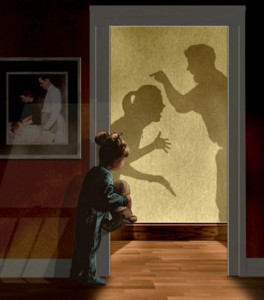
Children who grow up in homes where they experience domestic violence learn lies about themselves. Because they believe these lies, they often get into domestic violence relationships as adults – as the perpetrator or the victim.
Here are some examples of some of these lies (taken from CDV.org):
GUILTY – The violence was my fault. I should have stopped it.
HOPELESS – Nothing good can happen to someone like me.
UNATTRACTIVE – I feel self-conscious and unattractive.
SAD – I feel more bad than good each day.
The truths that free the former victim are:
FREE – I now realize I couldn’t be responsible for the actions of adults.
GUIDED – The injustice I experienced as a child created a spiritual strength inside of me.
ATTRACTIVE – As I discover the truth about myself, I feel more attractive (and in fact I AM attractive) to others.
GRATEFUL – If I choose to focus on them, I realize I have many things to be grateful for.
CDV.org will be publishing a book in the fall of 2014 called Invincible: The 10 Lies You Learn Growing Up With Domestic Violence and the Truths That Set You Free. The book will highlight examples of lives torn apart by childhood domestic violence, and the success stories of the adults who have learned eternal truths about themselves. My story will be included.
As a child of domestic violence myself, I will give an example of how this played out in my life.
Due to the (mainly emotional and verbal) domestic violence I experienced as a child, I learned that I was worthless, unlovable, and alone. Moving into adulthood with these beliefs about myself, I married a man who (subtly at first) reinforced my beliefs about myself. As the years progressed, and his abuse of me escalated, he began telling me these things outright. He was trying to break my spirit. It might have worked, but something had changed over the years. I had started going to a great church, studying the bible, and believed in the sacrifice Jesus made in my place by dying for my sins, and the sins of the world, (including those of the people who had hurt me).
Because of this, I realized that the God who created the universe had chosen to die a horrible death for me! I wasn’t worthless, unlovable, or alone. On the contrary, I had great worth in God’s eyes, I was loved, and Jesus was walking by my side every day. I was surrounded by people (from church) who loved me, valued me, and let me know they believed in me. So, though my husband was more and more emotionally abusive towards me, I began to see my worth, believing the truth, rather than his lies. I eventually left him, and sought out more healing for myself with the help of Jesus through:
education, (books and classes on domestic violence)
friends,
support groups, and
counselors.
Childhood domestic violence can have a huge negative effect on its victims. But it is not impossible to overcome. Luke 1:37 says:
Nothing is impossible with God.
I invite you to check out blogs I have written about healing.
May the Lord bless you today.
Caroline
October 24, 2013
Abuse is not a “marital issue”

I believe engaging in “marriage counseling” with an abuser is not only futile, but can be dangerous for the victim. I have written blogs about this before.* Today, I’d like to look at this from the point of view of a counselor, Brad Hambrick, M.Div., Th.M., who is the Pastor of Counseling at The Summit Church, North Carolina. Follow this link to find his original blog.
Pastor Hambrick says that counseling a couple where one is abusive is different than attempting to enrich a “healthy” marriage. When one spouse is abusive, there is no marital issue of greater importance than the self-centeredness of the offending spouse. In this case, looking at “marital issues” minimizes the offenses the abuser has committed. He says, “To believe that refining situational variables is going to cease the self-centeredness is like giving money to an alcoholic believing it will help them get sober by alleviating financial pressure.”
Often an abuser will try to reframe the problem, claiming it is a “marital issue”. The abuser might say, “It can’t be entirely my fault we are where we are. I thought marriage problems were 50-50 issues,” or “How long am I expected to grovel for what I’ve done? I thought Christians were supposed to forgive,” or “Well, I know I [am not allowed to] talk about anything my spouse did wrong… but do you want to hear my side of the story?”A “Christian” abuser might use the bible to make it seem as if the abuser is really the victim.
If a counselor attempts to counsel couples together when there is abuse in the relationship, he would need to act as a referee or prosecuting attorney – and be unable to help either spouse.
Therefore, Pastor Hambrick says that a counselor should not counsel the abuser and the victim together. Instead, they should be seen individually so that they can both acknowledge the main issue in their marriage is the actions of the abuser. I, (Caroline) believe, from personal experience**, that each spouse should see a different counselor. The victim should see a counselor who specializes in domestic violence.
I believe the only type of counseling where abusers are helped is in a group abuse treatment program. On occasion, a really good counselor might be able to help an abuser see the merits of enrolling in such a group. These groups are designed to hold the abuser accountable for his/her actions; no matter what might have “provoked” the abusive behavior. They work to change the attitudes of the abuser. (I describe this in more detail in my book A Journey through Emotional Abuse: from Bondage to Freedom .)
Often, abusers are forced into group treatment programs by the courts, their spouse, or boss. Very few are initially happy to attend them. However, many abusers begin to recognize their abusive behaviors, and work toward changing them. Others may finish the program, but not take it seriously, giving the group treatment counselors lip service. If the abuser takes the program seriously, and finishes it, there is a greater chance of repairing the marriage.
Proverbs 12:15 says:
The way of fools seems right to them,
but the wise listen to advice.
Proverbs 16:2-5, 8 says:
All a person’s ways seem pure to them,
but motives are weighed by the Lord.
Commit to the Lord whatever you do,
and he will establish your plans.
The Lord works out everything to its proper end—
even the wicked for a day of disaster.
The Lord detests all the proud of heart.
Be sure of this: They will not go unpunished.
Better a little with righteousness
than much gain with injustice.
I pray all abusers will stop being proud, commit their ways to the Lord, and change their hearts and behaviors.
Bless you all,
Caroline
*http://www.carolineabbott.com/2012/09/should-you-try-marriage-counseling/
**http://www.carolineabbott.com/2012/09/my-experience-with-marriage-counseling/
September 24, 2013
How Can an Abuse Victim Know If/When to Reconcile?

How can an abuse victim know when it is safe to reconcile with her* seemingly repentant abuser? The average number of times an abuse victim will return to her abuser is 7. If after she leaves, a victim returns to her abuser 6 times, then leaves again, this implies her abuser wasn’t really repentant, (i.e. ready to make real changes).
There are many reasons an abuse victim might return to her abuser:
She fears for her life because he has threatened her
She has no income, or place to live once she leaves
She may have a low self-esteem, due to the abuse she has experienced
She may love and miss her abuser.
This is a time to lean on others. Ecclesiastes 4:12 says:
Though one may be overpowered,
two can defend themselves.
A cord of three strands is not quickly broken.
Your local women’s crisis center can help you stay strong when your self-esteem is low, and you feel lonely and scared. They can also help you with safety planning and finding a new place to live, as well as finding a (new) job and getting financial help for you and your children. In addition, your family and your church may be able to help you now. This is not a time to be proud—seek the help of others.
If you are a Christian, you might return because you receive no support from the Christian community. Many Christians look down on divorced people. What can you do if you find yourself in this situation? I encourage you to look for other women in your same circumstances, and most likely, you will find some. Ask your church or your local women’s crisis center to introduce you to other Christian women who have recently left abusers, or to recommend support groups for Christian women. You can also read my book, A Journey through Emotional Abuse: from Bondage to Freedom, where I discuss this at length.
It may be that the above are not the reason a victim returns. It may be that:
The victim believes her abuser has changed, and is no longer abusive.
Very few abusers will make significant changes in their behavior. Yet, it does sometimes happen. So, how can a victim discern whether her abuser has made the changes he needs to make before she returns to him?
Beware of Empty Promises
After you leave your abuser, he will probably try to get you to come back. He will most likely go into the honeymoon phase of the abuse cycle. This phase is also called the “hearts and flowers” stage. He might bring you flowers or other gifts. He will probably tell you he loves you, he is sorry for the abuse, and he will “never do it again.” These aren’t signs he has changed however.
If you are a Christian, he might tell you he has recently accepted Christ. If your husband has recently come to accept Jesus as his Savior and Lord, this will be a big help to him as he makes the difficult changes he will need to make in his life, but it does not mean he will no longer abuse you.
If your abuser is in a honeymoon stage, he has not had a true realization that he has been treating you abusively. Emotional abuse will not disappear overnight. In order to stop this habit, your abuser will have to commit to some serious, difficult work over a long period of time. He will need to realize, remember, and admit to what he has done in the past. He will have to recognize and have empathy for what you have endured. He will need to understand what is causing him to behave this way, and make a serious commitment to ending those behaviors. You will both find this process difficult.
If your abuser truly realizes he has sinned by emotionally abusing you, he will freely confess it to others and renounce his former behavior. In addition, you should notice him seeking help on his own to correct this problem. He might be:
reading books about emotional abuse,
seeking accountability partners,
and/or meeting weekly with a counselor who is trained to deal with abusers.
One thing you should insist on is that he enrolls in a group treatment program for abusers. Call the National Domestic Violence Hotline (1−800−799−SAFE(7233) or TTY 1−800−787−3224) for information about programs in your area; many cities have treatment programs for abusers.
Group abuse treatment programs are unlike any other type of counseling he might receive. Your abuser will be assigned to the program for a set period of time depending on how he has treated you in the past. The time period may be at least nine months. The treatment provider will be trained to deal with abusers, and will usually be able to see through lies he may try to tell about his current or past behaviors.
What are the chances for true reconciliation?
Given the circumstances that led you to leave your abuser, chances are slim he will truly change enough to eliminate abuse in your home in the future. However, in some cases, the two of you together can accomplish reconciliation through the Lord, as it says in Luke 1:37:
For nothing is impossible with God.
In her book Keeping the Faith, Marie Fortune writes,
“Reconciliation is possible if he is willing to get help and stop his violent behavior. In this case, once you see real evidence over a long period of time of real change in him, of true repentance, then you may choose to consider reconciliation. Or you may not. You may feel the damage is too deep between you. In this case, you need not feel guilty. But if you and he do seek to come back together, you will need to consider this a new covenant between you in which you are both really clear that no violence, under any circumstance, will be tolerated. In this case, with God’s help, your broken relationship may be healed.”**
Before returning to your abuser, please make sure you are completely at peace with the Lord in the decision. As Philippians 4:7 says:
And the peace of God, which transcends all understanding, will guard your hearts and your minds in Christ Jesus.
You know your abuser better than anyone. Is he apt to promise things he doesn’t mean? Is he very good at convincing others outside your family he means well, and has changed? Do you believe he has truly completely changed? Also, please make sure you have the counsel of many who understand the dynamics of domestic violence. The best person to judge if he has completely changed will be the group leader of his abuse treatment program. If he and others are still afraid for your safety, please wait for a longer period of time before taking this step.
Keep in mind, if you return to your abuser the courts might be less likely to support you in the future. Even though many victims return to their abusers more than once, then leave again; judges may view your future claims of abuse as suspect if you should ask for a restraining order.
Lets pray.
Lord, I pray you will help victims of abuse discern whether it is wise to return to their abusers. Give them strength please Lord. Amen
* Note: I use “she” to portray the victim, and “he” to portray the abuser. The same principles apply if he is the victim, and she the abuser.
**Fortune, Keeping the Faith, 39.
August 21, 2013
What is Emotional Abuse?

Today’s blog is an excerpt from my book, A Journey through Emotional Abuse:From Bondage to Freedom. To purchase the book, click here.
Please note that this book is written specifically for Christian women facing emotional abuse. Because of this, I identify the abuser as “he” and the abused as “she”. The same principles apply if the abuser is the female and the abused is the male, or if the abused and abuser are the same gender. For simplicity’s sake, I have kept the original wording from the book.
Emotional abuse is difficult to recognize because the victim does not have physical markings of the abuse. And, like all abuse, it is done in secret. Usually, only the recipient of the abuse (and possibly her children) ever hears it. To everyone else, her partner may be the greatest guy in the world! He may behave lovingly toward her when they are in public. He might be an elder at church, or even be the pastor of the church. He may be the life of the party, and the guy everyone calls when they need something—the one they would call when their car breaks down and they are stuck on the side of the road. Because of this, if she ever mentions what is happening at home, people may look at her like she is crazy.
In addition, it is confusing because the abuse becomes more intense over time. A woman would not begin a relationship with a man who called her names on the first date. The beginning of the relationship is always wonderful. Then it deteriorates slowly over time. Therefore, his partner becomes accustomed to his abuse, and she adapts to it. Finally, the behavior is justified or rationalized. The abuser blames his partner for his actions. He is wily and manipulative. He disguises his abuse to make her think she is responsible for his actions, or he is saying the things he does for her own good. He also denies or discounts her perception of the abuse, so that she begins to wonder if it is really happening or if she is imagining it.
Here is a list to help you decide whether you are being emotionally abused, which is summarized from Patricia Evans’s book The Verbally Abusive Relationship.* You may not be experiencing all of these behaviors, but even if you are experiencing one or two, you likely are being emotionally abused:
1. He seems critical, hostile, irritated, or angry with you several times a week, although you hadn’t meant to upset him. You are surprised each time. He may say he is not mad when you ask him what he’s mad about, has “no idea what you are talking about,” or tells you that it is your fault.
2. You never know what will set him off; he is unpredictable. One minute he is loving and tender, the next he is sullen, explosive, or angry.
3. He is jealous. He wants to know whom you have talked to and where you have been every minute of the day.
4. He is controlling. He might control all the money in the family, or tell you and the children what you are allowed to do or say.
5. He is self-centered. He rarely thinks about you or your feelings, but wants you to focus on his needs and feelings all the time.
6. He rarely, if ever, shares his thoughts or plans with you.
7. You are upset not so much about concrete issues—how much time to spend with each other or where to go on vacation—as about the communication in the relationship—what he thinks you said and what you heard him say.
8. When you feel hurt and try to discuss your upset feelings with him, you don’t feel like the issue has been resolved, you don’t feel happy and relieved, nor do you feel like you’ve “kissed and made up.” He may say, “You’re just trying to start an argument!” or in some other way express his refusal to discuss the situation.
9. You sometimes wonder if he perceives you as a separate person, because he doesn’t accept your feelings or views as valid. He seems to take the opposite view from you on everything you mention, and his view is not qualified by “I think” or “I believe” or “I feel.” It is as if your viewpoint is always wrong and his is always right.
10. You sometimes wonder, “What’s wrong with me, I shouldn’t feel so bad.”
11. You can’t recall saying to him, “Cut it out!” or “Stop it!”
His behavior leaves you feeling like you might be “going crazy.” In fact, in their book Stop! You’re Driving Me Crazy**, George R. Bach and Ronald M. Deutsch call this “crazy-making” behavior. If this is happening to you, you may feel that:
You are always thrown off-balance. You may be confused, and never be able to get a handle on the problem, though you might spend hours a day trying to figure it out. Your partner may constantly be breaking promises he makes to you and you are often surprised, even though you feel you should expect it.
Because of his behavior, you may have “redundant, spinning circles of thoughts.” You may feel disconnected, confused, and disoriented. You may feel lost, wandering around, not knowing where to turn for help. You may wonder if something is wrong, but not be able to put your finger on what it is, or feel that your world has become chaotic, and you cannot make sense of it.
He may give you double messages. One day he will say “yes” about a subject, and the next day “no.” When you ask him about it, he will deny ever having the first conversation, calling you crazy, or pretending to be concerned about your mental health. You find you stop asking for clarification about things he has said or promised. You might assume he wants the best for you, but he seems like he is trying to hurt you. You find you often experience the shattering of important dreams.
You walk around with an uneasy, weird feeling of emptiness, or feel generally “bugged” whenever he’s around. You feel pushed around and not in control of your own direction. Sometimes you have a strong wish to get away, yet you feel frozen and unable to move. All of this is hard to explain and hard to understand, but you know something is wrong.
You begin to lose your self-confidence and start to doubt yourself. You lose your spontaneity and enthusiasm for life, and feel you must always be on guard. You develop an internal “critical voice,” and are reluctant to accept your own perceptions because they always seem to be wrong.
You start to feel uncertain about how other people read you, and you distrust your relationships (“Does she really like me, or is she stroking me?”). You start to believe the things you actually do best may be the things you do the worst.
You have a tendency to live in the future (“Everything will be great when . . .”). You feel time is passing you by, and you are missing something. You wonder why you aren’t happier. After all, you are with a “nice guy” whom everyone loves.
Does this sound like your relationship? If so, most likely you are being emotionally abused.
The terms “verbal abuse” and “psychological abuse” are often used interchangeably with “emotional abuse.” When these terms are set apart, verbal abuse most often refers to name-calling or yelling. Emotional abuse refers to the abuser putting his victim down, making her feel bad about herself, and saying things meant to wound her emotionally. Psychological abuse (also sometimes called “gaslighting”), refers to the abuser’s attempts to make the victim doubt her perception of events, her memory, and her sanity; i.e., making her think she is going crazy. Check out my blog for more on gaslighting.
Abusers will use other non-physical methods to keep control over their victims. I have written a blog about each of these. Click on the title to read the blog.
ECONOMIC ABUSE—keeping the victim from getting or keeping a job, making her ask for money, giving her an allowance, or taking her money.
SPIRITUAL ABUSE—twisting or distorting biblical Scripture to inflict guilt, or to gain control over his victim.
SEXUAL ABUSE—forcing her to do sexual acts against her will, or physically attacking the sexual parts of her body, or withholding sex from her. This can also include “reproductive coercion,” where the abuser forces a woman to become pregnant against her will (perhaps by hiding her birth control or refusing to use a condom), or he forces her to have an abortion, or he kills her fetus.
I will caution partners of abusers at this point. It would not be wise to take this information and confront your abusers with it. An abuser’s main objective is to have power and control over you. You do not know how he will react if you tell him you know he has been abusing you. However, now that you know, you can begin to decide what to do about it. Check out my blog that talks about what to do if you suspect you are being abused.
God is not honored when a man behaves deceitfully toward the woman he is meant to protect.
Jeremiah 9:3, 5-9 MSG says it well:
“Their tongues shoot out lies like a bow shoots arrows— A mighty army of liars, the sworn enemies of truth. They advance from one evil to the next, ignorant of me…. They’ve trained their tongues to tell lies, and now they can’t tell the truth. They pile wrong upon wrong, stack lie upon lie, and refuse to know me.” Therefore, God-of-the-Angel-Armies says: “Watch this! I’ll melt them down and see what they’re made of. What else can I do with a people this wicked? Their tongues are poison arrows! Deadly lies stream from their mouths. Neighbor greets neighbor with a smile, ‘Good morning! How’re things?’ while scheming to do away with him. Do you think I’m going to stand around and do nothing? Don’t you think I’ll take serious measures against a people like this?”
May the Lord bless you all today.
Caroline
*Evans, The Verbally Abusive Relationship, 24.
**George R. Bach and Ronald M. Deutsch, Stop! You’re Driving Me Crazy (New York:G.P. Putman’s Sons, 1980), 272-3.
August 6, 2013
Healing for Kids and Teens in Families of DV

Children living in homes with domestic violence will be affected in numerous ways.* This can be depressing. What is a non-abusive parent to do? Can anything be done to help their children to heal?
Yes, there are. Today I present good news and advice from Promising Futures which gives ”Best Practices for Serving Children, Youth, and Parents Experiencing Domestic Violence.”
On their page, they say:
The most important protective resource to enable a child to cope with exposure to violence is a strong relationship with a competent, caring, positive adult, most often a parent, (Osofsky, 1999).
Here is a summary of their advice:
Healing begins with relationships. A non-abusive parent is the best tool for helping kids heal from trauma, especially if the parent works on getting emotionally healthy herself. Work on repairing or creating a supportive parent-child relationship by spending time together.
Pay close attention to non-verbal cues. Provide positive verbal reinforcement whenever possible.
Help children and teens know what to expect. Provide a highly structured and predictable home and learning environment, especially for younger children.
Let the child know that it is OK to talk about what has happened. When children are ready, it helps to be able to talk about the violence in their lives with trusted adults. Answer their questions honestly, at their appropriate age-level; being aware that young children think differently than adults and need careful explanations about scary events. Find ways for teens to express feelings, perhaps by writing, journaling, poems, art, etc.
Foster children’s self-esteem. Children who live with violence need reminders that they are lovable, competent and important. Some ways to do this for teens are:
Create opportunities for the teen to achieve a sense of mastery and a belief that their efforts can make a difference, perhaps by helping others, or through part-time work.
Participation in a range of extra-curricular activities such as music, sports, theater, art, volunteering, etc.
Give children and teens choices whenever possible. Allowing children to feel in control can help alleviate feelings of being overwhelmed and restore a sense of safety.
Teach alternatives to violence.
Help kids learn conflict resolution skills and about non-violent ways of playing.
Serve as a role model for children in resolving issues in respectful and non-violent ways.
Talk to teens about healthy relationships and help them understand the warning signs of an unhealthy dating relationship
Don’t try to parent alone. Identify and collaborate with other caregivers in the child’s life. For teens, try to create strong social support networks with peers, teachers, coaches, extended family, etc. Seek a committed mentor or other person from outside the family.
Outside the home. Be your child’s advocate at school – help them get the services they might need from counselors, specialty teachers, etc. At the same time, try not to excessively shelter teens from challenging situations that provide opportunities to develop coping skills.
Repeat. Expect to have to do these things again and again.
Parenting children and teens who have experienced domestic violence in your home is a challenge – I know, I’ve been there. Kids may react to their abuse in unexpected ways. Some may become angry, and behave abusively themselves. Others may withdraw, or become people pleasers. They may have lost respect for you if they have seen you as the “victim”, and may align with your abuser.
I experienced all of these things at different times when I finally escaped my abuser. Parenting became a trial for a long period of time. Sometimes I would hide in my room when certain children were around, praying for strength on my knees, with my face to the floor. Raising those kids was a task I felt totally inadequate to perform.
Praise the Lord, I was not alone. God filled in the gaps where I really WAS inadequate. As each one went off to college, I was amazed at His grace. He took my feeble efforts, and very unformed children, and gave me back strong, God-loving adults. Only a loving God can do something this wonderful!
So, my encouragement to all former victims of domestic violence is this: do the hard work of becoming the parent your children need, and ask God to do the rest. He is faithful.
Lamentations 3:22-23
Because of the Lord’s great love we are not consumed,
for his compassions never fail.
They are new every morning;
great is your faithfulness.
Psalm 127:3
Children are a heritage from the Lord,
offspring a reward from him.
* See my blog about the damage abuse does to the brains of children


