
Cathy MacRae's Blog, page 23
September 15, 2016
Scotland with Grace 2016 - Day 4 at Dewar's Distillery
 After talks about opening scenes, and one-on-one critique sessions, we escaped to the Dewar Distillary for a tour of Scotland's national drink.
 Of interest to a historical author such as myself, it is noted that the distillation process was thought to have arrived in Scotland in the 11th century, though some records show even the ancient Celts distilled what was known as uisge beatha, or the 'water of life'.

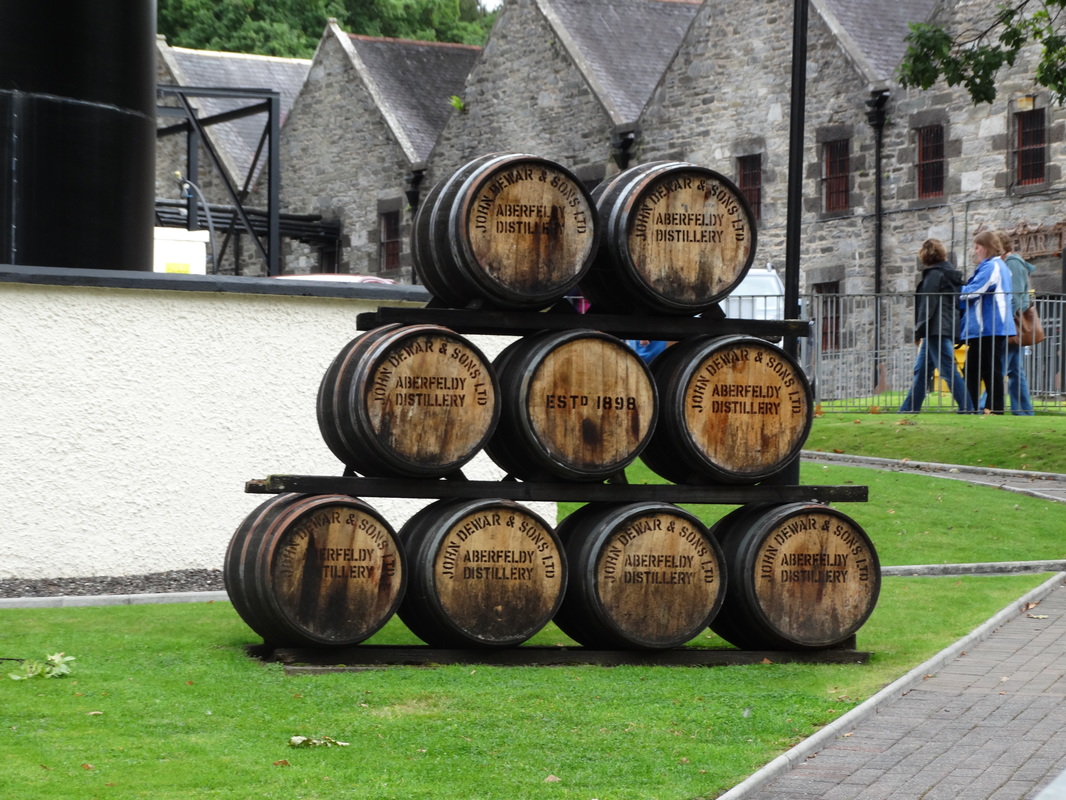
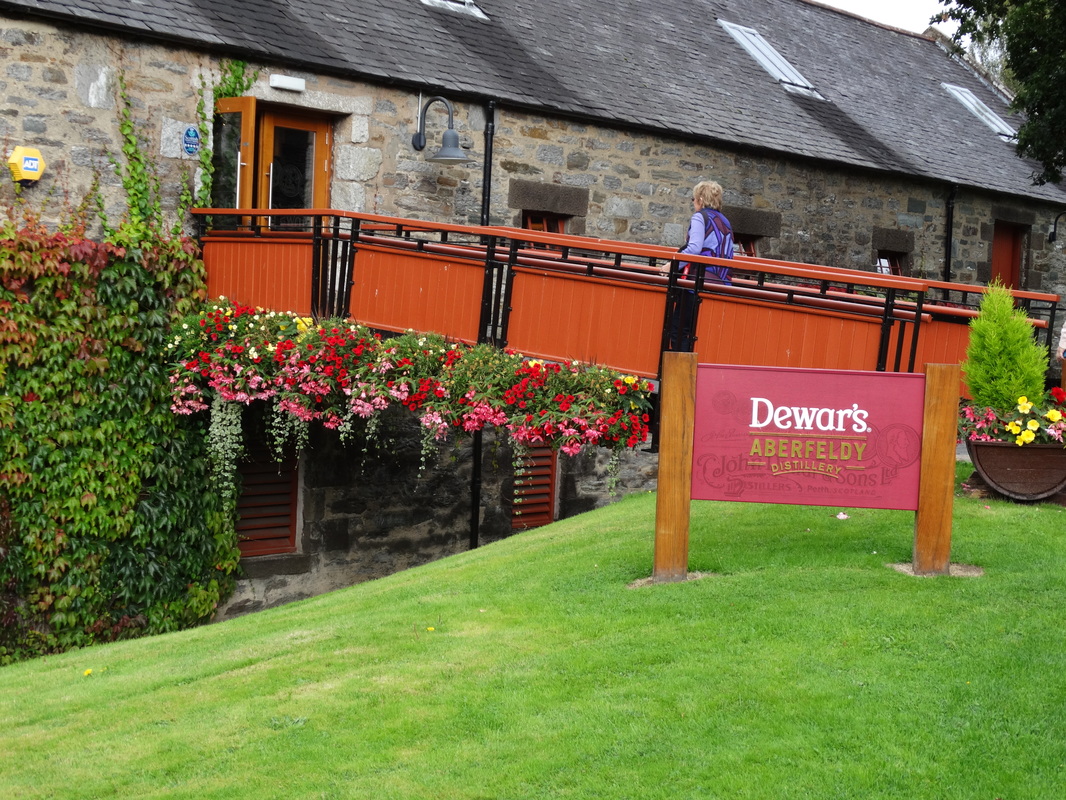
 No photos were allowed inside the distillery, but this link, Dewar's Aberfeldy Distillery from Visit Aberfeldy is a great one for a peek at the beautiful copper kettles and even a virtual tour.
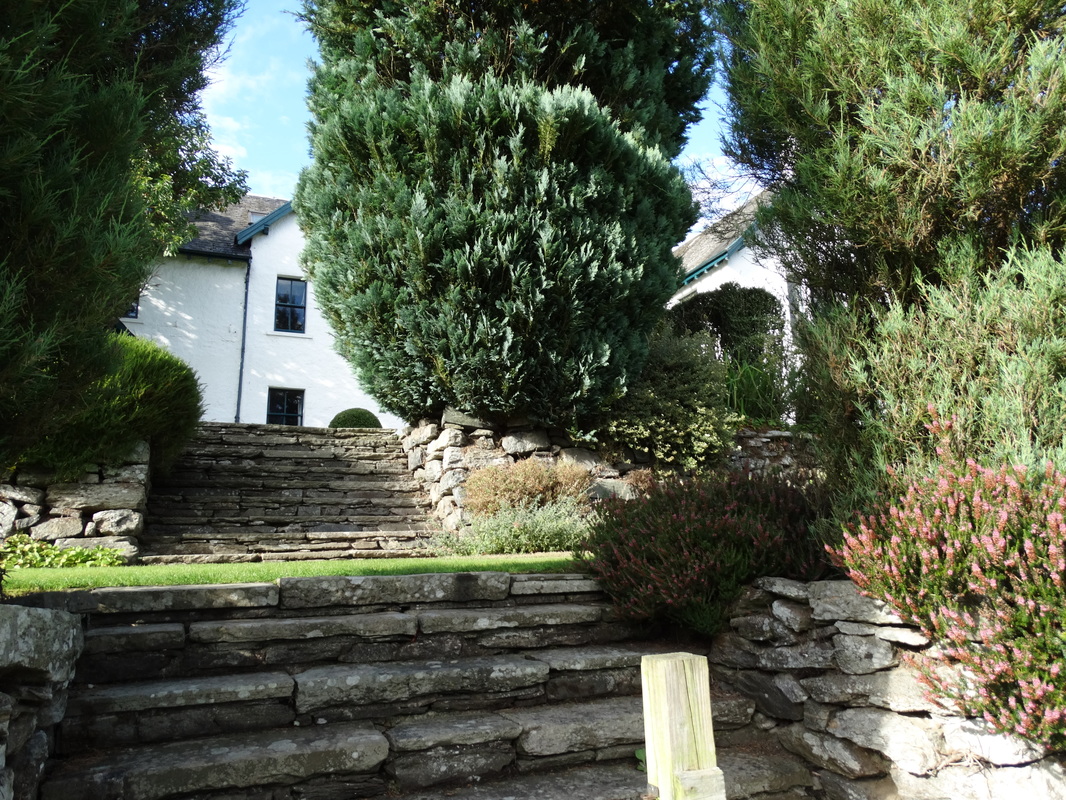
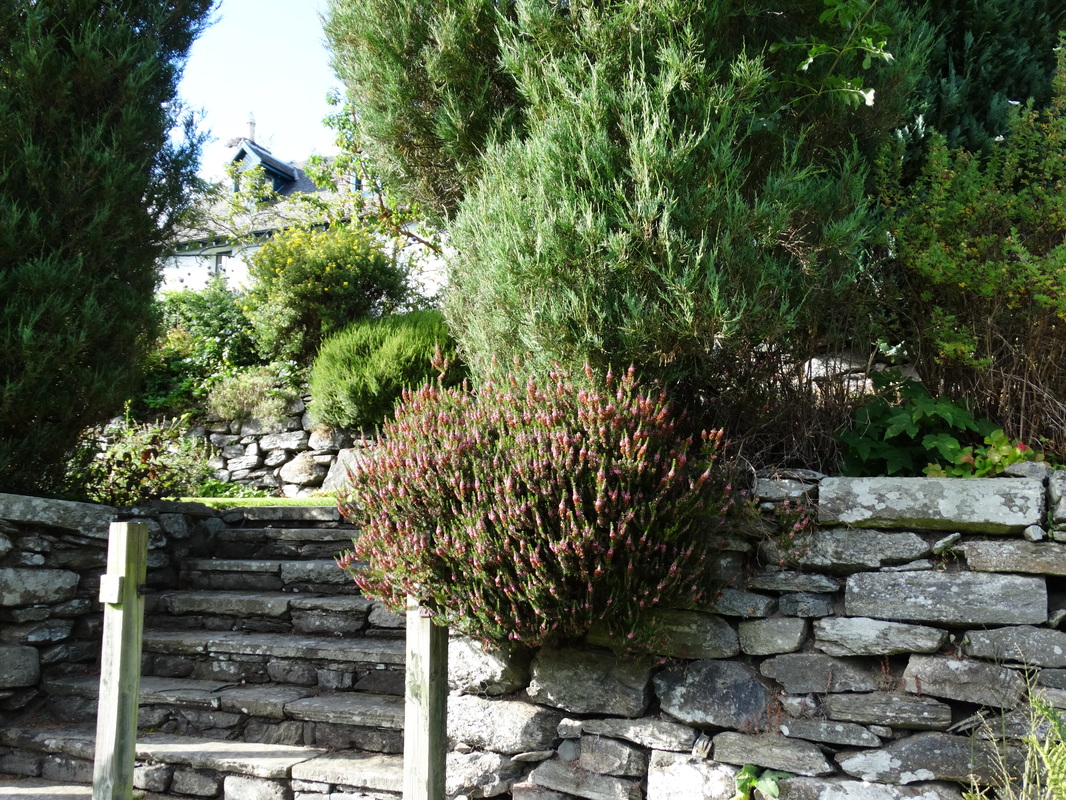
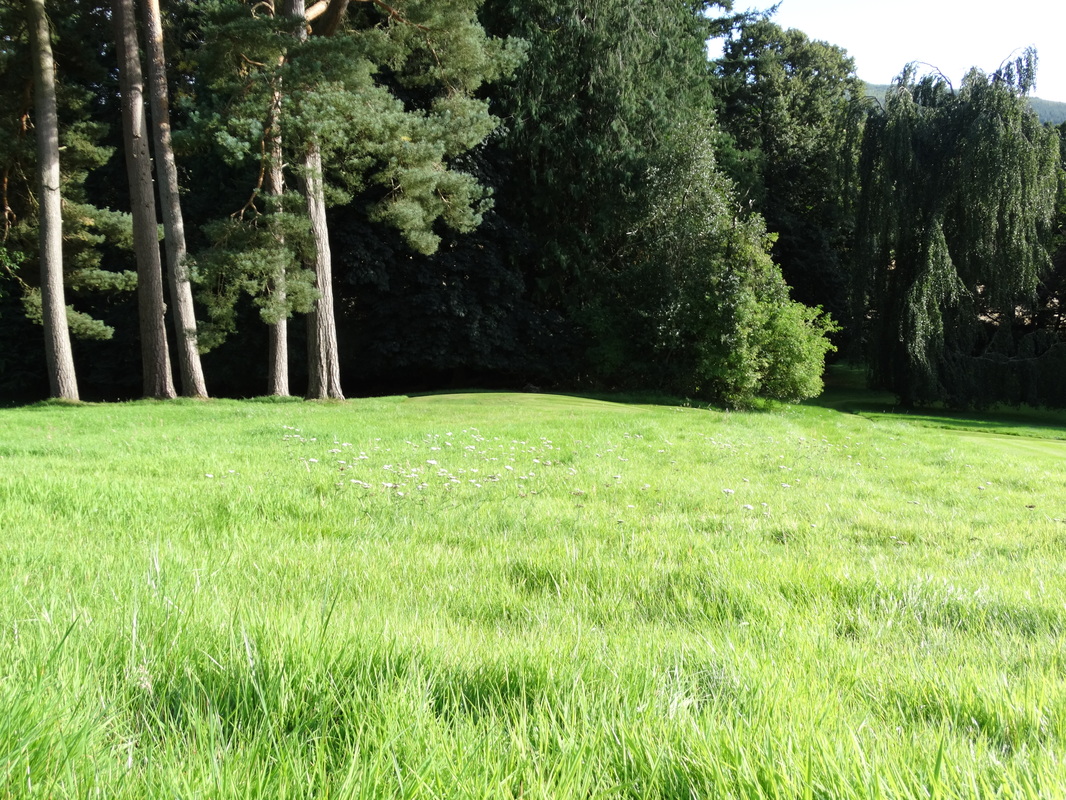
 As you can see from the photos, the gardens around the distillery were spectacular. Even the manager's house perched on the hill just above the distillery made this gardener's heart sigh.
We were allowed a tasting at the end of the tour, and I chose the white label, a lovely, light whisky from the nose to the finish. I also brought a bottle home with me :-)
One of our hosts, Jim Malcolm, is quite the whisky connoisseur, and he graciously shared a few of his favorites with us throughout our trip. My favorite was a 21 yr old Scotch aged in a Chateau Lafite cask. It is, unfortunately, of a limited quantity, and I doubt I will ever taste it again. Thank you, Jim, for the lovely memory!


Scotland with Grace 2016 - The Trip to Aberfeldy
 About halfway between Edinburgh and Perth lies Lochleven Castle, a tower house built in the 1300s.
It has the dubious honor of imprisoning Mary, Queen of Scots in 1567. Though she eventually escaped, she never saw Scotland again.
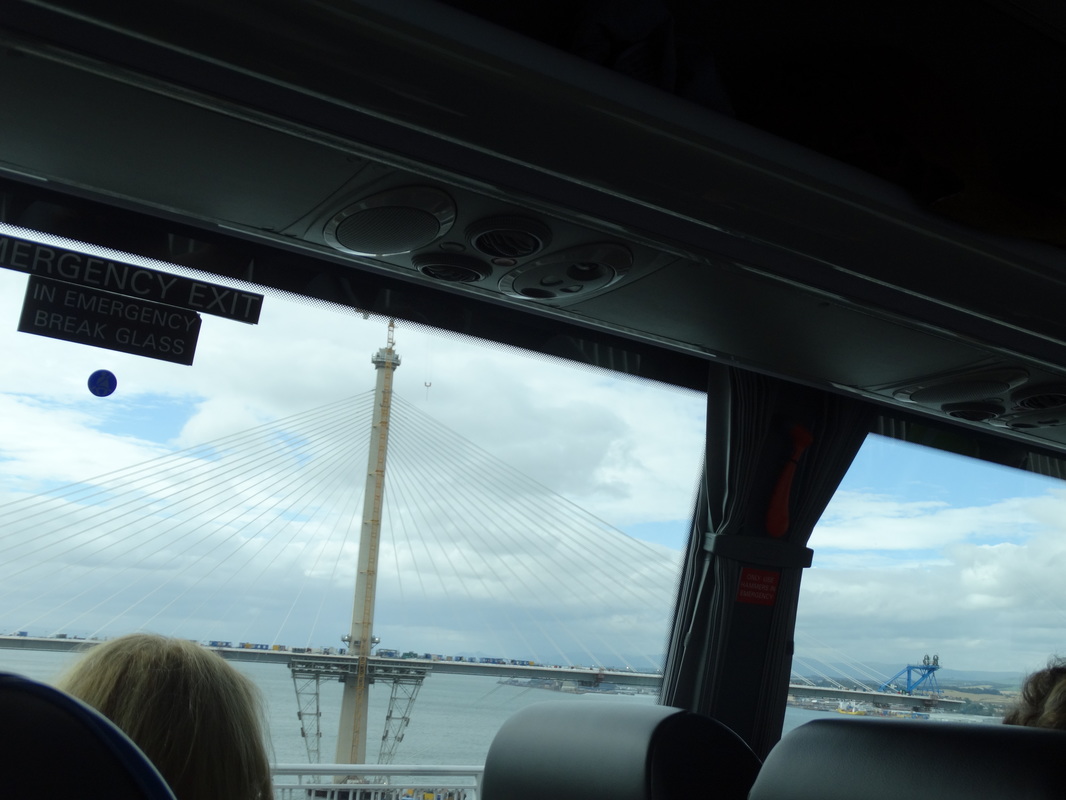
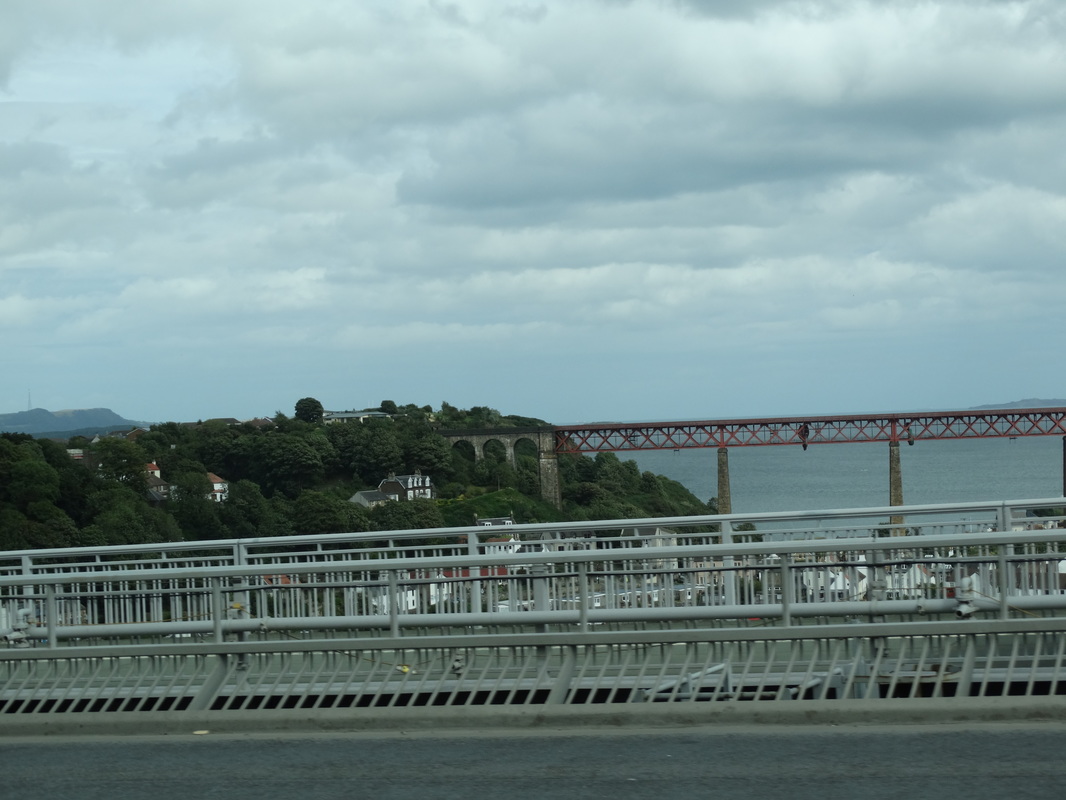
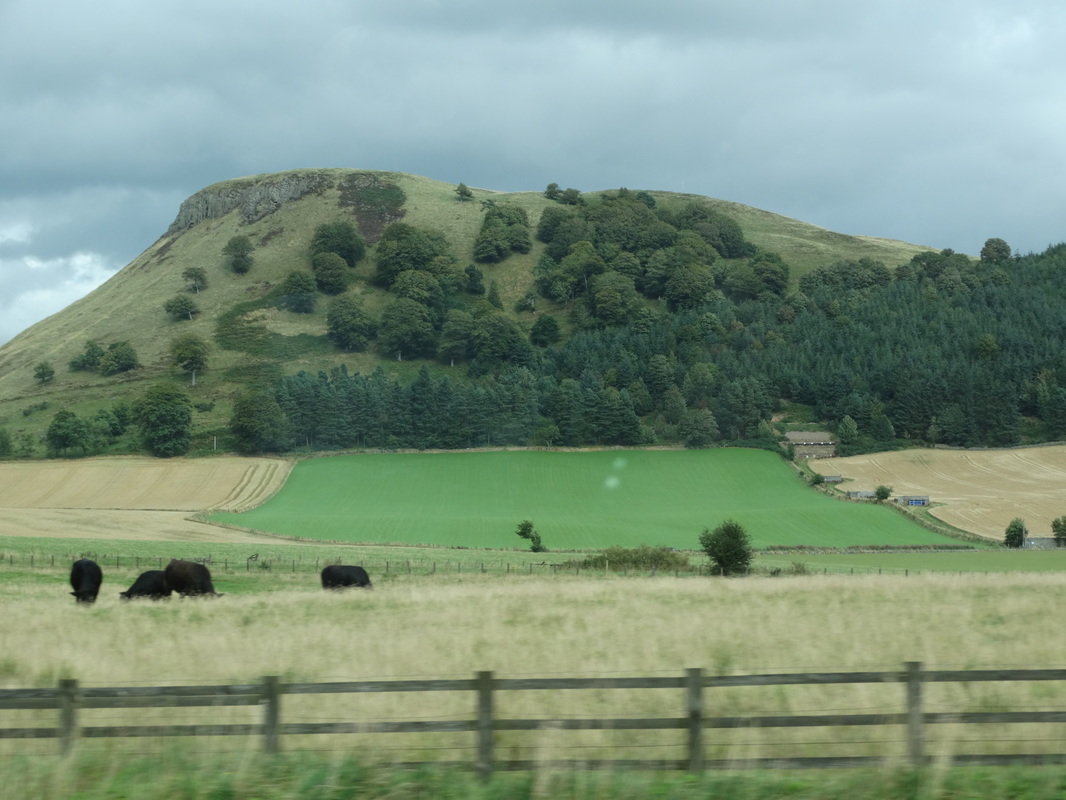
We left Edinburgh on Day 3 of the trip, via the Forth Road Bridge. There are three bridges spanning the Forth. The bridge to our left is a cable-stayed bridge called Queensferry Crossing, scheduled to open May 2017. The one to our right is a railway bridge which has been in use since 1890, and you can see the lovely rock at its northern end in the last photo.

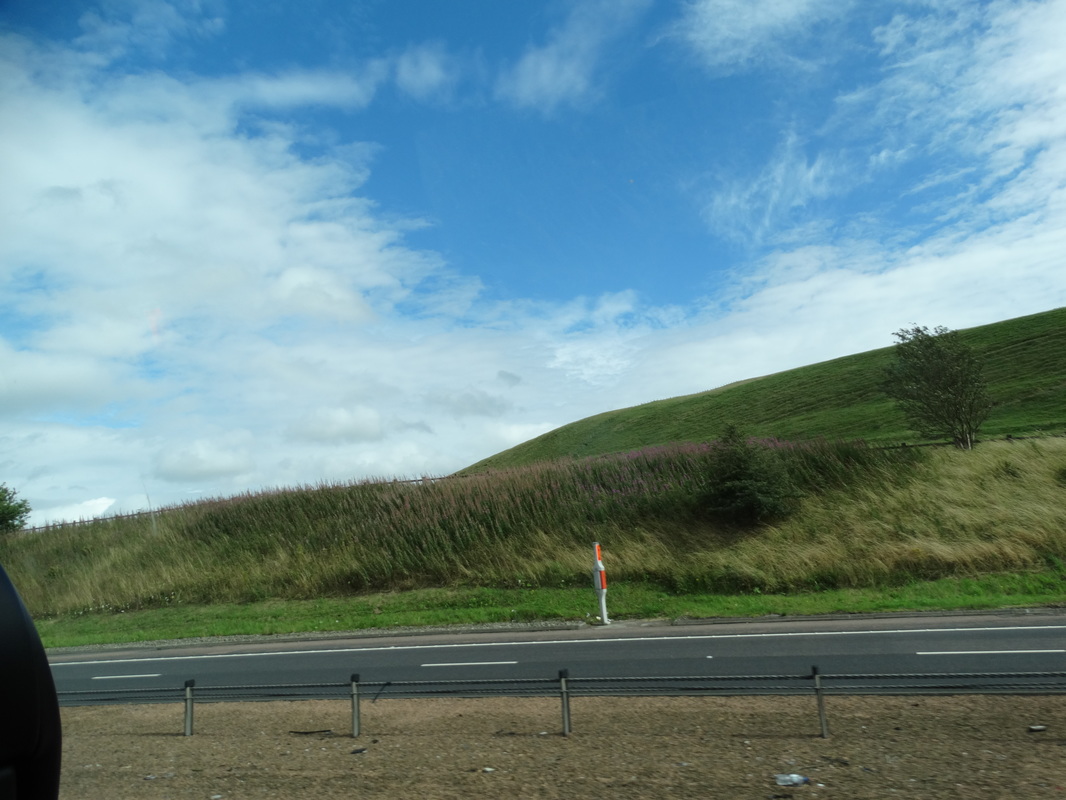
 The landscape began to change. We were entering the Highlands.
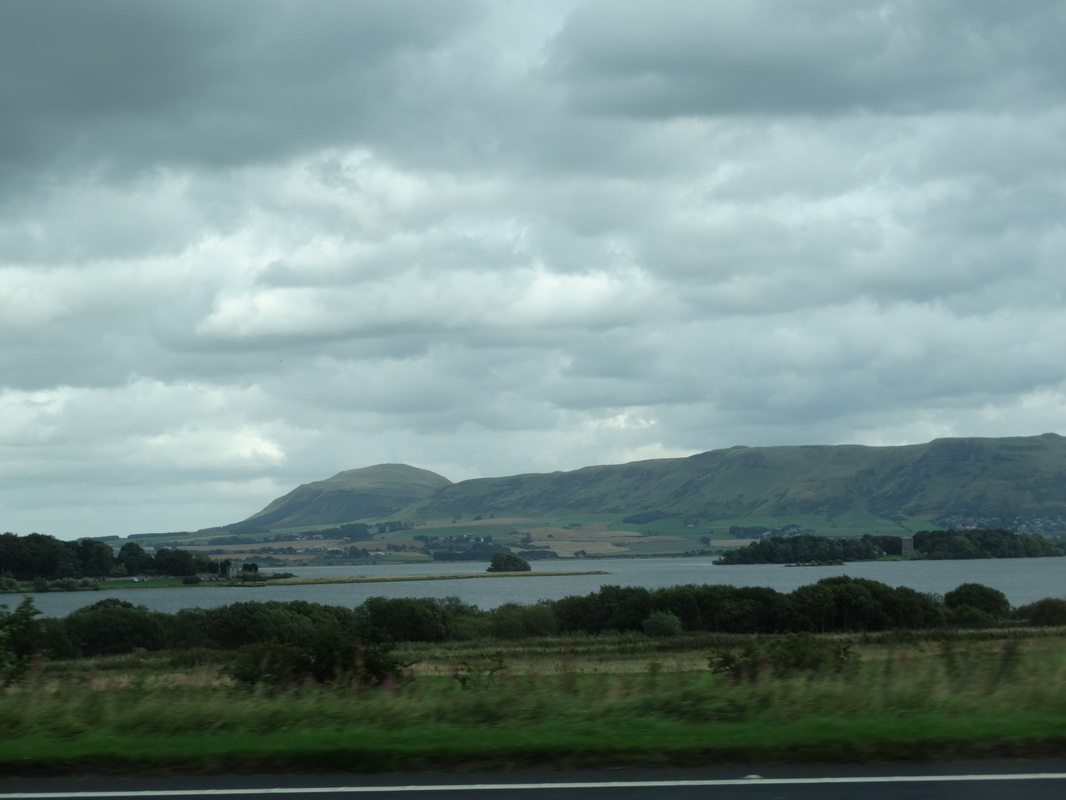
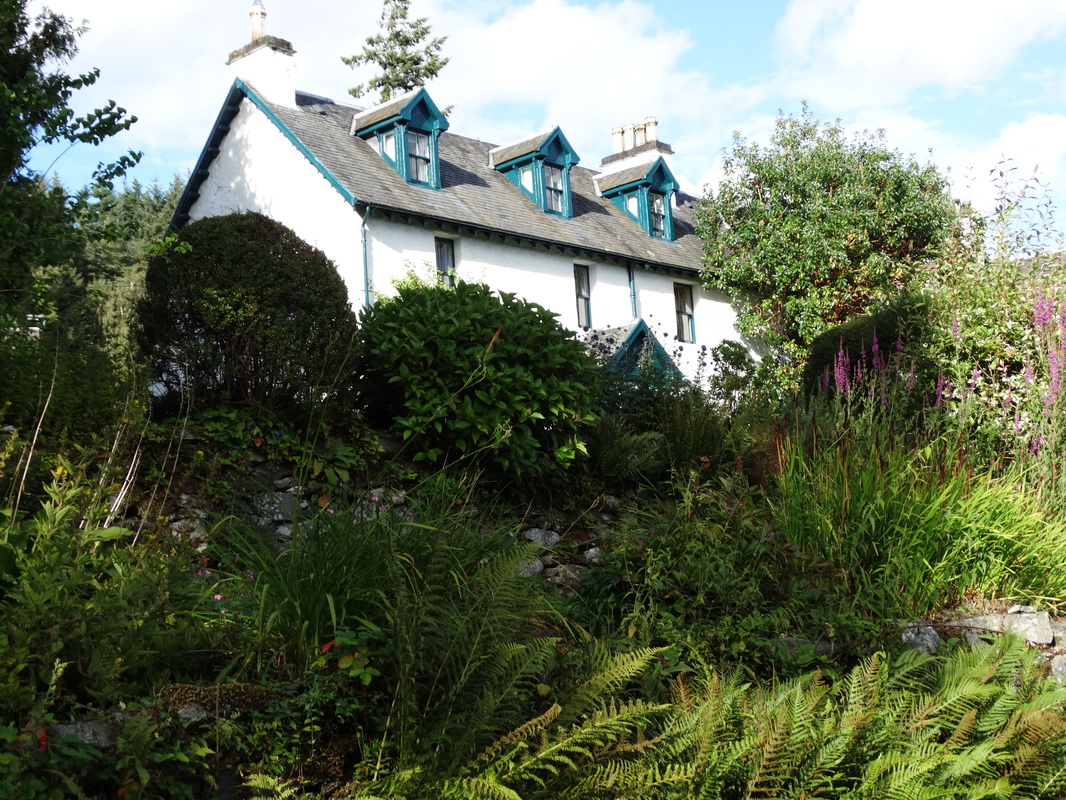
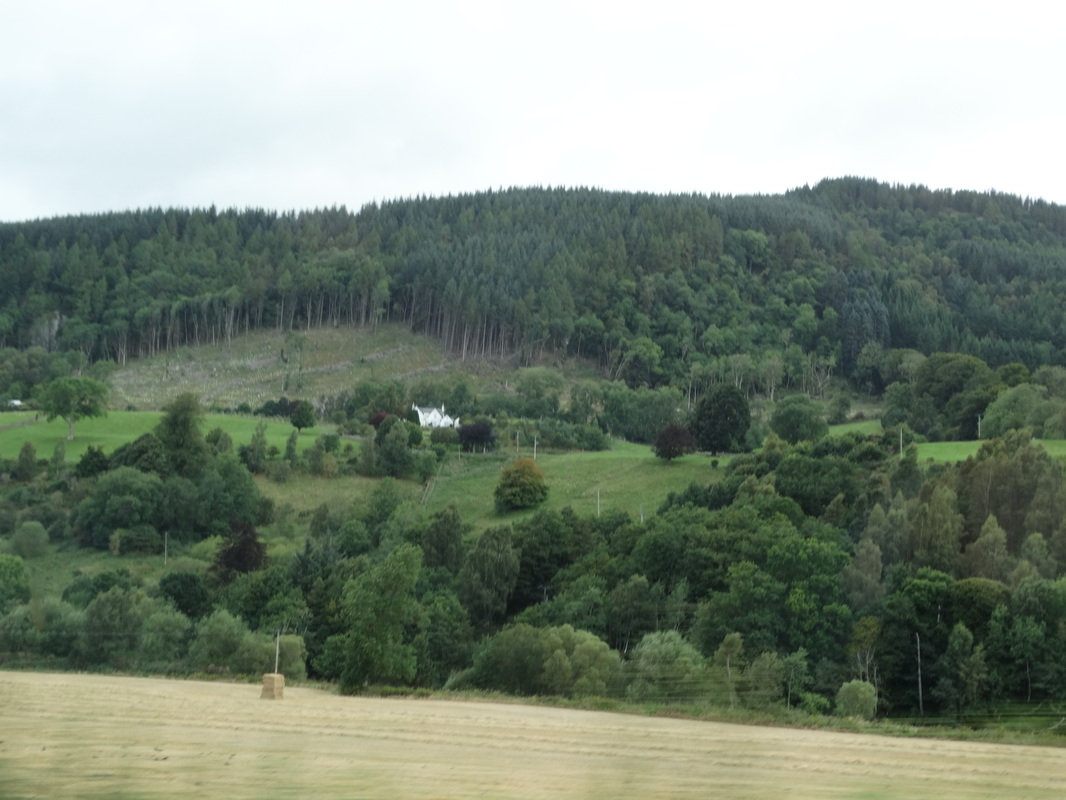 After a stop at Lochleven Castle for tea, we continued to Farleyer Lodge where we would spend the remainder of our trip--with jaunts from this lovely rallying point. Enjoy the photos of the lodge below. It is nestled in the woods with beautiful gardens spilling from its front doors. I spent many peaceful moments soaking in the scenery most mornings.


September 13, 2016
Scotland with Grace 2016 - Day 3: South to Abbotsford Estate and beyond
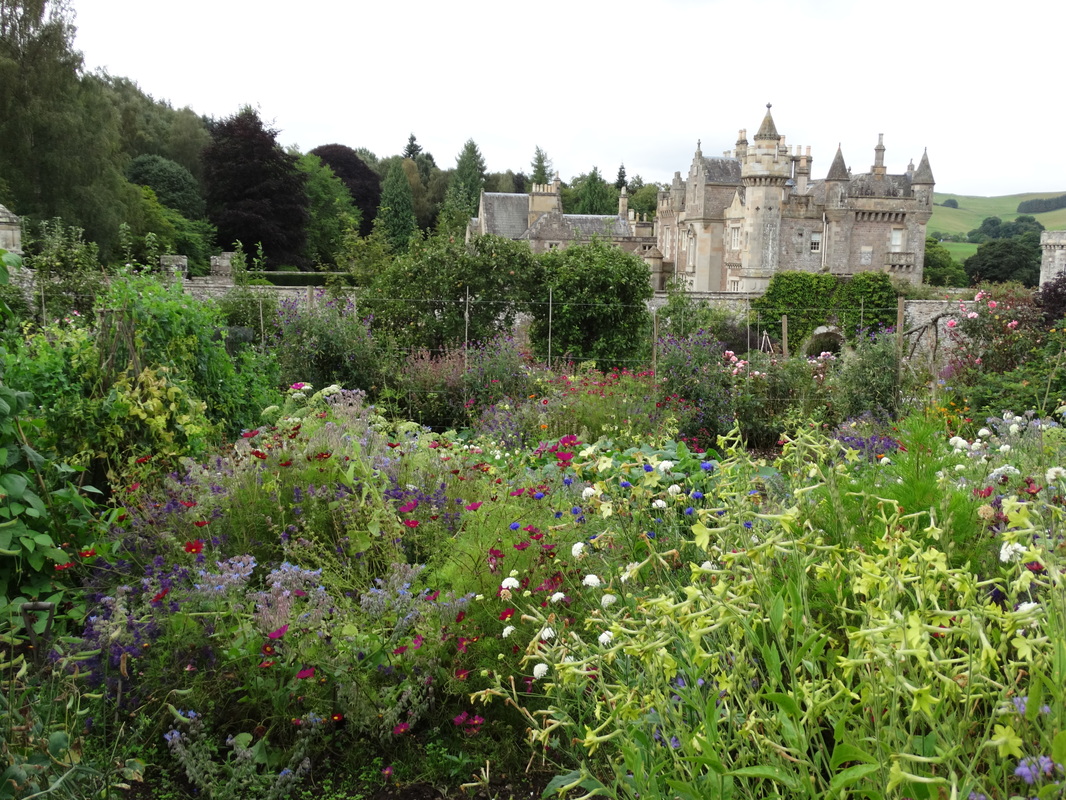
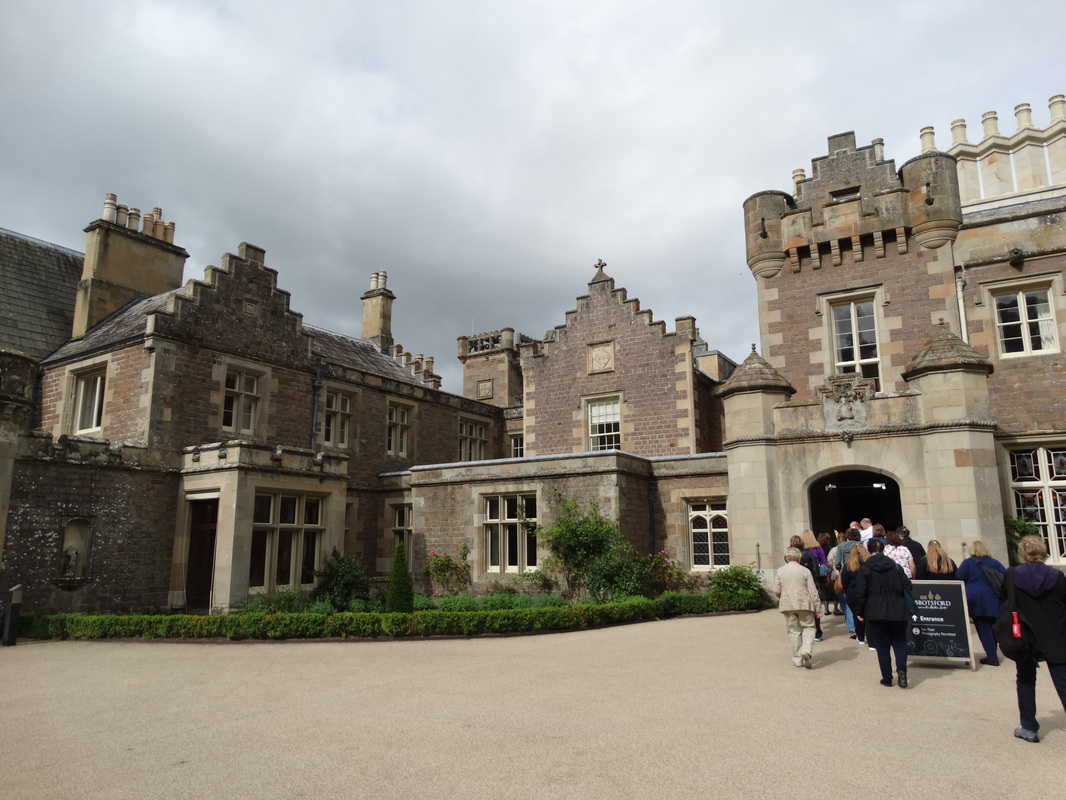
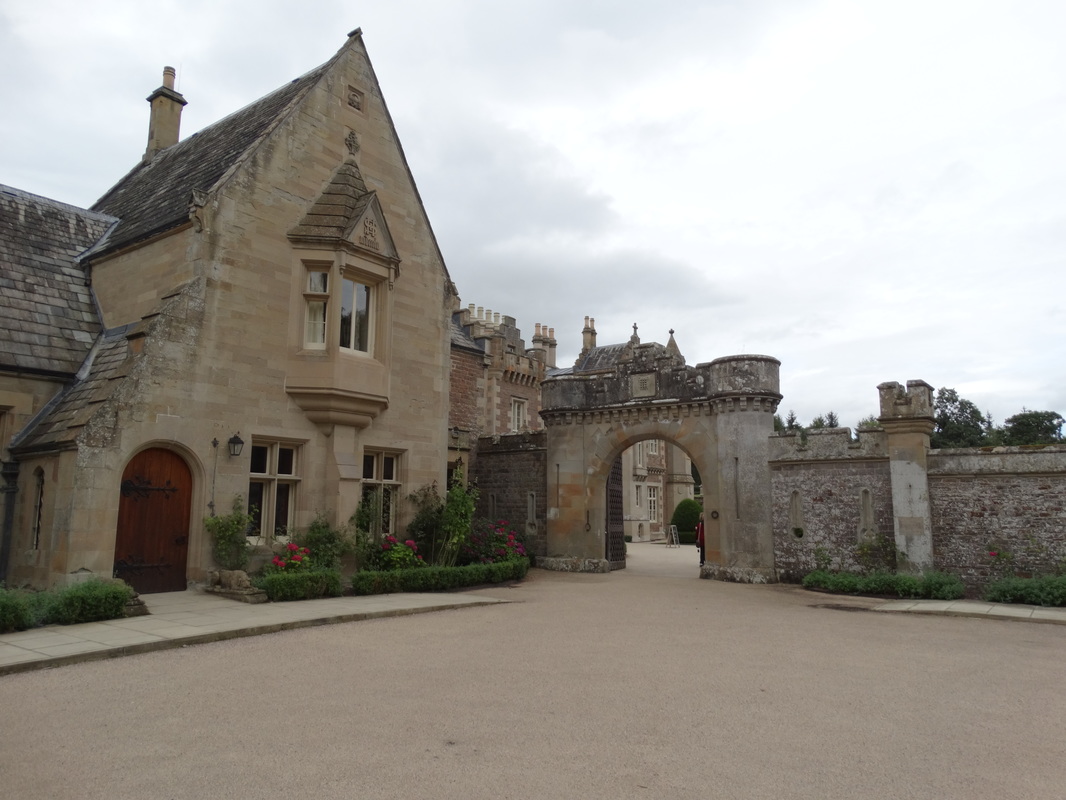
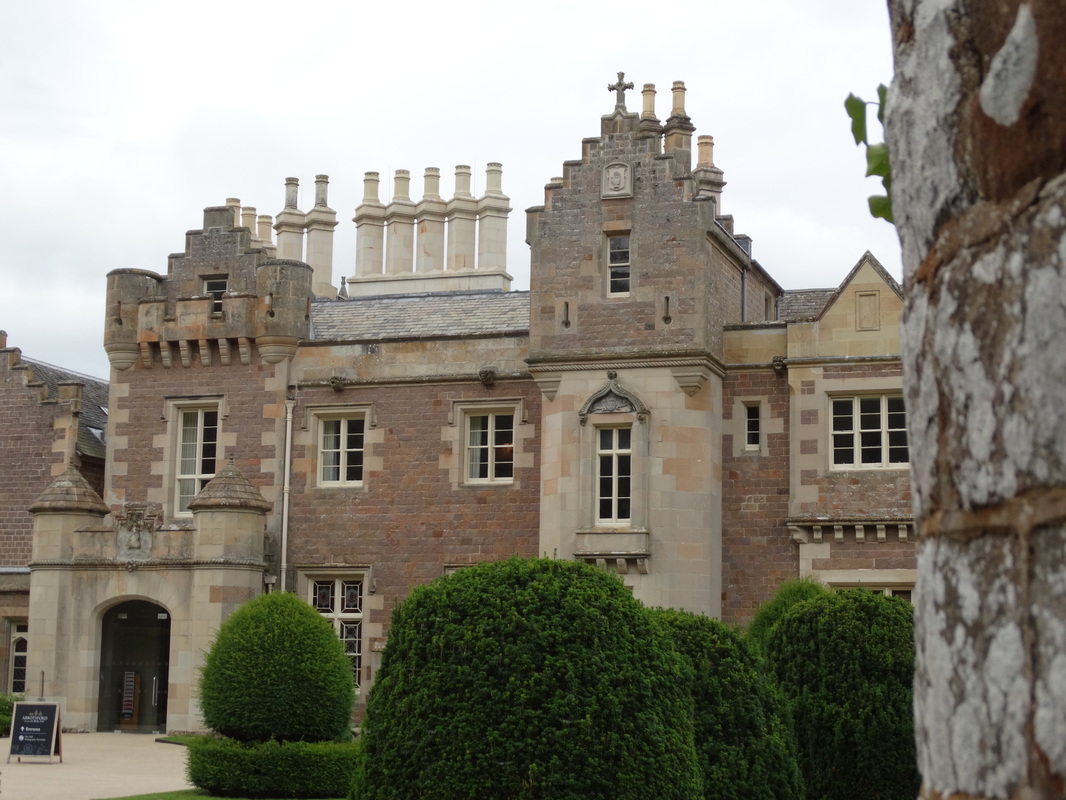
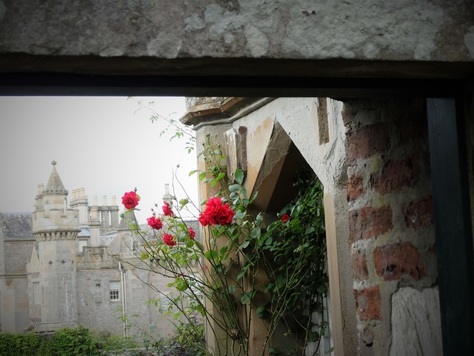 As we left Edinburgh for our lodge in Perthshire where we would spend the remainder of our trip, we stopped at Abbotsford Estate, home of Sir Walter Scott. Here along the River Tweed, he penned his novels.
Sir Walter Scott was born in 1771 in Edinburgh. At three years of age he contracted polio, and was sent to live with an uncle on the Borders. He was intrigued with the region and returned to live here later. In 1806 he became Sherriff of Selkirk. He decided he wished to live in a castle, and built Abbotsford in the Scottish Baronial Style which is also known as the imitation castle style of the Victorian period. But home boasted gas lighting, under-floor heating and indoor toilets.
Sir Walter Scott's descendants continued to live in the house until 2004. Today, part of it is available for rent.
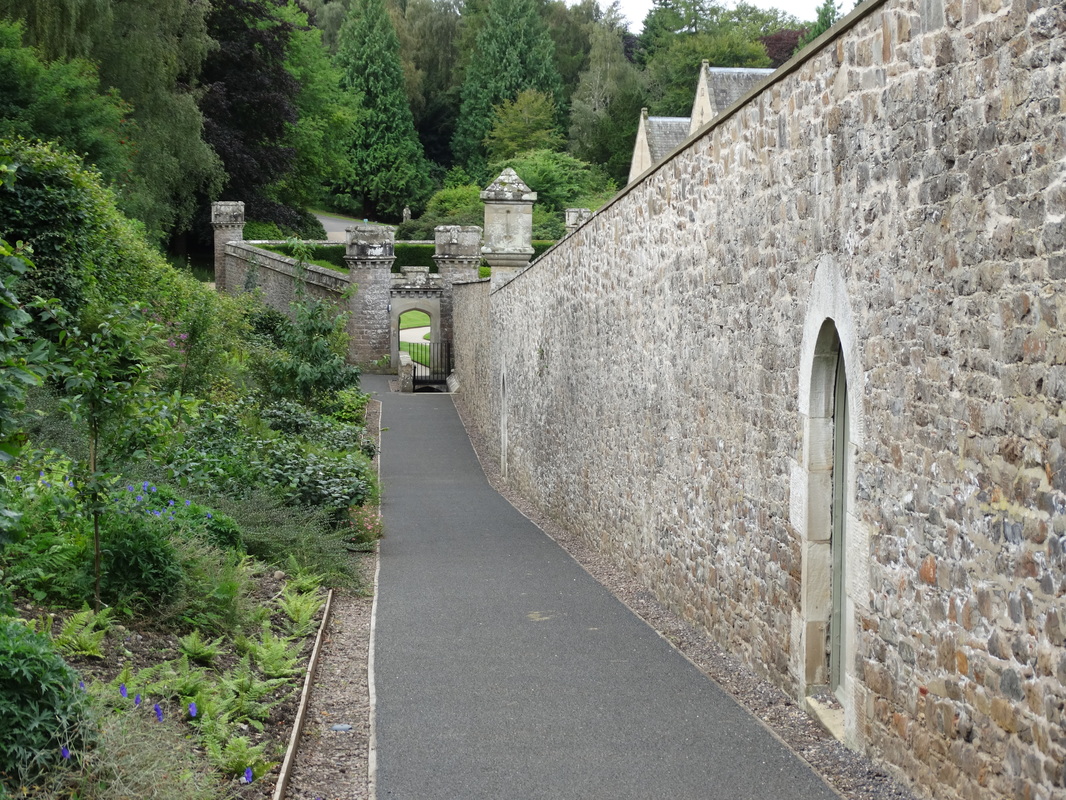
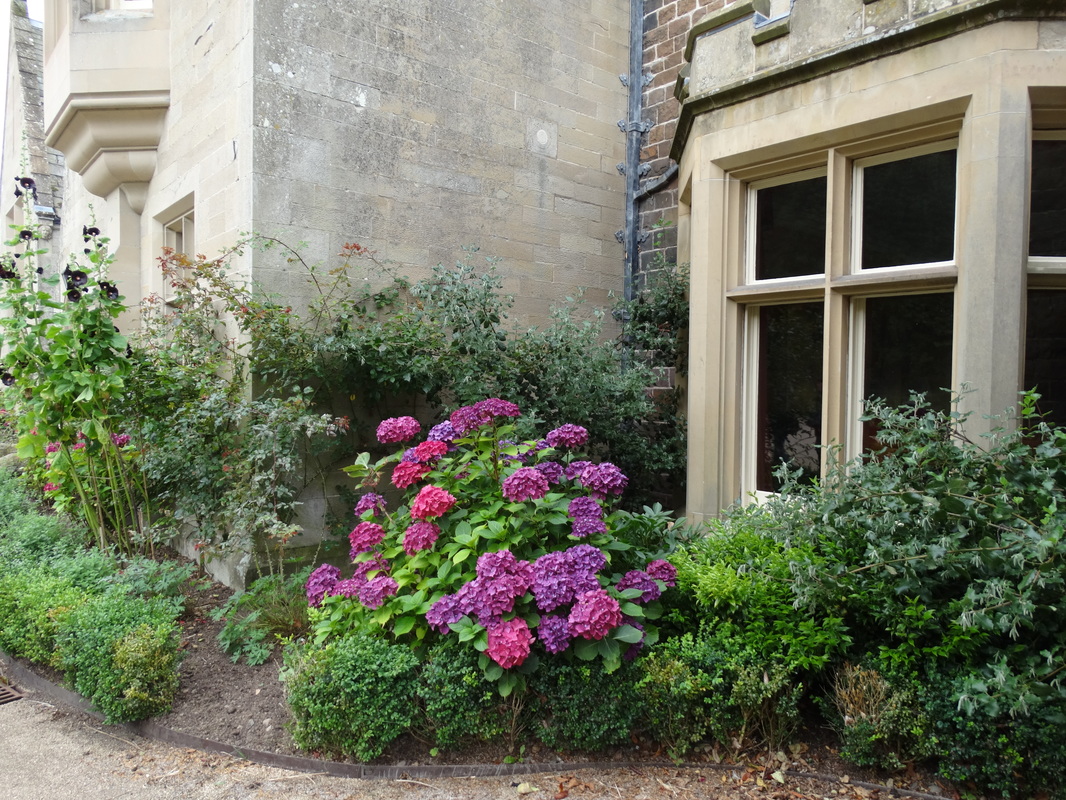
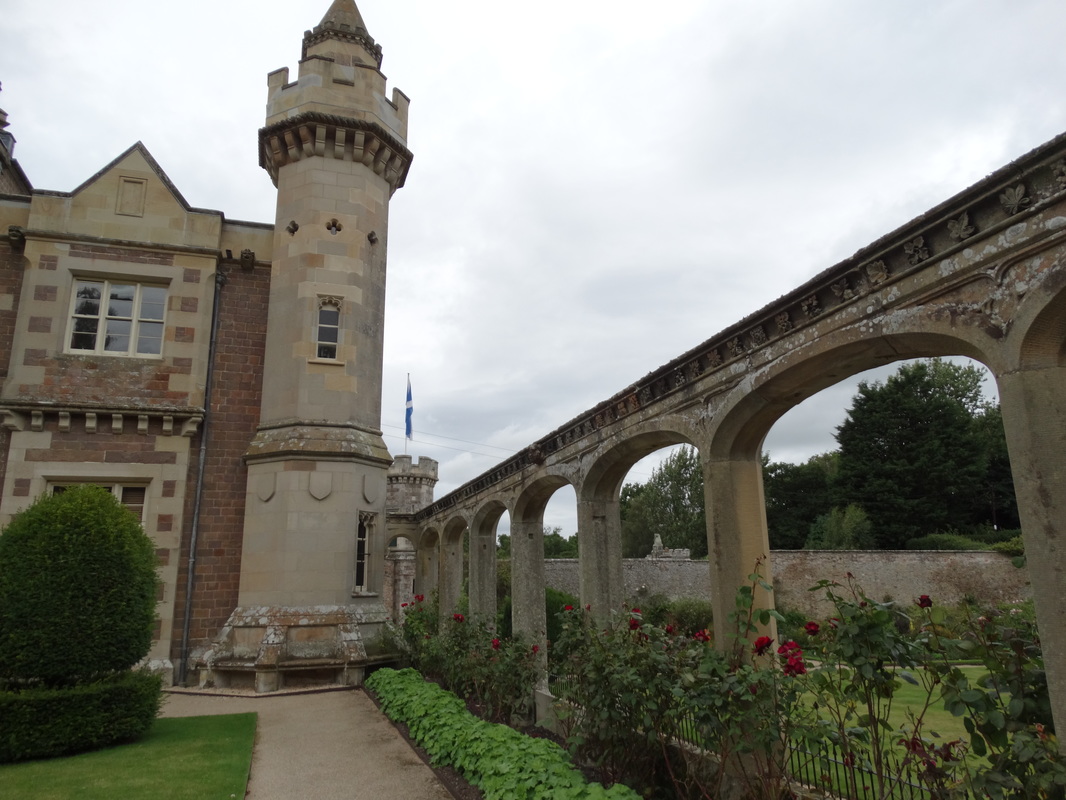
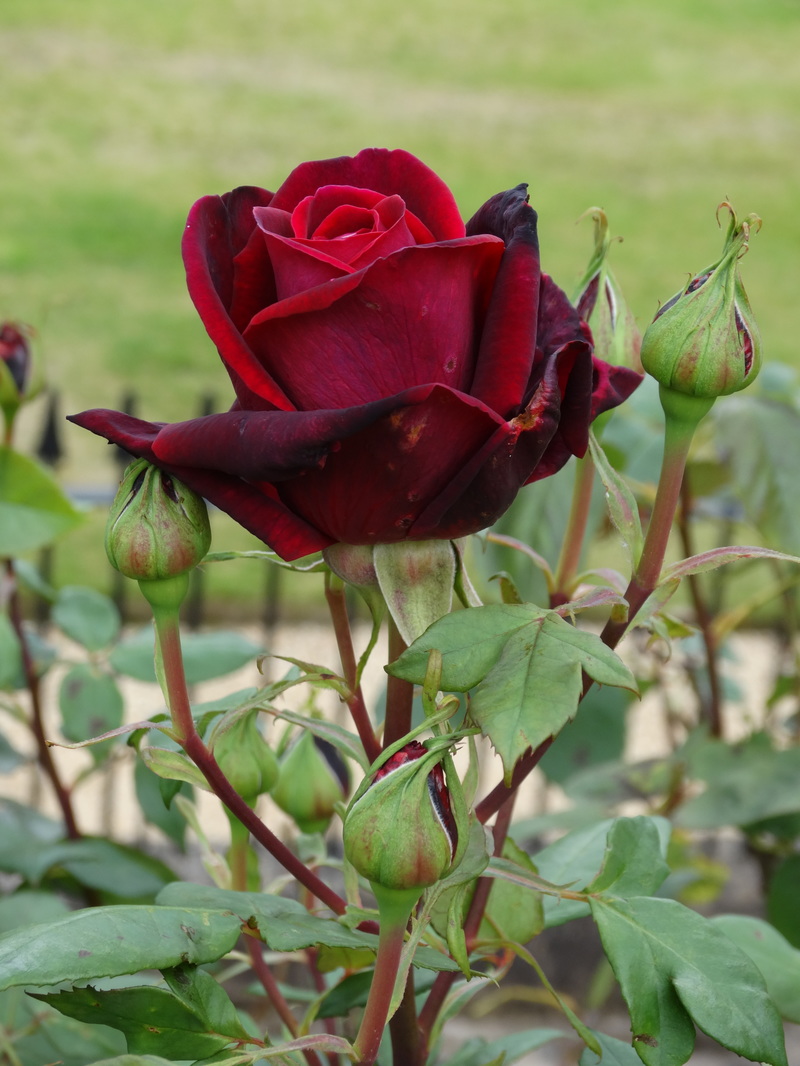
The gardens of Abbotsford:

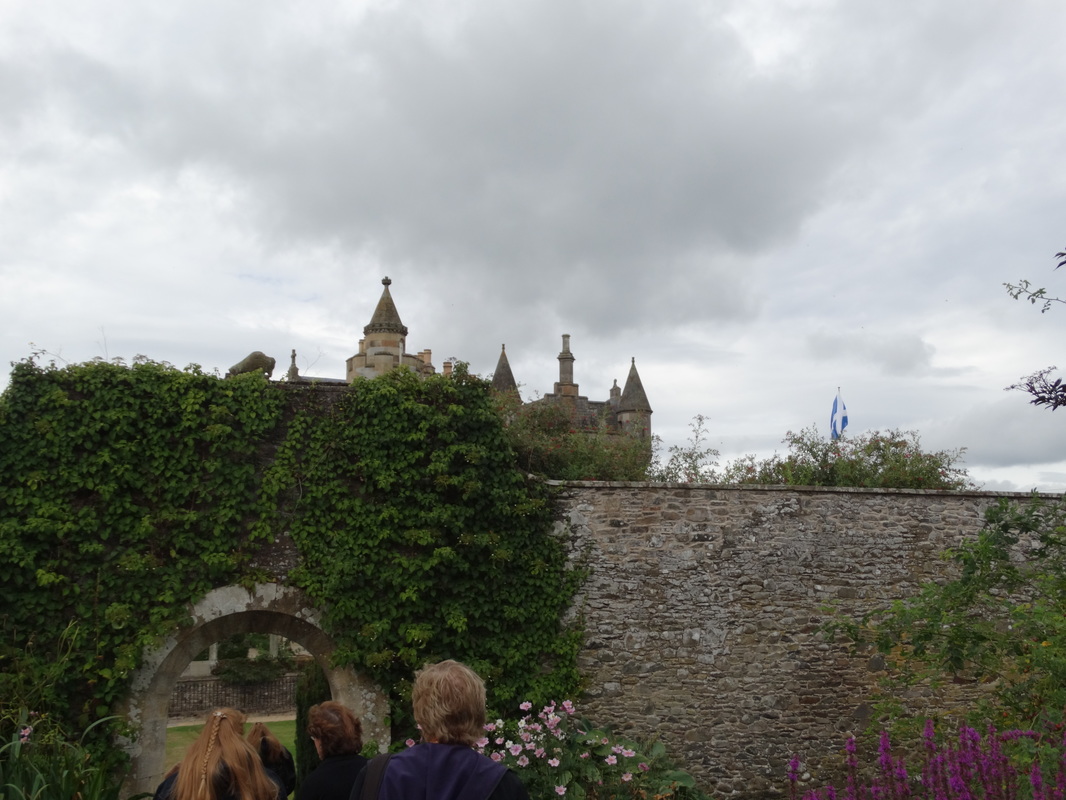
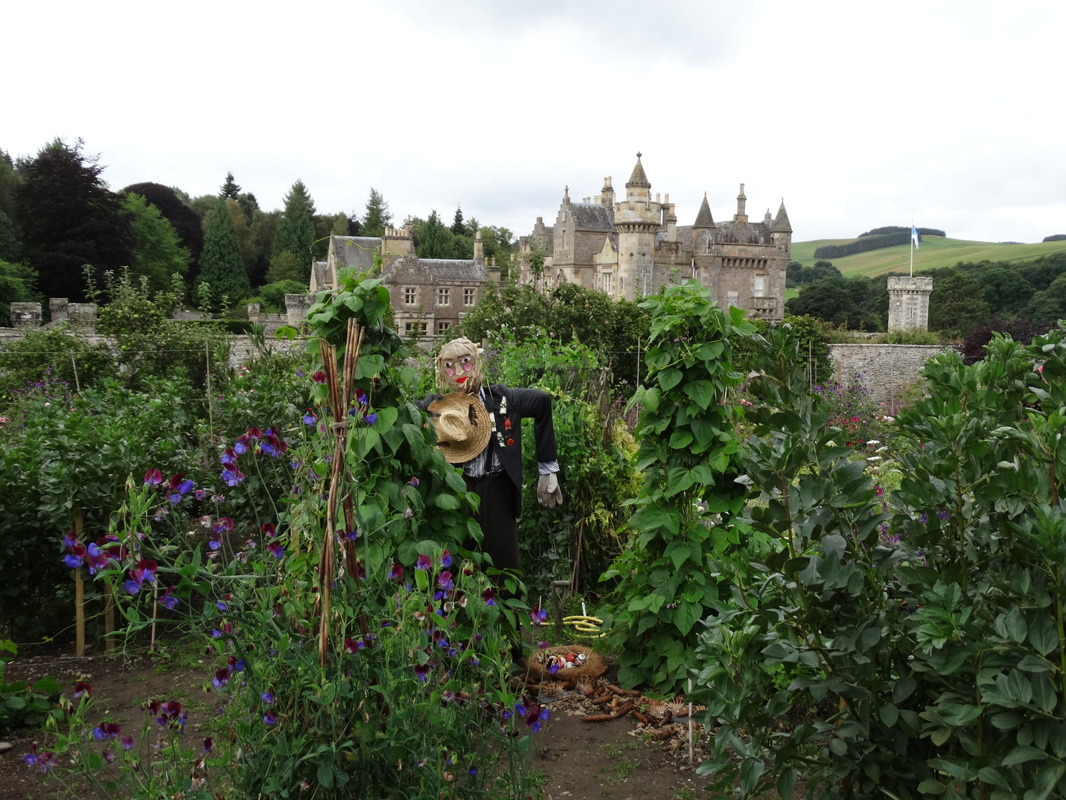
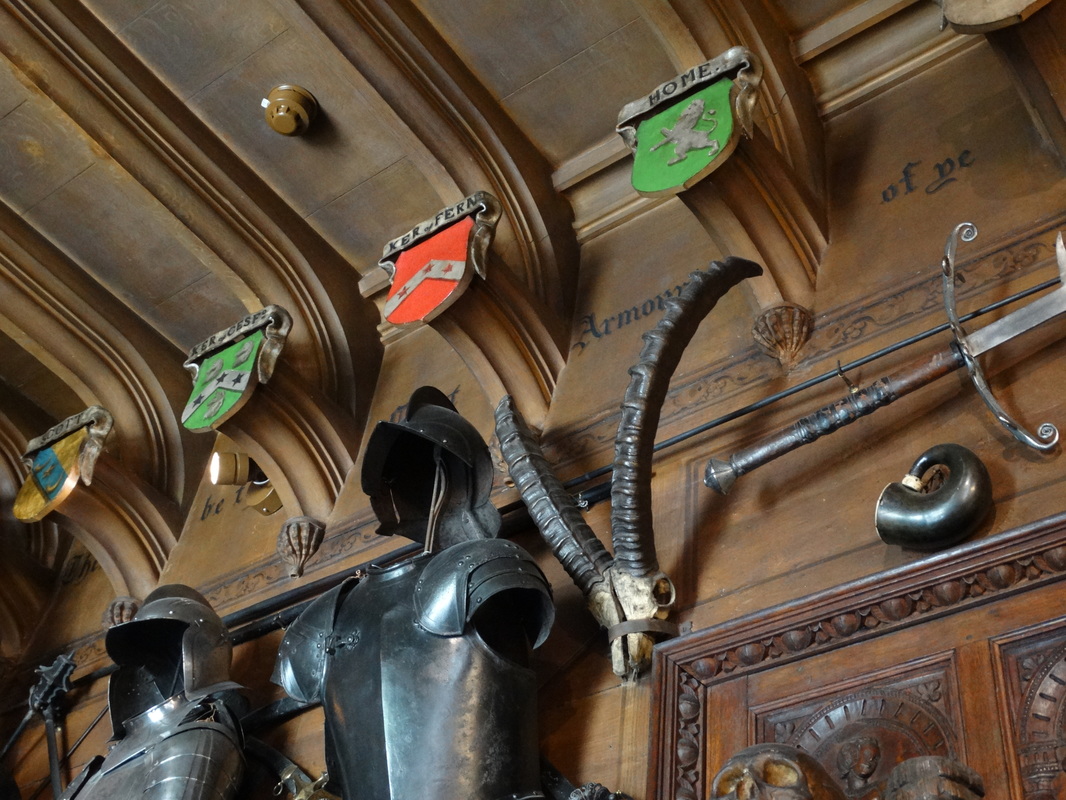
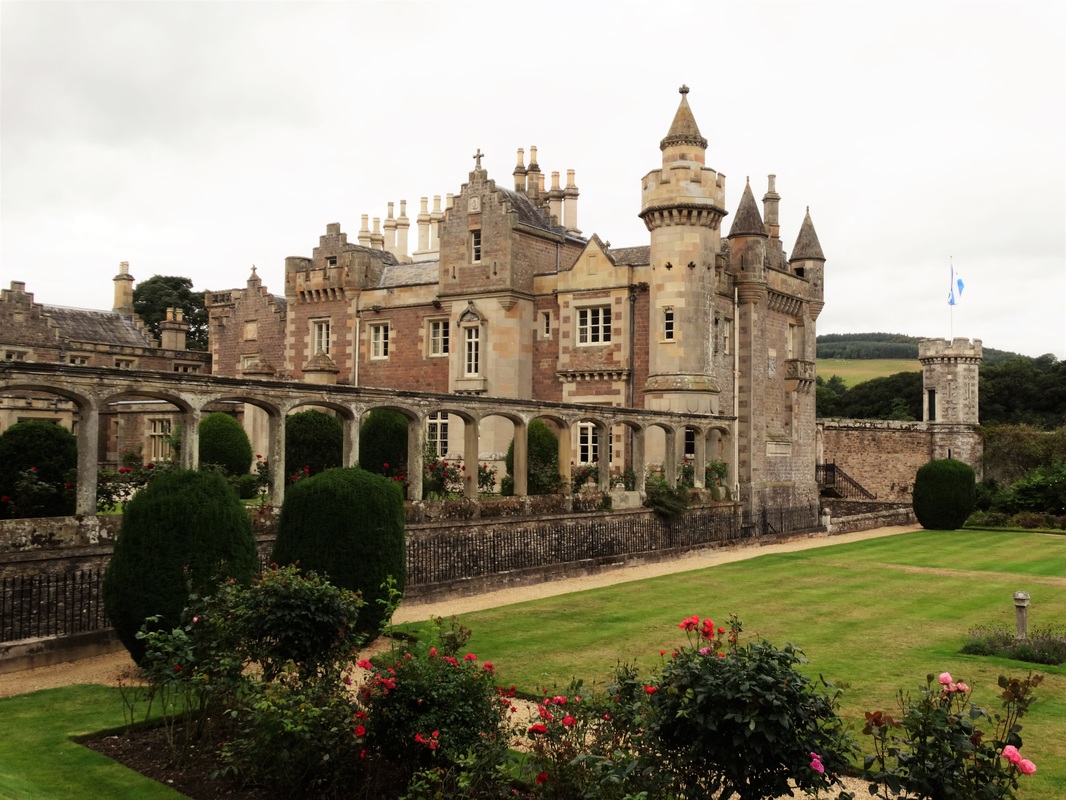 The house is breath-taking. We were allowed to take non-flash photos inside. This is the great hall. In the first photo, the breastplate on teh right is French, the one on the left is Polish.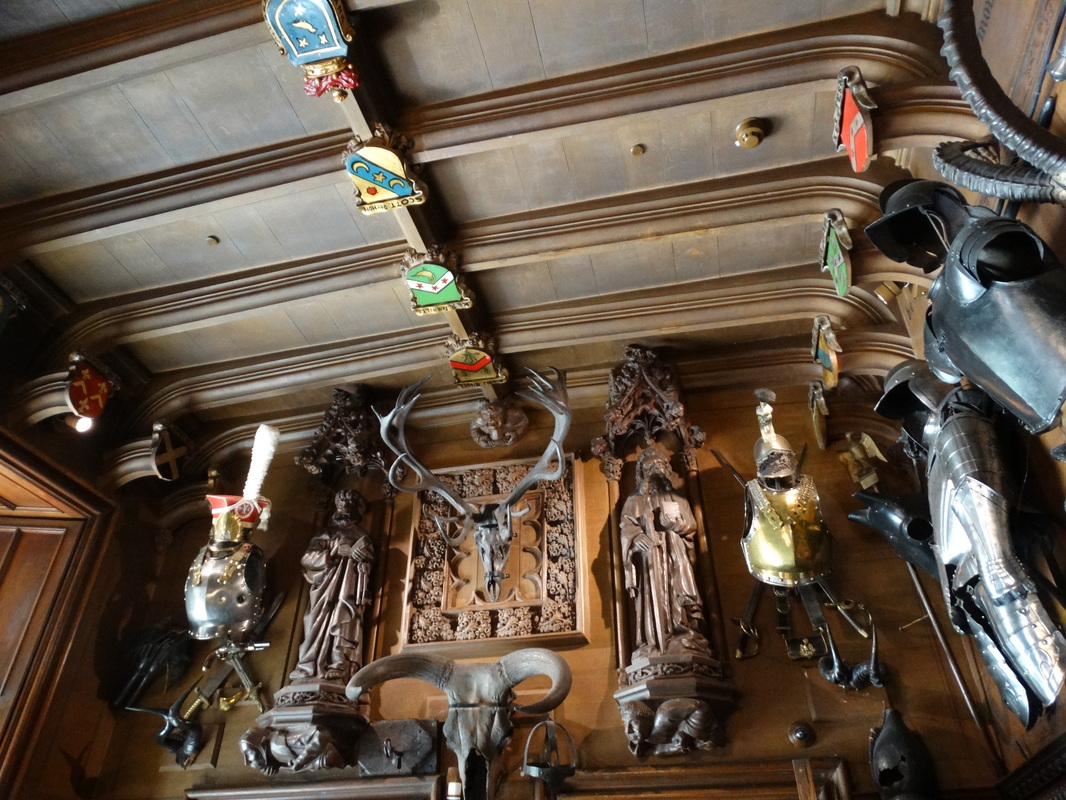

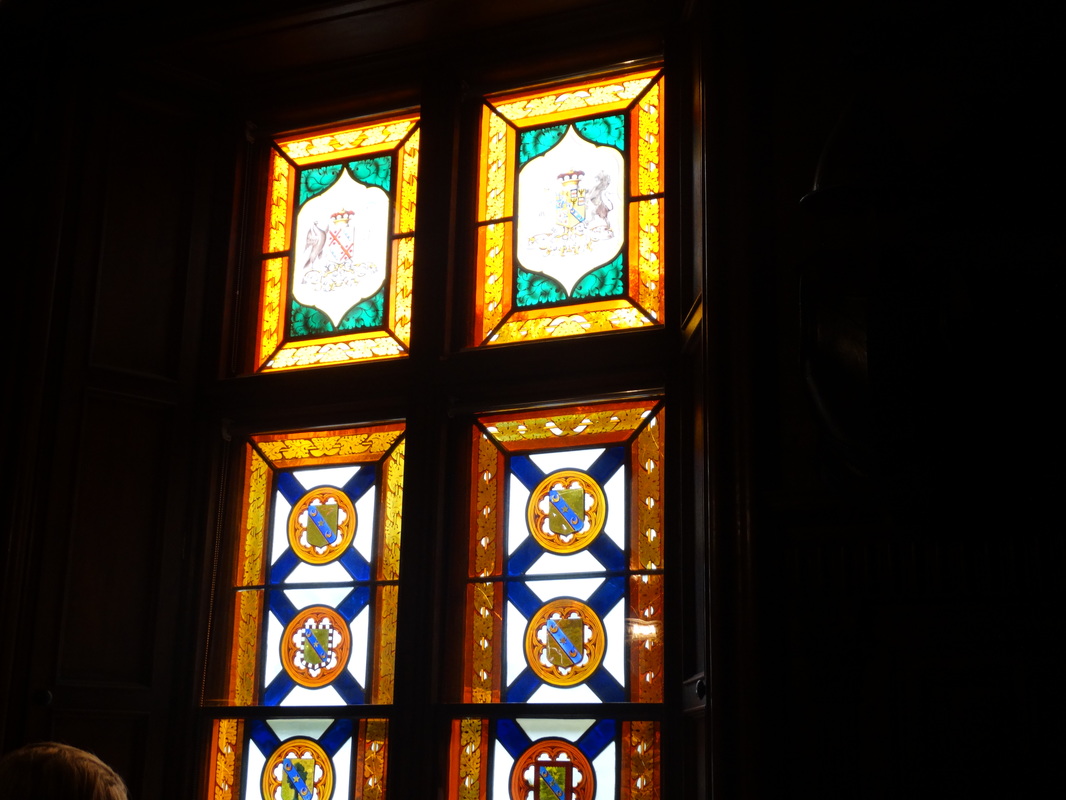 Sir Walter Scott's study.
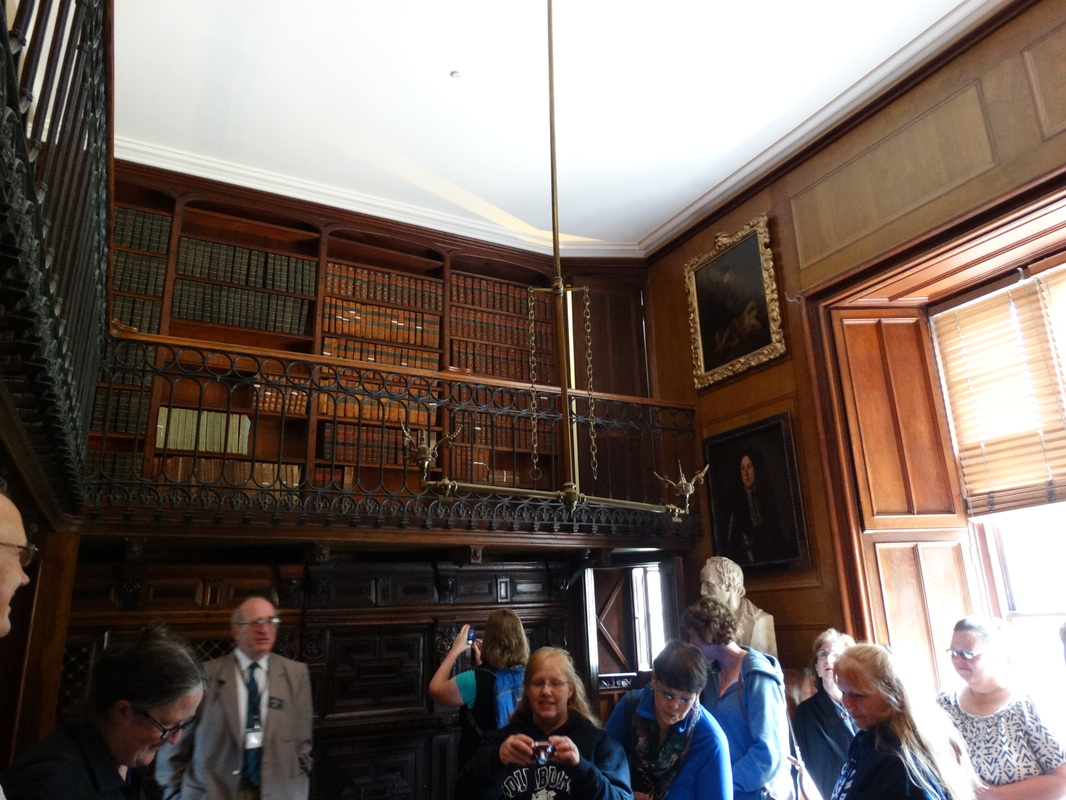
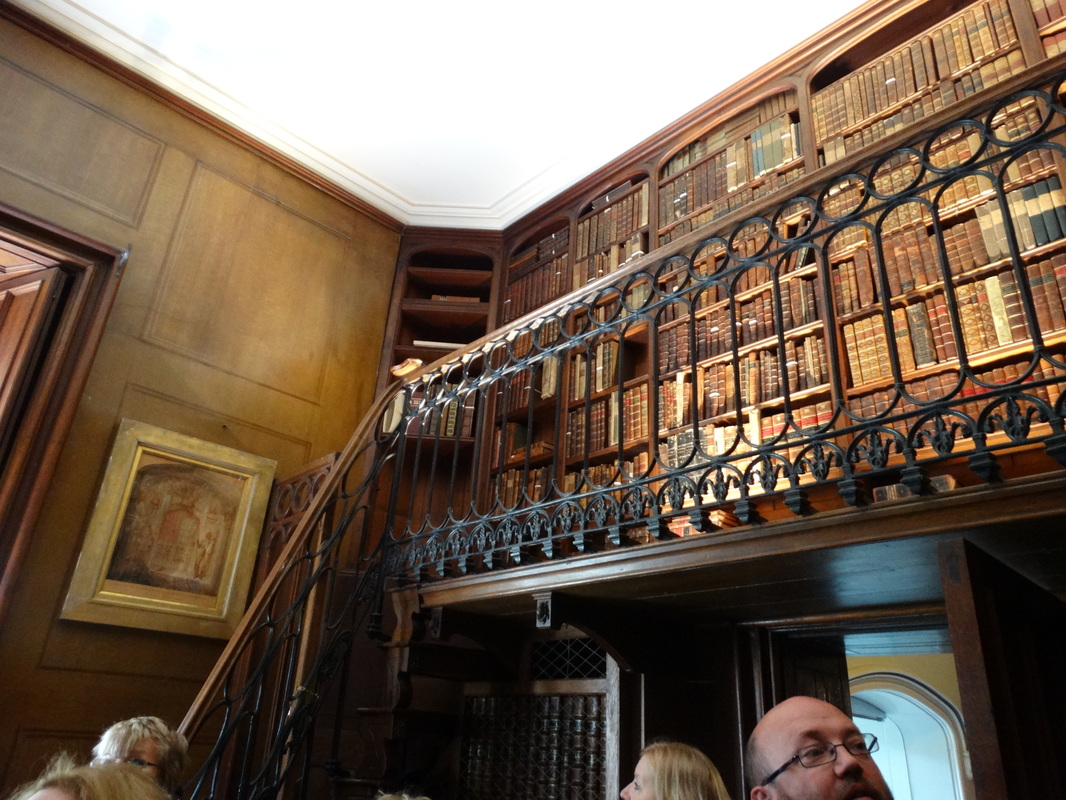 The library. The oil painting is of Sir Walter's son.
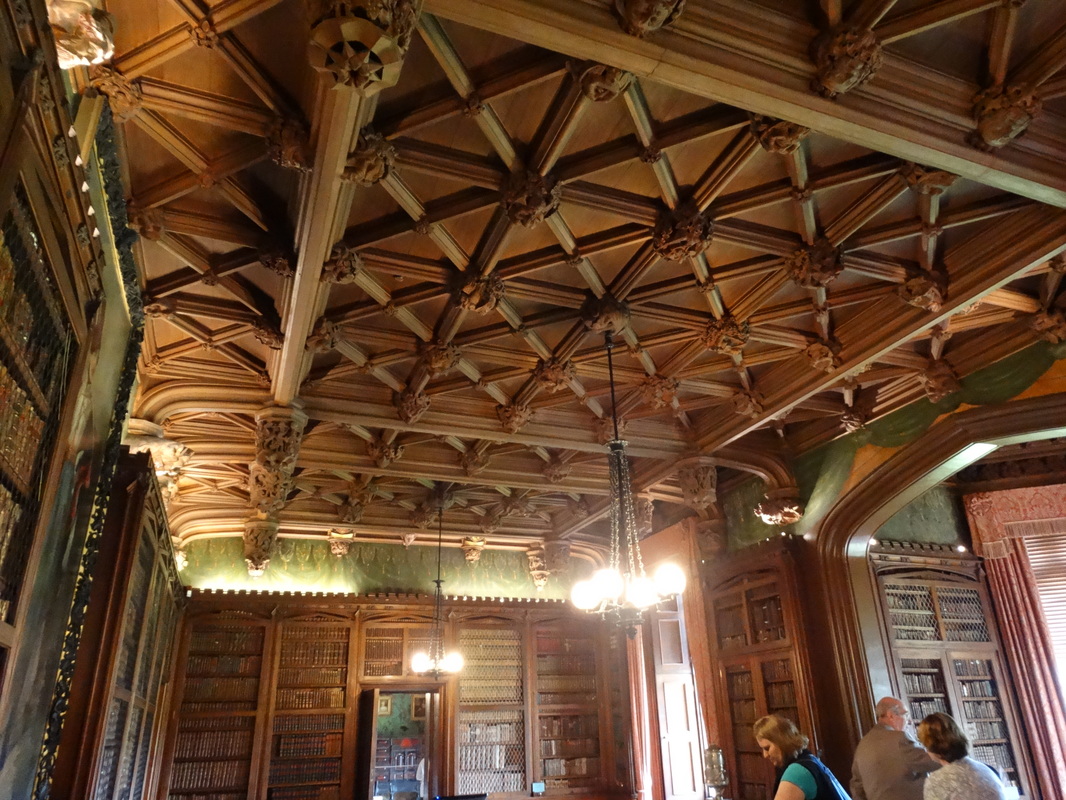
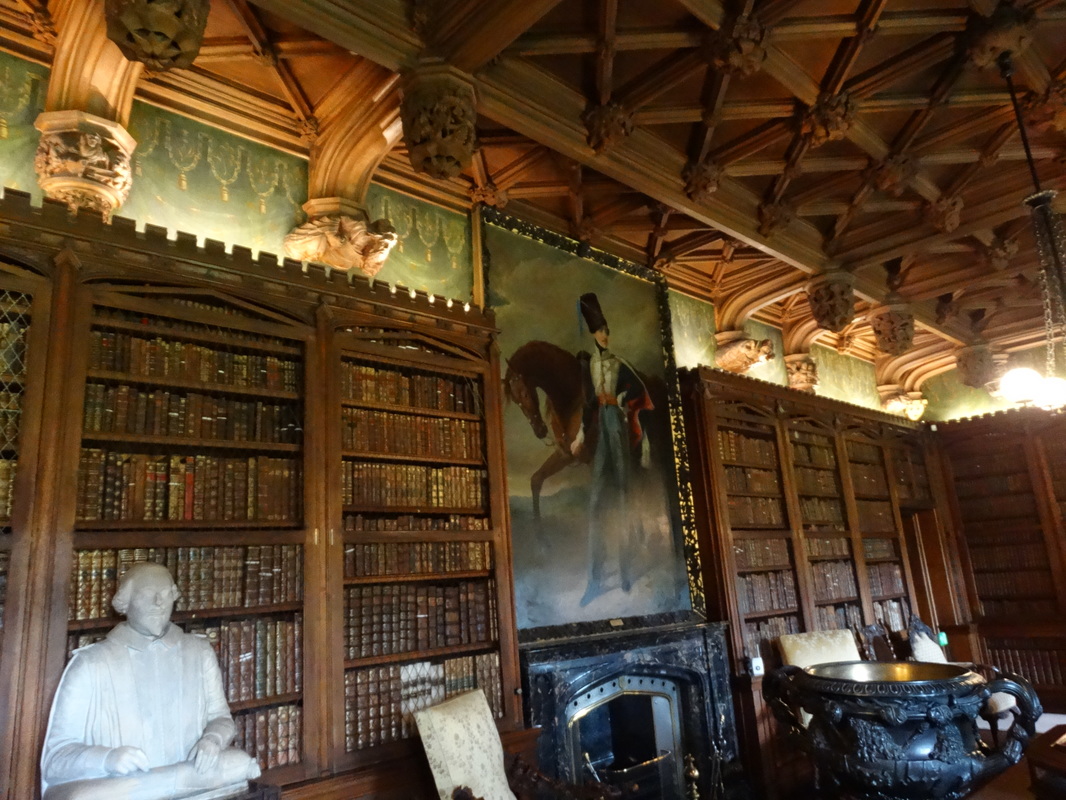
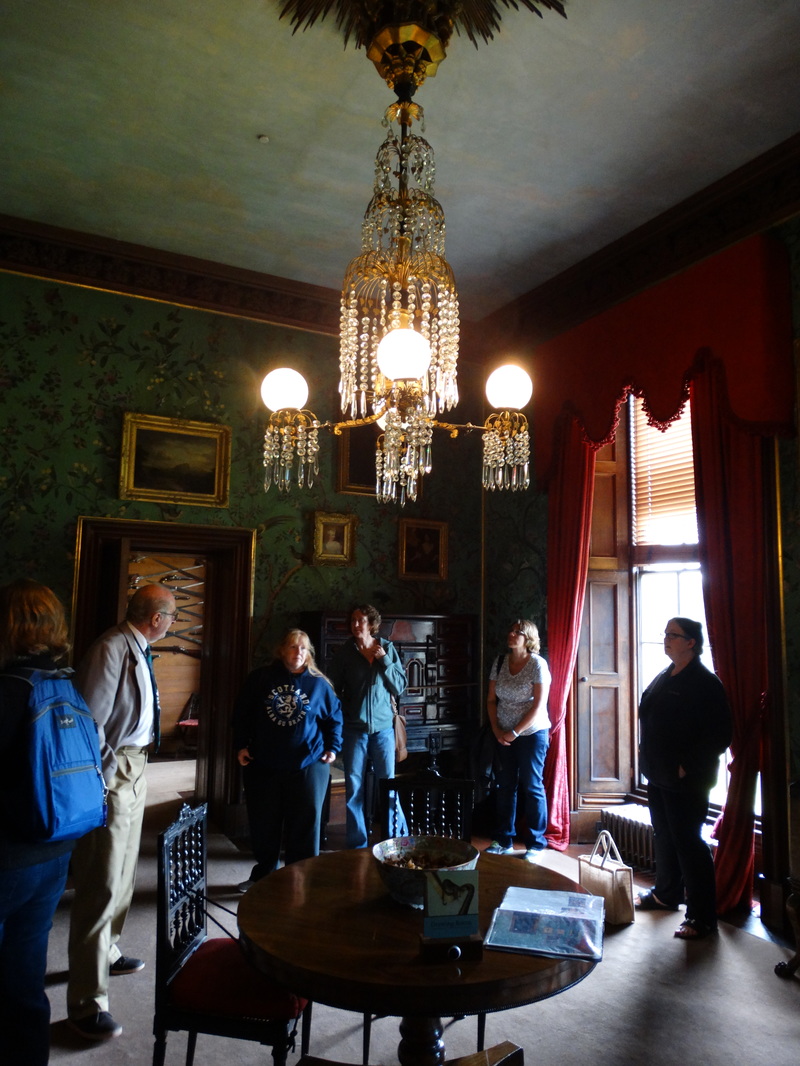
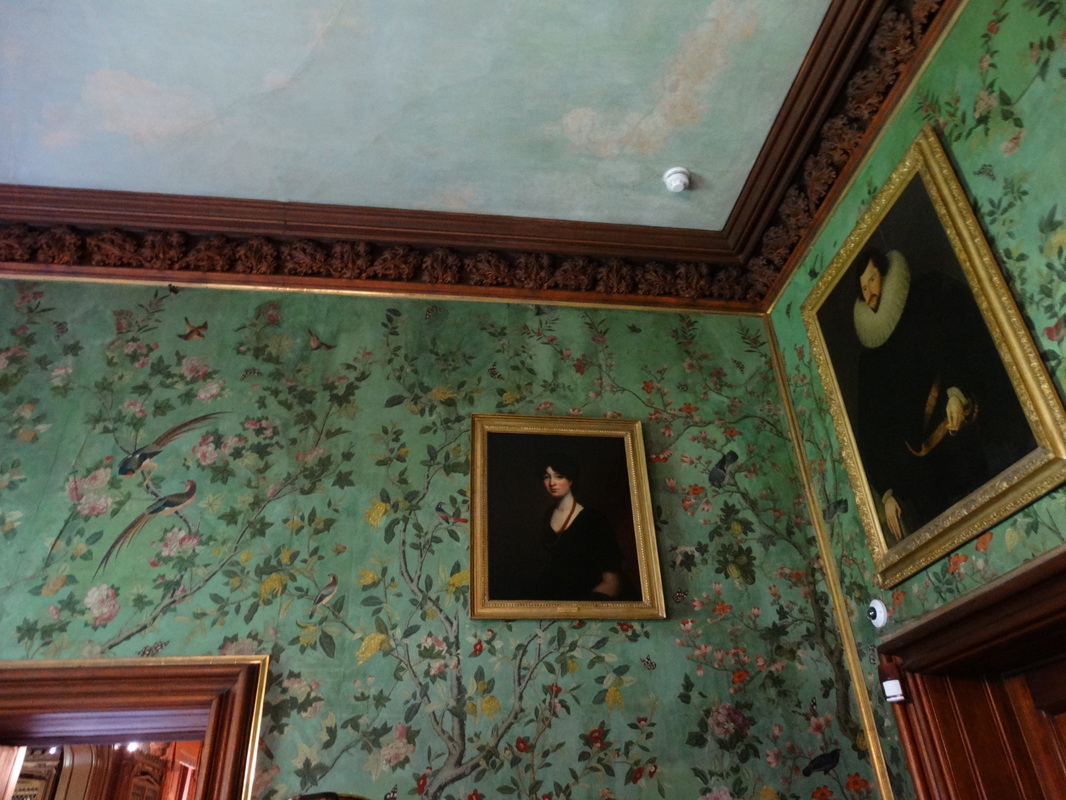
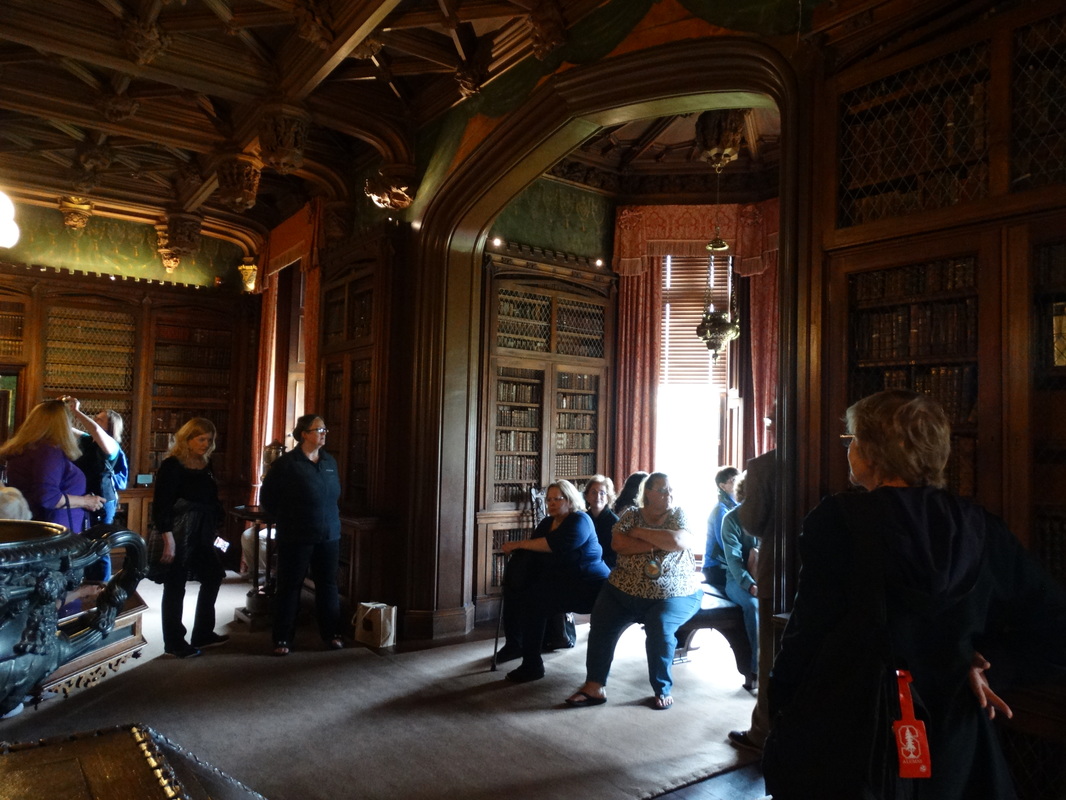 The drawing room with its lovely chandelier and imported green wallpaper.
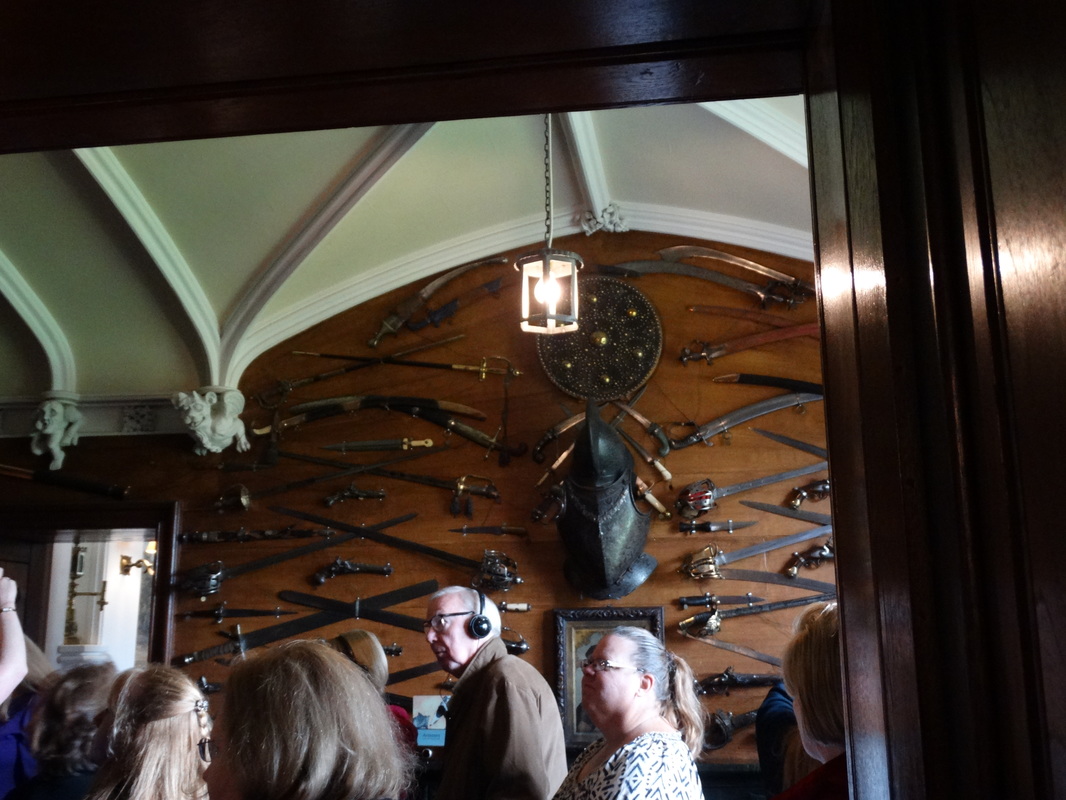
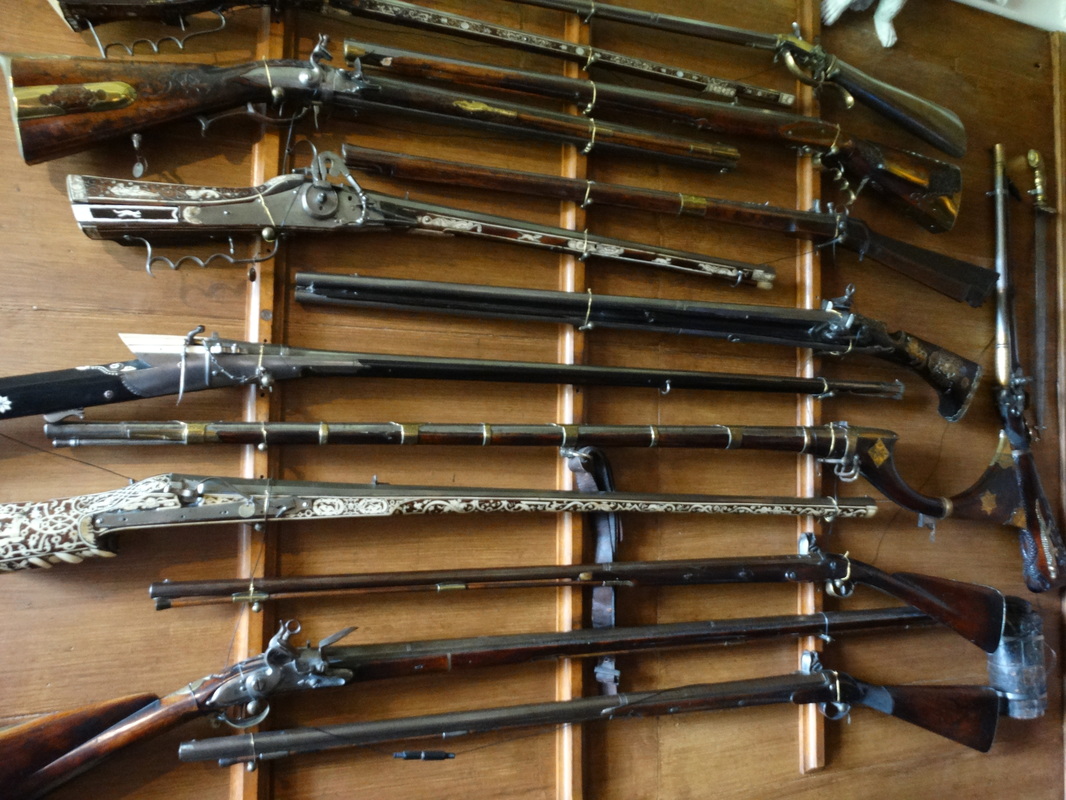
 Images from his armory. His collection was vast, with weapons from all over the world, and these are only a few items. You'll just have to visit Abbotsford for yourself to see the entire room.
An interesting note: The Brown Bess rifle was accurate to about 50 feet and the primary weapon in the Napoleonic Wars.


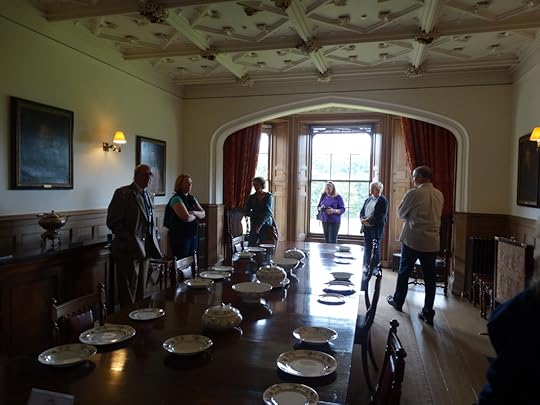
 The dining room, which was originally quite dark, was later painted white. During restoration, it was decided to keep the brighter look, though there are places on the ceiling where the paint was removed to show the original wood.
The dishes are not original to Sir Walter Scott's table. They are, however, designed with Abbotsford in mind.
 I will leave you with a few more images of Abbotsford. What do you think of the estate?
September 12, 2016
Scotland with Grace 2016 - Day 2: A few final looks at Edinburgh
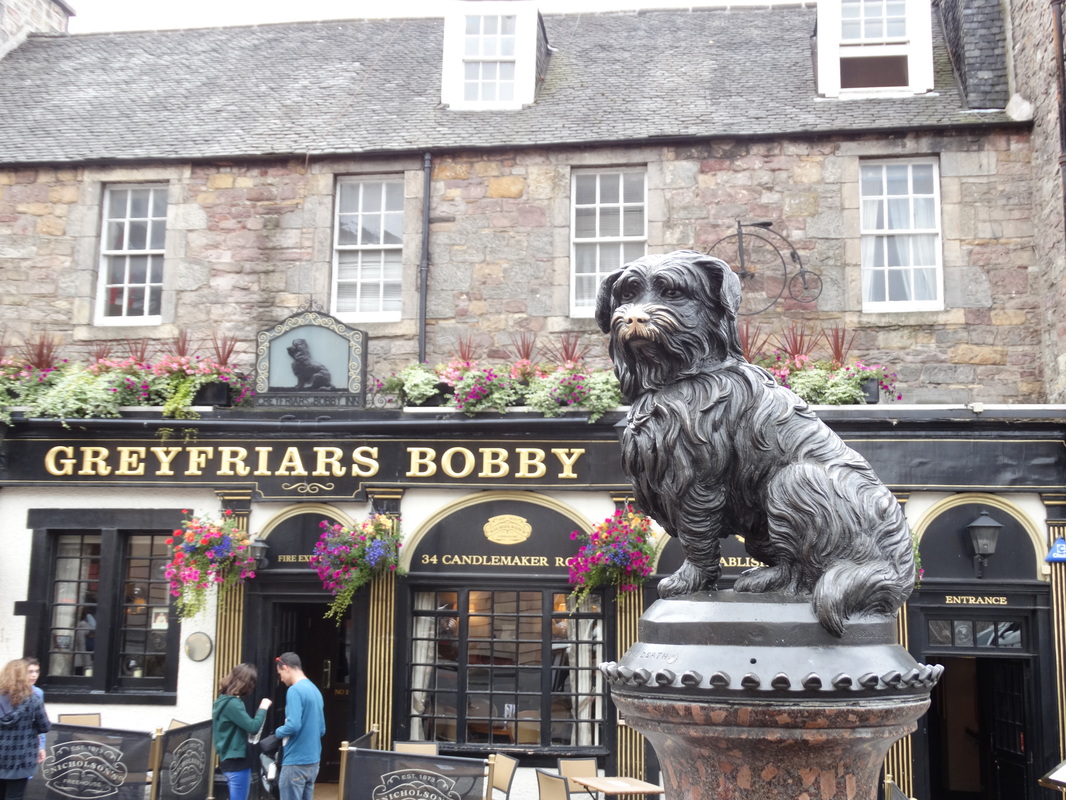
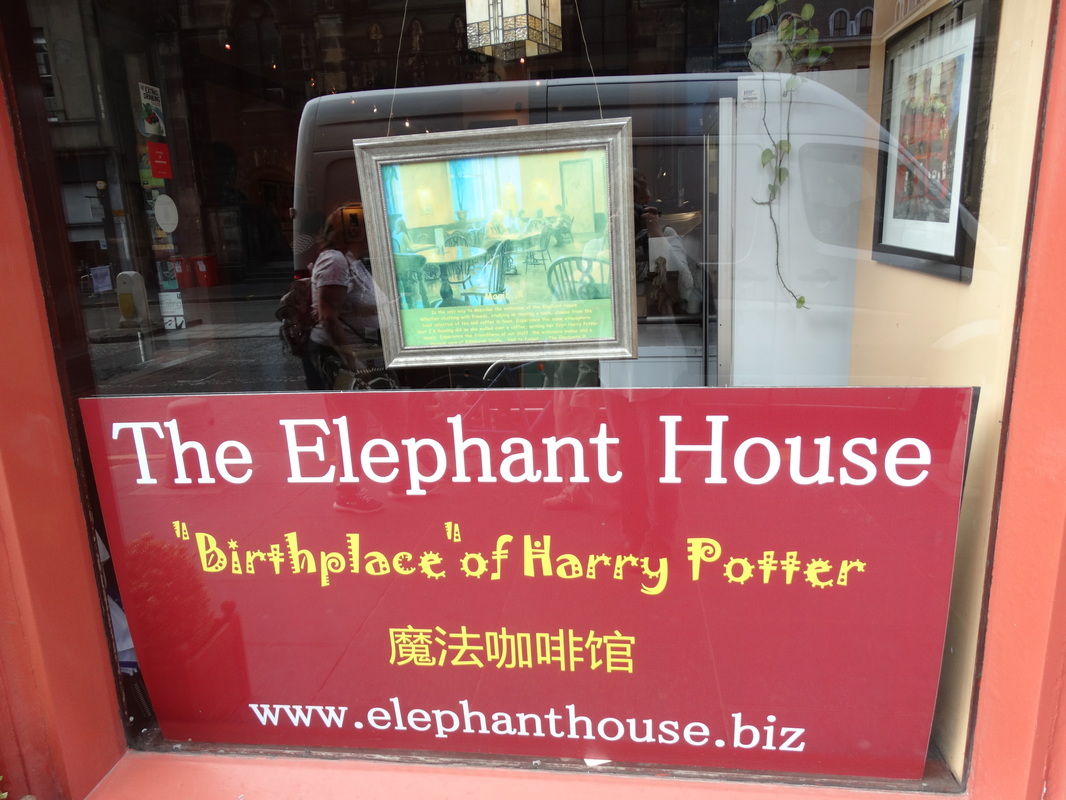
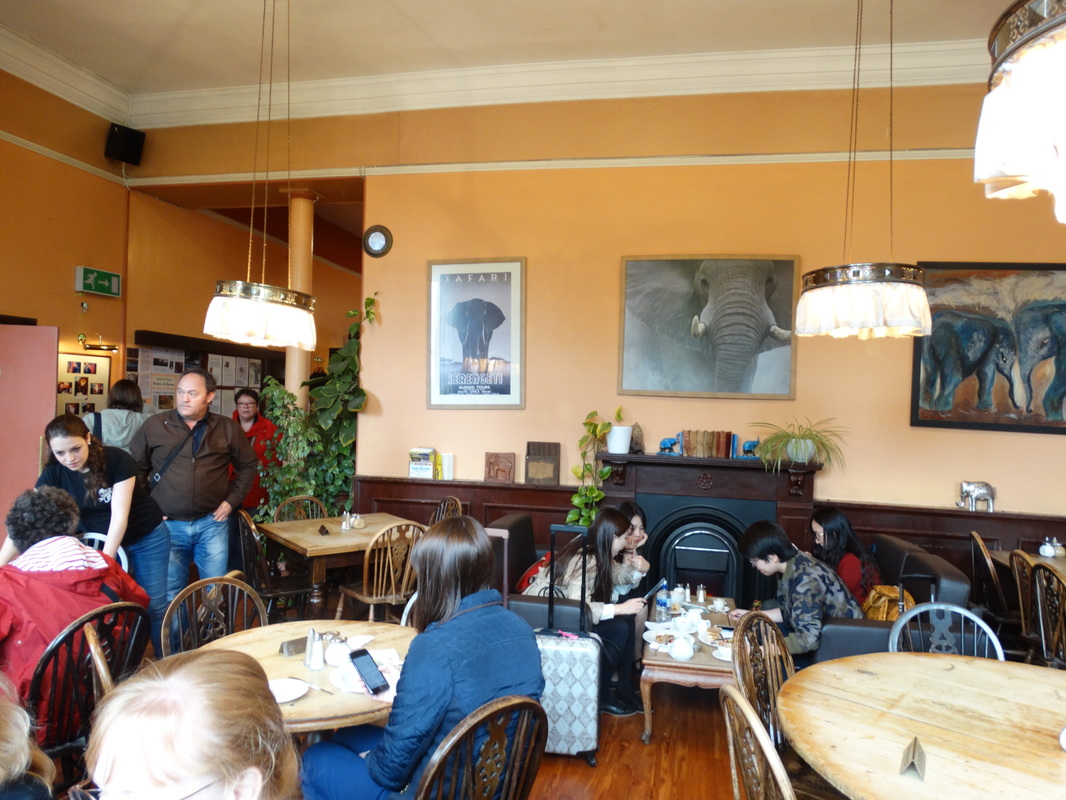
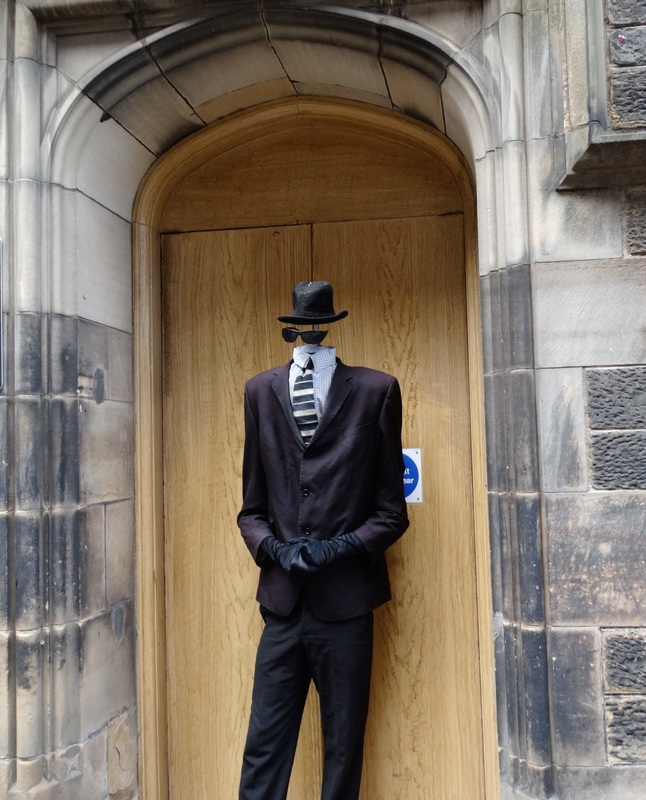
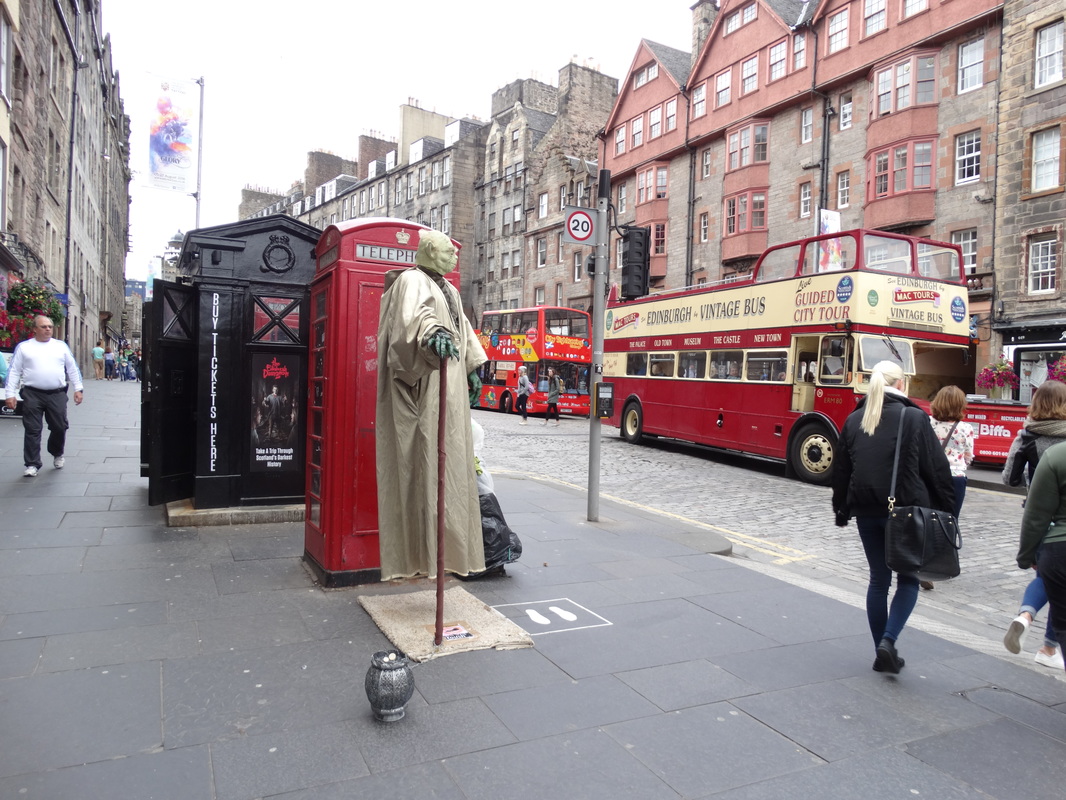
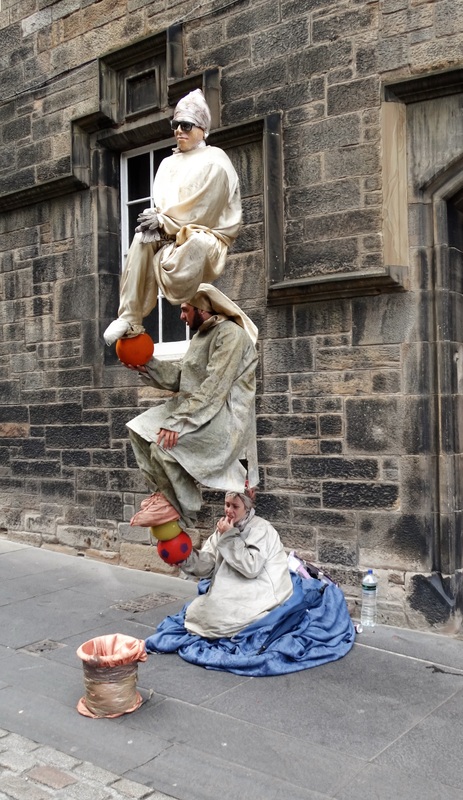
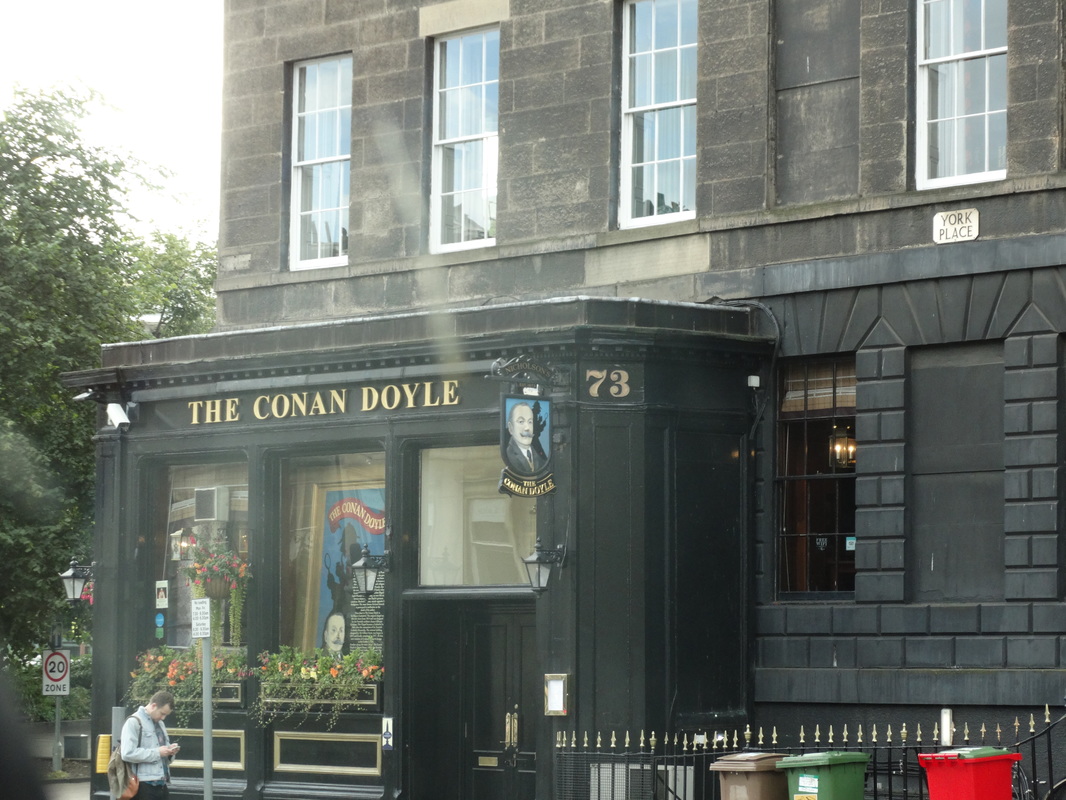
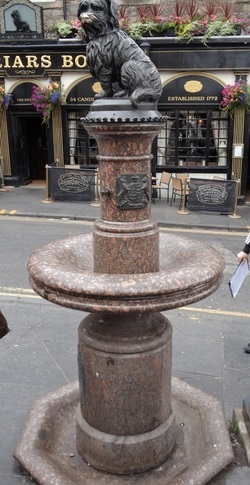 Edinburgh has its iconic images. From Greyfriar's Bobby, a wee dog credited with grieving his master long years after the man died, Edinburgh Castle on the upper end of High Street, The Elephant House where JK Rawlings spent many hours writing the Harry Potter series, to the more unusual sightings of the invisible man, Yoda, and a three-person balancing act, and places named after famous people such as Sir Arthur Conan Doyle (of whom I am a fan).
Enjoy the gallery below!

September 11, 2016
Scotland with Grace 2016 - Day 2: My moments as a falconer with an Eagle Owl
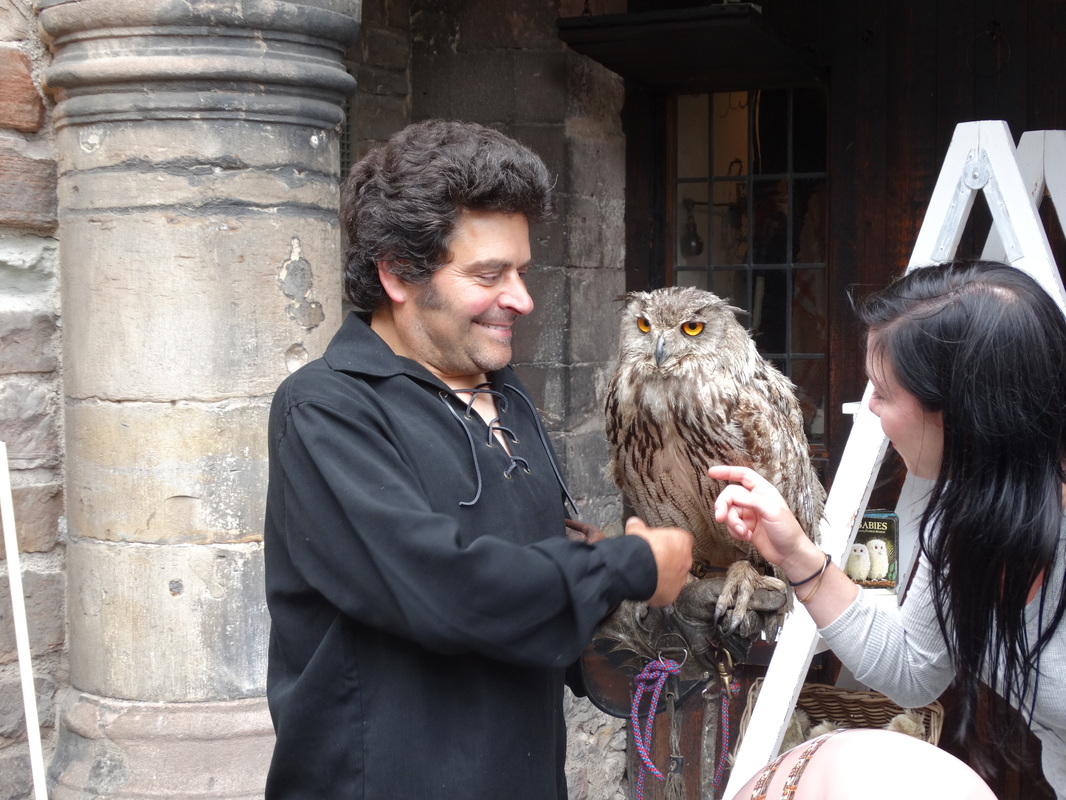
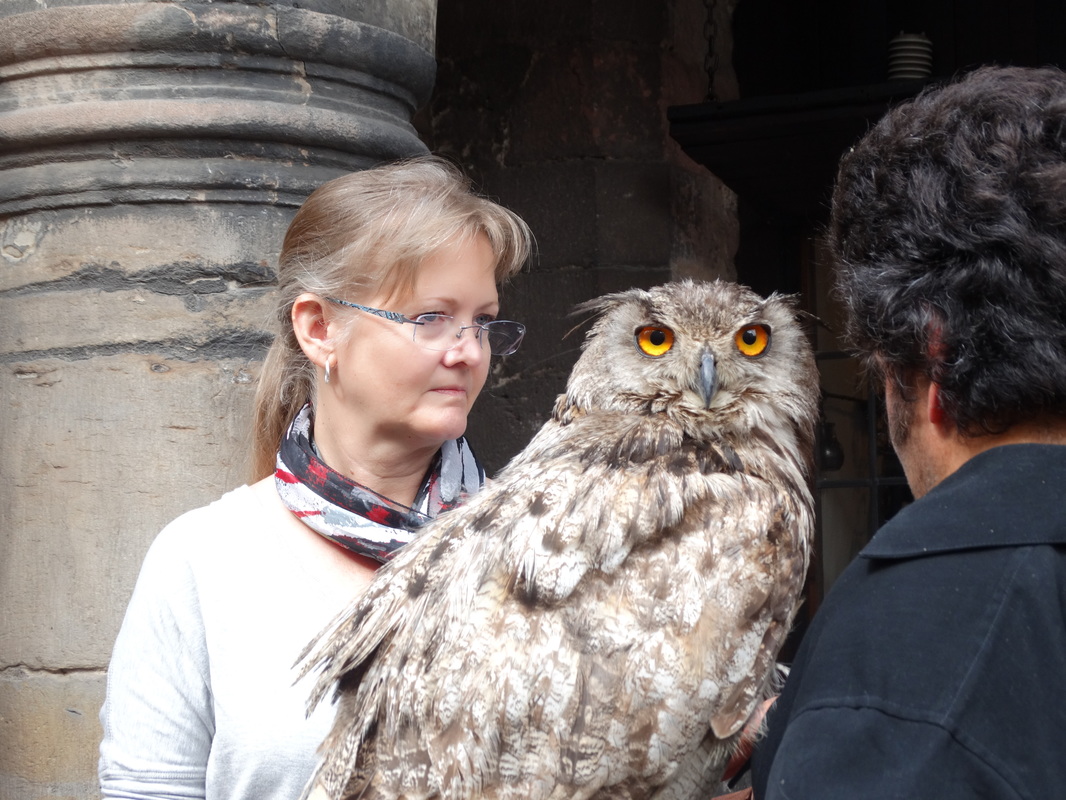
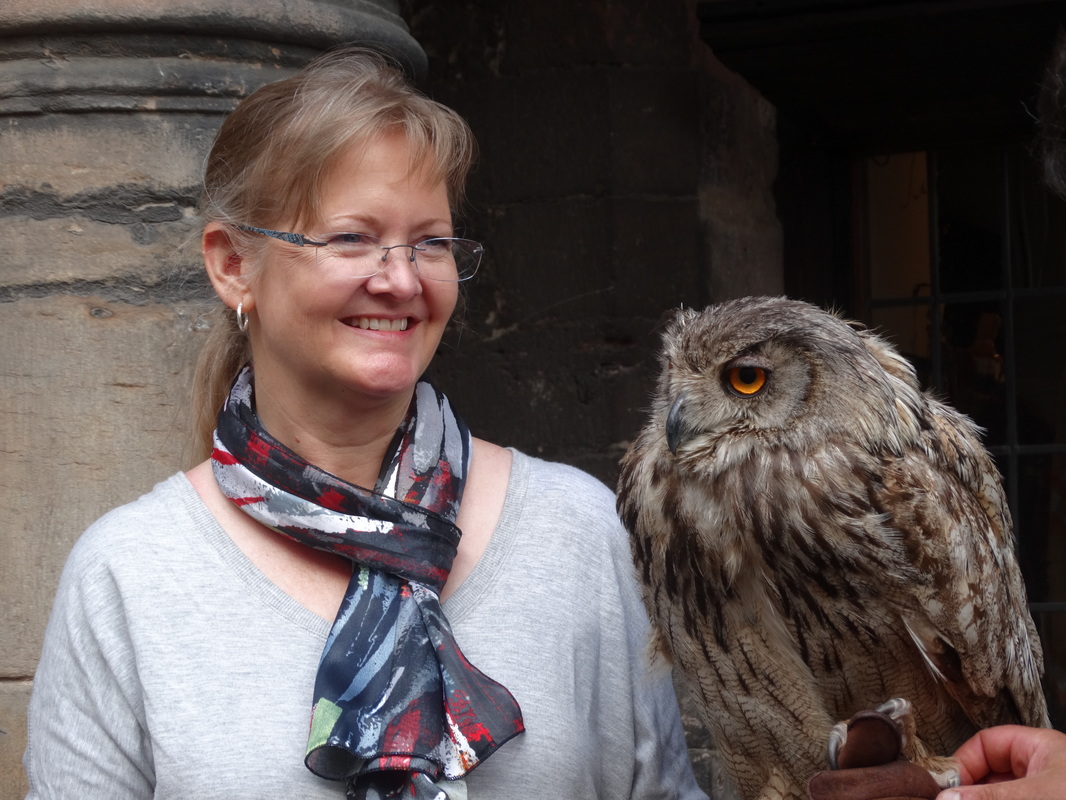
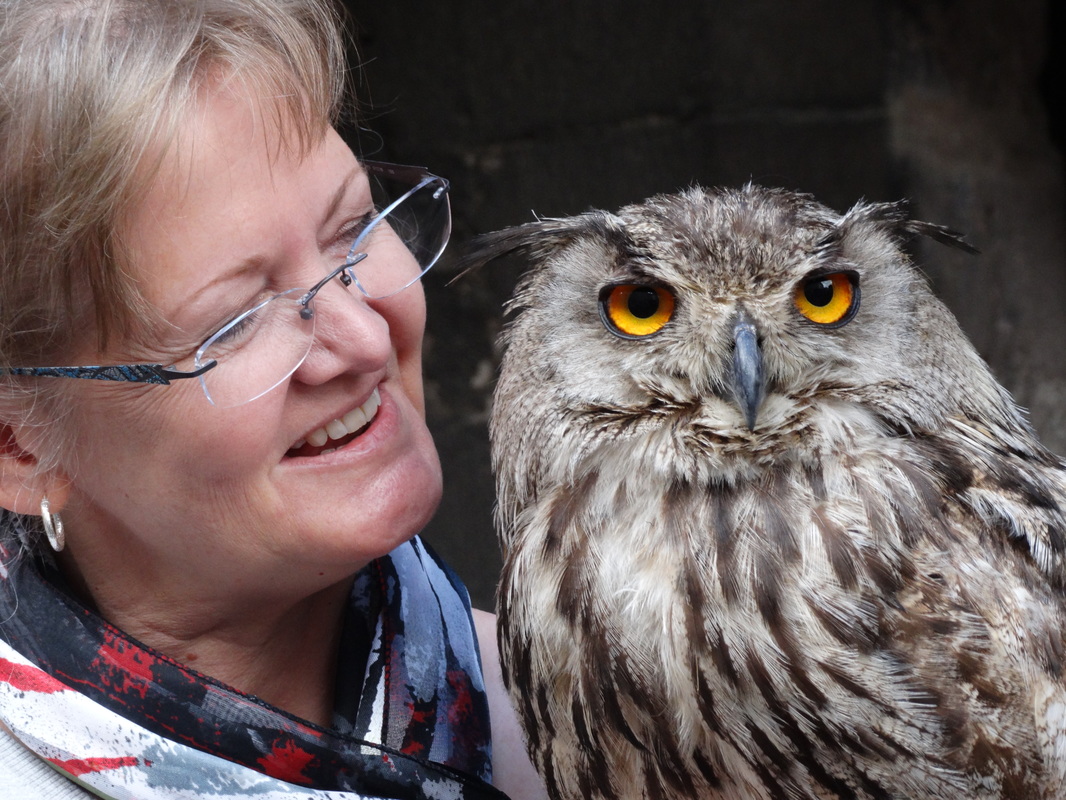
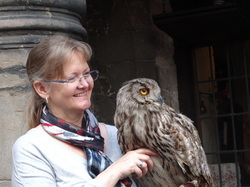 As I was leaving Gladstone Land, I came across a falconer on the street. He was answering questions about his lovely owl (named Hazel), and for a wee fee, I was able to hold Hazel.
Surprisingly, this bird does not hunt mere rodents and hares, but is also known to dine on pheasants, foxes and small deer.
Her body beneath the thick, soft feathers, was quite sturdy, and her talons and beak were more than capable of tearing into prey. (I kept careful watch on my nose and fingers, though Hazel was very unconcerned about my delicate appendages and quite tame as she perched on my arm).
As we were expected at Edinburgh Castle in time for the one o'clock firing of the canon and a slightly late lunch, I did not spend as much time with the owl as I would have liked, but this was a fascinating experience. How close have you ever been to a bird of prey?
September 10, 2016
Scotland with Grace 2016 - Day 2
 Day 2: Up bright and early for a hike through Edinburgh. Sounds fun- and it was- but it was also quite informative.
Here, Susie takes a moment to show us Edinburgh's layout. It is a very old city with the castle at the top of an ancient volcanic mound that fell over. The city was built down its slope and is why the streets are rather steep in places.
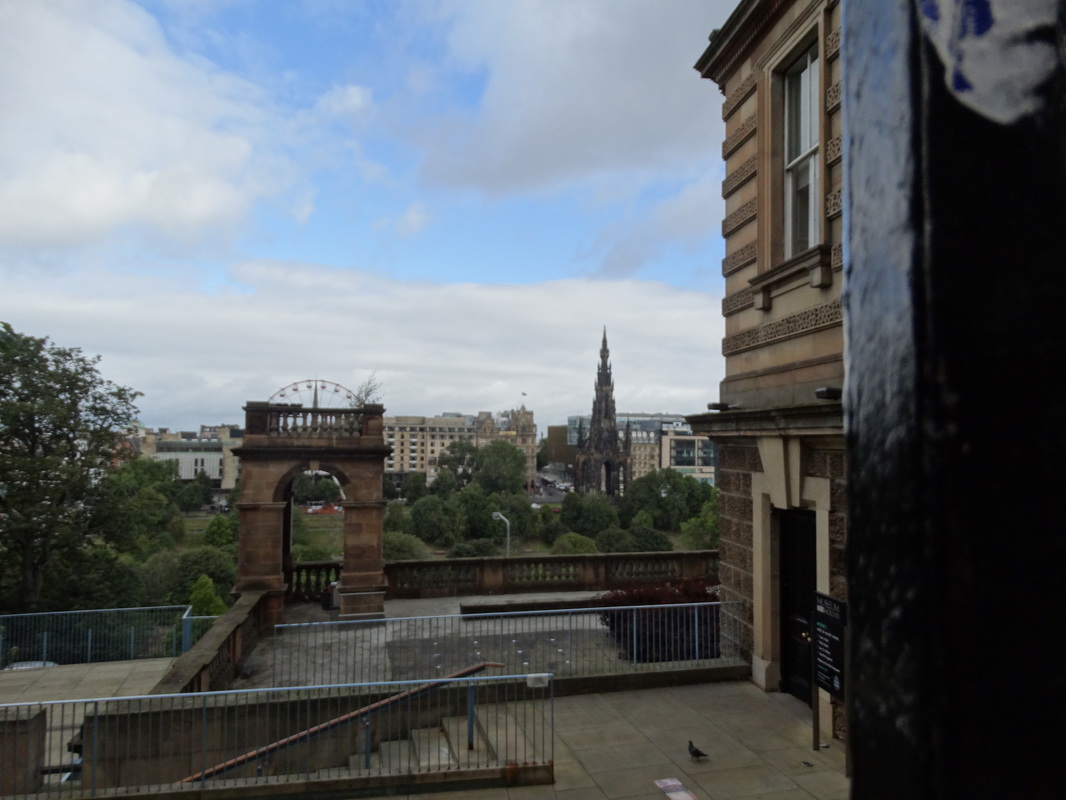
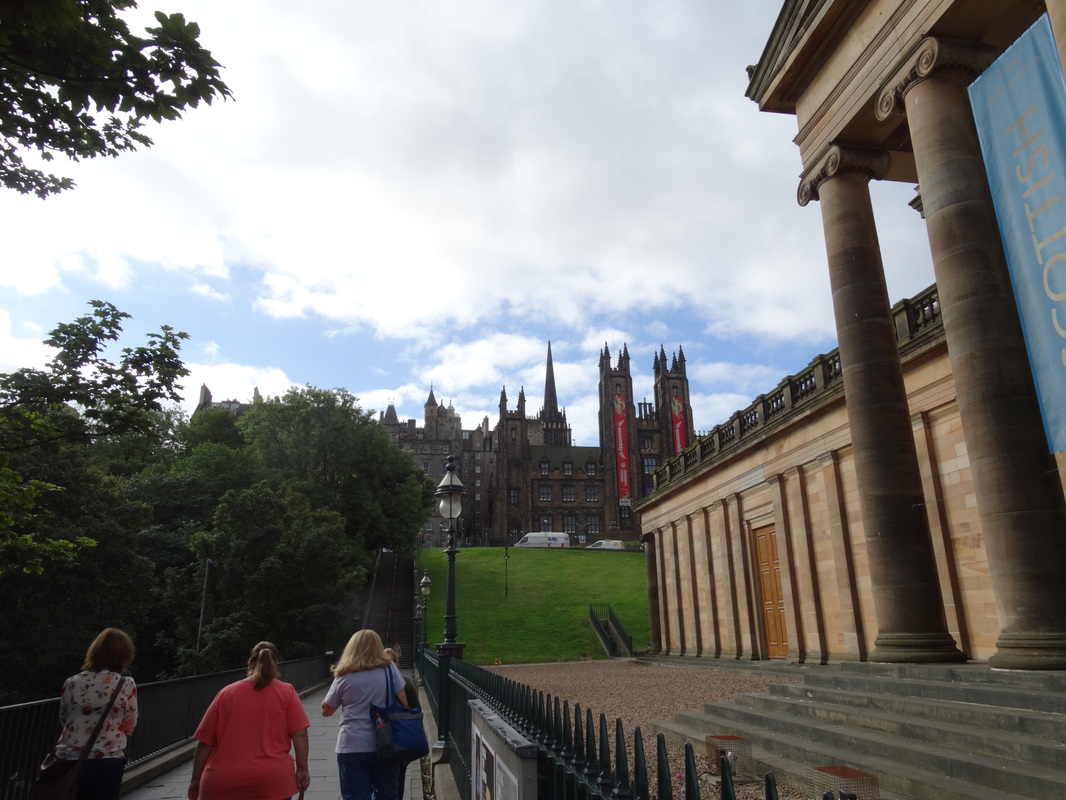

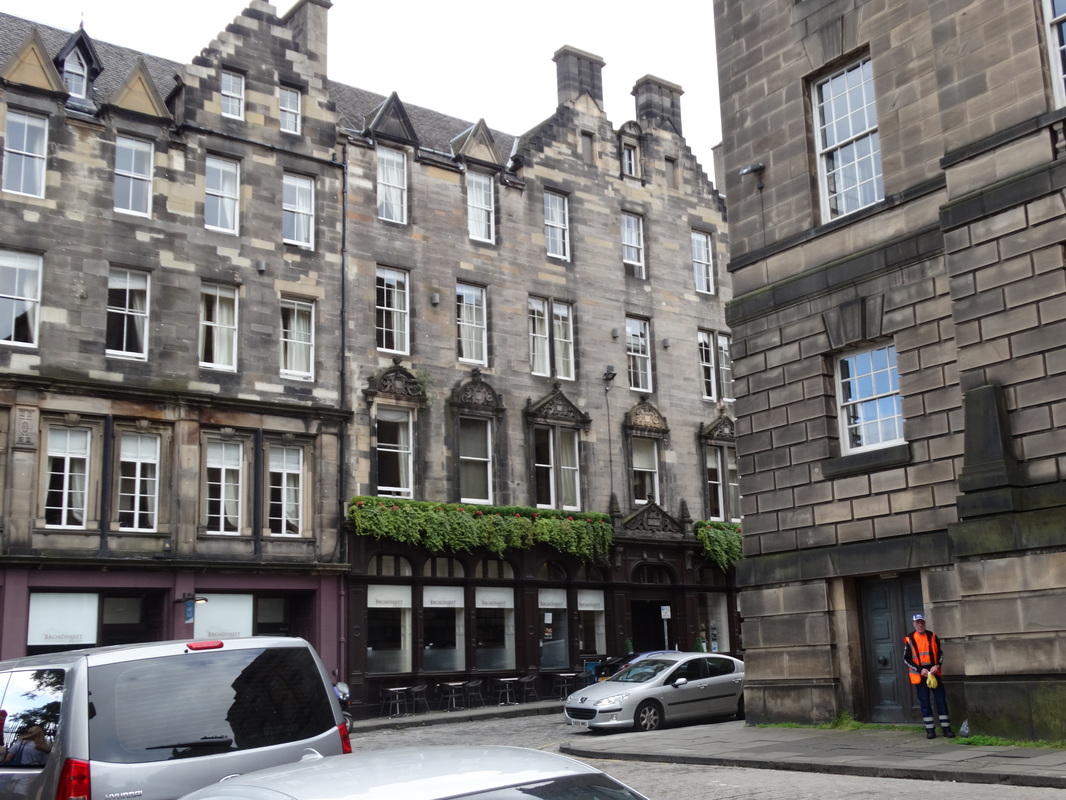
 This is where our journey led. A narrow street, or close, in the old town, dating to medieval times. Since that is my era of interest, I was thrilled! No photos were allowed inside, but I'll try to re-create the tour.
Mary King's Close was the second widest street in Edinburgh, though it is quite narrow by even modest standards. Its buildings were perhaps 8-12 stories high, which allowed little or no light into the lower levels. Rooms for the poorer inhabitants had a ceiling approximately 6 feet high, and 2-3 families (12-14 people) lived in each single-room home. People typically slept on the floor, with perhaps a bit of straw. There were no fireplaces in the dwellings, though some undoubtedly lit fires in the doorways, or used a communal fire nearby to cook their meals.
For light, they used oil lamps burning fish oil or animal fat. This, combined with the aromas of unwashed people and the dreadful sanitation, caused quite a stench. Buckets of human refuse were only allowed to be emptied twice per day - at 7am and 10pm. Shouts of 'Garde loo!' could be heard in the streets as a warning (rather like shouting 'fore' in golf) before the buckets were emptied. Out the window.
Wealthier people inhabited more than one room, and these often boasted carved wooden wall panels as well as carved fireplaces. They would have been on a higher level to avoid the smells and noise at the street. Many wore attachments clipped to the bottom of their shoes to keep them out of the muck on the streets.
Within the close were also byres for the cattle, sheep and goats, perhaps as many as 20-35 cows in one byre. The animals were tied to the walls and did not roam the close.
It's not difficult to imagine the living conditions bred disease among the inhabitants. Both the pneumonic and bubonic plagues spread like wildfire through the close and others like it. Those with pneumonic plague developed a cough that grew more and more violent until their insides burst from the force. They also developed symptoms of blackened and rotting extremities.
Those with bubonic (so named for the bubbles or blisters on the skin) had a bit better survival rate, though the treatment was terrifying. Blisters were lanced, drained, cleaned, then seared with a red-hot poker. Without the benefit of sedation or much in the way of pain management afterwards.
Doctors wore a black leather cloak to keep the plague from touching his clothing, and a beak-like mask with sweet herbs packed in the front of it to breathe through, hoping to keep the miasmas thought to spread the plague from reaching him. Of course, this did not help as the bubonic plague is spread by fleas, not through the air.
Many people were abandoned by their families if they caught the plague.
Once a patient was over the critical stage, he was released from quarantine and sent outside the city for about 6 weeks to recover. Cleaners would come in and burn his house to remove the miasmas, which only succeeded in driving the rats (and fleas) to the next house.
A white flag hanging from a window alerted the doctor (and passing people) that sickness was in the house.
By 1687 (post-plague) Edinburgh was growing! A mixture of water, limestone and horsehair was used to plaster walls and ceilings. Wall paper was taxed, so many people decorated with block painting instead. Some lovely evidence of this artwork was still visible.
Windows were also taxed, so the upper part of a window might have glass while the lower only had shutters.
By 1766 there were over 30 thousand people living in 'old' Edinburgh. Designers were consulted to build 'new' Edinburgh, resulting in wider streets, larger houses, and gardens.

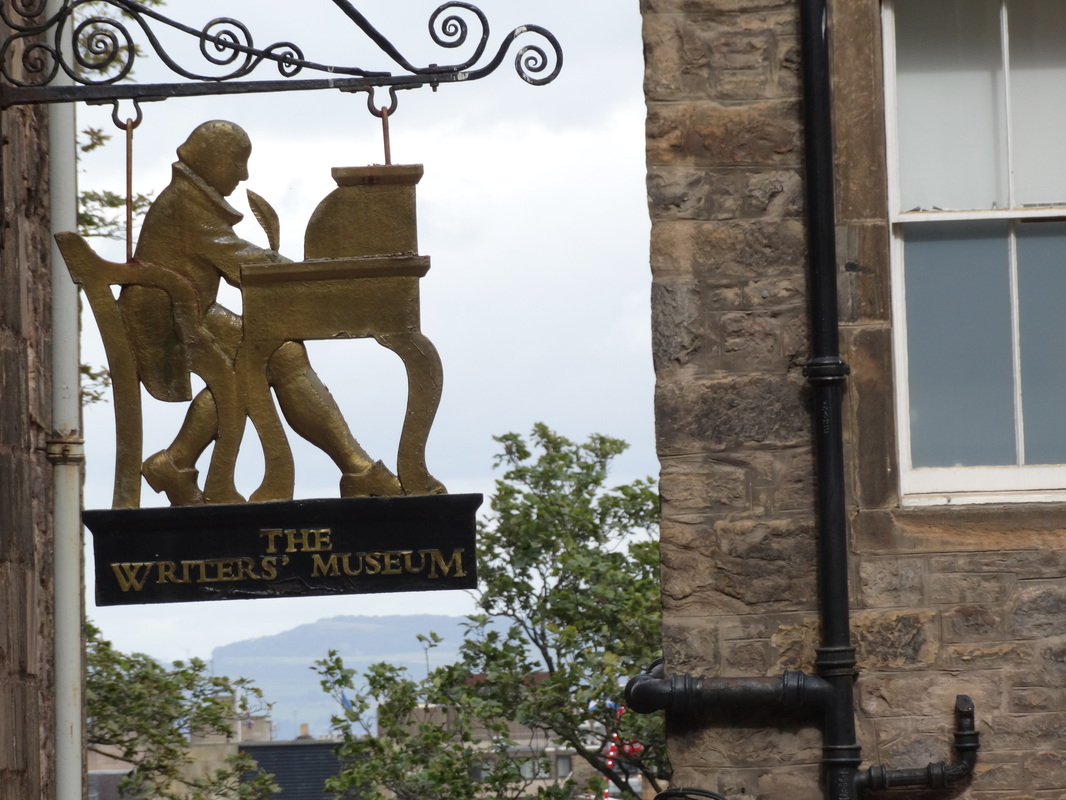
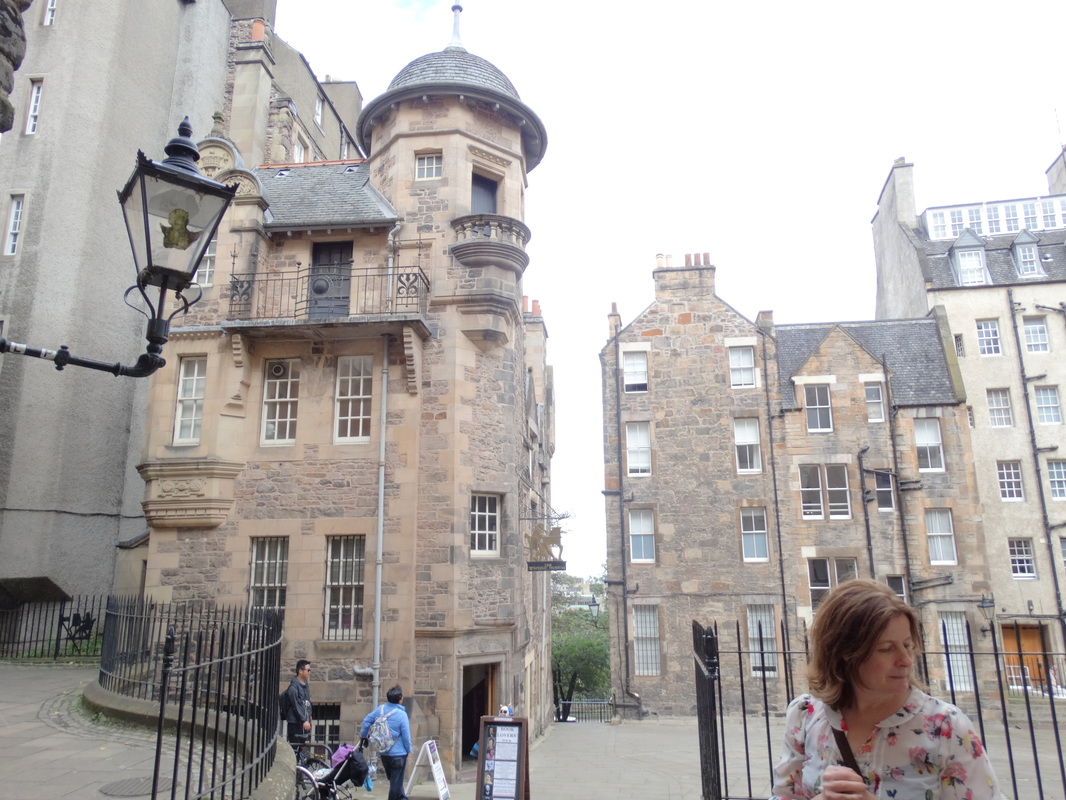
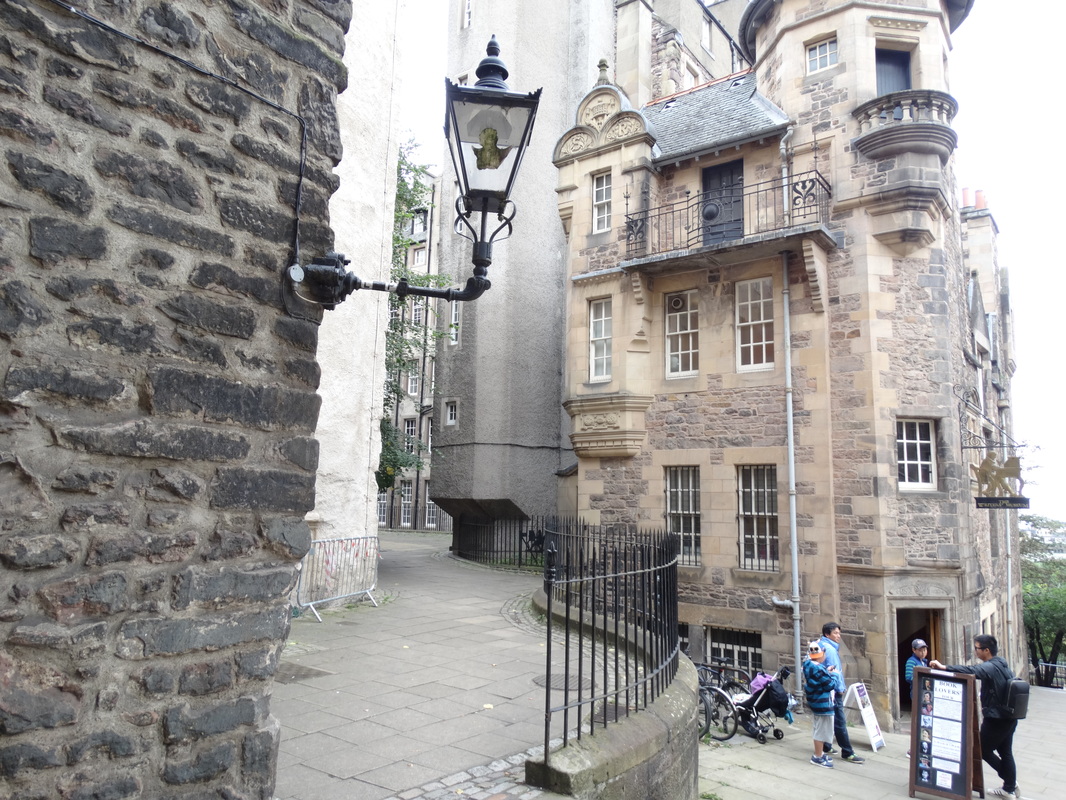
In an area known as Gladston's Land, the dense networks of closes were a distinct contrast to the elegant streets of New Town. Here families often inhabited multiple rooms, with block painting on stone walls and beamed ceilings. They had fireplaces-sometimes in more than one room- and bed steads for sleeping. A curious note: beds were quite short. Granted, the people were a bit shorter than 21st century men and women, but the reason for the abbreviated beds was not simply a lack of stature. People slept in a semi-reclining position. Why? There was a prevailing belief that if you slept flat on your back, the devil might think you were dead and take you away whilst you slept. Also, from the coal smoke and other respiratory ailments, people often had enough congestion they felt as though they were dying when they slept flat on their back, and were more comfortable sleeping partially sitting up..
The poorer people lived on the upper floors, while shops were on the ground floors. The first storey was prime real estate where wealthier people lived. Not too many stairs to climb, yet out of the flow of traffic and muck.
I'll leave you with a few images from the Georgian period.
The price of glass decreased, and entire windows were now glazed.
Most rooms had wood paneling that was often painted.
Oil lamps were no longer in much use- replaced by wax candles
China, vases (Dutch Delft ware)
Furniture was of imported woods.
A spinet (keyboard instrument) was in many drawing rooms
Tea Time was established
Fireplaces in many rooms-- as were fire screens
Clocks are now seen in homes.
Smallpox left its mark on victims' faces, and thick white makeup would be applied-- which would melt off the face if it got too hot. From this we get the term to 'lose face'.
I love hearing where phrases originate. Do you have any favorites?
August 28, 2016
Scotland with Grace 2016 - Day 1
 Note: Due to lack of internet, these posts are going live after returning from my trip :-)
Day 1. A bit unsettling to know how long this day has been. It started Monday 6am with normal morning routine, finishing packing, getting to the airport and such. Here it is, a bit more than 24 hrs later and I've been to Chicago, Frankfurt, and finally Edinburgh. (Which was not the original plan--though it worked--and with very little sleep)
This sweetie kept me entertained on the hop from Frankfurt to Edinburgh. She speaks Chinese and English with a charming Scots accent.

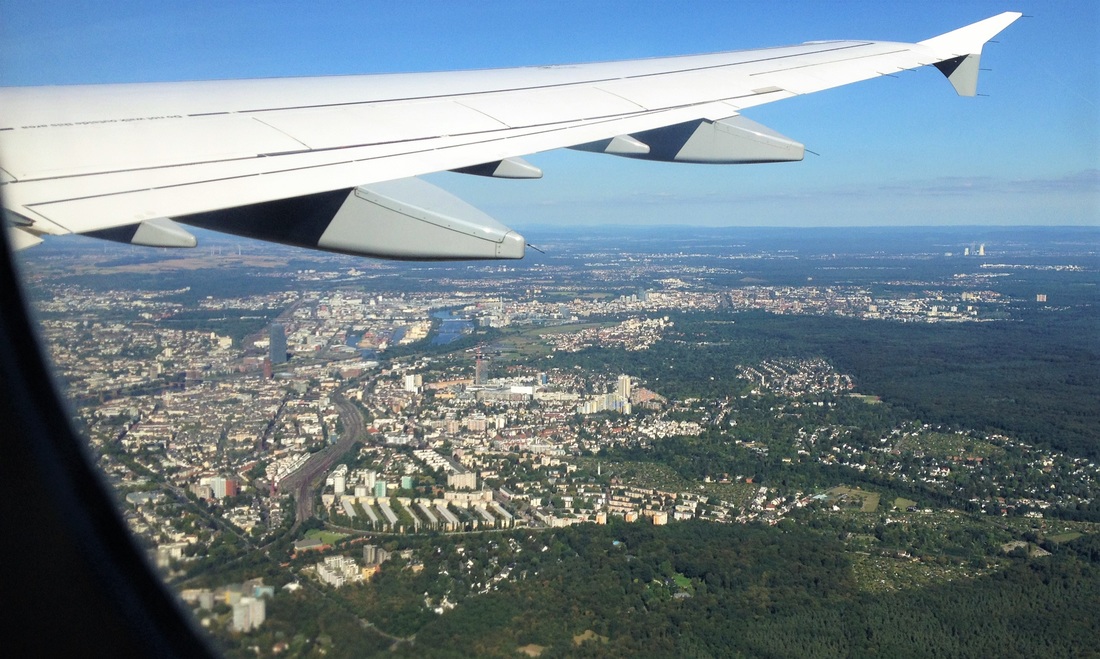
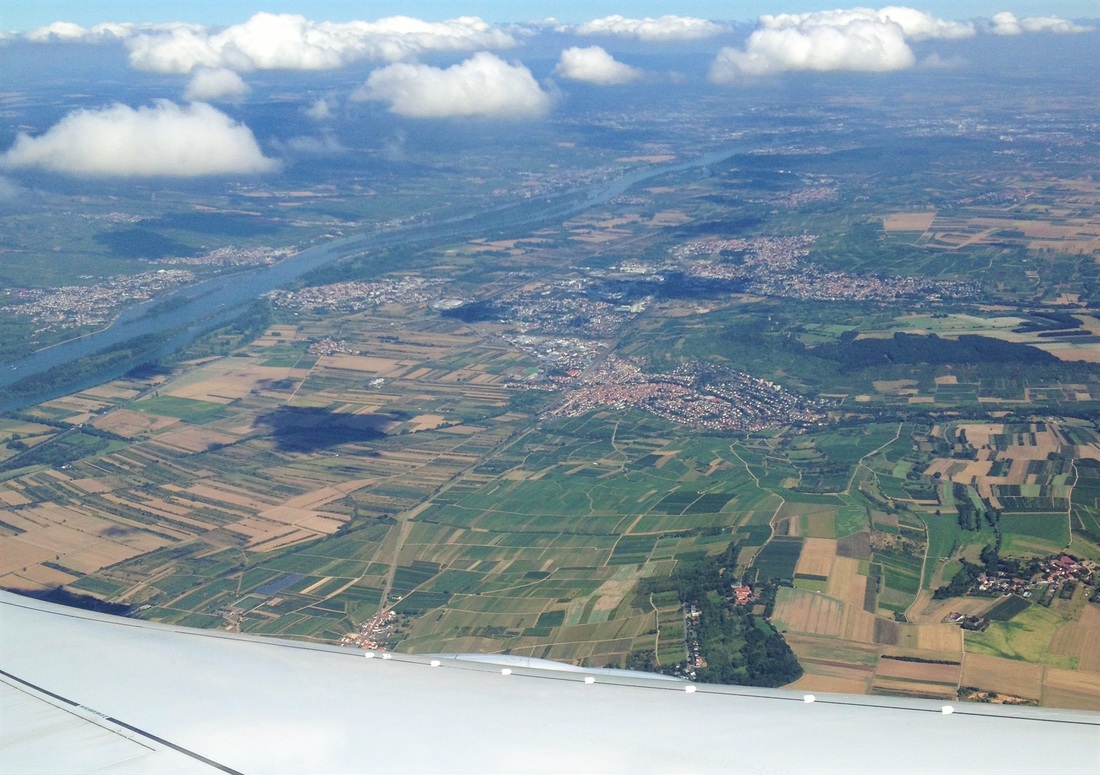 I would have enjoyed the Frankfurt airport a bit more had I not arrived late morning after leaving Chicago after midnight. The original plan was to fly direct from Chicago to Edinburgh, arriving in Scotland a bit after 7am. But bad weather grounded my originating flight to Chicago, and all the dominoes fell in scattered disarray. A kind young man rebooked me ASAP (I could have spent the next 24 hours in Chicago O'Hare airport waiting for the next direct flight to Edinburgh!), giving me a bit of a detour over Europe. The photos above are of the area near Frankfurt as the plane took off for Edinburgh.
  The Edinburgh Airport! At last! By the time I realized my luggage had not made the trip with me, discussed my plight with several kind people (which got the ball rolling to find it, but didn't come up with it magically from some back room), and got a taxi, it was late evening. However, the hotel had set a plate aside for me and I was able to relax amid my new friends with a glass of wine and many offers of help from their own suitcases. How kind!!
I brought a complete change of clothing with me as well as all my general necessities, so I should be fine for a day or so.
August 7, 2016
Medieval Monday- Celebrating Nature with Jenna Jaxon
 Jenna Jaxon gives us a knight with the knowledge of the language of flowers and his wife who longs for the language of love in her book, Time Enough to Love.
EXCERPT:
Snipping the stems of a sweetly-scented pale lavender Apothecary’s rose, she started when a shadow fell over the flower in her hand. She looked up to find Thomas standing before her, smiling at her basketful of blooms.
“You wish to take a part of Knowlton’s Keep with us when we leave, my lady?”
Her answering smile masked the strange thumping that became the beat of her heart. “I hope you approve, my lord. I would dry the petals and use them to remind us of home while we journey so far from it.”
“Of course, my sweet. Whate’er your heart desires is yours.” He took a dark pink blossom from her and held it to his nose. “Sweet.” The warm brown eyes held her blue ones. “Thank you.”
Alyse stared at him, uncertain what he meant. “I beg pardon, my lord?”
He placed the rose in her basket. “’Tis what the dark pink color means. In the language of flowers. Thank you. At least,” he grinned at her, “according to my mother that is what it means. I am not sure how she came by this knowledge.”
Curious idea. “What do the others mean?”
He drew her arm through his and led her to a bush with snowy-white double blooms. “This is the Cheshire rose. The white blooms stand for purity.”
Alyse bent to smell the delicate scent. “I suppose that would be expected.”
Thomas took her shears and snipped the bloom, adding it to her basket. “Purity, for a pure heart.”
Beside the Cheshire grew a large bush of clear pink blooms. “And this?” She could not contain her eagerness. The names and meanings of the roses had stirred up the banked embers in her soul. Or perhaps the nearness of Thomas’s masculine body excited other, more passionate yearnings. Suddenly, the feel of his arm in hers filled her senses.
What was happening? Why this sudden lift in spirits?
She had been more melancholy of late, ever since Thomas had abandoned her bed. But it made no sense.
Did she not still love Geoffrey, heart and soul?
The thought sobered her. The sharp pang of sorrow that always stabbed her heart at the thought of him had dulled. Was she coming to regard Thomas as her husband and long for him as such?
“This is my favorite.” He clipped another pink bloom and held it under her nose. “What do you smell?”
Puzzled, she sniffed the showy pink blossom, but he moved the stem and leaves for her to smell instead. A wonderful scent assailed her, but one she did not associate with roses.
“Apples?”
A smile lit his face as he placed an entire stem of the flowers, leaves and all, into her basket.
“But what is it called?”
“Eglantine or Sweet Briar Rose.” He looked down at his thumb where a fat drop of blood welled. “The latter is probably the more apt name.” He smiled ruefully.
Seeing his glance, she took his hand and, without thinking, raised the injured thumb to her lips. She gently kissed the drop away, and he gasped. Their gazes met, his frankly searching hers for an answer.
BLURB FOR TIME ENOUGH TO LOVE
When Lady Alyse de Courcy is betrothed to Sir Geoffrey Longford, she has no choice but to make the best of a bad bargain. The hulking knight is far from her ideal man, and although he does possess some wit and charm, he is no match for the sinfully sensual man she secretly admires, Thomas, Earl of Braeton, her betrothed’s best friend.
From the first, Sir Geoffrey finds himself smitten by Lady Alyse, and, despite her infatuation with his friend, vows to win her love. When Geoffrey puts his mind to wooing Alyse, he is delighted to find her succumbing to his seduction. But when cruel circumstances separate them, Geoffrey must watch helplessly as Thomas steps in to protect Alyse—and falls in love with her himself.
As the three courtiers accompany Princess Joanna to her wedding in Spain, they run headlong into the Black Plague. With her world plunged into chaos, Alyse struggles with her feelings for both the men she loves. But which love will survive?
BUY LINK:
AMAZON: http://www.amazon.com/gp/product/B01ACF9L98?*Version*=1&*entries*=0
August 6, 2016
New Project!!
 I'm so excited to announce my latest project! I was invited to participate in Kathryn le Veque's relaunch of her World of De Wolfe Pack!
My book, The Saint, pairs William de Wolfe's nephew, Geoffrey de Wylde, known as The Saint, with Scottish lass Marsaili de Ville, on the run from a dark past.
The books are scheduled to release in Amazon's Kindle World on September 6!
July 31, 2016
Medieval Monday Celebrates Nature with Barbara Bettis
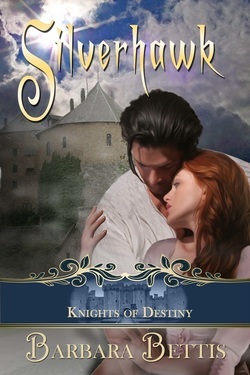 A storm frightens Lady Emelin's horse and conjures a monster in Barbara Bettis' tale, Silverhawk.
EXCERPT:
(Lady Emelin has chosen a stormy night to launch an escape from her tempting kidnapper, Sir Giles)
She shivered against the increasing cold and hunched forward to search the path ahead. Why hadn’t she thought to bring one of the blankets? Clouds scudded across the sky. Still she urged the horse onward. She had come too far to turn back now.
Had Silverhawk regained consciousness? Discovered her absence? Imagine the surprise, when he awoke alone. She’d shown him she was not helpless. Satisfaction lightened the oppression she was feeling—from the approaching storm; that had to explain the growing dread.
Then, carried on bursts of wind, came voices. At last. She’d found them. She straightened, the discomfort of the cold and riding bareback forgotten as she urged the mare forward. Onward down the trail she rode. Once she called out, “Lord Osbert, Garley, I’m here.” No answer came.
In the distance, thunder rumbled, and white light knifed across the ominous sky. Please, not rain. Surely the good Lord wouldn’t be so cruel. Her throat constricted. She gulped. She would not panic.
Concentrate on deep breaths. If only her heart would stop clamoring to get out. A cold, fat drop struck, followed by two more, a dozen. Then the downpour hit.
A jagged streak snapped in front of her. A rolling crash shook the earth. The mare tossed its head, danced aside. Emelin murmured, petted the animal’s neck in an attempt to calm it. But at the next sharp crack, it reared, and shot down the path.
Fisting the reins, she clung to its mane as the mount veered through the underbrush, away from the sharp zigzags of light. Branches struck her face, snatched at her skirts, nearly dragged her off. How she managed to keep her seat, she didn’t know. All she could think was, Don’t fall. Don’t fall. Don’t fall.
At last the mare slowed. Emelin squinted through wet eyes, reached out to knock aside a soggy branch, dripping leaves. Finally, the animal stopped, blowing hard, trembling. Emelin shook.
Breath came in gasps. Her mind could not form a coherent thought as cold wetness dripped from her hair to ooze down her back. The frightened flight of the horse had carried her far from the path. She was hopelessly lost.
All around, wind-whipped shadows dipped, lunged forward, then back. Another spear of lightning wrenched into a nearby tree. Her shout of surprise was swallowed in the earth-shaking
roar that followed. The winded mare only shook harder.
Could they survive this nightmare?
Then through the rain-drenched night a huge black object hurtled up, rearing as it just missed her. Emelin screamed.
The monster swung around. Wet black tentacles wrapped around her, dragged her off the exhausted mare. She tried to struggle, but the iron hold wouldn’t allow it.
At last her feet touched ground, and the tentacles embraced her until she couldn’t breathe. It took a moment for the roar to dissolve into understandable words. “Are you hurt? Are you hurt? Tell me if you’re hurt.”
Silverhawk.
Her arms flew around his waist and she nodded against his soaked tunic. Thank God, thank
God. She was safe.
BLURB:
He’s everything a proper lady should never want; she’s everything a bastard mercenary can never have.
Sir Giles has come to England to kill his father, who seduced and betrayed his mother. First, however, he’ll seek sweet revenge—kidnap the old lord’s new betrothed. But when Giles uncovers a plot against King Richard, he faces a dilemma: take the lady or track the traitors. What’s a good mercenary to do? Both, of course.
Lady Emelin has had enough. Abandoned in a convent by her brother, she finally has a chance for home and family. Yet now she’s been abducted. Her kidnapper may be the image of her dream knight, but she won’t allow him to spoil this betrothal. Her only solution: escape
Rescuing the intrepid lady—while hunting traitors—is a challenge Giles couldn’t anticipate. But the greatest challenge to Giles and Emelin is the fire blazing between them. For he’s everything a proper lady should never want, and she’s everything a bastard mercenary can never have.
Buy Link: https://www.amazon.com/Silverhawk-Barbara-Bettis-ebook/dp/B015QIK9CE?ie=UTF8&keywords=silverhawk&qid=1464742126&ref_=sr_1_1&sr=8-1


