Cathy MacRae's Blog, page 22
September 24, 2016
Scotland with Grace 2016 - Day 8 - Making Fire
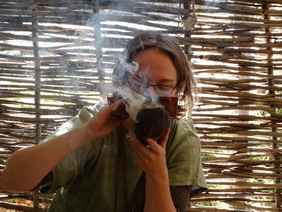 We had a wonderful guide at the crannog centre. She was interesting, knowledgeable, and knew how to start a fire.
Surprisingly, though the crannogs are of wood construction and the walls and floors are stuffed and spread with dried bracken, there is little evidence of crannogs catching on fire. As we sat in the crannog amid sparks and little gusts of wind, I was certain they burned on a regular basis. But apparently not.
Most often, fires were not extinguished at night, merely damped down. As our guide illustrated, fires could be difficult to start, and why add one more problem to an already busy day? There is even a hard fungus (conch fungus, I believe) that has a circular interior chamber where live embers could be stashed if you wished to take a bit of fire with you. That's ingenious!
To create fire, she first filled a small 'boat' with bits of dry grass and tender. She then set a flat piece of wood with a circular divot that was the same size as the stick she would use onto a small piece of leather. (This one was meant to be used over and over, and with different size sticks)
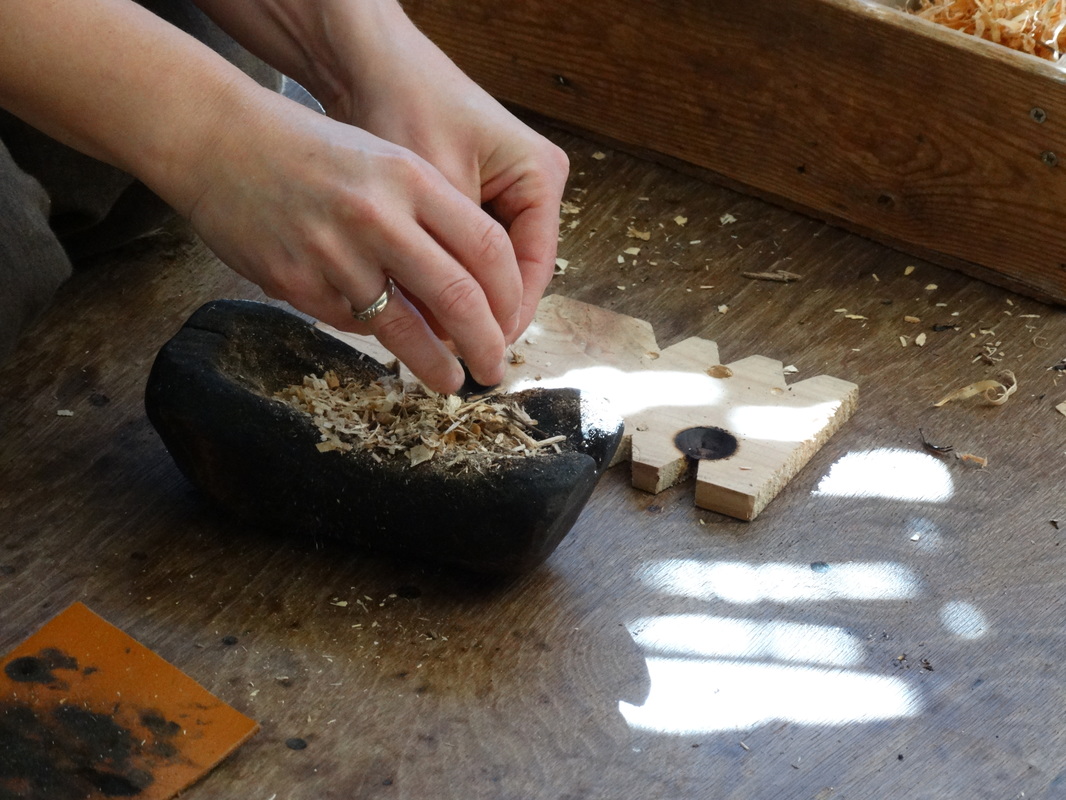
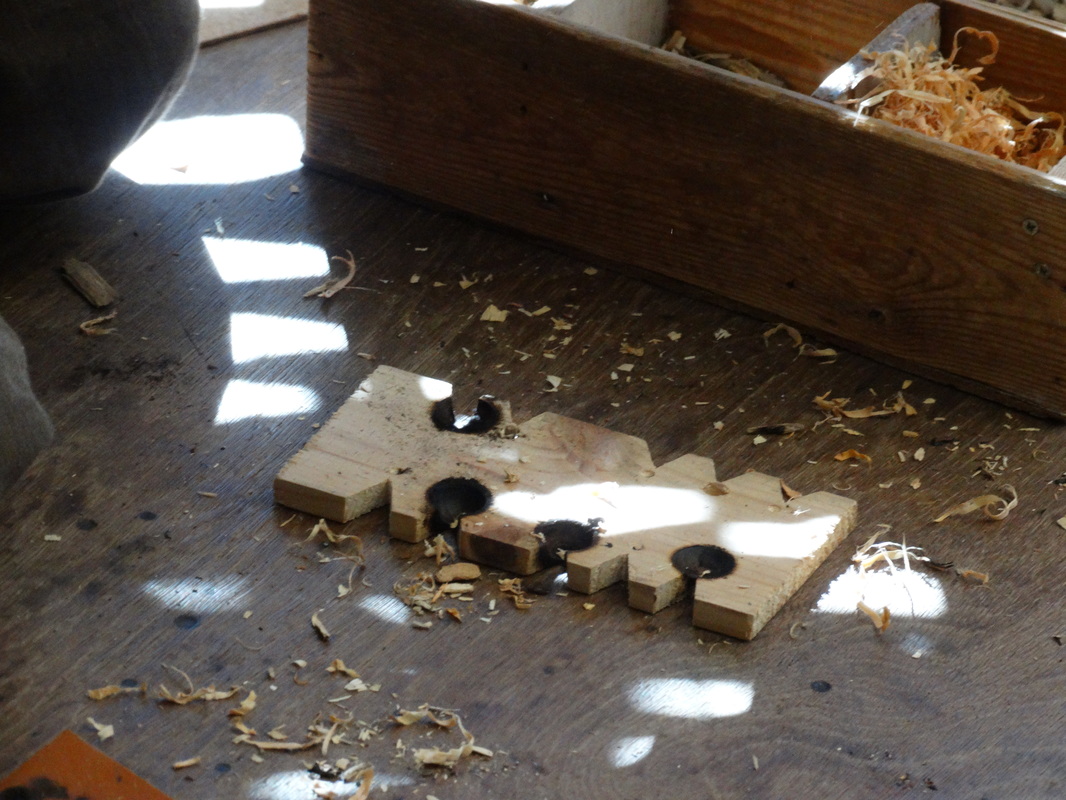
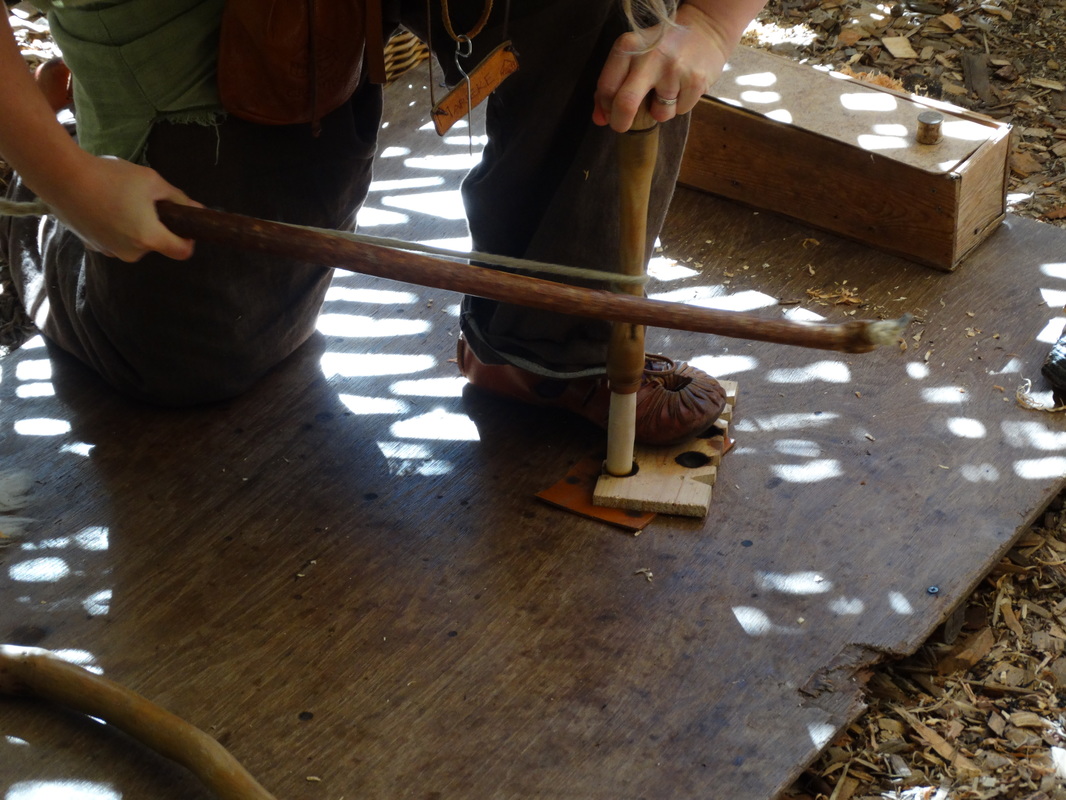
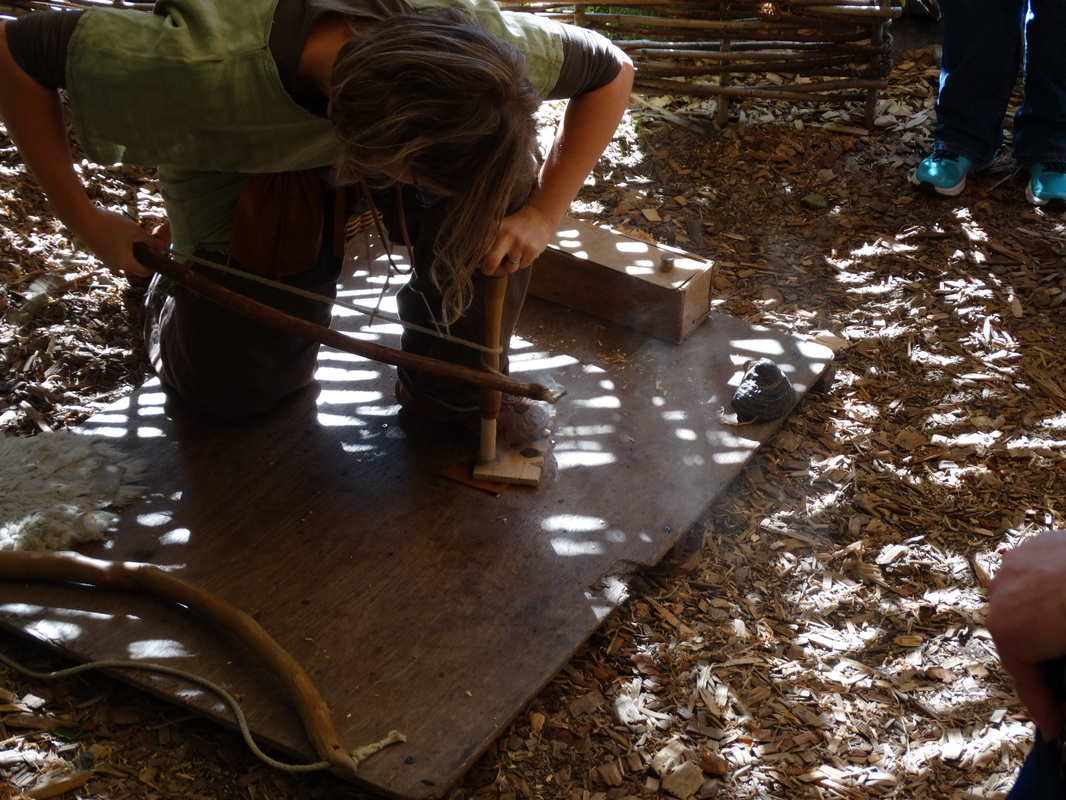 She then wrapped the string of her 'bow' around the upright stick and drew the bow back and forth. And back and forth. Until we saw smoke!
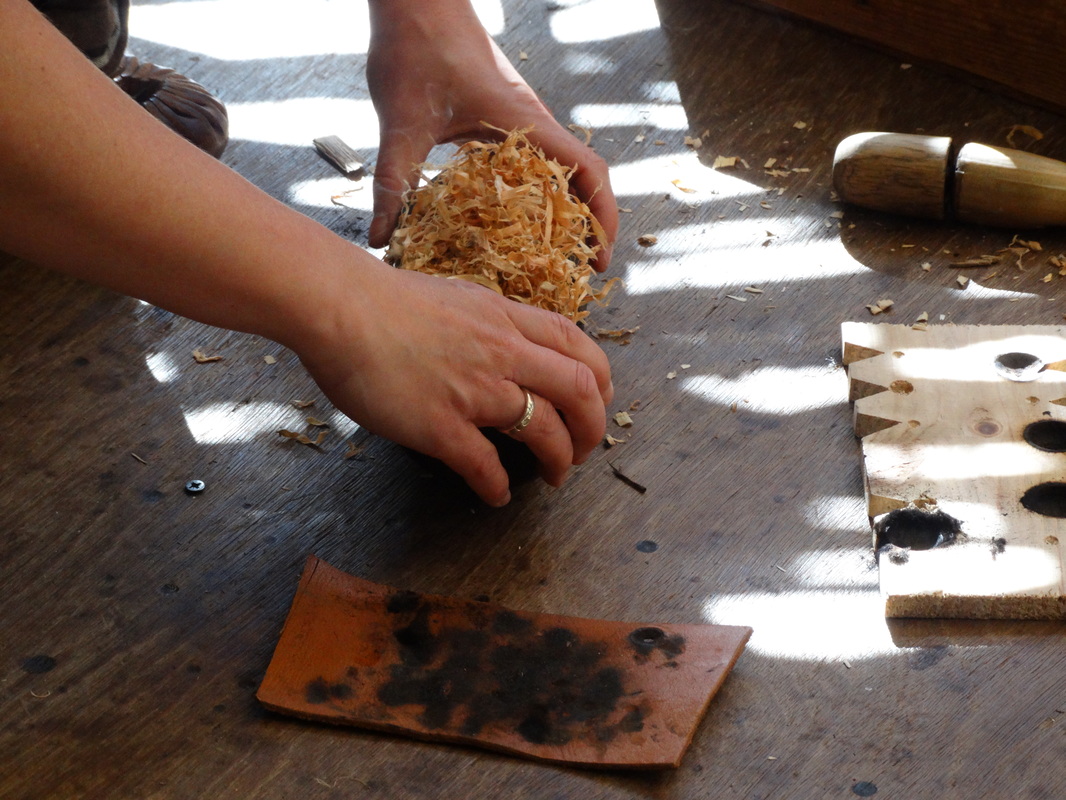
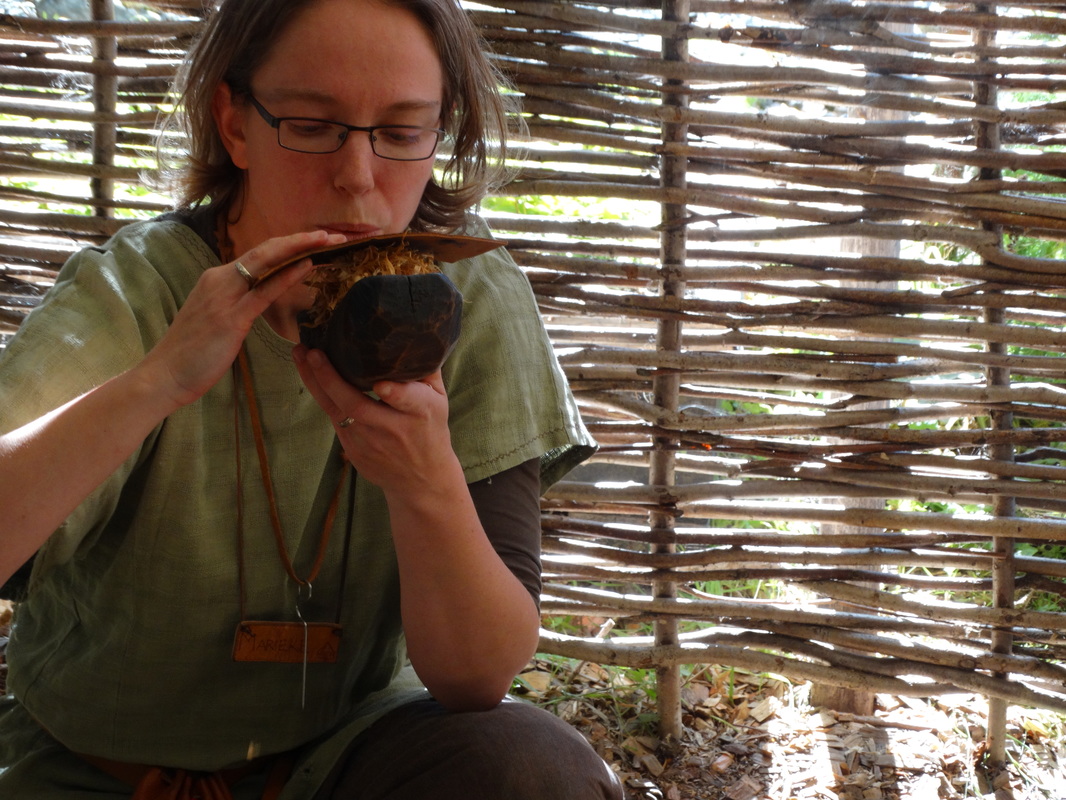
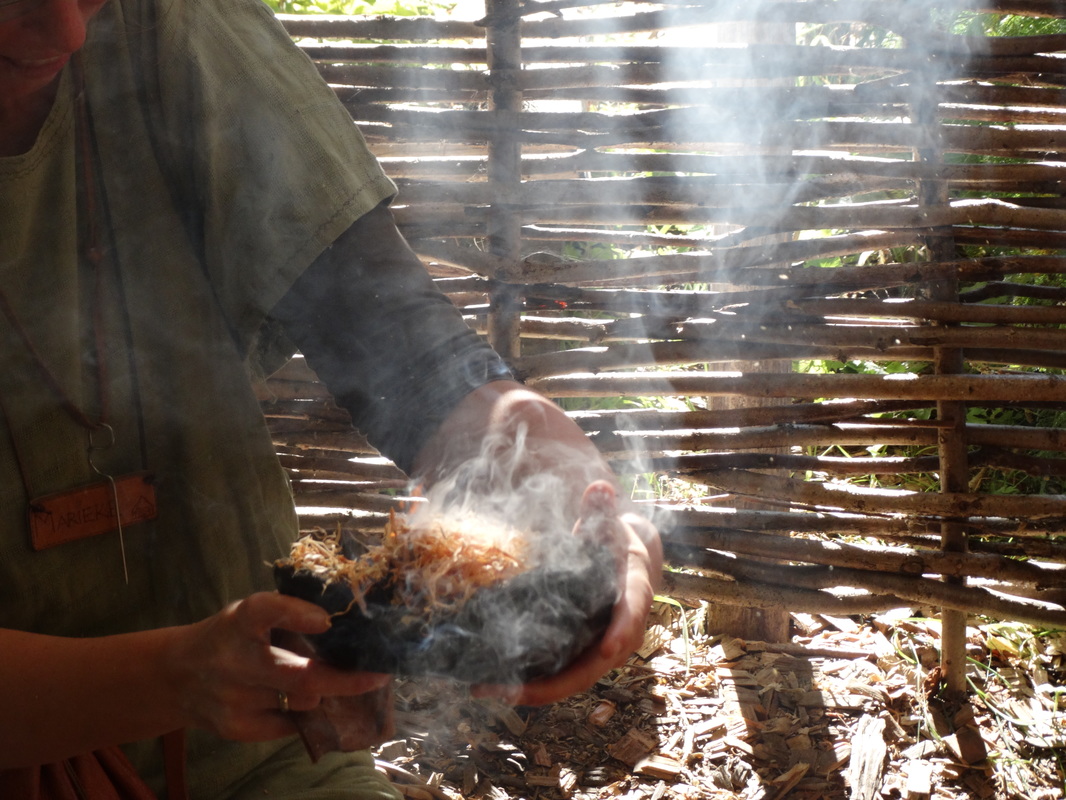
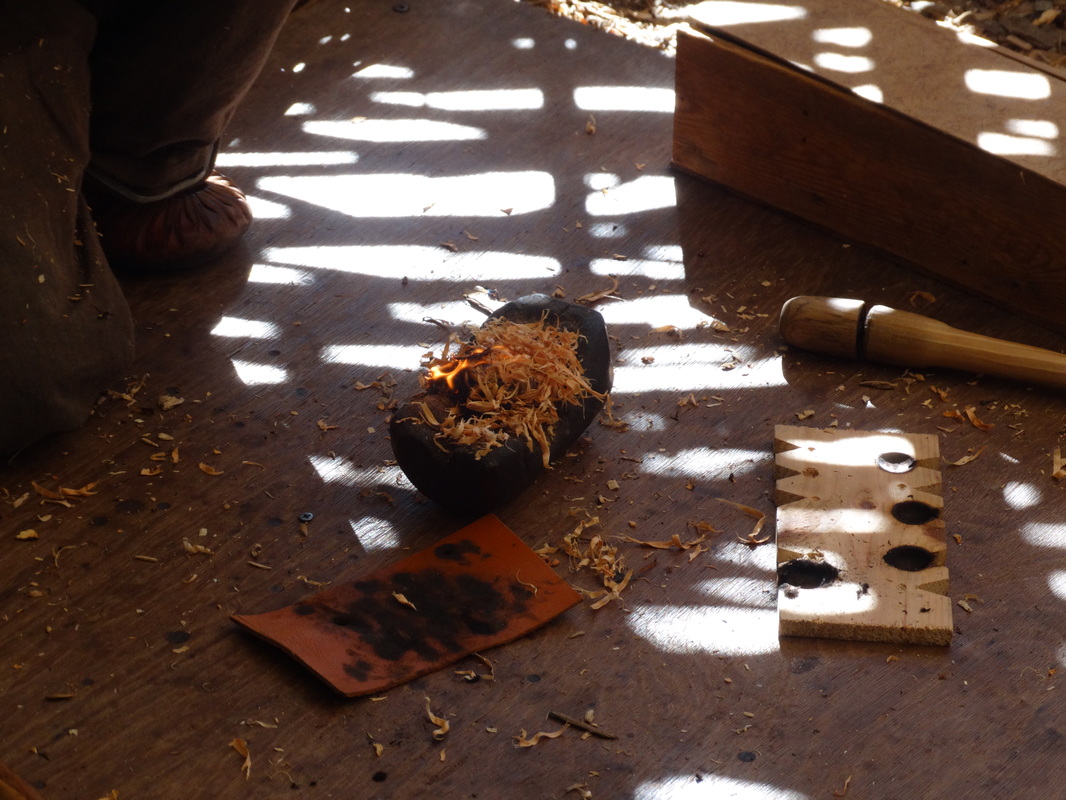 She carefully transferred the tiny glowing embers to the 'boat' and blew gently. Fire!
Though it took several minutes to get the fire started, this was not something anyone wanted to do every morning before breakfast, not to mention in damp or cold or stormy weather.
Thanks to our guide for letting us experience life in a crannog!!


September 23, 2016
Scotland with Grace 2016 - Day 8 The Scottish Crannog Centre
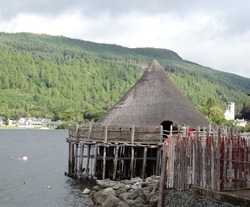 What is a crannog? A crannog is a manmade or modified natural island found throughout the lochs of Scotland and Ireland.
A dwelling over the water.
Why would you do such a thing? For several reasons, really. First, how lovely would it be to enjoy a home situated over the water? Lulled to sleep by the lap of water against the pilings. Fresh fish and other water delicacies literally on your doorstep.
But in 500 B.C., the inhabitants of this and other crannogs had other reasons.
Perhaps safety was a reason. Crannogs typically didn't have a pier stretching to the land, and were reached only by boat. Or, if they had one, there was a substantial gap to discourage unwanted visitors such as wolves, wild boar and two-legged villains.
Actually, crannogs were a status symbol. Anyone who has spent the summer in Scotland can attest to the fact that midges are a torment to people stuck on land. So, wealthy people escaped the irritating, blood-sucking midges by building their homes on the water.
They were quite durable. Many crannogs have been found to have outlived the supporting timbers. New ones were added over the years until they simply could add no more.
And, there was, in 300 B.C., a lack of suitable building sites. Land was difficult to clear, and such was generally used to grow crops.

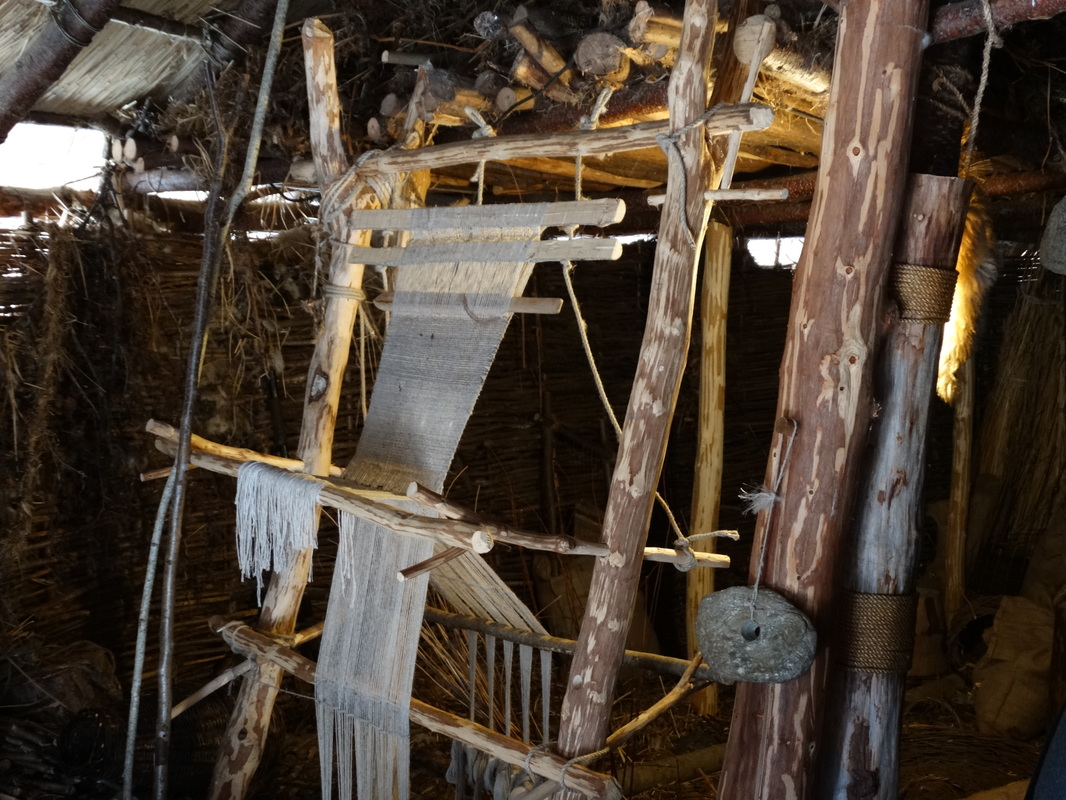
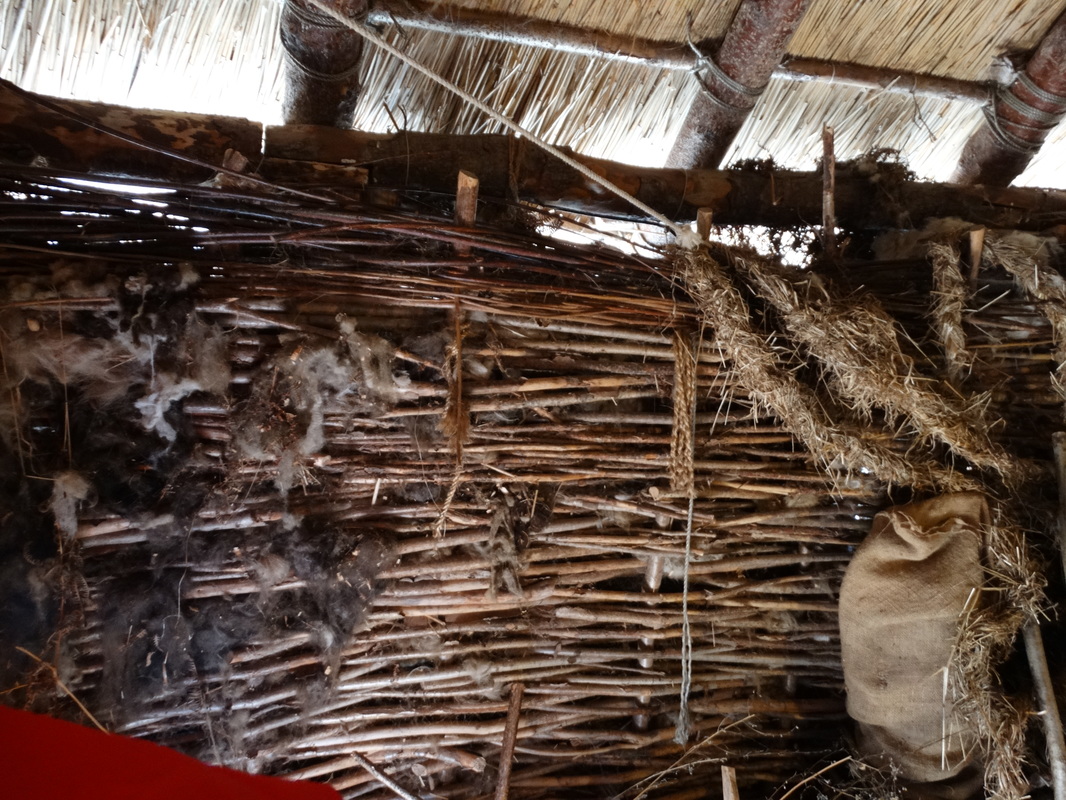
 A single crannog could house quite a few people. Its woven walls were stuffed with dried bracken for insulation, and a fire pit in the center helped keep the place warm. As did the cows, sheep, goats, pigs and perhaps ducks that lived inside as well.
(an aside: there were no chickens at this time. They were brought to Scotland by the Romans)
The floors were also covered with brackens to minimize the draft beneath your feet. The tall, conical roof shed rain and snow very well. Smoke would rise, escaping through cracks in the thatch. There was no hole in the center of the roof, but doors on either side could be opened to draw the smoke if necessary.
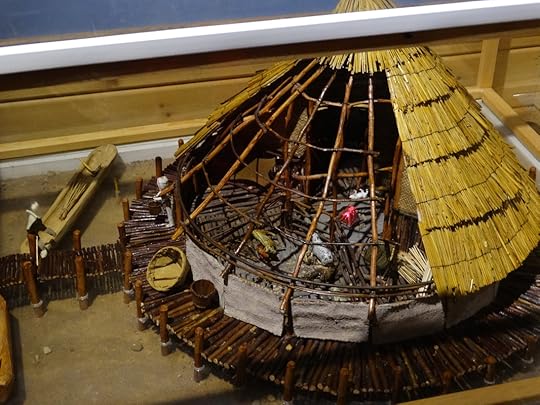 Perhaps you can see the activities in this diorama.
Archaeologists have found (or found evidence of) hazelnuts, butter, cheese, smelt oats, barley, strawberries, raspberries, cloud berries, cloth, jewelry (swan-neck tunic fasteners, pins, beads and even jet--which would have come from Yorkshire), and opium poppy seeds (which indicates trade with the far east).
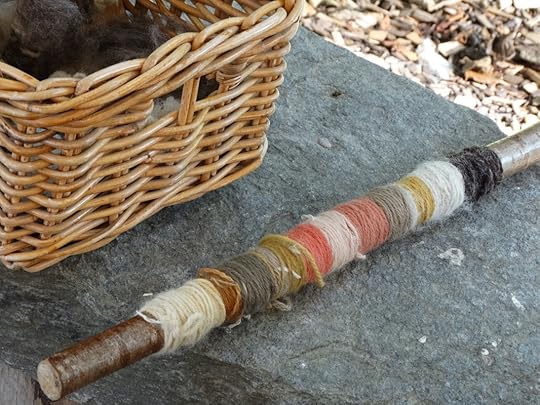
In one of the above photos, you will see a cloth loom. Natural coloring agents were used, such as dog's mercury, wild carrot, dock leaves and agrimony or yellow and orange; cleaverroot, strawberry, raspberry, blackberry and tormentil root for reds and pinks; blueberries to create blue, and various roots for browns.
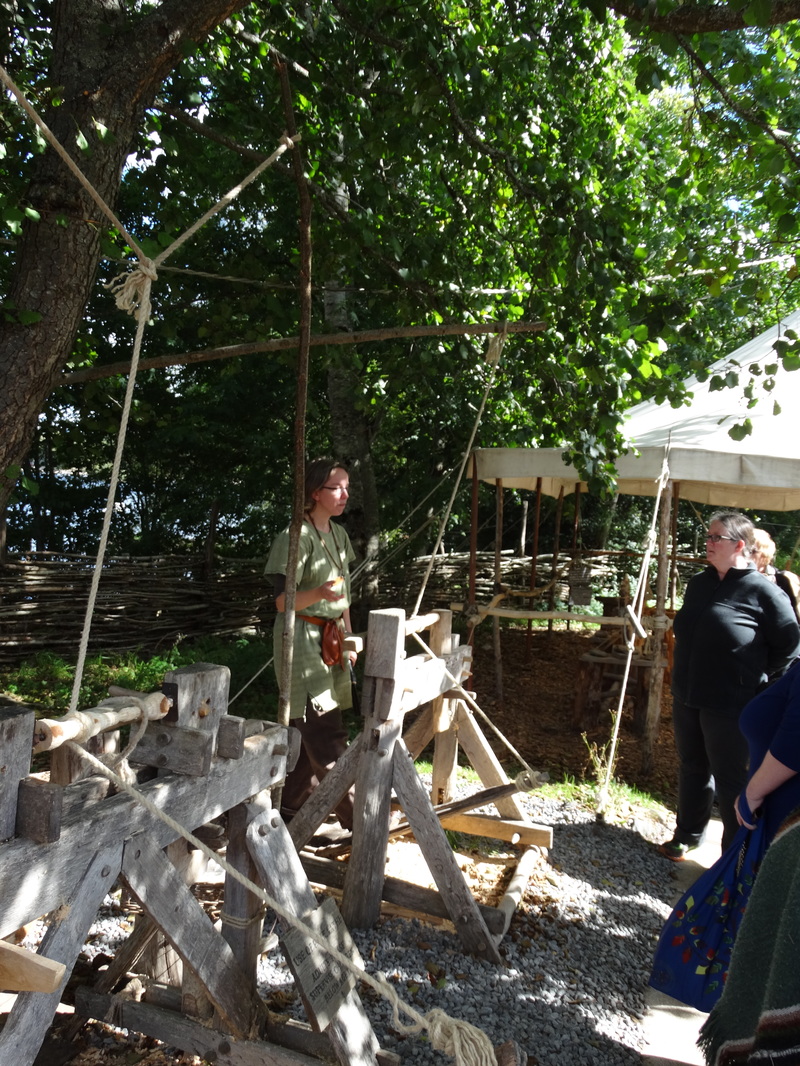
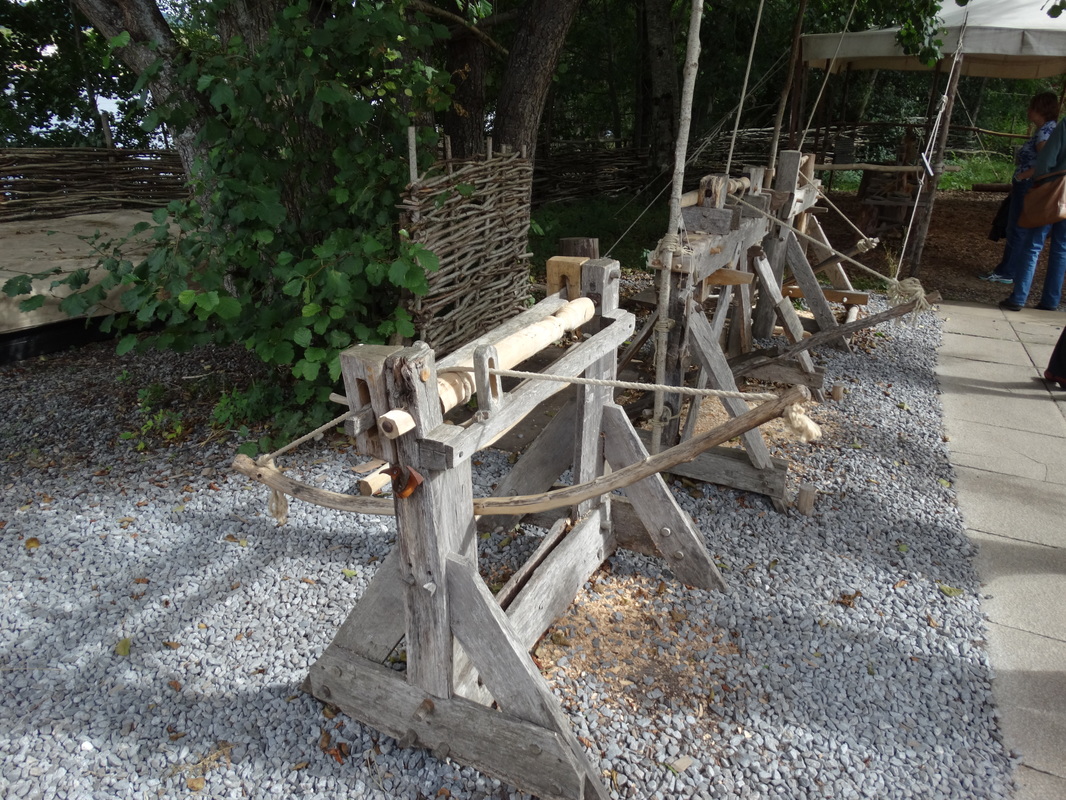
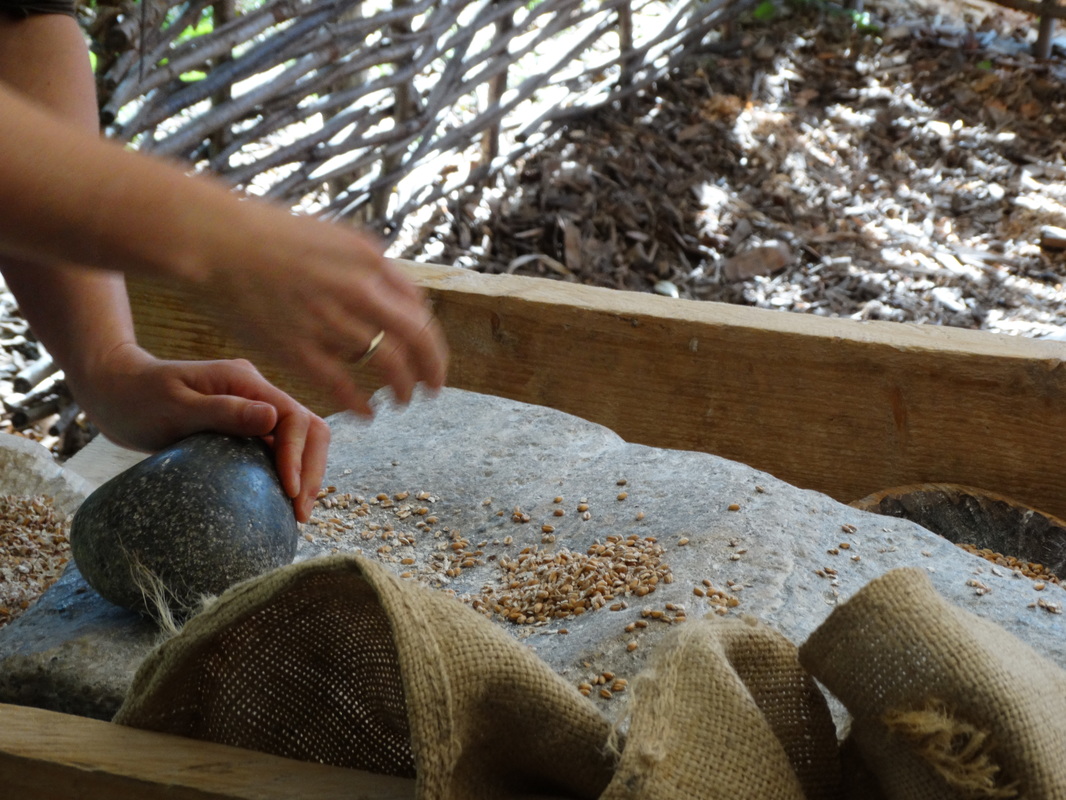
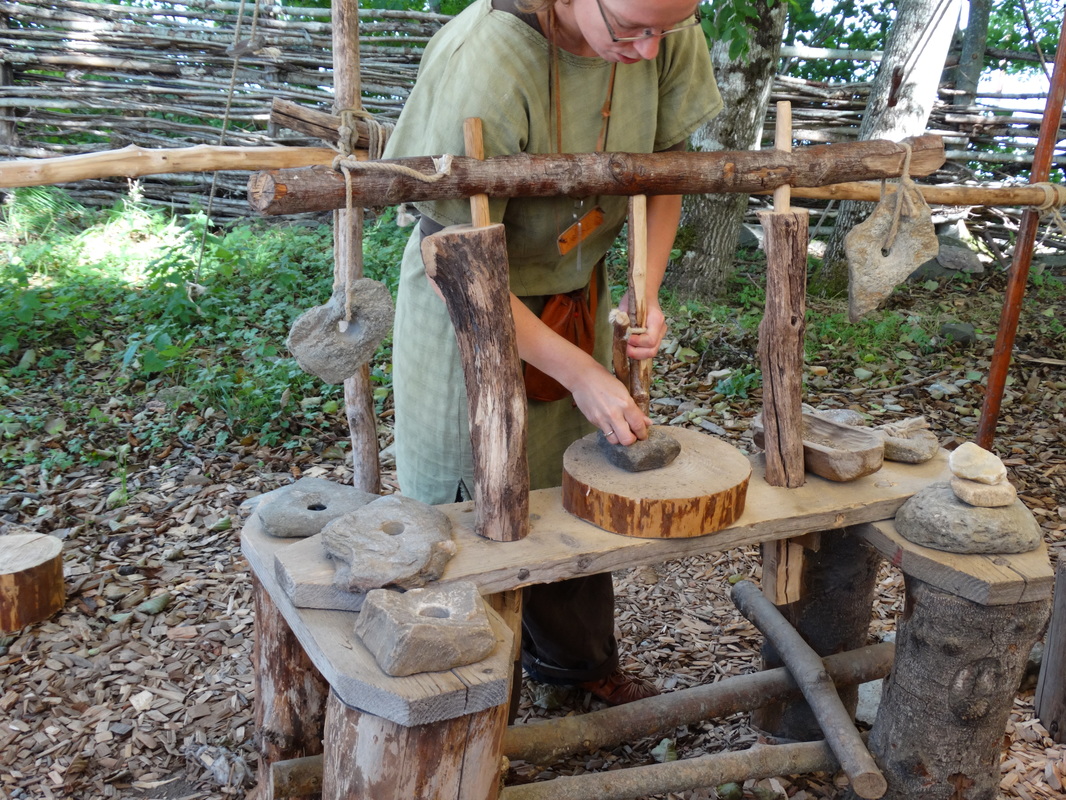
 At the crannog center, we were given the opportunity to use three different types of lathes, grind grain, and operate a device for drilling holes in rocks. And our guide explained the process for making fire. (But that's tomorrow's post)
September 22, 2016
Scotland with Grace 2016 - Culloden Moor
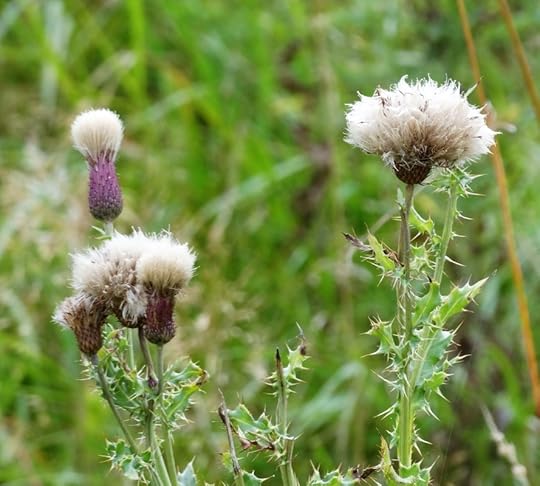
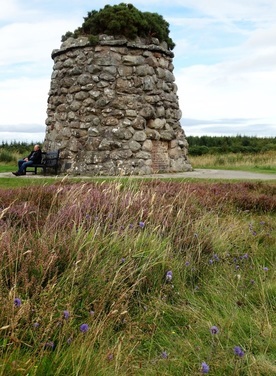 The monument is surrounded by thistle and heather and the sighs of more than 1500 Jacobites who lost their lives April 16, 1746 on Culloden Moor.
The plaque on the monument reads:
"The Battle of Culloden was fought on this moor, 16th April, 1746. The graves of the gallant Highlanders who fought for Scotland and Prince Charlie are marked by the names of their clans."
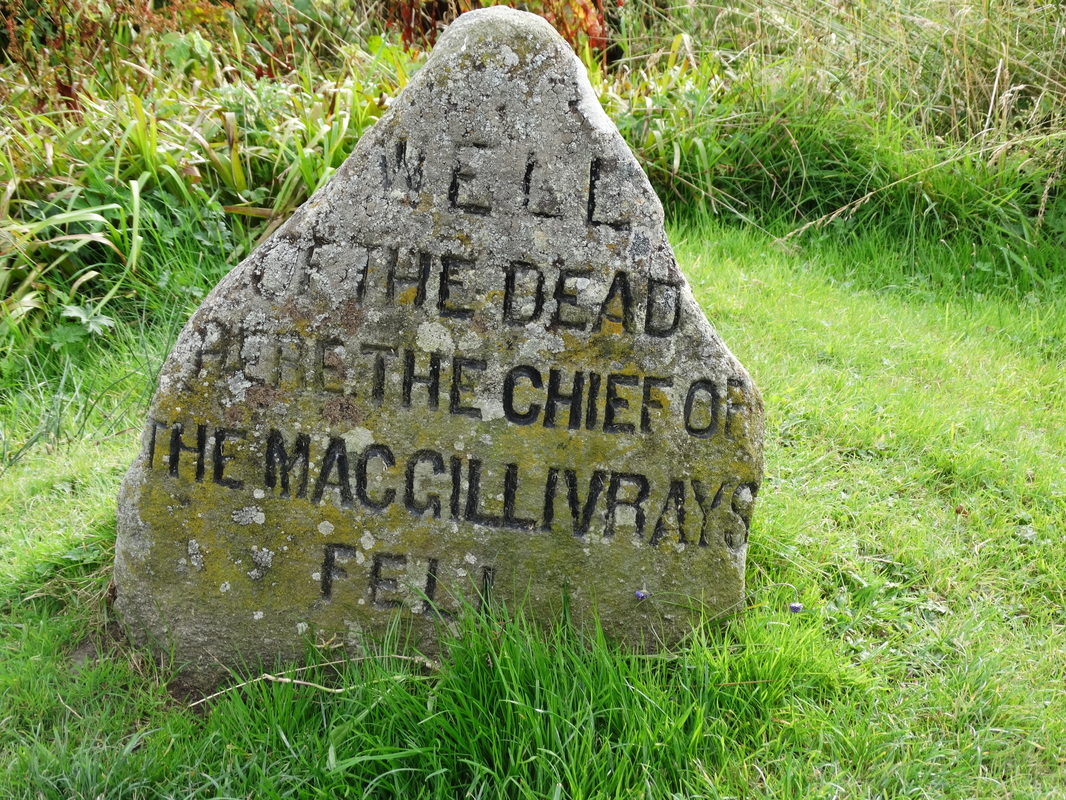
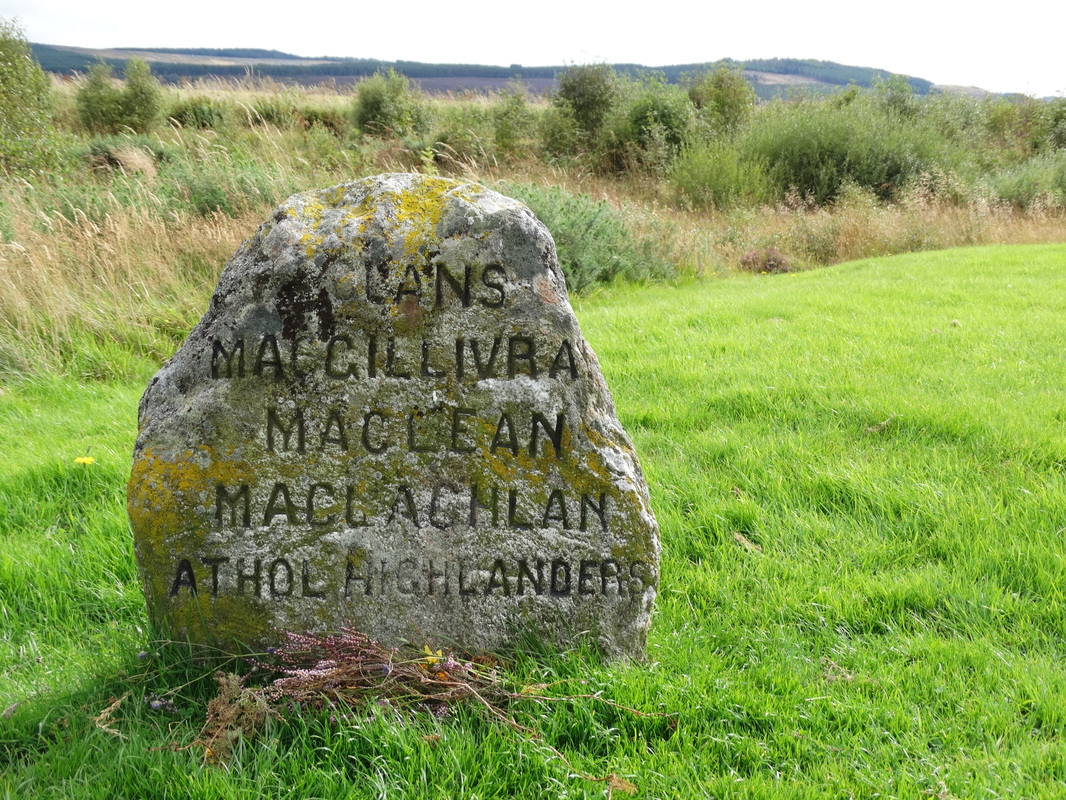
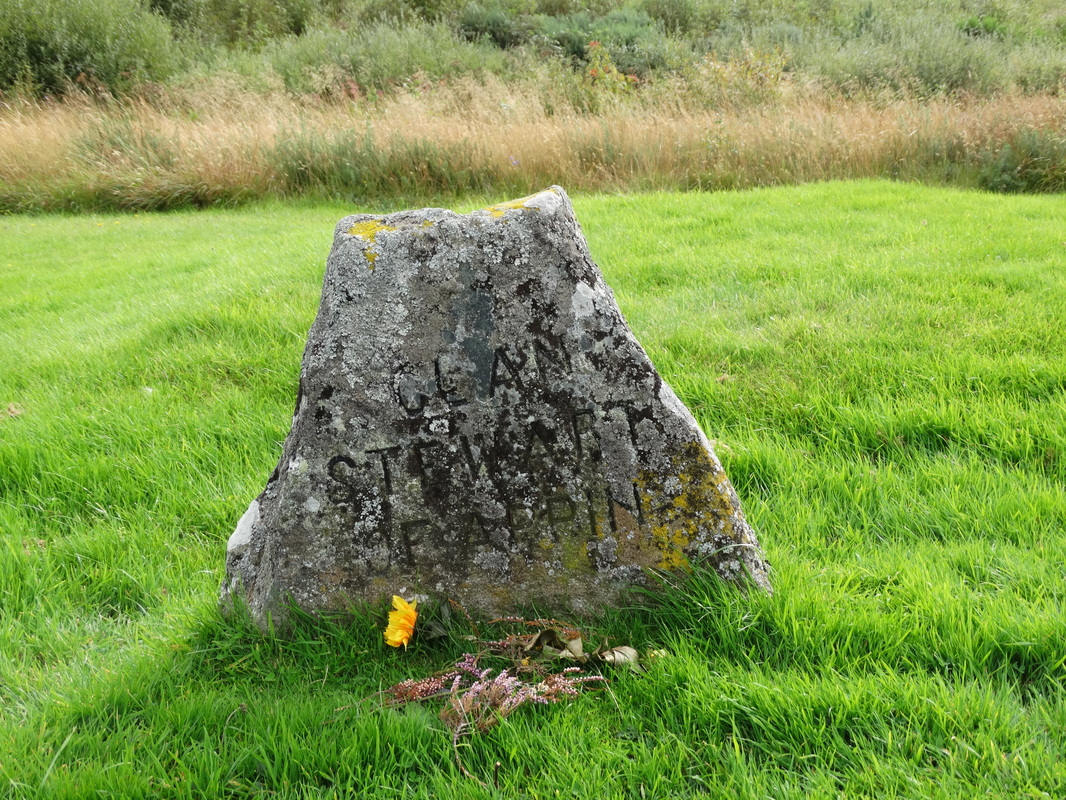
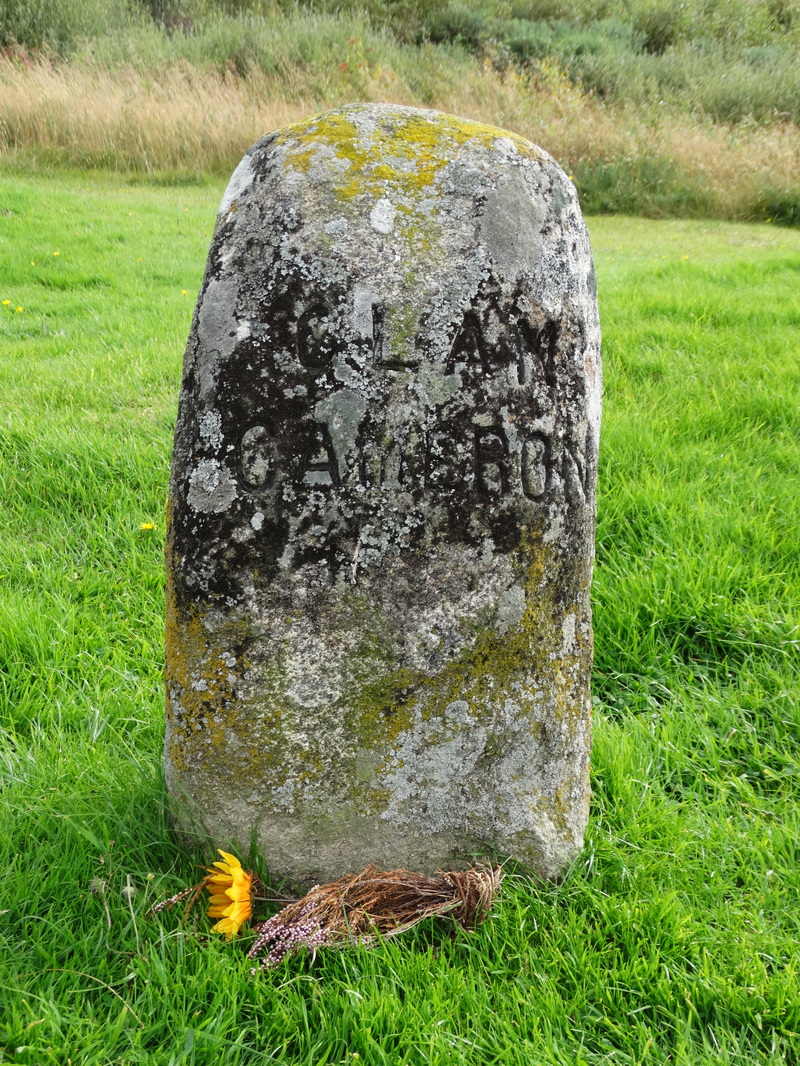


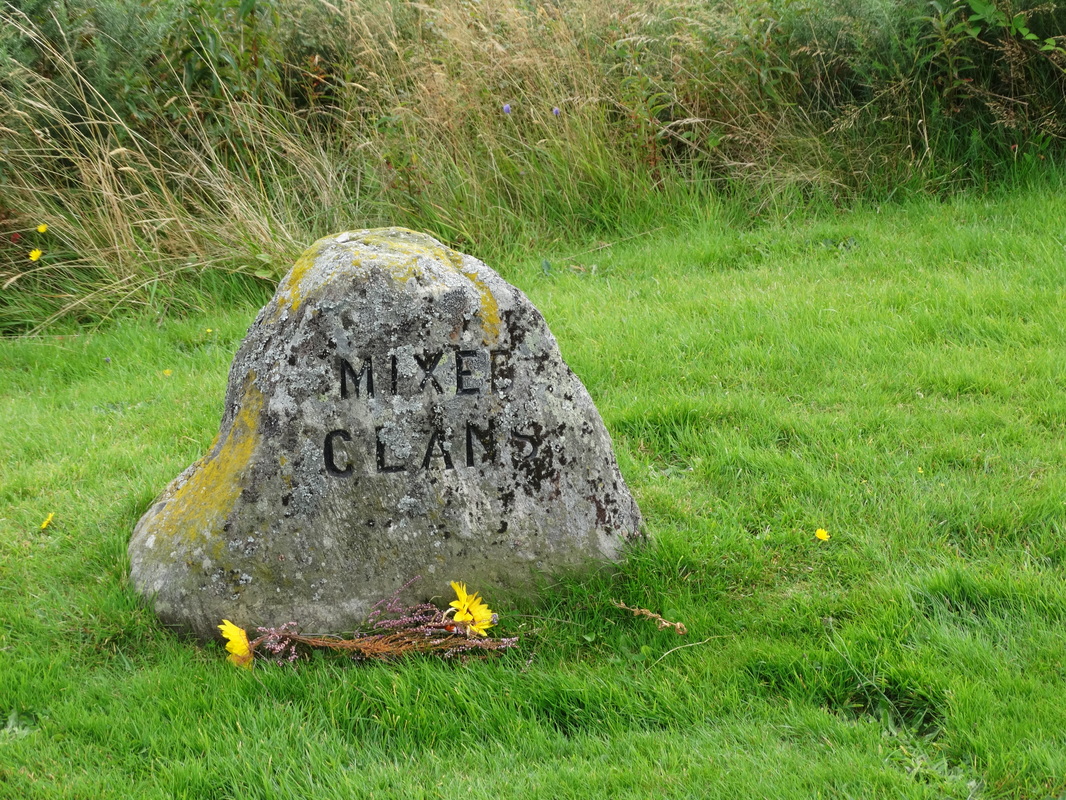
 It had been a long and bitter morning, made the more unbearable by the long cold, march the night before. Exhausted, soldiers had slipped away before dawn to snatch a bit of rest or perhaps a bite of food. The army that was rallied at dawn, April 16, 1746, was not the same as the one Prince Charlie had commanded only hours before.
They lined up on Culloden Moor, a difficult place for a battle, as its boggy ground did not allow for much progress from either the Jacobite or the Government side. Bombarded by mortar and cannon shot, the Jacobites held back, awaiting the command to charge. The air was filled with smoke, hail, gunfire and canister shot. When at last given the command to attack, the Jacobites fought ferociously, though many never reached the government lines. The feared Highland Charge was countered by a new bayonet tactic by the government soldiers, and it is believed more than 700 Jacobite soldiers were killed within a few minutes of intense hand-to-hand fighting. The Jacobite charge broke through the government line, but was forced back.
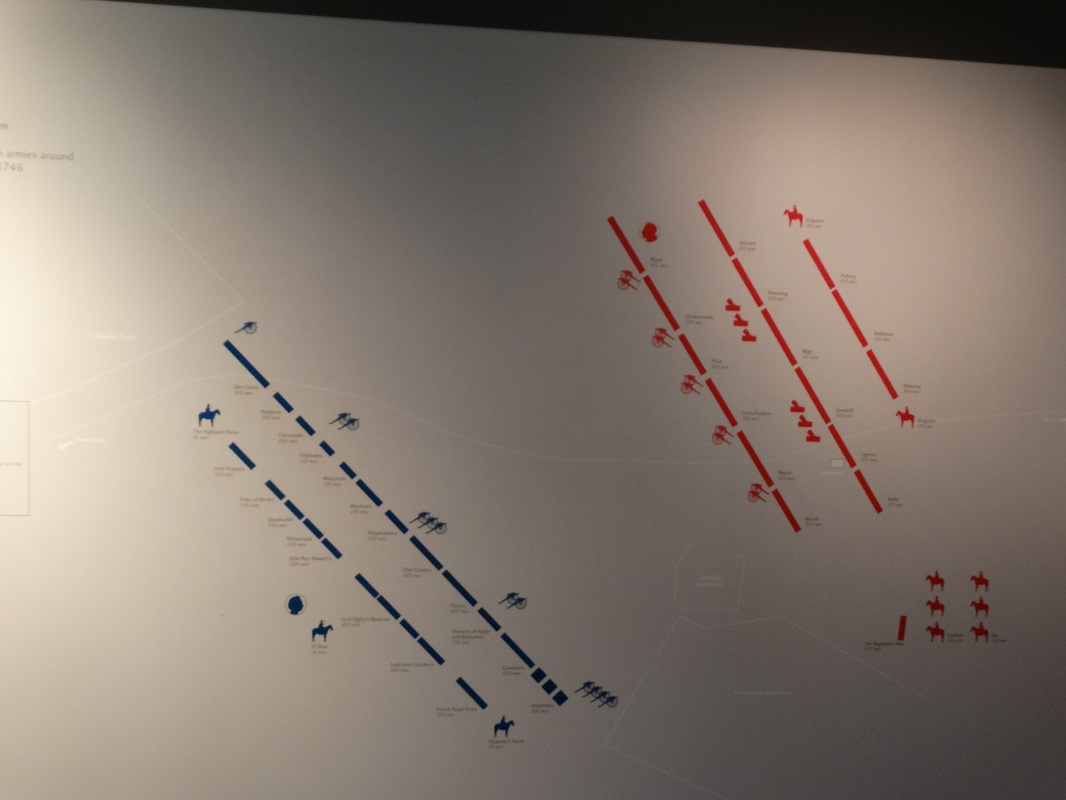

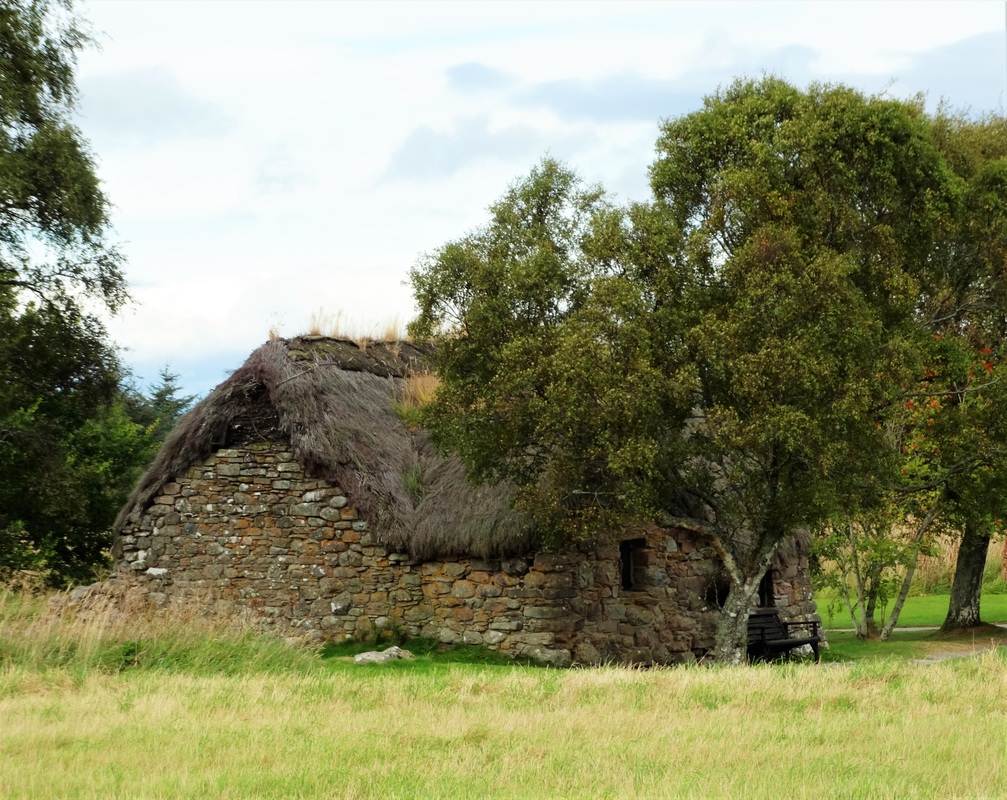
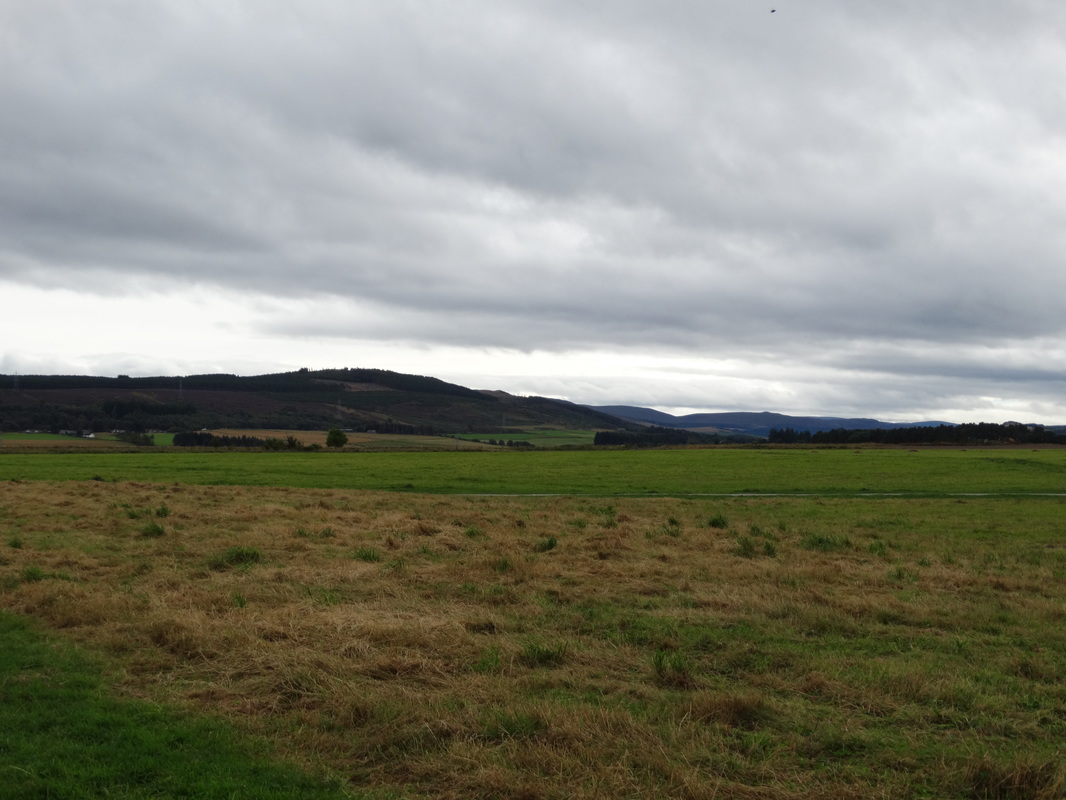 I walked the moor--drained years ago and not boggy this day. The sky lowered, promising rain. Visitors slipped past me, searching for cairn markers, remnants of the battle. And the ghostly voices of soldiers dipped and swayed above the moor.
You can almost hear the rattle of musketry in the rustle of the tall grass, smell the smoke in the heavy clouds.
And perhaps even see the flutter of Prince Charlie's flag in the dip and sway of the wildflowers.
The moor casts its spell on all who linger. And the ghosts whisper their betrayal and sorrow to those who believe.
September 21, 2016
Scotland With Grace 2016 - The Clava Cairns
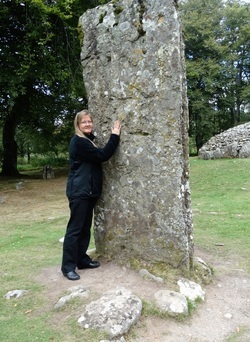 The Balnuaran of Clava is a site of a prehistoric cemetery. The monuments - a 'ring cairn' and two passage graves - were built between 3 and 4 thousand years ago.
As a tomb went out of use, it was surrounded by a ring of standing stones.

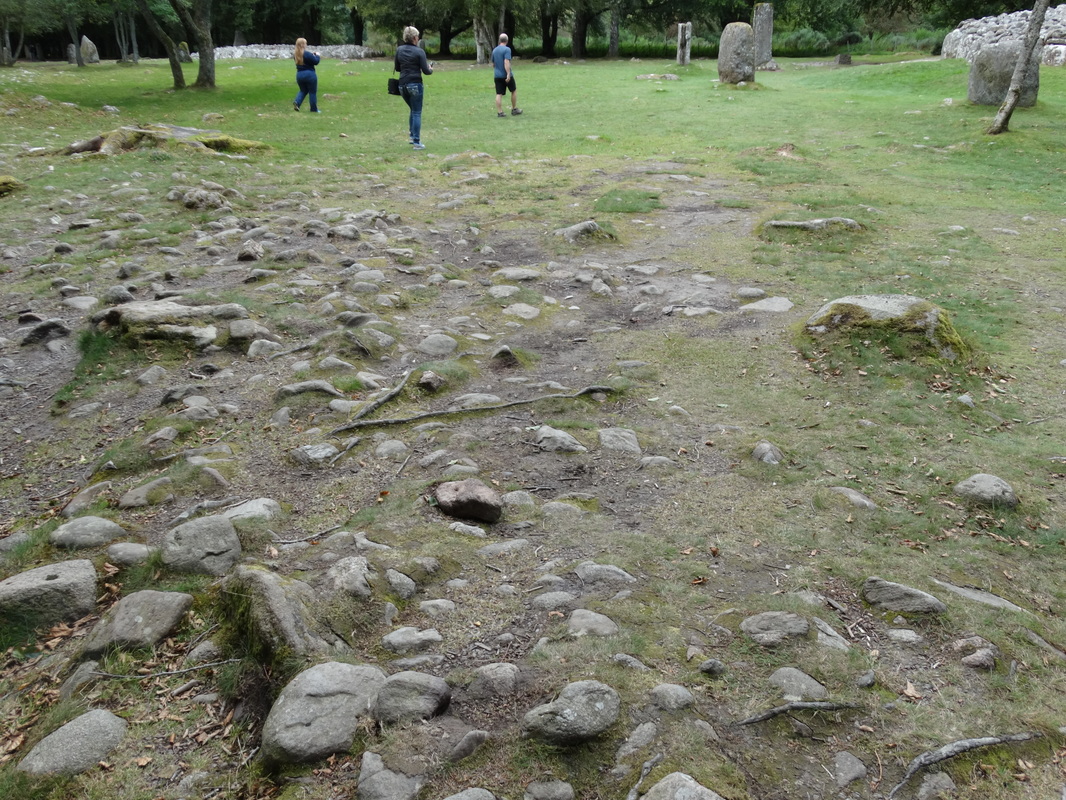
 The ground was very rocky, and it was easy to see where the stones came from to build the cairns. But the standing stones??
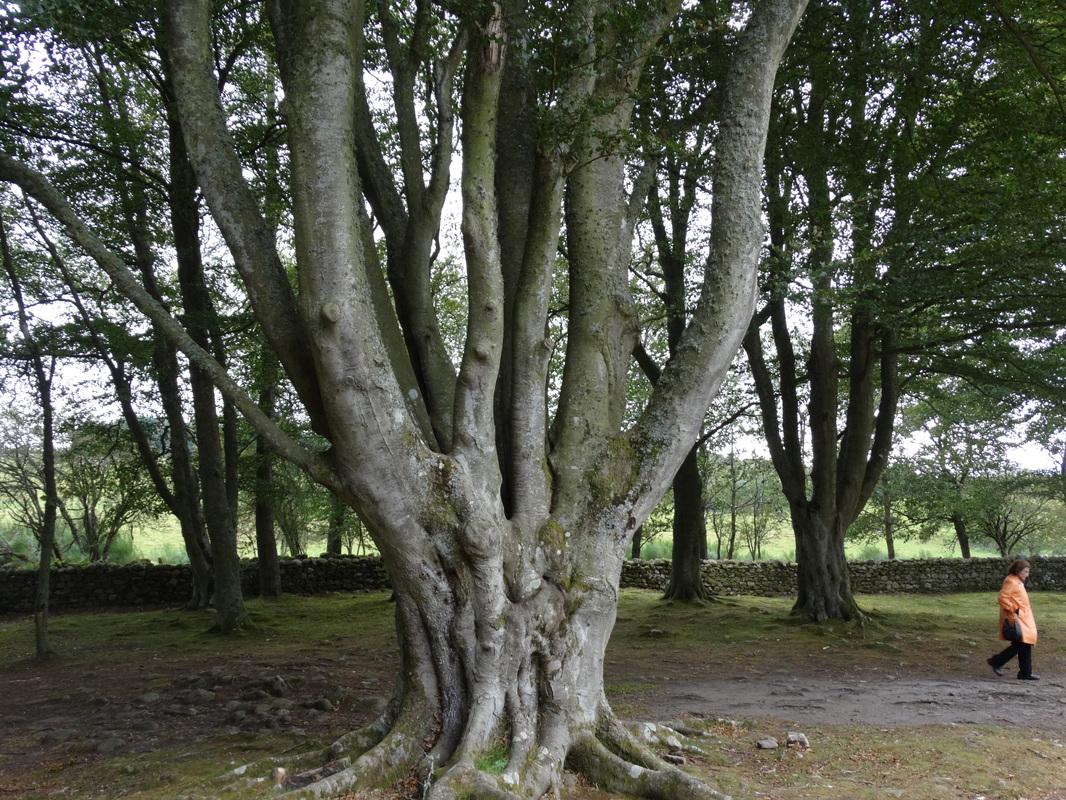
In the 1870s, the stones were interpreted as druids' temples and the landowner planted a grove of trees enclosing the three largest monuments.
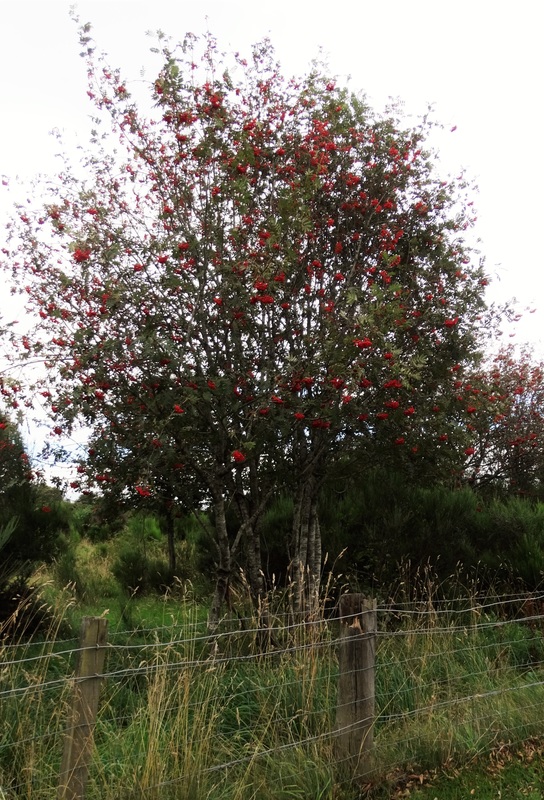
Some of the trees are rowans, thought to protect against ghosts, witches and other evils. Coincidence?
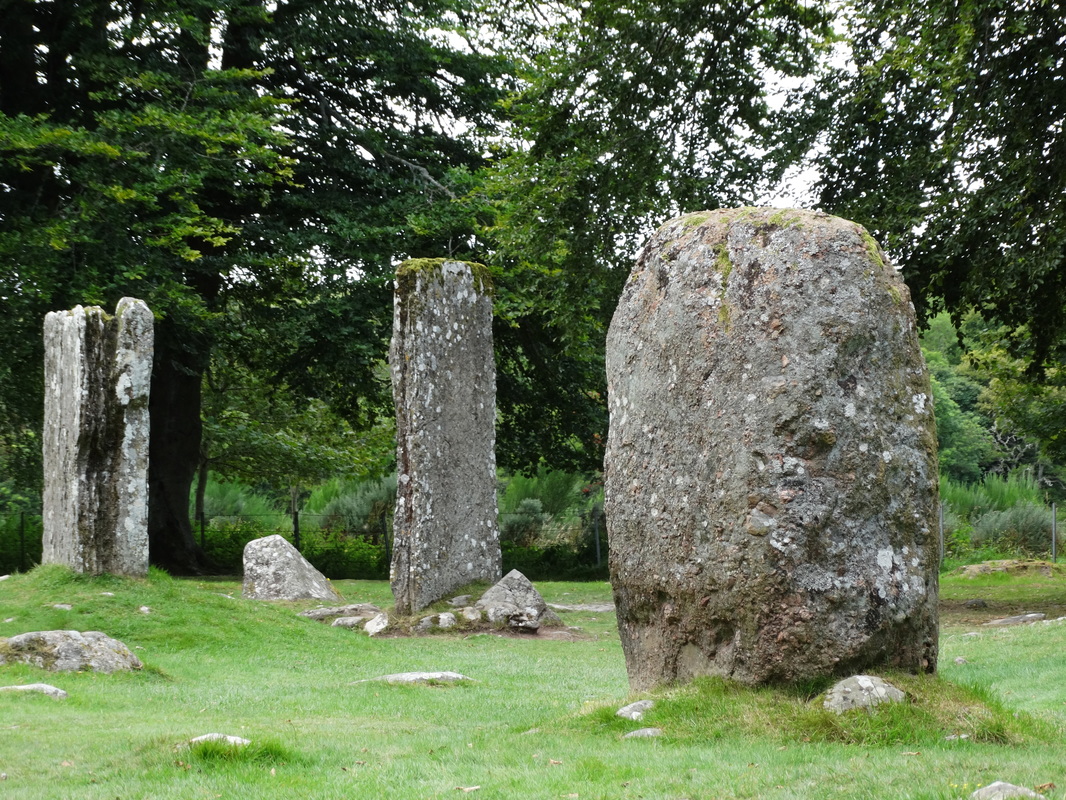

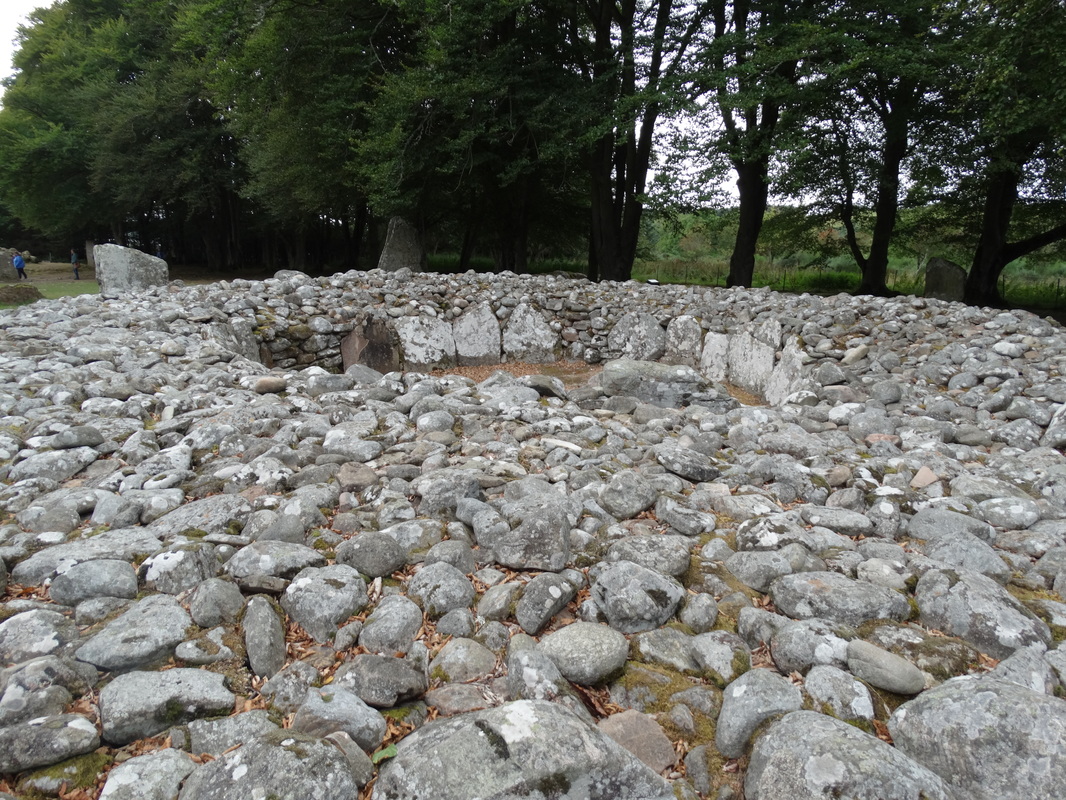
 The 'passage graves' originally were domed and covered with a single slab. While the main chamber was approximately 10 feet high, the passageway was quite low and had to be crawled through.
The North-east passage grave is carefully aligned on the midwinter solstice. Normally the chamber would be dark, but on this shortest day of the year, it was illuminated by the setting sun.
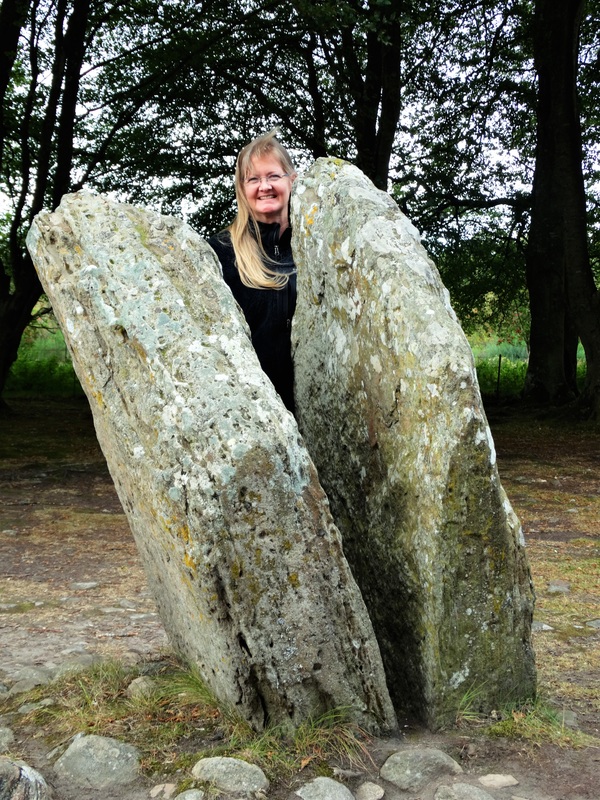
 Karen and me
 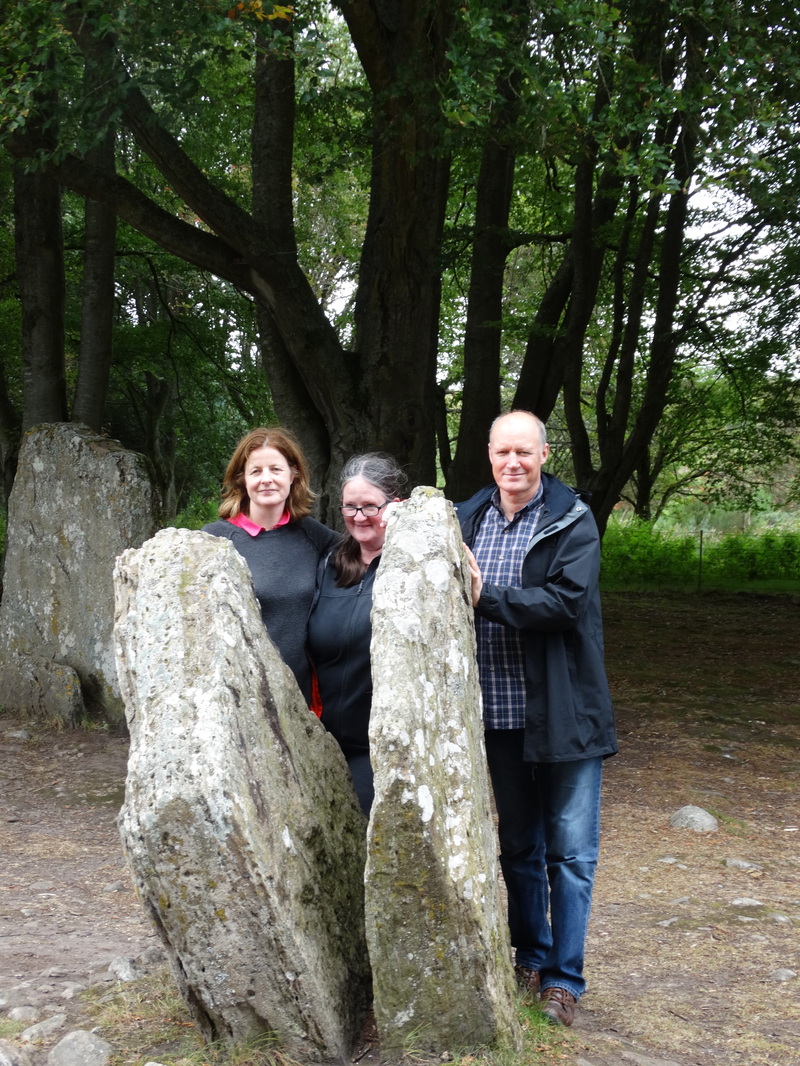 Our illustrious leaders:Susie, Grace & Jim
September 20, 2016
Scotland with Grace 2016 - Day 7 Notes and Such
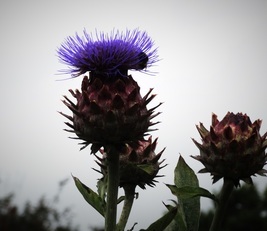 This was the day we would visit Culloden Moor. We had a bit of travel from Aberfeldy to Inverness, and had some interesting chats during the trip.
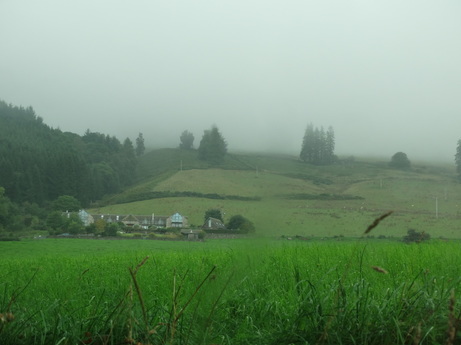
I thought I'd share a few things I found interesting amid some of my favorite flower and scenery photos from the trip.
What is mizzle? We experienced mizzle quite often on our trip. It is, simply, somewhere between a mist and a drizzle. It means you need to take a raincoat and perhaps an umbrella with you most days.
 What is a Piss-Prophet? That was a rather derogatory term for English physicians who would, after taking a verbal history, examine a patient's urine for diagnostic purposes. Supposedly, taste was as important as color and odor. Treatments of the era (1700s) were often applying hot plasters to the patient's feet, or perhaps bleeding them. If you were fortunate, you might get sent to the apothecary who would likely dispense booze or laudanum.
By contrast, medicine in 18th century Scotland was largely influenced by ideas and procedures practiced on the Continent. With the Scottish court in exile in Rome, travel between Italy and Scotland flourished, bringing with it a period of Enlightenment. Physicians were taught to wash their hands between patients. Not that they had knowledge of bacteria, but simply because it was noted patients healed better under clean conditions. It seems a simple thing, but deadly for patients whose unenlightened surgeons waved the idea aside as poppycock.
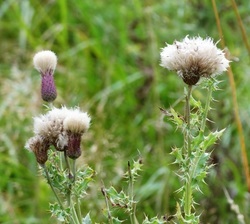
 A Bluebonnet thistle What does it mean to be 'put to the horn'? The sheriff would blow 3 times on his horn before declaring a person an outlaw.
There are ~50 distilleries on the River Spey. They produce a light, honeyed whisky.
By comparison, whisky distilled in Campbelltown on the Kintyre Peninsula has more of a peat taste.
 Gaelic was first a spoken language, not a written one, so the monks decided the spellings of words as they began writing. They made a lot of bad choices. Anyone who has tried pronouncing words written in Gaelic can perhaps attest to this.
Marriage could be accomplished in 3 ways.
By special license: Many of these marriages were held outside the church, such as in ancestral homes, etc. They could be performed at any hour, any day, and with no banns posted.
In a church: Banns were read once a week for three weeks prior to the wedding to give ample time for reason for the couple not to marry to be brought to light.
Handfasting: This was to publicly declare a couple's intent to marry. After the declaration was consummated, it became a binding marriage. It was not a matter of marrying for a year and a day then dissolving the union if you wished.
By English law, none under the age of 21 years were allowed to marry without their father's consent. By contrast, 16 years was the age of consent to marry. Which is why love-lorn teenagers were disposed to run away to Scotland to marry. And Gretna was the first town over the border.
I'd love to hear other tidbits you may have! Feel free to comment below.
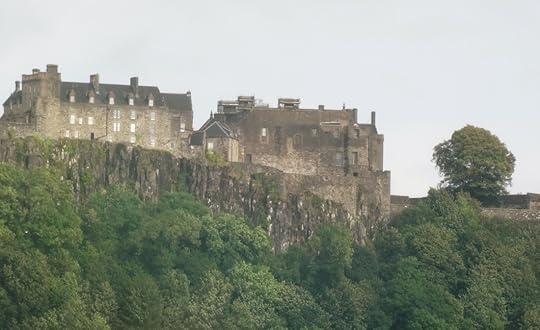 Stirling Castle
Scotland with Grace 2016 - Day 5 Working Sheep
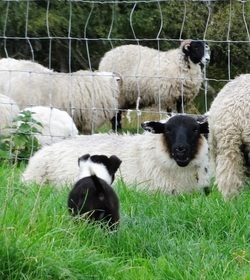 Our first stop this day was at Leault Farms for a sheep herding demonstration. We also chatted with the shepherd, Neil Ross, about the farm, his job, and his world view.
There were 5 puppies he was already training, accustoming them to his voice and to follow him as he worked. Each dog is trained to the same verbal commands, but each responds to his/her own individual whistle commands. The results are amazing to watch.
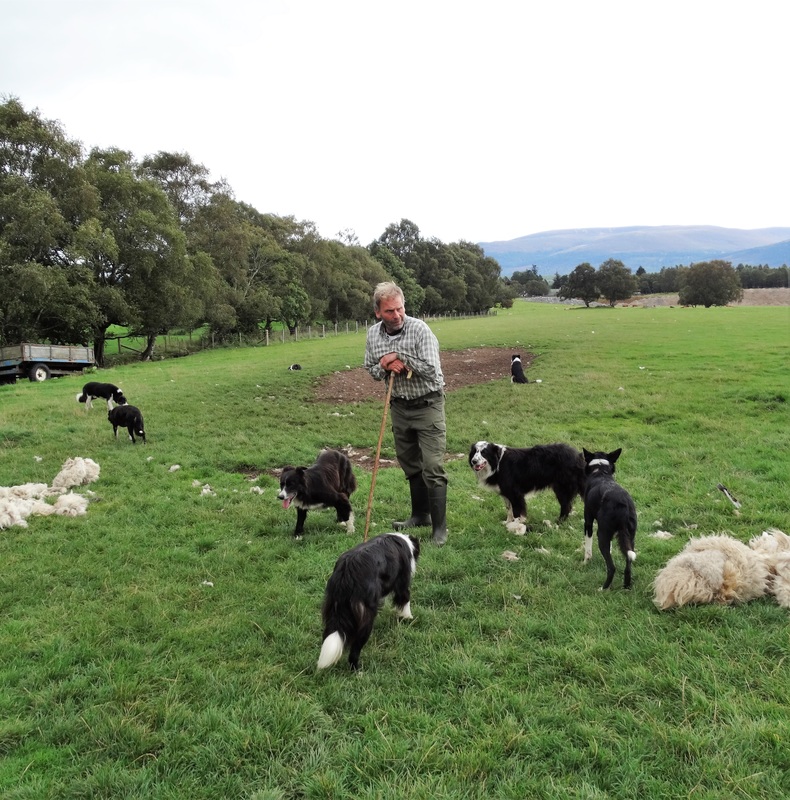
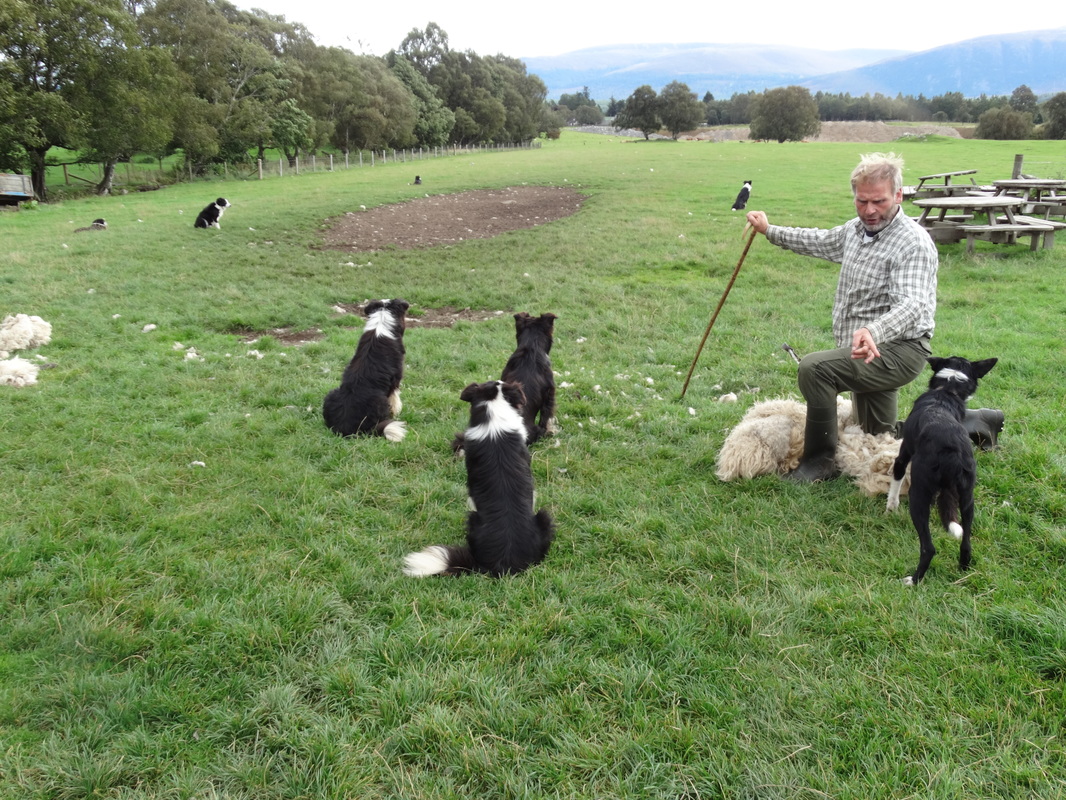
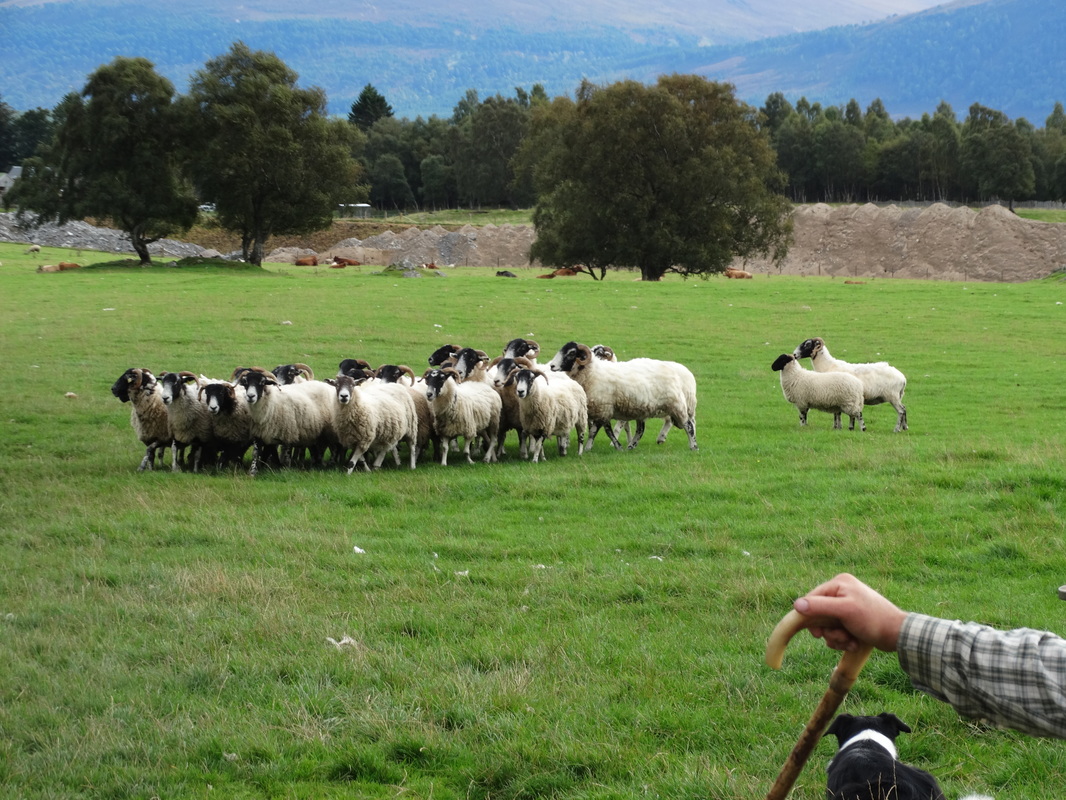

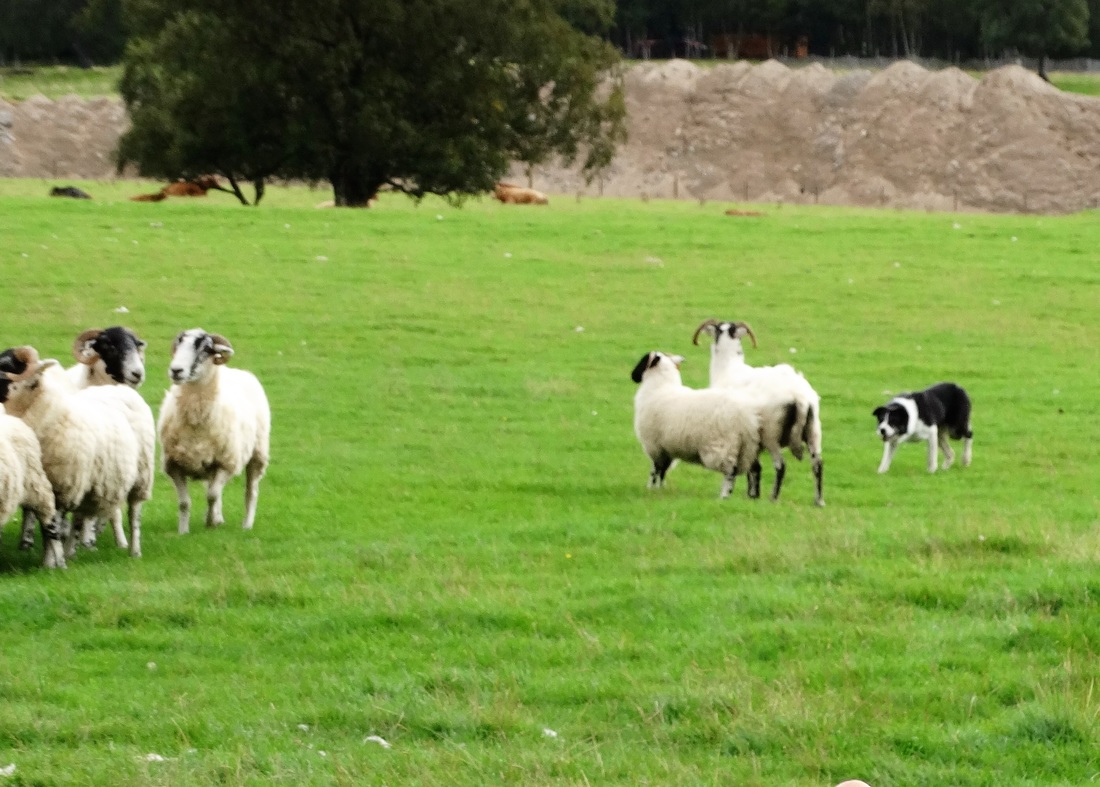

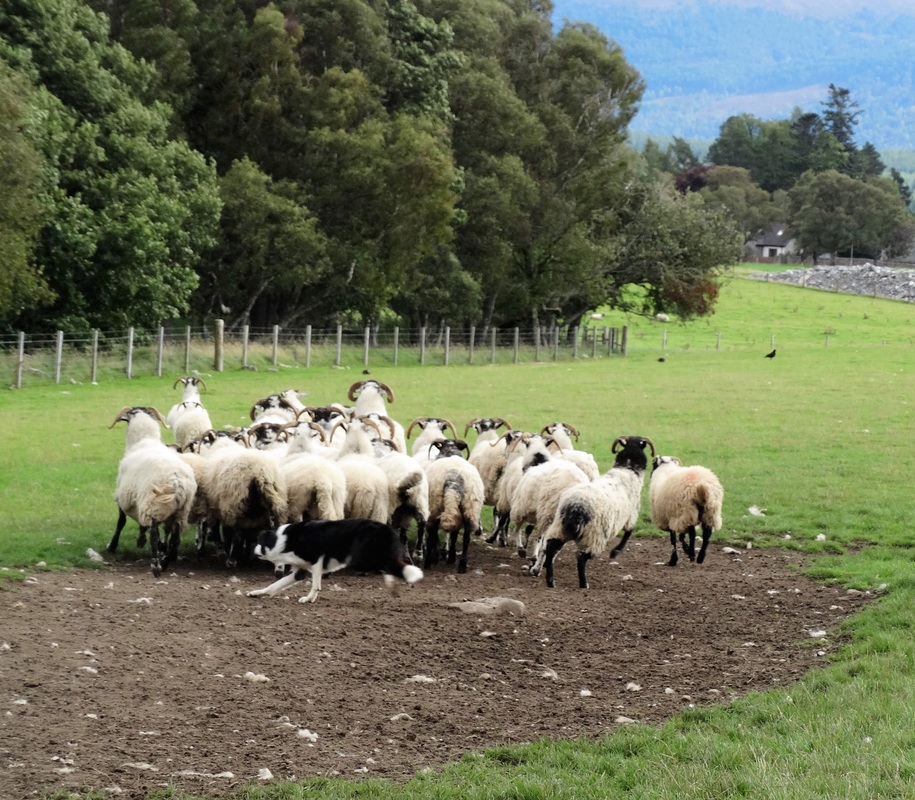
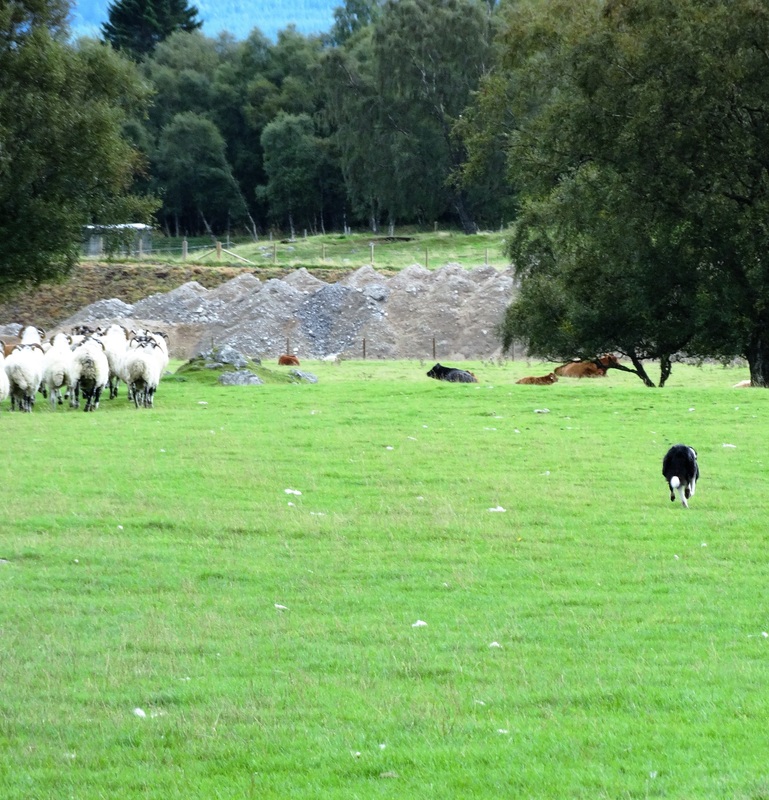
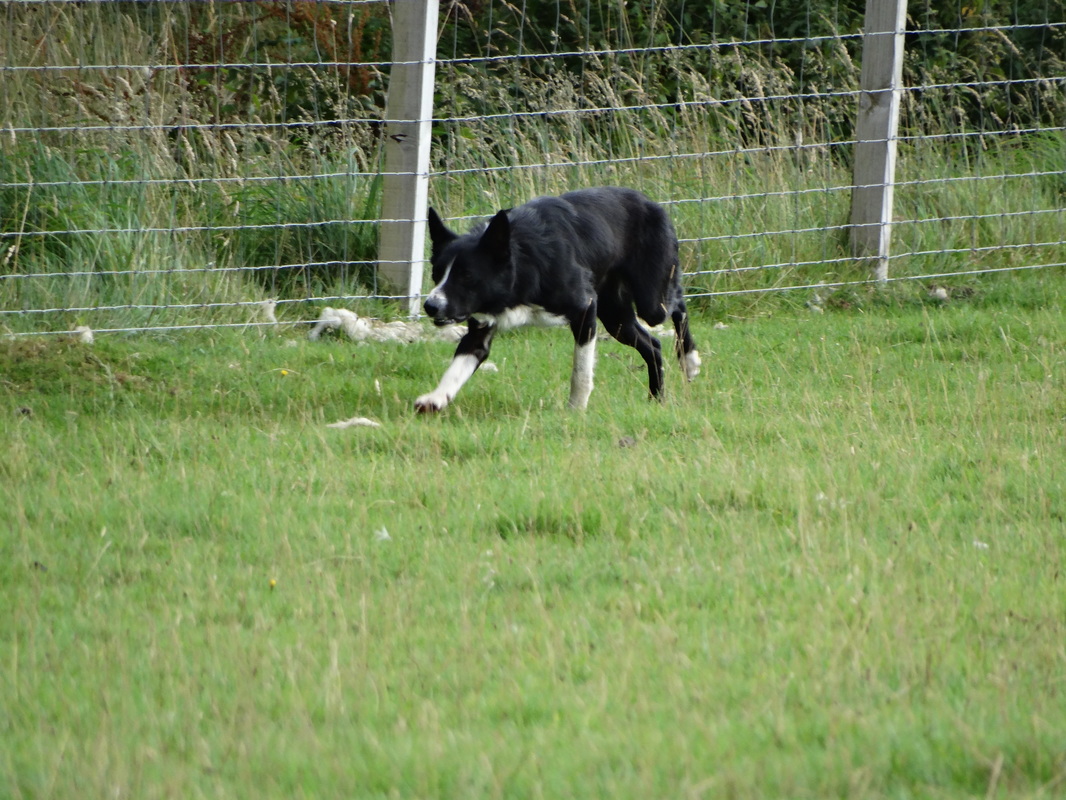 With the dogs milling about his feet, Mr. Ross sent one to get the sheep. If you'll look in the first photo, you won't see the woolly creatures. They were over a small hill, out of sight. As he chatted with us, the dog raced away to do his job. Only the one command 'get the sheep' was given.
A few minutes later, the dog and sheep came toward us. All of the other dogs were alert, but remained close, ears tuned for their own command.
At one point, Mr. Ross had one of the dogs gather the sheep and weave them in and out among the prone border collies, rather like a ski slalom. He also demonstrated the complete trust and bonding as his blind dog herded the sheep to his commands.
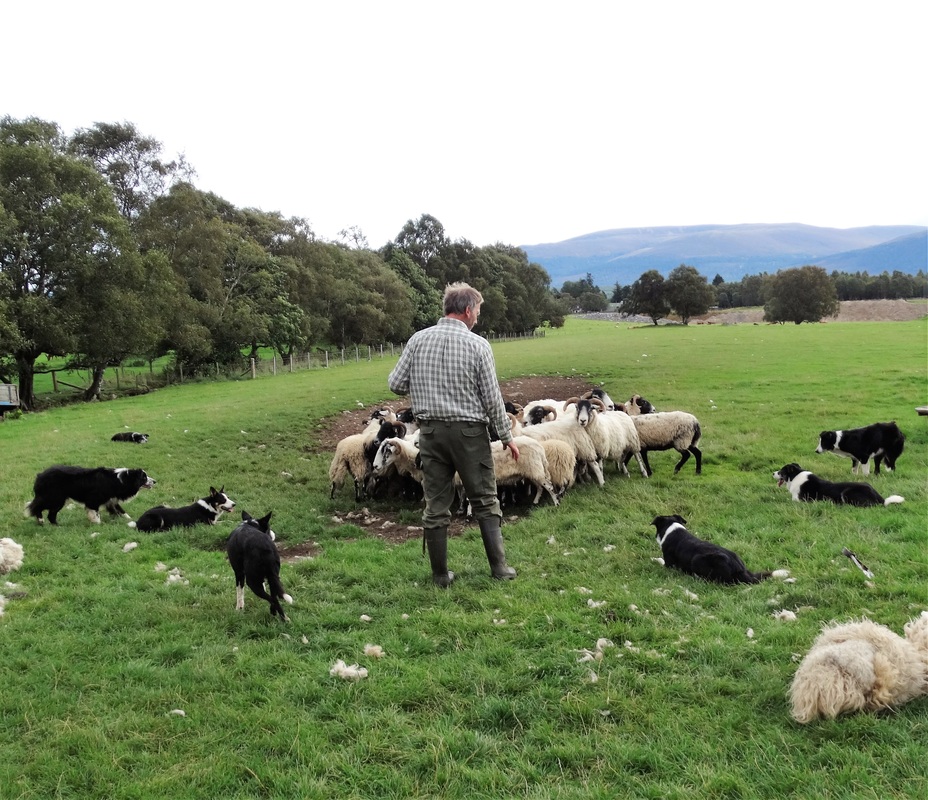
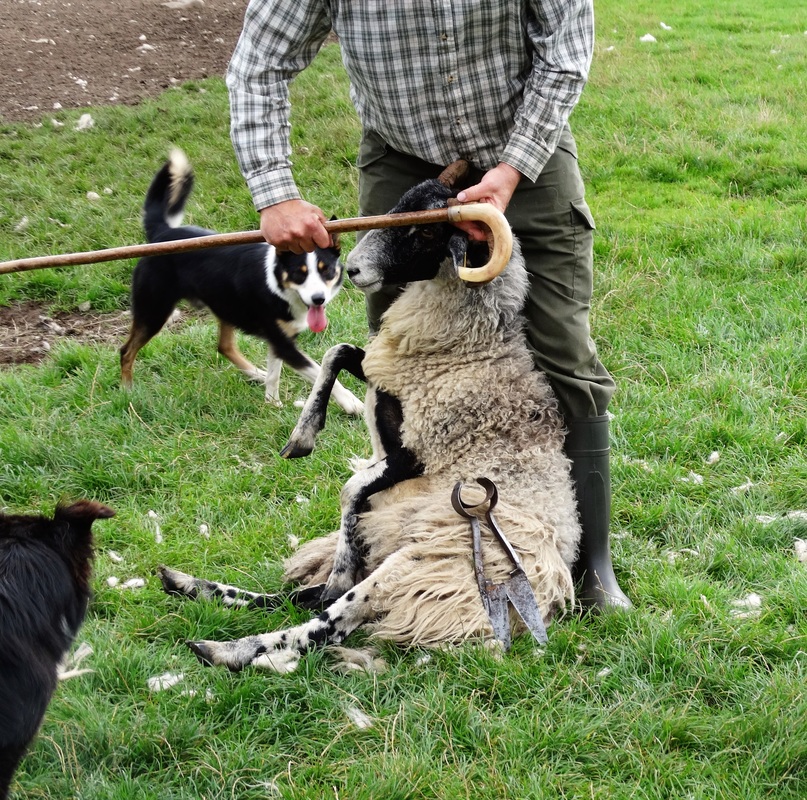
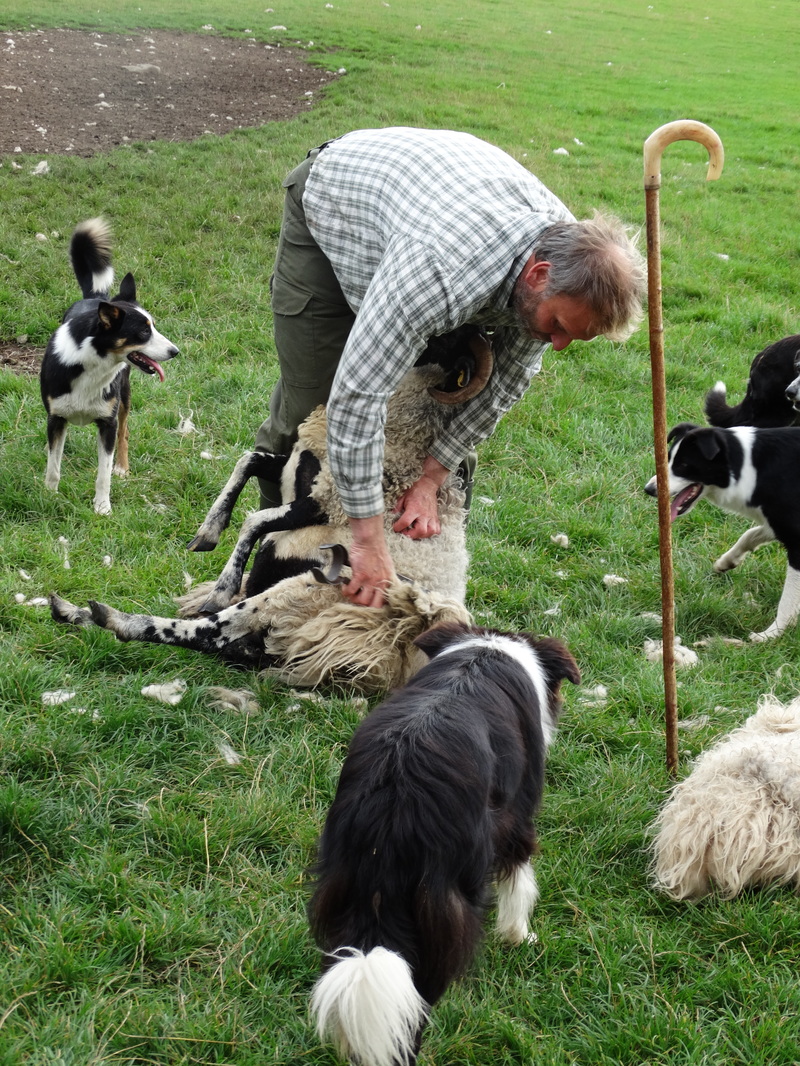
 Mr. Ross then singled out a sheep and (after showing us his shepherd's crook made from a sheep horn and a length of hazel wood), demonstrated how to hand-sheer a sheep. The sheep didn't seem to mind, and even peered out from behind Mr. Ross' knee to see what we were doing.
Here are a few final photos and notes below about Leault Farm.
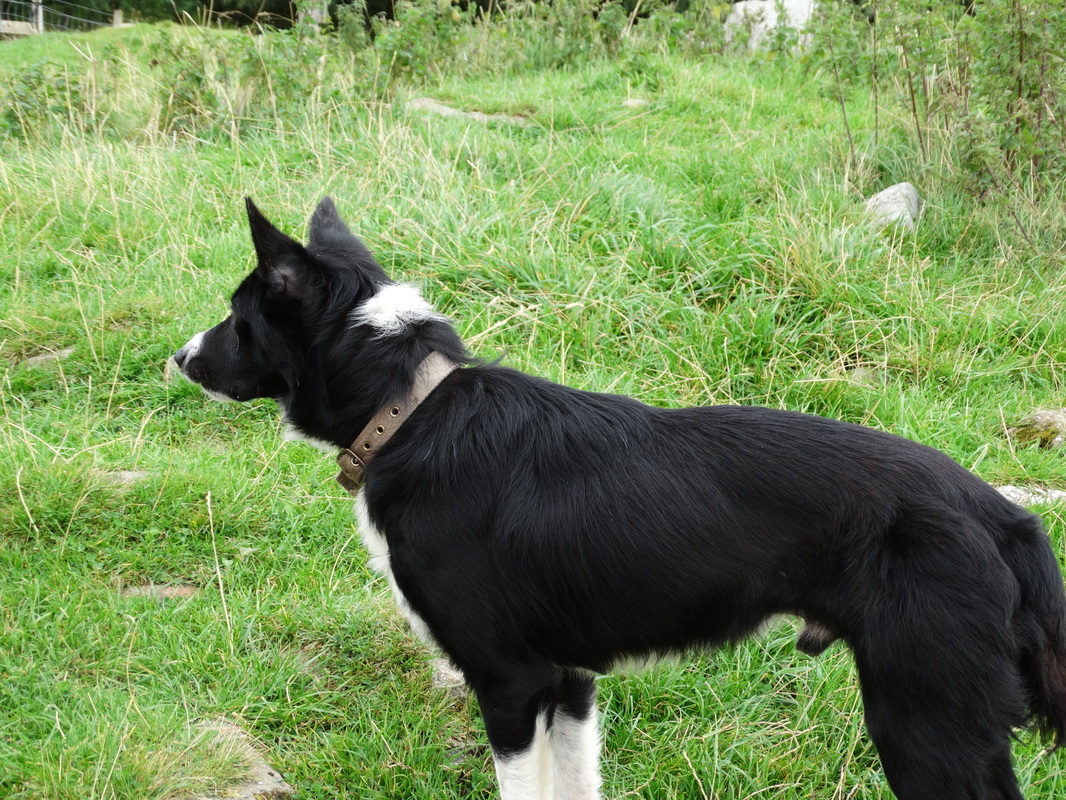
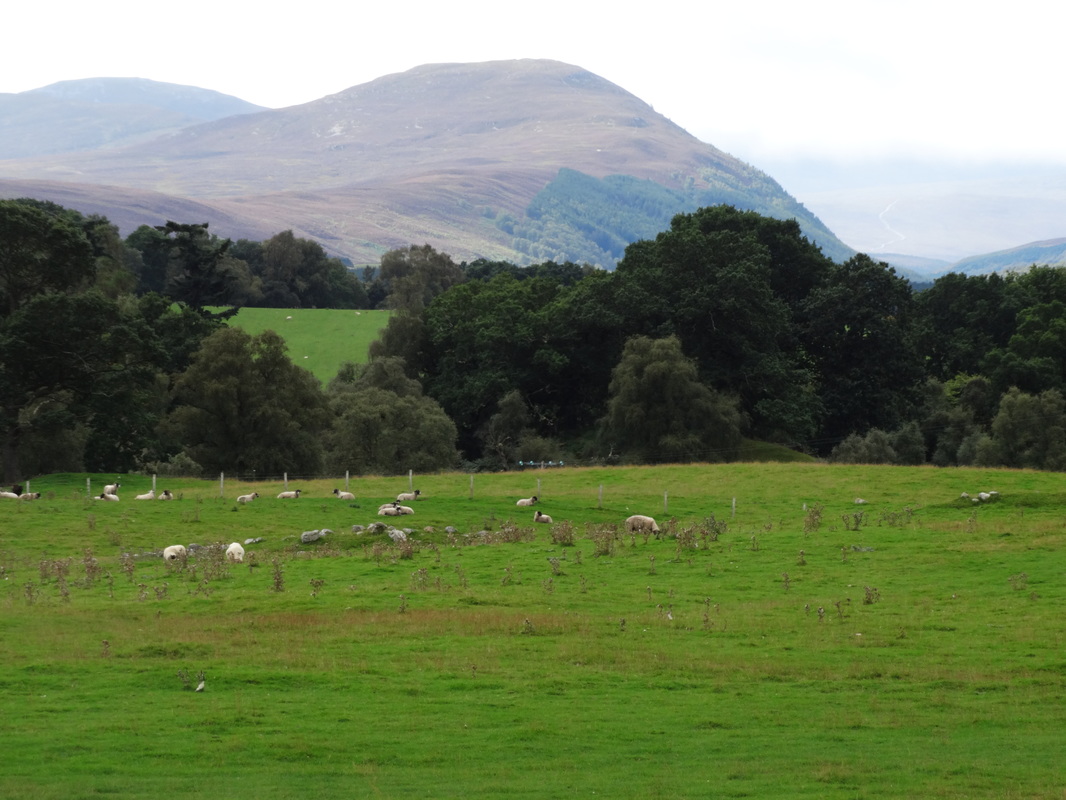
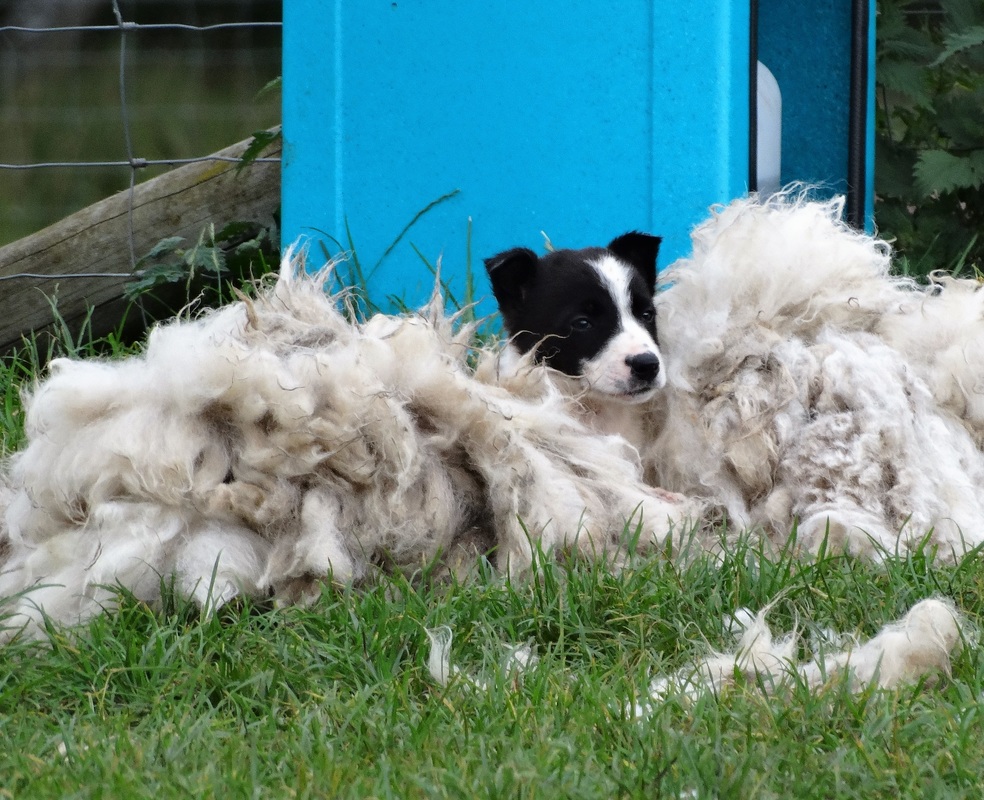
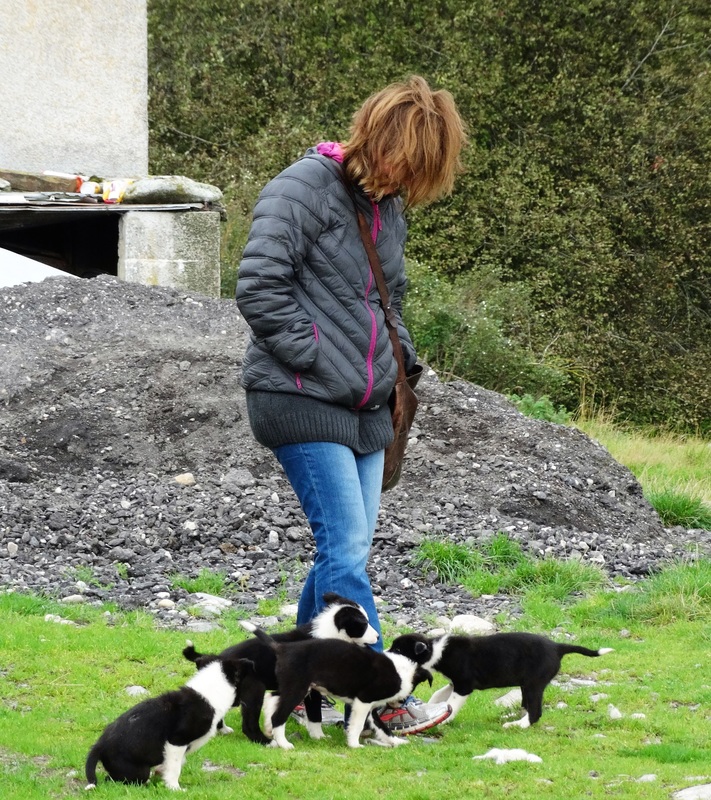

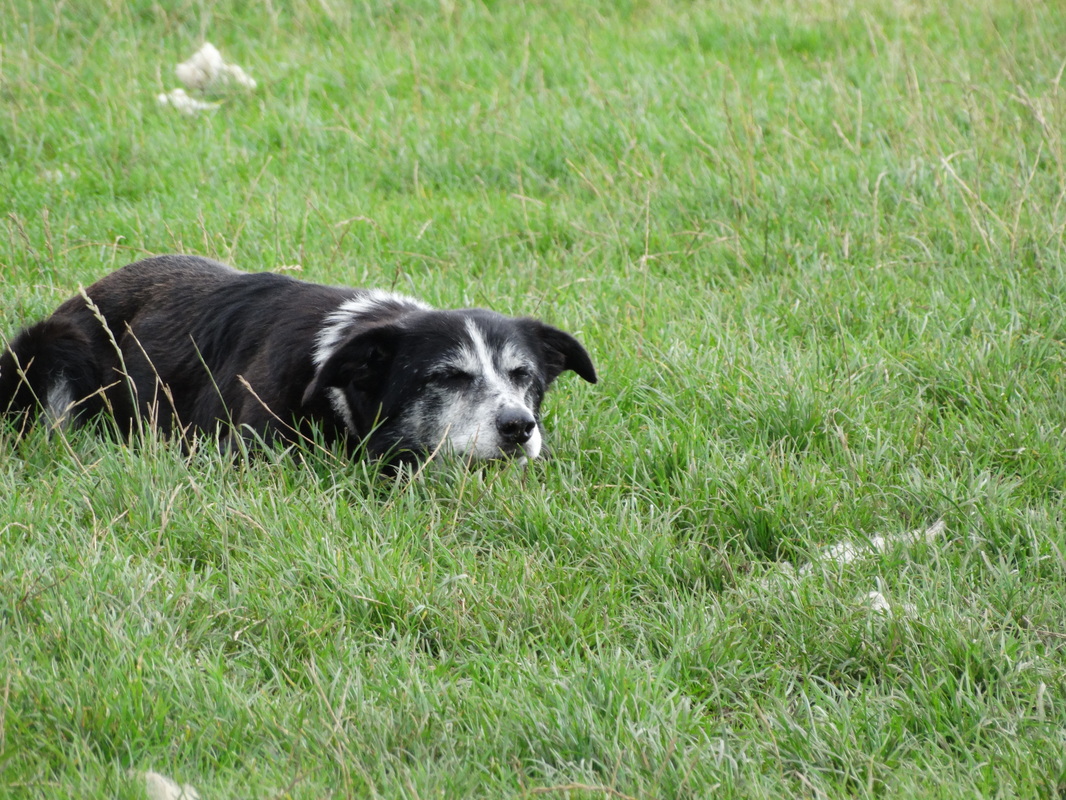
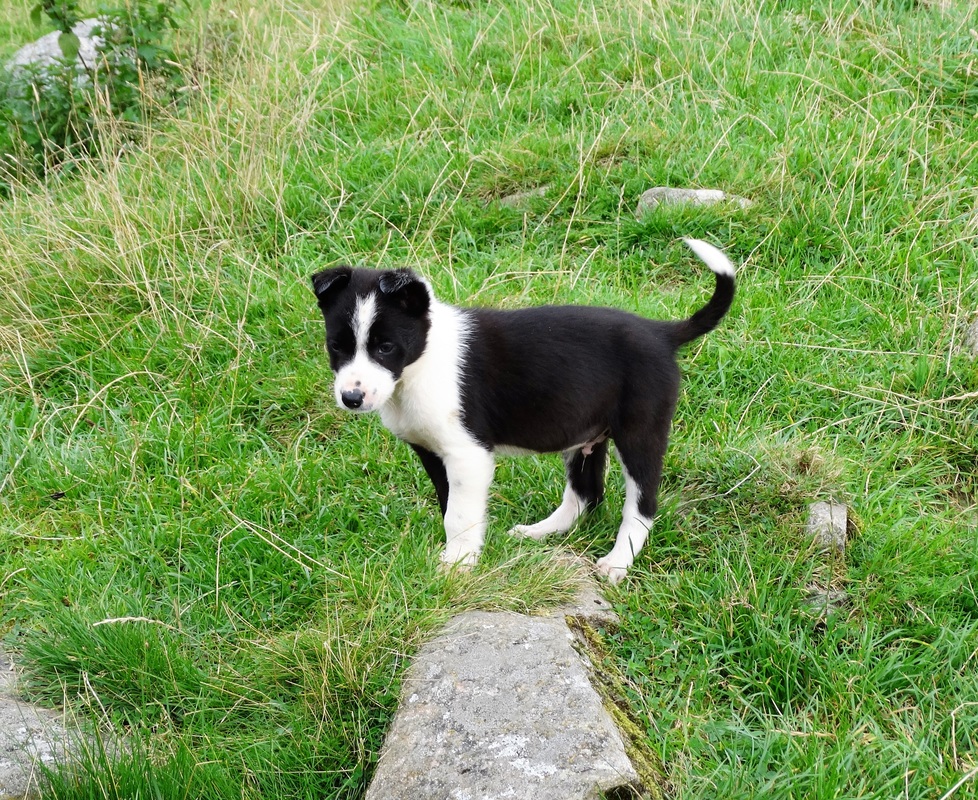 Leault Farm takes its name from the Gaelic "Leth Allt" (pronounced Lay-alt) which means "dividing burn".
Leault Farm is part of Dunachton Estate, Kincraig, Scotland and is 11,000 acres in size.
There are about 2500 sheep and 22 beef cows on the estate.
At the fall gathers, it will take 9 men and 35 dogs 9 days to bring the sheep in from the mountains where they've grazed all summer. It's about a 12 mile round trip.
The Ross family have been shepherds on Dunachton Estate since 1962.
Neil Ross was born at home on Leault Farm and began competing in sheepdog trials at the age of 8.
Neil became the shepherd on Dunachton Estate in 2001 after his father retired.
The puppies pictured would each set your wallet back by about 1000 Scottish pounds, though the fully-trained adults will fetch 3000 pounds or more each.
September 19, 2016
Guest blog from Sandra Hayward
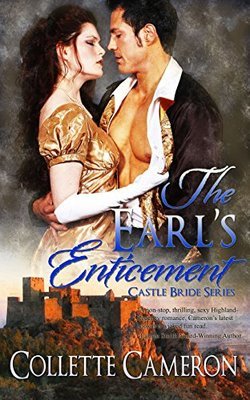 Today's guest blogger is Sandra Hayward with her lively endorsement of Collette Cameron's book, The Earl's Enticement.
"The Earl's Enticement" by Collette Cameron
Collette Cameron is an illustrious author of 20 compelling books dealing with the themes of love and betrayal in regency in Scotland etc. The novels are full of old historical intrigues, perplexing love stories and twists of the plot. It is extremely interesting to plunge into the 1820-30s where historical events intervene with personal problems and family mishaps.
The author is a happy mom of three and a successful woman who inspires women of all ages around the world with her gripping books.
Despite the fact that “The Earl's Enticement” is triggered by historical facts, the book is rich with humorous allusions and inspiring quotes, so do not hesitate to spend your free time devoting yourself to this book. Many of her fans consider this book to be the best one in her career! Don't miss the chance to indulge in getting to know it better!
In fact, the main heroes (Adaira Ferguson and Roark Marquardt) are already introduced in one of the previous books, namely “Highlander's Hope”. The whole story unwinds just before the end of “Highlander's Hope”, so it would be also useful to read this masterpiece as well! At times, it seems that Adaira Ferguson is the uncommonest lady in the whole of Scotland. She wears breeches, swears and does not trust men like Roark. Roark is the super intelligent earl who was once betrayed and does not wish to be betrayed again, which is why he seems to be too cold and aloof. The fates of the two connect when Adaira imprisons the earl by mistake (she thinks he wants to harm her brother's wife) not knowing that Roark is afraid of small dark rooms because of some psychological trauma in the childhood, but then, Adaira gives him freedom after realizing her failure. Such freedom does not satisfy the hero who wishes to turn Adaira into an honorable, intelligent lady of refinement. The story obtains humorous tones when Adaira's family comes to Roark's place where Adaira is taught fine manners but cannot do without a blunder even one day!
The two characters are a far cry from each other, they are complete extremes! Nevertheless, Roark understands that he likes Adaira the way she is, her temper, emotions and behavior! But this is not a sweet novel deprived of evil complots! Roark's malicious brother and a neighbor lady have their own plans that do not chime with Adaira and Roark's ones!
To summarize, the story is compelling and full of intriguing moments that will not leave you indifferent! Worth reading!
* * *
Sandra J. Hayward is a Miami Dade college MBA graduate who is interested in academic research and writing but does not want to depend on the rigorous schedule. That is why she has been collaborating for a long time as a freelance writer and enjoys her flextime a lot.
September 18, 2016
Scotland with Grace - Day 6 with Robert Burns
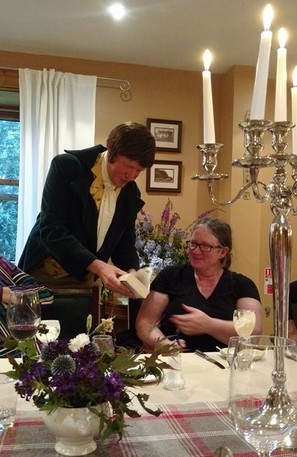 photo by Gretchen Harman Day 6 was spent writing, catching up on emails, and a long discussion on marketing.
I won't list the bullet points, but just note that we did make time for writerly pursuits during our trip.
To reward our full day of forsaking a shopping excursion, we were treated to some of the works of Scotland's own poet, Robert Burns.
At dinner, we were served a traditional Robert Burns dinner, complete with tatties, neeps and haggis. "Ode to a Haggis" by Robert Burns was read over the haggis before it was shared, and we recited the Selkirk grace, which is attributed to dear Rabbie.
Some hae meat and cannae eat
And some wad eat that want it,
But we hae meat and we can eat,
Sae let the Lord be thankit.
After dinner, we were surprised by a visit from the bard, himself!
Much singing and hilarity ensued. It was a truly memorable evening! In the above photo, it seems Mr. Burns asked for some clarification on a scene in one of Grace Burrowes' books. As he appears to have fathered thirteen children at last count, one can only wonder what puzzled him.
If you'd like to learn more about our host, Jim Malcolm who portrayed Rabbie so well, you can visit his website: http://www.jimmalcolm.com/
He's an outstanding Scottish folksinger and songwriter who kept us entertained throughout the tour.
From Scottish ballads and love songs to jaunty tongue-in-cheek tunes, we were never at a loss for music. You definitely need to add his CDs to your library!! Also check out his DVD, Jim Malcolm's Bard Hair Day, Robert Burns Returns.
September 17, 2016
Scotland with Grace 2016 - Braemar's Highland Games
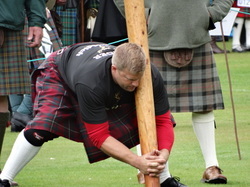 What a day this was! After a trip back in time at Blair Castle, we continued to Braemar for an afternoon of Highland Games, bagpipes, and brawny Highlanders in kilts.
Here are a few photos to get you going:
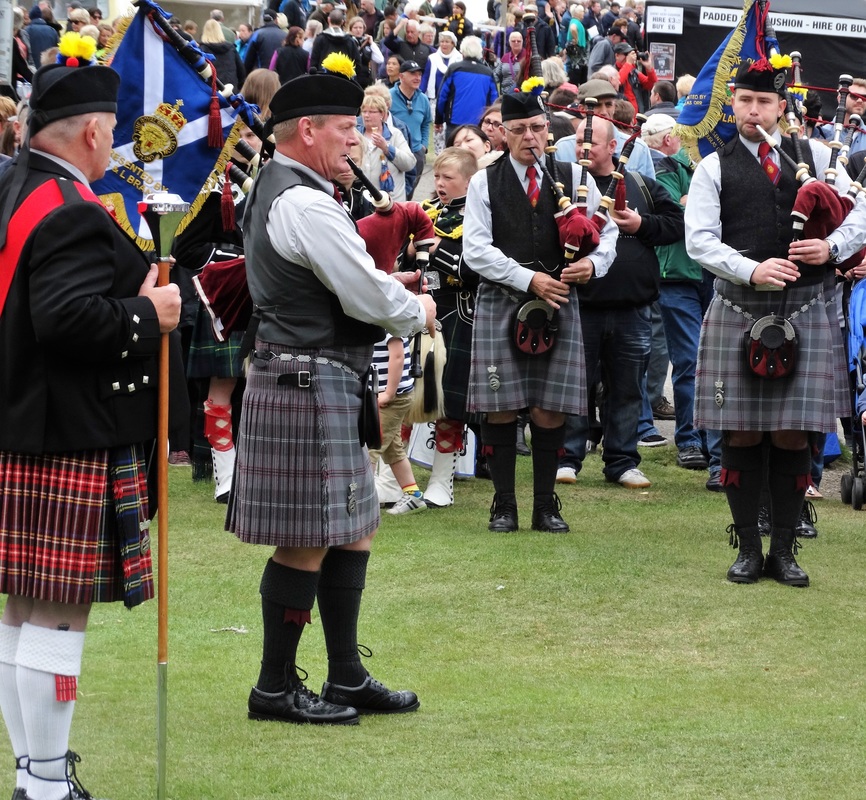

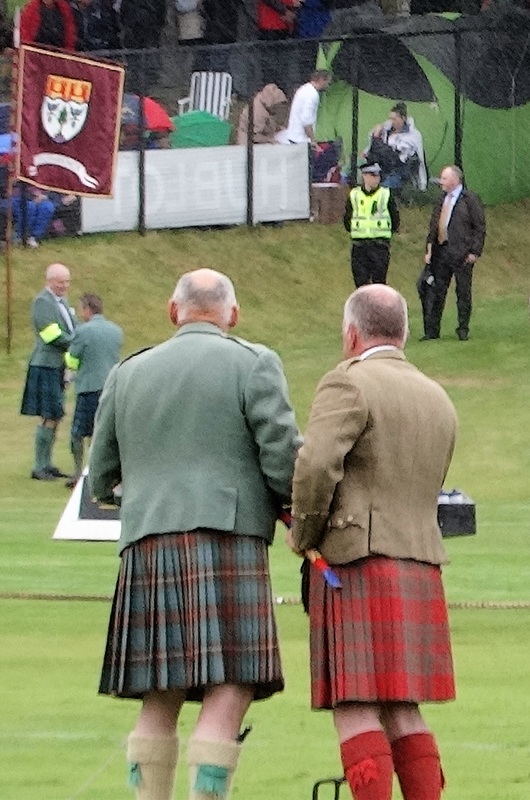
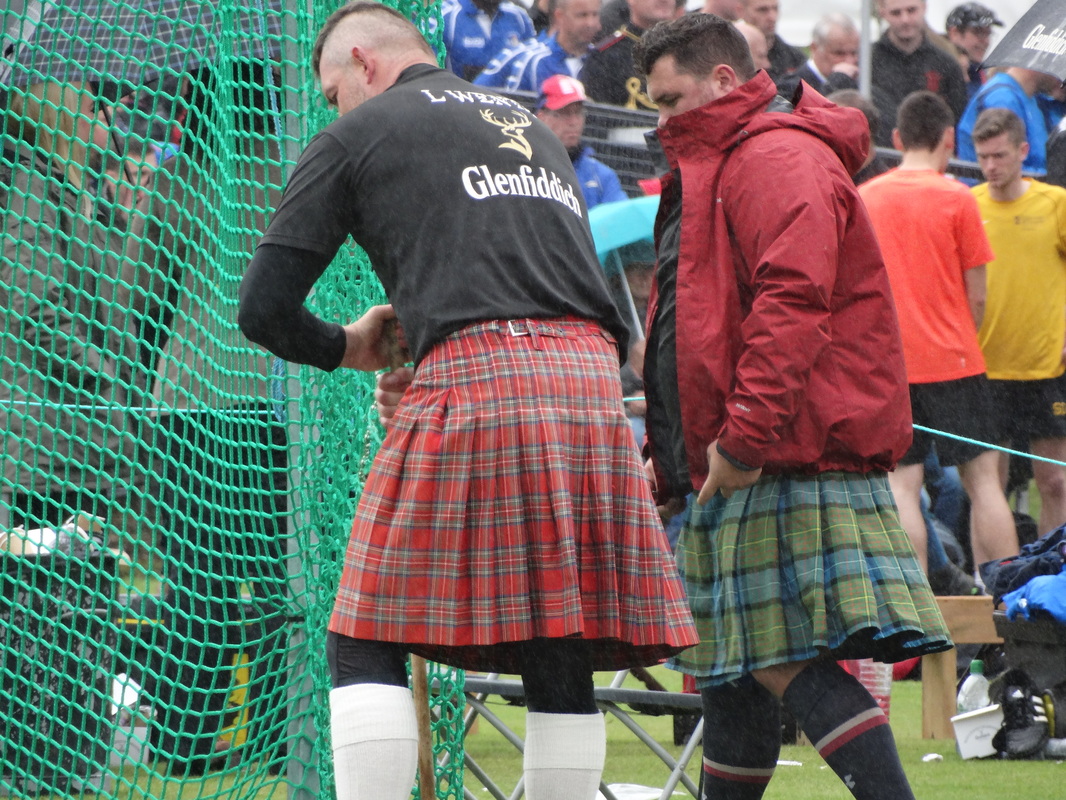 You know, in a kilt, age doesn't really matter :-)
Ok, back to my story.
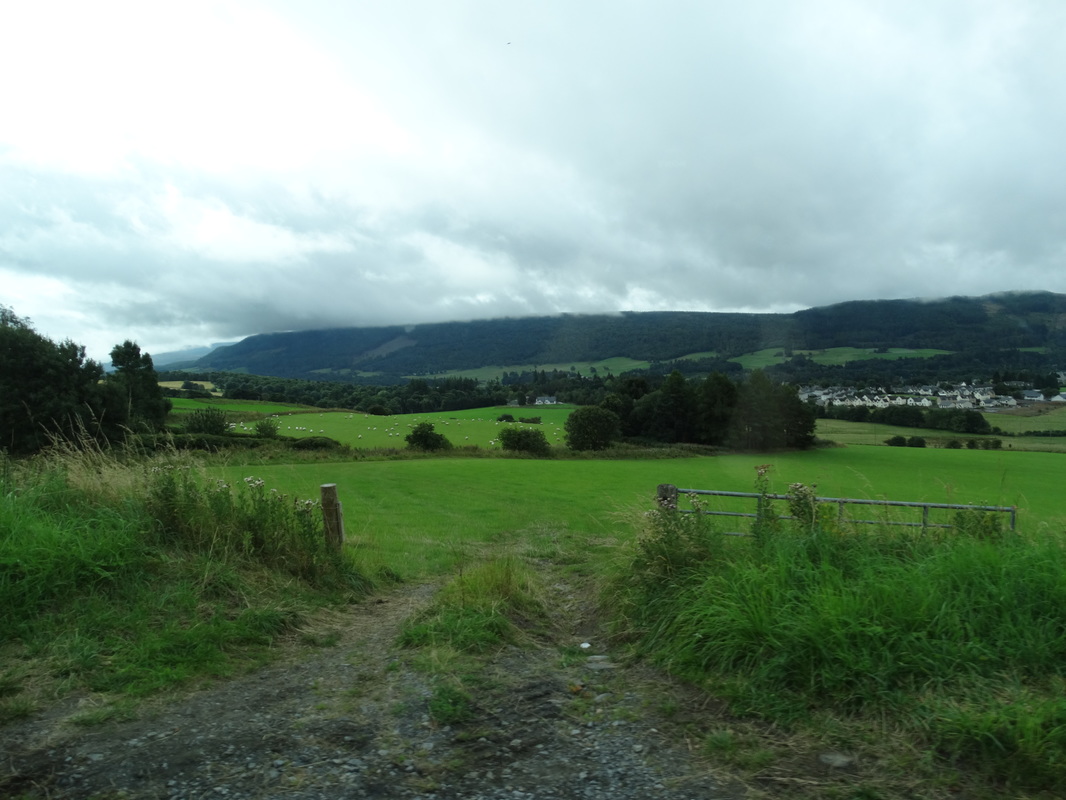
As we headed into the Highlands, we noticed a few things. First, the heather was still blooming. Second, the hills seemed rockier with fewer trees. And third, signs were printed in both English and Gaelic.

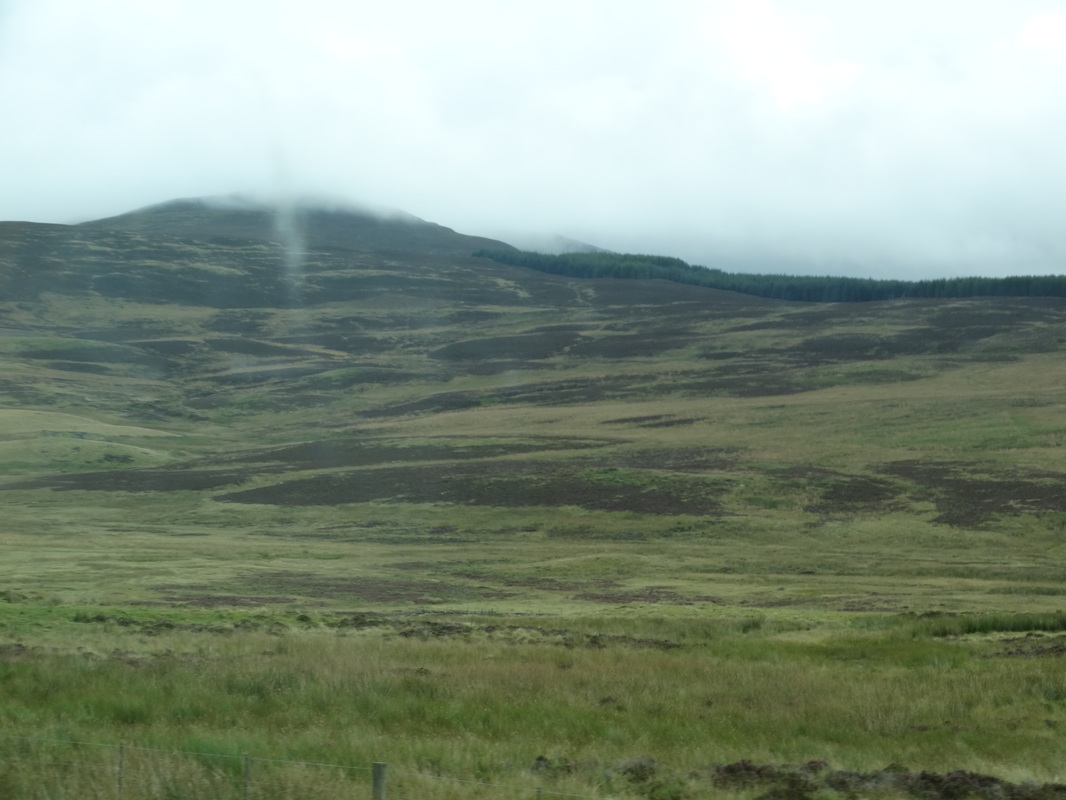
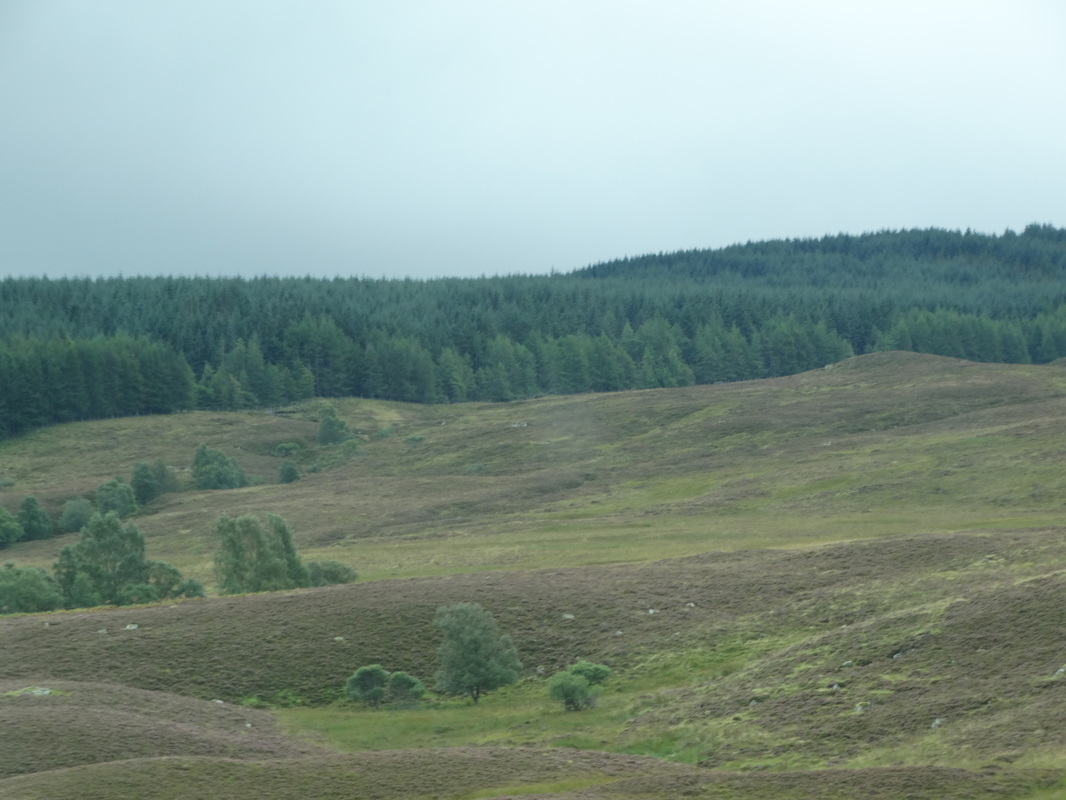
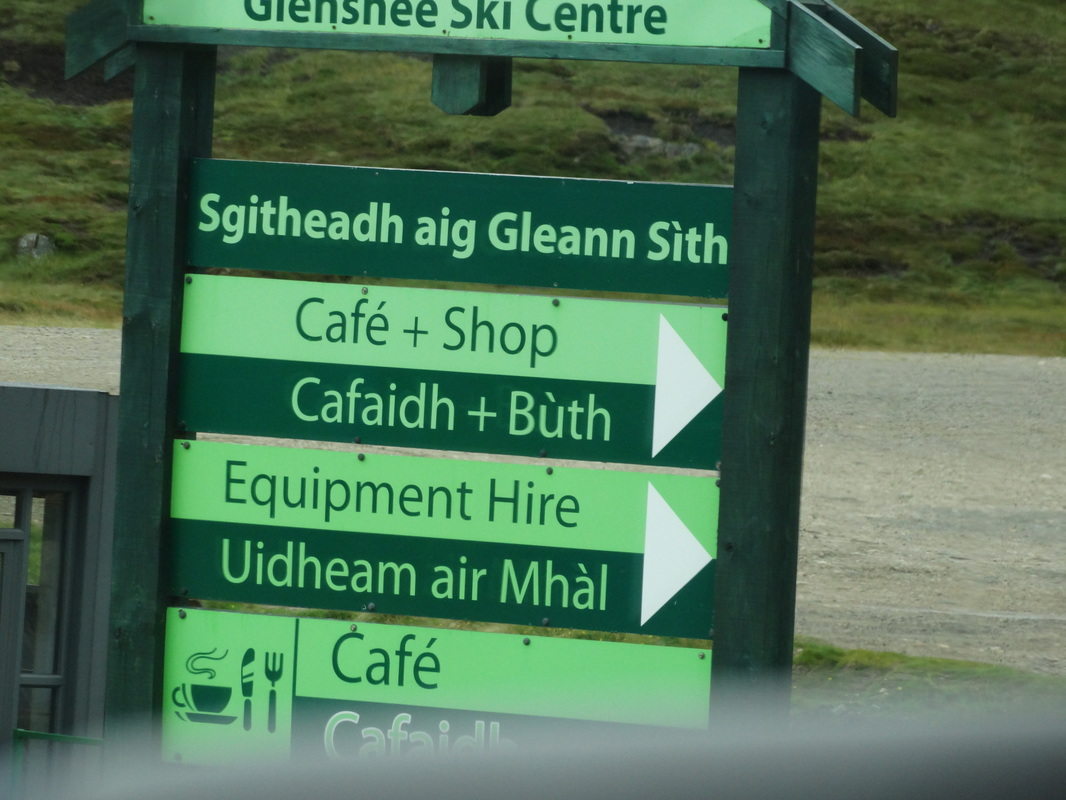 At the games, we were treated to tug-o-wars, foot races, bagpipers by the dozens, men tossing the caber and the heavy hammer, spritely dancers, and great food. I met with a lovely couple at the MacRae booth. We chatted, I bought hubby a cap and myself a scarf, and we exchanged cards.
But the excitement for the day was only beginning as Her Majesty, the Queen arrived with her party to the games. My photos are below, but here's a link to the Braemar Games fb page which has not only photos, but video clips! (Can ye hear the pipers?)
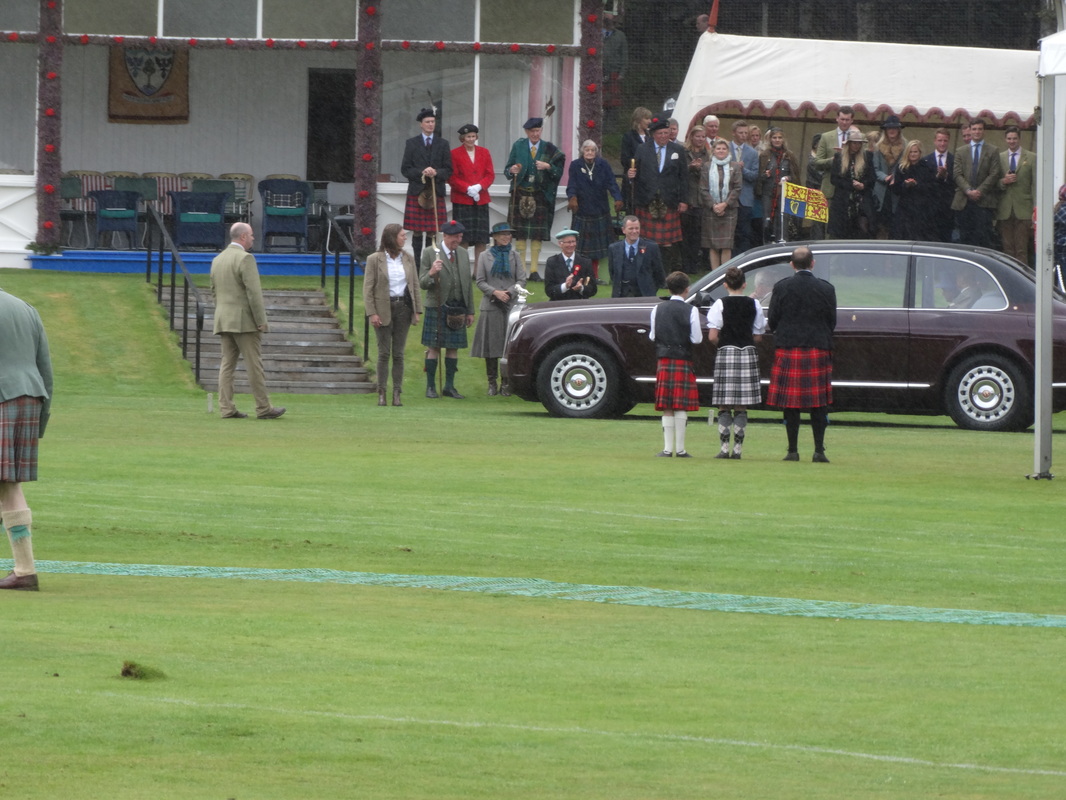
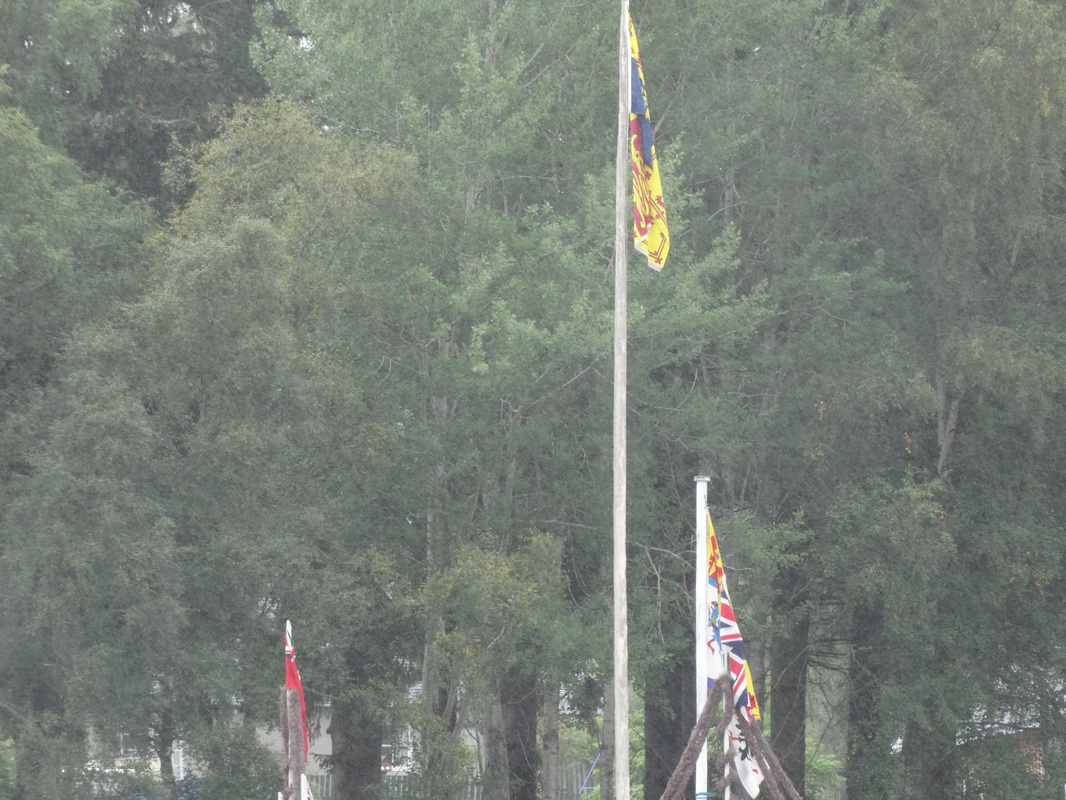
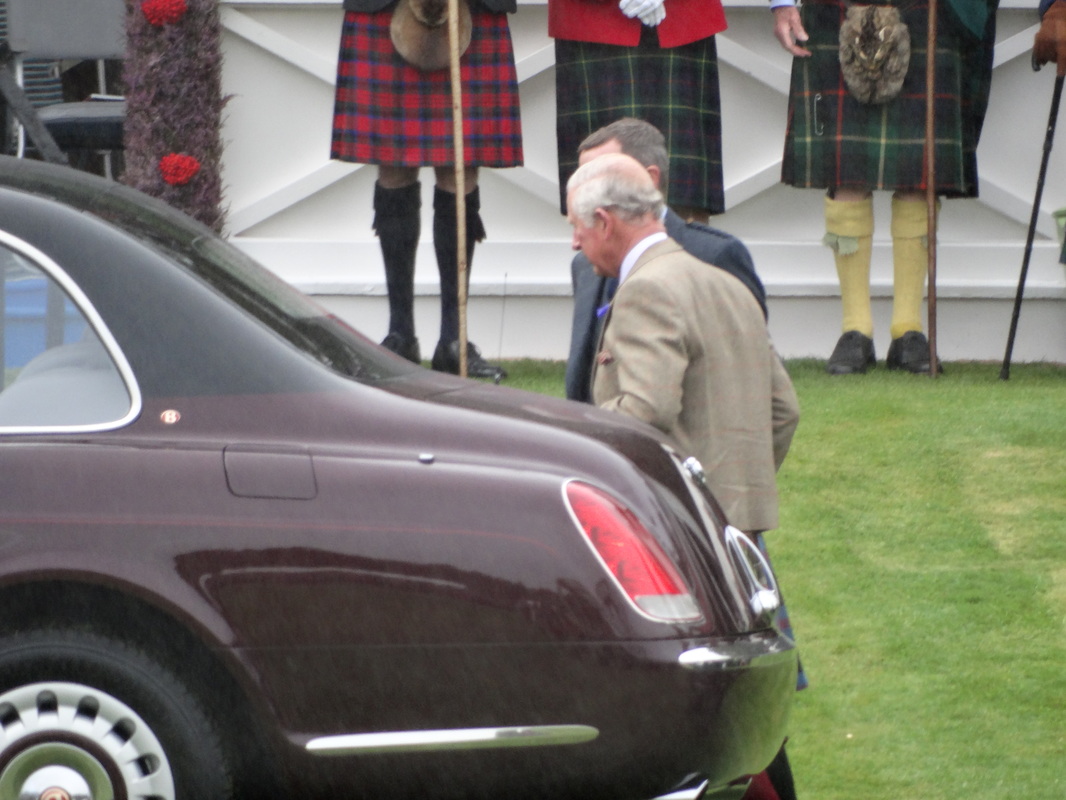
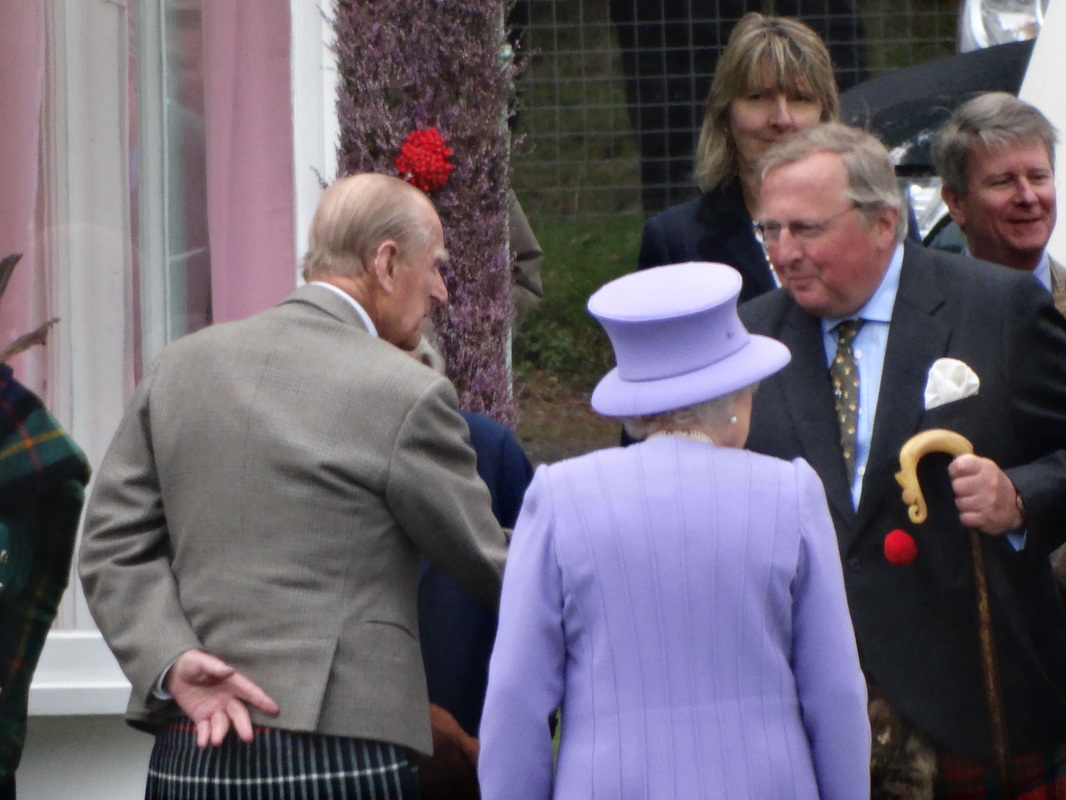
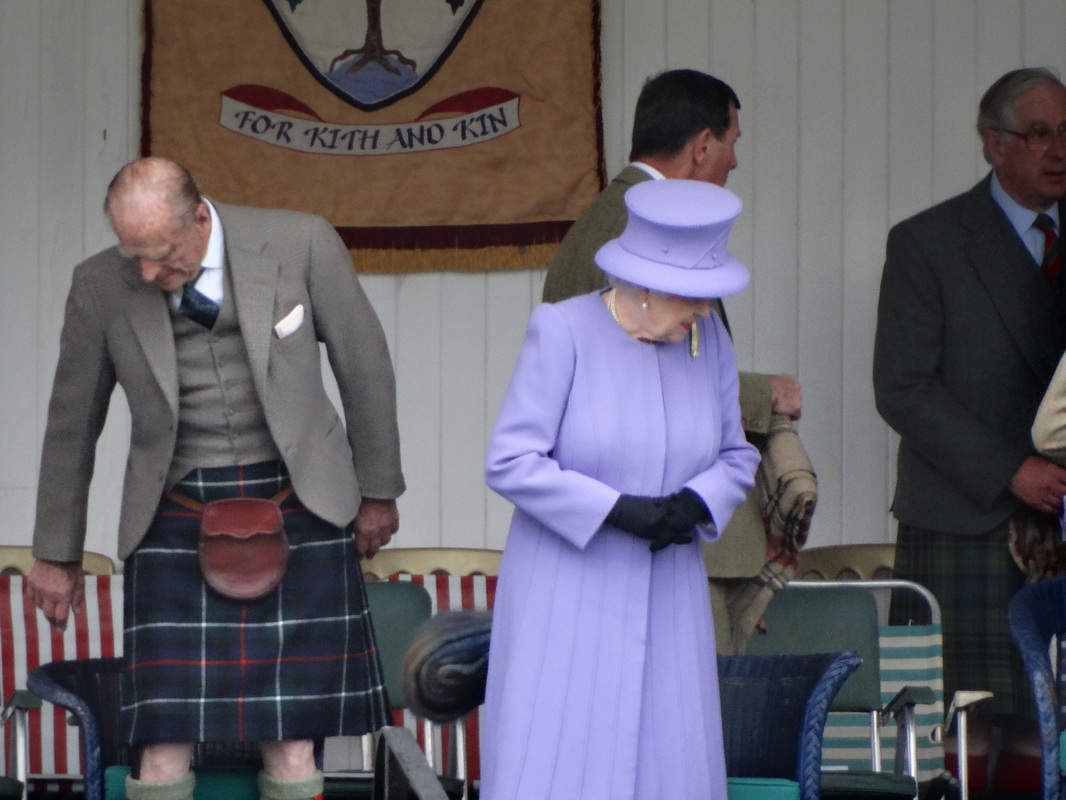

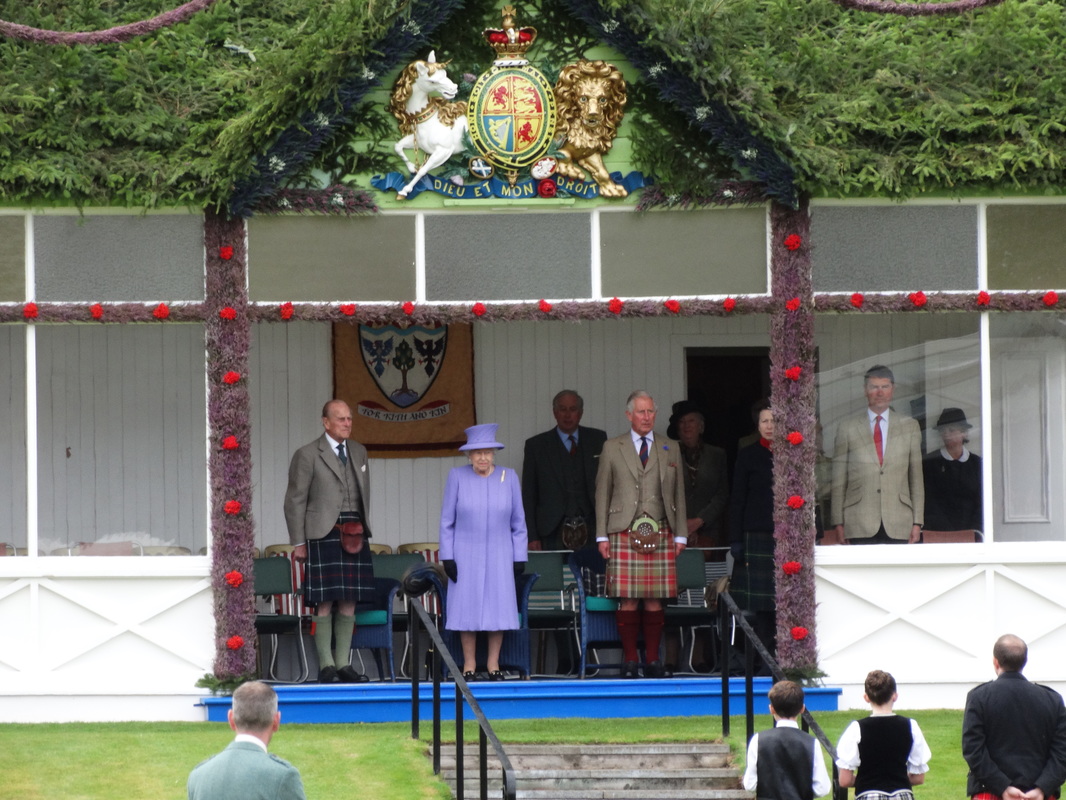
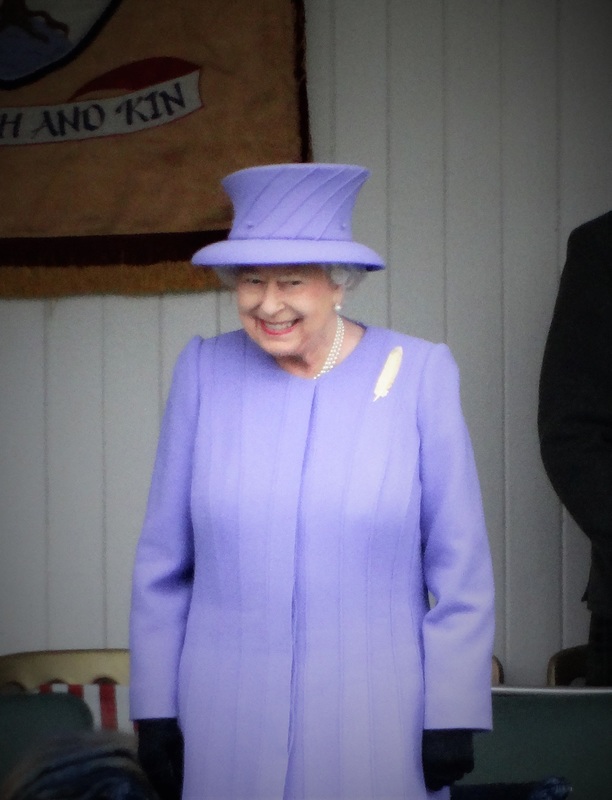 The rain soon began falling in earnest, and a few of us retreated to the clan tents, and from there to the bus where we had a wee dram of 15yr old Glen Ord whisky that had been aged in a sweet white French wine cask. To ward off a chill, ye ken.
Scotland with Grace - Day 3: Blair Castle
 Blair Castle.
It began in 1269 when the Earl of Atholl returned from Crusade to discover his neighbor, John Cumming (likely assuming the earl wouldn't be back), had built a large tower house on his land. The earl took his land, and the tower house, back from Cumming, and Cumming's Tower still stands as the oldest--and tallest--part of the castle. Our drive to Blair Castle took us over the River Tay which is a major river for salmon fishing. In fact, there was something known as a 'Salmon Charter' in the middle ages to prevent the lord of the manor from feeding his people salmon more than a couple of times per week. Salmon were so numerous, it was said you could almost walk across the River Tay on the backs of the salmon. Simply by stringing a net across the river you were assured of an abundance of salmon.
Just in case you were interested.
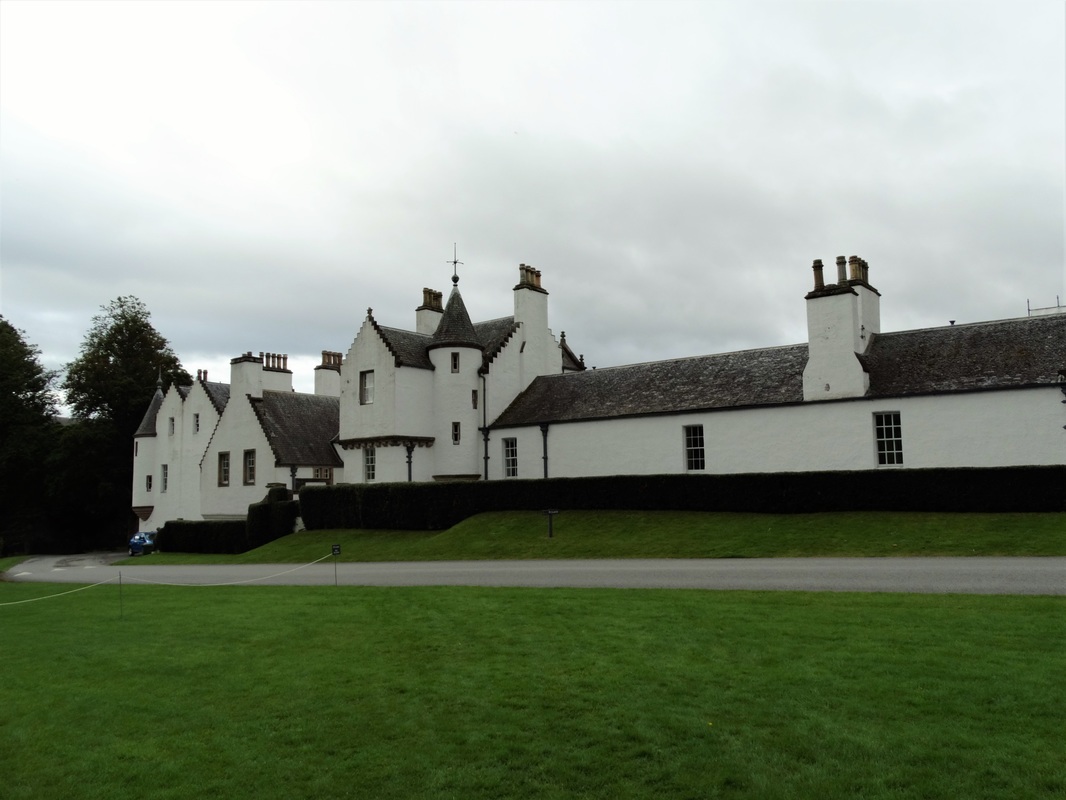
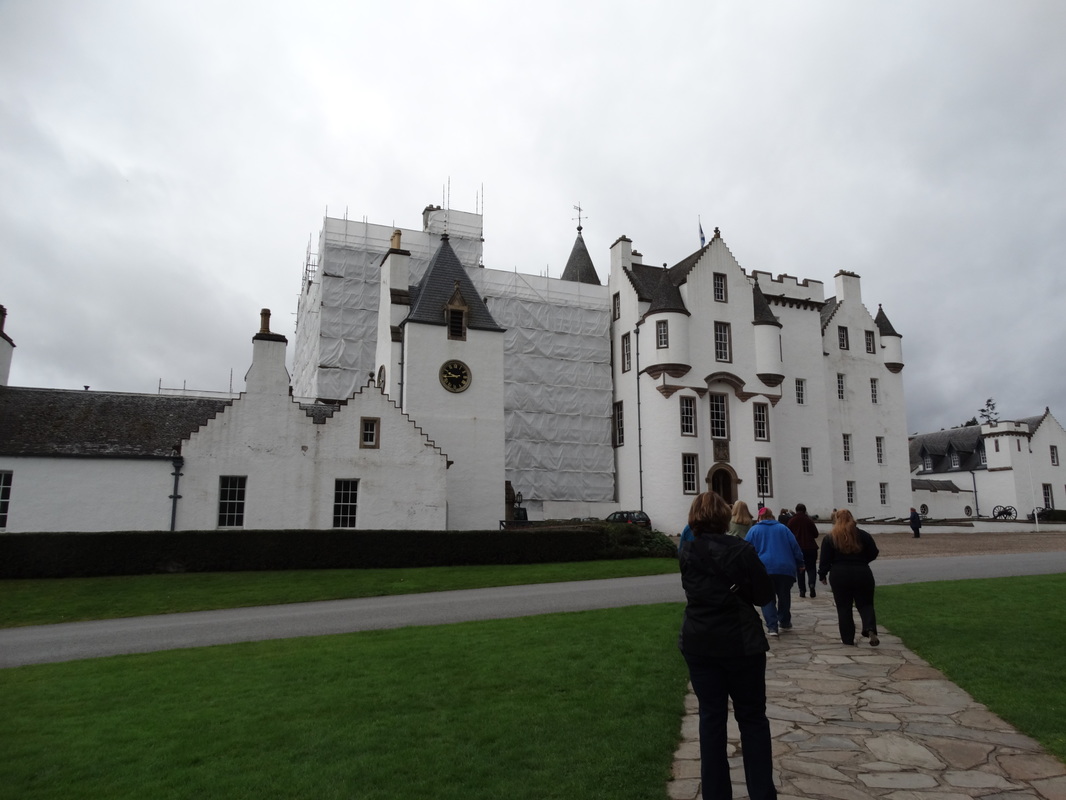
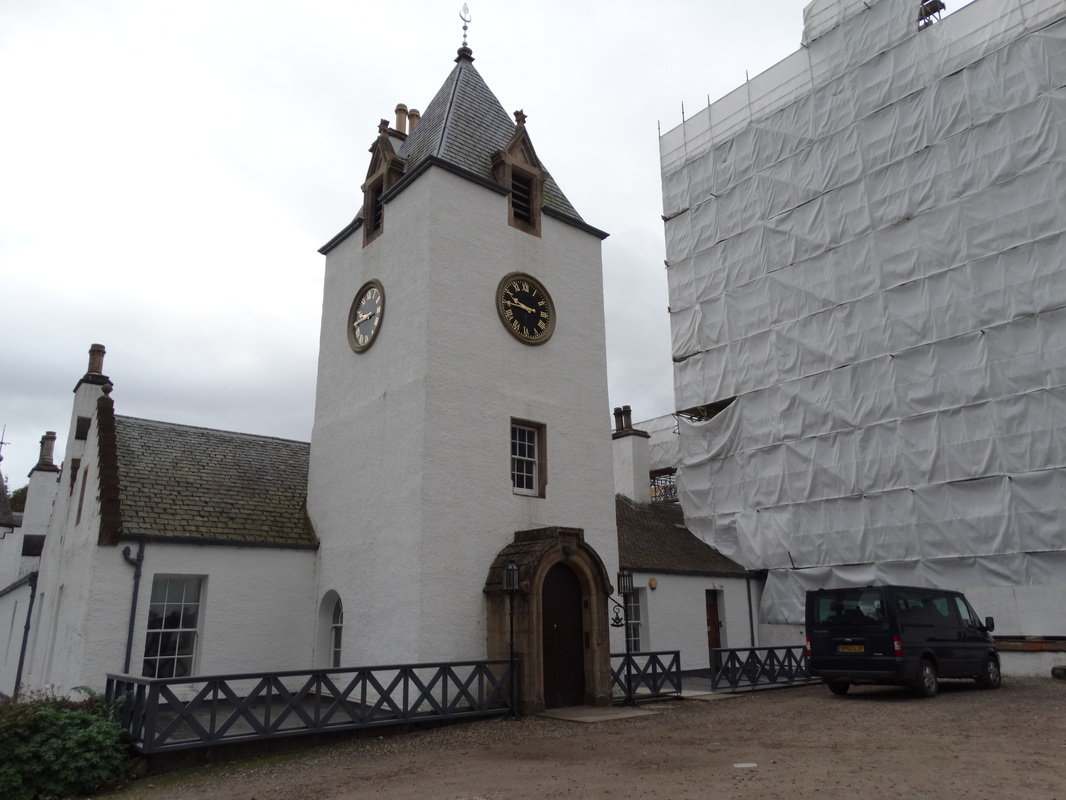
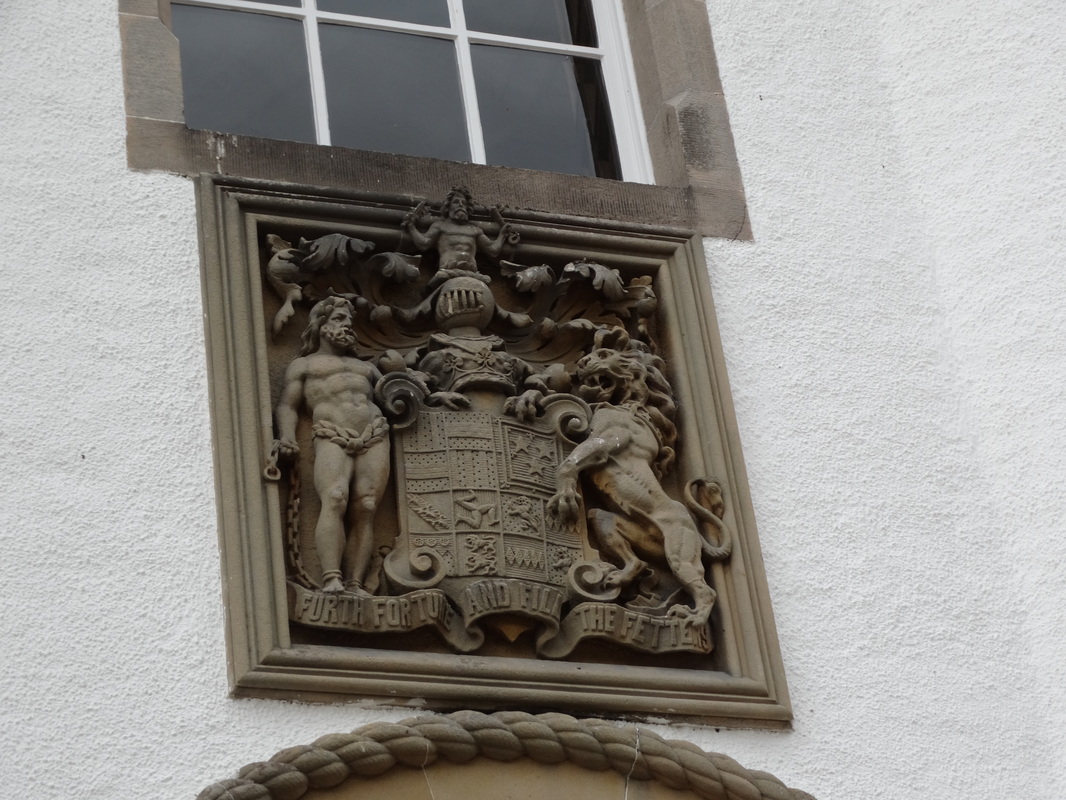 As you can see, Blair Castle is quite large and incorporates several styles of architecture. In the 1530s, a long hall was built over a series of vaulted rooms to the south of the original tower. In 1740, a great undertaking was begun to turn the medieval castle into a Georgian mansion. Around 1870 a new entrance hall and ballroom were added, as were bathrooms, gas lines and telephones.
Blair Castle today boasts some 85 rooms, of which 30 are open to the public.
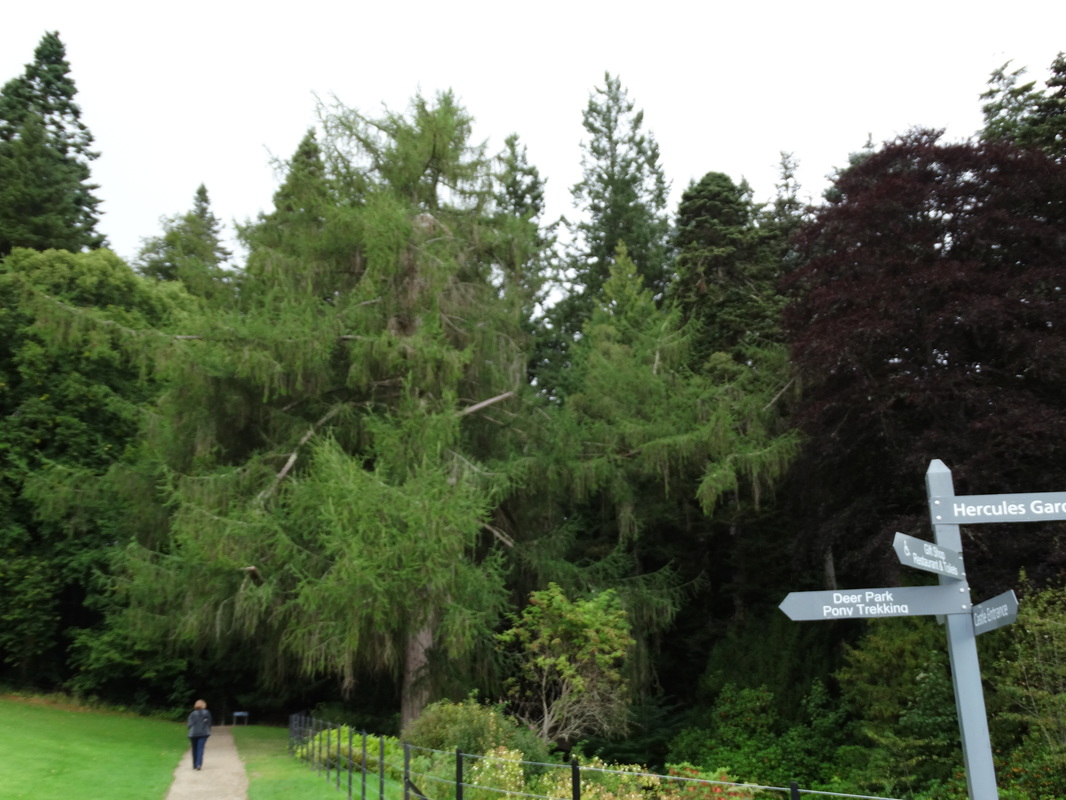
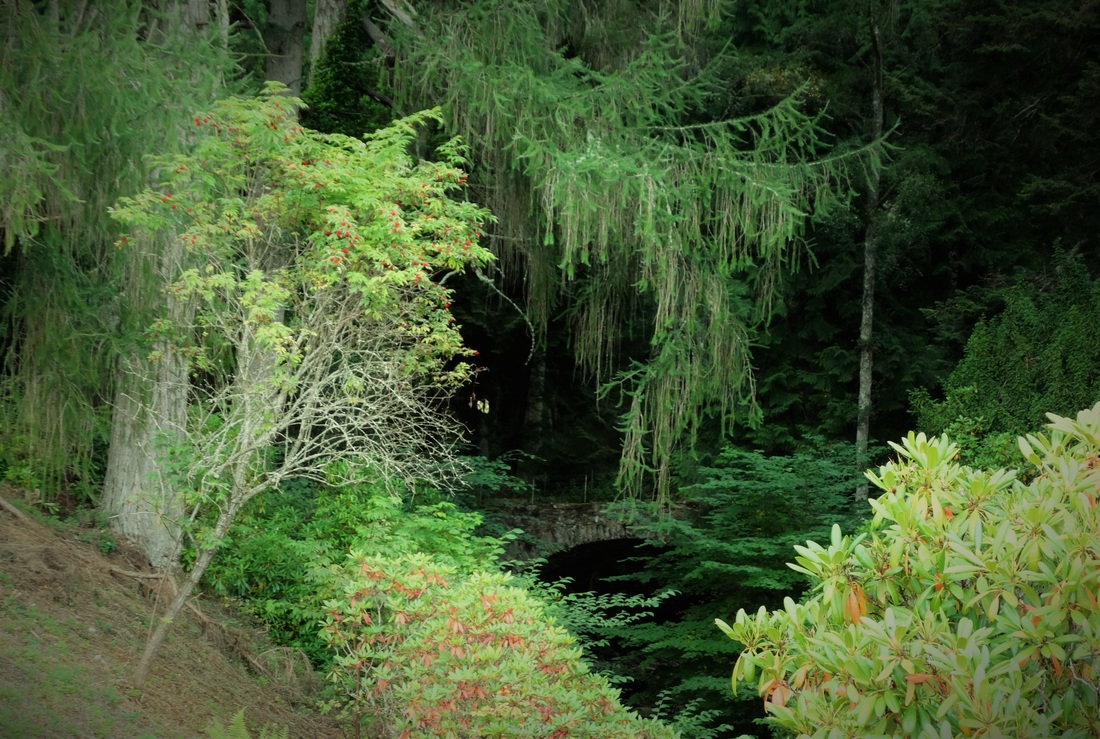
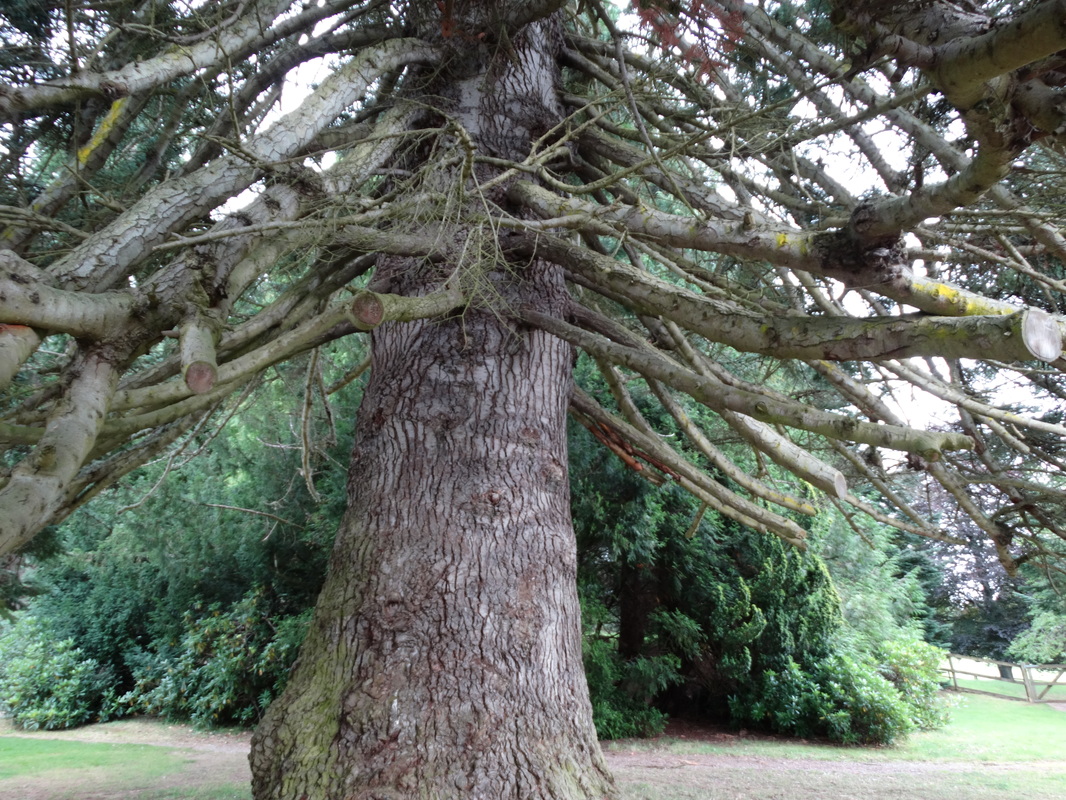
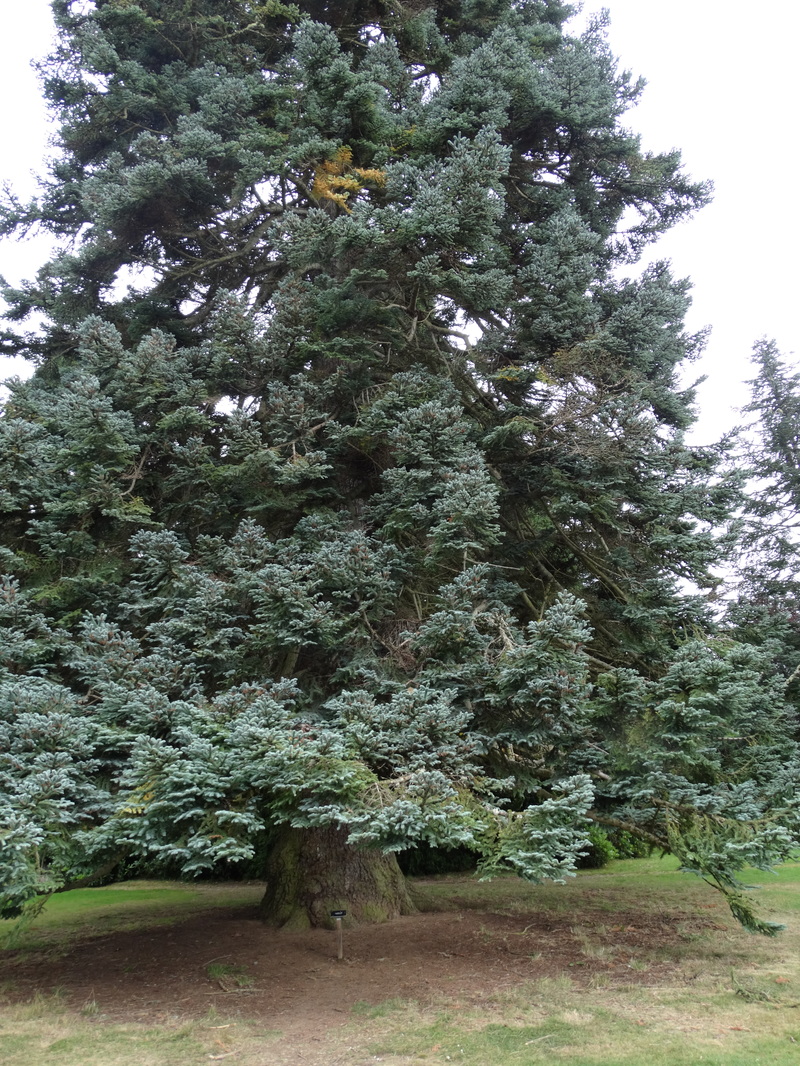
A few interesting facts whilst you peruse the beautiful gardens of Blair Castle:
The Duke of Atholl is the only duke in Scotland allowed to have his own army- though it is today purely ceremonial. Queen Victoria stayed at the castle in 1844. As a mark of loyalty, she granted the Duke the Queen's Colours, and founded the Atholl Highlanders as a private army.
The Duke's family was divided in the Jacobite Uprisings of both 1715 and 1745. In 1745, his oldest son fought on the Jacobite side and sought refuge in France after the Battle of Culloden. The younger son fought for the Crown, and thence became Duke. Years later, the older son's son and the younger son's daughter married, thus keeping the 'rightful heir' (though he was charged with treason) in direct line for the inheritance.