
Terry Shames's Blog: 7 Criminal Minds, page 229
December 16, 2015
Part 2--Setbacks
Repairing the damage
Last week I talked about discovering that the book I had been working on for months was unacceptable, both to the friend I asked to read the first few chapters, and to me. This week I will talk about my approach to repairing the damage.
The first step to repairing a broken book is to acknowledge that it isn’t working. Whatever fantasy you had about how wonderful the idea was, it hasn’t translated to the page.
The second step? Decide whether you are going to fix it or junk it. I was tempted to do the latter. I had worked diligently for months. Did I really want to start at the beginning? I had 100,00 words. Were any of the sentences, scenes, and chapters worth saving? Were any of the characters interesting enough to work with? I decided that the answer to these questions was yes. There were two characters that every time they showed up, I perked up. And there was something that still intrigued me about the plot. So the decision was that I thought there was enough to the story to tackle a major rewrite.

The third step was to analyze where I ran off the rails. In previous books when I realized that things weren’t going well, I could usually find a scene that wasn’t true to the story. But in this case it was something different—I started the story too late. Usually a story that doesn’t work has too much lead-in in the beginning. What I realized was that I in my zeal to avoid that error, I had robbed it of suspense. I thought about why some scenes came alive while others just lay there and I realized that I didn’t know enough about the villain.
Finally I started replotting. I thought carefully about not only what the antagonist was up to, but how he had approached his villainy. I realized the protagonist was reactive rather than proactive—and thought about how to change that. I constructed a new timeline a timeline. And rewrote it. And rewrote it again. And with all that, something started to emerge that excited me.
I copied the whole manuscript and then started stripping out whole chapters and rearranging others—bringing some from the end to the beginning. And something magical happened. The characters started to speak up and take their place as if now they had a place in the book. And by some miracle, I realized that there were whole chunks of the book that actually worked.
I’m now feeling something I haven’t felt for a while. I want the world to go away so that I can get the book rewritten. I feel rejuvenated and excited.
I Like what is happening. In the end, I don’t mind so much if no one else likes the book—but I have to like it. I have to hand over a book that satisfies me. And I think I’m getting there.
Last week I talked about discovering that the book I had been working on for months was unacceptable, both to the friend I asked to read the first few chapters, and to me. This week I will talk about my approach to repairing the damage.
The first step to repairing a broken book is to acknowledge that it isn’t working. Whatever fantasy you had about how wonderful the idea was, it hasn’t translated to the page.
The second step? Decide whether you are going to fix it or junk it. I was tempted to do the latter. I had worked diligently for months. Did I really want to start at the beginning? I had 100,00 words. Were any of the sentences, scenes, and chapters worth saving? Were any of the characters interesting enough to work with? I decided that the answer to these questions was yes. There were two characters that every time they showed up, I perked up. And there was something that still intrigued me about the plot. So the decision was that I thought there was enough to the story to tackle a major rewrite.
The third step was to analyze where I ran off the rails. In previous books when I realized that things weren’t going well, I could usually find a scene that wasn’t true to the story. But in this case it was something different—I started the story too late. Usually a story that doesn’t work has too much lead-in in the beginning. What I realized was that I in my zeal to avoid that error, I had robbed it of suspense. I thought about why some scenes came alive while others just lay there and I realized that I didn’t know enough about the villain.
Finally I started replotting. I thought carefully about not only what the antagonist was up to, but how he had approached his villainy. I realized the protagonist was reactive rather than proactive—and thought about how to change that. I constructed a new timeline a timeline. And rewrote it. And rewrote it again. And with all that, something started to emerge that excited me.
I copied the whole manuscript and then started stripping out whole chapters and rearranging others—bringing some from the end to the beginning. And something magical happened. The characters started to speak up and take their place as if now they had a place in the book. And by some miracle, I realized that there were whole chunks of the book that actually worked.
I’m now feeling something I haven’t felt for a while. I want the world to go away so that I can get the book rewritten. I feel rejuvenated and excited.
I Like what is happening. In the end, I don’t mind so much if no one else likes the book—but I have to like it. I have to hand over a book that satisfies me. And I think I’m getting there.


December 9, 2015
Setbacks—Part I The Tail Wagging the Dog
I asked one of the members of my writing group to read the first 50 pages of my completed (or so I thought) manuscript. I knew he understood the way drama works--the repeated suspense/payoff kind of drama that makes for a thriller. I had been talking about the thriller I’m writing for months, and was beginning to think it was time to put up or shut up.
He agreed to read it, and our subsequent discussion was every writer’s nightmare. He’s a seasoned editor and knows all the right diplomatic phrases to make his verdict palatable. But I’m a seasoned member of critique groups who knows how to cut through to the reality. The verdict: what I had written was crap. Back to th drawing board. The word “authentic” was tossed around.

I have readers who will say, “What does he know? You can’t possibly write crap.” But there’s a reason I asked his opinion. I knew in my heart this book was failing. If it didn’t engage me, how could it engage readers? “Oh, you’re just tired of looking at it. It’s better than you think, “ say my loyal readers. I wish I could believe that, but there were too many scenes in the manuscript when I would think, “That makes no sense.” And then I would fluff it up to try to make it look like it made sense.
Thrillers are rarely “believable.” They put the reader in a parallel world where ordinary people experience extraordinary challenges and somehow rise to the occasion. But even if they are unbelievable they have to make internal sense. And this one did not. The premise is a good one, but I had not honored it.
So what to do? Scrap the whole thing? Bull my way through with more fluffing? Pretend my reader didn’t know what he was talking about? No, I was determined to find how and why I had run off the rails.
From the beginning I had decided to let this book be a “fly by the seat of my pants” book rather than plot it out. Which was okay, but it meant I had to have a good, solid platform from which to take off. And that’s where I went wrong.
I started from a scene taken from an article I read in the newspaper, and I began building the book around it. I liked the scene a lot. When I finished the first draft, I realized it didn’t hang together, so I built a little structure around the scene to prop it up and make it seem more integrated. I had struggled to fit my protagonist into that scene. He did not want to fit there, and therefore he became inaccessible to me. He became a stick figure that I was moving around to fit the increasingly disassociated plot.
I took a hard look and realized that the original scene was not only irrelevant, but it was toxic. It was a tail wagging the dog of the book.
Next week I’ll talk about my approach to repairing the damage.
Book recommendation this week: Flame Out, by M.P. the second in the June Lyons series set in Hopewell Falls, New York, the book is proof that Cooley’s debut wasn’t a fluke. Well-plotted with great characters, this is one of those series where I’m impatient for the next book to come out. If you haven’t read Cooley, you are in for a treat.
.
December 2, 2015
An Assessment
An Assessment
Recently my good friend said, “I have to go to Paris in January. Why don’t you come with me?”
Paris. Any time of year beckons. She tried to persuade me: In winter the fares would be cheap. We have somewhere we could stay. It will be cold, but the crowds will be lighter. Yes, yes, yes….uh, no I can’t. I have a book coming out January 12, and for the following month or two I’ll be in a frenzy of promotion. I’ll be doing library and bookstore readings, and interviews, guest blogs and social media events. I’ll be hosting giveaways, publishing a newsletter, etc, etc. All designed to say in as nice a way as possible, “buy my book.”
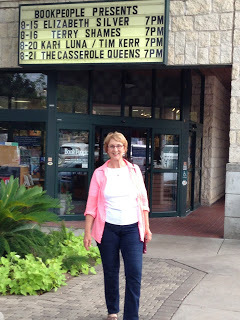
The promotion will involve car travel and plane travel and hotel bills. Oh yes, and drinking too much wine and eating too much. In addition to the expense (no, small publishing houses do not pay for your travel expenses—they grudgingly have bookmarks made), it takes time and energy—time and energy that could be spent writing. Or going to Paris.
Here’s the problem: I don’t have a clue whether it actually does any good. I know that at present the money I spend on promotion isn’t worth it in terms of book sales. It gets me out of the house, allows me to have some fun, and gives me a break from writing, but it doesn’t sell books on-the-spot. Does it sell in the long run by getting my name out there? No idea.
There are some indicators that make me suspect that it doesn’t do much good in terms of book sales. Despite never having gotten anything but great reviews from professional reviewers, and having received many, many complimentary emails about my book, my Amazon reviews stay stubbornly low. Meanwhile, I see the reviews pile up for authors who don’t do any travel and readings. Do they have batter and more friends than I do? Are they better at social media?
Possibly. But I suspect the real answer is that no one knows what promotion works and what doesn’t. I get bombarded with emails from people who tell me that they have the keys to success, that they can guarantee me a huge audience—for just a few thousand dollars.
This sounds like whining, but I’m just taking stock. I’m trying to do a risk/reward ratio to determine what makes sense. At my worst moments, when I contemplate another round of flinging myself into the fray, I despair of getting anything out of it but a few extra pounds. But then I remember that except for a very tiny percentage of writers, writing as a business makes no sense at all. It only makes sense as a passionate undertaking. And I am passionate. I write because I want people to read my books. And the only way I’ll get the books read is if people know about them. And the only way people will find out about them is if I promote them.
So, no Paris for me. Hmmm…Maybe in the spring, right after I turn in my next manuscript and before I hop back on the promo treadmill.
Recently my good friend said, “I have to go to Paris in January. Why don’t you come with me?”
Paris. Any time of year beckons. She tried to persuade me: In winter the fares would be cheap. We have somewhere we could stay. It will be cold, but the crowds will be lighter. Yes, yes, yes….uh, no I can’t. I have a book coming out January 12, and for the following month or two I’ll be in a frenzy of promotion. I’ll be doing library and bookstore readings, and interviews, guest blogs and social media events. I’ll be hosting giveaways, publishing a newsletter, etc, etc. All designed to say in as nice a way as possible, “buy my book.”

The promotion will involve car travel and plane travel and hotel bills. Oh yes, and drinking too much wine and eating too much. In addition to the expense (no, small publishing houses do not pay for your travel expenses—they grudgingly have bookmarks made), it takes time and energy—time and energy that could be spent writing. Or going to Paris.
Here’s the problem: I don’t have a clue whether it actually does any good. I know that at present the money I spend on promotion isn’t worth it in terms of book sales. It gets me out of the house, allows me to have some fun, and gives me a break from writing, but it doesn’t sell books on-the-spot. Does it sell in the long run by getting my name out there? No idea.
There are some indicators that make me suspect that it doesn’t do much good in terms of book sales. Despite never having gotten anything but great reviews from professional reviewers, and having received many, many complimentary emails about my book, my Amazon reviews stay stubbornly low. Meanwhile, I see the reviews pile up for authors who don’t do any travel and readings. Do they have batter and more friends than I do? Are they better at social media?
Possibly. But I suspect the real answer is that no one knows what promotion works and what doesn’t. I get bombarded with emails from people who tell me that they have the keys to success, that they can guarantee me a huge audience—for just a few thousand dollars.
This sounds like whining, but I’m just taking stock. I’m trying to do a risk/reward ratio to determine what makes sense. At my worst moments, when I contemplate another round of flinging myself into the fray, I despair of getting anything out of it but a few extra pounds. But then I remember that except for a very tiny percentage of writers, writing as a business makes no sense at all. It only makes sense as a passionate undertaking. And I am passionate. I write because I want people to read my books. And the only way I’ll get the books read is if people know about them. And the only way people will find out about them is if I promote them.
So, no Paris for me. Hmmm…Maybe in the spring, right after I turn in my next manuscript and before I hop back on the promo treadmill.
November 25, 2015
Thankful for Writers
When I was a kid my mother once said, “Why do you like to read so much?” She was annoyed because I was one of those kids who lay around the house with a book, came to the dinner table with a book, and rode in the car with a book. I even read when I walked!
I don’t remember my answer, but it was probably something pithy like, “I just do.”
Escapism? Learning? Having a good laugh? Having a good cry? It’s all there.

(Photo by Margaretta K. Mitchell)
So on this lead-up to thanksgiving, I’m giving thanks for the writers who have made my life richer. They have described places I’ve never been and am never likely to go. They’ve introduced me to characters I would either love or hate in real life, and taught me something about what makes them tick. They’ve explained science to me in fiction and non-fiction in ways that expanded my awe of the universe I live in. They’ve made me think hard about the way I live my life and how lucky I am. And about people whose lives are blighted and who managed to rise above it or are sunk by it. They have revealed the lives of people unimaginably different from me by virtue of their skin color or their cultural heritage or their belief systems.
Hardly a day goes by when I don’t read a phrase that makes me pause and ponder: what does this really mean? Makes me wonder how the author came by such wisdom. Makes me feel awe for his or her ability to articulate something I’ve felt and could never quite describe—or something I’ve never felt, and am amazed by.
As a writer I know that people who come up with these stories that make my life richer work really hard, often with little compensation. They spend many hours alone, many hours feeling frustrated that the ideas they started out with haven’t materialized on the page. They feel afraid that they will never produce the work they set out to accomplish. They feel numb when the ideas don’t come. And yet they keep going, reaching, reaching. I salute them for their courage.
I’m thankful for writers who write deep, serious books, for those who write about history and science and psychology and travel and cooking and art. I’m thankful for those who write humor and fantasy. All of it.
And for this week’s recommendation: Young Americans, by Josh Stallings. This is a roller-coaster of a book—funny, outrageous, a zinger. It’s a caper set in the 70s, with a cast of characters you probably would be totally annoyed with in real life. But in Stalling capable hands, you’ll find yourself rooting for them the same way you do for characters in a Carl Hiaassen novel. It’s hot off the press. Enjoy.
November 18, 2015
The Writer I Hope to Be
“It was only when I realized I was never going to write the book I'd dreamed of writing, nor be the writer I'd hoped to be, that I allowed myself to write the book that was in me -- to write no more, and no less, than that book.” Quote from Heather Young, written in her post entitled “The Secret of Failure” on The Debutante Ball blog, Oct 6 2015.
This was such a wise and fine quote that it got me thinking about the book I dream of writing. It isn’t as if I ever thought I was going to be the new Virginia Wolfe or P. D. James. But I always pictured the book I would write as being lively and interesting. A book worth reading.
According to my reviews, that’s what I do write. My reviews are consistently good. I get a lot of emails from fans telling me how much they love the books. So how come that isn’t enough? Why is it that I’m not quite satisfied with the good reviews? What is it that craves not just good reviews but raves?

The easy answer is that I’m ego-bound and greedy. But that doesn’t feel exactly right. Yes, I’ve got some ego involved, and yes “more” would be nice. But I think it has more to do with an internal gauge that I want to satisfy and never quite feel that I do. The good reviews and the praise from readers make me feel good, but there is a secret part of me that thinks that’s just people being nice to me. Intellectually I know that’s silly, but my creative side always thinks I can do better.
Here’s how it happens: I’ll write a scene I’m pretty happy with, but then when I go back over it, it doesn’t quite read the way I thought it did. And that happens again and again. By the time the book is finished it’s a mish-mash of all those “not quite right” scenes. All those scenes were once fresh and perfect—in my head.
I suspect that most writers have that niggling inner voice that says, “not quite.” And yet every time I start on a new book, I think, “This one! This one will be brilliant in every way.” I know that isn’t likely to happen, and yet the ideal sits out there tantalizing me. I know I should be satisfied with good enough, but I hope I never will be. That ideal is what drives me and so far it has worked well enough. And maybe next time it will take me where I want to be.
NEW:
Book Recommendation: Someone told me that she likes it when I mention good books I have read, so I’ve decided to make it a new feature of my blog. This week I’m reading In the Morning I’ll be Gone, the third in The Troubles trilogy, by Adrian McKinty. If you haven’t read them, you are missing a treat.
November 11, 2015
Rich Variety of Crime Fiction
The rich variety of crime fiction
Last Saturday Northern California Sisters in Crime had our Fall Author showcase, with short readings by eight authors whose books have come out between last June and November 1. What struck me as I listened to each of them read was the incredible variety crime fiction offers.
There was a political thriller; a spine-tingling tale based on a true haunted story, a cozy—the kind of fireside story that is intriguing and entertaining without too much in the way of blood and guts; a piece of true noir fiction, a short story; a blood and guts medical thriller and a psychological thriller based on the experiences of the author, a police psychologist. In addition there were two authors who couldn’t make it, one why writes a humorous mystery and another who writes adventure mysteries. And that leaves out a dozen other sub-genres—international thrillers, spy thrillers, capers, small-town traditional mysteries, police procedurals, novels of suspense, female in jeopardy (fem-jep), romantic mysteries, private eye, literary mysteries, historical mysteries, etc.
It’s no wonder that writers submitting their work to agents and editors have trouble categorizing their work. And it’s understandable that that agents and editors tear their hair out wondering what category to dub books they are trying to find a publishing home for and that publicists despair of getting books to readers who will appreciate them. Pushing all these stories into the loose categories of thrillers vs mysteries doesn’t do them justice, and doesn’t help the reader pick out the kinds of books they like best.
It’s a wonderful smorgasbord for readers, but for writers trying to break in, it’s a conundrum. How do you describe your novel in such a way to not only intrigue and agent or editor, but give them some idea of how to market it. That’s a good reason to keep up with what’s selling. You may have written a perfectly wonderful female detective book, but if female detectives are not popular at the moment, you’re out of luck.
Unless, that is, you use creative labeling. If you know that the female private eye market is saturated, think of another aspect of the book that you can point to. Is there a romance in the book? Are romantic suspense novels all the rage? Call it romantic suspense. Spy novels dead in the water? Call it international suspense. Paranormal not selling? Emphasize the detective called in to solve it, and call it a police procedural.
This isn’t a way to cheat. It’s a way to help your agent or editor sell it to the decision-makers. And it’s a way to get your books to the readers who appreciate them.
Last Saturday Northern California Sisters in Crime had our Fall Author showcase, with short readings by eight authors whose books have come out between last June and November 1. What struck me as I listened to each of them read was the incredible variety crime fiction offers.
There was a political thriller; a spine-tingling tale based on a true haunted story, a cozy—the kind of fireside story that is intriguing and entertaining without too much in the way of blood and guts; a piece of true noir fiction, a short story; a blood and guts medical thriller and a psychological thriller based on the experiences of the author, a police psychologist. In addition there were two authors who couldn’t make it, one why writes a humorous mystery and another who writes adventure mysteries. And that leaves out a dozen other sub-genres—international thrillers, spy thrillers, capers, small-town traditional mysteries, police procedurals, novels of suspense, female in jeopardy (fem-jep), romantic mysteries, private eye, literary mysteries, historical mysteries, etc.
It’s no wonder that writers submitting their work to agents and editors have trouble categorizing their work. And it’s understandable that that agents and editors tear their hair out wondering what category to dub books they are trying to find a publishing home for and that publicists despair of getting books to readers who will appreciate them. Pushing all these stories into the loose categories of thrillers vs mysteries doesn’t do them justice, and doesn’t help the reader pick out the kinds of books they like best.
It’s a wonderful smorgasbord for readers, but for writers trying to break in, it’s a conundrum. How do you describe your novel in such a way to not only intrigue and agent or editor, but give them some idea of how to market it. That’s a good reason to keep up with what’s selling. You may have written a perfectly wonderful female detective book, but if female detectives are not popular at the moment, you’re out of luck.
Unless, that is, you use creative labeling. If you know that the female private eye market is saturated, think of another aspect of the book that you can point to. Is there a romance in the book? Are romantic suspense novels all the rage? Call it romantic suspense. Spy novels dead in the water? Call it international suspense. Paranormal not selling? Emphasize the detective called in to solve it, and call it a police procedural.
This isn’t a way to cheat. It’s a way to help your agent or editor sell it to the decision-makers. And it’s a way to get your books to the readers who appreciate them.
November 4, 2015
Every Month is NANoWriMo

I’ve never officially participated in National November Writing Month. It sounds like a wonderful club to be part of, and I always give a virtual high-five to those who sign up for it. So why am I not in that club? Because for me every month is Writing Month. People often say I’ m very prolific, and there’s a reason for that. I write a lot.
When I had a full-time job, I wrote during lunch and after work. I wrote my first full novel by vowing that I would come home from work and write five pages a day, no matter how late I had to stay up. I once lived next door to a man who worked full time and had a family. He got up an hour early every morning to write. I don’t know how it worked out for him—if he ever wrote his novel—but I admired his dedication.
The story is that Mary Higgins Clark was left a young widow with four children. Working on a secretary’s salary, she knew she was in trouble. So she got up early every morning to write. Judy Greber used to bribe her young boys to give her writing time. Sophie Littlefield said her friends couldn’t understand why she wouldn’t go for a spa day with them or go out to lunch: she had a novel to write. We all know how those stories worked out.
I don’t mean you have to give up a social life to be an author. But I do mean you have to be serious enough to choose your social life wisely. I’m grateful for friends who know that when I disappear for days at a time and can’t go to lunch and am often distracted it means I’m writing. I recently went to a talk with two authors who are a couple. They talked about how nice it was to live with someone who understood that when you were looking out the window for an hour, it didn’t mean you weren’t working.
When I’m working on a first draft, I set myself the goal of writing 2,000 words a day. Every day. I know that sounds like a lot, but I’ve heard a couple of very successful authors say that for them it’s 5,000 words. Yeah, that means in their world I’m a slacker. These are not beautiful, perfect, or even acceptable words, but they give me something to work with. I’ve had people tell me they can’t go onto the next scene until they’ve perfected the one before. That probably works for some people, but more often than not, it means they’ve written the first sixty pages or so and have never gone beyond that.
That’s where NaNoWriMo comes in. People force themselves to write enough words every day to have 50,000 words by the end of the month. It’s a good exercise. I know, because for me any month can be November.
October 28, 2015
Inspiration
I just finished reading a crime fiction book that made me want to write something really good. The language was rich, the story solid and a little scary, and the characters deeply human. But what really grabbed me was that the book had depth and soul. It had at heart a sense of morality.
I was thinking about what inspires me not just to write, but to write a better book, like that one, to reach inside to what I really think is important and mix it into a story in such a way that makes me proud of what I’ve written.
For years all I wanted was to tell a story good enough to get published. Now I realize that I was not being true to myself and certainly not working to my highest aspirations. There’s a huge gulf between “good enough” and “good.” More and more I think about how to bridge that gulf.
I’ve read and enjoyed plenty of books that were good enough. I don’t require that every book I read be the best example of art and craft in its category. So what is it that gets into me and makes me want to go beyond what I think of as simple entertainment and to write an inspired book?
I don’t think it’s the desire to be famous, or rich. There are plenty of rich and famous authors whose books I don’t admire at all. And some little known authors whose work I have tremendous respect for. Also, I don’t always feel the drive to step it up. Sometimes just writing a good, solid book is fine.
Does the drive come from competition? I doubt that as well. For some reason anytime I read Truman Capote, I feel the inspiration to do better. But imagining that I could compete with him would be plain foolish.
I think in some way it has to do with the reason we write to begin with—the desire to connect. I want to write stories that make people recognize their world in my prose—to recognize themselves and people they know, and to recognize the dilemmas we all face , whether we do it with courage or cowardice. I want readers to feel that the time they spend reading my books is not throwaway time, but hours well spent. I want them to remember little bits of things and recognize the human condition common to all of us.
John Gardiner wrote an entire book, On Moral Fiction, in which he addressed some of what I’m talking about. I fear that he would have sneered at my desire to write “moral” crime fiction. His was a more high-fallutin’ world. But when I read the work of some of the best crime writers I know that the best writing transcends genre—and inspires me to do the same.
October 21, 2015
Taking a Break
Everyone needs a break now and then, and this week I am in Tahoe with my sister and a friend. It's a quiet time of year here in this resort area. Too cold for summer sports and as yet there is no snow. So instead of sitting in traffic due to treacherous weather conditions, or because the summer crowd has packed in, we had little traffic to contend with. As you can see, the leaves are turning yellow and orange.


Today it was windy and cloudy at the lake
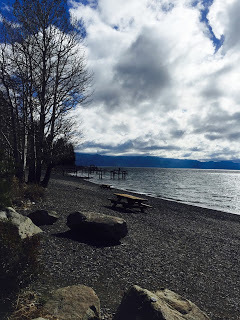

But I enjoyed myself enormously and feel like it was worth the trip.


But folks, even if I am in Tahoe relaxing, enjoying the scenery, napping, drinking a little wine, and going for walks.....I edited twenty-five pages today.
Tomorrow is another day, and now we are going out for pizza! I'll be back on the job next week.


Today it was windy and cloudy at the lake
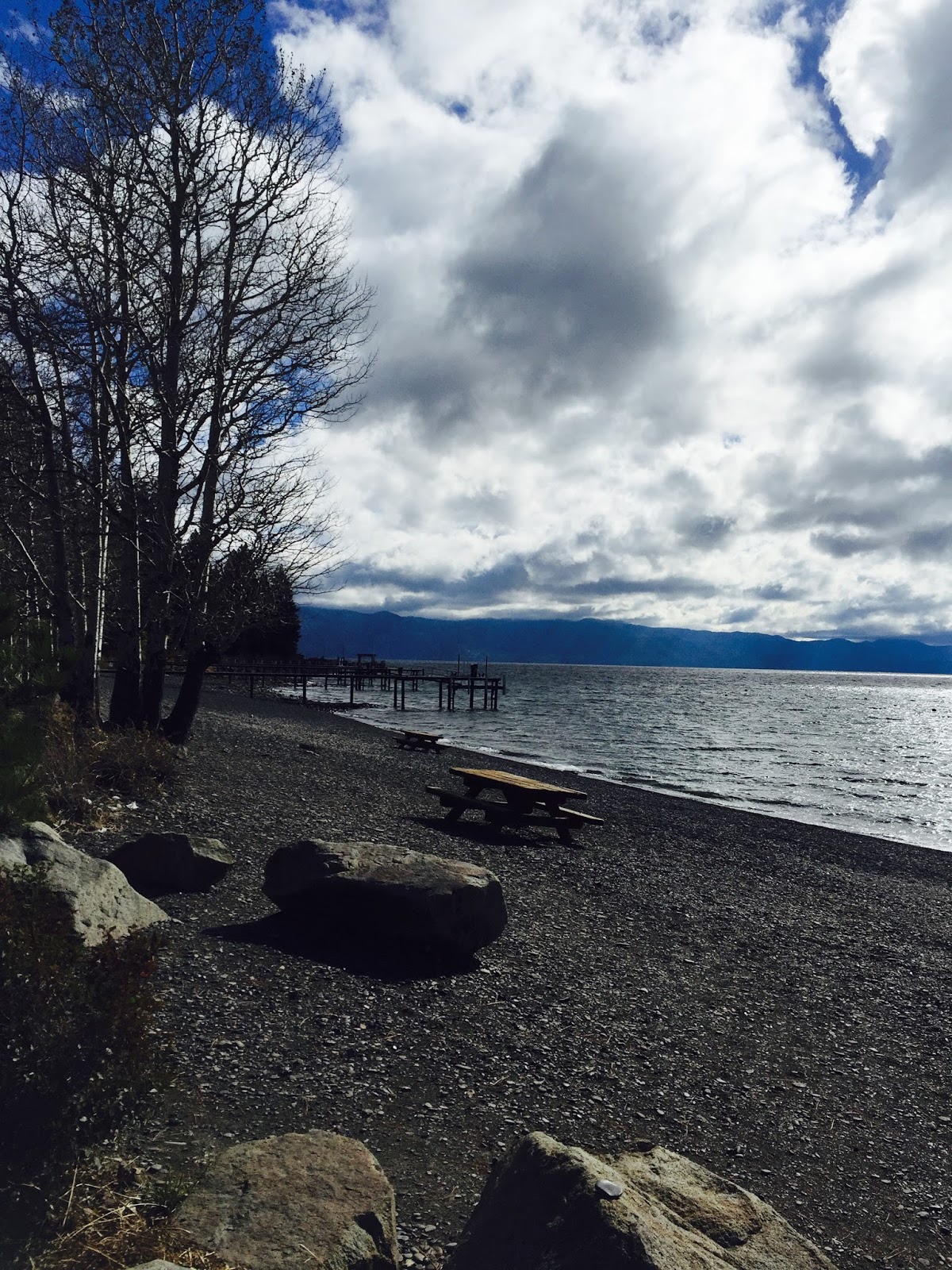

But I enjoyed myself enormously and feel like it was worth the trip.


But folks, even if I am in Tahoe relaxing, enjoying the scenery, napping, drinking a little wine, and going for walks.....I edited twenty-five pages today.
Tomorrow is another day, and now we are going out for pizza! I'll be back on the job next week.
October 14, 2015
I'm Buzzing

Last night I asked my book club if they had ever read Tim Hallinan’s books. Some of them are not mystery readers, but I told them that Tim’s books are up there with some of the great “literary” genre writers—John LeCarre, Dennis Lehane, and Alice Sebold, to name a few. These are writers who fully embrace the mystery genre, but who add a philosophical and lyrical depth that many writers of genre fiction don’t strive for. A few of the women wrote down his name. That’s the sort of thing that creates buzz.
I hardly ever get off an airplane or leave a social event without having recommended books to people. If someone asks me what I write, I tell them and try to be aware if their eyes glaze over. If that happens, I ask what they like to read, and take the opportunity to tell them about books they may like. If someone likes cozies I’ll tell them about Rhys Bowen or Tracy Weber or Leslie Budewicz. Thrillers? I recommend Gayle Lynds or Marc Cameron, or Mark Greanley—I was just on a panel with them at Bouchercon and thoroughly enjoyed each of their books.
Do you like thrillers with a touch of sci-fi? Patrick Lee—what an imagination the guy has! Or there is always The Martian. I’m amazed that there are still people who never heard of it.
And I’m always keen to slip in a word for my fellow-writers at Seventh Street Books. Lori Rader-Day writes a solid mystery in the great tradition of whodunits—and has a fresh new Anthony award to prove it. James Ziskin writes a “historical” series (who knew the 1960s were historical?) from the viewpoint of a young female reporter—and has an Anthony nomination as well. Allen Eskens is a multiple award winner. I loved his first book and can’t wait to read his second.
One in particular that I want to buzz you with is a chilling psychological thriller that just came out—The Hollow Man, by Mark Pryor. Pryor writes a wonderful, gentlemanly series set in Europe with a diplomatic corps protagonist. The Hollow Man couldn’t be farther from this. It is about a sociopath who realizes something is missing in his psyche and has worked hard to fit in. When something in his life goes awry, his true nature is revealed. It’s a great read, and I highly recommend it. Will this little bit of buzz matter? Who knows? All I can do is tell people about the books I like.
I don’t know how word of mouth propels one good book and never catches with one equally as good. Most writers despair of this strange algorithm. I recently read a Macavity award-winning author whose book blew me away, and someone told me that not everyone loved the book. On the flip side, I have stopped reading a few popular books midway through because they simply didn’t engage me.
I’m itching to talk about books that I’ve been asked to blurb and that will come out in the spring—but that will wait for another posting. Happy reading, everyone!
7 Criminal Minds

A collection of 10 writers who post every other week. A new topic is offered every week.
- Terry Shames's profile
- 274 followers

