
Terry Shames's Blog: 7 Criminal Minds, page 232
May 13, 2015
Why now?
Grok
The zipless fuck
Gary Gilmore
Hannibal Lecter
Jurassic Park
Keyser Soze
Jason Bourne
The Da Vinci Code
Sooki Stackhouse
The Martian
Everyone of these names evokes an image of a book that suddenly, inexplicably took off and sold millions of copies, stunning the book world, both publishers and readers. The last entry, The Martian, is what spurred this post. It’s the newest phenomenon, a book that had plodded along for a while entertaining its readers—and suddenly exploded in sales. Its writer, Andy Weir, slogged along in obscurity for a time, and is now looking at book and movie contracts. And I, for one, couldn’t be more delighted.
In an interview I read Mr. Weir suggested that the success of the book was due to its man against nature theme. He said everyone roots for the man, and no one roots for nature. But I have another idea. I think the popularity of the book stems from a combination of the main character’s irrepressibly cheerful nature while he battles seemingly insurmountable odds, and the loyalty of the people involved in a dangerous project.
What does readers’ affection for Whatley, the main character of The Martian have to do with the other names on the list I wrote above? Some of them are despicable characters who invoke fear and hatred. No one is rooting for Hannibal Lecter to succeed. Gary Gilmore was a blatant killer, so no love lost there. Some of the books I’ve mentioned are badly written or formulaic. So why when they were introduced did people snap them up?
I took a course that talked about the “high concept” novel. This is a novel that for whatever reason, when people hear about it, they feel as if they were just waiting for it to come along. A movie version of this was Star Wars. There had been numerous sci-fi films that did modestly well at the box office, so what was it about Star Wars that the first time I (and many others) saw an ad for it my heart leaped and I said aloud to whomever I was with, “I have to see this movie.” And see it I did, right away, standing in line for hours along with everyone else. We did it because it was an idea whose time was “now.”
Why would anyone care that it was “time” for Hannibal Lecter to come along? Did he appeal to some dark side in the American psyche that needed expression? It’s pretty apparent that Erica Jong’s novel in which she put words to the “zipless fuck” was an idea whose time had come. Women were ready to read about a heroine who wasn’t’ afraid of her sexuality. Jason Bourne exemplified people’s suspicion about the dark side of our country’s security forces. The book Norman Mailer about Gary Gilmore spoke to questions about the nature of killers, and the death penalty. The Da Vinci Code addressed questions of murky religious fanaticism.
And The Martian? Why now? The space program is moribund, the public’s appetite for wildly expensive pie-in-the-sky government projects pretty much dead. Or is it? We’ve fought what seems like endless wars in the Middle East, we’re horrified and fascinated with extreme religious fanaticism, both Christian and Muslim. We’re weary of the constant drumbeat of vicious propaganda on polar ends of the political spectrum….is it any wonder that the story of a man in an elemental struggle for survival that requires his wits is so appealing? When everyday we hear vitriol from any number of angry politicians and their fanatic followers, is it any wonder that we find relief in a character who is irrepressibly cheerful—whose superiors have noted that he always seems to be optimistic?
I didn’t intend for this to be a long-winded examination of the phenomenon of the high concept novel—that would take way too much space. I wanted to suggest that when people crave something hat puts a voice to a strong feeling, if they find it in a book, they’ll latch onto it.


May 6, 2015
Traveling and Writing
I’m on the road….again. This time I’ll be on the east coast for almost two weeks, attending lots of book events. A very exciting, fun-filled time. I’ll be staying with friends that I never get to see enough of, and who have scored book club, library, and bookstore readings for me—not to mention a special western themed dinner. I want to spend every minute enjoying the company of friends and being “on” at these wonderful gigs.
BUT. That’s two weeks out of my writing time—time I need to move forward on my current work in progress. So how do I handle this?
Last year I went to Africa for five weeks. I decided there was no way I could forego writing for that length of time. But I also knew I didn’t want to drive myself crazy with a writing schedule that would make me feel guilty every day that I didn’t meet it. In the end I decided that I would aim for a modest 500 words a day, and try to do that at least five days a week. And it worked! While everyone else was napping or reading in the afternoon break, I took out my tiny little ipad mini with its tiny little keyboard, and I tapped away. Luckily, I don’t nap in the afternoon, so I didn’t miss it. But you can be sure that when we were escorted to our cabins at what seemed like a ridiculously early hour, I fell into bed and slept soundly.
My writing mentor and pal Sophie Littlefield once said that she had learned to write on the plane and in her hotel room when she was on book tour. That’s what I do. I’m writing this as my friend Karen is and getting dressed for the day. Of course it’s easier for me because I don’t have household chores to do. But instead of reading, or messing around on Facebook, I’m writing my blog. Yesterday on the plane I wrote 1500 words, despite the best efforts of the woman in the seat in front of me (may she get a bad case of laryngitis) who screeched at her seatmate for the entire five-hour flight. Thank goodness for the lovely man next to me who was working as feverishly as I was (hmmm, maybe he was writing a novel).
Luckily on the east coast I’m up a couple of hours after everyone else has retired for the night, so I can always sneak in a little writing time then.
Writing: it’s what writers do. What I’ve learned is that I can take off a day now and then, but if I take off too many days in a row I lose momentum and lose the thread of the story. Not to mention that I start to get that itchy feeling that something isn’t quite right. Are we a crazy bunch, or what?
April 28, 2015
Parenting your manuscript
In the many years when I was struggling to find a publisher, I often heard the mantra “you have to believe in your work.” And it’s true—it’s important that a writer take pride in her work like a parent takes pride in a child. A new parent is pretty sure that her child is the best, brightest, strongest, and most appealing in every way.
But at some point good parents recognize that a child may need a little work. He’s a teenaged slob. She’s mean. He’s unable to look people in the eye. She giggles too much.
Like a child, a manuscript may need a little work. So how does a writer remain self-confident while not being so self-confident that he is blind to the need of his manuscript to for judicious editing?
With a second set of eyes, that’s how. We’ve all known parents who refused to see the tiniest flaw in their precious darlings. There are numerous opportunities to get the information that little Billy or Lucy needs a little guidance, but some parents ignore it—to the detriment of their perfect monsters.
The same is true for an author. There are plenty of opportunities to find out if the manuscript measures up. Writer’s groups, beta readers, workshops, and paid editors can give an author the feedback he or she needs. The job of the author is not just to find way to get the feedback, but to use it constructively.
“Constructively” is the operative word. When you get feedback there are several ways to receive it:
1) Believe all of it and twist yourself into a pretzel trying to incorporate each and every comment. Do this, and you’ll end up not only with a hot mess, but also deflated confidence. In fact, it’s a mark of low confidence to not be selective in using the edits that are suggested to you.2) Believe none of it. What a disappointment for a reader to put in the time and effort to give honest feedback, only to have the author dismiss every suggestion out of hand. This is self-deception at its worst.3) Weigh carefully the advice and figure out how it fits into the feel of the story. This isn’t something that happens overnight. When you first turn your manuscript over to people to critique, the first response you often have is #1 or #2 above-that is, “my manuscript is total crap and I’ve got to start over,” or “what idiots; the readers didn’t ‘get’ my brilliant manuscript.” It’s important to give the critique time to percolate and then remind yourself of what your goal was…and then figure out what changes will work best. Don’t just look at which opinions are in the majority and blindly follow them; instead, weigh them against what you want to accomplish.
The self-confident, "good" author knows that there’s always room for improvement and will invite it and use it wisely.
April 21, 2015
Being Anonymous
I love the feeling of being anonymous. I don’t mean that I don’t want people to know about my books. I don’t even mind if people know a lot about me. The feeling I mean is being in a place where I know no one, in a hotel room or a restaurant or just walking around. It allows me to see things through my eyes only. I can people watch and eavesdrop at will.
I’ve always enjoyed traveling alone for the same reason. It leaves me open to experiences I don’t have if I’m talking to someone or worrying about their experience or listening to them interpreting what we’re seeing. I don’t mean to imply that I want it all the time—just some of the time.
My suspicion is that it’s a writer’s attitude. As a writer I sometimes feel as if I get too insular, sitting at my desk with my thoughts and experiences—with only the occasional foray into social media to keep me social. Being alone in a strange city allows me to soak in what’s happening outside my own mind. I can watch two people have an argument—watch how they use their body language and facial expressions. I can watch a mother soothe a distressed child, or observe two young people doing a mating dance, or two elderly people make their way along a sidewalk.. Another lone person catches my eye and I watch how being alone affects him. And I store all this up for when I am back at my computer writing.
But it isn’t entirely about work. Some of the pleasure of anonymity is just allowing myself to be self-indulgent—not answering to a deadline, not having to do something I “should” be doing. I can hole up in my hotel room and write something frivolous, or read or even watch junk TV without having to answer to anyone—even myself.
One of my writing gurus said she has taught herself to write while she is on book tour, and I think it’s a grand idea. I try to do it myself. But I hope I never get so wound up in the need to produce that I can’t step out of my usual roles and indulge free flights of fancy. I always want to keep alive the secret joy of being anonymous.
April 14, 2015
Crank up the traveling music!
I’m going on book tour! I’ve got a frantic few weeks coming up, which I’m actually looking forward to. When I first became a published author, I always felt a little nervous about bookstore readings. Why? Not because I was afraid to speak in front of people. I can natter on for hours, as those who know me can vouch for.
What terrified me was that no one would show up. Well, folks, I’ve been there and done that. Don’t have to worry about it anymore. I’ve heard from some of the most popular authors around, that it happens to them, too. Simon Wood said he would rather have no one at all show up than have only one or two. If no one shows up at least you can pack up your wounded pride and slink home—or to the nearest bar. But if a couple of people show up, you must act as if the room is full and give them the whole talk.
And then there’s the story Robert Crais tells of sitting in a mall with stacks of books, and getting the stink eye from everyone who passed. The one person who stopped asked if he knew where the restroom was. Books sales? Zero.
Around home I have a loyal pack of friends and fellow writers who will usually turn up. What amazes me is when a lot of people come to see me in a place where I don’t know anyone. Some bookstore owners have terrific promotional skills. They beat the bushes and get lots of people out. (hello Chris Burke at Clues Unlimited in Tucson). And it also amazes me that writer friends will strong-arm a bunch of people to bookstore readings (I’m looking at you Catriona McPherson), and others who show up even if they’re working like crazy (Matt Coyle, Lisa Brackmann).
No matter how popular the author or the bookstore, attendance at readings is a crapshoot. No one knows what makes people flock in one day and a few months later same day, same time, no one shows up.. There are a few things that can definitely skew the results, though:
1) Weather—I had a few loyal people show up at a bookstore in Phoenix IN AUGUST. But generally that’s a bad time of year for a reading there. On the other hand, I had a terrific turnout in Austin in the middle of a sleet storm—one book club said they had driven an hour on treacherous roads to come to the reading. Go figure.2) Competition—the worst showing I ever had I found out I was competing with The Blue Angels, as well as one of the most beautiful days of the year. Who wanted to come out of a glorious Sunday afternoon and into a bookstore—especially since traffic was at a standstill pretty much all over town. Runner up for worst showing was a very cold night in Dallas when no one showed up. At least not for me. They did, however, turn up for Amy Tan down the street.3) Lack of promo. It’s up to the author and the bookstore to promote, promote, promote. And as the author you need to make sure the bookstore personnel has done its job. I learned that at my hometown bookstore. I thought I had arranged everything—but my assumption that the bookstore would order my books was totally wrong. Turned out they were used to only hosting independent authors who brought their own stock.4) Overexposure. I’ve had books come out in pretty rapid succession, and I realized that no matter how generous friends are, they may not be thrilled to hear me speak yet again. So this time when my book came out, I’ve only booked a couple of events at bookstores. That doesn’t mean I’m hiding out-I have some multi-author events scheduled—but that I’m being judicious.
What I’m learning is to do the best I can and to treat every person who attends as if he or she intends to buy a carton of books to hand out to family and friends.
On that note, I will close so I can get started packing for Southern California. I will be at Mysterious Galaxy tomorrow night and Book Carnival Thursday night. Wish me well!
April 7, 2015
Launch Day Thoughts
Today was launch day, and I find myself feeling impatient to write more, publish more…more….more. So I paused today to remind myself of a few things:
1) Three years ago at this time I didn’t have a publishing contract. I was beginning to gather information in case I decided to go the independent route. The latter didn’t particularly appeal to me for a variety of reasons peculiar to me, but I was willing to do it.2) Two years ago at this time I was terrified and excited because I was three months away from my first, ever book launch. I had gotten a couple of early reviews that seemed pretty good, but still felt like I was dangling over a cliff.3) A year ago at this time I was in the middle of changing agents. My prior agent was personable, but for some time I had thought we were not a good fit. It was a scary step to step off the wagon in mid-stream, but it worked out really well. I wouldn’t have been able to have the courage to do it without good advice from those who had taken the same risk.4) Which leads me to this year, when I’m awed by the support of my amazing author friends in this journey, who are always there with advice, support, and a good laugh. 5) I’m so grateful for the support and love from family and friends. Sure, they have to be nice to me, but they’ve gone above and beyond.
6) Next year? Who knows? For right now, I’m just going to be glad that today was book launch day for # 4 and let the future stretch out ahead of me—enticing me rather than driving me.
And here's what the launch is for:

April 1, 2015
And Then the Dog Showed Up
I rarely read crime fiction that focus on animals as part of the investigative milieu. With a few notable exceptions, I find them too far-fetched. So imagine my surprise when I was working on Craddock #5 and a dog pushed its way into the scene. Okay, so somebody has a dog. That’s nice. But then after a while, the dog showed up again, and this time it wanted more attention. There was a new character and it was nice to have a dog to give her something to do.
But then, the dog stayed. It’s not Craddock’s dog, but I thought it might as well get to have some fun. It rode around with Craddock and went to his house and generally hung out. I didn’t mind. Seemed like a nice dog.
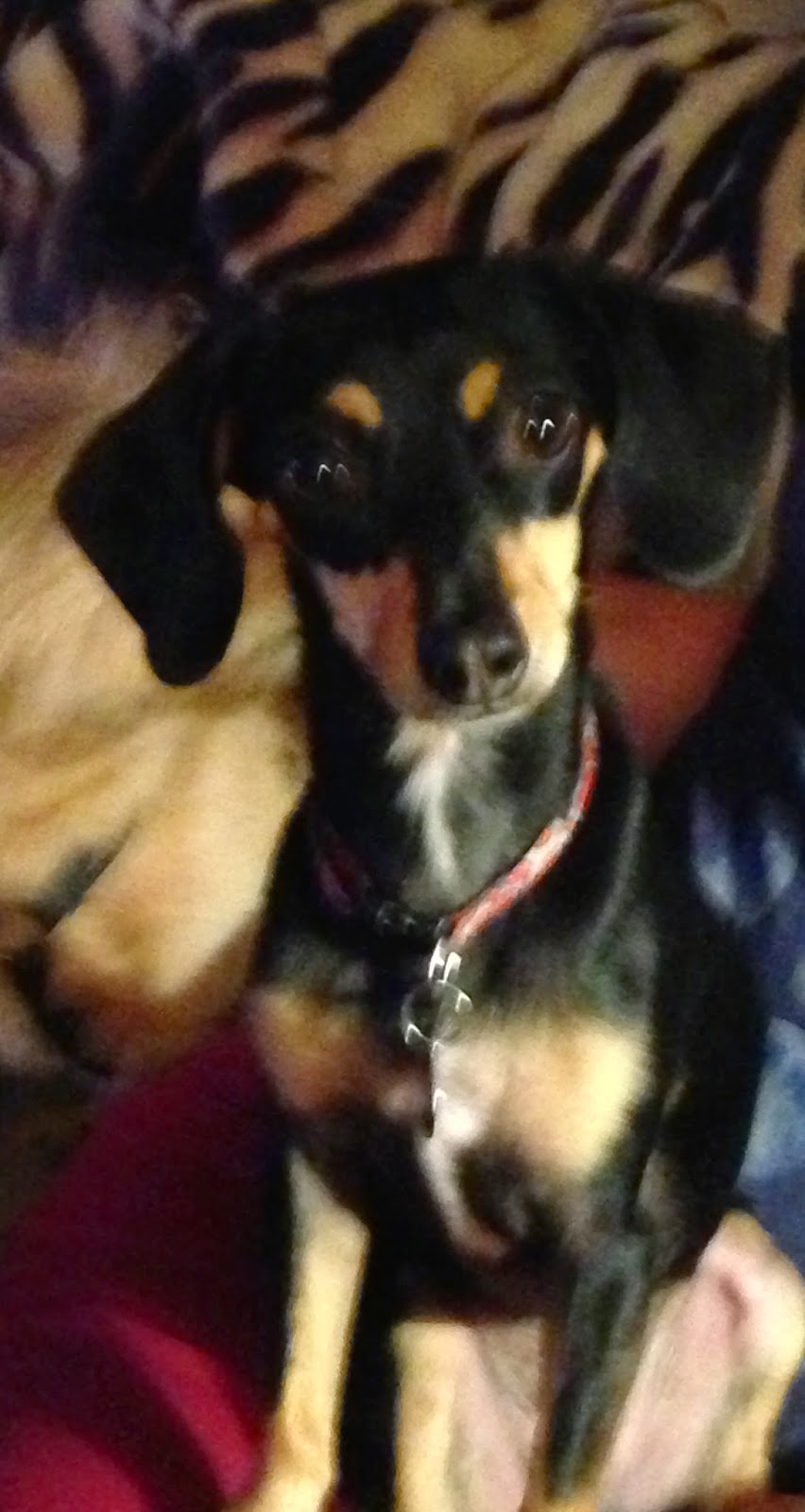
And then….the dog suddenly had an important scene.
Which brings to mind a question of how the writerly brain works. I didn’t set out to give this dog anything to do in the book. He was in the last book, too, as a little side note. Something to add a little jazz to a scene. So how come he showed up in the latest book and made a place for himself? I guess you could ask that about any character, too, but usually you know in advance that a character is needed to carry out certain elements of the plot. I rarely find myself completely surprised by a character.
It almost feels eerie to me that this dog appeared so naturally and continued to be a part of the book—almost as if he was in charge and I should get out of the way.
I would think of this as an anomaly, but it has happened too many times in my writing: something that pops up early later becomes important. In fact, in a couple of books, I realize later that the first few pages foreshadow everything that happens in the book—even though I had no conscious intention of that happening.
More than once I’ve told people that my first two books seemed to write themselves. Some writers say they have never had that experience and others say it has happened to him. I’d love to know what that process is—the thing that makes the story come full-blown into a writer’s mind, as well as the thing that makes a writer include a new character (even a dog) not knowing consciously what he’s doing there, and only realizing later that he or she is vital to the story.
Readers: Any thoughts about this?
March 24, 2015
And Then the Wheels Fell Off
This is a post about writing, but one can apply it to all kinds of life activities. It’s about that moment when I’m cooking along, writing, thinking “Oh yeah! Just gonna let the story take me where it will.” I’ve got the pedal to the metal, the radio blasting, letting the scenery flow past. After a while I slow down a little and wonder exactly where this thing is going, but I’m determined to not get in the way of this wonderful, organic process. After a while I reach a signpost. Which direction should I take? A few possibilities spring to mind and I pick one, telling myself that any direction is better than sitting still. I keep on going. Hey, this is great! Rocking down the road.
Wait! What’s that noise? Is it the transmission? Did I run over a branch and I’m dragging it? Uh oh. My heart sinks. I know what’s happening: The wheels are coming off. I screech to a halt and climb out to take a look.
Groan. It’s happened again. I’ve taken a wrong turn in my writing and the wheels have wobbled and wobbled….until they’ve fallen off. How do I know this is what’s happened?
1) The action has ground to a halt and I don’t a clue what can possibly happen next.2) I’m bored. If I’m not excited about the story and where it’s headed, I can be sure my readers won’t be either.3) The characters seem to have wandered away and are doing things that have nothing to do with the story. 4) I’m suddenly enthralled with the idea for my next book and think it would be a fine idea to start working on it right now. 5) I self-righteously remember that I’ve been neglecting my promotion activities—especially social media. Time to go to Facebook and take a few quizzes that enlighten me about what color my aura is, or where I should be living. Hmmm. New York City? Maybe I should start packing.
Okay, now what?
I kick the tires. I whine. I wander around the house thinking of all the chores I should be doing. But oddly, none of these appeal to me. I do more social media. I clean the refrigerator.
But at some point (like I remember that I have a contract deadline looming), I turn around and trudge back down the road to find out where I went wrong. Invariably I’m shocked at the rookie mistakes that I’ve stumbled into that have taken me out of my story and led to the breakdown. Here are a few signals I look for to get the wheels back where they need to be. I list them from the mundane to the most serious:
1) Remember when I said I was flying along “letting the scenery flow by?” Bad idea. When I stop grounding my characters firmly in their setting, that’s when they get the notion that they can go where they please. It’s all well and good saying, “the characters seemed to take over the story,” but in the end I’m responsible for them. It’s my job to keep them on task.2) Odd dialogue. I start looking at dialogue and sometimes I realize that one of the characters has said something that another one should have said or is completely out of character. They are trying to find their way back into their proper roles, and I’ve let them wander away.3) I’ve included some activity that doesn’t move the story forward. Action doesn’t always have to feed the main story line, but if it doesn’t it still has to have a real purpose. In a series, it may mean that a relationship or a back story is developing over time and the scene plays to that. What it doesn’t mean is that a character can kick around doing something unrelated to the main or sub-story. Any development has to feed the story. If it doesn’t it’s going to stop me down the line.4) The premise needs tweaking. This can be a serious problem. It means I didn’t fully appreciate all the ramifications of the story idea and I may have to go back and do some serious rethinking. I’ve had to do it, and it’s a bear. But if I don’t do it, I’ll be on foot limping to the end—and then I’ll have to go back anyway and start over.
I said at the beginning that this doesn’t just have to be about writing. We all hit moments on any life project where everything stalls out. That’s when it’s time to go back and figure out where you ignored the signs that told you to go one way, and instead you went another. And to figure out what you have to do to get back on track.
March 18, 2015
Uncomfortable Conference Encounters
This week I’m writing about something that came as a result of my blog post about shyness. I have a friend who is outgoing, well spoken, interesting and always worth talking to. She read the post and said that what she doesn’t know how to handle is when she’s at a conference or party in conversation with someone, and that person is obviously scouting the room for “someone better” to see or be seen with.
It happens to all of use. You approach someone to be friendly, only to find that aren’t interested in conversing if you aren’t obviously someone who 1) can help their career, 2) is famous, or at least recognizable, or 3) is worth being seen with.
Even worse is when you get up the courage to talk to someone you admire, only to find that it pains them to have to be seen with someone not as important as they are. I’ve rarely encountered Mr. or Ms. Too Cool for the Masses Ninety percent of the well-known writers I’ve encountered are more than generous. With those few “stars” who can’t be bothered, there’s not much to be done except slink away and vow never to buy any of their books again.
I’m just as sensitive to this kind of bad manners as most people. Usually when it happens, I’m so humiliated that I pretend I see someone I know and say, “Excuse me, I see someone I need to talk to.” And I slink away and go talk to the wall. But if you really want to do something more, I’d say the way you handle it depends on how much you care—if you want to teach them a lesson or if you just want to extricate yourself and move on.
I’m not much for trying to teach a lesson because I think it’s a waste of time. But if I were feeling particularly snarky and annoyed, I probably would say something like, “I can see I’ve disturbed your search for someone. I’ll leave you to it.” At least it lets them know that their wandering eye isn’t lost on you.
But there’s another possibility. The person who is searching for “someone better” may actually be looking for someone. Or he may be tired, hungry, or grumpy about something that has nothing to do with you. Although there are polite ways to convey this, she may have reached the end of her ability to navigate the chaotic world of the conference.
The exceptionally entertaining, smart woman who talked to me about this said it makes her not like to go to conferences. That floored me. To think that someone as savvy as she is would allow herself to be turned away from what could be a valuable experience by someone who has no manners!
Bottom line the rude person is not worth one second of your attention, regardless of the reason for it. He or she may live in her own little hell of not being recognized enough. She may need something you can’t give her. Or, he may just be overwhelmed.
Bottom line: It’s not about you. Don’t let yourself be defined by people who don’t have good manners. Don’t let them waste your time for one moment. Have a stock phrase ready, like, “Nice chatting. Catch you later.” And walk away.
It happens to all of use. You approach someone to be friendly, only to find that aren’t interested in conversing if you aren’t obviously someone who 1) can help their career, 2) is famous, or at least recognizable, or 3) is worth being seen with.
Even worse is when you get up the courage to talk to someone you admire, only to find that it pains them to have to be seen with someone not as important as they are. I’ve rarely encountered Mr. or Ms. Too Cool for the Masses Ninety percent of the well-known writers I’ve encountered are more than generous. With those few “stars” who can’t be bothered, there’s not much to be done except slink away and vow never to buy any of their books again.
I’m just as sensitive to this kind of bad manners as most people. Usually when it happens, I’m so humiliated that I pretend I see someone I know and say, “Excuse me, I see someone I need to talk to.” And I slink away and go talk to the wall. But if you really want to do something more, I’d say the way you handle it depends on how much you care—if you want to teach them a lesson or if you just want to extricate yourself and move on.
I’m not much for trying to teach a lesson because I think it’s a waste of time. But if I were feeling particularly snarky and annoyed, I probably would say something like, “I can see I’ve disturbed your search for someone. I’ll leave you to it.” At least it lets them know that their wandering eye isn’t lost on you.
But there’s another possibility. The person who is searching for “someone better” may actually be looking for someone. Or he may be tired, hungry, or grumpy about something that has nothing to do with you. Although there are polite ways to convey this, she may have reached the end of her ability to navigate the chaotic world of the conference.
The exceptionally entertaining, smart woman who talked to me about this said it makes her not like to go to conferences. That floored me. To think that someone as savvy as she is would allow herself to be turned away from what could be a valuable experience by someone who has no manners!
Bottom line the rude person is not worth one second of your attention, regardless of the reason for it. He or she may live in her own little hell of not being recognized enough. She may need something you can’t give her. Or, he may just be overwhelmed.
Bottom line: It’s not about you. Don’t let yourself be defined by people who don’t have good manners. Don’t let them waste your time for one moment. Have a stock phrase ready, like, “Nice chatting. Catch you later.” And walk away.
March 10, 2015
For a Good Cause
Years ago my sister, mother of three children, started donating her time to CASA, working with a young girl whose parents were unable to care for her properly. Here’s what the CASA website says about its mission: “Every day in this country, 1,900 children become victims of abuse or neglect, and four of them will die. Every day. Court Appointed Special Advocates (CASA) for Children is a network of 951 community-based programs that recruit, train and support citizen-volunteers to advocate for the best interests of abused and neglected children in courtrooms and communities. Volunteer advocates—empowered directly by the courts—offer judges the critical information they need to ensure that each child’s rights and needs are being attended to while in foster care.”
Fast forward to last spring when I went on safari in Africa with a lively group of people. Four of them had retired to the panhandle section of West Virginia and were all on the board of their district’s CASA. As board members they work hard to raise money for CASA because West Virginia is the only state of the union that does not have a line item to fun this children’s advocacy system.
All of them had read my first two books and asked if I would consider being a part of their fundraising effort. I was delighted to do so. In May I will be attending several fundraising events that not only raise money for CASA but for their country library. One of the fun things they are doing is auctioning off the chance to be a character in my next book. The winner gets to choose whether or he or she wants to be a villain, a hero, or just folks.
To buy a chance costs only $10, and the money will go for a wonderful cause. I’d appreciate it if some of my readers would help these hard-working board members raise money for a good cause. Here’s the link:
http://www.mycasaep.org
Fast forward to last spring when I went on safari in Africa with a lively group of people. Four of them had retired to the panhandle section of West Virginia and were all on the board of their district’s CASA. As board members they work hard to raise money for CASA because West Virginia is the only state of the union that does not have a line item to fun this children’s advocacy system.
All of them had read my first two books and asked if I would consider being a part of their fundraising effort. I was delighted to do so. In May I will be attending several fundraising events that not only raise money for CASA but for their country library. One of the fun things they are doing is auctioning off the chance to be a character in my next book. The winner gets to choose whether or he or she wants to be a villain, a hero, or just folks.
To buy a chance costs only $10, and the money will go for a wonderful cause. I’d appreciate it if some of my readers would help these hard-working board members raise money for a good cause. Here’s the link:
http://www.mycasaep.org
7 Criminal Minds

A collection of 10 writers who post every other week. A new topic is offered every week.
- Terry Shames's profile
- 274 followers

