Dave Walsh's Blog, page 5
January 5, 2022
1. The Doctor
Warm winds blew in from the west, kicking up sand, serving as another obstacle in their path for the convoy of the damned that Dr. Faraday found herself wrapped up with. Refugees during any other period of human history would’ve been taken in and shielded, but in the wasteland there was no such luck. The convoy was a ragtag group of the elderly, the sick and children, with a few of the more able-bodied taking their place around the fringes of the caravan to protect from any raiders or the undead. They had been referring to themselves as a convoy, but the remnants that had made it this far were halved from even a few weeks prior. That last raid on their camp had decimated them and forced them on their long death march towards Branch Tower.
Convoy members had come from all over; anywhere in the west that didn’t get hit as hard from the dead rising or the bombs that burned anything in their path, leaving nothing but rains of ash and sickness in their wake. There was an older couple—well, older that they were in their 60s, considering Dr. Faraday herself was 73—but they were from Oregon, they had brought their dog with them, a Corgi named Petey that was shot through the skull by a raider crossbow at their last camp. Fergie had taken that hard, it being the last blow she could handle before shutting herself off from the world, leaving her husband Bert to be strong for her. Now he was outside of the old, broken-down bus with a rusted hunting rifle in his hands and he was all alone. Fergie had fallen from a cliff two weeks back in what they were calling an accident, even if the look in Bert’s eyes told a different story. The fight left her as soon as Petey passed on. Sometimes it was the little things.
That’s how bad things had gotten.
The convoy was now just the old converted school bus and two old police cruisers. Nothing else remained in running condition, or had to be gutted along the way for spare parts. An excited rumble rippled through the bus, a few of the children rushing towards the left side of the bus, crawling over anyone in their way. Gasps and shouts filled the air inside of the stuffy old bus while the kids lined the windows.
“What’s going on?” Dr. Faraday turned to Rachel, a mother of two little girls who clutched at the windows.
“Oh Ruth, it’s marvelous,” Rachel was gazing out the window with her youngest, Betty, perched on her knee, also transfixed by the view. Elsie, her other daughter, patiently awaited her turn.
“What is, my dear?”
“The Tower.”
Dr. Faraday picked herself up from her seat, feeling the pain in her joints while she straightened herself out and moved towards the left of the bus. This was it, this was what their journey was all about; getting to that damned tower. The Tower was hope to these people; the last hope left in that blanched world, devoid of anything but desolation. Branch Tower was the last bastion of humanity, they said. It became folklore out in the wastes that billionaire Jordan Branch hid away in his old resort-casino in the remnants of Las Vegas, working with a medical team, working on a cure for the undead plague.
Granted, that all seemed silly, with the undead hardly serving as a problem, considering most disintegrated into dust along with the rest of humanity when the bombs dropped. But there it was, standing there in all of its glory. The stories talked about lush green gardens tucked away inside, offering a refuge for anyone who could make it through the wastes.
Branch Tower stood like a mirage in the middle of the reclaimed desert. Only a few memories of the lascivious past that was the Las Vegas strip jutting through the sand and kipple. Somehow, the building was unscathed. Constructed next to it was an enormous structure of some sort, fashioned from what looked like scrap metal and stray concrete. The closer that they got, the more the excitement spread throughout the bus. They had all convinced Dr. Faraday that they’d need her at Branch Tower. All of it was part of the fantastical dream that the team of researchers looking for a cure needed someone with her experience. She had done her best to tend to the wounded and sick in their group, but she was a pediatrician in her past life, which meant a cursory understanding of ailments and illnesses, but not the research-based expertise they’d need to formulate a cure for Branch’s sickness that he spread. She was a good sport, though, so she went along with it. A breeze from the window felt nice on her face, a cool reprieve from the heat of the bus. Her polyester pants and blouse weren’t breathable, either.
“We stopped.” Dr. Faraday tried to get a better view, patting two of the children on the shoulder so that they’d moved aside. “Thank you, children, let Auntie Ruth have a look.”
“What’s going on out there?” Rachel asked, bouncing the now-fussy Betty a bit and cooing at her like nothing was wrong.
“It looks like a few of the men are talking to some men in armor and—oh god…”
“What?”
A few pops rang out, screams coming from the front of the bus. Ruth looked back out the window only to see two of their men were down, the guards grabbing their weapons while the men on the ground writhed. One guard placed his foot on one man’s chest—it looked like it was Bill Parker—then pop. Another shot went off, this time the gun pointed at his head. His body stopped twitching. The mood on the bus took a sharp turn, the adults pulling the children from the sides of the bus and doing their best to shield them from the horror—at least this latest horror.
Ruth was in a trance, unable to look away from Bill Parker, laying there in an expanding pool of his own blood. He was a fine young man; his wife was in the front of the bus with their son, trying to cover his face while her own was blank and expressionless. More screams emerged, then a rattling before the familiar hisses and groans of the undead hit her like a tidal wave. The panic on the bus turned into terror when the two tower guards retreated behind the thick metal doors they have come from, leaving a swath of the undead rushing towards the men and women surrounding the bus. She saw Bert fighting one off, smashing in its face with the butt end of the rifle while another gripped onto his arm, like it was pulling him down into the abyss. He fought on, but soon there were three, then four on top of him, overwhelmed.
A few of the men on the bus braced themselves against the door by the front, doing their damnedest to keep those doors shut. The battered old bus couldn’t take much in the way of punishment, nevermind a horde of the undead scraping, clawing and smashing at it. What remained of the door was folding in, two of the men with their backs pressed against the fold, doing their best to keep it from bursting open. The roar of an engine from the south made her eyes scan the horizon, turning to get a glimpse, only to see a glint of light in the distance. A lone rider rushed in towards the scene, shots firing at the undead.
It couldn’t be him, could it?
“Tom,” she murmured under her breath.
The screams from both inside and outside of the bus were blood curdling, soon joined in the chorus by the blast of a shotgun and the roar of the bike’s engine. Dr. Faraday tried to follow along through the bus windows, but everything was moving so quickly. She was the bike stop short, the back wheel jumping out and a spike from the rear axle impaling one of the undead while the man all-clad in black leather dual-wielded two handguns, unloading careful shots into the heads of the undead who had turned their attention towards him.
A cry rang out from the front of the bus, followed by a clamoring and a crack, signaling that the door had given way despite their best efforts. Now they were fighting for their lives while the undead rushed over them. The children were crying, screaming, everyone was squishing towards the back. Dr. Faraday reached for Rachel, “we have to get out of here!”
“Where?” she shouted over the ruckus.
“The back, come on.” Dr. Faraday pulled at the handle to the back door, freeing it with a mighty tug that made her knuckles burn. The door flew open while the mass of humanity from the bus was pressing up against her, all of them trying to escape the undead. Screams had turned into death throes as the undead were piling in. Blood was spraying against the windows, and chaos had taken control. She grabbed at Rachel’s eldest, Elsie, snatching her up in her arms before the force against her back was too much, flinging her from the bus, with Elsie in her arms, Rachel and Betty tumbling out after.
A sharp pain shot through her right arm where Elsie was, Dr. Faraday trying to claw herself out from under Rachel and the few others that had fallen from the bus, only to see her wrist twisted back at a terrible angle. The bone wasn’t exposed, but that was a compound fracture. She had to forget it, had to look for the girls. Clouds of sand kicked up, screams, shouts and roars filled the air, making it warmer than imaginable while the whizzing sound of bullets cut through it all.
“Elsie!” she called. “Where are you?”
“I’m here, Auntie Ruth,” the girl called out, gripping onto Dr. Faraday’s shirt.
“Hold on, sweetie, we need to find your mom and your sister and get away from here.”
The dust was obscuring her vision, but it wasn’t difficult to see the bus shaking and the blood dripping out of the back door like someone had left a faucet running. Doing her best to cradle her arm and hold Elsie close, she reached around, “Rachel! Betty! Where are you?”
Before she could react, there was a great weight on her shoulders, pinning her down and making the world turn dark. Elsie was screaming, but she couldn’t budge with the weight of the thrashing body on top of her. The sounds were gruesome, crunching bones, tearing flesh and the quick shuffling of feet kicking up all around her. There was a man on top of her being torn apart, but with one arm she couldn’t do a damned thing, nor could she breathe. The pressure was overwhelming. A loud blast rang out and the screech of what sounded like a wounded animal pierced through her already ringing ears, then another blast and the body on top of her grew lighter.
The world returned in an instant. Every dusty breath of air that she could gasp in felt fresher than any air that she had ever breathed before, the light from the sun as blinding as it was refreshing. The sounds had died down a bit before the sound of a few more blasts shot out over her head. A few more screeches filled the air and a thud before it the calm hit. A black form stood above her, a hand reaching down and grasping at her bad arm while she recoiled.
“Ah!” she cried out. “It’s broken! Be careful.”
“Told ya this was stupid,” the man muttered, her vision focusing to see the man that they knew as the rider helping her up.
“Tom,” she whispered, “Tom, where’s Elsie?”
“I’m here, Auntie Ruth.”
“Oh Elsie, where’s your mother and your sister?”
“I wouldn’t look,” he said.
“Oh… Oh my god,” she sat up, looking out over what looked like nothing more than a killing field. There she sat, the lone survivor with little Elsie by her side, ensconced in Tom’s arms amid the decimated caravan and the twice-dead, riddled with bullets. “They’re all…”
“Yeah.”
The doors to the Tower burst open, a line of guards filing out with assault rifles in hand and adorned with heavy armor, making them look like futuristic marines that would fight off an invading alien force. They stood at the ready, guns trained on Dr. Faraday, Elsie and Tom, who was down on one knee, Dr. Faraday resting against his knee while his right hand kept a gun pointed at the guards.
“Bra-vo,” a voice came from behind the line of guards. The sound of gloved hands clapping gave way to a man emerging from the shadows. This man stood about average height, with an average build, but was wearing a crisp pinstriped suit with a yellow tie and pocket square to accent his immaculate, unmoving blonde hair. Over all of this, he wore a gilded cape that made him look like some sort of supervillain. “Mr. Gabriel, I presume? I’m quite impressed with this performance. Yes, impressed indeed.”
“They’re all… dead.” Grief overcame the good doctor, the man’s even demeanor somehow making the whole thing feel more shocking. “Why?”
“Oh come now,” he continued to move forward, ignoring the gun that Tom had pointed at him. “Simple precautions against groups of armed people who come to my home and demand entry.”
“These were the sick, the elderly, women and goddamned children!”
“Oh, I’m sure, but really,” he turned towards Tom, “this is the star of the show, is it not? Mr. T.K. Gabriel himself, in the flesh, and my what a performance that was. Look, you even saved the old lady and the little girl. What a hero.”
“But… Why?” She held Elsie tight with her one good arm, doing her best to ignore her broken right one. Elsie shivered and stared off at the remains of her mother and sister, a dead look in her eyes. “This poor girl is in shock. You killed her family!”
“Oh hush,” Branch chided, pulling his handkerchief from his breast pocket and dabbing his forehead with it. “What a lovely day it is out here in the wasteland, these people here attempting to sully this fine day. Mr. Gabriel, I assure you, no one is here to harm you, you can put the gun away.”
“Nope,” he replied.
“You consider me a monster, don’t you? For allowing this all to happen. Somehow, this beautiful chaos, this tremendous disorder and blood staining the hallowed ground of Las Vegas Boulevard South disgusts you. Yet, this all had to happen.”
“Just like your virus and the bombs?” Dr. Faraday couldn’t hold it back any longer. If he would kill her, he would kill her, she decided.
“Those were…” he dabbed at his forehead again and groaned, visibly agitated. “Those were government-sanctioned experiments. I have a Nobel Peace Prize. You know that, woman, don’t you? I’m a goddamned hero! Just because one little thing…”
Branch caught his breath.
“I don’t have to explain myself to the likes of you. We’re working on a cure here, didn’t you hear? This is my paradise in what is left of this world; the last refuge in the wastes and you are here, judging me on my doorstep? Tsk.”
“How much blood is on your hands?”
“I don’t expect you to understand, but this man,” he slapped Tom on the shoulder. “This man here, he understands, I bet you. Oh, I’m sure that he’s lost plenty, just like the rest of us, but look at him, the dashing hero all clad in leather like the hero from one of his films. And it wasn’t just for show, was it? Look at this chaos! My gods, this man is for real. Tom Cruise had nothing on you, you know that?”
Tom grunted, holstering his gun, but keeping his hand on it.
“There, see, was that so hard?”
Tom nodded at the line of guards, Branch laughing.
“Of course, of course,” he turned towards the guards, “gentlemen, please, take Mr. Gabriel’s personal effects into safekeeping and start cleaning up this mess. No need to keep those guns pointed at these fine folks.”
“Not uh,” Tom sprang up, Dr. Faraday almost falling over while he bound for his bike, pushing one of the heavily armored guards off of it, sending him crashing to the ground. He writhed like a turtle on his back inside of that heavy suit of armor, unable to pull himself up.
“Oh come now, Mr. Gabriel, no harm will come to your personal items here.” Branch glanced at the bike and the large blue tarp wrapped with electrical tape and bungee cables. “Whatever is there.”
Tom had rolled into their camp a few months prior, back when they still had a camp out by Death Valley Junction. He was worn to the nub, beaten up, had bruised ribs and his left knee had a knife gash in it, but he said little. She had been the one to patch him up, which gave her time to get to know him, unlike the rest of the camp. Everyone had referred to him as the rider, him refusing to give a name or mutter more than a few quiet words here and there to anyone. But Dr. Faraday could get a bit more out of him. The only subject that was off limits was the package on the back of his bike. No one could touch it or even know what was in there.
“We have a room prepared for you, actually. You could be a vital part of our new society here.”
“And them?” He nodded at Dr. Faraday and Elsie.
“Oh, them,” he tapped his chin. “I suppose if they need lodging I can find a place for them.”
“She’s a doctor,” Tom said, “and a damned good one at that.”
“Oh, really?”
“Pediatrician,” she corrected, “but yes, I’ve been tending to the sick and wounded.”
“Ah, well, doctor…?” He looked down at her, offering his gloved hand.
“Faraday.” She held out her left hand, keeping her right arm tucked in close. An odd energy enveloped him in full dictator gear with his fake smile. “Dr. Ruth Faraday.”
“A pleasure, I’m sure,” he looked back at Tom, inspecting him like a child would inspect a new toy. “My gods, are you a specimen? Come, come, get in out of this sun. Never much cared for Vegas, myself, but you’ll take what you can, the apocalypse and all.”
He moved towards the door, urging them to follow. Tom reached down and helped Dr. Faraday to her feet, Elsie picking herself up and the doctor gripping her hand tightly with her left hand. The girl was looking back at her mother and sister, unmoving in a grisly scene. Dr. Faraday paused and looked down at her, “C’mon, hun, I know, but we’re going inside now. It’s safe there. Just trust me.”
“I’m scared.”
“Me too, darling, but we’ll look out for each other, okay? Plus, Tom here won’t let anything happen to us.”
“Ah yes,” Branch paused at the door, “while that display was quite graceful, you’ll need to disarm, Mr. Gabriel.”
Tom grunted, shaking his head.
“I insist. This is my society, and my rules, mind you. Don’t worry, you’ll get them back, just like everything else.”
“I better.”
“Oh, you will,” the automatic doors parted before them, a rush of cold air greeting them along with soft music being piped in throughout the immaculate lobby. What once was a casino and hotel now served as Branch’s personal home, so the lobby went from the home of slot machines to a reception area with a bold, steel desk with the name “BRANCH” emboldened onto the front, greeting them coldly. Inside, a large tree reached up into the ceiling, surrounded by a stream with a wooden bridge over it. Somehow, the garishness of the lobby as opposed to the desolate wasteland littered with bodies was revolting.
“Here,” Branch stopped at the desk, grabbing an apple from a bowl and tossing it to Tom. Tom snatched it out of the sky and inspected it for a long moment. “Yes, it’s fresh,” Branch boasted. “We grow our own food here. Anything that you could wish for is here. There’s even a pasture on one of the upper floors where we raise cattle. I don’t much care for that floor, but it does the job, I suppose.”
Tom took a bite of the apple, the juices running down his mouth before he looked down at the girl and handed it to her, tousling her hair. “Here.”
“Thanks.” The girl accepted it and stared at it as if it were alien, giving it a careful inspection and looking up at Dr. Faraday for approval.
“You should try it.” She was weary. All of this, inside of this building, from that man. That man who had just ordered a public execution of all of those people outside.
“Amazing, isn’t it? You are just in the lobby, my friends. There is so much more to see, so much that I’m just salivating, thinking about showing it all to you, to sharing my world, my vision with you.”
“Those people didn’t fit into it, I gather.”
“Oh, Mr. Gabriel, you have much to learn. Much, much to learn. I suppose you are tired. Roxanne here will check you into your rooms.”


January 2, 2022
Mother 3 Changed Something in Me, and I Refuse to Fix It

At this frozen, fixed point in history, I’m writing this at the age of 38, with 39 creeping up in just 26 more days. This is all a setup to explain that in those almost-39 years, I’ve read a lot of novels, watched a lot of movies and shows, and played a lot of games. Entertainment, sometimes art, can be profound, life-changing experiences beyond just a way to spend time and experience fun moments. In my limited time on Earth, there’s been a few things that’ve stuck with me, all of which I’m not gonna bother naming because there’s a lot.
This last summer I was dealing with some pretty awful stuff, having suffered a back injury that stacked upon years of back injuries and led to a leg injury. This led to four full months of pain and inability to do much of anything. It wasn’t until November, right around Thanksgiving, when things actually felt better. The PT was working and things just cleared up. I’d say almost like magic, but the months of physical therapy and all the work that went into it meant it wasn’t at all like magic. Not even a little.
A solid half of my year got gobbled up to something frustrating, including about two months of intense pain in my leg that never relented and I couldn’t get much, if any, pain relief no matter what doctors I spoke to or tried to see. That… didn’t feel great. It was during the transition between back pain and leg pain when I sat down and played a game I’d meant to play for years, but every time I sat down to play, I thought I wasn’t in the mood for.
That game?
Mother 3.

There are very few games that have the reputation that Mother 3 does. Mother 3 is… a lot. Technically a sequel, of sorts, to Mother 2 (Earthbound in the west), it’s more a continuation of thematic elements and one sole character. There’s a lot about Mother 2 in Mother 3, actually. In a way, it feels like what Evil Dead 2 was to Evil Dead. It’s a remake, but it’s also a sequel and somehow related. Or, better yet, it’s Mad Max: Fury Road to the original Mad Max trilogy. There’s a good chance it takes place in this same universe. There’s even a chance it’s a direct continuation of what we saw happen in Mother 2. Still, you don’t need any of that information to live this experience.
Something about this game is just… impossible to explain. There are a lot of powerful themes here, almost too many, making it difficult to express without sounding like I’m raving. Never have I seen a piece of media—a piece of art—say so much and do so through an unassuming package. This game pierced through to my very core and did so in the oddest ways possible.

Mother 3 takes place in a distant, strange land, centered on a family who lives in the countryside filled with all sorts of animals, including dinosaurs. Their village exists outside of the modern world presented in Mother 2, although it’s very similar. It exists without capitalism, but in a place built on community. Not a community dictated by fear, but a community dictated by their will to help each other and live in harmony. If that sounds too idyllic for you, well… history has shown this to exist in multiple places across the world, not without their own conflicts and hardships, because perfection isn’t real, but as best they could. This existence changed with imperialistic people’s need to expand through colonizing, bringing with them their diseases, customs and destruction.
It’s this core concept that paints the world of Mother 3.
Taminzy is a beautiful place that finds itself under siege by men (or perhaps not men) in pig masks that are kidnapping the wildlife, experimenting on them, and creating chimeras. With them comes fire and destruction, that very fiery destruction claiming the life of Lucas’s mother in the opening, and perhaps his twin brother, Claus’s life as well. Throughout the game, the player gets to play from a few different perspectives, being given a glimpse into how other people are dealing with change. You start off as Flint, Claus and Lucas’s father, on a quest for vengeance against the mecha dinosaur that killed his wife, Hinawa. The dinosaurs, although large and fearsome, were once friendly with their family, making it even more of a challenge. Then you play as a monkey, Salsa, who’s enslaved to a mysterious man from faraway, Fassad, who introduces the concept of money to the town, in addition to a new invention of a picture box told to bring happiness. Then you play as Lucas’s dog, Boney, a long lost princess from a haunted castle, Kumatora and finally, a partially disabled thief and bass player named Duster.
It takes hours before you get to play as Lucas. In fact, the events between the very beginning of the game when you meet Lucas and when you get to play as him again are three years. In those three years, Lucas has lamented in his grief. His mother is dead, his brother is still missing, his father spends every waking minute in his own grief and loss, attempting to find his missing son, and Lucas is just… alone. Compared to Claus, he’s known as the more emotional of the twins, a whiner, even. The implication is that he’s spent three years crying over the loss of his family, all while his town is changing into something more sinister.
Fascism has taken hold of his once beautiful town, with jackbooted pig masks everywhere. Those who refuse the happy boxes are ostracized and introducing money has destroyed the sense of community that once existed. Lucas, joined by Boney, Kumatora and Duster, sets off on a journey to right the wrongs introduced to their lives and protect the people from the blossoming evil that is fascism working hand-in-hand with capitalism as its enabler. Why do these kids need to go on this journey? Because there are seven pins placed throughout the countryside, protected by a strange race of gender nonconforming entities called the Magypsies, and if those pins are removed, it would awaken a dragon that could destroy and rebuild the world again. And the pig masks are one-by-one plucking these pins with the help of a masked man. Lucas is the only other person alive that can pull them.

Heavy, right?
Games featuring possible apocalyptic events, kids needing to venture forth on quests that help them grow and mature is nothing new. Almost every Japanese RPG or adventure game (think Zelda) features the same basic things. Life as we know it is threatened, this kid needs to go on an adventure because they’re the chosen one and along the way they’ll meet new friends that’ll help them grow and mature along the way, until powerful enough to stop the baddies. Mother 3 does all of this, but makes it more real. The bad guys aren’t monolithic in their evil. They’re almost comical and bumbling, although effective. The tools they use are what’s effective and very real.
They take what’s good and fair about these people, remove it, break down their barriers and empathy towards each other, and create divisions based on arbitrary things. All of this while the main baddie consolidates his power and laughs along the way. I haven’t mentioned the main baddie yet because he’s a character from Mother 2. In fact, he’s a character from Mother 2 that you have to see devolve into this, making it more difficult when confronted by this. It’s a character who fell victim to these same things and could not resist the allure of money and power, looking to corrupt something new and make his own legacy.
NOTE: I’m not a person who believes that “spoilers” can ruin something this good, but I’ll put a warning up for anyone who wishes to experience the 25+ hours of Mother 3 with a fresh perspective. After here, I’m gonna talk about stuff that happens.
What Mother 3 presents is twin brothers, both dealing with different sides of grief. While Lucas fell into depression and found friendship, his own inner strength and love to help him push forward, his brother, Claus, was seduced by the power that came from fascism. Somehow, he was scooped up by the pig men, and when their leader realized his power, he became an integral part of their plan. If you’ve played Mother 2, you’ll remember Ness’s neighbor, Porky. If not, that’s OK. He was the neighbor that sorta resembled a pig and gained money and power in the world through the invading alien, and ran away during the end boss fight. At the very end of the game, Ness is given a letter from Porky that tells him to come find him, if he can. Using that alien tech, Porky ventured through time to create his pig mask army and found the perfect place to build his empire.
The corruption of Porky isn’t a necessary thing to know the full depths of to enjoy Mother 3, but I still think it’s worth understanding. Hell, I hadn’t played Earthbound until I started playing it recently because of how much I loved Mother 3, and I still loved Mother 3 and what Porky (or Pokey) represented. Porky’s end here is not hopeful. He proves a formidable boss fight, but when he’s defeated, opts to lock himself in his bubble where he’ll live for eternity in a state of suspended animation, not really living at all.
Lucas and his friends go through some heavy stuff throughout the game, and experience the full depths of depravity. We see first hand what capitalism truly introduces to the lives of these people, which reworked the village until ultimately abandoning it for newer ones built elsewhere on the island for no reason. Porky’s own stronghold is a theme park built to resemble a bustling city, but a bulk of the buildings themselves are just cutouts built to create the illusion. It’s the illusion of capitalism and the illusion of the grandeur that comes with these choices. The emperor has no clothes.
What’s worse, the people in Taminzy came from that same reality prior. It’s revealed that they escaped to the island, only the comically tall bell ringer known as ‘Leader’ remembering the time before when they escaped. They escaped to Taminzy because of how ruined their home became under these same systems, forgetting it and instead living in the idyllic world of their creation. Instead of facing these issues and creating this new world for themselves, they created it and collectively forgot, leaving themselves ripe for the picking when it came back, leaving the scarred and damaged children to clean up the mess and attempt to avoid calamity yet again.
Playing this during year two of the COVID-19 pandemic, in the first year of the “safe” Biden presidency, of course made playing this game feel more pronounced. America’s own issue with creeping fascism has been documented. This game perfectly illustrates the relationship that community can have to people living a better life and how detrimental materialist greed can have on people. It also shows that while people are distracted by those shiny things, they don’t notice the destruction and injustice around them.
These people chose ignorance because it made them feel better. They chose to forget because it made them believe if they didn’t remember the bad parts that helped destroy their prior home, they could have a fresh start. But it didn’t work. You can’t just forget. These things happen and there’s a reason for them, just like Lucas losing his mother influenced him. Lucas couldn’t forget. That wasn’t who he was, nor could Claus. Both of them lurched forward in the direction their grief took them, until each one had pulled three of the seven needles and were confronted with a final, climactic battle to see who would pull that last needle and influence the very soul of this dragon.
This is where this game, really… I mean, it really hammers home the core conceit of what makes this special. Like I said before, the world in danger, kid on a quest, this is nothing new. While you, the player, can intuit that the masked man is Claus earlier, Lucas doesn’t know it, or refuses to accept it. It isn’t until he’s confronted with him in the final battle that it’s clear.
During the opening sequence of the game, the game asks you to name each character. Mostly, I’d say err on the side of keeping the canonical names because it’s neater that way. There are things here, though, that aren’t so easy to name. The game asks you to name your favorite thing. Not Lucas, the character, but you, the person holding the controller. Whatever name you select becomes the name for your ultimate PSI spell in the game, something that only Lucas can do.

… it’s also something that only his twin brother, Claus, could do, as well, and he uses the spell on Lucas. And it’s something you, the player, picked. Depending on what you picked, that can have a different impact. My own twin boys, collectively called ‘Bubs’ in a lot of my folders and such, became the name I put in, which meant PK Bubs was used against Lucas and that was… fucking weird, alright? The power of my kids. What follows is a battle where Lucas, realizing it’s his brother, refuses to fight in, in a mechanic that turned into an entire game I don’t care for in Undertale (I hate the bullet hell battle stuff with a burning passion). But here, it’s effective. Claus has embraced the void and is just lashing out with violence, while Lucas embraced love and doesn’t want to hurt his brother. We get Hinawa talking to them from beyond the grave, Flint ending the battle by jumping in and taking massive damage from Claus multiple times until Claus just… wakes up and realizes the monster he’s become, shooting a deadly lightning bolt at Lucas knowing it would bounce off of his lightning badge and kill him, but not before apologizing and telling his brother he was glad they got to be together in the end.
This is… crushing.
With nothing left to do, Lucas pulls the needle and we’re treated to a few scenes of the island rumbling, rocks streaking down from the sky and then… nothing.
The Word “END” spells itself out in the center of the screen while the main theme plays, but after a long enough pause, a question mark appears behind it. There’s no credits scrawl, no nothing. Just that word, “END?” in the center of the screen, staring back at you. Most players are going to press a few buttons to see what happens and what happens here is truly remarkable. You can move the word around the screen.
You can move the end of the game, you can control it.
Stop for a second and think about that. You can control the end.

What follows is conversations with the characters in the game, talking to you, the player, from the blackness of that screen. Moving that word around, you’re bumping into them, you can’t see where you’re going! There’s comedy here, because you’re stumbling around in the dark after that ending, but eventually, they address you, thanking you for all of your help.
You never see a dragon, nor do you ever see what Lucas, the boy with the pure heart, pulling the needle, does to influence this dragon. They assure you things are fine, but you can’t see that. All you see is the word “END?” and their dialogue. The dialogue continues until something happens and you are asked a question.
“Say, are you Dave?”
It asks for you by the name you entered earlier on in the game at the church. The character you’re speaking with assures everyone that you’re doing fine as well and they didn’t lose you. I’m not sure what it is, but there’s one line here that really hits me hard.
“Dave! Lucas said he wanted to meet you.”
Followed by “Dave. Thank you so much for everything. And for helping Lucas and the others.”
After some more dialogue, it’s revealed that you’re speaking with Kumatora. After interacting with more characters, Kumatora thanks you again and wishes she could have more time with you. Kumatora says bye, but then you’re addressed again, and this time it gets… personal.
“Dave! What’s the world there like?”
This next part was just… I’m not sure how to describe it.
“It looks like things will work out here, but what about your world? Will it be alright?”
“Hey, other world. Be good to Dave!”
I’m not sure how to describe this moment, but there was such a profound impact by something so simple. You’re controlling the end of the game, bumping into these characters that you’ve met and, through the actions you took, controlling Lucas and the rest, helped improve the lives of. And these characters want to make sure that you and the world you inhabit are okay. Are they okay? Or is this game a reflection of the damaged world we inhabit? Is Porky the avatar for that bully of a kid that exacts his revenge through controlling money and power? Is Claus that person close to you that goes a different path and chooses the wrong side and you’re helpless to it. Or, even worse, are you Claus, working for the wrong people and betraying the people you love?
Of course, the game never shows you a dragon.
Why would Mother 3 show you a dragon when you’re the dragon? While you may have been sitting there, pressing buttons to make these characters do things, their paths were predetermined and plotted out. You were the one who needed to work your way through the puzzles and enemies to find the right way to get to this point. Lucas pulling that final needle after a heart wrenching battle with his lost twin brother wasn’t influencing some mystical dragon set to destroy his reality. It was influencing you, the player.
Lucas, that crybaby who became a compassionate, and fully realized person in control of his emotions and abilities to help those around him, was trying to influence you, the player. Because when the game is over, you have this power to shape the ending and what happens to them. It’s in your mind. You have this ability to control and influence them.
In that same vein, you have the power to control and influence the people around you. Yes, in real life. You have that power. Right now! No, you won’t be pulling seven mystical needles from the ground and awakening a magical dragon to recreate the world, but how you think, feel, and act is under your control. This game asked me if my world was doing alright and no, it very much isn’t doing alright. At the time, when I was pretty low and in a lot of pain, it asked me if I was going to be okay.
This is the magic of Mother 3 and Shigesato Itoi, the creator. Itoi was a famous copywriter in the 80s, spearheading an anti-war campaign that made him a superstar in advertising and pushed Nintendo to recruit him to make the first Mother game. His ability to, in a concise and effective manner, convey powerful emotions with simple sentences is mind-blowing. There’s this soul behind this game, that through the absurd, comedic, tragic and surreal exterior, can worm its way into the player’s mind and make a profound impact. I can think of very few instances where a piece of media has done these things and to do so in such an effective, touching manner.
Completing Mother 3 was such a strange experience, because when it was over, I realized I would never experience another game like this ever again. There would never be another piece of media that felt like this, no matter how hard they tried. Parts of this game were frustrating, difficult or off putting. Lucas literally unlocks his magical abilities by getting into a hot spring with one of the Magypsies and has an… experience?! What was that? Why was it necessary? But still, there’s so much here and it’s difficult to not let it linger.
Last year, I wrote a novel that had a lot of big concepts in it. It’s longer, dense and has a lot of my collected thoughts condensed into characters that are either in earnest or satire. I played Mother 3 after I’d finished that book and had passed it along to get feedback. All the feedback I got was both helpful and complimentary, allowing me to tighten things up and complete it. The thing is, after Mother 3, something about it feels off. There’s something missing from this book and how I wish to communicate with the world, something that Mother 3 taught me, and it’s difficult to elaborate. That beating heart in Mother 3, demonstrated by the battle system where you press a button along with the beat of the song to do additional damage like the beating of a heart, isn’t present and it’s eating me up.
I suppose, in a way, that’s what good art does. It makes you think, feel and helps you as an artist to look at your own work and solidify what it is you want to communicate to others.
Be good to each other.
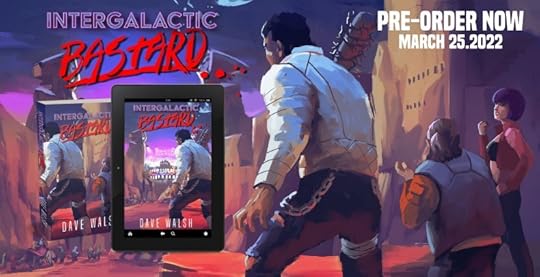
As an aside, when I was dealing with my various injuries I decided to take time off from any heavy writing and wrote a serialized story, INTERGALACTIC BASTARD. The original intent was something fun, kind of ridiculous and it wouldn’t stress me out too much. When my leg injury worsened, my plans were interrupted and I was forced to stop for a while, which is where Mother 3 came in.
To say that Mother 3 influenced this story is an understatement. There was a point in writing this where things changed and it started to become something more. Now, as I finish up releasing it as a serial, I’m formatting and revising it to be a novel and it’s… exactly what I want it to be.
I’m releasing this via ebook and paperback on March 25th, 2022. You can pre-order the ebook right now, and the paperback pre-order will be live as soon as my editor has the final book back to me.
December 7, 2021
So, You Want to Be an Indie Author? Part 3. Marketing

This is part three of my ongoing series. You can check out the other posts here.
When talking about writing and publishing, most authors tend to think of marketing as a sort of nebulous, pie-in-the-sky idea that either comes naturally or is the most dreaded part of the entire ordeal. If you want to indie publish commercial fiction and make money, the sad truth is you need to market your books. In the US alone, there’s something like 4+ million titles published each year, with a large portion of those being indie books. This isn’t the wild west days of publishing anymore where there was no actual competition.
There are a ton of books, a ton of choices for readers and most methods of discoverability come at a cost. Chances are, if you’ve been hiring professionals and working hard at polishing your books, each one is costing you somewhere in the realm of $1,000 to get ready for publishing and the idea of spending even more money just to get people to read it can feel counterintuitive or daunting.
For me, this is also a sticking point where I start to diverge with a lot of the indie publishing hive mind. Just like when it comes down to the question of Amazon exclusivity for ebooks or publishing wide, I believe you have options and that they should be tailored to you, the author, what you feel comfortable with, what you can afford and what works for your genre and specific books. There is no catch-all answer. As much as we’d love for there to be a big switch we flick that helps us sell our books.
There are a lot of ideas that are… older, at least in the realm of indie publishing, and used to work well that I feel are unproven today. What’s difficult about book marketing is it’s difficult to get accurate figures on how effective marketing is. We can know how much we spend, how much we sell and how much income we’re generating, but there’s a ton of factors at play and it’s difficult to say “I did X, which sold me Y-amount of books and yielded Z-amount of income.” It just doesn’t work that way, no matter what the gurus want you to think.
In theory, if you have a six-book series and you’re selling book one at 99 cents, if you run a promotion that sells 20 copies of that book, with you spending $3 to make each sale (yes, that’s $60), if you sell 12 copies of book two and from there sell through 8 copies of the rest of your series, you should be able to say “I spent $60 to earn $130” (this is rough-ish math on $3.99 books for the rest of the series), but that’s not how reality works. Not every sale can be attributed to a recent sale. Someone may have purchased books one and two during your last sale three months prior and finally bought the rest of the books. Someone could buy one of your books a month or two later.
Authors tend to simplify our thinking when it comes to marketing, relying on magical thinking because it makes it easier. All you can do that’s going to be true is market your books and attribute your sales to your continued efforts. If you think that makes doing book marketing more complicated, you’re correct. It does. Sometimes we’ll run a sale and spend more to sell copies. Other times readers dislike our books, grow bored with them or move on. Sadly, sometimes our readers up and die. I’ve had readers email me, saying they have cataracts and can’t read anymore. Life happens and all we can do is create good books and hope what we’re doing is working.
What I’m saying is never grow too reliant on one method of advertising unless you’re 100% certain it’s what’s working for you.
Amazon Ads.For authors who are Amazon exclusive, Amazon’s AMS ads are an easy way to gain traction. I’m saying for Amazon exclusive authors because for authors that are wide, it’s unclear what kind of benefits these will do for you unless you’re selling dozens of copies of your books a day. Amazon relies heavily on their internal algorithms and sales rankings. Lately they seem more reliant on sponsored ads to serve book recommendations and are doing it in a completely intrusive way. There used to be a carousel of “also boughts” on the book page, which still exists occasionally, but you’ll always find a “products related to this item” carousel which is sponsored. These are ads.
Check out the Amazon product page for Broken Ascension.
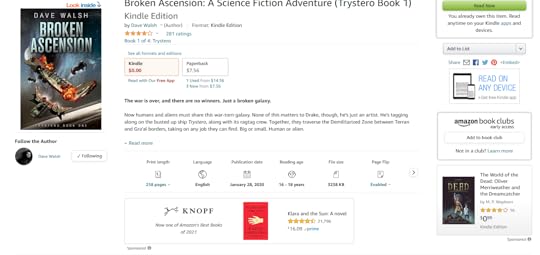
We’ve got a sponsored ad on the right-hand side, then a sponsored ad right beneath the book info. My series with the other books has a carousel under that, then directly following is a sponsored ad carousel.
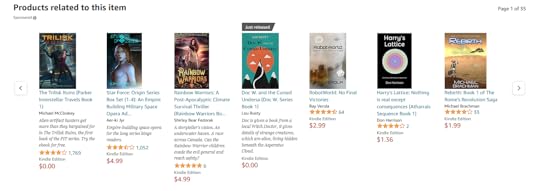
From there you’ve got more info about the book from the publisher, my bio, the Amazon rankings and then, yep, another carousel. Then, yep, another banner ad.
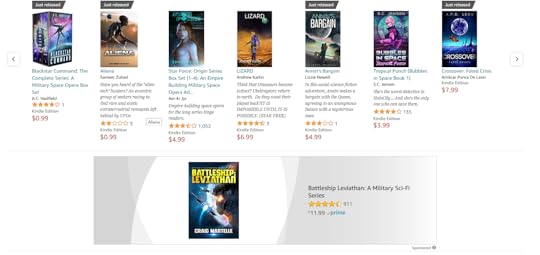
Then, at the very bottom of the page, after the reviews, are the old “also boughts.” “Recommended for you in GENRE,” and “Customers who viewed this item also viewed.” Then “popular products inspired by this item.”
It’s fair to say that, at this point in time, Amazon is pay-to-play when it comes to sales, which means if you’re Amazon exclusive and trying to climb the Amazon charts, you’ll need to spend money on Amazon ads to get that real estate. These recommendations at the bottom of the page used to have real estate near the middle of the product pages, at times, because Amazon is always tinkering, they still do. On average? They don’t. What most customers see are the sponsored ads. I say this is better for Amazon exclusive authors because sales ranking is impacted by KindleUnlimited check-outs. Those count just as a sale in the algorithm’s eyes. Since those readers have twenty spaces for books in their KU libraries, are already immersed in Amazon’s ecosystem and have already paid for their subscription, they’re more willing to check a book out and flip through it to see if they like it than spend their hard-earned money to outright buy it.
With Amazon’s AMS ads, well, I will not go into detail about how to use them. In part, because they’re complicated and ridiculous. There is a lot of disinformation from well-known members of the indie author community about how to use these, so beware. A part of this is talk of ten-cent clicks, using thousands of keywords in ads regardless of relevance and many other things that were perhaps true ten years ago but are no longer true. Amazon’s systems grow and evolve with time, and representatives from Amazon have stated numerous times that their system rewards relevance.
That means if you’re targeting books in their ads that readers will enjoy, you’re going to have your ads served more often and for lower rates, because they’re more relevant to the system. Amazon tries to predict when a reader will click and purchase or download a book. Remember, Amazon’s primary goal with everything they’re doing in these kinds of low-cost markets is to keep users engaged within the Amazon ecosystem. If I’m making $2.79 on a sale of an ebook selling for $3.99, that means Amazon is making $1.21. But, if I need to spend $3.00 in ads to make that sale, it changes the equation in Amazon’s favor. If that sale is actually a download through KindleUnlimited, meaning that user is even further baked into regularly visiting Amazon, all the better for them.
This may be a cynical view on Amazon and their business, but I tend to believe it’s more realistic than a lot of the folks who view Amazon as a market leader with any sense of altruism. I don’t care if “Jeff loves books.” Jeff loves money and power, so there’s no reason to worship at the altar of Bezos, because Amazon graciously provides you with their platform. The $1.21 they make per sale of your ebook isn’t keeping them afloat. The gas grill for $2,000 that the guy browsing books to read on his Kindle who has a KindleUnlimited AND Amazon Prime subscription is all working in unison to keep them positioned where they are.
All of this has been about one market’s ads. Exhausting, right?
There are other pay-per-click/impression ads out there, though.The most popular are probably Facebook’s. I have better luck with Facebook ads than I ever did on Amazon. In fact, when I was Amazon exclusive I was at times spending 100% of my income on ads just to keep my books afloat, which, well, was not a great business model! I spent dozens of hours learning the system, reading books, watching videos and what I found was the clicks had grown too expensive to see a return until I had a very long series, which I don’t.
Facebook ads allow you more levels of control than Amazon’s do, although there are drawbacks. On Amazon, you can target specific authors, books and genres, while on Facebook you’re tethered to whatever filters its way through their system into their ad targeting choices. You can filter even further, on granular levels, like by what device they’re browsing on, if they’re an “engaged shopper” and even filter out people who like certain things that don’t fit your readers’ demographics. My exclusions on Facebook have been “Joe Rogan Experience” and “Ivanka Trump” (the Trump on FB with the most likes) and the comments and engagements on my ads became a lot more pleasant in a hurry, plus I know I’m not hitting an audience that I don’t want to hit.
You can even pull direct from your email list to market to people on that list and people that Facebook believes are similar to them.
BookBub Ads are another choice and are a comfortable in between of Amazon and Facebook. You can target authors directly here, unlike most authors through Facebook, and unlike Amazon, you can target readers on other platforms. The cost is somewhere in between the other two, depending on a vast array of factors, and the results all depend. I run them occasionally and have had great results and poor results for the same ads for the same books.
There are other ad platforms, but these are the main ones you’ll want to experiment with to sell books. Stuff like Twitter, Reddit, Google Ads, etc. are all options, but ones unproven and expensive for books, which are already running on tight margins. What else is there? Glad you asked.
 Monolith’s End (Andlios Book Three) eBook Sale Product on sale $4.99 $3.99 Add to cart
 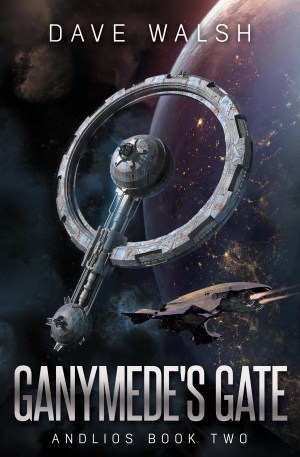 Ganymede’s Gate (Andlios Book Two) eBook Sale Product on sale $4.99 $3.99 Add to cart
  Cydonia Rising (Andlios Book One) eBook Sale Product on sale $2.99 $0.99 Add to cart Paid newsletters.
Paid newsletters are my preferred method of marketing these days. The reasons are bountiful, but on average it’s the cost, how effective they are, and how easy they are. You book a promo, pay for it, set a reminder and make sure everything on your end is set. It happens and that’s it. There is a wide range of these, from the king of all paid newsletters in BookBub, to smaller ones that cost $10 or so and give you decent results for the money. Depending on your genre and what your deal is, you’ll have different options.
The heavy hitter is BookBub and from there, the fall off is steep, dipping down to Written Word Media’s newsletters, Freebooksy and BargainBooksy. There’s eReader News Today somewhere after that, with Fussy Librarian in the mix and then the fall off from there is real. In addition, there are plenty of genre-based email newsletters as well. Those can be just as hit-or-miss, so hang around author spaces and see which ones people are speaking well of, and which ones seem to be a waste of money.
From what I’ve found, at least as of 2021, 99 cent deals are a tough sell in these newsletters outside of BookBub. Free books do a lot better. Remember, this is a marathon, not a sprint, so it may sting to give away your hard work for free, but you’ve gotta tally up the costs and see which is more effective for you. If running a paid newsletter for $50 nets you 12 sales (yes, I’ve had this happen recently) at 99 cents, that’s gonna be a lot of sales from the rest of the series before you see that $50 back. If you pay $35 to give away 400 copies, you’ve paid 11 cents per copy you gave away, as opposed to paying $4.16 to make 35 cents. You’re more likely to make that $35 back in sales deeper into your series than you are to make the $50 back off of 12 sales. Most series read through is somewhere in the realm of 50% of 99 cent book sales turn into a sale of book two, then 80% of book two sales carry over to the rest. Sales off of free books are a lower percentage, anywhere from 1 to 10% (so let’s say 5%, for argument’s sake).
So, five percent of 400 is 20. 50% of 12 is 6.
You tell me which one is better for your money.
Wide authors have advantages.We just do. What advantages do we have? Every store works differently and virtually none of them work pay-to-play the same way Amazon does. Amazon rewards the biggest spender with the deepest catalog. Google Play is a search engine, so SEO keywords and sales page optimization is a real thing that moves books.
B&N and Kobo have promotions tabs that allow you to gain access to their on-site marketing promotions. These can be immensely beneficial and are either free (B&N) or low cost (Kobo). Apple also runs occasional promos, and if you’re lucky enough to be in their good graces, those can help move your books. Building up relationships with these storefronts, who don’t have pay-to-play ads and book recommendations that come from organic sales alone is a huge help and why lots of us who take our books wide see our sales pick up on these stores after giving them some juice.
So, if Amazon exclusive authors have the benefit of KU borrows impacting their sales ranking, wide authors have the benefit of building relationships with these stores that will help promote your books.
What else?Most of these are to sell or move copies of ebooks. They all work and have their associated costs. That doesn’t mean there aren’t other methods of marketing, just that they aren’t proven as effective as these.
I still see a lot of authors talking about “street teams” and such, which, if you can assemble enough excited people to post about your books and tell their friends, that’s great. The audience for science fiction books (my main genre) skews older, so their excitement levels about doing free marketing for some guy they don’t know is almost nonexistent. The same can be said about blog tours, paying for advance review services and whatever else. Reviews happen when you sell books, and yes, it’s a paradox because the more reviews and ratings you have, the better chance you have of making that sale.
Direct sales and paperback sales are a tougher nut to crack, with some authors having good luck hitting up conventions and live events. Of course, it’s 2021 and we’re almost two full years deep into a pandemic and while there are live events happening, they come with associated risks. This is something I had planned for 2016 until, well, I had kids and my publishing plans went on the back burner. I had it planned for 2020 and then, well, you know what happened.
You can always try asking local bookstores if they stock local authors, have a local authors shelf or anything like that.
What not to do?Don’t buy banner ads on sites. Just don’t. Please.
Don’t rely on just one thing.
Don’t listen to one person or get swept up in the hype. That means gurus offering expensive, paid courses. Some can absolutely help, but the idea that you need to “invest in your future” by spending hundreds or thousands of dollars is a tough sell for me. If you go this route, do your research and ask people you trust about it. Don’t just poll a Facebook group that seems ingratiated to this person. There are inexpensive books written by authors about these topics, some of which are better than others or more targeted towards your genre. There are also author groups where people share information and tactics.
If it feels like I’m leaving a massive thing out, I am. I haven’t even touched upon having your own email list newsletter yet. Why? Because that’s another big one and it’s getting its own write up.
How about the next one is about having a newsletter? Speaking of, you can sign up for mine below.
November 29, 2021
So, You Want to Be an Indie Author? Part 2: Publishing
 Typewriter.
Welcome back to my series “So, You Want to Be an Indie Author.” This is part two, if you missed part one you can check it out here.
I’m not sure why the idea of having an ISBN number became so ingrained in a lot of writers from an early age, but in most of my interactions with folks looking to become authors and newer authors working through the publishing process, it’s very important to them and becomes a sticking point. Maybe it’s the years of reading paperbacks and always seeing that barcode in the back with the number, or the copyright pages full of library catalog and ISBN information. It seems important and official, and for an author, especially an indie author trying to prove legitimacy, not having one or understanding how they work would feel like some sort of failure.
Here’s the deal with ISBNs.Some countries offer free ISBNs, other countries, like the US, have one company that assigns, distributes and maintains the system. In the US, we have Bowkers, and they charge a lot for ISBNs if bought individually. If bought in bulk, you’ll save money on them, though. Yes, every distinct version of a book requires a separate ISBN number, meaning an ebook, a paperback, a large print paperback, a hardcover and audiobook will all need to be cataloged separately with their own unique identifiers. Then, if you get into translations? Yeah, those need their own ISBNs as well.
That’s a lot of ISBNs.
So, clearly, that’s another big startup cost for an author, right?
Maybe. There are some folks in the indie world that will advise you to buy that 100 pack of ISBNs from Bowker and strap in for the long haul, but the reality is that you don’t need to worry about it. Every distributor has their own way of identifying books published on their marketplaces, and if they use ISBNs, they’ll provide you with free ones. The only real exception I can think of is IngramSpark, who charges $50 for each paperback set up through them, which comes with an ISBN. If you provide your own ISBN, you can use a discount code (if you can find one) and get the setup for free, but then you’re paying for your own ISBN.
Personally? I don’t care.
I’ve never purchased an ISBN and although I’ve been tempted to distribute my paperbacks through IngramSpark, which if using a setup code and my own ISBNs, would actually be cheaper to buy a multipack of ISBNs instead of the $50 setup fee, but those codes have become sparse and there are other ways to distribute on Ingram’s network that I use and will get into.
So no, I’ve never bought an ISBN before and it’s looking like I never will. Please stop worrying about ISBN numbers. You’ll get one. It’ll be yours and it’s an automatic process on almost every distributor. Stop worrying about it.
Let’s Talk Publishing ProcessWhen you’re getting into the actual publishing process, you should feel comfortable with your book. As someone who’s released things that were rushed out and not ready, I’d urge you to pump the brakes and make sure you’ve done everything you can afford to do to make this book shine. If you’re looking to make a career (or at least some money) in commercial fiction, you should have the best possible book you can make at that moment ready to go.
One thing I didn’t touch upon before was book blurbs, or the description. If it seems like an easy enough task to handle, think again. It’s not. A good book blurb, along with a professional cover, is your first impression in online stores. If that blurb is the back of your book in a physical bookstore, it’s the same thing. There’s many people in the indie world who charge money (somewhere in the $100-$150 range per) to craft a blurb for you. Not all of us have that instinct for what book blurbs are, either, which is sales copy. Fiction writers especially struggle with this, as you’re essentially creating an advertisement for your book. There’s no way I’m going to touch upon how to create a good blurb without going into tedious detail, but I’ll make some broad statements to push you in the right direction.
Read other book blurbs and try to find the most engaging ones.Keep it brief and be mindful of the physical space your words are taking up.Action words are far more engaging than you think.Stop thinking about how ads “don’t work” on you. You’re trying to sell your book to someone else, not yourself.I’m not big on recommending stuff unless I feel like it’s helpful, and I’ve read a good deal of short ebooks on crafting blurbs. Some were okay, some were bad, but the one that helped me was Robert Ryan’s Book Blurbs Unleashed (this is an affiliate link). Robert was a copywriter by trade prior to making the jump to fiction and the way he guides you through what copywriting techniques help to sell books is fantastic. I thought I had a handle on book blurbs before I read this book, but realized I didn’t. His Facebook group (which he mentions in the book) is also a great place to interact with him and others who’ve read his books and was one of the few super valuable places I’ve found that helped me hone in on this one, small part of publishing and get comfortable with it.
One of the most obnoxious parts of the indie author world is how drilled into everyone’s skulls it is that if your book doesn’t sell, it’s probably covers or blurbs that are tripping you up. It’s obnoxious because for a lot of beginners, those are the places where they skimp the most and that advice is necessary, but also grating because it feels like most indie authors can’t get beyond that criticism for folks looking for more in depth talk.
Remember that there’s no one-size-fits-all in this business and everything someone tells you won’t be gospel, including me. Please don’t take me too seriously. This is just my own advice from my personal experience. There will be established six-figure authors who read these articles and scoff. That’s fine. I do plenty of my own scoffing as well.
Alright!
You’ve got a finished product, now what do you do with it?
You publish it.
Does that sound flippant? It probably is. You’ll hear a lot of talk about marketing and launch plans, blog tours and whatever else. A lot of that is overwhelming to newer authors and while some of it helps, when you’re just getting started, it’s just noise and anxiety you don’t need. I’m going to be as blunt as possible here, so prepare for it.
Chances of your first book selling well are slim. Nobody knows who you are and the way most digital and physical storefronts are set up is to reward people who are better known and sell more books than you. No matter how much work you put into your first book, the chances of it becoming a success are very slim. Your family and friends may help you out in the beginning, excitedly buy your book, post about it on social media and drop a few reviews on Amazon, but that’s not a sustainable career. If your interest is in having proof of your hard work, having a book in hand that you can show people, don’t worry about it. You’ve done that and be proud of your accomplishment.
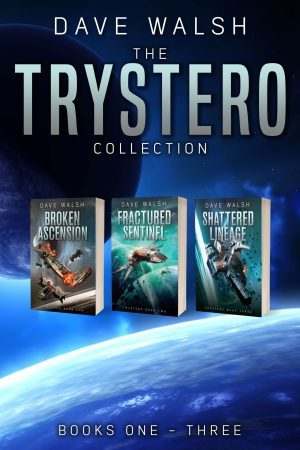 The Trystero Collection: Books 1 – 3 (eBook) Sale Product on sale $12.99 $8.99 Add to cart
 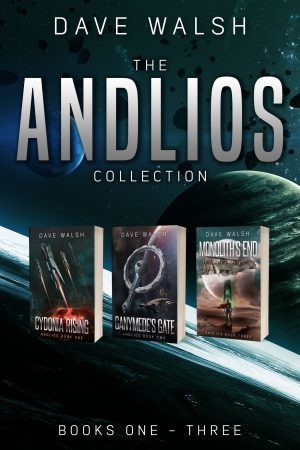 The Andlios Collection: Books 1 – 3 Sale Product on sale $9.99 $8.99 Add to cart
 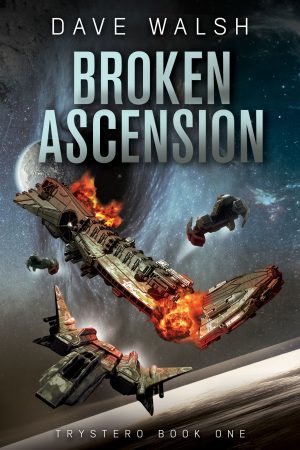 Broken Ascension (Trystero Book One) eBook Sale Product on sale $2.99 $0.00 Add to cart Okay, what about pricing?
If you’re looking to make a serious run at this indie publishing thing, you’ve got a lot of work to do. Figure out your pricing, which means look at similar authors in your genre and what they’re selling their first book in each series for. Know that nobody wants to give a book away for free or $0.99, but those price points are proven to be effective. You can sit on a high horse and talk about how things are devalued these days, and how it’s a race to the bottom. We all feel that way and have all been there. Those opinions don’t sell books. Not unless you’re otherwise famous or have a built-in audience. So if you want to go $4.99 right out of the gate for a 70,000 word fantasy novel, go for it. Your friends and family will support you, and then some may still support you later, but the more you release, the more you wear them down.
As I said previously, being an indie author is about volume. You want to create series, if they’re continuing stories or interconnected standalone novels is up to you and the genre, but you want books that are related and that will sell each other. Most stores offer 70% royalties for most price points you’ll be pricing in, meaning every book you sell will bring you in something, but not a lot. Paperbacks and hardcovers are different and have printing costs associated with them. So, if you price at $4.99, you’ll make $3.50. If you price at $2.99, you’ll make $2.09. Give or take. At some point, you’re going to need to market these books and the cost to make an individual sale is going to be, in most cases, more than you’ll make on the sale of an individual book. If you have a trilogy of books, the first selling for $0.99, the rest at $3.99, that means you’ll make about $0.35 for that first sale, and if the reader buys all three, an additional $5.50, making it less than $6 when all is said and done. Depending on your marketing, it can cost a lot to make that one sale, and it’s never guaranteed the reader will buy into the series. That means you’re going to lose money on every individual sale through most marketing means. If it costs $3 to sell one book and 50% buy book two, well, you run those numbers.
It’s a long game.
The Actual Places You Publish. Let’s Start with eBooks.Did it take me a while to get to the actual publishing part? Yes. Sorry.
When it comes to publishing, you’re going to publish on Amazon. Regardless of how you feel about Amazon, if you want to be a commercial fiction author, you need to have a presence in the largest online digital retailer for books. I don’t like it, either. You’ll find indie authors tossing around percentages and market share numbers and remember, those are dubious, at best. They aren’t entirely inaccurate and just shouldn’t dominate your thought process when it comes to publishing. Amazon’s KDP platform has been publicly accessible and open to everyone for years now and remains a standard.
Publish your ebooks there, publish your paperbacks there, but use some discretion.
We’ve reached this part of the publishing talk where we get into Amazon exclusivity and if it’s right for you or not. I’d argue it’s never right for anyone, but that’s just me. Remember those numbers and percentages I talked about before? On any average month, my sales on Amazon are usually around 30% of my income. If Amazon is the goliath it is, one would think I’d have trouble selling any books anywhere but Amazon. That’s not how it works, though. Plenty of readers don’t buy on Amazon. Amazon’s market reach in the United States may feel like a monopoly, but I do pretty well on Barnes & Noble, as do many others. The same with Apple Books. What’s nice, too, is that there are plenty of countries where “eBook” and “Kindle” aren’t ubiquitous for each other. Apple, Kobo, Google Play and others have deeper reach into different regions around the globe.
When I had my books locked into Amazon’s KindleUnlimited, I struggled. The mostly US-based audience didn’t care for my books. I wasn’t giving them what they were expecting or wanted. Since taking my books wide, I’ve found much more success with international audiences and domestic audiences through different markets. There’s a prevailing mindset that “wide” distribution is more difficult and harder to understand, especially when the markets are smaller and most folks struggle to gain traction.
As with anything else, that depends on a ton of different factors.
The pool of KindleUnlimited readers is a lot smaller than the potential pool of wide readers out in the world, the same with library readers who can’t access your books if they’re exclusive to Amazon. KindleUnlimited reads tend to pay out lower than a sale would and attract a certain type of whale reader who’ll blow through your catalog and never look back, moving onto the next series of books from another author. You can do great on Amazon while enrolled in KDP Select/KindleUnlimited, and for those pulling in millions of page reads per month, you get hefty bonuses from Amazon.
It’s possible. It’s also sort of pay-to-play. You need to worry about your Amazon rankings constantly; how many books are being checked out a day, how many sales you’re making, and these things don’t happen without hefty ad spends. Big name authors are spending tens of thousands a month on Amazon’s in-house ads to keep themselves at the top of the charts and moving books, so unless you have a large library of books or have a plan to release a monthly book in a series, know it’s an uphill battle where the top players in each genre are difficult to unseat.
Alright, you’re wondering, what is “wide,” then?
Wide means publishing in multiple places. It can mean using distributors like Draft2Digital or Smashwords, both of which offer free distribution and take small percentages of sales on retailers for the convenience of logging into one place. There’s also PublishDrive, which is a more “premium” service that instead has a regular fee instead of a percentage cut. What I like about these distributors is that you can reach more places than you can on your own because of the networks they’ve fostered. Most library services are only reachable through a third party distributor.
You also save time and headaches by using one place to distribute your books over having multiple log-ins. Although, like I said, you’re losing a percentage of your income to them. The other thing you lose out on is having a direct relationship with these retailers. Both Kobo and Barnes & Noble offer in-house promos that are accessible through promo tabs you can request once you have your account up and running and have some books for sale. They hand out access at their discretion, so don’t get discouraged if they don’t grant you access right away. D2D can help land you promo spots as well if you reach out to be added to their promo lists, although you don’t have that direct relationship. Apple also offers in-house promos, but you need to have an established relationship with them, usually needing to attend a webinar about selling on their platform to gain access.
Each store has their own set of quirks and rules, stuff that I’ll get into later. There’s always a lot of talk in indie spaces about metadata and keywords, as on Amazon there are very few tools offered to authors for free to help discoverability and Amazon offers seven keyword slots. You can buy expensive tools and reports to gain keyword lists, but unless you’re playing the KU and AMS ads game, I’m not sure it’s useful. Search Amazon and their autocomplete will give you some killer keywords people are searching for. Easy, right?
Try to keep your keywords relevant and tight across all stores. Find the right categories for your books and keep them uniform. Don’t game the system by finding ones that are less populated to get an Amazon bestseller tag. It means literally nothing. Seriously, don’t do it. You want people to discover your books through legitimate means, not stumbling upon them while looking for something unrelated.
So, here’s a list of links to places where you should publish your eBooks.
Distributors.
That’s just eBooks, though, right? What about paperbacks or hardcovers?
Let’s do Paperbacks.Amazon’s KDP is still the place for most paperbacks, although I’ll advise against Expanded Distribution. It costs more to distribute the book and the intended results aren’t there. The idea behind Expanded Distribution is that the books will be available outside of Amazon as well. It uses Ingram’s distribution network, but is very much known to be a book from Amazon. Set up your paperbacks on Amazon. The money is better than just about anywhere else and the quality for most print-on-demand books is a tossup. It depends on the printer, the warehouse, the day, the employee at the helm, etc.
If you want your books to be sold outside of Amazon, you’ve got options. I mentioned IngramSpark above, and that remains the industry standard for publishing paperbacks “wide.” There’s a good reason for it, as well. Ingram is the industry standard for printing, not just for indies, but for most of the publishing world. Libraries and bookstores all have access to and purchase through Ingram. They work through that system and are willing to buy from Ingram, where they are usually unwilling to do anything that’ll support Amazon for obvious reasons. IngramSpark isn’t free, though. To use their free ISBN, you’ll need to pay a $50 setup fee. Changes cost $50.
Professional organizations offer discount codes, but those codes have been floating around a lot the last two years and have been, according to Ingram, abused. Which… Look, the $50 fee is sorta ridiculous and what they mean is everyone has been avoiding paying these fees, so they’ve been strict with them. Also, avoid IngramSpark’s ebook distribution. Just… trust me on this, it’s a mess and gives you very little control. It’s not worth it.
Barnes & Noble offers paperbacks and hardcover editors through B&N Press, right alongside their ebooks, but much like Amazon, they distribute solely to B&N. What’s good is your local B&N store is willing to order copies through B&N Press since it’s internal, although they’re also willing to buy from Ingram. If you want books elsewhere, though, you’ll need to look elsewhere.
A good option is Draft2Digital’s Print Beta program. You’ll need to email their support and ask to be added to the list for it, but it’s worth the wait. The turnaround is slower, but its distribution is through Ingram and there is no setup fee. You’re allowed one change per quarter per book before they charge a nominal fee. As with everything else, D2D takes a percentage off your sale, but it still works out in your favor over Amazon Expanded Distribution.
You’ll note I didn’t touch upon printing outside of print-on-demand, and there’s an important reason for that. It’s more difficult and involved. It’s also, unless you’re ordering thousands of books in a single shipment, more expensive. The cost of print-on-demand books is cheaper in most cases than working with an actual printer to do a limited run. Supporting a local printer, if available, will always be the best way to go if you need a bulk order of books, but for most of us, that’s not a cost effective option. Most don’t help with shipping or distribution, either. There are other printers like Lulu that do the same work as Ingram, but they cost more.
I will not take you through each site’s process because each one has their own help section and support staff.
This was a long one, but it’s a vital part of being an indie author. Coming up, I want to talk about one of the most vital parts of being an indie author, and also the most dreaded.
Marketing.
I know. I know.
If you’d like to support me, buying one of my books is always a great way, or checking out my Patreon where I publish my serial fiction.
November 27, 2021
So, You Want to Be an Indie Author? Part 1: An Introduction

If you’re reading this, chances are there’s some part of you that enjoys expressing yourself via the written word. Curiosity always gets the better of people like us. For many years, the publishing industry was monolithic, built upon the pillars of the New York behemoths that served as tastemakers and gatekeepers to becoming a published author. Traditional publishing still exists and remains a driving force within the publishing industry, but for many authors, the crushing reality is that there’s less room for newer, less established authors in those spaces, and less room for exploration.
To make matters worse, the money isn’t exactly flowing like it used to.
Chances are, you’ve heard of self-publishing and have your own opinions on it. When I was growing up, self-publishing was not only frowned upon, but seen as a desperate move that only the talentless hacks need to resort to. Now, in 2021 as I’m writing this, that’s not the reality. Well, to be fair, that kind of author and outside attitudes do still exist, albeit not at the level it used to. Much like other creative fields that saw breakthroughs in their respective indie scenes, authors are seeing the same sort of expansion and opportunities, allowing them to publish books indistinguishable in quality to traditionally published books, even sharing digital and physical shelf space with them.
There are many myths about indie publishing, on top of the process itself being a complicated one. The space is also full of experts of varying degrees of quality, pumping out #content for you to consume that promises to help. As always, it’s difficult to parse which information you’re being fed is legitimate, which is anecdotal, and which is bought and paid for. There are Facebook groups, how-to guides, webinars, exclusive email lists, paid consultants and everything else in between. Truth be told, there’s no one catch-all solution to learning about being an indie author. Some people mean well and give great advice, others are looking to cash in.
While I’m going to occasionally link to my books and Patreon, what I’m gonna do here is try to help for free. I’ll point you in the direction I’d go, and hopefully it helps. What I’m looking to do is not serve as a comprehensive guide, but to demystify some of this.
I’ve spent the last few years of my life occupying these indie author spaces, stemming from discovering a few of the more popular Facebook groups and worked my way through all the expert advice, trying most of it along the way, and I’ve come to my own conclusions about what’s helpful and what isn’t.
The last year or so I’ve been approached by friends and friends of friends for advice on publishing, indie publishing, formatting, next steps and all of that. While I’m not an expert, nor am I a smash success, I’ve been around long enough to find myself in a position to serve as a resource for newer authors, looking for a way to get their words into the wild.
So.
Where do you start?My primary focus is going to be on fiction, since that’s my area of somewhat expertise. Not that I have anything against nonfiction, creative nonfiction and such, it’s just not what I read or write. Some of what I’m writing about here will apply, as there are some universalities with publishing, but as with any source of information (yes, even me), ask questions and take nothing as gospel.
Read what you want to write.
My biggest frustration with most of the space created by indie authors for indie authors is the glossing over of the artistry. Most indie spaces focus solely on the business of being an author and all that it entails, and, frankly, it’s exhausting. Lots of authors don’t come from strictly creative backgrounds, instead taking a side passion or interest and turning it into a business. I’m not a believer in “everyone has a book in them,” nor do I think everyone can make great art just because they work hard.
There’s a somewhat harsh reality in the indie publishing world that doesn’t get spoken about as clearly as I’d like: making money requires strict adherence to genres and tropes that sell. You’ll find a lot of talk about genre and tropes being important, but for most indie authors, the game is about selling relatively inexpensive ebooks to voracious readers. I’m not here to judge people’s consumption habits or tastes, because we’ve all got our own versions of those, instead what I want to push is that the more complicated your ideas are, the more they deviate from what else is on the market, the worse they’ll sell.
For those of us with creative backgrounds, our training focuses on our unique voice and ideas, not on creating commercial art to make money. My personal struggles with being an indie author are based strongly on this internal friction. While I read some commercial fiction, my tastes lie far outside of that realm, making writing it a draining experience. I can do anything for a certain period until I burn myself out, and my breaking point came in late 2020, where I forced myself to grind out another book for early 2021 when I was past my expiration date. This meant spending the next year continuing to promote my books and writing different kinds of stories to recharge myself.
Speaking of, hey look, an ad break for my books.
The Andlios Collection: Books 1 – 3 Sale Product on sale $9.99 $8.99 Add to cart Cydonia Rising (Andlios Book One) eBook Sale Product on sale $2.99 $0.99 Add to cart Broken Ascension (Trystero Book One) eBook Sale Product on sale $2.99 $0.00 Add to cart No matter your background, focusing on your craft is vital. All of us learn differently and there’s no one right or wrong way to learn about writing. Some will benefit from reading books, others taking classes or writing workshops, some meeting with local writer groups, or even getting a degree in writing. Don’t rush it. Not everyone’s first attempt at a book will be good. In fact, it may actually be bad. Writing an entire book, which can be a daunting process in the beginning, only to scrap it, may seem counterintuitive, but for lots of us, that first book was a practice. Regardless of how you learn, write and write often. Find some people to read your work and give you honest feedback and learn how to cope with criticism. Not everyone is kind with their criticism and not everyone’s criticism is accurate. Know that sending tens of thousands of words to a friend to read and give detailed notes on is a big ask and exercise patience and grace, even if they say they’ll do it and never get back to you.
This is where making writer friends can be helpful, or, later one, finding some of your readers who are eager to help you in your process. Always reading and consuming the kind of books and media you want to write is vital, though. Nobody creates within a vacuum, and trying to find truly unique ideas is a lost cause. Crafting well-constructed, readable fiction is the goal, and knowing the market for your genre is even more important. For those of you that love commercially viable fiction, as long as you’re willing to put in the work, chances are indie publishing will bear fruit, eventually.
One thing I want to make clear, though, is that no matter where you stand on this, if you want to make money as an indie author, you’re going to have to do a lot of work. There’s also going to be an initial investment to create your work, something that gets glossed over in a lot of the advice bandied about. In the least, you’ll need to spend money on editing and covers. No matter the internal debates that rage within the indie community about if someone can do these for cheaper on their own or not, I’d recommend getting outside help where you can.
I’m saying this as someone who went to art school, worked as an editor for a PR company, freelanced editing medical journal pieces and has a lot of experience with both graphic design and editing. One of the biggest stumbling points I’ve seen for indie authors at the beginning of their careers seems to be covers. For lots of us, there’s this pull to create something unique that stands out, or for our covers to at least be a 1:1 representation of characters or settings from our books. These instincts are understandable, but a hurdle for authors in the early part of their career. There are plenty of cover design marketplaces online that feature inexpensive pre-made covers you can buy, have your name and title slapped onto the cover, and are ready to go.
In fact, the first three books in each of my series are premades I bought from the same cover designers. After that I’ve been commissioning him to do custom jobs that better fit my stories, but those first few covers are professional and help sell the book.
To say I was hesitant was an understatement, but covers that adhere to what’s selling well is crucial. They signal genre to readers and while they aren’t unique or eye-catching, they’re familiar and comfortable. Remember, we’re not looking to be unique snowflakes here, we’re looking to make money. These covers can set you back anywhere from $50 to $200 in the early going.
Finding an editor is a similar process, with costs varying there as well. On average, an excellent copy editor will work for anywhere from 6 to 8 cents per word. Depending on where you are in your process as a writer, you may need more intensive edits, like developmental edits that delve deeper and cost more.
Every year Written Word Media conducts an author survey, with the latest iteration for 2021 revealing the raw numbers for most authors. According to this survey, over 60% of indie authors are spending over $50 for editing. If you break that data down further, though, a bulk are spending between $100 and $999. There are offsets by people who trade with other authors or have friends and family do this for them. A professional editor for an average sized book is going to charge somewhere in the $300 – $600 range per book, though.
The other elephant in the room is formatting.
While formatting seems like a minor task, there’s more to it than you’d initially believe and remains important. Most markets you distribute to will have built-in formatting tools, but like everything else, the quality varies. You can hire someone to format both an ebook and a paperback for you, somewhere between $50 per book as the going rate, or look into software to purchase if you’re in this for the long haul. There are more rudimentary options like Jutoh for formatting, then the recently released Atticus, or if you have access to a Mac, the king is Vellum. If looking for an inexpensive (read: free) way to do this, Draft2Digital’s formatting tools are excellent, exporting professional looking books with no cost. Draft2Digital is primarily a distributor, but you don’t need to publish through them to use the formatting tools.
Before you worry about ISBNs, where to publish, what you should price your books as, to go exclusive to Amazon or not (… just my opinion, but no. I’m an advocate for ‘wide.’), or creating different formats, get these basics in order.
To summarize what I went over here, if you’re starting off and looking to enter indie publishing, these are the core basics you’ll need.
A handle on the writing process.An understanding of what you’re going to write.The means to turn your book from a collection of words into a product (cover, editing, formatting, etc.).Determination.Being an indie author is a process. As much as there was a stigma about jumbled, poorly written work being tossed onto Amazon, it doesn’t have to be that way. There are costs that go into being an indie author. In addition, there’s a lot of work, this isn’t a sprint and releasing one book will help you feel accomplished, but won’t create a career for you. Most indie authors see success by writing in popular genres while writing longer series. If that’s not for you, that’s fine. It may not be for me, either, but there is a process to it. Meaning, after you’ve got your fist book set up and ready to go, you’ll need to have another and another and another and so on.
Then you’ll need to learn about marketing.
If you’re here and reading this, you’re interested. So check back for the next installment. Next up I want to cover the basics of publishing, with future installments about the importance of genre, series, marketing and more.
Of course, you can check out my books if you’re so inclined, or if you’d like to support me directly, I have a Patreon for my serial fiction that starts at $2/month.
November 26, 2021
Check out the 2021 Andlios Holiday Sale

The holiday season is in full swing, as I’m typing this on Black Friday, a day that became a holiday in the west to celebrate the official beginning of the holiday shopping season. As always, I have complicated feelings about that, which I’m accentuating by placing my Andlios series on sale until January 2nd.
That means now until January 2nd you can pick up discounted ebooks for this series and really get into the holiday season by exploring topics like power structures, capitalism, imperialism and more!
Cydonia Rising, normally $2.99 is $0.99.
Ganymede’s Gate, normally $4.99 is $3.99.
Monolith’s End, normally $4.99 is $3.99.
Anarchy’s Edge, normally $4.99 is $3.99.
Terminus Cycle, normally $3.99 is $2.99.
The Andlios Collection: Books 1 – 3, normally $9.99 is $8.99.
Enjoy your holiday season!
November 15, 2021
Blarg.
 INTERGALACTIC DEATHMATCH
Just wanted to provide a short update on here for those of you not subscribed to my newsletter.
If you aren’t subscribe you should be! You get a free book.
Anyway.
My loose plans were to be done with INTERGALACTIC BASTARD by the end of this month, have it cleaned up and ready to be released in early 2022 as a finished book and, in the process, begin work on TRYSTERO 5.
It’s been a year since the release of Severed Galaxy and I’ve had enough of a break to have a good feel for returning to the series. The plan is still to get working on TRYSTERO 5 as soon as I can, I’ve just reached a snag.
Over the summer I injured my back. With rest and care it got better. Well, sort of. Until it caused a problem with my leg. IT Band Syndrome and repetitive motion injury to be precise. This has been incredibly painful, perhaps one of the most painful injuries I’ve ever had to deal with and has limited a lot of what I can do right now.
Trying to sit at my desk, for example, is something I’ve been unable to do for the better part of a month now. Where I was previously churning out two episodes a week of INTERGALACTIC BASTARD, I’m at about one a week, if that.
While I deal with physical therapy and everything else going on right now, I came up with a solution to keep providing my Patreon subscribers with promised updates while I’m considerably slowed down. That was to take a book I had released under a pen name previously and serialize it.
You can read ENDSMOUTH: THE TOWER on my Patreon right now, with the full chapters (with some reworks) released via my Patreon, those same chapters broken down into smaller episodes on Royal Road.
I’m also still releasing episodes of INTERGALACTIC BASTARD via Royal Road as well. As always, early on my Patreon.
Your support as I’m dealing with this is always welcomed.
Thanks for understanding.
September 30, 2021
A New Babylon 5, One That Remembers Without Lamenting in Nostalgia
 Babylon 5
I’m never one for nostalgia.
There’s something about it that feels so familiar and safe that it can almost be like cheating. Not that there’s anything wrong with having comfort, or looking for that familiarity to comfort us in life. But, for me, there’s a giant, unexplored world out there and looking back can feel nice for a while. The problem is, it can never be the same.
Trying to re-watch old shows is fine, but you reach a saturation point where it loses its magic. I’ve seen the first three seasons of Arrested Development so many times that every joke is seared into my mind. By the time the Netflix continuation happened, I was older and the show couldn’t live up to that head cannon that had been built up. The actors couldn’t coalesce during the filming, making the show fractured and stilted, without the original magic of the Bluth family together in that Balboa Towers condo playing off of each other. Frankly, I have no idea what happened in season five because I never watched it.
So what does it mean when it’s announced that Babylon 5, bar none one of the best science fiction series in television history, is returning, but not quite how we remember it? Much of the cast has passed away or aged to the point where continuing the story would mean essentially starting over anyway, so instead, J. Michael Straczynski is doing something drastic: he’s rebooting the series on the CW.
JMS explains via his Twitter account and regardless of your opinion on Twitter, it’s a must-read for fans.
How do you telling continuing story of our original Londo without the original Vir? Or G’Kar? How do you tell Sheridan’s story without Delenn? Or the story of B5 without Franklin? Garibaldi? Zack?
— J. Michael Straczynski (@straczynski) September 27, 2021
I’ve watched Babylon 5 a few times through now. There’s still a magic in it, a lot of it bolstered by the ideas presented in the show, them being unapologetically political, and of course, the cast. Trying to continue the magic of B5 without Vir interacting with Londo, without G’kar or Delenn or… shit, so many of the cast are gone. It would be skeletal and brutal.
The decision to start the show from the ground up leaves room for interpretation and for new ideas. Nostalgia is something we can all get lost in and, for what it’s worth, the original B5 will always exist. A new B5 existing only means the original will be easier to find than it has been since it went off the air because of the obvious nature of the show’s fandom and new viewers’ curiosity about the original.
We shouldn’t be afraid to try new things or rework old ideas. I’m sure it’s difficult for someone like JMS to return to an old idea and be given a blank slate again. Most creators, even those with fond memories of past works, still have that desire to go back and fix those imperfections we all find in our own work. It’s taken every ounce of my self-control to not go back and re-write Terminus Cycle repeatedly. It needs it! I was trying to write a sci-fi novel with universal appeal, adhering to genre norms I hated and resulted in something I don’t love. I still write in that series, though. The next book, Cydonia Rising, worked as a reboot and continuation, meaning it was a starting point with nodding to the past book for those who read it.
A new Babylon 5 can exist in the same universe that the old one did. Zathras has seen some shit, alright? Or, it could be an entirely new thing. If watching Apple TV+’s new Foundation series has shown me anything, it’s that anything can be tinkered with to fit a format and sometimes even work better. Don’t be afraid to see your favorite things iterated on or changed. Don’t let nostalgia choke you.
August 7, 2021
INTERGALACTIC DEATHMATCH Updates!

Things are chugging away pretty well with INTERGALACTIC DEATHMATCH, lemme tell you.
I just released episode 10 for my Patrons over on Patreon. If you aren’t one of ’em, you can be for just $2 a month, which is basically nothing.
As I’ve been moving along here I’ve made some changes to the release format while also trying to get this story up in as many places as possible. That means a Substack (which costs more than the Patreon because they don’t allow anything else) and posting episodes on Royal Road.
Royal Road is an open reading platform, linked to my Patreon and PayPal, meaning all the episodes will be posted there, buuuuuuut, after they’ve been exclusive to my Patreon supporters first.
So, if you want to keep up with INTERGALACTIC DEATHMATCH but are unsure about platforms like Patreon, you can check out the story to date on Royal Road.
With this change, also comes a change in updates.
I’ll be posting new episodes twice a week, on Tuesday and Friday, to Royal Road. The episodes will be up early on Patreon, though.
July 18, 2021
INTERGALACTIC DEATHMATCH’s New Home is my Patreon (And Substack!)
When I need to, I can be pretty swift.
The truth is? I love INTERGALACTIC DEATHMATCH. It’s super fun to write and I really feel like those of you that read it will love it. It’s also the kind of story that will get lost in the shuffle on a place like Amazon, especially when they require somewhat exclusivity and control over how I can market my work, where I can market it and how.
So I launched a new Patreon page for INTERGALACTIC DEATHMATCH.
I was on vacation until Saturday evening, where I got home, took my story down from their broken new system and registered for a Patreon page, waiting an agonizing 24 hours before I got the go-ahead to go live. Now, it’s live.
https://www.patreon.com/dvewlsh
The first reward tier is just $2 USD a month, and with it comes a 10% discount off of my store for ebooks. Second tier includes a 20% off discount and ebook copies of INTERGALACTIC DEATHMATCH as they happen. The plan right now is for each individual story arc to be contained into a single ebook. This leaves room for a multitude of ebooks down the line, depending on how long we all want this to keep going. The third tier includes all of that, 30% discount and a paperback copy of those collections each time they happen.
The plan for now is to release new episodes weekly. Considering I’ve got another five just about ready to go and I’m really enjoying writing this, I can keep going for a while now.
So check out my Patreon page and pick the reward tier that works best for you.
I’ll be looking into serialized reading apps as well moving forward, but for now? The best place to read INTERGALACTIC DEATHMATCH and support me is via my Patreon.
If Patreon isn’t your speed, I also set up a Substack.