Dave Walsh's Blog, page 10
November 11, 2019
The Outer Worlds: The Lost Hope of Sci-Fi and Crippling Fear of Making a Statement
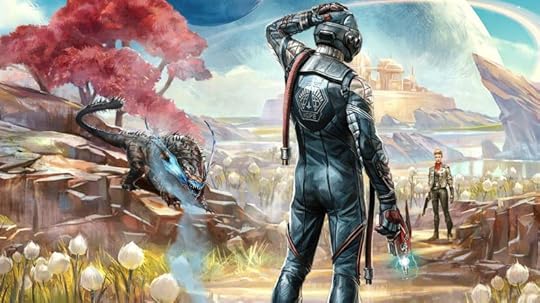
I’m not quite sure what to say about the state of modern games that hasn’t already been said. We’re entering a hyper-monetized era for games where publishers are still clinging onto the idea of games costing $60 at launch to claim they aren’t increasing prices, while milking a lot more out of their most loyal players. It’s a deceptive practice that instead of admitting that the production of a top tier game means charging $100 for the full experience, instead players are being nickel-and-dimed through every stage with little being added in the way of value. I’ve written about this before, so I need not tread down the same path again, but it’s still important to have these values stated as a baseline before we talk about The Outer Worlds.
The Outer Worlds is a science fiction, first person RPG much in the vein of the modern Fallout series. In fact, it’s made by the team that made Fallout: New Vegas, an ambitious mess of a game that saw most of the issues originating from the underlying engine and policies from the publisher, Bethesda. Some of the team involved with the original Fallout games, which were heralded for their bold storytelling and morality systems, worked on New Vegas and now Outer Worlds. The truth of the matter is: if you like the Fallout games, Outer Worlds is a much better game that scratches the itch far better than anything Bethesda has done with the license. Hard stop.
Fallout 4 built a game on the same, broken engine that Bethesda has been using for their open world RPGs for a while now. While Elder Scrolls and Fallout feature different settings and combat mechanics, they’re essentially built off the same foundation. Fallout 4 quite simply wasn’t the graphical, technological or narrative leap forward that anyone was expecting, never mind the mess that was Fallout 76. At this point the franchise feels pretty dead, which is why Obsidian’s Outer Worlds felt special.
Granted, in a crowded release schedule that always is the Fall it is overshadowed by Hideo Kojima’s grand opus logistics simulator Death Stranding and the usual cavalcade of yearly releases, Outer Worlds took a bold approach by releasing in the Fall and including zero pre-order bonuses, special content for each retailer, season passes or any real promise of future content. Outer Worlds is a $60 game and that is an intentional, bold statement in a world of special editions, pre-order bonuses and season passes. You can’t buy any sort of boost or special content for the game, you can’t buy in-game currency or consumables. Everything in the game is just in the game already.
Perhaps that wouldn’t feel bold on its own until you delve into the actual content of the game, which pits the player against a hostile system filled with greedy corporations sucking the life out of the planets, the system and the workers, their intentions come sharply into focus. There is nothing about the Outer Worlds that is subtle. Everything about the game is brazen and in-your-face. The game does this without making any sort of solid political stance, somehow. While the corporations are seen as greedy, evil and wrong, in each instance there is some anarchist or fringe element that breaks free from the corporations only to see corrupt leaders abusing their own power.
This shouldn’t come as a shock considering Obsidian worked for a great deal of years with the South Park franchise, a series built off of the creators’ “everyone sucks, caring is lame” mentality that went from endearing and scathing to grating and preachy over the show’s continued run. South Park runs on the idea of exceptionalism, where the bold overcome the masses to make things better. The Outer Worlds takes a similar approach in which the player character makes bold decisions that can destroy entire towns out of spite or vengeance, or simply “knowing best.”
Still, you have decisions to make and every decision feels pretty rotten, considering the circumstances. That, perhaps, is a realistic approach because rarely in life will we find a sterling option that makes everything better without hurting anyone, it just feels fatalistic. After all, this is a game and there need to be decisions, people need to get hurt and there needs to be a conflict. Early on, the player is given a decision between two towns: one a corporate hellscape, the other an exclusive collectivist paradise. Only one town can thrive, the other starves. Much like the famous decision early on in Fallout 3 where the player chooses to explode a nuclear bomb in the town of Megaton or NOT detonating the bomb and facing those consequences, this is a similar “grey area” decision where no matter what you do things kinda suck.
You aren’t given a chance to convince either side to be better, help a better leader gain power and promise a better tomorrow, it’s just the same, binary decisions that games like these have. While it’s fun, it feels a bit droll considering how many games go down this path. A lot of the game tasks you with these decisions, although sometimes you do genuinely get to make people happy. Still, all of it unfolds while shooting a lot of people, machines and beasts with little in the way of variables.
The Outer Worlds is a good game, well worth the investment and will hopefully be the beginning of a franchise of its own, unscathed from the excesses of modern game publishers. The game makes a statement about modern games and society, it just does so without doing much different itself. It’s a lush, interesting sci-fi setting depicting what would happen if our own, corrupt crony capitalism extended out into the stars. It just doesn’t give any sort of vision of what would make a better future. Just like as a game it’s still fetch quests, shooting galleries, looting, leveling and crafting with touching moments of great writing, characters and dialogue randomly interspersed in to keep you engaged.
There’s a lot of science fiction in the world and there’s a lot to be gloomy about, always. What separates good science fiction from great science fiction isn’t just turning a mirror back on society, but also proposing a path forward. Things can be dark, but a faint glimmer of hope goes a long way. Star Wars wouldn’t have endured decades as an incredibly popular franchise without the glimmers of hope and light amidst the dark brutality of the Empire and whatever is in the sequels (who knows?). Star Trek has always shown that good can win, even in the face of Klingons, Romulans, and the Borg. The Klingons became allies; the Romulans chilled out the Borg were a mutation of wanting people to survive. Firefly had its oppressive government, but ultimately it was the people that wanted better.
This is where the Outer Worlds falters. They can’t present a better future without effectively “taking a side.” While they sort of take a side, that side seems to be against corruption, which as a concept doesn’t feel incredibly unique or interesting. They start to say things about corporate corruption and perhaps that the “anarchism” of Phineas Welles, the mad scientist, is the correct path, the attempt to build a game with ambiguous morality while the game itself is a statement against corporate greed feels very wishy-washy. Perhaps it’s asking too much from a subsidiary of Microsoft to make a grand statement against modern corporate greed, I don’t know. I look forward to what Obsidian comes out with next and hope to see them really nail their themes while evolving this genre of games a bit.
Parvati deserves better.
Seriously, she’s the only one.
I’m not kidding, there are a bunch of videos on YouTube of people doing awful things to people she cares about to see her reaction and this is why we can’t have nice things.
You can have a free eBook, though. That’s right, sign up for my newsletter and get a *FREE* copy of The Cymage, an Andlios prequel.
Newsletter signup
Join now to receive your free copy of The Cymage!
Please wait...
Thank you for signing up!
The post The Outer Worlds: The Lost Hope of Sci-Fi and Crippling Fear of Making a Statement appeared first on [ Dave Walsh ].


October 17, 2019
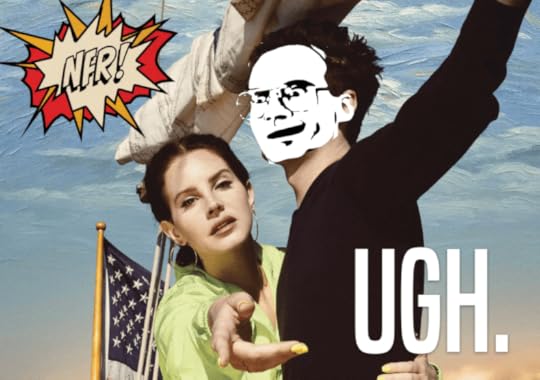
Norman F’n Rockwell; or, It’s Time for Wrestling Criticism to Grow Up
I’m not someone that really keeps up with the world of pop music or music criticism. In part because I have two kids, am running my own business publishing novels and barely have time to indulge in things that I genuinely enjoy. Those days of experimenting with a new artist that isn’t quite in my wheelhouse or wanting to suffer through what feels like a dozen hours of original WWE content a week knowing that maybe an hour or two will be rewarding are over. At least for now.
Yet, I found it impossible to ignore this recent story about singer Lana Del Rey and NPR music critic Ann Powers. Powers goes beyond the cursory criticism found for most modern entertainment and art these days of evaluating the surface level factors and instead strikes at the very heart of who Lana Del Rey is as an artist and what her music means in 2019. Del Ray’s reaction was to go on Twitter and complain, pout and set forth her army of the undead fans into the world because this criticism was difficult and came to difficult conclusions about her work while ending in a complementary place. This led to a wider discussion about the death of criticism in the age of the blogger and I can’t help but think about professional wrestling in this regard.
That’s right. We’re doing this. If you’re not into wrestling, you can probably skip this one.
Wrestling criticism is, for the most part, an absolute dumpster fire of elder statesmen, reactionaries, gatekeepers and people clinging to the idea of uniformity set by those that came before them. While there is nothing wrong with assigning value to a piece of art or entertainment, value without introspection is hollow and empty.
Much of modern wrestling discourse is based around the work of a few select individuals, their personal tastes and their respective cults of personalities. For many, a Dave Meltzer five-star match is the apex of accomplishment in the realm of pro wrestling, a sign that hard work has paid off and that a wrestler has really made it, with the numbers above that in the realm of Kenny Omega, Kazuchika Okada, Hiroshi Tanahashi, Johnny Gargano and a select few others exclusively. Meltzer himself is a complicated subject to tackle in the wrestling space, but for our intent here, we’re focusing on his taste in wrestling and how he expresses himself.
His taste has become the gold standard for how wrestling is judged, a veritable Roger Ebert of the contemporary wrestling space. If you know Meltzer’s tastes and are curious about a match, seeing his star rating can tell you virtually everything that you need to know about the match beforehand, much like if you followed Ebert’s film reviews you knew his taste and how it correlates with the quality of a film.
The thing is, Roger Ebert’s taste was his own. Most people can agree that The Usual Suspects is a good movie, yet Ebert gave it 1 1/2 stars. He also hated (and seemingly didn’t understand) Starship Troopers and Blue Velvet.
Meltzer exists in a similar sort of bubble, where his opinion is taken as the measuring stick for the quality of wrestling, yet he’s a fallible human being who’s personal taste accounts for how he rates wrestling. I’m not saying that he’s wrong, either, because he’s not. Meltzer is perfectly within his rights to rate and review matches as he does, just like Ebert was in the same position with films. The thing is, Ebert had contemporaries. Ebert had Siskel work alongside him and there were others, such as Leonard Maltin, Gene Shalit, Peter Travers and more that provided counterbalance and their own opinions into the conversation.
Wrestling lacks this same diversity.
Instead, wrestling criticism tends to fall on the shoulders of those who grew up with Meltzer’s opinions as gospel, in turn trying to emulate Meltzer and giving near-mirror opinions to his own. Outside of that, there is little introspection into what makes wrestling magical or interesting. The closest that wrestling comes to cultural critics are people like the ranting and raving Jim Cornette, who’s gimmick of being an old fuddy duddy reactionary screaming about everyone “killing the business” for cheap YouTube uploads likens him more to a Ben Shapiro-esque figure within the world of wrestling, where his value is in calling everyone that he disagrees with a dangerous moron intent on the destruction of everything that should be held sacred.
At this point Cornette is basically a walking, talking (screaming) meme, a boogeyman meant to be tagged by one of his acolytes on Twitter with a GIF of someone doing something that doesn’t fit into his narrow understanding of pro wrestling, with the intent being to rile him up to go off on some rant. It’s impossible to tell if the people tagging him are trying to give him an aneurysm, trolling him or just looking for validation from a man that most of us grew up knowing as the stout guy in the brightly colored sport coats, his signature glasses and tennis racket on television. His—admittedly great—knowledge of wrestling history and good mind for the business has convinced large swaths of fans that his take is the definitive take on everything that is good or bad in wrestling. The irony here, of course, is that Jim is one of the people credited for applying the five-star metric to wrestling before Meltzer adapted it to a wider audience.
Then there are the rest. I’m not sure how to categorize them or if there is much value in doing so. These are archetypes that exist almost everywhere and don’t warrant any unique analyses. The overly positive, say nothing negative types, the overly negative, everything sucks types, the stuck-in-the-past types that think everything modern is bad, the people with zero grasp on wrestling history that refuse to consider anything older than when they started watching and everything in between.
Many try to steer the idea of taste into an objective place, instead of a subjective one, by conforming to rigidity within the framework of the medium, building upon the foundation of critics like Meltzer in an attempt to make definitive statements about the quality of matches. There are few attempts to analyze wrestling beyond the sum of its presentation. Those that do tend to keep to the shadows of smaller blogs or intimate social media circles while mainstream criticism falls into the understandable milieu of the news cycle.
In an age where social media GIFs of cool wrestling spots have become a transactional tool which can make-or-break a wrestler’s career and where every single star has social media, reads the internet and is in tune with what is being said about them and their work, many like to err on the side of caution and not rock the boat. Wrestling finds itself in the unenviable place of needing to breed fandoms like much larger properties do, without the luxury of the reach of a Disney, Marvel, JK Rowling or a popstar like Taylor Swift or even, yes, Lana Del Rey.
You didn’t think that I forgot about her, did you?
Lana Del Rey’s immediate knee jerk reaction to Powers’ criticism of her speaks to the perception of criticism in general these days. The star holds all the power and while Powers is an established name and NPR a monolith in their field, wrestling doesn’t have that sort of foundation in place. Wrestling journalism has its own complications, bad actors and scammers still at every level, but by-and-large there are more and more people in both the journalism and blogging sides of the field that do ethical, good work.
The problem comes when the way that we talk about wrestling hasn’t fundamentally changed in a very long time. There are multiple angles to view something like the rise of Hulkamania, or the Austin era, the bullheaded rise of Cena, the working class underdog story of a Daniel Bryan or the Cena repeat with Roman Reigns in the WWE, yet most conversations seem to default to economics, rigid match evaluations and seldom move beyond the self-referential wrestling world as a whole.
There’s need to be a spark of inspiration to look at topics like why Daniel Bryan, working in a publicly traded company with deep roots to the rise of an ultra-nationalistic conservative movement with Donald Trump at the forefront and the incredibly troubling ties to the Saudi government, with a gimmick of a conservationalist and arguably that of a leftist, makes him a heel. Or how companies like AEW pushing for inclusion as a pillar of their brand need to find a way to walk that tightrope while some of their VPs work as heels sometimes contradicting that image. Or maybe how Kenny Omega made bisexuality an important part of his story with Kota Ibushi only to shy away from talking about his own sexuality when pressed by fans and media on the matter, effectively benefitting from being seen as “out” without ever doing so.
So why don’t we talk about those things?
In part, because wrestling is not inviting to these kinds of conversations. The wrestling world is more insular and inherently smaller than a fandom for a big star, meaning that you, a critic, could be happy with the fact that AEW is promoting inclusivity and that the Golden Lovers could exist in a public realm without being overly patronizing or turning into, well, a Billy and Chuck sort of thing, while still raising questions and valid concerns over these things. Somehow talk about the WWE’s links to conservative politicians or the Saudi government is always just written off as “well, it’s just business,” while any criticism leveled at WWE means a publication losing access to the company for conference calls, press releases, interviews, event passes and more.
I’ve really been enjoying AEW’s weekly program for the first few weeks and I hope that they continue to grow and prosper, but that doesn’t make them immune to criticism. Good criticism can help things grow and get better, for artists to thicken up their skin and create better stuff.
We really don't need to see stuff during commercial breaks which essentially equals "watch us stall" anymore. It's not working.
— d.w. (@dvewlsh) October 17, 2019
Camera completely misses Stunt's 450 and makes it look like he missed, anyway.
I'm just gonna walk away for a minute here.
A recent, dead-end discussion about comparing pro wrestling to performance art seems to primarily exist for Jim Cornette to bemoan what he refers to as “cosplay wrestlers” like Orange Cassidy instead of exploring the possibility of wrestling being more than a collision of sweaty, angry figures inside of a ring in front of a crowd of people and that someone like Cassidy serves as an amazing commentary on the work-rate obsessed fans and performers that occupy every space of the wrestling world. Instead, he’s killing the business and exposing that wrestling is fake and not real. Because somehow that is a measuring stick of wrestling in 2019, if the adults in the audience somehow know it’s fake but pretend to not know and that… I’ll be damned if I know what this is about here, it seems like people have no concept of what fiction is or how fiction interacts with reality at all.
If wrestling is filled with Lana Del Rey-like figures unable to handle criticism but few-to-no NPRs willing to level that criticism, what exactly can we expect wrestling to be or for it to grow? Yes, wrestling is goofy, wrestling is something that appeals to children at times and can at times be a reflection of the ugliest parts of our society, there are a lot of talented, passionate people doing interesting and sometimes different things inside and outside of the ring as performers and we’re letting the reactionaries, established critics and every other kind of actor keep wrestling contained inside of a tiny, gilded cage instead of spreading its wings and growing into something different.
The truth is, much like Disney’s MCU can exist as a juggernaut in the world of cinema with its slick presentation, fan-service-filled storylines and toyetic approaches to storytelling while Jim Jarmusch can explore the in betweens with Adam Driver, the WWE style can persevere while Orange Cassidy is giving a lazy thumbs up and Nate Webb can lead a crowd in a singalong of Teenage Dirtbag alongside Marko Stunt while a random, ultimately pointless battle royale unfolds as the perfect criticism of the battle royale and how most of the fun is just the entrances and eliminations, not the match itself.
The only thing killing wrestling are the people that can’t let go.
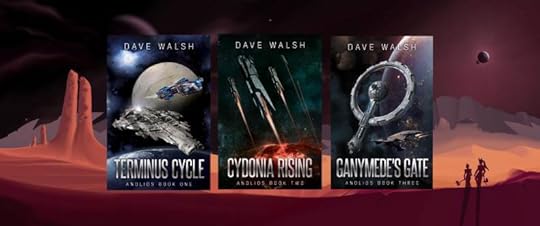
Don’t forget that you can purchase all three of the Andlios books right now from Amazon. Either Kindle or paperback formats.
Newsletter signup
Join now to receive your free copy of The Cymage!
Please wait...
Thank you for signing up!
You can also sign up for my newsletter to receive updates, exclusive deals on my books, freebies and lots of other cool stuff. For signing up, you get a free copy of The Cymage.
The post Norman F’n Rockwell; or, It’s Time for Wrestling Criticism to Grow Up appeared first on [ Dave Walsh ].
October 15, 2019
Ganymede’s Gate Available Now!
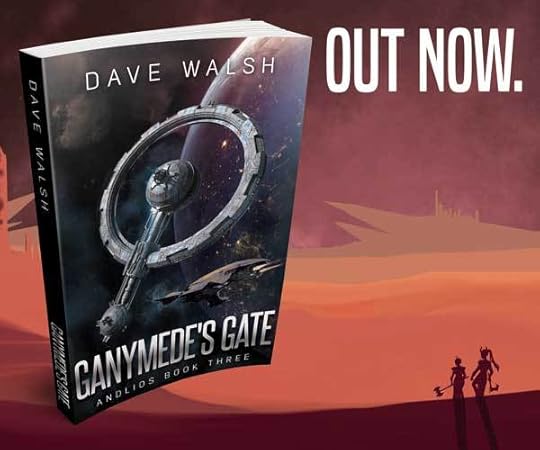
These are exciting times. Why? Because I have released the third Andlios Book today; Ganymede’s Gate. After originally publishing Terminus Cycle back in 2015, the plan was to release Cydonia Rising within that year. Life got in the way and I didn’t release Cydonia Rising until last month.
The good news? That I followed it up immediately with Ganymede’s Gate.
Thank you all for the support that you’ve shown me and for those of you that kept on me during the years I didn’t publish asking for the second book.
The Andlios series is not complete just yet, although I enjoy where Ganymede’s Gate leaves everyone. You will see more books in the series in 2020, and a new series launching in January to help space things out.
Terminus Cycle is also on sale right now—for a limited time—for just $0.99. If you haven’t jumped in yet this is the perfect opportunity to get started.
As always, my books are available in Kindle Unlimited, which means free with your subscription. If you read Terminus Cycle years ago and want to jump back in, re-reading through KU is the perfect way, especially since I’ve given it a refresh recently.
You can purchase the Kindle version of Ganymede’s Gate, and the paperback version today.
You can also purchase the entire series through this link.
The post Ganymede’s Gate Available Now! appeared first on [ Dave Walsh ].
September 26, 2019
RIP DS9’s ‘Nog’ Aron Eisenberg
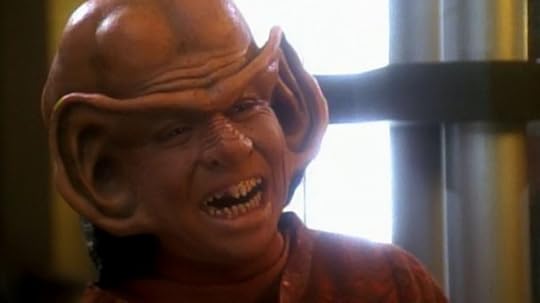
If you know me, you know that I have a certain fondness for Star Trek Deep Space 9. Most Star Trek series are good (yes, even Enterprise and Voyager had their moments), but that DS9 has always been my favorite.
Why?
Because it took time to reflect on its characters in deep, meaningful ways, allowing the writers and actors to go explore what makes people, well, people. One such character was Nog.
Nog started off as your typical Ferenghi. He was a capitalist, mean, conniving, misogynist and placed profits over everything else, including family. He could’ve stayed like that, but the natural progression of the character was much more than that.
Aron Eisenberg was perfect for the role, born with kidney problems and his growth stunted because of that, those problems persisted his whole life, yet he still had a life. Nog was a character born into a strict society that valued individualism and profit over anything else, making for perhaps sometimes two-dimensional characters to serve as a backdrop to the Star Trek universe and a contrast for the more idyllic, anti-capitalist Federation.
Still, the character grew and, with the help of his friend Jake, could flourish and discover that there was more to life. Sure, he was born a Ferenghi and there were expectations upon him, but that didn’t mean that he had to let those conditions define his existence. Nog was a counterbalance to Jake, when Jake was naïve and afraid to get out of his shell after losing his mother Nog was bold, brash and fearless in doing whatever he wanted. Later, when Jake became depressed and careless, Nog contrasted that with structure, order and defying the odds by overcoming systemic issues to join Starfleet.
He was able to show Jake that while Jake had problems, he still came from a place that saw fewer obstacles in his path than Nog himself did in his journey, which didn’t deter Nog. All while remaining a loyal, good friend.
Aron became one of those people whose Trek career became what they were known for, although he didn’t let it or his illness stop him. While it is sad that he passed away at the young age of 50, leaving behind a wife and two children, he leaves behind a body of work in his Trek career was stands without peer, leaving his artistic flourishes along with a lot to think about.
Rest in pece.
The post RIP DS9’s ‘Nog’ Aron Eisenberg appeared first on [ Dave Walsh ].
September 17, 2019
Cydonia Rising is Available Now in Kindle and Paperback Formats
Whew.
I just released another book. That’s not something that I thought I’d be doing again for a long, long time. In truth, getting these two books prepared and released has been a ton of work. I’m already most of the way through the first draft of another book in a new series, too.
Having twins while doing all of this, while my wife is in school (again) on top of her working full-time has been not just challenging, but almost impossible. I can’t lie, almost every free moment I’ve had since the summer has been working. Sometimes I’ll put a show on my left screen while I’m working on stuff on the other, but I’m still mostly working.
This year I’ve learned a lot about book marketing. When I say a lot I mean a lot. The book business is as complicated as it ever has been and the wild west of the Kindle store is over, now it’s all about who is prepared and willing to do as much work as humanly possible to sell books. It’s cost me any of my leisure time, really, and there are definitely times when I wish I could just slow down a bit, but over the next year I’m looking to do as much as I can to make this work. That means more books, more emails and more time studying everything from release strategies to reading what else is out there.
So.
Cydonia Rising is out. It’s the second book in the Andlios series, with the third, Ganymede’s Gate, coming out on October 15th. Depending on how these books do, the series will continue next year. If people love these and buy them, it’ll be another 2-3 books. If not I’ll release one more to wrap up things as neatly as I can and move on.
Cydonia Rising is a lot better than Terminus Cycle, which I actually just went through and fixed up a lot of the older, more glaring issues in it. That means that the dialogue has been cleaned up and some of the plot points that I felt weren’t quite right have been stitched up as well. Cydonia Rising, from all of the feedback that I’ve received, is a better book. Ganymede’s Gate is also a better book. I’m just happy to keep improving and releasing work that I can be proud of, instead of releasing and sitting around worrying if I’m just adding to the garbage heaps of books that are released every day on the Kindle store.
These books aren’t that, in fact, they’re really good and I’m extremely happy about that. I can’t wait for you to read these books and give me some feedback on them.
So you can pick up the ebook of Cydonia Rising here.
The paperback is here.
In addition, Terminus Cycle has been updated, so if you need a refresher and already own the ebook you can fall down that well again and hopefully note that it’s a much stronger book now. The paperback has also been updated, so, sorry if you own the paperback, you can snag the Matchbook (Amazon’s ebook program if you already have the paperback) if you own the paperback for $0.99.
Please note that I’m using Amazon Affiliate links here, so I may receive a small percentage off the top of each sale.
The post Cydonia Rising is Available Now in Kindle and Paperback Formats appeared first on [ Dave Walsh ].
August 18, 2019
A New Lease
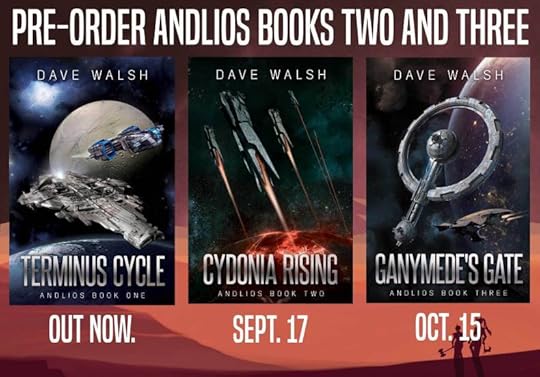 The Andlios Trilogy.
This has been an incredibly interesting last few months here.
I started off this year hammering out short stories in an attempt to get myself back into shape and maybe set my sights lower. I’d write a few short stories, get them published, go from there.
That all changed in a hurry and since then I’ve been working almost non-stop to not just make a stab at indie publishing again, but to really make this work. Cydonia Rising was more-or-less completed back in 2015, I just had to take a break for the reasons I outlined in my earlier post.
Powering through Ganymede’s Gate was perhaps the boost that I needed to remind me about how fun and fulfilling writing can be. The feedback that I’ve received for it thus far is nothing less than amazing and I’m really excited to get it out there and into your hands.
Of course, there’s no rest when it comes to this stuff. Right now I’m about 50 pages deep into the first book in a new series that I plan on launching some time early next year. If everything works out I’ll have another three books for everyone in early 2020 before I circle back to Andlios.
Remember that you can pick up Terminus Cycle right now for $3.99 on Amazon. If you are a Kindle Unlimited subscriber you can read it for free as a part of your subscription.
In addition, you can pre-order both Cydonia Rising and Ganymede’s Gate now, to be ahead of the curve.
Don’t forget to sign up for my email list, too. Signing up secures you a copy of The Cymage, a prequel story to the series that shows the beginning of the Cydonian/Krigan conflict with a lot of cool little stuff for fans in there.
Newsletter signup
Join now to receive your free copy of The Cymage!
First Name
Last name
Please wait...
Thank you for sign up!
The Cymage is also a part of a free promo right now including a slew of other great books. You can pick it up for free right now at BookFunnel.
You can also find it in a StoryOrigin promo as well, if you want some variety.
The post A New Lease appeared first on [ Dave Walsh ].
August 4, 2019
Andlios Books Two and Three Are Up For Pre-Order. Now. Seriously.
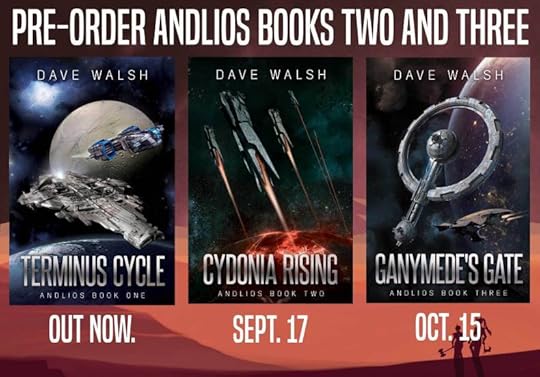 Order Andlios Books One through Three now!
If you’ve followed my journey over the last few years, you know that I’ve grappled with where I go next. I’ve had my moments of frustration where I’ve said never again, I’ve had my moments where I said Andlios book two would be coming soon and everything else in between. There’s a reason for a lot of indecisiveness, a lot of it is complicated, while some of it is pretty simple.
The simplest explanation is this.
In 2015, I had a plan to release three books within the span of a year. Terminus Cycle was going to be a ground level type of book, split into two parts. The first part gives some background on the main characters, while the second part saw them in action while introducing both themselves and everyone else to the world of Andlios. By the time I released Terminus Cycle I was well under way on book two, Cydonia Rising. The idea behind book two (and every other book moving forward) was to follow the next generation and their quest to make things right. Cydonia Rising saw many revisions, rewrites and times when I put it aside. It’s a much more dense book than Terminus Cycle was, featuring more characters, settings and concepts. A lot of that was because it was always my plan from the start.
I was excited about this but also weary. Choosing the path of an independent author is complicated and costly. Truthfully, I never queried for Terminus Cycle. I never even considered traditional publishing for it or the Andlios series. Why? Because it was clear that there were authors having success independently publishing, far beyond what most advances look like for first-time authors on the traditional lane. With my background in graphic design, editing and marketing, it made sense, especially knowing that being traditionally published meant I’d have to do all of these things, anyway. Still, it was expensive. By the time Cydonia Rising was complete I had another ominous task ahead of me: my wife and I were having twin boys.
 Andlios Book Two: Cydonia Rising on September 17th!
This was the time where I dashed all hopes for publishing Cydonia Rising. Series are what work in the independent scene; it’s how we authors are able to turn a profit. Otherwise, we lose money promoting the first and second books. Suddenly that extra money disappeared, and it felt reckless to take a further gamble on my career knowing that there were two children to care for.
In the three years that followed, I struggled. I tried to keep writing but didn’t know where to look, what to work on or how to manage whatever time I had at my disposal. We were all mentally and physically exhausted almost all the time. I wrote a book beginning another series that is still science fiction but more in line with post-apocalyptic stories than space opera during this time. I did it for fun, mostly, something to keep my occupied and sharp. The problem was when I was finished I had nowhere for it to go. Around this time, I renamed Terminus Cycle on Amazon to be Terminus Cycle (Andlios Origins) and decided to query Cydonia Rising to agents. I really wanted to get this book out there and keep telling these stories.
To this day, I believe that you can jump into Cydonia Rising without needing to read Terminus Cycle. There are returning characters, themes and everything else, but Terminus Cycle was the story of Jonah Freeman and Peter O’Neil, who had their stories told inside that framework. O’Neil continues to be an important figure in the series moving forward and Freeman’s new republic is of course at its core, but if you wanted to jump in here, you could. Needless to say, agents don’t like the idea of trying to sell a second book, even if you say the first book was “book zero.” As for my other book? Post-apocalyptic without zombies or survivalism as a focus was a tough sell.
I felt stuck.
I was stuck.
I was a stay-at-home dad with the intention of writing and managing the house and the kids but there didn’t seem to be a way to get my writing into the world without spending money we didn’t have. My writing kept getting better and better, but not feeling like there was an outlet made it difficult to stick to any other projects for too long. I have at least four or five books that have around 20,000 words written (about 75 pages or so) that I abandoned because life got in the way and I couldn’t sit down and write every day, so when I did return, that spark was gone. I jumped genres often, from contemporary fiction to surrealist satire to horror and fantasy. I just wanted to write.
At the beginning of this year, I set a goal to write, no matter what. The only thing that fit my schedule was short stories, so I wrote dozens of them, experimenting with style, form and genre. It was a lot of fun and helped to get me back into shape, so-to-speak, but still didn’t quite make everything feel right. Then, in an answer on Quora, of all places, I saw someone mention the Facebook group 20Booksto50k. It was name-dropped as a resource for independent authors working together to strategize what works and what doesn’t in selling books without a traditional publisher. While everyone else on Quora was telling the person desperate to publish their book to query agents or just scrap the book and move on, one person showed there was a way and there were people making a living off of this.
I checked out the group and didn’t expect much. At first it was kinda strange to me. I’m reading about people having success, for sure, but their successes were within genres that I’d never read, never mind write in. I’m not a romance author, I’m not into paranormal stuff, I’m not gonna write stories about sexy billionaires, etc. That’s great that people found a way to make money with this stuff, but it’s not for me. The more I looked through the group I noticed a lot of the advice, resources and other stuff and it dawned on me: I was doing everything right with my series at the time, I just ran into circumstances. In fact, a few of the folks that founded and maintain the group are accomplished science fiction authors.
 Andlios Book Three: Ganymede’s Gate on October 15th!
Things started to click. I had made some dumb mistakes, spent some money carelessly and should have waited to release the books in a cluster. Having a back catalog was vital, especially of books like the ones you’re trying to sell. I’m good at learning quickly by reading and am able to make practical use of such information pretty quickly, so I just kept studying, reading the success stories and looking for the patterns.
There were things that I could do right at that very moment to set myself up for success. I re-read Cydonia Rising and could confirm that yes, it was a kick-ass book. My wife and I talked about allocating some money to get a few books edited and ready to go, so I found a new editor and off we were. For the first time in years, I sat down and wrote with purpose and out came Ganymede’s Gate. I wrote every day during the kids’ nap time, sometimes having to force myself, other times I was itching to get back to it. What resulted was easily my favorite book to date that was more scaled-back from Cydonia Rising but delivered just the same. I got to do my favorite thing: take characters that I had built and explore how they react to the ever-changing universe around them.
Now I’m here, writing this, and staring at the series page on Amazon with three shiny new covers, a release strategy in place and a plan for more books moving forward. Thank you to everyone that stuck with me through the years, who waited patiently for these next books and to those that would occasionally ask me about them. Thanks to the authors out there willing to share their success and information on how they did it. Thanks to my kids for being crazy and rewarding and my wife for sticking with me on this and never letting me forget about it.
So let’s do this, then.
Cydonia Rising on September 17th.
Ganymede’s Gate on October 15th.
All three books will be enrolled in Kindle Unlimited, so if you are a subscriber you can check these out for free as a part of your subscription. As always, join my email list for more updates and a free copy of a prequel novella, The Cymage.
The post Andlios Books Two and Three Are Up For Pre-Order. Now. Seriously. appeared first on [ Dave Walsh ].
June 10, 2019
Snag Your Copy of ‘The Cymage’ Today
This month I’m happy to announce that after some time off, I’ve made the decision to kick things back into gear again. That’s right, that means if you’ve been waiting for the sequels to Terminus Cycle I’m finally doing something about that. The second book in the Andlios series is being edited right now, while I’m chipping away at the third one already. The plan? To release them either late summer or early fall.
Cool, right?
On top of that, I’m not coming here empty-handed. Oh no. Back around the time when I wrote the first draft of the follow-up to Terminus Cycle, I worked on a short story that serves as an origin story of sorts for the conflict on Andlios that we only learned about in the second half of Terminus Cycle. Who are the Cymages? Who the hell thought to put an ax head on a rifle? That’s where this novelette, The Cymage, comes in.
I’m happy to say that The Cymage is launching within a group promotion on StoryOrigin called Sonic Boom and you can pick up your ebook copy of it today, along with a few other great books. All for free. Cool, right?
If you’re already reading this, already a part of my email list, check your email for this month’s email and you’ll have links in there. If you aren’t on my email list already, sign up here and you’ll get links to your free copy.
As always, I appreciate any and all support in the coming months. Loved Terminus Cycle? Leave a review on Amazon or Good Reads. The upcoming sequels are even better, filled with rich characters, a lot of adventure and exploration of the world of Andlios.
If you didn’t love it? Well, drop me an email, vent, tell me what you didn’t love. That’s cool, too. A big part of why I made the decision to move forward is that I love my readers and people still reach out to me and ask when they’ll get the sequel. It was a financial decision for me to stop back in 2015, with my twin boys being born in 2016, but now that things have started to cool down it felt like the right time to let my readers get more of what they wanted.
April 17, 2019
Shifting Cubes, Falling Shelf
“So now what?”
While harmless enough, the question seared into the man’s mind and stung him at his very core. Both men stood in the dusky expanse of fine white sand in between the neatly organized white cubes, the small, wooden shelf half-buried in the sand as if it were being reclaimed by nature. The few worn wood screws that had secured it to the cube were pointed skyward, ensconced in drywall and splinters. The first man crouched down low, elbows jabbing into his thighs and his chin pressed into his folded hands, carefully studying the small shelf.
“I guess I’ll just put it back up.”
“But won’t it just get knocked off again? You know, when the cubes shift.”
“Probably,” he pulled the smooth shelf out of the sand, each grain cascading gently back to its home while he helped brush them away with reverence.
“I don’t get it, man.”
“What don’t you get?”
“The cubes shift every night, right?”
“So?”
“So,” the second man let out a sigh, “why bother when you know it’s going to get knocked off like that?”
“Because it’s mine.”
“Alright, well,” he looked up at the sun while it receded over the horizon of identical white cubes, “looks like it’s getting pretty late, I gotta eat my rations before they spoil and clean up. You gonna, you know,” he nodded at the shelf.
“Probably.”
“Good luck with that, then,” he laughed before disappearing into his own cube across the way.
“Yeah,” with the small shelf in hand he retreated to his own cube, the recessed door sliding open to allow him back in to his bright, white cube with similarly blinding white decor: a white cot, table, sink, toilet and shower stall, with neatly packaged foodstuffs inside of their plain, white labels. Without letting go of the tiny shelf, he leaned down and searched under his bed, pulling out a small red box that had once housed his checkbook. Inside there was a small yellow-handled screwdriver and a few screws of assorted lengths and widths.
The ones still inside of the shelf should be enough to keep it in place for a while, which was a relief considering how low his supply had grown as the days dragged by. They had all been bartered for, acquired from different cube neighbors early on who had held onto small pieces of themselves as well, but had fallen into disrepair. The three screws inside of the wood slipped out effortlessly, him turning them softly in his fingers to work some of the detritus free before he’d mount it back on the wall outside of his cube.
Outside the setting sun gave off a pink hue, in fact the only dissident color in a sea of pure white oppression. The light bathed all of the white surfaces in different shades for its different phases, which helped to frame his minute act of individuality. Granted, in the face of the shifting cubes grinding against each other in the dark of night before reaching their temporary resting place somewhere in the giant grid that none of the inhabitants had ever seen an end to, pinning a shelf to the wall was an exercise in futility. Yet it didn’t stop him, night-in and night-out from affixing it to his wall, marveling at it and waking up the next morning to start the process all over again.
“Just like you said,” the second man re-emerged from his cube, freshly-washed and still damp from his shower, “here you are, screwing that thing into the wall. Here’s a thought…”
“Inside the cube, right?”
“Yeah, I mean, why not, at least it wouldn’t fall off.”
“I like it on the outside.”
“Sure, but it’s gonna fall off. It might even break.”
“This is where it goes, though, or at least where I want it.”
“Don’t you ever get the feeling that they don’t want you to put anything on the outside of these things?”
“Yes,” his knuckles turned white gripping the small screwdriver, twisting into the hard wooden exterior of the cube that had been repaired every night, “but I don’t really care.”
“You need a hand with that?”
“Sure,” he said, not really needing help considering how many times he’d screwed the shelf into the same basic spot, but these rare instances where there was a connection with a cube neighbor had to be taken advantage of to help counterbalance the deafening silence of most days.
The two men stood in the setting sun, the first with his screwdriver while the second held the small shelf in place, both murmuring about keeping it level and if there was value in trying to find a stud or not while mounting. The physical makeup of the cubes were a mystery in and of themselves. Outward appearances made them look sleek and made from space-age materials, but every time the first man dug a screw into it they melted right through the surface like they were simple sheetrock or wood paneling.
“That’s that,” the second man dusted his hands off while standing back, admiring their handiwork.
“Yeah, thanks for the hand.”
“I’d say any time, but who knows when we’ll see each other again, if ever, right?”
“Suppose so, yeah.”
“You really do this every night?”
“Yeah,” he rested the screwdriver on the shelf and stood back, marveling at its peaceful slumber on the surface, “every night.”
“I assume you don’t get help too often, huh?”
“Not really, no.”
“Yeah, can’t say that I’ve had too many memorable neighbors myself, most just keep to themselves. Where’d you get the stuff for this, anyway?”
“From the early days, when people were still nervous about this whole thing, we’d trade, talk, you know, like before.”
“Yeah? I came in later, I think. By the time I was here everyone kept to themselves. But really, why bother doing this every night when it’s just gonna break? I don’t get it.”
“I know. I just like it.”
“I guess everyone has something about them, huh?”
“Suppose, yeah.”
“But why a shelf?”
“Because it’s mine. Everything else is just there, but this is mine.”
“Huh,” the second man chuckled to himself, “that sorta makes sense now that you say it like that. Anyway, suns almost set, time for some shut eye. Gotta say, you’ve been one interesting neighbor.”
“Thanks, yeah.”
“Was nice meeting you, g’night.”
“Take care.”
The two men retired to their respective cubes, settling in for the evening in their beds before the horrific, omnipresent grinding started. The first man always had trouble sleeping through the night because of it, defiant to the end in refusing to adjust to his unnatural surroundings. At least the shelf was there.
April 5, 2019
My New Critical Hell; or, Why I Hate Stuff
When I try to voice my frustrations with how modern entertainment and art is viewed, consumed and analyzed I always come back to Christopher Nolan for some reason. Not because Christopher Nolan is great or bad, but because of the perception of Christopher Nolan and his movies. Because it’s 2019 and the internet is everything and everywhere it’s difficult not to fall down rabbit holes like YouTube. With YouTube it’s hard to avoid conservative, garbage content like Jordan Peterson ETHERS a feminazi or Ben Shapiro DESTROYS a libtard with FACTS and LOGIC kind of shit, but there’s actually a lot of truly good, interesting YouTube content in the world right now.
Of late I’ve found myself rolling back subscriptions that I’ve had for a while in favor of newer stuff, which is largely in part to the bigger, more well-known YouTube channels feeling really sad and empty to me now. One such channel is the AngryJoe Show. I don’t think that anything on the channel is actually bad or anything, but I’m just not invested in the kind of analysis that channels like that provide. I think that Joe and his pals are likable, relatable and fun to watch, but their pivot to talking more about movies and television, in addition to games, has led me to the harsh realization that the way that they view movies and television is, well, not anywhere near how I view them, which in turn means that their approach to game criticism is perhaps similar to their movie critiques, but doesn’t seem as glaring because of the infancy of game discourse.
Much like everything else, there’s a certain language that comes along with criticism that has to be learned. Not having the correct words for something is fine, but not having the understanding of the nuts-and-bolts while speaking to an audience as an authority isn’t. While game criticism has largely relied on the idea of nebulous ideas like “graphics,” “writing,” “sound” and “gameplay” to criticize games, as games become more advanced and ambitious, those ideas no longer suffice. Instead they feel almost childish in nature. What the hell does “graphics” mean anyway? What is “writing” in a 60-hour videogame with endless side quests, monetized loot and quarterly DLC?
It’s too broad of a scope and lacks an understanding beyond the surface level of a game to really get deeper into it. This becomes painfully clear when you see people (not just Joe and his friends at this point, but the larger population of YouTube) talking about movies and really digging in their heels about “meaning” without having much of a background in criticism, form or artistry to really be able to look at the core parts of a piece and delve into it. For many critics, there’s an intuition of what they like or consider good, but they’re unable to fully verbalize what makes these things good or valuable. There is also a lot of focus on stuff that is intended for mass consumption, stuff like superhero movies, zombie shows and whatever else, which is not only incredibly not interesting to me, but really without much artistic merit in the first place.
So, Christopher Nolan, right? I promise you that diatribe has meaning to it. Christopher Nolan makes these sort of pop culture, big budget movies that masquerade as deep and meaningful by cramming a lot of surface level signs and signifiers into a frame for fans to pore over obsessively to find the true meaning. If you know me you know where this is going and how frustrated I get with people looking for “true meaning” in works of art. It’s looking for something that doesn’t exist.
I’m very much a believer in death of the author in that regard. It doesn’t matter what the creator says in public or what they intended for something to mean. There is some weight to that, but at the end of the day, they aren’t in control of something once it has been disseminated to the public. Their input is obviously valuable and it’s interesting to look at what went into the creation of a work, but their intent doesn’t correlate with what you or I make of it. Creating work that encourages this obsessive, surface-level reading obfuscates any deeper understanding of ourselves, our culture or our world, leaving works to stand on their own as self-contained husks.
Thinking back to Inception, the mind-warping DREAM WITHIN A DREAM WITHIN A DREAM gimmick was fun and all, but hardly worth obsessing over. The idea of the “totem” that each character who went into dreams would have to tether them to reality became a focal point for fans after the movie was over, with the questions being raised amounting to: DID THE TOP (his claimed totem) TIP OVER? WAS HE IN THE REAL WORLD? WAS HIS RING REALLY HIS TOTEM? WAS HE LYING TO HIMSELF?
There are THOUSANDS of videos debating this stuff. THOUSANDS.
Maybe even millions? Who knows, I don’t care enough to count. But the thing is: who fucking cares? I’m not saying that exploration of surface details in movies, television, books, etc. is worthless, but that it’s only one way to look at a work. To obsess over these details is to ignore any and all subtext that exists. Instead of wondering if DiCaprio’s character is really in the waking reality and not a dream, take a look deeper at the character’s relationship with the world, his family and his tenuous grasp on his reality. What could this possibly be trying to say about the world, the characters or anything else? Isn’t that at least a little bit interesting?
The character’s obsession with living inside of a dream world without consequences, which in turn claimed his wife’s life, and him then further retreating into these layered dream worlds to avoid the horrors of the real world always struck me as far more interesting than just making sense of the ending and if the character lived happily ever after. The same with the idea of him finally taking responsibility for the remaining members of his family who were still alive and needed him, instead of obsessing over a lost loved one that he could still revisit inside of his whole layered dream thing.
Instead incessant fucking debate over the REAL TRUE MEANING behind the ending of this movie.
This is my Structuralist Hell. Okay, it’s technically New Critical Hell, but Structuralist Hell sounds a lot better, doesn’t it? The basic idea is still similar enough in that a lot of modern readings of art consists of looking for meaning inside of the structure, the words and images, but that meaning excludes deeper, most substantial analysis.
Dan Olson, who creates videos on YouTube as Folding Ideas delves into this with the recent-ish movie, Annihilation. I also sorta feel like he did making this video while I write this piece, because I wonder if I’m just being mean at times, even if I’m not intending to be.
Just like it drove me insane seeing people tearing apart Twin Peaks: The Return to figure out the real meaning behind everything, which orb was Judy, what Judy’s intentions were, if Judy was an actual, physical character and so forth. Twin Peaks fans tend to be aware that there’s deeper meaning to look for, but still seemed to refuse to get there without first raking through the muck that Lynch tossed their way, sometimes without real intention, to come to a perceived “truth” about Lynch’s work.
Videos like this are just so… confident?
Who cares about Judy? Who cares what happens with Judy? Judy is a symbol. My god. That isn’t to say that those clues and small details that Lynch tosses in don’t matter, because they do, but they’re pieces to the a larger puzzle that goes beyond the plot. Those pieces can help to glue together the plot of Lynch’s work, which can always be a bit surreal and obtuse, but trying to decipher if BOB WON or COOPER WON seems to ignore a larger attitude that Lynch has about his work.
In fact, this is one of the reasons why I always point to David Lynch as one of my favorite artists: he’s not going to explain the “real meaning” of his work and instead invites the viewers to fill in the blanks on their own. This works in conjunction with the post-structuralist reading of art and literature to where the baggage that the viewer brings into a work helps to provide points of reference and influence their reading of work. If it matters that Judy resides in the Palmer house, if the actress that answered the door was actually the real life homeowner, if Laura’s scream broke reality or destroyed evil, or if the ending of Twin Peaks: The Return was just an understanding of the horrors of reality and that sometimes, regardless of our best intentions, we’re unable to fix what’s wrong with the world and things are disappointing, those remain up to you.
In all fairness I should also point out that Nolan himself errs on the side of not giving explanations of his work, as do a fair number of creators still. In Nolan’s case his work is simply more accessible to wider audiences, which is why the narrative of THIS FAN THEORY WILL BLOW YOUR MIND is so prevalent with his work. As longtime readers will know, I also really hate his brother’s Westworld for some very similar reasons.
But, seriously, he also sort of gave away what he thought the ending of Inception was.
While the Internet has done important things, such as giving a voice to those that usually would not have a voice or a platform due to not being “inside” of any given industry, it has also given rise to a constant churn of content that looks to appeal to our collective, baser instincts. When I talked before about how Angry Joe didn’t have the “language” of film, I’m not saying that as insult, but merely an observation that for someone who’s claim to fame is game criticism and who has matured as a critic and a person alongside the medium, he’s yet to really find the same intuition with movies yet beyond “I like movies and enjoy talking about them.” That’s OK, but the problem comes with the thousands of other people doing the same thing, who take on an air of authority without putting in the work to understanding whatever it is they’re criticizing in the first place. Joe’s thoughts on his given genre are genuine, his critiques are good, but at this point I’m simply looking for more in-depth analysis and understanding, which his videos lack. Yes, he even has an Inception video from 2010, which in and of itself is inception, amirite?
None of what I’m saying here is to dissuade discussion or certain ways to read art, but instead to talk about how the New Critical approach has become dominant, in part because of it being easier to understand and proving to be a lower barrier for entry when it comes to criticism. Analyzing a work by treating it like a self-contained experiment and reading only what has been presented, using only the context of the piece itself can lead to quicker “ah ha” moments. Back to Inception, an interview with Michael Caine where he claimed that Nolan had explained to him that his scenes happened in the real world, then Caine’s character’s presence in the ending led to fans being able to affirm their theories and then put the movie to bed. Once again, this is fine, but the incessant need to find meaning and decipher the true intent of the artist completely discredits themselves, the viewer, from unlocking some of the other joys of art.
Just the other day my wife and I were talking in the car and I brought up the ending to Twin Peaks: The Return and the overwrought fan theories, which got us talking about what the ending could represent, how to read the duality of Laura Palmer, the town as a character and how outside perception of reality doesn’t always reflect the world that others experience, from perception of Michael Jackson or Catholic priests and other topics. We watched the show together a year prior and we’re still able to have open-ended conversations about the show compared to if it had a clean, decisive ending with meaning easily derived from the plot and whatever was on screen alone.
At the end of the day, that’s what makes art special and valuable. Trying to find the one true meaning of something loses sight of this sort of open-ended discussion and effectively leaves it as a passing curiosity for purely entertainment’s sake, which once again is fine, but doesn’t really do itself any favors. It’s up to us to decide how we view art and entertainment, to seek out criticism and discussion of these mediums that help to analyze, demystify and deepen our enjoyment of them just as much as it is to look for great art and entertainment.
So don’t be afraid to talk about what you love, or to talk about it in a manner that doesn’t seem to jive with other discussions that are dominant. Remember that while it’s important to help make art accessible and avoid excluding people from enjoying and discussing art, it’s also important to help steer conversations, signal boost valuable voices and for all of us to do our part to ensure that the truly good, interesting stuff in the world isn’t merely lost in the shuffle.
If you’re wondering why I’ve been going down this rabbit hole, it has a lot to do with my relative silence when it comes to releasing new fiction. Late last year I decided to return to writing short stories for a while and to throw out any preconceived notion about what I should be doing or worrying about commercial viability. It’s something that I’ve grappled with for years now, punctuated by the few public releases that I’ve made where I worked on projects strictly to hope that they’d be commercially viable. Instead I’ve returned to more surrealist, satirical work, some of which I’ll hopefully share on here soon.
That’s about as good of an apology that I’ll issue (for now) for never releasing the follow-up to Terminus Cycle. Or the book after that. Or the other finished book.