
Deepanjana Pal's Blog, page 10
June 17, 2016
Review: Udta Punjab
I’ll be writing the occasional film review for Hindustan Times. If you’d like the concise, printed version, click here. The unedited version is below.
*
On the face of it, Udta Punjab has everything going for it. Shahid Kapoor spends much of his screen time shirtless: win. He’s in a film with Kareena Kapoor Khan: another win (even if they don’t have a single scene together). Alia Bhatt delivers a virtuoso performance as a migrant worker. Diljit Dosanjh makes his Bollywood debut, shows off his comic timing as well as hero-wallah charm, sings a hauntingly lovely song and gets the girl (sort of). The cinematography by Rajeev Ravi is stylish, clever and breathtakingly beautiful in moments, without ever seeming contrived. The subject — drug abuse in Punjab — is provocative and the controversies surrounding the film’s certification have generated at least double the publicity that a conventional promotional campaign would have managed.
There’s a lot in Udta Punjab that director and writer Abhishek Chaubey gets right and perhaps his biggest achievement is the wry tone of storytelling. Udta Punjab is made up of depressing stories, but even while being sensitive to this toxic problem that’s clogging Punjab’s veins, Chaubey’s direction and co-writer Sudip Sharma’s punchy dialogues manage to keep the despair at bay. Little asides and nuances will make you smile — like how the drug suppliers vicious Doberman is named Jackie Chan, or the conversation that two cops have about whether a truck driver is trying to turn Punjab into Mexico.
Chaubey also draws powerful performances from almost everyone in his cast except Shahid and Kareena. This is ironic because they’re probably the names that got the film greenlit ultimately. Yet Kareena sleepwalks her way through the film, as though her alabaster complexion will distract the viewer from the bland portrayal of a crusading doctor. At least Shahid tries hard. Unfortunately, Tommy Singh is a mess on the page and no amount of prancing around shirtless can solve that problem. To begin with, what exactly is Tommy? A DJ without a console? A pop star without a song and only an electronica track? A rock star who jumps around to synthetic beats? And what is that “coke-cock” song? At one point, while talking about himself, Tommy blithely refers to being “number 3 on the Asian underground charts” and then in the next sentence tells us he’s a “pop fucking star”. There’s just one teeny little problem: electronica isn’t the same as pop music.
Udta Punjab hopes that Shahid’s high energy, bad wig and bare chest will be enough to woo the audience, and to be fair, he is enjoyable to watch even if he does an unconvincing job of playing a functioning drug addict. When you look for logic or depth or realism, there’s none. If everyone who snorted cocaine behaved like Tommy does, Bollywood party photos would be very different from what we see on Page 3. The problem with Tommy is that fun as he is, Shahid fails to make him more than a collection of hollow stereotypes — the eccentric, the stoner, the rock star, the dude, and (of course) the saviour.
If Udta Punjab was an average Bollywood film, then these two star performances wouldn’t have stood out for their mediocrity. Unfortunately for them, Alia Bhatt and the supporting cast — particularly the dirty cop Jujhar Singh and the teenaged drug addict Balli — are brilliant. They’ve all immersed themselves in their roles, even if it is that of a two-bit junkie, and this lifts the writing immeasurably. Almost every character is clichéd in terms of the writing, but the acting and direction make them feel powerfully real. The young man playing Balli has barely three lines in the film, yet he stays with you long after you’ve left the theatre. Bhatt’s role should have been a minor one, but she is magnificent as the migrant worker trapped in a drug lord’s mansion. She fills out the barely-there character, which is as hackneyed as Tommy’s rock/pop/DJ star, with her sensitive performance. More power to Bhatt for not just picking a role that few in the industry would have the guts to, but also making us fall in love with a woman who’s fallen, beaten, brutalised, yet never broken.
What Udta Punjab deserves the loudest round of applause for, though, is its brave politics. Admittedly, there’s little by way of insight, but the film does lay bare how selfishly Punjab’s politicians have encouraged drug abuse, particularly while campaigning during elections. The fact that the Central Board of Film Certification (CBFC) got twitchy about the representation of how politicians smuggle drugs to their constituencies says volumes about the CBFC — lest we forget, these are political appointments. Not just that, Bhatt as the dispossessed and exploited worker is incandescent when she delivers a furious rant about all the awful, self-destructive decisions that she’s taken because she fell for the promise of “achchha time”. Surely the word “achchha” is not a casual pick and perhaps it will make those in the audience wonder what bad decisions they’ve taken in the hope that it will usher in good times.
And yet, for the flash, dazzle and power of Udta Punjab, the film is ultimately deeply dissatisfying. As laudable as its ambitions may be, it fails to rise above clichés. Chaubey struggles to weave together and do justice to the many strands that make up its plot. For instance, the film begins with a beautiful little episode involving a Pakistani shot putter, but the across-the-border angle is left unexplored. The love stories in the film waste precious time and are half-baked while Tommy Singh is excessively baked. Post-interval, coincidences are as prevalent as drugs in Punjab, making it ludicrously simple for an earnest doctor and cop duo to unearth the nexus between politicians and drugs suppliers. Blood spurts, bullets are fired and all hell breaks loose for little ostensible reason other than the fact Chaubey needs to tie up the many loose ends. When the film ends up on a beach in Goa — because that, ladies and gentlemen, is where you go to get away from drug abuse — and the girl rescued from Punjabi drug lords rechristens herself “Mary Jane”, then all you can do is roll your eyes. It’s not just a juvenile joke. It makes a mockery of everything that the film has shown before.
Still, Udta Punjab may be the most ambitious film Chaubey has made so far. It’s also his weakest, but perhaps he’s had to edit and tone down the film he’d wanted to make in the process of getting a producer on board. However, the fact that Chaubey chose this topic and was able to make the film is cause for good cheer. We can only hope that the controversy with the CBFC won’t make Bollywood back away from projects like Udta Punjab and funding Chaubey’s next one. Because even at his weakest, Chaubey’s Udta Punjab is head and shoulders above the average Bollywood fare.


Udta Punjab: the dilemma of a film reviewer
It’s a film that a lot of us want to love, given how the CBFC has tried to yank its chains. But should you be kinder to a film because it was harder to get it released? Or should you just see a film for what is on screen? I ponder on this here.
For those too lazy to click, read on. (But come on, you can click, right? If not for the article, then for a photo of Shahid Kapoor as Tommy Singh?)
*
Yesterday evening, there was a press show organised by the publicity team of Udta Punjab. Usually, this is an unremarkable occurrence, but this pretence that Udta Punjab was like any other film about to be released was the final act of resistance by its director and producers. It isn’t. This is a film that has been victimised by the Central Board of Film Certification to the extent that Bombay High Court rapped the CBFC’s knuckles for demanding unreasonable cuts.
Days after that judgment, a print of the film mysteriously appeared on torrent sites. It had the words “For Censor” on the left hand corner and a ticking time stamp at the centre of the frame. Rumours started floating that “someone” in the CBFC had leaked it out of spite. (On yesterday’s super prime time on Times Now, filmmaker Ashoke Pandit made it amply clear that the film could not have been leaked from anyone other than the CBFC.) If that’s true, then the CBFC really doesn’t care much about the tender sensibilities of Indian audiences because the version that’s floating online is without the cuts that the CBFC had prescribed. Also, if the CBFC really is behind this move, then Pahlaj Nihalani evidently knows more about illegal downloading than he does about the films he censors and certifies without seeing.
It’s a shame he didn’t discuss this classy move with the Department of Telecom — perhaps then the DoT would have instructed internet service providers to unblock access to torrent sites.
However, even for the technologically challenged, the DoT barricades are barely an obstruction. And so, by Thursday night, a day before the official press show, a significant number of people had seen Udta Punjab for free online. Not just that, they’d seen the version that director Abhishek Chaubey had intended for the audience — with all abusive language in place and Tommy Singh peeing on a crowd. They know that Udta Punjab is a fun, gory and dissatisfying film that is far from being Chaubey’s best work. It doesn’t offer much beyond the obvious, in terms of insight into Punjab’s drug problem. Those who have seen it also know that the script lacks the cleverness that characterised Chaubey’s previous films. They know Kareena Kapoor is the film’s bimbo, successfully flattening a good role to seem like an extension of a cosmetics commercial. They’ve seen Alia Bhatt prove yet again what a magnificent talent she is with her portrayal of a nameless migrant worker. Shanatics have had their chance to ogle at Shahid Kapoor’s bare torso as he worked hard and struggled at delivering a credible performance as the unpredictable Tommy Singh. However, if there is a moment when their hormones don’t swamp their judgement, they’ll have to accept Bhatt and Diljit Dosanjh are the real stars of Udta Punjab.
With the leaked version freely available, the press show organised on Thursday was irrelevant. Only those feeling particularly loyal to Chaubey and Kashyap (while turning a blind eye to the films and television shows they have queued up in their downloads) or with terrible internet connections would have not seen the film. And yet Udta Punjab had a press show. More than a publicity effort, it was a plea. It was a reminder to the press of how difficult it is to release a film that isn’t formulaic, and how badly the film needs the support of the press.
This places the average film reviewer in a quandary. They’re not just watching and writing about any old film in case of Udta Punjab. They’re commenting upon censorship in Indian cinema.
Most of us forget that censorship isn’t limited to the CBFC. For Indian cinema, it’s a tortuous process that begins from the moment a script is brought out to find producers and stars who will act in it. At every stage, the film will have to be modified because if it has any element of provocation or reality in it, everyone gets cold feet. Anything that’s unformulaic scares the commercial film industry. As a result producers, script consultants and general know-it-all advisors who listen to a ‘narration’ — because god forbid these people actually read the script themselves — shake their heads at the parts that seem adventurous and say “audience won’t accept”. Sometimes, they’ll attempt logic by pointing to other films based on real incidents, most of which haven’t “worked” at the box office and need more “mass” or “commercial” elements.
And so, scene by scene, detail by detail, song by song, the script changes. Then, in the process of being shot, the story changes again. A star refuses to say a line, a scene can’t be shot because of technical problems, local political party workers disrupt a shoot and it’s too expensive to redo the scene, the weather isn’t cooperating — the problems that a film crew face range from banal to bizarre.
The net result, though, is that the story of the film changes, yet again.
Consequently, by the time a film reaches the CBFC, it’s already been censored by the producer, whose priority is usually just to make sure the film releases and is box office-friendly, and circumstances. Despite the game face that directors put on while being asked about their films, very rarely is it the film they wanted to make, especially when it’s about a topic as complex as Udta Punjab.
So what is the responsibility of a reviewer? Do you applaud the decision to make a film that’s bold, that has its ear to the ground and challenges the hackneyed rubbish that Bollywood usually feeds us? Or do you just see the film as a film, ignoring the herculean effort that’s gone into bringing it to life?
February 9, 2016
On Marriage
There are certain things I hadn’t imagined. One of them was me being in India Today’s annual sex-survey issue. Read it here, illustrated by a sketch by FN Souza (whee!). For those who are lazier, et voila:
Let’s play a game. What comes to mind the moment you hear the word marriage? Matrimonial ads detailing caste and complexion? Weddings that leave families bankrupt? More bills to pay? Jokes about hen-pecked husbands? Counselling? Meddling in-laws? Messy children and/ or messier divorce? If you’re among the tiny percentage that thought “happily ever after”, go give your spouse a hug and/or return to your Mills and Boon.
Given what we hear and see of marriage around us, it’s a wonder this institution has any takers. In popular culture, being married is basically an excuse for family melodrama. Real life isn’t much better. The happiest of couples will tell you it’s “hard work” and invariably end up using words like “responsibility” and “compromise”. Worse than those who gaze longingly and say they miss their single years are the ones who talk about the fun they had as a newly-married couple like they’re discussing the Indus Valley civilisation – with nostalgia shimmering in their eyes, making it patently obvious that fun has left the building. And then there are the separations, divorces and alimony scandals.
With this sort of a publicity campaign, it’s not surprising that the next generation of adults isn’t tempted by matrimony. According to this year’s survey, one fourth of India’s youth (aged 18-26) have been in a relationship for more than four years, but are still not married. It’s the sort of statistic that strikes terror into the hearts of middle class parents. But if the best we can say about being married is that it starts off as fun and within a few years, is either boring or headed for a divorce, we’re really not selling the institution very well.
Marriage’s biggest problem is that it evolved into a romantic institution in the middle of the 20th century, when events like the decline of imperialism and the World Wars disrupted the existing status quo all over the world. Women stepped out of households in India and abroad to engage in politics and public affairs, only to discover just how little society thought of them. It must have been alarming for men as well – whether sensible or foolish, they had to rethink what they knew of society as they encountered women who challenged the long-standing patriarchal belief that the other sex is weaker and therefore less worthy.
Had it not been for at least some men seeing women in a new light, marriage would have remained an alliance between families and a smokescreen for assets changing hands. Fortunately, it shape-shifted. In those years, when our grandparents and great-grandparents were falling in love, marriage was redefined. Behaviour that had been condoned and even dismissed – like infidelity, abandonment and abuse – was first frowned upon, then criticised and finally criminalised. None of this would have happened had people not fallen in love with the ones they married.
This marriage, powered by romance, is a delicate, young thing. It’s also rare. Marriages in which people stay together even though they’ve never felt love for one another – that’s 14% of all married couples in India – or the 67.8% that wishes they were with someone else are an archaic and arguably more common version of the institution. Of course the young want no part of this institution. Especially if you are in a loving relationship, why would you want it to devolve into this unhappiness?
But imagine a marriage in which the two of you can be yourselves. Imagine a life with someone who takes pleasure in looking at you, no matter what you wear or weigh. Imagine living with the one who can brighten the darkest of moods in another person’s life simply by being there. Imagine having someone who won’t give up on either you or the argument the two of you are having; the one that ends in either giggles or make-up sex (or both). That’s the kind of marriage that we have conjured into being over the past few generations. That’s the kind of marriage that’s worth having.
Can you find all this in a relationship without getting married? Of course you can. Will it hurt less if your unmarried heart is broken? No. There’s something teetering between pragmatism and extreme caution that lurks around that statistic of young people not wanting to get married, even though they’re in committed relationships. It’s disconcerting. Because what kind of a youth won’t throw caution to the wind and take a chance, especially in matters of love? What sort of a society have we created where men and women in their early 20s aren’t prone to romantic flights of fancy? Why is this gen-next so afraid of being hurt? Or is it simply disinterested?
Of today’s young adults, a considerable number have sex freely, think porn is sex education and go to the hook-up site Tinder in search of jobs. If that’s the lot that isn’t getting married for love, thank god. If they did, it might really be the end of marriage as some of us imagine it. Here’s to the 75% that (one hopes) is less jaded.
February 1, 2016
Books of 2016: January
This list of books read in January doesn’t include my pulpy romances simply because I can’t remember how many of them I’ve read. It’s definitely above eight in number. I abandoned at least two of them because they were just too cringe-inducing. I don’t know if it’s the romances coming my way — yes, let’s just pretend they waft into my Kindle, without any sort of agency on my part — or a general trend, but more and more heroines appear to be either virginal or verging on virginal. These ladies are so damned wide-eyed at the heroes and so in awe of the heroes’ sexual prowess that I would like to poke them in their eyes with vibrators.
But that’s not the point. Here’s what I’ve read in January.
A Handbook for My Lover
Slade House
The Private Life of Mrs. Sharma
Spinster: Making a Life of One’s Own
There are two possible reasons for me not writing about a title: laziness or attempted diplomacy. Chances are high of the former being more compelling than the latter. Both A Handbook for My Lover and The Private Life of Mrs. Sharma are quick reads. Spinster took longer. I’d started reading it last month and it got abandoned mid-way. I suspect if I hadn’t found it in my bag while killing time at an airport, I wouldn’t have bothered to finish it. Slade House isn’t bad, but not quite as brilliant as Mitchell’s books have been of late.
January 4, 2016
Photos: National Geographic Traveller
So here’s a little woohoo moment: I made my debut as a photographer on National Geographic Traveller India’s website at the end of 2015. With four girlfriends, I went on an amazing trip across Madhya Pradesh. One of my friends and fellow travellers was Saumya Ancheri of NGT, who wrote this account. Saumya joined us after we’d tramped through Mandu, which is why there are no photos of Mandu here but I absolutely loved that little town. And I have some lovely photos of its gorgeous buildings, but that’s for another day. Read Saumya’s article and here are a few more photographs from that part of our Ladies’ Special trip to Madhya Pradesh.
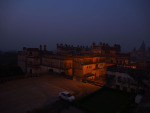





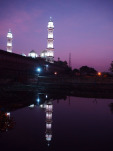

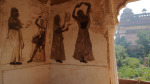

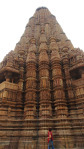




Farewell 2015, part II
So I’m going to be reviewing films from time to time for Scoopwhoop. Here are the first three, which were the last three Bollywood releases of 2015.
“You may suspect there’s something slightly wonky upstairs when you see Ved in Corsica. Why is he having conversations with mountains instead of the human being in the car with him? Why is he mimicking Dev Anand and unleashing the worst pick-up lines ever? Why are random Corsicans singing and dancing with him? Why is this erratic behaviour charming to Tara?
However, it’s when Ved hurtles towards self-discovery that his insanity becomes unmistakable. He repeatedly talks to his own mirror image. He flies into fits of rage with Tara (because how better to show your love for a woman than by yelling at her?). He also goes to a storyteller (Piyush Mishra) and asks the old man to tell him how Ved’s story will end, as though the storyteller is an astrologer.”
“Dilwale is very literally a bromance and this is a critical problem because Dhawan and Khan make for an unbearable couple. Watching Dhawan attempting to copy Khan’s acting style is painful and you’d never believe this is the same actor from Badlapur. Not only does Dhawan sorely lack Khan’s distinctive charisma, there’s so much hamming in Dhawan’s performance that he may as well have added an “oink” at the end of each dialogue. Next to him, even Johnny Lever’s over-the-top antics seem normal.”
“It’s easy to see why this story has delighted so many writers in Maharashtra. Bajirao and Mastani’s relationship was and remains as scandalous as it is progressive. The liberalism of Bajirao, Mastani and Kashi makes this historical account startlingly modern. Today, when accusations of love jihad and communal tensions surround us, this unflinching love story between a devout Hindu warrior and a non-Hindu princess (although her son was raised a Muslim, Mastani probably belonged to the Pranami sect that didn’t recognise caste or religious divides) is one that bears repeating.
Bhansali is not known for subtlety, but the way he criticises religious orthodoxy without speechifying is among Bajirao Mastani’ s finer qualities. The director is unabashedly against anti-Muslim paranoia and he cleverly weaves his liberal beliefs into the dynamics of the love triangle and political drama.”
Flashback: Aisi Taisi Democracy, Tape, Krishna Shroff and the Internet
This was first published on Firstpost.
What will it be this week, Indian internet? Should we succumb to delirium because porn star Mia Khalifa is tipped to be a contestant in Bigg Boss 9? Or shall we ogle at Krishna Shroff’s “topless” photos while wagging a finger at her for sexually objectifying herself? Or perhaps we can direct our attention to another pretty, not-so-young thing, Aatish Taseer, who has made tongues wag by declaring himself a better writer than Saadat Hasan Manto?
French philosopher Joseph de Maistre had said, “Every nation gets the government it deserves.” With the internet, the relationship is even more direct. We fashion the internet with every little and big thing we put online — every photo, every status update, every article, every video, every post. This is what makes the Internet so versatile, so delicious and so tasteless all at the same time. It’s being moulded and remoulded every day, according to the tastes and fancies of those who make use of it.
This is liberating only as an idea. In practice, the Indian internet is an alarming creation that just isn’t quite as protean as one would hope. The bulk of Indian online content reeks of insecurity, ignorance, aggression and hormones. When it comes to pornography, we’re on top of the pile. Our piracy stripes are pretty decent too. Social media, where an argument need not be either considered or fleshed out, is our preferred swamp. We have some of the finest trolls the Internet has known. If there’s a trend or a situation that requires a kneejerk reaction, we’re all over it in a jiffy.
But where are the smarts? Where are the intelligent conversations? Who has their eye on culture, instead of gossip, ‘trending’ topics and forgettable, broken news? No one. Listicle over analysis; hashtag over perspective (even though neither of these are mutually exclusive, if you think about it).
The point isn’t that we should all aspire to an elevated intellect (though would that really be a bad thing?), but that in India, we’re so intently focused upon junk that we’re in danger of being reduced to Pavlovian responses. Pop culture has its champions (as it should) but celebrating it to the exception of everything else isn’t an encouraging symptom for the Indian internet.
Last week, Mumbai saw two extraordinary live shows, both of which were sold out despite limited publicity. One is Aisi Taisi Democracy, a show of stand-up comedy and music by Varun Grover, Sanjay Rajoura and Rahul Ram. In it, Grover and Rajoura serve up a hilarious and biting critique of modern India. They spare no one. From human resource teams to politicians and parents, everyone gets a tongue lashing. And in Grover’s case, the tongue-lashing comes in a melodious, sophisticated Hindi that delivers abuse with cadence.
While the songs in Aisi Taisi Democracy were strictly forgettable, Grover and Rajoura were incandescent. With smiles that resembled flickering halos, the stand-up comics mused upon why a man would have his name stitched on his clothes, if it’s possible for a lion to leave just one paw print, “Bharatiya sanskriti”, the magazine Grihashobha and old-fashioned juicers. The realities that Grover and Rajoura were talking about are dark and depressing, but the two comics lit up the gloom with their sense of humour. And so for two hours, everyone laughed and laughed, and laughed some more.
Did Aisi Taisi Democracy break the internet? There was nary a crack.
Over the weekend, a show called Tape was held in a bar in Mumbai. Performed by Patchworks Ensemble and presented by Gaysi Family, Tape is about “drag kings”. Women dressed up as men and presented a masculinity that was as much a performance as it was authentically felt. Drag is the act of wearing the clothes and make-up of a different gender from one’s own. It has a long tradition in Indian culture and is traditionally done by men, who adopt feminine persona (particularly in classical dance and traditional theatre). In Tape, drag was seen in a modern context and through the experiences of women and their bodies.
Tape was funny, cleverly choreographed and fabulously performed. Everyone had their moment in the spotlight. Puja Swarup was extraordinary as a wannabe-Shammi Kapoor. From expression to gestures, she seemed like a human Xerox of the yesteryear star. Ratnabali Bhattacharjee belted out a song about her “ding-a-ling” that no one knew but everyone joined in. Mukti Mohan played Harpal, a tiny Sardar with explosive energy and extraordinary dance moves.Tape was scandalous and looked spectacular, despite being enacted in the modest corner of a bar.
But Tape birthed barely a murmur in the world of the Internet.
At both Tape and Aisi Taisi Democracy, the audience was discouraged from recording the event. Tape didn’t even want photographs to be taken during the performance, ostensibly because it would be distracting for the performers. (This is plausible since there really wasn’t much of a gap between the first row of audience members and the ‘stage’.) One can’t help but feel that under this excuse lurks a fear of what will happen if trolls and others of that ilk get to know about these events. Recently, at a screening of the documentary Muzaffarnagar Baaqi Hai, one member of the audience said, “It’s tough to know how much to publicise this stuff. You don’t want the wrong people to find out.”
In Aisi Taisi Democracy, there were repeated jokes about the comics courting arrest with this show. At one point, Grover mischievously advised the audience to laugh with discretion — a reference no doubt to the charges lodged against members of the audience in AIB Knockout.
Yet for all the good humour, there was a sense of leaden certainty that the threat of getting arrested isn’t a joke for anyone who questions convention and the establishment. If the ‘wrong’ people come to Aisi Taisi Democracy or Tape, then these shows could be shut down and those responsible for them could be (at the very least) harassed. These are cultural works that should encourage conversation; make us think about different topics ranging from body image and feminism to democracy.
Yet, if the data is to be believed, we’d much rather yammer on about Shroff’s bare skin and Taseer’s delusions.
There’s something painfully tragic about the fact that the Internet, which could be and often is used for so much good, is also responsible for cultural debate that has about as much nuance as haggling in a fish market. Today, the Internet helped to bring to light what Khabar Lahariya‘s journalists are suffering in the hands of a phone stalker and the Uttar Pradesh police. That’s a win in terms of awareness, but it isn’t a conversation starter. If anything, it shuts too many of us up because it confirms our darkest suspicions about what it means to be a woman in patriarchal India.
Reality has a way of doing that, of making everyone go quiet. Art and culture, on the other hand, keep us loud and on our toes. They’re both close and distant enough to evoke just the right intensity of emotion to rev you up, but not paralyse you. At its best, art makes us question and dream. It angers, inspires and offers us spectacles as opposed to blinkers, provided we can discuss what we see before us. Provided there is something to see. Provided there’s a place where you can hear and be heard.
So what is it that you’d like the internet to be today? A simple placard of protest? A jenga tower of political ambitions? A weapon? A haven? It can be any of these; it could be all of these. We, the ones with the Internet, decide. So click with caution, and create with abandon.
Flashback: Surviving MSG 2 – The Messenger
This piece was first published on Firstpost.
Sant Gurmeet Ram Rahim Singhji Insan released MSG – Messenger of God on Valentine’s Day this year. In a miracle that rivals the Immaculate Conception, the godman has birthed a sequel just seven months later. It’s called MSG 2 – The Messenger. If there is a god, then no doubt he’s heaving a sigh of relief that “of god” has been dropped from the title. Sadly, no one else can feel relieved – certainly not this writer, who paid Rs 250 for a ticket and thus unwillingly contributed to MSG 2‘s kitty.
I walked out of MSG – Messenger of God because to consider it worthy of being reviewed offended my sensibilities. Not because I’m Bengali (our sensibilities are notoriously delicate and sophisticated) but because I have a functioning brain and I know the difference between cinema and propaganda. Sant Gurmeet Ram Rahim Singhji Insan is not a filmmaker and what he makes aren’t films. When we watch his on-screen spectacles, we are choosing to be entertained by the most tasteless exhibition of rhinestones in the history of human endeavour and letting a man with thoroughly questionable credentials get away with seeming like he’s a harmless entertainer.
Sant Gurmeet Ram Rahim Singhji Insan is neither harmless nor entertaining. If he was either, then one presumes he wouldn’t have to round up crowds of people from other parts of the country to fill theatres.
In Mumbai, there was only one morning show of MSG 2 and it was a full house. When I reached the cinema about 45 minutes before the show time, there was a man near the ticket counter who was talking loudly on the phone. “Twenty four were booked and I’ve bought 96 more,” he said in Punjabi-accented Hindi.
(When I went to get my ticket, I was told at the counter that there were just two seats available. “They’ve made block bookings,” said the man at the counter, with a pained expression.)
Fifteen minutes before the start of the show, the hordes started gathering outside the cinema’s entrance. Dressed in their Friday best, they came in like a procession. “Break it up,” ordered a young man wearing reflective wayfarers like the ones “Guruji” sports in MSG 2. “Go in in groups of two or three, not more than that,” he said. “Remember, two or three.”
Another man said, “Those who are going to the counter, over here.” Ten-odd people, mostly men, gathered around him. “You go one by one, and ask for tickets to the man on the other side of the glass.”
Further away, a woman was talking about the afternoon show’s timings. Someone else was distributing tickets to the people around him. One person asked him, “When will we go in?” He told them to be patient, that they would be told when it was time. I didn’t get the point of this vague answer until much later.
When the film started, the theatre was about half full. It was evident that most of the audience were not from Maharashtra. Either that or they’re unused to watching films in theatres. As the slide announced that the national anthem was about to start, just seven people stood up (four of them were film reviewers, incidentally). It took a few bars of “Jana Gana Mana” and some hissing to get everyone else in the theatre up on their feet.
By the time 10 minutes of the film had unfolded, more audience members started trickling in. Two or three people – most of them brandishing the torchlight on their phones – walked up and down the aisles, occasionally talking to someone who was seated. From time to time, one person would leave and another would take their seat. Sometimes groups of two or three would leave. Their seats would be filled by different people. It’s as though the audience was on rotation.
On screen, Guruji was telling us about the paramilitary relief force that he has set up, which has saved lives in Nepal and West Bengal. From being the man with a bastion of hospitals in MSG, Guruji is now the Dear Leader of an actual army it seems. His deputies wear boxy suits and have medals pinned to their chest. Just to make sure you don’t read too much into that or the fact that there’s footage of mass marriages that Sant Gurmeet Ram Rahim Singhji Insan has held for adivasi couples in order to “civilize them”, Guruji sings a love song. To himself. As in, he gazes into the eyes of his own mirror image and croons romantic lyrics. Praise be.
In MSG 2, which we’re told right at the onset is based on true events and “a fiction” simultaneously, adivasis need civilising and Guruji is the man to do it. Thanks to his awesomeness, he’s able to see adivasis are in fact human despite their tiger-striped-leopard-spotted boxers, brown body paint, dreadlocks, blackened teeth and the whooping noises that some of them make. So what if in addition to all this, the adivasis also eat beef, get drunk and don’t believe in marriage? They’re also cannibals, primitive, cruel, stupid and have a surprising affinity for shell jewellery, which is curious given MSG 2 appears to be set in landlocked north India.
Fortunately, Guruji is here to hose adivasis down, and give them manicures, clothes and moral values. Next thing we know, the adivasis emerge fairer, without dreadlocks and with brightly-coloured ensembles and nail paint. That a man with Guruji’s fashion sense is going to give any one advice on what to wear is itself astounding, but before you can be ironic, you have to listen to Guruji’s offensive spiel on how adivasis just need a love to go from asabhya to sabhya.
On the plus side, at least Guruji is anti child marriage and recognises that girls should be given an education. There’s also a contest between Guruji and an elephant and without giving away any spoilers, let’s just say the bigger belly wins.
It’s worth pointing out that Sant Gurmeet Ram Rahim Singhji Insan may be pulling out his gold-trimmed armguards and his Made-In-China sudarshan chakra, but his audience was not riveted by either his antics or his lectures. From my last-row perch, I could see a constellation of glowing screens, which is never an indicator of engagement (at least not to what’s on the bigger screen). There were no applauses, no cheers. There may have been a snore or two.
About 15 minutes before the interval, when I was trying to decide if I should leave the cinema now or let my intelligence and aesthetics be assaulted till the end of the first half, the seat next to me emptied. A woman sat down a little while later. “You’re not allowed to record the film,” she told me. I told her I would rather die than have even a second of this on my phone. She blinked. I realised I’d spoken in English so I said in Hindi that I wasn’t recording it.
“You turned on your phone,” she said. “I saw the light.” Then she realised that I was using the phone to light up the page on which I was taking notes (yes, it’s true, I have notes for MSG 2).
“What are you writing?” she asked me. “You can’t write down the story.”
“There’s a story?”
“What?”
“I’m allowed to write anything I want actually,” I told her.
“You can’t write the whole story,” she insisted.
“According to whom?”
“I want to see what you’ve written.”
I handed her my note book, confident in my ghastly handwriting. I can barely make out my notes and I’m the one who wrote them. This hapless woman didn’t have a chance in hell.
By this time, one of the torchlight patrolmen had showed up. He peered down at us.
“She’s writing in her book,” the woman told him. He shone the light at my notebook for a moment and then on my face.
“You can’t write in here,” he told me.
“Who says?” I asked.
“It’s not allowed.”
“Who says?” I repeated.
“Where are you from?”
“Where are you from?” I asked in return.
“Punjab.”
“You’re far away from home,” I told him.
On screen, an eagle had dropped what looked like a coconut on an adivasi village. The coconut cracked open and it appeared to be full of blood instead of, well, coconut.
“It’s not allowed, to record the story,” said the young man.
“I’m not recording it.”
“You’re writing it.”
“First of all, I’m not writing the story. Secondly, even if I did, it’s allowed.” I smiled with what I hope was saccharine sweetness.
“There are more of us here,” he told me.
“That doesn’t mean the rules change,” I replied. “It’s still not a crime to write in a cinema. I’m pretty sure it is a crime to bring in more than one person with one ticket though.” I smiled at him again, inwardly cursing my ghastly Hindi grammar.
The young man switched his torch off. “You want me to sit here?” he said in Punjabi to the woman beside me. The woman shook her head. He went and dislodged a boy from the row in front of me and sat down.
On screen, an adivasi boy grabbed hold of a CGI snake and shook its head. A little later, Guruji revealed among his many miraculous talents is the ability to communicate telepathically with buffaloes. A buffalo whisperer – if that isn’t an honest-to-goodness Punjabi superpower, I don’t know what is.
I left the cinema at interval. When I reached the office, in my inbox was an email informing me MSG 2 had had record-breaking first shows in Gurgaon. I’m expecting one about its box office run in Mumbai soon enough.
Farewell 2015, part I
At the start of every year, I look back and realise, “Crap. Haven’t updated the links for x months.” This 2016 is no different. So here are the movie reviews from September and October.
Welcome Back: Biggest surprise of 2015, since I was well prepared to hate this film.
“There’s a lot to love in Welcome Back if you don’t expect intelligence from the film. Like a sequence in which Uday and Majnu play antakshari with ‘ghosts’ in a graveyard (with neon tombstones, no less). You get to hear Kapoor singing “My name is Lakhan” after 26 years. There’s also a don named Wanted Bhai who gets a operatic chorus sing “Wanted Bhaaai” each time he makes an entrance. Just to bring this character home, his son’s name is Honey (played by Shiney Ahuja, which makes this role a double whammy of unfortunate names). And let’s not forget the desert chase that involves hovercrafts, skydivers, four-wheel drives, helicopters as well as a random train of camels.”
Hero: Possibly the most forgettable film of the year. Not sure. I forget.
“By the time interval strikes, you’ve got to feel bad for young Pancholi and Shetty. Sooraj and Radha may be sporting bruises that look like the make-up team was using lipstick to make tally marks — perhaps to show how many days of shooting these two newcomers had survived? — but the real wounds are deep. Varun Dhawan and Alia Bhatt got the vapid but glossy Student of the Year. Ranbir Kapoor and Sonam Kapoor got the nonsensical and lavish Saawariya. The son of Aditya Pancholi and daughter of Sunil Shetty get Hero, a film as B-grade as their fathers’ filmography. Herois ill-conceived, outdated and lazily made, with neither director nor crew giving a hoot for details like continuity or logic. Pancholi and Shetty deserved better; not because they’re star kids, but because as actors they commit as much as they can to the colossal ineptitude that is their debut film.”
Katti Batti: Evidence of Bollywood’s stupid convention of privileging gender over talent.
“Give the film a little more time and you’ll realise that the film is not a study of what love means to lunatics. It’s disguised marketing for a manufacturer of toilets. Or perhaps this is Advani subtly accepting just how bad Katti Batti is.
There are critical moments of the film in which toilet bowls appear for absolutely no reason. For instance, when Maddy meets Payel’s ex-boyfriend, it’s in a toilet. They could have chatted by the wash basins, but no. We see the ex-boyfriend pee in one cubicle while Maddy sits on the toilet, in the neighbouring cubicle, comforting his turtle. This is not a euphemism. Maddy and Payel have a pet turtle named Milkha, which might be the only joke in Katti Batti that works.”
“If Quadri is to be believed, then Meeruthiya Gangsters is an honest portrait of the average youth of UP. This is not a particularly heartening thought because then, one would have to surmise young men in UP are not just cartoonish and prone to mindless violence, but also idiots. South India and women in general, please refrain from holding up “Told you so” placards.”
Black Mass: Yet another piece of evidence for the case that Johnny Depp is among the most overrated actors in Hollywood.
“The questions that we should be asking while watching BlackMass are whether Whitey will actually succeed in getting the better of the FBI and if Connolly will get sniffed out? Instead, we find ourselves wondering whether the wig on Edgerton’s head is made of plasticine and if the expressionless Depp is actually a vampire, because what else explains that Edward Cullen-esque pallor and lifelessness? The prosthetics, fake hair and ice-blue contact lenses make Depp resemble Whitey, but it’s all so patently a feat of make-up that Whitey might as well have been CGI.
Despite being based on a true story, Black Mass feels theatrical and fake. Everyone is obviously playing a part and the performances all feel hollow.”
Pawn Sacrifice: One of my favourite films of 2015.
“This is an intriguing story that’s made gripping by Zwick’s masterful direction and the extraordinary performances that he gets out of his immensely talented cast. Maguire is incandescent as Fischer and despite being the film’s producer, he doesn’t whitewash Fischer in order to get sympathy. His Fischer is a brat, ungrateful, disturbed and trying — but we still care for him.”
Kis Kisko Pyaar Karoon: Just kill me already.
“KKPK is on its own planet. Ergo, Bholu — the dude who drives a fancy car, works in a fancy building, wears three-piece suits and shiny sunglasses, and is a trigamist. In Mumbai, where single people and unmarried couples struggle to find flats to rent, Bholu lives in a building called Cocktail Tower, with three wives, housed in three separate floors, and no one bats an eyelid. It’s home science, KKPK style.”
Calendar Girls: A gigantic case of #ButWhy?
“Unfortunately, Bhandarkar’s nose for stories isn’t matched either by his writing or directorial talent. It doesn’t help that he chooses to collaborate with people like his writing partner on Calendar Girls, Rohit Banawlikar. There are a lot of people who work hard to make Calendar Girls worse than it could have been, like the sound department that not only layers the film with a terrible background score, but also makes it painfully obvious that the dialogues were dubbed. However, few can match Banawlikar’s contribution toCalendar Girls’ downfall. His dialogues are so awkward and stilted that you will feel physical pain while listening to the actors struggle with their lines.
This is particularly disappointing because – brace yourselves – a lot of the conversations in Calendar Girls pass the Bechdel Test. Much like in real life, the women chatter a lot about work. They’re ambitious, hardworking, and a credible mix of good and bad qualities. They’re all friends who accept each other’s quirks with an eye roll and a grin. Barring their terrible make-up and wardrobe, these women are all surprisingly normal, which is a huge improvement from the last time Bhandarkar wandered into the world of glamour, in the godawful Fashion.”
The Martian: So. Much. Fun.
“The cast of The Martian is brilliant and particularly gifted at comedy. Damon is perfect as the cocky and brilliant Watney, who holds on to his good cheer with a desperate determination as time wears on. He gets most of the screen time and makes every second count. Watching him sitting around in Mars, listening to disco and talking to himself, you might just find yourself wishing the rescue mission gets delayed because it would mean some more time alone with Mark.”
Talvar: One of the best films of 2015.
“Talvar should be mandatory viewing for every police force and investigative agency around the country, who must confront and take responsibility for what their colleagues have done. Aarushi and Hemraj’s blood lies on their hands as much as on those of the actual killer. Loyalists of our law enforcement agencies may argue that this case is an exception. One desperately hopes that is indeed the the truth because if this case is the norm, then it’s a wonder anyone bothers to report a crime in this country.”
Singh is Bliing: Hello Akshay Kumar!
“Akshay Kumar is proof that ageing is a wondrous thing. He didn’t have even a fraction of this onscreen charm when he was in the prime of his youth. It’s not just that Kumar looks infinitely better — the death of the Nineties’ mullet has been a boon in many heroes’ lives — but as a grizzled older man, he’s also commanding the screen with far more confidence and grace than he did before.”
The Walk: One of the most disappointing Hollywood films of 2015.
“There would be no need to bring up Marsh’s documentary if The Walk made for compelling viewing and was an insightful portrait of Petit. Zemeckis had Petit’s autobiography as his source as well as Petit himself (Petit was a consultant on the film). Zemeckis also had at his disposal a big budget and contemporary digital imagery. Yet, the shadow of Marsh’s documentary looms large over The Walk. The photographs with blurred outlines of Petit sitting on almost-thin air, of him grinning as he walks on the wire and away from the hapless policemen on the roof of one of the twin towers — they’re actually far more captivating than anything Zemeckis and his crew are able to recreate.”
Jazbaa: Shed a tear for Aishwarya Rai having to settle for this as her comeback vehicle.
“One of the meta questions that Jazbaa raises is, just how shameless is Gupta? The director has the audacity to end his film with a slide that tells gives you statistics about rape, as though it’s an issue close to Jazbaa‘s heart. Does Gupta really think that we won’t notice how one woman’s rape is re-enacted for the audience’s viewing ‘pleasure’ no less than three times? It didn’t need to be shown even once. Do the depressing statistics make up for how the film suggests women should feel guilty about working hard and choosing to leave an unhappy marriage? Jazbaa also suggests daughters raised by single mothers are more vulnerable and therefore likely to suffer violence in the hands of strangers. What gives?”
Pyaar ka Punchnama 2: Gentlemen, seriously?
“According to Ranjan, women come in three flavours of manipulation: bimbo, spineless and gold-digger. They enter men’s lives and ravage them with either their stupidity or their mind games. Men, fuelled by lust and luuurve, are defenceless against women. That in a nutshell is the plot of Pyaar ka Punchnama 2. The three heroes do everything the heroines demand, but it isn’t ever enough. The women reduce the alpha males to unpaid labour, credit card debt and nail polish, so that by the end, the men are just beta. The Hindi beta, that is. Since spoilers are frowned upon, let’s just say that for Pyaar ka Punchnama 2‘s three heroes, mum’s the word.”
Shaandaar: A colossal mess.
“Nothing adds up in Shaandaar and few of the characters have any sort of evolution. Alia is the wild child, Bipin is the kindly but weak-spirited daddy dearest. Jagjinder is the hardworking good guy. The only thing worse thanShaandaar‘s script is the editing, which makes the film a meandering, boring medley of forgettable songs, interspersed with some laboured comedy. The pace is slack and there’s no tension in the film. Frequently, it feels like large chunks of the story were snipped to make space for fluffy, silly repartee that contributes to neither character nor plot. Then at one point, as though no one could bear it anymore, the story gets bundled into a rushed ending. The only thing worse than the editing is the unnecessary and amateurish CGI that plagues the entire film.”
December 10, 2015
What will it take to get #OccupyUGC to Page 1?
If you’re annoyed by how much of mainstream media (MSM) is devoted to Salman Khan and his acquittal, allow me to point out a tiny matter of 150 students being detained that has barely been reported by the very same MSM.
This piece was written for Boom.
*
Yesterday, in Delhi, a student rally faced water cannons, tear gas, lathi charge and mass detention. This happened in broad daylight, at 5pm. The students were protesting the University Grants Commission’s (UGC) decision to scrap fellowships to MPhil and PhD students who have not taken the National Eligibility Test (NET). By 7pm, there were shocking photographs and snippets popping up on social media.
A police officer kicks an active teargas tear gas canister towards protesting students. #occupyUGC pic.twitter.com/9qI6lLNx8r
— Rahul M (@twrahul) December 9, 2015
So this is the democracy student wing of left protesting against the #wto & see what they got by protest #OccupyUGC pic.twitter.com/V9Av1xPunp
— गणेश कुमार पाठक (@ganeshpathak10) December 9, 2015
Its time to say shame on #delhipolice , Male constable brutally beating women , Those who are protesting #Occupyugc pic.twitter.com/QvHSz5YaEw
— Vipul Kalra (@Vipulkalraa) December 9, 2015
Brutal lathi charge on #OccupyUGC at #Delhi. Horrible pictures coming out. @scroll_in #JNU #DelhiUniversity pic.twitter.com/mZ9ikQ4JYX
— Nevin Thomas (@nevinthomas) December 9, 2015
.@delhipolice not allowing media inside parliament st Thana so that they can't report their brutality #OccupyUGC pic.twitter.com/4b5NPgWe0a
— Madhuresh Kumar (@kmadhuresh) December 9, 2015
Eyewitness accounts say the police action was brutal and unprovoked. Women have said they were groped and manhandled. There are video clips that show policemen beating protesters viciously. Photographs of two separate students show blood streaming down their shell-shocked faces. The Delhi police detained reportedly 150 students at the Parliament Street police station.
Take a look at this morning’s newspapers. There is no mention of this incident on the front pages of any major Indian newspaper in English.
If this protest and the way it was handled had taken place in an obscure part of the country, one could perhaps forgive the newspapers their blinkered perspective. (Though arguably, the whole point of newspapers and news channels is to bring you news from further than your backyard.) But these young men and women were assaulted in the national capital, where every newspaper has a bureau. More than 100 students were held in a police station in the heart of New Delhi. There are claims that the police is refusing to file FIRs that will put their brutality on record.
This, according to the mainstream print media, isn’t really newsworthy apparently.
Had the crackdown on the Occupy UGC protest happened late at night yesterday, there would have been some excuse to not have managed a proper report on these violations in today’s newspaper. But all this happened at 5pm, well before the deadline hour for newspapers. There would have been more than enough time to gather a report of what happened at the protest and what was happening at the police station — particularly since all this was unfolding in Delhi — before the newspaper was readied for printing. There are articles taken from the Press Trust of India wire service, which are available online on a few respected news sites, like NDTV. Deccan Herald had put up the PTI report on its website within a few hours.
The Indian Express website has a report that has particularly disquieting details.
The protesters said Akhil Bharatiya Vidyarthi Parishad (ABVP) activists who had kept away from the protest showed up at at about 12.45 am and stayed put outside the UGC office. They were not touched by the paramilitary or police forces, the protesters alleged.
…’There was absolutely no provocation from students. Several students were severely injured, but the police did not stop. We then decided to block roads at the ITO crossing, following which the UGC decided to meet a delegation of students,’ said Pratim Ghosal of DSF.
De said, ‘After two hours of violence, the police put forth a condition before our fellow protesters, telling them to disperse if they wanted us (picked up from UGC office) to be released. They were forced to agree.’
Look at the print editions of the major newspapers in English, and you’d never guess that any of this has taken place. If a researcher goes through these newspaper’s print archives for December 9, 2015, they will find no mention of this incident. Unless you look on the internet, it’s as though the protest and the brutal police response didn’t even happen. And then we call the online world “virtual”.
If students being assaulted in the national capital isn’t newsworthy enough to be on the front page or even be reported (in the case of some newspapers), what is? Does Occupy UGC need to trend on Twitter and Facebook before mainstream media considers it worthy of Page 1 and printer’s ink?
Yesterday’s violence is not the first time the Occupy UGC protesters have been targeted by Delhi police. The UGC announced its decision to slash non-NET fellowships on October 7. Since then, there have been at least two occasions when the protesters have taken to the streets and faced state-backed violence. They faced lathi charge and 100 of them were detained in October and in November, 40 students were detained.
Backed by students from different universities from all over the country, Occupy UGC has snowballed quickly. No one denies that the UGC has a point when it claims fellowship funds have been mismanaged. However, the solution to that problem isn’t scrapping the entire programme, argue students.
In addition to the original issue, there’s now an additional fear that the government will follow in the previous regime’s footsteps and welcome WTO’s 160 member nations to establish educational institutions as commercial ventures in the country. Nandita Narain, president, Delhi University Teachers’ Association, explained, “The UGC’s decision [to discontinue non-NET fellowships] is linked to the government’s decision to open higher education to market forces, which is why it doesn’t want to invest any money in its institutions.”
Would foreign players in the educational arena really be a bad thing? Champions of this plan would argue that a little competition may well force state-backed institutions and colleges to improve their syllabi and teaching systems. Narain points out that there is a significant adverse effect to privatising education: “There will come a time when only the rich will get teacher taught education in India and the rest will have to opt for cheaper, low quality, online courses. It means most of our young people will be denied quality education. This is intellectual colonisation.”
The Delhi police, HRD Minister Smriti Irani, the AAP-led local government and the powers that the Delhi Police reports to may or may not agree with Narain and the student unions. They’re welcome to their opinion and in fact, some reasonable debate on the state of education in India would be very welcome. However, water cannons and cracked skulls are not hallmarks of a conversation. Neither are tear gas, assault and detention.
Worse yet is the complete silence on this topic in mainstream media, which is currently facing a serious crisis. The readership figures for print publications are inching downwards instead of going up. With the internet providing (accurate and inaccurate) news faster, conventional media outlets are struggling to prove their relevance. Ignoring incidents like the Occupy NGC doesn’t help the newspaper and news channels’ cause. If anything, it just confirms their irrelevance.
Among many readers and viewers, there’s a growing sense of contempt at journalism and journalists. Those on social media face it consistently. Catchphrases like “paid media” are flung venomously at journalists and readers regularly question a journalist’s biases, ethics and reporting ability.
If journalists and editors keep ignoring issues like student protests, “paid media” is going to end up being a compliment instead of invective. It implies someone is willing to spend money on us, which no one will bother to do — whether it’s a salary or a bribe being paid — if we don’t bring out the news.
To misquote a famous slogan, ask not what your readers do for you, but what you’re doing for your readers. And look at that front page. Because at the moment, there’s more to be gleaned on the state of the nation by what doesn’t make it to Page One than what does.
Deepanjana Pal's Blog

- Deepanjana Pal's profile
- 34 followers

