
Chris Baty's Blog, page 123
June 9, 2017
My NaNo Road Trip: Navigating Failure and Persistence
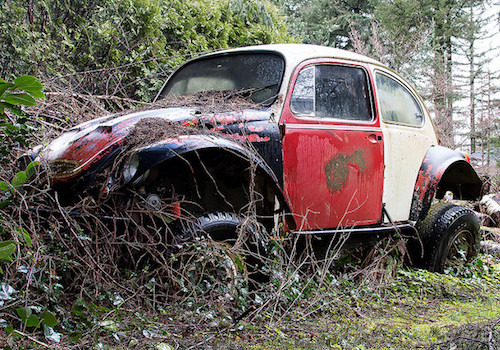
We’re off on the Great NaNoWriMo Road Trip! So far, participants like you have helped us raise over $13,000 of our $50,000 goal to fund a redesign of the NaNoWriMo website. We’ve asked NaNoWriMo participants around the globe to tell us about their journeys along their own creative highways. Today, participant Hazel Aspera shares how even the most difficult trials can’t stop her from writing :
There is a battered brown document envelope containing the sixty-page draft of my first mystery novel somewhere in the province of Surigao del Sur in the Southern Philippines.
It think it might be gathering dust on a schoolhouse shelf, among similar-looking envelopes holding test papers and grades. Or it might have been long discarded, absorbing toxic waste in a landfill. Or it might have been taken home by a curious fourth-grader, who has since read it many times over, wondering what happened to my main character, Anya. Did she solve the mystery of the bus bomb? And did she ever manage to get back into med school?
I figure the fate of this draft will forever be a mystery to me. The last time I saw the envelope, I absentmindedly placed it on a desk just before I gave a lecture on psychiatric health to a classroom full of primary school teachers. I was, then, tired and sleep-deprived from our eight-hour overnight bus ride–the lecture had been a last-minute invitation. And like all last-minute invitations that month, it set me further behind my 50-thousand-word target. In a last ditch effort to finish my novel, I had printed out a copy just before our trip, adding handwritten paragraphs in my spare time. In my rush to get back to our quarters for some rest, the envelope on the desk was forgotten.
I remembered it again during the bus trip back to Cagayan de Oro City. I groped into my backpack, meaning to scrawl several thousand more words before November ended. When I realized it wasn’t there, I immediately called Toni, who was still in Surigao, asking her to please try and retrieve it. She went back to the schoolhouse the next day. But the brown envelope had disappeared and nobody knew where it was.
The good news was that I had most of the draft still saved in a computer back home. The bad news was that there are now spoilers to the overall plot of my detective series somewhere out there. In the off chance that the first novel becomes a best-seller, I might have to put on a straight face at every press conference and deny these spoilers with feigned conviction.
Now that I think of it, NaNoWrimo for me has always been fraught with disaster.
“I might finally win. I might, again, crash and burn. I don’t care. All I know is that I’m addicted to forcing myself to pour words into page after page each November.”Several Novembers ago, I was going through a tumultuous, prolonged breakup with my boyfriend of seven years. Now, there’s a stereotype out there that writers produce their best work during their darkest of days. I disagree. I was a hot mess of anxiety, bad decisions and very little writing.
And then, last NaNo, I ended up with some godforsaken mouthful of a condition called De Quervain’s tenosynovitis, the tragic consequence of too much typing. Pain shot through my puffed-up hand and arm if I did so much as push a key. The doctor put me on a hand splint, physical therapy and painkillers. She also told me to rest. I begrudgingly took her advice after 11 thousand excruciating words.
So, between sickness and health, breakups and boyfriends, work schedules and weekends, I have never been able to win NaNoWriMo. All I have to show for it are fragments of three novels and a few short stories. I know my excuses for not getting 50k words are flimsy to those who put in a lot of time, effort, and discipline every November. Having failed at it so much, I really should just give up.
Only, I can’t.
In fact, right beside me is a notebook half-full with research for the novel I’m writing this year. I might finally win. I might, again, crash and burn. I don’t care. All I know is that I’m addicted to forcing myself to pour words into page after page each November.
I’ve come to realize that just because I haven’t won doesn’t mean I’ve failed. I know that I’ll get a novel done one day, be it this year or in five years. The fact that I’m still writing is, in itself, a tiny success.
Besides, I find there’s something special about writing with a community. I like going on Twitter, racing with people all over the world in NaNo Word Sprints. I love having a forum on which I can ask “what is the best way to dispose of a body in a hurry?” without somehow ending up on the FBI hit list. I appreciate having a virtual shoulder to cry on when I fall far behind on my word count or when I have to kill off a favorite character. Most importantly, I adore the magic of seeing something that only existed in my head come to life on my computer screen, one word at a time.
It is true, I guess: that it’s not about the destination, it’s the journey that counts. Even if I might lose my draft along the way.
Hazel Aspera is a registered nurse who left the hospital to write something more than just nurse’s notes. She likes tinkering around and making stuff–be it art, crafts, food, or literature–often at the expense of her social life. Currently, she works as a freelance writer and illustrator. She is also the Associate Director for Communications and a Junior Fellow for Fiction and Literary Essay of the Nagkahiusang Magsusulat sa Cagayan de Oro (United Writers of Cagayan de Oro).
Top photo by Flickr user Mitchell Haindfield.


June 7, 2017
My NaNo Road Trip: From Training Wheels to Cruising the Highway
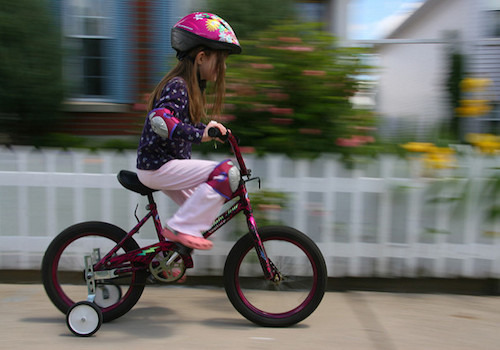
We’re off on the Great NaNoWriMo Road Trip! So far, participants like you have helped us raise over $9,000 of our $50,000 goal to fund a redesign of the NaNoWriMo website. We’ve asked NaNoWriMo participants around the globe to tell us about their journeys along their own creative highways. Today, author, participant, and Municipal Liaison Belinda Missen reflects on her route from Jurassic Park fanfic to five-time published author:
I remember as plain as day the first story I ever wrote. It was the summer of 1993, I was eleven years old, and firmly ensconced in the world of Jurassic Park fan fiction. Something about that film spoke to me on a level that nothing else had and, suddenly, everything made sense.
I wanted to write books.
From that point onward, I was madly scribbling in the back of disused school books. Not until I was fourteen would we get a family computer, and then I could be found bashing at keys aimlessly for hours. This time, fan fiction gave way to new characters; convoluted, angst-ridden plot lines; and password protected documents, lest anyone decide they want to read the musings of a teenage girl. In all, it was like peddling down an empty highway with training wheels on.
Of course, life gets in the way while you’re busy plotting to overthrow literary overlords, and I ended up doing the ‘normal’ things expected of people. I put the pencils and spare notebooks away for a few years while I finished school, went on to university, and eventually settled into full time work.
But I quit my job with an overwhelming sense that life had more to offer me than fourteen hour shifts and huge petrol bills. Writing was something I’d begun to dabble with again, tapping out random musings on blank emails and sending them home. Most of them were left unattended until that one idea came up and bit me in the bum around April 2014.
I was consumed. I was back to fourteen hour days, but I was enjoying it. Characters and scenes, storylines and weird research terms in Google (because, let’s face it, we all do it!), and I’d swapped my training wheels for my first beat up car. This was the manuscript I was learning to change gears with. Too fast? Too slow? Back off the throttle, and cruise for a bit.
The truth is, writing is scary. Four weeks later, I had a finished manuscript–at least, I thought it was finished. In my excitement, I sent copies to friends. That feeling was, in a word, terrifying. What if they didn’t like it? What if they did like it? What then?
“My first NaNoWriMo gave me a full license to drive headlong into my writing career.”Among my own self-criticism (we authors are notoriously bad for that) were comments on improvements; tone, style, dialogue. But there was an overwhelming positivity. It was through this initial reading that I was drawn to NaNoWriMo. One of my readers was a participant, and suggested I join.
So, I did.
Not only did NaNoWriMo give me the opportunity to rework my manuscript, it gave me a community, and I was soon going to local write-ins, meeting other writers, and forming friendships. The artistic community is a wonderful place when you’re all working toward the same goal. My first NaNoWriMo gave me a full license to drive headlong into my writing career. It’s because of this that I’ve experienced what followed next.
Since my first NaNoWriMo, I’ve published five books. There have been mistakes and learning curves along the way. I’ve undertaken more schooling to learn the art of editing, and I’ve stepped up into a Municipal Liaison role within my region. Learning to write, improving at your craft, and throwing it out into the wide world is a huge leap of faith, and a journey unlike one you’ve ever taken. There are no road maps, but plenty of road blocks, and sometimes you run out of gas. The important thing to remember is to just keep pushing on. You’ve got this.
Belinda Missen is an author and screenwriter from Geelong, Australia. What began with writing fan fiction as an eleven-year-old has become a full-time job. In 2016, Belinda received the JOLT Court House Youth Arts Award in the Inspire 26+ category for her piece Obsession. In 2017, her fifth release, Love and Other Midnight Theories, soared to the top of the Amazon screenplay charts, overtaking JK Rowling’s Fantastic Beasts and Where to Find Them for an entire hour. In 2018, she’s hoping to kick things up a notch and delve into traditional publishing. Visit her website, or find her on Facebook, Twitter, Instagram, and Goodreads.
Top photo by Flickr user Richo.Fan
June 5, 2017
The Great NaNoWriMo Road Trip has officially begun! We’re...
The Great NaNoWriMo Road Trip has officially begun! We’re kicking off a virtual #NaNoRoadTrip to fundraise for a major redesign of the NaNoWriMo website. Check it out! To learn more about where we’re headed, take a look at our road map.
June 2, 2017
NaNo Interview: Our Road Trip Designer Sebastian Abboud

We’re about to set off on a new adventure: redesigning the NaNoWriMo website! It’s an ambitious project, so we’ll need your help as we embark on this exciting journey. Next week, we’ll kick off an epic, road-trip-themed fundraiser–so stay tuned! Today, we’ve interviewed graphic designer Sebastian Abboud about his design process for this project:
1. When a client comes to you with a concept, what are the steps you go through to turn that concept into a visual reality?First things first, projects usually start with a conversation. It’s always helpful to just talk to the client, ask questions, and go from there! I need to understand the goal of the piece, who is the audience, what are we trying to say and how we should say it. After that and all the initial business stuff has been taken care of, I’ll typically hop into “research". Now, this is different for every project, but it usually consists of brainstorming, making word lists, gathering visual inspiration, and asking questions.
Now, I’m sketching and writing little notes, and doodling, on paper and hopefully nowhere near a computer. Letting my mind roam at this point is crucial. Just exploring and having fun with it is an important part of the process.
Usually, I’ll share sketches with my client for feedback, and in a typical project, I’ll go back and forth a few times, until we get it right. I find that projects are always more successful when there’s a good bit of transparency and openness, not to mention trust between the client and creative.
Once we have the overall direction figured out, I usually hop on the computer and make it happen! More feedback, more back and forth and that’s about that, until we get it right, of course. Projects always turn out better when the process is a collaboration between client and creative.
2. Have you gone on any road trips that informed the designs that you came up with for our road trip theme?Last summer my wife and I drove from our home in Nanaimo, BC, down to southern Oregon, camping along the way. Just the variety of scenery from the sand dunes, to the dense forests, oceans and mountain landscapes were an inspiration for the different backgrounds. I’m excited to get back out on the road this summer!
 3. Do you have any daily drawing/creative habits that help you with your work?
I make a ton of stuff… Usually at least 3-4 times a week, I’ll make something. It might be a vector doodle or a drawing with Crayola markers. No matter how great my work is, I love making stuff for me and sharing it on the internet. There’s just something fun and rewarding about creating art and putting it out there! It’s also fun to look back and try to remember how I was feeling or what was going on in my life when I made a specific piece.
4. Has there ever been a point (either with this project or another) when you’ve felt like you’ve run out of ideas for a design concept? If so, how did you get past that point?Oh for sure, it happens all the time. I feel like every creative person feels deflated or burnt out or uninspired at some point. It helps me to change the scenery, to work somewhere different, or just take a break and go for a walk or explore somewhere new. Do ANYTHING that doesn’t involve a screen.
Lately, when I start a new project, I’ll find a random podcast that relates to the subject matter. Cue it up, and go for a walk, taking notes on my phone. You never know how or where your next great idea will come from!

Sebastian Abboud is a designer, illustrator, and doodler in Nanaimo, BC, Canada. He splits his time between freelancing for cool clients and teaching at Vancouver Island University, in the Graphic Design program. Sebastian’s an avid daily doodler and can usually be found making art stuff, skateboarding or playing music. He lives and works out of his home studio that he shares with his lovely wife Maxine.
May 31, 2017
I Published My NaNo-Novel: You Never Know Where Your Story Will Go
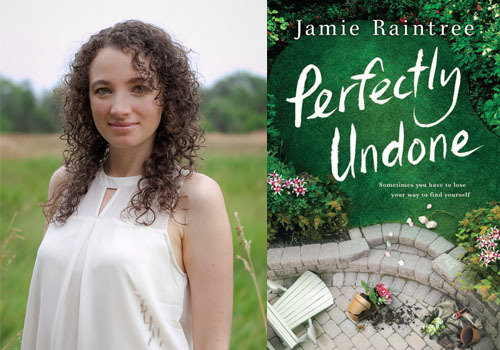
We love talking to Wrimos who’ve published their NaNoWriMo projects and asking them how they got there. Today,
Jamie Raintree, author of the upcoming novel
Perfectly Undone
, shares her story of the winding path she took to becoming a published author:
There was once a time when I didn’t know people could write novels. I mean, not real, every day kind of people. Obviously someone wrote novels, otherwise I would have had nothing to do with myself during those long, lonely hours of my teen years and young adulthood. (If only we could go back to that, right?)
And then a Google search one desperate, longing-filled day led me to something that would truly change my life: it led me here, to National Novel Writing Month, where real, every day kind of people were writing novels.
Up until that moment, I’d only written short stories and I had a couple of very sad attempts at novels sitting on my hard drive, none of which had ever surpassed a few thousand words. I knew I had more to say than I could convey in the short pieces I’d been writing, but up until I discovered this sacred place, I thought I needed permission to write an novel.
Turns out, I didn’t. (And neither do you, by the way, but since you’re reading this and have already found the sacred place, I’m assuming you’ve had this epiphany too.)
That was in 2008, and by the end of November 30th that year, I had written my first novel. ME. A real, every day kind of person. And that was it. I was hooked. For the first time, I felt like I could finally call myself a writer and I never went back.
Over the following eight years, I continued to write. I wrote while I was pregnant (twice), and while I welcomed a new baby into my life (twice). I wrote while I ran my web and graphic design business, which I eventually gave up to write even more. I wrote while my health deteriorated and while I subsequently recovered from the autoimmune disease that took hold after having my kids. I wrote while I moved to a new state where I didn’t know a soul. Most of all, I wrote during National Novel Writing Month. Every year, no matter where I was, or how I felt, or what else I had on my plate, I used NaNoWriMo as an excuse to remind myself that I was a writer, first and foremost. I made that commitment to myself and to my writing. (Also, it just feels good to escape into fictional worlds, especially when things are tough.)
For a very long time, the writing itself was enough–creating fictional worlds and watching my characters grow was fulfilling in a way that nothing else in my life ever had been before. (I mean, don’t get me wrong, I love my kids, but they are a lot more demanding than the imaginary people I’ve raised!) Over time, though, I craved a bigger challenge. I wanted to polish my stories. I wanted to them to blossom, to evoke an emotional response in someone else. I wanted someone to read them.
I wanted them to be published. (If only there was a fairy for that sort of thing!)
The reality was years of revising… years of learning how to revise. I devoured craft books, got shredding critiques (some out of love, some not so much), and tossed out entire drafts until I got a handle on what really made a strong story and a powerful story arc. There were times when it was all going wrong and I had no idea why I couldn’t just walk away from it. And then there were times when something clicked and I felt like I was flying (which was why I couldn’t walk away from it).
“The book I wrote for my 2010 NaNoWriMo project made an editor at Harlequin miss her subway stop, and in that tiny spark of a moment, everything I’d worked so hard for became absolutely, 100% worth it.”I put off querying, never quite done tweaking, until late one night, after a long week of Christmasing with my family, my dad said, “So when are you going to finally do something with that book of yours? Don’t you think it’s time?”
It was. I’d done my due diligence and now it was time to sink or swim. Thankfully, to my utter shock, I swam. In just three weeks of querying, I signed with an agent.
That wasn’t end of my story… again, to my utter shock. There was more revising, more throwing away of words, more tears, more hopelessness, more moments of shining light that kept me hanging on. I revised for another year, and was on submission for a year after that, but eventually, you know what happened? The book I wrote for my 2010 NaNoWriMo project made an editor at Harlequin miss her subway stop, and in that tiny spark of a moment, everything I’d worked so hard for became absolutely, 100% worth it.
This October, my debut women’s fiction novel, Perfectly Undone, will be released with Harlequin’s new imprint, Graydon House, and it’s already making its way out into the world. People from all over the country are sending me pictures of my book in their gardens, by their pools, on their porches. When I started writing my first book all those years ago, I never would have imagined something as wild as this.
That’s why I encourage you, no matter how hard it gets (because it will get unbearably hard), keep going. Keep writing. Keep growing. Because you just never know where your story will go…
Jamie Raintree is an author, a writing business teacher, and the creator of the Writing & Revision Tracker. She is also a mother of two girls, a wife, a businesswoman, a nature-lover, and a wannabe yogi. Her debut women’s fiction novel, Perfectly Undone, will be released on October 3, 2017 by Graydon House. Subscribe to her newsletter for more writing tips, workshops, and book news. To find out more, visit her website. You can also find her on Facebook, Instagram, Twitter, and Goodreads.
May 26, 2017
An Inside Introduction to the Young Writers Program
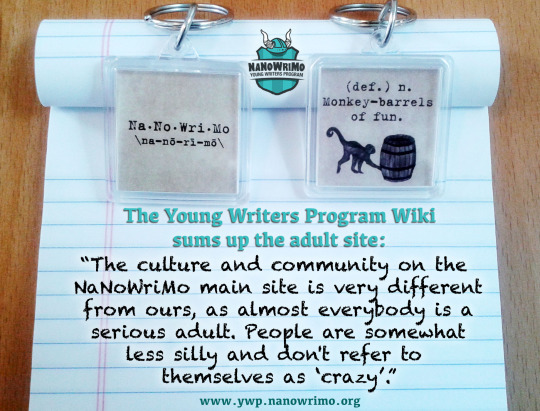
In addition to the main event every November, NaNoWriMo provides free creative writing resources to educators and young participants around the world through our Young Writers Program. This month, we’ve asked some of our young writers to share their experiences. Today, YWP participant Haider Asad share an inside introduction to the YWP site:
Pirate dragons who can type. A rocket blasting off into the sky. A cowgirl with a fencing sword. Isn’t this a world you would live in? This world is known as the Young Writer’s Program, but we citizens call it YWP. We humbly invite you to join us. You don’t have to leave the comfort of your home, but we do ask one thing of you: You must write the stories that are being created in your head.
YWP is the world for non-adults to live in. We write our stories so that we can enjoy our stories and so can others. We can strengthen our writing and reading abilities. We can create problems, solutions, worlds, societies, even an entire universe. Who doesn’t want to make their own version of Star Wars or Harry Potter?
If you’re an educator wanting your students and yourself to become citizens, you can do it! Our leaders here have provided Common Core aligned lesson plans, student workbooks, and even a free classroom kit! You can create a classroom with an access code for your students, read their work, and see them bloom like flowers inspired by creativity and motivated to succeed! What’s better than that?
Are you an adult who wants to encourage their child’s writing abilities? This is perfect for you! Your child will improve their writing, find value in their stories and realize their creative potential. I can tell you first-hand that the YWP increases self-esteem! You can ask your child what they are writing about and what they plan to write about next. You can even sign up on the adult site and write alongside them. Amazing memories are made when families do things together!
YWP site’s writing space and word count tools are live during the regular NaNoWriMo and Camp NaNoWriMo months (April, July, and November). You get to write your own story! You can set your own word count, make a novel plan, get badges for certain achievements, get certificates for finishing, learn how to edit your story like a boss–and, most importantly, write out the perfect story you’ve always dreamed of!
Now, that we have introduced you to YWP, won’t you accept our invitation to be a citizen? All you have to do is click on the Sign Up button on the top right (or “write”… puns are highly encouraged here on the YWP) side of the site at ywp.nanowrimo.org!
Haider Asad is a member of the Young Writers Program from Illinois. Haider loves writing as a way to escape, build a whole new worlds, and create amazing characters–to live the story out before it even steps onto the paper.
May 24, 2017
Tailoring the Young Writers Program to Fit Your Classroom
In addition to the main NaNoWriMo and Camp events each year, NaNoWriMo provides free creative writing resources to educators and young participants around the world through our Young Writers Program. Today, educator Vicki Gripp shares how she has tweaked the framework and resources that we provide to make the program work for her class:
Although November is the traditional month for NaNoWriMo, I have found that the best time for my students to engage in extended fiction writing projects is during the last month of school, after state testing is completed. There is still some remaining time to delve more deeply into topics that we wish to explore, and we also want to do projects that are fun!
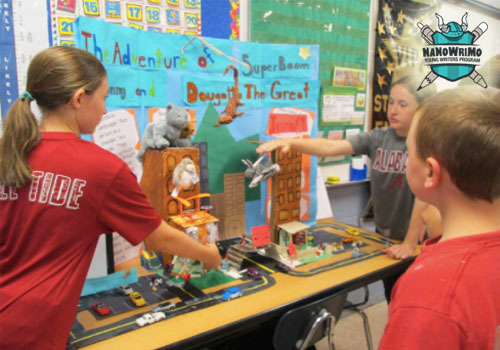
This year, my students decided that they wanted to tackle novel writing, either individually or in pairs. In addition to writing, they would also build models of the characters and the settings of their novels, and invite other classes to view their presentations. We explored the essential question, “What is involved in writing a novel?”
Since every student had a district-provided Chromebook and access to Google Docs and Google Classroom, it was possible for my students to brainstorm ideas for their characters, settings, and plots using the free online Young Writers Program workbook. They would answer questions and prompts from the workbook by setting up their screens with the workbook on one side and a document on the other. In this way, they could submit responses to me through Google Classroom assignments as often as I felt I needed to check. We started by having a “Character Check” assignment, followed by a “Villain Check” assignment, and then a “Plot Check” assignment. They enjoyed thinking about and discussing their responses to the workbook questions about the characters. For extra ideas about plot twists, I provided the Writer Emergency Cards from the teacher resource kit. Once the students had completed the three checks, they were ready to start writing!
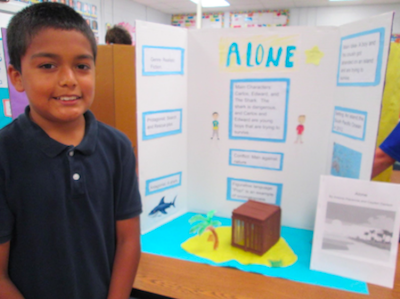
The students spent three weeks doing extended writing, conferencing, and revising with their partners before submitting their first drafts to a “Novel Check”. It was easy for me to type comments and suggestions that students could see and to keep track of students who had and had not completed assignments. Students were encouraged to review elements of fiction, including characters, settings, plot, rising action, climax, theme, using dialogue, and using figurative language. They also practiced presenting their novels and giving brief summaries of their stories to the younger students who visited our classroom, which gave them speaking practice in a relaxed, informal setting.
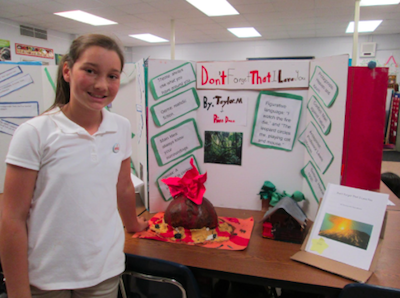
Once the novels were finished, we created a “Novel Fair”, that included edited and printed final copies of the novels and models of the settings. Each novel presentation included a trifold board and some sort of 3-D display. I was very pleased with the quality of their stories and the attention to detail that the students showed in their novels and in their models. The genres ranged from mystery, science fiction, realistic fiction, and historical fiction to animal stories, baseball stories, and adventure.
Near the end of the project, we checked the word counts, and most of the stories were between 3,000 and 4,000 words. Although I only recorded participation grades for these projects, I could have created rubrics for several different stages. Above all, I wanted the students to enjoy the activity, gain confidence in their writing, and experience the complexities and joys of creating a novel, which is what the NaNoWriMo Young Writers Program is all about.
Vicki Gripp has taught 6th grade students at Stapleton Elementary School in Stapleton, Alabama, since 2005. She previously taught elementary and kindergarten students in Mobile County and in Nevada. Mrs. Gripp has also been a practical teaching supervisor for the Royal Academy of Dance, a world-wide non-profit educational organization for teachers of classical ballet. Mrs. Gripp holds a Bachelor of Science in Education degree from the University of Nevada, Las Vegas; a Master of Science in Education degree from Walden University; and Reading Specialist Pre-Kindergarten through 12th Grade Certification from the University of South Alabama. She is a Baldwin County trained eMINTS teacher and she has also completed training in the Baldwin County Schools Digital Renaissance Leadership Academy.
May 23, 2017
Making the Choice to Write
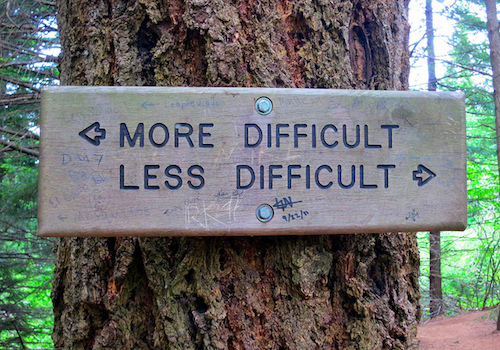
Although our events currently only run during certain months throughout the year, the NaNoWriMo community remains year-round, and the things you learn while writing a novel can be applied to many different situations. Today, participant Katherine D. Graham shares how making the decision to do NaNoWriMo influenced the rest of her life:
One Halloween night I sat in a pancake shop and a group of mysterious people in random costumes handed me an opportunity that changed my life forever: They gave me a choice.
I could leave, go home, go to bed, laugh it all off as a bad late-night decision, and never look back. Or I could stay there, surrounded by discussions of mystery, fantasy, romance, and adventures in space. I could stay there in the dream and explore the deeply buried thoughts I’d hidden in myself years before. I could stay until the night was over and then go home wondering how I could possibly live without that passion, adventure, and magic going forward.
They gave me a choice, I say, but to tell the truth the decision was made for me the second I walked into that room. These people didn’t feel like strangers, as strange as we all may be; they felt like long-lost friends finally reunited even though I hadn’t met them before. This was a group of NaNoWriMo novelists embarking together on the thirty day voyage that is November–and that night I joined the crew. I’ve never once looked back.
Before adulthood everything written was my passion; from uneven letters scribbled with crayons on construction paper in elementary school through screenplays in high-school.
Somewhere between college, marriage, a full-time job, and two side-jobs I’d lost my passion to the mundane, daily routines of “reality.” I labored away day-in and day-out even on weekends for years. Slowly, the part of me that was a creator of worlds, languages, and adventures went into a deeper and deeper hibernation. Ultimately I slipped from a full life into one of merely “existing”. That is where NaNoWriMo found me.
That first November with NaNoWriMo rocked my life. It gave me a group of people just as crazy for writing as I was. It gave me permission to carve out the hour or two every day that it takes to write fifty-thousand words in thirty days. It re-ignited my passion for writing.
“I don’t have to be the next best-seller, I just have to write.”It also helped save me from burn-out at work. That November I learned from the WriMo vets how to balance work and time to “unplug” and focus on what I love. I learned from them and the support on the website forums that it is okay to be vulnerable to family and friends. To let them know what I care about in life. Most importantly I learned that there is no “good enough” golden standard I have to meet in my writing. My writing is my own personal adventure, and writing in and of itself is enough. I don’t have to be the next best-seller, I just have to write.
It has now been four years since that first night, since that choice. I’ve never once looked back with regret. Since 2012 I have gone on to self-publish my first novel. I’ve found a balance at work and received a promotion for job performance. And my high-school sweetheart husband and I are closer than ever. He has even started writing on his own.
Are you lost in the routine and looking for a choice that will change your life? Join us. It will change your life. Remember, your dreams cannot be made reality by anybody else. Bring them on!
Katherine D. Graham is a self-published author from Memphis, TN, USA. She is happily married to her high school sweetheart and they have two fur-babies (calico cats) and are expecting their first child. She loves reading, writing, swimming, and anything Japanese. Visit Katherine’s website, or look her up on Facebook or Twitter.
Top photo by Flickr user Sasquatch 1.
May 19, 2017
3 Key Tips to Help You Sell Your First Novel
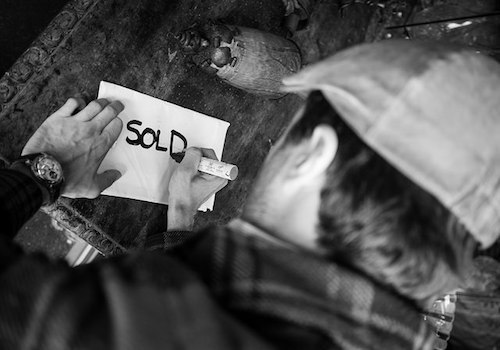
Even when it’s not our official “Now What?” Months, we’re here to help your novel through the publishing process. Today, publishing sales co-ordinator Ashton Quinn Parker
shares some insights she’s learned from managing book sales in a big publishing house:
When most people think about getting their first book published, the checklist of steps to go through often looks something like this:
1. Get a rock star agent.
2. Get an amazing cheerleader editor.
3. Watch all your publishing dreams come true.
However, anyone working in the publishing industry can tell you it’s not quite that straightforward. Sometimes aspiring writers become so focused on the steps that lead to getting their book published they forget one key thing that makes each of those steps happen: sales!
No agent will look twice at a query letter that doesn’t have a good hook, and no editor will take on a book from any agent that can’t sell it well. Sales is one of the most vital things that takes a book from the hands of the author to the readers. And it’s not only the selling of the book to the agent and the editor but also what happens after they’ve dotted all the i’s and crossed all the t’s that has a huge effect on how well your book does.
The sales department in a publishing house is a vital aspect of the success of a book, and most authors never even think about it. When I told people I worked at a big publisher, nine times out of ten they’d say, “Oh awesome, so you’re an editor.” I know that it’s easy to think of a publishing house as just a place where books get edited, publicized, and marketed. But my years working in the sales department have taught me a few things that I think are valuable for all authors to think about:
1. Know your comparison titles.Comp titles are one of the most important things booksellers use to determine wither or not they’ll buy your book and how many copies they’ll buy. An agent has to know market trends and which editors are looking for what in order to sell your book. It’s also really important for authors to know where their book fits in the market. If you’re an unpublished author, read around and try to find a debut title from a new author that has as much in common with your book as possible. Start with the same age category, genre, and sub genre.
2. Know who you’re selling to and what they’re buying.Successful selling requires the seller to get to know a little bit about the person they are selling to. When an agent goes out to sell to editors they’ve already done extensive research about the editor’s titles. An agent won’t try to sell a YA fantasy to an editor with a list of summer romances. And you don’t want to query an agent who reps tons of YA fantasy if your book is up-market contemporary, unless the agent says they’re looking that. Lots of agents post very specific wants under the hash tag #MSWL (”Manuscript Wish List”).
3. Nobody really wants to read another “dead trend” title.When presented with a book that is too similar to a recent bestseller, publishers can have two equal and opposite reactions. One, it’s good because they can sell it by saying, “If you loved that book, you’ll love this new book!” The second reaction is to feel super blah about the book, because they’re probably drowning in similar books. They wont be too excited about selling one more dystopian novel. Now, I’m not saying you should necessarily let the market dictate what you write. But if you’re a previously unpublished author trying to jump into the market, you may just need to tuck that novel away and try to launch your career with another book.
Ashton Quinn Parker had her first taste of the publishing world as an intern at the birthplace of Harry Potter, Bloomsbury publishing in London. After completing a masters degree in Publishing from Oxford Brookes University, Ashton hopped back across the pond for her first role as a Sales co-ordinator at Palgrave Macmillan in New York City. She went on to work at Harper Collins Children’s books also in the Sales department. Ashton has now begun to venture to the other side of the publishing desk and is working on her first Young Adult contemporary novel, a half comedy, half coming of age tale about a high school senior working at a local Super Mart in small town Texas.
Top photo by Flickr user Thomas Leuthard.
May 17, 2017
Tell us about your NaNoWriMo experience!
Hey writers, we want to hear about your NaNoWriMo experience! Help us improve our programs and tools by telling us about your writing life and habits, and how you interact with our website. Just fill out the form, and a staff member from NaNo HQ may get in touch for an interview. Thank you for helping us get better every year!
Chris Baty's Blog

- Chris Baty's profile
- 63 followers

