
Cedar Sanderson's Blog, page 259
September 15, 2013
Troll Valley
Lars Walker’s books are endlessly interesting, well-researched, and I know I will enjoy them. This one is a young adult novel, and after my post on According to Hoyt today, I feel the need to promote some good reads for young people. His protagonist doesn’t have an easy life, with a physical disability, being bullied, and a flashing temper. But he learns to be at peace with himself, and the world, and grows up to be a strong man with honor and courage through his adventures.



Rage Against the Darkness
I did a guest post for Sarah Hoyt at According to Hoyt, in which I lose my cool, because children ought to be allowed to remain innocent, not have it torn away from them and be force-fed filth, no matter how “relevant” you think it is.


September 13, 2013
Review: Shadow Hands

David Pascoe at LibertyCon 26
Since I had so little time for reading this week, I settled for reviewing a short story.
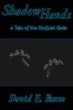
David Pascoe’s tale, Shadow Hands, suffers from an unfortunate cover, but an accurate title. The mysterious hands are everywhere Melody Devereaux goes, reaching out of any shadows and in the darkness they grow bold. She sees them and lives in fear, but what they do to others is worse. Her only consolation is the music she can pull out of her Grand’pere’s violin, left to her as a child.
With her parents gone, Melody longs for the woods of her childhood, and plays in the parks of NYC, unable to escape the city, or the hands. Until one day a mysterious gift and realization finally grant her hope…
This little story is an introduction to a character and world I am hoping for much more of. Click on the cover to see more:


September 12, 2013
Connotation
“an idea or feeling that a word invokes in addition to its literal or primary meaning.”
When we use words, there is all kinds of baggage that goes along with each of our selections. Like a kid walking in the door and throwing their backpack on the couch, we might not always welcome that luggage, and may wish it would be sloppy elsewhere, but it’s inescapable. Also, it’s a moving target. Tomorrow, the backpack might hit the floor of the closet, instead. English is uniquely an organic language, where words that meant one thing a decade ago might mean something else entirely now.
For an example, try these phrases on for size:
“He’s my boyfriend.”
“He’s my paramour.”
“He’s my sweetheart.”
They all mean the same thing, right? But you probably heard them mentally in different voices, with differing images of the person speaking the words.
Connotation is a powerful tool in our writing kit. With one word, we can evoke so much, but be careful – it can go the other way, as well. If you use the phrase “making love” you know what it means, but if you are reading, say, Zane Grey’s novel Nevada, you may be struck by how he uses that exact phrase. Once upon a time, it meant flirting, courting a girl, and if you read that with the modern connotation, it can be oddly jarring!


September 11, 2013
Beautiful Things

Mendenhall Glacier, Alaska

Forty-Mile Country Alaska
I’ve been around. From Sea to Shining Sea, from the plains to the Rocky Mountains, to the northern muskegs. It’s fitting, today of all days, to remember just how big our country is. If you’ve lived all your life in just one place (and there are few of us in these wealthy, priviliged days who have) then you cannot know how far your country stretches. If you are from another nation, have you grasped what it means when I say it takes a week of driving – just driving, at least 500 miles a day, to travel from one coast to another? This is a trip I’ve made more than once. It doesn’t even include the travel needed to make it up to our northernmost state, where I grew up.
America is vast. And she is full of people who love her, for all she is, and was, and can be. We may not always agree with one another in the minutiae, but consider – we are vast. There are cultural variations because people in Middletown, Ohio do things differently than people in Tok, Alaska, than in Florence, Oregon. But on the other hand, there are so many similarites. We cry a little at the national anthem. We love our barbecue and the Independence Day parade. Freedom is our highest ideal, even if sometimes we lose sight of what it really means. No matter the distance, we are USA.

Uncle Fred’s Cabin – Wisconsin

Hermit Lake – New Hampshire
It’s a country beautiful not only in the scenery, but the people, most of all. Long may freedom ring!

My great-grandmother Ella Vanderburg, and her daughter Moya James… Great-Grandma was 96 in this photo taken in 2010. She had seen our nation grow… I want to grow up to be like these women.

Crater Lake – Oregon

New River Gorge – West Virginia

Ohio – where the rainbow ends for now…


September 9, 2013
Free Story by Pam Uphoff!
It’s not mine, but I have talked a good bit about YA reads that are good, clean books. This fits the bill, and it has AI’s, sentient pets, a T-Rex, and lots of action. All that, and it’s free today, this week, so go scoop it up and enjoy, or give to your kids to enjoy!
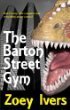

Click on cover to go to Amazon. Oh – and Zoey Ivers is Pam’s penname for her YA works. If you like a bit more adult take on life, science fiction verging on fantasy, and well, horses! Check out her other works.


A Blog, Longhand
Cross-Posted at Amazing Stories

True art evokes a reaction.
I usually compose on the computer. Normally, looking at my writing blog, you all see a rough draft, essentially. I type it, scan it, and press publish. I type into the WordPress box, and you get my train of thought, derailments and all. Rarely, you get one of what I consider my scholarly attempts, where I compose in a wordprocessor, research, add either citations or links, go over for internal consistency and grammar checks, and then post. Just what every English comp. student is taught to do, and so few people actually adhere to.
This post is something different. I don’t have access to a computer (I’m in class. Comp. class, as a point of fact.) so I am writing longhand. I find when I compose in one medium and transcribe to another I add, delete, and generally change the text. When I take the time to compose outside the blog, those posts, to me looking back at them, look very different that the impromptu posts. I suspect by the time this particular text makes it to your computer screen, it will have been substantively altered.
When you write, capturing the urgency of the moment, your own voice and style, happens in the first contact of pen to paper, fingers to keyboard, and with each re-working of the text, some of that is polished away. Yes, taking the rough edges off is a good thing. Re-organizing your thoughts may make an essay more readable. Inding internal inconsistencies will improve your story. However, taking it too far will polish away wheat is uniquely you, and leave behind something so bland your reader will walk away untouched by your emotions.
For that is the point, is it not? To convey to the reader some sort of reaction. In a story, to evoke a connection, some sense of your character’s humanity that reaches out from the page and whispers to them. In an essay, to create a philosophical thought. Not a knee-jerk sense of repulsion, although that can be a powerful tool if paired with some explanation of your reasons behind making your readers angry. Whatever you write, it is you, and however you draft your writing, be it paper, quill pen, or keyboard, let some of that which is essentially you, remain in the completed work. It will be richer and more powerful for it.


September 6, 2013
An Afternoon in the Museum
I made it a field-trip day, and ventured to the Dayton Art Institute all by my lonesome to look at Asian Art. While it would have been nice to have a companion, the museum was all but deserted, and I had a peaceful meander through the rooms. The lower level of the museum is laid out so you begin in Africa, and then proceed in more or less geographical order to the west around the world. I took a lot of photos, I’ll share some below.
I went to the museum for the Japanese swords. I’m planning on making them a centerpiece for my Art of China, Japan, and Korea class, where we will be writing a paper on an artwork with comparison. I found so many lovely works to admire, though… It’s going to be hard to choose. I may have to go to Cincinnati to see more 
The museum has another level I barely touched on, and two cloisters, which I walked through the Hale Cloister, but the gothic cloister seemed to be partly broken down from an event (or in set-up, hard to tell). I will have to go back again to see more. I had reached a point of visual overload and needed time to process it.
Much of the African art was incongrously 20th century artifacts, interesting, but not really what I expected. The pre-columbian artifacts of Peru had some really interesting works, and I loved the shapes of the animals. The pudgy little dog tickled me. The Jaguar metate looked more like a badger or wolverine.
Walking into the Asian section a gorgeous silk kimono was the first thing I could see. I didn’t get a good picture of it. All the glass reflections were hard to work with, and some displays were either under-lighted, or even not lit at all.
I’ll leave you with the photos. I still can’t decide what piece I’m going to write about…

Death mask – looking daggers at you.

Peruvian Dog statue

Jaguar metate

Detail of the beautiful silk of the Japanese kimono

illustration from a Hokusai manga, of a hero wrestling a carp.

A katana and a wazashiki, by Tadakuni and Masahiro, both 17th century.

Taking a better look at the beautiful wrappings and embellishments.

Tsuba, sword guards

Korean art: Peonies and Rocks by Ho Ryon

China: battle scene carved into ivory.

This always blows me away – a stone, carved so thin you can see through it.

Stone dragon: close-up of a frieze from a Chinese temple.

Posing with the dragons, the author and artist feels humbled.

The animals always draw me in. Every culture renders them differently.
China: Dancing Horse
The movement and power in this is truly riveting.

More animals, on a Chinese tomb slab


September 5, 2013
I owe, I owe…
Not money, per se, but time, and attention, and…
I’d promised at least three updates a week on the blog, and a review on Fridays. I don’t know if I’m going to manage a review for tomorrow. I have homework, and I plan a field trip that will take a large part of the day, and then that spawned a plan for the evening!
So tomorrow I trek up to the Dayton Art Institute, to take pictures of art for a class paper. I’m thinking Japanese swords.
Then, when I was looking at their schedule, we noticed that a Greek Festival is going on next door, and my First Reader exclaimed Souvlaki! so we are going back up after he’s out of work to find Greek food for dinner.
The long and the short of this is that while I may be having tons of fun, I likely will not have time to write a review, because, well, I haven’t read much that isn’t homework this week. And you all don’t need nor want to hear more about Hemingway, although Jose Marti’s take on 1883 Coney Island is pretty interesting.
I have a to-read list as long as my arm (not hard, I have tiny t-rex arms) and I plan to squeeze some reading in this weekend because I have a ton of homework and I NEED brain change-ups. Oh, and my first exam is next week… sigh.
Week two of school, I feel a lot more comfortable now that I now a few people and am familiar with the campus. I don’t like (cordially loathe) one class, and the rest are varying degrees of fun. I mean, my Chem professor is the very model of a mad scientist. I found out today my Microbiology prof had a dual major in creative writing and microbiology, and we have a lot in common. I got to dance a little merengue with my Latin Lit Prof in class this evening (fun!). So school is smoothing out into something more routine.
I hope this means more time, at least to write. 


September 4, 2013
Hating Hemingway
I loathe Hemingway. The only times I have read his work has been when required to do so for school. I had to read The Old Man and the Sea way back in the dark ages of time, when I was in elementary school (yes, really. Look, I was homeschooled, and my mother was perfectly well aware my reading level was sky high), and then recently for a college class was assigned a… I can’t even call that thing a story, a vignette, maybe. I also despise Hawthorne, and Joyce, and… I could go on and on. So can others, evidently, as a thread discussion on my facebook page showed last week.
So why do we hate “the classics” and what makes those books/authors classics, anyway? I can’t see any real reason, except that teachers have them on lists handed down for generations without questions, and so it must be. But why can’t we read things that we enjoy? No, I don’t mean light reading, or ‘popular’ books, necessarily. But wouldn’t it be better to assign books and then look at what it is about them we enjoy? Character, plot, setting… not some obscure societal message. I about lost my mind when I looked up the wiki on the Hemingway story I’d read. There is no way to read that message into that… thing. Unless you really really want to, because it says what you want it to. Ugh.
Correia on the Classics: “True story. A friend of mine is a successful fantasy novelist. He was asked to speak to a creative writing class about his first book. The teacher asked him what it “meant.” He gave her the plot synopsis. No. What does it “mean”? It is a fantasy, about magic, and– NO. What is the real “meaning”? You see, college English is the only place where Freudian psychology is still legitimate. Everything has to have a deeper meaning. A book just can’t be a story. It has to be an analogy for some social commentary. And heaven help us if it wasn’t, because then all those no-talent hack English professors wouldn’t be able to write 1,000 page commentaries on what the whale in Moby Dick REALLY represented.” Larry Correia
Now, I really enjoy Larry Correia’s work. I did a review back when on Monster Hunter Legion, and I need to do one on Warbound, but I haven’t read it yet. Spending too much time reading the school stuff, sadly. What I don’t try to do to Larry’s work is analyze it deeply. It’s not that I couldn’t find something in there, I probably could. It’s just that it’s *fun* to read, and hard to slow down enough to nitpick at it. I’d rather find out what happens to Earl and Holly, who seem almost real to me, than search for some societal subtext. I like characters. I enjoy action, and well-constructed worlds. So I’m going to find some good reads with those in them, rather than beating my head against more Hemingway.
At the very least, it will serve as mental mouthwash to get the taste of the required ‘classics’ out of my head. Which ought to enable me to write, as I can’t when I am all grumpy about being beaten over the head and shoulders with the societal message from class. Which reminds me…
One of the things I realized after thinking about the other stories we read/discussed in class was how, er, “classist” they were. America is not a society of classes, per se. Yes, there’s Middle, Low, and High, but the unique thing about our country (and yes, I am unabashedly proud of our nation) is that you can start out one, and wind up another. In any order. So why are we reading stories about the very poorest of poor as though we are studying some foreign culture? I grew up poor. I didn’t know we were poor, but we were, in part my parent’s choice, and in part just the way it was. But it didn’t matter. I was given the best education Mom could muster (and that, by the way, was part of the poor, my parent’s choice to sacrifice one income to make sure the kids got the attention we deserved) and reading was a huge part of that.
In class, we read stories about the urban poor, both written by minority authors, and I can’t help feeling that it’s misrepresenting. They were poor, so? They also went on to have successful lives (or they would not be read in a Lit. class) and maybe that is what we need to be reading about. How they succeeded, not how they were poor, look at the poor people but don’t poke them through the bars… One story seems to advocate theft to rise out of poverty – or, that PC version, stealing from the rich. Because, after all, if you have more money than me, I deserve it. And again, Ugh.
Sorry about the long and disjointed rant and ramble. You’re likely to see more of this in the coming few months. I am in not one, but two Lit. classes. As a writer, and even more, as a reader, they tick me off.


