
Cedar Sanderson's Blog, page 260
September 3, 2013
Viruses that go Bump in the Night

Listening to John spin tales at LibertyCon
I was reminded of John Ringo’s essay on the zombie apocalypse during microbiology lab today. We watched a video on SARS, and one of the questions asked was “did we overreact to SARS?”
The answer, of course, is no, and a little bit, yes. The possibility of a global pandemic (yes, I know that’s redundant) is a clear one. We are too mobile for that to not be a danger. So quarantine and preventative measures are good, and wise. The media panic, on the other hand… that was an overreaction.
Going back to the zombie apocalypse, though, what is coming might not be zombies. It could be literally anything. There are virii out there we barely know exist, and it wouldn’t take much more tech to get to a point where they could be unleashed on humanity as a pathogen.
As a writer, this spins so many stories into my head it’s hard to keep track. I’d started work years ago on a novel I titled Methuselah Germ, and I am thinking about either publishing the portion I have completed as a novella (yes, it is a complete story arc, but only about 50K words long) or adding the planned secondary arc in, to make it a full-length novel. It’s not at the top of the pile, but I think this class, that essay, and articles like this, will inspire me to make it an even better scarier story.
I could go on and on about this topic, and I probably will soon… science fiction and medicine are, after all, my first reading loves.
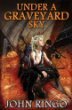
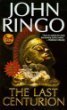
For really good reads on this, try out John Ringo’s The Last Centurion and newest release, Under a Graveyard Sky.





September 2, 2013
Young Science Fiction

Vulcan’s Kittens and Clarke’s Law: technology can look like magic…
I’m working on a short story today, about a boy and his dog… and the boy’s spaceship. Then Dave Freer posted this: Zamzummims, where he laments the loss of Science Fiction Giants in the world of the young. We need writers who can give our children wonder, adventure, and a solid science in their fiction. ”Unless of course you LOVE the public schooling system, adore the social and political indoctrination that has infiltrated it and are delighted to consign you kids/ grandkids, and future to it. We need new giants for small folk. And we need them REALLY big.”
I can’t argue – and don’t want to – with this. For those of you looking for recommendations, he urged the commentors to suggest new (last 20 years) authors and books that meet the needs. I put in a few titles, and it has me thinking of more. There was a recent discussion on an email group I still belong to, a relict of my time as a children’s librarian in New Hampshire, about the need for clean YA and MG (middle grade) books that parents were asking for. Links to a couple of lists were provided: Parental Book Reviews and one on Goodreads. These would be a good starting point, but I haven’t dived into them, myself, yet. I buy books for my kids in one of two ways. I ask them what they want (or take them to a used bookstore and let them pick, then see what they chose), or I follow trusted recommendations to buy and send copies to them. My kids all read, voraciously. It’s hard to fill that void, and a bit expensive. Working on ways to deal with that!
Vulcan’s Kittens is one of those good clean teen reads. When I started writing it, my eldest was only 12. Whether it’s Mama being overly naive, or not, I knew she wasn’t, much less the others, looking for sex and swears in her reading. So instead I filled it with adventure, a sense of duty and honor, and strong parental figures, who help her, but also let her stand on her own two feet. And despite the genre appearing to be fantasy/mythology at first glance, it is a science fiction book. In the later part of the book, a goblin’s explanation of Clarke’s Law to our heroine makes this very clear, although there are earlier clues as well.
Vulcan’s Kittens is available on Amazon, and many other fine booksellers, in both e-formats and print.
I am now working on the sequel, tenatively titled The God’s Wolfling, and it will have even more science in it, and a prickly young teen boy who is most definitely not a werewolf, and resents that implication. It will also not have anything as gross as kissing in it, and such a suggestion would get you dirty looks from both Linn and Merrick! I am looking forward to seeing how my young readers like it, as they seem to enjoy Vulcan’s Kittens.
I’m no giant. I stand 5’2″ in my sock feet, but when I walk I carry myself straightly, and I hope that my little stories will inspire some young folks to be a bit better in their daily lives, when asked to do something unpleasant. And because I cannot possibly write fast enough to feed my children enough stories, I will be on the lookout for those Indie giants, so I can recommend them.



September 1, 2013
Reactions to a Story

Cranky Writer wants to be alone…
This is a bit of my homework for a class I am taking, Comp. & Lit. A story was read aloud to us in class, and these are my reactions, both as I heard it, and after a day of musing on it, with the three questions I will be turning in as homework. I know I come to this with a wholly different perspective than most of the kids in my class, who barely read, let alone think about why they like what they like. This class won’t help them on that, either, but I can at least try, in my own way, to point out what is going on here.
As I listened to the story in class, I wondered something. How many of you think this story was original? I don’t mean in the general terms of “love’s lost” but the whole idea of meeting someone on the street, falling instantly into infatuation, and then the second concept of both suffering from amnesia and losing their memories of one another. As the story was read, a Doors song (Ed. to correct from Beatles, h/t Eric Anderson and Philip White) was running through my head, “Hello, I love you, won’t you tell me your name?” and following on its heels were images from the movie “An Affair to Remember.” I’m also certain I have read several novels dating back at least a hundred years, that shared some of the same elements. It’s nothing new to understand that very little fiction is truly original. One idea, written in story form by a half-dozen authors, will result in greatly different forms. But when this many tropes and stereotypes come together in one place, it results in what Sarah A. Hoyt calls “gray goo” and it’s boring to read. She says in a blog post on Human Wave fiction: “Grey goo, in which characters of indeterminate moral status move in a landscape of indeterminate importance towards goals that will leave no one better or worse off is not entertaining.”
My second observation was that fiction is supposed to be somewhat plausible. If you jolt a reader out of their suspension of disbelief hard enough, they will stop reading. As a writer, this is something that concerns me. I left this story with the concept that both were struck down by an illness that caused both of them amnesia. It’s just too improbable. Mark Twain says this about that, in Pudd’nhead Wilson’s New Calendar: “Truth is stranger than fiction, but it is because Fiction is obliged to stick to possibilities. Truth isn’t.”
Thirdly, you will note that I do not regard what the two main characters feel is love. This is perhaps a personal bias, but what we may feel for another at first sight can undoubtedly be powerful, and can lead to love, it’s not something that happens in an instant. That would be attraction, or infatuation. Murakami’s premise is that the protagonist ought to have followed up on his feelings, alone, and that by his allowing logic to enter the equation, he ruined his chance with the girl. Then at the end of the story, he further reveals that it was all introspection on the boy’s part, he had never spoken to the girl. The ending ‘was all a dream’ is another oft-used, and cordially despised by most readers as overdone and unsatisfying, fiction device.
So my three questions are:
1. Does originality matter to you, the readers?
2. Did the loss of memory by both protagonists bother you?
3. Was it really love?


August 31, 2013
Amazing Art
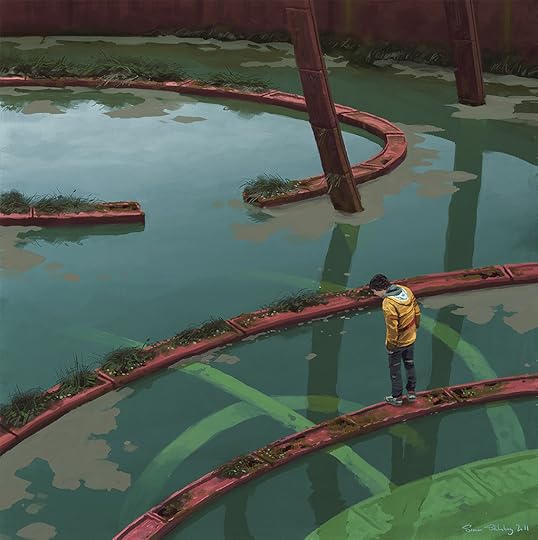
I don’t have a lot of time today, but my dear First Reader sent me this link this morning and I spent some enraptured time looking at each one. Amazing, and evocative. I could write stories based off these.


August 30, 2013
Review: Riders of the Winds
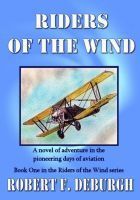
I was asked to review a novel about the history of aviation, and I agreed because I spent a lot of my younger years in the Civil Air Patrol, and obsessed with planes… As you will see, I think I would only recommend this book if you are very interested in Av history, about which the author knows rather a lot, and not so much in a story that doesn’t tell, but shows. The story is secondary to the history, here, and the non-Av history is presented rather shakily.
I was enjoying this when I started reading, and it was enhanced by my beginning to read it while embarking on a flight that would land in Newark, the primary location of most of the story. While it doesn’t start at the very beginning of aviation, it covers the commercialization of airlines, mail deliveries, and the last hurrah of aviation racing in the days of biplanes. It also touches on many topics of the times, like prohibition, the Mafia, the Lindberghs, and the depression. Some of the historical events are presented in an oddly skewed fashion, but I didn’t see anything that stuck me as wildly incorrect. For a novel, I don’t ask objectivity about history!
The thing that kind of threw me out of the story was when the two main characters go to Brazil and have a supernatural encounter. I wasn’t expecting that. Also, the message became a bit heavy-handed here in the story and took over what I was reading it for – the history, and the planes. Don’t read this for the story telling, that is a bit flat, and the characters cardboard. But the telling of the progression of aviation was a good read, out of my usual fare these days, harking me back to my teen obsession with aerospace. I might pick up the second book, because it gets into WWII, this book having ended with the announcement of the bombing of Pearl Harbor.
On the other hand, I started on Peter Grant’s second book,

And it is even better than the first one. I highly recommend it!


August 29, 2013
Anthropomorphic

This is me looking at a book from a different angle…
Today as I was running an errand, pondering Lit. class, and our ongoing discussion of houses in stories we were reading, which tied into the obituary of a house I wrote earlier this week, I was startled by something my GPS did into thinking about anthropomorphism. Like that sentence, my brain often rambles off on odd thoughts with no seeming relevance from one point and the next. We humans apply human motives to pretty much everything around us.
My GPS, for instance, seems to have an adventurous spirit. It will take me one way going to a destination, and yet another when leaving, even if I am going back to my starting point. A friend tells the story of her family’s GPS being homicidal, trying to kill them by announcing that they must “turn right!” with increasing urgency, while they drove with a cliff directly to their right. I know someone else who programmed his GPS to speak with a very sultry voice. I don’t think I want to venture further into his anthropomorphic fantasies…
Earlier this summer I had an entirely different experience, almost the opposite, of going to a furry convention. Furries are people who have decided they would rather be an animal, whether life-like, or cartoony. While in full costume, most of them eschew human speech, making themselves heard with purrs, growls, and chirps, that I heard. But still, this falls into the category of anthropomorphism, for none of them, not even my friendly lion, would actually dream of rending another furry limb from limb and dining on them, while an animal wouldn’t even think twice about that.
“an·thro·po·mor·phism ( n thr -p -môr f z m). n. Attribution of human motivation, characteristics, or behavior to inanimate objects, animals, or natural phenomena.” The Free Dictionary
Most science fiction about aliens falls into this category. Aliens are just people who are odd-looking on the outside. It would be almost impossible to write a truly alien species, because we are all human, a product of our cultures. Even when attempting to write a true alien being, we fall into pits of strangeness we might not have known was there. I read a book (the title escapes me) about a lizard species who ate one another’s brains to gain knowledge. While a human can’t do that, per se, there was a tribe of people who ritually ate the brains of their direct ancestors upon death, believing that this kept their dead alive in spirit. It also transmitted a prion, a pathogen that caused a brain disease, and that is what brought the practice to light when modern researchers began to investigate.
There is very little that has not been done by humans. We’re endlessly curious, it seems, but in our attempts to make sense of the world around us, we anthropomorphize. Sometimes we take it a bit far (dogs in little costumes, anyone? Furbabies? Really?) and often it’s silly (my GPS with the adventurous spirit) but in writing, it is a way to further expand our knowledge of ourselves. Writing aliens is not about aliens, usually, it’s a way to bring onstage an enemy or protagonist and create a conflict.
I am not, nor do I ever want to be, a literary author. I don’t write to convey some deep, cosmic message. I certainly never want a Lit. class to do to my work what our class was doing to stories today. But it is unavoidable to know that within my writing are clues to my personal background and culture, even if I am not trying to write about that (as at least one of the stories from today was). Anthropomorphism is a tool in my writerly workbox to use, whether of concious houses, aliens, or talking pets, in driving the story along, revealing the human characters more clearly, and adding another level of complexity to a story. But not too much. Writing doesn’t need to be all but indecipherable. Sometimes a funny story about a dog is just that.

She wants to know why she has a number…


August 28, 2013
Etcetera
I am having a bumpy day. Not all good, not all bad… and class in an hour. Chemistry, which I’m a little (ok, a lot!) scared of. So I didn’t write today, but I have had some lively online conversations about writing, and publishing, and… There are times it’s great to have a whole world of friends to bounce ideas off of, and to serve as sounding board in return. It’s exciting.
In the course of the last day or two, I have had occasion to point out this site: The Grinder, which is a handy tool for submitting your work. Yes, I often publish my own work, but I also send stories out into shark-infested waters to see what comes of it. The idea being that short stories published broadly spread my name to a wider audience. We will see, I haven’t done it recently and need to.
I also read Mad Genius Club, wherein Sarah Hoyt talked about YA novels and the need for some hope in them, and more characters that everyday people can identify with. In the rush to be ‘inclusive’ too many children are shoved aside because they are perfectly normal, happy people. We give tools to our children to live in this world, by teaching them how to endure insults, slights, and bullying. Only we haven’t been doing that, with books on rape, extreme sexual deviancies, and horrors. Tools for dealing with that are in the province of therapists. Let’s think about writing for strength, and hope, and getting to reach our dreams… and let’s write for everyday ordinary children who will grow up to be the backbone of society. (also, see this post by Amanda Green, with linked article, if you haven’t read any YA recently)
Lastly, and just for fun, I have to go visit an art museum soon, for a class on the Art of China, Japan, and Korea. I’ve written a short story set in fuedal Japan, so that will be a dual-purpose trip to research further tales in the era, as well. Art and stories… How can we link them together?


August 27, 2013
Just a House

I spent three days with Dad putting shingles on the house last year, when we had no idea how little time it had left.
It was a house. I have walked out of many doors without a second glance backward. It was my family’s home for more than two decades, an old farmhouse with more problems than most women would have put up with. It was a home, and it came tumbling down. I listened to my father telling one of the men about it, while I was picking blueberries from bushes I planted a few years ago. The last time I will be able to do that, I believe.
Dad explained the history first, as he always does.
“It was part of the old Moses Farm. The big house was over there,” he gestures to the West. I know this without seeing him, I have heard it so many times. “This was the aunt’s house,” he goes on.
It was a dairy farm, back then. There was a big barn out behind the house, but it had been gone, burned down, for forty years when we moved in. The foundation was covered in weeds, but off to one side is where the horseradish grew best. There was a truck garden, too, that earned the spinsters money, and that is where our greenhouse and garden were now located as well.
The dairy farm, and an old New England custom, is what brought the house down, a hundred and fifty years after it was so carefully constructed right over an active spring. The spring kept the milk fresh and sweet until it was sent to market. There was a dumbwaiter in the floor where the big tin cans could be lowered into the cellar and put in the cold water. Also, in winter it was a source of water when the shallow hand-dug well froze over. It had been long filled in and rarely bubbled up when I lived there, but we always had a damp, if not wet, basement, because of it. The stone foundation and dirt floor of the old part of the house meant that the sills and beams would eventually rot.
When I came to the house as a teen I didn’t worry about that. I was more concerned with the fields, forest, and streams outside. I would lay up in my attic bedroom, which sweltered in the summer and froze in winter, reading and listening to my radio. Later, coming back to the house as an adult, I learned more about the house’s faults. It had been renovated in the sixties, by someone with no money and less sense. The wiring we uncovered as we replaced walls was terrifying. Often three-foot chunks of salvaged wire, it was simply taped together. We had a dead short in the kitchen that led to the breaker box spitting arcs of blue electrical discharge. Dad came home, I told him what it was doing, and he said, “nah, can’t be.” He walked downstairs, and I watched from the top as he threw the breaker back on – and jumped back a little when it arced.
There were memories in every inch of that place. My third daughter was born there, upstairs, with the midwife running late and the baby coming early. The midwife made it just in time. My son came home from the hospital at a day old to that house. My first two daughters were both toddlers when we moved back in with Dad, and don’t remember any other home. It wasn’t a big house, and we were often cramped, but it was happy. The kids played inside and out. I canned, cooked, ran a business, and tried to mother best I could.

Homework at the Kitchen Table
The kitchen was the heart of the home. Every bit as big as the living room, it was dominated by a heavy table in the center, and that was where we gathered. Guests came and sat and drank coffee (or smaller ones, milk and juice) and talked, while I got together the meal. If you had been at that table more than once, you weren’t a guest, you were family, and you were welcome to pitch in and help. I always appreciated the conversation of someone I didn’t get to see often enough, while I worked. I taught all four of my children to cook in that kitchen, even my son, from the time they were old enough to stand on a milk crate to reach the counters, and hand me things to help.
The last few years at the farm my bedroom was just off the kitchen, and it was also my office. Because we had shut off cable, the only place to watch a show was on my computer. We didn’t watch a lot of television or movies, but when we did so, everyone piled on my bed to be able to see the monitor. I’d sit with my back to the wall, and a pile of kids around me, on my legs… Dad would come sit on the edge, or in my office chair, and it was messy, but fun.
I moved away in the spring. At first we thought it was a temporary move, but then my Dad knew he needed to be able to offer his parents a place to stay, as they were no longer able to be on their own. When the house was examined for repair, the true damage to the sills became evident. We had known for years that part of the Eastern sill was shot. The man who sold us the house had camouflaged it with two-by-twelve board, and because a home inspection was not done before purchase, this went unseen. What we didn’t know was how far the rot had spread, up even into the support beams. The house was dying.

Strangely emotional at the sight of it all in a heap.
I came back in the late summer to visit, and watch the house come down. I arrived too late to see the initial collapse, but they had just brought it down when I pulled into the drive. The chimney still stood, amazingly enough. We had been expecting that, built without a proper foundation, to come down almost since we moved in. Swarms of wasps darted around the heap of the broken house. They had been nesting in the attic and walls for more than a hundred generations, one summer to the next, and now they had lost a home, as well. I stood and watched as the excavator bit into the bones of the house, cracking the brittle wood with abandon, and lifting piles into waiting dumpsters.
It was just a house. I grew up a military brat, moving more times than I can remember as a child. Houses came and went. This one was a little different, as difficult as it was to live in at times, it was my home, and my children’s, and the memories will always be with us. The moisture in my eyes was just from the dust of the old wood and plaster. It certainly wasn’t me crying over a house.

The kids stand where the living room used to be.


August 25, 2013
Back from Vacation
I was gone a whole week, did you miss me?
I didn’t even pull my laptop out to work on all week, I was busy spending time with my kids, my aunt who was visiting from Wyoming, Dad, sister, and sundry friends and family. Add to that the stresses of being home-but-not-home, and seeing the farmhouse torn down… which it needed, but still! I didn’t write at all. I didn’t even get to see beta reports on Pixie Noir, they went straight to Sanford.
Now I’m home. I flew in, had time to shower, change, went out and did two hours of balloons for a community event in Cincinatti, and then came home to eat. My brain is fried…
Tomorrow, school starts. Woo! I have been way too busy to be nervous about it. We will see how this goes in a very large school. I’ve lived in towns smaller than this school, most of my life. Sigh.
On the upside, I did a lot of reading while traveling. A kindle makes flying, layovers, and other dead time go by a lot faster. So I will have some reviews later this week to put out, and an essay about the house, and… well, we will see what I have time for.
See you all tomorrow!


August 19, 2013
How Long?
 I finished my second novel yesterday. By that I do not mean that I will never touch it again, because there is a whole lot of work left to be done on it. But I wrote the final scene, several paragraphs further, sat and stared at it for a while, thinking about how best to wrap the book up, leave it on a high note, but not a cliff hanger, and… I deleted some words, wrote a few more, pushed back from the desk so my co-writer could lean over my shoulder and see what I had done. He suggested a minor change, which I implemented. Suddenly… it was finished.
Months of working, laughing, talking about these characters like they are real people, and it’s all boiled down to an ending line. I was torn between a glow of accomplishment, not only for finishing it, but getting it done on the deadline I had set. I’m traveling to NH from Ohio today, and I start school when I get back, so it had to be done yesterday. The flip side of that glow was a serious case of the jitters. Was it long enough? Would the ending satisfy my readers?
My co-writer asked in my writing group, and the group of readers and writers we trust most, what a good length is for a novel these days. I asked what an ending should look like, both on my blog, and on my personal facebook page, and between those, we got a lot of very interesting input. First of all, the general feeling about endings seems to be that the story is wrapped up, not just cut off, leaving the reader poised on the edge of a cliff, going, “but, but… wha’ happened?”
My mentor’s advice was ‘give them time to smoke a cigarette.’ Which option was the one I chose. Just enough time for resolution of the last climax, but not so much time that the afterglow of that victory had worn off. Time and my beta readers will tell if I got that right. Because I plan at least one sequel to this book, I deliberately did not wrap up all the loose ends, and I also added a tiny epilogue – joking that it was like the teaser after credits in a Marvel movie – that brings the next story and ties it into this one.
The question about length spawned a lengthy (heh!) conversation about novels, short stories, and novellas. Turns out that there is no set length for a novel. There are conventions, which changed in the 1980’s, but with the advent of ebooks, they are changing yet again. Novels historically have ranged from 41000 words and upwards. A friend commented that if he bought a 41K novel he’d be angry at the author, but novella is accepted to be up to 40K words, leaving a huge gap between that, and novel at 80K words (the current convention). Others thought anything under 100K words was just too short.. which brings me to conclusion that there is a lot of confusion out there about this matter.
Dave Freer has written about this a few times at Mad Genius Club (you can find one such post here) and his conclusion has been “I’m also of the opinion that the current length of books is more to do with economics than ideal reads. A book after all is as long as it needs to be.” Yesterday in the conversation he went further, to point out that “IMO the use of e-book readers and flexible pricing is going to make shorter (as Sanford Begley mentioned in Mickey Spillane of early Louis L’Amour or indeed, a lot of Thrills and Swoon) sell to larger numbers of people. Oh there will still be a market for the goatgagger – my worst was 270K, but it will be an expensive thing — as the present lot were, driven by publishers trying to kid readers they were getting extra for their money, while screwing the supplier – who got paid precisely the same % for the 270K book, as for the 60K of yesteryear. A good 270K book is four 100K books work – believe me. At one time the precise values – which were prescribed by the publisher, were driven by typesetting and folios – but that doesn’t even really apply to paper anymore.”
So what do you think? Are ebooks going to bring novels back down in size to something more closely resembling the paperback novels I have on my desk, all published between 1949-1970, none of them thicker than the width of my thumb? I pulled a handful of my favorites for ending lines (see my blog post, above), and realized that my ms, weighing in at 93K words, was twice the size of most of them. I had decided that adding another 20K words to it was unnecessary padding, and would only harm the story. As an Indie writer, I can get away with deciding when and where the story stops.


